 2015, Vol. 31


2. 美国地质调查局丹佛中心, 丹佛 80225;
3. 核工业航测遥感中心, 石家庄 050000
2. Denver Federal Center, U. S. Geological Survey, Denver 80225, USA;
3. Airborne Survey and Remote Sensing Center of Nuclear Industry, Shijiazhuang 050000, China
斑岩矿床提供了全世界近75%的铜、50%的钼和20%的金(Sillitoe,2010; 邓军等,2010; Deng and Wang, 2015),其普遍发育热液蚀变分带,即从内部的高温钾化-硅化带到青磐岩化带及后期叠加的黄铁绢英岩化带和泥化蚀变带(Lowell and Guilbert, 1970; Gustafson and Hunt, 1975; 杨立强等,2015)直观地反应了岩浆-热液演化过程(Richards,2003; Wang et al., 2014)。黄铁矿作为斑岩矿床中的贯通性金属硫化物,在钾化蚀变和绢英岩化蚀变过程中均有产出(Harris and Golding, 2002; Deng et al., 2015a),且含量与品位具有较好的相关性(Rusk et al., 2008; Yang et al., 2014),是成矿流体演化研究的理想载体(Redmond et al., 2004; Deng et al., 2014b)。尽管对于不同类型热液矿床开展了黄铁矿物理特征、内部结构、化学成分和同位素等诸多研究,但是斑岩矿床普遍发育多阶段的热液矿化作用叠加,导致某一热液脉体中通常记录了多阶段热液流体作用过程和多阶段沉淀的金属硫化物空间上重叠产出(Rusk and Reed, 2002; Seedorff et al., 2005; Yang et al., 2016a,b),因此,对斑岩矿床中黄铁矿的元素地球化学属性一直缺乏有效的制约,而对其他热液成矿系统中黄铁矿在流体作用下的地球化学行为的研究(Cline et al., 2005; Cook et al., 2009a,b; Deditius et al., 2009; Muntean et al., 2011; Li et al., 2014; Zhang et al., 2014)不仅为金属沉淀及热液溶体饱和状态提供制约,同时也引发越来越多人对于该过程中金属矿物命运的新思考(Reich et al., 2013)。
温泉钼-铜矿床大地构造位置属西秦岭造山带东段,是该区内已探明规模最大的斑岩钼矿床(韩海涛,2009; Zhu et al., 2011),北部以武山-天水-宝鸡深大断裂带与北祁连造山带为邻,南以武山-娘娘坝深大断裂带与海西造山带相邻(图 1,韩海涛,2009)。本区构造作用复杂,岩浆活动强烈,矿产丰富(Mao et al., 2008)。本文基于详细的野外和室内岩相学观察,进一步明确热液蚀变及石英-硫化物网脉的矿物成生世代关系,通过对不同阶段脉体内黄铁矿微量元素电子探针显微分析,初步讨论斑岩系统岩浆-热液成矿作用流体演化及金属沉淀信息。
 | 图 1 西秦岭造山带地质简图及中生代斑岩-矽卡岩矿集区和花岗质岩石分布(据Meng and Zhang, 2000; Dong et al., 2011; Yang et al., 2015a修编) SZ1=武山-天水-商丹缝合带;SZ2=玛曲-南坪-略阳缝合带Fig. 1 Generalized geological sketch map of the West Qinling,showing major Mesozoic porphyry systems and distribution of associated granitoids(modified after Meng and Zhang, 2000; Dong et al., 2011; Yang et al., 2015a) SZ1=Wushan-Tianshui-Shangdan Suture Zone; SZ2=Maqu-Nanping-Lueyang Suture Zone |
西秦岭造山带西接东昆仑和柴达木板块,北邻祁连造山带,南缘以阿尼玛卿-勉略缝合带为界与松潘-甘孜造山带相接,受古亚洲、特提斯和环太平洋三大构造动力学体系三面围限(图 1,Meng and Zhang, 2000; Dong et al., 2011),成矿地质条件优越(Deng et al., 2014a; Mao et al., 2014)。
区域主要出露古元古代的秦岭群、中新元古代宽坪群、晚寒武世关子镇蛇绿岩、晚寒武世-早奥陶世李子园群、奥陶纪草滩沟群、中-晚泥盆世的李坝群、晚泥盆纪的大草滩群、古近系、新近系和第四系(甘肃省地质矿产局,1989; 戢兴忠等,2014)。作为中国大陆中部构造岩浆带的重要组成部分,西秦岭造山带岩浆活动频繁,广泛发生在前寒武纪早期的基底演化至中新生代陆内叠覆造山的各构造演化阶段(Chen and Santosh, 2014; Yang et al., 2015a,b,c),并且西秦岭造山带内斑岩-矽卡岩矿床的时空分布与中生代花岗质岩石具有密切关系(图 1)。
温泉钼-铜矿床主要产出于西秦岭造山带东段温泉复式岩体中(王飞,2011; Cao et al., 2011),矿区内出露中下元古界秦岭群、下古生界李子园群、上古生界中泥盆统李坝群、上泥盆统大草滩群、古近系、新近系和第四系等,以中下元古界秦岭群和上泥盆统大草滩群为主,各地层之间以不整合或断层接触(Zhu et al., 2009)。温泉复式岩体内广泛发育的多组断裂构造和节理裂隙控制了温泉矿床附近虎头山、蔡家沟、葛玉沟、杜家沟、王家河、聂家河、物妥里、黄家沟、松树湾、要子沟、银洞沟、上岸峪、清水沟、小南岔、大曲湾等多个斑岩钼矿床/矿化点的产出(韩海涛,2009; Zhu et al., 2011)。
3 矿床地质温泉复式岩体位于甘肃省天水市武山县温泉乡和甘谷县古坡乡,地表轮廓似圆形,面积约260km2(韩海涛,2009),其侵位于中下元古界秦岭群高绿片岩相火山-沉积变质岩系、下古生界李子园群中低绿片岩相火山-沉积变质岩系和中上泥盆统李坝群-大草滩群碳酸岩、砂岩和页岩中,切穿近EW向区域性大断裂,断裂的北东盘围岩由片岩、大理岩和蛇绿岩组合组成,南西盘为晚泥盆世大草滩群碎屑沉积岩(图 1,王飞,2011; Cao et al., 2011)。
温泉矿床及其附近的矿床(矿化点)均产出于温泉复式岩体内,钼矿体主要赋存于温泉复式岩体Ⅱ单元和Ⅲ单元的似斑状二长花岗岩和二长花岗斑岩及其接触带中(韩海涛,2009; Zhu et al., 2011),钼以细脉和浸染状矿化形式产出(图 2a)。已有研究表明温泉矿区内等粒二长花岗岩(EGM)侵位早于石英二长斑岩(QMP),并被后期正长岩脉穿切(图 3a-c)。赋矿岩石单元锆石U-Pb年龄为224.6±2.5Ma到216.2±1.7Ma(Cao et al., 2011; Zhu et al., 2011)。辉钼矿Re-Os年龄为215.1±2.6Ma到212.7±2.6Ma,暗示晚三叠世钼成矿作用与花岗质岩浆作用密切时空关系,且成矿年龄稍晚,反映钼矿化主要发生在岩浆作用晚期阶段(Zhu et al., 2011)。成岩、成矿作用发生于华北板块与华南板块全面碰撞对接后秦岭造山带构造体制由同碰撞到后碰撞的转折阶段,响应南秦岭变质变形、勉-略洋盆闭合及大别-苏鲁超高压岩石板片折返统一地质事件(Dong et al., 2011; 邱昆峰等,2014)。
 | 图 2 温泉斑岩钼-铜矿床地质简图(a、b)及蚀变分带(a)(据韩海涛,2009; 王飞,2011和野外调查修改)Fig. 2 Sketch geological map(a,b)of the Wenquan porphyry Mo-Cu deposit showing the wall-rock alteration zones(a)(modified after Han,2009; Wang,2011 and our field investigation) |
 | 图 3 温泉矿床含矿围岩及热液脉体时序岩相学证据
(a)正长岩脉侵入等粒二长花岗岩中;(b)正长岩脉侵入石英二长斑岩中;(c)石英二长斑岩侵入等粒二长花岗岩中,石英-辉钼矿脉侵入矿化石英二长斑岩中;(d)石英-黄铜矿脉切断钾长石-黑云母-石英脉(A脉);(e)石英-辉钼矿脉切断石英-黄铜矿脉;(f)石英-辉钼矿脉切断钾长石-黑云母-石英脉(A脉);(g)石英-绢云母-黄铁矿脉切断石英-黄铜矿脉,脉体边部发育金属硫化物和呈线状分布的钾长石颗粒.青色虚线=钾长石-黑云母-石英脉(A脉);粉红色虚线=石英-黄铜矿脉;蓝色虚线=石英-辉钼矿脉;黄色虚线=石英-绢云母-黄铁矿脉;黑色虚线=围岩与脉岩界限Fig. 3 Photographs of the different vein types and host rocks at Wenquan deposit illustrating the paragenetic sequence based on macroscopic and microscopic intersection and overprinting relationships between different veins(veinlets),intrusive contacts, and alteration types(halos) (a)syenite dike intruded equigranular monzogranite(EGM);(b)quartz monzonite porphyry(QMP)intruded by syenite dike;(c)EGM intruded by QMP,with quartz-molybdenite veins cutting QMP that had previously been Cu-Au mineralized by the main stage of quartz-chalcopyrite veins;(d)A-veinlets cut by quartz-chalcopyrite veins;(e)quartz-chalcopyrite veins cut by quartz-molybdenite veins;(f)A-veinlets cut by quartz-molybdenite veins;(g)quartz-sericite-pyrite veins cutting quartz-chalcopyrite veins,with K-feldspar grains growing along the margin. Note: dashed cyan line=A-veinlet; dashed pink line=quartz-chalcopyrite vein; dashed blue line=quartz-molybdenite vein; dashed yellow line=quartz-sericite-pyrite vein; dashed black line=contact between wall-rock and dike |
矿区构造主要由断裂和节理组成,共同控制钼矿体的产出。矿体形态呈似层状、不规则脉状,矿石发育细脉状和浸染状构造(图 2b,Zhu et al., 2011),石英硫化物网脉主要充填于斑岩内原生节理、破碎蚀变带和裂隙中,具有典型的裂隙充填特征,Mo平均品位0.053×10⁻²(韩海涛,2009)。矿石矿物有辉钼矿、黄铁矿和黄铜矿,以及少量方铅矿、闪锌矿、斑铜矿、白钨矿、褐铁矿、钛铁矿等,脉石矿物有石英、钾长石、萤石和方解石等(邱昆峰等,2014)。
温泉矿床含矿斑岩体中发育单向(定向)固结结构(Unidirectional solidification textures,简称USTs,图 4a),为初始出溶流体冷凝沉淀的产物在岩体顶部留下的岩浆出溶的记录(Harris et al., 2004),一般由细圆齿状粗粒棱柱石英(梳状石英)与细晶(斑)岩交替成层组成(图 4b),石英常具有生长环带,且多呈单层产于侵入体与围岩的接触带中。反映岩浆-热液作用过程中,岩浆的减压(初次沸腾)与结晶(二次沸腾)导致熔体中产生气泡和挥发分出溶,进而聚集在岩体的顶部,沿着在塑性条件下形成的不规则裂隙进入弱固结或已固结的岩体之中(Harris et al., 2004),从而形成了早期的钾长石-黑云母-石英脉(A脉),并引起围岩最早期的钾硅酸盐化(图 4b)。同时,流体包裹体岩相学和显微测温研究结果也显示该阶段常发育高盐度液相流体包裹体和低盐度气相流体包裹体与熔融包裹体共存现象,且熔融包裹体在随着岩浆冷凝结晶的过程中与低盐度的气相包裹体生长在一起(图 4b)。
 | 图 4 温泉矿床岩浆-热液过渡阶段发育单向固结结构(a)及其结构和成因示意图(b,据Harris et al., 2004修编)Fig. 4 Photographs of the unidirectional solidification textures(a),sketch cartoon showing its texture and formation(b)at Wenquan deposit(modified after Harris et al., 2004) |
斑岩系统岩浆-热液转换阶段流体出溶过程中,金属在挥发分中的分配情况以及出溶流体的演化历史等可能在很大程度上影响了岩浆中金属的利用率,即斑岩矿床形成与否及规模等(Harris et al., 2003; Chiaradia et al., 2013),本文对此不作详细讨论。
4 热液网脉时序本文通过对温泉矿床地表露头和钻孔内采集的42个样品中石英-硫化物网脉、围岩接触边界和热液蚀变类型的穿切和叠加关系,明确温泉矿床热液脉体类型、时序及蚀变矿物组合。
钾长石-黑云母-石英脉是斑岩系统岩浆-热液演化的最早期脉体(图 5a),发育大量的石英细脉,石英脉较细、且脉壁多弯曲不平直,其中的斜长石多蚀变为红柱石、黑云母、绢云母和钾长石等,代表了引起早期基性岩浆矿物被蚀变为黑云母和斜长石被蚀变为钾长石的流体通道(图 3d-f),主要发育斑铜矿、辉铜矿和少量黄铁矿、黄铜矿、磁铁矿、硬石膏、黄玉等。
 | 图 5 温泉斑岩钼-铜矿床四种主要石英网脉类型
(a)石英二长斑岩(QMP)中的钾长石-黑云母-石英脉(A脉);(b)Cu-Au主要成矿阶段发育的石英-黄铜矿脉;(c)代表主要Mo成矿阶段的石英-辉钼矿脉;(d)岩浆-热液成矿作用最晚期的石英-绢云母-黄铁矿脉(QSP脉).文中矿物缩写据Whitney and Evans(2010)Fig. 5 Photographs of the four main quartz stockwork veins studied by electron microprobe analysis(EMPA)on pyrites at Wenquan deposit (a)A-veinlets cutting through quartz monzonite porphyry(QMP);(b)quartz-chalcopyrite veins representing the main Cu-Au mineralization stage in QMP;(c)quartz-molybdenite veins(B veins)representing the main Mo mineralization stage in QMP;(d)quartz-sericite-pyrite veins(D veins)as the last event of magmatic-hydrothermal mineralization. Mineral abbreviations in the article after Whitney and Evans(2010) |
石英-黄铜矿脉(图 5b)中石英脉均切割钾长石-黑云母-石英脉,相比早期钾长石-黑云母-石英脉更粗(0.2~2cm)、更为平直、且颜色较暗,脉体的中心和边部多发育金属硫化物和呈线状分布的钾长石颗粒(图 3g),蚀变更为发育,与钾长石化蚀变关系密切(图 3d,f,g),且多与高品位Cu矿体的空间产出位置相一致(韩海涛,2009)。主要发育黄铜矿、黄铁矿、磁铁矿、斑铜矿、辉铜矿、钾长石、黑云母、石英和绿泥石等。
石英-辉钼矿脉(图 5c)的脉壁平直且较宽(0.5~5cm),切穿所有石英网脉和斑岩体,平行带状石英脉或在其内部,尤其在脉体边缘产出,通常发育自形石英颗粒定向的张性空间,脉体中心多局部发育多孔石英,石英多呈粒状,定向垂直于脉体边界发育。辉钼矿多产于石英脉的中心部位或石英脉与围岩斑岩体接触部位,黄铜矿多产于微裂隙或张性石英颗粒中。该脉体空间上多与高品位钼矿体共同产出(韩海涛,2009),矿物组合为辉钼矿、黄铜矿、黄铁矿和石英、黑云母等,但不发育斑铜矿(图 3c,e)。
石英-绢云母-黄铁矿脉(图 5d)通常更宽、更连续,且发育平直脉壁,局部有张性空间和晶簇。石英多自形,通常发育(沉淀)在早期等粒石英顶部,呈现波状消光。脉体主要被黄铁矿(<95%)和少量黄铜矿和石英填充,黄铁矿晶体颗粒较大、多自形,发育大量的硫化物包裹体(如黄铜矿、辉铜矿和铜蓝),且通常脉体中心或沿脉体边界发育。发育晚期的绢英岩化和泥化蚀变,长石多发生破坏性蚀变,矿物组合为黄铁矿、黄铜矿、晚期斑铜矿和石英、绢云母、绿泥石、方解石等(图 3g)。
精确厘定斑岩系统矿物成生世代是矿床成因模型研究的关键前提(Sillitoe,2010; 杨立强等,2011; Wang et al., 2011; Deng et al., 2015b),多期热液活动的叠加导致其蚀变和矿化产出关系复杂(L and twing et al., 2010)。多位学者上世纪已经开始通过岩石学、岩相学及矿体穿切等地质关系进行岩浆-热液脉体及相关蚀变作用关系研究(Sales and Meyer, 1948; Meyer and Hemley, 1967; Meyer,1965; Meyer et al., 1968; Roedder,1971; Roberts,1975; Gustafson and Hunt, 1975; Brimhall,1977),尽管Gustafson and Hunt(1975)提出的A脉,B脉和D脉划分方案得到了较为广泛的参考和部分引用,但由于研究手段的限制始终未能有较为一致的认识。近十年来,随着扫描电子显微镜和阴极发光技术在多期石英生长研究中的成熟应用,越来越多的矿床学家得到了更为准确的斑岩系统热液脉体及相关蚀变、矿化作用的时空关系(Phillips et al., 1998; Reed,1999; Reed and Rusk, 2001; Rusk and Reed, 2002; Redmond et al., 2004; L and twing et al., 2005; L and twing and Pettke, 2005; Klemm et al., 2007,2008; Rusk et al., 2008; Pudack et al., 2009; Redmond and Einaudi, 2010; Gruen et al., 2010; L and wing et al., 2010; Seo et al., 2012)。本文整理对比目前研究程度较高的典型矿床(美国犹他Bingham Canyon、蒙塔纳Butte和阿根廷Nevados de Famatina矿床)石英-硫化物网脉的划分方案(表 1),参考Gustafson and Hunt(1975)划分方案,结合温泉斑岩矿床石英网脉特征,进一步明确其时序。但需要说明的是其分类主要参考智利El Savador斑岩铜矿床,因而其可能仅仅代表了斑岩铜矿床脉体类型的一般性分类,同时Yang et al.(2009)也指出在不同的矿床,石英硫化物网脉中的矿物组合、特征及划分仍存在较大差别,一定要谨慎使用。
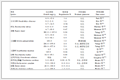 | 表 1 典型斑岩系统热液石英网脉划分方案整理 Table 1 Summary of sequences classification of hydrothermal quartz stockwork veins observed from classic porphyry systems worldwide |
钾长石-黑云母-石英脉(A脉,图 5a)等同于前人研究中早期暗色含云母脉(early dark micaceousveins,Rusk et al., 2008; Redmond and Einaudi, 2010)、石英网脉(quartz stockwork veins,Gruen et al., 2010)中钾长石-黑云母-石英脉(A脉)部分和早期石英(L and twing et al., 2010),是斑岩系统岩浆-热液演化的最早期脉体。
石英-黄铜矿脉(图 5b)等同于前人研究中石英网脉(quartz stockwork veins,Seo et al., 2012)中B脉部分(Gruen et al., 2010)和晚期石英(L and twing et al., 2010)、A脉(A quartz veinlets,Redmond et al., 2004; Redmond and Einaudi, 2010; A-veinlets,Pudack et al., 2009)、灰-绿绢云母脉(pale-green sericitic veins,Rusk et al., 2008),与钾长石化蚀变关系密切,是斑岩系统铜沉淀的主要时期。
石英-辉钼矿脉(图 5c)等同于前人研究中石英-辉钼矿脉(B脉)(Redmond et al., 2004; Rusk et al., 2008; Pudack et al., 2009; Redmond and Einaudi, 2010; Gruen et al., 2010; L and twing et al., 2010; Seo et al., 2012),该脉体空间上多与高品位钼矿体共同产出,代表了斑岩系统钼成矿作用主要阶段。
石英-绢云母-黄铁矿脉(图 5d,QSP脉,又称D脉)等同于前人研究中石英-绢云母-黄铁矿脉(quartz-sericite-pyrite veins,Redmond et al., 2004; Pudack et al., 2009; Redmond and Einaudi, 2010)、发育绢云母化蚀变晕的石英-黄铁矿脉(quartz-pyrite veins with sericitic selvages/alteration,L and twing et al., 2010; Gruen et al., 2010)和灰色绢云母化脉(gray sericitic veins,Rusk et al., 2008),发育晚期的绢英岩化和泥化蚀变,长石多发生破坏性蚀变,为金和次生铜沉淀阶段。
因此,温泉矿床内识别的地质体(含矿围岩和岩脉及石英脉体)时序进一步厘定为:等粒二长花岗岩(EGM)→石英二长斑岩(QMP)→正长岩脉→钾长石-黑云母-石英脉(A脉)→石英-黄铜矿脉→石英-辉钼矿脉→石英-绢云母-黄铁矿脉(D脉)。
5 样品分析与测试结果本次研究分别选取温泉斑岩矿床中四个阶段的石英-硫化物网脉(钾长石-黑云母-石英脉、石英-黄铜矿脉、石英-辉钼矿脉和石英-绢云母-黄铁矿脉,图 5)中26、27、27和21个黄铁矿进行微量元素电子探针分析(electron microprobe analysis,即EMPA),了解各阶段石英-硫化物网脉中的贯通性矿物黄铁矿的元素组成,对温泉斑岩矿床岩浆-热液成矿流体的地球化学特征和演化提供制约。共计101个测点的Cu、Mo和Au元素含量分析结果见表 2。
| 表 2 温泉矿床不同阶段黄铁矿EMPA数据统计分析 Table 2 Trace-element concentrations in different generations of pyrite at Wequan deposit measured by EPMA |
实验在美国地质调查局丹佛中心(U.S. Geological Survey,Denver)电子探针实验室进行,由本人完成。仪器型号为JEOL JXA-8900;测试条件为:加速电压20kV,束流50毫微安,束斑为1μm。Bi的检测限为630×10-6,Pb的检测限为430×10-6,其他元素的检测限为400×10-6。基于二级硫化物标样重复测试结果可知,仪器的准确度和精确度为±3%。
Cu含量分析结果:钾长石-黑云母-石英脉(A脉)中Cu含量(%)高于检出限的测点有8个(8/26),最大值为0.020361,最小值为0.003931,其平均值为0.011767; 石英-黄铜矿脉中Cu含量(%)高于检出限的测点有27个(27/27),最大值为1.988000,最小值为0.036759,其平均值为0.226804,其中两个测点值明显较高;石英-辉钼矿脉中Cu含量(%)高于检出限的测点有14个(14/27),最大值为0.089520,最小值为0.001759,其平均值为0.030556;D脉(石英-绢云母-黄铁矿脉)中Cu含量(%)高于检出限的测点有8个(8/21),最大值为0.038154,最小值为0.000888,其平均值为0.018435(图 6a,b)。
 | 图 6 温泉矿床四个阶段石英硫化物网脉中黄铁矿电子探针Cu(a、b)、Mo(c、d)和Au(e)微量元素含量Fig. 6 Elemental diagrams of the 101 selected pyrite grains from four quartz stockwork veins at Wenqun deposit,showing Cu(a,b),Mo(c,d) and Au(e)concentration on the analyzed spots |
Mo含量分析结果:钾长石-黑云母-石英脉(A脉)中Mo含量(%)高于检出限的测点有11个(11/26),最大值为0.008237,最小值为0.000323,其平均值为0.003063;石英-黄铜矿脉中Mo含量(%)高于检出限的测点有14个(14/27),最大值为0.028295,最小值为0.002869,其平均值为0.011999,其中两个测点值明显较高;石英-辉钼矿脉中Mo含量(%)高于检出限的测点有27个(27/27),最大值为0.144238,最小值为0.002473,其平均值为0.022518;D脉(石英-绢云母-黄铁矿脉)中Mo含量(%)高于检出限的测点有0个(图 6c,d)。
Au含量分析结果:钾长石-黑云母-石英脉(A脉)中Au含量(%)高于检出限的测点有9个(9/26),最大值为0.038117,最小值为0.001918,其平均值为0.010425;石英-黄铜矿脉中Au含量(%)高于检出限的测点有21个(21/27),最大值为0.035095,最小值为0.000859,其平均值为0.014319,其中两个测点值明显较高;石英-辉钼矿脉中Au含量(%)高于检出限的测点有21个(21/27),最大值为0.027921,最小值为0.000742,其平均值为0.012066;D脉(石英-绢云母-黄铁矿脉)中Au含量(%)高于检出限的测点有21个(21/21),最大值为0.036975,最小值为0.006800,其平均值为0.016724(图 6e)。
6 讨论温泉斑岩矿床发育典型热液蚀变分带,从内部的高温钾化-硅化带到青磐岩化带,及后期叠加的黄铁绢英岩化带和泥化蚀变带(图 2a,王飞,2011),热液蚀变矿物组合的时空变化直观地反应了热液过程中水-岩相互作用导致的围岩矿物成分的变化。但是,尽管地质体穿切关系已经明确同所有典型斑岩矿床一样,温泉矿床普遍发育多阶段热液矿化叠加,导致某一热液脉体中通常记录了多阶段热液流体作用过程和多阶段沉淀的金属硫化物空间上重叠产出(Rusk and Reed, 2002; 邓军等,2012),但始终不能明确厘定多期热液活动下金属矿物的叠加改造及共生的脉石矿物(主要是石英)的多期特征。
本次研究中针对温泉-火麦地矿集区内石英-硫化物网脉内发育的黄铁矿和石英的红外阴极发光及彩色阴极发光岩相学研究显示其至少发育两期黄铁矿(图 7a,b)和石英(图 7c,d),此外,石英和黄铁矿的流体包裹体岩相学、显微测温和K、Al、Ti元素电子探针扫面研究也表明不同世代的黄铁矿和石英在流体包裹体类型、温度及元素富集等方面都存在明显差异,这可能都更好地记录了温泉斑岩矿床多期热液叠加作用信息(邱昆峰等,2014)。因此,基于准确的石英脉体类型及时序划分的基础上的贯通性矿物黄铁矿的微量元素分析有助于我们获得更多斑岩系统岩浆-热液成矿作用流体演化及金属沉淀信息,对于斑岩系统模型的精确厘定具有重要意义。
 | 图 7 温泉-火麦地矿集区石英-硫化物网脉不同期次热液作用下不同世代黄铁矿、石英岩相学证据
(a)反射光系统下黄铁矿显微照片;(b)红外光系统下靠近裂隙发育的黄铁矿与其他部位黄铁矿差异明显;(c)单偏光系统下石英颗粒显微照片;(d)石英阴极发光照片显示岩浆-热液作用下多期石英叠加Fig. 7 Micro-ptotography of different generations pyrite(a、b) and quartz(c、d)of quartz-sulfide stockwork vein from the Wenquan-Huomaidi mineral district (a)photography of pyrite(reflected light)showing no difference in the pyrite grain spatially;(b)photography of pyrite(infra-red light)showing difference of pyrite along the crack compared to that of adjacent area;(c)photography of quartz(plane polarized light)showing no difference between different grains;(d)photography of quartz(cathode-luminescence)showing quartz of at least two different generations |
钾长石-黑云母-石英脉(A脉)是斑岩系统岩浆-热液演化的最早期脉体,相比于其他三期晚期石英-硫化物网脉,其中黄铁矿的含Cu量(平均值为0.011767)和含金量(平均值为0.010425)均为最低,除晚期石英-黄铁矿-绢云母脉中黄铁矿未检测到Mo含量以外,该期黄铁矿内的Mo含量(平均值为0.003063)也远低于石英-黄铜矿脉和石英-辉钼矿脉(表 2、图 6a,b)。该阶段主要发育发育黑云母蚀变(图 5a),其中的斜长石多蚀变为红柱石、黑云母、绢云母和钾长石等,代表了引起早期基性岩浆矿物被蚀变为黑云母和斜长石被蚀变为钾长石的流体通道,伴随了少量的金属硫化物沉淀,但通常不能形成规模矿体。
石英-黄铜矿脉(图 5b)具有明显高于其余三期石英-硫化物脉中黄铁矿的Cu含量(平均值为0.226804);Mo含量(平均值为0.011999)高于早期A脉(平均值为0.003063)。但低于Mo矿化主阶段石英-辉钼矿脉(平均值为0.022518);Au含量(平均值为0.014319)稍高于石英-辉钼矿脉(平均值为0.012066)和钾长石-黑云母-石英脉(平均值为0.010425),低于石英-绢云母-黄铁矿脉(平均值为0.016724)(表 2、图 6e)。其与钾长石化蚀变关系密切,脉体的中心和边部多发育金属硫化物(黄铜矿、黄铁矿、磁铁矿、斑铜矿、辉铜矿等)和呈线状分布的钾长石颗粒(图 3g、图 5b),是斑岩系统铜沉淀的主要时期,相对富集Cu的黄铁矿可能主要形成于早期黑云母在钾化蚀变阶段中的硫化作用(Pirajno,2009),即:K(Mg0.6Fe2+0.4)AlSi3O10(OH)2+0.4S2=0.2KMg3Al3O10(OH)2+0.4FeS2+0.8KAlSi3O8+0.8H2O+1.2O2。
石英-辉钼矿脉(图 5c)具有明显高于其余三期石英-硫化物脉中黄铁矿的Mo含量(平均值为0.022518);Cu含量(平均值为0.030556)高于早期A脉(平均值为0.011767)和石英-绢云母-黄铁矿脉(平均值为0.018435),但明显低于石英-黄铜矿脉(平均值为0.226804)。Au含量(平均值为0.012066)低于石英-绢云母-黄铁矿脉(平均值为0.016724),与早期钾长石-黑云母-石英脉(平均值为0.010425)和石英-黄铜矿脉(平均值为0.014319)接近(表 2、图 6e)。辉钼矿多产于石英脉的中心部位或石英脉与围岩斑岩体接触部位,黄铁矿与辉钼矿共生,大部分发育变形,黄铜矿多产于微裂隙或张性石英颗粒中。该脉体空间上多与高品位钼矿体共同产出,代表了斑岩系统钼成矿作用主要阶段,矿物组合为辉钼矿、黄铜矿、黄铁矿和石英、黑云母等,但不发育斑铜矿。
石英-绢云母-黄铁矿脉(D脉)主要被黄铁矿(<95%)和少量黄铜矿和石英填充,黄铁矿晶体颗粒较大、多自形,发育大量的硫化物包裹体(如黄铜矿、辉铜矿和铜蓝),且通常在脉体中心或沿脉体边界发育(图 5d)。该阶段石英网脉中黄铁矿的Au含量(平均值为0.016724)最高(表 2、图 6e)。其矿物组合为黄铁矿、黄铜矿、晚期斑铜矿和石英、绢云母、绿泥石、方解石等,为金和次生铜沉淀阶段。普遍发育晚期的绢英岩化和泥化蚀变,长石多发生破坏性蚀变,也表明该期黄铁矿可能形成于绢英岩化蚀变阶段中铁的硫化作用和长石的水解作用(Beane,1982; Harris and Golding, 2002),即:3KAlSi3O8+Fe2++2H2S+O2=KAl3Si3O10(OH)2+FeS2+6SiO2+2K++2H2O。
7 结论(1)温泉斑岩矿床热液网脉时序为:钾长石-黑云母-石英脉(A脉)、石英-黄铜矿脉、石英-辉钼矿脉(B脉)、石英-绢云母-黄铁矿脉(D脉)。
(2)A脉是斑岩系统岩浆-热液演化的最早期脉体,发育黑云母蚀变,代表了引起早期基性岩浆矿物被蚀变为黑云母的流体通道。黄铁矿中Cu、Mo和Au含量较低,有少量的金属硫化物沉淀,但通常不能形成规模矿体。
(3)石英-黄铜矿脉与钾长石化蚀变关系密切,围岩中的斜长石斑晶被蚀变为钾长石,黄铁矿中Cu含量明显较高,可能是温泉矿床铜沉淀的主要时期。
(4)石英-辉钼矿脉均发育于斑岩体之后,黄铁矿中Mo含量明显较高,空间产出多与高品位钼矿体密切,可能代表了斑岩系统钼成矿作用主要阶段。
(5)D脉是温泉钼-铜矿床岩浆-热液成矿作用的最晚期事件,其主要被黄铁矿和少量黄铜矿和石英填充,发育晚期的绢英岩化和泥化蚀变,长石多发生破坏性蚀变,可能为金和次生铜沉淀阶段。
致谢 论文的完成得益于与邓军教授、杨立强教授和美国地调局Erin Marsh的有益探讨;甘肃有色地质勘查局赵生贵、韩旺珍高工等在野外工作中给与了大力支持和帮助;美国地调局Heather Lower和Ryan Taylor在电子探针实验及分析过程中提供了大量帮助,在此表示由衷的感谢。| [1] | Beane RE. 1982. Hydrothermal alteration in silicate rocks. In:Titley SR (ed.). Advances in Geology of the Porphyry Copper Deposits of Southwestern North America. Tucson:University of Arizona Press, 117-137 |
| [2] | Brimhall GH. 1977. Early fracture-controlled disseminated mineralization at Butte, Montana. Economic Geology, 72(1):37-59 |
| [3] | Bureau of Geology and Mineral Resources of Gansu Province. 1989. Regional Geology of Gansu Province. Beijing:Geological Publishing House, 1-692(in Chinese) |
| [4] | Cao XF, Lü XB, Yao SZ, Mei W, Zou XY, Chen C, Liu ST, Zhang P, Su YY and Zhang B. 2011. LA-ICP-MS U-Pb zircon geochronology, geochemistry and kinetics of the Wenquan ore-bearing granites from West Qinling, China. Ore Geology Reviews, 43(1):120-131 |
| [5] | Chen YJ and Santosh M. 2014. Triassic tectonics and mineral systems in the Qinling Orogen, central China. Geological Journal, 49(4-5):338-358 |
| [6] | Chiaradia M, Schaltegger U, Spikings R, Wotzlaw JF and Ovtcharova M. 2013. How accurately can we date the duration of magmatic-hydrothermal events in porphyry systems? An invited paper. Economic Geology, 108(4):565-584 |
| [7] | Cline JS, Hofstra AH, Muntean JL, Tosdal RM and Hickey KA. 2005. Carlin-type gold deposits in Nevada:Critical geologic characteristics and viable models. Economic Geology, 100th Anniversary Volume:451-454 |
| [8] | Cook NJ, Ciobanu CL and Mao JW. 2009a. Textural control on gold distribution in As-free pyrite from the Dongping, Huangtuliang and Hougou gold deposits, North China Craton (Hebei Province, China). Chemical Geology, 264(1-4):101-121 |
| [9] | Cook NJ, Ciobanu CL, Pring A, Skinner W, Shimizu M, Danyushevsky LV, Saini-Eldukat B and Melcher F. 2009b. Trace and minor elements in sphalerite:A LA-ICPMS study. Geochimica et Cosmochimica Acta, 73(16):4761-4791 |
| [10] | Deditius AP, Utsunomiya S, Ewing RC and Kesler SE. 2009. Nanoscale "liquid" inclusions of As-Fe-S in arsenian pyrite. American Mineralogist, 94(2-3):391-394 |
| [11] | Deng J, Yang LQ, Ge LS, Yuan SS, Wang QF, Zhang J, Gong QJ and Wang CM. 2010. Character and post-ore changes, modifications and preservation of Cenozoic alkali-rich porphyry gold metallogenic system in western Yunnan, China. Acta Petrologica Sinica, 26(6):1633-1645(in Chinese with English abstract) |
| [12] | Deng J, Wang CM and Li GJ. 2012. Style and process of the superimposed mineralization in the Sanjiang Tethys. Acta Petrologica Sinica, 28(5):1349-1361(in Chinese with English abstract) |
| [13] | Deng J, Wang QF, Li GJ and Santosh M. 2014a. Cenozoic tectono-magmatic and metallogenic processes in the Sanjiang region, southwestern China. Earth Science Reviews, 138:268-299 |
| [14] | Deng J, Wang QF, Li GJ, Li CS and Wang CM. 2014b. Tethys tectonic evolution and its bearing on the distribution of important mineral deposits in the Sanjiang region, SW China. Gondwana Research, 26(2):419-437 |
| [15] | Deng J and Wang QF. 2015. Gold mineralization in China:Metallogenic provinces, deposit types and tectonic framework. Gondwana Research, doi.org/10.1016/j.gr.2015.10.003 |
| [16] | Deng J, Wang QF, Li GJ and Zhao Y. 2015a. Structural control and genesis of the Oligocene Zhenyuan orogenic gold deposit, SW China. Ore Geology Reviews, 65:42-54 |
| [17] | Deng J, Wang QF, Li GJ, Hou ZQ, Jiang CZ and Danyushevsky L. 2015b. Geology and genesis of the giant Beiya porphyry-skarn gold deposit, northwestern Yangtze Block, China. Ore Geology Reviews, 70:457-485 |
| [18] | Dong YP, Zhang GW, Neubauer F, Liu XM, Genser J and Hauzenberger C. 2011. Tectonic evolution of the Qinling orogen, China:Review and synthesis. Journal of Asian Earth Sciences, 41(3):213-237 |
| [19] | Gruen G, Heinrich, CA and Schroeder K. 2010. The Bingham Canyon porphyry Cu-Mo-Au deposit. Ⅱ. Vein geometry and ore shell formation by pressure-driven rock extension. Economic Geology, 105(1):69-90 |
| [20] | Gustafson LB and Hunt JP. 1975. The porphyry copper deposit at El Salvador, Chile. Economic Geology, 70(5):857-912 |
| [21] | Han HT. 2009. Geological-geochemical characters and metallogenic prediction of Wenquan molybdenum deposit in the West Qinling area. Ph. D. Dissertation. Changsha:Central South University, 1-116(in Chinese with English summary) |
| [22] | Harris AC and Golding SD. 2002. New evidence of magmatic-fluid-related phyllic alteration:Implications for the genesis of porphyry Cu deposits. Geology, 30(4):335-338 |
| [23] | Harris AC, Kamenetsky VS, White NC, van Achterbergh E and Ryan CG. 2003. Melt inclusions in veins:Linking magmas and porphyry Cu deposits. Science, 320(5653):2109-2111 |
| [24] | Harris AC, Kamenetsky VS, White NC and Steele DA. 2004. Volatile phase separation in silicic magmas at Bajo de la Alumbrera porphyry Cu-Au deposit, NW Argentina. Resource Geology, 54(3):341-356 |
| [25] | Ji XZ, Li N, Zhang C, Qiu KF, Hua B, Yu JY, Wu CJ and Han R. 2014. Elemental geochemistry charcteristics and forming environment of cherts on the Mianlue tectonic zone. Acta Petrologica Sinica, 30(9):2619-2630(in Chinese with English abstract) |
| [26] | Klemm LM, Pettke T, Heinrich CA and Campos E. 2007. Hydrothermal evolution of the El Teniente deposit, Chile:Porphyry Cu-Mo ore deposition from low-salinity magmatic fluids. Economic Geology, 102(6):1021-1045 |
| [27] | Klemm LM, Pettke T and Heinrich CA. 2008. Fluid and source magma evolution of the Questa porphyry Mo deposit, New Mexico, USA. Mineralium Deposita, 43(5):533-552 |
| [28] | Landtwing MR and Pettke T. 2005. Relationships between SEM-cathodoluminescence response and trace-element composition of hydrothermal vein quartz. American Mineralogist, 90(1):122-131 |
| [29] | Landtwing MR, Pettke T, Halter WE, Heinrich CA, Redmond PB, Einaudi MT and Kunze K. 2005. Copper deposition during quartz dissolution by cooling magmatic-hydrothermal fluids:The Bingham porphyry. Earth and Planetary Science Letters, 235(1-2):229-243 |
| [30] | Landtwing MR, Furrer C, Redmond PB, Pettke T, Guillong M and Heinrich CA. 2010. The bingham canyon porphyry Cu-Mo-Au deposit. Ⅲ. Zoned copper-gold ore deposition by magmatic vapor expansion. Economic Geology, 105(1):91-118 |
| [31] | Li N, Deng J, Yang LQ, Goldfarb RJ, Zhang C, Marsh E, Lei SB, Koenig A and Lowers H. 2014. Paragenesis and geochemistry of ore minerals in the epizonal gold deposits of the Yangshan gold belt, West Qinling, China. Mineralium Deposita, 49(4):427-449 |
| [32] | Lowell JD and Guilbert JM. 1970. Lateral and vertical alteration-mineralization zoning in porphyry ore deposits. Economic Geology, 65(4):373-408 |
| [33] | Mao JW, Xie GQ, Bierlein F, Qü WJ, Du AD, Ye HS, Pirajno F, Li HM, Guo BJ, Li YF and Yang ZQ. 2008. Tectonic implications from Re-Os dating of Mesozoic molybdenum deposits in the East Qinling-Dabie orogenic belt. Geochimica et Cosmochimica Acta, 72(18):4607-4626 |
| [34] | Mao JW, Pirajno F, Lehmann B, Luo MC and Berzina A. 2014. Distribution of porphyry deposits in the Eurasian continent and their corresponding tectonic settings. Journal of Asian Earth Sciences, 79:576-584 |
| [35] | Meng QR and Zhang GW. 2000. Geologic framework and tectonic evolution of the Qinling orogen, central China. Tectonophysics, 323(3-4):183-196 |
| [36] | Meyer C. 1965. An early potassic type of wall rock alteration at Butte, Montana. The American Mineralogist, 50:1717-1722 |
| [37] | Meyer C and Hemley JJ. 1967. Wall rock alteration. In:Barnes HL (ed.). Geochemistry of Hydrothermal Ore Deposits. New York, Holt:Rinehart and Winston, Inc., 166-232 |
| [38] | Meyer C, Shea EP and Goddard CC Jr. 1968. Ore deposits at Butte, Montana. In:Ridge JD (ed.). Ore Deposits of the United States 1933-1967. New York:The American Institute of Mining, Metallurgical, and Petroleum Engineers, 2:1363-1416 |
| [39] | Muntean JL, Cline JS, Simon AC and Longo AA. 2011. Magmatic-hydrothermal origin of Nevada's Carlin-type gold deposits. Nature Geoscience, 4(2):122-127 |
| [40] | Phillips CH, Smith TW and Harrison ED. 1998. Alteration metal zoning and ore controls in the Bingham Canyon porphyry copper deposits, Utah. Society of Economic Geologists Guidebook Series, 29:133-145 |
| [41] | Pirajno F. 2009. Hydrothermal Processes and Mineral Systems. Netherlands:Springer, 1-1250 |
| [42] | Pudack C, Halter WE, Heinrich CA and Pettke T. 2009. Evolution of magmatic vapor to gold-rich epithermal liquid:The porphyry to epithermal transition at Nevados de Famatina, Northwest Argentina. Economic Geology, 104(4):449-477 |
| [43] | Qiu KF, Li N, Taylor RD, Song YH, Song KR, Han WZ and Zhang DX. 2014. Timing and duration of metallogeny of the Wenquan deposit in the West Qinling, and its constrain on a proposed classification for porphyry molybdenum deposits. Acta Petrologica Sinica, 30(9):2631-2643(in Chinese with English abstract) |
| [44] | Redmond PB, Einaudi MT, Inan EE, Landtwing MR and Heinrich CA. 2004. Copper deposition by fluid cooling in intrusion-centered systems:New insights from the Bingham porphyry ore deposit, Utah. Geology, 32(3):217 |
| [45] | Redmond PB and Einaudi MT. 2010. The Bingham Canyon porphyry Cu-Mo-Au deposit. I. Sequence of intrusions, vein formation, and sulfide deposition. Economic Geology, 105(1):43-68 |
| [46] | Reed MH. 1999. Zoning of metals and early potassic and sericitic hydrothermal alteration in the Butte, Montana, porphyry Cu-Mo deposit. Geological Society of America Abstracts with Programs, 31(7):381 |
| [47] | Reed MH and Rusk BG. 2001. Insights into supercritical hydrothermal processes from numerical models of potassic hydrothermal alteration, and SEM-CL imaging of vein quartz at Butte, Montana. In:Toshiyuki H (ed.). Proceedings from the Workshop on Potential Thermal Extraction from Deep-seated Rock Masses. Sendai, Japan:Tohoku University, 37-53 |
| [48] | Reich M, Deditius A, Chryssoulis S, Li JW, Ma CQ, Parada MA, Barra F and Mittermayr F. 2013. Pyrite as a record of hydrothermal fluid evolution in a porphyry copper system:A SIMS/EMPA trace element study. Geochimica et Cosmochimica Acta, 104:42-62 |
| [49] | Richards JP. 2003. Tectono-magmatic precursors for porphyry Cu-(Mo-Au) deposit formation. Economic Geology, 98(8):1515-1533 |
| [50] | Roberts SA. 1975. Early hydrothermal alteration and mineralization in the Butte district, Montana. Ph. D. Dissertation. Cambridge:Harvard University, 1-157 |
| [51] | Roedder E. 1971. Fluid inclusion studies on the porphyry-type ore deposits at Bingham, Utah, Butte, Montana, and Climax, Colorado. Economic Geology, 66(1):98-120 |
| [52] | Rusk BG and Reed MH. 2002. Scanning electron microscope-cathodoluminescence analysis of quartz reveals complex growth histories in veins from the Butte porphyry copper deposit, Montana. Geology, 30(8):727-730 |
| [53] | Rusk BG, Reed MH and Dilles JH. 2008. Fluid inclusion evidence for magmatic-hydrothermal fluid evolution in the porphyry copper-molybdenum deposit at Butte, Montana. Economic Geology, 103(2):307-334 |
| [54] | Sales R and Meyer C. 1948. Wall rock alteration at Butte. American Institute of Mining and Metallurgical Engineers, Transactions, 46:4-106 |
| [55] | Seedorff E, Dilles JH, Proffett JM, Einaudi MT, Zurcher L, Stavast WJA, Johnson DA and Barton MD. 2005. Porphyry deposits:Characteristics and origin of hypogene features. Economic Geology, 100th Anniversary volume:251-298 |
| [56] | Seo JH, Guillong M and Heinrich CA. 2012. Separation of molybdenum and copper in porphyry deposits:The roles of sulfur, redox, and pH in ore mineral deposition at Bingham canyon. Economic Geology, 107(2):333-356 |
| [57] | Sillitoe RH. 2010. Porphyry copper systems. Economic Geology, 105(1):3-41 |
| [58] | Wang CM, Deng J, Carranza EJM and Santosh M. 2014. Tin metallogenesis associated with granitoids in the southwestern Sanjiang Tethyan Domain:Nature, deposit types, and tectonic setting. Gondwana Research, 26(2):576-593 |
| [59] | Wang F. 2011. The geological and geochemical characteristics of the Wenquan molybdenum deposit in the West Qinling, and its metallogenetic geodynamic setting. Master Degree Thesis. Xi'an:Northwest University, 1-96(in Chinese with English summary) |
| [60] | Wang QF, Deng J, Zhang QZ, Liu H, Liu XF, Wan L, Li N, Wang YR, Jiang CZ and Feng YW. 2011. Orebody vertical structure and implications for ore-forming processes in the Xinxu bauxite deposit, western Guangxi, China. Ore Geology Reviews, 39(4):230-244 |
| [61] | Whitney DL and Evans BW. 2010. Abbreviations for names of rock-forming minerals. American Mineralogist, 95(1):185-187 |
| [62] | Yang LQ, Deng J, Zhao K, Liu JT, Ge LS, Zhou DQ, Li SH and Cao BB. 2011. Geological characteristics and genetic type of Daping gold deposit in the Ailaoshan orogenic belt, SW China. Acta Petrologica Sinica, 27(12):3800-3810(in Chinese with English abstract) |
| [63] | Yang LQ, Deng J, Goldfarb RJ, Zhang J, Gao BF and Wang ZL. 2014. 40Ar/39Ar geochronological constraints on the formation of the Dayingezhuang gold deposit:New implications for timing and duration of hydrothermal activity in the Jiaodong gold province, China. Gondwana Research, 25(4):1469-1483 |
| [64] | Yang LQ, Deng J, Qiu KF, Ji XZ, Santosh M, Song KR, Song YH, Geng JZ, Zhang C and Hua B. 2015a. Magma mixing and crust-mantle interaction in the Triassic monzogranites of Bikou Terrane, central China:Constraints from petrology, geochemistry, and zircon U-Pb-Hf isotopic systematic. Journal of Asian Earth Sciences, 98:320-341 |
| [65] | Yang LQ, Deng J, Dilek Y, Qiu KF, Ji XZ, Li N, Taylor RD and Yu JY. 2015b. Structure, geochronology, and petrogenesis of the Late Triassic Puziba granitoid dikes in the Mianlue Suture Zone, Qinling Orogen, China. The Geological Society of America Bulletin, (11/12):1831-1854 |
| [66] | Yang LQ, Deng J, Dilek Y, Meng JY, Gao X, Santosh M, Wang D and Yan H. 2015c. Melt source and evolution of I-type granitoids in the SE Tibetan Plateau:Late Cretaceous magmatism and mineralization driven by collision-induced transtensional tectonics. Lithos, doi:10.1016/j.lithos.2015.10.005 |
| [67] | Yang LQ, Deng J, Gao X and He WY. 2015. Late Cretaceous porphyry metallogenic system of the Yidun arc, SW China. Acta Petrologica Sinica, 31(11):3155-3170(in Chinese with English abstract) |
| [68] | Yang LQ, Deng J, Guo LN, Wang ZL, Li XZ and Li JL. 2016a. Origin and evolution of ore fluid, and gold-deposition processes at the giant Taishang gold deposit, Jiaodong Peninsula, eastern China. Ore Geology Reviews, 72:585-602 |
| [69] | Yang LQ, Deng J, Wang ZL, Zhang L, Goldfarb RJ, Yuan WM, Weinberg RF and Zhang RZ. 2016b. Thermochronologic constraints on evolution of the Linglong Metamorphic Core Complex and implications for gold mineralization:A case study from the Xiadian gold deposit, Jiaodong Peninsula, eastern China. Ore Geology Reviews, 72:165-178 |
| [70] | Yang ZM, Hou ZQ, White NC, Chang ZS, Li ZQ and Song YC. 2009. Geology of the post-collisional porphyry copper-molybdenum deposit at Qulong, Tibet. Ore Geology Reviews, 36(1-3):133-159 |
| [71] | Zhang J, Deng J, Chen HY, Yang LQ, Cooke D, Danyushevsky L and Gong QJ. 2014. LA-ICP-MS trace element analysis of pyrite from the Chang'an gold deposit, Sanjiang region, China:Implication for ore-forming process. Gondwana Research, 26(2):557-575 |
| [72] | Zhu LM, Ding ZJ, Yao SZ, Zhang GW, Song SG, Qu WJ, Guo B and Li B. 2009. Ore-forming event and geodynamic setting of molybdenum deposit at Wenquan in Gansu Province, western Qinling. Chinese Science Bulletin, 54(16):2309-2324 |
| [73] | Zhu LM, Zhang GW, Chen YJ, Ding ZJ, Guo B, Wang F and Lee B. 2011. Zircon U-Pb ages and geochemistry of the Wenquan Mo-bearing granitioids in West Qinling, China:Constraints on the geodynamic setting for the newly discovered Wenquan Mo deposit. Ore Geology Reviews, 39(1-2):46-62 |
| [74] | 邓军,杨立强,葛良胜,袁士松,王庆飞,张静,龚庆杰,王长明. 2010.滇西富碱斑岩型金成矿系统特征与变化保存.岩石学报, 26(6):1633-1645 |
| [75] | 邓军,王长明,李龚建. 2012.三江特提斯叠加成矿作用样式及过程.岩石学报, 28(5):1349-1361 |
| [76] | 甘肃省地质矿产局. 1989.甘肃省区域地质志.北京:地质出版社, 1-692 |
| [77] | 韩海涛. 2009.西秦岭温泉钼矿地质地球化学特征及成矿预测.博士学位论文.长沙:中南大学, 1-116 |
| [78] | 戢兴忠,李楠,张闯,邱昆峰,华北,余金元,吴春俊,韩日. 2014.勉略构造带硅质岩元素地球化学特征及其形成环境.岩石学报, 30(9):2619-2630 |
| [79] | 邱昆峰,李楠, Taylor RD,宋耀辉,宋开瑞,韩旺珍,张东旭. 2014.西秦岭温泉钼矿床成矿作用时限及其对斑岩型钼矿床系统分类制约.岩石学报, 30(9):2631-2643 |
| [80] | 王飞. 2011.西秦岭温泉钼矿床地质-地球化学特征与成矿动力学背景.硕士学位论文.西安:西北大学, 1-96 |
| [81] | 杨立强,邓军,赵凯,刘江涛,葛良胜,周道卿,李士辉,曹宝宝. 2011.滇西大坪金矿床地质特征及成因初探.岩石学报, 27(12):3800-3810 |
| [82] | 杨立强,邓军,高雪,和文言. 2015.义敦岛弧晚白垩世斑岩成矿系统.岩石学报, 31(11):3155-3170 |