


HUA Tuo used systemic anesthesia for opertions around the world; thus,he was called the “Surgical Inventor”. He collected many Chinese herbs and mixed various prescriptions for anesthetics. One successfully created anesthetic was called Mafosan. During the surgeries,He would mix Mafosan with warm alcohol for patients to drink. The patients would then lose consciousness and would be ready for abdomen operations. Mafosan is the world’s oldest anesthetic, and HUA Tuo was the first doctor to use systemic anesthesia in medical history. According to Japanese academic studies,the basic component of Mafosan is stramonium.
The most legendary story about HUA Tuo was about a craniectomy (opening of the head). In the famous ancient Chinese novel,Romance of the Three Kingdoms,CAO Cao was plagued with serious headaches and was treated by various doctors. However,the headaches persisted,so CAO Cao ultimately decided to use HUA Tuo as his primary doctor to cure him. HUA Tuo treated the headaches with a combination of acupunctures and massages. CAO Cao’s headache temporarily dissipated. HUA told CAO that as the headaches had not permanently disappeared,it would be best to open CAO’ head to remove the Fengji (means stroke or louse). Unfortunately,it was believed that a craniectomy will cause death; therefore,CAO believed Hua planned to murder him. CAO Cao detained HUA Tuo who later died in prison. Based on this story,many believed that HUA Tuo possessed the knowledge and experience to perform a craniectomy; therefore,he came to be known as the first neurosurgeon in medical history.
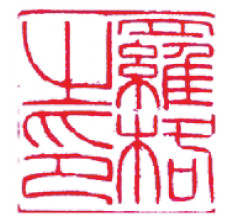
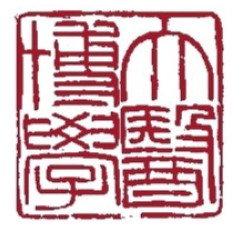
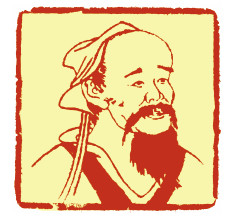
In China,seal carving has more than 3 700 years of history. In 2009,the United Nations Educational, Scientific and Cultural Organization put seal carving on the Representative List of the Intangible Cultural Heritage of Humanity. Seal carvings typically have special meanings with an emperor’s seal carving representing the highest ruling power. Individual seal carvings are certifications of one’s identity. Jacques Rogge,former chairman of the International Olympic Committee,has a personal seal carving (Figure 1) made by Mr. ZHANG Guowei. He used his seal carving for official documents during the Beijing Olympic Games in 2008. There are also seal carvings with written sentiments (Figure 2). In memory of the great clinical doctor,the journal Translational Neuroscience and Clinics uses HUA Tuo’s portrait (Figure 3) as its logo.
|
| Figure 1 Rogge’s seal carving. |
|
| Figure 2 Seal carving stating "Great doctors are very knowledgeable". |
|
| Figure 3 Seal carving of HUA Tuo’s portrait. |