


0 引言
依据傅立叶一维平板稳定导热原理设计的真空隔热油管广泛地应用于稠油注蒸汽热采[1],但价格昂贵。李晓益等[2]将外刷涂层的隔热油管用于地热开发;郭道宏[3]选择4种保温类型的保温油管进行高凝油开采试验,使部分伴热生产井转为冷采生产;付亚荣等[4-5]分析了内衬外裹油管和隔热保温防磨油管在高含蜡油井的应用情况;郭茜[6]提出了考虑有杆泵垂直井筒温度场的复合隔热内衬油管最佳铺设方案。刘兴仁等[7-10]发明了耐磨内衬耐压防腐纳米隔热复合油管、内衬耐磨隔热保温复合油管、内衬耐磨外裹隔热保温复合油管和内衬隔热保温油管等;曹俊杰等[11]发明了油井用隔热保温防磨油管。虽然这些保温隔热油管均取得了较好的现场应用效果,但是油井保温隔热油管的下入深度大多凭经验。
20世纪80年代末期,麦瑞天[12]提出了高凝点原油探井测试中真空保温油管下深的确定方法;宋洵成等[13]基于质量守恒、动量守恒和能量守恒定律,建立了真空隔热保温油管海洋采油井筒温度压力计算耦合模型,设计了保温油管下入深度;白健华等[14]以井口产液温度不低于析蜡点温度为目标,优化了海上高含蜡油田隔热油管的下入深度;管虹翔等[15]对海洋采油井真空隔热油管不同工况性能进行了数值模拟,得到了效果与产液量、含水体积分数、气油比及下入深度的关系。笔者以文献[11]中的隔热保温防磨油管为例,建立了油井井筒温度场控制模型和井筒传热模型,确定了保温隔热防偏磨油管下入深度[16]。该油管下入深度确定方法既提高了油井井口温度、防止了油井偏磨,又节约保温隔热防偏磨油管投资。
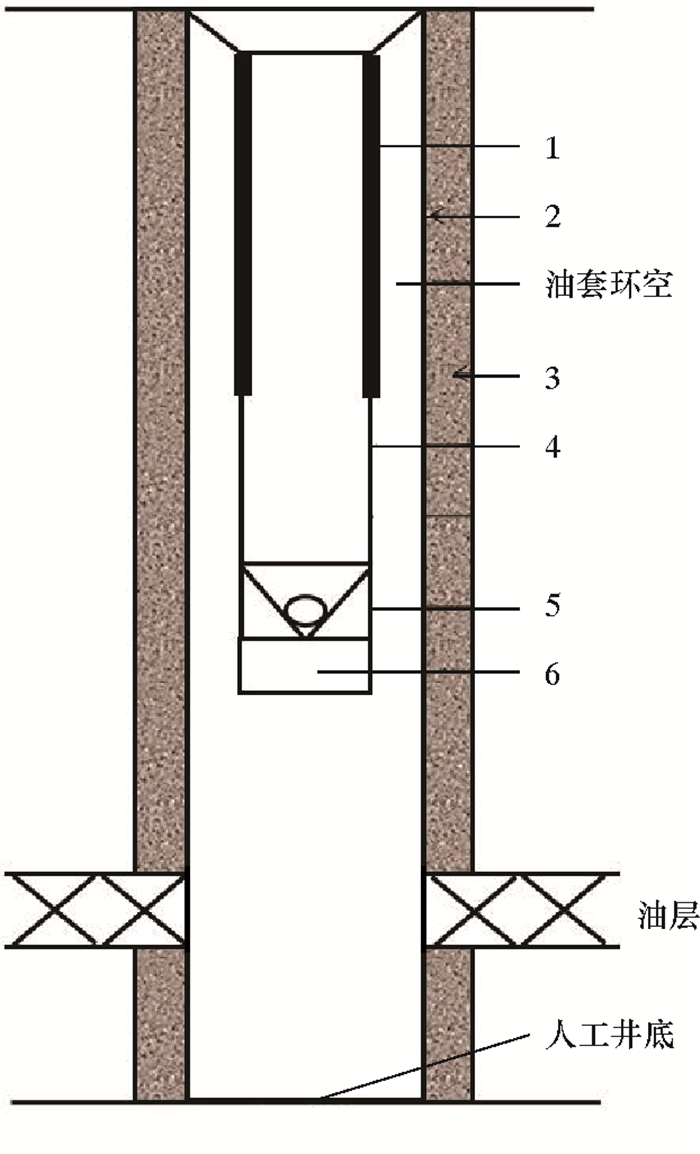
1 模型的建立 1.1 物理模型油井生产管柱由隔热保温防磨油管和普通油管组成,原油从油层流入井筒,流入井筒的原油自井底向上流至井口。根据原油流动和传热过程,建立如图 1所示的油井井筒换热物理模型。
|
| 1—保温防磨油管;2—套管;3—水泥环;4—普通油管;5—抽油泵;6—尾管。 图 1 油井井筒换热物理模型 Fig.1 Wellbore heat transfer physical model |
1.2 数学模型 1.2.1 模型假设
(1) 井筒内传热方式为传导和对流换热,井筒内流体(原油、天然气、地层水)为气液两相流;
(2) 原油在油管内为一维稳定流动,原油沿轴向流动时流速、压力和温度仅随位置不同而变化,径向上保持不变;
(3) 油层以油井井筒轴线为中心轴对称分布,油层内为二维传热;
(4) 水泥环与地层为强迫对流换热;
(5) 忽略生产期间的轴向热传导换热。
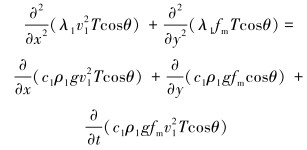
1.2.2 油井井筒温度场控制模型以油井井筒中心线为X轴,其正方向自井底指向井口;垂直于井筒中心线为Y轴。录取某一特定油井的油层中深L、地温梯度td、井斜角α、方位角φ,根据地质开发方案,确定某一特定油井下泵深度H、产液量Q1。以井筒中的任意一点作为微元控制体,建立油井井筒温度场控制方程。油管内油气水流动方向与X轴正方向相同,油气水的质量流量随轴向位置改变而质量守恒;油管内油气水受到的作用力之和等于其界面间的动量变化,表现为动量守恒,即有:
|
(1) |
其中

|
(2) |
|
(3) |
|
(4) |
|
(5) |

|
(6) |
|
(7) |
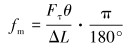
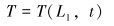
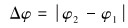
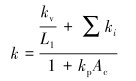
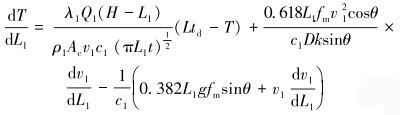
式中:λ1为井筒内流体的导热系数,W/(m2·℃);ρ1为油管内考虑温度、压力和含气情况下流体的平均密度,kg/m3;v1为油管内气液两相流的表观流速,m/s;T为井筒内流体到达井口的温度,℃;θ为井筒中某一井段的狗腿度,(°);fm为斜井井段油管单位长度正压力,N;Fτ为斜井段油管单位长度两端的轴向力,N;ΔL为斜井井段弧长或点距,m;c1为井筒内流体的热容量,J/(mol·℃);g为重力加速度,m/s2;t为井筒流体从抽油泵进口被举升至井口所需时间,s;L1为保温隔热防偏磨油管在油井中下入的深度,m;φ1为上测点方位角,(°);φ2为下测点方位角,(°);α1为上测点井斜角,(°);α2为下测点井斜角,(°);Ac为保温隔热防偏磨油管过流面积,mm2;k为速度常数;kv为亨利常数,取值4.40×106;∑ki为一级动力学转化速率,取0.55~0.60;kp为分配系数,一定温度下,处于平衡状态时,水与空气在固定相中的质量浓度和在流动相中的质量浓度之比。
1.2.3 井筒传热模型微元控制体发生的能量传递包括在X方向上单位时间内流入和流出控制体的能量(动能、势能和焓),即对流换热、保温隔热防偏磨油管与微元体之间的传导换热、微元体内油气水流动产生的内热源[16]。根据能量守恒定律可得到井筒的传热方程。
|
(8) |
式中:D为保温隔热防偏磨油管内径,mm。
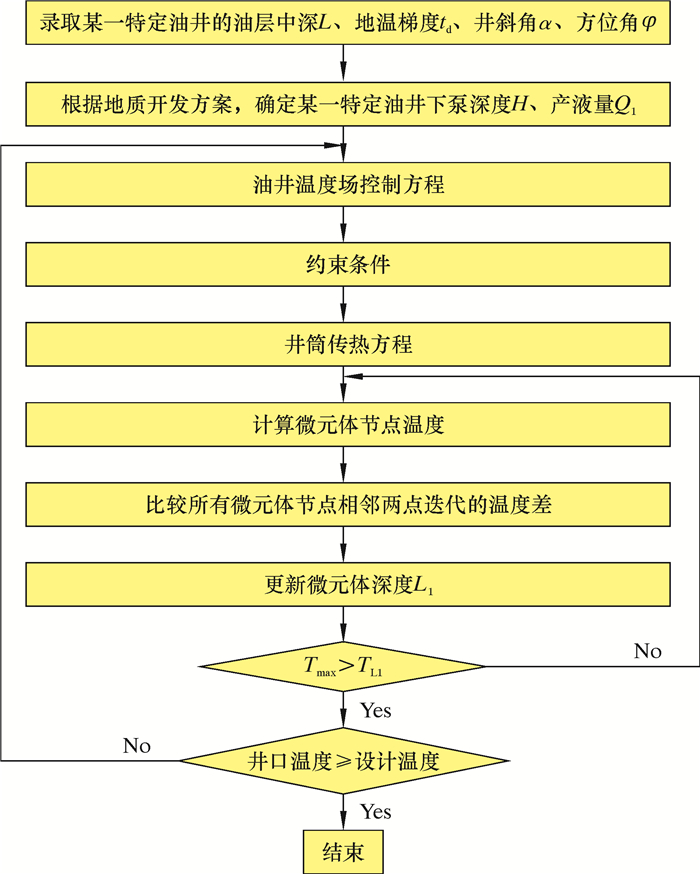
2 模型求解假设井筒为轴线无限长的线性热源,井筒与地层、保温隔热防偏磨油管与油气水流体、油套环空与套管(包括水泥环)的传热及能量损失遵循质量守恒、动量守恒和能量守恒定律。保温隔热防偏磨油管的下入深度可用有限元分析方法、单点打靶法[17]、渐近线法、指数积分法、贝塞尔函数积分法、恒温拉普拉斯变换法、恒热流量柱面热源法、辐射与对流边界法和迭代法[18]计算。计算结果与现场实际很接近,循环迭代可得到稳定收敛解。计算流程见图 2。
|
| 图 2 保温隔热油管下入深度迭代流程 Fig.2 Iteration process of the running depth of the thermal insulation tubing |
3 现场应用
根据计算得到的保温隔热防偏磨油管下入深度现场实施30余口油井,平均节约225 m保温隔热防偏磨油管,井口温度平均提高18.3 ℃,超过原油析蜡点温度,满足油井清蜡降黏的生产要求,油井井口回压平均降低0.42 MPa。
计算实例:B-2D井油层中深2 239.16 m,每100 m井段地温梯度3.3 ℃,井斜角、方位角以测井井斜数据计算,保温隔热防偏磨油管内径52 mm,普通油管内径62 mm;原油黏度31.84 mPa·s,含蜡质量分数27.16%,凝固点温度37 ℃,原油析蜡点温度41.3 ℃。日产液25 m3,含水质量分数17.2%,日产气240 m3,泵挂深度1 900 m,杆柱组合为ø22 mm×1 100 m+ø19 mm×800 m,泵径44 mm。未使用保温隔热防偏磨油管时井口温度为31.75 ℃,油井日常维护依靠化学清蜡降黏与热洗配合进行。按保温隔热油管下入深度迭代流程计算,保温隔热油管下入深度1 550 m,井口温度达到44.71 ℃。油井施工完成后,正常生产实测井口平均温度43.76 ℃,高于原油析蜡点,免去了油井化学清蜡降黏和热洗措施,未见结蜡现象。
4 结论(1) 将油井产液看作气液两相流,依据质量守恒、动量守恒和能量守恒定律,建立了油井井筒温度场控制模型和井筒传热模型,找到了合适的求解数值迭代方法,保证了模型求解的收敛和稳定。
(2) B-2D井的应用结果表明:模型计算结果与实际生产现场测试结果相对误差2.12%;现场30余口油井应用后平均节约225 m保温隔热防偏磨油管,平均井口温度提高18.3 ℃,油井井口回压平均降低0.42 MPa。
(3) 油井井筒温度场控制模型和井筒传热模型既可用于自喷井保温油管的下入深度计算,也可以为水合物形成、注氮气或者注蒸汽工艺参数设计提供依据。
| [1] |
张晓辉. 隔热油管连接处保温涂层的制备与隔热性能[J]. 材料保护, 2018, 51(2): 82-84. ZHANG X H. Preparation and property of thermal insulation coating on the connection between the insulated tubing[J]. Materials Protection, 2018, 51(2): 82-84. |
| [2] |
李晓益, 何汉平, 段友智, 等. 砂岩孔隙型地热井提高热效工艺分析[J]. 石油钻采工艺, 2017, 39(4): 484-490. LI X Y, HE H P, DUAN Y Z, et al. Analysis on the thermal efficiency improvement process for geothermal well in porous sandstone[J]. Oil Drilling & Production Technology, 2017, 39(4): 484-490. |
| [3] |
郭道宏. 油管隔热保温试验研究[J]. 石油矿场机械, 2011, 40(11): 26-28. GUO D H. Testing study of thermal insulation for tubing[J]. Oil Field Equipent, 2011, 40(11): 26-28. DOI:10.3969/j.issn.1001-3482.2011.11.007 |
| [4] |
付亚荣, 王爱芳, 马永忠, 等. 油井内衬外裹油管试验成功的节能启示[J]. 石油石化节能, 2015, 5(7): 26-27. FU Y R, WANG A F, MA Y Z, et al. Energy-saving inspiration from successful test of oil well lining and tubing[J]. Energy Conservation in Petroleum & Petrochemical Industry, 2015, 5(7): 26-27. |
| [5] |
付亚荣, 李仰民, 杨中峰, 等. 隔热保温防磨油管在高含蜡油井的应用[J]. 石油石化节能, 2019, 9(1): 44-46. FU Y R, LI Y M, YANG Z F, et al. Application of heat insulation, insulation and wear proof oil pipe in high wax oil well[J]. Energy Conservation in Petroleum & Petrochemical Industry, 2019, 9(1): 44-46. DOI:10.3969/j.issn.2095-1493.2019.01.015 |
| [6] |
郭茜.复合隔热内衬油管技术研究与应用[D].成都: 西南石油大学, 2016: 1-59. GUO Q.The research and application of composite insulation lining tubing technology[D].Chengdu: Southwest Petroleum Univetity, 2016: 1-59. http://cdmd.cnki.com.cn/Article/CDMD-10615-1017108112.htm |
| [7] |
刘兴仁, 刘悦.一种耐磨、内衬耐压、防腐、纳米隔热复合油管: 201610659765.5[P].2018-02-02. LIU X R, LIU Y. The utility model relates to a wear-resistant, lined, anti-corrosion, nano-insulating composite tubing: 201610659765.5[P].2018-02-02. |
| [8] |
刘兴仁, 刘悦.一种内衬耐磨、隔热保温复合油管: 2017105219019[P].2017-09-15. LIU X R, LIU Y. The utility model relates to a composite oil pipe with wear-resistant and heat-insulating lining: 2017105219019[P].2017-09-15. |
| [9] |
刘兴仁, 刘悦.一种内衬耐磨、外裹隔热保温复合油管: 2017103162622[P].2017-08-29. LIU X R, LIU Y. The utility model relates to a composite oil pipe with wear-resisting inner lining and heat insulation outside: 2017103162622[P].2017-08-29. |
| [10] |
刘兴仁, 刘悦.一种内衬隔热保温油管: 2017105223476[P].2017-08-18. LIU X R, LIU Y. A kind of insulation oil pipe with inner lining: 2017105223476[P].2017-08-18. |
| [11] |
曹俊杰, 李国栋, 孙凤合.一种油井用隔热保温防磨油管: 201610255875.5[P]. 2018-05-04. CAO J J, LI G D, SUN F H. A heat insulation and abrasion proof oil pipe for oil wells: 201610255875.5[P]. 2018-05-04. |
| [12] |
麦瑞天. 高凝点原油探井测试中保温油管下深的确定[J]. 石油钻采工艺, 1989, 8(2): 37-42. MAI R T. Determination of the depth of heat preservation tubing in the side test of high condensate crude oil exploration wel[J]. Oil Drilling & Production Technology, 1989, 8(2): 37-42. |
| [13] |
宋洵成, 管志川, 韦龙贵, 等. 保温油管海洋采油井筒温度压力计算耦合模型[J]. 石油学报, 2012, 33(6): 1064-1067. SONG X C, GUAN Z C, WEI L G, et al. A coupled model of temperature-pressure calculation for offshore production wellbores with insulated tubing[J]. Acta Petrolei Sinica, 2012, 33(6): 1064-1067. |
| [14] |
白健华, 刘义刚, 吴华晓, 等. 海上高含蜡油田隔热油管防蜡优化设计[J]. 长江大学学报(自然科学版), 2015, 12(35): 71-74. BAI J H, LIU Y G, WU H X, et al. Optimized design of vacuum insulated tubing for wax control in offshore oilfield with high wax content[J]. Journal of Yangze University(Natural Science Edition), 2015, 12(35): 71-74. DOI:10.3969/j.issn.1673-1409(s).2015.35.017 |
| [15] |
管虹翔, 李成见, 李萍, 等. 隔热油管技术应用于海上稠油常规生产井数值模拟分析[J]. 中国海上油气, 2008, 20(4): 257-260. GUAN H X, LI C J, LI P, et al. Numerical simulation about heat insulation tube's application in offshore conventional viscous oil well[J]. China Offshore Oil and Gas, 2008, 20(4): 257-260. DOI:10.3969/j.issn.1673-1506.2008.04.011 |
| [16] |
姚传进, 雷光伦, 蒋宝云, 等. 高凝油井筒温度场计算及流态转变分析[J]. 石油钻采工艺, 2011, 33(3): 42-46. YAO C J, LEI G L, JIANG B Y, et al. Wellbore-temperature distribution calculation and of flow pattern changing analysis in high pour-point oil wells[J]. Oil Drilling & Production Technology, 2011, 33(3): 42-46. DOI:10.3969/j.issn.1000-7393.2011.03.012 |
| [17] |
付亚荣, 李仰民, 马永忠, 等. 分层采油井下油嘴直径的设计方法[J]. 石油钻采工艺, 2017, 39(5): 600-603. FU Y R, LI Y M, MA Y Z, et al. A design method for choke diameter of separate layer production[J]. Oil Drilling & Production Technology, 2017, 39(5): 600-603. |
| [18] |
付亚荣. 人工鱼群算法在油井防腐阻垢设计中的应用[J]. 石油钻探技术, 2010, 38(3): 101-103. FU Y R. Oil well corrosion prevention design using artificial fish-swarm algorithm[J]. Petroleum Drilling Techniques, 2010, 38(3): 101-103. DOI:10.3969/j.issn.1001-0890.2010.03.024 |