干旱风沙区不同下垫面及土地利用类型的风力侵蚀特征
杨志
1
,
张国军
1
,
管凝
2,
任正龑
1,
魏小燕
1,
徐志友
1,
程金花
2
1. 宁夏水土保持监测总站,750021,银川;
2. 北京林业大学水土保持学院,100083,北京
收稿日期:2022-04-29; 修回日期:2024-04-26
项目名称:企事业单位委托科技项目“宁夏水土流失潜在危险性评价研究”(SBZZ-J-2020-09)
摘要:研究宁夏干旱风沙区的风力侵蚀特征,明确不同下垫面类型以及土地利用类型下的土壤风蚀情况,对当地保护、改良和合理利用水土资源具有重要意义。在宁夏盐池县,对流动沙丘、半固定沙丘、固定沙丘,以及灌木林地和荒草地这5种下垫面类型的风蚀模数进行测量,并用集沙仪法测量其输沙率,同时通过风蚀圈测定耕地、灌木林地和草地这几种土地利用类型的的风蚀情况。结果表明:1)流动沙丘、半固定沙丘、固定沙丘、灌木林地和荒草地的月平均风力侵蚀模数分别为6521.82、5888.18 、6735.09 、6101.45 和4076.91 t/km2,荒草地最低;2)流动沙丘、半固定沙丘、固定沙丘、灌木林地和荒草地的月平均蠕移输沙率依次为0.65、0.71、0.64、0.55和0.68 g/(m2·min),月平均全方位输沙率依次为2.80、0.82、0.75、0.68和0.56 g/(m2·min);3)宁夏干旱风沙区风蚀圈产沙量依次为耕地 > 灌木林地 > 草地。较大面积的沙蒿覆盖能够抑制沙丘的风蚀情况,且草本的种植能较好地减少风蚀,因此沙蒿等草本植物能够对宁夏干旱风沙区的风蚀防控及水土资源改良起到一定作用。
关键词:风蚀 沙蒿 灌木林地 草地 宁夏干旱风沙区
Comparison of wind erosion characteristics of different typical substrates and land use types in the arid and sandy areas
YANG Zhi
1,
ZHANG Guojun
1,
GUAN Ning
2,
REN Zhengyan
1,
WEI Xiaoyan
1,
XU Zhiyou
1,
CHENG Jinhua
2
1. Ningxia Soil and Water Conservation Monitoring Station, 750021, Yinchuan, China;
2. School of Soil and Water Conservation, Beijing Forestry University, 100083, Beijing, China
Abstract: [Background] The study of wind erosion characteristics in the arid sandy areas of Ningxia, together with the identification of soil wind erosion in different substrate types (sand dunes, shrubland, barren grassland) and land use types (available land, shrubland, barren grassland), is of great significance to the local conservation, improvement and rational use of soil and water resources, which in turn can promote the construction of a good ecological environment. [Methods] The experiment was conducted at a field station in Yanchi, Ningxia, and the monitoring period was from February to December. Five sub-bedding types were selected: mobile dune, semi-fixed dune, fixed dune, shrubland and barren grassland, where mobile dune, semi-fixed dune and fixed dune were planted with different cover levels of Artemisia desertorum. The plant cover average, height of vegetation and crust cover of the different sub-bedding types were investigated, and then their wind erosion thicknesses were measured by in situ brazing and wind erosion modulus calculated; the sand transport rates of the above five sub-bedding types, including creep sediment transport rate and omnidirectional sediment transport rate, were also measured by the sand collector method. The land use types of cultivated land, shrubland and barren grassland were selected to determine their wind erosion sand production thickness at different orientations (north, northeast, east, southeast, south, southwest, west, and northwest) by the wind erosion circle method. [Results] 1) The mean monthly wind erosion moduli for mobile dune, semi-fixed dune, fixed dune, shrubland and barren grassland were 6521.82, 5888.18, 6735.09, 6101.45 and 4076.91 t/km respectively, with fixed dune being the highest, followed by mobile dune and barren grassland being the lowest. 2) The monthly average creep sediment transport rates of mobile dune, semi-fixed dune, fixed dune, shrubland and barren grassland were 0.65, 0.71, 0.64, 0.55 and 0.68 g/(m2·min), and the monthly average omnidirectional sediment transport rates were 2.80, 0.82, 0.75, 0.68 and 0.56 g/(m2·min). The creep sediment transport rates of all sub-bedding types were similar, while the omnidirectional sediment transport rate of mobile dune was significantly higher than those of the other four sub-bedding types. Overall, the rate of sand transport was highest in spring (March to May), when wind erosion was more likely to be evident. 3) Cultivated land and barren grassland were dominated by the transport of sand and gravel, while shrubland mainly produced the accumulation of sand and gravel. [Conclusions] A larger area of A. desertorum can suppress wind erosion of sand dunes, and the planting of herbs is more conducive to reducing wind erosion than shrubs, so herbs such as A. desertorum can play a role in the prevention and control of wind erosion and improvement of soil and water resources in the arid and sandy areas of Ningxia.
Keywords:
wind erosion Artemisia desertorum shrub land barren grassland Ningxia arid sand area
风力侵蚀是指地表土壤颗粒在风力作用下被剥离、搬运和沉积的过程,是我国北方干旱、半干旱地区土地退化和荒漠化的重要原因[1−2],是制约区域可持续发展的关键因素。
宁夏是我国北方长城沿线干旱风沙区的重要组成部分,干旱风沙区荒漠草原占宁夏草原面积的59.06 %[3],生态环境脆弱,土壤风力侵蚀严重,剧烈的风蚀不仅降低表层土壤养分含量,威胁生产生活,同时加速土地退化,破坏自然环境,已成为制约自治区经济社会和生态环境协调发展的突出因素。而宁夏干旱风沙区下垫面类型特殊,且自然环境恶劣,人地关系紧张,因此对不同下垫面和土地利用类型下的风力侵蚀特征进行研究,对当地的风蚀防治和生态保护具有重要意义。基于此,笔者以流动沙丘、半固定沙丘、固定沙丘、灌木林地和荒草地这5种下垫面类型为研究对象,通过野外测钎法和集沙仪法,获取11个月的侵蚀模数和输沙量等数据,分析不同下垫面类型下的风力侵蚀特征,同时通过风蚀圈测定耕地、灌木林地和草地的风蚀情况,以期为宁夏干旱风沙区的风蚀防治提供科学依据。
1 研究区概况
研究区位于盐池县刘窑头风蚀试验站(E 107°13′02″, N 37°39′55″),地处鄂尔多斯缓坡丘陵与毛乌素沙漠边缘接壤地带,海拔1 ~ 568 m,坡度大多为2° ~ 15°,属盐池县内陆河流域。气候类型为温带大陆性季风气候, 多年平均气温7.7℃,无霜期128 d。多年平均年降水量294.6 mm,年均风速2.8 m/s,主害风为西北风,年大风时间达30 d以上。土壤以风沙土、灰钙土为主,观测样地内的植被主要为沙柳 (Salix cheilophila)和沙蒿(Artemisia desertorum)。研究时间为2019年2月1日—2019年12月2日。
2 研究方法
2.1 测定方法
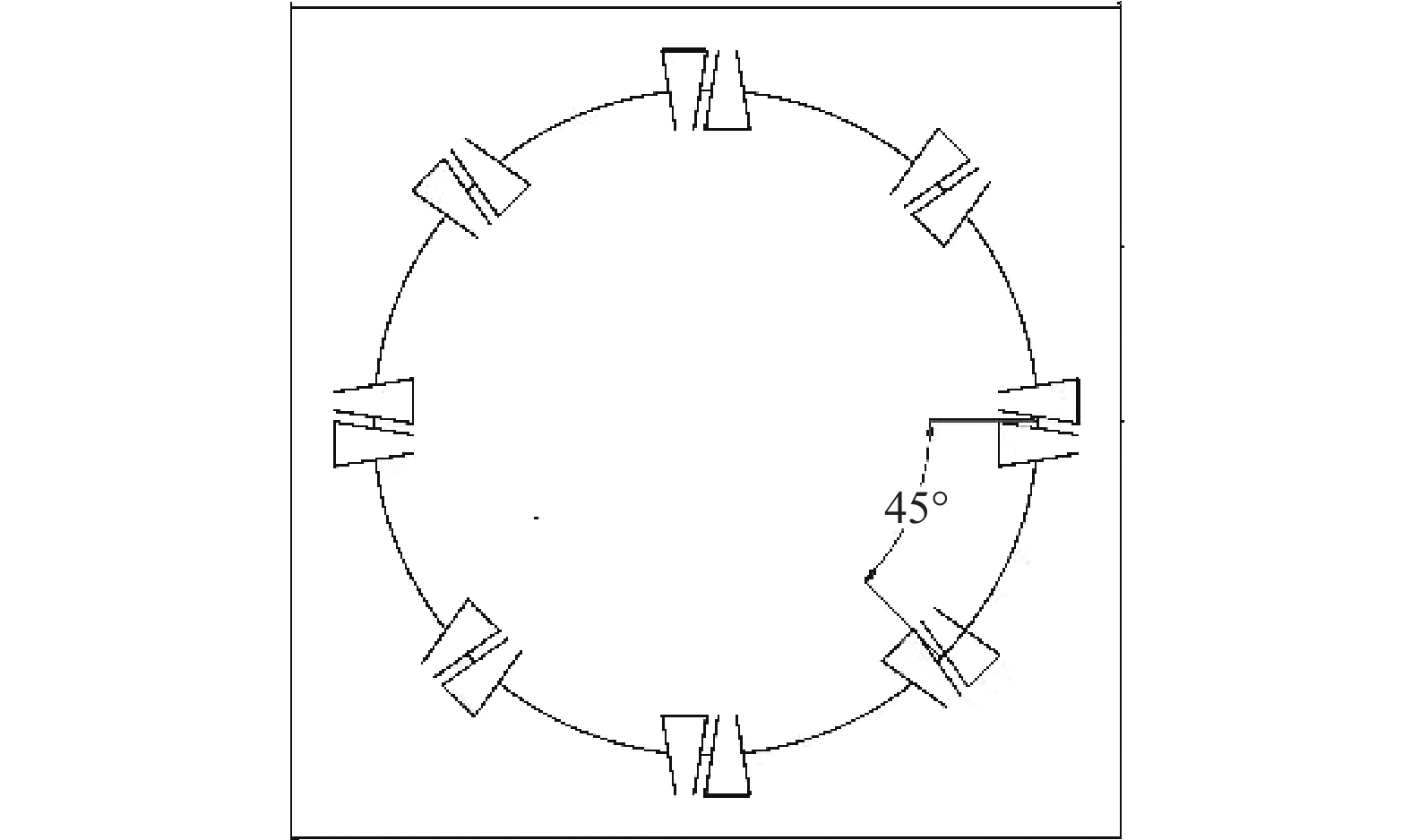
累积风蚀厚度和侵蚀模数用测钎法[4]进行测量。样地的测钎布设如图1所示。输沙率采用集沙仪[5]测定。
风蚀圈监测以植被覆盖度相近的农地、灌木林和放牧荒草地的风蚀圈样地为研究对象(图2),采用风蚀监测系统[6−7]进行风蚀监测。
2.2 参数计算
1)累积风沙侵蚀厚度。使用测钎进行测量,连续2次观测之间的风蚀厚度(逐次风蚀厚度△hi)为:
|
$ \text{Δ}{{h}}_{{i}} = ({{h}}_{{i}{+1}}-{{h}}_{{i}}) 。$
|
(1) |
式中:△hi为逐次风蚀厚度,cm;hi和hi+1为第i次和第i+1次观测时钢钎的出露长度,cm。
至第i次观测时,累积风蚀厚度(hit)为:
|
$ h_{i{\rm {t}}} = \sum\nolimits_{i=0}^i (h_i - {\mathrm{h}}_0)。$
|
(2) |
式中h0为开始时钢钎出露长度,cm。
某一个月的累积风沙侵蚀厚度(ht)为:
|
$ {h}_{\rm{t}} = {\sum }_{i = 1}^{\text{n}}({{h}}_{\text{n}}-{{h}}_{\text{1}}) 。$
|
(3) |
式中:hn和h1分别为第n次和第1次观测时的钢钎出露长度,cm。
2)侵蚀模数。某月的风蚀模数(mt)为:
|
$ m_{\mathrm{t}}=h_{\text{t}}\rho_{\text{s}}10\; 000。$
|
(4) |
式中:mt侵蚀模数,t/km2;ρs为土壤密度,g/cm3。
3)输沙率。
|
$ {q}{ = }\dfrac{{m}}{{t} {s}} 。$
|
(5) |
式中:q为输沙率,g/(m2·min);m为平均集沙量,g;t为观测时间,min;s集沙仪风沙进口面积,m2。
4)风蚀圈计算。风蚀圈内的风蚀量Q(g)计算式为
|
$ {Q} = \dfrac{C({{Q}}_{\text{jo}}-{{Q}}_{\text{ji}})}{l \times 8} 。$
|
(6) |
式中:Qjo为吹出样地集沙仪理论集沙总量,g;Qji为吹进样地集沙仪理论集沙总量,g;C为风蚀圈周长(本研究中为188.40 m);l为集沙口宽度(本研究中为0.02 m)。
风蚀圈内风蚀模数(m)的计算公式为:
|
$ {m} = \dfrac{{Q}}{{S }_\text{圆}}\times \text{10}^{-6} 。$
|
(7) |
式中:m为风蚀模数,t/km2;S圆为风蚀圈面积(本研究取0.002826 km2)。
2.3 数据分析
本研究使用Microsoft Excel 2016对数据进行整合,借助Origin Pro 2019绘图。
3 结果与分析
3.1 不同下垫面下的植被特征
下垫面的植被情况对风蚀特征具有很大影响,了解不同时段的植被生长状况对防治风蚀具有重要意义。将每个月的植被情况监测和调查如表1所示。
表 1(Tab. 1)
表 1 不同下垫面下的植被情况
Tab. 1 Vegetation under different substrates
月份
Month |
流动沙丘 Mobile dune |
|
半固定沙丘 Semi-fixed dune |
|
固定沙丘 Fixed dune |
覆盖度
Coverage/% |
平均高度
Average height/m |
结皮盖度
Crust coverage/% |
|
覆盖度
Coverage/% |
平均高度
Average height/m |
结皮盖度
Crust coverage/% |
|
覆盖度
Coverage/% |
平均高度
Average height/m |
结皮盖度
Crust coverage/% |
| 2 |
4.0 |
0.10 |
0 |
|
40.0 |
0.30 |
0 |
|
50.0 |
0.30 |
0 |
| 3 |
4.0 |
0.20 |
0 |
|
40.5 |
0.30 |
2.0 |
|
51.0 |
0.40 |
2.0 |
| 4 |
5.0 |
0.25 |
0.5 |
|
41.0 |
0.40 |
2.5 |
|
54.0 |
0.40 |
2.5 |
| 5 |
6.0 |
0.32 |
0.5 |
|
44.0 |
0.40 |
2.0 |
|
55.0 |
5.00 |
1.5 |
| 6 |
7.0 |
0.39 |
1.0 |
|
44.0 |
0.44 |
2.5 |
|
58.0 |
0.50 |
3.0 |
| 7 |
8.0 |
0.42 |
0.5 |
|
45.0 |
0.44 |
3.0 |
|
60.0 |
0.50 |
3.0 |
| 8 |
9.0 |
0.43 |
1.0 |
|
45.0 |
0.44 |
4.0 |
|
62.0 |
0.50 |
4.0 |
| 9 |
10.0 |
0.43 |
1.5 |
|
48.0 |
0.45 |
2.0 |
|
63.0 |
0.45 |
4.5 |
| 10 |
3.5 |
0.40 |
2.0 |
|
47.5 |
0.44 |
3.5 |
|
55.0 |
0.38 |
4.0 |
| 11 |
3.0 |
0.40 |
2.0 |
|
47.0 |
0.44 |
3.0 |
|
54.0 |
0.35 |
4.0 |
| 12 |
3.0 |
0.30 |
1.0 |
|
47.0 |
0.44 |
2.5 |
|
50.0 |
0.30 |
2.0 |
|
表 1 不同下垫面下的植被情况
Tab. 1 Vegetation under different substrates
|
表 1(Tab. 1)
月份
Month |
灌木林地 Shrub land |
|
荒草地 Barren grassland |
覆盖
Coverage/% |
平均高度
Average height/m |
结皮盖度
Crust coverage/% |
|
覆盖度
Coverage/% |
平均高度
Average height/m |
结皮盖度
Crust coverage/% |
| 2 |
70.5 |
1.78 |
0 |
|
35.0 |
0.12 |
0 |
| 3 |
72.5 |
1.78 |
6.0 |
|
37.0 |
0.22 |
2.0 |
| 4 |
74.0 |
1.81 |
7.0 |
|
39.0 |
0.31 |
3.0 |
| 5 |
78.0 |
1.81 |
8.0 |
|
40.0 |
0.40 |
3.0 |
| 6 |
79.0 |
1.83 |
8.0 |
|
43.0 |
0.43 |
2.5 |
| 7 |
81.5 |
1.83 |
7.5 |
|
45.0 |
0.48 |
1.0 |
| 8 |
83.0 |
1.84 |
8.5 |
|
45.0 |
0.50 |
2.0 |
| 9 |
83.0 |
1.86 |
8.0 |
|
46.0 |
0.49 |
1.5 |
| 10 |
79.0 |
1.81 |
7.5 |
|
44.0 |
0.48 |
1.0 |
| 11 |
78.0 |
1.80 |
7.0 |
|
42.5 |
0.41 |
1.0 |
| 12 |
75.0 |
1.75 |
6.0 |
|
42.0 |
0.35 |
1.0 |
|
表 1
|
如表1所示,灌木林地下的植被月平均覆盖度、高度和结皮盖度分别为77.59%、1.81 cm和6.68%,均为所有下垫面类型里最高的;流动沙丘、半固定沙丘和固定沙丘的沙蒿覆盖度、植被平均高度和结皮盖度依次增加。这说明沙蒿的种植能够起到固定沙丘的作用。固定沙丘、半固定沙丘和流动沙丘的植被覆盖率最大值均在9月,分别为10.0%、48.0%和63.0%,平均高度的最大值和覆盖率并不完全同步,三者的沙蒿平均高度最大月分别为8—9月、9月和5—8月,结皮盖度最大月分别为10—11月、8月和9月。灌木林地的植被覆盖率、平均高度和结皮盖度的最大月分别为8—9月、9月和8月,荒草地为9月、8月和4—5月。
3.2 不同下垫面下的风蚀厚度及侵蚀模数
将流动沙丘、半固定沙丘、固定沙丘、灌木林地和荒草地这5种植被下的风蚀厚度和侵蚀模数进行统计和计算,结果如表2所示。
表 2(Tab. 2)
表 2 不同下垫面下风蚀厚度及侵蚀模数
Tab. 2 Wind erosion thickness and erosion modulus under different underlying surfaces
月份
Month |
流动沙丘
Mobile dune |
|
半固定沙丘
Semi-fixed dune |
|
固定沙丘
Fixed dune |
|
灌木林地
Shrub land |
|
荒草地
Barren grassland |
风蚀厚度
Wind erosion thickness/
cm |
侵蚀模数
Erosion modulus /
(t·km–2) |
|
风蚀厚度
Wind erosion thickness/
cm |
侵蚀模数
Erosion modulus /
(t·km–2) |
|
风蚀厚度
Wind erosion thickness/
cm |
侵蚀模数
Erosion modulus /
(t·km–2) |
|
风蚀厚度
Wind erosion thickness/
cm |
侵蚀模数
Erosion modulus /
(t·km–2) |
|
风蚀厚度
Wind erosion thickness/
cm |
侵蚀模数
Erosion modulus /
(t·km–2) |
| 2 |
0.28 |
4760.00 |
|
0.19 |
3245.45 |
|
0.60 |
10132.00 |
|
0.04 |
680.00 |
|
0.02 |
340.00 |
| 3 |
0.77 |
13056.00 |
|
0.32 |
5501.82 |
|
1.43 |
24344.00 |
|
0.05 |
884.00 |
|
0.02 |
272.00 |
| 4 |
0.38 |
6392.00 |
|
0.29 |
4868.18 |
|
0.43 |
7344.00 |
|
0.08 |
1428.00 |
|
1.51 |
25670.00 |
| 5 |
0.06 |
1088.00 |
|
0.29 |
4945.45 |
|
0.19 |
3264.00 |
|
0.37 |
6324.00 |
|
0.02 |
408.00 |
| 6 |
0.28 |
4828.00 |
|
0.37 |
6336.36 |
|
0.14 |
2448.00 |
|
0.38 |
6392.00 |
|
0.14 |
2312.00 |
| 7 |
0.44 |
7548.00 |
|
0.38 |
6490.91 |
|
0.20 |
3332.00 |
|
0.40 |
6732.00 |
|
0.09 |
1496.00 |
| 8 |
0.26 |
4420.00 |
|
0.42 |
7186.36 |
|
0.04 |
680.00 |
|
0.39 |
6664.00 |
|
0.13 |
2176.00 |
| 9 |
0.32 |
5508.00 |
|
0.27 |
4559.09 |
|
0.32 |
5406.00 |
|
0.51 |
8636.00 |
|
0.08 |
1292.00 |
| 10 |
0.43 |
7276.00 |
|
0.29 |
4868.18 |
|
0.37 |
6256.00 |
|
0.49 |
8296.00 |
|
0.43 |
7344.00 |
| 11 |
0.57 |
9656.00 |
|
0.36 |
6181.82 |
|
0.28 |
4828.00 |
|
0.59 |
10064.00 |
|
0.13 |
2244.00 |
| 12 |
0.42 |
7208.00 |
|
0.62 |
10586.36 |
|
0.36 |
6052.00 |
|
0.65 |
11016.00 |
|
0.08 |
1292.00 |
|
表 2 不同下垫面下风蚀厚度及侵蚀模数
Tab. 2 Wind erosion thickness and erosion modulus under different underlying surfaces
|
由表2可知,流动沙丘和固定沙丘的侵蚀模数最大值均在3月,半固定沙丘和灌木林低的侵蚀模数最大值在12月,而荒草地在4月。根据SL190-2007《风力侵蚀强度分级标准》,对于流动沙丘来说,除2、5、6和8月之外,其他时间均发生强烈及以上程度的风蚀;半固定沙丘有6个月发生强烈及以上的风蚀,其余5个月发生中度风力侵蚀;固定沙丘在6、8和9月发生轻度风蚀,5、7和11月为中度风蚀,其余5个月发生强烈及以上的风力侵蚀;灌木林地2—4月发生轻度风蚀,5—8月发生强烈风蚀,9—10为极强烈风蚀,11—12月发生剧烈风蚀,风蚀强度随着时间的推进愈发强烈;而荒草地除4月和10月外,其余时间均发生轻度和中度的风力侵蚀。
通过计算得出,流动沙丘、半固定沙丘、固定沙丘、灌木林地和荒草地的月平均风力侵蚀模数分别为6521.82、5888.18、6735.09、6101.45 和4076.91 t/km2,固定沙丘最高,其次为流动沙丘,荒草地最低,这说明草本植物的覆盖能在一定程度上减缓风力侵蚀。
3.3 不同下垫面下的输沙率
输沙率是评估地表风蚀和土地荒漠化的重要参数,也是衡量气流中携沙重量的重要指标。将5种下垫面类型下的蠕移输沙率和全方位输沙率进行统计和计算。
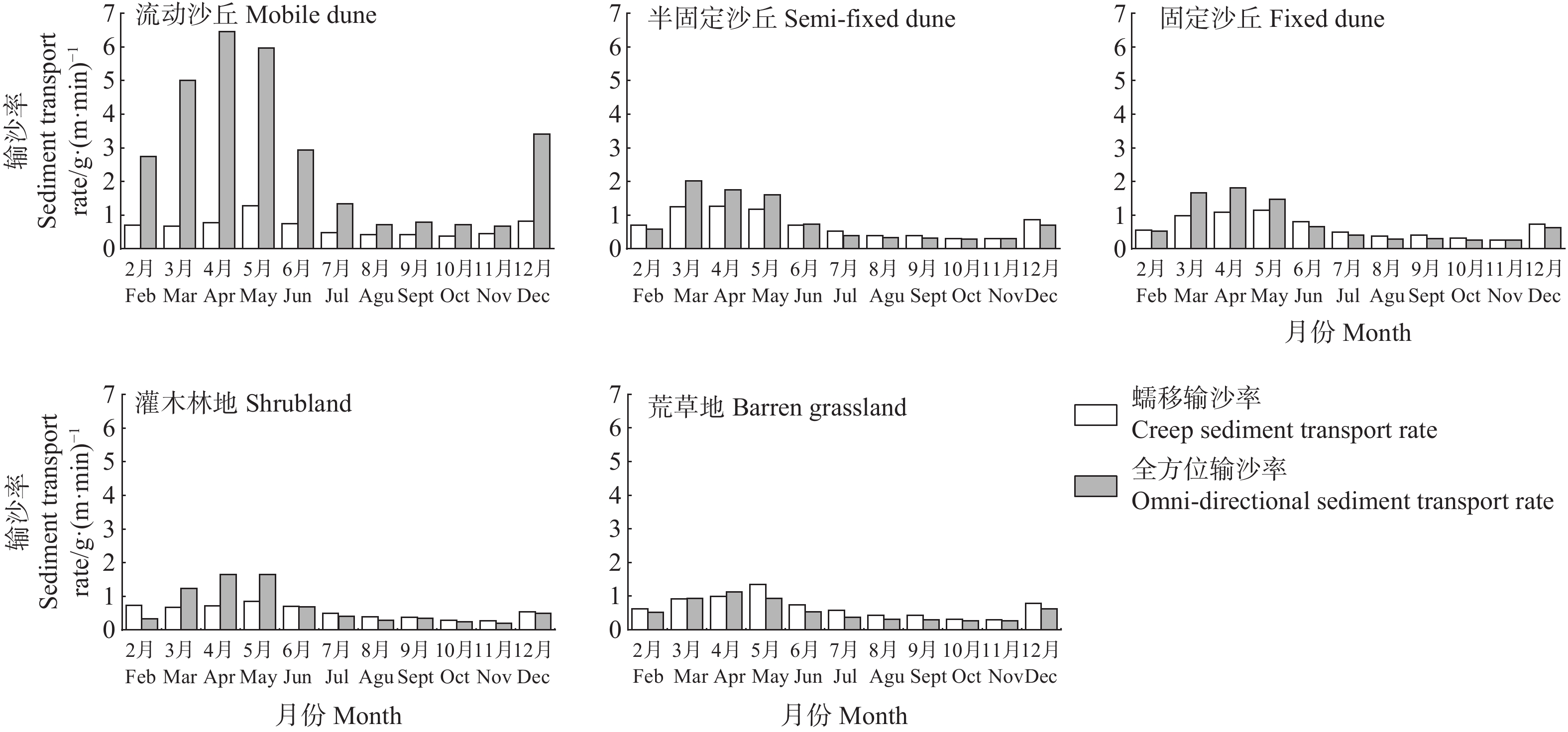
如图3所示,计算可得流动沙丘、半固定沙丘、固定沙丘、灌木林地和荒草地的月平均蠕移输沙率依次为0.65、0.71、0.64、0.55和0.68 g/(m2·min),月平均全方位输沙率依次为2.80、0.82、0.75、0.68和0.56 g/(m2·min);各样地的蠕移输沙率相近,而流动沙丘的全方位输沙率要明显高于其他4种下垫面类型,且其每个月的全方位输沙率均高于蠕移输沙率,这说明风沙流中细粒较多。半固定沙丘的蠕移输沙率最大值出现在5月,全方位输沙率的最大值均出现在4月;半固定沙丘在3—5月和11月时的全方位输沙率高于蠕移输沙率,二者的最大值分别出现在3月和4月;固定沙丘和灌木林地全方位输沙率和蠕移输沙率的最大月份相同,分别是4月和5月,且这2种下垫面类型下,全方位输沙率更高的月均为3—5月;而荒草地仅3月和4月时全方位输沙率更高,这说明荒草地风沙流中粗粒含量更高,4月时全方位输沙率达到最高,蠕移输沙率的最大值出现在5月。
3.4 不同土地利用类型下的风蚀产沙量
表3通过风蚀圈计算耕地、灌木林和天然草地下的风力侵蚀情况。可知,耕地、灌木林地和草地的风沙进出量之差分别为−92.54、65.30和−29.50 g,耕地和草地以沙砾的搬运为主,而灌木林主要产生沙砾的堆积;从整体而言,沙砾的搬运东向多于西向,南向多于北向,沙砾的堆积则相反。耕地进沙和出沙的的最大方向分别是西方和东方,灌木林地为北方和东方,天然草地为西方和东南方。产沙量高低为耕地 > 灌木林地 > 草地,这说明耕种在一定程度上会增加产沙量,而草本相对灌木能更大程度的抑制风力侵蚀。
表 3(Tab. 3)
表 3 不同土地利用类型下的风蚀产沙量
Tab. 3 Wind erosion and sediment yield under different land use types
| g |
| 方位 Position |
耕地风蚀量
Wind erosion of cultivated land |
|
灌木林地风蚀量
Wind erosion of shrub land |
|
草地风蚀量
Wind erosion of barren grassland |
进
Inflow |
出
Outflow |
进−出
Inflow-
outflow |
|
进
Inflow |
出
Outflow |
进−出
D-value |
|
进
Inflow |
出
Outflow |
进−出
Inflow-
outflow |
| 北 North |
108.75 |
73.90 |
34.85 |
|
209.68 |
88.66 |
121.02 |
|
62.43 |
40.07 |
22.36 |
| 东北 Northeast |
75.81 |
180.61 |
−104.80 |
|
97.64 |
233.61 |
−135.97 |
|
67.65 |
86.83 |
−19.18 |
| 东 East |
67.35 |
299.52 |
−232.17 |
|
89.97 |
208.78 |
−118.81 |
|
51.99 |
114.99 |
−62.99 |
| 东南 Southeast |
106.72 |
255.03 |
−148.31 |
|
81.09 |
116.26 |
−35.16 |
|
56.98 |
121.95 |
−64.97 |
| 南 South |
67.59 |
94.32 |
−26.73 |
|
180.80 |
84.68 |
96.12 |
|
49.48 |
58.18 |
−8.69 |
| 西南 Southwest |
76.31 |
109.37 |
−33.06 |
|
86.14 |
59.11 |
27.03 |
|
45.53 |
37.75 |
7.77 |
| 西 West |
323.13 |
61.51 |
261.62 |
|
110.33 |
65.10 |
45.23 |
|
106.40 |
37.10 |
69.30 |
| 西北 Northwest |
297.61 |
141.54 |
156.07 |
|
103.62 |
37.77 |
65.85 |
|
87.95 |
61.06 |
26.89 |
| 合计 Total |
1123.26 |
1215.80 |
−92.54 |
|
959.26 |
893.96 |
65.30 |
|
528.42 |
557.92 |
−29.50 |
单位面积产沙量
Sediment yield per
unit area/(t·km–2) |
468.02 |
506.58 |
−38.56 |
|
399.69 |
372.48 |
27.21 |
|
220.18 |
232.47 |
−12.29 |
风蚀圈产沙量
Sediment yield of
wind erosion circle |
1 322 638.65 |
1 431 604.50 |
— |
|
1 129 528.65 |
1052637.90 |
— |
|
622 214.55 |
656950.8 |
— |
| 注:—代表无数据。Notes: — indicates no data. |
|
表 3 不同土地利用类型下的风蚀产沙量
Tab. 3 Wind erosion and sediment yield under different land use types
|
4 讨论
宁夏干旱风沙区的植被在8—9月长势最为旺盛,但不同下垫面类型下的植被生长情况有一定差异。流动沙丘、半固定沙丘和固定沙丘的植被覆盖率、植被平均高度和结皮盖度依次递增,这说明沙蒿的种植有利于沙丘的固定。不同下垫面类型下的地表风蚀状况不同,而风蚀特征和程度可以用侵蚀模数和输沙率等指标进行衡量。固定沙丘的侵蚀模数大于流动沙丘和半固定沙丘,这与刘芳等[8]的研究结果不一致,这可能是因为本研究中固定沙丘上的植被高度较高,与地表的直接接触较少,植被减小近地面风速的效果不明显。输沙率大小依次为流动沙丘 > 半固定沙丘 > 固定沙丘,根据现场调查(表1),与沙蒿的覆盖度呈反比,这与王陇等[9]的研究结果相似。根据王佳庭等[10]的研究结果,相较于流动沙丘,固定沙丘和半固定沙丘由于植被群落发展完整,因而对风沙流的拦挡效应较强,且植被的覆盖有利于减少土壤的松散颗粒,降低土壤可蚀性,一定程度上抑制了风力侵蚀。
灌木林地和荒草地的风蚀特征具有一定差异,灌木林地的侵蚀模数大于荒草地,这可能是因为叶部分的增加会使土壤风蚀量呈指数型增加趋势[11],而灌木林的叶面积要大于荒草地,故其风蚀模数也更大。此外,植被高度会使风速轮廓线发生位移,对风蚀的发生也会产生影响[12],而灌木林相比荒草地直接覆盖在地表的叶片更少,因此近地面的风更易搬运地表沙砾。因此,草本的种植能够较好地抑制风蚀,改善宁夏干旱风沙区的生态环境。
通过风蚀圈测量,耕地的产沙量要大于灌木林地和草地,这与杨钦[13]的研究结果相同。这是因为农田的翻耕会影响土壤空间结构,使土质更加疏松,更容易被风吹蚀。
5 结论
1)流动沙丘和固定沙丘的侵蚀模数大于半固定沙丘,荒草地的侵蚀模数比沙蒿覆盖的沙丘和灌木林地小。
2)流动沙丘、半固定沙丘、固定沙丘、灌木林地和荒草地的蠕移输沙率相近,而流动沙丘的全方位输沙率要明显高于其他4种下垫面类型,全方位输沙率最低的为荒草地。
3)在宁夏干旱风沙区,风蚀圈产沙量耕地 > 灌木林地 > 草地。
6 参考文献
| [1] |
干旱半干旱区农田土壤风蚀特征及参数化研究进展[J]. 中国沙漠, 2022, 42(3): 105.
ZHANG Yue, CHEN Siyu, BI Hongru, et al. Characteristics and parameterization of farmland soil wind erosion in arid and semi-arid areas of China: Progress and challenges[J]. Journal of Desert Research, 2022, 42(3): 105. |
| [2] |
ZHANG Jieming, YU Xinxiao, JIA Guodong, et al. Determination of optimum vegetation type and layout for soil wind erosion control in desertified land in North China[J]. Ecological Engineering, 2021, 171: 106383. DOI:10.1016/J.ECOLENG.2021.106383. |
| [3] |
VOR、CVOR指数在宁夏干旱风沙区荒漠草原健康评价中的应用: 以盐池县为例[J]. 草地学报, 2018, 26(3): 584.
YU Hongqian, JIANG Qi, WANG Zhanjun, et al. Application of VOR and CVOR index for health assessment of desert steppe in Ningxia: Taking Yanchi county for example[J]. Acta Agrestia Sinica, 2018, 26(3): 584. |
| [4] |
喀斯特石漠化皆伐迹地不同微地形和小生境下的土壤侵蚀差异[J]. 水土保持通报, 2019, 39(4): 44.
YIN Qinghui, XIE Shiyong, CAI Xianli. Differences of soil erosion between micro-topography and microhabitat in clear-cutting site of karst rocky desertification area[J]. Bulletin of Soil and Water Conservation, 2019, 39(4): 44. |
| [5] |
冀北坝上地区农田防护林防风固沙效应研究[J]. 西北林学院学报, 2020, 35(4): 167.
YANG Yue, YANG Yitian, WU Zhiyong, et al. Studies on wind break and sand fixation effects of farmland shelterbelt in Bashang area of northern Hebei[J]. Journal of Northwest Forestry University, 2020, 35(4): 167. |
| [6] |
作物残茬及不同生物篱的防风蚀效果研究[J]. 水土保持学报, 2014, 28(4): 33.
ZHAO Peiyi, TUO Debao, REN Yongfeng, et al. Effects of different crop stubble combined with biological fences on reducing soil wind erosion[J]. Journal of Soil and Water Conservation, 2014, 28(4): 33. |
| [7] |
留茬和秸秆覆盖对农田土壤风蚀量的影响[J]. 生态学杂志, 2014, 33(8): 2060.
CONG Peifei, YIN Guanghua, GU Jian, et al. Effects of stubble and mulching on soil wind erosion[J]. Chinese Journal of Ecology, 2014, 33(8): 2060. |
| [8] |
乌兰布和沙区不同下垫面的土壤风蚀特征[J]. 林业科学, 2017, 53(3): 128.
LIU Fang, HAO Yuguang, XIN Zhiming, et al. Characteristics of soil wind erosion under different underlying surface conditions in Ulanbuh desert[J]. Scientia Silvae Sinicae, 2017, 53(3): 128. |
| [9] |
毛乌素沙地风沙土粒径分布特征及其影响因素[J]. 干旱区地理, 2019, 42(5): 1003.
WANG Long, GAO Guanglei, ZHANG Ying, et al. Particle size distribution of Aeolian soils in the Mu Us Sandy Land and the influence factors[J]. Arid Land Geography, 2019, 42(5): 1003. |
| [10] |
乌兰布和沙漠典型植物群落土壤风蚀可蚀性研究[J]. 干旱区地理, 2020, 43(6): 1543.
WANG Jiating, YU Minghan, YANG Hailong, et al. Soil erosibility of typical plant communities in Ulan Buh Desert[J]. Arid Land Geography, 2020, 43(6): 1543. |
| [11] |
毛乌素沙地东南缘沙柳(Salix psammophila)群落枯落物抗风蚀特征[J]. 中国沙漠, 2022, 42(1): 134.
YUAN Xiaoqin, LIU Shengqun, AI Feng, et al. Wind erosion resistance of litter of Salix psammophila community in the southeast edge of Mu Us Sandy Land, China[J]. Journal of Desert Research, 2022, 42(1): 134. |
| [12] |
新疆托克逊县不同配置防护林的防风蚀效能[J]. 水土保持通报, 2021, 41(6): 43.
RUOSHANGULI M, ALIYA B, CAI Kaixu, et al. Wind erosion effects of different shelterbelts in Toksun county, Xinjiang Wei autonomous region[J]. Bulletin of Soil and Water Conservation, 2021, 41(6): 43. |
| [13] |
杨钦. 河北坝上不同土地利用方式的风蚀研究[D]. 石家庄:河北师范大学,2017:27.
YANG Qin. The study on soil wind erosion of different land uses in Bashang area,Hebei,China[D]. Shijiazhuang:Hebei Normal University,2017:27.
|
 2025, Vol. 23