不同修复模式下排土场植被与土壤水热肥变化
张俊娇
1
,
胡杨
1,
史常青
1
,
赵廷宁
1,
吴川
1,
刘小勇
1,
刘秉儒
2,3
1. 北京林业大学水土保持学院,100083,北京;
2. 北方民族大学生物科学与工程学院,750021,银川;
3. 生态系统建模及应用国家民委重点实验室,750021,银川
收稿日期:2021-02-22; 修回日期:2021-12-13
项目名称:宁夏回族自治区重点研发计划“宁夏回族自治区重点研发计划贺兰山保护区采煤迹地生态修复技术与模式研究”(2018BFG02002)
通信作者简介:史常青(1969—),男,博士,副教授。主要研究方向:林业生态工程及工程绿化。E-mail:
scqbj@126.com
摘要:于2019年在汝箕沟露天煤矿排土场设置不同修复模式,分析修复1年后生态袋拦挡(C-S)、蜂巢格室全铺(C-F)、植被毯覆盖(J-C)、植被毯覆盖+生态袋拦挡(J-S)、植被毯覆盖+蜂巢格室全铺(J-F)6种修复模式下植被与土壤水分、温度和养分状况。结果表明:1)CK(只有草籽无任何修复)、C-S、C-F、J-C、J-S、J-F下植被盖度分别为0、0、0、10.00%、19.67%和16.33%,其中J-S下植被盖度显著高于其余模式(P<0.05),植株高度主要与植物种类相关,盐生草、沙生冰草、胡枝子的植株高度分别集中在20.0、3.5和4.0 cm。盐生草和胡枝子的生长状况良好,而沙生冰草的生长状况不良;2)在观测期间,C-S、C-F、J-C、J-S、J-F下土壤含水量分别显著增加3.12%、3.86%、5.88%、6.66%、5.98%(P<0.05),C-S、C-F下土壤平均温度和日温差变化较小,J-C、J-S、J-F下土壤平均温度分别降低2.10、2.68、1.95 ℃,土壤日温差分别显著降低1.64、1.37、1.54 ℃(P<0.05);不同模式下土壤pH和有机质含量变化较小,而土壤水解性氮和有效磷含量均显著下降(P<0.05);J-C、J-S、J-F下土壤全氮含量分别显著提高8.11%、10.81%、8.11%(P<0.05),土壤速效钾含量分别显著提高54.22%、38.36%、64.97%(P<0.05)。在本研究设计的修复模式中,J-C、J-S、J-F下植被盖度、土壤水分、全氮和速效钾含量显著增加,其中J-S下植被盖度增量最大。
关键词:修复模式 植被恢复 土壤水热肥 露天煤矿排土场
Changes of vegetation and soil water, temperature and nutrient under different remediation modes in a dump
ZHANG Junjiao
1,
HU Yang
1,
SHI Changqing
1,
ZHAO Tingning
1,
WU Chuan
1,
LIU Xiaoyong
1,
LIU Bingru
2,3
1. School of Soil and Water Conservation, Beijing Forestry University, 100083, Beijing, China;
2. College of Biological Science and Engineering, North Minzu University, 750021, Yinchuan, China;
3. Key Laboratory of Ecosystem Modeling and Application of National Civil Commission, 750021, Yinchuan, China
Abstract: [Background] It is necessary to carry out vegetation restoration through manual intervention in open-pit coal mine dumps of arid areas, while vegetation, soil water, temperature and nutrient are important indicators to evaluate the effectiveness of restoration. Therefore, the changes of above indicators under different remediation modes are analyzed to provide reference for vegetation restoration in open-pit coal mine dump. [Methods] Five modes of ecological bag block (C-S), honeycomb lattice room full cover (C-F), vegetation blanket cover (J-C), vegetation blanket cover + ecological bag block (J-S) and vegetation blanket cover + honeycomb lattice room full cover (J-F) were set in Rujigou open-pit coal mine dump, CK was the plot with only grass seeds sowed without any renediation and vegetation, soil water, temperature and nutrient under above remediation modes were compared by one-way ANOVA analysis. [Results] 1) The vegetation coverage under CK, C-S, C-F, J-C, J-S and J-F were 0, 0, 0, 10.00%, 19.67%, and 16.33% respectively, and the vegetation coverage under J-S was significantly higher than that under other modes (P < 0.05). Plant height was mainly related to plant species, and the height of Halogeton glomeratus, Agropyron desertorum and Lespedeza bicolor were nearly 20.0, 3.5 and 4.0 cm respectively. The growth of H. glomeratus and L. bicolor was good, while that growth of A. desertorum was poor. 2) During the observation period, the soil water content under C-S, C-F, J-C, J-S and J-F were 3.12%, 3.86%, 5.88%, 6.66% and 5.98% higher than that under CK, respectively. The average soil temperature under J-C, J-S and J-F decreased by 2.10, 2.68 and 1.95 ℃, and the daily soil temperature differences decreased significantly by 1.64, 1.37 and 1.54 ℃ (P < 0.05). The changes of soil pH and organic matter content were slight under different modes, while the contents of soil hydrolyzable nitrogen and available phosphorus were significantly lower than those under CK (P < 0.05). The soil total nitrogen content under J-C, J-S and J-F increased by 8.11%, 10.81% and 8.11%, and soil available potassium content increased by 54.22%, 38.36% and 64.97%. [Conclusions] There are differences in vegetation coverage, soil water, temperature and nutrient under different repair modes. The effectiveness of repair modes for vegetation restoration are not ideal, mainly related to poor water and nutrient condition of test dump. The change of vegetation coverage, soil water content, total nitrogen and available potassium content are significant under J-C, J-S and J-F, and the vegetation coverage under J-S increases the most among designed repair modes.
Keywords:
remediation modes vegetation restoration soil water temperature and nutrient open-pit mine dump
煤炭在我国经济发展中起重要作用,然而不合理的开发活动产生大量矿山废弃地。露天煤矿排土场是露天采煤活动产生的典型废弃地,其坡面裸露,养分流失严重[1],同时我国露天煤矿排土场主要分布在西北地区,该地区的干旱气候增加植被恢复的难度,以上因素导致干旱区露天煤矿排土场通常需要几十年才能完成自然恢复,因此通过人工干预对其进行生态修复十分必要[2-3]。
扰动区和困难立地的常用生态修复措施包括槽穴构筑、加固填土、铺挂材料等[4-5],生态袋拦挡、土工格室全铺和植被毯覆盖分别是其代表措施。布设生态袋通过人为制造槽穴以贮存土壤水分和养分[6-7],铺设土工格可以减少土体不稳定带来的土壤流失问题[8],覆盖植被毯能够减少外界影响以创造较稳定生境[9-10]。前人主要研究单一措施的应用效果,但根据以上措施的特点,生态袋拦挡或土工格全铺与植被毯覆盖结合的修复模式或可在干旱区排土场生态修复中发挥重大作用。生态修复的关键是植被恢复,其是植被与土壤环境相互作用的过程[11],土壤环境包括土壤物理、化学和微生物性质等,其中土壤水热肥对于植被恢复的影响较为明显。因此,研究生态修复模式对植被和土壤水热肥的影响,对筛选适宜的生态修复模式具有指导意义。
汝箕沟矿区遗留大量排土场,极易发生水土流失。鉴于此,笔者以该区域露天煤矿排土场为研究对象,布设生态袋水平拦挡、蜂巢格室全铺固结、秸秆植被毯覆盖以及将不同措施结合的修复模式,对比分析不同修复模式下排土场生态修复初期植被与土壤水热肥变化,以期为干旱区露天煤矿排土场的生态修复提供实践和理论参考。
1 试验区概况
汝箕沟矿区位于宁夏自治区石嘴山市大武口区(E 106°52′,N 38°52′),矿区具有典型大陆性气候特征,全年干燥少雨,年均降水量200 mm左右,蒸发量2 000 mm以上。年内降水分布不均,多发生在6—9月。试验区2020年总降水130.2 mm,8月降水量为46.4 mm。年内气温变化强烈,最低气温-23.5 ℃,最高气温35.1 ℃。矿区内的主要土壤类型是干旱气候与荒漠草原植被覆盖下共同形成的地带性土壤灰钙土,碱性强、养分低且富含碳酸钙。矿区内植被类型简单,主要为耐旱、耐瘠薄灌木和草本,多为藜科(Chenopodiaceaa)、禾本科(Poaceae)、菊科(Asteraceae)和豆科(Fabaceae)[12],植被盖度在10%左右。
2 材料与方法
2.1 试验设计
试验排土场位于汝箕沟矿区大峰露天煤矿东外排土场东北部,为平台、边坡相间的阶梯式地貌,每级台阶坡面高度约为10 m,台阶坡面为煤矸石与土混排后覆土形成,坡度33°~35°,坡向NW 15°~20°。笔者在试验排土场设置5种修复模式和对照,各处理的措施组成和使用材料如表 1所示。其中对照(CK)除撒草籽外无其他措施。每个处理重复3次,即共设置18个试验小区,小区面积为30 m2(10 m×3 m)。各小区均撒播蒺藜科的盐生草(Halogeton glomeratus)、禾本科的沙生冰草(Agropyron desertorum)、菊科的沙蒿(Artemisia desertorum)和豆科的胡枝子(Lespedeza bicolor)种子,种子比例为4∶2∶2∶1,播种密度为30 g/m2,种子净度和发芽率均在98%以上,由宁夏远声绿阳林草生态工程有限公司提供。试验区于2019年9月下旬完工,未进行养护工作。
表 1(Tab. 1)
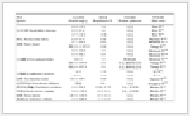
表 1 试验设计修复模式的基本信息
Tab. 1 Basic information of designed remediation mode in the experiment
修复模式
Remediation mode |
措施组成
Technique constitution |
| CK |
除撒草籽外无其他措施Only grass seeds sowed without any remediation |
| C-S |
生态袋拦挡Ecological bag block |
| C-F |
蜂巢格室全铺Honeycomb lattice room full cover |
| J-C |
植被毯覆盖Vegetation blanket cover |
| J-S |
植被毯覆盖+生态袋拦挡Vegetation blanket cover + ecological bag block |
| J-F |
植被毯覆盖+蜂巢格室全铺Vegetation blanket cover + Honeycomb lattice room full cover |
| 注:1)“生态袋拦挡”为双层品字形生态袋间隔2 m水平拦挡,生态袋材料为聚丙烯,使用排土场土壤填装生态袋、不装草籽,填土后为0.6 m×0.4 m×0.15 m的长方体;2)蜂巢格室材料为高密度聚乙烯,单位格室为l=445 mm, h=200 mm的菱形格;3)“植被毯覆盖”为全铺植被毯,植被毯为密度(300±20)g/m2的秸秆植被毯,毯内无草籽。Notes: 1) “Ecological bag blocking” is a 2-layer ecological bag with an interval of 2 m horizontal blocking. The ecological bag is made of polypropylene and filled with the soil of the dump without the grass seed, and it is cuboid of 0.6 m×0.4 m×0.15 m after filling. 2) The material of honeycomb is high density polyethylene, and the unit cell is diamond-shaped cell 445 mm long and 200 mm high. 3) “Vegetation blanket cover” refers to full-cover straw vegetation carpet, and the density of vegetation blanket is (300±20) g/m2, and there is no grass seed in the blanket.
|
|
表 1 试验设计修复模式的基本信息
Tab. 1 Basic information of designed remediation mode in the experiment
|
2.2 植被调查
2020年8月下旬按照分层取样法,在各小区上、中、下坡位各选取3个1 m×1 m草本样方进行植被调查[13],记录每个样方内植物种、植株高度、生长状况(将枯萎或缺叶认为是生长状况不良好)、总植被盖度,在覆盖植被毯的小区中只对高于植被毯表面的植株进行观测。
2.3 土壤取样及指标测定
植被调查后取各样方表层土壤(0~10 cm),测定土壤pH、有机质、全氮、水解性氮、有效磷和速效钾质量分数[14]。使用土壤温湿度记录仪测定土壤温度和含水量。
2.4 数据处理
采用SPSS 22.0软件通过单因素方差分析(One-way ANOVA)对不同修复模式下的植株高度、植被盖度、土壤指标进行显著性检验,并在差异显著性时进行多重比较(P<0.05,LSD,t检验)。
3 结果与分析
3.1 植被恢复的变化
由表 2可知,盐生草主要集中在19.2~21.2 cm,沙生冰草的植株高度差异较小,主要集中在3.0~4.0 cm,胡枝子的植株高度基本在4.0 cm左右。盐生草和胡枝子的生长状况良好,沙生冰草的生长状况不良。CK、C-S和C-F下无植物生长,相较于CK,J-C、J-S和J-F下植被盖度分别显著增加10.00%、19.67%和16.33%,其中J-S下植被盖度显著高于其余模式(P<0.05)。根据SL190—2007《土壤侵蚀分类分级标准》,各模式下植被盖度均为低覆盖(植被盖度<30%)。
表 2(Tab. 2)
表 2 不同修复模式下植被恢复状况
Tab. 2 Vegetation restoration status under different remediation modes
修复模式
Remediation mode |
植株种
Plant species |
植株高度
Plant height/cm |
生长状况
Growth condition |
覆盖度
Vegetation coverage/% |
| CK |
- |
- |
- |
0.00±0.00 d |
| C-S |
- |
- |
- |
0.00±0.00 d |
| C-F |
- |
- |
- |
0.00±0.00 d |
| J-C |
盐生草Halogeton glomeratus
沙生冰草Agropyron desertorum |
21.2±1.3 a
3.8±0.2 a |
A
B |
10.00±2.65 c |
| J-S |
盐生草Halogeton glomeratus
沙生冰草Agropyron desertorum
胡枝子Lespedeza bicolor |
19.6±2.0 a
3.6±0.2 av4.2, 4.6 |
A
B
A |
19.67±1.53 a |
| J-F |
盐生草Halogeton glomeratus
沙生冰草Agropyron desertorum
胡枝子Lespedeza bicolor |
19.2±3.2 a
3.5±0.4 a
4.0, 4.4 |
A
B
A |
16.33±1.51 b |
| 注:1)平均值±标准差,同列不同小写字母表示不同模式间差异显著(P<0.05),下同;2)“-”表示此处无相关指标;3)“生长状况”栏中,A表示良好,B表示不良. 4)J-S和J-F下仅有2株胡枝子,故表中仅各有2个高度数据。Notes: 1) Mean value±standard deviation,different lowercase letters indicate significant differences of different remediation modes in the same column (P<0.05), the same below. 2) “-” refers to there is no relevant index.3) In the “Growth condition” column, A is good and B is poor. 4) There are only two strains of Lespedeza bicolor under J-S and J-F, thus there are two data of height in the table.
|
|
表 2 不同修复模式下植被恢复状况
Tab. 2 Vegetation restoration status under different remediation modes
|
3.2 土壤水热肥的变化
由表 3可知,各模式下土壤含水量范围为13.11%~19.77%,与CK相比,C-S、C-F、J-C、J-S和J-F下土壤含水量分别显著增加3.12%、3.86%、5.88%、6.66%和5.98%(P<0.05)。根据土壤水分干旱程度分级标准[15],CK下土壤水分属于轻度干旱(土壤含水量为12%~15%),5种修复模式下属于适宜水分(15%~20%)。
表 3(Tab. 3)
表 3 不同修复模式下土壤含水量
Tab. 3 Soil water content under different remediation modes
修复模式
Remediation mode |
土壤含水量
Soil water content/% |
| CK |
13.11±2.62 b |
| C-S |
16.23±1.78 a |
| C-F |
16.97±2.02 a |
| J-C |
18.99±1.70 a |
| J-S |
19.77±1.81 a |
| J-F |
19.09±2.40 a |
|
表 3 不同修复模式下土壤含水量
Tab. 3 Soil water content under different remediation modes
|
由表 4可知,在观测期间,不同模式下土壤平均温度20.21~22.89 ℃,温差5.67~7.54 ℃。相较于CK,C-S和C-F下土壤平均温度和日温差变化较小,J-C、J-S和J-F下土壤平均温度分别显著降低2.10、2.68和1.95 ℃(P<0.05),土壤日温差分别显著降低1.64、1.37、1.54 ℃(P<0.05)。
表 4(Tab. 4)
表 4 不同修复模式下土壤平均温度和日温差
Tab. 4 Average temperature and daily temperature difference of soil under different remediation modes
修复模式
Remediation mode |
土壤平均温度
Average soil temperature/℃ |
土壤日温差
Soil daily temperature difference/℃ |
| CK |
22.89±1.33 a |
7.31±1.22 a |
| C-S |
22.35±1.46 a |
7.54±1.46 a |
| C-F |
22.15±1.91 a |
7.12±1.92 a |
| J-C |
20.79±0.68 a |
5.67±0.68 b |
| J-S |
20.21±0.18 a |
5.94±0.32 b |
| J-F |
20.94±0.81 a |
5.77±0.38 b |
|
表 4 不同修复模式下土壤平均温度和日温差
Tab. 4 Average temperature and daily temperature difference of soil under different remediation modes
|
由表 5可知,各模式下土壤pH为8.36~8.51,土壤有机质质量分数为41.13~50.40 g/kg,不同模式间差异不显著。各模式下土壤全氮质量分数为0.71~0.82 g/kg,其中J-C、J-S和J-F分别较CK显著提高8.11%、10.81%和8.11%(P<0.05)。各模式下土壤水解性氮质量分数为19.60~30.43 mg/kg,其中CK显著高于其余5种修复模式(P<0.05)。各模式下土壤有效磷质量分数为1.43~2.53 mg/kg,其中CK显著高于其余5种修复模式(P<0.05)。各模式下土壤速效钾质量分数123.67~215.00 mg/kg,其中J-C、J-S和J-F分别较CK显著提高54.22%、38.36%和64.97%(P<0.05)。根据全国第2次土壤养分分级标准,不同修复模式下土壤有机质属于1级,全氮属于4~5级,水解性氮和有效磷属于6级,速效钾属于1~2级。
表 5(Tab. 5)
表 5 不同修复模式下土壤pH和养分含量
Tab. 5 Soil pH and nutrient contents under different remediation modes
修复模式
Remediation mode |
pH |
有机质
Soil organic matter/(g·kg-1) |
全氮
Soil total nitrogen/(g·kg-1) |
水解性氮
Soil hydrolyzable nitrogen/(mg·kg-1) |
有效磷
Soil available phosphorus/(mg·kg-1) |
速效钾
Soil available potassium/(mg·kg-1) |
| CK |
8.51±0.12a |
46.60±4.00a |
0.74±0.00b |
30.43±0.40a |
2.53±0.21a |
130.33±0.58b |
| C-S |
8.36±0.37a |
46.23±3.61a |
0.71±0.01b |
25.00±1.11b |
2.20±0.12b |
123.67±0.58b |
| C-F |
8.43±0.25a |
41.13±6.55a |
0.73±0.02b |
23.33±0.81b |
2.10±0.10b |
125.00±0.76b |
| J-C |
8.42±0.25a |
46.60±3.10a |
0.80±0.06a |
20.65±1.75c |
1.50±0.20c |
201.00±2.00a |
| J-S |
8.43±0.15a |
50.40±3.00a |
0.82±0.03a |
19.60±1.40c |
1.65±0.25c |
180.33±21.50a |
| J-F |
8.51±0.28a |
47.85±0.55a |
0.80±0.01a |
19.95±2.45c |
1.43±0.06c |
215.00±66.00a |
|
表 5 不同修复模式下土壤pH和养分含量
Tab. 5 Soil pH and nutrient contents under different remediation modes
|
4 讨论
植被盖度是生态修复效果的重要评价指标,试验排土场基础水肥状况过差导致各模式下植被盖度均较低,但仅有包含植被毯覆盖的模式下有植物生长,这说明其是当地植被恢复的重要措施。同时,生态袋拦挡+植被毯覆盖、蜂巢格室全面固结+植被毯覆盖模式下植被盖度相较于单一措施显著增加,这证实了以上措施的结合可更有效地促进植被恢复[16-17]。虽然不同模式下植被盖度存在差异,但同种植物的植株高度基本一致。此外,本试验使用的植物中仅有沙生冰草出现了生长不良的状况,这是因为禾本科植物对于土壤养分的需求量较蒺藜科和豆科高[18]。综上,在本研究设计的修复模式中,组合模式下植被盖度增加明显,但植株高度和植物生长情况变化不大。
修复模式对土壤水热肥的影响可能会根据地区不同而存在差异。首先,生态袋、蜂巢格室和植被毯等材料会吸收部分水分,但不同模式下土壤水分含量相较于空白对照均显著增加,这说明在干旱区布设以上措施仍能有效增加土壤水分[8, 19]。其次,植被毯覆盖可以通过减少土壤散热以增温或减少阳光直射以降温,在本研究中植被毯覆盖主要起到降温作用,结合当地太阳辐射情况,推测其促进当地植被恢复的原因包括减少太阳辐射以提高植物幼苗成活率[20-21]。最后,修复模式主要通过减少水土流失以保持土壤养分[7, 17],但本研究中土壤水解性氮和有效磷含量却有所下降。这是因为布设措施会扰动土壤,由此造成的土壤结构破坏使得溶解态氮以氨氮形式挥发、溶解态磷转变成沉淀闭蓄态,一般需要经过长时间修复后氮磷元素才能呈增长趋势[22]。此外,不同模式下土壤有机质含量均偏高,但不能说明土壤肥力高,因为煤矸石和矿区内煤粉降尘等非营养物质会增加其数值[23]。整体来看,不同修复模式下土壤水温变化明显,而土壤养分的变化则需进一步观测。
5 结论
不同修复模式下植被盖度、土壤水分、温度和养分存在差异。植被毯覆盖、植被毯覆盖+生态袋拦挡、植被毯覆盖+蜂巢格室全铺模式下植被盖度、土壤含水量、全氮和速效钾含量均显著增加,在本研究设计的修复模式中植被毯覆盖+生态袋拦挡下植被盖度增量最大。
6 参考文献
| [1] | |
| [2] |
VENSON G R, MARENZI R C, ALMEIDA T C M, et al. Restoration of areas degraded by alluvial sand mining: Use of soil microbiological activity and plant biomass growth to assess evolution of restored riparian vegetation[J]. Environmental Monitoring and Assessment, 2017, 189(3): 120. DOI:10.1007/s10661-017-5852-3 |
| [3] | |
| [4] |
赵冰琴, 夏振尧, 许文年, 等. 工程扰动区边坡生态修复技术研究综述[J]. 水利水电技术, 2017, 48(2): 130. ZHAO Bingqin, XIA Zhenyao, XU Wennian, et al. Review on research of slope eco-restoration technique for engineering disturbed area[J]. Water Resources and Hydropower Engineering, 2017, 48(2): 130. |
| [5] |
高云峰, 徐友宁, 陈华清. 露天矿硬岩边坡复绿技术现状及存在问题[J]. 中国矿业, 2019, 28(2): 60. GAO Yunfeng, XU Youning, CHEN Huaqing. Situation and existing problems of vegetation restoration technology of hard rock slope in open-pit mining area[J]. China Mining Magazine, 2019, 28(2): 60. |
| [6] |
冯明明, 杨建英, 史常青, 等. 采石场松散体坡面两种治理措施的水土保持效益[J]. 水土保持通报, 2014, 34(6): 49. FENG Mingming, YANG Jianying, SHI Changqing, et al. Soil and water conservation benefits of two control measures on loose media slope in quarries[J]. Bulletin of Soil and Water Conservation, 2014, 34(6): 49. |
| [7] |
郭建英, 何京丽, 李锦荣, 等. 典型草原大型露天煤矿排土场边坡水蚀控制效果[J]. 农业工程学报, 2015, 31(3): 296. GUO Jianying, HE Jingli, LI Jinrong, et al. Effects of different measures on water erosion control of dump slope at opencast coal mine in typical steppe[J]. Transactions of the CSAE, 2015, 31(3): 296. |
| [8] |
蒋建良, 王华俊, 卿翠贵, 等. 采用土工格室的公路岩质陡坡绿化研究[J]. 公路, 2019, 64(4): 305. JIANG Jianliang, WANG Huajun, QING Cuigui. Greening of steep rock slope by geo-cells[J]. Highway, 2019, 64(4): 305. |
| [9] |
WANG Jingmao, LIU Hui, WU Xiaohui. Effects of different types of mulches and legumes for the restoration of urban abandoned land in semi-arid northern China[J]. Ecological Engineering, 2017(102): 55. |
| [10] |
郑海金, 杨洁, 黄鹏飞, 等. 覆盖和草篱对红壤坡耕地花生生长和土壤特性的影响[J]. 农业机械学报, 2016, 47(4): 119. ZHENG Haijin, YANG Jie, HUANG Pengfei, et al. Effects of straw mulching and vetiver grass hedgerows on peanut growth effects of straw mulching and vetiver grass hedgerows on peanut growth[J]. Transactions of the CSAM, 2016, 47(4): 119. |
| [11] | |
| [12] |
侯敏. 大峰露天煤矿开采终了边坡稳定性分析及其对策措施[D]. 四川绵阳: 西南科技大学, 2018: 15.
HOU Min. Stability analysis and countermeasures of mining end slope in Dafeng open-pit coal mine[D]. Mianyang, Sichuan: Southwest University of Science and Technology, 2018: 14.
|
| [13] |
方精云, 王襄平, 沈泽昊, 等. 植物群落清查的主要内容、方法和技术规范[J]. 生物多样性, 2009, 17(6): 533. FANG Jingyun, WANG Xiangping, SHEN Zehao, et al. Methods and protocols for plant community inventory[J]. Biodiversity Science, 2009, 17(6): 533. |
| [14] |
鲍士旦. 土壤农化分析[M]. 北京: 中国农业出版社, 2000: 178.
BAO Shidan. Soil agro-chemistry analysis[M]. Beijing: China Agriculture Press, 2000: 178.
|
| [15] |
宋帅杰. 抗蒸腾剂和保水剂对雷竹林抗高温干旱生理的影响[D]. 杭州: 浙江农林大学, 2015: 51.
SONG Shuaijie. Physiological effects of antitranspirant and super absorbent polymer on heat and drought resistance of Phyllostachys violascens forest[D]. Hangzhou: Zhejiang A&F University, 2015: 51.
|
| [16] |
珊丹, 何京丽, 刘艳萍, 等. 草原矿区排土场恢复重建人工植被变化[J]. 生态科学, 2017, 36(2): 57. SHAN Dan, HE Jingli, LIU Yanping, et al. Artificial vegetation changes on vegetation restoration in coal mine dump slope of typical steppe[J]. Ecological Science, 2017, 36(2): 57. |
| [17] | |
| [18] |
孔令伟, 薛春晓, 苏凤, 等. 不同建植技术对露天煤矿排土场生态修复效果的影响及评价[J]. 水土保持研究, 2017, 24(1): 187. KONG Lingwei, XUE Chunxiao, SU Feng, et al. Evaluation and effect of different construction techniques on the ecological restoration of the stackpile in opencast coal mine[J]. Research of Soil and Water Conservation, 2017, 24(1): 187. |
| [19] |
岳桓陛, 杨建英, 杨旸, 等. 边坡绿化中植被毯技术保水效益评价[J]. 四川农业大学学报, 2014, 32(1): 23. YUE Huanbi, YANG Jianying, YANG Yang, et al. Evaluation on water retention benefit of side slope vegetation carpet[J]. Journal of Sichuan Agricultural University, 2014, 32(1): 23. |
| [20] |
侯贤清, 李荣. 秋耕覆盖对土壤水热肥与马铃薯生长的影响分析[J]. 农业机械学报, 2020, 51(12): 262. HOU Xianqing, LI Rong. Effects of autumn tillage with mulching on soil water, temperature and nutrient and potato growth[J]. Transactions of the CSAM, 2020, 51(12): 262. |
| [21] |
汤瑛芳, 高世铭, 王亚红, 等. 旱地马铃薯不同覆盖种植方式的土壤水热效应及其对产量的影响[J]. 干旱地区农业研究, 2013, 31(1): 1. TANG Yingfang, GAO Shiming, WANG Yahong, et al. Soil water and thermal effects of different mulching and planting methods and their influences on yield in dryland potato production[J]. Agricultural Research in the Arid Areas, 2013, 31(1): 1. |
| [22] |
徐畅, 高明, 谢德体, 等. 土地整理年限对紫色丘陵区土壤质量的影响[J]. 农业工程学报, 2009, 25(8): 242. XU Chang, GAO Ming, XIE Deti, et al. Effect of land consolidation history on soil quality of purple hilly region[J]. Transactions of the CSAE, 2009, 25(8): 242. |
| [23] |
刘平, 张强, 程滨, 等. 电厂煤粉尘沉降特征及其对周边土壤主要性质的影响[J]. 中国土壤与肥料, 2010(5): 21. LIU Ping, ZHANG Qiang, CHENG Bin, et al. The deposition law of coal dust from power generation plant and its effects on prosperities of the surrounding soil[J]. Soil and Fertilizer Sciences in China, 2010(5): 21. |
 2022, Vol. 20