 2011, Vol. 31
"Shanzhai(山寨), " or mountain fortress, became the most popular catchphrase in the Chinese media in 2008 to describe a wide-spreading social phenomenon of imitating the well-established practices or brand-name products. This phrase first caught people's attention because of the shanzhai cell phones. English media often translates shanzhai into "knockoff." Borrowed from the 13 century Chinese classics Outlaws of the Marsh, shanzhai was originally "a metaphor to describe bandits who oppose and evade the corrupt authorities to perform deeds they see as justified" (Wikipedia).1 So in the classics, shanzhai stood against "guanfu, " or officialdom. In our contemporary context, if the officialdom refers to the state with associated institutional protections and constraints, then shanzhai relates to either the practices that are both civilian and informal in nature, or the products that are manufactured and exchanged through the channels neither protected nor restrained by the state. According to the definition shared in China's cell phone industry, shanzhai cell phones involve those whose producers have not registered their business with the state, paid taxes, and sent their newly developed models to the state testing center for quality examination (Sun W., 2009). In the media and among the general public, however, shanzhai cell phones also include those made by producers who do not have their own R & D capacities and independent brand names and are sold at lower prices.
1. Wikipedia. "Shanzhai." http://en.wikipedia.org/wiki/Shanzhai.
Since the state has neither provided protections nor received taxes from the transactions of shanzhai cell phones, this industry qualifies as the informal economy (Centeno & Portes, 2006:26). Having appeared in a high-tech industry, shanzhai cell phones directly contradict the old images of the informal economy as being inferior, peripheral, and pre-modern. In this industry, the entrepreneurs from the informal economy have played a leading role in coordinating production, while many companies from the formal economy, big and small, have only served as their parts suppliers. This is a revolutionary change of social status in the hierarchical relationship between the formal economy and the informal economy.
This analysis of the emergence of the shanzhai cell phone industry in China, explores the profound impacts of the information revolution and globalization on the informal economy and highlights the contributions of entrepreneurship and innovation to its empowerment. It also tries to answer the questions such as what have been the driving forces behind the development of the shanzhai cell phones? What has led to the unprecedented empowerment of the informal economy in China? First, this analysis shows that the information revolution has drastically democratized the tools of production inviting wide participation in production (Anderson, 2006). This has provided the entrepreneurs in the shanzhai cell phone industry with a special opportunity to reform the Wintel production regime by creating a "hypothetical enterprise" with a multi-divisional structure sustained by an industrial cluster (Pan, 2008; Borrus & Zysman, 1997). The servicization of production resulted from this process has greatly strengthened the competitiveness of the informal economy. Second, globalization has significantly expanded the potential markets for the "long-tail" products that used to have limited local demands (Anderson, 2006). By bringing in three billion more populations in the world into the process of economic development since the early 1990s, globalization has enabled the entrepreneurs in China's informal economy to aggressively expand their businesses by serving the needs of the low-income groups in both China and other developing countries in the battle against the digital divide, and to open up many new markets for the small businesses that used to suffer from the lack of operational scale and production technology. Third, in the process of benefiting from information revolution and globalization, the agency of entrepreneurs is crucial to the empowerment of the informal economy. The shanzhai entrepreneurs in Southern China were able to build a spatial overlap between an industrial cluster and specialized markets, creating an endogenous mechanism of expansion that promotes both the economy of scope and the economy of scale and improves the flexibility of producers in responding to the changing market conditions. By closely connecting supply with demand, this spatial overlap has enabled the shanzhai entrepreneurs in the informal economy to compete with the brand-name producers, both domestically and internationally, in the formal economy.
Towards the end of this paper there will be further discussion about the implications of the information revolution and globalization to the informal economy. When a wide participation in production becomes the epical trend, many technological barriers that used to restrain the informal economy have begun to dissolve. In a new era where the boundaries between corporations and individuals becomes blurry, informality begins to have post-modern significance. As the world becomes more flat and the traditional division of labor and social hierarchy associated with mass production starts changing, the informal economy will have profound impacts on our future.
A MOUNTAIN FORTRESS FOR CELL PHONESShanzhai cell phones have witnessed a rapid development in China. Cell phones have been the fastest growing and profitable segment in China's IT industry, and has generated most exports and created most of the employment opportunities. As early as 2005, cell phone production in China had already generated $60-70 billion in revenues, $20 billion exports, $10 billion taxes, counted for more than 50% of the global production capacities, and supported the largest consumer market in the world (MII, 2005). According to the statistical data collected by the International Telecommunication Union, among 4 billion units of cell phones being used in the world in 2008, China counted for 634 million units (ITU, 2009c). Among the 250-300 million units of cell phones produced in China each year, 100-150 million units are estimated as shanzhai cell phones (Sun W., 2009). In 2009 shanzhai cell phones in China were no longer a symbol of cheap communication tools for the poor, they also became fashionable among the rich private entrepreneurs in Shenzhen (Zeng, 2009).
The production base for shanzhai cell phones is an industrial cluster located in Shenzhen, Guangdong province, in Southern China. Shenzhen was the first special economic zone after China started its reform and opening in the late 1970s. The cell phone industry began to develop in Shenzhen in 2002 when the global cell phone producers came here either to subcontract the production of their brand name products or to open their own production facilities. In 2003, Taiwanese chip maker Media Tek entered the cell phone chip market, providing the turn-key service to downstream producers. From then on, an entire value chain for the cell phone industry began to emerge in Shenzhen and it involved both the formal and informal economies. In this value chain, Media Tek is at the high end making both chip and software for cell phones. Below it several hundreds of cell phone design companies provide the complete packages of technical solutions. Such companies used to concentrate in Shanghai, however, in the past several years many design houses have appeared in Shenzhen. Below the design companies, there are thousands production-organizing companies. Most of them are located in Chegongmiao, an old industrial park in Shenzhen that was transformed into a high tech park around the turn of the 21st century. Production-organizing companies play the leading role in the shanzhai cell phone production and their jobs include selecting the exterior design and functions for cell phones, manage the outsourcing process, and selecting the marketing and distribution channels. Below production-organizing companies, tens of thousands of companies produce parts and assemble the parts into cell phones for their clients. All of these companies are concentrated in an industrial cluster with a roughly 20 square-kilometers radius in Shenzhen and its surrounding areas (Pan, 2009b).
The major distribution center for shanzhai cell phones is located in the specialized markets on North Huaqiang Avenue. In terms of size, North Huaqiang Avenue is only a 1.4 square-kilometer commercial street in Shenzhen's Futian District. However, in terms of revenues it is No.1 in China. Everyday, more than half a million people work there, and the daily cash flow of North Huaqiang Avenue is about $1.4 billion. There are about 23 specialized markets at North Huaqiang Avenue and their spaces together constitute 20% of the total commercial space in Shenzhen. Among these special markets, 14 have space more than 10, 000 square-kilometers. Affected by its prosperity, the rent at North Huaqiang Avenue has become 10 times higher in comparison with the late 1990s. North Huaqing Avenue is also China's most important market for computer hardware and parts for electronic products. More than a thousand cell phone distributors, ranging from the local and provincial to the national and international levels, make transactions for shanzhai cell phones in several specialized markets every day. In these markets at North Huaqiang Avenue, buyers can find all kinds of cell phones, ranging from the illegal copycats, to cell phones with unknown or obscure brand names, cell phones with no brand names, refurbished cell phones, and brand name phones on clearance (Sun W., 2009; Xu, 2006).
Given the fact that shanzhai cell phones are often perceived as pirated products, do shanzhai cell phones have quality problems?
The answer to this question is yes and no.
Cell phones are the product among all electronic products that receives the most complaints from consumers in China every year. Nevertheless, a representative of the industry points out that the absolute number of complaints for cell phones needs to be understood in a context. Cell phones have the largest ownership among any electronic products in China. In Shenzhen, 95% of its population owns a cell phone. In the whole of China, 40% of the population owns a cell phone. The bigger percentage of the ownership in the population, the more chances there will be problems. Also different from other electronic products, cell phones basically are in operation 24 hours a day, seven days a week. The longer the operation time is, the more chances for a cell phone to have problems. Finally, in contrast to other electronic products that are stationary, cell phones are taken by their owners everywhere under all weather conditions. Thus, it is natural that cell phones can have more problems than other products. In fact, the quality of the cell phones made in China has substantially improved, and the repair-return rate has come down from 20% in 2002 to 4%-5% now, which is at the same level with Nokia and Motorola (Sun W., 2009).
On the other hand, the quality of shanzhai cell phones can be very good. According to the Korean Daily, a copycat named "Anycat, " modeled from Samsung's Anycall SGH-1900, a large touch-screen cell phone that targeted the global market, emerged in China in 2008. Samsung got hold of a unit of shanzhai Anycat, and tested its quality and functions. To Samsung's surprise, not only was Anycat's functions and technologies as good as Anycall SGH-1900, its prices in the Chinese market were between one third and one fifth less compared to Anycall SGH-1900's. It should be noted, this is not an isolated case. Some functions in iPhone's copycat "HiPhone" and "Phone" are even better than iPhone, in addition to their close match with iPhone's exterior design and functions. The copycat for Sony's PSP Angda VX 767 even has longer durability for its batteries (Fenghuangwang, 2009).
Shanzhai cell phones are not simply an isolated phenomenon. They represent China's informal economy at large. Since the 1980s, shanzhai products like watches, calculators, game stations, electronic toys, radios, electronic dictionaries, CD players, DVD players, MP3s, and MP4s have appeared successively in electronic stores. Recently, in addition to cell phones, shanzhai products are trying to copy big flat-screen TVs, digital cameras, netbook computers, and some medical electronic devises. In fact, many current shanzhai cell phones companies used to produce other shanzhai products (Sun W., 2009).
More important, the shanzhai phenomenon is not limited only to China. In the H1N1 flu crisis of 2009, Antiflu, a generic version of Tamiflu, made by Indian company Cipla, brought Media attention to North America (NPR, 2009). Cipla has been making generic drugs dealing with urgent diseases, ranging from Cipro, an antibiotic for anthrax, to the anti-retroviral drug for HIV-positive people. In developed countries, anti-retrovirals cost around $6, 000 per patient per year; the Indian generic version is available in the developing world for $800. Since Antiflu is an exact clone of Tamiflu and it has been approved by the World Health Organization and is already for sale in India which led to the Centers for Disease Control and Prevention of the U.S. government to take an open position into considering importing the generic flu drug from India (NPR, 2009).
In this way, informality has always been an important component of the economy, especially in developing countries. As a Chinese proverb says, the sparrow may be small but it has all the vital organs. An analysis on shanzhai cell phones can help us not only glance into an important industry in the Chinese economy, but also understand the mechanisms that have connected the informal economy with the formal economy, and the epical forces that have empowered the informal economy in general.
THE DILEMMA OF STATE CONTROL: FROM REGULATION TO ACCOMMODATIONThe existing literary approaches to the informal economy in relation to the state portrays this relationship dialectically. As Miguel Centeno and Alejandro Portes point out, "the relationship between the informal economy and the state is, by definition, one of inevitable conflict" (Centeno & Portes, 2006:27). However, at the same time the conflicts between the state and the informal economy often devolve into various forms of accommodation. Edgar Feige (1990) once used four categories to differentiate the various angles in the phenomenon of underground economy, including illegal economy, unreported economy, unrecorded economy and informal economy. Each of these four dimensions can be found in shanzhai cell phones and they illustrate both the tensions and accommodations between the state and the informal economy.
Illegal economy contains the production and distribution of legally prohibited goods and services by the state, such as drug trafficking, prostitution, and illegal gambling (Feige, 1990). This category presents a scenario in which the interest of the state conflicts sharply with that of the underground economy and the state passes legislation directly against the underground economy. In this scenario, any violation of the laws leads to the punishment by the state's coercive power. Copycat cell phones apparently belong to this category. These cell phones copy the exterior design and trade mark of brand-name cell phones, violating their intellectual property rights. The weight of copycats in the total number of shanzhai cell phones is estimated between 20% and 30%. These copycats have generated strong criticisms both domestically and internationally.
The copycat cell phones do not simply copy everything from the brand names because the original designs of the chip and software for cell phones cannot be learned through a process of reverse engineering after they are made into electric circuits and it is difficult to disintegrate them technically. The violations of the intellectual property rights take place mainly in the exterior design and trade mark (Sun W., 2009; Pan, 2009a). Some copycats attempt to go around the law by altering the trade mark. For example, they changed Nokia to Nckia, Sony to Scny, and iPhone to HiPhone.
The copycat cell phones are the most controversial part of shanzhai cell phones. Despite the fact that they are relatively small in size, they have often attracted negative attentions from the media. The state has an obligation to crackdown on these illegal copycat cellphones.
Unreported economy refers to the actions whose incomes should be reported to the taxation authority but is not (Feige, 1990). In this category, the state seems to have substantial material interest jeopardized by the underground economy because this category directly involves the state tax revenues. One would expect that the local governments in China would supervise the shanzhai cell phones tightly in order to collect tax.
In reality, however, taxation is a very complicated issue in the local political economy in China. In theory, the state should tax companies according to the amount of their revenues or profits. In practice, many local governments in China do not levy tiny companies. There are taxation laws, but they have not been rigidly enforced. The reasons for this are collecting taxes from numerous tiny companies will be a major challenge to the capacities of local governments. Another is that in order to stimulate economic growth and also maintain certain level of revenues, local governments often choose to levy these companies according to the headcount, instead of revenues or profits. Also, when many local governments compete for mobile capital and opportunities for economic growth, low taxation is often used as a major weapon. No tax is perceived as a comparative advantage, instead of a problem. In addition, local governments have a different rationale for not collecting taxes from the tiny companies: as long as these companies operate businesses in their administrative boundaries, these tiny companies will create employment opportunities. As employment opportunities grow, the incomes of the employees in these companies will be spent within the local communities. Since they need housing, the land price will go up and the government controls all land sales, they can get back the money through higher land prices (Pan, 2009c).
Unrecorded economy means that companies circumvent the recording requirement of government agencies in charge of statistics (Feige, 1990). As a result, the activities in the informal sector often do not show up in the calculation of the GDP. This is a category in which the state may care least about. The reason for being unrecorded is often related to the incentive of escaping from taxation. In Shenzhen, no one knows precisely how many shanzhai cell phone companies exist. The gap between two estimates can be significant. The term shanzhai itself suggests that this part of the economy is beyond the government screening and that reliable statistical data on the shanzhai cell phone companies simply do not exist.
Informal economy comprises economic actions that bypass the costs of, and are excluded from the protection of laws and administrative rules covering property rights, business license, labor contract, torts, financial credits, and social protection (Feige, 1990). As Portes and Haller point out, among the four categories discussed by Feige, the most important distinction is the one between illegal economy and informal economy because most informal economies are both unreported and unrecorded (Portes & Haller, 2005). In this category, the state functions more as a structure than as an actor. Its role is more passive unless the conflicts arise within its judiciary boundary. Many shanzhai cell phone companies do not need to send the cell phones they produce to the government test center because they are engaged in the original equipment manufacturing (OEM) for other brand names, either cell phone producers or communication companies. In such a case, products of shanzhai cell companies will pass the test if they are sent to the government test center. Besides, almost all shanzhai cell phone companies rely on cash in their transactions due to the lack of trust. The cash-based transactions, conversely, have erased these companies' needs for the protection of laws with regard to credits.
The state regulation stimulates the development of the informal economy and the dynamics often come from the mismatch between the willingness of the state and its capacities in regulating the informal economy because "it is not only the state's ability to pass laws but also its capacity to enforce them that determines the shape and size of the informal economy" (Fernandez-Kelly, 2006:5). Portes and Haller (2006:409) say that, "a naïve evolutionary view of the informal economy would depict it as dominant during an early era of weak regulation, while gradually becoming marginal and even insignificant as all facets of economic activity fall under state control. In fact, largely the opposite is the case. Since informal activities are defined precisely by their bypassing and escaping such controls, it follows that the greater the scope and reach of attempted state regulations, the more varied the opportunities to bypass them….The paradox of state control is that official efforts to obliterate unregulated activities through the proliferation of rules and controls often expand the very conditions that give rise to these activities".
A recent change in China's regulatory regime for the cell phone industry from the license system to registration system supports these points.
The old license system failed due to two reasons. First, the requirements for a cell phone business license were unrealistic. A company must have 200 million yuan capital, complete R & D capacities and after-sales services, and three years or more experiences of production before it can apply. Since few companies could pass these requirements, many of them turned underground, producing what was called "black cell phones." The government launched crackdowns periodically but it was never able to get rid of black cell phones from the market. Second, there was only one official test center in Beijing and the whole testing process could take up to three months. Sending cell phones for testing involved not only signatures at various levels of bureaucracy, it also cost 300, 000 yuan for each model. In addition to this high cost of testing, the long waiting time was a big barrier to cell phone companies. Given the fact that the product cycle of cell phones in China is very short, roughly about 14 months, it is often the case that after three months of testing, a new design has become outdated on the market (Pan, 2009c; Sun W., 2009).
Eventually, the state replaced the license system with a registration system. Under this new system, the entry requirements were lowered considerably. A company that has capital of 20-30 million yuan, proper R & D capacities and after-sales services, some production experiences will be qualified for registration (Sun W., 2009). Recently, the Shenzhen Cell Phone Industry Association negotiated with the government, and opened a new test center in Shenzhen. Even with this test center, many companies still prefer to stay shanzhai in order to compete with the high speed turn over of cell phone models.
The role of the state in the early stage of the shanzhai cell phone industry was more passive. As the development of the industry demonstrated its vitality, the state not only began to change its regulatory regime, but also became supportive to the industry's development. In a recent debate on shanzhai cell phones in China, local governments, both Shenzhen city and Guangdong province, took a stand to defend shanzhai cell phones. This is not only because the regulatory capacities of local governments in the Pearl River delta are weaker to control economic activities in comparison with the local governments in the Yangtse River delta, but more importantly local governments in the Pearl River delta are not willing to harm the strong local entrepreneurship that brought the rapid growth of the GDP. This demonstrates again that the capacity and the willingness of the state directly affects the opportunities for the informal economy (Portes & Haller, 2005:410).
The relationship between the state and the informal economy highlighted by the existing literature provides important clues to our understanding of the failure of the old regulatory regime in China's cell phone industry. It also sheds light on the political dynamics behind the development of shanzhai cell phones coming from the interaction between the state and the informal economy. However, the analytical framework of the state-informal sector relation needs to be broadened in order to answer the questions of why the informal economy has occupied the center of the shanzhai cell phone industry with its entrepreneurs playing the leading role in coordinating the production in this high-tech industry, and why the size of the informal economy in China's shanzhai cell phone industry has become so big, taking significant shares in both domestic and international markets, replacing the products from the formal economy.
Below, this analysis will try to answer these questions by exploring new angles.
A HYPOTHETICAL ENTERPRISE WITH MULTIDIVISIONAL STRUCTURE SUSTAINED BY AN INDUSTRIAL CLUSTERThe first source of the empowerment of the informal economy came from the information revolution. The most profound change brought by the information revolution to the production process is the democratization of production tools. Supported by rapid development of information technology, "we are entering a new age where people participate in the economy like never before. This new participation has reached a tipping point where new forms of mass collaboration are changing how goods and services are invented, produced, marketed, and distributed on a global basis" (Tapscott & Williams, 2008:10). The easily-accessible production tools serve as the "weapons of mass collaboration, " or the "new low-cost collaborative infrastructures, " and have made wide participation in production possible (Tapscott & Williams, 2008:11).
The driving force behind the democratization of production tools that has enormously benefited the informal economy is the servicization of the high-end component production. An IT product involves productions of both low-end and high-end components. Since production of high-end components involves more sophisticated technologies, big corporations in the formal economy usually tightly control them because they want to monopolize these technologies in order to maximize their profits. Under the Wintel regime, however, production of the high-end components has become a service. Microsoft and Intel, for example, provide software and chips to all computer makers. The servicization of production has multiple formats, ranging from original equipment manufacturing (OEM) and original design manufacturing (ODM) to deeper divisions of labor, either in terms of specializing in producing key components for the final products, or providing services of R & D on key components for downstream producers (Borrus & Zysman, 1997; Sturgeon, 1997a, 1997b).
Such a servicization of production significantly empowers small companies in the informal economy. These small companies previously lacked both capacity in R & D and the scale of operations necessary to compete with big corporations in the formal economy. The servicization of production enables them to subcontract the most challenging tasks in the production process, such as R & D, technical solutions, manufacturing, and marketing, to other companies. This significantly improves their position in the competition with big corporations in the formal economy that have comprehensive in-house capacities.
The servicization of production also enables small companies in the informal economy to act as the center players in what is called a hypothetical enterprise sustained by an industrial cluster (Pan, 2009b). Moreover, this hypothetical enterprise is characterized by a quasi- multidivisional organizational structure. When some companies in the industrial cluster provide R & D services to downstream companies, these services become an infrastructure shared by the entire industrial cluster, providing support for many small companies that produce similar products. As a result, these companies working on similar products are forced to differentiate their products in order to survive the intense competition. Therefore, the hypothetical enterprise sustained by the industrial cluster resembles the multidivisional structure of corporations under the Fordist production regime. The only difference is that in the former these small companies are independent from each other in terms of ownership and they only function as hypothetical subdivisions of one big corporation by producing different lines of products, while in the latter these subdivisions are under one single bureaucratic roof of a giant corporation. This quasi-multidivisional structure in the hypothetical enterprise under the shanzhai production regime is particularly helpful in allowing the industrial cluster to respond quickly to changing market conditions.
In this sense, the shanzhai production regime is a major development in the modern production regime in dealing with the dilemma between promoting the efficiency of resource allocation in production, and improving the flexibility in responding to changing market situations. These two goals intrinsically conflict with each other. It is more efficient for a corporation to produce only one type of product since this will improve the economy of scale. Nevertheless, a single product can never satisfy the diverse needs of consumers. Differentiation of products can increase a corporation's flexibility; however, diversified investments reduce the economy of scale and affect the efficiency negatively. Various production regimes in the era of mass production have helped improve the efficiency of resource allocation. Despite the fact that they have tried to improve flexibility by gradually widening participation in production, corporations have always encountered great difficulties in increasing their flexibility. The significance of the shanzhai production regime lies in the fact that it has surpassed all previous production regimes in terms of best achieving these two goals simultaneously.
The Fordist production regime achieved the economy of scale by adopting assembly lines in mass production. It was sustained by a hierarchical organizational structure that coordinated every step in the production process within one single corporation and the firm's external dependence was minimum. Under the multifunctional structure, a corporation was divided into various functional subunits according to the division of labor in the production process, such as purchasing, R & D, personnel, production, marketing, and distribution. These subunits reported to the top management of the organizational structure. This enormously increased the efficiency of resource allocation by maximizing economy of scale. At the same time, however, it lacked flexibility. Because the decision-making authority was held by those at the top, the bureaucratic inefficiency associated with organizational hierarchy was a major barrier that prevented the corporation from quickly responding to changing market conditions. The multidivisional structure adopted by General Motors improved flexibility because it divided the corporation into several subdivisions; letting the subdivisions be in charge of a particular line of product while sharing other resources, such as purchasing and marketing. The increased flexibility provided by the multidivisional structure enabled General Motors to surpass Ford and become the No.1 automobile maker in the United States (Chandler, 1977). Nevertheless, despite the fact that the multidivisional structure widened participation in production within the corporation, especially in the decision-making process, the multidivisional structure in the end could not escape from the inefficiency associated with the organizational hierarchy.
The Toyota production regime emerged in the 1970s broke the corporate wall in the coordination process. Toyota relied on the business group, turning over the tasks of parts production to medium- and small-sized companies in the group. These companies were financially independent but engaged in long-term cooperation with Toyota. Toyota used the same set of equipment to produce different models of automobiles, and it also adopted the so-called "just in time" system to reduce inventory cost and to secure the cash flow. In comparison with the Fordist production regime, the participation in the production process at the Toyota production regime was widened. Despite the fact that the Toyota production regime is often called "flexible production, " such flexibility was reflected more in how the automobile assemblers adjusted their use of equipment and how they controlled inventory cost according to market conditions rather than fulfilling the diverse needs of consumers. In the end, Toyota competed with its quality and after-sales service (Borrus & Zysman, 1997).
The Wintel production regime that emerged in the late 1980s and the early 1990s provided the first institutional arrangement in history that simultaneously addressed both the problem of efficiency in resource allocation and the problem of flexibility in responding to changing market conditions. The rapid development of the internet and other information technology significantly reduced the cost of collecting information, which made the fulfillment of diverse market demand technically possible. Corporations under the Wintel production regime began to coordinate within their value chains, in which the geographical locations of the subunits in the chain could be remote (Borrus & Zysman, 1997). The Wintel production regime has significantly deepened the division of labor in the production process, and it started the epical trend of servicization of production.Under the Wintel production regime, Microsoft specialized in making software while Intel specialized in making chips, both key components for computers. Since they provided these key components, downstream box makers would not have to concern themselves with making chips or software. Sustained by Microsoft and Intel, this production regime widened participation in the production process. By holding the industrial standards for the key components, both Microsoft and Intel built their strategic domination in their respective industries (Borrus & Zysman, 1997). Under the Wintel production regime, box makers were able to outsource the R & D and production of key components of computers, parts production and assembly and concentrated on a technological solution of the system, branding, marketing and distribution. At the same time, consumers began to participate in the production process more actively through the Dell model, under which buyers of computers could choose specific capacities for their computers. However, such flexibility still had two major limitations. First, consumers could choose only among technical specs, instead of exterior design or personalized functions, and second, in the last analysis box makers were still a hierarchical structure, relying on the decision-making power at the top.
The shanzhai production regime significantly expanded the Wintel production regime. The ideal type of the shanzhai production regime is characterized by a much deeper division of labor and almost every step in the production process has been differentiated from one another. Supported by the servicization of production in the industrial cluster, a company that organizes shanzhai cell phone production can outsource almost every step in the production and they can focus on only three things, exterior and functional design, outsourcing management, and selecting the distributors.
The production of cell phones involves several major components, including chip, software, board, industrial designs consisting of both exterior design and function design, parts production and assembly, and distribution. The shanzhai regime still produces and transacts cell phones. However, the way it organizes production and exchange are quite different from the formal economy (Castells & Portes, 1989).
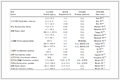
As Table 1 indicates, in the traditional cell phone production under the Wintel regime, the division of labor has not developed fully. Chip making is the only part that has been outsourced completely, and some cell phone makers have outsourced parts production and assembly. Different from the computer industry under the Wintel regime in which software making has become a separate industrial segment that box makers do not need to be concerned with, in the cell phone industry under the Wintel regime, brand-name producers in the formal economy such as Nokia, Samsung, LG, Motorola, and Sony-Ericsson still maintain strong in-house capacities in software development, in addition to board design and adjustment, and industrial designs. The requirement for in-house capacity has been a major entry barrier in the cell phone industry that has significantly restricted participation in production. Because of such a division of labor, chip makers for the GSM system do not provide any software to cell phone producers. Although chip makers for the CDMA system provide such services, their scopes are rather limited. These big corporations in the formal economy that dominate the industry rely upon their strengths in producing the high-end components of the final products.
|
Table 1 A Comparison of Division of Labor Between the Wintel Production Regime and the Shanzhai Production Regime in the Cell Phone Industry |
In contrast, in the shanzhai production regime, Taiwaness company Media Tek provides both chip and software. Below Media Tek several hundred cell-phone design companies offer the whole package of technical solutions for cell phones. Then come thousands of production-organizing companies that tend to be either medium-size or small companies and most of them belong to the informal economy. These companies cannot produce the high-end components as their counterparts under the Wintel regime can. Rather, they emphasize the low-end components in cell phone production and most of them focus on only three things: exterior and functional designs, account management (or outsourcing management), and selecting distribution networks. Below them, tens of thousands of companies make parts, frames, and materials, and assemble them into cell phones on behalf of production-organizing companies. At the bottom of the value chain are numerous distributing and logistic companies who deliver the shanzhai cell phones to various end users, both domestically and internationally.
The process of servicization of production under the shanzhai regime further decomposes the production process, not only taking away the tasks of the most critical components in cell phone production, chips and software, and the whole package of technical solutions from the company that coordinate the production, but also turning the unit of coordination in parts production and assembly, marketing, and logistics of distribution from the global value chains tightly controlled by the cell phone producers under the Wintel regime to a broader unit of industrial cluster that provides more market competition opportunities among firms. This significantly reduced the technological entry barriers in the cell phone industry, and made it possible for wide participation in production possible.
The two crucial steps in the evolution of the shanzhai production regime were the entry of Media Tek into the cell phone chip market with its turnkey service, and the following rise of cell phone board design companies. The entry of Media Tek into the cell phone chip market in 2001 was crucial to the rise of the shazhai production regime. Media Tek deepened the division of labor in the cell phone industry. In 2001 Media Tek, previously a chip maker for DVD players, decided to enter the cell phone chip market. Beginning in 2003, it began to produce both chips and software for cell phones and also provide technological support through turnkey service to its downstream clients who otherwise would not be able to overcome the entry barrier in cell phone production. By adopting this innovative strategy, Media Tek created many downstream clients for its products. As more and more shanzhai cell phone production-organizing companies entered the industry, Media Tek began to enjoy its monopoly profits. The servicization of producing key components for downstream producers of cell phones provided by Media Tek completely destroyed the technological entry barrier to the cell phone industry and widely opened the door of cell phone production to many small companies in the informal sector. Media Tek's entry into the cell phone chip industry led to a snowball effect (Pan, 2009c; Sun W., 2009).
Media Tek's innovation was immediately followed by another major step in the division of labor in cell phone production represented by the rise of cell-phone design houses. Until 2003, the Chinese market for cell phone technological solutions had been dominated by a few Korean companies that provided such services to China's domestic brand-name cell phone producers. In 1999, China Electronics acquired the R & D center of Phillips and established the first domestic cell phone design company, China Electronics-Sailong. After Media Tek's products became available in 2003, 80% of the service orders in that year went to domestic cell phone design houses, and the market share for Korean companies such as Telson Electronics and Sewon Telecom quickly declined. Attracted by the high profit margins, more than fifty cell phone design companies had appeared by 2004, and they provided more than 400 packages of technological solutions to downstream cell phone producers (Xu, 2006). In 2008, several hundred cell phone design companies in China provided more than 1, 000 packages of technological solutions for cell phones. This rise in cell phone design companies in China further deepened the division of labor in the shanzhai cell phone industry (Sun W., 2009).
When the production of the most important components and the entire package of technological solutions for cell phones became services, establishing a cell phone production business in China became easy. The services provided by Media Tek and cell-phone design companies created an important interface between the formal economy and the informal economy. Such interfaces have enabled small companies in the informal economy to play the central role in coordination. Sustained by the services of R & D and production of key components provided by the formal economy at the high end, and the services of production of other parts, assembly, and distribution by both the formal and informal economies at the low end, the task faced by shanzhai cell phone production organizers in the informal economy became very simple: as long as they could capture a new idea, select the functions and design the exterior of cell phones according to their perceptions of consumer tastes and market conditions, they could outsource everything else in the production process.
With these services, small companies organizing production can make the industrial cluster work like a hypothetical enterprise. By sharing the same servicization infrastructure but emphasizing on different exterior and functional designs these small production-organizing companies together create a quasi-multidivisional structure within the hypothetical enterprise and each of them develops its own unique products. On one hand, this industrial cluster enjoys economy of scale as the division of labor creates efficiency in resource allocation. On the other hand, its unique de facto multidivisional structure sustained by numerous entrepreneurs from the informal economy provides extremely high levels of flexibility in responding to changing consumer tastes and market conditions. Supported by the servicization of production, the production-organizing companies are equipped with powerful weapons to compete with brand-name producers, either domestic or international. These small companies who came from the informal sector can concentrate on the job they do best—selecting the functions and exterior design for cell phones—because they know consumer tastes much better and respond to any change in the market situation much faster than the brand-name companies that suffer from the inefficiency associated with organizational hierarchies.
REDEFINING THE LONG-TAIL MARKET IN THE ERA OF GLOBALIZATIONThe second source of the empowerment of the informal economy was globalization. It has greatly expanded international markets not only through liberalizing trade and increasing the size of potential consumers, but by serving as an alternative means to information technology. It has helped small companies in the informal economy turn the 80/20 rule of the long-tail theory upside down and challenge the corporate strategy of brand product-based competition, which has become a legacy of the mass production era.
The 80/20 rule of the long-tail theory is based on Pareto's law of the vital few and Zipf's law as both observe that 20% of products in an industry often counts for 80% of the revenues, or 20% of time often counts for 80% of productivity. In a distribution curve, the products that fell below the top 20% would generate less revenue and demonstrate a diminishing trend; however, they would never become zero. Thus, the revenue distribution curve looks like a long tail. The producers in the era of mass production emphasized R & D and Branding, offering a limited number of mainstream products that have both high qualities and good reputations, the two basic conditions for a product to join the rank of the top 20% in the market, hoping that this would bring them 80% of their revenues. Seeing from the perspective of efficiency in resource allocation, long-tail markets were not worth much attention because a customer pool for a particular product spread too thinly is the same as no customers at all. Thus, in the era of mass production most corporations adopted the strategy of focusing the 20% major branded products in the market (Anderson, 2006).
The high-price policy for innovative new products is a common strategy adopted by big corporations that follow this 80/20 rule. After major investments in R & D and taking major risks in developing new products, it is taken for granted that corporations will charge high prices for either their brand products or key components, as long as it is allowed by the demand-supply situation. The major targets of big corporations that emphasize the top 20% of the market are the middle class living in urban areas. For example, when a downstream cell phone producer wants to use the chips produced by Qualcomm, a major chip producer in the United States that owns most patents in the CDMA system, he has to first pay several million dollars for the license and then pay a royalty for each chip it uses in its cell phones before it makes any profit. In the formal economy, this is considered completely ethical because the high prices corporations charge for their products serve to reward not only their intellectual property rights but also their shareholders' values. Without the high-price strategy, it is argued, no one will have the incentive to engage in innovation and as a result consumers will have few new products to enjoy (Sun W., 2009).
Even when mainstream producers in the formal economy come to a developing country, their high-price policy usually do not change. Cell phones made by famous brand-name producers, such as Nokia, Motorola, Samsung, LG, and Sony-Ericsson are originally designed for the middle class in developed countries. They tend to have sophisticated designs and functions, and are sold at high prices. In developing countries, they target the high-income social groups in the urban areas with a high price strategy responding to the demand for luxury goods in a country that suffers a big gap between the rich and the poor. For example, the iPhone entered the Chinese market in October 2009, with a price tag of $1, 025 in comparison with $800 in Hong Kong. If a customer purchases an iPhone with a bundled contract of two-year service with China Unicom, that customer will pay $3, 120, in comparison with $2, 600 in the United States. iPhone adopted this high-price strategy in a country in which the average smart cell phone is priced around $350 and the average individual's monthly cell phone expenditure is around $15 (Chao, 2009).
Such a strategy may seem to be rational as the outstanding performances of many developing countries in the past two decades have made the emerging markets crucial to producers of all types of consumer goods. On a purchasing power parity basis, for example, China's GDP is larger than Japan's, India's is larger than Germany's, and Russia's is larger than Britain's. The BRICs (Brazil, Russia, India, and China) are as large as developed Europe, and the rest of the emerging markets (excluding BRICs) collectively command a greater share of the global economy than the United States. Moreover, the emerging markets now represent 30% of the world's total market capitalization, as much as the United States. China now has a larger market cap than Japan. South Korea and Taiwan together have a larger market cap than Germany, and Brazil has a larger market than Australia. In 2009 Chinese exchanges traded more than the NYSE, South Korea more than France, and India more than Canada (Dimitrijevic, 2009).
Nevertheless, the old corporate strategy adopted by the global brand producers that emphasizes the high-end products has missed an important factor in reality: developing countries usually have higher levels of inequality, and the general populations in the emerging markets still have relatively low purchasing power despite rapidly increasing demands. In China, for example, the average monthly salary for a migrant worker was only about 937 RMB in 2008 (Guwuyuan Ketizu, 2006). After years of rapid development, in 2008 only 30 percent of 634 million cell phone users in China were from rural areas. The penetration rate of cell phones in rural areas is only about 20%, and about 500 million people in rural areas have no access to mobile communication technology. According to one estimate, by 2012 shanzhai cell phones could meet the needs of most migrant workers and part of the middle class in rural areas, which totals about 200 million people. Another 300 million people, most of them are farmers, will need the so-called super-low-cost cell phones. The sales of these super-low-cost cell phones, priced below $35, will reach 300 million units globally by 2013; more than half of these sales will be generated by the emerging markets. China and India would be the key contributors.
In such a context of deepening digital divide in developing countries, the shanzhai entrepreneurs consider themselves the "forest outlaws" who "enforce justice on behalf of Heaven, " the original meaning of "shanzhai" from Outlaws of the Marsh. They have developed a new type of corporate ethic. It emphasizes the mutual benefits in commerce both between producers and consumers, and between upstream and downstream trading partners. It maintains that the market relationship should not be a zero-sum game. According to the CEO of Media Tek, "The core value of innovation is to benefit clients. Each time, when we do R & D for new products for our customers, or start a new business at our company, I always ask what value this new product or business will bring to our customers….Innovation means creating new values, bringing new satisfaction to customers. Since it takes a long time from technological innovation to commercialization, only those products that benefit customers and users can be accepted. Our primary consideration for innovating any new technology and product is whether it will benefit society" (Tsai, 2008:100-101).
To this new corporate ethic, the boundary between reward for innovation and corporate greed is often blurred, and what is considered as a proper price for new products is often socially constructed. In the summer of 2007, for example, Apple introduced its first generation of iPhones, priced around $600. To the enthusiastic consumers who rushed to purchase a unit, this price tag was deemed to be a fair reward for Apple's innovation. However, when Apple reduced the original price by $200 two months later due to the iPhone's weak sales under this high-price, those who paid the original price became very angry. Overnight, their perception of the $200 difference changed from the cost of innovation to corporate greed (Hafner & Stone, 2007). In the more extreme case of generic drugs exemplified by the Indian company Cipla discussed earlier, such ethical conflict become more severe: it is a conflict between corporate profits and people's lives. Facing the major challenge of swine flu in 2009, only one-third of adults in the United States who wanted to get the flu shot could get it. In such a situation, even the U.S. government was considering overriding the intellectual property rights of the Swiss company that makes Tamiflu.
Since the shanzhai entrepreneurs keenly recognized that the diverse demands for low-priced cell phones from the emerging economies will be the mainstream of the future, they are willing to challenge the status quo by asserting new rules in the era of the information revolution and globalization. They reject the orthodox practice of charging high license fees or high prices for their products, and are sustained by a new corporate ethic of helping low-income populations fight the digital divide.
When Media Tek entered the cell phone chip market, it chose to focus on long-tail products—cell phones designed for low-income social groups in developing countries. It does not charge prepaid license fees or a separate intellectual property right fee in addition to the price of their products. In other words, the downstream clients pay for each unit with a fixed price and do not have to risk spending too much for the license fees but not earning enough in returns. Instead of competing with global brand names early on, Media Tek chose to enter the market just before the rapid expansion of the product with a low-price strategy. Media Tek believed that although it is most profitable to enter an industry at its infant stage in a product cycle, early entry also involves huge costs in R & D and high risk of failure. When a product's technology matures, its market will expand rapidly but producers' profits will decline. If a company enters the market right before the market expansion with an effective strategy of cutting production costs, it can drive weak forerunners out of competition and establish its own market dominance. Media Tek believed that what was most important was not whether a company entered the market first, but whether it could achieve economy of scale first (Tsai, 2008). By serving the needs of long-tail markets in the cell phone chip market, Media Tek became the third-largest cell phone chip producer in the world in five years, behind only Qualcomm and Toshiba.
The downstream shanzhai cell phone companies adopted the same strategy. Instead of competing with brand-name producers in the major urban areas, these shanzhai cell phone companies chose to target the third or fourth level of the cell phone market. In China the national market is considered the first level, the provincial market is considered the second, big city the third, and small cities and counties the fourth. Consumers in the third and fourth levels of the cell phone markets had been neglected by the marketing arms of the global brand-name producers. Among the shanzhai cell phone industry, most producers have continued to focus on the lower levels of the market, only a handful have decided to move up the ranks by establishing their own brand names and compete directly with global and domestic brand-name producers. They adopt a low price strategy and typically take only 10 RMB or $1.4 profit for each cell phone (Pan, 2009c). As a result of these efforts, mobile cellular services in developing countries have become accessible to many low-income social groups.
In the emerging markets, especially in the long-tail markets for the low-income social groups, how to turn the fragmented long-tail demands into a sizable aggregation to improve the economy of scale is a major challenge to producers. The consumers in long-income social groups often do not have the access to the internet and even when producers try to offer help they have great difficulties in reaching these consumers.
Taking an innovative approach, the entrepreneurs in the shanzhai cell phone industry used globalization as an alternative to information revolution in their marketing strategy. Instead of relying upon the internet to offer low-cost demonstration for long-tail products waiting for consumers to come to them, they take a more active approach sending marketing staffs to various countries demonstrating their products face-to-face and collecting in-demand information first hand. By working closely with the peripheries of the economy, these companies are able to accumulate extensive information about the demands of long-tail products in both domestic markets and international markets. Despite the fact that these small companies do not have the financial strength and managerial expertise to brand their products, they do have their own competitive advantage of being small: they can respond fast to the changing market conditions. By doing so, they have not only rewritten the 80/20 rule in the long-tail theory, but also helped create a huge market themselves. In this sense, globalization played an important role in empowering the informal economy by linking numerous limited local market demands together turning them into a sizable global demand for small companies that do not have the financial power and managerial expertise to build branded products but focus on the long-tail products that used to have limited local demands. By going global, the shanzhai cell phone producers turned the 80/20 rule in long-tail theory upside down. Sustained by the global markets for diverse models of cell phones, the shanzhai entrepreneurs were able to create the aggregated demand for each long-tail product and generate significant amounts of revenues and profits.
A significant number of shanzhai cell phone producers chose to emphasize the emerging markets in developing countries. They adopted several strategies, depending on the destination country's circumstances. Some have worked directly with the telecommunication service providers in developing countries, making cell phones under the providers' brand names through OEM or ODM. Others have worked with wholesale merchants in developing countries, relying on them to penetrate local markets. Still others have chosen to directly establish their own marketing networks in destination countries. Another major distribution channel for shanzhai cell phones to reach the global market is through numerous merchants who come to North Huaqiang Avenue, either as individuals or representing wholesale or retail companies, from other countries. These merchants directly purchase shanzhai cell phones at the specialized markets and ship them back to their home countries. According to the estimates, between one-third to one-half of shanzhai cell phones produced each year in China have been exported to international markets (Pan, 2009c; Sun W., 2009).
The exports of shanzhai cell phones from China played an important role in providing the low-income social groups in developing countries with the opportunity to catch up in the digital divide. In 2003 when shanzhai cell phones had just begun to emerge in China, the total number of mobile cellular subscriptions in the entire African continent was less than 40 million. For every 100 inhabitants in Africa, there were only five who used cell phones. In the same year the total number of mobile cellular subscriptions in Latin America was slightly more than 100 million, and for every 100 inhabitants only 22 used cell phones. In 2004, among the low-income countries in Asia, for every 100 inhabitants, only 0.3 on average, used a cell phone. Five years later in 2008, the number of cell phone users for every 100 inhabitants in Africa jumped from 5 to 32.6 and in Latin America from 22 to nearly 80. In 2007, in Asia's low-income countries that number jumped from 0.3 to 23.7. The total numbers of mobile cellular subscriptions in Africa jumped from 40 million to 246 million, and in Latin America from slightly more than 100 million to more than 400 million. Mobile cellular service witnessed the fastest growth in Africa (ITU, 2009a, 2009b, 2009c). Characterized by their low prices, the shanzhai cell phones contributed greatly to the global diffusion of mobile telecommunication in the past several years.
By emphasizing the markets for the low-income groups, these shanzhai cell phone producers have reinterpreted the 80/20 rule, namely, the 80% of the long-tail market could be profitable as well. Such a reinterpretation is sustained by the recognition of great potentials in emerging markets in the era of globalization.
In the past decades, the processes of liberalization and deregulation associated with globalization have broken down the regulatory barriers that restrain the free flows of goods across national borders. Sustained by the development of communication and transportation technologies, these processes have turned the entire world into a global village. At the same time, multinational corporations have significantly increased their investments overseas. The rise of the global production system provided developing countries with unprecedented opportunities to promote economic growth. They can participate in the international division of labor by taking the low-end positions in the value chains dominated by multinational corporations relying upon their comparative advantages in cheap labor and natural resources. By doing so, they could promote economic growth without first building sophisticated domestic economic institutions.
The process of globalization has substantially enlarged the size of the potential market for consumer products. The participation of the developing world has brought over 3 billion more people into the world capitalist system since the early 1990s. In China, for example, the inflows of FDI and the involvement in the global production system since the late 1970s have resulted in a large population of migrant workers in the coastal areas. According to a 2004 official estimate, the total number of migrant workers was roughly 120 million, which counted for more than 20% of the total labor force in China's rural areas. Among these migrant workers, moreover, the 16-30 age group counted for 61%, and the 31-40 age group counted for 23%. Since the younger age group is always the major consumer for IT products, the migrant workers' demand for mobile cellular service is very high (Guowuyuan Ketizu, 2006: 4).
The efforts of small companies in the informal economy in serving the low-income social groups in the emerging markets have rewritten the rules of competition for the cell phone industry. Recently, some global brand name producers have begun to pay attention to the long-tail markets of low-priced cell phones. Nokia, for example, has not only considered lowering the prices for its 3G models as its top priority in the Chinese market, it has also recognized the great potential of emerging markets. In 2008 it established a headquarter for its African operations, competing seriously in this once-neglected but rapidly developing market in the mobile cellular service (ITU, 2009a). Motorola hired a Chinese senior manager to be in charge of its global production of low-priced cell phones. Motorola was once a dominant player in the cell phone industry; however by the end of 2008 its ranking in the telecommunication industry had declined to a fifth, surpassed by not only Nokia and Samsung, but also Sony-Ericsson and LG, and its global market share had declined to 7.5%. Under such circumstances Motorola has begun envisioning an open sourcing system that is very similar to the shanzhai production regime, including using chips and software provided by Media Tek, and subcontracting other parts of production to low-priced producers (Chen, 2009).
THE SPATIAL OVERLAP BETWEEN INDUSTRIAL CLUSTER AND SPECIALIZED MARKETSThe information revolution and globalization have indeed provided important opportunities for the empowerment of China's informal economy in the shanzhai cell phone industry. Nevertheless, to benefit from these opportunities, small companies in the informal economy have to overcome many difficulties. The rise of the Wintel production regime has indeed deepened the division of labor by making the global value chain production possible. Still, small companies in the informal economy have neither the capital and technical know-how nor the strong institutional capacities to manage a production value chain across national borders. Globalization has indeed created the potential for the expansion of long-tail markets in the emerging markets. However, consumers in developing countries often do not have the access to the internet which makes it a major challenge to producers to collect the consumer demand information and diffuse the product supply information for the long-tail products.
The innovation and entrepreneurship of China's shanzhai cell-phone industry played a critical role in empowering small Chinese companies in the informal economy. These entrepreneurs have created an industrial cluster to substitute the global value chains and relied upon specialized markets to substitute the information technology in matching the demand and supply information for long-tail products.
Most importantly, they have built a spatial overlap between the industrial cluster and specialized markets. Such an overlap has not only directly linked supply with demand, but more importantly, established an endogenous mechanism for market expansion: the intense competition associated with the spatial concentration forced companies to deepen the division of labor, the differentiated product varieties served to improve the economy of scope, the improved economy of scope attracted more potential buyers to this marketplace, and this in turn also increased the economy of scale. On the one hand, the specialized markets that gathered numerous cell phone merchants created the pressures of competition and that pushed companies to differentiate their products. On the other hand, the presence of an industrial cluster that functioned as a hypothetical enterprise enabled these companies to achieve their goals of product differentiation with ease. As a result, these companies could respond to the changing market conditions with great flexibility.
The industrial cluster developed in China's shanzhai cell phone industry differs from the global value chains adopted by multinational corporations. The key factor that divides them is spatial. A product value chain can spread into many geographical locations. In contrast, an industrial cluster is concentrated in one geographical area. One industrial cluster can include many product value chains for many companies, but a product value chain of one company usually cannot constitute an industrial cluster. Generally speaking, multinational corporations tend to rely on product value chains in the global production system, and these value chains are seldom located in one industrial cluster. Moreover, these product value chains are usually under strong control by multinational corporations. In this sense, despite the fact that a product value chain is spatially open, it is organizationally exclusive. One company in the value chain often works for one client only, especially when the client is a big multinational corporation. In contrast, the shanzhai production regime is sustained primarily by an industrial cluster, and such an industrial cluster is embedded in the coordination among flatly structured small companies. This means that although an industrial cluster is spatially close, it is organizationally inclusive. One company often works for multiple clients.
Such spatial concentration of the industrial cluster has helped small companies in the shanzhai cell phone industry in several ways.
It has significantly reduced the costs of deepening the division of labor. The value chain production conducted by multinational corporations in the global production system is sustained by information technology and transportation. Operating a global production system, however, involves not only the costs of maintaining the information system and shipping among the affiliates of multinational corporations, but also the managerial expertise related to the governance of the value chains. These are major barriers that prevent small companies in the informal economy from establishing and maintaining their own spatially-separated values chains. By creating an industrial cluster, in contrast, suppliers for more than 200 cell phone parts, other than chips and software made in Taiwan, are all located within a twenty-kilometer radius centered around Shenzhen. This has significantly reduced the costs of collecting information on trading partners and shipping. The close spatial concentration of an industrial cluster has created a producer's market where a production-organizing company can get any needed parts at any time instead of searching through spatially-separated supplier value chains where communication and dispute resolution can be time consuming.
The spatial concentration of the industrial cluster has also helped to remedy the lack of institutional capacities of small companies in the informal economy to govern the production process. Since the informal economy by definition does not have protection by the state, these small companies often confront difficulties in handling the issues such as credits, dispute resolution, and enforcement of contracts. Due to the lack of institutionally-generated trust in the informal economy, the businesses of these small companies are often cash-based and their dispute resolutions often involve face-to-face negotiations. Under such circumstances, the close spatial concentration of the industrial cluster has made things easier for these companies. If there is a problem in the parts during a test or an adjustment for a new cell phone model, these suppliers can send a new piece within one hour after receiving a phone call. Outside the spatially concentrated industrial cluster, this can take days or even weeks. In the worst case scenario, a production-organizing company can directly confront its supplier companies face-to-face by showing up at its door in a timely manner.
The convenience for cooperation and the easily-accessible technological supports provided by the spatial concentration of the industrial cluster have not only stimulated the development of production capacities, they have also nurtured a commercial culture: as soon as one entrepreneur comes up with a new design idea, the collaborators in the industrial cluster can easily assemble a complete set of parts for their clients in a timely manner. In an industrial cluster sustained by strong manufacturing capacities and a complete value chain, any product can be made as long as there is an idea on the table. It may involve many companies in the production, but nevertheless, these companies in one industrial cluster work as efficiently as a giant corporation. Although the production-organizing companies do not directly own this hypothetical enterprise, they can still effectively coordinate the production process with numerous trading partners because the high spatial concentration of the value chain in one industrial cluster and the servicization of various steps in the production process have enabled them to easily obtain help from the chip and software makers, cell phone board designers, parts suppliers, and assemblers. In the process of developing a new model for cell phones, molding is the most time-consuming step. However molding in Shenzhen is well known for its high speed and high quality. In other locations molding can take several months; in Shenzhen it takes only a couple of weeks. The molding factory at Foxconn alone employs more than 20, 000 workers (Xu, 2006).
Moreover, the intense competition generated from the spatial concentration of the industrial cluster has made the production within the cluster more efficient than the cross-national value chains operated by multinational corporations. Since many producers of the same parts compete within the same industrial cluster, they have to cut their prices in order to win contracts. As a result, the parts suppliers of cell phones in Shenzhen usually charge only 10%-12% of the processing fee, and they can deliver the parts on time and guarantee the quality. At the aggregate level, the spatial concentration and close cooperation have significantly increased the speed of developing new cell phones. In 2001, the development of a new model of cell phones would take about 1, 000 days, and cost around 10 million RMB. By 2003, as Media Tek entered the market, the cycle of developing a new model was reduced to 100 days and 1 million RMB. By 2008 this process took only 30 days and cost 300, 000 RMB. In 2009, according to one estimate, it could be completed in 15 days with 150, 000 RMB (Sun W., 2009).
If the industrial cluster has been an innovative substitute for the global value chains, then specialized markets can be considered an invention that has served as a low-tech equivalent to the internet helping producers to collect consumer demand information and diffuse producer supply information on the long-tail products.
Specialized markets have been a distinctive phenomenon in the Chinese economy. They began to appear in rural areas after the economic reform started in the late 1970s. The term "specialized markets" refers to a concrete space where merchants gather to transact a particular type of merchandise on a large scale, or several types of goods that are strongly complementary with each other. Specialized markets focus on wholesale transactions, with retail sales usually as a secondary function. These specialized markets emphasize the transactions of goods that have been made, although some markets trade contracts for preordered goods for future production. These marketplaces tend to gather large numbers of merchants and transactions; the environment at such markets is close to the condition of perfect competition (Lu & Wang, 2008:4).
In Western countries, especially the United States, the modern commercial system has long been dominated by big corporations. The dynamics behind the development of the modern commercial system were largely exogenous, and came primarily from the invention and application of new technologies. In the United States the rise of the modern commercial system was driven by the development of railroads, the invention of the telegraph, the steamship, and improved postal services. Sustained by the development of technology in transportation and communication, large marketing enterprises coordinated a large numbers of individual producers and an even larger number of individual consumers, and large mass retailers emerged in the forms of the department stores, mail-order houses, and chain stores. Later, as big corporations of mass production established their manufacturing strength in the market, they also developed their mass distribution capacities (Chandler, 1977). These profound changes associated with the rise of big corporations significantly raised the entry barrier for small companies. The business operations of these big corporations were driven by economy of scale and emphasized the mainstream products in the era of mass production.
Specialized markets in China are quite different. In contrast with the modern commercial system that requires major initial investments, specialized markets offer low-cost entry to small merchants who have strong motivations to participate in commerce but do not have big capital. Such a unique form of the market is particularly suitable in developing countries. When the economic reform started in China, many farmers were eager to participate in the specialized markets in an effort to improve their well-being. Although they did not have the capital to invest in big business operations, they invented a form of specialized market that promoted the economy of scope and the economy of scale through "gathering many a little to make a nickle." Such an arrangement helped them break the bottleneck of capital and substantially diffused the risks of investment. By gathering numerous small shops at the same place specialized markets reduced the need for expertise in managing a big commercial establishment, and let each individual store manage a small unit in the marketplace. Thus specialized markets always evolve through the form of adding on, sustained by incremental growth of small investments by numerous small merchants.
The endogenous mechanism of expansion built in specialized markets is that it promotes the economy of scale by promoting the economy of scope and the improved economy of scope in turn further promotes the economy of scale. When numerous small merchants are concentrated in the specialized markets, the increased competition naturally stimulates product or service differentiations. This contrasts with the modern commercial system in which the major strategy for corporations to survive the competition rely more on improving the economy of scale through mergers and acquisitions.
According to organizational ecology, higher density in organizational population leads to a lower rate of survival, and differentiating oneself from other organizations is the best strategy for organizations to survive the competition (Hannan & Freeman, 1989). Product differentiation by small merchants in specialized markets serves to drag the long tail down as merchants try to respond to demands from every possible segment of the market. In 2008, for example, Samsung brought out forty-seven new models of cell phones, Nokia thirty-four, Sony-Ericsson nineteen, and Motorola eighteen. In contrast, shanzhai cell phone companies brought out more than 1, 000 models of new cell phones (Robohan, 2008). Most shanzhai cell phone producers adopt the strategy of being the best in a specific segment of the market, rather than competing by developing a variety of products (Sun W., 2009). The economy of scope in specialized markets, however, has an intrinsic mechanism to expand the economy of scale. As the market segmentation strategy adopted by small merchants increases the economy of scope, specialized markets become the hub of transactions and attract more buyers. The economy of scale increases as more buyers come to the specialized markets. In this sense, a development cycle repeats itself on a continuing basis.
The long-tail theory holds that three aspects in the long-tail market can help shift down the tail, including the availability of great variety, low search cost, and the possibility of sampling products (Anderson, 2006:135). In the West, such potentials were released by the information revolution. In the emerging markets, however, the situation is different. Many consumers in developing countries often do not have access to the internet. Under this context, specialized markets have served as the substitute to the internet serving as the major source for demand-supply information. Specialized markets provide precisely these three functions. Specialized markets, by definition, gather a wide range of choices for consumers. By having intense spatial concentration, searching costs in specialized markets also become very low. In addition, since all these small shops in specialized markets demonstrate their products, customers can try them in person on the spot.
Both national and provincial distributors of shanzhai cell phones have to open an office in the specialized markets on North Huaqiang Avenue. Some small inland cell phone merchants cannot afford to open an office so they often choose to send one person or at least subcontract someone to collect information on their behalf. In addition, thousands of merchants from overseas bring information on consumer tastes in foreign countries. Watching the ongoing transactions at North Huaqiang Avenue provides important information on market trends, both domestic and international. Collecting such information on consumer tastes outside of specialized markets can be very costly. Because of this, the specialized markets at North Huaqiang Avenue have become a valuable information center for shanzhai cell phone producers. Focusing on long-tail products involves higher risks because they usually have smaller demand, and some can hardly generate enough returns to justify the investment. To safeguard their investments, most shanzhai cell phone producers also have their offices at North Huaqiang Avenue to closely monitor the market trends.
At the same time, specialized markets have generated new demands. A sociological perspective of the market perceives demand in the market not as a given condition, but as an outcome of social construction in which the supply side often plays an important role. The new demand is usually generated through two mechanisms: by offering buyers more choices, and by reducing prices through competition, which makes products more affordable. As mentioned earlier, the competition pressures associated with spatial concentration stimulate product differentiation. As a result, specialized markets always offer a great variety of colors and designs for the same product. Facing many choices in exterior designs and functions of the same product, potential buyers are often attracted by new colors, new functions, or new designs, and are willing to spend beyond their original budget. A lower price increases the pool of potential buyers. Needless to say, this mechanism is often considered as the dark side of specialized markets because merchants are often forced to cut into their production costs in order to survive the competition.
The spatial overlap between the specialized markets and an industrial cluster also helps the shanzhai cell phone industry overcome the disadvantage of lacking the strong institutional infrastructure. The global brand-name producers rely on formal channels in information collection. Moreover, they rely on a strong institutional infrastructure to control their value chains, coordinate their foreign affiliates across borders of nation-states, or subcontract the production to major OEM companies. In contrast, the shanzhai cell phone companies collect information by sitting in the marketplace and directly observing the economic transactions. Although they do not have the strong institutional infrastructure to coordinate production, the spatial concentration of the value chains within the industrial cluster not only creates many overlaps in social networks that function to sanction the opportunistic behaviors among trading partners, but also makes cash-based transactions easier. In this sense, the spatial overlap is particularly important for supporting the participation of the informal economy in production.
CONCLUDING REMARKSIn the past, the informal economy has been perceived as either a vestige of pre-capitalist heritage and a legacy of colonial domination, or a byproduct of distorted and insufficient industrialization(Fernandez-Kelley, 2006). The astonishing performance of the shanzhai cell phone industry in China over the past six years has completely subverted these old images. It demonstrates that strong entrepreneurship, sustained by both the information revolution and globalization, has significantly empowered the informal economy and greatly strengthened its position in relation to the formal economy. The innovation of the shanzhai cell phone industry highlights the role played by the agency in the social construction of demand and supply, and calls for a sociological interpretation of the market behavior.
The shanzhai cell phone production regime in China shows that informality in the economy during the information revolution is sustained by the proliferation of production tools. When various key steps in production become services and wide participation in production becomes possible it directly strengthens the value of individuals, and corporations are no longer the only channel for accessing production tools. To put it differently, the information revolution has created a new mode of production, "social production—collaborations among individuals that are organized without markets or managerial hierarchies" (Yochai Benkler, cited in Howe 2008:114). As the business models adopted by Google, peer-to-peer file sharing, open source software, and Wikipedia demonstrate, the information revolution breaks down the corporate wall through proliferating production tools, providing numerous opportunities for the amateur class to penetrate the production process that was formerly dominated by the formal economy and bestowing individuals with a power that was once restricted to corporations endowed with vast capital resources (Howe, 2008:99).
The democratization of production tools directly challenges the traditional organizational form of corporation. "The production of knowledge, goods, and services is becoming a collaborative activity in which growing numbers of people can participate. This threatens to displace entrenched interests that have prospected under the protection of various barriers to entry; including the high costs of obtaining the financial, physical, and human capital necessary to compete. Companies accustomed to comfortably directing marketplace activities must contend with new and unfamiliar sources of competition, including the self-organized masses, just as people in elite positions (whether journalists, professors, pundits, or politicians) must now work harder to justify their exalted status" (Tapscott & Williams, 2008:17). As Jeff Howe (2008:98) asked, "If the means of production and distribution are now within the grasp of the individual, if the line between producers and consumers is blurring, where does that leave the 'firm', the organizational structure that has governed how people make and deliver goods and services for over one hundred years?"
In this sense, the significance of the shanzhai production regime needs to be understood as an extension of the Wintel production regime that further shifts the power from producers to consumers. In the era of mass production, various modern production regimes tried to improve the flexibility of corporations in responding to changing market conditions. The unit of coordination in the production process was shifted from one single firm under the Fordist production regime, to the business group under the Toyota production regime, and then to the value chain under the Wintel production regime. Microsoft and Intel have taken the lead in deepening the division of labor, pushing the trend of servicization of production. The shanzhai production regime has not only expanded further to the industrial cluster for coordinating production, more importantly, it has also pushed the servicization of production by having companies in the formal economy serve as suppliers to the companies in the informal economy that play the leading role in coordination production. In this sense, the information revolution has enabled informality to take central stage in shanzhai cell phone production.
The global reach of shanzhai cell phones also demonstrates that informality in the era of globalization is also sustained by greatly increased economy in scale of long-tail products produced in the informal economy that used to have limited local demand. The increasing free flow of capital, goods, and technologies have served to bring many developing countries into the process of economic development, and improved the economic well-being of these populations. The latest trend in the global economy is the rise and empowerment of the peripheries. As the rise of the BRICs (Brazil, Russia, China and India) or other developing countries as the G-20 exemplifies, globalization has completely changed the landscape of the international economy. The weight of developing countries in global consumption has profoundly changed the rules of the game in emerging markets. On the one hand, participation in economic growth and the exposure to modern technologies have increased the demand for various products by low-income social groups. On the other hand, the digital divide and the gap created by economic inequality in the development process remain major challenges to these societies. As a result, consumer demand in developing countries is characterized by both huge potential and fragmented demand. This opens the door for the informal economy.
Without globalization, the information revolution can solve the problem of spatial constraints domestically to some extent, but due to the digital divide, the economy of scale for long-tail products such as shanzhai cell phones still remains a major challenge. By promoting the free flow of goods across national borders, globalization has broken down the spatial constraints for commerce, and any long-tail product that has limited demand in one country can find extra demand elsewhere. In this sense, globalization has significantly improved the economy of scale for long-tail products. When a particular design of shanzhai cell phone cannot be sold in large numbers at a local or even a national-level market, producers can find new buyers for their products in the global markets. Since the informal economy is often characterized by fragmented demand, globalization is particularly important to the survival and success of the informal economy.
This study also demonstrates that the most important factors for empowering the informal economy are entrepreneurship and innovation. The development of long-tail markets is driven by the democratization of production tools, reduction of consumption costs by democratizing distribution, and connection between supply and demand (Anderson, 2006). With the strong entrepreneurship of Media Tek, cell phone solution providers, and the production-organizing companies, the shanzhai cell phone industry was able to reform the Wintel production regime, turning most steps in production—especially R & D—into services, which allowed the informal economy to fully benefit from the advantages provided by the information revolution. The invention of the shanzhai production regime led to the breakdown of the technological entry barriers in the cell phone industry, providing many opportunities for small companies in the informal economy to compete in a high-tech industry. The innovation of the specialized markets at North Huaqiang Avenue provided a wholesale hub that has improved both the economy of scope by displaying a huge variety of products, and the economy of scale by attracting more potential buyers to low-priced products. The spatial overlap between the industrial cluster and specialized markets that strongly connects demand with supply created the intrinsic mechanisms for market expansion. Without entrepreneurship and innovation, it was unthinkable that three people with no R & D capacity, no factory for producing and assembling parts, and no distribution system could manage the process of cell phone production even after the information revolution had widened participation in production. Without entrepreneurship and innovation, it was also unthinkable that low-income social groups in China as well as in Africa, the Middle East, Latin America, Southeast Asia, and elsewhere could enjoy the benefits of the information revolution because they could not count on the alms given by the global brand-name producers even after globalization had significantly enlarged the number of potential mobile cellular services subscribers.
If we define the modern production process in terms of mass production coordinated by giant corporations through a hierarchical organizational structure, then the empowerment of the informal economy and the rise of long-tail markets associated with the shanzhai phenomenon contain postmodern significance. The modern production process has witnessed a series of transformations. Before the era of mass production, cultures were local, and shops made unique products to fulfill relatively limited demand. The rise of mass production, together with the mass media sustained by the development of printing and photograph technologies, launched a process of standardization. As a result, the market became dominated by big corporations, brand names, and mainstream products. The democratization of the tools of production driven by the information revolution and the rapid involvement of developing countries in the process of globalization have started a new era in which small companies in the informal economy can compete with big corporations in the formal economy, and the long-tail markets for the low-income groups that used to be at the periphery begin to become the mainstream. As a result, the informal economy of China's shanzhai cell phone industry has not only begun to penetrate the markets that used to be dominated by the formal economy, but also greatly strengthened its own position in relation to the state, changing the state's perception of the informal economy from a problem to a major GDP generator, and transforming its regulatory regime for the cell phone industry from a license system to a registration system.
Moreover, the entrepreneurship of the informal economy in China's shanzhai cell phone industry sheds light on our understanding of the nature of the market as an outcome of social construction. It shows that demand is not simply a function of price at any given level, as economists have argued. Instead, it is an outcome of strategic interactions between sellers and buyers, and the agency plays an important role in determining the demand outcome in the marketplace. The specialized markets in China with a high level of spatial concentration have created new demands by educating potential buyers through demonstrating huge varieties of the product, creating new buyers by reducing prices of the product through competition, and supplying potential buyers with what they want by serving as the major information collecting centers for producers.
As a number of Chinese scholars point out, specialized markets in contemporary China are unprecedented in human history in terms of their numbers, their scope, their weight in the whole economy, and their contributions to China's economic development and industrialization. These specialized markets should have attracted major theoretical attention in the academic literature; however, specialized markets have generated little attention both domestically and internationally (Zheng, Yuan & Lin, 2003:4). Part of the reason is disciplinary, since mainstream economics does not offer any powerful analytical tool to tackle the issues related to specialized markets. By the end of the nineteenth century, Western mainstream economics began to treat the market as an abstract concept, or a price-making mechanism. However, at the empirical level, the market has become a completely empty concept (Swedberg, 1994:259). In this abstract market, buyers and sellers are not socially connected, their behavior in the market is completely driven by the efficiency principle of resource allocation, and whether a transaction can be achieved depends solely on the price signal. In such an analytical framework, for any particular price level the demand becomes a given. Once the price is set, not only is the amount of demand rigid, the potential buyers above any given price level are excluded from the market. Specialized markets existed in the early stage of industrialization in the West; some markets of this type still exist today. However, they are not studied academically. As this study on shanzhai cell phones demonstrates, a sociological perspective can provide a good understanding. It not only allows us to capture the profound changes in our economy, but also provides us with a powerful analytical framework for interpreting the driving forces behind this interesting market phenomenon.
Anderson, and Chris. 2006. The Long Tail:Why the Future of Business is Selling Less of More. New York: Heperion.
|
Borrus, Michael and John Zysman. 1997. "Wintelism and the Changing Terms of Global Competitin: Prototype of the Future?" Working Paper 96b. Berkeley Roundtable on Political Economy. https://wenku.baidu.com/view/4a220120dd36a32d7375819a.html
|
Castells, Manuel and Alejandro Portes. 1989. "World Underneath: The Origins, Dynamics, and Effects of the Informal Economy. " In Alejandro Portes, Manuel Castells, and Lauren Benton (eds. ), The Informal Economy: Studies in Advanced and Less Developed Countries. Baltimore: The Johns Hopkins University Press. http://www.wiego.org/publications/world-underneath-origins-dynamics-and-effects-informal-economy
|
Centeno, Miguel and Alejandro Portes. 2006. "The Informal Economy in the Shadow of the State. " In Patricia Fernandez-Kelly and Jon Shelner (ed. ), 2006. Out of the Shadows: Political Action and the Informal Economy in Latin America. University Park: The Pennsylvania State University Press.
|
Chadler, and D. Jr Alfred. 1977. The Visible Hand:The Managerial Revolution in American Business. Cambridge: Harvard University Press.
|
Chao, Loretta. 2009. "China iPhone: The Cost Equation. " The Wall Street Journal. October 30th. http://blogs.wsj.com/chinarealtime/2009/10/30/china-iphone-the-cost-equation/.
|
Chen, Weilin. 2009. "The Transition of Motorola: The Low-End Cell Phones Will Completely Become Shanzhai?" National Business Daily. 2009-10-14. 陈未临. 2009. 摩托罗拉转型: 低端手机将全面山寨化?[N]. 每日经济新闻. 2009-10-14. http://tech.163.com/09/1014/04/5LIDUBLH000915BE.html. |
Dimitrijevic, Marko. 2009. "Why the Phrase Emerging Markets No Longer Applies. " Financial Times. Oct. 13th. http://www.ft.com/cms/s/0/a538f19a-ac90-11de-a754-00144feabdc0.html#axzz18WaU7ezn.
|
Feige and Edgar. 1990. "Defining and Estimating Underground and Informal Economies:The New Institutional Economic Approach." World Development 18(7): 989-1002. DOI:10.1016/0305-750X(90)90081-8 |
Fenghuangwang. 2009. "Koreans Interpret China's Shanzhai Culture in Such a Way. " 凤凰网. 2009. 韩国人这样解读中国的山寨文化[OL]. http://news.creaders.net/headline/newsViewer.php?nid=381331&id=880592&dcid=4. |
Fernandez-Kelly, Patricia. 2006. "Introduction. " In Fernandez-Kelly, Patricia and Jon Shelner (ed. ), 2006. Out of the Shadows: Political Action and the Informal Economy in Latin America. University Park: The Pennsylvania State University Press.
|
Guowuyuan Ketizu. 2006. Investigative Report on China's Migrant Workers. Beijing: Zhongguo Yanshi Chubanshe. [ 国务院课题组. 2006. 中国农民工调查报告. 北京: 中国言实出版社.]
|
Hafner, Katie and Brad Stone. 2007. "IPhone Owners Crying Foul Over Price Cut. " The New York Times. September 7th. http://www.nytimes.com/2007/09/07/technology/07apple.html.
|
Hannan, T. Michael, and H. Freeman John. 1989. Organizational Ecology. Cambridge, MA: Harvard University Press.
|
Howe, and Jeff. 2008. Crowdsourcing:Why the Power of the Crowd is Driving the Future of Business. New York: Crown Business.
|
International Telecommunication Union (ITU). 2009a. Information Society Statistical Profiles 2009: Africa.
|
International Telecommunication Union (ITU). 2009b. Information Society Statistical Profiles 2009: Americas.
|
International Telecommunication Union (ITU). 2009c. Information Society Statistical Profiles 2009: Asian and the Pacific.
|
Lu, Lijun, and Zuqiang Wang. 2008. Specialized Markets:The Evolution of Localized Markets. Shanghai: Shanghai People's Publishing House. [ 陆立军, 王祖强. 2008. 专业市场:地方型市场的演进. 上海: 上海人民出版社.]
|
Ministry of Industry and Information Technology of the People's of Republic of China (MII). 2009. "Interview of the Director of the Electronic Industry Bureau on Putting Cell Phone Market in Order. " 中华人民共和国信息产业部. 2009. 信息产业部电管局相关负责人就整顿手机市场维护市场秩序答记者问[OL]. http://www.miit.gov.cn/n11293472/n11293832/n11294057/n11302435/11657973.html. |
NPR. 2009. "Will Tamiflu Shortage Drive U. S. To India's Version?". http://www.npr.org/templates/story/story.php?storyId=120254536.
|
Pan, Jiutang. 2008. "Critic: From China's Shanzhai Cell Phone to the U. S. Shanzhai President. " Xinlang Science and Technology. December 30th. 潘九堂. 2008. 评论: 从中国山寨手机到美国山寨总统[OL]. 新浪科技. 2008-12-30. http://tech.sina.com.cn/t/2008-12-30/17482706124.shtml. |
Pan, Jiutang. 2009a. "The Rise and Fall of the Shanzhai Manufacturing in Shenzhen: The Epitome of China's Economic Miracle. " Xinlang Science and Technology. Sept. 12th. 潘九堂. 2009a. 深圳"山寨"制造兴衰: 中国经济奇迹缩影[OL]. 新浪科技. 2009-9-12. http://tech.sina.com.cn/t/2008-09-12/00192452807.shtml. |
Pan, Jiutang. 2009b. "The Essence of Shanzhai Manufacturing Is Innovation. " International Electronic Business. March 13th. 潘九堂. 2009b. 山寨制造的核心是创新[N]. 国际电子商报. 2009-3-13. http://info.ec.hc360.com/2009/03/130822121124-3.shtml. |
Pan, Jiutang. 2009c. Interview by the author. May. 潘九堂. 2009c. 作者采访. 5月. |
Portes, Alejandra and William Haller. 2005. "The Informal Economy. " In Neil J. Smelser and Richard Swedberg (eds. ), The Handbook of Economic Sociology (Second Edition). Princeton: Princeton University Press.
|
Robohan. 2008. "North Huaqiang Avenue in Shenzhen: The Origin and the Distribution Center of Shanzhai Cell Phones". Robohan. 2008. 深圳华强北: 国产山寨手机的发源集散地[OL]. http://www.robohan.com/news.asp. |
Sturgeon, Timothy J. 1997a. "Turnkey Production Networks: A New American Model of Industrial Organization?" Working Paper 92a. The Berkeley Roundtable on Political Economy. https://www.researchgate.net/publication/4803785_Turnkey_Production_Networks_A_New_American_Model_of_Industrial_Organization
|
Sturgeon, Timothy J. 1997b. "Does Manufacturing Still Matter? The Organizational Delinking of Production from Innovation. " Working Paper 92b. The Berkeley Roundtable on Political Economy. http://www.brie.berkeley.edu/publications/WP%2092B.pdf
|
Sun, Wenping. 2009. Interview by the author. May. 孙文平. 2009. 作者采访. 5月. |
Swedberg, Richard. 1994. "Markets as Social Structures. " In Neil J. Smelser and Richard Swedberg (eds. ), The Handbook of Economic Sociology. Princeton: Princeton University Press.
|
Tapscott, Don, and D. Williams Anthony. 2008. Wikinomics:How Mass Collaboration Changes Everything. New York: Penguin Group.
|
Xu, Mingtian. "Shennan Road Links the Cell Phone's Value Chain in Shenzhen. " Shenzhen Business Daily. July 17th. 徐明天. 2006. 一条深南路传奇: 深圳手机产业链[N]. 深圳商报. 2006-7-17. http://business.sohu.com/20060717/n244292353.shtml. |
Zeng, Gaofei. 2009. "Fashion Trend: Shenzhen's Bosses Prefer Shanzhai Cell Phones. " Renminwang. 曾高飞. 2009. 时尚流行: 深圳老板们爱用山寨手机[OL]. 人民网. http://www.shanzhaiji.cn/news/20090818/12568.html. |
Zheng, Yongjun, Yachun Yuan, and Chengliang Lin. 2003. Understanding the Major Province of Markets:Studies on Zhejiang's Specialized Markets. Hangzhou: Zhejiang University Press. [ 郑勇军, 袁亚春, 林承亮. 2003. 解读市场大省:浙江专业市场现象研究. 杭州: 浙江大学出版社.]
|