 2017, Vol. 36
扩展功能

文章信息
- 苑彩霞, 任国栋
- YUAN Caixia, REN Guodong
- 中国树甲族昆虫区系初步分析(鞘翅目:拟步甲科)
- A Preliminary Faunal Analysis of Tribe Stenochiini in China (Coleoptera, Tenebrionidae)
- 四川动物, 2017, 36(3): 346-350
- Sichuan Journal of Zoology, 2017, 36(3): 346-350
- 10.11984/j.issn.1000-7083.20170041
-
文章历史
- 收稿日期: 2017-02-15
- 接受日期: 2017-03-28


2. 河北大学生命科学学院, 河北保定 071002
2. College of Life Sciences, Hebei University, Baoding, Hebei Province 071002, China
树甲族Stenochiini Kirby隶属于鞘翅目Coleoptera拟步甲科Tenebrionidae树甲亚科Stenochinae,世界已知44属2 200余种,主要分布于非洲、中南美洲、亚洲东南部、澳大利亚及周边岛屿的热带、亚热带地区(Kaszab,1977;Masumoto,1996;Löbl et al., 2008;Fujioka,2011)。中国已记录4属110种(苑彩霞,2005;Löbl et al., 2008;Utsunomiya,2011;Yuan & Ren, 2007, 2014a, 2014b;Yuan et al., 2015),属、种各占世界的9.1%和5.0%,除2种(Strongylium multiimpressum Pic,1917和Str. anthracinum Mäklin,1864)模式标签仅注明为“中国北方”外,几乎全部分布于东洋区。赵养昌(1963)将其归为森林害虫,但未发现产生重大经济损失。多数树甲族昆虫身体具美丽的金属光泽,有一定的观赏价值。
1 材料与方法本文以中国分布的4属108种树甲族昆虫为研究对象,初步研究其在中国的区系分布特点。
标本信息来源主要有:河北大学博物馆馆藏标本;赴美国加州科学院、日本东京国立科学博物馆、德国斯图加特自然博物馆、德国波恩柯尼希博物馆、德国明谢贝格德国昆虫研究所、匈牙利自然历史博物馆和法国巴黎自然历史博物馆检视模式标本;请芬兰自然历史博物馆、哥本哈根大学动物博物馆、维也纳自然历史博物馆和台中自然历史博物馆工作人员拍摄模式标本照片;文献记载模式标本信息。区系分析依据张荣祖(2011)的中国动物地理区划原则。
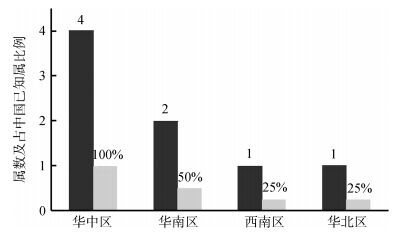
2 结果 2.1 中国树甲族的种类组成截至2016年底,能够得到确切分布信息的树甲族种类有4属108种(亚种),对其分析得出各属种的地理分布情况(表 1,图 1)。由表 1看出,树甲属Strongylium共93种,占中国已知种类的86.1%,物种丰富度最高,其次为拟颈树甲属Stenochinus共12种,占11.1%,优树甲属Uenostrongylium为2种,真树甲属Eucrossoscelis为1种,所占比例分别为1.9%和0.9%。
| 属/种/亚种(种数) | 分布信息来源 | 华南区 | 华中区 | 西南区 | 华北区 | 中国特有种 |
| 真树甲属Eucrossoscelis (1) | ▲ | |||||
| E.hastatus | 模式标本 | ▲ | ▲ | |||
| 优树甲属Uenostrongylium (2) | ▲ | |||||
| U.becvari | Masumoto, 2006 | ▲ | ▲ | |||
| U.hunanense | 模式标本照片 | ▲ | ▲ | |||
| 拟颈树甲属Stenochinus (12) | ▲ | ▲ | ▲ | |||
| S.akiyamai | 模式标本 | ▲ | ▲ | |||
| S.amplus | 模式及其他标本 | ▲ | ▲ | |||
| S.apiciconcavus | 模式及其他标本 | ▲ | ▲ | |||
| S.carinatus | 模式及其他标本 | ▲ | ||||
| S.cylindricus | 模式及其他标本 | ▲ | ▲ | |||
| S.furcifer | Shibata, 1980 | ▲ | ▲ | |||
| S.jinxiuensis | 模式标本 | ▲ | ▲ | |||
| S.leprosus | 模式标本 | ▲ | ▲ | |||
| S.mysticus | Masumoto et al., 2013 | ▲ | ▲ | |||
| S.subparallelus | 模式标本 | ▲ | ▲ | |||
| S.xinyicus | 模式标本 | ▲ | ▲ | |||
| S.unicornis | 其他标本 | ▲ | ▲ | |||
| 树甲属Strongylium (93) | ▲ | ▲ | ▲ | |||
| S.albopilosum | 模式及其他标本 | ▲ | ▲ | |||
| S.alishanum | 模式标本 | ▲ | ▲ | |||
| S.andoi | 模式及其他标本 | ▲ | ▲ | |||
| S.angustissimum | 模式及其他标本 | ▲ | ▲ | |||
| S.anhuiense | 模式及其他标本 | ▲ | ▲ | |||
| S.anmashanum | 模式标本 | ▲ | ▲ | |||
| S.atritarse | 模式标本 | ▲ | ▲ | |||
| S.basifemoratum | 模式标本照片及其标本 | ▲ | ▲ | ▲ | ||
| S.brevicorne | 其他标本 | ▲ | ||||
| S.brunneum | 模式标本 | ▲ | ▲ | |||
| S.carbonarium | 模式及其他标本 | ▲ | ▲ | |||
| S.chihpenense | 模式及其他标本 | ▲ | ▲ | |||
| S.chinense | 模式及其他标本 | ▲ | ▲ | |||
| S.chutungen | 模式标本 | ▲ | ▲ | |||
| S.claudum | 模式及其他标本 | ▲ | ▲ | |||
| S.cultellatum cultellatum | 其他标本 | ▲ | ▲ | |||
| S.cultellatum taiwanum | 其他标本 | ▲ | ▲ | |||
| S.dimidiatum | 模式标本 | ▲ | ▲ | |||
| S.endoi | 模式标本 | ▲ | ▲ | |||
| S.erythrocephalum | 其他标本 | ▲ | ▲ | |||
| S.flavilabre | 其他标本及Fairmaire, 1891 | ▲ | ▲ | |||
| S.foochouense | 模式标本 | ▲ | ▲ | |||
| S.formosanum | 模式及其他标本 | ▲ | ▲ | |||
| S.fujianenses | 模式及其他标本 | ▲ | ▲ | |||
| S.fujitai | 模式标本 | ▲ | ▲ | |||
| S.gaoliense | Masumoto, 2004 | ▲ | ▲ | |||
| S.gibbosulum | 模式及其他标本 | ▲ | ▲ | |||
| S.guizhouense | 模式及其他标本 | ▲ | ▲ | |||
| S.habashanense habashanense | 模式标本 | ▲ | ▲ | |||
| S.habashanense lijiangense | 模式及其他标本 | ▲ | ▲ | |||
| S.hsiaoi | 模式及其他标本 | ▲ | ▲ | |||
| S.hyacinthinum | 模式及其他标本 | ▲ | ▲ | |||
| S.impressipenne | 模式及其他标本 | ▲ | ▲ | ▲ | ||
| S.jizushanense | 模式及其他标本 | ▲ | ▲ | |||
| S.jucundum | 模式标本照片及其他标本 | ▲ | ▲ | ▲ | ||
| S.katsumii | 模式标本 | ▲ | ▲ | |||
| S.kentingense | 模式及其他标本 | ▲ | ▲ | |||
| S.kimioi | 模式标本 | ▲ | ▲ | |||
| S.klapperichi | 模式标本照片及其他标本 | ▲ | ▲ | |||
| S.kuantouense | 模式标本 | ▲ | ▲ | |||
| S.kubani | 模式标本 | ▲ | ▲ | |||
| S.kulzeri | 模式及其他标本 | ▲ | ▲ | |||
| S.liangi | 模式标本 | ▲ | ▲ | |||
| S.lanhai | 模式及其他标本 | ▲ | ▲ | |||
| S.laszlorum | 模式标本 | ▲ | ▲ | |||
| S. liangi | 模式标本 | ▲ | ▲ | |||
| S.lini | 模式及其他标本 | ▲ | ▲ | |||
| S.lishanum | 模式及其他标本 | ▲ | ▲ | |||
| S.longissimum | 模式及其他标本 | ▲ | ▲ | |||
| S.longipenne | 模式标本 | ▲ | ▲ | |||
| S.lutaoense | 模式标本 | ▲ | ▲ | |||
| S.masatakai | 模式标本 | ▲ | ▲ | |||
| S.masumotoi | 模式及其他标本 | ▲ | ▲ | |||
| S.miwai | 模式及其他标本 | ▲ | ▲ | |||
| S.multipunctatum | 模式标本 | ▲ | ▲ | |||
| S.nakanei | 模式及其他标本 | ▲ | ▲ | |||
| S.nanfangum | 其他标本 | ▲ | ▲ | |||
| S.nanrenense | 模式及其他标本 | ▲ | ▲ | |||
| S.obscuratum | 模式标本 | ▲ | ▲ | |||
| S.ochii | 模式标本 | ▲ | ▲ | |||
| S.ochrolatum | 模式标本 | ▲ | ▲ | |||
| S.ohmomoi | 模式标本照片 | ▲ | ▲ | |||
| S.okumurai | 模式标本 | ▲ | ▲ | |||
| S.opacicolle | 模式标本 | ▲ | ▲ | |||
| S.osawai | Masumoto, 2005 | ▲ | ▲ | |||
| S.palingense | 其他标本 | ▲ | ▲ | |||
| S.pilimarginum | 模式标本 | ▲ | ▲ | |||
| S.pilosulum | 模式标本 | ▲ | ▲ | |||
| S.pinfaense | 模式标本 | ▲ | ▲ | |||
| S.pseudogibbosipenne | 模式标本 | ▲ | ▲ | |||
| S.rufitarse | 模式标本 | ▲ | ▲ | |||
| S.schenklingi | 模式及其他标本 | ▲ | ▲ | |||
| S.shigeoi | 模式标本 | ▲ | ▲ | |||
| S.sinuatipenne | 其他标本 | ▲ | ▲ | |||
| S.stanislavium | Masumoto, 2004 | ▲ | ▲ | |||
| S.subaeneum | 模式及其他标本 | ▲ | ▲ | |||
| S.sulcielytrum | 模式标本 | ▲ | ▲ | |||
| S.szentivanyi | 模式及其他标本 | ▲ | ▲ | |||
| S.tabanai | 模式标本 | ▲ | ▲ | |||
| S.talianum | 模式标本 | ▲ | ▲ | |||
| S.taliopacium | 模式标本 | ▲ | ▲ | |||
| S.tanikadoi | 模式标本 | ▲ | ▲ | |||
| S.tehuashense | 模式标本 | ▲ | ▲ | |||
| S.thibetanum | 模式标本 | ▲ | ▲ | |||
| S.undulatum kuatunense | 模式及其他标本 | ▲ | ▲ | |||
| S.wadai | 模式标本 | ▲ | ▲ | |||
| S.wuyishanense | 模式标本 | ▲ | ▲ | |||
| S.yasuhikoi | 模式标本 | ▲ | ▲ | |||
| S.yokoyamai | 模式标本 | ▲ | ▲ | |||
| S.yunnanatrum | 模式标本 | ▲ | ▲ | |||
| S.yunnanicum | 模式标本 | ▲ | ▲ | |||
| S.zhengi | 模式标本 | ▲ | ▲ | |||
| S.zoltani | 模式标本 | ▲ | ▲ | |||
| 总计 | 61 | 33 | 19 | 1 | 103 |
|
| 图 1 中国树甲族属级地理分布 Fig. 1 Distribution of Chinese Stenochiini genera |
| |
根据张荣祖(2011)的观点,中国动物地理区地跨古北界和东洋界。而中国的古北界可分为东北区、华北区、蒙新区和青藏区东洋界在中国则包括西南区、华中区和华南区。
据表 1和图 1可知,树甲族在我国分布具有非常明显的不均衡性,主要分布在东洋界,古北界分布极少,且无特有属。其中仅在1个区分布的有2属,分别为优树甲属和真树甲属,在3个区有分布的是拟颈树甲属,而在整个东洋区均有分布的是物种最为丰富的树甲属。另外,我国树甲族内真树甲属和优树甲属为寡型属,拟颈树甲属和树甲属为多型属。
2.2.2 种级地理分布特点依据表 1可得出,华南区物种分布数量最多,占已知种的56.5%;其次是华中区,为30.6%;西南区为17.6%,华北区最低,为0.9%。表明华南区为树甲的主要分布地。另外,仅有4种跨区分布,约占总数的3.7%。
由表 2看出,华南区特有种数量最多,为58种(亚种),依次为华中区32种,西南区18种,华北区1种。由此可知,华南区为我国树甲的主要分布地区,其次为华中区和西南区,这与树甲的热带、亚热带分布特性相吻合。
| 东北区 | 华北区 | 蒙新区 | 青藏区 | 华中区 | 华南区 | 西南区 | |
| 种(亚种)/个 | — | 1 | — | — | 33 | 61 | 19 |
| 特有种数/个 | — | 1 | — | — | 32 | 58 | 18 |
| 各区种类占中国已知总数比例/% | 0 | 0.9 | 0 | 0 | 30.6 | 56.5 | 17.6 |
| 特有种占本区分布种类比例/% | 0 | 100 | 0 | 0 | 97.0 | 95.1 | 94.7 |
根据以上结果,我国树甲族区系具有以下特点:1) 属、种主要为东洋区区系成分,无特有属;2) 华南区树甲物种最丰富;3) 地方特有种比例高,多为狭域分布。树甲族的区系特点与其生活习性及地理环境和气候环境有关。树甲族昆虫主要生活于植被条件良好的阔叶林中,幼虫在阔叶树(胡桃树、榆树、漆树、山毛榉、鹅掌楸、橡树等)的朽木中发育(Doyen,1989),成虫在朽木中、树皮下、树洞以及树干上生活。东洋区属于温润的热带、亚热带气候区(张荣祖,2011),森林覆盖率高,为树甲提供了良好的生活环境。另外,山系间断分布以及隔离的岛屿均为树甲物种多样性和特有种类的形成提供了极好的条件。
华南区位于中国南端,气候属南亚热带和热带,本区内植物生长繁茂,自然植被主要属热带-亚热带常绿阔叶林(张荣祖,2011),胡桃树、漆树、山毛榉、鹅掌楸、橡树等树种丰富,而树甲幼虫主要生活于这些树种的朽木中,因此华南区非常适合树甲的生存和繁衍。华中区虽然拥有的物种数量较华南区少,但是特有种占本区分布种的比例却大于华南区,尤其是在西部山地高原亚区,这一亚区西部和西南部与横断山区相连,海拔较高,地形较崎岖(张荣祖,2011),一旦物种在该区定植下来,高山形成的地理阻隔有利于特有种的形成和保存。
树甲族昆虫种类众多,全世界分布有2 200余种。我国幅员辽阔,地理环境复杂多样,笔者标本采集的覆盖面不全,所收集到的标本种类也不足,所以本文仅是对树甲族区系进行的初步分析结果,有待进一步完善。
致谢: 感谢芬兰自然历史博物馆Jaakko Mattila博士和Pekka Malinen先生,哥本哈根大学动物博物馆Alexey Solodovnikov博士、Cecilie Svenningsen女士和Sree Gayathree Selvantharan先生,维也纳自然历史博物馆Harald Schillhammer博士及台中自然历史博物馆詹美玲博士和郑明伦博士帮助拍摄模式标本照片。| 苑彩霞. 2005. 中国树甲族分类研究(鞘翅目: 拟步甲科)[D]. 河北保定: 河北大学. |
| 张荣祖. 2011. 中国动物地理[M]. 北京: 科学出版社: 124-217. |
| 赵养昌. 1963. 中国经济昆虫志第四册鞘翅目伪步行虫科[M]. 北京: 科学出版社: 2. |
| Doyen JT. 1989. Reconstitutions of Coelometopini Tenebrionini and related tribes of America north of Colombia (Coleoptera:Tenebrionidae)[J]. Journal of the New York Entomological Society, 97(3): 300–301. |
| Fairmaire L. 1891. Coléoptères de l'intérieur de la Chine (Suite:7e partie)[J]. Annales de la Société Entomologique de Belgique, 35:clxxxvii-ccxix. |
| Fujioka M. 2011. Taxa of the Tenebrioidea proposed by Dr. Kimio Masumoto[M]//Kawai S. Special publication of the Japanese Society of Scarabaeoidology (1)[益虫: Masumoto]. Japan: The Japanese Society of Scarabaeoidology: 28-41. |
| Kaszab Z. 1977. Die Tenebrioniden des Papuanischen Gebietes I. Strongyliini (Coleoptera:Tenebrionidae)[J]. Pacific Insects Monograph, 33: 1–219. |
| Löbl I, Merkl O, Ando K, et al. 2008. Tenebrionidae[M]//Löbl I, Smetana A. Catalogue of Palaearctic Coleoptera. Vol. 5. Apollo Books:Stenstrup:105-352. |
| Masumoto K. 1996. Study of Asian Strongyliini (Coleoptera, Tenebrionidae) I. Six new Strongylium species from Thailand, Laos and Taiwan, together with a new replacement name[J]. Elytra, Tokyo, 24(1): 131–140. |
| Masumoto K. 2004. Study of Asian Strongyliini (Coleoptera, Tenebrionidae) XV. Ten new Strongylium species from southeast Asia[J]. Elytra, 32(2): 371–388. |
| Masumoto K. 2005. Study of Asian Strongyliini (Coleoptera, Tenebrionidae) XVI. Eight new Strongylium species from Taiwan[J]. Elytra, 33(1): 193–209. |
| Masumoto K. 2006. Two new apterous stenochiines species from China (Coleoptera:Tenebrioninae:Stenochiini)[J]. Entomological Review of Japan, 61(1): 69–74. |
| Masumoto K, Akita K, Lee CF. 2013. New Tenebrionid (Coleoptera) beetles from Taiwan (8) descriptions of six new species and new occurrence records of four species from Taiwan[J]. Elytra, 3(2): 255–273. |
| Shibata T. 1980. Notes on the Tenebrionidae from Taiwan and Japan, Ⅲ. (Coleoptera)[J]. Entomological Review of Japan, 34(1-2): 63–74. |
| Utsunomiya Y. 2011. A new beautiful Strongylium from Guizhou, China (Tenebrionidae, Stenochiinae, Stenochiini)[M]//Kawai S. Special publication of the Japanese Society of Scarabaeoidology (1)[益虫: Masumoto]. Japan: The Japanese Society of Scarabaeoidology: 313-316. |
| Yuan CX, Ren GD, Masumoto K. 2015. Note on the taxonomic position of Strongylium clavipes Mäklin, 1864(Coleoptera:Tenebrionidae)[J]. Far Eastern Entomologist, N295: 12–14. |
| Yuan CX, Ren GD. 2007. A new species of the genus Strongylium Kirby (Coleoptera, Tenebrionidae) from China[J]. Acta Zootaxonomica Sinica, 32(3): 550–552. |
| Yuan CX, Ren GD. 2014a. Note on brachypterous Stenochiini from China (Coleoptera, Tenebrionidae) with description of a new species[M]//Bouchard P, Smith AD. Proceedings of the Third International Tenebrionoidea Symposium, Arizona, USA, 2013. ZooKeys, 415:329-336. |
| Yuan CX, Ren GD. 2014b. Two new species of the Stenochinus amplus species-group from China (Coleoptera, Tenebrionidae, Stenochiini)[J]. ZooKeys, 416: 67–76. DOI:10.3897/zookeys.416.7568 |