 2017, Vol. 19


叶片是植物的营养器官,为植物生长发育提供必要的营养物质,同时也扮演着“抵御者”的角色。当植物受到外界胁迫时,通过自身水势、细胞稳定性、气孔导度以及表皮蜡质特性等来提高对外界胁迫的耐受性。其中叶表蜡质层是植物与环境的第一道屏障,保护植物以减少外界胁迫的损伤,其作用主要表现在保水、防辐射和防病虫害等方面[1-2]。张海禄等[3]研究发现,大麦叶片蜡质含量与水分利用效率之间显著相关,认为叶片表皮蜡质含量能够反映出水分利用效率的高低;雒珺瑜等[4]研究发现,不同棉花品种蕾期叶片中蜡质含量与其对绿盲蝽的抗性呈显著正相关;芦屹等[5]研究发现,棉花叶片蜡质含量越高的品种,对棉蚜的抗性越强。光合速率和叶片颜色是反映植物正常生长的指标。近年来,叶绿素测定仪被广泛用于诊断植物生长状况,可直接在田间测定作物叶片的绿色度,其叶绿素相对含量测定值即 SPAD 值的大小可反映作物叶绿素含量、叶片颜色及氮素营养状况[6-7]。甲哌鱒 (商品名称缩节胺, Scheme 1) 是一类人工合成的鱒类植物生长延缓剂,可通过改变赤霉素含量和调节内源激素系统的平衡调节植物生长,诱导植物产生抗逆性。甲哌鱒现已广泛应用于棉花株型及其群体调控,已有研究证实其与棉花抗逆性有关[8-11],影响了棉花的光合效能[12-13],但甲哌鱒对于棉花叶片的蜡质沉积、叶绿素含量、光合速率的影响尚未明确。基于此,本研究测定了经甲哌鱒处理后不同时间棉花叶片蜡质含量及光合生理指标的变化,分析了甲哌鱒与蜡质含量及光合生理之间的关系,以期为棉花的抗逆研究提供理论依据。

|
Scheme1 |
1 材料与方法 1.1 供试材料
甲哌鱒 (mepiquat chloride) 安阳市小康农药有限责任公司;供试棉花品种为新陆早 55 号,购于新疆维吾尔自治区石河子市种子交易市场。
1.2 试验设计试验于 2016 年在新疆石河子大学试验站农田进行。采用人工播种及常规田间管理。播种时间为 2016 年 5 月 5 日:一膜四行,株距 9 cm;试验棉种不作药剂处理,水肥化控栽培管理措施与试验站大田一致。采用完全随机区组设计,甲哌鱒设 CK (0 g/hm2)、4.5、7.5、10.5 和 15.0 g/hm2 5 个处理,选取长势一致的棉株供试验。施药时间为 2016 年 6 月 7 日,施药方式为叶面喷施。于施药后 12 d 内进行蜡质含量、光合速率、SPAD 值测定。每个处理重复 3 次,每小区 30 株棉株。
1.3 测定项目及方法1.3.1 蜡质含量 参照芦屹等[5]的方法测定并略有改动:取同一棉株上部两片真叶,经自来水冲洗干净,用吸水纸吸干表面水分、剪碎;准确称取 2 g 样品于 30 mL 氯仿中浸泡 1 min;将提取液过滤并称重 (m1) 后于通风柜中使氯仿完全挥发,称重 (m2),得蜡质含量 (m2 – m1)。重复 3 次,结果取平均值。
1.3.2 光合速率 采用便携式光合测定系统 Li-6400 测定。取同一棉株上部 3 片真叶,按仪器使用说明进行。试验重复 3 次,取平均值。
1.3.3 叶片 SPAD 值 采用 SPAD-502Plus 测定。取同一棉株上部 3 片真叶,每张叶片避开叶脉处取 3 个点,按仪器使用说明进行。取 3 张叶片的平均值作为该株棉花的 SPAD 值。重复 3 次。
1.4 数据统计采用 SPSS19.0 处理试验数据,Origin18.0 作图,在 α = 0.05 水平上进行差异显著性分析 (LSD),在 α = 0.01、0.05 水平上作相关性分析。
2 结果与分析 2.1 甲哌鰐处理对棉花叶片光合速率的影响结果 (图 1) 表明:对照与甲哌鱒各处理间光合速率均差异显著 (P < 0.05),且随时间的延长光合速率呈增高趋势,尤以 4.5 与 7.5 g/hm2 甲哌鱒处理效果显著。其中,4.5 g/hm2 处理组光合速率为 4.46~9.55 μmol/(m2·s),增幅为 114%;7.5 g/hm2 处理组为 4.67~9.98 μmol/(m2·s),增幅为 113%;而 15.0 g/hm2 处理组为 7.22~9.98 μmol/(m2·s),增幅为 38%。说明经 4.5 与 7.5 g/hm2 的甲哌鱒处理后,能在一段时间内逐渐提高棉花叶片光合速率,而经 15.0 g/hm2 处理后能在短时间内促进叶片光合作用,并保持稳定的光合速率。

|
图中不同字母表示在0.05水平上差异显著 (P < 0.05)。 Different letters in the figure showed significant differences at 0.05 level. 图 1 甲哌鰐处理对棉花叶片光合速率的影响 Fig. 1 Effect of DPC treatment on the photosynthetic rate of cotton leaves |
2.2 甲哌鰐处理对棉花叶片 SPAD 值的影响
SPAD 值可直观反映叶片颜色变化。通过连续测定 12 d 内的 SPAD 值 (图 2) 发现,棉花叶片叶色随甲哌鱒处理时间的延长而变深,且处理浓度越高叶色越深。方差分析结果表明,同一时间,高浓度甲哌鱒处理组与对照组之间差异显著 (P < 0.05)。12 d 内,对照 SPAD 值为 44.3~49.6;4.5 g/hm2 处理组为 46.9~52.2,比对照增加了 5.87%~5.24%;7.5 g/hm2 处理为 47.8~52.0,比对照增加了 7.90%~4.84%;10.5 g/hm2 处理为 48.4~53.3,比对照增加了 9.26%~7.46%;15.0 g/hm2 处理为 51.6~55.7,比对照增加了 16.5%~12.30%。

|
图中不同字母表示在 0.05 水平上差异显著 (P < 0.05)。 Different letters in the figure showed significant differences at 0.05 level. 图 2 甲哌鰐处理对棉花叶片 SPAD 值的影响 Fig. 2 Effect of DPC treatment on SPAD value of cotton leaves |
2.3 甲哌鰐处理对棉花叶片蜡质含量的影响
结果 (图 3) 表明:经不同浓度的甲哌鱒处理后,对棉花叶片蜡质含量均有不同程度的影响,且对时间存在依赖性,即随时间延长其蜡质含量呈增加趋势,尤以 4.5 g/hm2 甲哌鱒处理组影响最大。在整个试验期 (12 d) 内,对照为 3.13~25.27 mg/g,增加了 7.06 倍;4.5 g/hm2 处理组为 3.57~29.53 mg/g,增加了 7.27 倍;7.5 g/hm2 处理组为 2.13~25.60 mg/g,增加了 11.01 倍;10.5 g/hm2 处理组为 1.67~26.93 mg/g,增加了 15.13 倍;15.0 g/hm2 处理组为 1.93~26.87 mg/g,增加了 12.92 倍。说明棉花生长发育初期阶段,叶片蜡质含量是不断积累的,适当浓度的甲哌鱒可以促进蜡质含量的积累,增强叶片抗逆性。

|
图中不同字母表示在 0.05 水平上差异显著 (P < 0.05)。 Different letters in the figure showed significant differences at 0.05 level. 图 3 甲哌鰐处理对棉花叶片蜡质含量的影响 Fig. 3 Effect of DPC treatment on wax content of cotton leaves |
2.4 甲哌鰐处理后棉花叶片蜡质含量与光合速率及 SPAD 值的相关性分析
不同浓度甲哌鱒处理棉花叶片后,其光合速率、蜡质含量与 SPAD 值三者间均呈极显著正相关关系 (P < 0.01,表 1 和表 2)。
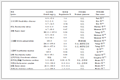
|
表 1 棉花叶片生理指标之间的相关系数 Table 1 The correlation coefficient between different physiological indexes of cotton leaves |
|
|
表 2 不同浓度甲哌鰐处理后各生理指标的相关系数 Table 2 The correlation coefficient of different physiological indexes after treated by DPC of different concentrations |
3 讨论与结论
甲哌鱒作为一种植物生长调节剂,合理使用不仅可调节植株生长,还可提高其抗逆性。研究表明,在一定时间内采用适当浓度的甲哌鱒处理棉花,可提高棉花叶片叶绿素含量且高值持续期长[8-9],延长棉花叶片光合时间,提高棉花光合效能,保证了较高的群体光合能力[14-15],并且叶色随甲哌鱒处理浓度的增加而变深[6];甲哌鱒处理还可提高花生叶片的叶绿素含量和光合速率[16]。本研究中,用甲哌鱒处理棉花后,棉花叶片 SPAD 值随甲哌鱒浓度增高而增加,叶色变深,对时间和浓度有一定的依赖性;4.5 与 7.5 g/hm2 甲哌鱒处理能有效促进棉花叶片光合速率,15.0 g/hm2 浓度能在短时间内促进叶片光合作用,并能保持稳定的光合速率。该结果与上述文献报道相似。
蜡质层是植物与外部环境的分界面,对植物具有重要的生物学意义,能减少非气孔的蒸腾作用,保护植物免受外来的机械损伤以及病虫害入侵和太阳辐射[17]。外界非生物因素如光照、温度等均可影响植物蜡质的合成与分泌[18]。朱双艳等[19-20]使用外源脱落酸 (ABA) 处理大麦幼苗叶片,发现 ABA 可影响其表皮蜡质的沉积,而外源水杨酸 (SA) 可诱导抗病油菜叶片表皮蜡质总含量显著增加,提高油菜抗逆性[21]。本研究结果表明,以 4.5 g/hm2 的甲哌鱒处理棉花可诱导其叶片表皮蜡质含量的积累,但当甲哌鱒用量超过 4.5 g/hm2 时则对蜡质的沉积无显著影响。
棉花叶片光合速率、蜡质含量及 SPAD 值相关性分析结果表明,蜡质含量与 SPAD 值的增加有助于加快光合速率,从而增强棉花的光合作用。
综上所述,15.0 g/hm2 甲哌鱒处理可快速提高棉株光合速率及 SPAD 值,增强棉花叶片光合作用、加深叶色,但对蜡质含量积累无显著作用,而 4.5 g/hm2 甲哌鱒处理对蜡质积累有显著作用,且能保持长时间的光合效能。结合农田经济效益,建议可于棉花苗期喷施 4.5 g/hm2 的甲哌鱒,既可达到控制棉苗生长的作用,又可增加棉花植株的抗逆性。
| [1] | POST-BEITTENMILLER D. Biochemistry and molecular biology of wax production in plants[J]. Ann Rev Plant Biol, 1996, 47(1): 405–430. doi:10.1146/annurev.arplant.47.1.405 |
| [2] | LEIDE J, HILDEBRANDT U, VOGG G, et al. The positional sterile (ps) mutation affects cuticular transpiration and wax biosynthesis of tomato fruits [J]. J Plant Physiol, 2011, 168(9): 871–877. doi:10.1016/j.jplph.2010.11.014 |
| [3] |
张海禄, 齐军仓. 大麦叶片表皮蜡质含量与抗旱性的关系研究[J]. 新疆农业科学, 2012, 49(1): 22–27.
ZHANG H L, QI J C. Study on the relationship between epicuticular wax content of barley leaves and drought resistance[J]. Xinjiang Agric Sci, 2012, 49(1): 22–27. doi:10.6048/j.issn.1001-4330.2012.01.004 |
| [4] |
雒珺瑜, 崔金杰, 黄群. 棉花叶片中叶绿素、蜡质含量和叶片厚度与抗绿盲蝽的关系[J]. 植物保护学报, 2011, 38(4): 320–326.
LUO J Y, CUI J J, HUANG Q. The relationship between the content of cotton leaf chlorophyll and waxiness and leaf thickness and the cotton resistance to Apolygus lucorum [J]. Acta Phytophylacica Sinica, 2011, 38(4): 320–326. |
| [5] |
芦屹, 王佩玲, 刘冰, 等. 新疆棉花主栽品种的抗蚜性及其机制研究[J]. 棉花学报, 2009, 21(1): 57–63.
LU Y, WANG P L, LIU B, et al. Resistance and relevant mechanism to Aphis gossypii Glover of main cotton varieties in Xinjiang [J]. Cotton Sci, 2009, 21(1): 57–63. |
| [6] |
马宗斌, 房卫平, 谢德意, 等. 氮肥和DPC用量对棉花叶片叶绿素含量和SPAD值的影响[J]. 棉花学报, 2009, 21(3): 224–229.
MA Z B, FANG W P, XIE D Y, et al. Effects of nitrogen application rates and DPC sparing doses on content of chlorophyll and SPAD value in leaf of cotton (Gossypium hirsutum L.) [J]. Cotton Sci, 2009, 21(3): 224–229. |
| [7] |
屈卫群, 王绍华, 陈兵林, 等. 棉花主茎叶SPAD值与氮素营养诊断研究[J]. 作物学报, 2007, 33(6): 1010–1017.
QU W Q, WANG S H, CHEN B L, et al. SPAD value of cotton leaves on main stem and nitrogen diagnosis for cotton growth[J]. Acta Agronomica Sinica, 2007, 33(6): 1010–1017. doi:10.7606/j.issn.1009-1041.2007.06.245 |
| [8] |
周运刚, 王俊刚, 马天文, 等. 不同DPC(缩节胺)处理对棉花生理生化特性的影响[J]. 新疆农业科学, 2010, 47(6): 1142–1146.
ZHOU Y G, WANG J G, MA T W, et al. Influences of different DPC treatments on physiological and biochemical characteristics of cotton[J]. Xinjiang Agric Sci, 2010, 47(6): 1142–1146. doi:10.6048/j.issn.1001-4330.2010.06.017 |
| [9] |
邓小霞, 江海澜, 彭俊, 等. 缩节胺剂量对花铃期棉花生理特性的研究[J]. 石河子大学学报(自然科学版), 2013, 31(1): 1–5.
DENG X X, JIANG H L, PENG J, et al. The effect of DPC dosage on physiology of cotton during flowering and boll-setting period[J]. J Shihezi Univ (Nat Sci), 2013, 31(1): 1–5. |
| [10] |
段留生, 何钟佩. DPC对棉花叶片发育及活性氧代谢的影响[J]. 棉花学报, 1996, 8(6): 312–315.
DUAN L S, HE Z P. Effects of DPC on leaf development and active oxygen metablism in cotton leaf[J]. Acta Gossypii Sinica, 1996, 8(6): 312–315. |
| [11] |
王宁, 田晓莉, 段留生, 等. 缩节胺浸种提高棉花幼苗根系活力中的活性氧代谢[J]. 作物学报, 2014, 40(7): 1220–1226.
WANG N, TIAN X L, DUAN L S, et al. Metabolism of reactive oxygen species involved in increasing root vigour of cotton seedlings by soaking seeds with mepiquat chloride[J]. Acta Agronomica Sinica, 2014, 40(7): 1220–1226. |
| [12] |
刘燕. 棉花缩节胺处理与整枝效应的研究[D]. 武汉: 华中农业大学, 2013.
LIU Y. Effects of mepiquat chloride and pruning with topping on cotton crop[D]. Wuhan: Huazhong Agricultural University, 2013. |
| [13] |
冯国艺, 姚炎帝, 杜明伟, 等. 缩节胺(DPC)对干旱区杂交棉冠层结构及群体光合生产的调节[J]. 棉花学报, 2012, 24(1): 44–51.
FENG G Y, YAO Y D, DU M W, et al. Dimethyl piperidinium chloride (DPC) regulation of canopy architecture and photosynthesis in a cotton hybrid in an arid region[J]. Cotton Sci, 2012, 24(1): 44–51. |
| [14] |
杨成勋, 张旺锋, 徐守振, 等. 喷施化学打顶剂对棉花冠层结构及群体光合生产的影响[J]. 中国农业科学, 2016, 49(9): 1672–1684.
YANG C X, ZHANG W F, XU S Z, et al. Effects of spraying chemical topping agents on canopy structure and canopy photosynthetic production in cotton[J]. Scientia Agricultura Sinica, 2016, 49(9): 1672–1684. doi:10.3864/j.issn.0578-1752.2016.09.004 |
| [15] |
刘铨义, 周晶, 王文博, 等. 缩节胺对棉花品种生理生育特性影响研究[J]. 新疆农业科学, 2015, 52(7): 1280–1284.
LIU Q Y, ZHOU J, WANG W B, et al. Study the effect of DPC treatment on physiological and fertility characteristics of cotton[J]. Xinjiang Agric Sci, 2015, 52(7): 1280–1284. |
| [16] |
钟瑞春, 陈元, 唐秀梅, 等. 3种植物生长调节剂对花生的光合生理及产量品质的影响[J]. 中国农学通报, 2013, 29(15): 112–116.
ZHONG R C, CHEN Y, TANG X M, et al. Effect of three growth regulators on photosynthetic physiology, yield and quality of peanut[J]. Chin Agric Sci Bull, 2013, 29(15): 112–116. doi:10.11924/j.issn.1000-6850.2012-1954 |
| [17] | XU S J, JIANG P A, WANG Z W, et al. Crystal structures and chemical composition of leaf surface wax depositions on the desert moss Syntrichia caninervis [J]. Biochem Syst Ecol, 2009, 37(6): 723–730. doi:10.1016/j.bse.2009.12.012 |
| [18] |
顾俊, 王飞, 张鹏, 等. 植物叶表皮蜡质的生物学功能[J]. 江苏农业学报, 2007, 23(2): 144–148.
GU J, WANG F, ZHANG P, et al. Biological function of epicuticular wax[J]. Jiangsu J Agric Sci, 2007, 23(2): 144–148. |
| [19] |
朱双艳, 廖乐, 林立昊, 等. 外源ABA处理下大麦幼苗叶片角质层蜡质沉积与膜脂过氧化的关系[J]. 新疆农业科学, 2015, 52(5): 815–822.
ZHU S Y, LIAO L, LIN L H, et al. Study on the relationship of cuticular wax deposition and membrane lipid peroxidation in the leaves of barley seedlings under exogenous ABA treatment[J]. Xinjiang Agric Sci, 2015, 52(5): 815–822. |
| [20] |
朱双艳, 齐军仓, 惠宏杉, 等. 大麦幼苗叶片表皮蜡质组分及含量对外源ABA的响应及其对表皮透性的影响[J]. 西南农业学报, 2015, 28(5): 1965–1971.
ZHU S Y, QI J C, HUI H B, et al. Responses of epicuticular wax components and contents of barley seedling leaves to exogenous abscisic acid treatment and its impact on epidermal permeability[J]. Southwest China J Agric Sci, 2015, 28(5): 1965–1971. |
| [21] |
倪郁, 王婧, 宋超, 等. 外源SA影响油菜叶表皮蜡质及菌核病抗性的机制[J]. 作物学报, 2013, 39(1): 110–117.
NI Y, WANG J, SONG C, et al. Effects of SA induction on leaf cuticular wax and resistance to Sclerotinia sclerotiorurn in Brassica napus [J]. Acta Agronomica Sinica, 2013, 39(1): 110–117. |