 2017, Vol. 19


2. 河南省农业科学院 烟草研究所, 河南 许昌 461000
2. Tobacco Research Institute of Henan Academy of Agricultural Sciences, Xuchang 461000, Henan Province, China
粘虫Mythimna separate Walker是典型的季节性远距离迁飞害虫,具有发生范围广、危害世代多、受害作物种类广、产量损失重以及发生危害历史长等特点[1]。目前,针对粘虫的防治措施仍然以化学防治为主[2]。甲氨基阿维菌素苯甲酸盐(以下简称甲维盐) 是以阿维菌素B1a为基础的半合成生物源杀虫剂,属于阿维菌素类化合物,其作用靶标为γ-氨基丁酸(GABA) 受体[3-5],是目前防治蓟马、害螨及粉虱等害虫的有效药剂[6-7]。但已有报道小菜蛾Plutella xylostella (L.)[8]、甜菜夜蛾Spodoptera exigua Hübner[9-10]及西花蓟马Frankliniella occidentalis Pergande[11]等害虫对甲维盐产生了较高水平的抗性。
董洁等[12]研究发现,中国北京地区粘虫种群已对甲维盐产生了低水平抗性。为进一步明确甲维盐在粘虫防治方面的抗性风险,本研究通过室内选育获得了粘虫抗甲维盐种群,并测定了该抗性种群对阿维菌素、灭多威、毒死蜱、辛硫磷和氟氯氰菊酯5种常用杀虫剂的交互抗性水平,以及胡椒基丁醚(PBO)、马来酸二乙酯(DEM)、三丁基三硫磷酸酯(DEF) 和磷酸三苯酯(TPP) 4种酶抑制剂在粘虫敏感种群和抗性种群生物测定中对甲维盐毒力的增效作用,比较了敏感种群和抗性种群多功能氧化酶系(MFO)、谷胱甘肽S-转移酶(GSTs) 和羧酸酯酶(CarE) 几种解毒酶的活性差异,分析了其可能的抗性机制,以期为合理使用杀虫剂防治粘虫提供依据。
1 材料与方法 1.1 虫源供试粘虫种群于2013年采自中国河南省洛阳市孟津县后沟村玉米田,在室内采用人工合成饲料[13]继代饲养10代以上,待其抗性降低后作为相对敏感种群(S) 使用。养虫室内温度(25±1) ℃,相对湿度70%±5%,光周期16 h : 8 h (L : D),照度(10 000±50) lx。
1.2 药剂供试杀虫剂均为原药:92%辛硫磷(phoxim,河南省周口市金石化工有限公司),97%毒死蜱(chlorpyrifos,郑州凯瑞农化工产品有限公司),98%阿维菌素(abamectin,北京中绿农科技集团),96%氟氯氰菊酯(cyfluthrin,常州天择化工有限公司),99.5%甲氨基阿维菌素苯甲酸盐(emamectin benzoate,江苏农禾农业科技有限公司) 和98%灭多威(methomyl,江苏嘉隆化工有限公司)。
酶抑制剂:胡椒基丁醚(PBO,95%,上海赛意农化工科技有限公司),顺丁烯二酸二乙酯(DEM,97%,上海珂华生物科技有限公司),磷酸三苯酯(TPP,98%,成都思天德生物科技有限公司),三丁基三硫磷酸酯(DEF,96%,北京华尔博科技有限责任公司)。
试剂甲苯、丙酮为分析纯,乳化剂农乳1600纯度为99.5%。
1.3 抗性种群筛选方法粘虫抗甲维盐种群(JK) 筛选采用饲料混毒法[14]。
生物测定参照王圣印等[11]的方法。将甲维盐原药用丙酮+ 1%农乳1600水溶液以0.5为等比稀释成若干浓度,以相应浓度的丙酮+ 1%农乳1600水溶液作为对照,每处理和对照均重复3次。在一次性塑料杯中分别依次注入20 mL不同浓度药液及180 mL新配制的流体人工饲料[13],搅拌均匀,冷至室温后饲喂粘虫3龄幼虫(每个直径为10 cm的玻璃培养皿内放置25头幼虫),24 h后检查死亡虫数,以细毛笔轻触虫体后不能爬行身体等长距离为死亡判定标准。对照组死亡率低于10%时生物测定数据方为有效。人工气候箱设置为光周期14 L : 10 D,(25±0.5) ℃,相对湿度65%±10%,照度(10 000±50) lx。
根据母代生物测定结果,采用适宜浓度的甲维盐对子代3龄幼虫进行抗性选育,每代选育致死率为20%~30%。存活幼虫以正常饲料饲养至产卵,卵孵化后的幼虫发育至3龄时再进行下一代选育,共选育27代。
1.4 交互抗性及酶抑制剂增效作用测定甲维盐与辛硫磷、毒死蜱、灭多威、阿维菌素和氟氯氰菊酯的交互抗性测定参照1.3节饲料混毒法进行。辛硫磷、毒死蜱和灭多威用丙酮+ 1%农乳1600水溶液,阿维菌素和氟氯氰菊酯用甲苯+ 1%农乳1600水溶液稀释至适宜浓度。
增效作用试验参照Zhang等[15]、王圣印等[5, 16]及1.3节的方法进行,其中酶抑制剂在药液中的质量浓度均为0.1 g/L。
1.5 酶活性测定 1.5.1 多功能氧化酶系活力 1.5.1.1 细胞色素P450含量测定微粒体悬浮液制备参考Lee等[17]的方法。P450含量采用CO差光谱法[18]测定。
1.5.1.2 细胞色素b5含量测定参考Omura等[18]的方法。
1.5.1.3 O-脱甲基酶活性测定参考Hansen等[19]的方法。
1.5.2 羧酸酯酶活力以α-乙酸萘酯为底物,参照Van Asperen[20]的方法测定。
1.5.3 谷胱甘肽S-转移酶活力以CDNB为底物,参照Wu等[21]的方法测定。
1.5.4 蛋白总量测定参照考马斯亮蓝G-250染色法[22]测定酶源蛋白质含量。
1.6 数据分析生物测定结果采用POLO Plus 1.0软件分析,计算LC50值、95%置信区间和斜率;抗性倍数(RR50) 为抗性种群LC50值与敏感种群LC50值之比;95%置信区间不重叠即表示差异显著[23]。酶活性数据运用SPSS 17.0软件进行统计学分析,通过Ducan’s多重比较分析差异显著性。抗性水平分级标准[24]:抗性倍数在3以下为敏感;3~5倍为敏感性降低;5~10倍为低水平抗性;10~40倍为中等水平抗性;40~160倍为高水平抗性;160倍以上为极高水平抗性。
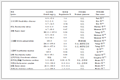
2 结果与分析 2.1 粘虫对甲维盐的抗性选育结果采用甲维盐对粘虫敏感种群(S) 连续筛选27代后,获得抗性倍数为53.99的高水平抗性种群。其抗性上升曲线呈“S”形:第1~12代抗性上升速度较缓,从1.00倍升到11.48倍;第13~21代上升速度较快,从11.48倍升到49.58倍;第22~27代抗性上升速度减缓,仅从49.57倍升到53.99倍(表 1)。
|
表 1 粘虫对甲维盐抗性选育结果 Table 1 The resistance development of the susceptible population ofM. separate to emamectin benzoate |
2.2 交互抗性分析
粘虫抗甲维盐种群对阿维菌素、毒死蜱和灭多威具有中等水平交互抗性,对辛硫磷和氟氯氰菊酯则存在低水平交互抗性(表 2)。
|
|
表 2 粘虫抗甲维盐种群(JK) 对5种杀虫剂的交互抗性 Table 2 Cross-resistance of the emamectin benzoate resistant population (JK) ofM. separate to 5 insecticides |
2.3 增效作用测定结果
结果(表 3) 表明,多功能氧化酶抑制剂PBO、GSTs抑制剂DEM、非特异性酯酶抑制剂DEF及羧酸酯酶抑制剂TTP对甲维盐对粘虫敏感种群和抗性种群的毒力均具有显著的增效作用(P < 0.05),其中PBO的增效倍数最高。
|
|
表 3 供试4种酶抑制剂在粘虫敏感种群及抗性种群中对甲维盐的增效作用 Table 3 Effects of four enzyme inhibitors on the activity of emamectin benzoate to both emamectin benzoate resistant (JK) and susceptible (S) populations ofM. separate |
2.4 酶活性测定结果
粘虫抗甲维盐种群的细胞色素P450和b5含量以及O-脱甲基酶、GSTs和CarE活性均显著高于敏感种群,分别是敏感种群的3.23、3.65、3.63、1.64和2.66倍(P < 0.05)(表 4)。
|
|
表 4 粘虫抗甲维盐种群(JK) 和敏感种群(S) 细胞色素P450和b5含量以及O-脱甲基酶、谷胱甘肽S-转移酶和羧酸酯酶活性比较 Table 4 P450s and b5 content, O-demethlase, GSTs and CarE activities in susceptible (S) and emamectin benzoate resistant (JK) populations ofM. separate |
3 结论与讨论
杨春龙等[25]研究发现,粘虫抗药性的发生、发展一般与其多功能氧化酶活性升高相关;此外,在鳞翅目害虫小菜蛾及棉铃虫对阿维菌素的抗药性机制研究中,也均发现了多功能氧化酶升高的现象[26]。甲维盐作为一种以阿维菌素为基础合成的生物源杀虫剂,一般认为其与阿维菌素具有相同的作用机制[6],这可能是粘虫抗甲维盐种群与阿维菌素交互抗性水平较高的原因。鉴于此,在防治粘虫抗甲维盐种群时,应尽量避免使用阿维菌素。早期研究表明,灭多威[27]、氟氯氰菊酯[28]、毒死蜱及辛硫磷[29]与甲维盐的作用机制均不相同。但本研究结果表明,粘虫抗甲维盐种群与毒死蜱和灭多威之间存在中等水平交互抗性,与辛硫磷和氟氯氰菊酯间存在低水平的交互抗性,其原因可能是粘虫抗甲维盐种群多功能氧化酶活性升高使得其对灭多威、氟氯氰菊酯、毒死蜱及辛硫磷的代谢解毒能力增强所致。因此在大田防治粘虫时,对以上几种杀虫剂和甲维盐的轮换使用应持谨慎态度。
害虫抗药性增强往往伴随着解毒酶活性的升高。多功能氧化酶作为重要的解毒酶之一,其活性升高已在多种抗性昆虫中被发现[26, 30-31]。早期研究证明,胡椒基丁醚(PBO) 对小菜蛾和菜青虫Pieris rapae Linnaeus等鳞翅目昆虫的多功能氧化酶具有较好的抑制作用[26, 32]。本研究发现,PBO对甲维盐对粘虫敏感和抗性种群的毒力均具有显著的增效作用,间接表明多功能氧化酶在粘虫对甲维盐抗性的产生中发挥着重要作用;体外酶活性测定结果也表明,粘虫抗甲维盐种群多功能氧化酶活性显著高于敏感种群;表明多功能氧化酶活性升高可能是导致粘虫对甲维盐抗性上升的重要因素之一。
GSTs和CarE是另外两种在昆虫抗药性机制中具有重要作用的解毒代谢酶[26, 31]。杨春龙等[25]研究发现,TPP对粘虫CarE具有较好的抑制作用。虽然目前尚无DEF和DEM对粘虫非特异性酯酶和GSTs抑制作用的报道,但唐振华等[33]研究发现,DEF对小菜蛾非特异性酯酶具有较好的抑制作用,而王东[34]的研究证明,DEM对棉铃虫GSTs具有较好的抑制作用。本研究发现,TPP、DEF和DEM对甲维盐对粘虫敏感和抗性种群的毒力均具有显著的增效作用,间接表明GSTs和CarE可能在粘虫对甲维盐抗性的形成中也发挥了重要作用。此外,粘虫抗甲维盐种群的GSTs和CarE活性均显著高于敏感种群,与酶抑制剂的增效作用测定结果相吻合,进一步表明GSTs和CarE可能在粘虫对甲维盐的抗性机制中发挥了重要作用。
综上所述,在防治粘虫时,甲维盐与其他供试杀虫剂应谨慎轮换使用,以降低抗性水平升高的风险。多功能氧化酶、谷胱甘肽S-转移酶和羧酸酯酶活性升高可能是粘虫对甲维盐产生抗性的重要因素。在农业生产中,可将胡椒基丁醚(PBO)、顺丁烯二酸二乙酯(DEM)、磷酸三苯酯(TPP) 及三丁基三硫磷酸酯(DEF) 添加到甲维盐商品制剂中,以提高甲维盐对粘虫的防治效果。
| [1] |
江幸福, 张蕾, 程云霞, 等. 我国粘虫研究现状及发展趋势[J]. 应用昆虫学报, 2014, 51(4): 881–889.
JIANG X F, ZHANG L, CHENG Y X, et al. Current status and trends in research on the oriental armyworm, Mythimna separata (Walker) in China[J]. Chin J Appl Entomol, 2014, 51(4): 881–889. |
| [2] |
耿超波, 陈丽娟. 玉米粘虫的发生规律及防治措施[J]. 吉林农业, 2015(5): 108.
GENG C B, CHEN L J. Occurrence and control of armyworm infesting corn[J]. Jilin Agric, 2015(5): 108. |
| [3] | LÓPEZ J D, LATHEEF M A, HOFFMANN W C. Effect of emamectin benzoate on mortality, proboscis extension, gustation and reproduction of the corn earworm, Helicoverpa zea[J]. J Insect Sci, 2010, 10: 89. |
| [4] |
毕富春, 徐风波. 甲胺基阿维菌素苯甲酸盐研究概述[J]. 农药科学与管理, 2002, 23(3): 31–33.
BI F C, XU F B. Outline of the studies on emamectin benzoate[J]. Pestic Sci Admin, 2002, 23(3): 31–33. |
| [5] |
王圣印, 周仙红, 张安盛, 等. 甲氨基阿维菌素苯甲酸盐研究进展[J]. 江西农业学报, 2012, 24(12): 123–126.
WANG S Y, ZHOU X H, ZHANG A S, et al. Research progress in emamectin benzoate[J]. Acta Agriculturae Jiangxi, 2012, 24(12): 123–126. |
| [6] | DAVIES I M, RODGER G K. A review of the use of ivermectin as a treatment for sea lice[Lepeophtheirus salmonis (Krøyer) and Caligus elongatus Nordmann] infestation in farmed Atlantic salmon (Salmo salar L.)[J]. Aquac Res, 2000, 31(11): 869–883. doi:10.1046/j.1365-2109.2000.00510.x |
| [7] | FANIGLIULO A, SACCHETTI M. Emamectin benzoate:new insecticide against Helicoverpa armigera[J]. Commun Agric Appl Biol Sci, 2008, 73(3): 651–653. |
| [8] | ZHAO J Z, COLLINS H L, LI Y X, et al. Monitoring of diamondback moth (Lepidoptera:Plutellidae) resistance to spinosad, indoxacarb, and emamectin benzoate[J]. J Econ Entomol, 2006, 99(1): 176–181. doi:10.1093/jee/99.1.176 |
| [9] |
司升云, 周利琳, 望勇, 等. 湖北省甜菜夜蛾田间种群抗药性监测[J]. 植物保护, 2009, 35(1): 114–117.
SI S Y, ZHOU L L, WANG Y, et al. Monitoring of insecticide resistance of Spodoptera exigua field populations in Hubei province[J]. Plant Protect, 2009, 35(1): 114–117. |
| [10] |
贾变桃, 沈晋良. 甜菜夜蛾对几类新型杀虫剂的早期抗性监测[J]. 棉花学报, 2008, 20(5): 359–363.
JIA B T, SHEN J L. Monitoring of early stage resistance to novel classes of insecticides in Spodoptera exigua (Lepidoptera:Noctuidae)[J]. Cotton Sci, 2008, 20(5): 359–363. |
| [11] |
王圣印, 张安盛, 李丽莉, 等. 西花蓟马田间种群对常用杀虫剂的抗性现状及防治对策[J]. 昆虫学报, 2014, 57(5): 621–630.
WANG S Y, ZHANG A S, LI L L, et al. Insecticide resistance status of field populations of Frankliniella occidentalis (Thysanoptera:Thripidae) in China and its control strategies[J]. Acta Entomologica Sinica, 2014, 57(5): 621–630. |
| [12] |
董杰, 刘小侠, 岳瑾, 等. 北京地区粘虫对5种杀虫剂的抗药性[J]. 农药学学报, 2014, 16(6): 687–692.
DONG J, LIU X X, YUE J, et al. Resistance of Mythimna separate (Lepidoptera:Noctuidae) to five different types of insecticides in Beijing[J]. Chin J Pestic Sci, 2014, 16(6): 687–692. |
| [13] |
涂业苟, 曾吉华. 斜纹夜蛾的人工饲养技术[J]. 江西农业学报, 2010, 22(1): 87–88.
TU Y G, ZENG J H. A method for artificial rearing of common cutworm, Spodoptera litura[J]. Acta Agriculturae Jiangxi, 2010, 22(1): 87–88. |
| [14] |
刘辉, 肖鹏, 刘永杰, 等. 斜纹夜蛾对茚虫威抗性风险分析及抗性生化机理[J]. 农药, 2011, 50(3): 197–200.
LIU H, XIAO P, LIU Y J, et al. Resistance risk analysis and biochemical mechanism of Spodoptera litura to indoxacarb[J]. Agrochemicals, 2011, 50(3): 197–200. |
| [15] | ZHANG S Y, KONO S, MURAI T, et al. Mechanisms of resistance to spinosad in the western flower thrip, Frankliniella occidentalis (Pergande) (Thysanoptera:Thripidae)[J]. Insect Sci, 2008, 15(2): 125–132. doi:10.1111/j.1744-7917.2008.00192.x |
| [16] |
王圣印, 于毅, 刘永杰. 西花蓟马抗甲氨基阿维菌素苯甲酸盐种群的交互抗性与生化抗性机制[J]. 植物保护学报, 2012, 39(2): 159–165.
WANG S Y, YU Y, LIU Y J. Cross-resistance and biochemical resistance mechanisms of emamectin-benzoate resistant population of Frankliniella occidentalis[J]. J Plant Protect, 2012, 39(2): 159–165. |
| [17] | LEE S S T, SCOTT J G. An improved method for preparation, stabilization, and storage of house fly (Diptera:Muscidae) microsomes[J]. J Econ Entomol, 1989, 82(6): 1559–1563. doi:10.1093/jee/82.6.1559 |
| [18] | OMURA T, SATO R. The carbon monoxide-binding pigment of liver microsomes. I. Evidence for its hemoprotein nature[J]. J Biol Chem, 1964, 239: 2370–2378. |
| [19] | HANSEN L G, HODGSON E. Biochemical characteristics of insect microsomes:N-and O-demethylation[J]. Biochem Pharmacol, 1971, 20(7): 1569–1578. doi:10.1016/0006-2952(71)90285-1 |
| [20] | VAN ASPEREN K. A study of housefly esterases by means of a sensitive colorimetric method[J]. J Insect Physiol, 1962, 8(4): 401–416. doi:10.1016/0022-1910(62)90074-4 |
| [21] | WU G, MIYATA T. Susceptibilities to methamidophos and enzymatic characteristics in 18 species of pest insects and their natural enemies in crucifer vegetable crops[J]. Pestic Biochem Physiol, 2005, 82(1): 79–93. doi:10.1016/j.pestbp.2005.01.001 |
| [22] | BRADFORD M M. A rapid and sensitive method for the quantitation of microgram quantities of protein utilizing the principle of protein-dye binding[J]. Anal Biochem, 1976, 72(1-2): 248–254. doi:10.1016/0003-2697(76)90527-3 |
| [23] | RUSSELL R N, ROBERTSON J L, SAVIN Y N E. Polo:a new computer program for probit analysis[J]. Entomol Soc Am, 1977, 23(3): 209–213. |
| [24] |
沈晋良, 谭建国, 肖斌, 等. 我国棉铃虫对拟除虫菊酯类农药的抗性监测及预报[J]. 昆虫知识, 1991, 28(6): 337–341.
SHEN J L, TAN J G, XIAO B, et al. Monitoring and forecasting the insecticide resistance to pyrethriods insecticide in Helicoverpa armigera Hubner[J]. Entomol Knowl, 1991, 28(6): 337–341. |
| [25] |
杨春龙, 龚国玑, 谭福杰, 等. 粘虫抗药性监测及其机制的初步研究[J]. 植物保护, 1995, 21(3): 2–5.
YANG C L, GONG G J, TAN F J, et al. Preliminary studies on monitoring and mechanisms of the insecticide resistance in Mythimna separota[J]. Plant Protect, 1995, 21(3): 2–5. |
| [26] |
梁沛, 高希武, 郑炳宗, 等. 小菜蛾对阿维菌素的抗性机制及交互抗性研究[J]. 农药学学报, 2001, 3(1): 41–45.
LIANG P, GAO X W, ZHENG B Z, et al. Study on resistance mechanisms and cross-resistance of abamectin in diamondback moth Plutella oxylostella (L.)[J]. Chin J Pestic Sci, 2001, 3(1): 41–45. |
| [27] | PORTER W P, GREEN S M, DEBBINK N L, et al. Groundwater pesticides:interactive effects of low concentrations of carbamates aldicarb and methomyl and the triazine metribuzin on thyroxine and somatotropin levels in white rats[J]. J Toxicol Environ Health, 1993, 40(1): 15–34. doi:10.1080/15287399309531773 |
| [28] | MAUND S J, HAMER M J, WARINTON J S, et al. Aquatic ecotoxicology of the pyrethroid insecticide lambda-cyhalothrin:considerations for higher-tier aquatic risk assessment[J]. Pest Manag Sci, 1999, 54(4): 408–417. |
| [29] | RACKE K D. Environmental fate of chlorpyrifos[J]. Rev Environ Contam Toxicol, 1993, 131: 1–150. |
| [30] |
周晓梅, 黄炳球. 斜纹夜蛾抗药性及其防治对策的研究进展[J]. 昆虫知识, 2002, 39(2): 98–102.
ZHOU X M, HUANG B Q. Insecticide resistance of the common cutworm (Spodoptera litura) and its control strategies[J]. Entomol Knowl, 2002, 39(2): 98–102. |
| [31] |
赵卫东, 王开运, 姜兴印, 等. 二斑叶螨对阿维菌素、哒螨灵和甲氰菊酯的抗性选育及其解毒酶活力变化[J]. 昆虫学报, 2003, 46(6): 788–792.
ZHAO W D, WANG K Y, JIANG X Y, et al. Resistance selection by abamectin, pyridaben and fenpropathrin and activity change of detoxicant enzymes in Tetranychus urticae[J]. Acta Entomologica Sinica, 2003, 46(6): 788–792. |
| [32] |
于新胜.菜青虫抗药性监测及对氯氟氰菊酯抗性机理研究[D].长沙:湖南农业大学, 2008:16-20.
YU X S. Studies on monitoring and mechanism of cyfluthrin resistance in Pieris rapae[D]. Changsha:Hunan Agricultural University, 2008:16-20. |
| [33] |
唐振华, 周成理, 吴世昌, 等. 上海地区小菜蛾的抗药性及增效剂的作用[J]. 植物保护学报, 1992, 19(2): 179–185.
TANG Z H, ZHOU C L, WU S C, et al. Insecticide resistance and the effects of synergists in the diamondback moth from shanghai[J]. Acta Phytophylagica Sinica, 1992, 19(2): 179–185. |
| [34] |
王东.棉铃虫(Helicoverpa armigera) 对多杀菌素的抗性机理及多杀菌素对其胁迫效应研究[D].泰安:山东农业大学, 2010:76-79.
WANG D. Studies on resistance mechanism and inductive effect of spinosad in Helicoverpa armigera (Hübner)[D]. Tai'an:Shandong Agricultural University, 2010:76-79. |