 2014, Vol. 16


2. 中南林业科技大学 生命科学与技术学院, 长沙 410004
2. College of Life Science and Technology, Central South University of Forestory and Technology, Changsha 410004, China
白纹伊蚊Aedes albopictus和致倦库蚊Culex pipiens quinquefasciatus是我国南方常见蚊虫,是登革热、乙型脑炎等疾病的主要传播媒介。林立辉等[ 1 ]曾对白纹伊蚊的监测和防治做过研究,孟凤霞等[ 2 ]研究过致倦库蚊对常见化学杀虫剂的抗药性。随着人类对农药环境安全和人畜健康关注度的提高,不少研究者致力于开发低毒、低残留及对环境友好的植物源农药。刘进进等[ 3 ]报道了蓖麻Ricinus communis碱对甜菜夜蛾Spodoptera exigua具有良好的毒杀效果;邓永学等[ 4 ]研究了9种植物精油对玉米象Sitophilus zeamais成虫的熏蒸作用;张云等[ 5 ]报道椿叶花椒Zanthoxylum ailanthoides果实精油对白纹伊蚊和致倦库蚊具有明显的杀虫活性;刘东泽等[ 6 ]研究了20种植物提取物对昆虫的拒食作用;彭映辉等[ 7 ]发现一摸香Zanthoxylum beecheyanum var.alatum叶精油在 1.5 mg/cm2剂量下对致倦库蚊成蚊的 驱避率为 100%的保护时间达(6.54±0.17)h;Vatandoost等[ 8 ]报道Kelussia odoratissima Mozaffarian植物精油对斯蒂芬按蚊Anopheles stephensi和尖音库蚊Culex pipiens幼虫24 h的LC50值分别为4.88和2.69 mg/L,Govindarajan[ 9 ]研究了生姜Zingiber officinale、迷迭香Rosmarinus officinalis等4种植物精油对三带喙库蚊Culex tritaeniorhynchus Giles和格氏浅色按蚊Anopheles subpictus Grassi幼蚊的杀虫活性;Sedaghat等[ 10 ]发现绿干柏Cupressus arizonica精油对斯蒂芬按蚊A. stephensi的LC50值为 79.30 mg/L。但目前尚未见有关福建柏精油杀蚊效果的报道。福建柏Fokienia hodginsii为柏科(Cupressaceae),属常绿乔木,主要分布在长江以南,资源丰富。笔者研究了福建柏精油对白纹伊蚊和致倦库蚊的毒性,并采用GC-MS法分析了精油的化学成分,旨在为开发植物源农药,合理利用福建柏资源提供参考。
1 材料与方法 1.1 精油制备
福建柏Fokienia hodginsii 鲜叶于2011年9月采集于中南林业科技大学内,用水蒸气蒸馏法提取,精油出油率(质量分数)为0.12%(油/鲜重),精油密度为0.736 g/mL,经无水硫酸钠干燥后,收集于棕色玻璃瓶,4 ℃冰箱保存,备用。
1.2 供试蚊虫供试白纹伊蚊Aedes albopictus和致倦库蚊Culex pipiens quinquefasciatus由湖南省疾病预防控制中心提供,饲养温度25 ℃±2 ℃,相对湿度75%±2%,光照14 h∶10 h (L∶D),以m(幼虫饲料小麦粉)∶m(酵母粉)∶m(鸡肝粉)=2∶1∶0.05为混合饲料饲养。
1.3 对幼虫及蛹的毒杀活性测定参照Nathan等[ 11 ]报道的浸液法进行测试。将福建柏精油先用无水乙醇(分析纯,纯度≥99.7%)溶解,再用蒸馏水稀释到所需浓度。福建柏精油对白纹伊蚊和致倦库蚊Ⅳ龄幼虫的施药剂量分别为50、60、70、80、90 μg/mL和40、50、60、70、80、90 μg/mL,对白纹伊蚊和致倦库蚊蛹的施药剂量分别为160、180、200、220、240、260 μg/mL和100、120、140、160、180 μg/mL。在100 mL锥形瓶中分别接入20头供试Ⅳ龄期幼虫或蛹,加入50 mL各质量浓度组的精油溶液,并以2%的乙醇溶液浸渍蚊幼虫作为对照,每组处理设3次重复。试验期间不喂食,处理24 h后记录幼虫与蛹的死亡数目。死亡判定以用尖头物体刺激后不能移动,或者不能游至水面为标准[ 12 ]。测定条件:25 ℃±2 ℃,相对湿度60%±5%。
1.4 福建柏精油对白纹伊蚊和致倦库蚊成蚊的熏蒸活性测定参照文献方法[ 13 ],采用密闭圆筒装置(容积为13 500 cm3)进行。福建柏精油熏蒸白纹伊蚊和致倦库蚊的用量梯度均为50、60、70、75、80 μL(换算得到熏蒸剂量分别为2.73、3.27、3.82、4.09、4.36 μg/cm3)。将电热片蚊香加热器紧扣在下方圆板中央圆孔下方的插孔上,分别均匀滴加上述剂量的精油于空白电热蚊香原纸片上;用吸蚊器从养蚊笼中吸取羽化后2~3 d(雌雄比1∶1)、未吸血的试蚊 30只,由圆板的中央圆孔放入,塞紧胶塞。待试虫恢复正常活动后,将滴有精油的电热蚊香原纸片装上市售的电热驱蚊器,置于圆筒底部,密封。接通电源,1 min后切断电源,立即移去加热器,塞上胶塞并计时,每隔2 min记录被击倒的试蚊数。连续观察20 min。测试设3次重复。
1.5 化学成分分析福建柏精油用色谱纯乙酸乙酯稀释2 000倍,充分摇匀。采用气相色谱-质谱联用(GC-MS)分析法,测试仪器为Agelent 6890GC和5973MS系统,弹性石英毛细管柱(HP-5MS,30 m×250 μm×0.25 μm)。升温程序:柱温40 ℃保持1 min,以20 ℃/min的速率升温至 100 ℃,保持2 min;再以20 ℃/min升温至220 ℃,保持2 min;最后仍以20 ℃/min升至280 ℃,保持5 min。色谱参数:载气为高纯氦气,总流速40 mL/min,柱内流速1.1 mL/min,进样口温度250 ℃,进样量1 μL,GC和MS接口温度270 ℃。质谱条件:电子轰击能量70 eV,离子源温度230 ℃,扫描质量范围(m/z)15~500 amu。采用Wiley275标准谱库进行检索。
1.6 数据处理毒杀活性测定结果和熏蒸活性测定结果均采用概率值分析方法。采用SPSS18.0统计软件分别计算出LC50和LC95值、KT50值和KT95值、95%置信区间和毒力回归方程,进行卡方检验(χ2)。毒杀和熏蒸试验中,24 h的的校正死亡率均采用Abbott [ 14 ]公式计算。
2 结果与分析 2.1 福建柏精油对2种蚊虫IV龄幼虫及蛹的毒杀活性毒杀活性结果(表 1)表明:福建柏精油对白纹伊蚊和致倦库蚊IV龄幼虫24 h的LC50值分别为53.21和55.85 μg/mL,对蛹的24 h LC50值分别为144.34和147.68 μg/mL。该精油对2种蚊虫IV龄幼虫和蛹的毒性基本接近,对2种蚊虫蛹的LC50值远高于对IV龄幼虫的LC50值,即蛹对精油的耐受性更强。因此,采用福建柏精油防治蚊虫的最佳时期是幼虫期。
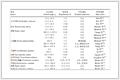 | 表 1 福建柏精油对IV龄期幼虫和蛹的毒杀活性Table 1 Insecticidal activity of the essential oil from F. hodginsii against IV larvae and pupae of mosquitoes |
福建柏精油对白纹伊蚊和致倦库蚊熏蒸处理24 h 的LC50值分别为3.43和3.47 μg/cm3(表 2)。由表 3可以看出,在不同的熏蒸剂量下,福建柏精油对白纹伊蚊和致倦库蚊的击倒速度随熏蒸剂量的增加而加快,且精油对白纹伊蚊的KT50值均低于对致倦库蚊的KT50值。经熏蒸剂量为4.36 μg/cm3 的福建柏精油处理后,白纹伊蚊和致倦库蚊的KT50值分别为14.63和14.90 min,24 h校正死亡率均达90.00%。
| 表 2 福建柏精油对2种成蚊的24 h毒杀活性Table 2 Adulticidal activity of essential oil from F. hodginsii against adult of two species of mosquitoes in 24 hours |
| 表 3 福建柏精油对2种成蚊的熏蒸效果Table 3 Fumigation effect of essential oil from F. hodginsii against adult of two species of mosquito |
2.3 福建柏精油的化学成分
福建柏精油GC-MS总离子峰谱图见图 1。从该精油中共检测出16种主要的化学成分(表 4)。检出物占精油挥发性成分总量的91.24%,其中α-蒎烯相对含量最高(峰面积百分比29.25%),其次是马鞭烯醇(10.88%)和石竹烯氧化物(9.64%)。
| 表 4 福建柏精油的化学成分Table 4 Chemical compositions of essential oil from F. hodginsii |
3 讨论
Govindarajan等[ 15 ] 的研究显示,多揭罗香树Ervatamia coronaria叶提取物对致倦库蚊幼虫的LC50值为116.04 μg/mL;曾冬琴等[ 16 ] 发现,广藿香Pogostemon cablin精油对白纹伊蚊蛹的24 h LC50值为187 μg/mL;扶巧梅等[ 17 ]报道,雪松Cedrus deodara 叶和马尾松Pinus massoniana 叶精油熏蒸白纹伊蚊和致倦库蚊的LC50值分别为4.23、2.32 μg/cm3和3.82、2.76 μg/cm3;彭映辉等[ 7 ]研究了一摸香Z. beecheyanum叶精油对致倦库蚊成蚊的24 h LC50值为6.93 μg/cm3。本研究结果显示,福建柏叶精油对白纹伊蚊和致倦库蚊Ⅳ龄幼虫的LC95值分别为80.06 和 110.27 μg/mL,毒杀效果优于多揭罗香树叶提取物;对白纹伊蚊蛹的毒性(LC50值为 144.34 μg/mL)显著高于广藿香精油;对蚊虫的熏蒸活性比已报道的多数精油要高,其24 h LC50值均小于4.00 μg/cm3。可见,福建柏精油比上述几种植物精油更具开发成植物源灭蚊剂的潜力。
从福建柏精油中共鉴定出16种化学成分,其中以α-蒎烯相对含量最高,为29.25%,其次是马鞭烯醇(10.88%)和石竹烯氧化物(9.64%)等。潘炯光等[ 18 ]已从福建柏精油中鉴定出了33个化合物,其主要成分为α-蒎烯(24.89%)、柠檬烯(limonene)(8.46%)和石竹烯氧化物(4.01%);而张艳平等[ 19 ]共鉴定出14个化合物,主要成分为β-橙椒烯(β-cubebene)(22.51%)、τ-杜松醇(τ-cadinol)(19.88%)、石竹烯(caryophyllene)(10.13%)、γ-毕澄茄烯(γ-cadinene)(8.31%)和α-杜松醇(α-cadinol)(5.52%)。本文结果与文献有明显差异,可能是由于取材的季节、地点及提取方法不同所致,就同一种芳香植物而言,其精油含量高低及成分差异与植株年龄、不同生长发育期等因素有关[ 20 ]。
已有研究表明,砂地柏S. vulgaris 精油具有优异的杀虫活性[ 21 ],而魏红梅[ 22 ]的研究表明,松油烯-4-醇(terpiene-4-ol)为砂地柏的主要杀虫成分,砂地柏精油中的萜类物质也具有杀虫活性[ 23 ]。福建柏精油中也含有大量萜类物质,已有研究表明,α-蒎烯对杂拟谷盗Tribolium confusum 成虫有较强的触杀、驱避和熏蒸作用[ 24 ]。α-蒎烯以及含有α-蒎烯的植物精油对储藏物害虫衣鱼Lepisma saccharina、大田害虫棉铃虫Helicoverpaarmigera、斜纹夜蛾Spodoptera litura、土传病菌尖孢镰刀菌Fusarium oxysporum均具有良好的控制作用[ 25,26,27 ];石竹烯氧化物被报道有驱虫效果[ 28 ],表明福建柏叶精油对蚊虫的生物活性与精油中所含的化学成分α-蒎烯和石竹烯氧化物有关。至于福建柏精油中其他化合物的杀虫活性需进一步研究。
| [1] | 林立辉, 李锦清, 温卫东, 等. 佛山市城区登革热媒介白纹伊蚊的监测与防治研究[J]. 中国卫生杀虫药械, 2004, 10(6): 363-367. LIN Lihui, LI Jinqing, WEN Weidong, et al. Surveillance of dengue vector and study of controlling Aedes albopictus in city area of Foshan[J]. Chinese Journal of Hygienic Insecticides & Equipments, 2004, 10(6): 363-367. (in Chinese) |
| [2] | 孟凤霞, 靳建超, 陈云, 等. 我国淡色库蚊/致倦库蚊对常用化学杀虫剂的抗药性[J]. 中国媒介生物学及控制杂志, 2011, 22(6): 517-520. MENG Fengxia, JIN Jianchao, CHEN Yun, et al. Resistance of Culex pipiens pallens/ Cx. pipiens quinquefasciatus to commonly used insecticides in China[J]. Chinese J Vector Biol Cont, 2011, 22(6): 517-520. (in Chinese) |
| [3] | 刘进进, 袁慧慧, 王金威, 等. 蓖麻不同部位蓖麻碱的含量及其杀虫活性研究[J]. 农药学学报, 2013, 15(2): 239-242. LIU Jinjin, YUAN Huihui, WANG Jinwei, et al. Ricinine content in different parts of Ricinus communis and its insecticidal activity[J]. Chin J Pestic Sci, 2013, 15(2): 239-242. (in Chinese) |
| [4] | 邓永学, 王进军, 鞠云美, 等. 九种植物精油对玉米象成虫的熏蒸作用比较[J]. 农药学学报, 2004, 6(3): 85-88. DENG Yongxue, WANG Jinjun, JU Yunmei, et al. Comparison of fumigation activities of 9 kinds of essential oils against the adults of Maize weevil, Sitophilus zeamaise Motschulsky (Coleoptera: Curculionidae)[J]. Chin J Pestic Sci, 2004, 6(3): 85-88. (in Chinese) |
| [5] | 张云, 彭映辉, 陈飞飞, 等. 椿叶花椒果实精油对两种蚊虫的生物活性及其成分分析[J]. 昆虫学报, 2009, 52(9): 1028-1033. ZHANG Yun, PENG Yinghui, CHEN Feifei, et al. Bioactivity and components of essential oil from Zanthoxylum ailanthoides fructification against two mosquito species[J]. Acta Entomologica Sinica, 2009, 52(9): 1028-1033. (in Chinese) |
| [6] | 刘东泽, 赵杰, 刘志诚, 等. 20种植物提取物对几种昆虫的拒食作用[J]. 农药学学报, 2003, 5(3): 89-93. LIU Dongze, ZHAO Jie, LIU Zhicheng, et al. Antifeeding effect of the extracts from twenties plants against several insects[J]. Chin J Pestic Sci, 2003, 5(3): 89-93. (in Chinese) |
| [7] | 彭映辉, 张云, 曾冬琴, 等. 一摸香叶精油对致倦库蚊的生物活性及其成分分析[J]. 应用生态学报, 2009, 20(6): 1488-1494. PENG Yinghui, ZHANG Yun, ZENG Dongqin, et al. Bioactivity and chemical composition of essential oil from Zanthoxylum beecheyanum var. alatum leaves against Culex pipens quinquefasciatus (Diptera: Culicidae)[J]. Chinese J Appl Ecol, 2009, 20(6): 1488-1494. (in Chinese) |
| [8] | VATANDOOST H, SANEI DEHKORDI A, SADEGHI S M, et al. Identification of chemical constituents and larvicidal activity of Kelussia odoratissima Mozaffarian essential oil against two mosquito vectors Anopheles stephensi and Culex pipiens (Diptera: Culicidae)[J]. Exp Parasitol, 2012, 132(4): 470-474. |
| [9] | GOVINDARAJAN M. Larvicidal and repellent properties of some essential oils against Culex tritaeniorhynchus Giles and Anopheles subpictus Grassi (Diptera: Culicidae)[J]. Asian Pac J Trop Med, 2011, 4(2): 106-111. |
| [10] | SEDAGHAT M M, DEHKORDI A S, KHANAVI M, et al. Chemical composition and larvicidal activity of essential oil of Cupressus arizonica E. L. Greene against malaria vector Anopheles stephensi Liston (Diptera: Culicidae)[J]. Pharmacognosy Res, 2011, 3(2): 135-139. |
| [11] | NATHAN S S, SAVITHA G, GEORGE D K, et al. Efficacy of Melia azedarach L. extract on the malarial vector Anopheles stephensi Liston (Diptera: Culicidae)[J]. Bioresour Technol, 2006, 97(11): 1316-1323. |
| [12] | MACDO M, CONSOLI R A G B, GRANDI T S M, et al. Screening of Asteraceae (Compositae) plant extracts for larvicidal activity against Aedes fluviatilis (Diptera: Culicidae)[J]. Memórias do Instituto Oswaldo Cruz, 1997, 92(4): 565-570. |
| [13] | GB/T 13917.5—2009, 农药登记卫生用杀虫剂室内药效试验及评价——第5部分: 电热蚊香片[S]. 中国国家质量技术监督局, 2009. GB/T 13917.5—2009, Laboratory efficacy criterions of public health insecticides for pesticide registration-Coil——the fifth section: electric mosquito tablet[S]. China State Bureau of Quality and Technical Supervision, 2009. (in Chinese) |
| [14] | ABBOTT W S. A method of computing the effectiveness of an insecticide, 1925[J]. J Am Mosq Control Assoc, 1987, 3(2): 302-303. |
| [15] | GOVINDARAJAN M, MATHIVANAN T, ELUMALAI K, et al. Mosquito larvicidal, ovicidal, and repellent properties of botanical extracts against Anopheles stephensi, Aedes aegypti, and Culex quinquefasciatus (Diptera: Culicidae)[J]. Parasitology Research, 2011, 109(2): 353-367. |
| [16] | 曾冬琴, 彭映辉, 陈飞飞, 等. 广藿香精油对白纹伊蚊的生物活性研究[J]. 中国媒介生物学及控制杂志, 2009, 20(4): 335-338. ZENG Dongqin, PENG Yinghui, CHEN Feifei, et al. Bioactivity of essential oil from Pogostemon cablin against Aedes albopictus[J]. Chinese J Vector Biol Cont, 2009, 20(4): 335-338. (in Chinese) |
| [17] | 扶巧梅, 彭映辉, 熊国红, 等. 两种松科植物精油对蚊虫的熏杀活性及其化学成分分析[J]. 中国生物防治学报, 2013, 29(3): 370-375. FU Qiaomei, PENG Yinghui, XIONG Guohong, et al. Chemical composition and fumigation activity of essential oils from leaves of two species of Pinaceae against mosquitoes[J]. Chinese J Bioll Cont, 2013, 29(3): 370-375. (in Chinese) |
| [18] | 潘炯光, 徐植灵, 马忠武. 福建柏精油成分的研究[J]. 植物学通报, 1991, 8(4): 48-49. PAN Jiongguang, XU Zhiling, MA Zhongwu. Studies on the essential oil composition in leaves of Fokienia hodginsii[J]. Chinese Bull Botany, 1991, 8(4): 48-49. (in Chinese) |
| [19] | 张艳平, 杨守晖, 曹奇龙, 等. 福建柏挥发油的化学成分及其生物活性研究[J]. 安徽农业科学, 2008, 36(17): 7290-7291. ZHANG Yanping, YANG Shouhui, CAO Qilong, et al. Study on the chemical constituents and biological activities of volatile oil from Fokienia hodginsii[J]. J Anhui Agric Sci, 2008, 36(17): 7290-7291. (in Chinese) |
| [20] | 罗金岳, 安鑫南. 植物精油和天然色素加工工艺[M]. 北京: 化学工业出版社, 2005. LUO Jinyue, AN Xinnan. Processing Technology of Essential Oil and Natural Pigment [M]. Beijing: Chemical Industry Press, 2005. (in Chinese) |
| [21] | 张兴, 冯俊涛, 陈安良, 等. 砂地柏杀虫作用研究概况[J]. 西北农林科技大学学报: 自然科学版, 2002, 30(4): 130-134. ZHANG Xing, FENG Juntao, CHEN Anliang, et al. A brief review on insecticidal function of Savin Juniper (Sabina vulgaris)[J]. J Northwest A & F Univ: Nat Sci Ed, 2002, 30(4): 130-134. (in Chinese) |
| [22] | 魏红梅. 几种植物精油的熏蒸杀虫作用及其活性成分研究 [D]. 陕西 杨凌: 西北农林科技大学, 2000. WEI Hongmei. Studies on components of activity and fumigation activity of some essential oils [D]. Yangling: Northwest A & F University, 2000. (in Chinese) |
| [23] | 闫海燕, 冯瑞红, 陈利标, 等. 砂地柏中6种萜烯类化合物分离鉴定及其杀虫活性研究[J]. 西北植物学报, 2007, 27(1): 163-167. YAN Haiyan, FENG Ruihong, CHEN Libiao, et al. Isolation, identification and insecticidal activities of six terpenoids in Sabina vulgaris[J]. Acta Botanica Boreali-Occidentalia Sinica, 2007, 27(1): 163-167. (in Chinese) |
| [24] | 吕建华, 林敏刚, 屠亚伟.α-蒎烯对杂拟谷盗成虫的控制作用[J]. 中国粮油学报, 2010, 25(12): 88-91. LV Jianhua, LIN Mingang, TU Yawei. The control of a-pinene to Tribolium confusum[J]. J Chinese Cereals Oils Assoc, 2010, 25(12): 88-91. (in Chinese) |
| [25] | WANG S Y, WAN C L, FANG H C, et al. Essentialoil from the leaves of Cryptomeria japonica acts as a silverfish (Lepisma saccharina) repellent and insecticide[J]. J Wood Sci, 2006, 52(6): 522-526. |
| [26] | SEKINE T, SMGANO M, MAJID A, et al. Antifungal effects of volatile compounds from black zira (Bunium persicum) and other spices and herbs[J]. J Chem Ecol, 2007, 33(11): 2123-213. |
| [27] | LIU X X, CHEN Q B, WANG Z H, et al. Allelopathic effects of essential oil from Eucalyptus grandis × E. urophylla on pathogenic fungi and pest insects[J]. Frontiers of Forestry in China, 2008, 3(2): 232-236. |
| [28] | ZHANG Q, MARGARYAN A, SCHNEIDMILLER R G. Mehtods for repelling insects using sesquiterpene hydrocarbons and their derivatives: US, 20100166896A1[P]. 2010-07-01. |