

文章信息
- 邱威, 何家敏, 孙玉慧, 廖洋洋, 周良富, 刘银冬
- QIU Wei, HE Jiamin, SUN Yuhui, LIAO Yangyang, ZHOU Liangfu, LIU Yindong
- 多通道农药喷施角度对果树靶标仿形气、雾流场的影响
- Effect of spray angles on profiling-flow field distribution from a multi-channel air-assistant sprayer in fruit tree applications
- 南京农业大学学报, 2020, 43(2): 379-386
- Journal of Nanjing Agricultural University, 2020, 43(2): 379-386.
- http://dx.doi.org/10.7685/jnau.201905031
-
文章历史
- 收稿日期: 2019-05-22


2. 农业农村部南京农业机械化研究所, 江苏 南京 210014
2. Nanjing Institute of Agricultural Mechanization, Ministry of Agriculture and Rural Affairs, Nanjing 210014, China
风送式喷雾是提高雾滴在果树冠层内的穿透性, 增加药液沉积, 减少农药过量使用的重要技术手段[1-4]。果树冠层作为一个非规则体, 传统的风送施药多为半周漫射型出风, 无法根据冠层结构特征实现气、雾流的空间精确差异性分布, 导致局部过量和不足并存[5], 施药效果仍有较大的提升空间。
为了实现不同冠径处的气流、药量差异化分布, 研究人员通过调节风扇转速和导流器安装位置[6-7], 调节喷嘴位置之间的高度差[8], 通过控制推杆改变雾化盘空间位置和姿态[9], 通过电动阀控制药液的流速和流量[10-12], 设计与冠层外形相仿的喷雾臂[13], 调节出风口角度[14], 调节喷嘴的倾角及数量[15]来实现仿形施药。以上几种方式仿形能力有限, 也多针对特定冠层, 在冠型固定、单一的大规模果园应用较多。将气、雾流改为多个独立通道喷施, 进而通过调整多个出风口角度, 使气、雾流向预定方向运动, 实现更小尺度上的气、雾流仿形分布, 即多通道风送施药技术, 目前已经引起一部分学者的关注。研究人员在多通道上搭载激光传感器来获取冠层特征参数, 通过设计的单元控制药液剂量满足不同密度冠层的需药量[16]; 或通过改变各个喷嘴的喷雾输出, 变速率施药来实时满足不同冠层特征果树的需求[17]。角度参数组合作为多通道施药的重要参数, 目前调节方式多根据经验或雾滴覆盖沉积结果来比较、确定, 多通道角度参数对靶标气、雾流场分布的影响规律仍然不明确, 施药效果有待提升。
鉴于此, 本文以纺锤型果树为例, 从冠层不规则特征出发, 研究角度参数组合对气、雾流场空间分布的影响规律, 确定基于角度调节的多通道气流仿形施药策略, 探索不同施药距离处, 气、雾流场仿形化分布的影响因素, 明确出风口角度调节方法与施药距离的取值范围。以雾滴沉积分布为考察指标, 分析角度调节对冠层内雾滴沉积分布均匀性、穿透性的影响。
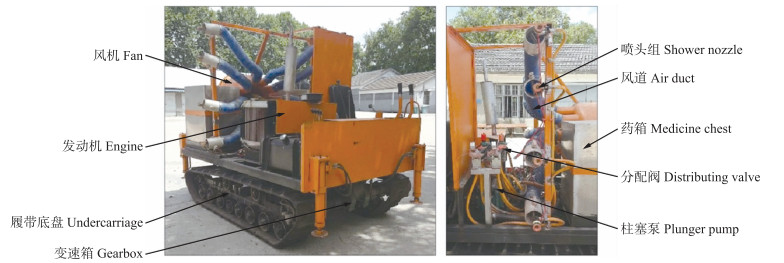
1 材料与方法 1.1 喷雾机果园履带式多通道风送喷雾机主要由多通道风送系统、雾化系统、底盘系统、动力分配传递系统组成, 整机结构设计如图 1。传动系统主要由发动机、皮带轮组、变速箱、传动轴、张紧轮、液压系统等组成。通过手动调节变量泵的流量, 将液压马达转速调至额定工作转速, 实现风机在0~2 400 r · min-1内的无级调速。作业时, 启动发动机, 一部分动力通过变速器传递至底盘行走系统, 驱动喷雾机行驶; 另一部分动力通过皮带轮组传递至液压动力系统, 分别驱动药泵、风机工作。药液通过药管依次从药箱、过滤器、药泵、阀门控制器再到喷头。同时, 气流通过软管被输送到各风臂, 风臂对称布置于机具两侧, 参数如表 1。
|
图 1 果园履带式多通道风送喷雾机 Fig. 1 The multi-channel air-assisted orchard sprayer |
| 参数Parameter | 数值Value |
| 长×宽×高/mm Length, width and height | 2 600×1 600×2 300 |
| 功率/kW Power | 34 |
| 行驶速度/(km·h-1) Running speed | 0~7.2 |
| 空载质量/kg No-load quality | 1 800 |
| 药箱容量/L Medicine box capacity | 400 |
| 履带轨距/mm Track gauge | 1 250 |
| 履带接地长度/mm Track grounding length | 1 800 |
| 履带宽度/mm Track width | 350 |
| 参数Parameter | 数值Value |
| 叶轮直径/mm Impeller diameter | 600 |
| 风机转速范围/(r·min-1) Speed range of fan | 0~2 400 |
| 出口风速/(m·s-1) Outlet wind speed | 0~50 |
| 出风口形状Outlet shape | 圆形Circular |
| 喷头类型Nozzle type | 锥形Cone |
| 喷雾高度/m Spray height | 3~4 |
| 喷雾压力/MPa Spray pressure | 0~1.5 |
| 流量/(L·min-1) Flow | 1.0~1.2 |
试验采用低矮密植果园常用的纺锤冠型梨树为研究对象, 在南京江浦农场、泰州烨佳梨园发展有限公司等地测得冠体参数为:树高1.9~2.4 m, 平均树高为2.1 m, 干高0.4~0.8 m, 平均干高为0.6 m。
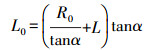
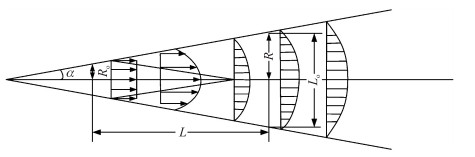
1.3 受多股射流作用的仿形化施药要求当射流极角α确定, 射流边界层的外边界线也就确定, 射流即按一定的扩散角向前作扩散运动(图 2)。应用这一特征, 对单个的圆断面射流可求出射流直径(L0)沿射程的变化规律:
|
(1) |
式中: R0为出风口半径(m); L为出风口到断面的距离(m); tanα=3.4λ, λ为紊流系数, 当射流断面为圆管时, λ取0.076。
|
图 2 单通道出风口射流 Fig. 2 Single-channel outlet jet |
根据果树植保作业规范, 确定仿形化施药要求:1)最高与最低位置出风口的一定射程的射流直径能覆盖冠层; 2)中间出风口一定射程的射流直径无气流缺失段; 3)通过调整角度参数组合, 使各出风口一定射程的射流直径在冠径较大区域实现气、雾流重合, 并按照冠层体积空间分布分配气、雾量, 实现基于冠层不规则结构的精准变量施药。
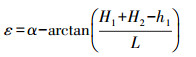
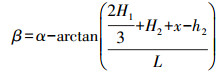
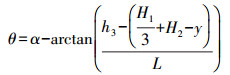
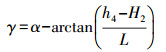
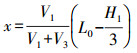
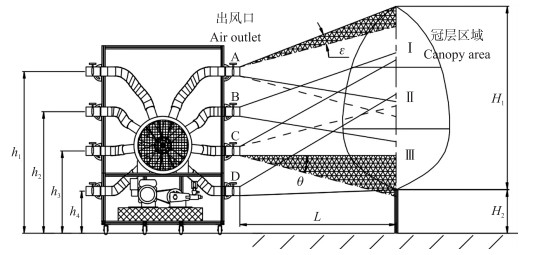
1.4 试验方法 1.4.1 喷雾角度调节由图 3可见:出风口A和D为多通道风送式雾化装置上、下两端的出风口, 其树干位置射流直径应满足冠层全覆盖要求; 出风口B和出风口C的角度调节主要根据冠层Ⅰ区与冠层Ⅲ区的体积比分配, 角度调节后, 其树干位置的射流直径偏移量符合体积空间分布。出风口所需调整角度计算公式如下:
|
(2) |
|
(3) |
|
(4) |
|
(5) |
|
(6) |
|
(7) |
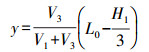
式中:ε、β、θ、γ为出风口A、B、C、D所需调整角度(°), 负值表示向上调整, 正值表示向下调整; H1为果树冠层高(m); H2为果树干高(m); h1为出风口A的高度(m); h2为出风口B的高度(m); h3为出风口C的高度(m); h4为出风口D的高度(m); V1、V2、V3分别为冠层Ⅰ区、Ⅱ区、Ⅲ区的体积(m3); x为出风口B在冠层Ⅰ区射流直径的偏移量(m); y为出风口C在冠层Ⅲ区射流直径的偏移量(m)。
|
图 3 多通道式喷雾机出风口角度计算原理 Fig. 3 Adjustment principle of outlet angle of multi-channel sprayer |
根据低矮密植纺锤型果树园艺特征, 参数的取值为:H1+H2=2.1 m, H2=0.6 m; V1 : V2 : V3=2 : 7 : 3;h1=1.8 m; h2=1.5 m; h3=1.2 m; h4=0.9 m; 施药距离L分别设定为1.2、1.5、2.0、2.5 m, 得出角度参数组合如表 2所示。
| 角度参数组合 Angle parameters combination |
ε/(°) | β/(°) | θ/(°) | γ/(°) | 施药距离(L)/m Distance of spraying |
| 1 | 0 | 7 | 6 | 0 | 1.2 |
| 2 | 5 | 6 | 4 | 5 | 1.5 |
| 3 | 7 | 5 | 2 | 7 | 2.0 |
| 4 | 6 | 5 | 1 | 8 | 2.5 |
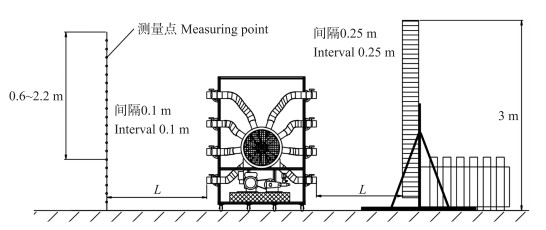
由图 4可见:在施药距离(L)处, 沿出风口轴线方向, 在竖直方向0.5~2.1 m以0.1 m为间隔布点, 采用TSI9545热线式风速仪(TSI Inc., Minnesota, 美国)测量各点气流速度, 每个数据点测量3次, 取平均值作为该点的风速值。保持雾量垂直空间分布仪面向出风口, 限定喷药时间为1 min, 药液被拦截在不同高度的积液沟, 通过软管排放到对应量筒中, 测定量筒中收集的雾量。雾量垂直空间分布仪高3 m, 以0.25 m为间隔分布多层积液沟。本试验测量果树冠层0.6~2.1 m的雾量沉积, 即测量雾量垂直空间分布仪0.6~2.2 m的雾量沉积。在相同的条件下重复3次, 取平均值为各段冠层的沉积雾量。
|
图 4 气流速度、雾量空间分布试验 Fig. 4 Air velocity and spray distribution test |
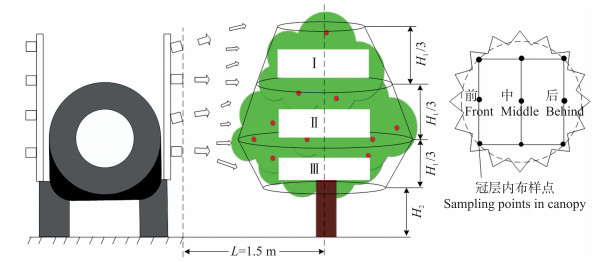
试验机具喷雾压力设置为1 MPa, 风机转速1 500 r · min-1, 机具前进速度1 m · s-1, 施药距离为1.5 m。试验树高2.1 m, 干高0.6 m, 喷施质量分数为0.5%的丽春红2R水溶液(上海三爱思试剂公司)。选择3棵果树, 分别在每棵果树的Ⅰ区、Ⅱ区、Ⅲ区布置样点, 每区以树干为中心点, 相等间隔设田字格布样点, 每个布样点上正、反面均布置采样纸卡(7.6 cm×7.6 cm)。同时, 为了考察机具雾滴穿透能力, 沿着气雾流方向将冠层内纸卡统计为前、中、后3部分, 如图 5所示。
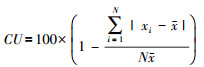
利用图像扫描仪(上海中晶数码科技有限公司)获取图像信息, 并用MATLAB处理得到各样点的覆盖率。利用UV2000紫外可见分光光度计[尤尼克(上海)仪器有限公司]得到单位面积雾滴沉积量。根据方差计算原理得到均匀度(CU, %)计算公式, 用于评价喷雾机施药的均匀性; 以冠层中、后部的雾滴覆盖率来表征机具的雾滴穿透能力。
|
(8) |
式中:xi为第i个覆盖率测量值; x为均值; N为测试点个数。
|
图 5 雾滴沉积样点布置 Fig. 5 Sampling points arrangement for deposition test |
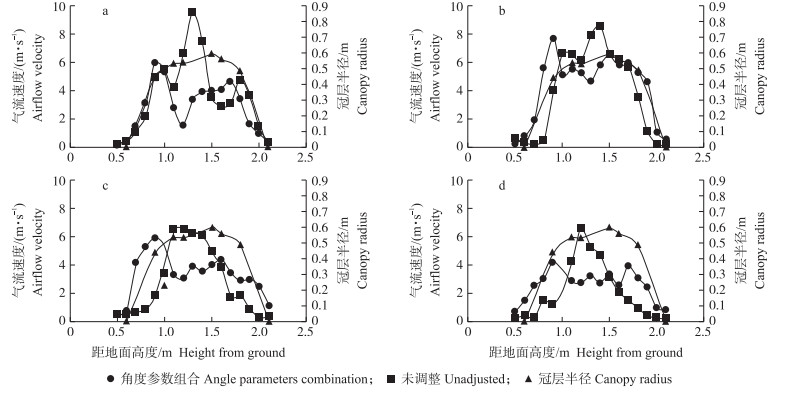
风机转速在1 500 r · min-1时, 沿射程方向距出风口为1.2、1.5、2.0、2.5 m处气流速度变化与果树冠层参数如图 6所示。
|
图 6 气流速度空间分布 Fig. 6 Spatial distribution of airflow velocity a.施药距离1.2 m Distance of spraying 1.2 m; b.施药距离1.5 m Distance of spraying 1.5 m; c.施药距离2.0 m Distance of spraying 2.0 m; d.施药距离2.5 m Distance of spraying 2.5 m. |
距离出风口0~0.8 m, 由于气流未充分混合, 未调整角度和角度参数组合的气流速度均呈现波峰波谷状。当施药距离为1.2 m时, 由于各出风口气流在1.2 m处还未完全汇合, 未调整情况下的气流速度分布呈基本对称的气流波峰波谷变化趋势, 有明显的弱气流区; 角度参数组合的气流速度分布呈“三峰”状, 出风口轴线附近出现气流速度峰值, 并向两端递减直至下个出风口附近再上升到峰值, 中间波峰高于两边波峰(图 6-a)。当施药距离为1.5 m处, 角度参数组合的气流速度曲线变化与果树冠径变化趋于一致, 呈“纺锤型”分布, 满足基于冠径变化的气流场差异化分布(图 6-b)。距出风口2 m处, 角度参数组合的气流速度呈“单波峰”分布(图 6-c)。施药距离为2.5 m处, 气流向中部冠层集中, 上、下两端气流速度微弱, 平均气流速度分别为1.5、0.8 m · s-1, 出现“峰尖型”, 无法满足纺锤型果树冠层分布(图 6-d)。施药距离在0~2.5 m未调整角度情况下气流分布难以有效适应冠层。由于气流汇聚再到衰减, 角度参数组合的气流速度在不同施药距离处分别呈现出“波峰波谷型”“纺锤型”“单波峰”“峰尖型”变化。由此可见, 在出风口角度调节策略中, 施药距离是影响仿形气流场形成的重要因素。
由表 3可见:冠层各区的平均气流速度在同一施药距离处, 角度参数组合与未调整施药参数所测的气流速度分布都有明显差异。其中当施药距离为1.5 m时, 角度参数组合下冠层Ⅱ区气流平均速度达到7.1 m · s-1, 比未调整时提高26.79%, 冠层Ⅰ、Ⅲ区气流平均速度为3.0、2.8 m · s-1, 更加符合纺锤型冠层的两端小、中间大的结构特点。
| 冠层 Canopy |
施药距离/m Distance of spraying | ||||||||||
| 1.2 | 1.5 | 2.0 | 2.5 | ||||||||
| 角度参数组合 Angle parameters combination |
未调整 Unadjusted |
角度参数组合 Angle parameters combination |
未调整 Unadjusted |
角度参数组合 Angle parameters combination |
未调整 Unadjusted |
角度参数组合 Angle parameters combination |
未调整 Unadjusted |
||||
| Ⅰ区Ⅰ area | 2.7 | 2.5 | 3.0 | 4.4 | 2.5 | 4.1 | 1.5 | 3.0 | |||
| Ⅱ区Ⅱ area | 5.7 | 3.3 | 7.1 | 5.6 | 5.2 | 3.7 | 4.3 | 2.9 | |||
| Ⅲ区Ⅲ area | 3.0 | 3.2 | 2.8 | 3.9 | 0.7 | 2.9 | 0.8 | 2.3 | |||
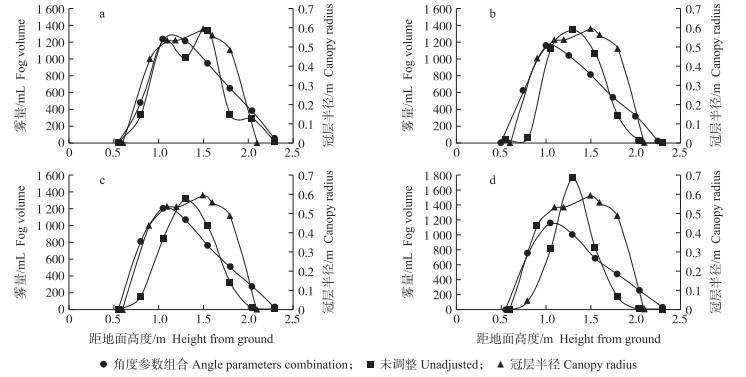
当风机转速为1 500 r · min-1、喷施压力为1 MPa、不同施药距离处出风口角度与喷头角度同步调整为相应的参数组合时, 用雾量垂直空间分布仪收集0.58~2.08 m的雾量沉积。
|
图 7 雾量空间分布 Fig. 7 Spatial distribution of spray amount a.施药距离1.2 m Distance of spraying 1.2 m; b.施药距离1.5 m Distance of spraying 1.5 m; c.施药距离2.0 m Distance of spraying 2.0 m; d.施药距离2.5 m Distance of spraying 2.5 m. |
在不同施药距离处, 未调整角度的雾量变化规律一致, 在冠层Ⅲ区雾量沉积较多, 于冠层Ⅲ区内、靠近Ⅱ区处达到最大, 整体变化趋势与施药距离无关(图 7)。角度参数组合的最大雾量区, 均从未调整角度时的Ⅲ区转移到Ⅱ区, 与冠层半径最大区重合。角度参数组合的平均雾量相较于未调整角度的有一定的提高。当施药距离为1.5 m时, 角度参数组合的雾量沉积集中冠层Ⅱ区内, 冠层两端半径较小处, 雾量较少, 在中部冠层半径较大处, 雾量最多, 总体呈“纺锤型”分布, 符合两端小、中间大的冠层特征(图 7-b)。当施药距离为1.2 m时, 角度参数组合的雾量沉积在冠层最大半径处有小范围波动, 出现“波峰波谷型”(图 7-a)。当施药距离为2.0、2.5 m时, 角度参数组合的雾量变化曲线逐渐由“单波峰”向“峰尖型”转变, 两端雾量衰减速度加快, 雾量集中在中部冠层, 上、下两端雾量不能满足实际所需(图 7-c、d)。
考虑水雾在流场中的扩散性, 相比较角度调节对气流空间分布的影响, 角度调节对雾量空间分布影响不明显(表 4)。在冠层生物量较多的Ⅱ区雾量为1 198 mL, 比未调节角度情况提升了29.93%。但是我们也发现, 由于雾滴运行时受重力作用, 相比较冠层Ⅲ区, 角度参数组合下的冠层Ⅰ区平均雾量都较低。在后续研究中, 可以向上微调出风口角度以修正此问题。
| 冠层 Canopy |
施药距离/m Distance of spraying | ||||||||||
| 1.2 | 1.5 | 2.0 | 2.5 | ||||||||
| 角度参数组合 Angle parameters combination |
未调整 Unadjusted |
角度参数组合 Angle parameters combination |
未调整 Unadjusted |
角度参数组合 Angle parameters combination |
未调整 Unadjusted |
角度参数组合 Angle parameters combination |
未调整 Unadjusted |
||||
| Ⅰ区Ⅰarea | 316 | 515 | 171 | 425 | 170 | 390 | 93 | 368 | |||
| Ⅱ区Ⅱ area | 1 108 | 1 083 | 1 198 | 922 | 1 147 | 912 | 1 293 | 848 | |||
| Ⅲ区Ⅲ area | 774 | 856 | 588 | 881 | 500 | 1 006 | 470 | 957 | |||
当施药距离为1.5 m时, 不同竖直高度的冠层截面上, 角度参数组合的覆盖率均高于未调整参数的覆盖率, 正、反面平均覆盖率提升了13.52%和29.17%, 均匀度提升了38.11%和43.90%(表 5)。表明, 角度参数组合可显著改善冠层雾滴覆盖率和均匀度。
| 指标 Item |
采样点 Sampling point |
未调整Unadjusted | 角度参数组合Angle parameters combination | |||
| 正Obverse | 反Reverse | 正Obverse | 反Reverse | |||
| 平均覆盖率/% Average coverage |
Ⅰ Ⅱ Ⅲ |
0.403 0.402 0.371 |
0.096 0.122 0.070 |
0.461 0.462 0.412 |
0.104 0.144 0.123 |
|
| 平均总覆盖率/% Average total coverage | 0.392 | 0.600 | 0.445 | 0.124 | ||
| 均匀度/% Degree of homogeneity | 0.593 | 0.205 | 0.819 | 0.295 | ||
由表 6可见:当施药距离为1.5 m时, 沿风送方向在冠层前、中、后截面, 角度参数组合的覆盖率均高于未调整参数的覆盖率, 后截面采样点的正、反面平均覆盖率提升了96.41%和48.94%。由于该种多管路施药非传统漫射性施药, 方向性较好且出风口距离冠层较近(0.5~1 m), 可以看出2种模式下沿风送方向冠层后的空中漂移都较少, 漂移杆上纸卡正面雾滴沉积分别为8.02、6.44 μg · cm-2, 纸卡反面均未沉积。
| 指标 Item |
采样点 Sampling point |
未调整Unadjusted | 角度参数组合Angle parameters combination | |||
| 正Obverse | 反Reverse | 正Obverse | 反Reverse | |||
| 平均覆盖率/% Average coverage |
前Front 中Middle 后Rear |
0.512 0.396 0.195 |
0.196 0.055 0.047 |
0.519 0.475 0.383 |
0.198 0.072 0.070 |
|
| 雾滴沉积(压力1 MPa)/(μg·cm-2) Spray deposition(Pressure 1 MPa) |
8.02 | 0 | 6.44 | 0 | ||
| 雾滴粒径/μm Spray size | 171~220 | |||||
本文针对果树冠层施药不均, 内部沉积不够的问题, 通过提取冠层空间分布参数, 设计一种基于角度调节的多通道气流仿形施药策略, 并以上、中、下3段体积比为2 : 7 : 3的纺锤型梨树为例, 验证该施药策略的仿形施药效果。
施药距离是施药参数计算过程中的重要参数, 影响着仿形程度与施药效果。相较于未调整角度组, 采用基于角度调节施药策略的角度参数组合, 在冠层最大半径区的气流速度与雾量均有明显提高。气流在不同的施药距离呈现“波峰波谷型”“纺锤型”“单波峰”“峰尖型”, 未调整角度的雾量空间分布在不同施药距离处均呈现一致, 1.0~1.2 m区域雾量沉积最多。由于雾滴运行时受重力作用, 相比较冠层Ⅲ区, 角度参数组合下的冠层Ⅰ区平均雾量都较低。当施药距离为1.5 m时, 气雾流场与果树冠层空间分布仿形程度最高, 与中间大、两端小的纺锤型梨树冠层特征基本一致。角度参数组合的雾滴覆盖率均高于未调整参数时, 正、反面平均覆盖率提升了13.52%和28.82%, 均匀度提升了38.11%和43.90%, 沿风送方向的冠层后截面的雾滴覆盖率分别提高了96.41%和48.94%。
| [1] |
何雄奎. 植保精准施药技术装备[J]. 农业工程技术, 2017, 37(30): 22-26. He X K. Precision pesticide application technology and equipment for plant protection[J]. Agricultural Engineering Technology, 2017, 37(30): 22-26 (in Chinese). |
| [2] |
傅锡敏, 吕晓兰, 丁为民, 等. 我国果园植保机械现状与技术需求[J]. 中国农机化, 2009(6): 10-13, 17. Fu X M, Lü X L, Ding W M, et al. Present state and technical requirement about orchard plant protection machinery in China[J]. Chinese Agricultural Mechanization, 2009(6): 10-13, 17 (in Chinese). |
| [3] |
丁天航, 曹曙明, 薛新宇, 等. 风送式果园喷雾机发展现状及趋势[J]. 中国农机化学报, 2016, 37(10): 221-226. Ding T H, Cao S M, Xue X Y, et al. Current situation and development trend of air-assisted orchard sprayer[J]. Journal of Chinese Agricultural Mechanization, 2016, 37(10): 221-226 (in Chinese with English abstract). |
| [4] |
Pergher G, Gubiani R, Cividino S R S, et al. Assessment of spray deposition and recycling rate in the vineyard from a new type of air-assisted tunnel sprayer[J]. Crop Protection, 2013, 45: 6-14. |
| [5] |
周良富, 薛新宇, 周立新, 等. 果园变量喷雾技术研究现状与前景分析[J]. 农业工程学报, 2017, 33(23): 80-92. Zhou L F, Xue X Y, Zhou L X, et al. Research situation and progress analysis on orchard variable rate spraying technology[J]. Transactions of the Chinese Society of Agricultural Engineering, 2017, 33(23): 80-92 (in Chinese with English abstract). |
| [6] |
Duga A T, Endalew A M, Nicolai B, et al. Computational fluid dynamics modelling of orchard sprayer performance:machine type and operational parameters characterization[J]. Acta Horticulturae, 2012(1): 251-257. |
| [7] |
张晓辛, 吕晓兰, 丁素明, 等. 果园风送式喷雾机仿形喷雾试验研究[J]. 中国农机化, 2011(3): 68-72. Zhang X X, Lü X L, Ding S M, et al. Experimental research on profiling spray of air-assisted orchard sprayer[J]. Chinese Agricultural Mechanization, 2011(3): 68-72 (in Chinese with English abstract). |
| [8] |
宋淑然, 洪添胜, 孙道宗, 等. 风机电源频率对风送式喷雾机喷雾沉积的影响[J]. 农业工程学报, 2011, 27(1): 153-159. Song S R, Hong T S, Sun D Z, et al. Effect of fan power supply frequency on deposition of air-assisted sprayer[J]. Transactions of the Chinese Society of Agricultural Engineering, 2011, 27(1): 153-159 (in Chinese with English abstract). |
| [9] |
房开拓. 新型果树仿形喷雾机控制系统设计[J]. 中国农机化学报, 2016, 37(12): 63-67. Fang K T. Control system design of a new orchard profiling sprayer[J]. Journal of Chinese Agricultural Mechanization, 2016, 37(12): 63-67 (in Chinese with English abstract). |
| [10] |
Hočevar M, Širok B, Jejčič V, et al. Design and testing of an automated system for targeted spraying in orchards[J]. Journal of Plant Diseases and Protection, 2010, 117(2): 71-79. |
| [11] |
Maghsoudi H, Minaei S, Ghobadian B, et al. Ultrasonic sensing of pistachio canopy for low-volume precision spraying[J]. Computers and Electronics in Agriculture, 2015, 112: 149-160. |
| [12] |
Gil E, Llorens J, Llop J, et al. Part 2-Vineyard prototype:design, implementation, and validation[J]. Computers and Electronics in Agriculture, 2013, 95: 136-150. |
| [13] |
Zhao X X, Li Y, Liu X M, et al. Ultrasonic sensing system design and accurate target identification for targeted spraying[M]//Wang K S, Wang Y, Strandhagen J O, et al. Advanced Manufacturing and Automation Ⅶ. Singapore: Springer, 2018: 245-253.
|
| [14] |
Xiongkui H, Aijun Z, Yajia L, et al. Precision orchard sprayer based on automatically infrared target detecting and electrostatic spraying techniques[J]. International Journal of Agricultural and Biological Engineering, 2011, 4(1): 35-40. |
| [15] |
Pergher G. Field evaluation of a calibration method for air-assisted sprayers involving the use of a vertical patternator[J]. Crop Protection, 2004, 23(5): 437-446. |
| [16] |
Chen Y. Development of an intelligent sprayer to optimize pesticide applications in nurseries and orchards[D]. Columbus: The Ohio State University, 2010.
|
| [17] |
Chen Y, Zhu H P, Ozkan H E. Development of LIDAR-guided sprayer to synchronize spray outputs with canopy structures[C]. American Society of Agricultural and Biological Engineers, Louisville, Kentucky, August 7-10, 2011.
|