 2016, Vol. 43
文章信息
- 2008—2012年贵州省疾病监测点人群恶性
- Death Caused by Malignant Tumor in Disease Monitoring Points in Guizhou Province, 2008-2012
- 肿瘤防治研究, 2016, 43(10): 894-897
- Cancer Research on Prevention and Treatment, 2016, 43(10): 894-897
- http://www.zlfzyj.com/CN/10.3971/j.issn.1000-8578.2016.10.013
- 收稿日期: 2016-01-13
- 修回日期: 2016-07-12
引用本文 |


随着社会经济和卫生事业的发展,以及人民行为方式的改变和人口老龄化,居民的疾病谱发生了显著变化,恶性肿瘤已成为危害人类生命健康、制约社会经济发展的一类疾病[1]。本文对贵州省2008—2012年疾病监测点居民恶性肿瘤死亡情况进行分析,为肿瘤防治制定策略提供依据。
1 资料与方法 1.1 资料来源贵州省5个全国疾病监测点(红花岗区、湄潭县、玉屏县、施秉县、独山县)2008—2012年死因监测数据、死亡资料通过填写死亡医学证明书的有关信息并将全部变量录入死因网络直报系统(人口死亡信息登记管理系统),由省、县区两级疾病预防控制中心专业人员根据国际疾病分类第10版(ICD-10)进行编码审核。人口数来自中国疾病预防控制系统基本信息系统2008—2012年数据,以5个全国疾病监测点2000年人口结构进行标准化率计算。
1.2 统计学方法利用死因网络直报系统、Excel2010、SPSS19软件进行数据统计、分析。P < 0.05为差异有统计学意义。
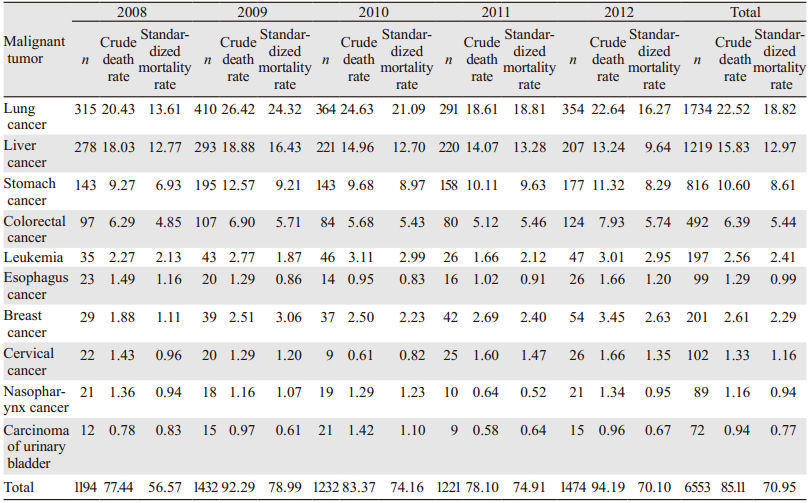
2 结果 2.1 恶性肿瘤死亡总体情况5年因恶性肿瘤死亡合计6 553人,粗死亡率为85.11/10万,标化死亡率为70.95/10万。其中男性死亡4 104人,粗死亡率为116.97/10万,标化死亡率为106.71/10万;女性死亡2 449人,粗死亡率为75.63/10万,标化死亡率为69.51/10万,男性高于女性(χ2=319.1, P < 0.001)。
2.2 恶性肿瘤死亡顺位5年中恶性肿瘤死亡在全死因顺位中一直处在第3位,其中恶性肿瘤前5位依次为肺癌(18.82/10万)、肝癌(12.97/10万)、胃癌(8.61/10万)、结直肠癌(5.44/10万)、白血病(2.41/10万)。男性死亡顺位与总恶性肿瘤死亡顺位相同,女性恶性肿瘤前5位分别为肺癌、肝癌、胃癌、结直肠癌、乳腺癌。
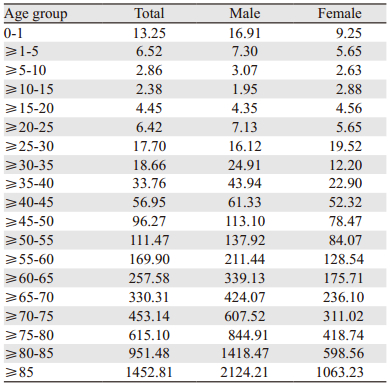
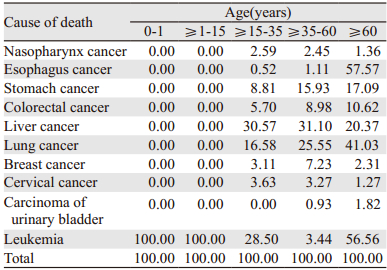
2.3 各年龄组恶性肿瘤死亡情况任何年龄组均有恶性肿瘤死亡,15岁以后随年龄增长恶性肿瘤死亡率呈上升趋势,45岁后随年龄增长恶性肿瘤死亡率呈快速增长趋势,80岁及以上年龄组恶性肿瘤死亡率最高,其中45岁以上年龄组恶性肿瘤死亡占全部恶性肿瘤死亡的84.57%。各年龄组主要恶性肿瘤死亡构成也不同,0~15岁组主要为白血病,≥15~35岁组主要为肝癌,其次是白血病,≥35~60岁组主要为肝癌和肺癌,60岁以上年龄组主要是肺癌,见表 1~2。
|
|
除≥10~20岁和≥25~30岁组女性因白血病死亡率较男性高及乳腺癌和宫颈癌病例增加,导致恶性肿瘤死亡率略高于男性外,其余年龄段男性恶性肿瘤死亡率均高于女性。
2.5 恶性肿瘤死亡趋势除2008年死亡率较低,标化死亡率为56.57/10万外,从2009年开始,恶性肿瘤死亡率维持在70.10~78.99/10万之间。肺癌、肝癌、胃癌、肠癌4种恶性肿瘤在五年间一直处于前4位,乳腺癌与白血病的死亡顺位交替变化,宫颈癌、食管癌等癌症每年的顺位有所变动,见表 3。
|
我国恶性肿瘤死亡率呈持续上升趋势,已成为影响居民健康的主要死亡原因之一[2],贵州省疾病监测点居民恶性肿瘤死亡率虽然低于全国平均水平[3],但其在居民全死因中的顺位已从2004—2005年的第4位[4]上升到目前的第3位。表明贵州省恶性肿瘤死亡率较2004—2005年有较大幅度增长。这可能与贵州省属于烟草大省,18岁及以上人群烟草接触比例为31.6%,男性高达63.7%,且全人群二手烟暴露率也高达37.7%有关[5]。
贵州省疾病监测点居民恶性肿瘤死亡顺位前5位依次是肺癌、肝癌、胃癌、结直肠癌和白血病,与全国[3]及云南省[6]死因顺位一致。45岁以上肿瘤死亡数占全部恶性肿瘤死亡数的84.57%,45岁后随年龄增长呈快速增长趋势,80岁以上最高这与全国年龄别发病率一致[3],尤其是肺癌随着年龄的增加上升十分明显。但各年龄组主要恶性肿瘤有所不同,如0~15岁少年儿童主要为白血病,≥15~60岁中青年主要为肝癌,60岁以上老人主要是肺癌。出现这些差异除与年龄影响有关外,与各年龄组接触危险因素的频率不同也可能有关,因恶性肿瘤与饮食习惯、生活方式、遗传因素等诸多危险因素密切关[7]。
男性恶性肿瘤死亡率高于女性,除≥10~20岁和≥25~30岁组女性恶性肿瘤死亡率略高于男性外,其余年龄段男性恶性肿瘤死亡率均高于女性。出现上述情况,与该年龄段是女性发育和生育阶段,激素的分泌较高等生理特点有关。因此,应加大宫颈癌和乳腺癌的筛查力度,力争做到早发现、早诊断、早治疗,提高患者生存质量和生存率。肺癌一直是近几年来男性恶性肿瘤的首位死因,与男性的不良生活、饮食习惯和更多的危险因素暴露机会、心理压力、环境污染等因素有关,提示肺癌防治任务严峻,不但应加强肺癌的监测,同时还要加强其危险因素的干预。
本研究分析表明,恶性肿瘤已成为严重危害贵州省疾病监测点居民健康的疾病,应该予以高度重视,采取有效有力措施[8-9],并根据不同年龄段和性别采取不同行为生活方式的干预。特别是贵州省是烟草大省,人群吸烟率较高,应加大吸烟有害健康相关宣传教育,同时加大公共场所禁烟的力度,控制恶性肿瘤上升趋势。此外,须加大对居民恶性肿瘤的监测,及时掌握恶性肿瘤流行状况及特征,为制定恶性肿瘤防治对策提供科学依据。
| [1] | Liu LL, Gao YL, Ji K, et al. The residents death analysis of monitoring malignant tumors in Si Chuan province from 2002 to 2007[J]. Yu Fang Yi Xue Qing Bao Za Zhi, 2011, 27 (1) : 8–10. [ 刘玲玲, 高亚礼, 季奎, 等. 2002—2007年四川省死因监测点居民恶性肿瘤死因分析[J]. 预防医学情报杂志, 2011, 27 (1) : 8–10. ] |
| [2] | Chen Z. The cause of death review sampling about the third survey[M]. Beijing: Beijing Union Medical University Press, 2008 : 10 . [ 陈竺. 全国第三次死因回顾抽样调查报告[M]. 北京: 中国协和医科大学出版社, 2008 : 10.] ] |
| [3] | Chen WC, Zhang SW, Zeng HM, et al. Malignant tumor morbidity and mortality in 2010 of China[J]. Zhongguo Zhong Liu, 2014, 23 (1) : 1–10. [ 陈万青, 张思维, 曾红梅, 等. 中国2010年恶性肿瘤发病与死亡[J]. 中国肿瘤, 2014, 23 (1) : 1–10. ] |
| [4] | Zhang YX, Zhu AY, Ye HB. Analysis of the causes of death review about the residents malignant tumor death situation in site of Guizhou province from 2004 to 2005[J]. Xian Dai Yu Fang Yi Xue, 2011, 38 (16) : 3390–3. [ 张益霞, 朱爱娅, 叶红兵. 贵州省2004-2005年死因回顾调查点居民恶性肿瘤死亡情况分析[J]. 现代预防医学, 2011, 38 (16) : 3390–3. ] |
| [5] | Liu T, Wang DM, Xun LX, et al. The status quo of chronic disease and its risk factors in Guizhou[M]. Guizhou: Guizhou Publishing group Guizhou science and technology press, 2014 : 166 -85. [ 刘涛, 王定明, 孙良先, 等. 贵州省慢性病及其危险因素流行现状研究[M]. 贵州: 贵州出版集团贵州科技出版社, 2014 : 166-85.] ] |
| [6] | Yang YF, ShaoY, XiaoYZ. The analysis of malignant tumor disease about monitoring stations in yunnan province from 2006 to 2011[J]. Zhi Ye Yu Jian Kang, 2012, 28 (22) : 2694–6. [ 杨永芳, 邵英, 肖义泽. 2006—2011年云南省疾病监测点居民恶性肿瘤死亡分析[J]. 职业与健康, 2012, 28 (22) : 2694–6. ] |
| [7] | Zhang SQ, Lei Q. The analysis of malignant tumor death situation in Dandong from 1998 to 2004[J]. Zhongguo Man Xing Bing Yu Fang Yu Kong Zhi, 2006, 14 (3) : 198–9. [ 张少青, 雷清. 丹东市区1998—2004年恶性肿瘤死亡情况分析[J]. 中国慢性病预防与控制, 2006, 14 (3) : 198–9. ] |
| [8] | Zhao QH. The death characteristics of malignant tumor and PYLL analysis in some district resident[J]. Zhongguo Yi Yao Zhi Nan, 2013, 11 (18) : 563. [ 赵庆辉. 某区居民恶性肿瘤的死亡特征及PYLL分析[J]. 中国医药指南, 2013, 11 (18) : 563. ] |
| [9] | Dong ZW, Qiao YL, Li LD, et al. The study of control cancer strategy in China[J]. Zhongguo Zhong Liu, 2012, 11 (5) : 255–60. [ 董志伟, 乔友林, 李连弟, 等. 中国癌症控制策略研究报告[J]. 中国肿瘤, 2012, 11 (5) : 255–60. ] |