 2024, Vol. 23


2) Laboratory for Marine Fisheries Science and Food Production Processes, Qingdao Marine Science and Technology, Center, Qingdao 266237, China;
3) Key Laboratory of Tropical Aquatic Germplasm of Hainan Province, Sanya Oceanographic Institution, Ocean University of China, Sanya 572000, China
Farmed bivalves play a critical role in satisfying human's increasing demands for quality animal proteins, so producing disease-resistant, high-yielding bivalve seeds for aquaculture production is of high commercial and scientific values. Uncovering the genetic bases of growth regulation is the prerequisite for optimizing breeding programs. With the enhancement of sequencing technology, an increasing number of genes involved in bivalve growth regulation have been discovered. Specifically, in the scallop Chlamys farreri, the myostatin (MSTN) gene has been found to be significantly correlated with growth traits through PCR-single-strand conformation polymorphism technology and DNA sequencing (Wang et al., 2009). Similarly, the transforming growth factor-beta type Ⅰ receptor (TGF-β Type Ⅰ receptor) negatively regulates the growth of C. farreri (Guo et al., 2018). The candidate gene pituitary-specific transcription factor PROP1, identified through quantitative trait locus mapping and association analysis, is also associated with the growth of C. farreri (Jiao et al., 2014). In the Yesso scallop (Patinopecten yessoensis), genes such as insulin-like growth factor-binding proteins (IGFBPs) and insulin-like growth factor 2 mRNA-binding proteins (IMPs) have been found to be crucial for growth and development (Feng et al., 2014; Ning et al., 2018). Additionally, genome-wide association analysis by Ning et al. (2019) has identified the candidate gene E2F3, which regulates the growth of scallops and may promote growth in bivalves. In the Pacific oyster (Crassostrea gigas), the alpha-amylase genes AMYA and AMYB have been found to promote growth (Cong et al., 2013). Meanwhile, the LAP3 gene has been discovered to play an important role in the development of larvae in the razor clam Sinonovacula constricta (Yao et al., 2020). Identifying these candidate genes will not only illuminate the genetic mechanisms of growth regulation in bivalves, but also inform breeding programs to generate superior seeds for bivalve production.
However, commercial bivalves can hardly be cultured under laboratory conditions, making it a challenge to validate the functions of candidate growth-related genes. Fortunately, dwarf surf clam Mulinia lateralis turn out to be an ideal model organism for investigating growth regulation in bivalves, given that it has a short life cycle, can grow normally under the laboratory environments, and is highly similar to many commercial bivalves (Wang et al., 2023). Previous genome-wide association studies have identified E2F3 as a candidate gene positively regulating the growth of yesso scallop Patinopecten yessoensis (Ning et al., 2019). Wang et al. (2023) identified the E2F3 gene in dwarf surf clams. Subsequent RNA interference (RNAi) experiments show that E2F3 positively regulates the growth-related traits, such as shell size, tissue development, and overall growth rate, in dwarf surf clams (Wang et al., 2023). E2F3 plays a crucial role in growth regulation across various species. In Apostichopus japonicus, E2F3 promotes coelomocyte proliferation through significant overexpression, highlighting its role in cell growth and maintenance (Zhang et al., 2020). In mice, E2F3 is essential for the development of muscles and bones, influencing overall growth and development (Kim et al., 2019). Moreover, in bovine mammary glands, E2F3 is involved in both cell proliferation and aging processes within the epithelial cells, indicating its multifaceted role in regulating growth and tissue maintenance (Zhang et al., 2022). However, despite the potential contribution of E2F3 to variation in growth across species, the genetic bases of growth regulation by E2F3 have rarely been studied, especially in bivalves.
Therefore, we conduct a set of analyses on the transcriptomic profiles of dwarf surf clams with E2F3 knocked down to investigate how E2F3 regulates the growth of dwarf surf clams at the transcriptomic level. Previous studies have indicated that the E2F3 gene exhibits the highest expression levels in the digestive gland, gill, and mantle tissues of adult dwarf surf clams (Wang et al., 2023). In previous E2F3 RNAi experiments in dwarf surf clams, E2F3 expression level is significantly different between the control group and the RNAi group in the mantle across multiple time points after E2F3 knockdown (Wang et al., 2023). However, the expression level of E2F3 is not significantly different in the RNAi group compared to the control group in the digestive gland and gills until day 28 (Wang et al., 2023). Furthermore, compared to the control group, the RNAi group exhibits significantly smaller shell width, shell height, and body weight at day 21, and shows a more pronounced decline in growth-related traits by day 28 (Wang et al., 2023). Specifically, on day 28, the RNAi group has shell width and shell height approximately 11% smaller than the control group, and body weight approximately 37% lower (Wang et al., 2023). Therefore, we investigate the differentially expressed genes (DEGs) in the mantle across various time points and in the digestive gland and gills at day 28 after E2F3 knockdown. Specifically, in comparison to the control group, 103, 204, and 832 DEGs are detected in the mantle tissue of the interfered dwarf surf clam at days 14, 21, and 28, while 961 and 271 DEGs are detected in the digestive gland and gills of the RNAi group of dwarf surf clams at day 28, respectively. In addition, we identified two genes, cathepsin 7 (CTS7) and fatty acid synthase (FASN), that are related to cell division and lipid metabolism processes. Furthermore, gene ontology (GO) enrichment analysis and kyoto encyclopedia of genes and genomes (KEGG) enrichment analysis indicate that E2F3 knockdown affects several biological pathways, including protein metabolism, lipid metabolism, and carbohydrate metabolism. Moreover, the knockdown of E2F3 also interferes with the expression of genes related to immune response, such as heat shock protein 70 B2 (HSP70B2) and peptidoglycan recognition protein 3 (PGLYRP3). Overall, our findings at least partially shed light on potential genes and biological process that may participate in growth regulation in the model bivalve, dwarf surf clam, which could provide valuable information for genetic breeding and aquaculture production of commercial bivalves.
2 Materials and Methods 2.1 Sample CollectionThe RNAi and control cohorts of dwarf surf clams delineated in the study by Wang et al. were utilized for sample collection (Wang et al., 2023). Mantle tissues were collected from dwarf surf clams in RNAi and control groups, respectively, at days 14, 21, and 28, and the digestive gland and gill tissues were collected from dwarf surf clams in RNAi and control groups, respectively, at day 28 for RNA extraction.
2.2 RNA Extraction and Library ConstructionRNA was extracted from mantle, digestive gland, and gill tissues of dwarf surf clams in RNAi and control groups following the protocol of Hu et al. (2006). The libraries were constructed using Vazyme NR604-01 kit (VAHTS Universal V6 RNA-seq Library Prep Kit for Illumina). The quality and purity of RNA was assessed using Nanodrop One spectrophotometer (Thermo Fisher Scientific, USA) and the integrity of RNA was checked by running electrophoresis on 1% agarose gel. The concentration of libraries was determined using the Qubit dsDNA HS Assay Kit (Thermo), and the quality of libraries was assessed using 1% agarose gel electrophoresis. Qualified samples were sent to Novogene for Illumina sequencing to generate 150 bp paired-end reads.
2.3 Transcriptomic AnalysisHigh-quality reads were aligned to the M. lateralis genome (unpublished) using STAR (Dobin et al., 2013), and read counts mapped to each gene were counted using HTSeq (Anders et al., 2015). Transcripts Per Million (TPM) values based on read counts and transcript lengths were used to evaluate the expression level of each gene. DEGs were obtained by the Bioconductor package edgeR (v3.6.1) in R language, using the threshold log2|Fold change (FC)| ≥ 1 and false discovery rate FDR < 0.05 (Robinson et al., 2010). Genes were identified as differentially expressed and those genes with log2FC > 1 and log2FC < −1 were considered as being upregulated and downregulated, respectively (Ye et al., 2021). With the gene ontology (GO) (Ashburner et al., 2000), and the Kyoto Encyclopedia of Genes and Genomes (KEGG) (Kanehisa and Goto, 2000), the enriched GO terms and KEGG pathways of the DEGs were analyzed by the Enrich Pipeline (Chen et al., 2010). GO nierarchy networks associated with DEGs were visualized using metacoder (Foster et al., 2017) in R, and KEGG enrichment analysis results were visualized using ggplot2 (Ginestet, 2011) in R.
3 Results 3.1 Transcriptomic Profiles of the Dwarf Surf Clam Mulinia lateralisA total of 30 RNA-seq libraries are constructed for the mantle tissue of the dwarf surf clam collected at days 14, 21, and 28, as well as for the digestive gland and gill tissues collected at day 28. The sequencing of the RNA-seq libraries generates a total of 202.39G raw data, which is then filtered to produce 178.86G of clean data. Overall, 674672551 raw reads and 596263975 clean reads are obtained. The Q20 and Q30 values, representing the percentage values of bases with phred score greater than 20 and 30, respectively, are found to be over 95% and 88%, respectively. Additionally, the average base sequencing error rate is determined to be 0.02% – 0.03%.
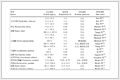
In comparison to the control group, 103, 204, and 832 DEGs are detected in the mantle tissue of the interfered dwarf surf clam at days 14, 21, and 28, respectively (Fig.1). In day 14, 45 genes are upregulated while 58 genes are downregulated, among which 22 and 21 genes are annotated, respectively. In day 21, 74 genes are upregulated and 130 genes are downregulated, among which 40 and 38 genes are annotated, respectively. In day 28, 619 genes are upregulated and 213 genes are downregulated, among which 243 and 106 genes are annotated, respectively. In the mantle tissue of dwarf surf clams in the RNAi group collected on days 14, 21, and 28, there are 5 genes consistently upregulated and 17 genes consistently downregulated across all three time points (Fig.2). Additionally, ADP-ribosylation factor 1 (ARFA), glutathione S-transferase 1 (GST1) and peptidoglycan recognition protein 3 (PGLYRP3) are upregulated while fatty acid synthase (FASN), insulin-induced gene 1 protein (INSIG1) and anillin (ANLN) are downregulated on day 14; peptidoglycan recognition protein 3 (PGLYRP3), tribbles homolog 2 (TRB2), and heat shock protein 70 B2 (HSP70B2) are upregulated while bile salt-activated lipase (CEL), cathepsin 7 (CTS7) and myosin heavy chain (MYH) are downregulated on day 21; trypsin inhibitor (CSTI), peptidoglycan recognition protein 3 (PGLYRP3) and alphaamylase are upregulated while myosin heavy chain (MYH), hepatocyte growth factor (HGF) and carbonic anhydrase 14 (CA14) are downregulated on day 28 (Table 1).

|
Fig. 1 Differentially expressed genes (DEGs) in different tissues of dwarf surf clams across multiple time points after E2F3 knockdown. The content in front of '_' indicates the tissue of dwarf surf clams, and the content after it indicates the multiple time points after E2F3 knockdown. |

|
Fig. 2 Venn of DEGs in different tissues of dwarf surf clams across multiple time points after E2F3 knockdown. (A) Veen of upregulated genes in the mantle of dwarf surf clams collected at days 14, 21 and 28; (B) Veen of downregulated genes in the mantle of dwarf surf clams collected at days 14, 21 and 28; (C) Veen of upregulated genes in the mantle, digestive gland and gill tissues of dwarf surf clams collected at day 28; (D) Veen of downregulated genes in the mantle, digestive gland and gill tissues of dwarf surf clams collected at day 28. |
|
Table 1 Top 3 differentially expressed genes (DEGs) annotated in different tissues of dwarf surf clams across multiple time points after E2F3 knockdown |
In comparison to the control group, 961 and 271 DEGs are detected in the digestive gland and gills of dwarf surf clams from the RNAi group at day 28, respectively (Fig.1). In the digestive gland tissue at day 28, 523 genes are upregulated while 438 genes are downregulated, among which 215 and 288 are annotated, respectively. In the gill tissue at day 28, 167 genes are upregulated while 104 genes are downregulated, among which 73 and 50 genes are annotated, respectively. In the mantle, digestive gland and gill tissue of dwarf surf clams in the RNAi group collected on day 28, there are 37 genes consistently upregulated and 19 genes consistently downregulated across all three time points (Fig.2). For dwarf surf clams in the RNAi group collected at day 28, fatty acid-binding protein 2 (FABP2), sulfotransferase family cytosolic 1B member 1 (SULT1B1), and retinol dehydrogenase 7 (RDH7) are upregulated while cytochrome P450 1A1 (CYP1A1), fatty acid synthase (FASN), and 3-keto-steroid reductase (HSD17B7) are downregulated in the digestive gland tissue; beta-1, 3-glucan-binding protein (GBP), pyrimidodiazepine synthase, and epidermal growth factor-like protein 8 (EGFL8) are upregulated while protein boule-like (BOLL), atrial natriuretic peptide receptor 1 (NPR1), and niemann pick type C2 protein homolog precursor (NPC2) are downregulated in the gill filaments tissue (Table 1).
In comparison to the control group, tubulin alpha-1A chain (TUBA1A) and cathepsin 7 (CTS7) are consistently downregulated, while heat shock protein 70 B2 (HSP70B2) and peptidoglycan recognition protein 3 (PGLYRP3) are consistently upregulated in the mantle tissue of dwarf surf clams in the RNAi groups collected at day 14, day 21, and day 28. In comparison to the control group, fatty acid synthase (FASN) and cathepsin 7 (CTS7) are downregulated, while sulfotransferase family cytosolic 1B member 1 (SULT1B1) and heat shock protein 70 B2 (HSP70B2) are upregulated in the mantle, digestive gland, and gill tissues of dwarf surf clams in RNAi groups collected at day 28 (Table 2).
|
|
Table 2 Top differentially expressed genes (DEGs) annotated in different tissues of dwarf surf clams across multiple time points after E2F3 knockdown |
GO enrichment analysis is conducted to investigate the functions of genes that are differentially expressed in different tissues of dwarf surf clams in RNAi group collected across multiple time points (Fig.3). GO terms associated with upregulated genes in the mantle tissues of dwarf surf clams in RNAi group collected at day 14 are mainly involved in cellular metabolic processes (e.g., mainly cell amino acid metabolism) and organic substance metabolic processes (e.g., amino polysaccharide metabolism, carbohydrate metabolic process, and protein metabolic process). GO terms associated with upregulated genes in the mantle tissues of dwarf surf clams in RNAi group collected at day 21 are mainly involved in cellular metabolic processes (e.g., cell aromatic compound metabolic process, amino acid metabolic process), organic substance metabolic processes (e.g., amino polysaccharide metabolism), primary metabolic processes (e.g., carbohydrate metabolic process), nitrogen compound metabolic processes, and biosynthetic processes. GO terms associated with upregulated genes in the mantle tissues of dwarf surf clams in RNAi group collected at day 28 are mainly involved in cellular metabolic processes (e.g., amino acid metabolism and nucleotide metabolism), organic substance metabolic processes (e.g., carbohydrate metabolic process and protein metabolic process), cell adhesion, tissue regeneration, and development. GO terms associated with upregulated genes in the digestive gland of dwarf surf clams in RNAi group collected at day 28 are mainly involved in cellular component organization or biogenesis (e.g., membrane rafts assembly), biological process regulation (e.g., signal transduction regulation), cell adhesion, signal transduction (e.g., cell surface receptor signaling pathway, G protein-coupled receptor signaling pathway), establishment of localization (e.g., ion transport), primary metabolic processes (e.g., carbohydrate metabolic process), and organic substance metabolic processes (e.g., protein metabolic process). GO terms associated with upregulated genes in gills of dwarf surf clams in RNAi group collected at day 28 are mainly involved in organic substance metabolic processes (e.g., carbohydrate metabolism, amino polysaccharide metabolism), cellular metabolic processes (e.g., amino acid metabolism, fatty acid metabolism, nucleotide metabolism), primary metabolic processes (e.g., carbohydrate metabolism, lipid metabolism), and cell adhesion. In the mantle of dwarf surf clams in RNAi group, the number of GO terms associated with nucleotide metabolism processes keeps increasing with a longer period of E2F3 knockdown Amino acid metabolic processes, carbohydrate metabolic processes, and protein metabolic processes are constantly affected throughout the entire process of E2F3 knockdown. In the mantle, digestive gland and gill tissues of dwarf surf clams in RNAi group collected at day 28, processes such as cell adhesion, carbohydrate metabolism, protein metabolism, lipid metabolism, and amino acid metabolism are enriched repeatedly in the three tissues or two of them.

|
Fig. 3 Gene ontology (GO) nierarchy networks associated with DEGs in different tissues of dwarf surf clams across multiple time points after E2F3 knockdown. (A), GO nierarchy networks of upregulated genes in different tissues of dwarf surf clams across multiple time points; (B), GO nierarchy networks of downregulated genes in different tissues of dwarf surf clams across multiple time points. The content in front of '_' indicates the tissue of dwarf surf clams, and the content after it indicates the multiple time points after E2F3 knockdown. |
GO terms associated with downregulated genes in the mantle tissues of dwarf surf clams in RNAi group collected at day 14 are mainly involved in primary metabolic processes (e.g., lipid metabolism), small molecule metabolic processes, cellular metabolic processes (e.g., amino acid metabolic processes), and organic substance metabolic processes (e.g., alcohol metabolic processes). GO terms associated with downregulated genes in the mantle tissues of dwarf surf clams in RNAi group collected at day 21 are mainly involved in biomass regulation (e.g., cation homeostasis), primary metabolic processes (e.g., lipid metabolism), establishment of localization (e.g., cation transport, urea transport), small molecule metabolic processes (e.g., vitamin metabolic processes), cellular metabolic processes (e.g., cellular aldehyde metabolic processes), cellular homeostasis, etc. GO terms associated with downregulated genes in the mantle tissues of dwarf surf clams in RNAi group collected at day 28 are mainly involved in cellular metabolic processes (e.g., nucleotide metabolic processes, amino acid metabolic processes), organic substance metabolic processes (e.g., DNA metabolic processes), primary metabolic processes (e.g., carbohydrate metabolism and lipid metabolism), biosynthetic processes, responses to chemicals, and pigment metabolic processes, etc. GO terms associated with downregulated genes in the digestive gland of dwarf surf clams in RNAi group collected at day 28 are mainly involved in cellular metabolic processes (e.g., fatty acid metabolism, cellular amino acid metabolism, nucleic acid metabolism, phospholipid metabolism, etc.), primary metabolic processes (e.g., carbohydrate metabolism and lipid metabolism), establishment of localization (e.g., transmembrane transport), macromolecule localization (e.g., protein localization), and organic substance metabolic processes (e.g., DNA metabolic processes, protein metabolic processes), etc. GO terms associated with downregulated genes in the gills of dwarf surf clams in RNAi group collected at day 28 are mainly involved in cellular metabolic processes (e.g., nucleobase metabolic processes, nucleotide metabolic processes), primary metabolic processes (e.g., lipid metabolism), organic substance metabolic processes (e.g., protein metabolic processes), multicellular organism reproduction (e.g., development of reproductive cells), pigment metabolic processes, and small molecule metabolic processes, etc. Compared with GO terms associated with upregulated genes of dwarf surf clams in RNAi group, GO terms associated with downregulated genes are enriched in more GO terms related to nucleic acid metabolism. In the mantle of dwarf surf clams in RNAi group, lipid metabolism, amino acid metabolism, and carbohydrate metabolism are constantly affected throughout the entire process of E2F3 knockdown. In the mantle, digestive gland and gill tissues of dwarf surf clams in RNAi group collected at day 28, processes such as DNA metabolic processes, nucleotide metabolic processes, lipid metabolism, protein metabolism, amino acid metabolism, and carbohydrate metabolism are enriched repeatedly in the three tissues or two of them.
3.3 KEGG Enrichment Analysis of DEGsWith E2F3 knockdown, the upregulated genes are mainly enriched in pathways related to cytochrome P450 metabolism, estrogen signaling pathway, insulin signaling pathway, arachidonic acid metabolism, glutathione metabolism, ECM-receptor interaction, protein digestion and absorption, focal adhesion, phagosome, PI3K-Akt signaling pathway, antigen processing and presentation, and protein processing in endoplasmic reticulum, which may regulate the growth and development of dwarf surf clams by affecting their endocrine and digestive systems. KEGG pathways associated with upregulated genes in different tissues of dwarf surf clams in RNAi group collected across multiple time points are shown in Fig.4A. The endocytosis pathway is enriched in the mantle of dwarf surf clams in RNAi group throughout the entire process of E2F3 knockdown. In addition, the protein processing in endoplasmic reticulum pathway is detected in the mantle of dwarf surf clams in RNAi group collected at both day 14 and day 21, while the twocomponent system, glutathione metabolism, drug metabolism – cytochrome P450, and metabolism of xenobiotics by cytochrome P450 pathways are identified in the mantle of dwarf surf clams in RNAi group collected at both day 14 and day 28. KEGG pathways associated with upregulated genes in the mantle of dwarf surf clams in RNAi group collected at days 14, 21, and 28 are shown in Fig.4A. The endocytosis pathway is enriched in the mantle of dwarf surf clams in RNAi group throughout the entire process of E2F3 knockdown. In addition, the protein processing in endoplasmic reticulum pathway is detected in the mantle of dwarf surf clams in RNAi group collected at both day 14 and day 21. The two-component system, glutathione metabolism, drug metabolism – cytochrome P450, and metabolism of xenobiotics by cytochrome P450 pathways are identified in the mantle of dwarf surf clams in RNAi group collected at both day 14 and day 28. Phagosome, glutathione metabolism, metabolism of xenobiotics by cytochrome P450, and drug metabolism-cytochrome P450 pathways are all detected in the mantle, digestive gland and gill tissues of dwarf surf clams in RNAi group collected at day 28. Additionally, the endocytosis and salivary secretion pathways are enriched in both the digestive gland and mantle tissues of dwarf surf clams in RNAi group collected at day 28. The retinol metabolism, arachidonic acid metabolism, steroid hormone biosynthesis, and fatty acid metabolism pathways are enriched in both the digestive gland and gill tissues of dwarf surf clams in RNAi group collected at day 28. The amino sugar and nucleotide sugar metabolism pathway are enriched in both the gill and mantle tissues of dwarf surf clams in RNAi group collected at day 28.

|
Fig. 4 Kyoto encyclopedia of genes and genomes (KEGG) pathways associated with DEGs in different tissues of dwarf surf clams across multiple time points after E2F3 knockdown. The content in front of '_' indicates the tissue of dwarf surf clams, and the content after it indicates the multiple time points after E2F3 knockdown. (A) KEGG pathways of upregulated genes in different tissues of dwarf surf clams across multiple time points; (B) KEGG pathways of downregulated genes in different tissues of dwarf surf clams across multiple time points. |
With E2F3 knockdown, the downregulated genes are mainly enriched in pathways related to lactose metabolism, sphingolipid metabolism, biosynthesis of unsaturated fatty acids, biosynthesis of steroid hormones, glycerophospholipid metabolism, ECM-receptor interaction, cholesterol metabolism, lysosome, phagosome, two-component system, DNA replication, cell cycle, taurine and hypotaurine metabolism, which may regulate the growth of dwarf surf clams by affecting their carbohydrate metabolism, lipid metabolism, signaling molecules and interactions, transport and degradation metabolism, and other amino acid metabolism pathways. KEGG pathways associated with downregulated genes in different tissues of dwarf surf clams in RNAi group collected across multiple time points are shown in Fig.4B. The apoptosis and lysosome pathways are enriched in the mantle of dwarf surf clams in RNAi group collected at both day 14 and day 21, and the antigen processing and presentation pathways are enriched in the mantle at both day 21 and day 28. KEGG pathways associated with downregulated genes in mantle of dwarf surf clams in RNAi group across multiple time points are quite different. The metabolism and cellular processes, including amino acid metabolism, lipid metabolism, vitamin metabolism and transport, and decomposition metabolism, as well as cell growth and death biological processes are enriched in the mantle of dwarf surf clams in RNAi group collected at day 14, and the cellular processes, organic systems, and metabolism, including cell growth and death, digestive system, transport and decomposition metabolism, immune system, endocrine system, and lipid metabolism processes are enriched in the mantle of dwarf surf clams in RNAi group collected at day 21, and the environmental information processing, cellular processes, genetic information processing, metabolism, and organic systems, involving replication and repair, cell growth and death, signal transduction, metabolism of cofactors and vitamins, immune system, energy metabolism, and signaling molecules and interactions are enriched in the mantle of dwarf surf clams in RNAi group collected at day 28. The number of biological processes involved in the mantle of dwarf surf clams in RNAi group gradually increase, and the impact on metabolic processes gradually weakens, but the impact on biological processes related to cellular processes and organic systems gradually increases with a longer period of E2F3 knockdown. KEGG pathways associated with downregulated genes in mantle, digestive gland and gill tissues of dwarf surf clams in RNAi group at day 28 are quite different. Only the ECM-receptor interaction pathway is found to be enriched in both the mantle and gill tissues of dwarf surf clams in RNAi group collected at day 28. The biological processes related to organism metabolism, including lipid metabolism, polysaccharide biosynthesis and metabolism, and other amino acid and carbohydrate metabolism processes are enriched in the digestive gland of dwarf surf clams in RNAi group collected at day 28. Moreover, cellular processes such as transport and decomposition metabolism, environmental information processing such as signal transduction, and organic system processes such as nucleotide metabolism are enriched in gill of dwarf surf clams in RNAi group collected at day 28.
4 DiscussionDwarf surf clams show an increasing number of DEGs in the mantle tissue at days 14, 21, and 28, with the highest count observed on day 28. Additionally, on day 28, the digestive gland exhibits the highest number of DEGs among the three tissues analyzed in the RNAi group, followed by the mantle. Among all DEGs, in the mantle of dwarf surf clams in RNAi group collected at day 14, the most significantly upregulated DEG annotated is ADP-ribosylation factor 1 (ARFA), while the most significantly downregulated is fatty acid synthase (FASN), and in the mantle of dwarf surf clams in RNAi group collected at day 21, the most significantly upregulated DEG annotated is peptidoglycan recognition protein 3 (PGLYRP3), and the most significantly downregulated is bile salt-activated lipase (CEL), and in the mantle of dwarf surf clams in RNAi group collected at day 28, the most significantly upregulated DEG annotated is trypsin inhibitor (CSTI), while the most significantly downregulated is myosin heavy chain (MYH), and in the digestive gland of dwarf surf clams in RNAi group collected at day 28, the most significantly upregulated DEG annotated is fatty acid-binding protein 2 (FABP2), and the most significantly downregulated DEG is cytochrome P450 1A1 (CYP1A1). In the gill tissues of dwarf surf clams in RNAi group collected at day 28, the most significantly upregulated DEG annotated is beta-1, 3-glucan-binding protein (GBP), and the most significantly downregulated is protein boule-like (BOLL). Furthermore, seventeen genes are downregulated in the mantle of dwarf surf clams in RNAi group collected across three time points, among which the most significantly differentially expressed one is TUBA1A, a member of the alpha-tubulin protein family encoding alpha-tubulin (Kumar et al., 2010). Alpha-tubulin, a crucial component of microtubules (Westermann and Weber, 2003), is involved in cell mitosis and chromosome segregation. Microtubules are a major component of the cytoskeleton and are involved in structural support, cell shape maintenance, material transport, cell signaling, and regulation of cell division. KEGG pathway enrichment analyses show that TUBA1A is mainly enriched in pathways related to cell apoptosis and cell transport and metabolism. Additionally, among the five genes upregulated in the mantle of dwarf surf clams in RNAi group collected across three time points, PGLYRP3 gene is identified. PGLYRP3 is an innate immune protein capable of recognizing the compositional elements of bacterial cell walls, namely peptidoglycans (Royet and Dziarski, 2007; Kashyap et al., 2011). Its primary function is to recognize and bind peptidoglycans to activate downstream immune responses, which makes it play an important role in antimicrobial innate immunity (Zenhom et al., 2011). Most bivalves lack an immune system, and innate immune responses appear to be an effective means for bivalves to resist external threats (Moreira et al., 2012). Correspondingly, KEGG enrichment analysis reveals that many upregulated differentially expressed genes (DEGs) are enriched in immune pathways such as the Toll and IMD signaling pathways, which is consistent with the findings of this study.
In addition to cell mitosis process regulated by TUBA1A, and immunomodulatory process regulated by PGLYRP3, amino acid metabolism-related processes are also associated with upregulated genes detected in the mantle of dwarf surf clams with E2F3 knockdown, including cellular amino acid metabolic process, which is regulated by glutamine synthetase (GLNS) and glutaminase kidney isoform (GLS), and is detected with 14-day knock down of E2F3; N-acetylmuramoyl-L-alanine amidase activity, which is regulated by PGLYRP3 and is detected with 21-day knock down of E2F3; peptide hormone binding process, which is regulated by corticotropin-releasing factor-binding protein (CRHBP), and thyroxine 5'-deiodinase activity, which is regulated by type Ⅰ iodothyronine deiodinase (DIO1), and both of them are detected with 28-day knock down of E2F3. According to previous studies, the E2F3 gene directly regulates the activity of glutamine synthetase to control glutamine intake. When the primary regulator of the E2F3 gene, retinoblastoma protein, is lost, it enhances glutamine metabolism in tumor cells, thereby promoting cell proliferation (Reynolds et al., 2014). Based on these findings, it is inferred that the E2F3 gene regulates dwarf clam growth by influencing amino acid metabolism.
Lipid metabolism is another potential process through which the growth of dwarf surf clams is regulated by E2F3. A lot of DEGs highly expressed in all three tissues, including mantle, digestive gland, and gill, are associated with lipid transport-related processes, such as lipid transport, phospholipid binding, and fatty acid oxidation; lipid synthesis-related processes, such as phospholipid biosynthesis, lipid biosynthetic process, CoA-carboxylase activity, and mitochondrial fatty acid elongation, and lipid metabolism-related processes, such as alpha-linolenic acid metabolism, fatty acid metabolism, lipid digestion and absorption, arachidonic acid metabolism, and phosphatidylethanolamine metabolism. In the digestive gland, FABP2, which encodes an intracellular fatty acid-binding protein involved in the uptake, intracellular metabolism, and transport of longchain fatty acids (Zhang et al., 2019), and CYP2U1, which mediates steroid and fatty acid oxidation processes, are significantly upregulated (Pujol et al., 2021), while HSD17B7, involved in cholesterol biosynthesis and steroid metabolism processes (Xu et al., 2021), and CYP1A1, catalyzing drug metabolism and lipid synthesis reactions such as cholesterol and steroids (Praporski et al., 2009; Barnaba et al., 2017), are significantly downregulated. In the gill, ACOX1, which predominantly associated with lipid transport, specifically fatty acid beta-oxidation and fatty acid degradation processes (Chen et al., 2018), and STS, which is involved in lipid metabolism, particularly in the degradation of steroids (Dasko et al., 2020), are significantly upregulated. SCD, which is responsible for lipid synthesis (Bramson, 2002), and RAB5B, which is associated with lipid transport and metabolism plays a role in antigen processing, presentation, and transport from the plasma membrane to the nucleus (Callaghan et al., 1999, Chiariello et al., 1999), and regulates early endocytic processes, controlls signaling pathways related to cell growth, survival, and apoptosis (Kashyap et al., 2023), is significantly downregulated.
In addition to the genes associated with cell mitosis process, immunomodulatory process, amino acid metabolism-related processes, and lipid metabolism-related DEGs, other genes are also identified to potentially play a crucial role in the growth regulation of dwarf surf clams. For instance, the upregulated alpha-amylase gene is involved in hydrolyzeing oligosaccharides and polysaccharides (Rodriguez-Viera et al., 2016), while the downregulated HGF gene and CTS7 gene impact downstream signaling pathways (Li et al., 2009; Zhang et al., 2018) and cell cycle effects (Screen et al., 2008), respectively. Furthermore, in addition to the previously mentioned enriched GO terms and pathways, the GO enrichment analysis of downregulated DEGs in the mantle at day 21 reveals the 'insulin-like growth factor binding' term, known to be involved in promoting growth (Lee et al., 1993). In the KEGG pathway analysis of downregulated DEGs at day 28, pathways related to gene replication and the cell cycle are identified. These pathways are crucial for animal growth, indicating that interfering with the E2F3 gene may influence growth by affecting processes such as gene replication and cell division. Associated with these differentially expressed genes, various GO terms and pathways are believed to play potential key roles in regulating the growth of dwarf surf clams. The specific genes and their functions, as well as the associated GO terms and pathways, collectively contribute to the understanding of growth regulation in these clams.
5 ConclusionsBy investigating the transcriptomic profiles, we further confirm that the knockdown of E2F3 can slow down the growth of dwarf surf clams, and meanwhile, uncover the potential genetic bases underlying the growth regulation by E2F3. Variation in growth driven by E2F3 are likely to arise from the downregulation of CTS7, cell cycle regulation, and the downregulation of FASN, fatty acid biosynthetic processes. Additionally, biological processes related to metabolisms of amino acids, such as antigen processing and presentation, amino sugar and nucleotide sugar metabolism, and taurine and hypotaurine metabolism, and of lipids, such as endocytosis, fatty acid metabolism, retinol metabolism, cholesterol metabolism, and steroid hormone biosynthesis may also account for the differential growth in dwarf surf clams regulated by E2F3. Finally, many other DEGs, including PGLYRP3, and relevant pathways, including immune response, are involved in growth regulation by E2F3 as well. Overall, our study demonstrates a promising framework for revealing genetic bases underlying variation in growth and determines a set of critical genes and biological processes participating in growth regulation in bivalves.
AcknowledgementsThis work was funded by the National Natural Science Foundation of China (No. U2106231), the Key Research and Development Project of Shandong Province (No. 2021 ZLGX03), and the National Key Research and Development Program of China (No. 2022YFD2400303). This work was supported by the High-Performance Computing Platform of YZBSTCACC.
Anders, S., Pyl, P. T., and Huber, W., 2015. HTSeq-a Python framework to work with high-throughput sequencing data. Bioinformatics, 31(2): 166-169. DOI:10.1093/bioinformatics/btu638 (  0) 0) |
Ashburner, M., Ball, C. A., Blake, J. A., Botstein, D., Butler, H., Cherry, J. M., et al., 2000. Gene Ontology: Tool for the unification of biology. Nature Genetics, 25(1): 25-29. DOI:10.1038/75556 ( 0) |
Barnaba, C., Taylor, E., and Brozik, J. A., 2017. Dissociation constants of cytochrome P450 2C9/cytochrome P450 reductase complexes in a lipid bilayer membrane depend on NADPH: A single-protein tracking study. Journal of the American Chemical Society, 139(49): 17923-17934. DOI:10.1021/jacs.7b08750 ( 0) |
Bramson, J. B., 2002. SCD and the ADA working together. Special Care Dentistry. American Dental Association. Special Care in Dentistry: Official Publication of the American Association of Hospital Dentists, the Academy of Dentistry for the Handicapped, and the American Society for Geriatric Dentistry, 22(3): 92-93. DOI:10.1111/j.1754-4505.2002.tb01168.x ( 0) |
Callaghan, L., Nixon, S., Bucci, C., Toh, B. H., and Stenmark, H., 1999. Direct interaction of EEA1 with Rab5b. European Journal of Biochemistry, 265(1): 361-366. DOI:10.1046/j.1432-1327.1999.00743.x ( 0) |
Chen, S., Yang, P., Jiang, F., Wei, Y., Ma, Z., and Kang, L., 2010. De novo analysis of transcriptome dynamics in the migratory locust during the development of phase traits. PLoS One, 5(12): e15633. DOI:10.1371/journal.pone.0015633 ( 0) |
Chen, X. F., Tian, M. X., Sun, R. Q., Zhang, M. L., Zhou, L. S., Jin, L., et al., 2018. SIRT5 inhibits peroxisomal ACOX1 to prevent oxidative damage and is downregulated in liver cancer. Embo Reports, 19(5): e45124. DOI:10.15252/embr.201745124 ( 0) |
Chiariello, M., Bruni, C. B., and Bucci, C., 1999. The small GTPases Rab5a, Rab5b and Rab5c are differentially phosphorylated in vitro. FEBS Letters, 453(1-2): 20-24. DOI:10.1016/S0014-5793(99)00686-9 ( 0) |
Cong, R., Li, Q., and Kong, L., 2013. Polymorphism in the insulinrelated peptide gene and its association with growth traits in the Pacific oyster Crassostrea gigas. Biochemical Systematics and Ecology, 46: 36-43. DOI:10.1016/j.bse.2012.09.008 ( 0) |
Dasko, M., Demkowicz, S., Rachon, J., Biernacki, K., Aszyk, J., Kozak, W., et al., 2020. New potent STS inhibitors based on fluorinated 4-(1-phenyl-1H-[1, 2, 3]triazol-4-yl)-phenyl sulfamates. Journal of Asian Natural Products Research, 22(11): 1037-1044. DOI:10.1080/10286020.2019.1680642 ( 0) |
Dobin, A., Davis, C. A., Schlesinger, F., Drenkow, J., Zaleski, C., Jha, S., et al., 2013. STAR: Ultrafast universal RNA-seq aligner. Bioinformatics, 29(1): 15-21. DOI:10.1093/bioinformatics/bts635 ( 0) |
Feng, L., Li, X., Yu, Q., Ning, X., Dou, J., Zou, J., et al., 2014. A scallop IGF binding protein gene: Molecular characterization and association of variants with growth traits. PLoS One, 9(2): e89039. DOI:10.1371/journal.pone.0089039 ( 0) |
Foster, Z. S. L., Sharpton, T. J., and Grunwald, N. J., 2017. Metacoder: An R package for visualization and manipulation of community taxonomic diversity data. PLoS Computational Biology, 13(2): e1005404. DOI:10.1371/journal.pcbi.1005404 ( 0) |
Ginestet, C., 2011. ggplot2: Elegant graphics for data analysis. Journal of the Royal Statistical Society Series A – Statistics in Society, 174(1): 245. DOI:10.1111/j.1467-985X.2010.00676_9.x ( 0) |
Guo, H., Bao, Z., Li, J., Lian, S., Wang, S., He, Y., et al., 2018. Correction: Molecular characterization of TGF-β type Ⅰ receptor gene (Tgfbr1) in Chlamys farreri, and the association of allelic variants with growth traits. PLoS One, 8(7): e51005. ( 0) |
Hu, X. L., Bao, Z. M., Hu, J. J., Shao, M. Y., Zhang, L. L., Bi, K., et al., 2006. Cloning and characterization of tryptophan 2, 3-dioxygenase gene of Zhikong scallop Chlamys farreri (Jones and Preston 1904). Aquaculture Research, 37(12): 1187-1194. DOI:10.1111/j.1365-2109.2006.01546.x ( 0) |
Jiao, W., Fu, X., Dou, J., Li, H., Su, H., Mao, J., et al., 2014. High-resolution linkage and quantitative trait locus mapping aided by genome survey sequencing: Building up an integrative genomic framework for a bivalve mollusc. DNA Research: An International Journal for Rapid Publication of Reports on Genes and Genomes, 21(1): 85-101. DOI:10.1093/dnares/dst043 ( 0) |
Kanehisa, M., and Goto, S., 2000. KEGG: Kyoto encyclopedia of genes and genomes. Nucleic Acids Research, 28(1): 27-30. DOI:10.1093/nar/28.1.27 ( 0) |
Kashyap, D., Koirala, S., Saini, V., Bagde, P. H., Samanta, S., Kar, P., et al., 2023. Prediction of Rab5B inhibitors through integrative in silico techniques. Molecular Diversity. DOI:10.1007/s11030-023-10693-9 ( 0) |
Kashyap, D. R., Wang, M., Liu, L. H., Boons, G. J., Gupta, D., and Dziarski, R., 2011. Peptidoglycan recognition proteins kill bacteria by activating protein-sensing two-component systems. Nature Medicine, 17(6): 676-U664. DOI:10.1038/nm.2357 ( 0) |
Kim, H. R., Rahman, F. U., Kim, K. S., Kim, E. K., Cho, S. M., Lee, K., et al., 2019. Critical roles of E2F3 in growth and musculoskeletal phenotype in mice. International Journal of Medical Sciences, 16(12): 1557-1563. DOI:10.7150/ijms.39068 ( 0) |
Kumar, R. A., Pilz, D. T., Babatz, T. D., Cushion, T. D., Harvey, K., Topf, M., et al., 2010. TUBA1A mutations cause wide spectrum lissencephaly (smooth brain) and suggest that multiple neuronal migration pathways converge on alpha tubulins. Human Molecular Genetics, 19(14): 2817-2827. DOI:10.1093/hmg/ddq182 ( 0) |
Lee, W. H., Michels, K. M., and Bondy, C. A., 1993. Localization of insulin-like growth-factor binding protein-2 mRNA during postnatal brain development: Correlation with insulin-like growth factor-I and factor-II. Neuroscience, 53(1): 251-265. DOI:10.1016/0306-4522(93)90303-W ( 0) |
Li, P. Y., Guo, Q., Li, R., Liu, N., and Dong, M. S., 2009. HGF upregulates Mcl-1 expression through PDK/AKT pathways in SMMC7721 cells. Chinese Journal of Hepatobiliary Surgery, 15(2): 132-134. ( 0) |
Moreira, R., Balseiro, P., Planas, J. V., Fuste, B., Beltran, S., Novoa, B., et al., 2012. Transcriptomics of in vitro immune-stimulated hemocytes from the Manila clam Ruditapes Philippin-arum using high-throughput sequencing. PLoS One, 7(4): e35009. DOI:10.1371/journal.pone.0035009 ( 0) |
Ning, X., Feng, L., Li, X., Wang, S., Zhang, M., Wang, S., et al., 2018. The scallop IGF2 mRNA-binding protein gene PyIMP and association of a synonymous mutation with growth traits. Genes & Genetic Systems, 93(3): 91-100. ( 0) |
Ning, X., Li, X., Wang, J., Zhang, X., Kong, L., Meng, D., et al., 2019. Genome-wide association study reveals E2F3 as the candidate gene for scallop growth. Aquaculture, 511: 734216. DOI:10.1016/j.aquaculture.2019.734216 ( 0) |
Praporski, S., Ng, S. M., Nguyen, A. D., Corbin, C. J., Mechler, A., Zheng, J., et al., 2009. Organization of cytochrome P450 enzymes involved in sex steroid synthesis: Protein-protein interactions in lipid membranes. Journal of Biological Chemistry, 284(48): 33224-33232. DOI:10.1074/jbc.M109.006064 ( 0) |
Pujol, C., Legrand, A., Parodi, L., Thomas, P., Mochel, F., Saracino, D., et al., 2021. Implication of folate deficiency in CYP2U1 loss of function. Journal of Experimental Medicine, 218(11): e20210846. DOI:10.1084/jem.20210846 ( 0) |
Reynolds, M. R., Lane, A. N., Robertson, B., Kemp, S., Liu, Y., Hill, B. G., et al., 2014. Control of glutamine metabolism by the tumor suppressor Rb. Oncogene, 33(5): 556-566. DOI:10.1038/onc.2012.635 ( 0) |
Robinson, M. D., Mccarthy, D. J., and Smyth, G. K., 2010. edgeR: A bioconductor package for differential expression analysis of digital gene expression data. Bioinformatics, 26(1): 139-140. DOI:10.1093/bioinformatics/btp616 ( 0) |
Rodriguez-Viera, L., Perera, E., Antonio Martos-Sitcha, J., Perdomo-Morales, R., Casuso, A., Montero-Alejo, V., et al., 2016. Molecular, biochemical, and dietary regulation features of α- amylase in a carnivorous crustacean, the spiny lobster Panulirus argus. PLoS One, 11(7): e0158919. DOI:10.1371/journal.pone.0158919 ( 0) |
Royet, J., and Dziarski, R., 2007. Peptidoglycan recognition proteins: Pleiotropic sensors and effectors of antimicrobial defences. Nature Reviews Microbiology, 5(4): 264-277. DOI:10.1038/nrmicro1620 ( 0) |
Screen, M., Dean, W., Cross, J. C., and Hemberger, M., 2008. Cathepsin proteases have distinct roles in trophoblast function and vascular remodelling. Development, 135(19): 3311-3320. DOI:10.1242/dev.025627 ( 0) |
Wang, C., Kong, L. L., Lian, S. S., Yang, Z. J., Meng, D. T., Li, M. L., et al., 2023. Verify the function of a potential growth-regulating gene in marine bivalve using a candidate model organism Mulinia lateralis. Journal of Ocean University of China, 22(4): 1012-1022. DOI:10.1007/s11802-023-5382-2 ( 0) |
Wang, X., Meng, X., Song, B., Qiu, X., and Liu, H., 2009. SNPs in the myostatin gene of the mollusk Chlamys farreri: Association with growth traits. Comparative Biochemistry and Physiology, Part B, 155(3): 327-330. ( 0) |
Westermann, S., and Weber, K., 2003. Post-translational modifications regulate microtubule function. Nature Reviews Molecular Cell Biology, 4(12): 938-947. DOI:10.1038/nrm1260 ( 0) |
Xu, X., Tassone, B., Ostano, P., Katarkar, A., Proust, T., Joseph, J. M., et al., 2021. HSD17B7 gene in self-renewal and oncogenicity of keratinocytes from Black versus White populations. EMBO Molecular Medicine, 13(7): e14133. DOI:10.15252/emmm.202114133 ( 0) |
Yao, H. H., Liu, C. S., Lin, D. H., Liu, S., Lin, Z. H., and Dong, Y. H., 2020. Polymorphisms of LAP3 gene and their association with the growth traits in the razor clam Sinonovacula constricta. Molecular Biology Reports, 47(2): 1257-1264. DOI:10.1007/s11033-019-05231-6 ( 0) |
Ye, Y., Dai, Q., and Qi, H., 2021. A novel defined pyroptosis-related gene signature for predicting the prognosis of ovarian cancer. Cell Death Discovery, 7(1): 71. DOI:10.1038/s41420-021-00451-x ( 0) |
Zenhom, M., Hyder, A., Kraus-Stojanowic, I., Auinger, A., Roeder, T., and Schrezenmeir, J., 2011. PPARγ-dependent peptidoglycan recognition protein 3 (PGlyRP3) expression regulates proinflammatory cytokines by microbial and dietary fatty acids. Immunobiology, 216(6): 715-724. DOI:10.1016/j.imbio.2010.10.008 ( 0) |
Zhang, Y., Cao, X., and Gao, J., 2019. Cloning of fatty acid-binding protein 2 (fabp2) in loath (Misgurnus anguillicaudatus) and its expression in response to dietary oxidized fish oil. Comparative Biochemistry and Physiology B – Biochemistry & Molecular Biology, 229: 26-33. ( 0) |
Zhang, Y., Shao, Y., Lv, Z., and Li, C., 2020. MiR-210 regulates coelomocyte proliferation through targeting E2F3 in Apostichopus japonicus. Fish & Shellfish Immunology, 106: 583-590. ( 0) |
Zhang, Y., Xia, M., Jin, K., Wang, S., Wei, H., Fan, C., et al., 2018. Function of the c-Met receptor tyrosine kinase in carcinogenesis and associated therapeutic opportunities. Molecular Cancer, 17(1): 45. DOI:10.1186/s12943-018-0796-y ( 0) |
Zhang, Y., Zhan, K., Hu, Z., and Zhao, G., 2022. SV40T/E6E7-induced proliferation is involved in the activity of E2F3 in bovine mammary epithelial cells. Animals, 12(14): 1790. DOI:10.3390/ani12141790 ( 0) |