 2022, Vol. 21


Heavy metals are hazardous to the marine environment due to their special chemical properties and toxicity, which has been a worldwide concern (Moyson et al., 2016; Savorelli et al., 2017; Gobi et al., 2018; Vajargah et al., 2018, 2019; Vijayakumar et al., 2019; Mohsenpour et al., 2020). Heavy metals usually are not naturally degradable. They can be easily accumulated in marine organisms, and then enter aquatic food chains and pose long-term risks to aquatic animals (Singh and Chandel, 2006; Mendil et al., 2010). Among the metals, cadmium (Cd) is biologically non-essential and hazardous at low concentrations because it exerts various biological effects, threatens marine life (OSPAR, 2010), and induces cancer in humans (Benavides et al., 2005; Nordberg, 2010). The Cd concentrations in sea water and organisms have been reported. Wan et al. (2008) surveyed the trend in the spatial distribution and temporal change of dissolved metals in Jinzhou Bay and reported Cd concentrations of 1.65–2.01 µg L−1. Gao et al. (2014) summarized the dissolved trace element concentrations in the Bohai Sea during 1996–2008 and reported that Cd concentrations ranged from 0.007 to 5 µg g−1. Zhao et al. (2016) collected 124 kinds of edible fish and measured Cd concentrations, and the Cd detection rate was 21.8%.
The accumulation of heavy metals in aquatic animals catalyzes the production of reactive oxygen species (ROS) that cause oxidative stress in aquatic animals. Defensive mechanisms, including various antioxidant defense enzymes are activated to balance ROS production (Tjalkens et al., 1998). Among the various antioxidant mechanisms, superoxide dismutase (SOD) is the first oxidative stress defense system to counteract ROS production. SOD converts superoxide anions into hydrogen peroxide (Vlahogianni et al., 2007). Glutathione S-transferase (GST) is an antioxidant and phase Ⅱ detoxification enzyme that is a reliable biomarker of oxidative damage in aquatic animals (Regoli and Principato, 1995). Catalase (CAT) protects the cells from the toxic effects of H2O2 by decomposing it to water. In its absence, H2O2 accumulates resulting in an increase of hydroxyl radical production. Excessive ROS production damages lipids. Malondialdehyde (MDA) is a secondary lipid peroxidation (LPO) product, which is used as a common indicator of LPO in response to metal exposure (Farombi et al., 2007). Various studies have been conducted in the last decade on the exposure to Cd2+ and other heavy metals in different species (Capillo et al., 2018). The majority of these studies have focused on the antioxidant response induced by Cd2+ in tissues of fish, such as Oreochromis niloticus (Firat et al., 2009; Atli and Canli, 2010), yellow perch (Defo et al., 2014), and Synechogobius hasta (Liu et al., 2011). Antioxidant enzymes, such as SOD, CAT, and GST, can reduce the harmful effects of ROS.
Cd2+ enters the animal via apical epithelial calcium channels (Verbost et al., 1987; Galvez et al., 2006; Torre et al., 2013; Pagano et al., 2017). Consistent with its route of entry, the principal toxic effects of Cd are on calcium homeostasis. Ionic homeostasis plays a vital role in nutritional and metabolic diseases of organisms. Calcium, iron, zinc, and selenium are essential trace elements in the body, and are the prosthetic components of enzymes or activators of enzymes that participate in immunity. A lack or insufficient content of trace elements causes various deficiencies in animals.
Fat greenling, Hexagrammos otakii, is one of the most important commercial greenling species in China because of its high-quality meat, and its distribution along the Yellow Sea, Bohai Sea, and East China Sea. However, Cd toxicity in H. otakii has been insufficiently studied by using the antioxidant defense system and microelements contents as biomarkers to reflect the effects. The liver and kidney are endowed with an antioxidant defense system to protect them from oxidative stress caused by metals (Basha and Rani, 2003; Atlietal, 2006; Atli and Canli, 2008). Therefore, this study assessed the toxic effects of waterborne Cd on H. otakii kidney and liver, the main sites of Cd accumulation, as well as on the immune responses and ionic homeostasis, which will be critically important in the risk assessment of marine pollutants.
2 Materials and Methods 2.1 Ethics StatementAll animal experiments were conducted under the guidelines and approval of the respective Animal Research and Ethics Committees of China. The field studies did not involve endangered or protected species.
2.2 Experimental Fish and ConditionsH. otakii (weight, 51.37 g ± 2.48 g) were provided by the Marine Biology Institute of Shandong Province. The fish were acclimatized for 2 weeks under laboratory conditions. During the acclimation period, the fish were fed a Cd-free diet twice daily and maintained at a 12 h: 12 h light: dark cycle and constant conditions at all times.
Cadmium (CdCl2; cadmium chloride anhydrous, CAS: 7790-78-5) was used to conduct the heavy metal exposure experiment. After 2 weeks of acclimation, 240 H. otakii were randomly divided into four groups with 60 fish per group, six tanks per group. Group Ⅰ served as a control, while the other three groups were exposed to 0.2, 2.5, or 10 µg L−1 Cd2+ for 24 d.
The Cd exposure experiments were carried out in 150 L PVC tanks containing 120 L of exposure media (seawater) and 10 individuals per test unit. A complete water exchange was performed after 48 h, and the water had been equilibrated for 24 h. Water temperature was maintained at 24.5 ℃ ± 0.5℃ under a photoperiodic regime of 12 h light and 12 h dark with dissolved oxygen of (6.37 ± 0.32) mg L−1, pH of 7.31 ± 0.34, and salinity of 32.
A 50 mL aliquot of test medium was taken from each replicate tank in a polypropylene centrifuge tube to determine the chemical concentration of the medium in the three replicates on days 0, 12, and 24 of exposure. Fish were starved for 24 h before terminating the experiment, and were euthanized in 0.02% tricaine methanesulfonate. The livers and kidneys were carefully dissected from three healthy fish as parallel samples, washed with distilled water, and stored at −20℃ prior to analysis.
2.3 Cadmium and Microelements Contents AnalysesH. otakii and the water Cd analyses were conducted by inductively coupled plasma-mass spectrometry (ICP-MS) using methods similar to those of Gaw et al. (2012) and McRae et al. (2016). Water samples were acidified with 20 μL of ultrapure 70% nitric acid (HNO3), and stored at 4℃ before being analyzed by ICP-MS. The kidney and liver tissues were weighed and placed in a freeze drier for 1 week. The freeze-dried tissue (0.2 g) was placed in acidwashed polycarbonate vials. The tissues were digested by adding 5 mL of 10% ultrapure HNO3 and left for 24 h before refluxing at 85℃ for 1 h. Volumes were adjusted to 20 mL using Milli-Q water. If necessary, the samples were diluted using 2% ultrapure HNO3 and placed in acid-washed test tubes to be analyzed with ICP-MS (Agilent 7500cx; Agilent Technologies Inc., Palo Alto, CA, USA). Detection limits for the tissue analysis were calculated as three standard deviations of the mean blank concentration (0.03 μg g−1). Detection limits for the water analysis were calculated as three standard deviations of the mean blank concentration (0.05 µg L−1).
2.4 Antioxidant Enzyme AnalysisFish tissues (kidney and liver) were homogenized on ice with nine volumes of cold 0.86% physiological saline and then centrifuged at 600 × g and 4℃ for 15 min. The supernatant was used to detect enzyme activities (SOD, CAT, and GST) and the levels of MDA using commercial kits (Nanjing Jiancheng Bioengineering Institute, Nanjing, China). CAT activity was determined by measuring hydrogen peroxide based on the production of a stable complex with ammonium molybdate at 405 nm. GST activity was measured using 1-chloro-2, 4-dinitrobenzene (CDNB) as the substrate. Enzyme activity was determined by monitoring the changes of absorbance at 412 nm. One unit of CAT activity was defined as the amount of enzyme consuming 1 μmol of substrate or generating 1 μmol of product per minute per milligram soluble protein (U (mg protein)−1). One unit of GST activity was defined as the amount of enzyme that conjugates 1 μmol of CDNB per min per mg protein (U (mg protein)−1). MDA content was determined using thiobarbituric acid as the reactive material. According to the manufacturer's directions, a mixture of the kit reagents and the tissue homogenate was heated at 95℃ for 40 min and cooled in running water. The mixture was centrifuged at 1200 × g for 10 min and the absorbance of the supernatant at 532 nm was recorded. All indicators in the homogenates were normalized to the protein concentrations in the corresponding samples.
2.5 Statistical AnalysisData are expressed as mean ± standard deviation (SD). Differences in these data were detected by two-way analysis of variance followed by Duncan's multiple-range test. A P-value ≤ 0.05 was considered significant.
3 Results 3.1 Cadmium AccumulationThe exposure concentration of Cd in water was kept stable during the accumulation and depuration phases and were within 93%–95% of the nominal values of 0.2, 2.5, and 10 µg L−1. No significant variations were observed over time.
Exposure to Cd resulted in a significant dose-dependent accumulation in water and tissues (Fig.1). A significant increase in Cd accumulation was observed in the three treatments on days 12 and 24. After 12 days of exposure, Cd accumulation values in the kidney were 0.0262, 0.0564, 0.0693, and 0.0915 μg g−1 for the exposure concentrations of 0, 0.2, 2.5, and 10 µg L−1, respectively. The Cd concentration values in the kidney after day 24 were 0.0236, 0.0698, 0.0803, and 0.1127 μg g−1 for the exposure concentrations of 0, 0.2, 2.5, and 10 µg L−1, respectively. Cd concentration increased considerably in the liver on days 12 and 24. The highest Cd concentration in the liver was 1.11 μg g−1 on day 24 in the 10 µg L−1 exposure group.

|
Fig. 1 Cadmium concentrations in kidney (A) and liver (B) of H. otakii exposed to 0, 0.2, 2.5, and 10 µg L−1 for 12 and 24 d. Values are mean ± SD, n = 10. Values with different superscript letters (a, b, c) are significantly different (P < 0.05). |
The activities of antioxidant enzymes including SOD, CAT, GST, and MDA were shown in Figs.2–5. Liver and kidney SOD activities were induced. SOD activity in the kidney increased along with increasing Cd exposure concentration on day 12. SOD activity in the kidney of the 10 µg L−1 Cd exposure group was lower on day 24 than those in the other two exposure groups. Liver SOD notably increased in the 10 µg L−1 Cd exposure group on day 12.

|
Fig. 2 Superoxide dismutase (SOD) activities in kidney (A) and liver (B) of H. otakii exposed to 0, 0.2, 2.5, and 10 µg L−1 Cd for 12 and 24 d. Values are mean ± SD, n = 10. Values with different superscript letters (a, b, c) are significantly different (P < 0.05). |

|
Fig. 3 Catalase (CAT) activities in kidney (A) and liver (B) of H. otakii exposed to 0, 0.2, 2.5, and 10 µg L−1 Cd for 12 and 24 d. Values are mean ± SD, n = 10. Values with different superscript letters (a, b, c) are significantly different (P < 0.05). |

|
Fig. 4 Glutathione-S-transferase (GST) activities in kidney (A) and liver (B) of H. otakii exposed to 0, 0.2, 2.5, and 10 µg L−1 Cd for 12 and 24 d. Values are mean ± SD, n = 10. Values with different superscript letters (a, b, c) are significantly different (P < 0.05). |

|
Fig. 5 Malondialdehyde (MDA) contents in kidney(A) and liver (B) of H. otakii exposed to 0, 0.2, 2.5, and 10 µg L−1 Cd for 12 and 24 d. Values are mean ± SD, n = 10. Values with different superscript letters (a, b, c) are significantly different (P < 0.05). |
CAT activity increased in the kidney with exposure concentration on day 12, but there was no significant difference among the three treatments on day 24. A considerable increase in liver CAT activity was observed in all three treatments on day 12. CAT activity increased considerably in the 0.2 and 2.5 µg L−1 Cd exposure groups, while it was significantly inhibited in the 10 µg L−1 Cd exposure group on day 24.
Kidney GST activity increased notably over the three treatments after 4 weeks, while GST decreased in the 10 µg L−1 Cd exposure group on day 24. Liver GST activity increased significantly in the 0.2 µg L−1 Cd exposure group on days 12 and 24.
Induction of MDA in the kidney and liver was shown in Fig.5. MDA tended to increase in the kidney by day 12 as follows: 2.5 > 10 > 0.2 µg L−1 Cd exposure groups. MDA content was significantly higher in 0.2 and 10 µg L−1 Cd exposure groups, followed by the 2.5 µg L−1 Cd exposure group. MDA tended to increase in the liver in the following order 0.2 = 2.5 > 10 µg L−1.
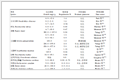
3.3 Microelements ContentsMicroelements contents in the kidney and liver samples of H. otakii under the different Cd exposure concentrations were shown in Table 1. Cd exposure resulted in decreased Ca and Fe concentrations in the kidney compared with control fish, but had no effect on the liver. Zn and Fe concentrations remained unaffected by exposure to Cd.
|
Table 1 Microelements contents in the liver and kidney of H. otakii after 12 and 24 d exposure to 0, 0.2, 2.5, and 10 µg L−1 Cd |
In this study, we investigated the Cd accumulation, antioxidant response, and microelements contents in liver and kidney of H. otakii after chronic Cd exposure. Fish were exposed to 0.2, 2.5, and 10 µg L−1 waterborne Cd, according to the literature and environmentally relevant concentrations. H. otakii exposed to Cd accumulated a significant amount of Cd, but the tissue concentrations of Ca and Fe decreased. A strong oxidative stress defense response was observed after exposed to Cd.
Cd concentrations in the kidney and liver increased with time and dose, which was consistent with findings in several other fish species, such as zebrafish, Danio rerio (0.022, 0.11, and 0.56 mg L−1 Cd2+; Matz et al., 2007), catfish (0.1, 0.2, and 0.4 mg L−1; Asagba et al., 2008), Nile tilapia, Oreochromis niloticus (0.1 and 1.0 mg L−1; Firat et al., 2009), and flounder, P. olivaceus larvae (Cd; control, 0.01 and 0.15 mg L−1). In this study, the greatest Cd accumulation in H. otakii occurred in the liver. Previous studies have shown that the fish liver is the primary tissue accumulating heavy metals, such as copper (Dang et al., 2012; Tsai et al., 2013; Zhou et al., 2017), lead (Reynders et al., 2006; Kim and Kang, 2015b), Cd (Kraal et al., 1995; Qu et al., 2014), and As (Roy and Bhattacharya, 2006; Kim and Kang, 2015a). Metals accumulate in the liver because they are actively metabolized by this organ (Roy and Bhattacharya, 2006). In addition, the liver is the most important detoxification organ (Das et al., 1998). Significant accumulation of Cd was also observed in the kidney of H. otakii at the higher levels of waterborne Cd exposure. A similar result was reported for As accumulation in Sebastes schlegelii, which was inferred to be the result from the detoxification function of the kidney (King and Kang, 2015). In addition, the kidney regulates the excretion of xenobiotics and toxic substances (Bodo et al., 2003). Relatively high concentrations of heavy metals have been found in the liver and kidney of different fish species. Kim and Kang reported high concentrations of Pb in the kidney and liver of juvenile rockfish, S. schlegelii (2015b), and reported a high concentration of chromium in the kidney and liver of S. schlegelii (2016).
Higher heavy metal tissue burdens lead to enhanced accumulation of ROS, resulting in greater impairment of oxidative defense and/or damage. The defense mechanisms that detoxify and act as antioxidants help organisms survive in contaminated environments. Fishes have developed antioxidant defense mechanisms that commonly involve major antioxidant enzymes, such as SOD, CAT, and GST to protect against the detrimental effects of ROS (Brandão et al., 2015; Guardiola et al., 2016; Wu et al., 2018). These enzymes are induced as a compensatory response to a mild oxidative stress. However, excess ROS produced by xenobiotics often overwhelm the detoxifying functions, which interferes with protein synthesis, resulting in suppressed antioxidant enzyme activities (Qu et al., 2014). SOD catalyzes superoxide anion radicals (O2−) and H+ into the less toxic compound H2O2, which is subsequently decomposed into H2O by CAT. Together they constitute the first line of defense against oxidative stress induced by xenobiotics (Maulvault et al., 2017; Zhang et al., 2017; Wu et al., 2018). Therefore, SOD and CAT are induced simultaneously to remove ROS, as shown in gilthead seabream, Sparus aurata (Guardiola et al., 2016), and European seabass, Dicentrarchus labrax (Maulvault et al., 2017). SOD and CAT are critical enzymes to minimize oxidative injury in fish.
SOD activity increased significantly in the liver and kidney of H. otakii in response to all of the Cd concentrations. CAT was also induced by most of the Cd treatments. However, liver CAT activity was inhibited in the 10 µg L−1 treatment on day 24. The different responses of the two enzymes were consistent with a previous study. For example, increased SOD and CAT activities have been detected in gilthead seabream exposed to 10 µg L−1 Cd for 2 d, but were not found in fish exposed for 10 or 30 d (Guardiola et al., 2016). CAT activity was inhibited when carp, Hoplias malabaricus, was exposed to 1.05 and 10.5 μg g−1 dietary methyl mercury, while SOD activity was not affected significantly compared to the control (Mela et al., 2014).
GST has been recognized as a biomarker for oxidative stress caused by heavy metal exposure (Durou et al., 2007). In our study, GST activities in liver and kidney increased significantly in H. otakii responding to waterborne Cd, which might be caused by the accumulated Cd in the tissues. This enzyme regenerates GSH from its oxidized form, while glutathione disulfide plays a crucial role in the turnover of GSH and in cellular antioxidant protection. However, it can be inhibited by increased levels of reduced GSH in fish Chanos chanos exposed to heavy metals (Rajeshkumar et al., 2013).
MDA is the product of lipid peroxidation (LPO), mainly caused by the attack of excessive ROS on polyunsaturated fatty acids in cellular membranes (Freitas et al., 2016; Huang et al., 2018). Similar to the antioxidant enzymes, MDA content increased in the present study, indicating that oxidative stress occurred and led to LPO. The finding was consistent with previous studies. Qu et al. (2014) reported an increase of MDA content in the freshwater fish Carassius auratus in response to Cd exposure. Cui et al. (2020) also reported an increase of MDA content in the larvae of flounder Paralichthys olivaceus, which were exposed to seawater with acidification and Cd.
Ion homeostasis plays an important role in metabolism (Liew et al., 2013, 2015, 2020). Heavy metals exert their toxicity by altering ion homeostasis of the organism, such as iron deficiency, which may cause reproductive dysfunction and affect immune function. In this study, Cd exposure decreased Ca and Fe contents in the liver and kidney of H. otakii. In a previous study, Hou (2011) reported that Cd inhibits intestinal absorption of iron, resulting in iron deficiency and affecting normal development. Jiao (2019) also reported a decrease of Fe in common carp after exposure to Cd. No effect of Cd exposure on Zn and Se was observed in the present study, while Jiao (2019) reported a decrease of Zn in common carp. Cd exposure can affect microelements contents, which may have further aggravated the damage to the structure and function of liver and kidneyin H. otakii.
5 ConclusionsWe conclude that Cd exposure can affect the microelement and antioxidant defense system of H. otakii. Cd preferentially accumulated in the liver tissue and increased with time and dose. Cd exposure resulted in a decrease of Ca and Fe concentrations in the kidney, while there was no effect on the liver. Cd exposure caused an antioxidant enzyme response at all three Cd exposure concentrations. Future toxicology studies should not only focus on the contaminant concentration, but also consider the environmentrelevant concentration. Such information will be critically important in the risk assessment of marine pollutants.
AcknowledgementsThis study was supported by the Key Technology Research and Development Program of Shandong Province (Nos. 2019GHY112071 and 2019GHY11 2062), and the Major Agricultural Application Technology Innovation Projects in Shandong Province (No. SD2019YY007).
Asagba, A. O., Eriyamremu, G. E., and Igberaese, M. E.. 2008. Bioaccumulation of cadmium and its biochemical effect on selected tissues of the catfish (Clarias gariepinus). Fish Physiology and Biochemistry, 34: 61-69. DOI:10.1007/s10695-007-9147-4 (  0) 0) |
Atli, G., Alptekin, Ö., Tükel, S., and Canli, M.. 2006. Response of catalase activity to Ag+, Cd2+, Cr6+, Cu2+ and Zn2+ in five tissues of freshwater fish Oreochromis niloticus. Comparative Biochemistry and Physiology C, 143: 218-224. DOI:10.1016/j.cbpa.2005.11.019 ( 0) |
Atli, G., and Canli, M.. 2008. Enzymatic responses to metal exposures in a freshwater fish Oreochromis niloticus. Comparative Biochemistry and Physiology C, 145: 282-287. ( 0) |
Basha, P. S., and Rani, A. U.. 2003. Cadmium-induced antioxidant defense mechanism in freshwater teleost Oreochromis mossambicus (Tilapia). Ecotoxicology and Environmental Safety, 56: 218-221. DOI:10.1016/S0147-6513(03)00028-9 ( 0) |
Benavides, M. P., Gallego, S. M., and Tomaro, M. L.. 2005. Cadmium toxicity in plants. Brazilian Journal of Plant Physiology, 17: 21-34. DOI:10.1590/S1677-04202005000100003 ( 0) |
Brandão, F., Cappello, T., Raimundo, J., Santos, M. A., Maisano, M., Mauceri, A., et al.. 2015. Unravelling the mechanisms of mercury hepatotoxicity in wildfish (Liza aurata) through a triad approach: Bioaccumulation, metabolomic profiles and oxidative stress. Metallomics, 7: 1352-1363. DOI:10.1039/C5MT00090D ( 0) |
Capillo, G., Silvestro, S., Sanfilippo, M., Fiorino, E., Giangrosso, G., Ferrantelli, V., et al.. 2018. Assessment of electrolytes and metals profile of the Faro Lake (Capo Peloro Lagoon, Sicily, Italy) and its impact on Mytilus galloprovincialis. Chemestry & Biodiversity, 15(5): e1800044. DOI:10.1002/cbdv.201800044 ( 0) |
Cui, W. T., Cao, L., Liu, J. H., Ren, Z. H., Zhao, B., and Dou, S. Z.. 2020. Effects of seawater acidification and cadmium on the antioxidant defense of flounder Paralichthys olivaceus larvae. Science of the Total Environment, 718: 137234. DOI:10.1016/j.scitotenv.2020.137234 ( 0) |
Dang, F., Wang, W. X., and Rainbow, P. S.. 2012. Unifying prolonged copper exposure, accumulation, and toxicity from food and water in a marine fish. Environmental Science and Technology, 46: 3465-3471. DOI:10.1021/es203951z ( 0) |
Durou, C., Poirier, L., Amiard, J. C., Budzinski, H., Gnassia-Barelli, M., Lemenach, K., et al.. 2007. Biomonitoring in a clean and a multi-contaminated estuary based on biomarkers and chemical analyses in the endobenthic worm Nereis diversicolor. Environmental Pollution, 148: 445-458. DOI:10.1016/j.envpol.2006.12.022 ( 0) |
Freitas, R., Pires, A., Velez, C., Almeida, Â., Moreira, A., Wrona, F. J., et al.. 2016. Effects of seawater acidification on Diopatra neapolitana (Polychaete, Onuphidae): Biochemical and regenerative capacity responses. Ecological Indicators, 60: 152-161. DOI:10.1016/j.ecolind.2015.06.032 ( 0) |
Gao, X. L., Zhou, F. X., and Chen, C. T. A.. 2014. Pollution status of the Bohai Sea: An overview of the environmental quality assessment related trace metals. Environment International, 62: 12-30. DOI:10.1016/j.envint.2013.09.019 ( 0) |
Gaw, S., Northcott, G., Kim, N., Wilkins, A., and Jensen, J.. 2012. Comparison of earthworm and chemical assays of the bioavailability of aged 1, 1-dichloro-2, 2-bis (p-chlorophenyl) ethylene 1, 1, 1-trichloro-2, 2-bis (p-chlorophenyl) ethane, and heavy metals in orchard soils. Environmental Toxicology and Chemistry, 31: 1306-1316. DOI:10.1002/etc.1817 ( 0) |
Gobi, N., Vaseeharan, B., Rekha, R., Vijayakumar, S., and Faggio, C.. 2018. Bioaccumulation, cytotoxicity and oxidative stress of the acute exposure selenium in Oreochromis mossambicus. Ecotoxicology and Environmental Safety, 162: 147-159. DOI:10.1016/j.ecoenv.2018.06.070 ( 0) |
Grosell, M., McGeer, J. C., and Wood, C. M.. 2001. Plasma copper clearance and biliary copper excretion are stimulated in copper-acclimated trout. American Journal of Physiology, 280: 796-806. DOI:10.1152/ajpcell.2001.280.4.C796 ( 0) |
Guardiola, F. A., Chaves-Pozo, E., Espinosa, C., Romero, D., Meseguer, J., Cuesta, A., et al.. 2016. Mercury accumulation, structural damages, and antioxidant and immune status changes in the gilthead seabream (Sparus aurata L. ) exposed to methylmercury. Archives of Environmental Contamination and Toxicology, 70: 734-746. DOI:10.1007/s00244-016-0268-6 ( 0) |
Hou, X. Y., 2011. Effect of zeolite on heavy metal accumulation, plasma indicators and liver metallothionein in carps (Cyprinus Carpio) with water cadmium exposure. Master thesis. Nanjing Agricultural University (in Chinese with English abstract).
( 0) |
Huang, X. Z., Liu, Y. M., Liu, Z. K., Zhao, Z. H., Dupont, S., Wu, F. L., et al.. 2018. Impact of zinc oxide nanoparticles and ocean acidification on antioxidant responses of Mytilus coruscus. Chemosphere, 196: 182-195. DOI:10.1016/j.chemosphere.2017.12.183 ( 0) |
Jiao, W. Y., 2019. The study on the mechanism of immune injury induced by cadmium and chlorpyrifos exposure in common carp gills. Master thesis. Northeast Agricultural University (in Chinese with English abstract).
( 0) |
Kim, J. H., and Kang, J. C.. 2015a. The arsenic accumulation and its effect on oxidative stress responses in juvenile rockfish, Sebastes schlegelii, exposed to waterborne arsenic (As3+). Environmental Toxicology and Pharmacology, 39: 668-676. DOI:10.1016/j.etap.2015.01.012 ( 0) |
Kim, J. H., and Kang, J. C.. 2015b. The lead accumulation and hematological findings in juvenile rock fish Sebastes schlegelii exposed to the dietary lead (Ⅱ) concentrations. Ecotoxicology and Environmental Safety, 115: 33-39. DOI:10.1016/j.ecoenv.2015.02.009 ( 0) |
Kim, J. H., and Kang, J. C.. 2016. The chromium accumulation and its physiological effects in juvenile rockfish, Sebastes schlegelii, exposed to different levels of dietary chromium (Cr6+) concentrations. Environmental Toxicology and Pharmacology, 41: 152-158. DOI:10.1016/j.etap.2015.12.001 ( 0) |
Kraal, M. H., Kraak, M. H. S., Degroot, C. J., and Davids, C.. 1995. Uptake and tissue distribution of dietary and aqueous cadmium by carp (Cyprinus carpio). Ecotoxicology and Environmental Safety, 31: 179-183. DOI:10.1006/eesa.1995.1060 ( 0) |
Li, W., Wang, N. B., Li, Q. B., and Sun, B.. 2008. Distribution of dissolved metals in seawater of Jinzhou Bay, China. Environmental Toxicology and Chemistry, 27(1): 43-48. DOI:10.1897/07-155.1 ( 0) |
Liew, H. J., Chiarella, D., Pelle, A., Faggio, C., Blust, R., and De Boeck, G.. 2013. Cortisol emphasizes the metabolic strategies employed by common carp, Cyprinus carpio at different feeding and swimming regimes. Comparative Biochemistry and Physiology–Part A: Molecular & Integrative Physiology, 166(3): 449-464. ( 0) |
Liew, H. J., Fazio, A., Faggio, C., Blust, R., and De Boeck, G.. 2015. Cortisol affects metabolic and ionoregulatory responses to a different extent depending on feeding ration in common carp, Cyprinus carpio. Comparative Biochemistry and Physiology A: Molecular Integrative Physiology, 189: 45-47. DOI:10.1016/j.cbpa.2015.07.011 ( 0) |
Liew, H. J., Pelle, A., Chiarella, D., Faggio, C., Tang, C. H., Blust, R., et al.. 2020. Common carp, Cyprinus carpio, prefer branchial ionoregulation at high feeding rates and kidney ionoregulation when food supply is limited: Additional effects of cortisol and exercise. Fish Physiology and Biochemistry, 46(1): 451-469. DOI:10.1007/s10695-019-00736-0 ( 0) |
Matz, C. J., Treble, R. G., and Krone, P. H.. 2007. Accumulation and elimination of cadmium in larval stage zebrafish following acute exposure. Ecotoxicology and Environmental Safety, 66: 44-48. DOI:10.1016/j.ecoenv.2005.11.001 ( 0) |
Maulvault, A. L., Barbosa, V., Alves, R., Custódio, A., Anacleto, P., Repolho, T., et al.. 2017. Ecophysiological responses of juvenile seabass (Dicentrarchus labrax) exposed to increased temperature and dietary methylmercury. Science of the Total Environment, 586: 551-558. DOI:10.1016/j.scitotenv.2017.02.016 ( 0) |
McRae, N. K., Gaw, S., and Glover, C. N.. 2016. Mechanisms of zinc toxicity in the galaxiid fish, Galaxias maculatus. Comparative Biochemistry and Physiology C, 179: 184-190. ( 0) |
Mela, M., Neto, F. F., Yamamoto, F. Y., Almeida, R., Grötzner, S. R., Ventura, D. F., et al.. 2014. Mercury distribution in target organs and biochemical responses after subchronic and trophic exposure to Neotropical fish Hoplias malabaricus. Fish Physiology and Biochemistry, 40: 245-256. DOI:10.1007/s10695-013-9840-4 ( 0) |
Mendil, D., Unal, O. F., Tuzen, M., and Soylak, M.. 2010. Determination of trace metals in different fish species and sediments from the River Yesilirmak in Tokat, Turkey. Food and Chemical Toxicology, 48(5): 1383-1392. DOI:10.1016/j.fct.2010.03.006 ( 0) |
Mohsenpour, R., Mousavi-Sabet, H., Hedayati, A., Rezaei, A., Yalsuyi, A. M., and Faggio, C.. 2020. In vitro effects of silver nanoparticles on gills morphology of female Guppy (Poecilia reticulate) after a short-term exposure. Microscopy Research and Technique, 83(12): 1552-1557. DOI:10.1002/jemt.23549 ( 0) |
Moyson, S., Liew, H. J., Fazio, A., Van Dooren, N., Delcroix, A., Faggio, C., et al.. 2016. Kidney activity increases in copper exposed goldfish (Carassius auratus). Comparative Biochemistry and Physiology C Toxicology & Pharmacology, 190: 32-37. ( 0) |
Nordberg, G. F.. 2010. Biomarkers of exposure, effects and susceptibility in humans and their application in studies of interactions among metals in China. Toxicology Letters, 192(1): 45-49. DOI:10.1016/j.toxlet.2009.06.859 ( 0) |
OSPAR, 2010. Quality Status Report 2010. OSPAR Head of Delegation Meeting, London, UK, 12-13 November 2009, 176pp.
( 0) |
Pagano, M., Porcino, C., Briglia, M., Fiorino, E., Vazzana, M., Silvestro, S., et al.. 2017. The influence of exposure of cadmium chloride and zinc chloride on haemolymph and digestive gland cells from Mytilus galloprovincialis. International Journal of Environmental Research, 11(2): 207-216. DOI:10.1007/s41742-017-0020-8 ( 0) |
Qu, R. J., Wang, X. W., Wang, Z. Y., Wei, Z. B., and Wang, L. S.. 2014. Metal accumulation and antioxidant defenses in the freshwater fish Carassius auratus in response to single and combined exposure to cadmium and hydroxylated multi-walled carbon nanotubes. Journal of Hazardous Materials, 275: 89-98. DOI:10.1016/j.jhazmat.2014.04.051 ( 0) |
Rajeshkumar, S., Mini, J., and Munuswamy, N.. 2013. Effects of heavy metals on antioxidants and expression of HSP70 in different tissues of Milk fish (Chanos chanos) of Kaattuppalli Island, Chennai, India. Ecotoxicology and Environmental Safety, 98: 8-18. DOI:10.1016/j.ecoenv.2013.07.029 ( 0) |
Reynders, H., Campenhout, K. V., Bervoets, L., Coen, W. M. D., and Blust, R.. 2006. Dynamics of cadmium accumulation and effects in common carp (Cyprinus carpio) during simultaneous exposure to water and food (Tubifex tubifex). Environmental Toxicology and Chemistry, 25: 1558-1567. DOI:10.1897/05-239R.1 ( 0) |
Roy, S., and Bhattacharya, S.. 2006. Arsenic-induced histopathology and synthesis of stress proteins in liver and kidney of Channa punctatus. Ecotoxicology and Environmental Safety, 65: 218-229. DOI:10.1016/j.ecoenv.2005.07.005 ( 0) |
Savorelli, F., Manfra, L., Croppo, M., Tornambè, A., Palazzi, D., Canepa, S., et al.. 2017. Fitness evaluation of Ruditapes philippinarum exposed to nickel. Biological Trace Element Research, 177(2): 384-393. DOI:10.1007/s12011-016-0885-y ( 0) |
Torre, A., Trischitta, F., and Faggio, C.. 2013. Effect of CdCl2 on Regulatory Volume Decrease (RVD) in Mytilus galloprovincialis digestive cells. Toxicology in Vitro, 27: 1260-1266. DOI:10.1016/j.tiv.2013.02.017 ( 0) |
Tsai, J. W., Ju, Y. R., Huang, Y. H., Deng, Y. S., Chen, W. Y., Wu, C. C., et al.. 2013. Toxicokinetics of tilapia following high exposure to waterborne and dietary copper and implications for coping mechanisms. Environmental Science and Pollution Research International, 20: 3771-3780. DOI:10.1007/s11356-012-1304-3 ( 0) |
Vajargah, M. F., Yalsuyi, A. M., Hedayati, A., and Faggio, C.. 2018. Histopathological lesions and toxicity in common carp (Cyprinus carpio L. 1758) induced by copper nanoparticles. Microscopy Research and Technique, 81(7): 724-729. ( 0) |
Vajargah, M. F., Yalsuyi, A. M., Sattari, M., Prokic, M., and Faggio, C.. 2019. Effects of copper oxide nanoparticles (CuO-NPs) on parturition time, survival rate and reproductive success of guppy fish, Poecilia reticulate. Journal of Cluster Science, 31: 499-506. DOI:10.1007/s10876-019-01664-y ( 0) |
Vijayakumar, S., Vaseeharan, B., Sudhakaran, R., Jeyakandan, J., Ramasamy, P., Sonawane, A., et al.. 2019. Bioinspired zinc oxide nanoparticles using Lycopersicon esculentum for antimicrobial and anticancer applications. Journal of Cluster Science, 30(6): 1465-1479. DOI:10.1007/s10876-019-01590-z ( 0) |
Wu, F. Z., Huang, W., Liu, Q., Xu, X. Q., Zeng, J. N., Cao, L., et al.. 2018. Responses of antioxidant defense and immune gene expression in early life stages of large yellow croaker (Pseudosciaena crocea) under methyl mercury exposure. Frontiers in Physiology, 9: 1436. DOI:10.3389/fphys.2018.01436 ( 0) |
Zhang, C. N., Zhang, J. L., Ren, H. T., Zhou, B. H., Wu, Q. J., and Sun, P.. 2017. Effect of tributyltin on antioxidant ability and immune responses of zebrafish (Danio rerio). Ecotoxicology and Environmental Safety, 138: 1-8. DOI:10.1016/j.ecoenv.2016.12.016 ( 0) |
Zhao, X., Wang, S., Ma, L., Yue, B., Zhao, Y. F., and Shang, X. H.. 2016. Analysis of Pb and Cd pollution in marine fish in some sea areas of China. Journal of Hygiene Research, 45(3): 474-476 (in Chinese with English abstract). ( 0) |
Zhou, Y. Y., Zhang, W., Guo, Z. Q., and Zhang, L.. 2017. Effects of salinity and copper co-exposure on copper bioaccumulation in marine rabbitfish Siganus oramin. Chemosphere, 168: 491-500. DOI:10.1016/j.chemosphere.2016.11.003 ( 0) |