 2025, Vol. 24


2) College of Environmental Science and Engineering, Ocean University of China, Qingdao 266100, China;
3) Key Laboratory of Geological Safety of Coastal Urban Underground Space, Ministry of Natural Resources, Qingdao 266101, China;
4) Qingdao Geotechnical Investigation and Surveying Research Institute, Qingdao Municipal Natural Resources and Planning Bureau, Qingdao 266032, China;
5) Key Laboratory of Marine Environment and Ecology, Ministry of Education, Ocean University of China, Qingdao 266100, China
In marine engineering construction, it is unsuitable to use marine soft clay as filling for the foundation support layer because of the insufficient bearing capacity of the soft clay and also because it is easily saturated and becomes loose when in contact with water (Lu et al., 2020; Chen et al., 2022a; Chen et al., 2022b). This significantly hinders the development of marine engineering. To enhance the engineering performance of marine soft clay, many scholars have used physical and chemical methods to stabilize marine soft clay and improve the bearing capacity and stability of foundations. Cement-based stabilization is a commonly used method for stabilizing soft clay foundations, with numerous experimental studies and well-established application cases (Pinarli et al., 2005; Kang et al., 2017; Munoz et al., 2021; OuYang et al., 2022, 2023). However, this method fails to address significant drawbacks such as crack formation, poor water stability, and slow strength development under submerged conditions. Therefore, the addition of additives that provide more effective soil stabilization effects in cement-stabilized soil has become a hot topic. Two types of additives, namely ionic soil stabilizer (ISS) and aqueous polymers, have garnered attention from researchers due to their ability to significantly improve the stabilization effect with small additions (Lv et al., 2022; Zhao et al., 2022). This study investigates a new use of cement-stabilized marine soft clay as a submerged foundation application by enhancing it using auxiliary additives.
The use of ISS has been studied mostly in land foundation reinforcement. It has advantages such as a high concentration, durability, good stability, and environmental protection in the replacement of cement stabilized soil, and the stabilization strength is better than that of cement stabilized soil (Lu, 2011; Arefin et al., 2021; Wu et al., 2021). In general, after the soil is stabilized with ISS, its compressibility decreases, aggregation and condensation occur between the soil particles, and the bonding strength between the soil particles is improved (Katz et al., 2001; He et al., 2018; Zhang et al., 2019). The general results show that the hydrolyzed cations in ISS exchange with the cations on the surfaces of the soil particles, reducing the thickness of the electric double layer of the soil particles and improving the strength of the soil without destroying the structure of the electric double layer (Gautam et al., 2020; Luo et al., 2020; Lu et al., 2021). However, the application of ISS is limited in the field of foundation stability in marine areas (Hu et al., 2022). When ISS is applied to submerged foundation soil, especially for the stabilization of marine soft clay, the water-stability of the stabilized soil is poor, the strength development is slow, and the stabilization effect is almost lost. Therefore, it is necessary to add aqueous polymers to reduce soil permeability, allowing soil particles to remain stable and non-dispersive under prolonged submerged conditions. This enables the hydrolyzed cations in ISS to fully exchange with the cations on the soil particle surfaces, forming a permanent structure with a certain level of strength, thereby achieving the ideal soil stabilization effect.
Polyacrylamide (PAM) is a widely used aqueous polymer in soil stabilization, known for its non-toxic and environmentally friendly properties. Several studies have shown that the physical properties of soil can be altered after PAM treatment (Chung, 2004; Bose et al., 2021; Yao et al., 2021; Yuan et al., 2022). Nadler et al. (1996) conducted experiments on moist soils with low PAM content and concluded that the addition of PAM improves the stability of moist soils, with the effectiveness depending on the PAM concentration, soil moisture content, and ion type. Levy and Miller (1999) conducted the research on PAM-stabilized soils and demonstrated that PAM acts on both the outer and inner surfaces of the soil, providing good stability to intact aggregates as well as fragmented ones. Deng et al. (2012) discovered that the addition of PAM to high plastic soil improves its flexibility, resulting in soil that exhibits enhanced moldability. Georgees et al. (2015) conducted tests on soil treated with PAM and found significant increases in dry density and unconfined compressive strength, indicating enhanced durability. On the other hand, PAM improves the water-stability of clay soils through flocculation mechanisms, preventing soil disintegration under unconfined and submerged conditions.
Although preliminary studies have been conducted on using ISS to enhance the performance of cement-stabilized soil (Cui and Xiang, 2010; Yang and Du, 2021), the curing conditions have been limited to dry or moist states, and the study on stabilization strategies and mechanisms for fully submerged marine soft clay remains limited. The aim of this study is to incorporate ISS and PAM (ISS-P) as auxiliary additives into cement-stabilized soft clay to enhance the performance of the treated soft clay under fully submerged conditions, with a particular emphasis on strength development, water-stability and microstructure. Furthermore, the effects of ISS and PAM content on the characterization of cement-stabilized soft clay were also considered in this study. The findings and recommendations may contribute to the improvement of cement-stabilized soft clay performance under submerged conditions, which further promote the use of marine soft clay as submerged foundations in marine engineering construction.
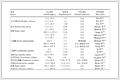
2 Materials and Methods 2.1 SoilThe marine soft clay used for the tests was collected from an offshore wind farm in Changyi City, Bohai Sea, China, with a depth of 3 – 5 m. During the sampling, the shell concentration area was avoided. A laser particle size analyzer was used for the analysis. The particle size distribution curve of the soil sample is shown in Fig.1. According to the Test code for Highway Engineering, the soil is defined as a low liquid limit clay (CL), and its physical parameters are presented in Table 1 (Ministry of Transport of the People's Republic of China).

|
Fig. 1 Particle size distribution curve. |
|
Table 1 Physical parameters of the soil |
In this study, the soil stabilizer was divided into cement, ISS and PAM, which should be used in combination in order.
ISS is a gray and transparent concentrated solution produced by Nanjing Beigu Engineering Materials Co., Ltd., China (Fig.2a). It is easily soluble in water and has no obvious smell. When configuring the soil stabilizer, water should be added to dilute it according to the required concentration. Its boiling point is 100℃, and its density is 1.34 g mL−1. The main cations in ISS are presented in Table 2. The advantages of ISS include a good water solubility, environmental protection, and high concentration.

|
Fig. 2 Photos of stabilizers. |
|
|
Table 2 Concentration of main cations in ISS |
PAM is an aqueous polymer produced by Shandong Meiyu Chemical Co., Ltd., China (Fig.2b). It is a white, free-flowing dry powder, and its aqueous solution is neutral. This polymer offers several advantages, including water solubility, non-toxicity, and environmental friendliness. Some physical properties of this water-soluble polymer are listed in Table 3.
|
|
Table 3 Physical properties of the PAM |
The cement used is ordinary Portland cement (OPC) of grade 425, produced by United Cement Linyi Co., Ltd., China (Fig.2c). Fig.3 shows the XRD (X-ray diffraction) pattern of cement. Main components of OPC were shown in Table 4.

|
Fig. 3 XRD pattern of cement. |
|
|
Table 4 Components of the cement |
In order to study the effect of ISS-P on the stabilization and properties of submerged cement-based stabilized soft clay, several groups of stabilized soil samples with different mixture proportions of ISS and PAM were prepared and tested (Fig.4). The marine soft clay was dried at 100℃, crushed, and screened using a 1-mm sieve to remove any large-size gravel and animal and plant humus from the soil. First, the PAM and cement were mixed into the sieved soil according to the designed proportion, and then, the mixture was mixed in the mixer until it was uniform. Then, the ISS concentrated solution was diluted according to the designed proportion and was evenly sprinkled on the top of the mixture of dry soil cement and PAM. A mixer was used to stir the mixture for 10 min so that the soil particles could fully react with the ISS, cement and PAM to obtain a stabilized soil slurry, which was in a flowable state at this time. The water used in the tests was natural groundwater and the initial moisture content of the stabilized soil sample was controlled at 43%. The stabilized soil slurry was layered into polyvinyl chloride (PVC) and stainless steel test molds, and a square glass sheet was placed at the bottom. After each layer was loaded, the mold was vibrated on a shaking table for 3 min to densify the stabilized soil slurry. The compactness was set to 95% (National Railway Administration of the People's Republic of China). The prepared samples were immediately submerged in water at 22℃ for curing until testing.

|
Fig. 4 Soil samples preparation and testing procedure. |
Table 5 shows the mix proportion of stabilizer including ISS and PAM. The designed proportion in this study was selected based on the concentration of ISS, the soil mixture proportion suggested by Hu et al. (2022), and previous orthogonal tests. In the experiment, the masses of soil and cement were kept constant, while only the contents of ISS and PAM were varied, expressed as percentages of the mass of soil. The stabilization effect of ISS-P was studied from the macroscopic perspective. Atterberg limits tests, direct shear tests, unconfined compression strength (UCS) tests, and water-stability tests were carried out. The stabilization mechanism of ISS-P was also studied from the microscopic perspective. Scanning electron microscopy (SEM) and X-ray diffraction (XRD) analyses were carried out. The test methods are presented in Table 6. At least three parallel samples were prepared for each ratio to attain reliable results.
|
|
Table 5 Stabilizer mixture proportions |
|
|
Table 6 Test methods |
The liquid limits and plastic limits of the stabilized soil samples with different ISS-P mixture proportions were determined. For each mixture proportion, three types of stabilized soil slurry samples with increasing water contents were tested. The soil mold was filled in three layers, and a cone with a mass of 100 g and a tip angle of 30˚ was used for the measurements. In the double logarithmic coordinate system, the water content corresponding to a soil depth of 20 mm is defined as the liquid limit (LL), and the plastic limit (PL) is obtained according to the relationship between the plastic limit soil depth (hp) and the LL in the Test code for Highway Engineering (Ministry of Transport of the People's Republic of China).
2.4.2 Direct shear testsDirect shear tests were conducted to determine the cohesion and internal friction angle of stabilized soil samples with different ISS-P mixture proportions. Stabilized soil slurry sampled with different ISS-P mixture proportions were prepared. Stainless steel test molds with an inner diameter of 61.8 mm and height of 20 mm were filled in two layers and then placed in a glass box containing water. Direct shear tests were performed under vertical pressures of 100, 200, 300, and 400 kPa, with a shear strain rate of 0.8 mm min−1 (Ministry of Transport of the People's Republic of China).
2.4.3 UCS testsThe UCS tests were carried out on stabilized soil samples with different ISS-P mixture proportions. The prepared stabilized soil slurry was divided into four layers and filled into PVC test molds with an inner diameter of 50 mm and a height of 100 mm. The samples were placed under water for curing. The axial strain rate was controlled at 2% min−1. The test time, axial deformation, and axial load were recorded during the test until the strain reached 7%. The unconfined compressive strength was calculated according to Test code for Highway Engineering (Ministry of Transport of the People's Republic of China). The peak strain energy was used to represent the energy absorbed by the deformation of the sample (Maher and Ho, 1994).
2.4.4 Water-stability testsThe water-stability of soil, defined as resistance against external processes of immersion, is an important measure of soil resistance against disintegration (Fedotov et al., 2006; Kodešová et al., 2008; Jozefaciuk and Czachor, 2014). The static water-measure method was used for determining the water-stability of treated soil. Stabilized soil slurry sampled with different ISS-P mixture proportions were prepared. Stainless steel test molds with an inner diameter of 58 mm and height of 20 mm were filled in two layers and then placed in a glass box containing water. The water surface was 20 mm higher than the soil sample. After being put into water, the stainless steel test molds were carefully removed immediately to cause the soil sample to disintegrate freely in the water, and the stability of the stabilized soil sample in the water was measured. The ImageJ image processing software was used to calculate the initial area of the sample and the area after disintegration and stabilization. According to the concept of the water-stability proposed by Liu et al. (2009) and considering that all of the samples in the test exhibited disintegration, a water-stability coefficient (K) was proposed so that the disintegration area could be used to measure the water-stability of stabilized marine soft clay:
| $ K = 100 \times ({A_0} - {A_i})/{A_0}, {\text{ }}0 \leqslant K \leqslant 100, $ | (1) |
where K is the water-stability coefficient. The larger the value of K is, the better the water-stability is. A0 is the disintegration area of the sample without the addition of cement, ISS and PAM. Ai is the disintegration area of sample i.
2.4.5 Microstructure testsSEM and XRD analyses were conducted to study the microscopic stabilization effect and stabilization principle of the stabilized soils. The parameters analyzed were the particle shape, arrangement structure, soil element contents, and ion contents (Liu et al., 2018; Chen et al., 2019; Ni et al., 2020).
The SEM analysis was carried out using a Zeiss field emission scanning electronic microscope (Merlin Compact, 15 kV, magnification of (12 – 2000000) ×). Samples were dried at 40℃ for 24 h, and a representative flat section was selected. A sample with a size of 10 × 10 mm and a thickness of 2 – 4 mm was cut. Then, gold coating was applied using the ion sputtering instrument, and the sample was stuck on the conductive adhesive for SEM analysis.
An X-ray diffractometer produced by Rigaku Corporation (Rigaku SmartLab SE, scanning range of 10˚ – 80˚, step size of 0.01˚) was used for the XRD analysis. Samples were dried at 40℃ for 24 h. Part of the soil on the section was selected and was ground into powder using a glass rod.
3 Results and Discussion 3.1 Atterberg LimitsThe changes in the liquid limit (LL), plastic limit (PL), and plasticity index (PI) of the cement-based stabilized soft clay with ISS-P added are illustrated in Fig.5. It can be seen from Fig.5 that the LL, PL and PI of the soil increased as the mixture proportion of ISS and PAM increased, which is consistent with the research results of Wu et al. (2019) and Soltani-Jigheh et al. (2019). The increase in the PI in Fig.5b was faster than that in Fig.5a, indicating that the increase in the ISS content had a more obvious effect on the improvement of the PI.

|
Fig. 5 Variations in LL, PL, and PI versus the content of ISS-P. |
According to Fig.5a, it can be observed that the addition of PAM enhances the LL of the stabilized soil. When PAM comes into contact with cement or clay, the PAM molecules can adsorb water, which hydrophilic property helps maintain the moisture and saturation state of the soil. Furthermore, as shown in Fig.5b, it can be observed that there is a significant increase in the LL of the stabilized soil with the increase in ISS content. Analysis suggests that when the volume ratio of ISS/H2O exceeds 1:200, ISS exhibits a significant wetting effect (Lu et al., 2021). When soft clay comes into contact with the ISS solution, the ions in the ISS solution can form hydrates with water, allowing the water to penetrate the clay pores more effectively. This wetting effect helps to increase the LL of soft clay and provides better fluidity to the stabilized soil in the initial stages.
3.2 Shear ParametersThe changes in the cohesion and internal friction angle of the cement-based stabilized soft clay with different ISS-P mixture proportions of underwater curing are shown in Fig.6. The results indicated that with the increase of ISS or PAM, both the cohesion and internal friction angle of the samples increased. Initially, the cohesion and internal friction angle of the test group 'Cement' (C) at 28 d were 71 kPa and 20.1˚, respectively. After ISS-P treatment (I1.8P0.9), the cohesion and internal friction angle increased by 182.7% and 15.4%, respectively. This suggests that ISS-P has a positive effect on improving the stability of cement-based stabilized soft clay. However, when the ISS-P content was relatively high, further increasing the content of ISS or PAM provided diminishing returns in improving the stability of cement-based stabilized soft clay.

|
Fig. 6 Variations in the cohesion and internal friction angle versus the content of ISS-P. |
The curing time has an impact on the changes in cohesion and internal friction angle. The curing times of 7– 14 d are defined as the early curing period, and the curing times of 14 – 28 d are defined as the late curing period. Both cohesion and internal friction angle showed greater increases during the early curing period compared to the late curing period. At 7 d, the maximum difference in cohesion among samples with different PAM contents was 173%, while for samples with different ISS contents, the maximum difference in cohesion at 7 d was 250.3%. This indicates that ISS played a major role during the 7-day curing process. It should be noted that at different curing times, ISS-P effectively increased the shear strength of cement-based stabilized soft clay. Since both ISS and PAM are water-soluble and evenly distributed in the soil, they enhanced the cohesion between particles. Smerdon (1959) proposed the relationship between the shear strength τc and PI:
| $ {\tau _{\text{c}}} = 0.0034P{I^{0.84}}, $ | (2) |
where τc is the shear strength of the soil, indicating that the shear strength is positively correlated with the PI. With the increase in ISS-P content, the PI and the shear strength of cement-based stabilized soft clay increase simultaneously, which is in excellent agreement with previous research findings (Smerdon, 1959; Wu et al., 2019).
3.3 UCS Tests 3.3.1 Stress-strain and peak strain energyThe stress-strain curve and peak strain energy of the cement-based stabilized soft clay treated using ISS-P after 14 d and 28 d of underwater curing are shown in Fig.7. It can be seen from Fig.7c that, for a given ISS content, as the content of PAM increased, the failure strain of the marine soft clay gradually increased from 1.38% (0 PAM) to 3.78% (0.9% PAM), and the corresponding failure strength also gradually increased from 301 kPa to 565 kPa (by 87.7%). It should be noted that in test groups I1.8P1.2 and I1.8P0.9, which had high PAM contents, obvious strain softening occurred during the sample compression. The main reason for this may be that when the shear stress reached the peak, the connection between the soil particles was broken and the particles were recombined, forming a new structure conducive to deformation.

|
Fig. 7 Stress-strain curve and peak strain energy. |
Fig.7d shows that for a given content of PAM, the failure strain of the marine soft clay increased as the content of ISS increased, indicating that ISS played a positive role in the curing effect of the soil within the range of mixture proportions tested. In addition, when ISS ≤ 1.8%, the failure strength of the treated marine soft clay increased significantly with increasing ISS content. When ISS ≥ 1.8%, the failure strength only increased slightly. This occurred because the quality of the soil used for the test was fixed, and the quantity of soil ions exchanged with ISS was limited, so the excess ISS did not contribute to the improvement of the failure strength of the soil.
Fig.7 also shows that the peak strain energy of ISS-P stabilized the marine soft clay. Fig.7 illustrates that as the contents of ISS and PAM increased, the stabilized soil samples exhibited a higher deformation resistance and better ductility. In addition, as the curing time increased, the peak strain energy generally increased. It is clear from Figs.7a and c that when ISS = 1.8%, from day 14 to 28, the increase in the peak strain energy was more obvious, and the failure ductility of the sample was significantly improved. This may be due to the connection effect of the polymer chain structure of PAM and the filling effect of microgels, which makes the connection structure between the soil particles more stable.
3.3.2 UCS and failure strainThe changes in the UCS and failure strain of the cement-based stabilized soft clay with different ISS-P mixture proportions of underwater curing are shown in Fig.8. Compared to the test group 'Cement' (C), the sample I1.8P0.9 showed an increase of 176.5% and 234.4% in UCS and failure strain of 28 d, respectively. The failure patterns of the samples in the UCS tests are shown in Fig.9. The samples treated with ISS-P exhibited expansion during failure, which is related to the increase in sample ductility, as evident from the stress-strain curves in Fig.7. With increasing curing time, there were no significant differences in the failure patterns of the samples. As the ISS or PAM content increased, penetrating cracks transformed into localized small opening cracks, and the number of cracks increased. This was due to the increased inter-particle strength and the bridging effect that inhibited crack propagation.

|
Fig. 8 Variations in the UCS and failure strain versus the content of ISS-P. |

|
Fig. 9 Typical failure patterns of samples in UCS tests. |
The influence of the curing time on the development of the UCS and failure strain is shown in Fig.10. The differences in the UCS values of 1.2% PAM and 0% PAM for curing times of 7, 14 and 28 d were 219.8, 239.5, and 285.1 kPa, respectively. Yuan et al. (2022) proposed that PAM significantly reduces the cement hydration and inhibits the early development of strength. During the early curing period, the carboxyl groups of PAM adsorb onto the positively charged cement particles, thereby partially impeding the reaction between cement and water. This phenomenon results in a faster strength gain during the late curing period compared to the early curing period. In Fig.10b, the UCS of the high content ISS samples (I2.0P0.9 and I1.8P0.9) increased significantly in the late curing period. This occurred because the higher content of ISS decomposed more free cations, which could then exchange ions with the soil particles for a longer time to further improve the UCS.

|
Fig. 10 Variations in the UCS and failure strain versus curing time. |
In Fig.10c, the high content of PAM (I1.8P1.2 and I1.8P0.9) significantly increased the failure strain during curing, with an increase of more than 2.24%. In the other groups, the failure strain during curing increased slightly, with a maximum of only 1.75%. In Fig.10d, the failure strain of I1.4P0.9 and I1.2P0.9 in the late curing period increased significantly, by 2.17% and 1.61%, respectively. This can be explained by the fact that the failure strain in the early curing period was low due to the low ISS content, while the PAM (content was fixed at 0.9% of the soil mass) continuously exerted its adsorption effect, which significantly increased the failure strain at day 28.
There is a good logarithmic fitting relationship between the unconfined compressive strength and the curing time in Fig.11a. The proposed relationship between the unconfined compressive strength and curing time is as follows:
| $ UC{S_t} = a - b\exp (- t/c), $ | (3) |

|
Fig. 11 Fitting of different ISS-P content. |
where a, b, and c are the fitting parameters of the equation. The values of fitting parameters a, b, and c for each sample are presented in Table 7. Among them, the fitting parameter c changes as the ISS-P mixture proportion changes (Fig.11b). The overall trend is that the value of fitting parameter c decreases as the content of ISS or PAM decreases. When the value of c is large, the UCSt changes rapidly with t, which is illustrated by I1.8P1.2, I2.0P0.9, and I1.8P0.9 in Fig.11a. Conversely, when the value of c is small, the UCSt changes slowly with t.
|
|
Table 7 Fitting parameter values of Eq. (3) |
Fig.12 shows the relationship between the 7-day and 28-day UCS values of the samples versus the ISS-P content. Although the UCS7 d and UCS28 d have a certain degree of linear correlation, it can be seen from Fig.12 that test groups I1.8P1.2, I1.8P0.9, I2.0P0.9, and I1.8P0.9, which had high ISS or PAM contents, exhibit a large dispersion from the fitting line. Furthermore, as the ISS or PAM content decreases, the data points gradually approach the fitting line. This implies that the mixture proportion of ISS-P altered the rate of change of the UCS of the stabilized soil samples with increasing curing time. For the different ISS-P mixture proportions, the development rate of the UCS with curing time is not constant, which is consistent with the change in fitting parameter c.

|
Fig. 12 Relationships between UCS7d and UCS28d values of the treated soils versus the ISS-P content. |
The disintegration state of the sample when mISS: ms = 1.8% is shown in Fig.13a, and the control group 'Soil' (without cement, ISS, and PAM) and 'Cement' (with 10 g of cement and without ISS and PAM) is also shown. We substituted the measured disintegration area of the sample after immersion in water for 24 h into Eq. (1) to obtain the K. The calculation results are presented in Table 8. It can be seen from Fig.13a that the water-stability of the samples in group Soil and Cement was extremely poor. After the sample was put into water and demoulded, collapse and disintegration occurred immediately until the soil skeleton around the circumference was completely scattered. In addition, the disintegration process gradually developed from the outer circumference to the center. When PAM was added, the water-stability of sample I1.8P0.3 was significantly improved, with disintegration occurring only at the weak part of the circumference, while the circular shape remained intact. The disintegration area was 51.6% lower than that of sample soil, 42.9% lower than that of sample Cement, and 24.5% lower than that of sample I1.8P0. For a given ISS content, the water-stability of the sample gradually increased as the content of PAM increased. When the PAM content was 0.9%, the sample only exhibited slight disintegration, and the disintegration area was only 7.27 cm2, which resulted in a 368.5% improvement in its stability compared to sample Cement.

|
Fig. 13 Variations in Ai and K values and disintegration versus the ISS-P content. |
|
|
Table 8 Results of the tests for the samples with different ISS-P contents |
Uneven cracks appeared on the surface of the sample, because there were always weak structures in the stabilized sample. The cracks were generated from the weak positions after the intrusion of water. It can be seen that the surface cracks in samples I1.8P1.2 and I1.8P0.9 were small, while the surface cracks in samples I1.8P0.6 and I1.8P0.3 were large and abundant. Cracks appeared on the surface of sample I1.8P0, and nearly 1/4 of the circumference collapsed. The changes in the disintegration area (Ai) and K with the ISS-P mixture proportions are shown in Figs.13b and c. It can be seen from Figs.13b and c that as the ISS or PAM content increased, the Ai of the sample gradually decreased and K gradually increased, which indicates that the water-stability of the sample was enhanced.
3.5 Stabilization Mechanism of ISS-P 3.5.1 Microstructure analysisThe microscopic images of the untreated and stabilized soft clay after 28 d of underwater curing are shown in Fig.14, which contains series of SEM images magnified by 500, 10000 and 30000 times. It can be seen from the 500× microscopic image that after the addition of ISS-P, the soil formed a compact block-like structure and a chain structure. This explains that the addition of ISS-P can improve the strength of stabilized soil. In the higher magnification image, needle-like ettringite, clustered C-S-H (hydrated-calcium-silicate) gel and plate-like Ca(OH)2 can be observed, but hard to be found in sample Soil. With an increasing content of ISS, a greater amount of cement hydration products can be observed, indicating that ISS promotes cement hydration and has a positive impact on the microstructure of stabilized soil. In addition, a large amount of ettringite was present in sample I2.0P0.9 instead of the cement sample, indicating that ISS promoted the production of ettringite. This can compensate for the inhibitory effect of PAM on cement hydration in the early stages.

|
Fig. 14 SEM images of samples with different stabilization methods. |
In the ISS-P stabilized samples, the originally dispersed massive soil particles were tightly wrapped and connected, and the larger loose flaky structure changed to smaller flaky aggregations, indicating that the distance between the soil particles was reduced, the particles were closely combined. From the 30000 × microscopic image, it can be observed that the PAM flocculant appeared as elongated granules, adsorbed around the C-S-H and formed a network-like structure. This suggests that PAM primarily plays a role in physical bonding during the stabilization process, creating a spatial network structure within the agglomerated cement hydration products. Therefore, the shear strength, UCS and water-stability of the soil were improved.
3.5.2 XRD analysisThe XRD analysis results for the untreated and stabilized soft clay after 28 d of underwater curing are shown in Fig.15. It can be roughly judged from Fig.15 that the mineral composition of the soft clay is quartz, illite, and albite. In the stabilized soil, the presence of ettringite, calcium hydroxide, and calcium silicate can be observed. The diffraction patterns of the untreated and stabilized soft clay are basically the same, and there are no new peaks and no fundamental changes, indicating that no new phases were formed. Nevertheless, the peak strength of the minerals in the stabilized soil samples increased, which may have been caused by the influence of the incorporation of ISS, PAM and cementitious materials on the mineral lattice (Eisazadeh et al., 2011; Dafalla and Mutaz, 2012; Saeed and Hashim, 2018; Sukmak et al., 2019).

|
Fig. 15 XRD patterns of untreated soil and soil treated with ISS-P after 28 d of curing. |
To investigate the influence of ISS and PAM on cement hydration, XRD tests were conducted on the samples Cement, I1.8P0, I1.8P0.6, and I1.8P1.2 to characterize the changes in cement hydration from 1 d to 28 d. Fig.16 shows the XRD patterns of the ISS and PAM modified cements. At 1, 7 and 28 d, the presence of Ettringite, C2AF, C2S/C3S, and Ca(OH)2 was observed, with only differences in peak intensities. This further indicates that the addition of ISS and PAM did not form new phases during the cement hydration process. The Rietveld refinement was used to calculate the mass percentages of crystalline components in the solid phase, as shown in Fig.17.

|
Fig. 16 XRD patterns of ISS and PAM modified cements. (a), Cement; (b), I1.8P0; (c), I1.8P0.6; (d), I1.8P1.2. |

|
Fig. 17 Quantitative contents of minerals in ISS and PAM modified cements. |
Figs.17a and b demonstrate that the content of Ettringite in the sample I1.8P0 is significantly higher than in the Cement (blank group) at 7d, but the growth rates from 1 d to 28 d are similar, with a lower Ca(OH)2 content. After adding PAM, as the PAM content increases, both the Ettringite and Ca(OH)2 content decrease, and the growth rate of Ca(OH)2 from 1 d to 28 d slightly decreases. From Figs.17c and d, it can be observed that the change in C2S/C3S content in the sample I1.8P0 is similar to the Cement, indicating that the effect of ISS on the consumption of C2S/C3S is minimal. After adding PAM, the 7 d content of C2S/C3S significantly increases, and the dissolution rate slows down, suggesting that PAM affects the initial dissolution of C2S/C3S during cement hydration but has little impact on C2AF. As the cement hydration progresses, the content of C2S/C3S and C2AF gradually decreases, while the content of the hydration products Ettringite and Ca(OH)2 increases. In comparison, the influence of PAM on the rate of cement hydration is more pronounced than that of ISS, while the effect of ISS mainly manifests in the alteration of hydration product content.
3.5.3 Analysis of stabilization mechanism of ISS-PBased on the macroscopic and microscopic test results, an analysis was conducted on the mechanical property and microstructure of the stabilized soil. An increase in ISS content leads to higher strength and water-stability of the stabilized soil. Previous studies have shown that the stabilization mechanism of ISS primarily involves cation exchange in the clay particle diffuse layer, reducing the thickness of the diffuse layer and further decreasing the distance between soil particles, with electrostatic attraction playing a dominant role (Xiang et al., 2010; Sukmak et al., 2019), as shown in Fig.18a. When used in combination with cement, the calcium ions in ISS promote the hydration reaction of cement. XRD results indicate that ISS increases the content of ettringite, a hydration product of cement, from 1 d to 7 d. Needle-like ettringite effectively stabilizes the soil structure by forming a skeleton framework, while the rapid decrease in C2AF content demonstrates the early strength development of cement. Additionally, the ion exchange interaction between ISS and soil particles enhances the soil structure, resulting in a significant reduction in soil porosity (Joussein et al., 2005).

|
Fig. 18 Stabilization mechanism of ISS-P. |
The addition of PAM further enhances the performance of the stabilized soil, but excessive PAM content can limit the early strength development of the stabilized soil. The modification of cement-stabilized soil by PAM occurs through two aspects: chemical and physical. The structural units of PAM contain amide groups, which possess positive charges and can attract OH− ions in the solution. It can be observed from Fig.17b that the formation of Ca(OH)2 is delayed from 1d to 7 d during cement hydration, which is unfavorable for the early strength development of cement. However, the amide groups of PAM readily form hydrogen bonds in aqueous solutions. As observed in Fig.14, it forms a chain structure in the form of a cationic polymer and is distributed around the C-S-H, promoting the close arrangement of soil particles and enhancing the strength of the stabilized soil.
In the initial stage of stabilization, the cations in the ISS aqueous solution largely balanced the negative charges on the surface of the soil particles and greatly reduced the distance between the soil particles, but there was still a small number of negative charges. One end of the chain structure (PAM) with a positive charge and the remaining negative charge was adsorbed by the electrostatic action, causing flocculation of the soil particles. The other end of the chain structure stretched and adsorbed the other soil particles, forming a soil particles-chain structure-soil particles aggregation. The chain structure played an adsorption and bridging role between the soil particles (Fig.18b). In addition, the experimental groups with high or low PAM content exhibit similar early strength development states (Fig.10a), while the XRD results indicate that PAM inhibits the early hydration of cement. This suggests that the ion exchange effect of ISS plays a dominant role in the initial stabilization of the soil. This phenomenon also compensates for the inhibitory effect of high PAM content on the early hydration of cement. It should be noted that, in the initial stage of stabilization, PAM also played an electrostatic adsorption role on the soil particles, so soil particles did not disperse under submerged conditions while exchanging cations with ISS, and it maintained a good water-stability. Therefore, PAM is indispensable.
3.6 Discussion on ISS-P in Geotechnical Engineering PracticesAlthough this study is still limited to the laboratory stage, the feasibility of applying ISS-P in geotechnical engineering projects in coastal areas is briefly discussed in this section.
When stabilizing the foundation of a site in a coastal area, the following premixing steps should be adopted in the laboratory.
1) Pour ISS concentrate into water to dilute it and obtain ISS solution.
2) Add the coastal soft clay, cement and PAM to the mixer, and then, evenly inject ISS solution into the mixer. Start the mixer to mix the materials evenly and obtain ISS-P stabilized soil slurry. After this, the ISS-P stabilized soil slurry should be stored in a container, transported to the site, and pumped into the foundation pit through a pipeline.
ISS-P stabilized soil slurry has a certain degree of fluidity within a period of time after preparation, and it can be vibrated and self-compacted using a vibrating rod. The stabilized soil slurry, injected under the water-saturated conditions in the foundation pit, can still obtain a good stability strength. In the subsequent engineering construction and use, the stabilized soil can also maintain a good stability under continuously submerged conditions, and it has a high unconfined compressive strength. It should be noted that the transportation distance and pumping distance of the stabilized soil slurry should not be too long to prevent the ISS-P stabilized soil slurry from hardening prematurely.
4 ConclusionsIn this study, ISS and PAM were incorporated as auxiliary additives into cement-stabilized marine soft clay to investigate the stabilization effect and mechanism of ISS-P in submerged marine soft clay. Atterberg limits tests, direct shear tests, UCS tests, water-stability tests, SEM analysis, and XRD analysis were carried out. The main conclusions are as follows.
1) The addition of ISS-P significantly enhanced the direct shear, UCS, and water-stability. However, after adding 1.8% ISS and 0.9% PAM, further increases in ISS or PAM content no longer had a significant impact on improving the stability of the soft clay. The optimal content of ISS-P was determined to be 1.8% ISS and 0.9% PAM.
2) Increased content of ISS or PAM and extended curing time enhanced the strength and peak strain energy of the stabilized soil. After adding 1.8% ISS and 0.9% PAM to the cement-stabilized soft clay, the cohesion, internal friction angle, UCS, and water-stability of the samples increased by 182.7%, 15.4%, 176.5%, and 368.5% after 28 d. A logarithmic fitting relationship existed between the UCS and curing time, and the fitting parameter c was related to the ISS-P mixture proportion.
3) ISS played a significant role during the 7-day curing process. A high content of PAM had a lasting effect on increasing the UCS in the late curing period, and the ductility of soil samples with higher PAM content rapidly increased with curing time. As the content of ISS or PAM increased, the samples exhibited localized minor cracking and multiple failure paths in the UCS tests. Curing time did not significantly affect the failure pattern.
4) Increasing the content of ISS-P increased the water-stability of the sample. As the content of ISS or PAM increased, the Ai of the sample gradually decreased and the K gradually increased. ISS-P provides better fluidity to the stabilized soil in the initial stages.
5) The chain structure of PAM played the role of adsorption and bridging between the soil particles and C-SH, preventing the soil particles from dispersing under submerged conditions. The ion exchange effect of ISS led to a greater increase in soil cohesion compared to the internal friction angle, which compensated for the inhibitory effect of high PAM content on early cement hydration.
Although ISS-P is effective in stabilizing marine soft clay, further research is needed. For instance, it remains to be studied whether other elements in seawater might alter the properties of the stabilized soil. Additionally, this study has not yet examined the durability of the stabilized soil. Future research will explore the practical engineering performance of ISS-P in marine foundations in greater detail.
AcknowledgementsThis work was supported by the Fundamental Research Funds for the Central Universities (Nos. 202061027, 2022 61063), and the National Natural Science Foundation of China (No. 41572247).
Author Contributions
Chenghao Zhu: investigation, formal analysis, writing -original draft. Peng Yu: writing-review & editing. Zixian Guo: investigation, resources. Qigang Wang: supervision. Hongjun Liu: project administration, funding acquisition.
Data Availability
The data and references presented in this study are available from the corresponding author upon reasonable request.
Declarations
Ethics Approval and Consent to Participate
This article does not contain any studies with human participants or animals performed by any of the authors.
Consent for Publication
Informed consent for publication was obtained from all participants.
Conflict of Interests
The authors declare that they have no conflict of interests.
Arefin, S., Al-Dakheeli, H., and Bulut, R., 2021. Stabilization of expansive soils using ionic stabilizer. Bulletin of Engineering Geology and the Environment, 80: 4025-4033. DOI:10.1007/s10064-021-02179-5 (  0) 0) |
Bose, B., Davis, C. R., and Erk, K. A., 2021. Microstructural refinement of cement paste internally cured by polyacrylamide composite hydrogel particles containing silica fume and nanosilica. Cement and Concrete Research, 143: 106400. DOI:10.1016/j.cemconres.2021.106400 ( 0) |
Chen, C., Wu, L., Perdjon, M., Huang, X., and Peng, Y., 2019. The drying effect on xanthan gum biopolymer treated sandy soil shear strength. Construction and Building Materials, 197: 271-279. DOI:10.1016/j.conbuildmat.2018.11.120 ( 0) |
Chen, Q. W., Yang, Z., Xue, B. L., Wang, Z. P., and Xie, D., 2022a. Monitoring and prediction analysis of settlement for the substation on soft clay foundation. Advances in Civil Engineering, 202: 1350443. DOI:10.1155/2022/1350443 ( 0) |
Chen, Z. J., Feng, W. Q., and Yin, J. H., 2022b. A new simplified method for calculating short-term and long-term consolidation settlements of multi-layered soils considering creep limit. Computers and Geotechnics, 138: 104324. DOI:10.1016/j.compgeo.2021.104324 ( 0) |
Chung, D. L., 2004. Use of polymers for cement-based structural materials. Journal of Materials Science, 39: 2973-2978. ( 0) |
Cui, D. S., and Xiang, W., 2010. Pore diameter distribution test of red clay treated with ISS. Rock and Soil Mechanics, 31: 3096-3100 (in Chinese with English abstract). ( 0) |
Dafalla, M., and Mutaz, E., 2012. Study of the mineralogical changes of clay due to cement and lime addition using X ray diffraction technique. Research Journal of Applied Sciences, Engineering and Technology, 4(19): 3746-3754. ( 0) |
Deng, Y. F., Liu, S. Y., Huang, J. A., Li, K., Yan, J. D., and Jing, F., 2012. Strength and permeability of cemented soil with PAM. Grouting and Deep Mixing, 2012: 1800-1807. DOI:10.1061/9780784412350.0155 ( 0) |
Eisazadeh, A., Kassim, K. A., and Nur, H., 2011. Characterization of phosphoric acidand lime-stabilized tropical lateritic clay. Environmental Earth Sciences, 63(5): 1057-1066. DOI:10.1007/s12665-010-0781-2 ( 0) |
Fedotov, G. N., Tretyakov, Y. D., Dobrovolskii, G. V., Putlyaev, V. I., Pakhomov, E. I., Fankovskaya, A. A., et al., 2006. Water resistance of soil aggregates and gel structures. Doklady Chemistry, 411(1): 215-218. DOI:10.1134/S0012500806110061 ( 0) |
Gautam, S., Hoyos, L. R., He, S., Prabakar, S., and Yu, X. B., 2020. Chemical treatment of a highly expansive clay using a liquid ionic soil stabilizer. Geotechnical and Geological Engineering, 38(5): 4981-4993. DOI:10.1007/s10706-020-01342-1 ( 0) |
Georgees, R. N., Hassan, R. A., Evans, R. P., and Jegatheesan, P., 2015. Effect of the use of a polymeric stabilizing additive on unconfined compressive strength of soils. Transportation Research Record: Journal of the Transportation Research Board, 2473: 200-208. DOI:10.3141/2473-23 ( 0) |
He, S., Yu, X. B., Banerjee, A., and Puppala, A. J., 2018. Expansive soil treatment with liquid ionic soil stabilizer. Transportation Research Record: Journal of the Transportation Research Board, 267: 185-194. DOI:10.1177/0361198118792996 ( 0) |
Hu, R. G., Lu, Y., Leng, H., Liu, H. J., and Shi, W., 2022. A novel countermeasure for preventing scour around monopile foundations using ionic soil stabilizer solidified slurry. Applied Ocean Research, 121: 103121. DOI:10.1016/j.apor.2022.103121 ( 0) |
Hu, R. G., Wang, X. H., Liu, H. J., and Leng, H., 2022. Scour protection of submarine pipelines using ionic soil stabilizer solidified soil. Journal of Marine Science and Engineering, 10(1): 76. DOI:10.3390/jmse10010076 ( 0) |
Joussein, E., Petit, S., Churchman, J., Theng, B., Righi, D., and Delvaux, B., 2005. Halloysite clay minerals – A review. Clay Miners, 40(4): 383-426. DOI:10.1180/0009855054040180 ( 0) |
Jozefaciuk, G., and Czachor, H., 2014. Impact of organic matter, iron oxides, alumina, silica and drying on mechanical and water stability of artificial soil aggregates, assessment of new method to study water stability. Geoderma, 221: 1-10. DOI:10.1016/j.geoderma.2014.01.020 ( 0) |
Kang, G. O., Tsuchida, T., and Kim, Y. S., 2017. Strength and stiffness of cement-treated marine dredged clay at various curing stages. Construction and Building Materials, 132: 71-84. DOI:10.1016/j.conbuildmat.2016.11.124 ( 0) |
Katz, L. E., Rauch, A. F., Liljestrand, H. M., Harmon, J. S., Shaw, K. S., and Albers, H., 2001. Mechanisms of soil stabilization with liquid ionic stabilizer. Transportation Research Record: Journal of the Transportation Research Board, 1757: 50-57. DOI:10.3141/1757-06 ( 0) |
Kodešová, R., Kočárek, M., Kodeš, V., Šimůnek, J., and Kozák, J., 2008. Impact of soil micromorphological features on water flow and herbicide transport in soils. Vadose Zone Journal, 7(2): 798-809. DOI:10.2136/vzj2007.0079 ( 0) |
Levy, G. J., and Miller, W. P., 1999. Polyacrylamide adsorption and aggregate stability. Soil and Tillage Research, 51(1): 121-128. DOI:10.1016/S0167-1987(99)00048-3 ( 0) |
Liu, J., Shi, B., Jiang, H. T., Bae, S. Y., and Huang, H., 2009. Improvement of water-stability of clay aggregates admixed with aqueous polymer soil stabilizers. Catena, 77(3): 175-179. DOI:10.1016/j.catena.2008.12.016 ( 0) |
Liu, J., Song, Z. Z., Bai, Y. X., Chen, Z. H., Wei, J. H., Wang, Y., et al., 2018. Laboratory tests on effectiveness of environmentfriendly organic polymer on physical properties of sand. International Journal of Polymer Science, 2018: 5865247. DOI:10.1155/2018/5865247 ( 0) |
Lu, X. S., 2011. Research on the experimental effect and mechanism of ionic soil stabilizer reinforcing Wuhan Red Clay. China University of Geosciences, PhD thesis. Wuhan (in Chinese).
( 0) |
Lu, X. S., Luo, J., and Wan, M. N., 2021. Optimization of ionic soil stabilizer dilution and understanding the mechanism in red clay treatment. Advances in Civil Engineering, 2021: 5749863. DOI:10.1155/2021/5749863 ( 0) |
Lu, Y., Fu, W. B., and Xue, D. X., 2020. Deformation characteristics of soft marine soil tested under cyclic loading with low frequency. Advances in Civil Engineering, 2020: 8875315. DOI:10.1155/2020/8875315 ( 0) |
Luo, X. H., Xu, W. Y., Qiu, X., Yang, Q., and Xiao, S. L., 2020. Exploring the microstructure characteristics and mechanical behavior of the ionic soil stabilizer-treated clay. Arabian Journal of Geosciences, 13(15): 729. DOI:10.1007/s12517-020-05708-w ( 0) |
Lv, C., Shen, Z. T., Cheng, Q., Tang, C. S., Wang, Y., and Gu, K., 2022. Effects of biochar and polypropylene fibre on mechanical behavior of cement-solidified sludge. Soil Use and Management, 38(4): 1667-1678. DOI:10.1111/sum.12828 ( 0) |
Maher, M. H., and Ho, Y. C., 1994. Mechanical properties of kaolinite/fiber soil composite. Journal of Geotechnical Engineering, 120(8): 1381-1393. DOI:10.1061/(ASCE)0733-9410(1994)120:8(1381) ( 0) |
MoR (Ministry of Transport of the People's Republic of China),, 2020. JTG3420 – 2020: Test Code for Highway Engineering. Ministry of Transport of the People's Republic of China, Beijing, China (in Chinese).
( 0) |
Munoz, Y. O., Izzo, R. L. D., de Almeida, J. L., Baldovino, J. A., and Rose, J. L., 2021. The role of rice husk ash, cement and polypropylene fibers on the mechanical behavior of a soil from Guabirotuba formation. Transportation Geotechnics, 31: 100673. DOI:10.1016/j.trgeo.2021.100673 ( 0) |
Nadler, A., Perfect, E., and Kay, B. D., 1996. Effect of polyacrylamide application on the stability of dry and wet aggregates. Soil Science Society of America Journal, 60(2): 555-561. DOI:10.2136/sssaj1996.03615995006000020031x ( 0) |
Ni, J., Li, S. S., Ma, L., and Geng, X. Y., 2020. Performance of soils enhanced with eco-friendly biopolymers in unconfined compression strength tests and fatigue loading tests. Construction and Building Materials, 263: 120039. DOI:10.1061/j.conbuildmat.2020.120039 ( 0) |
NRA (National Railway Administration of the People's Republic of China),, 2016. TB10001–2016: Code for Design of Railway Earth Structure. National Railway Administration of the People's Republic of China, Beijing, China (in Chinese).
( 0) |
OuYang, H. R., Dai, G. L., Gao, L. C., Wang, A. H., and Gong, W. M., 2023. Lateral response of monopile reinforced by cement-improved soil in clay to monotonic and cyclic loadings: Laboratory model test and theoretical investigation. Marine Structures, 89: 103403. DOI:10.1016/j.marstruc.2023.103403 ( 0) |
OuYang, H. R., Dai, G. L., Gao, L. C., Zhu, W. B., Du, S., and Gong, W. M., 2022. Local scour characteristics of monopile foundation and scour protection of cement-improved soil in marine environment-laboratory and site investigation. Ocean Engineering, 255: 111443. DOI:10.1016/j.oceaneng.2022.111443 ( 0) |
Pinarli, V., Karaca, G., Salihoglu, G., and Salihoglu, N. K., 2005. Stabilization and solidification of waste phosphate sludge using Portland cement and fly ash as cement substitute. Journal of Environmental Science and Health, Part A-Toxic/Hazardous Substances and Environmental Engineering, 40(9): 1763-1774. DOI:10.1081/ESE-200068051 ( 0) |
Saeed, K. A., and Hashim, S. A., 2018. Micro-structural characterization of cement stabilized tropical Laterite clay soil contaminated by heavy metals. Journal of Engineering and Sustainable Development, 22(2): 134-145. DOI:10.31272/jeasd.2018.2.24 ( 0) |
Smerdon, E. T., 1959. The tractive force theory applied to stability of open channels in cohesive soils. PhD thesis. University of Missouri, Columbia.
( 0) |
Soltani-Jigheh, H., Bagheri, M., and Amani-Ghadim, A. R., 2019. Use of hydrophilic polymeric stabilizer to improve strength and durability of fine-grained soils. Cold Regions Science and Technology, 157: 187-195. DOI:10.1016/j.coldregions.2018.10.011 ( 0) |
Sukmak, P., Sukmak, G., Horpibulsuk, S., Setkit, M., Kassawat, S., and Arulrajah, A., 2019. Palm oil fuel ash-soft soil geopolymer for subgrade applications: Strength and microstructural evaluation. Road Materials and Pavement Design, 20(1): 110-131. DOI:10.1080/14680629.2017.1375967 ( 0) |
Wu, X. T., Qi, Y., Liu, J. N., and Chen, B., 2021. Solidification effect and mechanism of marine muck treated with ionic soil stabilizer and cement. Minerals, 11(11): 1268. DOI:10.3390/min11111268 ( 0) |
Wu, X. T., Tang, S., Cheng, M. F., Wang, Z. H., Xiang, W., and Chen, B., 2019. Mechanical properties of solidified silt with ISS and cement. China Harbour Engineering, 39(9): 21-26 (in Chinese with English abstract). DOI:10.7640/zggwjs201909005 ( 0) |
Xiang, W., Cui, D., Liu, Q., Lu, X., and Cao, L., 2010. Theory and practice of ionic soil stabilizer reinforcing special clay. Journal of Earth Science, 21: 882-887. DOI:10.1007/s12583-010-0141-x ( 0) |
Yang, Q., and Du, C. X., 2021. Experimental study on the effect of plant ash on soft clay stabilized with cement-based composites. Geotechnical and Geological Engineering, 39: 105-117. DOI:10.1007/s10706-020-01476-2 ( 0) |
Yao, H., Fan, M. H., Huang, T. J., Yuan, Q., Xie, Z. L., Chen, Z., et al., 2021. Retardation and bridging effect of anionic polyacrylamide in cement paste and its relationship with early properties. Construction and Building Materials, 306: 124822. DOI:10.1016/j.conbuildmat.2021.124822 ( 0) |
Yuan, Q., Xie, Z. L., Yao, H., Fan, M. H., and Huang, T. J., 2022. Comparative study on the early properties of cement modified with different ionic polyacrylamides. Construction and Building Materials, 339: 127671. DOI:10.1016/j.conbuildmat.2022.127671 ( 0) |
Yuan, Q., Xie, Z. L., Yao, H., Huang, T. J., and Fan, M. H., 2022. Hydration, mechanical properties, and microstructural characteristics of cement pastes with different ionic polyacrylamides: A comparative study. Journal of Building Engineering, 56: 104763. DOI:10.1016/j.jobe.2022.104763 ( 0) |
Zhang, Z. L., Zhang, J. M., and Zhang, H., 2019. Effectiveness of ionic polymer soil stabilizers on warm frozen soil. KSCE Journal of Civil Engineering, 23: 2867-2876. DOI:10.1007/s12205-019-0561-9 ( 0) |
Zhao, Y., Wang, Q., Yuan, M. N., Chen, X., Xiao, Z. Y., Hao, X. H., et al., 2022. The effect of MICP on physical and mechanical properties of silt with different fine particle content and pore ratio. Applied Sciences, 12(1): 139. DOI:10.3390/app12010139 ( 0) |