 2021, Vol. 20


Meiofauna are generally classified as protists and metazoans between 31 μm and 500 μm (Giere, 2009). They form communities with high diversity, high abundance, and several species have high turnover rates. They are critical components in benthic food webs because they are both consumers and producers (Schratzberger and Ingels, 2018). Meiofauna are very sensitive to environmental changes and their community structure exhibits different responses to different types of disturbance (Albertelli et al., 1999). Therefore, they have been used as ecological indicators in health assessments of marine ecosystems, e.g., coastal habitats (De Leonardis et al., 2008; Sandulli et al., 2010, 2011; Pusceddu et al., 2011; Bevilacqua et al., 2012; Bianchelli et al., 2016, 2018; Semprucci et al., 2017; Chen et al., 2018), lagoons (Villano and Warwick, 1995; Fabbrocini et al., 2005; Semprucci et al., 2014a, b; Semprucci et al., 2016, 2019), and estuaries (Danovaro et al., 2000; Alves et al., 2013, 2015). Indices based on higher meiofaunal taxa levels have been demonstrated to be good indicators of sediment ecological quality. For example, meiofaunal richness reflects environmental quality, with higher richness indicating better ecological quality (Herman et al., 1985; Danovaro et al., 2004; Pusceddu et al., 2007; Semprucci et al., 2016). It's because that certain more sensitive taxa (e.g., gastrotriches, hydrozoans, tardigrades, etc.) disappeared and the tolerant taxa (e.g., nematodes) dominated in polluted or stressed environment. In addition, nematode to copepod (Ne: Co) ratio has also been demonstrated be a useful tool for monitoring organic enrichment (Raffaelli and Mason, 1981; Warwick et al., 1981; Sutherland et al., 2007), or metal pollution (Lee et al., 2001; Hua et al., 2009b; Zhang et al., 2012b; Liu et al., 2015b). However, there has been a great deal of controversy on the reliability of both metrics in assessing ecological quality. Pusceddu et al. (2007 and Semprucci et al. (2016 demonstrated that meiofaunal richness was affected by seasonal variations, which, in turn, affect meiofaunal biological cycles and the occurrence of temporary meiofaunal taxa. The major concerns with regard to the Ne: Co ratio are that it oversimplifies highly complex interactions (Lambshead, 1984), and it does not yield consistent results under varying environmental conditions (Warwick, 1981; Gee et al., 1985). Some studies have attempted to assess marine sediment quality based on meiofaunal biological metrics, e.g., Ne: Co ratio, in a local area of Bohai Bay with promising results (Zhang et al., 2012b; Liu et al., 2015b). The findings suggest that ecological quality status could be assessed based meiofaunal metrics over relatively large geographical scale.
The Bohai Sea is a semi-enclosed sea on the northeastern coast of China. It is surrounded by land and connected to the Yellow Sea through the narrow Bohai Strait. It includes Liaodong Bay, Bohai Bay, Laizhou Bay, Central Bohai Sea, and Bohai Strait. The Bohai Sea is the shallowest and smallest marginal sea in China. Although it is of great commercial importance, it has been one of the most disturbed marine ecosystems in China. More than 40 rivers flow into the Bohai Sea, and high amounts of fresh water, sediment, and pollutants are carried into the sea by rivers (Song and Duan, 2019). The environmental variables in the Bohai Sea exhibit significant spatial variations from the near-shore area to the deeper waters offshore, highlighting the influence of river discharge and land-based pollution. For instance, silt and clay fractions have been reported to be high in the southwestern Bohai Sea, while the surface sediment particle sizes are coarse in the eastern Bohai Sea, especially in the northern Bohai Strait and its adjacent area (Wang et al., 2014). High metal concentrations have also been documented in three major bays, which are largely attributed to human activity and river runoff (Gao et al., 2014; Liu et al., 2015a; Li et al., 2018).
Over the last four decades, numerous surveys have been carried out to investigate meiofaunal community structure in specific parts of the Bohai Sea, including Bohai Bay (Zhang et al., 2009, 2010, 2011, 2012a; Hu and Zhang, 2012; Liu et al., 2015b) and the southern and central parts of the Bohai Sea (Zhang et al., 1989, 1990, 2001a, b, 2017a, b; Guo et al., 2001a, b; Mu et al., 2001; Pu et al., 2018; He et al., 2019; Yang et al., 2019). However, meiofaunal studies have seldom been conducted in Liaodong Bay; therefore, our understanding of the meiofaunal community structures remains poor.
In the present study, we investigated meiofaunal community structure over a more extensive range, including Liaodong Bay which has hardly been explored previously. The objective of the present study was to investigate potential differences in meiofaunal distribution and diversity based on spatial heterogeneity, and examine the major factors influencing such community structures in the Bohai Sea. We also aimed to verify the reliability of the use of meiofaunal metrics, including meiofaunal richness and the Ne: Co ratio, in ecological quality assessments in the Bohai Sea.
2 Materials and Methods 2.1 Study AreaThe Bohai Sea is located between 37°07'-41°00'N and 117°35'-121°10'E in the North Pacific, and is connected to the northern Yellow Sea by the Bohai Strait between the Liaodong and Shandong peninsulas. Its area is approximately 7.7×10⁴ km2 and holds around 1.7×10³ km3 of water (Gao et al., 2014). It has an average depth of 18 m, and more than 40 rivers flow into it (Song and Duan, 2019). It is of great commercial importance as one of the major fishing areas in China and contains important spawning and feeding grounds for numerous fish, shellfish and shrimp species, such as Fenneropenaeus chinensis (Zhou et al., 2007). The Bohai Sea Economic Rim is the economic center and the most rapidly developing area in northern China. Over decades, rapid economic development in the hinterland has brought considerable pressure to the Bohai Sea ecosystem. It has been subjected to adverse anthropogenic influences including overfishing, pollution, and eutrophication (Zhou et al., 2007; Wang et al., 2018; Song and Duan, 2019; Xin et al., 2019).
Meiofaunal samples were collected from the Bohai Sea (37.0°- 41.0°N, 118.0°-122.0°E) in August 2008, from a total of 22 stations in the Bohai Sea (Fig. 1).

|
Fig. 1 Sampling stations in the Bohai Sea (BHB, Bohai Bay; LDB, Liaodong Bay; LZB, Laizhou Bay). |
Three boxes of undisturbed sediment samples were collected at each station using a 0.1 m2 modified Gray-O'Hara box. From each box-corer, three sub-samples were collected with a sawn-off syringe with a 2.9 cm inner diameter to a depth of 8 cm. One sub-sample was examined for meiofauna and fixed with 5% formalin solution on board. A further two sub-samples were used for environmental variable analysis, including grain size, organic matter (OM), chlorophyll-a (Chl-a), and pheophytin-a (Pheo-a) analysis. All samples for environmental variables were deepfrozen at -20℃ until they could be analyzed.
In the laboratory, the sediment samples were stained with Rose Bengal and then washed through 500 and 31 μm sieves. The Ludox TM-50 (density 1.15 g cm-3) centrifugation technique was used to extract meiofauna from the sediment (Giere, 2009). Every meiofauna individual was sorted to higher taxon level and counted under a stereo-microscope. Grain size (clay, silt, and sand proportions) was analyzed using the dry sieve method (Higgins and Thiel, 1988; Liu et al., 2015b). OM content in the sediment was determined using the (K2Cr2O7-H2SO4) oxidization method according to Liu et al. (2007a. Sediment Chl-a and Pheo-a concentrations were determined using the spectrophotofluorimetry method of Lorenzen and Jeffrey (1980 and modified according to Liu et al. (1998 for wet sediment.
2.3 Data Processing and Statistical AnalysisMeiofaunal abundance was normalized to per 10 cm2 of sediment before statistical analysis.
Multivariate analysis was carried out using PRIMER v6 software (PRIMER-E Ltd., Plymouth, UK). First, meiofaunal abundance was fourth root transformed. Based on the transformed data, a Bray-Curtis similarity index was calculated and data readied for CLUSTER and BIOENV analyses. Cluster analyses were performed along with the permutation test SIMPROF (at the 1% level). BIOENV analyses were performed to examine relationships between meiofauna assemblage structure and environmental variables. The number of taxa (S), Margalef (d), Shannon-Wiener (H′, log-base e), and Pielou (J′) diversity indices were also calculted using PRIMER v6.
Pearson correlation analysis was performed to assess the relationships between the meiofaunal data and environmental data. Before the one-way analysis of variance (ANOVA) was carried out, homogeneity of variance was tested using Levene's test. The differences in meiofaunal and environmental data among the study stations were tested by ANOVA only if the homogeneity of variance condition was met, based on Levene's test. When Levene's test indicated non-homogeneity of variance, the Welch test was conducted to investigate the differences in meiofaunal and environmental data among stations. IBM SPSS Statistics 20 (IBM Corp., Armonk, NY, USA) was used to perform the above analyses.
2.4 Ecological Quality Status AnalysisEcological quality status was assessed based on the number of meiofauna taxa (meiofaunal richness). Reference thresholds used in the present study for meiofaunal richness were proposed by Danovaro et al. (2004 and modified by Semprucci et al. (2016: meiofauna richness ≤ 4 taxa, Bad; from 5 to 7 taxa, Poor; from 8 to 11 taxa, Moderate; from 12 to 15 taxa, Good; ≥16 taxa, High. The nematode to copepod ratio (Ne: Co ratio) was used to assess sediment contamination status. According to thresholds suggested by Raffaelli and Mason (1981 and Sutherland et al. (2007, a Ne: Co ratio > 50 implies slight contamination while > 100 indicates moderate contamination.
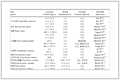
3 Results 3.1 Habitat HeterogeneityIn this study, the average water depth was 22.4 m (13.7- 37.9 m, Table 1). The shallowest water depth appeared at station B001 in northeast Liaodong Bay, with a depth of 13.7 m, while the deepest water depth was observed at station B008 near the Bohai Strait, with a depth of 37.9 m (Table 1). The bottom water temperature (BWT) decreased with increasing water depth. The BWT varied from 18.8℃ to 25.8℃, and a decreasing gradient of BWT was observed from west to east in the study area (Fig. 2). Bottom water salinity (BWS) remained stable (30.0-31.7) and declined from the coastal area to the strait (Fig. 2). Close relationships between water depth and BWT (R = -0.831, P < 0.01), and BWS (R = 0.437, P < 0.01) were observed.
|
Table 1 Environmental variables and meiofaunal metrics in the Bohai Sea |

|
Fig. 2 Distribution patterns of bottom water temperature (BWT), bottom water salinity (BWS), sediment medium grain size (MDΦ), organic matter content (OM), chlorophyll-a (Chl-a) and pheophytin-a (Pheo-a) concentrations in the Bohai Sea. |
Most of the sediment studied appeared with a silt-clay fraction of 29%-99% and medium grain size (MDΦ) value of 2.9-6.9. The MDΦ values at station B018 were extraordinarily low (2.9), and the sediment mainly consisted of sand (71%, Table 1). In general, an obvious seaward gradient of sediment MDΦ values, from the north and west coastal area to the strait, was observed (Fig. 2). Silt-clay content exhibited in a trend similar to that of MDΦ, and was negatively correlated with water depth (R = -0.490, P < 0.05). OM content was 1.34%±0.72% on average. Two areas with high OM were found. Their centers were station B004 and station B011 (Fig. 2). Close relationships between OM and sediment silt-clay content (R = 0.648, P < 0.01), and MDΦ (R = 0.784, P < 0.01) were detected. The average concentrations of sediment Chl-a and Pheo-a were 0.73±0.57 μg g-1 and 2.40±1.47 μg g-1, respectively. The highest value was observed at station B008 which was located north of the Bohai strait (Fig. 2). The distribution trend of sediment Pheo-a concentration was consistent with that of Chl-a. A close relationship was observed between Chl-a and Pheo-a (R = 0.995, P < 0.01).
The environmental variables are summarized for the different sea areas surveyed (Table 1). No significant differences were observed in WD, sediment silt-clay proportion, MDΦ, OM content, Chl-a and Pheo-a concentrations among the BHB, CBS, and LDB areas based on ANOVA analyses (all P > 0.05). However, BWT (P < 0.05) and BWS (P < 0.05) differed significantly among the three areas based on Welch test.
3.2 Meiofaunal AssemblageThe average meiofaunal abundance was 1299±788 ind (10 cm2)-1. The lowest meiofaunal abundance was found at station B014 (121±89 ind (10 cm2)-1), which was at the mouth of Bohai Bay (Table 2). In comparison, the highest value was observed at station B021 near the Bohai Strait with an average abundance of 3042±1054 ind (10 cm2)-1. In general, meiofaunal abundance was considerably lower (less than 1000 ind (10 cm2)-1) in the west, namely the areas of Bohai Bay and adjacent to Laizhou Bay, while the area near the Bohai Strait was a hotspot of meiofaunal distribution, with abundances higher than 2000 ind (10 cm2)-1. One-way ANOVA results did not reveal significant difference in meiofaunal abundance (F = 0.135, P > 0.05) among BHB, CBS, and LDB areas.
|
|
Table 2 Meiofaunal metrics at study stations |
A total of 20 meiofauna with higher taxa were identified: Nematoda, Copepoda, Polychaeta, Ostracoda, Bivalvia, Gastropoda, Kinorhyncha, Turbellaria, Halacaroidea, Oligochaeta, Amphipoda, Tanaidacea, Isopoda, Decapod, Cumacea, Cladocera, Hydrozoa, Ophiuroidea, Tardigrada, and Insecta. The dominant group was Nematoda, accounting for 90.8% of total meiofaunal abundance on average, followed by Copepoda (3.6%), Bivalvia (3.1%), Polychaeta (1.0%), Kinorhyncha (0.4%), and Ostracoda (0.2%). The cumulative contribution of the remaining taxa was 0.9%.
CLUSTER and SIMPROF analysis (at 1% significance level) of the meiofaunal assemblage revealed that study stations can be divided into two groups at 70% similarity level (Fig. 3). The stations of Bohai Bay (Stations B010, B026) and the stations adjacent to Laizhou Bay (B014, B015, B16, B020, B022) are aggregated together as group A, while the stations in the central and northern parts of the Bohai Sea are aggregated together as group B, indicating significant differences in meiofaunal assemblages between these two areas.

|
Fig. 3 Cluster analysis of meiofaunal assemblages. ○ indicates group A; ▲ indicates group B. |
One-way ANOVA results did not reveal any significant difference in the abundance of major meiofaunal taxa among the BHB, CBS, and LDB study areas. However, it revealed that nematode abundance was significantly higher in the central and northern parts of the Bohai Sea (group B) than the areas of Bohai Bay and adjacent to Laizhou Bay (group A) (F = 8.128, P < 0.01). In addition, the abundance of copepods (F = 37.821, P < 0.01), polychaetes (F = 4.523, P < 0.05), and bivalves (F = 16.192, P < 0.01) in group B were significantly higher than those in group A (Fig. 4). Ostracoda and Kinorhyncha were recorded at limited stations and did not show significant differences between two station groups (F = 2.957 and 2.084, P > 0.05) (Fig. 4).

|
Fig. 4 Abundance (ind (10 cm2)-1) of major meiofaunal taxa. Group A, the area of Bohai Bay and the area adjacent to Laizhou Bay; Group B, the central and northern parts of the Bohai Sea. |
Meiofaunal diversity indices of the studied stations are presented in Table 2. Margalef's richness index (d) revealed the highest value (3.1) at station B025, while the lowest value (1.1) was at station B016. The Shannon-Wiener diversity index (H′) was the highest (1.8) at stations B003 and B025, and the lowest (0.7) at station B016. Pielou's evenness index (J′) showed that the highest value (0.8) appeared at station B003, while the lowest value (0.4) was at station B016. According to the one-way ANOVA results, the number of taxa (F = 14.787, P < 0.01), d (F = 8.076, P < 0.01) and H′ (F = 13.404, P < 0.01) at stations in the areas of Bohai Bay and adjacent to Laizhou Bay (group A) were significantly lower than at the stations in the central and northern parts of the Bohai Sea (group B). J′ did not show significant differences between the two station groups. In addition, the one-way ANOVA results showed significant differences in J′ (F = 7.619, P < 0.01) and H′ (F = 6.870, P < 0.01) among the LZB, CBS, and LDB areas, indicating significant differences in meiofaunal diversity across different areas.
3.4 Correlation Between Meiofaunal Data and Environmental VariablesCorrelation analysis of the meiofauna abundance and diversity indices with environmental variables was performed to understand the key factors influencing the meiofaunal distribution and diversity (Table 3). There were significant negative correlations between sediment silt-clay content (or MDΦ) and the abundance of nematodes, copepods, polychaetes, and bivalves, respectively. The abundance of copepods was positively correlated with water depth, Chl-a and Pheo-a concentrations, and negatively correlated with BWT. Bivalve abundance was negatively correlated with BWT and positively correlated with water depth. Diversity indices d, H' and number of taxa were significantly negatively correlated with the silty-clay content or MDΦ (Table 3). In addition, diversity indices H' and J' were significantly positively correlated with bottom water salinity.
|
|
Table 3 Relative coefficients between meiofaunal abundance/diversity and environmental factors |
The BIOENV result indicated that the best explanation for the meiofaunal composition (R = 0.315) was the combination of BWT, BWS, silt-clay content, and MDΦ. The silt-clay content was included in all ten of the best combinations.
3.5 Ecological Quality Assessment Based on Meiofaunal MetricsThe Ne: Co ratio fluctuated from 6.5 to 237.5 (Table 2). It was lower than 50 at most stations (68% of studied stations). Among the seven stations (B006, B011, B015, B016, B020, B022, B023) with a ratio higher than 50, two stations (station B015 and B016) showed extraordinarily high Ne: Co ratios (> 200). According to thresholds suggested by Raffaelli and Mason (1981 and Sutherland et al. (2007, the seven stations were slightly to moderately contaminated in the Bohai Sea.
Based on the meiofaunal richness, the ecological quality was classified from poor (5-7 taxa) to moderate (8-11 taxa) at most studied stations. The ecological quality of stations in the central part and Liaodong Bay was moderate, while the quality of stations B010, B014, B015, B016, B022, and B026 was poor.
4 Discussion 4.1 The Influencing Factors of the Meiofauna Spatial Distribution and Diversity in the Bohai SeaEnvironmental factors are essential for the spatial distribution and diversity of the meiofaunal community. Habitat heterogeneity in the study area is considered to be responsible for the variations of the meiofaunal distribution and diversity. According to this study, the environmental variables of the Bohai Sea were heterogeneous, and a significant difference between the coastal area and offshore area was observed. It is noteworthy that more than 40 rivers flow into the Bohai Sea. A huge amount of fresh water, sediment, and pollutants are carried into the Bohai Sea by these rivers. The annual water discharge is 68.5 × 10⁹ m3, the annual suspended matter load is 1.1 × 10⁹ t (Song and Duan, 2019), and the annual pollutant discharge from rivers is 1.2 × 10⁶ t (SOAC, 2010). The Huanghe river contributed no less than 50% of the water and 90% of the suspended matter load (Song and Duan, 2019). In fact, the environmental heterogeneity in the study area highlighted the obvious effects of the Huanghe river discharge and land-based pollution. Meiofauna abundance and diversity indices were significantly lower in the area adjacent to the Huanghe submarine delta area.
Sediment grain size is the primary factor influencing meiofaunal abundance and species composition (Coull, 1988). With increasing sediment grain size, the heterogeneity and the meiofaunal diversity increased (Wieser, 1960; Hopper and Meyer, 1967). According to previous studies conducted in the Bohai Sea, the abundance or diversity of meiofauna, especially free-living nematodes, was highly positively correlated with sediment grain size (Guo et al., 2001a, 2002; Mu et al., 2001; Zhang et al., 2001a; He et al., 2019). Similar results were observed in the Yellow Sea (Xu et al., 2016a). In this study, the abundance of nematodes, copepods, polychaetes, bivalves, the Ne: Co ratio, and the diversity indices d, H' and J' were all negatively correlated with silt-clay content and sediment MDΦ. The lowest abundance (< 500 ind (10 cm2)-1) and richness (number of taxa < 8) were observed at stations with higher fractions of silt and clay. These stations were also located nearest to the Huanghe submarine delta area in the present study. On the one hand, the fractions of silt and clay were high in this area because of the sediments carried into the sea. Muddy sediments generally have lower oxygen availability than sandy sediments. Some meiofauna taxa, e.g., most of copepods, are sensitive to oxygen depletion, which restricts their occurrence in many sediments (Murrell and Fleeger, 1989; Hua et al., 2006). On the other hand, the sedimentary environment in this area was unstable and was characterized by a high sedimentation rate, a high concentration of suspended matter, and high turbidity. In summer, affected by the river plume, suspended sediments were mostly concentrated in the southern Bohai Sea particularly around the Huanghe submarine delta (Wang et al., 2014). Due to such peculiarities, the photosynthesis of phytoplankton and benthic algae was restricted, which eventually led to lower meiofaunal abundance (Shi et al., 2015). Low Chl-a and Pheo-a concentrations and low OM content at these stations indicated lower food availability in this area. Furthermore, the amount of pollutants entering the sea has increased with the rapid development of industry and population growth in the Bohai Sea hinterland over decades. Discharge from the rivers is, at present, the most important source of pollutants, accounting for more than 80% of the total amount (Song and Duan, 2019). Those pollutants diffuse from the near shore area to the deeper waters further out. Silty-clay sediment facilitates the accumulation of pollutants including metals (Xu et al., 2016b). High values of lead (Pb) and copper (Cu) in summer were documented in the area near the Huanghe river estuary (Liu et al., 2016). This is the same area where low meiofaunal abundance and diversity were recorded in the present study. All this leads to the conclusion that sediment granularity plays an important role in governing meiofaunal community distribution and diversity in the Bohai Sea.
Sediment Chl-a and Pheo-a concentrations were also responsible for the spatial distributions of meiofauna, especially copepods, in the Bohai Sea. Chl-a and Pheo-a are essential for meiofauna and indicate food availability. Generally, meiofauna appeared abundant and diverse in areas with high Chl-a concentration (Liu et al., 2007b; Hua et al., 2009a; Semprucci et al., 2010; Hua et al., 2014). In this study, very high values of Chl-a and Pheo-a concentrations were observed in the central part of the Bohai Sea, representing rich food sources there. Accordingly, the abundance of nematodes, copepods, polychaetes, and bivalves was high in this area. The close relationship between copepods' abundance and chloroplast pigments was prominent, indicating the effects of chloroplast pigments on copepod distribution in the Bohai Sea. Many copepods, such as harpacticoids, have been shown to graze on fresh planktonic diatoms that sink to the sediment surface (Giere, 2009). It was reported that the distributions of diatomfeeding species were closely correlated with patches of microphytobenthos (De Troch et al., 2003). Thus, the food sources indicated by sediment chloroplast pigments determined the spatial distribution of these animals.
According to the results of our study, the abundance of copepods and bivalves was positively correlated with water depth. Mu et al. (2001 also reported a positive correlation between water depth and meiofaunal abundance in the Bohai Sea. As stated by Schrazberger et al. (2004, water depth may critically influence meiofaunal community structure because it affects the quantity and quality of carbon deposited on the sea-floor. However, water depth in the study area was quite shallow and was unlikely to limit the quantity of fresh planktonic diatoms sinking to the sediment. Instead, another water depth-related factor, namely the silt-clay content, might be a stronger cause of the variations of meiofaunal distribution and diversity in the Bohai Sea.
4.2 Assessment of Ecological Quality Based on Meiofaunal FeaturesThe area surrounding the Bohai Sea is the financial center of northern China. Rapid economic development along the coast has brought sub-healthy or unhealthy conditions in the estuary and bay ecosystems (SOAC, 2010-2017). High metal concentrations have been reported in the Bohai Sea (Liu et al., 2015a, 2016; Li et al., 2018). In addition, the Bohai Sea is in a potentially P-limited eutrophic state because of strengthening anthropogenic perturbations over decades (Zhang et al., 2017a; Xin et al., 2019). Species diversity in the phytoplankton and benthic communities has decreased (Liu et al., 2011; Xu et al., 2011). Changing community structures both in pelagic and benthic habitats have also been observed over decades (Shan et al., 2016; Zhang et al., 2017a; Xin et al., 2019). All the data indicates that the Bohai Sea ecosystem is facing complex pressures, and the ecological status is deteriorating. An ecological quality bioassessment using macrofaunal indicators revealed a slight to moderate disturbance status in the Bohai Sea (Ni et al., 2019).
Meiofaunal community structure is a useful indicator in health assessment activities in coastal marine ecosystems (Danovaro et al., 2004; Balsamo et al., 2012; Moens et al., 2014; Zeppilli et al., 2015; Semprucci et al., 2016). In the present study, meiofaunal richness and Ne: Co ratio were used to assess the ecological quality of the Bohai Sea. Based on meiofaunal richness, the ecological quality of most stations was ranked as moderate, while two stations in Bohai Bay and four stations adjacent to Laizhou Bay were ranked as poor. The metrics examined in the present study also shows a poor ecological quality of the Bohai Sea. Meiofaunal richness has often been used to evaluate environmental quality (Herman et al., 1985; Danovaro et al., 2004; Semprucci et al., 2016). However, there are limitations in this method as meiofaunal richness can be affected by seasonal variations (Pusceddu et al., 2007; Semprucci et al., 2016). In the present study, sampling was conducted in one season, which avoided potential bias in the estimations. Therefore, the assessment of ecological quality in the Bohai Sea based on meiofaunal richness was quite reliable. In addition, the aggregated results for the different stations, based on the number of meiofauna taxa, were highly consistent with the findings obtained from cluster analyses and diversity indices d and H', which suggests that the various meiofaunal metrics provide similar insights in ecological quality assessments in the Bohai Sea and can be applied as ecological status indicators.
According to the Ne: Co ratio, most of the 22 study stations were uncontaminated, five stations were slightly contaminated, and two were moderately contaminated. The poor ecological quality status in stations B015, B016, and B022, which are located outside Laizhou Bay, can be shown by both meiofaunal metrics. The application of the Ne: Co ratio in environmental quality assessment is still controversial. Its use as a pollution indicator is argued by some researchers because it oversimplifies a highly complex set of interactions, and is strongly affected by a variety of environmental parameters, e.g., water depth and sediment grain size (Coull et al., 1981; Warwick, 1981; Lambshead, 1984; Gee et al., 1985; Raffaelli, 1987). Studies in Bohai Bay revealed that the Ne: Co ratio is a potentially useful tool in marine sediment quality assessments (Liu et al., 2015b). In the present study, the Ne: Co ratio did not have any significant correlations with the environmental variables in studied stations. Other environmental variables, e.g., pollutants, might be responsible for the variation in Ne: Co ratio in the Bohai Sea. The reliability of the ratio in pollution assessment in the Bohai Sea can neither be validated nor refuted based on the findings of the present study. Nevertheless, it indicates disturbed ecological status in the area adjacent to Laizhou Bay, which is consistent with the findings based on meiofaunal richness.
Although both of the meiofaunal metrics examined in the present study indicated disturbed ecological status in the same area, there is uncertainty with regard to the major sources of disturbance in the study area. On the one hand, this might be because there is a relationship with another environmental variable, e.g., pollutants, which was not analyzed in the present study. On the other hand, the quantitative distribution of meiofauna was correlated with different environmental factors, while the environmental factors were correlated and potentially interacted with each other, which increased the difficulty of determining the source of the disturbance. However, meiofaunal community metrics still can provide valuable information regarding ecosystem health even when the source of disturbance has not been determined.
5 ConclusionsMeiofaunal abundance and diversity indices varied spatially in the Bohai Sea. They were significantly low at the stations adjacent to the area seriously affected by the Huanghe river. Environmental variables such as sediment granularity and Chl-a concentrations are the key factors influencing the meiofaunal distribution and variation in the Bohai Sea. The ecological quality of the Bohai Sea is evaluated from poor to moderate according to the meiofaunal metrics. Most stations in the central and northern parts of the Bohai Sea are not obviously contaminated, and their ecological quality is moderate. Several stations significantly affected by the Huanghe river are slightly or moderately contaminated, and the ecological quality is poor. It is necessary to evaluate the efficiency of the meiofaunal metrics as assessment tools over a more extensive range. It is also necessary to analyze the meiofaunal metrics in areas under different disturbances or stresses to establish reference conditions.
AcknowledgementsThis study was supported by the Fundamental Research Funds for the Central Universities (No. 201964024) and the National Natural Science Foundation of China (No. 41976131 and No. 40906063). We appreciate Mr. Song Feng, Ms. Xin Ma, and Ms. Fengfeng Xu and all members of the Laboratory Benthos for their assistance in sampling and processing. We would like to thank Editage (www. editage.cn) for English improving of the manuscript.
Albertellli, G., Chiantore, M., Harriague, A. C., Danovaro, R. and Croce, N. D., 1999. Community experiments using benthic chambers: 2. Meio- and macrofaunal community structure and metabolism. Chemistry and Ecology, 16(1): 51-66. DOI:10.1080/02757549908037637 (  0) 0) |
Alves, A. S., Adão, H., Ferrero, T. J., Marques, J. C., Costa, M. J. and Patrício, J., 2013. Benthic meiofauna as indicator of ecological changes in estuarine ecosystems: The use of nematodes in ecological quality assessment. Ecological Indicators, 24: 462-475. DOI:10.1016/j.ecolind.2012.07.013 ( 0) |
Alves, A. S., Caetano, A., Costa, J. L., Costa, M. J. and Marques, J. C., 2015. Estuarine intertidal meiofauna and nematode communities as indicator of ecosystem's recovery following mitigation measures. Ecological Indicators, 54: 184-196. DOI:10.1016/j.ecolind.2015.02.013 ( 0) |
Balsamo, M., Semprucci, F., Frontalini, F., and Coccioni, R., 2012. Meiofauna as a tool for marine ecosystem biomonitoring. In: Marine Ecosystems. Cruzado, A., ed., Tech Publisher, 77-104.
( 0) |
Bevilacqua, S., Sandulli, R., Plicanti, A. and Terlizzi, A., 2012. Taxonomic distinctness in Mediterranean marine nematodes and its relevance for environmental impact assessment. Marine Pollution Bulletin, 64: 1409-1416. DOI:10.1016/j.marpolbul.2012.04.016 ( 0) |
Bianchelli, S., Buschi, E., Danovaro, R. and Pusceddu, A., 2018. Nematode biodiversity and benthic trophic state are simple tools for the assessment of the environmental quality in coastal marine ecosystems. Ecological Indicators, 95: 270-287. DOI:10.1016/j.ecolind.2018.07.032 ( 0) |
Bianchelli, S., Pusceddu, A., Buschi, E. and Danovaro, R., 2016. Trophic status and meiofauna biodiversity in the Northern Adriatic Sea: Insights for the assessment of good environmental status. Marine Environmental Research, 113: 18-30. DOI:10.1016/j.marenvres.2015.10.010 ( 0) |
Chen, C. A., Soo, C. L., Balsamo, M. and Semprucci, F., 2018. An approach based on nematode descriptors for the classification of ecological quality (EcoQ) of the Malaysian coasts. Marine Biodiversity, 48: 117-126. DOI:10.1007/s12526-017-0813-1 ( 0) |
Coull, B. C., 1988. Ecology of the marine meiofauna. In: Introduction to the Study of Meiofauna. Higgins, R. P., and Thiel, H., eds., Smithsonian Institution Press, Washington, DC, 18-38.
( 0) |
Coull, B. C., Hicks, G. R. F. and Wells, J. B. J., 1981. Nematode/copepod ratios for monitoring pollution: A rebuttal. Marine Pollution Bulletin, 12(11): 378-381. DOI:10.1016/0025-326X(81)90408-2 ( 0) |
Danovaro, R., Gambi, C., Manini, E. and Fabiano, M., 2000. Meiofauna response to a dynamic river plume front. Marine Biology, 137(2): 359-370. DOI:10.1007/s002270000353 ( 0) |
Danovaro, R., Gambi, C., Mirto, S., Sandulli, R., and Ceccherelli, V. U., 2004. Meiofauna. In: Mediterranean Marine Benthos: A Manual of Methods for Its Sampling and Study. Gambi, M. C., and Dappiano, M., eds., Biologia Marina Mediterranea, 11: 55-97.
( 0) |
De Leonardis, C., Sandulli, R., Vanaverbeke, J., Vincx, M. and de Zio, S., 2008. Meiofauna and nematode diversity in some Mediterranean subtidal areas of the Adriatic and Ionian Sea. Scientia Marina, 72(1): 5-13. ( 0) |
De Troch, M., Fiers, F. and Vincx, M., 2003. Niche segregation and habitat specialisation of harpacticoid copepods in a tropical seagrass bed. Marine Biology, 142(2): 345-355. DOI:10.1007/s00227-002-0958-7 ( 0) |
Fabbrocini, A., Guarino, A., Scirocco, T., Franchi, M. and D'Adamo, R., 2005. Integrated biomonitoring assessment of the Lesina Lagoon (Southern Adriatic Coast, Italy): Preliminary results. Chemistry and Ecology, 21(6): 479-489. DOI:10.1080/02757540500438623 ( 0) |
Gao, X. L., Zhou, F. X. and Chen, C. T. A., 2014. Pollution status of the Bohai Sea: An overview of the environmental quality assessment related trace metals. Environment International, 62: 12-30. DOI:10.1016/j.envint.2013.09.019 ( 0) |
Gee, J. M., Warwick, R. M., Schaanning, M., Berge, J. A. and Ambrose, W. G., 1985. Effects of organic enrichment on meiofaunal abundance and community structure in sublittoral soft sediments. Journal of Experimental Marine Biology and Ecology, 91: 247-262. DOI:10.1016/0022-0981(85)90179-0 ( 0) |
Giere, O., 2009. Meiobenthology: The Microscopic Motile Fauna of Aquatic Sediments. 2nd edition. Springer-Verlag, Berlin, 527pp.
( 0) |
Guo, Y. Q., Somerfield, P. J., Warwick, R. M. and Zhang, Z. N., 2001a. Large-scale patterns in the community structure and biodiversity of freeliving nematodes in the Bohai Sea, China. Journal of the Marine Biological Association of the United Kingdom, 81: 755-763. DOI:10.1017/S0025315401004568 ( 0) |
Guo, Y. Q., Zhang, Z. N. and Mu, F. H., 2001b. Biomass of meiofenthic in the Bohai Sea, China. Acta Oceanologica Sinica, 20(3): 435-442. ( 0) |
Guo, Y. Q., Zhang, Z. N. and Mu, F. H., 2002. Large-scale patterns of meiofaunal abundance in the Bohai Sea. Acta Oceanologica Sinica, 22(9): 1463-1469 (in Chinese with English abstract). ( 0) |
He, L., Hua, E., Liu, X. S. and Zhang, Z. N., 2019. Meiofauna assemblage composition and distribution in the Bohai Sea during summer and autumn. Acta Ecologica Sinica, 39(8): 2794-2805 (in Chinese with English abstract). ( 0) |
Herman, R., Vincx, M., and Heip, C., 1985. Meiofauna of the Belgian coastal water: Spatial and temporal variability and productivity. In: Concerted Actions Oceanography. Final Report, vol 3, Biological Processes and Translocations. Heip, C., and Polk, P. H., eds., Belgium Ministry of Science Policy, Brussels, 65-80.
( 0) |
Higgins, R. P., and Thiel, H., 1988. Introduction to the Study of Meiofauna. Smithsonian Institution Press, Washington, DC, 488pp.
( 0) |
Hopper, B. E. and Meyers, S. P., 1967. Population studies on benthic nematodes within a subtropical seagrass community. Marine Biology, 1(2): 85-96. DOI:10.1007/BF00386510 ( 0) |
Hu, G. K. and Zhang, Q. T., 2012. Study on relationship between community of marine free-living nematode and environmental factors. Marine Science Bulletin, 31(4): 415-420 (in Chinese with English abstract). ( 0) |
Hua, E., Zhang, Z. N. and Zhang, Y., 2006. Meiofauna distributions at the oxygen minimum zone (OMZ) in Changjiang (Yangtze River) Estuary waters. Acta Oceanologica Sinica, 25(5): 120-134. ( 0) |
Hua, E., Zhang, Z. N. and Zhang, Y., 2009a. Environmental factors affecting nematode community structure in the Changjiang Estuary and its adjacent waters. Journal of the Marine Biological Association of the United Kingdom, 89(1): 109-117. DOI:10.1017/S0025315408002361 ( 0) |
Hua, E., Zhang, Z. N., Fan, S. L. and Liu, H. B., 2009b. Study on the use of meiofauna parameters to assess heavy metal pollution in sediments. Periodical of Ocean University of China, 39(3): 429-436 (in Chinese with English abstract). ( 0) |
Hua, E., Zhang, Z. N., Zhou, H. and Liu, X. S., 2014. Biodiversity of free-living marine nematodes in the Yangtze River Estuary and its adjacent waters. Proceedings of the Biological Society of Washington, 127(1): 23-34. DOI:10.2988/0006-324X-127.1.23 ( 0) |
Lambshead, P. J. D., 1984. The nematode/copepod ratio. Some anomalous results from the firth of Clyde. Marine Pollution Bulletin, 15: 256-259. DOI:10.1016/0025-326X(84)90365-5 ( 0) |
Lee, M. R., Correa, J. A. and Castilia, J. C., 2001. An assessment of the potential use of the nematode to copepod ratio in the monitoring of metals pollution. The Chanaral case. Marine Pollution Bulletin, 42(8): 696-701. DOI:10.1016/S0025-326X(00)00220-4 ( 0) |
Li, H. J., Gao, X. L., Gu, Y. B., Wang, R. R., Xie, P. F., Liang, M., Ming, H. X. and Su, J., 2018. Comprehensive large-scale investigation and assessment of trace metal in the coastal sediments of Bohai Sea. Marine Pollution Bulletin, 129(1): 126-134. DOI:10.1016/j.marpolbul.2018.02.022 ( 0) |
Liu, C. L., Zhu, Z. G., He, X. L., Zhang, B. and Xia, N., 2007a. Rapid determination of organic carbon in marine sediment samples by potassium dichromate oxidation-ferrous sulphate titrimetry. Rock and Mineral Analysis, 26(3): 205-208. ( 0) |
Liu, H., Wu, Y. P., Gao, S. D. and Zhang, Z. N., 1998. The variations of chlorophyll-a and phaeophytin in the sediment of Jimo shrimp pond before the outbreak of shrimp disease. Transactions of Oceanology and Limnology, 1: 65-69 (in Chinese with English abstract). ( 0) |
Liu, M., Zhang, A. B., Liao, Y. J., Chen, B. and Fan, D. J., 2015a. The environment quality of heavy metals in sediments from the central Bohai Sea. Marine Pollution Bulletin, 100(1): 534-543. DOI:10.1016/j.marpolbul.2015.09.001 ( 0) |
Liu, X. S., Huang, D. M., Zhu, Y. M., Chang, T. Y., Liu, Q. H., Huang, L., Zhao, W., Lin, K. X. and Liu, L. S., 2015b. Bioassessment of marine sediment quality using meiofaunal assemblages in a semi-enclosed bay. Marine Pollution Bulletin, 100(1): 92-101. DOI:10.1016/j.marpolbul.2015.09.024 ( 0) |
Liu, X. S., Jiang, X., Liu, Q. H., Teng, A. K. and Xu, W. Z., 2016. Distribution and pollution assessment of heavy metals in surface sediments in the central Bohai Sea, China: A case study. Environmental Earth Sciences, 75(5): 364. DOI:10.1007/s12665-015-5200-2 ( 0) |
Liu, X. S., Zhang, Z. N. and Huang, Y., 2007b. Sublittoral meiofauna with particular reference to nematodes in the southern Yellow Sea, China. Estuarine, Coastal and Shelf Science, 71(3): 616-628. ( 0) |
Lorenzen, C. J. and Jeffrey, S. W., 1980. Determination of chlorophyll in seawater. Unesco Technical Papers in Marine Science, 35: 1-20. ( 0) |
Moens, T., Braeckman, U., Derycke, S., Fonseca, G., Gallucci, F., Gingold, R., Guilini, K., Ingels, J., Leduc, D., Vanaverbeke, J., Van Colen, C., Vanreusel, A., and Vincx, M., 2014. Ecology of free-living marine nematodes. In: Handbook of Zoology. Schmidt-Rhaesa, A., ed., De Gruyter, Berlin, 109-152.
( 0) |
Mu, F. H., Zhang, Z. N. and Guo, Y. Q., 2001. Abundance and biomass of the benthic meiofauna in the Bohai Sea. Journal of Ocean University of China, 31(6): 897-905 (in Chinese with English abstract). ( 0) |
Murrell, M. C. and Fleeger, J. W., 1989. Meiofauna abundance on the Gulf of Mexico continental shelf affected by hypoxia. Continental Shelf Research, 9: 1049-1062. DOI:10.1016/0278-4343(89)90057-5 ( 0) |
Ni, D. P., Zhang, Z. N. and Liu, X. S., 2019. Benthic ecological quality assessment of the Bohai Sea, China using marine bioticindices. Marine Pollution Bulletin, 142: 457-464. DOI:10.1016/j.marpolbul.2019.03.055 ( 0) |
Pu, S. C., Shi, B. Z., Zhang, G. T. and Xu, K. D., 2018. Meiofaunal community structure and environmental conditions in Laizhou Bay and the Muping offshore area in summer. Marine Sciences, 42(4): 101-111 (in Chinese with English abstract). ( 0) |
Pusceddu, A., Bianchelli, S., Gambi, C. and Danovaro, R., 2011. Assessment of benthic trophic status of marine coastal ecosystems: Significance of meiofaunal rare taxa. Estuarine, Coastal and Shelf Science, 93(4): 420-430. DOI:10.1016/j.ecss.2011.05.012 ( 0) |
Pusceddu, A., Gambi, C., Manini, E. and Danovaro, R., 2007. Trophic state, ecosystem efficiency and biodiversity of transitional aquatic ecosystems: Analysis of environmental quality based on different benthic indicators. Chemistry and Ecology, 23(6): 505-515. DOI:10.1080/02757540701760494 ( 0) |
Raffaelli, D. G. and Mason, C. F., 1981. Pollution monitoring with meiofauna, using the ratio of nematodes to copepods. Marine Pollution Bulletin, 12(5): 158-163. DOI:10.1016/0025-326X(81)90227-7 ( 0) |
Raffaelli, D., 1987. The behaviour of the Nematode/Copepod ratio in organic pollution studies. Marine Environmental Research, 23(2): 135-152. DOI:10.1016/0141-1136(87)90042-0 ( 0) |
Sandulli, R., De Leonardis, C. and Vanaverbeke, J., 2010. Meiobenthic communities in the shallow subtidal of three Italian marine protected areas. Italian Journal of Zoology, 77(2): 186-196. DOI:10.1080/11250000903476616 ( 0) |
Sandulli, R., De Leonardis, C., Vincx, M. and Vanaverbeke, J., 2011. Geographical and depth-related patterns in nematode communities from some Italian Marine Protected Areas. Italian Journal of Zoology, 78(4): 505-516. DOI:10.1080/11250003.2011.560580 ( 0) |
Schratzberger, M. and Ingels, J., 2018. Meiofauna matters: The roles of meiofauna in benthic ecosystems. Journal of Experimental Marine Biology and Ecology, 502: 12-25. DOI:10.1016/j.jembe.2017.01.007 ( 0) |
Schratzberger, M., Whomersley, P., Kilbride, R. and Rees, H. L., 2004. Structure and taxonomic composition of subtidal nematode and macrofauna assemblages at four stations around the UK coast. Journal of the Marine Biological Association of the United Kingdom, 84(2): 315-322. DOI:10.1017/S0025315404009208h ( 0) |
Semprucci, F., Balsamo, M. and Frontalini, F., 2014a. The nematode assemblage of a coastal lagoon (Lake Varano, southern Italy): Ecology and biodiversity patterns. Scientia Marina, 78(4): 579-588. DOI:10.3989/scimar.04018.02A ( 0) |
Semprucci, F., Balsamo, M. and Sandulli, R., 2016. Assessment of the ecological quality (EcoQ) of the Venice lagoon using the structure and biodiversity of the meiofaunal assemblages. Ecological Indicators, 67: 451-457. DOI:10.1016/j.ecolind.2016.03.014 ( 0) |
Semprucci, F., Balsamo, M., Appolloni, L. and Sandulli, R., 2017. Assessment of ecological quality status along the Apulian coasts (Eastern Mediterranean Sea) based on meiobenthic and nematode assemblages. Marine Biodiversity, 48(1): 101-115. ( 0) |
Semprucci, F., Boi, P., Manti, A., Covazzi-Harriague, A., Rocchi, M., Colantoni, P., Papa, S. and Balsamo, M., 2010. Benthic communities along a littoral of the Central Adriatic Sea (Italy). Helgoland Marine Research, 64(2): 101-115. DOI:10.1007/s10152-009-0171-x ( 0) |
Semprucci, F., Colantoni, P., Sbrocca, C., Baldelli, G. and Balsamo, M., 2014b. Spatial patterns of distribution of meiofaunal and nematode assemblages in the Huvadhoo lagoon (Maldives, Indian Ocean). Journal of the Marine Biological Association of the United Kingdom, 94(7): 1377-1385. DOI:10.1017/S002531541400068X ( 0) |
Semprucci, F., Facca, C., Ferrigno, F., Balsamo, M., Sfriso, A. and Sandulli, R., 2019. Biotic and abiotic factors affecting seasonal and spatial distribution of meiofauna and macrophytobenthos in transitional coastal waters. Estuarine, Coastal and Shelf Science, 219: 328-340. DOI:10.1016/j.ecss.2019.02.008 ( 0) |
Shan, X. J., Jin, X. S., Dai, F. Q., Chen, Y. L., Yang, T. and Yao, J. P., 2016. Population dynamics of fish species in a marine ecosystem: A case study in the Bohai Sea, China. Marine and Coastal Fisheries, 8(1): 100-117. DOI:10.1080/19425120.2015.1114543 ( 0) |
Shi, B. Z., Yu, T. T. and Xu, K. D., 2015. Abundance and biomass of meiofauna in the Yangtze Estuary and East China Sea in summer, with special reference to changes over the past ten years. Acta Ecologica Sinica, 35(9): 3093-3103 (in Chinese with English abstract). ( 0) |
Song, J. M., and Duan, L. Q., 2019. The Bohai Sea. In: World Seas: An Environmental Evaluation. Volume Ⅱ: The Indian Ocean to the Pacific. Academic Press, United Kingdom, 377-394, https://doi.org/10.1016/B978-0-08-100853-9.00024-5.
( 0) |
State Oceanic Administration People's Republic of China (SOAC), 2002-2017. Bulletin of China's marine environment status in 2002-2017. State Oceanic Administration, People's Republic of China, Tianjin.
( 0) |
Sutherland, T. F., Levings, C. D., Petersen, S. A., Poon, P. and Piercey, B., 2007. The use of meiofauna as an indicator of benthic organic enrichment associated with salmonid aquaculture. Marine Pollution Bulletin, 54(8): 1249-1261. DOI:10.1016/j.marpolbul.2007.03.024 ( 0) |
Villano, N. and Warwick, R. M., 1995. Meiobenthic communities associated with the seasonal cycle of growth and decay of Ulva rigida Arardh in the Palude Della Rosa, Lagoon of Venice. Estuarine, Coastal and Shelf Science, 41(2): 181-194. DOI:10.1006/ecss.1995.0060 ( 0) |
Wang, B. D., Xin, M., Wei, Q. S. and Xie, L. P., 2018. A historical over view of coastal eutrophication in the China Seas. Marine Pollution Bulletin, 136: 394-400. DOI:10.1016/j.marpolbul.2018.09.044 ( 0) |
Wang, H., Wang, A., Bi, N., Zeng, X. and Xiao, H., 2014. Seasonal distribution of suspended sediment in the Bohai Sea, China. Continental Shelf Research, 90: 17-32. DOI:10.1016/j.csr.2014.03.006 ( 0) |
Warwick, R. M., 1981. The nematode/copepod ratio and its use in pollution ecology. Marine Pollution Bulletin, 12(10): 329-333. DOI:10.1016/0025-326X(81)90105-3 ( 0) |
Wieser, W., 1960. Benthic studies in Buzzards Bay Ⅱ. The meiofuana. Limnology and Oceanography, 5(2): 121-137. DOI:10.4319/lo.1960.5.2.0121 ( 0) |
Xin, M., Wang, B. D., Xie, L. P., Sun, X., Wei, Q. S. and Liang, S. K., 2019. Long-term changes in nutrient regimes and their ecological effects in the Bohai Sea, China. Marine Pollution Bulletin, 146: 562-573. DOI:10.1016/j.marpolbul.2019.07.011 ( 0) |
Xu, M., Liu, Q. H., Zhang, Z. N. and Liu, X. S., 2016a. Response of free-living marine nematodes to the southern Yellow Sea Cold Water Mass. Marine Pollution Bulletin, 105(1): 58-64. DOI:10.1016/j.marpolbul.2016.02.067 ( 0) |
Xu, X. D., Cao, Z. M., Zhang, Z. X., Li, R. H. and Hu, B. Q., 2016b. Spatial distribution and pollution assessment of heavy metals in the surface sediments of the Bohai and Yellow Seas. Ma- rine Pollution Bulletin, 110: 596-602. DOI:10.1016/j.marpolbul.2016.05.079 ( 0) |
Xu, S. S., 2011. Decline mechanisms of fishery resources in the Bohai Sea under anthropogenic activities. Master thesis. Graduate University of Chinese Academy of Sciences (Institute of Oceanology) (in Chinese with English abstract).
( 0) |
Yang, X. Y., Lin, C. G., Song, X. Y., Xu, M. and Yang, H. S., 2019. Effects of artificial reefs on the meiofaunal community and benthic environment-A case study in Bohai Sea, China. Marine Pollution Bulletin, 140: 179-187. DOI:10.1016/j.marpolbul.2018.12.031 ( 0) |
Zeppilli, D., Sarrazin, J., Leduc, D., Arbizu, P. M., Fontaneto, D., Fontanier, C., Gooday, A. J., Kristensen, R. M., Ivanenko, V. N., Sørensen, M. V., Vanreusel, A., Thébault, J., Mea, M., Allio, N., Andro, T., Arvigo, A., Castrec, J., Danielo, M., Foulon, V., Fumeron, R., Hermabessiere, L., Hulot, V., James, T., Langonne-Augen, R., Bot, T. L., Long, M., Mahabror, D., Morel, Q., Pantalos, M., Pouplard, E., Raimondeau, L., Rio-Cabello, A., Seite, S., Traisnel, G., Urvoy, K., Van Der Stegen, T., Weyand, M. and Fernandes, D., 2015. Is the meiofauna a good indicator for climate change and anthropogenic impacts?. Marine Biodiversity, 45(3): 505-535. DOI:10.1007/s12526-015-0359-z ( 0) |
Zhang, Q. T., Wang, X. H. and Hu, G. K., 2010. Evaluation of estimation methods for meiofaunal biomass from a meiofaunal survey in Bohai Bay. Chinese Journal of Oceanology and Limnology, 28(1): 82-87. DOI:10.1007/s00343-010-9262-4 ( 0) |
Zhang, Q. T., Wang, X. H. and Hu, G. K., 2011. Diversity of marine free-living nematode in coastal area of Tianjin, China. Sichuan Journal Zoology, 30(3): 394-397 (in Chinese with English abstract). ( 0) |
Zhang, Q. T., Wang, X. H. and Hu, G. K., 2012a. Study on the vertical distribution of benthic nematode community in sublittoral zone of Bohai Bay, China. Advances in Marine Science, 30(3): 416-422 (in Chinese with English abstract). ( 0) |
Zhang, Q. T., Wang, X. H. and Hu, G. K., 2012b. Study on relativity between benthic nematode and copepod ratio of abundance and environmental factors. Acta Scientiarum Naturalium Univeristatis Nankaiensis, 45(5): 52-57 (in Chinese with English abstract). ( 0) |
Zhang, Q. T., Wang, X. H., Fang, E. J., Ma, W. L. and Hu, . G. K., 2009. Studies on meiofauna abundance in offshore area of Bohai Bay, Tianjin, China. Marine Science Bulletin, 28(2): 57-64 (in Chinese with English abstract). ( 0) |
Zhang, Z. N., Gu, F. and Yu, Z. S., 1990. A study on spatial pattern of marine nematodes in the subaqueous delta of the Huanghe River. Oceanologia et Limnologia Sinica, 21(1): 11-19 (in Chinese with English abstract). ( 0) |
Zhang, Z. N., Li, Y. G., Tu, L. H. and Yu, Z. S., 1989. Preliminary study on the ecology of the benthic meiofauna in the Huanghe River submarine delta and its adjacent water. Oceanologia et Limnologia Sinica, 20(3): 197-208 (in Chinese with English abstract). ( 0) |
Zhang, Z. N., Liu, S. M. and Zhou, H., 2017a. Secondary productivity and biodiversity of benthic organisms in the Bohai Sea. Science Press, Beijing.
( 0) |
Zhang, Z. N., Zhou, H. and Mu, F. H., 2001a. Biodiversity and neutral model analyses on nematode community in Bohai Sea, China. Acta Ecologica Sinica, 21(11): 1808-1814 (in Chinese with English abstract). ( 0) |
Zhang, Z. N., Zhou, H., Guo, Y. Q. and Mu, F. H., 2001b. Comparative study on the nematode community structure in the submarine delta of Huanghe River submarine delta and its adjacent waters. Oceanologia et Limnologia Sinica, 32: 436-444 (in Chinese with English abstract). ( 0) |
Zhang, Z. N., Zhou, H., Hua, E., Mu, F. H., Liu, X. S. and Yu, Z. S., 2017b. Meiofauna study for the forty years in China-Progress and prospect. Oceanologia et Limnologia Sinica, 48(4): 657-671 (in Chinese with English abstract). ( 0) |
Zhou, H., Zhang, Z. N., Liu, X. S., Tu, L. H. and Yu, Z. S., 2007. Changes in the shelf macrobenthic community over large temporal and spatial scales in the Bohai Sea, China. Journal of Marine Systems, 67(3): 312-321. ( 0) |