 2021, Vol. 20


2) Anhui Jiyuan Inspection and Testing Technology Co., Ltd., Hefei 230088, China
Marine sensors are important to the marine industry owing to their advanced technological capabilities, low costs, and a high research value. In recent years, ocean sensors based on new physical or chemical principles have been developed (Petrioli et al., 2015; Molinero-Abad et al., 2018, 2019; Ejeian et al., 2019; Poma et al., 2019). Vigneswaran et al. (2018 developed a salinity sensor, and Zhao et al. (2019 developed a fiber reflection probe based on photonic crystal fibers for seawater salinity, temperature, and pressure detection. Additionally, Staudinger et al. (2019 developed a new pH sensor material based on optical principles with great speed and stability. However, most of these new sensors have not been stereotyped, in part because their reliability, accuracy, stability, and environmental adaptability have not been tested in a marine environment. Sufficient field testing is the basic requirement of design stereotyping; however, the working environment of marine instruments is hostile, and monitoring objectives are complex and changeable.
Many sensors have been tested directly in oceans after verification in laboratory settings (Ferreira et al., 2012; Tziortzioti et al., 2019). Venkatesan et al. (2019 developed a marine conductivity and temperature sensor for application in buoys and analyzed its drift characteristics; however, although the sensor was tested at a sea, the test was brief. Zhang et al. (2018 developed an autonomous sensor for measuring the activity concentration of natural and anthropogenic radionuclides in seawater, and it has been applied in Qingdao, China. For stereotyping, assessing product application under all ocean conditions is crucial, especially those that are harsh, which require more rigorous testing.
Shanghai is located in the Yangtze Estuary. The estuary area exhibits high turbidity and the intersection of saline and fresh water because of the injection of abundant sediment from the Yangtze and Qiantang Rivers, as well as because high turbidity produces high nutrient loads. High nutrients easily cause the rapid growth of encrusting organisms, which cause biofouling that results in extreme testing difficulties with respect to the long-term, stable application of sensors. However, comparing sensor performances during real-world applications at a sea is an effective means of verifying the technical capabilities of instrument(s), exposing defects that have not yet been identified in a product, and reducing the risk of future instability caused by the direct application of a sensor without stereotyping (Guo et al., 2018).
The Yangtze Estuary is rich in nutrients and turbidity, and a pronounced salinity gradient is present that varies greatly. These characteristics are favorable for testing the performance of marine sensors, especially their resistance to biofouling and corrosion (Manov et al., 2004; Lei et al., 2017). Thus, this location provides suitable conditions for the construction of test sites. The applicability of a sensor in different environments can be determined via simultaneous testing at multiple points (e.g., in the Yangtze Estuary; Keisuke and Tomowo, 1998). Batch detection is beneficial in shortening detection cycles and test times and is of great value for establishing marine sensor test sites.
To test the relative performances of multiple marine sensors, five stations in the Yangtze Estuary (Fig.1) were selected as test sites. The data and control signal of the five stations required access to an upper cloud platform, especially to supervise the video of biofouling and corrosion in the nutrient-rich environment. As no 4G/5G signaling was available at the Jiuduansha, Nancaodong, and Dajishan stations, we constructed a microwave broadband communication system based on the developed buoy and a shore-based fixed detection device, designed a relevant communication protocol, and constructed a special control board. The high reliability of sensor test data uploading and the supervision of the sensor video and buoy data were based on the Alibaba Cloud Platform. The studied equipment were adapted from the standardized 485 communication protocol, which can easily access different sensors. Selecting new stations according to the requirements of the test objective and realizing a flexible layout were easy due to microwaves, 4G/5G composite communication technologies, and a cloud platform.

|
Fig. 1 Location of marine sensor test sites in the Yangtze Estuary area. Stations: (A) Dajishan; (B) Nancaodong; (C) Jiuduansha; (D) Xiaoyangshan; and (E) Luchaogang. The landing point is denoted as 'L'. The arrows show the transmission pathways. |
The offshore marine sensor test sites of the Changjiang Estuary were selected for study according to the distribution of turbidity, salinity, and nutrients in the Yangtze Estuary. The stations included Dajishan, Nancaodong, Jiuduansha, Xiaoyangshan, and Luchaogang, and each had different infrastructure conditions and hydrological characteristics (Fig.1). A microwave mode was used to construct the communication system among the stations because no 4G/5G signal was available at the Dajishan, Jiuduansha, and Nancaodong stations. The Dajishan and Nancaodong stations form a straight line with visible and direct landing, and the landing point was located in Shanghai Lingang New City. For the Luchaogang and Xiaoyangshan stations, signals passed through Dajishan as a relay, and Jiuduansha signals were relayed through the Nancaodong station. Therefore, a highly reliable control board system, which could adapt to salt spray conditions, was designed with remote video control monitoring, a sensor-lifting mechanism, and the bidirectional transmission of control signals.
Traditional buoys mainly adopt a cylindrical structure, and elastic cylinders have favorable hydrodynamic characteristics (Eriksson et al., 2007; Moroni et al., 2016). In the present study, a cylindrical structure was applied to the detection buoy, which differed from a traditional buoy. A sensor-lifting subsystem was designed to photograph the biofouling and corrosion of the sensor in the turbid seawater. The ocean sensor detection buoys were dominantly composed of a buoy body, an anchor system, data acquisition and control, ocean observation, sensor lifting, sensor observation, communication subsystems, an energy supply system, and a sensor subsystem. The combination of these subsystems ensured the reliability of the buoy for sensor detection at the sea and realized the remote observation of marine instruments, collection, and the comparison of marine environmental parameters, as well as data communication. The overall structures of the four floating detecting buoys and one fixed detection system are shown in Fig.2 and 3. The buoy designed in this experiment was 1.4 m in diameter and 0.7 m in height, which was convenient for transportation and maintenance. The sensors were set 30 cm below the water surface.

|
Fig. 2 General structural diagram of the floating lifting test device. |

|
Fig. 3 Detection equipment with sensor-lifting subsystems for the five test stations. |
The overall architecture of the equipment control system according to the functional requirements of the offshore sensor test sites is shown in Fig.4. The main components of the control circuit were the power supply, ethernet communication, motor drive, organic light-emitting diode (OL-ED) display, sensor detection (MODBUS; Modicon, UK), and multiphase solid-state relay modules. An STM32F427 (ST Microelectronics, Switzerland) control unit (MCU) was used as the core of the control system owing to its computing power and low energy consumption. The function of the sensor detection circuit included changing the weak current value of the sensor output into a voltage value, amplifying the signal, and then converting the analog signal into a digital signal. According to the 485-standard protocol, the dissolved oxygen (DO) and temperature, pH, and the global positioning satellite (GPS) sensor signal adjustment circuit inputs data to MCU. Through multiple solid-state relay circuits, the power supply of the sensor, camera, and motor drive module are operated in an open state, which can effectively reduce energy consumption and prolong the working time of the control system. Combined with actual working conditions at multiple stations, different executive output mechanisms were adopted in which a direct current (DC) motor was used to lift the sensor of the buoy monitoring platform, and a 220 V electric hoist mechanism was used to lift the sensor at the fixed station. The OLED was connected to the MCU to display the current water quality data and the real-time status of the system. Sensor values read by the MCU were stored and processed, and the data transmission and remote configuration of the control parameters were realized via the communication module. The sensor data were stored in the flash drive of the MCU, and the saved data were remotely transmitted to the server through multi-link channels. Moreover, computer and mobile phone terminals could remotely control the system and obtain current data by accessing the server.

|
Fig. 4 Overall architecture and circuit diagram of the equipment control system at the test sites. |
Most of the sensors had a transmission circuit and adopted the MODBUS communication protocol, which can output digital quantities directly through the RS485 communication standard. The DPS600 pH sensor and DOS600 (DO/temperature) sensor (Beijing Bohai Zhiyuan Technology Co. Ltd., China) were used as the test subjects, whereas the AP2000 multiparameter water quality sensor (Aquaread Co., UK) was used as the standard sensor due to its stable performance. Moreover, the U26 ≤ H82-L GPS/BDS double positioning sensor was adopted. Eight solid-state relays were used to control the on-off of the corresponding load. According to the geographical distribution of several stations, the power supply system was equipped with buoy test platforms in Dajishan, Nancaodong, Jiudansha, and Xiaoyangshan. Four 30 W photovoltaic cells, 15 A solar power controllers, and three 12 V, 20 Ah lead acid batteries were selected according to the estimated power requirements. The Luchaogang station used 220 V electricity, with a 100 W transformer to supply power to the control system.
After the power was turned on, each MCU module was initialized, including the calibration and zeroing of multiple sensors by sending commands to obtain the return values of the sensors. After the connection to the server was successful, the system entered a working mode test. If the instructions for the working mode were not received, the system automatically began manually debugging the mode. Each module opened the initialization serial port terminal, waited for interruption, judged the source of interruption, carried on the corresponding control operation according to the priority of the source, and uploaded operation instructions to the remote server simultaneously. If the system entered the working mode, the control system worked according to set parameters. When data were collected, the pH and DO/temperature values were displayed on the OLED in real time, and all of the collected data were remotely sent to the server for storage and analysis.
In the sub-flow of the working mode shown in Fig.5, the system detected the position of the sensor. Top and bottom positions were sent back to the control system using photoelectric switches. When the sensor was located in the lowest position of the lifting device, the data acquisition continued according to the acquisition cycle, and the data were uploaded to the server simultaneously.

|
Fig. 5 Overall architecture of the main testing program. |
After completing a fixed number data acquisition cycles, the motor drive module worked to lift the sensor, and the sensor detection camera opened. The remote, real-time control of the camera was realized using a camera application (APP), which enabled the video recording of biofouling organisms and corrosion on the sensor. The sensor-lifting mechanism could then lower the sensor to the lowest position based on the signal of touching switch to perform the next cycle.
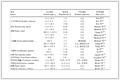
In the working mode, the system determines the operation according to a predetermined interruption priority, which is shown in Table 1. The sensor protocol is the key factor in communication (Heinzelman and Chandrakasan, 2002; Ma et al., 2010). The MODBUS protocol is shown in Table 2 and 3 and mainly includes downlink and uplink protocols. The downlink protocol primarily involves the control board reading the register data of the sensor by sending the corresponding control instructions, and the uplink protocol mainly involves the control board card processes, which send the values of the corresponding sensor data to the upper computer on the remote server to facilitate the data postprocessing.
|
Table 1 System interruption priority order |
|
|
Table 2 Downlink protocol settings |
|
|
Table 3 Uplink protocol settings |
Status information upload: $S, 2018-06-15, 15:06:47, 4 & . The information upload to the host computer is from No. 4 buoy at 15:06:47 2018-06-15. Water quality sensor data upload: $W, 7.92, 10.08, 25, 1007, 23.9, 8.31, 191.4, 0, 6.1, 9.8, 4.7, 7.84, 98.3, 24 & . Value of pH sensor 1 is 7.92. Value of dissolved oxygen sensor 1 is 10.08 mg L−1. Temperature value of dissolved oxygen sensor 1 is 25℃. For the multiparameter sensor, the air pressure is 1007 mbar, temperature is 23.9℃, pH is 8.31, OPR is 191.4 mV, turbidity is 0NTU, resistance is 6.1, SAT is 9.8PSU, SSG is 4.7σ, DO is 7.84 mg L−1, DO% is 98.3% and probe depth is 24 cm. Battery status upload: $U, 12.85, 0.35 & . The voltage of the battery is 12.85 V, and the output current of the battery is 0.35 A.
3 Results and Discussion 3.1 Commissioning of EquipmentBuoys were deployed at four stations in Nancaodong, Dajishan, Jiuduansha, and Xiaoyangshan in April 2018, which were shown in Fig.6. The microwave bridge was installed on the platform of the stations, and a communication test was performed with the end bridge on the buoy. After the test connected, the working parameters of the buoy were set on the upper server to make the system enter the working mode.

|
Fig. 6 Four buoys distributed at the (a) Xiaoyangshan, (b) Dajishan, (c) Jiuduansha, and (d) Nancaodong test sites. |
The receiver of the microwave bridge at the upper end of the buoy was connected to the computer through the network line, and the connectivity of the data link was tested through the ping function of the computer system. This test demonstrated that the communication link could communicate normally. The offshore test demonstrated that the image transmission of the video monitoring system was stable, and the transmission distance was capable of reaching 500-1000 m. The camera was controlled by the upper computer for azimuth control, zoom, horizontal rotation, and pitch angle control.
3.2 Data TransmissionThe data were transmitted via microwave, whereas at the other two sites, both 4G and microwave modes were utilized. When a 4G mobile network was available, the router was used to transmit data between the buoy and server. The 4G industrial router was T260S (Shenzhen Libituo Technology Co., Ltd., China). For the construction of the microwave transmission, two data components were present per buoy that needed to reach the landing point. The first step involved transmission from the buoy to the station antenna tower of the test station, which was a short distance (≤ 500 m). The second step involved transmission away from the tower to the landing point, which was a much long distance, usually ≥ 20 km. The microwave equipment adopted in the two stages are detailed below.
3.2.1 Bridge microwave communication between the buoy and station antenna towerThe Nancaodong, Dajishan, and Jiuduansha stations used long-distance microwave communication and bridge communication between the station and nearest end of the buoy. A bridge is a data link layer that functions to extend the network and communication, forward the data signal in various transmission media, and expand the distance of the network, while also selectively sending the signal of the existing address from one transmission medium to another. Moreover, bridges can effectively limit communication between two media systems.
A close (500-1000 m) video communication between the buoy and station platform should be realized in an on-site buoy system. Selected bridge and installation process need to meet the following requirements: 1) the problem of environmental occlusion should be fully considered to ensure that the signal is not interrupted, 2) the interference of wireless signals should be prevented, 3) the stability of the link should be fully considered, 4) the link bandwidth should be considered to ensure that no Cotton phenomenon is present in the video, 5) a battery should be used for power supply in video surveillance, and the power supply of the equipment should be considered. Combined with the actual application conditions, an AP3024G 300-m omnidirectional bridge launcher and plate station bridge were selected for pairing. The specific parameters are shown in Table 4 and 5.
|
|
Table 4 Omnidirectional end bridges |
|
|
Table 5 Plate station bridge |
The microwave antennas of the system needed to be visible to each other, and the influence of the curvature of the Earth on the line of sight was calculated using the Dajishan station as the relay node, such that
| $\alpha = {\cos ^{ -1}}\frac{R}{{R + h}}, $ | (1) |
| $r = R\alpha, $ | (2) |
where h is the communication height of Dajishan (communication height = altitude + antenna height), r is the visible range radius, R is the radius of the Earth (6371 km), and α is the circular center angle (radians). When the data for Dajishan are replaced by these formulas, r = 50.48 km can be obtained. The Dajishan station has geographical conditions that are favorable for video communication with the other observation and shore-based stations. The gain of the omnidirectional fiber-reinforced plastic antenna using 778 MHz (QB700-V8E) was 8.0 dBi. Broadband mesh radio parameters are shown in Table 6.
|
|
Table 6 Broadband microwave system parameters |
According to the data in Table 5, Eq. (3) can be used to calculate the loss of radio wave propagation in free space:
| $ Los = 32.44 + 20\lg D + 20\lg F, $ | (3) |
where Los is the propagation loss (dB), D is the transmission distance (km), and F is the operating frequency (MHz). When the communication frequency was 778 MHz, the modulation mode used orthogonal frequency-division multiplexing (OFDM) technology. To meet the requirements for video communication, the communication bandwidth was 6 Mbps.
For the propagation distance of the system in free space, the transmission power was 28 dBm, main antenna gain was 7.6 dBi, secondary antenna gain was 8 dBi, and reception sensitivity was −92 dBm (the main antenna gain was calculated considering the actual working conditions). According to Eq. (4), the Los was 135 dB:
| $ Los = Pt -Pr + Gr + Gt, $ | (4) |
where Pr is the receiver sensitivity (dBm), Pt is the transmitter power (dBm), Gr is the receiver antenna gain (dBi), and Gt is the transmitter antenna gain (dBi). When F = 778 MHz, D = 184.93 km, which is the ideal transmission distance and far greater than the actual distance in the present study. Because wireless communication is subject to losses caused by atmosphere, objects, and multipaths, the approximate communication distance can be calculated considering atmospheric attenuation, Lg = 15 dB, and a reference value of the aforementioned loss into Eq. (4) as
| $ Los = Pt -Pr + Gr + Gt -Lg, $ | (5) |
where Lg is the atmospheric attenuation (dB).
According to Eq. (5), when F = 778 MHz, D = 32.89 km. In combination with the curvature of the Earth and the actual height of the sites, the communication bandwidth and power consumption were considered, and the microwave communication between two points was ≤ 30 km. As only the distance between the Jiuduansha station and landing point exceeded 30 km, the Jiuduansha data were first transmitted to the Nancaodong site and then relayed to the landing point.
3.3 Data AnalysisAfter a test platform is established, testing and analyzing the indices of the system according to specific application conditions and correcting parameters with large errors is necessary. Such testing mainly includes analyzing buoy system power consumption, sensor biofouling, and sensor data. During the stable operation of the buoy system, the solar power supply system and system load determined the working time and stability of the system in continuous rainy weather. The normal and stable operation of the sensor-lifting mechanism was beneficial in observing the biofouling of the sensor, and the sensor data reflected the accuracy of the sensor measurements.
3.3.1 Power consumption of the buoy systemThe photovoltaic power generation component of the buoy test platform used solar panels to recharge the battery and supply the load through the solar controller. The configuration of the power system was as follows: four 30 W solar panels, three batteries with a rated capacity of 12 V, 20 Ah, and an output DC 12V and 15 A controller. The mean voltage of the solar power supply system was 12.72 V, which was monitored throughout the experiment. The working mode was set with the data acquisition period of 5 min, sensor water time of 15 min, sensor rising time of 70 s, and sensor drop (deployment) time of 53 s. The operating current of each module in the system was calculated as shown in Table 7.
|
|
Table 7 Energy consumption under different working conditions |
Within 24 h, the power consumption of the system was 110.12 W. The photovoltaic power supply system charged the battery during the day, which could then be used at night and on rainy days. When the battery was fully electric, the conversion efficiency of the battery power supply was 80%-90%, which could perform work for approximately 125.5-141.2 h.
3.3.2 BiofoulingThe sensor-lifting mechanism was regularly employed, and the bottom camera carried by the buoy was used to monitor the recruitment of the organisms. At the Dajishan buoy, which was launched on June 22, 2018, the biofouling of the sensor expanded rapidly over 10 days. In winter, the biofouling was much slower according to the experiment in Xiangshan Bay (Ningbo, Zhejiang Province, China), where almost no biofouling on the sensor was present over two months from December 5, 2017 to February 3, 2018. Among the many organisms observed, oysters were dominant and mainly grew on the sensor probe and end face (Fig.7).

|
Fig. 7 Biofouling of the sensors after 10 days. |
One of the multiple sensors of DO/temperature and pH and an AP2000 sensor were mounted on the buoy test platform. The data measured by the AP2000 sensor included water pressure, water temperature, pH, redox potential (ORP), conductivity, resistivity, salinity, DO, depth, turbidity, and the concentration of water-soluble solid particles (TDS). The detection period was from June 22 to July 2 and lasted 247 h. The average collection interval was half an hour, and the detection depth of the sensor was approximately 30 cm. The temperature and DO trends of the DOS600 sensor in which some DO and temperature data changed abnormally are shown in Fig.8(a. The vertical coordinates of the graph shown in Fig.8(a increase and fall suddenly, which shows that the sensor was not stable. The temperature and DO/ temperature curves of AP2000 sensor are shown in Fig.8(b. Among them, the change in the DO value exhibited the largest change early on; after removing the outlying value, the change in DO was relatively stable. With increased operation time, the DO value fluctuated over a small range, which reflected the change in DO in seawater rather than noise. However, after 433 measurements, the values recorded using the sensor began to have a great offset. Moreover, few but pronounced variations in the temperature curve were observed.

|
Fig. 8 Dissolved oxygen (DO) and temperature of the DOS600 (a) and AP2000 (b) sensors: 486 samplings in 247 h. |
The pH curves of the DPS600 and AP2000 sensors are shown in Fig.9. Mean pH values were 8.300 and 8.310, and standard deviations were 0.1292 and 0.112 for the DPS600 and AP2000 sensors, respectively. The pH values of the DPS600 sensor were stable up to 65 measurements and then began to fluctuate greatly. The pH value fluctuated more with an increase in service time. The change in the pH values measured using the AP2000 sensor increased abnormally at the beginning, which might have been caused by the initial start-up calibration of the sensor. The change in pH became continuous with an increase in service time. The degree of fluctuation in the measured parameters of the AP2000 sensor was small, which is in accordance with its standard usage. Both sensors fluctuated minimally early on; however, the fluctuations of the DPS600 sensor increased with the increase in service time. Although the degree of fluctuation of the AP2000 increased, the pH value continued to exhibit normal fluctuations over the working time. Considering the data mutation testing in the quiet land pond, Xiangshan Bay with small waves, and Dajishan site with large waves, the pH value was less affected by wave swing. Moreover, the pH parameters were vulnerable to biological attachment after eight days in a high-temperature summer environment.

|
Fig. 9 Comparison of pH changes between the DPS600 and AP2000 sensors: 486 samplings in 247 h. |
As shown in the curves of the DO values of the AP2000 and DOS600 sensors (Fig.10), the mean DO values were 6.896 mg L−1 and 8.414 mg L−1 and the standard deviations were 1.235 and 2.068, respectively. Additionally, fluctuations were present in the values of both sensors, including 47 mutations below 5 mg L−1 for the DOS600 sensor and 25 for the AP2000 sensor. Among them, the DO value of the AP2000 sensor fluctuated normally after 196 measurements, and the degree of variability decreased. Generally, the value of the sensor tended to decrease over time, which indicates that data drift occurred in the sensor. Therefore, the measured stability of the AP2000 sensor was better than that of the DOS600 sensor. Considering the data mutation in a land pond, Xiangshan Bay, and Dajisha sites, the DO value was evidently affected by wave swing. Considering the growth rate of biological attachment, the data change shows that DO parameters were vulnerable to biological attachment.

|
Fig. 10 Comparison of DO changes between the DOS600 and AP2000 sensors: 486 samplings in 247 h. |
Fluctuations in the AP2000 and DOS600 sensor temperatures are shown in Fig.11. The mean temperatures were 23.85℃ and 24.77℃, and the standard deviations were 2.553 and 4.983, respectively. There were six temperatures below 20℃ for the AP2000 sensor, and 23 for the DOS600 sensor. Both sensors performed well although the AP2000 sensor slightly outperformed the DOS600 sensor in the terms of stability, which shows that DOS600 sensor is close to the performance of the AP2000 with respect to the temperature parameter. Considering the data mutation in the land pond, Xiangshan Bay, and Dajishan site, the pH data value was less affected by wave swing. Moreover, data trends show that the temperature parameters were less affected by biological attachment.

|
Fig. 11 Comparison of temperature changes between the DOS600 and AP2000 sensors (486 sampling in 247 h). |
According to the control requirements of offshore instrument testing, combined with the actual working environments of the five test sites, we designed and implemented a control software and hardware system, including sensors, cameras, a sensor-lifting mechanism, and communication modules. The system energy consumption, sensor biofouling, and sensor data were thoroughly tested and analyzed. The on-site testing revealed that the designed control system can perform the corresponding operations on the control board via remote data transmission based on the instructions of the upper computer of the server. The test results show that the video data transmission was stable, sensor-lifting mechanism was reliable, and sensor uploaded the data normally. The control algorithm designed in this study was mainly based on the video detection of offshore marine instruments and equipment and the wired transmission of control signals. The control algorithm can be further analyzed and refined according to the conditions of different test stations. The control can be further improved, and sensor biofouling video detection and cleaning technologies can be combined to extend the service life of the sensor and the accuracy of data collection. Based on 485 and other standardized communication protocols, the system is suitable for the access of most sensors and can be easily expanded.
The sensors were tested in a quiet land pond, and the data were stable and almost no mutation appeared. The tests in Xiangshan Bay with a small wave environment showed that a small amount of the data on the buoy sensors was mutated. The mutation data obtained from the test site in Dajishan showed that a certain proportion of abnormal test data might be present in a large floating environment. The tests in three environments showed that waves had a certain impact on the sensor testing. Considering the data mutation in the land pond, Xiangshan Bay, and Dajishan site, the DO value was easily affected by wave swings. Moreover, data trends show that the DO and pH parameters were vulnerable to biofouling. The designed buoy was 1.4 m in diameter and 0.7 m in height. The buoy was small, which introduces large swing amplitude, thereby resulting in a certain proportion of data mutation. Because the purpose of this experiment was to compare the developed sensors with a standard sensor, the experimental design was devoted to providing harsh conditions, which can better reflect the performance of the measured sensor in a short time period.
AcknowledgementsThis research was supported by the National Key Research and Development Plan (No. 2019YFD0901300), the Shanghai Science and Technology Innovation Action Plan (No. 16DZ1205100), and the Shanghai Agriculture Applied Technology Development Program (No. T2018 0303).
Ejeian, F., Azadi, S., Razmjou, A., Orooji, Y. and Asadnia, M., 2019. Design and applications of MEMS flow sensors: A review. Sensors and Actuators A: Physical, 295: 483-502. DOI:10.1016/j.sna.2019.06.020 (  0) 0) |
Eriksson, M., Isberg, J. and Leijon, M., 2007. Hydrodynamicstheory and experiment on an elastically moored cylindrical buoy. IEEE Journal of Oceanic Engineering, 31(4): 959-963. ( 0) |
Ferreira, L. F., Antunes, P., Domingues, F., Silva, P. A. and André, P.S., 2012. Monitoring of sea bed level changes in nearshore regions using fiber optic sensors. Measurement, 45: 1527-1533. DOI:10.1016/j.measurement.2012.02.026 ( 0) |
Guo, J., He, B. and Sha, Q. X., 2018. Shallow-sea application of an intelligent fusion module for low-cost sensors in AUV. Ocean Engineering, 148: 386-400. DOI:10.1016/j.oceaneng.2017.11.015 ( 0) |
Heinzelman, W. B. and Chandrakasan, A. P., 2002. An application-specific protocol architecture for wireless microsensor networks. IEEE Transactions on Wireless Communications, 1(4): 660-670. DOI:10.1109/TWC.2002.804190 ( 0) |
Keisuke, M. and Tomowo, W., 1998. Preliminary results of in-situ XCTD/CTD comparison test. Journal of Oceanography, 54: 370-380. DOI:10.1007/BF02742621 ( 0) |
Lei, H., Xiong, M. N., Xiao, J., Zheng, L. P., Zhu, Y. R., Li, X. X., Zhuang, Q. X. and Han, Z. W., 2017. Fluorine-free low surface energy organic coating for anti-stain applications. Progress in Organic Coatings, 103: 182-192. DOI:10.1016/j.porgcoat.2016.10.036 ( 0) |
Ma, D. K., Ding, Q. S., Li, D. L. and Zhao, L. L., 2010. Wireless sensor network for continuous monitoring water quality in aquaculture farm. Sensor Letters, 8(S1): 109-113. ( 0) |
Manov, D. V., Chang, G. C. and Dichkey, T. D., 2004. Methods for reducing biofouling of moored optical senors. Journal of Atmospheric & Oceanic Technology, 21(6): 958-968. ( 0) |
Molinero-Abad, B., Izquierdo, D., Pérez, L., Escudero, I. and Arcos-Martinez, M. J., 2018. Comparison of backing materials of screen printed electrochemical sensors for direct determination of the sub-nanomolar concentration of lead in seawater. Talanta, 182: 549-557. DOI:10.1016/j.talanta.2018.02.005 ( 0) |
Molinero-Abad, B., Perez, L., Izquierdo, D., Escudero, I. and Arcos-Martinez, M. J., 2019. Sensor system based on flexible screen-printed electrodes for electrochemical detection of okadaic acid in seawater. Talanta, 192: 347-352. DOI:10.1016/j.talanta.2018.09.072 ( 0) |
Moroni, D., Pieri, G., Salvetti, O., Tampucci, M., Domenici, C. and Tonacci, A., 2016. Sensorized buoy for oil spill early detection. Methods in Oceanography, 17: 221-231. DOI:10.1016/j.mio.2016.10.002 ( 0) |
Petrioli, C., Petroccia, R., Potter, J. R. and Spaccini, D., 2015. The SUNSET framework for simulation, emulation and at-sea testing of underwater wireless sensor networks. Ad Hoc Networks, 34: 224-238. DOI:10.1016/j.adhoc.2014.08.012 ( 0) |
Poma, N., Vivaldi, F., Bonini, A., Carbonaro, N., Di, Rienzo F., Melai, B., Kirchhain, A., Salvo, P., Tognetti, A. and Di Francesco, F., 2019. Remote monitoring of seawater temperature and pH by low cost sensors. Microchemical Journal, 148: 248-152. DOI:10.1016/j.microc.2019.05.001 ( 0) |
Staudinger, C., Strobl, M., Breininger, J., Klimant, I. and Borisov, S. M., 2019. Fast and stable optical pH sensor materials for oceanographic applications. Sensors and Actuators B: Che-mical, 282: 204-217. DOI:10.1016/j.snb.2018.11.048 ( 0) |
Tziortzioti, C., Amaxilatis, D., Mavrommati, I. and Chatzigiannakis, I., 2019. IoT sensors in sea water environment - Ahoy! Experiences from a short summer trial. Electronic Notes in Theoretical Computer Science, 343: 117-130. DOI:10.1016/j.entcs.2019.04.014 ( 0) |
Venkatesan, R., Ramesh, K., Muthiah, M. A., Thirumurugan, K. and Atmanand, M. A., 2019. Analysis of drift characteristic in conductivity and temperature sensors used in Moored buoy system. Ocean Engineering, 171: 151-156. DOI:10.1016/j.oceaneng.2018.10.033 ( 0) |
Vigneswaran, D., Ayyanar, N., Sharma, M., Sumathi, M., Rajan, M. S. M. and Porsezian, K., 2018. Salinity sensor using pho-tonic crystal fiber. Sensors and Actuators A: Physical, 269: 22-28. ( 0) |
Zhang, Y. Y., Wu, B. W., Liu, D. Y., Zhang, Y. and Cheng, Y., 2018. Development and deployment of an autonomous sensor for the in-situ radioactivity measurement in the marine environment. Applied Radiation and Isotopes, 142: 181-186. DOI:10.1016/j.apradiso.2018.10.004 ( 0) |
Zhao, Y., Wu, Q. L. and Zhang, Y. N., 2019. Simultaneous measurement of salinity, temperature and pressure in seawater using optical fiber SPR sensor. Measurement, 148: 106792. DOI:10.1016/j.measurement.2019.07.020 ( 0) |