 2022, Vol. 21


2) College of Fisheries Science and Life Science of Shanghai Ocean University, Shanghai 201306, China;
3) Southern Marine Science and Engineering Guangdong Laboratory (Guangzhou), Guangzhou 511458, China;
4) Guangdong Ocean Planning Research Center, Guangzhou 510322, China;
5) Sturgeon Healthy Breeding and Medicinal Research Center, Guizhou University of Traditional Chinese Medicine, Guiyang 550025, China;
6) College of Marine Sciences, Beibu Gulf University, Qinzhou 535011, China
Horseshoe crabs are known as ancient 'living fossils' as they have survived for 400 million years on the Earth (Van Roy et al., 2010; Kwan et al., 2018). The hemolymph from Tachypleus tridentatus can be used to produce Tachypleus amebocyte lysate; therefore, T. tridentatus is of unique value for national public health security (Xie et al., 2021). Human disturbance and environmental pollution have caused a sharp decline of the T. tridentatus resource (Cai et al., 2021). In 2019, the International Union for Conservation of Nature Red List updated T. tridentatus to endangered status (Laurie et al., 2019), and the animal was listed as a Grade Ⅱ protected species in the National Key Wildlife List of China in 2021. Due to the ongoing COVID-19 pandemic, the large-scale production of vaccines has led to increasing demand for Tachypleus amebocyte lysate and increased pressure on horseshoe crab conservation. Large-scale artificial breeding, larval culture, and field release measures are vital and reliable ex-situ conservation modalities for T. tridentatus resource management (Hong, 2011). Therefore, cultivation and management of adult horseshoe crab are of great importance to ensure enhanced release and culture of T. tridentatus. Food sources are crucial to the physiological activities of aquatic animals (Doxa et al., 2013). Mastering feeding demands and behaviors are key to successful artificial breeding programs, such as improving growth performance (Tacon et al., 2002), reducing mortality (Espinosa and Allam, 2006), enhancing adult fecundity (Pan et al., 2009), and replacing natural diets with artificial compound feed (Millamena, 2002).
Horseshoe crabs have different dietary habits at different life stages. Mollusks, crustaceans, and polychaetes have been observed in gut samples from adult Tachypleus gigas in India (Chatterji et al., 1992) and adult Carcinoscorpius rotundicauda in Malaysia (John et al., 2012). However, studies on the diet of T. tridentatus have only been reported for juvenile and sub-adult animals. Hu et al. (2013) studied the diet of juvenile T. tridentatus at the third instar. Kwan et al. (2014) investigated the health status of juvenile T. tridentatus fed with different diets at the eighth instar, and Gao et al. (2003) conducted preliminary research on the diet of juvenile T. tridentatus with a prosomal width of 10-20 cm. There is a need for research on the diet of adult T. tridentatus during the breeding season, which has not been studied.
Different diets can lead to differences in intestinal microbial community structure, with intestinal microbiota affecting the host immune defense, digestion and absorption, nutritional metabolism, and other physiological functions (Chen et al., 2018). Little information is available on the intestinal microbiota diversity of T. tridentatus. Miao et al. (2020) analyzed the gut microbiota diversity of first and second instar T. tridentatus, and reported that initial molting rather than feeding has a significant effect on the intestinal flora of juvenile T. tridentatus. The effects of diet on intestinal microflora diversity in adult T. tridentatus remain unclear.
Based on the finding that major food sources for adult T. tridentatus and T. gigas are bivalves and fish (Guo et al., 2021; Halim et al., 2021), oysters and frozen fish were selected as diets for adult T. tridentatus in this study. Oysters have more moisture, crude protein, crude fat, and ash content than frozen fish (Li et al., 2021). Moreover, oysters are rich in high-quality protein, glycogen, n-3 polyunsaturated fatty acids, essential amino acids, trace elements, and other nutrients (Li et al., 2021). We then analyzed the dietary effects on reproductive performance and intestinal flora of adult T. tridentatus to provide a scientific and theoretical basis for selecting an artificial breeding diet for these animals.
2 Materials and Methods 2.1 Selection and Culture Management of Adult T. tridentatusHorseshoe crabs (female, 4.21 kg ± 0.68 kg; male, 1.70 kg ± 0.22 kg) were obtained from the South China Sea Fisheries Research Institute, Chinese Academy of Fisheries Sciences in March 2019. Twenty T. tridentatus male and female pairs were randomly selected for breeding studies (May-August). The average prosomal width of the females was 35.28 cm ± 4.62 cm, while that of males was 27.19 cm ± 2.37 cm.
Culture studies were conducted in two indoor cement ponds (4 m × 4 m × 0.8 m) containing filter-disinfected seawater at 28-32℃, with 26%-30% salinity, pH of 7.4-7.8, and dissolved oxygen ≥ 4.0 mg L-1. Ten animal pairs were randomly selected and placed in each pond, which was also equipped with a water circulating system, and a sand covered bottom (depth, 20-40 cm; grain size, 0.5-2.0 mm). The animals were fed once daily at 18:00 during culture. In one pond, animals were fed 20 mm (length) × 8 mm (width) × 5 mm (height) oysters (Ostrea gigas) (oyster group; OG), while the other pond was fed an equal portion of frozen fish (Hemiculter leucisculus) (frozen fish group; FG) with the same particle size, and both groups were fed at 3% of overall body mass. About 80% of the seawater in each pond was renewed daily. The sandy bottom and pond walls were cleaned once every 15 days. Health parameters, including final body weight, mortality, weight gain rate, and specific growth rate, were observed in all animals during the study. All horseshoe crabs were weighed at the beginning and the end of the experiment. Additionally, breeding activities were recorded in the groups, including egg number and hatching rate. Eggs were obtained by natural spawning. The total number of eggs spawned by the 10 pairs of horseshoe crabs was counted at the end of the experiment.
2.2 Sampling and Experimental ManipulationAfter 120 days of feeding experiment, three T. tridentatus male and female pairs were randomly sampled from each pond. The digestive tract was dissected and stored at -80℃. Intestinal tissues (0.5 g per sample) were ground twice in an automatic freezing grinding instrument (JXFSTPRP-32L, Shanghai Jingxin Industrial Development Co., Ltd., Shanghai, China), and the supernatant was centrifuged at 4℃ (Thermo ST16, Shanghai, China) and stored to determine enzyme activities. Pepsin, trypsin, lipase, and α-amylase levels were determined using kits provided by Nanjing Jiancheng Bioengineering Institute (Shanghai, China).
Intestinal samples (0.5 g per sample) were also ground. Total intestinal bacterial DNA was extracted using the Tiangen DNA extraction kit (DP308, Tiangen Biotech Co., Ltd., Beijing, China), and the V3 and V4 regions of 16S rRNA were amplified. The polymerase chain reaction (PCR) was carried out in a 30 μL reaction system with 15 μL of PhusionⓇ High-Fidelity PCR Master Mix (New England Biolabs, Ipswich, MA, USA), 0.2 μmol L-1 of the forward and reverse primers, and about 10 ng of template DNA. The PCR conditions were initial denaturation at 98℃ for 1 min, followed by 30 cycles of denaturation at 98℃ for 10 s, annealing at 50℃ for 30 s, and elongation at 72℃ for 60 s, followed by a final elongation step at 72℃ for 5 min. Once successful amplification was indicated using 1% agarose gel electrophoresis, high throughput sequencing of the 16S rRNA gene was entrusted to Mingke Biotechnology Co., Ltd. (Hangzhou, China). The PCR primers were: 515F (5'- GTGCCAGCMGCCCGG-3') and 907R (5'-CCGTCAAT TCMTTTRAGTTT-3') DNA was amplified using TransStart Fastpfu DNA Polymerase (TransGen AP221-02, Beijing, China) with a PCR instrument (ABI GeneAmpⓇ 9700, ABI, Foster City, CA, USA). Three replicates of each sample were mixed, and the PCR products from the same sample were recovered by 2% agarose gel electrophoresis. The PCR products were purified using the AxyPrepDNA Gel Recovery Kit (AxygenⓇ, Tewkesbury, MA, USA) and eluted in Tris-HCl (pH 7.4).
2.3 Intestinal Microbiome Analysis Determination of Taurine Content in Two DietsBased on the Illumina PE250 sequencing tool, fast length adjustment of short reads and paired-end reads were filtered and spliced according to the overlapped relationships to generate good quality data. Operational taxonomic units (OTUs) were clustered to analyze differences in species abundance and the α- and β-diversity indices between the groups. Linear discriminant analysis effect size (LEfSe) was used to identify significant differences in the relative abundance of the bacterial taxa.
Muscle samples were collected randomly and locally from Ostrea gigas and Hemiculter leucisculus (six samples for each). Taurine concentrations in muscle samples were measured using taurine assay kit (Cell Biolabs, San Jose, CA, USA).
2.4 Data AnalysisData were tested for normality and homogeneity of variance using the Shapiro-Wilk test, and the t-test was used to analyze differences between groups. The results are expressed as mean ± standard deviation (SD). Duncan's multiple comparison test was used to analyze differences between groups, and P < 0.05 was considered significant. Principal component analysis (PCA) was performed in R software (Version 4.0.5; The R Foundation for Statistical Computing, Vienna, Austria) to identify differences in the microbial structure between the groups.
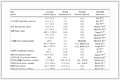
3 Results 3.1 Effects of Different Diets on Adult T. tridentatus Growth and Reproductive PerformanceNo eggs were observed in the FG, and one adult T. tridentatus died. No horseshoe crabs died in the OG, and 9.7 × 10⁴ eggs were obtained. These eggs were pale yellow spherical, with diameters of 2.98 mm ± 0.15 mm, and a hatching rate of 89%. The final body weight, weight gain rate, and specific growth rate of the OG group were higher than those of the FG group (Table 1).
|
Table 1 Influence of the different diets on growth of adult Tachypleus tridentatus |
As shown (Table 2), pepsin activity was significantly higher in the OG crabs than in the FG crabs (P < 0.01, t = -3.038), while lipase, α-amylase, and trypsin activities were not significantly different (P > 0.05).
|
|
Table 2 Influence of different diets on intestinal enzyme activities of adult Tachypleus tridentatus |
In total, 237969 valid sequences were identified across the sample groups, including 114155 from the FG and 123814 from the OG. The OTUs belonged to 11 phyla, 17 classes, 32 orders, 50 families, 57 genera, and 55 species. OTU similarity and overlap between the groups were investigated using a Venn diagram (Fig. 1A). In total, 1487 OTUs were identified in both groups, of which the numbers of OTUs in the FG and OG were 775 and 1272, respectively. A total of 560 OTUs were common between the groups, while there were 215 (FG) and 712 (OG) unique OTUs. These data indicate that oysters improved the intestinal microbial diversity of T. tridentatus.

|
Fig. 1 (A) Venn diagram used to count the number of shared and unique OTUs in different samples; the red circle represents the FG group, the green circle represents the OG group, and the overlap represents the number of shared OTUs between the two groups; (B) PCA of adult Tachypleus tridentatus intestinal flora. FG, frozen fish group; OG, oyster group. |
The Chao1 index was used to evaluate the richness of the intestinal flora. The Shannon and Simpson indices have been commonly used to assess intestinal flora diversity; a higher Shannon index and a lower Simpson index indicate higher diversity in bacterial communities (Liu and Peng, 2021). Our results show that the coverage value of both groups was > 0.99, suggesting that the results were reliable. The abundance (OTUs and Chao1 index) and diversity (Shannon index) of the intestinal flora were higher in the OG than those in the FG (Table 3). The OTUs and Chao1 indices were significantly different between the groups (P < 0.05), while the Shannon and Simpson indices were not significantly different (P > 0.05) (Fig. 2).
|
|
Table 3 Influence of the different diets on the intestinal microbial diversity index of Tachypleus tridentatus |

|
Fig. 2 α-Diversity of the bacterial communities: The Chao1 index estimates richness; the Shannon and Simpson indices estimate diversity. FG, frozen fish group; OG, oyster group. |
PCA showed that diet (59.3%) was the main factor responsible for the difference of the intestinal content samples from T. tridentatus in the FG and OG groups (Fig. 1B).
3.3.2 Community composition and intestinal flora abundanceThe dominant phyla and genera in the T. tridentatus intestinal samples are shown in Fig. 3. Proteobacteria (FG: 37.59% and OG: 20.59%), Tenericutes (FG: 34.89% and OG: 22.64%), Firmicutes (FG: 14.76% and OG: 21.62%), and Bacteroidetes (FG: 9.81% and OG: 16.85%) were the common dominant phyla. In addition, Fusobacteria (6.35%) was a unique dominant phylum in the OG, and the remaining abundances were < 3% (Fig. 3A). Ralstonia (14.02%), Achromobacter (5.73%), Bacteroidales S24-7 group_norank (5.49%), Lactobacillus (4.25%), Delftia (3.96%), and Faecalibaculum (3.93%) were the dominant genera in the FG, while Ralstonia (7.08%), Achromobacter (6.34%), Bacteroidales S24-7 group_norank (5.99%), and Lactobacillus (5.68%) were the dominant genera in the OG (Fig. 3B).

|
Fig. 3 Dominant phyla (A) and genera (B) of intestinal flora in the different dietary groups. FG, frozen fish group; OG, oyster group. |
The results of the LEfSe analysis showed that Fusobacteria was a phylum-level biomarker and Roseomonas, Okibacterium, Epilithonimonas, Enterococcus, and Carboxylicivirga were genus-level biomarkers between FG and OG (Fig. 4).

|
Fig. 4 LEfSe results of intestinal microbial composition between the frozen fish group (FG) and oyster group (OG). A, LDA scores of the bacterial clades identified by the LEfSe analysis; B, Phylogenetic relationships of the bacterial clades revealed by LEfSe. The single characters before the underlines are abbreviations: p, phylum; c, class; o, order; f, family; g, genus. |
The taurine content of two diets was significantly different (P < 0.05). Taurine content in oysters was 362.19 ± 13.46 mg (100 g)-1, while Hemiculter leucisculus was 236.78 ± 19.75 mg (100 g)-1.
4 DiscussionOur data show that adult T. tridentatus fed frozen fish (FG) did not spawn during the experiment (120 d), while animals fed oysters (OG) laid eggs, suggesting that the nutrients in oysters were more suitable for adult T. tridentatus growth and development than frozen fish. The frozen fish (H. leucisculus) had a high fat content (Zeng et al., 2012). The different particle sizes and hardness of the diets may also be a reason for the results. Oysters are highly palatable with a soft meat quality, which are conducive to feeding horseshoe crabs. Frozen fish are difficult to chew and swallow. In addition, the width and thickness of the frozen fish pieces may have affected feeding of T. tridentatus. A previous study showed that the feed intake of juvenile T. tridentatus decreases with increasing particle size of the diet (Gao et al., 2003). Considering these dietary factors, both diets were cut into small size pieces before feeding. Oyster soft tissues are rich in amino acids, with taurine levels accounting for almost half of all free amino acids (Fuentes et al., 2010). Taurine levels in oysters from the southwestern South China Sea are 16.81-19.83 mg g-1 (Gao et al., 2013), which are 5-30 times higher than those of other marine fishes, such as Dentex tumifrons, Chelidonichthys kumu, and Osmerus mordax (Tan et al., 2000). Previous studies reported that taurine improves growth and reproduction (Xu et al., 2020; Yu et al., 2021). Oysters also contain highly unsaturated fatty acids (eicosapentaenoic acid and docosahexaenoic acid) that promote vitellogenesis and gonadal and embryonic development in aquatic animals and are key nutrients affecting the reproductive performance of adult fish (Bell and Sargent, 2003; Watanabe and Vassalloagius, 2003; Callan et al., 2014). Similarly, these molecules enhance the reproductive performance of aquatic animals, including Cyprinus carpio (Xu et al., 2016), Pagrus maior (Røjbek et al., 2014), and Acipenser baeri (Luo et al., 2015).
Pepsin activity was significantly higher in the OG than in the FG, but no significant difference was observed in intestinal α-amylase activity. This may be because oysters are rich in protein, glycogen, and taurine (Wang et al., 2011). Taurine increases protease activity and the feeding rate (Li et al., 2017; Wang et al., 2018). Similar to our data, Yu et al. (2021) reported that the protease activity of Lateolabrax japonicus was significantly higher in a taurinetreated group than that in a control group, whereas α-amylase activity was not significantly different. He et al. (2017) showed that feed containing 1.3% taurine enhances protease activity in the stomach, liver, and intestine of Anguilla marmorata. Other studies have reported that the intestinal protease activities of Acrossocheilus hemispinus (Liang et al., 2018), Salmo trutta fario (Wang et al., 2017), and juvenile Scylla paramamosain (Dong et al., 2017) increase with dietary protein level. Thus, taurine could be supplemented in T. tridentatus feed to observe its specific effect on the digestive enzyme activity of T. tridentatus. Pepsin activity in the OG was significantly higher compared to the FG. Therefore, adult T. tridentatus of OG group had stronger ability to digest and absorb protein. Among the total fat of oyster, omega-3 highly unsaturated fatty acids (n-3 HUFAs) such as eicosapentaenoic acid (EPA) and docosahexaenoic acid (DHA) accounted for 28% (Wang et al., 2003). Ma et al. (2005) found that turbot Scophthalnus maximus fed high-protein and high n-3 HUFAs diet had highest spawning-stock biomass. This finding is in agreement with the results found in our study.
Bacteria have a strong capacity to metabolize taurine, which can be directly broken down into carbon, nitrogen, and sulfur for growth (Cook et al., 2006). Ma et al. (2021) reported that taurine levels in feed affect the structure, richness, and diversity of the intestinal flora. Our data show that Proteobacteria, Tenericutes, Firmicutes, and Bacteroidetes were the common dominant phyla in the horseshoe crab groups, and Fusobacteria was the unique dominant phylum in the OG. Proteobacteria are Gram-positive bacilli that produce spores in harsh environments. Bacteroidetes are the largest Gram-negative bacilli group in the animal intestine and are involved in metabolic processes, such as digestion of nutrients and absorption (Francois et al., 2011). Fusobacteria are Gram-negative bacilli with a higher detection rate in human colorectal tumors than surrounding normal tissues (Kelly et al., 2018). Studies have shown that high-protein diets enrich Flavobacteria and Fusobacteria in male Blattella germanica, and a low-protein diet benefits the growth of Bacteroidetes, Rikenellaceae, and Tannerellaceae (Wang et al., 2021).
Oysters are high in protein and low in fat, and our results were consistent with previous studies. The quantity of Bacteroidales S24-7 group_norank was higher in the OG (5.99%) than in the FG (5.49%). These bacteria produce butyric acid, a short-chain fatty acid that can be produced by intestinal bacteria from cellulose fermentation (Tang et al., 2018). Butyrate-producing probiotics can reduce nonalcoholic fatty liver disease (NAFLD) progression in rats (Endo et al., 2013). Zhou et al. (2017) also confirmed that sodium butyrate attenuates high-fat diet (HFD)-induced steatohepatitis in mice by improving the gut microbiota and gastrointestinal battier. Short-chain fatty acids maintain homeostasis in the intestinal environment and regulate the immune response (Serino, 2019). Roseomonas is a pathogen that causes bacteriemia and infections in wounds, the urinary tract, and other body regions (Rihs et al., 1993). Pathogens were detected in the intestines of the OG, which may have been due to remnant, undigested oysters.
Horseshoe crabs have a wide variety of food sources in the natural environment, where nutrients are highly abundant, whereas a single diet is usually fed to animals under artificial culture conditions. The differences in intestinal flora between wild T. tridentatus and artificially cultured animals must be comprehensively characterized in terms of differences in nutrient digestion and absorption to develop compound feeds that promote T. tridentatus growth, development, and reproductive performance.
5 ConclusionsAdult T. tridentatus fed oysters had higher weight gain rate (WGR), specific growth rate (SGR), spawning-stock biomass. These results showed that oysters were more suitable for enhancing the growth and reproduction performance of adult T. tridentatus than frozen fish, which is of great significance for the recovery of the T. tridentatus resource. However, a high-protein diet can also provide nutrients for pathogens to breed while promoting animal growth and reproduction. Thus, it is advisable to change the culture water frequently to remove the residual food and prevent replication of pathogens.
AcknowledgementsThis research was supported by the fund of the Key Special Project for Introduced Talents Team of Southern Marine Science and Engineering Guangdong Laboratory (Guangzhou) (No. GML2019ZD0605), the Guangdong Pro- vincial Key Laboratory of Fishery Ecology and Environ- ment (No. FEEL-2020-2), the Science and Technology Plan- ning Project of Guangdong Province (No. 2019B12120 1001), the Special Fund for Basic Scientific Research of Central Public Research Institutes of South China Sea Fisheries Research Institute, the Chinese Academy of Fishery (No. 2019TS21), and the National Natural Science Foundation of China (No. 42067038).
Bell J. G., Sargent J. R.. 2003. Arachidonic acid in aquaculture feeds: Current status and future opportunities. Aquaculture, 218(1-4): 491-499. DOI:10.1016/S0044-8486(02)00370-8 (  0) 0) |
Cai L., Chen X., Fu S., Yang D., Zhao X.. 2021. Population dynamics and benthic environment of Tachypleus tridentatus in the intertidal zone of Eyu Islet in Xiamen. Wetland Science & Management, 17(1): 14-18 (in Chinese with English abstract). DOI:10.3969/j.issn.1673-3290.2021.01.03 ( 0) |
Callan C. K., Laidley C. W., Kling L. J., Breen N. E., Rhyne A. L.. 2014. The effects of dietary HUFA level on flame angelfish (Centropyge lorculus) spawning, egg quality and early larval characterstics. Aquaculture Research, 45(7): 1176-1186. DOI:10.1111/are.12063 ( 0) |
Chen H., Yan H., Zhao Y., Xiao H., Chen S.. 2018. Metagenomics and its advances in research of fish gut microbiome. Fisheries Science, 37(5): 699-706 (in Chinese with English abstract). DOI:10.16378/j.cnki.1003-1111.2018.05.020 ( 0) |
Cook A. M., Denger K.. 2006. Metabolism of taurine in microorganisms: A primer in molecular biodiversity. Advances in Experimental Medicine and Biology, 583: 3-13. DOI:10.1007/978-0-387-33504-9_1 ( 0) |
Dong L., Tong T., Zhang Q., Xu M., Su Q., Nie Z., et al. 2017. Effect of dietary protein level on growth performance, body composition, and digestive enzyme activities in green mud crab (Scylla paramamosain) juveniles. Journal of Fishery Sciences of China, 24(3): 524-532 (in Chinese with English abstract). DOI:10.3724/SP.J.1118.2017.16289 ( 0) |
Doxa C. K., Divanach P., Kentouri M.. 2013. Consumption rates and digestibility of four food items by the marine gastropod Charonia seguenzae (Aradas & Benoit, 1870). Journal of Experimental Marine Biology and Ecology, 446: 10-16. DOI:10.1016/j.jembe.2013.04.019 ( 0) |
Endo H., Niioka M., Kobayashi N., Tanaka M., Watanabe T.. 2013. Butyrate-producing probiotics reduce nonalcoholic fatty liver disease progression in rats: New insight into the probiotics for the gut-liver axis. PLoS One, 8(5): e63388. DOI:10.1371/journal.pone.0063388 ( 0) |
Espinosa E. P., Allam B.. 2006. Comparative growth and survival of juvenile hard clams, Mercenaria mercenaria, fed commercially available diets. Zoo Biology, 25(6): 513-525. DOI:10.1002/zoo.20113 ( 0) |
Francois T., Jan-Hendrik H., Etienne R., Mirjam C., Gurvan M.. 2011. Environmental and gut bacteroidetes: The food connection. Frontiers in Microbiology, 2: 93. DOI:10.3389/FMICB.2011.00093 ( 0) |
Fuentes A., Fernández-Segovia I., Serra J. A., Barat J. M.. 2010. Comparison of wild and cultured sea bass (Dicentrarchus labrax) quality. Food Chemistry, 119(4): 1514-1518. DOI:10.1016/j.foodchem.2009.09.036 ( 0) |
Gao F., Liao Y., Ye F.. 2003. Feed study of the Tachypleus tridentatus juvenile. Marine Science Bulletin, 22(4): 92-96 (in Chinese with English abstract). ( 0) |
Gao J., Zhang C., Qiu W., Cao W., Qin X.. 2013. Determination of taurine in Ostrea rivularis from different parts of the South China Sea. Food Science, 34(10): 164-168 (in Chinese with English abstract). DOI:10.7506/spkx1002-6630-201310035 ( 0) |
Guo Q., Gu Y., Bao Y., Li Y., Zhou C., Xie X.. 2021. Dietary composition and trophic position of Tachypleus tridentatus. South China Fisheries Science, 17(4): 35-40 (in Chinese with English abstract). DOI:10.12131/20200234 ( 0) |
Halim A. S. A., Mohamad F., Ahmad F., Ismail N., Chilek T. Z. T., Ahmad A. R., et al. 2021. Possible predation on commercial bivalves by Tachypleus gigas: An assessment of horseshoe crab reintroduction in Setiu Lagoon of Terengganu, Malaysia. Hydrobiologia, 848(4): 841-855. DOI:10.1007/s10750-020-04493-7 ( 0) |
He M., Liu L., Qu H., Zhang X., Gao J.. 2017. Effects of dietary taurine on growth performance and digestive enzyme activity of Anguilla marmorata. Journal of Shanghai Ocean University, 26(2): 227-234 (in Chinese with English abstract). DOI:10.12024/jsou.20151201609 ( 0) |
Hong S.. 2011. Biology of Horseshoe Crabs, Tachypleus tridentatus. Xiamen University Press, Xiamen, 77-79.
( 0) |
Hu M., Wang Y., Cheung S. G., Shin P. K. S.. 2011. Comparison of different frozen natural foods on survival and growth of juvenile Chinese horseshoe crab Tachypleus tridentatus, (Leach, 1819): Implications on laboratory culture. Aquaculture Research, 44(4): 567-573. DOI:10.1111/j.1365-2109.2011.03059.x ( 0) |
Kelly D., Yang L., Pei Z.. 2018. Gut microbiota, fusobacteria, and colorectal cancer. Diseases, 6(4): 1-10. DOI:10.3390/diseases6040109 ( 0) |
Kwan B. K. Y., Chan A. K. Y., Cheung S. G., Shin P. K. S.. 2014. Hemolymph quality as indicator of health status in juvenile Chinese horseshoe crab Tachypleus tridentatus (Xiphosura) under laboratory culture. Journal of Experimental Marine Biology & Ecology, 457: 135-142. DOI:10.1016/j.jembe.2014.04.011 ( 0) |
Kwan K. Y., Virginia K. Y., Cheung S. G., Paul K. S.. 2018. Horseshoe crabs as potential sentinel species for coastal health: Juvenile haemolymph quality and relationship to habitat conditions. Marine and Freshwater Research, 69(6): 894-905. DOI:10.1071/MF17210 ( 0) |
Laurie, K., Chen, C. P., Cheung, S. G., Do, V., Hsieh, H. L., John, A., et al., 2019. Tachypleus tridentatus (Errata Version Published in 2019). e. T21309A149768986. IUCN, Gland, Switzerland, 60pp, DOI: 10.2305/IUCN.UK.2019-1.RLTS.T21309A149768986.en.
( 0) |
Li H., Huang X., Wang X., Yan M., Zheng X.. 2017. Effect of dietary taurine supplementation on the growth, body composition, digestive enzyme activity and anti-stress ability of Litopenaeus vannamei in freshwater culture. Journal of Shanghai Ocean University, 26(5): 706-715 (in Chinese with English abstract). DOI:10.12024/jsou.20170101950 ( 0) |
Li X. D., Peng J. X., Wu H. Y., Zheng G. C., Guo M. M., Zhao X. N., et al. 2021. Review on nutrition, taste and functional components in oysters. Fisheries Science. DOI:10.16378/j.cnki.1003-1111.20245 ( 0) |
Liang P., Qin Z., Lin J., Wu G., Zhu Q., Qiu M.. 2018. Effect of feed protein levels on growth performance and digestive enzyme activity of juvenile Acrossocheilius hemispinus. Chinese Agricultural Science Bulletin, 34(2): 136-140 (in Chinese with English abstract). ( 0) |
Liu N., Peng Z.. 2021. Analysis of intestinal microorganisms in Triplophysa rosa (Teleostei, Cypriniformes). Acta Hydrobiologica Sinica, 45(1): 118-124 (in Chinese with English abstract). DOI:10.7541/2020.2019.169 ( 0) |
Luo L., Ai L., Li T., Xue M., Wang J., Li W., et al. 2015. The impact of dietary DHA/EPA ratio on spawning performance, egg and offspring quality in Siberian sturgeon (Acipenser baeri). Aquaculture, 437(4): 140-145. DOI:10.1016/j.aquaculture.2014.11.036 ( 0) |
Ma A., Chen C., Lei J., Chen S., Zhuang Z.. 2005. The effect of protein and n-3 HUFA on the reproduction of turbot (Scophthalmus maximus). Marine Fisheries Research, 26(1): 7-12 (in Chinese with English abstract). ( 0) |
Ma Q., Guo L., Liu B., Liu B., Zhu K., Guo H., et al. 2021. Effect of taurine on intestinal microbes and immune function in golden pompano (Trachinotus ovatus). South China Fisheries Science, 17(2): 87-96 (in Chinese with English abstract). DOI:10.12131/202000193 ( 0) |
Miao F., Zhao Z., Li Q., Song J., Wang Y., Hu M.. 2020. Impact of initial feeding and molting on Tachypleus tridentatus gut microbiota. Current Microbiology, 77: 2847-2858. DOI:10.1007/s00284-020-02108-x ( 0) |
Millamena O. M.. 2002. Replacement of fish meal by animal byproduct meals in a practical diet for grow-out culture of grouper Epinephelus coioides.. Aquaculture, 204(1-2): 75-84. DOI:10.1016/S0044-8486(01)00629-9 ( 0) |
Pan Q., Tian X., Ye J., Chen J., Zhang J., Wang Y., et al. 2009. Effect of diets on growth and fecundity of Branchinella kugenumaensis. Acta Hydrobiologica Sinica, 33(6): 1005-1010 (in Chinese with English abstract). DOI:10.3724/SP.J.0000.2009.61005 ( 0) |
Rihs J. D., Brenner D. J., Weaver R. E., Steigerwalt A. G., Hollis D. G., Yu V. L.. 1993. Roseomonas, a new genus associated with bacteremia and other human infections. Journal of Clinical Microbiology, 31(12): 3275-3283. DOI:10.1128/jcm.31.12.3275-3283.1993 ( 0) |
Røjbek M. C., Støttrup J. G., Jacobsen C.. 2014. Effects of dietary fatty acids on the production and quality of eggs and larvae of Atlantic cod (Gadus morhua L.). Aquaculture Nutrition, 20(6): 654-666. DOI:10.1111/anu.12124 ( 0) |
Serino M.. 2019. SCFAs – The thin microbial metabolic line between good and bad. Nature Reviews Endocrinology, 15: 318-319. DOI:10.1038/s41574-019-0205-7 ( 0) |
Tacon A. G. J., Cody J. J., Conquest L. D., Divakaran S., Forster I. P., Decamp O. E.. 2002. Effect of culture system on the nutrition and growth performance of Pacific white shrimp Litopenaeus vannamei (Boone) fed different diets. Aquaculture Nutrition, 8(2): 121-137. DOI:10.1046/j.1365-2095.2002.00199.x ( 0) |
Tan L., Zhang C., Xue C., Lin H.. 2000. Bioactivity of taurine and its distribution in marine organisms. Journal of Zhanjiang Ocean University, 20(3): 75-79 (in Chinese with English abstract). ( 0) |
Tang W., Yao X., Xia F., Yang M., Chen Z., Zhou B., et al. 2018. Modulation of the gut microbiota in rats by Hugan Qingzhi tablets during the treatment of high-fat-diet-induced nonalcoholic fatty liver disease. Oxidative Medicine and Cellular Longevity, 2018(4): 1-14. DOI:10.1155/2018/7261619 ( 0) |
Van Roy P., Orr P. J., Botting J. P., Muir L. A., Vinther J., Lefebvre B. E. L., et al. 2010. Ordovician faunas of Burgess Shale type. Nature, 465: 215-218. DOI:10.1038/NATURE09038 ( 0) |
Wang A. R., Ran C., Ringø E., Zhou Z. G.. 2018. Progress in fish gastrointestinal microbiota research. Reviews in Aquaculture, 10: 626-640. DOI:10.1111/raq.12191 ( 0) |
Wang C., Hu G., Sun P., Gu W., Wang B., Xu Q.. 2017. Effects of dietary protein an lipid levels on growth performance, digestive enzyme activities and serum indices of Salmo trutta fario broodstock. Chinese Journal of Animal Nutrition, 29(2): 571-582 (in Chinese with English abstract). DOI:10.3969/j.issn.1006-267x.2017.02.025 ( 0) |
Wang D., Zhao Y., Zeng M., Liu Z., Dong S.. 2011. Nutritional components and water-extraction process of Crassostrea gigas meat. Food Science and Technology, 36(3): 209-212 (in Chinese with English abstract). DOI:10.13684/j.cnki.spkj.2011.03.029 ( 0) |
Wang H., Yang R., Wang Z.. 2003. Nutritional components and proteolysis of oyster meat. Journal of Fisheries of China, 27(2): 163-168 (in Chinese with English abstract). ( 0) |
Wang Y., Tian B., Zhang B., Fan J., Ge F., Wang G.. 2021. Effects of dietary protein levels on intestinal bacterial communities of Blattella germanica. Acta Ecologica Sinica, 41(13): 5495-5505 (in Chinese with English abstract). DOI:10.5846/stxb202006221621 ( 0) |
Watanabe T., Vassalloagius R.. 2003. Broodstock nutrition research on marine finfish in Japan. Aquaculture, 227(1-4): 35-61. DOI:10.1016/S0044-8486(03)00494-0 ( 0) |
Xie X., Zhong J., Guan J., Jia X.. 2021. The urgency of horseshoe crab protection in China from the perspective of Tachypleus Amebocyte Lysate industry. Chinese Fisheries Economics, 39(2): 109-116 (in Chinese with English abstract). ( 0) |
Xu Y., Liu X., Zheng Y., Li W., Ding Z.. 2020. Effect and mechanism of taurine on the metabolism of aquatic animal. Feed Industry, 41(16): 35-40 (in Chinese with English abstract). DOI:10.13302/j.cnki.fi.2020.16.007 ( 0) |
Xu Y. Q., Li W. F., Ding Z. K.. 2016. Polyunsaturated fatty acid supplements could considerably promote the breeding performance of carp. European Journal of Lipid Science and Technology, 119(5): 1-8. DOI:10.1002/ejlt.201600183 ( 0) |
Yu W., Yang Y., Lin H., Huang X., Huang Z., Li T., et al. 2021. Effects of taurine on growth performance, digestive enzymes, antioxidant capacity and immune indices of Lateolabrax maculatus. South China Fisheries Science, 17(2): 78-86 (in Chinese with English abstract). DOI:10.12131/20200223 ( 0) |
Zeng G., Lv Y., Huang P., Yu J., Yang L.. 2012. Analysis of flesh content and nutritional component in the muscle of Hemiculter leucisculus Basilewsky and Sinibrama macrops Gunther. Journal of Wenzhou University (Natural Science Edition), 33(5): 1-7 (in Chinese with English abstract). DOI:10.3875/j.issn.1674-3563.2012.05.001 ( 0) |
Zhou D., Pan Q., Xin F. Z., Zhang R. N., He C. X., Chen G. Y., et al. 2017. Sodium butyrate attenuates high-fat diet-induced steatohepatitis in mice by improving gut microbiota and gastrointestinal barrier. World Journal of Gastroenterology, 23(1): 60-75. DOI:10.3748/wjg.v23.i1.60 ( 0) |