 2023, Vol. 22


2) Laboratory for Marine Ecology and Environmental Science, Qingdao National Laboratory for Marine Science and Technology, Qingdao 266237, China
The South China Sea (SCS) is the largest marginal sea in the Pacific Ocean, and its surface circulation is driven by seasonal monsoons (Hu et al., 2000; Liu et al., 2002). As a semi-enclosed abyssal basin, the SCS has effective water exchange with the West Pacific Ocean only in the northeast through the Luzon Strait (sill depth of about 2400 m), showing a sandwich structure with an inflow in the upper and deep layers but an outflow in the intermediate layer (Qu et al., 2006; Xie et al., 2011; Wu et al., 2021). In the upper layer, the Kuroshio with high temperature and high salinity water intrudes into the northern South China Sea (NSCS) all year round, especially in winter and spring (Qu et al., 2000; Nan et al., 2015). Even in summer, when the intrusion is minimum the Kuroshio can still extend westward to 117˚E (Chen et al., 2011a). In addition, the NSCS has apparently received large amounts of freshwater into coastal areas from numerous rivers including one large river (i.e., the Pearl River) and small mountainous rivers (e.g., rivers in the southwestern Taiwan Island and Luzon Island; Fig.1). By encountering the influence of the Kuroshio intrusion and the coastal current input, the NSCS is an ideal location for studying the impact of climate change and human activities on biogeochemistry and ecology.

|
Fig. 1 Surface currents and sampling stations in the Northern South China Sea and the Western Pacific during the summer. Solid purple (  |
As the main primary producer at the base of the oceanic food chain, phytoplankton in the NSCS are strongly influenced by the Kuroshio intrusion, especially near the Luzon Strait. The Kuroshio water is featured by extremely low nutrients in the surface layer, leading to a decrease in nutrient concentrations and suppressing chlorophyll and phytoplankton productivity once it intrudes into the NSCS (Chen et al., 2007; Du et al., 2013; Liu et al., 2013). However, an interesting phenomenon is observed in the northwest of Luzon Island, where phytoplankton bloom (i.e., Luzon bloom) is induced by the Kuroshio intrusion fronts during winter (Peñaflor et al., 2007; Shang et al., 2012; Guo et al., 2017), due to the association of strong fronts with intense upwelling and uplifting nutrients from subsurface to the upper layer (Guo et al., 2017). Similarly, cyclonic and anticyclonic mesoscale eddies induced by the Kuroshio intrusion enhance biological productivity and phytoplankton abundance in the NSCS (Chen et al., 2007; Chen et al., 2015). Phytoplankton community structure is also regulated by the Kuroshio intrusion, showing high abundance of the cyanobacterium Trichodesmium and dinoflagellates in the Kuroshio water and high diatom abundance in the SCS water (Chen et al., 2008; Chen et al., 2011b; Wang et al., 2020).
Although the effect of the Kuroshio on phytoplankton in the NSCS has been studied, the effect of freshwater input tends to be negligible in the deep-basin areas, especially in the summer season when precipitation and river runoff are high. In the shallow shelf areas, nutrients from riverine and groundwater discharge regulate the spatiotemporal variations of phytoplankton, resulting in a decrease in phytoplankton biomass from the coast to the deep-water region (Ho et al., 2015; Wei et al., 2018). Recently, a hydrogen and oxygen isotope mixing model has been applied to calculate the proportions of different water masses, showing high contributions of the coastal currents (45%) in the upper water (0–200 m) in the NSCS near the Luzon Strait in summer (Wu et al., 2021). Hence, the coastal currents have an important impact on phytoplankton in the deep-basin areas. Further investigations are needed to better clarify the effects of the Kuroshio intrusion and the coastal currents on phytoplankton in the deep-basin areas in the NSCS.
Lipid biomarkers are important proxies of phytoplankton biomass and community structure in modern ecosystems such as in the East China Sea (ECS) and the Yellow Sea (Wu et al., 2016), the northeastern ECS and the western Tsushima Strait (Bi et al., 2018), the Southern Ocean (Hernandez et al., 2008) and the Northwest Pacific Ocean (Wang et al., 2022). In the estuary-shelf sea and over a large area of the SCS, lipid biomarkers in surface suspended particles have been also widely analyzed (Li et al., 2012; Li et al., 2014; Dong et al., 2015; Guo et al., 2019). Previous studies have demonstrated the control of physical dynamics and nutrients on the spatiotemporal variations of phytoplankton and further validated the applicability of lipid biomarkers as phytoplankton biomass and community proxies. In the ECS, the distribution of lipid biomarkers has revealed that phytoplankton spatiotemporal variations were controlled by water masses, showing different controlling mechanisms in the shelf waters and open ocean water (Bi et al., 2018). Furthermore, lipids such as sterols and fatty acids regulate zooplankton production and thus potentially control carbon transfer between primary producers and consumers (Müller-Navarra et al., 2000; Martin-Creuzburg and Elert, 2009; Peltomaa et al., 2017). Therefore, lipid biomarkers can provide an insight into food web dynamics and the biological carbon pump in the NSCS.
In this study, lipid biomarkers were measured in surface suspended particles from 47 sites in the summer of 2017 and 2019 in the NSCS. Brassicasterol/epi-brassicasterol, dinosterol, and C37 alkenones were used as proxies of diatoms, dinoflagellates, and haptophytes, respectively, and the sum of them (ΣPB) was applied as a proxy for total phytoplankton biomass (Schubert et al., 1998; Zhao et al., 2006; Wu et al., 2016; Bi et al., 2018). Cyanobacteria were excluded from our study due to lack of suitable lipid biomarkers. Our aims include: i) investigating the spatial distribution of phytoplankton lipid biomarkers in the NSCS, and ii) evaluating the impact of the Kuroshio intrusion and the coastal currents on phytoplankton biomass and community structure in summer in the NSCS.
2 Materials and Methods 2.1 Sample CollectionThe field observations were carried out on two summer cruises (10 July to 11 August, 2017 and 20 July to 9 August, 2019) along the Western Pacific-Luzon Strait-NSCS continuum (15˚–23˚N, 114˚–124˚E; Fig.1). Seawater samples (water volume: 150–300 L) were collected using a water pump at the surface, then filtered through precombusted Whatman GF/F filters to obtain the suspended particles, which were stored at − 20℃ until lipid biomarker analysis. Temperature and salinity were measured using an SBE-911plus CTD probe (Sea Bird Electronics Inc., USA).
2.2 Lipid Biomarker AnalysisThe determination of lipid biomarkers was performed according to our previous study (Wang et al., 2019). In brief, freeze-dried suspended particle samples were ultrasonically extracted with dichloromethane/MeOH mixture (3:1, v/v) after adding C19 n-alkanol as internal standards, hydrolyzed with 6% KOH-MeOH solution overnight, and then extracted with n-hexane. The polar fraction containing brassicasterol/epi-brassicasterol, dinosterol, and C37 alkenones was eluted by silica gel chromatography with dichloromethane/MeOH (95:5, v/v) and derivatized using N, O-bis(trimethylsilyl)-trifluoro-acetamide (BSTFA), before injected into Agilent 7890 N gas chromatograph with an HP-1 capillary column (50 m × 0.32 mm × 0.17 μm) and an FID detector for lipid biomarker analysis. The concentration of lipid biomarker was calculated from the ratios of target GC peak areas to that of the internal standard.
2.3 Three End-Member Mixing Model Based on Salinity and TemperatureThe fractional contributions of different water masses were estimated using salinity (S) and temperature (T) values. The detail is as follows:
| $ S=S_{\mathrm{KW}} \times f_{\mathrm{KW}}+S_{\mathrm{SCSW}} \times f_{\mathrm{SCSW}}+S_{\mathrm{CW}} \times f_{\mathrm{CW}}, $ | (1) |
| $ T=T_{\mathrm{KW}} \times f_{\mathrm{KW}}+T_{\mathrm{SCSW}} \times f_{\mathrm{SCSW}}+T_{\mathrm{CW}} \times f_{\mathrm{CW}}, $ | (2) |
| $ f_{\mathrm{KW}}+f_{\mathrm{SCSW}}+f_{\mathrm{CW}}=1,$ | (3) |
where S and T are the measured values at each station. fKW, fSCSW and fCW are the proportions of the Kuroshio water, the SCS water and the coastal water, respectively. The three end-member mixing model using a Bayesian Markov chain Monte Carlo method is adapted from the MATLAB package by Bosch et al. (2015). The fractional contributions of the Kuroshio water (fKW), the SCS water (fSCSW) and the coastal water (fCW) were estimated according to temperature and salinity of end-member values.
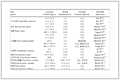
There were some differences in temperature and salinity between 2017 and 2019 in our study. For example, stations C14 and E2 were located at the same position (21˚N and 120.5˚E) in the Luzon Strait, while station E2 in 2017 (temperature: 30.64℃; salinity: 33.64) had higher temperature and salinity than station C14 in 2019 (temperature: 30.11℃; salinity: 33.51). This difference may be due to inter-annual variations of the Kuroshio and its intrusion into the NSCS, thus using different end-members for the two years would be better to reveal inter-annual variations. However, we observed that the fractional contributions of the Kuroshio water calculated by different end-members for the two years (stations C05 in 2019 and F2 in 2017) had non-significant differences with those by the average values of the two years (Wilcoxon signed rank test: p > 0.05; n = 47). It was not possible to calculate the fractional contributions of the SCS water and the coastal water using different endmembers for the two years, as no station was located in the middle of the SCS in the 2019 cruise or in low-salinity areas particularly close to the nearshore in the 2017 cruise. According to Wu et al. (2021) and Sun et al. (2021), the diagrams of potential temperature and salinity exhibited that most of the data points were located between the lines representing the Kuroshio water and the SCS water end-members. Therefore, we applied the average temperature and salinity of the two years (at stations C05 and F2) for the Kuroshio water end-member in this study (Table 1). Wu et al. (2021) and Sun et al. (2021) selected stations C36 and DC6 to represent the coastal water and the SCS water, respectively. We selected the lowestsalinity station C29 and its nearby low-salinity station C36 to represent the coastal water, and stations DC6 and DC8 in the middle of the SCS to represent the SCS water.
|
Table 1 The end-member values (mean ± SD) for the Kuroshio water, the SCS water, and the coastal water |
The relationship between lipid biomarker concentrations (and their proportions) and the proportions of different water mass was tested by Spearman's rank correlation analyses using IBM SPSS Statistics 26, with a significance level set at P < 0.05.
3 Results 3.1 Hydrological DataThe distribution of surface temperature and salinity for the 2017 and 2019 cruises have been reported in previous studies (Mao et al., 2019; Wu et al., 2021). Surface temperature ranged from 27.27 to 30.83℃, with an average of 29.61℃ (Fig.2a). Surface salinity ranged from 32.67 to 34.58, with an average of 33.76 (Fig.2b). Temperature and salinity showed high values in the eastern Luzon Strait, while they decreased from northeast to southwest due to the influence of the Kuroshio intrusion into the NSCS. Low salinity was also observed at some stations in the coastal areas, e.g., stations C29 (32.67) and C36 (33.47), due to the influence of the coastal currents.

|
Fig. 2 Distributions of temperature (℃) and salinity in the surface waters in the NSCS and the Western Pacific. Note the difference in color scales. |
The results of three end-member mixing model are shown in Fig.3. fKW showed a clear spatial distribution pattern of the Kuroshio intrusion, with higher values east of Luzon Strait, indicating a clear pathway of the Kuroshio intrusion through the Luzon Strait into the NSCS (Fig.3a). In contrast, fSCSW showed higher values in the middle of the SCS and gradually decreased along the Kuroshio intrusion pathway (Fig.3c). fCW showed high values in the coastal areas (Fig.3b). We thus identified three water masses, i.e., the Kuroshio water, the SCS water, and the coastal water when they were dominant and contributed ≥ 0.5. Among the sampling stations, there were 12, 11 and three dominant stations (f ≥ 0.5) for the Kuroshio water, the SCS water and the coastal water, respectively.

|
Fig. 3 The fractional contributions of the three water masses in the surface waters at each sampling station: (a) The Kuroshio water (fKW), (b) the coastal water (fCW), and (c) the South China Sea water (fSCSW). Black lines represent the proportion of 0.5, where is strongly influenced by the three water masses. |
Brassicasterol/epi-brassicasterol concentrations ranged from 3.3 to 105 ng L−1 (41 ng L−1 on average; Fig.4a), with high values in the coastal areas (46–105 ng L−1; 70 ng L−1 on average). Dinosterol concentrations ranged from 0 to 23 ng L−1 (7.7 ng L−1 on average; Fig.4b), showing high values in the Kuroshio water (1.0–23 ng L−1; 11 ng L−1 on average). C37 alkenones concentrations ranged from 0 to 20 ng L−1 (3.1 ng L−1 on average; Fig.4c), being highest in the Kuroshio water (0–20 ng L−1; 6.2 ng L−1 on average). The sum of the lipid biomarkers (ΣPB) concentrations ranged from 3.3 to 145 ng L−1 (51 ng L−1 on average; Fig.4d), which in the coastal water (53–125 ng L−1; 84 ng L−1 on average) and in the Kuroshio water (9–145 ng L−1; 62 ng L−1 on average) were about twice and 1.5 times higher than that in the SCS water (22–80 ng L−1; 41 ng L−1 on average), respectively.

|
Fig. 4 Distributions of lipid biomarkers (brassicasterol/epi-brassicasterol (ng L−1), dinosterol (ng L−1), C37 alkenones (ng L−1), the sum of brassicasterol/epi-brassicasterol, dinosterol, and C37 alkenones (ΣPB; ng L−1) in the surface suspended particles in the NSCS and the Western Pacific in summer. |
The ratios of brassicasterol/epi-brassicasterol to ΣPB (B/ΣPB) ranged from 69% to 90% (81% on average), showing high values in the coastal water (range: 84%–87%; 85% on average; Figs.5a, 6b and 7). The ratios of dinosterol to ΣPB (D/ΣPB) ranged from 0 to 26% (15% on average), with high values in the Kuroshio water (10% –26%; 18% on average; Figs.5b and 6c). The ratios of C37 alkenones to ΣPB (A/ΣPB) ranged from 0 to 21% (5% on average), with high values in the Kuroshio water (0–18%; 7% on average; Figs.5c and 6d).

|
Fig. 5 Distributions of individual lipid biomarker proportions (% of the sum of the three lipid biomarkers (ΣPB), (brassicasterol/epi-brassicasterol)/ΣPB (B/ΣPB), dinosterol/ΣPB (D/ΣPB), and C37 alkenones/ΣPB (A/ΣPB)) in the surface suspended particles in the NSCS and the Western Pacific in summer. Note the difference in color scales. |

|
Fig. 6 Surface potential temperature versus salinity plots in the NSCS superimposed by (a) the sum of the three lipid biomarkers (ΣPB; ng L−1), (b) brassicasterol/epi-brassicasterol/ΣPB (B/ΣPB; %), (c) dinosterol/ΣPB (D/ΣPB; %), and (d) C37 alkenones/ΣPB (A/ΣPB; %). The Kuroshio water, the SCS water and the coastal water are shown when its contribution is higher than 0.50. |

|
Fig. 7 The mean values (± SD) of individual lipid biomarker proportions (%) and ΣPB (the sum of the three lipid biomarkers) concentrations (ng L−1) in different water masses (f ≥ 0.5) of the NSCS and the Western Pacific. |
ΣPB showed significant positive correlations with the proportion of the coastal water (fCW; Spearman's correlation coefficient r = 0.300; P ≤ 0.041; Table 2). B/ΣPB correlated positively with the proportion of the SCS water (fSCSW; r = 0.346; P ≤ 0.019) and negatively with the proportion of the Kuroshio water (fKW; r = −0.414; P ≤ 0.004), opposite to the correlations for D/ΣPB, which correlated negatively with fSCSW (r = −0.315; P ≤ 0.033). Non-significant correlations were found between A/ΣPB and the proportions of all three water masses (P > 0.05).
|
|
Table 2 Spearman's correlation coefficients between lipid biomarkers and three water mass proportions |
The data of potential temperature and salinity from the two cruises in our study indicated the mixing of the SCS water and the Kuroshio water in the NSCS (Sun et al., 2021; Wu et al., 2021) (Fig.2). To quantify the impact of the Kuroshio intrusion, Du et al. (2013) proposed an isopycnic mixing model based on two end-members, which can calculate the contributions of the Kuroshio and the SCS water by potential temperature or salinity. This mixing model has been validated by a conservative tracer Ca2+ (Du et al., 2013) and has been widely applied to study the influence of the Kuroshio intrusion on nutrients (Du et al., 2013), total organic carbon fluxes (Wu et al., 2015), ammonia oxidation (Xu et al., 2018), heterotrophic and autotrophic metabolisms (Huang et al., 2019), and microzooplankton community in the cruise of 2017 in the SCS (Sun et al., 2021). Hence, it is reasonable to conclude that temperature and salinity are adopted to derive the Kuroshio and the SCS water proportions in the NSCS. However, this model did not take into the consideration of the freshwater input influence, even in the shelf areas (Xu et al., 2018) although it has been found that hydrogen and oxygen isotopic compositions were affected by the coastal currents, in addition to the Kuroshio intrusion in the deep-basin areas of the NSCS (Wu et al., 2021). Furthermore, the isotope mixing model showed that the contributions of the Kuroshio, the SCS, and the coastal water to the upper water (0–200 m) of the NSCS were 15%, 40%, and 45%, respectively (Wu et al., 2021). And significantly low salinity values were found in the coastal areas, especially west of Taiwan Island (Fig.2b). Accordingly, we attempted to quantify the mixing contributions of the Kuroshio, the SCS, and the coastal water in surface waters using a three end-member model by temperature and salinity.
In our study area, the proportions of the water mass contributed by three water masses were overall similar, i.e., 34 ± 16% from the Kuroshio water, 34 ± 14% from the SCS water and 31 ± 19% from the coastal water (Fig.3). However, previous studies from the same 14 stations showed a higher contribution of the Kuroshio water (36 ± 16%), and a lower contribution of the SCS water (27 ± 17%) and the coastal water (36 ± 20%) compared to our results (Wu et al., 2021). The different results can be attributed to different water layers considered in the calculation, i.e., only the surface water in our study, and surface and subsurface water (up to 200 m) in Wu et al. (2021). Because the area of the Kuroshio intrusion into the NSCS gradually decreased from the surface to 300 m (Chen et al., 2011a), it is reasonable that the contribution of the Kuroshio water was higher in the surface water than in the deeper layers.
4.2 Spatial Variations of Phytoplankton Biomass in Different Water MassesIn our study, ΣPB correlated positively with fCW (Table 2), indicating that phytoplankton biomass was mainly influenced by the coastal currents. Indeed, the average ΣPB concentration in the coastal water was about two times higher than that in the SCS water (Fig.7). In the NSCS, strong stratification and nitrogen limitation resulted in low primary production in the upper water column during the warm season (Liu et al., 2002; Ning et al., 2004; Wong et al., 2007). The large riverine and submarine groundwater discharges delivered large amounts of nutrients to the coastal waters (Liu et al., 2012), resulting in high chlorophyll a and ΣPB (Li et al., 2012; Li et al., 2014; Ho et al., 2015). Similarly, primary production and chlorophyll a concentrations were higher at some stations in the west of Taiwan and even the upstream Kuroshio (Fig.4d), being partially attributed to nutrient-rich and diluted the coastal water triggered by typhoons (Chen, 2005; Chen et al., 2009). Typhoons occur very frequently in the SCS, especially in summer (Chen, 2005; Mao et al., 2019; Shih et al., 2020). Although high contributions of the coastal water were observed only at three stations in our study, the impact of the coastal water on phytoplankton biomass was still strong.
In addition, phytoplankton biomass was also influenced by the Kuroshio intrusion, showing that the average ΣPB concentration in the Kuroshio water was about 1.5 times higher than that in the SCS water (Fig.7). Interestingly, we also found that high values of ΣPB (> 100 ng L−1) occurred in the mixing region of the Kuroshio water and other water masses, where the proportion of the Kuroshio water was 50% − 60% (Fig.6a). Previous studies have shown that bacterial activity and nitrate concentrations were unimodal functions of the proportion of the Kuroshio water, reaching a maximum at the moderate proportion of the Kuroshio water (50% − 60%) (Huang et al., 2019). In this mixing zone, dissolved organic matter from the Kuroshio water stimulated bacterial activity, while its decomposition released inorganic nutrients that can stimulate phytoplankton production in the NSCS (Huang et al., 2019). The mixing of the Kuroshio water with the SCS water may also induce fronts, which are associated with intense upwelling, uplifting nutrients from subsurface to the upper layer, and increasing phytoplankton productivity and abundance (Tan et al., 2013; Guo et al., 2017). Additionally, the highest ΣPB concentration was observed at station C18 (19.9˚N and 120.5˚E) near the Luzon Island in our study, where was characterized by lower temperature and higher salinity compared to adjacent stations (Fig.2). Thus, phytoplankton growth can be potentially stimulated by the upwelled subsurface nutrients induced by cold-core eddies, which has been previously observed at station 5 (20˚15´N and 120˚31´E) in late spring (Chen et al., 2007). Except these three highvalue stations, the average ΣPB concentration in the Kuroshio water (42 ng L−1) was similar to that in the SCS water. The small differences in phytoplankton biomass between the two water masses may be attributed to the low iron concentrations and increase in the grazing pressure (Huang et al., 2019). Thus, fronts and eddies induced by the Kuroshio intrusion can cause several fold increases in phytoplankton biomass at certain stations.
In summary, our results show that the increase in phytoplankton biomass in the NSCS was mainly influenced by the coastal currents. While the overall impact of the Kuroshio intrusion was relatively low, the dramatic increases in phytoplankton biomass were observed in the mixing region of the Kuroshio water and other water masses and mainly induced by fronts and eddies. The thermal stratification in the upper ocean is predicted to be stronger (Bopp et al., 2013; Fu et al., 2016), thus the horizontal currents play an increasingly important role through nutrient inputs from freshwater and upwelling during the mixing of water masses.
4.3 Spatial Variations of Phytoplankton Community in Different Water MassesWe observed that brassicasterol/epi-brassicasterol presented the highest proportion (about 81%), followed by dinosterol (about 15%) and C37 alkenones (about 5%) (Fig.5), consistent with previous findings of lipid biomarker analysis in the SCS (Li et al., 2012; Li et al., 2014; Dong et al., 2015). It should be noted that lipid biomarkers are proxies of phytoplankton biomass in suspended particles, while most field observations have reported the distribution of phytoplankton abundance. For a better comparison, we calculated the proportions of phytoplankton biomass based on published data, i.e., multiplying phytoplankton abundance (Wang et al., 2020) by per-cell contents of particulate organic carbon in dominant phytoplankton groups (mean contents in diatoms and dinoflagellates (Finkel et al., 2016) and in Trichodesmium thiebautii (Luo et al., 2012) in the NSCS. We observed highly comparable diatom proportions between published phytoplankton enumerations (about 80%) and our lipid biomarker results. However, there was a mismatch between the two methods, showing lower re-calculated biomass proportions of dinoflagellates (ca. 3%) and haptophytes (low abundance and only one species identified (Wang et al., 2020)) than lipid biomarker results. One explanation is that only large phytoplankton was collected (using 20 μm mesh) and analyzed in phytoplankton enumerations (Wang et al., 2020), while more species could be collected using GF/F filters (about 0.7 μm) in our study. Another consideration is that there is lack of suitable lipid biomarkers for cyanobacteria (about 19% of total phytoplankton biomass), which could partially explain the different results between our study and previous work. Nevertheless, both our study and previous work suggest that diatoms account for the highest proportions of total phytoplankton biomass, with less proportions of dinoflagellates and haptophytes, indicating the importance of lipid biomarkers for the study of phytoplankton function groups in the NSCS.
Furthermore, our results show that spatial distribution patterns and correlations with the proportions of water masses were different between the three lipid biomarkers (Table 2), suggesting that phytoplankton community was controlled by different water masses in the NSCS. We observed that B/ΣPB correlated positively with fSCSW and negatively with fKW, while D/ΣPB correlated negatively with fSCSW (Table 2), with high D/ΣPB in the Kuroshio water and high B/ΣPB outside the Kuroshio water (Figs. 6b–6c), consistent with published enumerations of phytoplankton (Wang et al., 2020). Specifically, the average B/ΣPB in the SCS water (83%) was 5% higher compared to the Kuroshio water (77%) and 2% lower compared to the coastal water (85%; Fig.7). In contrast, the average D/ΣPB in the SCS water (14%) was 4% lower compared to the Kuroshio water (18%) and 2% higher compared to the coastal water (12%). These results are consistent with previous observations, showing that high nutrients from the coastal currents benefited the growth of diatoms, but the oligotrophic Kuroshio water favored the growth of dinoflagellates (Wang et al., 2020). Indeed, the competitive superiority of dinoflagellates overall shifts to that of diatoms with increasing nutrient concentrations (Margalef, 1978; Bi et al., 2021), and this succession have been widely observed in eutrophic bays and river inlets (Aubry et al., 2004; Gettings et al., 2014; Mutshinda et al., 2016; Ratmaya et al., 2019). Comparable situations have been reported in the SCS, where nutrient concentrations decrease from the coastal regions to the open sea and from winter to summer, resulting in species succession from diatoms to dinoflagellates (Ning et al., 2004; Wei et al., 2018). Besides, temperature may be another important reason for the high dinoflagellate proportions in the Kuroshio water, where temperature (30.4℃) was higher than the SCS water (28.71℃). It has been suggested that the dinoflagellate/diatom ratio tends to increase with increasing temperature in the ECS (Xiao et al., 2018) and the Pearl River Estuary (Cheung et al., 2021). In addition, the intensity of seawater stratification may also impact the diatom-dinoflagellate competition. In stratified, nutrient-limited water, dinoflagellates may dominate phytoplankton biomass (Lewandowska et al., 2014; Xie et al., 2015; Wells et al., 2020; Bi et al., 2021).
In our study, A/ΣPB in the oligotrophic Kuroshio water (7%) was 4% higher compared to the coastal water (3%) and the SCS water (3%), consistent with the view that haptophytes are better adapted to nutrient limited conditions (Baumann et al., 2005; Winder and Sommer, 2012). Nutrient concentrations in the Kuroshio are lower than the NSCS (Du et al., 2013). Similarly, investigations in the summer of 2008 and 2009 showed that A/ΣPB gradually increased seaward in the SCS (Li, 2012; Li et al., 2014). Moreover, we observed that A/ΣPB showed no significant correlation with fKW (Table 2), and its high values occurred near the Luzon Strait (Fig.5c), rather than east of Taiwan with the high Kuroshio water proportions. It is worth to note that high A/ΣPB (> 1%) mostly occurred in 45%–60% proportions of the Kuroshio water, except for one station (Fig.6d), similar to high ΣPB induced by the Kuroshio intrusion (Fig.6a). Some haptophytes such as Emiliania huxleyi thrive in upwelling waters adjacent to the oceanic fronts (Mitchell-Innes and Winter, 1987; Kleijne et al., 1989; Eynaud et al., 1999). Therefore, the high proportions of haptophytes near the Luzon Strait may be attributed to the Kuroshio intrusion accompanied by the eddies and fronts.
In summary, different distribution patterns of the three biomarkers in the three water masses revealed that the Kuroshio intrusion had stronger effects on phytoplankton communities than the coastal currents. The competitive advantage of diatoms over dinoflagellates increased as the diminishing influence of the Kuroshio, and the influence of the coastal currents would further slightly enhance this advantage. Also, upwelling water induced by the edge of the Kuroshio intrusion favored the growth of haptophytes. Variations in phytoplankton community structure induced by the Kuroshio currents and the coastal currents can further modulate marine biogeochemical processes and carbon flux in the oligotrophic NSCS (Cai et al., 2015).
5 ConclusionsIn this study, the results of lipid biomarkers (brassicasterol/epi-brassicasterol, dinosterol and C37 alkenones) showed the importance of the Kuroshio intrusion and the coastal currents on phytoplankton biomass and community structure in the oligotrophic NSCS basin during summer. We further quantified the impacts of the Kuroshio intrusion and the coastal currents on phytoplankton based on a hydrological three end-member mixing model. The positive correlations between phytoplankton biomass and the proportion of the coastal water suggested that nutrients from the coastal currents were the major factor controlling phytoplankton biomass. The Kuroshio intrusion also stimulated high biomass at certain stations with a moderate proportion of the Kuroshio water. The Kuroshio intrusion was likely the main control on phytoplankton community structure, resulting in a decrease in diatom proportions and an increase in dinoflagellate proportions with an increasing proportion of the Kuroshio water. As phytoplankton community dominated by diatoms can sequester large amounts of carbon in the ocean, the coastal currents with high phytoplankton biomass and the predominance of diatoms can potentially increase the efficiency of the biological pump. The Kuroshio intrusion and the coastal currents vary in response to climate change and human activities. Future studies with systematic models and larger spatial coverage are recommended to illustrate the potential feedbacks of phytoplankton variations to the ocean, especially in marginal sea-open ocean boundary regions.
AcknowledgementsWe thank Dr. Haili Ma for sampling help. Samples were collected onboard R/V Dong Fang Hong II, implementing the open research cruise NORC2017-07 and R/V Haida, implementing 2019 summer cruise of CPIES. We thank Dr. Weifang Chen (Xiamen University), Dr. Jia Zhu (Xiamen University) and Dr. Qiang Ren (Institute of Oceanology, Chinese Academy of Sciences) for kindly providing CTD data. The study was supported by the National Natural Science Foundation of China (No. 41876118), and the Global Climate Changes and Air-Sea Interaction Program (No. GASI-02-PAC-ST-Wwin). This is MCTL (Key Laboratory of Marine Chemistry Theory and Technology) contribution #281.
Aubry, F. B., Berton, A., Bastianini, M., Socal, G., and Acri, F., 2004. Phytoplankton succession in a coastal area of the NW Adriatic, over a 10-year sampling period (1990–1999). Continental Shelf Research, 24(1): 97-115. DOI:10.1016/j.csr.2003.09.007 (  0) 0) |
Baumann, K. H., Andruleit, H., Böckel, B., Geisen, M., and Kinkel, H., 2005. The significance of extant coccolithophores as indicators of ocean water masses, surface water temperature, and palaeoproductivity: A review. Palä ontologische Zeitschrift, 79(1): 93-112. DOI:10.1007/BF03021756 ( 0) |
Bi, R., Cao, Z., Ismar-Rebitz, S. M. H., Sommer, U., Zhang, H., Ding, Y., et al., 2021. Responses of marine diatom-dinoflagellate competition to multiple environmental drivers: Abundance, elemental, and biochemical aspects. Frontiers in Microbiology, 12: 731786. DOI:10.3389/fmicb.2021.731786 ( 0) |
Bi, R., Chen, X., Zhang, J., Ishizaka, J., Zhuang, Y., Jin, H., et al., 2018. Water-mass control on phytoplankton spatiotemporal variations in the northeastern East China Sea and the western Tsushima Strait revealed by lipid biomarkers. Journal of Geophysical Research Biogeosciences, 123: 1318-1332. DOI:10.1002/2017JG004340 ( 0) |
Bopp, L., Resplandy, L., Orr, J. C., Doney, S. C., Dunne, J. P., Gehlen, M., et al., 2013. Multiple stressors of ocean ecosystems in the 21st century: Projections with CMIP5 models. Biogeosciences, 10: 6225-6245. DOI:10.5194/bg-10-6225-2013 ( 0) |
Bosch, C., Andersson, A., Kruså, M., Bandh, C., Hovorková, I., Klánová, J., et al., 2015. Source apportionment of polycyclic aromatic hydrocarbons in central European soils with compound-specific triple isotopes (δ13C, Δ14C, and δ2H). Environmental Science & Technology, 49(13): 7657-7665. ( 0) |
Cai, P., Zhao, D., Wang, L., Huang, B., and Dai, M., 2015. Role of particle stock and phytoplankton community structure in regulating particulate organic carbon export in a large marginal sea. Journal of Geophysical Research: Oceans, 120: 2063-2095. DOI:10.1002/2014JC010432 ( 0) |
Chen, G., Hu, P., Hou, Y., and Chu, X., 2011a. Intrusion of the Kuroshio into the South China Sea, in September 2008. Journal of Oceanography, 67(4): 439-448. DOI:10.1007/s10872-011-0047-y ( 0) |
Chen, Y., Chen, H. Y., Jan, S., and Tuo, S. H., 2009. Phytoplankton productivity enhancement and assemblage change in the upstream Kuroshio after typhoons. Marine Ecology Progress, 385: 111-126. DOI:10.3354/meps08053 ( 0) |
Chen, Y., Tuo, S. H., and Chen, H. Y., 2011b. Co-occurrence and transfer of fixed nitrogen from Trichodesmium spp. to diatoms in the low-latitude Kuroshio Current in the NW Pacific. Marine Ecology Progress Series, 421: 25-38. ( 0) |
Chen, Y. L. L., 2005. Spatial and seasonal variations of nitratebased new production and primary production in the South China Sea. Deep Sea Research Part I: Oceanographic Research Papers, 52(2): 319-340. DOI:10.1016/j.dsr.2004.11.001 ( 0) |
Chen, Y. L. L., Chen, H. Y., Jan, S., Lin, Y. H., Kuo, T. H., and Hung, J. J., 2015. Biologically active warm-core anticyclonic eddies in the marginal seas of the western Pacific Ocean. Deep Sea Research Part I: Oceanographic Research Papers, 106: 68-84. DOI:10.1016/j.dsr.2015.10.006 ( 0) |
Chen, Y. L. L., Chen, H. Y., Lin, I. I., Lee, M. A., and Chang, J., 2007. Effects of cold eddy on phytoplankton production and assemblages in Luzon Strait bordering the South China Sea. Journal of Oceanography, 63(4): 671-683. DOI:10.1007/s10872-007-0059-9 ( 0) |
Chen, Y. L. L., Chen, H. Y., Tuo, S. H., and Ohki, K., 2008. Seasonal dynamics of new production from Trichodesmium N2 fixation and nitrate uptake in the upstream Kuroshio and South China Sea basin. Limnology and Oceanography, 53(5): 1705-1721. DOI:10.4319/lo.2008.53.5.1705 ( 0) |
Cheung, Y., Cheung, S., Mak, J., Liu, K., Xia, X., Zhang, X., et al., 2021. Distinct interaction effects of warming and anthropogenic input on diatoms and dinoflagellates in an urbanized estuarine ecosystem. Global Change Biology, 27: 3463-3473. DOI:10.1111/gcb.15667 ( 0) |
Dong, L., Li, L., Li, Q., Liu, J., Chen, Y., He, J., et al., 2015. Basin-wide distribution of phytoplankton lipids in the South China Sea during intermonsoon seasons: Influence by nutrient and physical dynamics. Deep Sea Research Part II: Topical Studies in Oceanography, 122: 52-63. DOI:10.1016/j.dsr2.2015.07.005 ( 0) |
Du, C., Liu, Z., Dai, M., Kao, S. J., Cao, Z., Zhang, Y., et al., 2013. Impact of the Kuroshio intrusion on the nutrient inventory in the upper northern South China Sea: Insights from an isopycnal mixing model. Biogeosciences, 10(10): 6419-6432. DOI:10.5194/bg-10-6419-2013 ( 0) |
Eynaud, F., Giraudeau, J., Pichon, J. J., and Pudsey, C., 1999. Sea-surface distribution of coccolithophores, diatoms, silicoflagellates and dinoflagellates in the South Atlantic Ocean during the late austral summer 1995. Deep Sea Research Part I: Oceanographic Research Papers, 46(3): 451-482. DOI:10.1016/S0967-0637(98)00079-X ( 0) |
Finkel, Z. V., Follows, M. J., and Irwin, A. J., 2016. Size-scaling of macromolecules and chemical energy content in the eukaryotic microalgae. Journal of Plankton Research, 38(5): 1151-1162. DOI:10.1093/plankt/fbw057 ( 0) |
Fu, W., Randerson, J. T., and Moore, J. K., 2016. Climate change impacts on net primary production (NPP) and export production (EP) regulated by increasing stratification and phytoplankton community structure in the CMIP5 models. Biogeosciences, 13(18): 5151-5170. DOI:10.5194/bg-13-5151-2016 ( 0) |
Gettings, R. M., Townsend, D. W., Thomas, M. A., and KarpBoss, L., 2014. Dynamics of late spring and summer phytoplankton communities on Georges Bank, with emphasis on diatoms, Alexandrium spp., and other dinoflagellates. Deep Sea Research Part II: Topical Studies in Oceanography, 103: 120-138. DOI:10.1016/j.dsr2.2013.05.012 ( 0) |
Guo, L., Xiu, P., Chai, F., Xue, H., Wang, D., and Sun, J., 2017. Enhanced chlorophyll concentrations induced by Kuroshio intrusion fronts in the northern South China Sea. Geophysical Research Letters, 44(22): 11565-11572. DOI:10.1002/2017GL075336 ( 0) |
Guo, W., Jia, G., Ye, F., Xiao, H., and Zhang, Z., 2019. Lipid biomarkers in suspended particulate matter and surface sediments in the Pearl River Estuary, a subtropical estuary in southern China. Science of the Total Environment, 646: 416-426. DOI:10.1016/j.scitotenv.2018.07.159 ( 0) |
Hernandez, M. T., Mills, R. A., and Pancost, R. D., 2008. Algal biomarkers in surface waters around the Crozet Plateau. Organic Geochemistry, 39(8): 1051-1057. DOI:10.1016/j.orggeochem.2008.04.015 ( 0) |
Ho, T. Y., Pan, X., Yang, H. H., Wong, G. T. F., and Shiah, F. K., 2015. Controls on temporal and spatial variations of phytoplankton pigment distribution in the northern South China Sea. Deep Sea Research Part II: Topical Studies in Oceanography, 117: 65-85. DOI:10.1016/j.dsr2.2015.05.015 ( 0) |
Hu, J., Kawamura, H., Hong, H., and Qi, Y., 2000. A review on the currents in the South China Sea: Seasonal circulation, South China Sea warm current and Kuroshio intrusion. Journal of Oceanography, 56(6): 607-624. DOI:10.1023/A:1011117531252 ( 0) |
Huang, Y., Laws, E., Chen, B., and Huang, B., 2019. Stimulation of heterotrophic and autotrophic metabolism in the mixing zone of the Kuroshio Current and northern South China Sea: Implications for export production. Journal of Geophysical Research: Biogeosciences, 124(9): 2645-2661. DOI:10.1029/2018JG004833 ( 0) |
Kleijne, A., Kroon, D., and Zevenboom, W., 1989. Phytoplankton and foraminiferal frequencies in northern Indian Ocean and Red Sea surface waters. Netherlands Journal of Sea Research, 24(4): 531-539. DOI:10.1016/0077-7579(89)90131-2 ( 0) |
Lewandowska, A. M., Boyce, D. G., Hofmann, M., Matthiessen, B., Sommer, U., and Worm, B., 2014. Effects of sea surface warming on marine plankton. Ecology Letters, 17(5): 614-623. DOI:10.1111/ele.12265 ( 0) |
Li, L., Liu, J., He, J., and Wang, H., 2014. Factors affecting the abundance and community structure of the phytoplankton in northern South China Sea in the summer of 2008: A biomarker study. Chinese Science Bulletin, 59(10): 981-991. DOI:10.1007/s11434-013-0106-4 ( 0) |
Li, Y., 2012. Seasonal variations of phytoplankton biomarkers in surface seawater from the northern South China Sea and their potential as indicators of biomass/community. Master thesis. Ocean University of China.
( 0) |
Li, Y. H., Zhao, M. X., Zhang, H. L., Xing, L., Yang, H. M., and Dai, M. H., 2012. Phytoplankton biomarkers in surface seawater from the northern South China Sea in summer 2009 and their potential as indicators of biomass/community structure. Journal of Tropical Oceanography, 31(4): 96-103 (in Chinese with English abstract). ( 0) |
Liu, K. K., Chao, S. Y., Shaw, P. T., Gong, G. C., Chen, C. C., and Tang, T. Y., 2002. Monsoon-forced chlorophyll distribution and primary production in the South China Sea: Observations and a numerical study. Deep Sea Research Part I: Oceanographic Research Papers, 49(8): 1387-1412. DOI:10.1016/S0967-0637(02)00035-3 ( 0) |
Liu, K. K., Wang, L. W., Dai, M., Tseng, C. M., Yang, Y., Sui, C. H., et al., 2013. Inter-annual variation of chlorophyll in the northern South China Sea observed at the SEATS station and its asymmetric responses to climate oscillation. Biogeosciences, 10(11): 7449-7462. DOI:10.5194/bg-10-7449-2013 ( 0) |
Liu, Q., Dai, M., Chen, W., Huh, C. A., Wang, G., Li, Q., et al., 2012. How significant is submarine groundwater discharge and its associated dissolved inorganic carbon in a river-dominated shelf system-the northern South China Sea?. Biogeosciences, 9: 1777-1795. DOI:10.5194/bg-9-1777-2012 ( 0) |
Luo, Y. W., Doney, S. C., Anderson, L. A., Benavides, M., Berman-Frank, I., Bode, A., et al., 2012. Database of diazotrophs in global ocean: Abundance, biomass and nitrogen fixation rates. Earth System Science Data, 4(1): 47-73. DOI:10.5194/essd-4-47-2012 ( 0) |
Mao, Y., Sun, J., Guo, C., Wei, Y., Wang, X., Yang, S., et al., 2019. Effects of typhoon Roke and Haitang on phytoplankton community structure in northeastern South China Sea. Ecosystem Health and Sustainability, 5(1): 144-154. DOI:10.1080/20964129.2019.1639475 ( 0) |
Margalef, R., 1978. Life-forms of phytoplankton as survival alternatives in an unstable environment. Oceanologica Acta, 1(4): 493-509. ( 0) |
Martin-Creuzburg, D., and Elert, E. V., 2009. Ecological significance of sterols in aquatic food webs. In: Lipids in Aquatic Ecosystems. Kainz, M., et al., eds., Springer, New York, 43-64.
( 0) |
Mitchell-Innes, B. A., and Winter, A., 1987. Coccolithophores: A major phytoplankton component in mature upwelled waters off the Cape Peninsula, South Africa in March, 1983. Marine Biology, 95(1): 25-30. DOI:10.1007/BF00447481 ( 0) |
Müller-Navarra, D. C., Brett, M. T., Liston, A. M., and Goldman, C. R., 2000. A highly unsaturated fatty acid predicts carbon transfer between primary producers and consumers. Nature, 403(6765): 74-77. DOI:10.1038/47469 ( 0) |
Mutshinda, C. M., Finkel, Z. V., Widdicombe, C. E., and Irwin, A. J., 2016. Ecological equivalence of species within phytoplankton functional groups. Functional Ecology, 30(10): 1714-1722. DOI:10.1111/1365-2435.12641 ( 0) |
Nan, F., Xue, H., and Yu, F., 2015. Kuroshio intrusion into the South China Sea: A review. Progress in Oceanography, 137: 314-333. DOI:10.1016/j.pocean.2014.05.012 ( 0) |
Ning, X., Chai, F., Xue, H., Cai, Y., Liu, C., and Shi, J., 2004. Physical-biological oceanographic coupling influencing phytoplankton and primary production in the South China Sea. Journal of Geophysical Research: Oceans, 109: C10. ( 0) |
Peltomaa, E. T., Aalto, S. L., Vuorio, K. M., and Taipale, S. J., 2017. The importance of phytoplankton biomolecule availability for secondary production. Frontiers in Ecology and Evolution, 5 (128): .
( 0) |
Peñaflor, E. L., Villanoy, C. L., Liu, C. T., and David, L. T., 2007. Detection of monsoonal phytoplankton blooms in Luzon Strait with MODIS data. Remote Sensing of Environment, 109(4): 443-450. DOI:10.1016/j.rse.2007.01.019 ( 0) |
Qu, T., Girton, J. B., and Whitehead, J. A., 2006. Deepwater overflow through Luzon Strait. Journal of Geophysical Research: Oceans, 111: C01002. ( 0) |
Qu, T., Mitsudera, H., and Yamagata, T., 2000. Intrusion of the North Pacific waters into the South China Sea. Journal of Geophysical Research: Oceans, 105(C3): 6415-6424. DOI:10.1029/1999JC900323 ( 0) |
Ratmaya, W., Soudant, D., Salmon-Monviola, J., Plus, M., Cochennec-Laureau, N., Goubert, E., et al., 2019. Reduced phosphorus loads from the Loire and Vilaine rivers were accompanied by increasing eutrophication in the Vilaine Bay (South Brittany, France). Biogeosciences, 16(6): 1361-1380. DOI:10.5194/bg-16-1361-2019 ( 0) |
Schubert, C. J., Villanueva, J., Calvert, S. E., Cowie, G. L., von Rad, U., Schulz, H., et al., 1998. Stable phytoplankton community structure in the Arabian Sea over the past 200000 years. Nature, 394(6): 563-566. ( 0) |
Shang, S., Li, L., Li, J., Li, Y., Lin, G., and Sun, J., 2012. Phytoplankton bloom during the northeast monsoon in the Luzon Strait bordering the Kuroshio. Remote Sensing of Environment, 124: 38-48. DOI:10.1016/j.rse.2012.04.022 ( 0) |
Shih, Y. Y., Hung, C. C., Huang, S. Y., Muller, F. L. L., and Chen, Y. H., 2020. Biogeochemical variability of the upper ocean response to typhoons and storms in the northern South China Sea. Frontiers in Marine Science, 7: 151. DOI:10.3389/fmars.2020.00151 ( 0) |
Sun, P., Zhang, S., Wang, Y., and Huang, B., 2021. Biogeographic role of the Kuroshio Current intrusion in the microzooplankton community in the boundary zone of the northern South China Sea. Microorganisms, 9(5): 1104. DOI:10.3390/microorganisms9051104 ( 0) |
Tan, J., Huang, L., Tan, Y., Lian, X., and Zifeng, H. U., 2013. The influences of water-mass on phytoplankton community structure in the Luzon Strait. Acta Oceanologica Sinica, 35(6): 178-189 (in Chinese with English abstract). DOI:10.3969/j.issn.0253-4193.2013.06.019 ( 0) |
Wang, X., Wei, Y., Wu, C., Guo, C., and Sun, J., 2020. The profound influence of Kuroshio intrusion on microphytoplankton community in the northeastern South China Sea. Acta Oceanologica Sinica, 39(8): 79-87. DOI:10.1007/s13131-020-1608-y ( 0) |
Wang, Y., Bi, R., Zhang, J., Gao, J., Takeda, S., Kondo, Y., et al., 2022. Phytoplankton distributions in the Kuroshio-Oyashio Region of the Northwest Pacific Ocean: Implications for marine ecology and carbon cycle. Frontiers in Marine Science, 9: 865142. DOI:10.3389/fmars.2022.865142 ( 0) |
Wang, Y., Li, D. W., Sachs, J. P., Hu, J., Cao, Y., Li, L., et al., 2019. Vertical distribution of isoprenoid GDGTs in suspended particles from the East China Sea shelf and implications for sedimentary TEX86H records. Organic Geochemistry, 136: 103895. DOI:10.1016/j.orggeochem.2019.07.004 ( 0) |
Wei, N., Satheeswaran, T., Jenkinson, I. R., Xue, B., Wei, Y., Liu, H., et al., 2018. Factors driving the spatiotemporal variability in phytoplankton in the northern South China Sea. Continental Shelf Research, 162: 48-55. DOI:10.1016/j.csr.2018.04.009 ( 0) |
Wells, M. L., Karlson, B., Wulff, A., Kudela, R., Trick, C., Asnaghi, V., et al., 2020. Future HAB science: Directions and challenges in a changing climate. Harmful Algae, 91: 101632. DOI:10.1016/j.hal.2019.101632 ( 0) |
Winder, M., and Sommer, U., 2012. Phytoplankton response to a changing climate. Hydrobiologia, 698(1): 5-16. DOI:10.1007/s10750-012-1149-2 ( 0) |
Wong, G. T. F., Tseng, C. M., Wen, L. S., and Chung, S. W., 2007. Nutrient dynamics and N-anomaly at the SEATS station. Deep Sea Research Part II: Topical Studies in Oceanography, 54(14): 1528-1545. ( 0) |
Wu, J., Lao, Q., Chen, F., Huang, C., Zhang, S., Wang, C., et al., 2021. Water mass processes between the South China Sea and the western Pacific through the Luzon Strait: Insights from hydrogen and oxygen isotopes. Journal of Geophysical Research: Oceans, 126: e2021JC017484. ( 0) |
Wu, K., Dai, M., Chen, J., Meng, F., Li, X., Liu, Z., et al., 2015. Dissolved organic carbon in the South China Sea and its exchange with the western Pacific Ocean. Deep Sea Research Part II: Topical Studies in Oceanography, 122: 41-51. DOI:10.1016/j.dsr2.2015.06.013 ( 0) |
Wu, P., Bi, R., Duan, S., Jin, H., Chen, J., Hao, Q., et al., 2016. Spatiotemporal variations of phytoplankton in the East China Sea and the Yellow Sea revealed by lipid biomarkers. Journal of Geophysical Research: Biogeosciences, 121(1): 109-125. DOI:10.1002/2015JG003167 ( 0) |
Xiao, W., Liu, X., Irwin, A. J., Laws, E. A., Wang, L., Chen, B., et al., 2018. Warming and eutrophication combine to restructure diatoms and dinoflagellates. Water Research, 128: 206-216. DOI:10.1016/j.watres.2017.10.051 ( 0) |
Xie, L., Tian, J., Zhang, S., Zhang, Y., and Yang, Q., 2011. An anticyclonic eddy in the intermediate layer of the Luzon Strait in autumn 2005. Journal of Oceanography, 67(1): 37-46. DOI:10.1007/s10872-011-0004-9 ( 0) |
Xie, Y., Tilstone, G. H., Widdicombe, C., Woodward, E. M. S., Harris, C., and Barnes, M. K., 2015. Effect of increases in temperature and nutrients on phytoplankton community structure and photosynthesis in the western English Channel. Marine Ecology Progress Series, 519: 61-73. DOI:10.3354/meps11101 ( 0) |
Xu, M. N., Zhang, W., Zhu, Y., Liu, L., Zheng, Z., Wan, X. S., et al., 2018. Enhanced ammonia oxidation caused by lateral Kuroshio Intrusion in the boundary zone of the northern South China Sea. Geophysical Research Letters, 45(13): 6585-6593. DOI:10.1029/2018GL077896 ( 0) |
Zhao, M., Mercer, J. L., Eglinton, G., Higginson, M. J., and Huang, C. Y., 2006. Comparative molecular biomarker assessment of phytoplankton paleoproductivity for the last 160 kyr off Cap Blanc, NW Africa. Organic Geochemistry, 37(1): 72-97. DOI:10.1016/j.orggeochem.2005.08.022 ( 0) |