 2019, Vol. 18


2) Shandong Provincial Key Laboratory of Depositional Mineralization & Sedimentary Minerals, Shandong University of Science and Technology, Qingdao 266590, China;
3) Evaluation and Detection Technology Laboratory for Marine Mineral Resources, Qingdao National Laboratory for Marine Science and Technology, Qingdao 266100, China;
4) Research Institute of Petroleum Exploration & Development, Langfang 065007, China;
5) College of Earth Science and Engineering, Shandong University of Science and Technology, Qingdao 266590, China
Gas hydrate is an ice-like solid formed by natural gas such as methane under high pressure and low temperature. Its global carbon content is about 2.0×10¹⁶ m3, which is twice of the world's proved fossil energy (coal, oil and natural gas). Known as the last and irreplaceable energy resources for human in the 21st century (Collett, 2002; Yao et al., 2008), the gas hydrate has important economic value and strategic significance. And as an important part of the global carbon cycle, its formation, decomposition and evolution have great impacts on global climate change and benthic ecosystem (Dickens et al., 1995; Song, 2003a, 2003b; Malsin et al., 2004). The rapid disintegration of hydrates is also an important inducement for engineering accident and other geological disasters such as submarine slide (Marinakis et al., 2015). The China Geological Survey got the gas hydrate samples from the Shenhu Area of the northern slope of South China Sea from April to June in 2007, the Muli frozen soil of Qilian Mountains in November, 2008 and the central uplift of Taixinan Basin of South China Sea from June to September in 2013. They realized the strategic breakthrough of gas hydrate exploration (Wu et al., 2007; Zhu et al., 2009; Zhang et al., 2014).
The Okinawa Trough in the East China Sea is a backarc rift basin formed by subduction and collision of the Philippine Sea Plate toward the Eurasian Plate since the late Miocene (Li et al., 2012a, 2013). In the work of Li et al. (2004) and Li (2008), two regional unconformity interfaces T11 and T20 (equivalent to the bottom boundary of Quaternary and Pliocene respectively in the East China Sea Shelf) within the Okinawa Trough were identified by using seismic and shallow seismic profiles, and five seismic sequences of Ua, Ub, Uc, Ud and Ue were marked. The filling strata are further explained from top to bottom as muddy silt and bathyal turbidite, clay deposits in Holocene, shallow marine terrigenous sand and bathyal mud, tuffaceous mud in Pleistocene, dolomitic mudstone, sandstone and volcanic rock in Pliocene and marine-continental transitional sandstone, mudstone and tuff in Miocene. According to Letouzey and Kimura (1985) and Qin et al. (1987), the southern Okinawa Trough is only filled with Quaternary strata.
The phase equilibrium simulation of gas hydrate shows that Okinawa Trough is rich in hydrate resources (Luan et al., 2003; Fan and Yang, 2004), and the predicted gas hydrate resources are up to 5.9 – 24×1012 m3 (Yang et al., 2004; Chen, 2014). Direct or indirect evidences for gas hydrates have been found in the western slope and adjacent basin of Okinawa Trough, such as the bottom simulating reflections (BSRs), undersea cold springs, pyrite associated with methane leakage, mud diapirs/mud volcanoes, gas chimneys, methane anomalies of bottom water and satellite thermal IR temperature increase anomalies (Meng et al., 2000; Yin et al., 2003; Yang et al., 2004; Luan and Qin, 2005; Zhao et al., 2006; Li, 2008; Xu et al., 2009; Li et al., 2015b; Wang et al., 2015). Until now, no public news of getting gas hydrate has been reported yet. Luan and Qin (2005) explained that the curtain and turbid reflections on the single-channel seismogram in the Miyoko section of Okinawa Trough were caused by the gas springs with free gas releasing out of seafloor. They also considered that the gas hydrate may develop in the strata above the blank reflection belt and the diapir below the gas springs provides an effective channel for gas-bearing fluid migration. Wang et al. (2015) and Li et al. (2015b) confirmed that the middle slope of Okinawa Trough is an important methane leakage zone, and the anaerobic oxidation of methane (AOM) is intense based on the geochemical features of pore-water and δ34S values of authigenic pyrite at multiple stations. Yin et al. (2003), Zhao et al. (2006), Yao et al. (2008) and Xu et al. (2009) identified a series of mud diapirs/mud volcanoes on the margin of the East China Sea Shelf, especially on the southern slope of Okinawa Trough. The seismic polarity-reversal, the blank belt and the velocity anomalies above mud diapirs on the reflection seismic section indicate the existence of BSR and gas hydrate. Meanwhile, the bright spots and the strong amplitude, chaotic reflections reflect the role that the gas-bearing fluid plays in the diapir structure and gas hydrate formation.
Luan et al. (2008), Xu et al. (2012) and Chen (2014) comprehensively analyzed the mineralization conditions of the gas hydrates in Okinawa Trough from the water depth, oceanic heat flow, gas source conditions and the gas migration pathway such as fault/mud diapirs, and agreed that it has good prospect for hydrate exploration. Fang et al. (2005) and Guo et al. (2007) emphasized the influence of canyon-submarine fan system and submarine landslide on the hydrate accumulation in Okinawa Trough, suggesting that the seabed turbidite fans accumulated outside of the canyons often have high deposition rate and are favorable for organic matter preservation. They provide sufficient source of methane gas for the generation of gas hydrate, but the submarine landslide can also cause the hydrate destruction, decomposition and release of gas, which reversely lead to the sediment buckling deformation. Liu et al. (2003), Li (2008) and Wu et al. (2014) identified 16 submarine canyons in the middle-southern slope of Okinawa Trough based on multi-beam sounding data. Li et al. (2001) and Liu et al. (2005) also discussed the canyon transportation of the gravity flows and submarine fan systems. However, there is a lack of interrelated research about the sedimentary filling sequences, the erosion-transportation-redeposition of deep-water gravity flows and their internal relation with the differential accumulation of gas hydrate.
2 Geologic and Tectonic SettingOkinawa Trough is located in the east of the East China Sea Shelf and the west of the Ryukyu Island Arc Subduction Zone, which begins from Yilan County in Taiwan in the southwest and expands to the Kyushu Islands in Japan in the northeast. The Okinawa Trough connects with the East China Sea Shelf Basin by the Diaoyu Island Fold Belt. As an important part of the trench-arc-basin system in the active continental margin of the western Pacific Ocean (Guo et al., 1983), Okinawa Trough is a back-arc rift basin that is still in its early spreading stage. The trough has a blocking feature in S–N strike, so it can be divided into three sections of northern, middle and southern trough by the NW trending Tokara fault and Miyako fault, showing the characteristics of wide graben basin, high heat flow and deep water, respectively (Fang et al., 2005). The northern Okinawa Trough is NNE trending with a long extensional history and large strata thickness of Pliocene and Quaternary, whose width is of 230 km and water depth of 200–1000 m. The middle segment is NE trending and characterized by high heat flow, high geothermal gradient, intense magmatic, hydrothermal and earthquake activities. The average heat flow in the middle trough is as high as 590 mW m-2 and the water depth is between 1000 and 2000 m. The south segment is NEEEW trending with largest water depth and strongest crustal extension. The maximum water depth of the central graben is more than 2300 m. The crust thickness in Yaeyama graben is only 15 km (Hao et al., 2004; Luan and Qin, 2005; Xu et al., 2012; Wu et al., 2014). The identification of submarine magnetic anomaly and Brunhes, Jaramillo, Olduvai and other polarity events further indicate that the southern segment of trough has entered the stage of seafloor spreading and oceanic crust formed there (Zhang and Shang, 2014).
Okinawa Trough is the combined result of subduction of the Pacific-Philippine Sea Plate toward the Eurasian Plate, back-arc spreading and collision and wedging of the India-Australia Plate toward the Eurasian Plate (Xu and Zhang, 2000a, 2000b, 2000c; Li et al., 2013; Li et al., 2016a, 2016b). From late Jurassic to early Cretaceous, the paleo-Pacific Plate (IZnaiqi Plate) subducted to the united North-South China Block, forming a large-scale Yanshanian continental volcanic belt along the Zhejiang-Fujian coast (Li and Li, 2007; Li et al., 2012a). At the same time, the Indo-Australian Plate drifted northward at a rate of 15 cm yr-1 to push the Neo-Tethyan Oceanic Crust subducting beneath the Eurasian Plate rapidly (Hall, 2012). In the late Cretaceous, the subduction direction of Pacific Plate turned to NNW, and the subduction angle gradually increased to 80° (Li and Zhou, 1999). High-angle subduction and rollback of the plate made the Pacific subduction zone continue to retreat eastward, which broke the East China Sea Shelf and formed NE half grabens and folds (Yu and Chow, 1997; Liu et al., 2004; Li et al., 2012b), constituting the prototype of the East China Sea Shelf Basin. The magmatic arc on the continental margins of the Western Pacific Ocean also began to migrate from the coasts to the East China Sea Shelf (Sengor and Batallin, 1996), where volcanic eruptions occurred. This directly formed the intermediate-acid volcanic rocks and volcanic sedimentary formations (Wang et al., 2000). After entering the Cenozoic, the Tethys subduction plate disappeared and a strong continental collision occurred between the India Plate and the Eurasian Plate at its southern margin. The Tibetan Plateau began to uplift and stimulated the eastward deep mantle creeping flow. When flowing asthenosphere encountered the subducting Pacific slab, the backarc Basin in the East China Sea Shelf strongly rifted. In the late Eocene (about 47 Myr), the Emperor Ridge stopped and the Hawaiian Ridge developed (Koppers and Staudigel, 2005), which indicates that the subduction orientation of Pacific Plate changed from NNW to NWW. The Philippine Sea Plate began to spread along the EW mid-ocean ridges. Later, as the Pacific Plate subducted toward the Asia along the ancient Ryukyu Island Arc (Diaoyu Island Folding Zone), the East China Sea Shelf Basin formed a double-layer structure (Li et al., 2016c). In the Miocene, after the formation of Shikoku-Parece Vela Basin, the Pacific subduction zone jumped to the Izu-OgasawaraMariana Trench, and the Ryukyu Island Arc subduction zone degenerated gradually. Influenced by the subduction of the Philippine Sea Plate, Okinawa Trough began to spread and the Ryukyu Island Arc was separated from the East Asia Continent (Li et al., 2013). From the end of the Pliocene to the present, the Okinawa Trough keeps rifting. The discovery of pillow-like basalts in the middle and southern parts of the trough shows that mantle-derived materials started to erupt out of the seafloor. Linear magnetic anomalies show that Okinawa Trough entered the stage of seafloor spreading before the 2.1 Myr (Liang et al., 2001; Zhang and Shang, 2014).
3 Data and MethodsIn this paper, we selected three 2D reflection seismic lines covering the continental slope of Okinawa Trough and the East China Sea Shelf (L1 and L2 are inlines, L3 is crossline), log of Well A in line L1, VSP data and chronostratigraphic data of the East China Sea Shelf to track and contrast stratigraphic sequences, interpret and identify sedimentary systems. The seismic line L1 is located in the northern part of the middle Okinawa Trough and L2 is located near the Miyako fault in the southern part of the trough. The seismic data has a dominant frequency of 20-30 Hz (Fig. 1). Well A reveals Oligocene, Miocene, Pliocene and Quaternary strata. In addition, the study also utilizes the submarine topography data reported by Liu et al. (2003) and Wu et al.(2004, 2014), the Global Heal Flow Data published by the International Heal Flow Commission (http://www.heatflow.und.edu/index2.html), seabed temperature and heat flow data reported by Luan et al. (2008) and Xu et al. (2012), and mud diapirs/mud volcanoes data reported by Zhao et al. (2006) and Xu et al. (2009).

|
Fig. 1 Structural position of Okinawa Trough and 2D seismic survey area. Pink and red dots indicate the positions of mud volcanoes after Zhao et al. (2006) and Xu et al. (2009). Brown star indicates the position of gas spring after Luan and Qin (2005). The solid blue line indicates the canyon channel after Li et al. (2004). |
In the seismic interpretation process, the principle of sequence stratigraphy and the method adopted are as follows: 1) Chronostratigraphic architecture of the East China Sea Shelf is based on the International Chronostratigraphic Chart published by IUGS (2017), Geologic Time Scale published by the Geological Society of America in 2009 and microbiological fossil zone information reported by Wu et al. (1998). 2) The VSP, well log and chronostratigraphic chart are used to calibrate the interface age of line L1. We firstly track the spatial distribution of subaerial unconformity and its correlative conformity, offlap unconformity, basal surface of forced regression and maximum flooding surface (MFS) from the shelf to the slope in line L1, and then extend to line L2 via crossline L3. 3) Based on the stacking patterns of sedimentary units, the types of reflection terminations and the morphology of sedimentary systems, using frequency, amplitude, seismic event continuity, internal structure and external geometry to divide seismic facies, establishing interpretation models of seismic facies to sedimentary facies and determining the sedimentary types. 4) The terminology of sequence stratigraphy and sedimentology used in the study mainly refer to the concept and classification of Haq et al. (1987), Hunt and Tucker (1995) and Catuneanu (2002).
4 Results 4.1 Sequence Stratigraphic ArchitectureAfter the chronostratigraphic calibration of well, track of unconformity interfaces and identification of sequence configurations, six typical unconformity interfaces including T0 (seafloor), T1 (LGM, 23 kyr B.P.) (Lambeck and Chappell, 2001; Mix et al., 2001; Li et al., 2014), T2 (at the end of middle Pliocene epoch, 2.58 Myr), T3 (at the end of Miocene, 5.33 Myr), T4 (at the end of middle Miocene, 11.02 Myr) and T5 (at the end of early Miocene, 16.12 Myr) have been identified in the slope of middle Okinawa Trough (Fig. 2b). The age of the stratigraphic interfaces are determined by the age of the unconformity surfaces formed by the regional tectonic-environmental events and the comparison with the third-order sequence of the East China Sea Continental Shelf Basin. In the reflection seismic section, the lower Miocene strata developed in the middle trough, but the reflective features are fuzzy and discontinuous, making it difficult to be tracked effectively. Finally, the filling formations are divided into five thirdorder sequences (SQIII1–SQIII5). However, only four typical unconformities and sequence boundaries including T0, T1, T2, T3, T4 are identified in the southern part of the western slope. Although the middle Miocene formation develops, the seismic reflection characteristics are chaotic and the interface is difficult to be tracked continuously. Age and stratigraphic correlation shows that in the early Miocene, due to the subduction of the Philippine Sea Plate, the initial rift of Okinawa Trough started. The northern part of the trough firstly rifted and filled with thick layers of Miocene–Quaternary sediments. From the end of Miocene to Pliocene, the rifting center of the trough moved southward gradually and evolved into a unified basin under the control of Okinawa orogenic movement. Therefore, the southern part of the trough mainly filled with layers of Pliocene–Quaternary sediments (Li et al., 2004; Wu et al., 2004).

|
Fig. 2 Sequence stratigraphic analysis of L1 seismic line across the continental shelf and slope in the Okinawa Trough (see Fig. 1 for the line location). (a) Seismic section across the study area; (b) structural-sequence stratigraphic framework and seismic facies marker interpreted from the seismic section (a); (c) seismic facies units and reflection configuration of the seismic section (a). |
Sequence SQIII1 (middle Miocene, 16.12–11.02 Myr) can be divided into three parasequence sets. The bottom parasequence set is characterized by weak amplitudes, moundy-chaotic reflections (Fig. 2c). Progradation reflection unit, downlapping onto the bottom unconformity in the lower part of slope-break belts and sedimentary shoreline breaks, are progradational parasequence sets formed by sediment supply rate exceeding the growth rate of accommodation space that generated by the base level increase at the stage of relative sea level slow rise (Catuneanu, 2002). They reflect that the sediments transport from the East China Sea Shelf to the Okinawa Trough via the slope. The stratigraphic unit is interpreted as low systems tract (LST), whose bottom interface T5 is a regional angular unconformity with typical characteristic of 'up-onlap and down-truncation' (Fig. 2b), with no correlative conformity mentioned in classical sequences theory. The reason is that the Okinawa Trough was still a strong separated subsag in middle Miocene and the unified sedimentary basin is not formed. Overlying parasequence set mainly presents weak amplitude, low frequency and low continuous reflections. It extends to the shelf and onlaps the upper part of slope-break belts to form retrogradation parasequence sets consisting of two wedges, superposing on maximum regressive surface (MRS) toward the basin (Fig. 2b). It was formed by the base level rise rate exceeds sediment supply rate at the stage of relative sea level fast rise (Catuneanu, 2002), which is interpreted as transgressive system tract (TST). The top interface of the sequence unit is the maximum flooding surface (MFS), whose distribution indicates that the Pacific transgression and sediment unloading have gradually extended over the slope to the shelf. The top parasequence set is characterized by medium amplitudes, medium continuous progradation and oceanic erosion truncation (Fig. 2b) (Catuneanu, 2002), which is interpreted as a complex of highstand system tract (HST) and falling stage system tract (FSST). During the stable period of sea level, the rate of sediments supply is equivalent to that of the rise of base level, and prograding parasequence set that is characterized by sediments accumulation generated in the upper part of the continental slope. After that, the relative sea level dropped rapidly, the accommodation space for sediments decreased sharply, with fluvial down-cutting erosion and sediments bypass over the slope (Fig. 2b). Along with the step-down progradation parasequence sets formed in slope-break belt, the offlap unconformity at the top of sequence unit generated immediately, and the visible marine erosion unconformity was formed in the slop foot (Fig. 2b). The development of marine erosion interface indicates that a sharp sea-level drop occurred in the East China Sea Continental Shelf before 11.02 Myr.
In sequence SQIII2 (late Miocene, 16.12–11.02 Myr), three typical seismic reflection units can be identified and named LST, TST, HST-FSST, respectively (Fig. 2c). Under the control of sea level decline event at 11.02 Myr, the LST at the bottom of the sequence only developed in the interior trough, characterized by weak amplitudes and middle-low continuous reflections. Non-typical downlap prograding wedge was found on the marine eroding unconformity interface T4 at the bottom of the slope, which was formed when the sea level dropped to its lowest point and then rose slowly (Catuneanu, 2002). The overlying TST consists of medium amplitude-wavy filling facies on the shelf, strong amplitude wedges at the top of the slopebreak, weak amplitude-continuous onlap reflections at the lower part of the slope-break, medium/weak amplitudesmedium/weak continuous reflections within the basin (Fig. 2b). The wavy filling reflections above the slope break are coastal prograding sequence made up of massive fluvial sediments after sea level declined at 11.02 Myr. The TST is characterized by the step backing parasequence aggradation toward the shelf (Fig. 2b) and its top boundary interface is MFS. The top unit is a complex of HST and FSST with strong amplitudes and middle-high continuous subparallel reflections. Above the slope-break, there is an incised-filling sequence formed by fluvial sediments during the period of sea level slow rising. 3 or 4 phases of incised fluvial channels on seismic profile can be identified, mainly progradational or lateral prograding type (Fig. 2b). At the bottom of slope-break, there are no visible marine scour and truncation reflections. We speculated that sea level dropped slowly at 5.33 Myr in the East China Sea. It should be the reason that the global sea level decline was compensated by the East China Sea Shelf subsidence during the regional settlement stage because of the influence of Okinawa movement Ⅱ episode.
In sequence SQIII3 (Pliocene, 5.33–2.58 Myr), the detrital materials transported from the South China continental margin and the East China Sea Shelf increased obviously. The sediments were rapidly unloaded and accumulated to form thick and wedge-shaped sedimentary units on the continental shelf and the continental slope. However, the thickness of sedimentary strata in the interior trough was thin. It can be divided into four parasequence sets including LST, TST, HST and FSST (Fig. 2c). Due to the rapid subsidence of the East China Sea Shelf, the LST depositional area has not reduced. The continental shelf is characterized by the fluvial-deltaic wave-parallel aggrading and prograding reflections (Fig. 2b). The middle slopebreak is characterized by strong amplitude, high continuous and subparallel reflections overlying on the T3 interface. The bottom slope-break shows 'broom-like' facies and converges downward layer by layer from the MRS (Fig. 2b). The 'broom-like' parasequence configuration relates with the low seismic resolution and oblique seismic lines to sedimentary bodies. TST consists of the strong amplitude and subparallel onlap reflections in the shelf and upper slope-break, and strong amplitude, parallel and back-stepping reflections in the bottom of slope. The wedges superimposed upon the LST is thick in the slope, and thin in shelf and basin (Fig. 2b). It reflects that during the period of rapid rise of relative sea level, the sediments mainly accumulated on the slope leading to the formation of sediment starved zone in the trough bottom (Luan et al., 2008). The aggradation of overlying HST in upper slope and shelf is weak, whereas the sediments in the lower slope accumulate rapidly to form S-type prograding reflection units with chaotic internal structure. They downlap above the MFS reflecting the migration of sedimentary centers toward the basin (Fig. 2b). The depositional center of FSST continued to migrate to the lower slope to form composite sedimentary units consisting of two wedges (Fig. 3a). The first S-type prograding unit is characterized by medium amplitude and medium-weak continuous reflections, which reflects the continental shelf-marginal deltas with the extension of 10 km. The internal reflection of second wedge is chaotic, extending only 4–5 km, and shows the characteristics of mass transport deposits (MTDs). There are not only no significant sediments unloading on the upper slope due to fluvial erosion, but also they lead to erosion of the underlying HST coastal sequences (Fig. 2b). The top interface of the prograding complex is the offlap unconformity formed when the base level declined (Fig. 3a). It is also named subaerial unconformity which turns into correlative conformity toward basin.

|
Fig. 3 Sequence stratigraphic models, seismic facies and sedimentary interpretation for the L1 seismic line (see Fig. 2 for the section location). |
The top boundary of sequence SQIII4 (2.58–0.023 Myr) is MRS formed in the LGM (Lambeck and Chappell, 2001; Mix et al., 2001; Li et al., 2014). In LGM, the sea level of the East China Sea dropped to 135–150 m below the present level, resulting in the complete exposure, denudation and desertification of the continental shelf, which not only formed the regional unconformity T1, but also are favorable to provide sediment sources for Okinawa Trough (Li et al., 2014; Wu et al., 2014). Sequence SQIII4 consists of four parasequence sets including LST, TST, HST and FSST. LST consists of strong amplitude, high continuous, parallel reflections in shelf and upper slope and weak amplitude, low continuous, complex prograding reflections in lower slope (Fig. 2c). The parallel facies are mainly the reflection responses of coastal aggradation sequences. The complex aggradation units consist of three wedges. The wedge in first stage has a typical topset (Fig. 3a), which reflects the sedimentary characteristics of deltas in the continental margin. The TST is identified mainly based on the signs of the onlap reflections above the MRS at the bottom of the sequence and the backstepping retrogradation reflection marks at the top of the sequence. It is noteworthy that the convergent toplap appears at the top of the sequence in the upper slope (Fig. 2b). The phenomenon shows that the sea level fluctuation can be divided into two stages: early rapid rise and late slow rise. On the other hand, it may reflect that topset has suffered coastal erosion from overlying HST. HST is composed of strong amplitude, offlapping aggradation reflections on the shelf and medium amplitude, medium continuous progradation reflections on the slope (Fig. 2b). Offlapping aggradation reflections on the shelf is sedimentary responses of the littoral fluvial and deltas, which indicates that the rate of base level rise at that time was very close to the sediment supply rate. The progradation sequence of the slope downlaps onto MFS and converges under the basal surface of overlying FSST toward the basin (Fig. 3c), eventually forming a wedge-shaped continental margin delta. The top FSST is made of 4 phases of back-stepping progradation wedges (Fig. 3c). It reflects four stages of rapid relative sea level decline. The four wedges migrate down toward the basin with a top boundary of retrogradation unconformity T1 that formed when global sea level declined in LGM. The first and second wedges are large in scale and extend 25–30 km toward the trough. They are characterized by medium-strong amplitudes and medium-high continuous inclined reflections, which are the sedimentary responses of continental marginal deltas. The third and fourth wedges are small in scale with extension length of 5–6 km, which are characterized by chaotic or inclined filling facies. They should be the slope fans under the MTD mechanism.
Sequence SQIII5 (0.023–0 Myr) can be divided into two parasequence sets including LST and TST. LST consists of two irregular prograding wedges (Fig. 3c), extending about 15 km toward the trough and downlapping onto the T1 interface. They are characterized by medium-weak amplitudes and medium-low continuous inclined reflections representing the sedimentary facies of continental shelfmarginal deltas. TST is mainly composed of strong amplitude, parallel reflections in the shelf, broom-shaped onlap reflections in the slope and strong amplitudes, high continuity, moundy reflections at the bottom of basin (Fig. 2b). The parallel reflections mainly reflect the stable sedimentary sequences in the littoral-neritic environment, and the broom-shaped onlap reflections are the result of the rapid rise of base level. The moundy unit at the bottom of basin extends 30 km (Fig. 3b) and is very close to that of the large-scale canyon channel deposits discovered by Li et al. (2004) at 127°30'–128°E, 29°N. We presumed that the moundy unit was the large submarine fan formed by the gravity flow through the canyon channel.
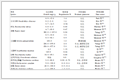
4.2 Seismic Facies and Sedimentary InterpretationSeven typical seismic facies have been identified in the continental slope of middle-southern Okinawa Trough (Table 1). Seismic face A is a series of seismic reflection sequences with wedge-shaped and obvious prograding configuration. According to the contact relation of seismic events, more sedimentary units can be further divided. Most of the sedimentary units are characterized by medium-strong amplitudes, medium-high continuous S-type and inclined progradation reflections or irregular wavy, inclined structures (Figs. 3a and 3c), which are interpreted as continental shelf-marginal deltas. There are topset reflections at top of the wedges, reflecting the aggradation of the delta plains in the coastal zone. These delta wedges mostly developed at the slope-break belt or shoreline break with different sizes (Lv and Chen, 2014; Yang et al., 2017b). Due to the lack of sediment supply, the length of delta wedge developed within the sequences of SQIII1 and SQIII2 is only 3–6 km (Fig. 2b). However, it can be up to 15–26 km within SQIII3 to SQIII5 (Figs. 3a and 3c). This shows that since Pliocene (5.33 Myr –), Okinawa Trough continental slope has received massive detrital materials from the China Mainland and the East China Sea Shelf with sedimentation rate up to 40 cm kyr-1 (Li et al., 1999).
|
Table 1 Seismic facies types and its corresponding sedimentary bodies in the continental slope of Okinawa Trough |
Seismic face B is mainly distributed in the shelf and upper slope, characterized by medium-strong amplitude, medium continuous and wavy-parallel or sheet-like parallel reflections in shelf and strong amplitude and high continuous inclined layers in upper slope (Fig. 2b), which is interpreted as littoral fluvial-delta plain system (Li et al., 2015a; Liu et al., 2016). It mainly shows the process of coastal aggradation, often with the low progradation rate. In the LST of SQIII3 and HST of SQIII4, sedimentary layers of the coastal zone formed the complete offlapping aggradation and progradation reflections toward slope (Figs. 2b and 3c), which reflects sedimentary processes that the fluvial-delta plain toward slope. Because the HST of SQIII3 and the TST of SQIII4 are affected by the fluvial erosion or sediment bypass of the overlying parasequence sets, most of the sediments in the coastal zone were eroded and only thin layers were remained which make them trouble to be identified.
Seismic face C has the typical incised-filling structure whose bottom reflections shows obvious truncation to the underlying strata. Its shape is irregular 'V', 'U' or 'V' with wide base surface in which there are some secondary sequence interfaces. The topography elevation difference is large (Figs. 4a and 4c). According to the external shape and internal structure, it corresponds to the sedimentary characteristics of the incised channels and the submarine canyons (Wu et al., 2011; Su et al., 2015). Incised channels are small with width of 0.6–1.5 km. Seismic filling patterns of channels include chaotic filling, onlapping filling, prograding filling and composite filling, which are mostly formed near the unconformity T1 (Fig. 4a) showing the close relation to the fluvial incision caused by land exposure of the East China Sea Shelf during LGM. The change of the position of incised valleys reflects the frequent horizontal migration. These small channels are mainly located at the outer margin of shelf in Southern Okinawa Trough and may also develop into large submarine canyons. The submarine canyon groups in middlesouthern continental slope of Okinawa Trough are huge (Li et al., 2001). According to Li (2008), the canyon channels have the width of 5–10 km, length of 10–30 km and incised depth of 100–500 m. The submarine canyons revealed in this study are located in the southern slope of the trough adjacent to the Miyako fault. The canyon is about 6 km wide and incises to the Quaternary bottom with the fluctuant boundary affected by MTD. According to the internal contact relationship, three MTD units can be recognized (Figs. 4a and 4c), indicating that the canyon has entered into the filling stage from the erosion episode (Reading and Richards, 1994; Wu and Qin, 2009). The left sidewall of the canyon is slumping units characterized by medium amplitudes and chaotic-continuous reflections. The slump front is strongly extruded and shows 'lying fold' type. The middle part was disrupted to form imbricate structures within which massive compressional deformation structure developed (Figs. 4a and 4c). This indicates that the canyon sidewalls will further deform as the topography or gravity changes. The right sidewall consists of two sliding units between which the interface is interpreted as detachment fault where sedimentary layers decoupled (Figs. 4a and 4c). The detachment surface is the bottom boundary of the canyon. The sediments in lower part of the sliding units show medium amplitudes, medium continuous and stratiform reflections, while the upper layers of the unit are marked by medium-weak amplitudes, medium-low continuous, imbricate deformation reflections. These arched imbricate reflections possibly indicate the hydrocarbon-containing fluid escape induced by MTD (Fig. 4c).

|
Fig. 4 Seismic facies and sedimentary interpretation for the L2 seismic line (see Fig. 1 for the line location). |
Seismic face D shows irregular wedge or triangle, with two different interior seismic reflections including weak amplitude, chaotic fillings and medium amplitude, medium-low continuous, stratified-oblique crossing fillings (Figs. 3a, 3c and 4a) (Wu et al., 2011), which are mainly distributed in the middle-lower slope-break and interpreted as gravity slope fans. The two different seismic reflection configurations reflect different genetic mechanism. Chaotic filling reflections are relative near-sourced deposition, and the sedimentary products of MTDs and debris flow were transported through the deep valley or submarine canyons, and even mixed with sliding or slumping blocks (Yang and Van Loon, 2016; Yang et al., 2017a). The internal deformations of sedimentary bodies led to chaotic seismic reflections (Figs. 3a and c). Stratified-oblique crossing slope fans were formed by distal turbidity currents that have evolved into fluid flows (Lowe, 1982). During their development, fluvial incision in the shelf tended to stop, and the supply of coarse sediments decreased. The stable fluid dynamic conditions and continuous unloading of fine-grained sediments result in good seismic reflection characteristics. Four phases of slope fan can be identified in the upper slope of line L2 in the Southern Okinawa Trough with superimposed fans overlapping on the unconformity T1. As superficial fan root occurs gravity sliding, the imbricate structures develop (Fig. 4a). At the same time, the pore pressure gradually accumulates, as the pore-water in the sediments of the bottom slope fans cannot be effectively discharged due to the fast deposition rate. When the pressure increases to a certain degree, triggered by the deep fluid transported through the right extensional fault, gravity sediments will boil. That is exactly the mechanism of liquefaction deformations in the first and second slope fans (Fig. 4b).
Seismic face E is a series of sequences with moundy shape and two-way downlaps. It is mainly characterized by medium-strong amplitude and medium-high continuous seismic reflections, which are distributed in the bottom of gentle basin. Sometimes, it is also seen on the ancient uplift (Figs. 3b, 3d and 4b). The moundy seismic reflections developed in sequence SQIII5 on line L1 are the response to deep-sea basin floor fan in the Northern Okinawa Trough. The fan has a huge scale and extended about 36 km (Fig. 3b). The size is similar to that of the submarine canyon found in this area by Li et al. (2004), whose channel is 7–10 km wide, 40 km long for the lobe, and 400 m thick for sediments. It not only confirms the existence of this large submarine fan system, but also presents doubts about the current understanding about submarine canyon that is not developed in the northern slope of Okinawa Trough. The moundy reflection on line L2 of the Southern Okinawa Trough was found to be small in size, with a distribution diameter of 5 km and was associated with the upper slope fans (Fig. 4b). The submarine fan and slope fan system formed in the LST and TST of sequence SQIII5 indicated that they developed successionally on the high-steep slope and do not change with sequence evolution. LST's moundy unit of SQIII3 on line Ll coats over the ancient uplift with a lateral width of 15.7 km (Fig. 3d) and is supposed to be either a barrier island or underwater sandbar based on its developmental location. In the littoral-neritic environment, either the wavecontrolled nearshore area sor tidal-controlled estuarineshelf area can develop coastal sandbars which are parallel or oblique crossing to shoreline. The length of these sandbars and sand ridges is up to a few kilometers or tens of kilometers.
Seismic face F is distributed in the shallow seafloor. It occurs as irregular flame-shaped dome, with weak amplitude and imbricate filling reflections inside. The bottom is connected to a extensional fault (Figs. 4b and 4d)), which is interpreted as a mud volcano that extrudes out of seabed. Its formation is related to the high sedimentation rate, extension fault activity and hydrocarbon gas leakage in Okinawa Trough (Zhao et al., 2006; Xu et al., 2009). Due to the high sedimentation rate on the continental slope of Okinawa Trough, pore-water cannot be effectively discharged (Li et al., 1999). Also thanks to the extensional fault, the biogenic methane or deep pyrolytic natural gas in the surrounding strata accumulate into shallow formations along faults (Wu et al., 2009), resulting in abnormal high pressure. When the abnormal pressure reaches a certain limit, the plastic fluid, which is composed of liquid, hydrocarbon gas and fine-grained clastics, was pushed upward and eventually impales the seafloor to form mud volcano. In this process, a large number of gaseous hydrocarbons are released (Figs. 4b and 4d). The sediment disturbance caused by upwelling plastic fluid is the direct reasons of the chaotic and imbricate seismic reflections. Zhao et al. (2006) identified a series of mud volcanoes on the southern slope of Okinawa Trough, suggesting that methane-rich fluids tend to form gas hydrate in their surrounding sediments. Luan and Qin (2005) discovered seafloor gas springs near the slope bottom near the Miyako fault of Okinawa Trough. T the curtain reflections, the air column and the seabed missing in the seismic section are thought to be caused by free gases escaping out of the seafloor to form gas springs. The mud diapirs beneath the gas springs provide an effective channel for upward migration of hydrocarbon-bearing fluids. The methane leakage system associated with mud volcano found in this study is similar to the above-mentioned gas springs, further confirming the possibility of seafloor cold springs development in Okinawa Trough.
Seismic face G is the reflection of fine-grained sediments in littoral-neritic environment, mainly distributed in the middle and lower slope of Okinawa Trough and the gentle basin bottom, with a strong amplitude, high continuous and sheet-like reflections (Figs. 2b and 3b). It represents the reflection of fine-grained sediments under weak hydrodynamic conditions. However, on line L1 in the basin bottom, it shows medium-weak amplitude, low continuous and wave-like seismic reflections (Fig. 2b), which is mostly caused by the Kuroshio intrusion. After crossing the eastern Taiwan Sea, the Kuroshio Current flows northward into the Okinawa Trough, with a width of 150–200 km and a maximum propagation depth of 1000 m (Lu et al., 2015). Because the water depth of middle-northern trough is relatively shallow (500–1500 m), the seafloor fine-grained sediments are disturbed, resulting in the wave-like or chaotic seismic reflections.
5 Preliminary Discussion on Gas Hydrate Accumulation 5.1 Temperature and Pressure Conditions of Gas Hydrate FormationHigh heat flow, high geothermal gradient, strong volcanoes and the Kuroshio are the most typical geological features of Okinawa Trough (Luan et al., 2008; Xu et al., 2012; Chen, 2014), who are thought to be the geological evidences for the absence of gas hydrate in Okinawa Trough. However, after BSRs were discovered (Meng et al., 2000; Yang et al., 2004; Xu et al., 2009), in the western slope and adjacent sea basin of Okinawa Trough had revealed direct or indirect evidences of gas hydrate, including cold springs, pyrite associated with methane leakage, mud diapirs/mud volcanoes, gas chimneys, methane anomaly in bottom water and satellite thermal IR temperature positive anomaly (Yin et al., 2003; Luan and Qin, 2005; Zhao et al., 2006; Li, 2008; Li et al., 2015b; Wang et al., 2015). In this study, BSRs at 100–400 ms (two-way time) below the sea floor, are found on the seismic line L1 and L2 (Fig. 5). The BSRs show strong amplitude, positive polarity reflections sandwiched by negative polarity reflections, which reflected wave polarity is opposite to the sea floor. The weak amplitude reflection units above BSRs may represent the hydrate layer.

|
Fig. 5 BSRs reflection features on variable density map and variable area map (see Figs. 2 and 4 for the section location). |
According to the data published by the International Heat Flow Commission, Luan et al. (2008) and Xu et al. (2012), the submarine temperature at the East China Sea Shelf is relatively high, mostly between 13 and 18℃. The water depth at the edge of slope is about 200 m and temperature is generally 11–16℃. The temperature at the trough bottom is generally between 1 and 8℃. The seafloor heat flow in Okinawa Trough fluctuates greatly, ranging from 8.8–72000 mW m-2, with an average of 269.39 mW m-2 and generally less than 4000 mW m-2. The highest heat flow mainly occurred in the bottom of middle Okinawa Trough. This paper, using the temperature-depth (pressure) data of Okinawa Trough collected by Xu et al. (2012), has established the gas hydrate phase equilibrium model (Fig. 6; Xu et al., 2009) according to the fourth-order equation of temperature-pressure (depth) for gas hydrate proposed by Miles (1995). It is calculated that the minimum water depth for gas hydrate occurrence in Okinawa Trough is 630 m, which is very close to the water depth of 500–600 m reported by Fan and Yang (2004), 600 m reported by Luan et al. (2008). According to Wu et al. (2014), the water depth of the continental slope in the middlesouthern Okinawa Trough is between 200 and 2200 m. Assuming submarine temperature gradient is 3℃ per 100 m (Luan et al., 2008), when the water depth is 1000 m, the thickness of the hydrate stability zone below the slope seafloor is 370 m. When the water depth is 2200 m, the thickness of hydrate stability zone is 590 m. This indicates that Okinawa Trough has the geological conditions for the gas hydrate occurrence, and with the increasing of water depth, the thickness of hydrate stability zone increases gradually. Assuming that acoustic velocity of submarine sedimentary layers is 2500 m s-1, the calculated bottom boundary of hydrate stability zone in the continental slope of Okinawa Trough is slightly deeper than BSRs on the seismic sections.

|
Fig. 6 The gas hydrate phase diagram in middle-southern slope of Okinawa Trough. The phase boundary curve is modified from Xu et al. (2009) and submarine temperature data is after Xu et al. (2012). |
In the Okinawa Trough, two sets of fault systems, NWtrending and NNE-trending (turning into near-EW in southern trough) are developed. The faults parallel to trough appear tensional nature. Most of the faults cut through the entire sedimentary cover and extend to the basement (Figs. 2 and 4). Exactly beneath the hydrate stability zone in Black Ridge, some of these penetrating faults provide a good pathway for hydrocarbon-bearing fluids to migrate to the shallow (Wu et al., 2009; Su et al., 2014). The liquefaction and deformation of fault-related slope fans and the mud volcano in line L2 all confirmed their important roles on fluid transport. In addition, Zhao et al. (2006) and Xu et al. (2009) identified a series of mud diapirs in Okinawa Trough and found BSRs evidences such as seismic polarity-reversal events and blanking zone on top of mud diapirs. Together with bright spots and strong amplitude, chaotic reflections, all these features indicate that hydrocarbon gas migration and gas hydrate formation relates with the mud diapirs (Wu et al., 2009). The methane leakage system associated with mud volcano discovered in this study is the result of the interaction of hydrocarbon gas, mud fluid and diapir structure. The fracture system and the mud diapirs widely developed in the study area constitute the pathway for gas-bearing fluid migration (Fig. 4b), which provides the conditions for gas hydrate occurrence.
From the distribution of hydrate stability zone, we can see that the gas hydrate in Okinawa Trough is mainly stored in the shallow Quaternary sediments. The continental shelf-marginal deltas, canyon channels, slope fans, submarine fans and littoral-neritic fine sediments are all gas hydrate reservoirs. Although gas hydrate with high saturation (Max: 48%) in the Shenhu area of the South China Sea is found in the fine-grained foraminiferal clay or silty clay, it tends to accumulate in sediments with large particle size and high gritty content (Wu et al., 2007, 2009). The high permeability of the sand layers facilitates the migration of water and methane to form hydrates. The MITI borehole in the Nankai Trough of Japan shows that turbidity channels in the hydrate stability zone have good correspondence with hydrates, in which hydrate saturation exceeding 50% accounting for half reserves of the entire Nankai Trough (Noguchi et al., 2011; Komatsu et al., 2015). Therefore, we think the deep-water turbidity sand bodies, such as canyon channels, slope fans and submarine fans, which develop in the sequences SQIII4 and SQIII5 in lower slope of Okinawa Trough, are potential reservoirs for gas hydrate (Figs. 3 and 4). The sand bodies modified by erosiontransport-redeposition of gravity flows tend to have more superior reservoir capacity (Schneider et al., 2011; Su et al., 2015), which are mainly characterized by massive, chaotic filling or lenticular reflections.
5.3 Influence of Submarine Canyon Erosion on Hydrocarbon AccumulationThe continental slope in the middle-southern Okinawa Trough developed huge submarine canyon groups (Li et al., 2001; Liu et al., 2003; Liu et al., 2005; Li, 2008; Wu et al., 2014). Gas hydrates, hydrate hosted sedimentary bodies and climate changesconstitute a dynamic coupling system (Lu et al., 2008; Kumar et al., 2014). The three factors are interpenetrating and interdependent, giving feedback to each other. The erosion of the submarine canyons and the destabilized deformation of the canyon sidewalls can damage the hydrate-bearing sediments (Hernández-Molina et al., 2016). The gas produced by the hydrate decomposition will leak out of the seafloor through the 'gaps' on the canyon sidewalls (Fig. 4). However, the escape and leakage of hydrocarbon-containing fluids will in turn induce the destabilization and deformation of sediments, leading to the development of submarine canyons and pockmarks and even the occurrence of submarine slide (Song, 2003a, 2003b; Su et al., 2015). At the same time, the channel filling sand bodies in the canyon can become new good reservoirs for hydrates (Wu and Qin, 2009). Thus, the eroding and filling effects of submarine canyons have a significant impact on the dynamic accumulating process of gas hydrates (Davies et al., 2011; Su et al., 2015).
From start to end, the developing process of submarine canyon can be divided into three stages: watercourse erosion, canyon sidewall destablizing and channel filling. According to the formation process of the submarine canyons, the hydrate dynamic accumulation system can be divided into three evolutionary stages: 1) Canyon erosion and hydrate stability zone migration stage. Because of the downcutting and eroding process, the submarine canyons are moulded into the negative relief with 'V' or 'U' patterns. Influenced by cooling effects of seawater in canyons (Bangs et al., 2010), the basement of the gas hydrate stability zone gradually migrates to the deep, and the free methane under the previous hydrate stability zone will combine with the water to form new hydrates. The hydrates at the top of the previous stable zone will decompose to cause the methane leakage. 2) Sediments destabilizing and methane leakage stage. When the submarine canyon erosion degree increases to a critical condition, the sidewall sediments will be instable and slide due to the terrain and gravity changes, resulting in the hydrate decomposition, gas escape and the formation of 'methane leakage gaps' on the canyon sidewalls. The fluid escape will also intensify the sediment deformation. 3) Channel filling and hydrate re-occurrence stage. As the down-cutting erosion weakens, the submarine canyons enter the main filling period (Wu and Qin, 2009). In the canyons, coarse-grained channel deposits or re-transported MTDs with high porosity and permeability are developed. If methane gas supply is adequate, hydrates will form again and preferentially reserve in these high-quality turbidity reservoirs.
6 Conclusions1) Under the calibration of drilling data, the sedimentary sequence in the continental slope of the middlesouthern Okinawa Trough is determined and the sequence stratigraphic architecture is established by the interpretation, contrast and tracking of seismic reflection features. Six key sequence interfaces are identified in the middle of Okinawa Trough including T0 (seabed), T1 (LGM, 23 kyr B.P.), T2 (2.58 Myr), T3 (5.33 Myr), T4 (11.02 Myr) and T5 (16.12 Myr), and then five third-order sequences of SQIII1 to SQIII5 are divided. T5 is not developed in the southern continental slope. These features show that the middle-northern Okinawa Trough had started rifting in the early Miocene and are characterized by thick Miocene-Quaternary strata. As the subsidence center migrated southward in late Miocene, the southern segment of Okinawa Trough began to rift and was mainly filled by the Pliocene and Quaternary strata.
2) The sequence interfaces that are identified on reflection seismic profiles include maximum regressive surface (MRS), maximum flooding surface (MFS), basal surfaces of forced regressive sequences which are characterized by subaerial unconformity, marine scouring and their correlative conformity. The third-order sequence can be further divided into four system tracts named lowstand systems tract (LST), transgressive systems tract (TST), highstand systems tract (HST) and falling stage systems tract (FSST). Sequence stratigraphic model shows that the East China Sea Shelf experienced a sharply sea level drop before 11.02 Myr, then entered the rapid settling period with high accommodation space controlled by Okinawa Trough Movement. Until last glacial maximum (LGM, 23 kyr B.P.), the sea level in the East China Sea dropped to 135– 140 m below the present water depth of, forming a regressive unconformity interface T1.
3) Seven typical seismic facies are identified in the middle-southern continental slope of Okinawa Trough, which are continental shelf-marginal deltas, littoral fluvialdelta plains, incised channels or submarine canyons, slope fans, submarine fans or coastal sandbars, littoral-neritic fine-grained sediments, mud volcanos and some other sedimentary bodies respectively. Among them, incised channels and submarine canyons mainly developed near the T4 (11.02 Myr) and T1 (23 kyr B.P.) interfaces in the southern continental slope of Okinawa Trough. They reflect the controls of sea level eustacy on sedimentary cycle. This study finds a large submarine fan in the bottom of the middle trough, confirming the occurrence of submarine canyons in the middle contimental slope of Okinawa Trough. The weak amplitudes, low continuous, wavy or chaotic irregular seismic reflections in the middle trough bottom indicate the distribution of fine-sediments controlled by the Kuroshio Current.
4) BSRs are found on seismic line L1 and L2. According to the phase equilibrium model of gas hydrates, the minimum water depth for hydrates in the Okinawa Trough is 630 m, and the thickness of hydrate stability zone in slope is between 0 and 590 m, calculated by assuming the geothermal gradient as 3℃ per 100 m. Faults constitute a channel system for methane fluid migration with the mud diapirs/mud volcanoes. The re-depositional turbidity sand bodies, such as canyon channels, slope fans and submarine fans developed in Quaternary strata, are the predominant hydrate reservoirs. In the middle-southern continental slope of Okinawa Trough developed large submarine canyon groups. According to developing process, the hydrate dynamic accumulation system can be divided into three evolutional stages including canyon erosion and hydrate stability zone migration stage, sediments destabilizing and methane leakage stage and channel filling and hydrate re-occurrence stage.
AcknowledgementsThis work is supported by the National Natural Science Foundation of China (Nos. 41806073, 41530963), the Natural Science Foundation of Shandong Province (No. ZR 2017BD014), the Shandong Provincial Key Laboratory of Depositional Mineralization & Sedimentary Minerals, Shan-dong University of Science and Technology (No. DMSM 2017042), and the Fundamental Research Funds for the Central Universities (Nos. 201964016, 201851023). We would like to thank Prof. S. Z. Li for their scientific guidance and help. We also thank two reviewers for their recommendations.
Bangs, N. L., Hornbach, M. J., Moore, G. F. and Park, J. D., 2010. Massive methane release triggered by seafloor erosion offshore southwest Japan. Geology, 38: 1019-1022. DOI:10.1130/G31491.1 (  0) 0) |
Catuneanu, O., 2002. Sequence stragraphy of clastic systems: Concepts merits, and pitfalls. Journal of African Earth Sciences, 35: 1-43. DOI:10.1016/S0899-5362(02)00004-0 ( 0) |
Chen, J. W., 2014. Formation conditions and resources potential of gas hydrate in the Okinawa Trough of the East China Sea. Acta Geoscientica Sinica, 35(6): 726-732. ( 0) |
Collett, T. S., 2002. Energy resource potential of natural gas hydrates. AAPG Bulletin, 86: 1971-1992. ( 0) |
Davies, R. J., Thatcher, K. E., Mathias, S. A. and Yang, J., 2011. Deepwater canyons: An escape route for methane sealed by methane hydrate. Earth and Planetary Science Letters, 323-324: 72-78. ( 0) |
Dickens, G. R., O'Neil, J. R., Rea, D. K. and Qwen, R. M., 1995. Dissociation of the oceanic methane hydrate as a case of the carbon isotope excursion at the end of the Paleocene. Paleoceanography, 10: 965-971. DOI:10.1029/95PA02087 ( 0) |
Fan, D. J. and Yang, Z. S., 2004. Development and distribution of natural gas hydrate in the Okinawa Trough. Acta Petrolei Sinica, 25(3): 11-18 (in Chinese with English abstract). ( 0) |
Fang, Y. X., Gao, J. Y., Li, M. B. and Tang, Y., 2005. Relation between gas hydrate and geologic structures in the Okinawa Trough. Marine Geology and Quaternary Geology, 25(1): 85-91. ( 0) |
Guo, J. H., Wu, S. G., Xu, N. and Fan, F. X., 2007. Structure characteristics of gas hydrate deposition in the west slope of the Okinawa Trough and its adjacent area. Oceanologia et Limnologia Sinica, 38(5): 432-437. ( 0) |
Guo, L. Z., Shi, Y. S. and Ma, R. S., 1983. On the formation and evolution of the Mesozoic-Cenozoic active continental margin and island arc tectonics of the Western Pacific Ocean. Acta Geologica Sinica, 57: 11-22. ( 0) |
Hall, R., 2012. Late Jurassic-Cenozoic reconstructions of Indonesian region and the Indian Ocean. Tectonophysics, 570-571: 1-41. DOI:10.1016/j.tecto.2012.04.021 ( 0) |
Hao, T. Y., Liu, J. H., Guo, F., Huang, Z. X., Xu, Y., Dai, M. G., Li, A. C. and Fu, Y. T., 2004. Research on crustal structure and lithosphere property in the Okinawa Trough area. Chinese Journal of Geophysics, 47(3): 462-468. ( 0) |
Haq, B. U., Hardenbol, J. and Vail, P. R., 1987. Chronology of fluctuating sea levels since the Triassic. Science, 235: 1156-1166. DOI:10.1126/science.235.4793.1156 ( 0) |
Hernández-Molina, F. J., Soto, M., Piola, A. R., Tomasini, J., Preu, B., Thompson, P., Badalini, G., Creaser, A., Violante, R. A., Morales, E., Paterlini, M. and Ana, H. D. S., 2016. A contourite depositional system along the Uruguayan continentalmargin: Sedimentary, oceanographic and paleoceanographic implications. Marine Geology, 378: 333-349. DOI:10.1016/j.margeo.2015.10.008 ( 0) |
Hunt, D. and Tucker, M. E., 1995. Stranded parasequences and the forced regressive wedge systems tract: Deposition during base-level fall-reply. Sedimentary Geology, 95: 147-160. DOI:10.1016/0037-0738(94)00123-C ( 0) |
Komatsu, Y. H., Suzuki, K. and Fujii, T., 2015. Sedimentary facies and paleoenvironments of a gas-hydrate-bearing sediment core in the eastern Nankai Trough, Japan. Marine and Petroleum Geology, 66: 358-367. DOI:10.1016/j.marpetgeo.2015.02.038 ( 0) |
Kopper, A. A. P. and Staudigel, H., 2005. Asynchronous bends in Pacific seamount trails: A case for extensional volcanism. Science, 307: 904-907. DOI:10.1126/science.1107260 ( 0) |
Kumar, P., Collett, T. S., Boswell, R., Cochran, J. R., Lall, M., Mazumdar, A., Ramana, M. V., Ramprasad, T., Riedel, M., Sain, K., Sathe, A. V., Vishwanath, K., Yadav, U. S., and NGHP Expedition 01 Scientific Party, 2014. Geologic implications of gas hydrates in the offshore of India: KrishnaeGodavari Basin, Mahanadi Basin, Andaman Sea, Ker alaeKonkan Basin. Marine and Petroleum Geology, 58: 29-98.
( 0) |
Lambeck, K. and Chappell, J., 2001. Sea level change through the last glacial cycle. Science, 292: 679-686. DOI:10.1126/science.1059549 ( 0) |
Letouzey, J. and Kimura, M., 1985. Okinawa Trough genesis: Structure and evolution of a back-arc basin developed in a continent. Marine and Petroleum Geology, 2: 111-130. DOI:10.1016/0264-8172(85)90002-9 ( 0) |
Li, D. Y., Dong, B. J., Jiang, X. D. and Xing, J. H., 2016a. Geochemical evidence for provenance and tectonic background from the Palaeogene sedimentary rocks of the East China Sea Shelf Basin. Geological Journal, 51(S1): 209-228. ( 0) |
Li, D. Y., Jiang, X. D., Xu, F., Liu, J. S. and Hou, G. W., 2016b. Geochemistry of the Paleocene clastic rocks in Lishui Sag, East China Sea Shelf Basin: Implications for tectonic background and provenance. Acta Geologica Sinica, 90: 166-181. ( 0) |
Li, G. X., Li, P., Liu, Y., Qiao, L. L., Ma, Y. Y., Xu, J. S. and Yang, Z. G., 2014. Sedimentary system response to the global sea level change in the East China Seas since the last glacial maximum. Earth-Science Reviews, 139: 390-405. DOI:10.1016/j.earscirev.2014.09.007 ( 0) |
Li, J. B., 2008. Regional Geology of the East China Sea. Ocean Press, Beijing.
( 0) |
Li, J. Z., Liu, S. S., Zhang, J. L., Fan, Z. L., Sun, Z. Q., Zhang, M., Yuan, Y. and Zhang, P. H., 2015a. Architecture and facies model in a non-marine to shallow-marine setting with continuous base-level rise: An example from the Cretaceous Denglouku Formation in the Changling Depression, Songliao Basin, China. Marine and Petroleum Geology, 68: 381-393. DOI:10.1016/j.marpetgeo.2015.09.002 ( 0) |
Li, P. Y., Wang, Y. J. and Liu, Z. X., 1999. The chronostratigraphy and deposition rate of the Okinawa Trough. Science in China: Series D, 29(1): 50-55. ( 0) |
Li, Q., Cai, F., Liang, J., Shao, H. B., Dong, G., Wang, F., Yang, C. S. and Hu, G. W., 2015b. Geochemical constraints on the methane seep activity in western slope of the middle Okinawa Trough, the East China Sea. Science China: Earth Science, 45: 676-687. ( 0) |
Li, S. Z., Li, G. X., Liu, X. and Somerville, I., 2016c. Preface: Earth system evolution of the Pacific and Indian Oceans and the South China Sea. Geological Journal, 51(S1): 5-11. ( 0) |
Li, S. Z., Santosh, M. and Jahn, B. M., 2012a. Evolution of Asian continent and its continental margins. Journal of Asian Earth Sciences, 47: 1-4. DOI:10.1016/j.jseaes.2012.02.001 ( 0) |
Li, S. Z., Santosh, M., Zhao, G. C., Zhang, G. W. and Jin, C., 2012b. Intracontinental deformation in a frontier of super-convergence: A perspective on the tectonic milieu of the South China Block. Journal of Asian Earth Sciences, 49: 311-327. ( 0) |
Li, S. Z., Yu, S., Zhao, S. J., Liu, X., Gong, S. Y., Suo, Y. H., Dai, L. M., Ma, Y., Xu, L. Q., Cao, X. Z., Wang, P. C., Sun, W. J., Yang, C. and Zhu, J. J., 2013. Tectonic transition and plate reconstructions of the East Asian continental margin. Marine Geology and Quaternary Geology, 33: 65-94. DOI:10.3724/SP.J.1140.2013.03065 ( 0) |
Li, W. R., Yang, Z. S., Wang, Q., Cao, L. H., Wang, Y. J. and Wang, X. L., 2001. Terrigenous transportation through canyon and sedimentation of submarine fan in the Okinawa Trough. Oceanologia et Limologia Sinica, 32(4): 371-380. ( 0) |
Li, W. X. and Zhou, X. M., 1999. Late Mesozoic subduction zone of southeastern China. Geological Journal of China Universities, 5: 164-169. ( 0) |
Li, X. S., Liu, B. H., Wu, J. L., Zhao, Y. X. and Wang, K. Y., 2004. Seismic reflection facies and deposit systems in the west slope of the Okinawa Trough. Oceanologia et Limnologia Sinica, 35(2): 120-128. ( 0) |
Li, Z. X. and Li, X. H., 2007. Formation of the 1300-km-wide intracontinental orogen and postorogenic magmatic province in Mesozoic South China: A flat-slab subduction model. Geology, 35: 179-182. DOI:10.1130/G23193A.1 ( 0) |
Liang, R. C., Wu, J. L., Liu, B. H. and Wang, Y., 2001. Linear magnetic anomalies and tectonic development for the middle Okinawa Trough. Acta Oceanologica Sinica, 23(2): 69-78. ( 0) |
Liu, B. H., Li, X. S., Zhao, Y. X., Zheng, Y. P. and Wu, J. L., 2005. Debris transport on the western continental slope of the Okinawa Trough: Slumping and gravity flowing. Oceanologia et Limnologia Sinica, 36(1): 1-9. ( 0) |
Liu, L., Zhang, J. L., Wang, R., Wang, J. and Yu, J., 2016. Facies architectural analysis and three-dimensional modeling of Wen79 fault block, Wenliu oilfield, Dongpu Depression, China. Arabian Journal of Geosciences, 9(18): 714. DOI:10.1007/s12517-016-2749-3 ( 0) |
Liu, M., Cui, X. J. and Liu, F. T., 2004. Cenozoic rifting and volcanism in Eastern China: A mantle dynamic link to the Indo-Asian collision?. Tectonophysics, 393: 29-42. DOI:10.1016/j.tecto.2004.07.029 ( 0) |
Liu, Z. C., Chen, Y. L., Ding, J. S., Zhang, W. H., Wu, Y. T. and Guo, F. B., 2003. Study on zoned characteristics and formation cause of the East China Sea submarine topography. Advances in Marine Science, 21(2): 160-173. ( 0) |
Lowe, D. R., 1982. Sediment gravity flows: Ⅱ. Depositional models with special reference to the deposits of high-density turbidity currents. Journal of Sedimentary Research, 52: 279-297. ( 0) |
Lu, X., Song, J. M., Yuan, H. M. and Li, N., 2015. Carbon distribution and exchange of Kuroshio and adjacent China Sea Shelf: A review. Advances in Earth Science, 30(2): 214-225. ( 0) |
Lu, Z. Q., Wu, N. Y., Chen, J. W., Gong, J. M. and Wu, B. H., 2008. Preliminary discussion on gas hydrate geological system. Geoscience, 22(3): 363-375. ( 0) |
Luan, X. W., Lu, Y. T., Zhao, K. B., Sun, D. S. and Li, J., 2008. Geological factors for the development and newly advances in exploration of gas hydrate in East China Sea Slope and Okinawa Trough. Geoscience, 22(3): 342-355. ( 0) |
Luan, X. W., Qin, Y. S., Zhang, X. H. and Gong, J. M., 2003. The stability zone of gas hydrate in the slope of East China Sea and neighboring Trough Basin area. Chinese Journal of Geophysics, 46(4): 467-475. ( 0) |
Luan, X. W. and Qin, Y. S., 2005. The discovery of the gas spring at the western bottom of the Okinawa Trough. Chinese Science Bulletin, 50(8): 802-810. DOI:10.1360/csb2005-50-8-802 ( 0) |
Lv, D. W. and Chen, J. T., 2014. Depositional environments and sequence stratigraphy of the late Carboniferous – early Permian coal-bearing successions (Shandong Province, China): Sequence development in an epicontinental basin. Journal of Asian Earth Science, 79: 16-30. DOI:10.1016/j.jseaes.2013.09.003 ( 0) |
Marinakis, D., Varotsis, N. and Perissoratis, C., 2015. Gas hydrate dissociation affecting the permeability and consolidation behaviour of deep sea host sediment. Journal of Natural Gas Science and Engineering, 23: 55-62. DOI:10.1016/j.jngse.2015.01.012 ( 0) |
Maslin, M., Owen, M., Day, S. and Long, D., 2004. Linking continental-slope failures and climate change: Testing the clathrate gun hypothesis. Geology, 32: 53-56. DOI:10.1130/G20114.1 ( 0) |
Meng, X. W., Liu, B. H., Shi, X. F. and Wu, J. L., 2000. Possibility of gas hydrate occurring in the western lower slope of mid-Okinawa Trough. Acta Sedimentologica Sinica, 18(4): 629-632 (in Chinese with English abstract). ( 0) |
Miles, P. R., 1995. Potential distribution of methane hydrate beneath the European continental margin. Geophysical Research Letters, 22: 3179-3182. DOI:10.1029/95GL03013 ( 0) |
Mix, A. C., Bard, E. and Schneider, R., 2001. Environmental processes of the ice age: Land, oceans, glaciers (EPILOG). Quaternary Science Reviews, 20: 627-657. DOI:10.1016/S0277-3791(00)00145-1 ( 0) |
Noguchi, S., Shimoda, N., Takano, O., Oikawa, N. and Inamori, T., 2011. 3-D internal architecture of methane hydrate-bearing turbidite channels in the Eastern Nankai Trough, Japan. Marine and Petroleum Geology, 28: 1817-1828. DOI:10.1016/j.marpetgeo.2011.02.004 ( 0) |
Qin, Y. S., Zhao, Y. Y., Chen, L. R. and Zhao, S. L., 1987. Geology of the East China Sea. Science Press, Beijing.
( 0) |
Reading, H. G. and Richards, M., 1994. Turbidite systems in deep-water basin margins classified by grain size and feeder system. AAPG Bulletin, 78: 792-822. ( 0) |
Schneider, J., Flemings, P. B., Day-Stirrat, R. J. and Germaine, J. T., 2011. Insights into pore-scale controls on mudstone permeability through resedimentation experiments. Geology, 39: 1011-1014. DOI:10.1130/G32475.1 ( 0) |
Sengor, A. M. C., and Batallin, B. A., 1996. Paleotectonics of Asia: Fragments of a synthesis. In: The Tectonic Evolution of Asia. Yin, A., and Harrison, M., eds., Cambridge University Press, Cambridge, 486-640.
( 0) |
Song, H. B., 2003a. Researches on dynamic evolution of gas hydrate system (Ⅰ): Its development in geological history. Progress in Geophysics, 18(2): 188-196. ( 0) |
Song, H. B., 2003b. Researches on dynamic evolution of gas hydrate system (Ⅱ): Submarine slides. Progress in Geophysics, 18(3): 503-511. ( 0) |
Su, M., Sha, Z. B., Kuang, Z. G., Qiao, S. H., Liang, J. Q., Yang, R., Wu, N. Y. and Cong, X. R., 2015. Erosion and sedimentation of the submarine canyons and the relationship with gas hydrate accumulation. Geoscience, 29(1): 155-162. ( 0) |
Su, M., Yang, R., Wu, N. Y., Wang, H. B., Liang, J. Q., Sha, Z. B., Cong, X. R. and Qiao, S. H., 2014. Structural characteristics in the Shenhu area, northern continental slope of South China Sea, and their influences on gas hydrate. Acta Geologica Sinica, 88(3): 318-326. ( 0) |
Wang, K. D., Wang, J. P., Xu, G. Q., Zhong, S. L., Zhang, Y. Y. and Yang, H. R., 2000. The discovery and division of Mesozoic strata in the southwest of Donghai Shelg Basin. Journal of Stratigraphy, 24: 129-131. ( 0) |
Wang, M., Cai, F., Li, Q., Liang, J., Yan, G. J., Dong, G., Wang, F., Shao, H. B. and Hu, G. W., 2015. Characteristics of authigenic pyrite and its sulfur isotopes influenced by methane seep at Core A, Site 79 of the middle Okinawa Trough. Science China: Earth Sciences, 45: 1819-1828. ( 0) |
Wu, F. D., Li, S. T., Lu, Y. C., Li, P. L., Zhou, P. and Zhao, J. H., 1998. The Tertiary sea-level changes in the East China Sea Shelf Basin. Scientia Geologica Sinica, 33(2): 214-221. ( 0) |
Wu, N. Y., Zhang, H. Q., Yang, S. X., Liang, J. Q. and Wang, H. B., 2007. Preliminary discussion on natural gas hydrate (NGH) reservoir system of Shenhu area, north slope of South China Sea. Natural Gas Industry, 27(9): 1-6 (in Chinese with English abstract). ( 0) |
Wu, N. Y., Yang, S. X., Wang, H. B., Liang, J. Q., Gong, Y. H., Lu, Z. Q., Wu, D. D. and Guan, H. X., 2009. Gas-bearing fluid influx sub-system for gas hydrate geological system in Shenhu area, northern South China Sea. Chinese Journal of Geophysics, 52(6): 1641-1650. ( 0) |
Wu, S. G. and Qin, Y. S., 2009. The research of deepwater depositional system in the northern South China Sea. Acta Sedimentologica Sinica, 27(5): 922-930 (in Chinese with English abstract). ( 0) |
Wu, S. G., Qin, Z. L., Wang, D. W., Peng, X. C., Wang, Z. J. and Yao, G. S., 2011. Seismic characteristics and triggering mechanism analysis of mass transport deposits in the northern continental slope of the South China Sea. Chinese Journal of Geophysics, 54(12): 3184-3195. ( 0) |
Wu, Z. Y., Li, J. B., Jin, X. L., Shang, J. H., Li, S. J. and Jin, X. B., 2014. Distribution, features, and influence factors of the submarine topographic boundaries of the Okinawa Trough. Science China: Earth Sciences, 57: 1885-1896. DOI:10.1007/s11430-013-4810-3 ( 0) |
Wu, Z. Y., Wang, X. B., Jin, X. L., Li, J. B. and Gao, J. Y., 2004. The evidences of the backarc spreading and discussion on the key issues in the Okinawa Trough. Marine Geology and Quaternary Geology, 24(3): 67-76 (in Chinese with English abstract). ( 0) |
Xu, H., Cai, Y., Sun, H. Q., Yan, G. J., Wei, K., Zhao, X. W., Zhu, Y. R., Shi, J., Dong, G. and Li, Q., 2012. The survey status and geological conditions of accumulation of gas hydate resource in the East China Sea. Journal of Tropical Ocean-ography, 32(4): 22-29 (in Chinese with English abstract). ( 0) |
Xu, J. Y. and Zhang, L. Y., 2000a. Genesis of Cenozoic basins in northwest Pacific Ocean margin (Ⅰ): Comments on basin-forming mechanism. Oil and Gas Geology, 21: 93-100 (in Chinese with English abstract). ( 0) |
Xu, J. Y. and Zhang, L.Y., 2000b. Genesis of Cenozoic basins in northwest Pacific Ocean margin (Ⅱ): Linked dextral pull-apart basin system. Oil and Gas Geology, 21: 185-192 (in Chinese with English abstract). ( 0) |
Xu, J. Y. and Zhang, L. Y., 2000c. Genesis of Cenozoic basins in northwest Pacific Ocean margin (Ⅲ): Tectonic evolution of post rifting period. Oil and Gas Geology, 21: 287-293. ( 0) |
Xu, N., Wu, S. G., Shi, B. Q., Lu, B., Xue, L. Q., Wang, X. J. and Jia, Y., 2009. Gas hydrate associated with mud diapirs in southern Okinawa Trough. Marine and Petroleum Geology, 26: 1413-1418. DOI:10.1016/j.marpetgeo.2008.10.001 ( 0) |
Yang, R. C. and Van Loon, A. J., 2016. Early Cretaceous slumps and turbidites with peculiar soft-sediment deformation structures on Lingshan Island (Qingdao, China) indicating a tensional tectonic regime. Journal of Asian Earth Sciences, 129: 206-219. DOI:10.1016/j.jseaes.2016.08.014 ( 0) |
Yang, R. C., Fan, A. P., Han, Z. Z. and Van Loon, A. J., 2017a. Lithofacies and origin of the late Triassic muddy gravity-flow deposits in the Ordos Basin, central China. Marine and Petroleum Geology, 85: 194-219. DOI:10.1016/j.marpetgeo.2017.05.005 ( 0) |
Yang, R. C., Fan, A. P., Han, Z. Z. and Van Loon, A. J., 2017b. A marine or continental nature of the deltas in the early Cretaceous Lingshandao formation – Evidences from trace elements. Acta Geologica Sinica, 91(2): 367-368. ( 0) |
Yang, W. D., Zeng, J. L. and Wang, Z. Y., 2004. Prospect of gas hydrate resources in the continental slope of the East China Sea. Offshore Oil, 24: 1-8 (in Chinese with English abstract). ( 0) |
Yao, B. C., Yang, M. Z., Wu, S. G. and Wang, H. B., 2008. The gas hydrate resources in the China Seas. Geoscience, 22(3): 333-341. ( 0) |
Yin, P., Bemé, S., Vagner, P. and Liu, Z., 2003. Mud volcanoes at the shelf margin of the East China Sea. Marine Geology, 194: 135-149. DOI:10.1016/S0025-3227(02)00678-3 ( 0) |
Yu, H. S. and Chow, J., 1997. Cenozoic basins in northern Taiwan and tectonic implications for the development of the eastern Asian continental margin. Palaeogeography, Palaeoclimatology, Palaeoecology, 131: 133-144. DOI:10.1016/S0031-0182(96)00124-1 ( 0) |
Zhang, G. X., Liang, J. Q., Lu, J. A., Yang, S. X., Zhang, M., Su, X., Xu, H. N., Fu, S. Y. and Kuang, Z. G., 2014. Characteristics of natural gas hydrate reservoirs on the northeastern slope of the South China Sea. Natural Gas Industry, 34(11): 1-10 (in Chinese with English abstract). ( 0) |
Zhang, X. H. and Shang, L. N., 2014. Study on crustal and nature of the Okinawa Trough. Periodical of Ocean University of China, 44(6): 72-80 (in Chinese with English abstract). ( 0) |
Zhao, H. Q., Wu, S. G., Xu, N., Wang, X. J. and Zhang, G. X., 2006. The elementary research of gas hydrate associated with mud diaper structure in the East China Sea. Geoscience, 20(1): 115-123. ( 0) |
Zhu, Y. H., Zhang, Y. Q., Wen, H. J., Lu, Z. Q., Jia, Z. Y., Li, Y. H., Li, Q. H., Liu, C. L., Wang, P. K. and Guo, X. W., 2009. Gas hydrate in the Qilian Mountain permafrost, Qinghai, northwest China. Acta Geologica Sinica, 83(11): 1762-1771. ( 0) |