 2022, Vol. 21


2) Key Laboratory of Mariculture, Ocean University of China, Qingdao 266003, China;
3) Tianjin Fisheries Research Institute, Tianjin 300457, China
Octopus minor (Sasaki 1920) is widely distributed along the coastal waters of China, the Korean Peninsula, and the Japanese archipelago (Yamamoto, 1942; Kim et al., 2008). It is an important commercial fishery in China, Korea, and Japan. Many studies of O. minor in physicology (Seol et al., 2007; Chen et al., 2019), aquaculture (Song et al., 2019), and genetics (Wang et al., 2017) have been reported. However, overfishing has led to a sharp decline in the abundance of this species in recent years. Thus, it is crucial to study the genetic diversity and population structure for rational utilization of O. minor.
Simple sequence repeats (SSRs), or microsatellites are simple tandem repeat DNA sequences consisting of 1-6 bases that are widely distributed in the genome. Because of high polymorphism, neutrality, and codominance, SSRs have become an effective tool to investigate population genetics. Microsatellite markers in O. minor have been developed using the magnetic bead enrichment method (Zuo et al., 2011), and population genetics analyses have been carried out using the markers developed with this method (Kang et al., 2012; Gao et al., 2016). However, no study has characterized microsatellites based on O. minor transcriptome data. A large number of SSRs have been identified by next-generation sequencing, providing numerous molecular markers to assess population diversity and genetic structure, which will contribute to the conservation of this species.
In the last two decades, the development of molecular tools has contributed greatly to genetic studies (Moreira et al., 2011; Xu et al., 2018) and the identification of cryptic species (Allcock et al., 2015; Barco et al., 2016; Tang et al., 2020). Many studies have reported the genetic diversity and structure of O. minor using morphological diagnostic (Gao et al., 2019) and molecular methods, such as mitochondrial DNA (Sun et al., 2010; Xu et al., 2018) and microsatellite markers (Kang et al., 2012; Gao et al., 2016). These studies have provided valuable information about the population genetic diversity and structure of O. minor in Chinese waters; however, little is known about the genetic divergence between the Chinese populations (particularly the South China Sea population) and other East Asian populations. The Korean Peninsula is bordered by China, so comparing the population genetics between Korean and Chinese O. minor populations would advance our understanding of the genetic diversity and structure of O. minor in East Asia. In this study, we investigated the population genetics of six geographic populations, including the Bohai Sea, the Yellow Sea, the South China Sea, and the Korean Peninsula, using seven polymorphic SSR markers. We also evaluated whether geographical distance affected the genetic structure of O. minor at different locations. This study provides a theoretical basis for the sustainable exploitation and utilization of this valuable fishery resource.
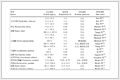
2 Materials and Methods 2.1 Sample Collection and PreparationSamples were collected from six locations, including the Bohai Sea: Tianjin (TJ), Qinhuangdao (QHD); the Yellow Sea: Dandong (DD); the southwest coast of the Korean Peninsula: Mokpo (MP), Kunsan (KS); and the southwest coast of the Taiwan Strait: Penghu (PH). The detailed sample information is shown in Fig.1 and Table 1. Genomic DNA was isolated from O. minor mantle muscle using an improved cetyl trimethyl ammonium bromide method (Winnepenninckx et al., 1993).

|
Fig. 1 Map of the sampling locations and ocean currents. LBCC, Lubei Coastal Current; SBCC, Subei Coastal Current; CCC, China Coastal Current; YSWC, Yellow Sea Warm Current (Kaneko et al., 2011). |
|
Table 1 Details of the six O. minor sampling locations |
The transcriptome library was constructed, and transcriptome sequencing was performed by Gene Denovo Biotechnology Co. (Guangzhou, China) using the Illumina HiSeqTM 4000 (Xu and Zheng, 2020). MISA v2.1 (http://pgrc.ipk-gatersleben.de/misa/) was used to search all single gene clusters and identify the localization and type of microsatellites in the transcriptome following default parameters. Primers were designed using Primer3 (version 1.1.4).
2.3 Specific Primers for SSR Loci Screening and SSR GenotypingA total of 108 primers were selected to test polymerphism. The polymerase chain reaction (PCR) was performed in a 10 μL volume, including 1 μL of 1× PCR Buffer (Mg2+ plus), 1 μL of 0.2 mmol L−1 dNTP mix, 0.22 μL of 1 mmol L−1 fluorescent label (NED, VIC, or FAM), 0.1 μL of the 1 mmol L−1 M13 upstream primer (F), 0.22 μL of the 1 mmol L−1 downstream primer (R), 0.05 μL of 0.25 U Taq DNA polymerase, 1 μL of the 50 ng DNA template, and 6.41 μL of dH2O. The DNA was amplified at 94℃ for 3 min, followed by 35 cycles of 94℃ for 30 s, optimal annealing temperature for 1 min, 72℃ for 75 s, and then eight cycles of 94℃ for 30 s, 53℃ for 1 min, 72℃ for 75 s, and 72℃ for 10 min. Microsatellite polymorphisms were screened using the ABI 3730xl DNA Analyzer.
The genotypes of the samples were analyzed at seven polymorphic microsatellite loci: OMS41, OMS44, OMS51, OMS78, OMS80, OMS96, and OMS99 (Table 1).
2.4 Statistical AnalysisMicro-Checker 2.2.3 (Oosterhout et al., 2004) was used to inspect the null alleles. GenALEx v.6.5 (Peakall et al., 2012) was used to calculate the Hardy-Weinberg equilibrium (P-HWE), the number of alleles per locus (Na), observed heterozygosity (Ho), expected heterozygosity (He), the Fst values, and Nei's genetic distance. Cervus v.3.0.3 (Marshall et al., 1998) was used to estimate the polymorphism information content (PIC). The neutrality of the polymorphic loci was analyzed using the Ewens-Watterson test in POPGENE v.1.32. Multilocus analysis of molecular variance (AMOVA) and pairwise Fst, P values were explored with ARLEQUIN v.3.5 (Excoffier and Lischer, 2010). A Mantel test implemented in Genepop (https://genepop.curtin.edu.au/) was performed to test the isolation of distance (IBD) model by correlating geographic distance to genetic distance (Fst /(1−Fst); Rousset, 1997). An unweighted pair group method with arithmetic mean (UPGMA) tree was constructed based on the genetic distances among the samples from 6 locations using MEGA v.6.0.
3 Results 3.1 Characterization of the Genic MicrosatellitesA total of 46192 SSR loci were discovered in 70174 unigenes from the transcriptome, and the frequency of SSR occurrence in the unigenes was 65.82%. The best represented microsatellite categories were di-nucleotide (45.26%) and mono-nucleotide (39.40%), followed by tri-nucleotide SSRs (14.94%), while tetra-nucleotide and penta-nucleotide SSRs comprised < 1%. Among the dinucleotide repeats, the most abundant repeat motif was AT/AT (22.41%), followed by AC/GT (16.49%) (Table 2). Repeating units between 4 and 14 were detected in the SSRs of the O. minor transcriptome, accounting for 99.97% of the total number, and the highest proportion of repeated times (including mono-nucleotide and penta-nucleotide) was six (31.89%).
|
|
Table 2 Frequency of di-, tri-, and tetra-nucleotide repeat motifs in the transcriptome (–, not available) |
In this study, 21 of the 108 analyzed markers (19.44%) were polymorphic (showed in Table 3). The amplicon sequences were deposited in the GenBank database (accession numbers: KX061842-KX06 1864). The number of alleles per loci ranged from 3 to 12, with an average of 5.6. Three loci (OMS78, OMS64, and OMS34) deviated significantly from the P-HWE after a Bonferroni correction (P < 0.05). Ho ranged from 0.267 to 0.941 (mean = 0.614). He ranged from 0.242 to 0.868 (mean = 0.619). The PIC ranged from 0.231 to 0.854 (mean = 0.572). The EwensWatterson neutral test showed that 21 microsatellite loci were located within the 95% confidence interval (Obs. F > L95), indicating the neutrality of these polymorphic markers.
|
|
Table 3 Basic genetic information of the 21 microsatellite primers |
Table 4 summarizes the genetic diversity indices of 7 microsatellite loci from the six sampling locations. The number of alleles per locus varied from 5 (at OMS99) to 11 (at OMS11). Observed heterozygosity values ranged from 0.241 to 0.850, and expected heterozygosity values ranged from 0.242 to 0.860. Among all loci, the average number of alleles for each location varied from 4.1 to 5.0. The lowest average number of alleles was detected in the DD (4.1), whereas TJ, QHD, and PH showed an average of five alleles per location. The average observed and expected heterozygosity value per location ranged from 0.392 (PH) to 0.581 (MP), and from 0.483 (PH) to 0.592 (DD), respectively. No linkage disequilibrium was detected in the locus pairs, suggesting that the loci can be treated as independent variables. After the Bonferroni correction, ten of 42 locus-location combinations significantly deviated from P-HWE (P < 0.05), among which OMS78 showed a deviation at all four locations.
|
|
Table 4 O. minor genetic diversity indices |
Table 5 lists the Nei's genetic distance (Dc, above the diagonal) and pairwise Fst values (below the diagonal) in pairwise comparisons at different locations. Pairwise Fst values ranged from 0.014 to 0.174, with relatively high values being detected between PH and the other locations (Table 5). Similarly, the genetic distances between PH and the other locations were much larger than the pairwise comparisons between the other locations. These results were further confirmed by a UPGMA dendrogram, which showed three distinct clades: a single clade for PH, one for the Korean samples (MP and KS), and one for the northern Chinese samples (TJ, QHD, and DD) (Fig.2).
|
|
Table 5 Nei's genetic distance (Dc, above the diagonal) and pairwise Fst values (below the diagonal) among the six O. minor locations |

|
Fig. 2 UPGMA tree based on matrices of the pairwise Nei's genetic distances of the microsatellites. |
AMOVA indicated that 12% of the total genetic variation occurred among the populations in the six sampling locations; 26% was attributed to variation among individuals and 63% occurred within individuals (Table 6). According to the IBD analysis, the genetic and geographic distances were highly positively correlated, and the genetic distances explained 80% of the total variance (R2 = 0.7906, P = 0.001), as shown in Fig.3.
|
|
Table 6 Analysis of molecular variance (AMOVA) of genetic differentiation in O. minor (–, not available) |

|
Fig. 3 Scatter plot of the genetic and geographical distances for the pairwise location comparisons. |
A total of 46192 SSR loci in O. minor was discovered in 70174 unigenes, and the frequency of SSR occurrence in the unigenes was 65.82%, which was much higher than that reported in Sepiella japonica (48.70%) (Guan et al., 2018). Mono-nucleotide and di-nucleotide SSRs accounted for 39.40% and 45.26%, respectively. Similarly, di-nucleotides are highly over-represented in the Chlorostoma rustica genome (Wang et al., 2018). Repeating units between 4 and 14 occurred in the O. minor SSRs, accounting for 99.97% of the total, and the highest number of repeats was six (31.89%). The number of markers decreased as the number of repeated units and the number of repetitions increased, which was also observed by Sun et al. (2017) and Shang et al. (2019). The markers developed in this study were highly polymorphic, as 76% of the PIC was > 0.5. These highly polymorphic markers can be applied to subsequent population genetics studies.
We investigated the genetic structure of O. minor from six geographic locations using seven microsatellite DNA markers. The average number of alleles in the different geographic populations ranged from 4.1 to 5.0, which was slightly lower than the number reported by other studies (Kang et al., 2012; Gao et al., 2016). This difference can be explained in two ways: 1) variations among the different SSR markers used in the studies; and 2) differences in the diversity and abundance of the different sampling locations. Ten of the 42 locus-location combinations significantly deviated from P-HWE after a Bonferroni correction (P < 0.05). Kang et al. (2012) and Gao et al. (2016) reported that 23 of 56 and 20 of 80 locus-location combinations deviated from HWE, respectively. In addition, similar results have been reported in other cephalopods (Cabranes et al., 2008; Doubleday et al., 2009). This deviation may be due to the small population or sample size, inbreeding, or the presence of null alleles, as indicated by other studies (Shaw et al., 1999; Perez-Losada et al., 2002; Kang et al., 2012).
The UPGMA tree based on Nei's genetic distance suggests that samples could be arranged in three clusters. The Korean samples formed a sister clade to the samples from the Bohai Sea and the Yellow Sea, while PH samples from the South China Sea were separated from the other samples. PH had the largest geographical distance to the other locations and the samples from PH presented the highest genetic distance compared to the samples from the other locations. Moreover, the Korean samples (MP and KS) were also different from those of the three northern Chinese samples (TJ, QHD, and DD). Similarly, the Fst values between PH and the other locations were the highest among all the comparisons. The Korean samples also had a high Fst value compared to the samples from northern China, but the Fst and the genetic distance values between samples from the two Korean locations were relatively low. Taken together, our results indicate the divergence in the populations containing the northern Chinese samples (TJ, QHD, and DD), the Korean samples (MP and KS), and the southern Chinese sample (PH). Our results are consistent with the findings in other studies using mitochondrial and morphological markers, which reported large divergences between northern and southern populations (Xu et al., 2018; Gao et al., 2019). The population divergences between the Korean and northern Chinese samples were also revealed by Kang et al. (2012).
The IBD analysis in Fig.3 shows a strong correlation between genetic distance and geographical distance, accounting for about 80% of the total divergence. Therefore, our results indicate that these divergence results can be mainly explained by the theory of genetic and geographical distances, which hypothesizes that the effect of gene flow can lead to genetic similarities among locations with small geographical distances; therefore, geographical proximity may reflect the high correlation between genetic distance and geographical distance (Scribner et al., 1986). However, other effects, such as ecological habitat and ocean currents, can also contribute to population divergence. For example, Kang et al. (2012) suggested that divergence of the O. minor Korean population may be due to ecological differences in the habitats between the western muddy coast and the southern rocky areas. Many studies have shown that ocean currents play a crucial role in the population genetic differentiation of benthic marine organisms (Doubleday et al., 2009; Zhan et al., 2009; Ni et al., 2011; Gao et al., 2016). The Yellow Sea Warm Current flows through the west coast of the Korean Peninsula into the northwestern coast of China during April-August. However, this current is relatively weak compared with the coastal waters of China and rarely reaches the inside of the Gulf of Bohai Sea (Pang and Kim, 1998). The duration of the benthic planktonic larval stage of O. minor is relatively short (Zheng et al., 2014). We inferred that geographic distance is one of the main factors affecting the dispersal of O. minor. Although other factors might simultaneously affect genetic differentiation, the IBD model explained about 80% of the variance of the six geographical populations in this study.
5 ConclusionsIn the present study, 16 of 21 genetic SSR markers were polymorphic, demonstrating the feasibility and effectiveness of developing neutral and polymorphic SSRs derived from O. minor transcriptomic data. The genetic differentiation among O. minor sampling locations based on SSRs showed that the samples from the Taiwan Strait differed greatly from the northern Chinese and Korean samples, and genetic divergence was also detected between the Chinese and Korean samples. The present results reveal valuable information to describe the genetic structure and to monitor O. minor demographic parameters. These markers will be helpful to manage and conserve the O. minor fishery.
AcknowledgementsWe thank Associate Professor Mongfang Li (National Penghu University of Science and Technology) and Dr. Hae-Li Lee (Kunsan Seafood Company) for providing the specimens. This study was supported by the National Natural Science Foundation of China (No. 31672257), and the National Key Research and Development Program of China (No. 2020YFD0900705).
Allcock A. L., Lindgren A., Strugnell J. M.. 2015. The contribution of molecular data to our understanding of cephalopod evolution and systematics: A review. Journal of Natural History, 49(21-24): 1373-1421. DOI:10.1080/00222933.2013.825342 (  0) 0) |
Barco A., Raupach M. J., Laakmann S., Neumann H., Knebelsberger T.. 2016. Identification of North Sea mollusks with DNA barcoding. Molecular Ecology Resources, 16(1): 288-297. DOI:10.1111/1755-0998.12440 ( 0) |
Cabranes C., Fernandez-Rueda P., Martinez J. L.. 2008. Genetic structure of Octopus vulgaris around the Iberian Peninsula and Canary Islands as indicated by microsatellite DNA variation. ICES Journal of Marine Science, 65: 12-16. DOI:10.1093/icesjms/fsm178 ( 0) |
Chen Z. W., Xu R., Nan Z., Zheng X. D.. 2019. Determination of the median lethal concentration and acute toxicity of Octopus minor under different concentrations of ammonia and nitrogen stress. Oceanologia et Limnologia Sinica, 50(6): 1361-1370 (in Chinese with English abstract). ( 0) |
Doubleday Z. A., Semmens J. M., Smolenski A. J., Shaw P. W.. 2009. Microsatellite DNA markers and morphometrics reveal a complex population structure in a merobenthic Octopus species (Octopus maorum) in south-east Australia and New Zealand. Marine Biology, 156(6): 1183-1192. DOI:10.1007/s00227-009-1160-y ( 0) |
Excoffier L., Lischer H. E. L.. 2010. Arlequin suite ver 3.5: A new series of programs to perform population genetics analyses under Linux and Windows. Molecular Ecology Resources, 10: 564-567. DOI:10.1111/j.1755-0998.2010.02847.x ( 0) |
Gao X., Xu R., Zhang Z., Zheng X.. 2019. Morphological variation analysis of Octopus minor in the coastal waters of China. Journal of Fisheries of China, 43(7): 1593-1602 (in Chinese with English abstract). ( 0) |
Gao X., Zheng X., Bo Q., Qi L.. 2016. Population genetics of the common long-armed octopus Octopus minor (Sasaki, 1920) (Cephalopoda: Octopoda) in Chinese waters based on microsatellite analysis. Biochemical Systematics & Ecology, 66: 129-136. ( 0) |
Guan A., Wu Y., Chen Y., Sun Y., Qi P., Guo B.. 2018. Deep sequence-based transcriptome analysis of microsatellites in the cuttlefish (Sepiella japonica). Progress in Fishery Sciences, 39: 144-151 (in Chinese with English abstract). ( 0) |
Kaneko N., Kubodera T., Iguchis A.. 2011. Taxonomic study of shallow-water octopuses (Cephalopoda: Octopodidae) in Japan and adjacent waters using mitochondrial genes with perspectives on octopus DNA barcoding. Malacologia, 54(1-2): 97-108. DOI:10.4002/040.054.0102 ( 0) |
Kang J. H., Kim Y. K., Park J. Y., An C. M., Jun J. C.. 2012. Development of microsatellite markers to genetically differentiate populations of Octopus minor from Korea and China. Molecular Biology Reports, 39: 8277-8286. DOI:10.1007/s11033-012-1675-z ( 0) |
Kim D. H., An H. C., Lee K. H., Hwang J. W.. 2008. Optimal economic fishing efforts in Korean common octopus Octopus minor trap fishery. Fisheries Science, 74: 1215-1221. DOI:10.1111/j.1444-2906.2008.01645.x ( 0) |
Marshall T. C., Slate J., Kruk L. E., Pemberton J. M.. 1998. Statistical confidence for likelihood-based paternity inference in natural populations. Molecular Ecology, 7: 639-655. DOI:10.1046/j.1365-294x.1998.00374.x ( 0) |
Moreira A. A., Tomas A. R. G., Hilsdorf A. W. S.. 2011. Evidence for genetic differentiation of Octopus vulgaris (Mollusca, Cephalopoda) fishery populations from the southern coast of Brazil as revealed by microsatellites. Journal of Experimental Marine Biology and Ecology, 407(1): 34-40. DOI:10.1016/j.jembe.2011.06.029 ( 0) |
Ni L. H., Li Q., Kong L. F.. 2011. Microsatellites reveal fine-scale genetic structure of the Chinese surf clam Mactra chinensis (Mollusca, Bivalvia, Mactridae) in Northern China. Marine Ecology, 32(4): 488-497. DOI:10.1111/j.1439-0485.2011.00436.x ( 0) |
Oosterhout C. V., Hutchinson W. F., Wills D. P. M., Shipley P.. 2004. MICRO-CHECKER: Software for identifying and correcting genotyping errors in microsatellite data. Molecular Ecology Notes, 4(3): 535-538. DOI:10.1111/j.1471-8286.2004.00684.x ( 0) |
Pang I. C., Kim K. H.. 1998. Seasonal variation of water mass distributions in the eastern Yellow Sea and the Yellow Sea Warm Current. Journal of Korean Society of Oceanography, 3(3): 41-52. ( 0) |
Peakall R., Smouse P. E.. 2012. Genalex 6.5: Genetic analysis in Excel. Population genetic software for teaching and research – An update. Bioinformatics, 28: 2537-2539. DOI:10.1093/bioinformatics/bts460 ( 0) |
Perez-Losada M., Guerra A., Carvalho G. R., Sanjuan A., Shaw P. W.. 2002. Extensive population subdivision of the cuttlefish Sepia officinalis (Mollusca: Cephalopoda) around the Iberian Peninsula indicated by microsatellite DNA variation. Heredity, 89: 417-424. DOI:10.1038/sj.hdy.6800160 ( 0) |
Rousset F.. 1997. Genetic differentiation and estimation of gene flow from F-statistics under isolation by distance. Genetics, 145: 1219-1228. DOI:10.1093/genetics/145.4.1219 ( 0) |
Scribner K. T., Evans J. E., Morreale S. J., Smith M. H., Gibbons J. W.. 1986. Genetic divergence among populations of the yellow-bellied slider turtle (Pseudemys scripta) separated by aquatic and terrestrial habitats. Copeia, 3: 691-700. ( 0) |
Seol D. W., Lee J., Im S. Y.. 2007. Clove oil as an anesthetic for common octopus (Octopus minor, Sasaki). Aquaculture Research, 38(1): 45-49. DOI:10.1111/j.1365-2109.2006.01622.x ( 0) |
Shang G. J., Xu A., Hu X., Li Z.. 2019. Isolation and characterization of genic microsatellites from de novo assembly transcriptome in the bivalve Ruditapes philippinarum. Journal of Oceanology and Limnology, 37: 1071-1079. DOI:10.1007/s00343-019-8071-7 ( 0) |
Shaw P., Pierce J., Boyle P. R.. 1999. Subtle population structuring within a highly vagile marine invertebrate, the veined squid Loligo forbesi, demonstrated with microsatellite DNA markers. Molecular Ecology, 8: 407-417. DOI:10.1046/j.1365-294X.1999.00588.x ( 0) |
Song M. P., Wang J. H., Zheng X. D.. 2019. Prey preference of the common long-armed octopus Octopus minor (Cephalopoda: Octopodidae) on three different species of bivalves. Journal of Oceanology and Limnology, 37(5): 1595-1603. DOI:10.1007/s00343-019-8217-7 ( 0) |
Sun B. C., Yang J. M., Sun G. H., Liu X. Q., Liu L. J., Wang W. J., et al. 2010. Sequence and molecular phylogeny of mitochondrial COI gene fragment in five populations of Octopus variabilis in China. Oceanologia et Limnologia Sinica, 41(2): 259-265 (in Chinese with English abstract). ( 0) |
Sun X., Li D., Liu Z., Zhou L., Wu B., Yang A.. 2017. De novo assembly of pen shell (Atrina pectinata) transcriptome and screening of its genic microsatellites. Journal of Ocean University of China, 16: 882-888. DOI:10.1007/s11802-017-3274-z ( 0) |
Tang Y., Zheng X., Liu H., Sun F. G.. 2020. Population genetics and comparative mitogenomic analyses reveal cryptic diversity of Amphioctopus neglectus (Cephalopoda: Octopodidae). Genomics, 112(6): 3893-3902. DOI:10.1016/j.ygeno.2020.06.036 ( 0) |
Wang J. H., Zheng X. D.. 2017. Comparison of the genetic relationship between nine cephalopod species based on cluster analysis of karyotype evolutionary distance. Comparative Cytogenetics, 11(3): 477-494. DOI:10.3897/compcytogen.v11i3.12752 ( 0) |
Wang L., Yu H., Li Q.. 2018. Identification and characterization of 23 microsatellite loci for Chlorostoma rustica based on RAD-seq. Journal of Genetics, 97(1): 61-65. ( 0) |
Winnepenninckx B., Backeljau T., Wachter R. D.. 1993. Extraction of high molecular weight DNA from molluscs. Trends in Genetics, 9(12): 407. DOI:10.1016/0168-9525(93)90102-N ( 0) |
Xu R., Zheng X. D.. 2020. Hemocytes transcriptomes reveal metabolism changes and detoxification mechanisms in response to ammonia stress in Octopus minor. Ecotoxicology, 29(9): 1441-1452. DOI:10.1007/s10646-020-02279-0 ( 0) |
Xu R., Bo Q. K., Zheng X. D.. 2018. A divergent lineage among Octopus minor (Sasaki, 1920) populations in the Northwest Pacific supported by DNA barcoding. Marine Biology Research, 14(4): 335-349. DOI:10.1080/17451000.2018.1427866 ( 0) |
Yamamoto T.. 1942. On the ecology of Octopus variabilis typicus (Sasaki), with special reference to its breeding habits. The Malacological Society of Japan, 12: 9-20. ( 0) |
Zhan A. B., Hu J. J., Hu X. L., Zhou Z. C., Hui M., Wang S., et al. 2009. Fine-scale population genetic structure of Zhikong scallop (Chlamys farreri): Do local marine currents drive geographical differentiation?. Marine Biotechnology, 11(2): 223235. ( 0) |
Zheng, X. D., Qian, Y. S., Liu, C., and Li, Q., 2014. Octopus minor. In: Cephalopod Culture. Chapter 22. Iglesias, P., et al., eds., Springer, New York, 415-426.
( 0) |
Zuo Z. R., Zheng X. D., Yang Y., Li Q.. 2011. Development and characterization of 12 polymorphic microsatellite loci in Octopus minor (Sasaki, 1920). Conservation Genetics Resources, 3: 489-491. DOI:10.1007/s12686-011-9386-7 ( 0) |