 2025, Vol. 24


2) Key Laboratory of Healthy Mariculture for the East China Sea of Ministry of Agriculture and Rural Affairs, Fisheries College of Jimei University, Xiamen 361021, China;
3) Third Institute of Oceanography, Ministry of Natural Resources, Xiamen 361005, China;
4) College of Ocean Food and Biological Engineering, Jimei University, Xiamen 361021, China
The amphioxus (lancelet) belongs to the Cephalochordata subphylum, and serves as a transitional type between invertebrates and vertebrates. It is considered the most closely related vertebrate animals (Chen et al., 2007; Vergara et al., 2012; Igawa et al., 2017). Amphioxus fossils have been found as early as in the Precambrian strata, and have a geological history spanning over 500 million years. Despite this extensive time period, their morphology remains unchanged, earning them the designation of 'living fossils'. These organisms serve as crucial model animals for studying vertebrate evolution and origin, possessing significant research value within academia (Holland et al., 2004; Kon et al., 2006; Sun and Zhu, 2008; Zhang et al., 2018; Holland and Holland, 2022).
There are over 30 globally recognized species of amphioxus, classified within the family (Branchiostomatidae) and distributed in three genera (Branchiostoma, Epigonichthys and Asymmetron) (Lin et al., 2015; Igawa et al., 2017; Caccavale et al., 2021). The morphological variations among different genera are distinguished by the precise positioning and structure of their gonads, metapleura, skin and caudal fin (Igawa et al., 2017). The shape of rostral fin and caudal fin, as well as the number of myotomes and fin-chambers, have been utilized to distinguish species (Zhang et al., 2006; Chen et al., 2007). Due to the convergent evolution of similar habitats of different amphioxus species, the morphological characteristics of different species exhibit minimal variation (Wu et al., 2013). The conservative phenotype of amphioxus poses challenges in species identification solely through morphological differentiation, necessitating the integration of molecular biological methods (Subirana et al., 2020).
The distribution of amphioxus is extensive in tropical and subtropical seas; however, its population is limited, and there is a scarcity of ecological studies on these species (Kon et al., 2006; Vergara et al., 2012). The amphioxus was previously found in abundant populations along the coast of China, documented in locations such as Beihai in Guangxi, Maoming in Guangdong, Hong Kong, Dongshan Bay and Xiamen in Fujian, both the east and west coasts of Taiwan, Qingdao in Shandong, Changli in Hebei, and other places (Cao et al., 2001; Zhu et al., 2003; Feng et al., 2006; Chen et al., 2007; Li et al., 2010; Weng et al., 2010; Lin et al., 2015). The amphioxus typically adopts a benthic lifestyle. They are partially buried in the sediment, engaging in filter-feeding activities. Its body is submerged within the bottom sand while only the rostral region and mouth remain exposed to the water. They filter plankton through the gill-bars with the help of a water current generated by buccal cirri (Maghsoudlou, 2018; Caccavale et al., 2021). The presence of suitable sandy beaches or aquatic environments facilitates the potential dispersal of amphioxus.
The development of coastal economy, however, has led to severe damage to the suitable habitat of amphioxus in Chinese waters. The primary reason is engineering construction and aquaculture facilities, and is further exacerbated by the removal of bottom sand. The distribution range is rapidly diminishing, and the population resources are on the verge of extinction. Moreover, the fishing grounds in Xiamen have long been depleted (Cao et al., 2001; Wang and Fang, 2005; Weng et al., 2010). The population of amphioxus in China has reached a critically endangered status. As early as 1988, the amphioxus was included in the national second-class protected animal list (Zhao et al., 2011), and the conservation of its habitat and resources is of utmost importance and requires urgent attention.
In the 1980s, Wang et al. (1989) conducted a survey along the coast of Fujian Province and observed a widespread distribution of amphioxus in Fujian. The specimens were collected from 9 sampling sites across 4 cities, including Putian, Quanzhou, Xiamen, and Zhangzhou. The recorded maximum density reached 102 ind m−2. About two decades later, Weng et al. (2010) revisited the coast areas of Fujian to investigate amphioxus resources and observed only limited quantities in Dongshan Bay, Dagang Bay and Xiamen waters. The findings revealed a significant decline in both the geographical distribution and the population size of the amphioxus in Fujian. Additionally, Dongshan Bay was identified as another crucial habitat for amphioxus in Fujian, alongside Xiamen waters, exhibiting a density of 70 − 150 ind m−2 (Weng et al., 2010).
In the past decade, significant changes have occurred in the marine water environment of Dongshan Bay as a result of economic development and industrial engineering construction (Wei, 2019; Zheng, 2019), resulting in a severe impact on the habitat and resources of amphioxus.
In this study, an ecological investigation of amphioxus resources in Dongshan Bay was carried out with the objective of determining the current distribution status and species composition of amphioxus in this area. The research provides a theoretical foundation for subsequent conservation and management efforts targeting amphioxus populations in Dongshan Bay, Fujian.
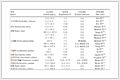
2 Methods 2.1 Survey of Current Population of Amphioxus in Dongshan BayThe survey of current population of amphioxus in Dongshan Bay was conducted in May 2022. Due to the presence of a significant number of aquaculture cages on the surface of Dongshan Bay, these areas were initially excluded from the investigation zone. The investigation area was selected in accordance with the guidance of local fishermen who possessed extensive knowledge about the characteristics of the sea bottom, focusing on those areas that were likely to have a sandy bottom. The final selection comprised of eight sites, with their respective longitude and latitude value provided in Table 1 (site 1 –8). The mud sampler sampling technique, in conjunction with the traditional hoe raking method, was employed to investigate the sediment and amphioxus. The mud sampler collected the surface sand layer with a sampling area of 0.2 m2 for each station. Subsequently, the surface sand was sieved through a 0.5 mm mesh screen to isolate amphioxus. The collected amphioxus specimens were transported to the laboratory for morphological measurements. The surface water temperature of Dongshan Bay ranged from 23 to 24℃, while the salinity varied between 25.8 and 33.6.
|
Table 1 Sampling location, substrate characteristics and density of amphioxus in Dongshan Bay |
The morphological description and comparison of amphioxus were conducted with reference to Zhang's work (2006). The fresh amphioxus specimens were positioned in a petri dish oriented with their left side facing upwards. The Olympus ZS-16 dissecting microscope was utilized for microscopic observation and shape measurement. The length of the body, pre-atriopore region, atripore-anal region, postanal region, super-caudal fin, and sub-caudal fin were measured using a digital caliper with an accuracy of 0.02 mm (Fig.1). The height of the body and caudal fin, the length and height of the rostral fin, the height and width of the highest dorsal fin chamber, as well as the height and width of the highest preanal fin-chamber were measured using an eyepiece micrometer (Fig.1). The total count of myomes, including those in the pre-atriopore region, atripore-anal region, and postanal region, as well as the chamber count of the dorsal fin and preanal fin were determined using a dissecting microscope. Additionally, both sides (left and right) were examined to determine the number of gonads.

|
Fig. 1 Morphological measurements of amphioxus from Dongshan Bay. 1, body length; 2, pre-atriopore length; 3, atrioporeanal length; 4, postanal length; 5, super-caudal fin length; 6, sub-caudal fin length; 7, body height; 8, rostral fin height; 9, rostral fin length; 10, caudal fin height. |
After measuring, the ratios of body length to height, body length to rostral fin length, body length to rostral fin height, body length to caudal fin height, caudal fin height to subcaudal fin length, rostral fin length to height, tallest dorsal fin chamber's height to width ratio and tallest preanal fin chamber's height to width ratio were calculated. Finally, the petri dish was positioned on the protractor, and the angles between the dorsal fin and the super-caudal fin, preanal fin, and sub-caudal fin were measured with an eyepiece micrometer. Subsequently, these measurements were compared to the morphological data provided by Zhang et al. (2006) and Sun and Zhu (2008).
2.3 Molecular TaxonomyThe molecular taxonomy analysis was conducted using four specimens of amphioxus. Total genomic DNA from these individuals was extracted using the DNeasy Tissue Kit (Qiagen). Partial sequences of mitochondrial cytochrome oxidase subunit I (COX1) gene were amplified using the primers Bjco1F (5'-CAGAACTTTCGCAGCCAGGT-3') and Bjco1R reverse (5'-CCTGTTAACCCTCCTACCGTG-3') designed according to the sequence of B. japonicum (AB248217.1) from GenBank. PCR amplifying schedules followed those used by Caccavale et al. (2021) with some modifications. PCR products were purified and sequenced from both directions at Sangon Biotech (Shanghai) Co., Ltd.
Raw sequences obtained were examined using Chromas 2.3.1, followed by manual correction and splicing procedures. After removing the uncertain fragments at both ends, a 874 bp fragment was used to analysis, then the conserved sites as well as variation sites were compared and identified. The haplotype number and percentage of variation sites were then calculated.
The COI sequences of five B. japonicum and five B. belcheri were downloaded from GenBank (Accession number: HM178960, HM178961, HM178962, HM178964, HM178-966, HM178949, HM178950, HM178951, HM178952, HM178953). Two Asymmetron lucayanum sequences (AB-240564, AB240565) were downloaded as outgroups. The subsequent analysis utilized a total of 16 COI part segment sequences, including four obtained from Dongshan Bay in this study. After performing alignment and eliminating misaligned sequences from both ends, fragments with a length of 794 bp remained for further analysis. Interspecific and intraspecific genetic distances were computed using the Kimura 2-parameter model as implemented in MEGA11 to determine their taxonomic classification (Tamura et al., 2021). The phylogenetic tree was constructed using Neighbor-Joining method, with branch confidence assessed through 1000 Bootstrap replications.
3 Results 3.1 Population Distribution and Habitat Status of Amphioxus in Dongshan BayDongshan Bay is located in the southern part of Fujian Province, surrounded by the coastal areas of Dongshan, Zhangpu and Yunxiao Counties (Guan et al., 2023). Dongshan Bay is flanking by hills on three sides, forming an irregular pear shape extension into the land. Towards the northern end, the Zhangjiang River flows into the sea (Wei, 2019). Currently, approximately 50% of the water surface in Dongshan Bay is occupied by aquaculture cages, resulting in a predominantly muddy sediment. For this study, areas with silt bottom were excluded, and 8 stations with sand bottom were selected for investigation (refer Table 1 for latitude and longitude).
The survey results revealed that the areas with high sand content, specifically sandy or muddy sand in the bottom of Dongshan Bay were exclusively concentrated within the narrow sea-route area located in the central and southern parts of the bay adjacent to Dongmen Island. The west and north regions, on the other hand, were predominantly composed silt with low sand content (Table 1). The amphioxus is highly adapted to inhabit the heterogeneous substrate composed of fine sand, coarse sand and mixed with fragmented shells. The suitable habitat for amphioxus in Dongshan Bay is extremely limited, measuring approximately 250 m × 150 m, and confined to the eastern side of Dongmen Island at the bay mouth.
The central waterway area (sites 1 – 3) refers to the specific location (Table 1, sites 9 – 11) where a large number of amphioxuses (with a habitat density of 70 – 150 ind m−2 and body length ranging from 11.95 to 50.21 mm) were collected by Weng et al. (2010) in 2007. The sand mining activities in the area have resulted in a consequent decrease in sand content, which has led to the absence of any collected amphioxus specimens during this survey. In this survey, a total of 9 amphioxuses were collected from the east of Dongmen Island (site 4) at the southern mouth of Dongshan Bay. The habitat density was 18.75 ind m−2, the biamass was 1.0144 ind m−2 and the size (body length) of amphioxus ranged from 34.15 to 48.02 mm (Table 1).
3.2 Morphological Characteristics and Species Identification of Amphioxus in Dongshan BayThe body of amphioxus from Dongshan Bay was translucent, and exhibited a light yellow hue. The front end of the rostral fin was pointed, while the mouth cap and tentacles were clearly discernible. Moreover, the ' < ' shaped myotomes and bilateral gonads can be observed with the naked eye (Fig.1A).
The rostral fins of B. japonicum differed from those of B. belcheri in terms of their shape, with the former being more pointed and the latter being more rounded (Zhang et al., 2006). The rostral fins of Amphioxus sp. collected from Dongshan Bay in this study exhibited similarities to those of B. japonicum collected from Xiamen Sea area (Fig.2).

|
Fig. 2 The difference of the shape of rostral fin. (A), B. japonicum (above) and B. belcheri (beneath) from Zhang et al. (2006); (B), amphioxus from Dongshan Bay. |
The morphological data of amphioxus from Dongshan Bay were compared with those of B. belcheri and B. japonicum from Xiamen (Zhang et al., 2006), as well as B. japonicum from Weihai (Sun and Zhu, 2008). The parameters examined included body length, pre-atriopore region length, atripore-anal region length, postanal region length, super-caudal fin length, the rostral fin length, body height, rostral fin height, caudal fin height, body length to body height ratio, tallest dorsal fin chamber's height to width ratio and tallest preanal fin chamber's height to width ratio. The angles between the dorsal fin and the super-caudal fin, and between the preanal fin and sub-caudal fin were evaluated. Additionally, the total numbers of myomes, as well as the numbers of myomes in the pre-atriopore region, atripore-anal region, and postanal region were assessed. Furthermore, the chamber count of the dorsal fin and the quantity of left and right gonads were determined. The data intervals exhibited overlapping patterns across these species with no significant interspecific variations observed, as shown in Table 2.
|
|
Table 2 Comparison of morphology of Branchiostoma sp. from Dongshan Bay with B. belcheri from Xiamen, and B. japonicum from Xiamen and Weihai |
The degree of intersection angle between the dorsal fin and the upper lobe of the caudal fin in B. belcheri (159 – 175) was greater than that observed in B. japonicum (128 – 162) (Zhang et al., 2006). In this study, the amphioxus from Dongshan Bay exhibited a similar range of 138 – 145 degrees, comparable to that of B. japonicum (Fig.3). Similarly, the degree of intersection angle between preanal fin and sub-caudal fin in amphioxus from Dongshan Bay ranged from 142 to 158 degrees, which closely aligned with the range observed in B. japonicum (128 – 162), but falled below that in B. belcheri (157 – 179) (shown in Table 2, Fig.3).

|
Fig. 3 Difference in the angle between the dorsal and super-caudal fin and the angle between the preanal and sub-caudal fin. (A), B. japonicum above and B. belcheri beneath from Zhang et al. (2006); (B), amphioxus from Dongshan Bay. |
The number and morphology of the preanal fin-chamber in B. belcheri significantly differed from those observed in B. japonicum (Table 2). Generally, the number of preanal fin-chamber in B. belcheri (80 – 103) exceeded 80, while those in B. japonicum from Xiamen (48 – 64) (Zhang et al., 2006) and Weihai (41 – 69) (Sun and Zhu, 2008) were both below 70. Similarly, the numbers of preanal fin-chamber in the amphioxus from Dongshan Bay were between 52 and 61, which also falled below 70. Additionally, the ratio of height to width for the preanal fin-chamber was higher in B. belcheri than in B. japonicum while the former was slender and elongated and the latter was broader and thicker (Fig.4). The number and the height-to-width ratio of the preanal fin-chamber in the amphioxus from Dongshan Bay exhibited similarities to those observed in B. japonicum.

|
Fig. 4 Difference of preanal fin chambers. (A), B. japonicum (Zhang et al., 2006); (B), B. belcheri (Zhang et al., 2006); (C), amphioxus from Dongshan Bay. |
The amphioxus collected from Dongshan Bay was identified as B. japonicum based on the results of morphological comparison and analysis conducted above.
3.3 Molecular IdentificationThe analysis of an 874 bp fragment of mitochondrial COX1 from four amphioxus speciemens collected in Dongshan Bay revealed a total of 11 variation sites, which accounted for 1.26% of the sequence length. All identified variations were synonymous, resulting in the identification of four distinct haplotypes.
Interspecific and intraspecific genetic distances were calculated using Kimura 2-parameter model. The results were showed in Table 3. The intraspecific genetic distances of four amphioxus from Dongshan Bay (Branchiostoma sp.1 – 4), five B. japonicum and five B. belcheri were 0.00634, 0.00456 and 0.00481, respectively. The specimens Branchiostoma sp.1 – 4 can be identified as the same species.
|
|
Table 3 Interspecific and intraspecific (the diagonal) genetic distances between or among B. belcheri and B. japonicum |
The results of interspecific genetic distance calculation revealed that the genetic distances between B. belcheri and B. japonicum, and between B. belcheri and Branchiostoma sp. were 0.18900 and 0.19046, respectively. However, the genetic distance between Branchiostoma sp. and B. japonicum was merely 0.00621, even smaller than the intraspecific distance of B. japonicum (0.00634).
The phylogenetic tree constructed was significantly divided into two branches (100 confidence), with one comprising the group of B. japonicum, and Branchiostoma sp. from Dongshan Bay, while the other branch included B. belcheri (100 confidence) (Fig.5). The molecular identification results unequivocally confirmed that the Branchiostoma sp. collected from Dongshan Bay corresponded to B. japonicum, providing further corroboration of the morphological identification outcomes.

|
Fig. 5 Phylogenetic relationship based on COI gene sequences of amphioxus using Neighbor-Joining method (Branchiostoma sp.1 – 4 from Dongshan Bay in this study). |
The amphioxus, a benthic marine organism, primarily inhabits in the shallow sandy bottom. Juvenile amphioxus individuals exhibit a preference for residing in shallow seas with fine sand, while adults tend to inhabit areas characterized by a mixture of fine sand, coarse sand and some mud (Ueda and Sakaki, 2007; Lin et al., 2015; Ma et al., 2022).
After hatching from fertilized eggs, amphioxus larvae undergo a planktonic larval stage lasting approximately 2 to 6 weeks. Subsequently, they initiate burial in sandy substrates with their mouths upwards, employing their tentacles to filter planktonic microalgae and adopting a semi-burrowing lifestyle (Cao et al., 2001; Wang et al., 2005; Weng et al., 2010; Lin et al., 2015).
The distribution of amphioxus is primarily determined by the characteristics of its sandy bottom habitat, which imposes strict requirements. Moreover, it demonstrates sensitivity towards changes in salinity and necessitates high levels of water transparency and dissolved oxygen (Lin et al., 2015; Maghsoudlou, 2018).
Dongshan Bay is located on the western bank of the southern entrance to the Taiwan Strait, approximately 130 km away from Xiamen Bay. Covering a total sea area of 247.89 km2, with a water expanse of 155.5 km2, it stands as the largest bay in southern Fujian. The bay has an irregular pearshaped outline and extends inland. The length of the area measures 20 km from north to south, while its width spans approximately 15 km from east to west. The bay is a semienclosed water body with a maximum depth of 30 m (Liang et al., 2016). Over a decade ago, Dongshan Bay was devoid of any industrial development or construction, resulting in the absence of industrial pollution. The water quality was excellent, and the breeding area was limited to laver farming with minimal pollution. The bay's expansive sea area contained dispersed sand ridges with a sandy substrate primarily composed of fine and coarse sands intermixed with a negligible amount of silt. These characteristics of the bottom bear a striking resemblance to those found in Xiamen Bay, rendering it highly suitable for the habitat of amphioxus.
In the past over decade, there has been rapid economic development around Dongshan Bay, resulting in an increase in industrial construction projects and human disturbance to the amphioxus habitat environment. The demand for sea sand in engineering construction has significantly increased, resulting in serious sand mining activities in Dongshan Bay, causing a rapid reduction of the sandy bottom area. For instance, the area where amphioxus was found at sites 1 – 3 in 2007 (Weng et al., 2010) has been silted and is no longer suitable for amphioxus habitat. The majority of the amphioxus habitat in Dongshan Bay has been significantly depleted due to the rapid development of the aquaculture industry in Dongshan Bay, resulting in densely covered aquaculture cages. The aquaculture area index (0.89) in Dongshan Bay as reported by Zheng (2019) has surpassed the critical threshold, leading to severe pollution from aquaculture activities, sedimentation of the seabed, and eutrophication of the water. If the aquaculture is not properly regulated, it will pose a threat to the survival of amphioxus and other marine organisms in the bay. Further scientific investigation is required to evaluate the impact of excessive aquaculture on the survival of amphioxus. With the rapid industrial development along the coast of Dongshan Bay, in addition to domestic pollution sources, the impact of industrial pollution on the water quality has intensified (Wei, 2019). Consequently, there has been an overall escalation in water pollution. Further research is required to determine whether this will pose a threat to the survival of amphioxus.
The Dongshan Bay, along with Xiamen Bay, has historically served as a significant distribution area for amphioxus in the sea around Fujian province. A survey conducted over a decade ago revealed the presence of abundant amphioxus resources, with a density reaching as high as 70 – 150 ind m−2 (Weng et al., 2010). The former distribution area of amphioxus (sites 1 – 3) was re-investigated in this study, revealing the absence of the underlying sand layer and the disappearance of the amphioxus population in this region. In this study, amphioxus was exclusively found on the east coast of Dongmen Island at the mouth of Dongshan Bay. So the distribution range of amphioxus in Dongshan Bay has consequently contracted, and the population size of amphioxus has declined as well. Over the past three decades, there has been a noticeable deterioration in both the natural habitat and population size of amphioxus. This decline is similarly observed in various Chinese waters including Xiamen in Fujian Province (Ma et al., 2022), Qingdao in Shandong Province (Sun and Zhu, 2008), as well as Maoming in Guangdong Province (Lin and Feng, 2009).
Feng and Zhu (1995) identified a substantial population of amphioxus larvae along the sandy coastline to the east and south sandy coast of Dongshan Island, situated in the southern region of Dongshan Bay. This finding highlighted the suitability of this habitat for amphioxus, thereby necessitating an expansion of research beyond the bay to explore their distribution in southern Fujian. Therefore, it is crucial to expand the investigation scope of amphioxus beyond Dongshan Bay towards the eastern and southern regions of Dongshan Island outside the bay, in order to ascertain the distribution pattern of amphioxus in southern Fujian.
4.2 Amphioxus Species in Dongshan BayThe distribution range of B. japonicum spans from Hong Kong to the southeast coast, extending further to Bohai Bay and the waters of Japan (Li et al., 2010; Nishikawa, 2017). On the other hand, B. belcheri is predominantly found in the Taiwan Strait and its southern waters. It is widely acknowledged that only B. japonicum inhabites north of the Taiwan Strait to the waters of Japan (Zhang et al., 2006; Nishikawa, 2017). These two species of amphioxus were commonly found in the waters of the Taiwan Strait. Additionally, according to Li and Wang (2010), Epigonichthys cultellus is also distributed in the same area. Lin et al. (2015) identified a total of five amphioxus species in the Taiwan Strait, excluding B. belcheri and B. japonicum. Additionally, they documented the presence of Asymmetron lucayanum, E. cultellus, and E. maldivens, all of which were also observed in Japanese waters (Nishikawa, 2017).
After the 2007 survey, amphioxus was once again discovered in Dongshan Bay and taxonomically identified as B. japonicum based on its morphological characteristics and molecular identification results in this study. Weng et al. (2010) initially reported the presence of B. belcheri in Dongshan Bay more than a decade ago. Based on the findings from these two investigations, it has been confirmed that both B. japonicum and B. belcheri coexist in Dongshan Bay. The occurrence of other amphioxus species, such as Epigonichthys cultellus, has not been identified in this area to date.
4.3 Conservation of Amphioxus Habitat in Dongshan BayThe Dongshan Bay, second only to Xiamen, holds great significance as an amphioxus habitat in Fujian Province. Therefore, it is crucial for the government to prioritize and implement effective measures for protection and management of this unique ecosystem.
Firstly, prior to making any decisions or taking action regarding the protection of amphioxus, it is imperative to conduct a comprehensive and in-depth investigation into the habitat and resource ecology of amphioxus in Dongshan Bay. This entails clarifying the precise distribution locations and ranges of their habitats, assessing their habitat characteristics, as well as determining whether there is an potential overlap in distribution areas between B. belcheri and B. japonicum, along with possible disparities in reproductive traits.
Furthermore, these fundamental studies are crucial in investigating and evaluating whether the current aquaculture scale in Dongshan Bay exceeds its carrying capacity and impacts the survival of amphioxus. They also provide essential background information for long-term monitoring, planning, and establishment of protected areas.
Thirdly, prompt establishment of the Dongshan Bay Amphioxus Nature Reserve should be imperative to ensure effective preservation of the existing habitat. Based on the findings of this study, it is strong recommended that an amphioxus nature reserve should be established on the east coast of Dongmen Island. The location of this area is situated at the mouth of Dongshan Bay, exhibiting water and bottom quality characteristics that are perfect alignment with the natural habitat requirements of amphioxus. Moreover, it is distanced from the aquaculture zone in the inner of the bay, resulting in minimal impact on water quality due to aquaculture activities.
Fourthly, the enforcement and management of Dongshan Bay waters should be strengthened, with a focus on combating illicit activities such as sand mining. Additionally, strict regulations should be implemented to control onshore industrial pollution, while excessive expansion of benthic shellfish cultivation and cage farming must be prohibited. The habitat of amphioxus in Dongshan Bay has undergone significant degradation due to sand extraction activities, resulting in a substantial reduction in its distribution range. Therefore, the restoration of sediment levels can effectively rehabilitate the ecological conditions of amphioxus.
Fifthly, the technology of artificial breeding and mass production of amphioxus has reached a state of maturity (Zhou et al., 2007; Ma et al., 2013). Consequently, the augmentation of wild resources can be achieved through the implementation of artificial programs and subsequent release. In this process, it is crucial to consider the species selected for release and prioritize local species as breeding parents. The release should be strategically placed in a suitable marine environment, with preference given to amphioxus habitats in Dongmen Island.
5 ConclusionsThe amphioxus is an exceptionally significant model organism for the study of vertebrate evolution and origin owing to its prominent status as a 'living fossil' and its close phylogenetic relationship with vertebrates. The Dongshan Bay, along with Xiamen Bay, has historically served as a significant distribution area for amphioxus in the sea around Fujian Province. However, the majority of the amphioxus habitat in Dongshan Bay has been significantly depleted and the population has decreased due to their habitat destruction. Both B. japonicum and B. belcheri coexist in Dongshan Bay. Therefore, it is imperative for the government to prioritize and implement effective measures to protect and manage the amphioxus habitat in Dongshan Bay.
AcknowledgementsWe are grateful to Prof. Qiujin Zhang in Fujian Normal University for his help in morphology identification. We would thank for the supporting from Dongshan Hai Tian Yue Marine Ranch Co., Ltd. in the field investigation. This work was supported by grants from the Science and Technology Bureau of Xiamen (No. 3502Z20227207).
Author Contributions
Zhaohong Weng, Yangjie Xie and Jingwen Liu designed the study; Zhaohong Weng, Jiaqiao Wang, Tao Qu and Wenliang Xie conducted the experiments and analyzed the data; Zhaohong Weng and Yangjie Xie wrote the manuscript; Qi Fang, Jun Li, Jingwen Liu and Liangmin Huang reviewed and edited the manuscript. All authors have read and agreed to the published version of the manuscript.
Data Availability
All data generated and analyzed during this study are included in this published article. Further inquiries can be directed to the corresponding authors.
Declarations
Ethics Approval and Consent to Participate
The study was conducted in accordance with the principles and protocols of the Animal Care and Use Committee at Fisheries College, Jimei University, China.
Consent for Publication
Informed consent for publication was obtained from all participants.
Conflict of Interests
The authors declare that they have no conflict of interests.
Caccavale, F., Osca, D., Aneillo, S. D., and Crocetta, F., 2021. Molecular taxonomy confirms that the northeastern Atlantic and Mediterranean Sea harbor a single lancelet, Branchiostoma lanceolatum (Pallas, 1774) (Cephalochordata: Leptocardii: Branchiostomatidae). PLoS One, 16(5): e0251358. DOI:10.1371/journal.pone.0251358 (  0) 0) |
Cao, Y. P., Yan, L. N., Xie, S., and Liu, Z., 2001. Preliminary investigation of amiphioxus in Changli. Chinese Journal of Zoology, 36(3): 10-13 (in Chinese with English abstract). DOI:10.3969/j.issn.0250-3263.2001.03.003 ( 0) |
Chen, Y., Cheung, S. G., Kong, R. Y. C., and Shin, P. K. S., 2007. Morphological and molecular comparisons of dominant amphioxus populations in the China Seas. Marine Biology, 153(2): 189-198. ( 0) |
Feng, B., Lu, H. S., and Chen, W. H., 2006. Distribution of Branchiostoma belcheni and its relation with bottom sediments in waters around Dafangji Island of Maoming, Guangdong. Journal of Tropical Oceanography, 25(2): 18-23. DOI:10.3969/j.issn.1009-5470.2006.02.004 ( 0) |
Feng, J. F., and Zhu, C. S., 1995. Distribution of planktonic larvae of Branchiostoma belcheri at nearshore waters of Dongshan Island in Fujian. Journal of Oceanography in Taiwan Strait, 14(1): 62-66 (in Chinese with English abstract). ( 0) |
Guan, Y., Song, P. Q., Wang, L. M., Zhang, H. S., Li, H., Li, Y., et al., 2023. Differences in community structure of nekton in the coastal waters of Dongshan Bay between generations. Periodical of Ocean University of China, 53(4): 31-42 (in Chinese with English abstract). ( 0) |
Holland, L., and Holland, N., 2022. The invertebrate chordate amphioxus gives clues to vertebrate origins. Current Topics in Developmental Biology, 147: 563-594. ( 0) |
Holland, L. Z., Laudet, V., and Schubert, M., 2004. The chordate amphioxus: An emerging model organism for developmental biology. Cellular and Molecular Life Science, 61: 2290-2308. ( 0) |
Igawa, T., Nozawa, M., Suzuki, D. G., Reimar, J. D., Morov, A. R., Wang, Y., et al., 2017. Evolutionary history of the extant amphioxus lineage with shallow branching diversification. Scientific Reports, 7: 1157. DOI:10.1038/s41598-017-00786-5 ( 0) |
Kon, T., Nohara, M., Nishida, M., Sterrer, W., and Nishikawa, T., 2006. Hidden ancient diversification in the circumtropical lancelet Asymmetron lucayanum complex. Marine Biology, 149: 875-883. ( 0) |
Li, W. Y., and Wang, Y. Q., 2010. Species and genetic diversity of amphioxus in China. In: The First Cross-Strait Conference on Marine Biodiversity. China Ocean Press, Beijing, 251-260 (in Chinese with English abstract).
( 0) |
Liang, Q. F., Wang, W. G., Zhao, M. W., Lai, Z. K., and Lan, B. B., 2016. Change of scouring and silting during 1954 to 2008 in the sea bed of Dongshan Bay, Fujian. Journal of Applied Oceanography, 35(1): 95-101 (in Chinese with English abstract). DOI:10.3969/J.ISSN.2095-4972.2016.01.011 ( 0) |
Lin, D. N., and Feng, B., 2009. Habitat environment and conservation of Branchiostoma belcheri along the coastal waters of Maoming. Modern Fisheries Information, 24(8): 13-17 (in Chinese). DOI:10.3969/j.issn.1004-8340.2009.08.004 ( 0) |
Lin, H. C., Chen, J. P., Chan, B. K. K., and Shao, K. T., 2015. The interplay of sediment characteristics, depth, water temperature, and ocean currents shaping the biogeography of lancelets (Subphylum Cephalochordata) in the NW Pacific waters. Marine Ecology, 36: 780-793. ( 0) |
Ma, C., Liu, Y., Zhuang, Z. D., Xu, C. Y., Shen, C. C., and Cai, J. D., 2022. Analysis on the resource status and change reason of Branchiostoma balcheri in Xiamen Natural Reserve. Journal of Fisheries Research, 44: 44-51 (in Chinese with English abstract). ( 0) |
Ma, D. Y., You, F., Wen, A. Y., Tan, X. G., Xu, Y. L., Zhang, L. J., et al., 2013. A comparison of gonad development between laboratory-reared and wild Branchiostoma balcheri. Journal of Tropical Oceanography, 32(4): 78-83 (in Chinese with English abstract). ( 0) |
Maghsoudlou, A., 2018. Iranian Branchiostoma species (Cephalochordata, Branchiostomatidae) inhabiting Chabahar Bay (Gulf of Oman), with remarks on habitat preferences. Turkish Journal of Zoology, 42: 179-186. DOI:10.3906/zoo-1708-12 ( 0) |
Nishikawa, T., 2017. A taxonomic review of lancelets (Cephalochordata) in Japanese waters. In: Species Diversity of Animals in Japan. Motokawa, M., and Kajihara, H., eds., Springer, Tokyo, 703-714.
( 0) |
Subirana, L., Farstey, V., Bertrand, S., and Escriva, H., 2020. Asymmetron lucayanum: How many species are valid?. PLoS One, 15(3): e0229119. DOI:10.1371/journal.pone.0229119 ( 0) |
Sun, Y. M., and Zhu, Q., 2008. The morphology and taxonomy of amphioxus in the coastal waters of Weihai. Marine Science, 32(9): 18-24 (in Chinese with English abstract). ( 0) |
Tamura, K., Stecher, G., and Kumar, S., 2021. MEGA11: Molecular Evolutionary Genetics Analysis Version 11. Molecular Biology and Evolution, 38(7): 3022-3027. ( 0) |
Ueda, H., and Sakaki, K., 2007. Effects of turbation of the Japanese common lancelet Branchiostoma japonicum (Cephalochordata) on sediment condition: Laboratory observation. Plankton & Benthos Research, 2(3): 155-160. ( 0) |
Vergara, M., Oliva, M. E., and Riascos, J. M., 2012. Population dynamics of the amphioxus Branchiostoma elongatum from northern Chile. Journal of the Marine Biological Association of the United Kingdom, 92(3): 591-599. ( 0) |
Wang, W. Y., Chen, B. Z., Yao, L. T., Zhang, H. K., Zhang, Z. L., Qian, X. M., et al., 1989. Distribution of amphioxus from Minjiang Estuary to Nan'ao coast. Fujian Fisheries, 1989(1): 14-16 (in Chinese). ( 0) |
Wang, Y. Q., and Fang, S. H., 2005. Taxonomic and molecular phylogenetic studies of amphioxus: A review and prospect evaluation. Zoological Research, 26(6): 666-672 (in Chinese with English abstract). ( 0) |
Wei, S. S., 2019. Research on identification of major ecological risk sources in Dongshan Bay. Journal of Fisheries Research, 41(2): 140-148 (in Chinese with English abstract). ( 0) |
Weng, Z. H., Zhang, Y. Z., Liu, X. D., Xie, Y. J., Xiao, Z. Q., and Wang, S. H., 2010. Lancelet distribution in Fujian sea waters and its protection strategy. Marine Science, 34(8): 35-40 (in Chinese with English abstract). ( 0) |
Wu, L., Song, N., and Gao, T. X., 2013. Molecular diversity of two Branchiostoma species off China coast. Transactions of Oceanology and Limnology, 2013(3): 80-88 (in Chinese with English abstract). ( 0) |
Zhang, Q. J., Zhong, J., Fang, S. H., and Wang, Y. Q., 2006. Branchiostoma japonicum and B. belcheri are distinct lancelets (Cephalochordata) in Xiamen waters in China. Zoological Science, 23(6): 573-579. ( 0) |
Zhang, Q. L., Zhang, G. L., Yuan, M. L., Dong, Z. X., Li, H. W., Guo, J., et al., 2018. A phylogenomic framework and divergence history of Cephalochordata amphioxus. Frontiers in Physiology, 9: 1833. DOI:10.3389/fphys.2018.01833 ( 0) |
Zhao, Q., and Zhu, Q., 2011. Taxonomic and genetic status of lancelet in Weihai coastal waters based on mitochondrial DNA sequence. Chinese Journal of Oceanology and Limnology, 29(3): 623-632. ( 0) |
Zheng, H. D., 2019. Constructing and evaluating an index system for aquaculture carrying capacity in Dongshan Bay. Journal of Fisheries Research, 41(5): 393-398 (in Chinese with English abstract). ( 0) |
Zhou, R. J., and Fang, Q., 2007. Artificial reproduction and batch production for amphioxus (Branchiostoma belcheri) fry. Journal of Oceanography in Taiwan Strait, 26(1): 121-128 (in Chinese with English abstract). ( 0) |
Zhu, Q., Xia, L., Song, S., Yu, X. Z., and Zhai, K., 2003. Branchiostoma belcheri found in the coastal waters of Weihai. Marine Science, 27(9): 6-7 (in Chinese with English abstract). ( 0) |