Exploring the global mosaic of medicinal plant databases: unveiling nature’s pharmacopoeia
Abstract
Medicinal plants have long served as an important asset in the treatment of diseases. Recent developments in computer science have enabled the rise of specialized databases cataloging medicinal plant knowledge. However, a systematic comparison of available region-specific medicinal plant databases is lacking. This review summarizes globally available medicinal plant databases that focus on specific geographical regions, aiming to inspire and guide people from specialists to the general public toward fostering innovation and making informed decisions. Through a systematic search of literature and digital resources, 81 regional medicinal plant databases established or updated between 2013 and 2025 were identified. From this pool, 40 core platforms were subjected to detailed statistical characterization regarding their data categories and volume. Our analysis reveals a geographical concentration in Asia (48.1%), dominated by China and India, alongside a notable proliferation of universal databases with a global scope. These databases facilitate critical applications in drug discovery, quality control, biodiversity conservation, and policy-making. By identifying current research gaps and emphasizing the need for interdisciplinary standardization, this review serves as a strategic roadmap for bridging traditional wisdom with modern therapeutic innovation.Graphical Abstract
Keywords
Medicinal plants Database Geographical distribution Natural products Traditional medicine Phytochemical information1 Introduction
Plants represent a ubiquitous and predominant life form on Earth, exhibiting a wide-ranging distribution across diverse habitats encompassing the hydrosphere, lithosphere, and the atmospheric expanse. The botanical kingdom comprises an estimated 379,950 accepted species [1] serving multifarious purposes such as sustenance, pharmaceutical applications, timber production, dye synthesis, fiber extraction, and ornamental aesthetics [2]. In the realm of drug discovery, plants emerge as invaluable pioneers. Many of today’s ground-breaking pharmaceuticals, such as morphine, taxol, physostigmine, quinidine, emetine, and artemisinin, trace their roots to the botanical realm [3–5]. Throughout history, medicinal plants have been indispensable to human health [6], with the World Health Organization estimating that approximately 60% of the global population relies on them for primary healthcare [7].
Recent advances in computer science and network pharmacology have led to databases with advanced features, transforming contemporary medicinal plant research [8, 9]. Several review studies have evaluated medicinal plant databases, focusing on ethnopharmacology [10], computation [11, 12], bioinformatics [13–15], structural chemistry [16], bibliometrics [17], database-building approaches [18], and analytical overviews [2, 19, 20] of typical databases.
While medicinal plant databases are expanding, few articles have summarized medicinal plant databases oriented to specific geographical regions. The absence of interconnected information poses a significant barrier to understanding the cultural context of native plant use and the complex influence of environmental factors on plant metabolites. To address this, the present work provides a comprehensive bioinformatics perspective that bridges fragmented ethnobotanical records with the data-driven requirements of modern drug discovery. Guided by the FAIR (findability, accessibility, interoperability, and reusability) principles [21], we investigated a total of 81 freely accessible medicinal plant databases. While our selection primarily focused on platforms established or updated between 2013 and 2025, several foundational resources, i.e., BDTOI, HERBA, SWMD, and the Native American Ethnobotany Database, were also integrated to ensure the comprehensiveness of the survey.
As shown in Fig. 1, it appears that most databases are produced for recording Asian (48.1%) plants, especially China (22.2%) and India (8.6%). Universal (21.0%) databases like COCONUT [22, 23], SuperNatural [24], and NPASS [25] have gained significant popularity among researchers due to their extensive collection of data on medicinal plants from around the world. Latin America stands out for its rich and unique biodiversity, and some open databases (9.9%) have gathered and characterized its medicinal plants, with particular attention to the Amazon rainforest and the Caribbean. Also, several countries are collaborating to build a unified database LANaPD [26], which aims to represent the whole biodiversity of Latin America. There are five typical African (6.2%) medicinal plant databases, including ANPDB [27], SANCDB [28] and so on. ANPDB is now under construction to compensate for the lack of records of West African natural products. Both North America (4.9%) and Europe (4.9%) have four databases representing their medicinal plant diversity. Some databases (3.7%) are built for marine natural products, including compounds derived from marine plants and other organisms [23]. For now, there is a minimal quantity of databases from the Australian continent (1.2%), only CANBR and ANBG botanical databases integrated Australian taxonomic botany and plant species information.
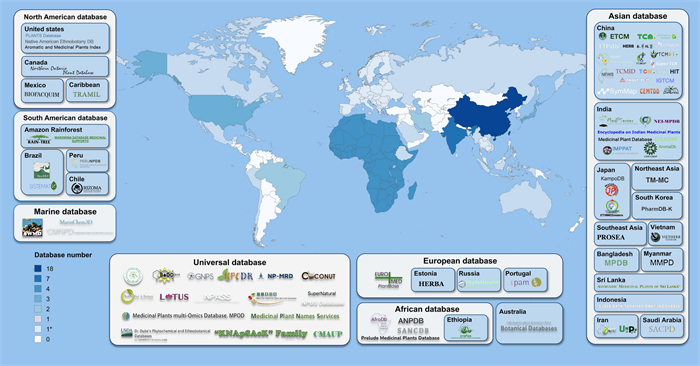
Geospatial analysis of medicinal plant databases developed or updated between 2013 and 2025. Various colors on the map correspond to the number of databases in distinct geographic regions. The asterisk (*) denotes databases that cater to multiple countries and regions
In fact, the reasons for the wide global variation in medicinal plant prevalence are traceable, and they could be attributed to cultural background, healthcare systems, availability of medicinal plants, and economic conditions. Traditional East Asian medicine, originating around 3000 years ago in China and subsequently introduced to Korea and Japan in the sixth century, has been deeply ingrained in these societies, forming a significant part of their healthcare practices [29]. In China, for instance, traditional Chinese medicine (TCM) is integral to medical care, with 95% of general hospitals housing specialized TCM departments, utilizing it extensively for treatment and prevention [18]. Similarly, in Japan, over 80% of medical practitioners prescribe Kampo medicines, showcasing a widespread acceptance of traditional healing methods [30]. In India, AYUSH is the acronym for Ayurveda, Yoga and Naturopathy, Unani, Siddha, Sowa-Rigpa, and Homeopathy, representing a structured healthcare segment that extends its services across both public and private sectors [18]. Europe, as the world’s second-largest market for complementary and alternative medicine (CAM) after Asia [31], demonstrates varying utilization rates across countries, ranging from 10% in Hungary to nearly 40% in Germany [32]. Furthermore, the availability of medicinal plants varies depending on the climate, soil, and other environmental factors [33]. Studies [34–36] have illuminated a social connection between the utilization of medicinal plants and prevailing economic circumstances.
Medicinal plants represent a valuable resource for human health, serving as a wellspring of natural compounds that have been utilized in traditional medicine for centuries. As we navigate the evolving landscape of healthcare and pharmacology, the synergy between traditional knowledge, advanced technologies, and artificial intelligence (AI) is becoming increasingly significant. The availability of medicinal plant databases, coupled with the power of AI, is reshaping the way we explore, understand, and apply these natural remedies. In the upcoming sections, we will delve into a comprehensive exploration of these identified resources and examine their specific attributes and multifaceted applications. These databases offer a wealth of knowledge, inspiring and guiding professionals and researchers in diverse fields, including healthcare, ethnobotany, AI, and environmental science, to drive innovation and informed decision-making.
2 Comparative studies of available medicinal plant resources
With an estimated total of 379,950 plant species identified globally [1], the potential number of medicinal plants represents a proportion ranging from 13 to 35% [37]. These medicinal floras exhibit a wide geographic distribution across diverse biomes and are considered a rich source of specialized metabolic compounds known as phytochemicals. Numerous studies [38–42] have demonstrated that phytochemicals have the ability to influence a broad range of bodily functions, thereby conferring therapeutic efficacy against an array of human pathologies, and this is precisely the basis on which these medicinal plants demonstrate their therapeutic effects in treating diseases.
To further explore the global distribution of medicinal plants, we generated a heat map as depicted in Fig. 2. This visualization helps to identify how data from different regions contribute to our understanding of medicinal plant diversity and their therapeutic potential. We focused our study on 40 out of the 81 available global databases, selecting them based on criteria that ensure broad geographic coverage, adherence to proportional representation among similar databases, and the availability of specific entity statistics. The heat map elucidates the relative quantities of collated data entities such as plant species, prescriptions, phytochemical ingredients, genes, KEGG pathways, therapeutic applications, adverse effects, and so on. Each database offers a unique blend of these entities, presenting a comprehensive snapshot of medicinal plant knowledge that spans different regions and countries.
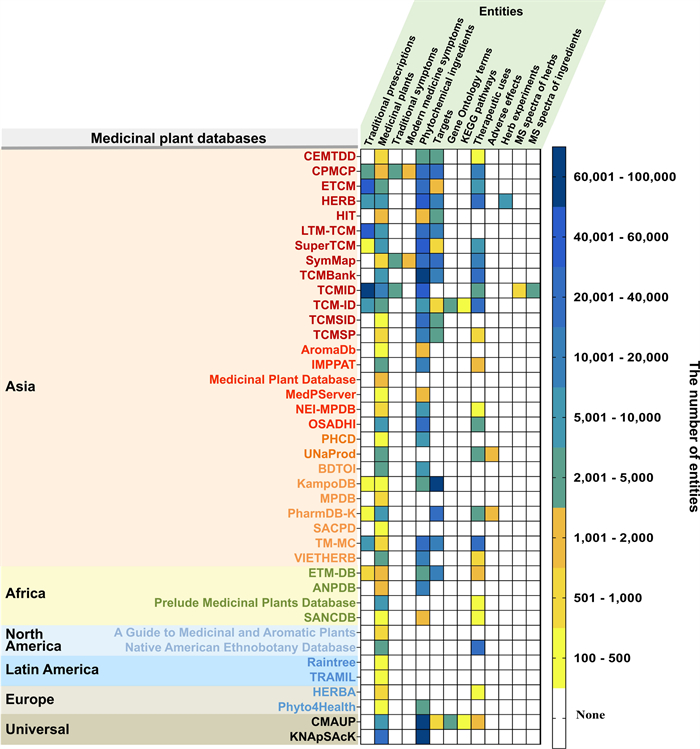
Heat map illustrating 40 medicinal plant databases across continents and entity composition. In the Asia section, the names of the databases in four colors, arranged from top to bottom, represent China, India, Iran, and other Asian regions respectively
To gain a more profound comprehension of the construction, content, and utilization of medicinal plant databases, our focus centered on an investigative analysis of distinctly characterized databases. This scrutiny allowed us to delve into their respective attributes and synthesize pivotal information, collating it into Table 1 for comparative observation.
Summary of 19 typical medicinal plant databases with their properties
2.1 Prelude medicinal plants database
Prelude Medicinal Plants Database is dedicated to the exploration of plant usage in various traditional veterinary and human medicines across Africa. Users can navigate the database by plant, country, symptom, and reference, with information sourced from scientific articles, books, papers presented at congresses, or contributed directly to the Prelude Sub-Network on “Health, animal productions, environment”. For researchers, doctors, veterinarians, and agricultural instructors, this database can help them quickly find information on the use of African medicinal plants for therapeutic purposes through a reliable literature guidance.
2.2 BATMAN-TCM
BATMAN-TCM is designed to help researchers and practitioners better understand the complex and holistic nature of TCM by providing a systematic and integrative approach to analyze the relationships between TCM formulas, herbal ingredients, and disease targets at the molecular level. Its version 2.0 significantly expands the coverage of known and predicted interactions between TCM ingredients and target proteins. The database integrates a repository of over 17,000 manually curated interactions from literature and external databases, complemented by approximately 2.3 million high-confidence predictions generated via a similarity-based method. In addition to a novel retrieval function that screens herbs based on disease signature genes from omics studies, BATMAN-TCM enables users to input TCM formulas or TCM herbs to generate predicted target profiles, network maps, and pathway annotations based on the available experimental data and computational models. The tool also allows for the discovery of novel combinations of TCM herbs that could have synergistic effects.
2.3 ETCM
ETCM is an important bridge between TCM and modern medical research. It provides multi-dimensional intelligent correlation analysis and graphical presentation of “TCM formulas-Chinese medicinal materials-ingredients-genes-functions/pathways-diseases”, comprehensively analyzing the interaction between the complex system of TCM and the molecular network of the body. ETCM has structured and standardized the information of TCM ancient formulas and Chinese patent drugs, which has more advantages than other similar TCM databases. It has also established external links with international authoritative chemical and biological databases such as PubChem, UniProt, and GeneCards.
2.4 HIT
HIT is a literature-based search and curation platform containing information on over 1250 herbal medicines, 1237 extracted ingredients, and 2208 associated biological targets. The target database catalogs proteins and enzymes that are directly or indirectly activated, inhibited, or bound by herbal compounds. The platform also provides My-Target, a curation system to review compound-target relationships and build customized profiling of the latest research. Overviews and detailed records foster exploration of polypharmacology within traditional remedies and discovery of new bioactivities.
2.5 IMPPAT
IMPPAT is an open-access database cataloging over 4000 Indian medicinal plant species, nearly 18,000 associated phytochemicals, and 1100 therapeutic applications. Curators have manually compiled data from more than 100 traditional medicine texts, 7000 + scholarly research articles, and other resources. This up-to-date literature-based platform allows exploration of individual plants, compounds, or medicinal uses. Users can access details on phytochemical properties, structures, and absorption, distribution, metabolism, excretion, and toxicity (ADMET) profiles to facilitate natural product drug discovery and elucidate mechanisms of action. By integrating information on India’s rich botanical heritage and linking compositions to effects, IMPPAT aims to accelerate investigations into phytochemistry and target validation, supporting both computational and empirical phytomedicine research.
2.6 OSADHI
OSADHI is an open-access database cataloging over 6900 medicinal plant species from across India. This database offers detailed records on plant taxonomy, ethnobotanical uses, physiological sources, isolated phytochemicals, and reported therapeutic applications. Detailed analysis for the 22,314 phytochemicals has been provided in this database which includes physicochemical properties, drug-likeness (DL) based on multiple scoring schemes, predicted ADMET properties, and predicted antiviral potency. It provides an integrated platform for using chemoinformatic methods to hasten the development of drugs based on natural products.
2.7 UNaProd
UNaProd is an open-access database cataloging over 3400 medicinal substances within Iranian traditional medicine (ITM). Individual monographs provide comprehensive documentation across 16 attributes, including identity, temperament classification, medicinal actions, adverse effects, preparation methods, origins and more. Key information on each natural remedy such as Mizaj categorized similarly to TCM as cold-dry, hot-wet, etc. aims to preserve the holistic doctrines of ITM. The database also links to related resources on molecular signatures and an ITM ontology. By integrating diverse data on the natural products, practices and conceptual foundations of ITM, UNaProd supports both basic and translational investigations into Persian ethnomedicine. It serves to elucidate mechanisms of complex herbal formulations while safeguarding integral aspects of this important medical tradition.
2.8 KampoDB
KampoDB is an open-access resource for exploring Kampo medicine, a traditional Japanese system adapted from Chinese herbalism. With centuries of clinical use, Kampo formulations address diverse conditions. The database provides scientific information on Kampo prescriptions, raw herbs, constituent phytochemicals and associated protein targets. Users can search individual medicines to uncover properties, molecular effects and potential new therapeutic applications through protein interaction networks. By integrating compound data with large-scale omics profiles, KampoDB also predicts undiscovered targets of natural product constituents. This elucidates mechanisms of complex formulas while supporting research into multi-target effects. Overall, the platform advances Kampo therapy and phytomedicine by linking formulations to biological pathways and facilitating both target validation and systems-level investigations into the medical tradition.
2.9 VIETHERB
VIETHERB is an open-access database documenting over 2800 plant species, 10,000 metabolites, and traditional uses from Vietnamese herbal medicine. Users can explore profiles detailing individual herbs with metadata on geographical distribution, isolated compounds and therapeutic applications. Comprehensive records integrate ethnobotanical knowledge with phytochemical and pharmacological data. This curated platform facilitates a diversity of research avenues including modernization of Vietnamese medical practices, computer-aided drug discovery, computational target prediction and conservation science. By preserving ethnomedicinal wisdom while enabling omics technologies, VIETHERB aims to support validation and development of herbal therapies as well as conservation of medicinal flora.
2.10 Phyto4Health
Phyto4Health is a database that compiles information on various biologically active compounds from 268 medicinal plants listed in the Russian Pharmacopoeia. The database contains information on 3128 phytocomponents, including their source plants, physical–chemical characteristics, and biological effects. The records of biological activity in compounds were obtained from the data of interactions with human molecular targets and prediction of activity spectra for substances, respectively. The overlap of phytocomponents within this database is comparatively limited in contrast to five other similar databases (NANPDB [64], SistematX [65], Ayurveda [66], BIOFACQUIM [67], and TPPT [68]), thereby significantly enhancing the uniqueness of the contents.
2.11 NuBBE
NuBBE is a useful tool for studies on naturally occurring Brazilian bioactive compounds. It contains a variety of natural products isolated from Brazilian biodiversity and provides information on chemical (metabolic classes, chemical structures, physicochemical properties, etc.), biological (species, geographic locations, biological activities), pharmacological properties, and spectroscopic data. Its user-friendly interface and extensive search capabilities make it easy to explore the database and access the information needed for a wide range of research projects. Especially, NuBBE can be used to uncover the relation between Brazilian species with biological activities and geographical disposition.
2.12 Raintree
Raintree has been working to provide accurate and factual information about important plants in the Amazon Rainforest. It can be browsed by plant common names, botanical names, ethnic uses, diseases, and properties. Information on herbal properties, utilized parts, dosages, plant chemicals, tribal uses, global ethnomedical uses, biological activities, clinical research, and current practical applications is provided. This aims to facilitate easy access to available plant information for both professional readers and newcomers to the field of medicinal plants. There are also links to various articles related to plants in the database, offering further insights and knowledge.
2.13 CMNPD
CMNPD is a meticulously curated repository focused on marine natural products. Recognizing the vastness of the oceans covering 71% of Earth’s surface and the scarcity of open, noncommercial databases for marine natural products, CMNPD offers an extensive array of data on a wide range of chemical compounds, featuring various physicochemical properties and pharmacokinetic profiles. Alongside, it provides standardized biological activity data, systematic taxonomy, geographic distribution of source organisms, and spectral information including infrared spectroscopy (IR), mass spectrometry (MS), nuclear magnetic resonance (NMR), and ultraviolet–visible spectroscopy (UV/VIS). Detailed literature citations further enrich the resource. With the potential for future expansion, CMNPD aims to evolve into an even more comprehensive repository for marine natural products.
2.14 Native American ethnobotany database
The Native American Ethnobotany Database is a digital repository of information about the traditional uses of plants by indigenous peoples of North America. The database consists of over 44,000 plant uses for purposes such as medicine, food, fiber, and ceremonial activities, with about half of these uses being medicinal. The information is drawn from over 1000 sources, including ethnographic field notes, historical documents, and published literature. The database is searchable by plant name, common name, tribe, and use, including detailed information on the cultural context of each use, as well as the scientific name and other taxonomic information for each plant. The Native American Ethnobotany Database is an important resource for researchers, educators, and indigenous communities interested in preserving traditional knowledge of plants and their uses. It serves as a valuable tool for understanding the rich cultural heritage of native people in North America and their relationship with the natural world.
2.15 COCONUT
COCONUT is an open-source initiative designed for the storage, search, and analysis of natural products. In the 2.0 version released in 2025, the database expanded its data sources and significantly increased the number of unique natural product structures, while upgrading the data model to a stereochemistry-aware one. The latest version not only enhanced the database’s technical architecture and data standardization pipeline but also introduced community-driven curation features, enabling users to continuously contribute to data refinement and improvement, thereby enhancing the platform’s flexibility and sustainability. To date, the database comprises over 695,133 unique natural product structures, more standardized than before, from over 60 open-access natural product resources, among which 539,350 molecules have preserved stereochemical information. Associated natural product structure, predicted bioactivities, known stereochemical forms, literature, and diverse pre-computed molecular properties are provided annotating by a 5-star-based level system (5 stars is the highest quality). More, biological occurrences of 276,518 natural products in COCONUT can be found in the LOTUS [69] database. Developed by the same team as COCONUT, LOTUS has successfully harmonized, curated, validated, and openly disseminated over 750,000 referenced structure-organism pairs.
2.16 GNDC
Gene-encoded Natural Diverse Components Repository (GNDC) is the first database dedicated to capturing gene-encoded natural diverse components sourced from herbal medicines. GNDC comprises four sub-databases, i.e., HerbalMDB (2.32 M metabolites), HerbalPDB (229.77 M peptides), HerbalRDB (2.38 M small RNAs), and HerbalCDB (0.26 M carbohydrates), covering 234 million components from 1037 species recorded in eight authoritative pharmacopoeias. Powered by an integrated transformer-GNN ADMET 2.0 pipeline, GNDC automatically embeds gene-encoded components into a unified chemical-biological latent space, predicts 25 druggability end points with AUC ≥ 0.89, and delivers ranked, clinic-ready candidates through a one-click web interface, thereby offering a "chemical-space"-grade operating system for natural-product drug discovery. GNDC addresses the limitations of existing natural product databases in data types and functional analysis, accelerates big-data-driven drug discovery, and represents a key future tool for exploring natural products with AI technology.
2.17 GNPS
GNPS is a web-based platform that allows scientists to analyze and interpret MS data of complex mixtures of natural products. This platform was developed to aid in the discovery and identification of new bioactive chemical entities from natural sources. It organizes the MS data into a network of nodes and edges where each node represents a molecule and each edge represents the structural similarity between two nodes. This helps in visualizing the relationships between different molecules in a sample. It also includes a vast library of spectra from known molecules which can be used by scientists to compare their data with this library to identify known compounds in their samples. One of the unique features of GNPS is its social networking aspect, which allows researchers to collaborate and share data with each other.
2.18 KNApSAcK
KNApSAcK is a comprehensive database that describes the relationships between plants and their metabolites. Updated to 24 December 2024, KNApSAcK WorldMap is a database of world-wide utilization of 24,749 medicinal plant species sorted by 229 individual countries that have been collected and registered from published scientific reports. KNApSAcK provides comprehensive search and exploration tools for metabolomics research. Its MS-focused search engine allows users to query metabolites by accurate mass, molecular formula, name or mass spectra across ionization modes. Included within KNApSAcK is the Biological Activity DB, also enables investigations of medicinal plants. Researchers can uncover each species’ reported biochemical activities, associated disease states and human health impacts.
2.19 MPNS
Kew’s Medicinal Plant Names Services (MPNS) is a database that provides standardized and curated information on the names of medicinal plants used in traditional and modern medicine around the world. The MPNS database contains information on all pharmaceutical, herbal drug, common and scientific plant names as cited for plants or herbal drugs in any of the medicinal plants and health regulatory literature. It also includes information on the plant’s used parts and drug forms. One of the unique features of MPNS is its focus on providing accurate and up-to-date information on the names of medicinal plants, including taxonomic changes and updates.
3 Applications from traditional remedies to cutting-edge discoveries
Databases focused on national or regional contexts often mirror the distinct requirements of particular communities [10]. Although these databases are contextualized to offer invaluable local insights, their underlying principles of development and application remain universal. These databases themselves serve as de facto guidance for global collaboration, uniting researchers, clinicians, academics, and various stakeholders. They facilitate the exchange of knowledge, techniques, and experiences, thereby fostering a cohesive environment for utilizing and augmenting medicinal plant databases.
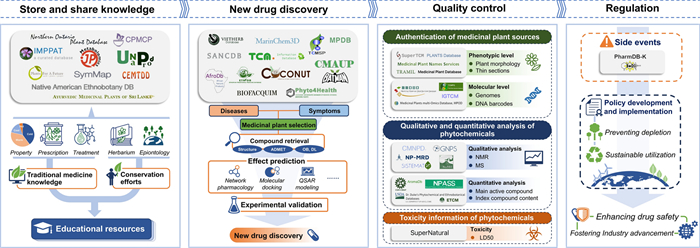
The versatile nature of medicinal plant databases extends far beyond mere storage of information. Their significance spans various domains (shown in Fig. 3), serving as reservoirs of traditional knowledge, catalysts for pharmaceutical innovation, guarantors of product quality, and regulators of herbal medicinal usage. Embracing these databases as shared resources paves the way for a collaborative ecosystem benefiting diverse stakeholders worldwide.
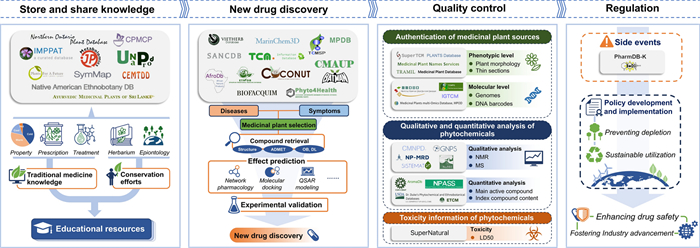
Integrative applications of medicinal plant databases. Medicinal plant databases facilitate the compilation and sharing of traditional medicine knowledge, enable the discovery of new drugs from natural products, ensure the quality control of herbal medicines, and assist in the regulation of herbal medicine practices
3.1 Store and share knowledge
A medicinal plant database serves as an information bank that effectively stores and shares knowledge with the community. It helps support scientific research by extensively cataloging information on medicinal plants.
3.1.1 Traditional medicine knowledge
Traditional medicine practices, such as Ayurveda, TCM, Unani medicine, and ITM, heavily rely on the use of medicinal plants. Databases can serve as valuable resources for practitioners in these fields, helping them identify and learn more about the plants used in their practice.
In UNaProd [53], each drug monograph is dedicated to Mizaj (temperament, a concept in ITM), and database statistics show that for monotherapy in Makhzan al-Advieh, the most common Mizaj type was hot-dry (55.7%), followed by cold-dry (16.5%), hot-wet (8.1%), and cold-wet (5.4%).
In China, many people use TCM prescriptions which consist of several TCM medicinal materials to treat complex diseases. For example, Fangjihuangqi decoction, which contains the roots of Stephania tetrandra S. Moore, the roots of Astragalus membranaceus (Fisch.) Bge. var. mongholicus (Bge.) Hsiao, the rhizomes of Atractylodes macrocephala Koidz., and the roots and rhizomes of Glycyrrhiza uralensis Fisch., is used for the treatment of chronic heart failure [70, 71]. CPMCP [72] is the latest curated database to provide such information about 2125 TCM prescriptions and summarizes a set of common drug combination principles by analyzing the combination of medicinal materials in existing prescriptions. Another characteristic of TCM is symptom differentiation and treatment. SymMap [73] categorizes over 2518 TCM symptoms according to their meridians in the body and properties.
When developing traditional knowledge databases like the Native American Ethnobotany Database, integrating indigenous knowledge requires a harmonious and respectful approach under the CARE principles (collective benefit, authority to control, responsibility, and ethics) [74]. This includes emphasizing the protection of local rights and resources, which may be affected or disrupted by external interests. The development of such databases should involve indigenous communities collaboratively and in an orderly manner, ensuring that their rights and resources are not infringed upon, but preserved and enhanced [75]. In the case of the Aurukun ethnobiology database project [76], Aboriginal communities co-developed the database with ethnoscientists through a participatory research process that adhered to indigenous methodologies and cultural protocols. Despite concerns expressed by some ethnoscientists [77, 78] who argue against similar future projects, this collaboration stands as a good example of respecting and empowering community control over data and knowledge management. This debate underscores the need for research approaches that both respect indigenous rights and advance community-centered goals.
3.1.2 Conservation efforts
Medicinal plant databases are valuable tools for conservationists and environmentalists to identify endangered species and prioritize their conservation efforts. The Ayurvedic Medicinal Plants of Sri Lanka website (http://www.ayurvedicmedicinalplantssrilanka.org/) supports biodiversity conservation by providing comprehensive data on the taxonomic rank, geographical localization, and therapeutic potential of plants. Such databases, as emphasized by the Global Strategy for Plant Conservation under the Convention on Biological Diversity [79], are crucial for achieving global conservation targets. Additionally, the integration of geographic information system (GIS) technology enhances these efforts by offering detailed mappings of plant species distributions, critical for effective conservation planning and implementation [80].
3.1.3 Educational resources
Students and professionals in the fields of pharmacy, medicine, and botany can benefit from medicinal plant databases as educational resources. These databases not only serve as reference materials for traditional uses and resource conservation, but also provide integrated information from both traditional and modern perspectives. For example, databases like SymMap [73] offer insights into TCM by correlating TCM symptoms with modern symptoms. This enables the delivery of comprehensive educational content, combining traditional knowledge systems with modern scientific research to facilitate a deeper understanding of plant-based medicine.
Medicinal plant databases can help raise public awareness about the benefits and potential risks associated with the use of medicinal plants. By providing accurate and accessible information, these databases can empower individuals to make informed decisions about their health and well-being.
3.2 New drug discovery
Medicinal plant databases serve as not only integral components of traditional medical systems, but also as viable, cost-effective strategies and tools in the realms of chemo- and bioinformatics for novel drug discovery.
3.2.1 Screening for lead compounds
The search for new drugs from phytomedicine usually begins with the identification of diseases and corresponding symptoms, guiding the selection of relevant medicinal plants. In this initial stage, universal databases such as COCONUT [22, 23] and NPASS [25] are invaluable, providing extensive data on physicochemical properties, DL, or ADMET characteristics of natural compounds. For in-depth research on medicinal plants from specific regions, databases tailored to such locales are crucial. For instance, SANCDB [28, 81] catalogs South African natural compounds, while ETM-DB [82], focuses on Ethiopian herbs. These databases provide detailed insights into the biochemical profiles and therapeutic potentials of local flora, enriching the preliminary screening process, and enhancing the discovery of bioactive molecules.
Network pharmacology validation, through molecular biology experiments, predicts targets and provides guidance for exploring effective targets for the active compounds [83]. Specifically, TCM network pharmacology establishes a “compound-target-disease” relationship [84–86], which can be used to explore the complex associations between medicinal plants and diseases. Through network pharmacology, Chen et al. [87] used TCMSP [88] and TCM-ID [89] to identify potential active compounds and their targets in fruits of Euodia rutaecarpa, utilizing both 2-dimensional and 3-dimensional quantitative structure activity relationship (QSAR) models to predict and evaluate their interactions with biological targets. Additionally, molecular docking techniques are used to confirm the binding efficiency and modes of these compounds at the atomic level, providing insights into their potential efficacy.
In recent years, as chemical libraries have expanded to exceed a billion compounds, AI-enabled virtual screening approaches leveraging deep learning for molecular docking have emerged as economical and highly reliable techniques for evaluating very large datasets, which has been successfully applied using ZINC20 database [90].
3.2.2 Structure optimization of lead compounds
Morstein et al. [91] applied COCONUT for chemoinformatic characterization of the “Natural Product Lipidome”, analyzing lipid chain length, hydrogen bond acceptor count, connecting functional groups, and varying degrees of saturation, which revealed the conjugation of small molecules with medium-chain lipids could improve cell permeability and bioactivity of small molecules.
3.3 Quality control of herbal medicines
3.3.1 Authentication of medicinal plant sources
The traditional authentication of plant sources can be started from three aspects: observing plant morphology, verifying literature descriptions, and examining specimens. The Medicinal Plant Database developed by the Indian government (https://bsi.gov.in/page/en/medicinal-plant-database) contains herbarium images and other details of Indian medicinal plants that can aid identification. SuperTCM [92] is another useful resource, featuring a comprehensive collection of high-quality photographs of authentic Chinese herbs to support research. The TRAMIL library (https://www.tramil.net/en/content/discover-the-tramilibrary) not only offers photographs and specimens of medicinal plants from the Caribbean region, but also provides thin sections stained with carmine-green and photographed using a light microscope. Images are crucial for proper species identification, which is the foundation for determining a plant’s medical applications and safety.
While phenotypic characteristics provide important clues, the precise identification and taxonomic classification of plant species often require complementary analysis at the molecular level [93]. MPOD [94] is an open-access multi-omics database integrating diverse genomes datasets compiled from public repositories and proprietary research. MMDBD [95, 96] provides DNA barcodes, such as rbcL, matK, nuclear ribosomal ITS, ribosome DNA, and other plastid DNA regions for medicinal plants identification and authentication.
3.3.2 Qualitative and quantitative analysis of phytochemicals
Medicinal plants contain a variety of active phytochemicals, which are related to complex secondary metabolic pathways. NMR and MS have unique advantages in the identification of phytochemicals [97, 98]. SistematX [65, 99, 100] generates and visualizes 1H and 13C NMR data, and implements the prediction of activity spectra for substances tool directly. GNPS [62] shares raw, processed, or annotated fragmentation mass spectrometry data (MS/MS) offering retrieval and reanalysis for natural products.
Quantitative analysis of active compounds is essential for understanding their efficacy, forming the foundation for the quality control. For the evaluation of TCM quality, ETCM [46, 47] provides standardized quantitative criteria for index compounds of TCM. Furthermore, techniques such as chromatography-mass spectrometry offer even more detailed insights by combining separation capabilities with mass spectrometric detection, thus providing a comprehensive analysis of the complex mixtures often found in medicinal plants [101]. AromaDb [102] archives extensive gas chromatography-mass spectrometry (GC–MS) analysis data for medicinal and aromatic plants. Additionally, Dr. Duke’s Phytochemical and Ethnobotanical Databases (https://phytochem.nal.usda.gov/) provide another essential layer of insight by enabling users to pinpoint which plants exhibit the highest concentrations of specific phytochemicals.
3.3.3 Toxicity information of phytochemicals
Understanding toxicity is equally crucial in quality control processes. SuperNatural 3.0 [24] significantly aids in this regard by providing potential toxicity alerts for the use of specific phytochemicals.
3.4 Regulation of herbal medicines
Safety assessment is a critical part of regulation. For example, databases such as PharmDB-K [103] report side effects of various botanicals to inform this process.
Regulatory oversight extends beyond drug quality control to include crucial areas such as drug policy development and implementation. Legislation for herbal medicinal products, dietary supplements, and nutraceuticals varies between regions like China, Japan, the US, Australia, New Zealand, Canada, and the EU [104]. Given this variability, medicinal plant databases can serve as a tool to help harmonize regulatory frameworks for botanicals internationally. This enables the formulation of rational policies that ensure sustainable use of plant resources by preventing depletion, as well as facilitating the development of new evidence-based herbal medicines. An optimal regulatory approach should encompass both public safety and the conservation of medicinal botanicals.
4 Conclusions and perspectives
Medicinal plants remain indispensable for global health, and the rapid evolution of computer science has positioned digital databases as vital repositories for this botanical heritage. Following a systematic screening of the current database landscape, this review provides a comprehensive evaluation of regional medicinal plant resources established or updated over the last 12 years, with a curated focus on 19 representative platforms selected for their structural depth and functional impact. By offering a bioinformatics perspective on global botanical resources, this study illustrates how digital curation facilitates the transition from traditional empirical knowledge to data-driven therapeutic applications, serving as a valuable resource and foundation for modern drug research.
Despite the development of these resources, certain challenges must be addressed. First, an over-reliance on isolated chemical data often occurs at the expense of ethnobotanical context, which is essential for interpreting the physiological significance of these botanical products. This gap is further exacerbated by linguistic barriers in regional documentation and inconsistent data models that fail to capture the qualitative nuances of traditional medical systems [105, 106]. Second, taxonomic complexities such as synonyms and hybrids frequently compromise the accuracy of downstream research, as many databases fail to account for critical phytochemical variations driven by different origins [107, 108], parts used [109], sizes [110, 111], or cultivation status [112]. This lack of rigorous identification remains a significant barrier to data standardization, rendering the botanical information in many current platforms unreliable for reproducible drug discovery. Third, the insufficient technical exchange between biologists and computational professionals often hinders effective collaboration, particularly when developers lack a foundational understanding of the biological concepts essential for robust database construction [113]. Furthermore, as these databases disseminate knowledge rooted in the traditions of indigenous peoples and local communities, it is crucial to incorporate their intellectual property rights in alignment with the Nagoya Protocol [114, 115]. This stewardship requires upholding the principles of Access and Benefit-Sharing (ABS), ensuring that any benefits, especially from commercial exploitation, are shared equitably with the communities that nurtured this botanical heritage.
Ensuring the long-term validity and authority of these resources requires ongoing maintenance and the timely integration of emerging multi-omics and pharmacological data. Moving forward, the establishment of interoperability standards will be paramount to facilitate comparisons across databases [116], allowing researchers to integrate complementary data sources to address increasingly complex research questions. This ongoing effort to build specialized, interoperable databases, leveraging diverse data types such as pharmacogenomics and systems pharmacology, represents a key strategy for accelerating natural product-based drug development. Through strategic collaboration and data sharing, these optimized resources will ultimately maximize their impact on global health. In conclusion, the systematic evaluation and gap analysis presented in this work establish a foundational bioinformatics framework, effectively unifying ancient botanical wisdom with the rigorous requirements of modern drug discovery.
Abbreviations
ABS
Access and benefit-sharing
ADMET
Absorption, distribution, metabolism, excretion, and toxicity
AI
Artificial intelligence
AYUSH
Ayurveda, Yoga and Naturopathy, Unani, Siddha, Sowa-Rigpa, and Homeopathy
CAM
Complementary and alternative medicine
CARE
Collective benefit, authority to control, responsibility, and ethics
DL
Drug-likeness
EANPDB
Eastern African Natural Products Database
FAIR
Findability, accessibility, interoperability, and reusability
GC-MS
Gas chromatography-mass spectrometry
GIS
Geographic information system
GNDC
Gene-encoded Natural Diverse Components Repository
IR
Infrared spectroscopy
ITM
Iranian traditional medicine
MPNS
Medicinal Plant Names Services
MS
Mass spectrometry
NANPDB
Northern African Natural Products Database
NMR
Nuclear magnetic resonance
OB
Oral bioavailability
QSAR
Quantitative structure–activity relationship
TCM
Traditional Chinese medicine
UV/VIS
Ultraviolet-visible
Notes
Acknowledgements
This work was financially supported by the National Natural Science Foundation of China (No. 82361138570), Key Scientific Research Program of Hangzhou (No. 2025SZD2B04), Huadong Medicine Joint Funds of the Zhejiang Provincial Natural Science Foundation of China (No. LHDMZ22H280001), and the Fundamental Research Funds for the Central Universities (No. 226-2024-00001).
Author contributions
Yifei Jiang: Investigation, Visualization, Writing—Original draft manuscript. Xiaozhuan Jia: Investigation, Visualization, Writing—Reviewing and Editing. Zhenzhong Yang: Conceptualization, Methodology, Supervision, Writing—Reviewing and Editing. All authors read and approved the final manuscript.
Data availability
No data was used for the research described in the article.
Declarations
Competing interests
The authors declare that they have no known competing financial interests or personal relationships that could have appeared to influence the work reported in this paper.
References
-
1.Consortium TWFO, Elliott A, Hyam R, Watson M, Wrankmore E, Hartley H, et al. World flora online plant list june 2025. 2025. PubMed Google Scholar
-
2.Kumar S, Shanker A. Biological databases for medicinal plant research. In: Kumar N, editor. Biotechnological approaches for medicinal and aromatic plants: conservation, genetic improvement and utilization. Singapore: Springer Singapore; 2018. p. 655–65. PubMed Google Scholar
-
3.Nasim N, Sandeep IS, Mohanty S. Plant-derived natural products for drug discovery: current approaches and prospects. Nucleus (Calcutta). 2022;65(3): 399-411. CrossRef PubMed Google Scholar
-
4.Huang M, Lu J, Ding J. Natural products in cancer therapy: past, present and future. Nat Prod Bioprospect. 2021;11(1): 5-13. CrossRef PubMed Google Scholar
-
5.Veeresham C. Natural products derived from plants as a source of drugs. J Adv Pharm Technol Res. 2012;3(4): 200-1. CrossRef PubMed Google Scholar
-
6.George DR, Edris W, Hanson R, Gilman F. Medicinal plants—the next generation. Lancet. 2016;387(10015): 220-1. CrossRef PubMed Google Scholar
-
7.World Health Organization. Biodiversity and health. 2025. PubMed Google Scholar
-
8.Noor F, Tahir ul Qamar M, Ashfaq UA, Albutti A, Alwashmi ASS, et al. Network Pharmacology Approach for Medicinal Plants: Review and Assessment. Pharmaceuticals (Basel). 2022;15(5): 572. CrossRef PubMed Google Scholar
-
9.Xiao Z, Jiang S, Fu S, Zhang X, Qi X, Li C. Unveiling the therapeutic mechanism of epimedium herba on prostate cancer through network pharmacology and experimental validation. Chin J Nat Med. 2025;23(12): 100016. PubMed Google Scholar
-
10.Ningthoujam SS, Talukdar AD, Potsangbam KS, Choudhury MD. Challenges in developing medicinal plant databases for sharing ethnopharmacological knowledge. J Ethnopharmacol. 2012;141(1): 9-32. CrossRef PubMed Google Scholar
-
11.Chen Y, de Bruyn Kops C, Kirchmair J. Data resources for the computer-guided discovery of bioactive natural products. J Chem Inf Model. 2017;57(9): 2099-111. CrossRef PubMed Google Scholar
-
12.Lagunin AA, Goel RK, Gawande DY, Pahwa P, Gloriozova TA, Dmitriev AV, et al. Chemo- and bioinformatics resources for in silico drug discovery from medicinal plants beyond their traditional use: a critical review. Nat Prod Rep. 2014;31(11): 1585-611. CrossRef PubMed Google Scholar
-
13.Ma X, Meng Y, Wang P, Tang Z, Wang H, Xie T. Bioinformatics-assisted, integrated omics studies on medicinal plants. Brief Bioinform. 2020;21(6): 1857-74. CrossRef PubMed Google Scholar
-
14.Zahoor I, Shafi A, Fazili KM. Bioinformatics and medicinal plant research: current scenario. In: Essentials of Bioinformatics, Volume Ⅲ: in Silico Life Sciences: Agriculture. Cham: Springer International Publishing; 2019. p. 141–57. PubMed Google Scholar
-
15.Zhang W, Zeng Y, Jiao M, Ye C, Li Y, Liu C, et al. Integration of high-throughput omics technologies in medicinal plant research: the new era of natural drug discovery. Front Plant Sci. 2023;14: 1073848. CrossRef PubMed Google Scholar
-
16.Sorokina M, Steinbeck C. Review on natural products databases: where to find data in 2020. J Cheminform. 2020;12: 20. CrossRef PubMed Google Scholar
-
17.Wan Mohd Isa, W.A.R., Mohd Amin, I. A bibliometric study of traditional medicinal plant database research, 2001–2021. IJARPED. 2022;11(2): 214-23. CrossRef PubMed Google Scholar
-
18.Fathifar Z, Kalankesh LR, Ostadrahimi A, Ferdousi R. New approaches in developing medicinal herbs databases. Database (Oxford). 2023;2023: baac110. CrossRef PubMed Google Scholar
-
19.Nguyen Vo TH, Nguyen L, Do N, Nguyen TN, Trinh K, Cao H, et al. Plant metabolite databases: From herbal medicines to modern drug discovery. J Chem Inf Model. 2020;60(3): 1101-10. CrossRef PubMed Google Scholar
-
20.Xie T, Song S, Li S, Ouyang L, Xia L, Huang J. Review of natural product databases. Cell Prolif. 2015;48(4): 398-404. CrossRef PubMed Google Scholar
-
21.Wilkinson MD, Dumontier M, Aalbersberg IJ, Appleton G, Axton M, Baak A, et al. The FAIR guiding principles for scientific data management and stewardship. Sci Data. 2016;3(1): 160018. CrossRef PubMed Google Scholar
-
22.Chandrasekhar V, Rajan K, Kanakam SRS, Sharma N, Weißenborn V, Schaub J, et al. COCONUT 2.0: a comprehensive overhaul and curation of the collection of open natural products database. Nucleic Acids Res. 2025;53(D1): D634-43. CrossRef PubMed Google Scholar
-
23.Sorokina M, Merseburger P, Rajan K, Yirik MA, Steinbeck C. COCONUT online: collection of open natural products database. J Cheminform. 2021;13: 2. CrossRef PubMed Google Scholar
-
24.Gallo K, Kemmler E, Goede A, Becker F, Dunkel M, Preissner R, et al. SuperNatural 3.0—a database of natural products and natural product-based derivatives. Nucleic Acids Res. 2022;51(D1): D654-9. CrossRef PubMed Google Scholar
-
25.Zhao H, Yang Y, Wang S, Yang X, Zhou K, Xu C, et al. NPASS database update 2023: quantitative natural product activity and species source database for biomedical research. Nucleic Acids Res. 2023;51(D1): D621-8. CrossRef PubMed Google Scholar
-
26.L Medina Franco J. Towards a unified Latin American natural products database: LANaPD. Future Sci OA. 2023;6(8): FSO468. PubMed Google Scholar
-
27.Simoben CV, Qaseem A, Moumbock AFA, Telukunta KK, Günther S, Sippl W, et al. Pharmacoinformatic investigation of medicinal plants from East Africa. Mol Inf. 2020;39(11): e2000163. CrossRef PubMed Google Scholar
-
28.Diallo BN, Glenister M, Musyoka TM, Lobb K, Tastan Bishop Ö. SANCDB: An update on South African natural compounds and their readily available analogs. J Cheminform. 2021;13: 37. CrossRef PubMed Google Scholar
-
29.Kang KB, Jeong E, Son S, Lee E, Lee S, Choi SY, et al. Mass spectrometry data on specialized metabolome of medicinal plants used in East Asian traditional medicine. Sci Data. 2022;9(1): 528. CrossRef PubMed Google Scholar
-
30.Sawada R, Iwata M, Umezaki M, Usui Y, Kobayashi T, Kubono T, et al. KampoDB, database of predicted targets and functional annotations of natural medicines. Sci Rep. 2018;8(1): 11216. CrossRef PubMed Google Scholar
-
31.Xiong Y, Li M, Sun P, Liang W, Hornbeck RG, Che X, et al. Market access for Chinese herbal medicinal products in Europe—a ten-year review of relevant products, policies, and challenges. Phytomedicine. 2022;103: 154237. CrossRef PubMed Google Scholar
-
32.Kemppainen LM, Kemppainen TT, Reippainen JA, Salmenniemi ST, Vuolanto PH. Use of complementary and alternative medicine in Europe: health-related and sociodemographic determinants. Scand J Public Health. 2018;46(4): 448-55. CrossRef PubMed Google Scholar
-
33.Maldonado Miranda JJ. Chapter 7 - medicinal plants and their traditional uses in different locations. In: Bhat RA, Hakeem KR, Dervash MA, editors. Phytomedicine. Academic Press. 2021. pp. 207–223. PubMed Google Scholar
-
34.Logiel A, Jørs E, Akugizibwe P, Ahnfeldt Mollerup P. Prevalence and socio-economic factors affecting the use of traditional medicine among adults of Katikekile subcounty, Moroto district, Uganda. Afr Health Sci. 2021;21(3): 1410-7. CrossRef PubMed Google Scholar
-
35.Rezaei S, Ahmadi S, Mohamadi-Bolbanabad A, Khanijahani A. Exploring socioeconomic inequalities in the use of medicinal herbs among Iranian households: evidence from a national cross-sectional survey. BMC Complement Med Ther. 2020;20(1): 336. CrossRef PubMed Google Scholar
-
36.Weckmüller H, Barriocanal C, Maneja R, Boada M. Factors affecting traditional medicinal plant knowledge of the Waorani, Ecuador. Sustainability. 2019;11(16): 4460. CrossRef PubMed Google Scholar
-
37.Afendi FM, Okada T, Yamazaki M, Hirai Morita A, Nakamura Y, Nakamura K, et al. KNApSAcK family databases: integrated metabolite-plant species databases for multifaceted plant research. Plant Cell Physiol. 2012;53(2): e1. CrossRef PubMed Google Scholar
-
38.Ahmad Khan MS, Ahmad I. Chapter 1 - herbal medicine: current trends and future prospects. In: Ahmad Khan MS, Ahmad I, Chattopadhyay D, editors. New Look to Phytomedicine. Academic Press. 2019. pp. 3–13. PubMed Google Scholar
-
39.Howes MJR, Simmonds MSJ. The role of phytochemicals as micronutrients in health and disease. Curr Opin Clin Nutr Metab Care. 2014;17(6): 558. PubMed Google Scholar
-
40.Kennedy DO, Wightman EL. Herbal extracts and phytochemicals: plant secondary metabolites and the enhancement of human brain function1. Adv Nutr. 2011;2(1): 32-50. CrossRef PubMed Google Scholar
-
41.Qin W, Guo J, Gou W, Wu S, Guo N, Zhao Y, et al. Molecular mechanisms of isoflavone puerarin against cardiovascular diseases: what we know and where we go. Chin Herb Med. 2022;14(2): 234-43. PubMed Google Scholar
-
42.Salehi B, Machin L, Monzote L, Sharifi-Rad J, Ezzat SM, Salem MA, et al. Therapeutic potential of Quercetin: new insights and perspectives for human health. ACS Omega. 2020;5(20): 11849-72. CrossRef PubMed Google Scholar
-
43.Noe N, Lehmann J. Prelude Medicinal Plants Database. Belgian Biodiversity Platform. 2012. PubMed Google Scholar
-
44.Kong X, Liu C, Zhang Z, Cheng M, Mei Z, Li X, et al. BATMAN-TCM 2.0: an enhanced integrative database for known and predicted interactions between traditional Chinese medicine ingredients and target proteins. Nucleic Acids Res. 2024;52(D1): 1110-20. CrossRef PubMed Google Scholar
-
45.Liu Z, Guo F, Wang Y, Li C, Zhang X, Li H, et al. BATMAN-TCM: a bioinformatics analysis tool for molecular mechANism of traditional Chinese medicine. Sci Rep. 2016;6: 21146. CrossRef PubMed Google Scholar
-
46.Xu H, Zhang Y, Liu Z, Chen T, Lv C, Tang S, et al. ETCM: an encyclopaedia of traditional Chinese medicine. Nucleic Acids Res. 2019;47(D1): D976-82. CrossRef PubMed Google Scholar
-
47.Zhang Y, Li X, Shi Y, Chen T, Xu Z, Wang P, et al. ETCM v2.0: an update with comprehensive resource and rich annotations for traditional Chinese medicine. Acta Pharm Sin B. 2023;13(6): 2559-71. CrossRef PubMed Google Scholar
-
48.Yan D, Zheng G, Wang C, Chen Z, Mao T, Gao J, et al. HIT 2.0: an enhanced platform for herbal ingredients’ targets. Nucleic Acids Res. 2022;50(D1): D1238-43. CrossRef PubMed Google Scholar
-
49.Ye H, Ye L, Kang H, Zhang D, Tao L, Tang K, et al. HIT: linking herbal active ingredients to targets. Nucleic Acids Res. 2011;39(Database issue): D1055-9. CrossRef PubMed Google Scholar
-
50.Mohanraj K, Karthikeyan BS, Vivek Ananth RP, Chand RPB, Aparna SR, Mangalapandi P, et al. IMPPAT: a curated database of Indian medicinal plants, phytochemistry and therapeutics. Sci Rep. 2018;8: 4329. CrossRef PubMed Google Scholar
-
51.Vivek Ananth RP, Mohanraj K, Sahoo AK, Samal A. IMPPAT 2.0: an enhanced and expanded phytochemical atlas of Indian medicinal plants. ACS Omega. 2023;8(9): 8827-45. CrossRef PubMed Google Scholar
-
52.Kiewhuo K, Gogoi D, Mahanta HJ, Rawal RK, Das D, S V, et al. OSADHI—an online structural and analytics based database for herbs of India. Comput Biol Chem. 2023;102: 107799. CrossRef PubMed Google Scholar
-
53.Naghizadeh A, Hamzeheian D, Akbari S, Mohammadi F, Otoufat T, Asgari S, et al. UNaProd: a Universal Natural Product Database for Materia Medica of Iranian Traditional Medicine. Evid Based Complement Alternat Med. 2020;2020: 3690781. CrossRef PubMed Google Scholar
-
54.Nguyen Vo TH, Le T, Pham D, Nguyen T, Le P, Nguyen A, et al. VIETHERB: a database for Vietnamese herbal species. J Chem Inf Model. 2019;59(1): 1-9. CrossRef PubMed Google Scholar
-
55.Ionov N, Druzhilovskiy D, Filimonov D, Poroikov V. Phyto4Health: database of phytocomponents from Russian pharmacopoeia plants. J Chem Inf Model. 2023;63(7): 1847-51. CrossRef PubMed Google Scholar
-
56.Pilon AC, Valli M, Dametto AC, Pinto MEF, Freire RT, Castro Gamboa I, et al. NuBBEDB: an updated database to uncover chemical and biological information from Brazilian biodiversity. Sci Rep. 2017;7: 7215. CrossRef PubMed Google Scholar
-
57.Valli M, dos Santos RN, Figueira LD, Nakajima CH, Castro Gamboa I, Andricopulo AD, et al. Development of a natural products database from the biodiversity of Brazil. J Nat Prod. 2013;76(3): 439-44. CrossRef PubMed Google Scholar
-
58.Taylor L. The healing power of rainforest herbs: a guide to understanding and using herbal medicinals, Square One Publishers. 2005. PubMed Google Scholar
-
59.Lyu C, Chen T, Qiang B, Liu N, Wang H, Zhang L, et al. CMNPD: a comprehensive marine natural products database towards facilitating drug discovery from the ocean. Nucleic Acids Res. 2021;49(D1): D509-15. CrossRef PubMed Google Scholar
-
60.Moerman DE. Native american ethnobotany. Or: Timber Press Inc.; 1999. PubMed Google Scholar
-
61.Chen W, Yu Z, Leng L, Sun D, Liu H, Gong R, et al. Artificial intelligence-curated repository of gene-encoded natural diverse components from herbal medicines. Innovation. 2025;6: 101011. PubMed Google Scholar
-
62.Wang M, Carver JJ, Phelan VV, Sanchez LM, Garg N, Peng Y, et al. Sharing and community curation of mass spectrometry data with GNPS. Nat Biotechnol. 2016;34(8): 828-37. CrossRef PubMed Google Scholar
-
63.Dauncey EA, Irving JTW, Allkin R. A review of issues of nomenclature and taxonomy of Hypericum perforatum L. and Kew’s Medicinal Plant Names Services. J Pharm Pharmacol. 2019;71(1): 4-14. CrossRef PubMed Google Scholar
-
64.Ntie Kang F, Telukunta KK, Döring K, Simoben CV, A Moumbock AF, Malange YI, Njume LE, Yong JN, Sippl W, Günther S. NANPDB: a resource for natural products from northern african sources. J Nat Prod. 2017;80(7): 2067-2076. CrossRef PubMed Google Scholar
-
65.Scotti MT, Herrera Acevedo C, Oliveira TB, Costa RPO, Santos SYK de O, Rodrigues RP, Scotti L, Da Costa FB. SistematX, an online web-based cheminformatics tool for data management of secondary metabolites. Mol J Synth Chem Nat Prod Chem. 2018;23(1): 103. PubMed Google Scholar
-
66.Lagunin AA, Druzhilovsky DS, Rudik AV, Filimonov DA, Gawande D, Suresh K, et al. Computer evaluation of hidden potential of phytochemicals of medicinal plants of the traditional indian ayurvedic medicine. Biomeditsinskaia Khimiia. 2015;61(2): 286-97. CrossRef PubMed Google Scholar
-
67.Pilón Jiménez BA, Saldívar González FI, Díaz Eufracio BI, Medina Franco JL. BIOFACQUIM: a mexican compound database of natural products. Biomolecules. 2019;9(1): 31. CrossRef PubMed Google Scholar
-
68.Günthardt BF, Hollender J, Hungerbühler K, Scheringer M, Bucheli TD. Comprehensive toxic plants–phytotoxins database and its application in assessing aquatic micropollution potential. J Agric Food Chem. 2018;66(29): 7577-88. CrossRef PubMed Google Scholar
-
69.Rutz A, Sorokina M, Galgonek J, Mietchen D, Willighagen E, Gaudry A, et al. The LOTUS initiative for open knowledge management in natural products research. Elife. 2023;11: e70780. CrossRef PubMed Google Scholar
-
70.Yang Z, Li J, Chen X, Zhao X, Wang Y. Deciphering bioactive compounds of complex natural products by tandem mass spectral molecular networking combined with an aggregation-induced emission based probe. J Pharm Anal. 2022;12(1): 129-35. CrossRef PubMed Google Scholar
-
71.Zhang W, Yang L, He S, Qin X, Li A. Metabolomics coupled with integrative pharmacology reveal the protective effect of FangjiHuangqi decoction against adriamycin-induced rat nephropathy model. J Pharm Biomed Anal. 2019;174: 525-33. CrossRef PubMed Google Scholar
-
72.Sun C, Huang J, Tang R, Li M, Yuan H, Wang Y, et al. CPMCP: a database of chinese patent medicine and compound prescription. Database J Biol Databases Curation. 2022;2022: 73. PubMed Google Scholar
-
73.Wu Y, Zhang F, Yang K, Fang S, Bu D, Li H, et al. SymMap: an integrative database of traditional chinese medicine enhanced by symptom mapping. Nucleic Acids Res. 2019;47(Database issue): D1110-7. CrossRef PubMed Google Scholar
-
74.Carroll SR, Herczog E, Hudson M, Russell K, Stall S. Operationalizing the CARE and FAIR Principles for Indigenous data futures. Sci Data. 2021;8(1): 108. CrossRef PubMed Google Scholar
-
75.Aguilar G. Access to genetic resources and protection of traditional knowledge in the territories of indigenous peoples. Environ Sci Policy. 2001;4(4): 241-56. CrossRef PubMed Google Scholar
-
76.Edwards SE, Heinrich M. Redressing cultural erosion and ecological decline in a far North Queensland aboriginal community (Australia): the Aurukun ethnobiology database project. Environ Dev Sustain. 2006;8(4): 569-83. CrossRef PubMed Google Scholar
-
77.Heinrich M, Edwards S, Moerman DE, Leonti M. Ethnopharmacological field studies: a critical assessment of their conceptual basis and methods. J Ethnopharmacol. 2009;124(1): 1-17. CrossRef PubMed Google Scholar
-
78.McClure K. Value, Access, and Use of Ethnobotanical Databases in Ethnopharmacology: methods, Ethical Research, and a Case Study on the Aurukun Ethnobiology Database Project. 2015. PubMed Google Scholar
-
79.Bachman S, Barstow M, Bavcon J, Beech E, Benitez H, Butchart S, Clubbe C, Cowell C, Cung A, Dalcin E, Davey A, Delmas M, Dhyani A, Guarino L, Hirsch T, Hollingsworth P, Hutchinson N, Marfleet K, Kiehn M, Harvey Brown I. Plant conservation report 2020: a review of progress towards the global strategy for plant conservation 2011–2020. Plant Conservation Report 2020. 2020. PubMed Google Scholar
-
80.Puttinaovarat S, Horkaew P. A geospatial database management system for the collection of medicinal plants. Geospat Health. 2021;16(2): 1. CrossRef PubMed Google Scholar
-
81.Hatherley R, Brown DK, Musyoka TM, Penkler DL, Faya N, Lobb KA, et al. SANCDB: a South African natural compound database. J Cheminform. 2015;7: 29. CrossRef PubMed Google Scholar
-
82.Bultum LE, Woyessa AM, Lee D. ETM-DB: integrated Ethiopian traditional herbal medicine and phytochemicals database. BMC Complement Altern Med. 2019;19: 212. CrossRef PubMed Google Scholar
-
83.Hopkins AL. Network pharmacology: the next paradigm in drug discovery. Nat Chem Biol. 2008;4(11): 682-90. CrossRef PubMed Google Scholar
-
84.Li S, Zhang B. Traditional Chinese medicine network pharmacology: theory, methodology and application. Chin J Nat Med. 2013;11(2): 110-20. CrossRef PubMed Google Scholar
-
85.Li X, Wen Z, Si M, Jia Y, Liu H, Zheng Y, et al. Exploration of Hanshi Zufei prescription for treatment of COVID-19 based on network pharmacology. Chin Herb Med. 2022;14(2): 294-302. PubMed Google Scholar
-
86.Wang L, Du Z, Guan Y, Wang B, Pei Y, Zhang L, et al. Identifying absorbable bioactive constituents of Yupingfeng Powder acting on COVID-19 through integration of UPLC-Q/TOF-MS and network pharmacology analysis. Chin Herb Med. 2022;14(2): 283-93. PubMed Google Scholar
-
87.Chen P, Han L. Study on the molecular mechanism of anti-liver cancer effect of Evodiae fructus by network pharmacology and QSAR model. Front Chem. 2022;10: 1060500. CrossRef PubMed Google Scholar
-
88.Ru J, Li P, Wang J, Zhou W, Li B, Huang C, et al. TCMSP: a database of systems pharmacology for drug discovery from herbal medicines. J Cheminform. 2014;6: 13. CrossRef PubMed Google Scholar
-
89.Chen X, Zhou H, Liu YB, Wang JF, Li H, Ung CY, et al. Database of traditional Chinese medicine and its application to studies of mechanism and to prescription validation. Br J Pharmacol. 2006;149(8): 1092-103. CrossRef PubMed Google Scholar
-
90.Gentile F, Yaacoub JC, Gleave J, Fernandez M, Ton A, Ban F, et al. Artificial intelligence-enabled virtual screening of ultra-large chemical libraries with deep docking. Nat Protoc. 2022;17(3): 672-97. CrossRef PubMed Google Scholar
-
91.Morstein J, Capecchi A, Hinnah K, Park B, Petit Jacques J, Van Lehn RC, et al. Medium-chain lipid conjugation facilitates cell-permeability and bioactivity. J Am Chem Soc. 2022;144(40): 18532-44. CrossRef PubMed Google Scholar
-
92.Chen Q, Springer L, Gohlke BO, Goede A, Dunkel M, Abel R, et al. SuperTCM: a biocultural database combining biological pathways and historical linguistic data of Chinese Materia Medica for drug development. Biomed Pharmacother. 2021;144: 112315. CrossRef PubMed Google Scholar
-
93.Zhu Y, Ai Y, Zhou J, Jia X, Liu S, Zhu B, et al. Unveiling bioactive components in Sargassum fusiforme via phytochemical and biological evaluation: a heterogeneous information ensemble approach. Chin Herb Med. 2025;17(4): 822-36. PubMed Google Scholar
-
94.He S, Yang L, Ye S, Lin Y, Li X, Wang Y, et al. MPOD: applications of integrated multi-omics database for medicinal plants. Plant Biotechnol J. 2022;20(5): 797-9. CrossRef PubMed Google Scholar
-
95.Lou S, Wong K, Li M, But PP, Tsui SK, Shaw P. An integrated web medicinal materials DNA database: MMDBD (medicinal materials DNA barcode database). BMC Genomics. 2010;11: 402. CrossRef PubMed Google Scholar
-
96.Wong T, But GW, Wu H, Tsang SS, Lau DT, Shaw P. Medicinal materials DNA barcode database (MMDBD) version 1.5—one-stop solution for storage, BLAST, alignment and primer design. Database J Biol Databases Curation. 2018;2018: bay112. PubMed Google Scholar
-
97.Sha Y, Jiang M, Luo G, Meng W, Zhai X, Pan H, et al. HerbMet: enhancing metabolomics data analysis for accurate identification of Chinese herbal medicines using deep learning. Phytochem Anal. 2025;36(1): 261-72. CrossRef PubMed Google Scholar
-
98.Liu Q, Li X, Sun Y, Wang Z, Zhang J. Novel theoretical database-assisted UHPLC-Q-TOF/MS strategy for profiling and identifying oxidized triglycerides in pharmaceutical excipient soybean oil. J Pharm Biomed Anal. 2024;249: 116380. CrossRef PubMed Google Scholar
-
99.Costa RPO, Lucena LF, Silva LMA, Zocolo GJ, Herrera Acevedo C, Scotti L, et al. The SistematX web portal of natural products: an update. J Chem Inf Model. 2021;61(6): 2516-22. CrossRef PubMed Google Scholar
-
100.Giang PM, Vu NN, Loc VT, Phuc DN, Trong ND, Linh TP, et al. Review on NMR spectroscopic data and recent analytical methods of aristolochic acids and derivatives in Aristolochia herbs. Nat Prod Bioprospect. 2025;15(1): 41. CrossRef PubMed Google Scholar
-
101.Chen S, Dai B, Zhang D, Yang Y, Zhang H, Zhang J, et al. Advances in intelligent mass spectrometry data processing technology for in vivo analysis of natural medicines. Chin J Nat Med. 2024;22(10): 900-13. PubMed Google Scholar
-
102.Kumar Y, Prakash O, Tripathi H, Tandon S, Gupta MM, Rahman LU, et al. AromaDb: a database of medicinal and aromatic plant’s aroma molecules with phytochemistry and therapeutic potentials. Front Plant Sci. 2018;9: 1081. CrossRef PubMed Google Scholar
-
103.Lee J, Park KM, Han D, Bang NY, Kim D, Na H, et al. PharmDB-K: integrated bio-pharmacological network database for traditional Korean medicine. PLoS ONE. 2015;10(11): e0142624. CrossRef PubMed Google Scholar
-
104.Thakkar S, Anklam E, Xu A, Ulberth F, Li J, Li B, et al. Regulatory landscape of dietary supplements and herbal medicines from a global perspective. Regul Toxicol Pharmacol. 2020;114: 104647. CrossRef PubMed Google Scholar
-
105.Begley CG. Six red flags for suspect work. Nature. 2013;497(7450): 433-4. CrossRef PubMed Google Scholar
-
106.Chugh NA, Bali S, Koul A. Integration of botanicals in contemporary medicine: road blocks, checkpoints and go-ahead signals. Integr Med Res. 2018;7(2): 109-25. CrossRef PubMed Google Scholar
-
107.Guo N, Wu Q, Shi C, Shu R. Geographical discrimination of Cyclocarya paliurus tea for origin traceability based on multielement analysis by ICP-OES and chemometrics multivariate. Chin Herb Med. 2022;15(1): 63-8. PubMed Google Scholar
-
108.Yang Z, Zhu J, Zhang H, Fan X. Investigating chemical features of Panax notoginseng based on integrating HPLC fingerprinting and determination of multiconstituents by single reference standard. J Ginseng Res. 2018;42(3): 334-42. CrossRef PubMed Google Scholar
-
109.Yan M, Zhang Z, Liu Y. Difference analysis of different parts of chicory based on HPLC fingerprint and multi-component content determination. Chin Herb Med. 2022;14(2): 317-23. PubMed Google Scholar
-
110.Dong TTX, Cui XM, Song ZH, Zhao KJ, Ji ZN, Lo CK, et al. Chemical assessment of roots of Panax notoginseng in China: regional and seasonal variations in its active constituents. J Agric Food Chem. 2003;51(16): 4617-23. CrossRef PubMed Google Scholar
-
111.Lyu L, Li X, Zang E, Yan Y, Yang M, Wang W, et al. Specification and grade of Saposhnikoviae Radix (Saposhnikovia divaricata). Chin Herb Med. 2022;14(4): 543-53. PubMed Google Scholar
-
112.Li D, Liu Y, Qin X. Rapid quantitative analysis of 12 chemical constituents in wild-simulated and cultivated Astragali Radix based on UHPLC-MS. Chin Herb Med. 2022;14(3): 464-9. PubMed Google Scholar
-
113.Chung SY, Wooley JC. Challenges faced in the integration of biological information. In: Lacroix Z, Critchlow T, editors. Bioinformatics. Burlington: Morgan Kaufmann; 2003. p. 11–34. PubMed Google Scholar
-
114.Heinrich M, Scotti F, Andrade Cetto A, Berger Gonzalez M, Echeverría J, Friso F, et al. Access and benefit sharing under the Nagoya Protocol—quo vadis? Six Latin American case studies assessing opportunities and risk. Front Pharmacol. 2020;11: 765. CrossRef PubMed Google Scholar
-
115.Maigua M. The nagoya protocol and indigenous peoples. Int Indig Policy J. 2016, 7. PubMed Google Scholar
-
116.Lehne M, Sass J, Essenwanger A, Schepers J, Thun S. Why digital medicine depends on interoperability. NPJ Digit Med. 2019;2: 79. CrossRef PubMed Google Scholar
Copyright information
© The Author(s) 2026
Open Access This article is licensed under a Creative Commons Attribution 4.0 International License, which permits use, sharing, adaptation, distribution and reproduction in any medium or format, as long as you give appropriate credit to the original author(s) and the source, provide a link to the Creative Commons licence, and indicate if changes were made. The images or other third party material in this article are included in the article’s Creative Commons licence, unless indicated otherwise in a credit line to the material. If material is not included in the article’s Creative Commons licence and your intended use is not permitted by statutory regulation or exceeds the permitted use, you will need to obtain permission directly from the copyright holder. To view a copy of this licence, visit http://creativecommons.org/licenses/by/4.0/.