
Sesamol derivatives bearing a quinazolin moiety: synthesis, antifungal efficacy against tea plant pathogens, and mechanistic insights

Abstract
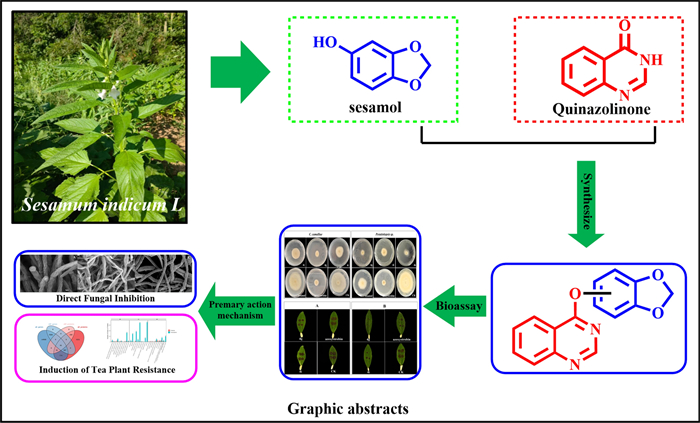
Pestalotiopsis sp. and Colletotrichum camelliae are two devastating fungal pathogens that cause significant yield losses and quality degradation in tea plants (Camellia sinensis). The increasing resistance of these pathogens to commercial fungicides necessitates the development of novel fungicidal agents with distinct modes of action. In this study, A series of novel sesamol derivatives incorporating a quinazolin moiety were synthesized and structurally validated by 1H NMR, 13C NMR, and HRMS. In vitro bioassays demonstrated that these derivatives exhibited potent antifungal activity, with compounds 4g and 4i standing out: against Pestalotiopsis sp., their inhibition rates reached 76.4% and 86.9% (vs. 18.0% for the parent compound sesamol); against C. camelliae, the rates were 57.9% and 70.8% (vs. 42.3% for sesamol). Notably, their in vivo control efficacy significantly surpassed that of azoxystrobin: 4g and 4i controlled C. camelliae with efficiencies of 66.6% and 51.7% (vs. 25.7% for azoxystrobin) and Pestalotiopsis sp. with 99.0% efficacy (vs. 57.1% for azoxystrobin). Mechanistic investigations revealed dual modes of action: (ⅰ) direct disruption of fungal cell membrane integrity; (ⅱ) induction of tea plant resistance via up-regulating activities of defense-related enzymes (PAL, POD, SOD, CAT). Integrated transcriptomic and proteomic analyses further confirmed that 4g activates classical defense pathways by coordinately regulating defense gene expression and protein synthesis. In summary, these sesamol-quinazolin hybrids demonstrate potent antifungal activities with multiple targets. This study not only expands the application scope of the natural product sesamol but also provides promising lead compounds for the development of eco-friendly fungicides in tea plant protection.Graphical Abstract
Keywords
Fungicide Sesamol Quinazolin Tea plant disease Antifungal activity Induced resistance1 Introduction
Tea plant (Camellia sinensis) is one of the most economically valuable beverage crops globally, with its production supporting agricultural sustainability and livelihoods in major tea-producing regions [1]. However, fungal diseases pose a persistent threat to tea cultivation, with tea grey blight (caused by Pestalotiopsis sp.) and tea anthracnose (caused by Colletotrichum camelliae) being two of the most destructive [2, 3]. Infection by these pathogens leads to leaf wilting, abscission, and yield losses of 25–50%, alongside degradation of tea quality, such as reduced amino acid content and altered flavor profiles [4, 5]. Despite the use of commercial fungicides such as azoxystrobin, the rapid evolution of pathogen resistance and growing concerns over environmental toxicity have created an urgent need for novel fungicides with innovative modes of action [6, 7].
Natural products have long served as a rich source of lead compounds for pesticide development, owing to their structural diversity, low environmental impact, and evolutionary adaptation to biological targets [8, 9]. Sesamol (3,4-methylenedioxyphenol), a lignan isolated from Sesamum indicum L., exhibits diverse bioactivities, including antifungal and antioxidant properties [10]. However, its application in crop protection is limited by low potency, and no studies have reported its efficacy against tea plant pathogens. Structural modification of natural products–by integrating pharmacophores with proven bioactivity—is a well-established strategy to enhance efficacy [11].
Quinazolin derivatives, a class of heterocyclic compounds, have gained prominence in agrochemical research due to their broad-spectrum antimicrobial activity [12, 13]. For instance, quinazolin-based fungicides have been commercialized for controlling wheat rust and rice blast, targeting pathways such as fungal cell wall synthesis and energy metabolism [14, 15]. Inspired by the “pharmacophore fusion” strategy, we hypothesized that conjugating a quinazolin moiety to the sesamol scaffold could synergistically enhance antifungal activity against tea plant pathogens.
Herein, we report the synthesis of a series of sesamol-quinazolin derivatives, their in vitro and in vivo antifungal activity against Pestalotiopsis sp. And C. camelliae, and their mode of action (direct antifungal activity and induction of plant resistance) elucidated via morphological observation, enzyme assays, and multi-omics analysis.
2 Results and discussion
2.1 Chemistry
Intermediates 1–3 were synthesized according to previous reported method and the yield of the product was higher than 90% at each step. In the synthesis of the target compounds, we directly used commercially available K2CO3 as the catalyst for the reaction at the beginning, but the reaction time was long and the yield was only about 80%. Therefore, we ground K2CO3 into a fine powder before the reaction, resulting in a much shorter reaction time, usually less than 1 h, and the yield of more than 90%. The structures of all compounds were determined by NMR and HRMS. Usually speaking, people are most concerning about the heal effect of medicine rather than the price due to medicine are directly to treat human diseases. Pesticides are different from medicine, the people are more concerning about the cost of pesticide because of pesticides are mainly used for the control crop diseases rather than directly acting on the human body. The raw materials we adopted for synthesizing target compounds are very cheap and all intermediates have high yield. In addition, the structure of the target compound uncomplicated, which conforms to the atomic economy of pesticides.
2.2 Antifungal activity against tea plant pathogens
In vitro assays showed that most derivatives exhibited moderate to strong activity against Pestalotiopsis sp. And C. camelliae (Table 1, Fig. 1). Compounds 4g and 4i were the most potent: inhibition rates against Pestalotiopsis sp. were 76.4% and 86.9% (vs. 18.0% for sesamol), and against C. camelliae were 57.9% and 70.8% (vs. 42.3% for sesamol). Notably, their in vivo efficacy was superior to azoxystrobin: 4g and 4i controlled C. camelliae with efficiencies of 66.6% and 51.7% (vs. 25.7% for azoxystrobin) and Pestalotiopsis sp. with 99.0% efficacy (vs. 57.1% for azoxystrobin) (Table 2, Fig. 2). The higher in vivo activity suggests that these derivatives may act through both direct antifungal activity and induction of plant resistance—a characteristic that aligns with the advantages of natural product derivatives reported in previous studies [16]. Analysis of structural characteristics reveals that the high activity of Compound 4g benefits from a key factor: the retention of a hydrogen atom at the 5-position of the quinazoline ring. This structure has no additional steric hindrance, ensuring the molecule can flexibly fit into the active pocket of pathogen targets, and it also maintains an appropriate overall electron cloud distribution, providing a structural basis for stable binding with targets through hydrogen bonds and hydrophobic interactions, thereby significantly enhancing activity. Further analysis of the structure–activity relationship (SAR) based on substituent differences shows that at the 5-position, besides hydrogen, introducing halogens such as fluorine (4c), chlorine (4f), and bromine (4q) significantly reduces activity against both pathogens—for example, the inhibition rate of 4f against Pestalotiopsis sp. is 44.1 ± 2.5%, only 50.7% of that of 4g—confirming that the absence of substitution at the 5-position is crucial for maintaining activity; at the 6-position, the derivative with a fluorine substituent (4i, 6-F) shows relatively high activity (inhibition rate against C. camelliae: 57.9 ± 1.2%), while activity decreases sequentially with methyl (4a, 6-CH3: 39.8 ± 0.8%), iodine (4h, 6-I: 39.4 ± 1.4%), and nitro (4s, 6-NO2: 29.6 ± 0.7%) substituents, suggesting that small-sized substituents with moderate electronegativity are more suitable for this site; at the 7-position, introducing a nitro group (4l, 7-NO2) causes a sharp drop in activity (inhibition rate against Pestalotiopsis sp. is only 20.3 ± 2.3%), and derivatives with chlorine (4t, 7-Cl: 36.8 ± 2.1%) and bromine (4n, 7-Br: 20.3 ± 2.3%) substituents also exhibit moderate activity, indicating that strong electron-withdrawing groups disrupt the active conformation; at the 8-position, derivatives with methyl (4d, 8-CH3) and bromine (4j, 8-Br) substituents show little difference in activity (inhibition rates against Pestalotiopsis sp. are 49.6 ± 1.4% and 78.8 ± 2.3%, respectively), showing that this position has a limited regulatory effect on overall activity. In conclusion, the antifungal activity of sesamol-quinazoline derivatives is closely related to the position, type, and physicochemical properties of substituents on the quinazoline ring, and among these, "no substitution at the 5-position and modification with small-sized electronegative groups at the 6-position" are important structural features enabling such compounds to exhibit high activity against tea plant pathogens.
In vitro inhibition rate (%) of target compounds 4a-4t against Pestalotiopsis sp. and C. camelliae at 100 µg/mL

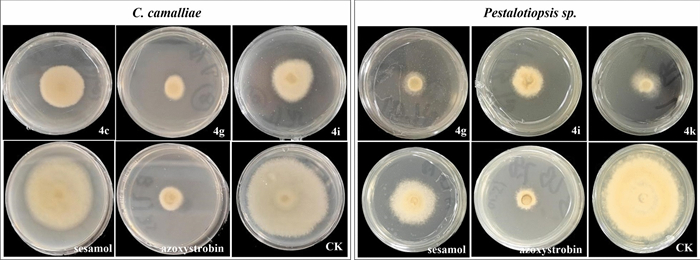
Inhibitory activity of compounds 4g, 4c, and 4i against Pestalotiopsis sp. and C. camalliae in vitro
Inhibition effect of compounds against C. camalliae and Pestalotiopsis sp. at 100 μg/mL in vivo
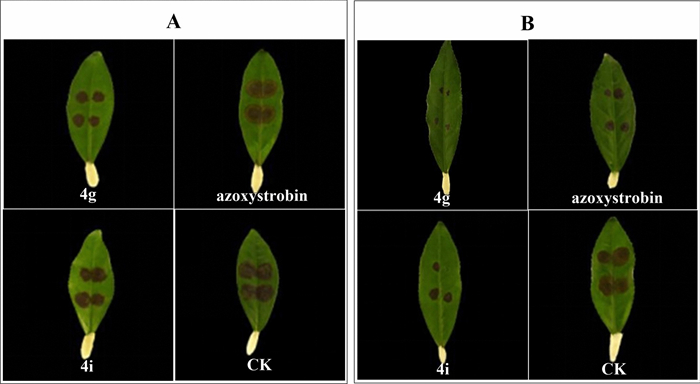
Inhibitory activity of compounds 4g and 4i against Pestalotiopsis sp. and C. camalliae in vivo
2.3 Broad-spectrum antifungal activity
Derivatives also exhibited activity against other agricultural pathogens (Table 3, Fig. 3). All compounds inhibited B. cinerea with rates > 60% (vs. 56.0% for azoxystrobin), indicating potential for controlling gray mold in fruits and vegetables. However, most derivatives were less active than azoxystrobin against S. sclerotiorum and P. capsici, suggesting that structural optimization is needed to broaden their spectrum of activity.
Inhibition effect of target compounds against fungi at 100 μg/mL in vitro


Inhibitory activity of compounds 4e, 4g, and 4i against Botrytis cinerea Pers. Fr. in vitro
2.4 Mode of action: direct fungal inhibition
Fluorescence Microscope (FM) analysis showed that 4g- and 4i-treated Pestalotiopsis sp. mycelia emitted strong red fluorescence after PI (pyridinium iodide) staining, indicating disrupted cell membrane integrity (Fig. 4). SEM revealed that treated mycelia were shriveled with collapsed walls and irregular surfaces, whereas control mycelia were smooth and intact (Fig. 5). These results confirm that the derivatives act by damaging fungal cell membranes—a mode of action shared by many effective antifungals targeting membrane lipids or proteins [17].
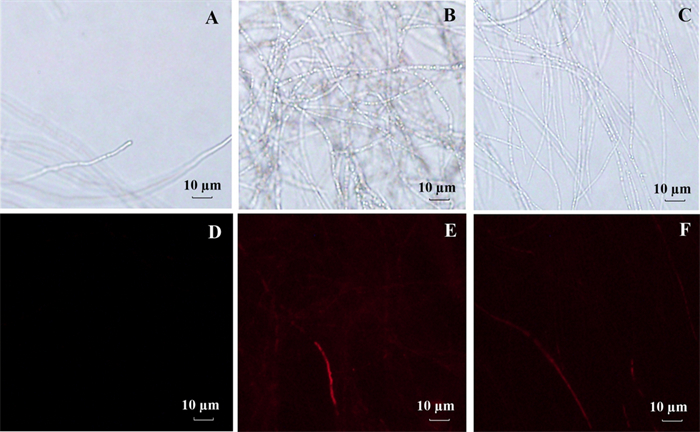
Staining of mycelium by target compounds 4g, 4i after treatment at 100 μg/mL
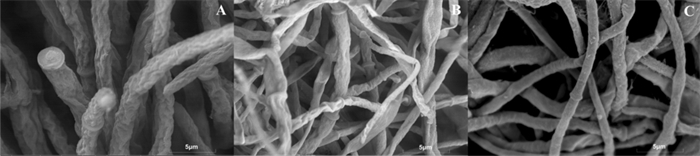
SEM observations of Pestalotiopsis sp. cell morphological changes post-treatment with 100 μg/mL concentrations of compounds 4g、4i
2.5 Mode of action: induction of tea plant resistance
Defense enzyme assays showed that 4g enhanced SOD (1.23-fold), CAT (1.67-fold), POD (1.13-fold), and PAL (1.2-fold) activities in tea leaves (Fig. 6). SOD and CAT scavenge reactive oxygen species (ROS) to maintain redox homeostasis, while PAL and POD promote lignin synthesis and cell wall reinforcement [18]. This indicates that 4g induces systemic resistance, complementing its direct antifungal activity.
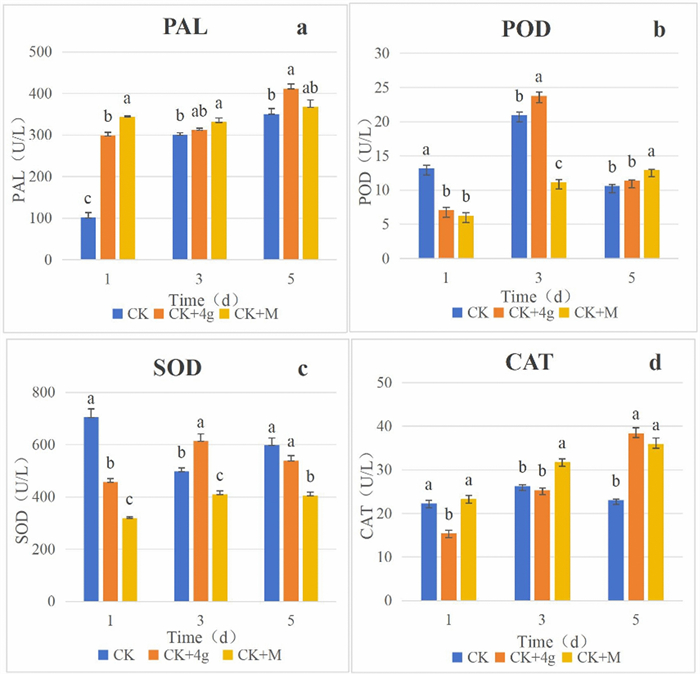
Effect of compound 4 g on defence enzyme in tea plant
We had the effects of compound 4 g on genes and proteins in tea plants by transcriptome and proteomics analysis (Figs. S1, S2, S3, S5, S6, S7 in Supplementary Data). Multi-omics analysis identified 91 common DEGs and DEPs involved in phenylpropanoid metabolism, glutathione metabolism, and oxidative stress response (Figs. 7, 8, 9). For example, PAL and 4CL (key enzymes in phenylpropanoid biosynthesis) were upregulated, promoting lignin and flavonoid synthesis (physical and chemical barriers). Antioxidant enzymes (GPX, GR) and ROS-scavenging proteins were also upregulated, consistent with enzyme activity data. Correlation analysis showed that Cu/Zn-SOD and CAT expression positively correlated with their respective enzyme activities (r = 0.89 and 0.82), confirming coordinated regulation of resistance at the transcriptional and translational levels.
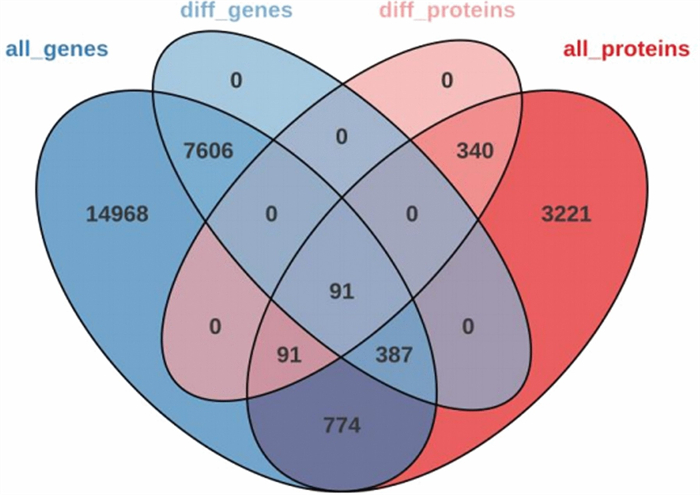
Venn diagram of DEPs and DEGs
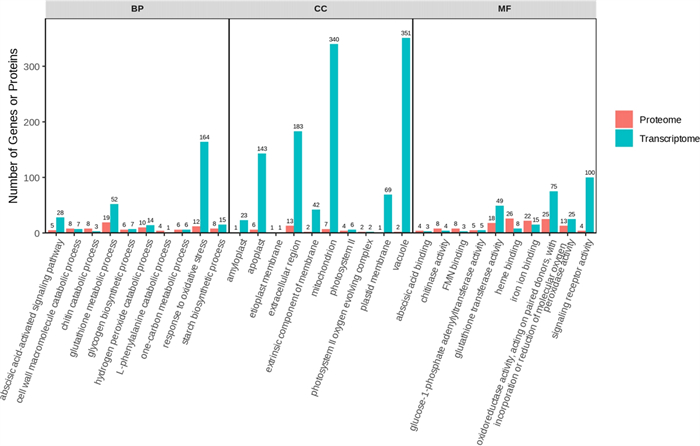
Bar chart of GO enrichment analysis
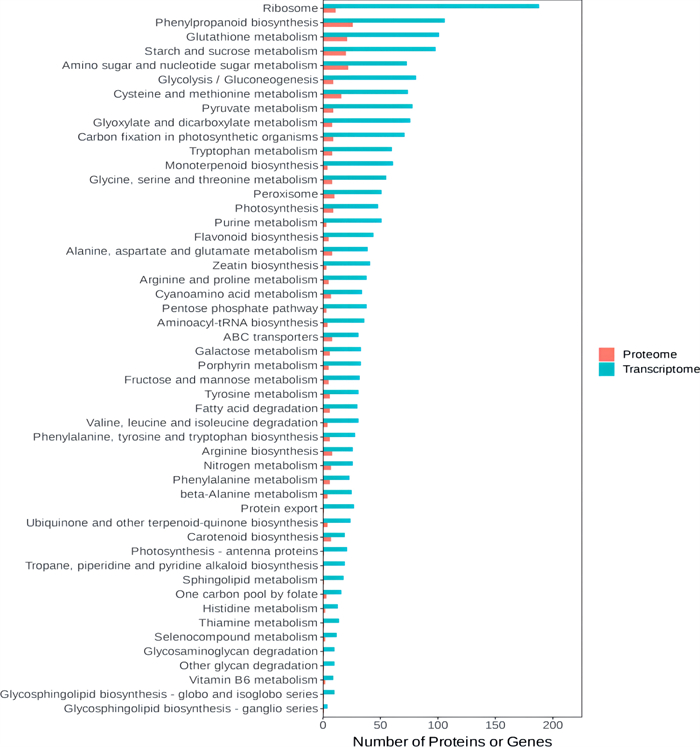
Bar chart of KEGG enrichment analysis
3 Conclution
In this study, we synthesized a series of sesamol-quinazolin derivatives and demonstrated their potent in vitro and in vivo antifungal activity against Pestalotiopsis sp. And C. camelliae. Mechanistic studies revealed that these derivatives act through dual modes of action: direct disruption of fungal cell membranes and induction of tea plant resistance via activation of defense enzymes and key metabolic pathways. Given their strong efficacy, clear mechanisms, and simple synthesis, these derivatives are promising leads for the development of novel fungicides. Future work will focus on structural optimization to enhance broad-spectrum activity and field efficacy evaluation.
4 Methods and materials
4.1 Chemicals and instruments
All starting materials and reagents were commercially available and used without further purification. The 1H NMR and 13C NMR spectra were recorded on a Bruker DPX 400 MHz (Bruker BioSpin GmbH, Rheinstetten, Germany) NMR spectrometer with CDCl3 as the solvent. The following abbreviations were used to explain the multiplicities: s, singlet; d, doublet; t, triplet; m, multiplet; and br, broadened. The melting points were determined on a WRX–4 microscope melting point apparatus (YiCe Apparatus & Equipment co., LTD, Shanghai, China). High-resolution mass spectrometry (HRMS) was conducted using a Thermo Scientific Q Exactive (Thermo Fisher Scientific, Massachusetts, America).
4.2 General procedure for the synthesis of target compounds (4a–4t)
The synthetic route is outlined in Scheme 1 (Fig. 10). Intermediates 1–3 were prepared according to previously reported methods with minor modifications [19–22]. Briefly, intermediate 2 (6 mmol), intermediate 3 (6 mmol), and anhydrous K2CO3 (12 mmol) were added to a 250 mL round-bottom flask containing acetonitrile (100 mL). The mixture was stirred under reflux at 80 ℃ and monitored by TLC (eluent: ethyl acetate/petroleum ether = 1:3, v/v). Upon completion (4–6 h), the solvent was removed under reduced pressure (40 ℃, rotary evaporator). The crude product was purified by silica gel column chromatography (eluent: ethyl acetate/petroleum ether = 3:1, v/v) to afford compounds 4a–4t as white or light yellow solids. Target compounds were structurally confirmed by 1H NMR, 13C NMR, and HRMS.
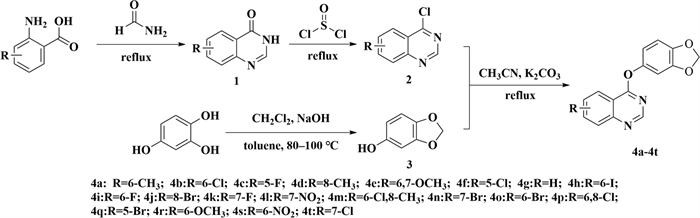
Synthetic route of the title compounds 4a–4t
4.2.1 4-(benzo[d][1,3]dioxol-5-yloxy)-6-methylquinazoline (4a)
White solid;m.p. 173.6 ~ 174.4 ℃; yield, 93.64%.1H NMR (400 MHz, CDCl3) δ 8.73 (s, 1H), 8.12 (d, J = 1.0 Hz, 1H), 7.90 (d, J = 8.6 Hz, 1H), 7.73 (dd, J = 8.6, 2.0 Hz, 1H), 6.87 (d, J = 8.3 Hz, 1H), 6.77 (d, J = 2.3 Hz, 1H), 6.70 (dd, J = 8.3, 2.4 Hz, 1H), 6.03 (s, 2H), 2.59 (s, 3H).13C NMR (100 MHz, CDCl3) δ 166.8, 153.5, 150.1, 148.3, 146.7, 145.5, 137.8, 136.2, 127.6, 122.4, 116.2, 114.2, 108.3, 104.1, 101.9, 21.8. HRMS (ESI): calculated for C16H12N2O3 [M + H]+: 281.092069, found: 218.09237.
4.2.2 4-(benzo[d][1,3]dioxol-5-yloxy)-6-chloroquinazoline(4b)
White solid; m.p. 138.1 ~ 139.7 ℃; yield, 94.63%. 1H NMR (400 MHz, CDCl3) δ 8.78 (s, 1H), 8.29 (d, J = 8.8 Hz, 1H), 8.00 (d, J = 2.0 Hz, 1H), 7.61 (dd, J = 8.8, 2.0 Hz, 1H), 6.88 (d, J = 8.4 Hz, 1H), 6.76 (d, J = 2.3 Hz, 1H), 6.70 (dd, J = 8.4, 2.4 Hz, 1H), 6.04 (s, 2H). 13C NMR (100 MHz, CDCl3) δ 167.2, 155.4, 152.3, 148.4, 146.3, 145.7, 140.5, 128.7, 127.2, 125.1, 114.8, 114.12, 108.4, 103.9, 102.0. HRMS (ESI): calculated for C15H9ClN2O3 [M + H]+: 301.037446, found: 301.03756.
4.2.3 4-(benzo[d][1,3]dioxol-5-yloxy)-5-fluoroquinazoline(4c)
White solid; m.p. 140.3 ~ 141.9 ℃; yield, 74.76%.1H NMR (400 MHz, CDCl3) δ 8.75 (s, 1H), 7.89–7.79 (m, 2H), 7.34 –7.29 (m, 1H), 6.88 (d, J = 8.3 Hz, 1H), 6.77 (d, J = 2.4 Hz, 1H), 6.71 (dd, J = 8.3, 2.4 Hz, 1H), 6.04 (s, 2H). 13C NMR (100 MHz, CDCl3) δ 166.25 (d, 3JC-F = 5.1 Hz), 158.0 (d, 1JC-F = 264.3 Hz), 154.8 (d, 4JC-F = 2.0 Hz), 153.3, 148.3, 146.5, 145.6, 134.2, 134.1, 123.9 (d, 4JC-F = 4.6 Hz), 114.2, 113.2 (d, 2JC-F = 21.1 Hz), 108.3, 104.0, 101.9. 19F NMR (377 MHz, CDCl3) δ-106.6. HRMS (ESI): calculated for C15H9FN2O3 [M + H]+: 285.066997, found: 285.06713.
4.2.4 4-(benzo[d][1,3]dioxol-5-yloxy)-8-methylquinazoline(4d)
Yellow solid;m.p. 146.7 ~ 147.3 ℃; yield, 42.12%.1H NMR (400 MHz, CDCl3) δ 8.84 (s, 1H), 8.20 (d, J = 8.1 Hz, 1H), 7.75 (d, J = 7.0 Hz, 1H), 7.54 (dd, J = 8.3, 7.2 Hz, 1H), 6.88 (d, J = 8.3 Hz, 1H), 6.77 (d, J = 2.3 Hz, 1H), 6.70 (dd, J = 8.3, 2.4 Hz, 1H), 6.04 (s, 2H), 2.77 (s, 3H). 13C NMR (100 MHz, CDCl3) δ 167.5, 153.3, 150.8, 148.3, 146.7, 145.5, 136.3, 134.2, 127.1, 121.2, 116.3, 114.2, 108.3, 104.1, 101.9, 17.7.HRMS (ESI): calculated for C16H12N2O3 [M + H]+: 281.092069, found: 281.09273.
4.2.5 4-(benzo[d][1,3]dioxol-5-yloxy)-6,7-dimethoxyquinazoline.(4e)
White solid; m.p. 199.6 ~ 200.6 ℃; yield, 31.44%.1H NMR (400 MHz, CDCl3) δ 8.65 (s, 1H), 7.53 (s, 1H), 7.32 (s, 1H), 6.88 (d, J = 8.3 Hz, 1H), 6.77 (d, J = 2.3 Hz, 1H), 6.71 (dd, J = 8.4, 2.4 Hz, 1H), 6.04 (s, 2H), 4.07 (s, 3H), 4.06 (s, 3H). 13C NMR (100 MHz, CDCl3) δ 165.7, 155.9, 153.0, 150.2, 149.3, 148.3, 146.8, 145.5, 114.2, 110.6, 108.3, 106.8, 104.1, 101.9, 101.0, 56.4, 56.4.HRMS (ESI): calculated for C17H14N2O5 [M + H]+: 327.097548, found: 327.09868.
4.2.6 4-(benzo[d][1,3]dioxol-5-yloxy)-5-chloroquinazoline(4f)
Yellow solid;m.p. 145.1 ~ 146.1 ℃; yield, 64.79%. 1H NMR (400 MHz, CDCl3) δ 8.78 (s, 1H), 8.29 (d, J = 8.8 Hz,1H), 7.99 (d, J = 2.0 Hz, 1H), 7.61 (dd, J = 8.8, 2.0 Hz, 1H), 6.88 (d, J = 8.4 Hz, 1H), 6.76 (d, J = 2.4 Hz, 1H), 6.70 (dd, J = 8.3, 2.4 Hz, 1H), 6.04 (s, 2H). 13C NMR (100 MHz, CDCl3) δ 167.2, 155.4, 152.3, 148.4, 146.3, 145.7, 140.5, 128.6, 127.2, 125.1, 114.8, 114.1, 108.3, 103.9, 101.9.HRMS (ESI): calculated for C15H9ClN2O3 [M + H]+: 301.037446, found: 301.03741.
4.2.7 4-(benzo[d][1,3]dioxol-5-yloxy)quinazoline(4g)
White solid; m.p.147.8 ~ 148.2 ℃; yield, 85.43%.1H NMR (400 MHz, CDCl3) δ 8.79 (s, 1H), 8.45–8.32 (m, 1H), 8.12–7.97 (m, 1H), 7.93–7.89 (m, 1H), 7.68–7.64 (m, 1H), 6.88 (d, J = 8.4 Hz, 1H), 6.78 (d, J = 2.4 Hz, 1H), 6.71 (dd, J = 8.3, 2.4 Hz, 1H), 6.04 (s, 2H). 13C NMR (100 MHz, CDCl3) δ 167.2, 154.3, 151.6, 148.4, 146.6, 145.6, 134.2, 127.9, 127.6, 123.6, 116.4, 114.2, 108.3, 104.0, 101.9. HRMS (ESI): calculated for C15H10N2O3 [M + H]+: 267.076419, found: 267.07674.
4.2.8 4-(benzo[d][1,3]dioxol-5-yloxy)-6-iodoquinazoline(4h)
Yellow solid;m.p. 153.7 ~ 154.9 ℃; yield, 79.92%.1H NMR (400 MHz, CDCl3) δ 8.79 (s, 1H), 8.73 (d, J = 2.0 Hz, 1H), 8.15 (dd, J = 8.8, 2.0 Hz, 1H), 7.73 (d, J = 8.8 Hz, 1H), 6.88 (d, J = 8.4 Hz, 1H), 6.75 (d, J = 2.4 Hz, 1H), 6.69 (dd, J = 8.4, 2.4 Hz, 1H), 6.05 (s, 2H). 13C NMR (100 MHz, CDCl3) δ 165.9, 154.6, 150.7, 148.4, 146.3, 145.8, 142.9, 132.6, 129.6, 117.9, 114.1, 108.4, 103.9, 102.0, 92.5.HRMS (ESI): calculated for C15H9IN2O3 [M + H]+: 392.973062, found: 392.97322.
4.2.9 4-(benzo[d][1,3]dioxol-5-yloxy)-6-fluoroquinazoline(4i)
Yellow solid;m.p. 141.9 ~ 143.0 ℃; yield, 74.94%. 1H NMR (400 MHz, CDCl3) δ 8.77 (s, 1H), 8.02 (dd, J = 9.2, 5.0 Hz, 1H), 7.95 (dd, J = 8.3, 2.8 Hz, 1H), 7.70–7.65 (m, 1H), 6.88 (d, J = 8.3 Hz, 1H), 6.77 (d, J = 2.4 Hz, 1H), 6.70 (dd, J = 8.3, 2.4 Hz, 1H), 6.05 (s, 2H). 13C NMR (100 MHz, CDCl3) δ 166.9 (d, 4JC-F = 5.1 Hz), 160.7 (d, 1JC-F = 250.6 Hz), 153.6 (d, 4JC-F = 2.6 Hz), 148.7, 148.4, 146.4, 145.7, 130.6 (d, 3JC-F = 8.7 Hz), 124.2 (d, 2JC-F = 25.3 Hz), 117.0 (d, 3JC-F = 9.7 Hz), 114.1, 108.3, 107.6 (d, 2JC-F = 23.4 Hz), 103.9, 101.9. 19F NMR (377 MHz, CDCl3) δ-109.95. HRMS (ESI): calculated for C15H9FN2O3 [M + H]+:285.066997, found: 285.06739.
4.2.10 4-(benzo[d][1,3]dioxol-5-yloxy)-8-bromoquinazoline(4j)
Yellow solid;m.p. 142.6 ~ 143.5 ℃; yield, 64.13%. 1H NMR (400 MHz, CDCl3) δ 8.92 (s, 1H), 8.34 (dd, J = 8.2, 1.3 Hz, 1H), 8.21 (dd, J = 7.6, 1.4 Hz, 1H), 7.52 (t, J = 7.9 Hz, 1H), 6.88 (d, J = 8.4 Hz, 1H), 6.76 (d, J = 2.4 Hz, 1H), 6.70 (dd, J = 8.3, 2.4 Hz, 1H), 6.04 (s, 2H). 13C NMR (100 MHz, CDCl3) δ 167.5, 155.0, 149.2, 148.4, 146.4, 145.8, 137.7, 128.0, 123.3, 123.2, 117.7, 114.1, 108.3, 103.9, 102.0. HRMS (ESI): calculated for C15H9BrN2O3 [M + H]+:344.986932, found: 344.98701.
4.2.11 4-(benzo[d][1,3]dioxol-5-yloxy)-7-fluoroquinazoline(4k)
Yellow solid;m.p. 132.7 ~ 133.2 ℃; yield, 38.35%. 1H NMR (400 MHz, CDCl3) δ 8.78 (s, 1H), 8.39 (dd, J = 9.1, 5.9 Hz, 1H), 7.64 (dd, J = 9.6, 2.5 Hz, 1H), 7.42 (td, J = 8.8, 2.5 Hz, 1H), 6.88 (d, J = 8.4 Hz, 1H), 6.76 (d, J = 2.3 Hz, 1H), 6.70 (dd, J = 8.4, 2.4 Hz, 1H), 6.04 (s, 2H). 13C NMR (100 MHz, CDCl3) δ 167.4, 164.8, 155.5, 151.4, 148.4, 146.3, 145.8, 126.6, 118.0, 114.1, 112.2, 108.4, 104.0, 102.0, 101.1. HRMS (ESI): calculated for C15H9FN2O3 [M + H]+:285.066997, found: 285.06725.
4.2.12 4-(benzo[d][1,3]dioxol-5-yloxy)-7-nitroquinazoline(4l)
Yellow solid;m.p. 188.6 ~ 190.0 ℃; yield, 10.40%. 1H NMR (400 MHz, CDCl3) δ 9.29 (d, J = 2.6 Hz, 1H), 8.90 (s, 1H), 8.68 (dd, J = 9.2, 2.6 Hz, 1H), 8.14 (d, J = 9.2 Hz, 1H), 6.90 (d, J = 8.3 Hz, 1H), 6.78 (d, J = 2.4 Hz, 1H), 6.68 (s, 1H), 6.07 (s, 2H). HRMS (ESI): calculated for C15H9N3O5 [M + H] + :312.061497, found. 312.05995.
4.2.13 4-(benzo[d][1,3]dioxol-5-yloxy)-6-chloro-8-methylquinazoline(4m)
White solid; m.p. 205.1 ~ 205.7 ℃; yield, 65.42%.1H NMR (400 MHz, CDCl3) δ 8.81 (s, 1H), 8.17 (d, J = 2.4 Hz, 1H), 7.80–7.59 (m, 1H), 6.87 (d, J = 8.3 Hz, 1H), 6.75 (d, J = 2.3 Hz, 1H), 6.69 (dd, J = 8.4, 2.4 Hz, 1H), 6.04 (s, 2H), 2.74 (s, 3H). 13C NMR (100 MHz, CDCl3) δ 166.7, 153.4, 149.3, 148.4, 146.4, 145.7, 138.8, 134.8, 132.7, 120.2, 116.9, 114.1, 108.3, 103.9, 101.9, 17.5. HRMS (ESI): calculated for C16H11ClN2O3 [M + H]+:315.053096, found: 315.05293.
4.2.14 4-(benzo[d][1,3]dioxol-5-yloxy)-7-bromoquinazoline(4n)
Yellow solid;m.p. 137.5 ~ 138.0 ℃; yield, 63.13%.1H NMR (400 MHz, CDCl3) δ 8.78 (s, 1H), 8.29–8.07 (m, 2H), 7.76 (dd, J = 8.7, 1.9 Hz, 1H), 6.88 (d, J = 8.3 Hz, 1H), 6.76 (d, J = 2.3 Hz, 1H), 6.69 (dd, J = 8.3, 2.4 Hz, 1H), 6.04 (s, 2H).13C NMR (100 MHz, CDCl3) δ 167.3, 155.3, 152.4, 148.4, 146.3, 145.7, 131.3, 130.5 129.0, 125.0, 115.1, 114.1, 108.4, 103.9, 102.0. HRMS (ESI): calculated for C15H9BrN2O3 [M + H]+:344.986932, found: 344.98701.
4.2.15 4-(benzo[d][1,3]dioxol-5-yloxy)-6-bromoquinazoline(4o)
White solid; m.p. 170.2 ~ 170.6 ℃; yield, 61.69%.1H NMR (400 MHz, CDCl3) δ 8.79 (s, 1H), 8.51 (d, J = 2.2 Hz, 1H), 7.98 (dd, J = 8.9, 2.2 Hz, 1H), 7.88 (d, J = 8.9 Hz, 1H), 6.88 (d, J = 8.3 Hz, 1H), 6.76 (d, J = 2.4 Hz, 1H), 6.70 (dd, J = 8.4, 2.4 Hz, 1H), 6.05 (s, 2H).13C NMR (100 MHz, CDCl3) δ 166.3, 154.6, 150.3, 148.4, 146.3, 145.8, 137.6, 129.7, 126.1, 121.2, 117.5, 114.1, 108.4, 103.9, 102.0. HRMS (ESI): calculated for C15H9BrN2O3 [M + H]+:344.986932, found: 344.98679.
4.2.16 4-(benzo[d][1,3]dioxol-5-yloxy)-6,8-dichloroquinazoline(4p)
Yellow solid; m.p. 211.2 ~ 211.9 ℃; yield, 73.21%. 1H NMR (400 MHz, CDCl3) δ 8.89 (s, 1H), 8.28 (d, J = 2.3 Hz, 1H), 7.99 (d, J = 2.3 Hz, 1H), 6.88 (d, J = 8.4 Hz, 1H), 6.75 (d, J = 2.3 Hz, 1H), 6.69 (dd, J = 8.4, 2.4 Hz, 1H), 6.05 (s, 2H). 13C NMR (100 MHz, CDCl3) δ 166.7, 155.0, 148.4, 147.0, 146.1, 145.9, 134.6, 133.8, 132.9, 121.7, 117.9, 114.0, 108.4, 103.8, 102.0. HRMS (ESI): calculated for C15H8Cl2N2O3 [M + H]+:334.998474, found: 334.99843.
4.2.17 4-(benzo[d][1,3]dioxol-5-yloxy)-5-bromoquinazoline(4q)
Yellow solid;m.p. 130.8 ~ 131.3 ℃; yield, 51.16%. 1H NMR (400 MHz, CDCl3) δ 8.74 (s, 1H), 8.05–7.85 (m, 2H), 7.67 (t, J = 8.0 Hz, 1H), 6.88 (d, J = 8.3 Hz, 1H), 6.79 (d, J = 2.3 Hz, 1H), 6.72 (dd, J = 8.4, 2.4 Hz, 1H), 6.04 (s, 2H). 13C NMR (100 MHz, CDCl3) δ 166.1, 154.1, 153.7, 148.4, 146.0, 145.6, 134.2, 133.8, 128.0, 117.4, 116.2, 114.2, 108.3, 104.0, 101.9.
4.2.18 4-(benzo[d][1,3]dioxol-5-yloxy)-6-methoxyquinazoline(4r)
Brown solid;m.p. 166.7 ~ 167.6 ℃; yield, 41.64%.1H NMR (400 MHz, CDCl3) δ 8.68 (s, 1H), 7.91 (d, J = 9.0 Hz, 1H), 7.62–7.47 (m, 2H), 6.88 (d, J = 8.3 Hz, 1H), 6.78 (d, J = 2.4 Hz, 1H), 6.74–6.68 (m, 1H), 6.04 (s, 2H), 3.98 (s, 3H).13C NMR (100 MHz, CDCl3) δ 166.3, 158.6, 152.1, 148.4, 147.5, 146.7, 145.6, 129.4, 126.6, 117.0, 114.2, 108.3, 104.1, 101.9, 101.0, 55.9.
4.2.19 4-(benzo[d][1,3]dioxol-5-yloxy)-6-nitroquinazoline(4s)
Yellow solid;m.p. 196.4 ~ 197.1 ℃; yield, 14.22%. 1H NMR (400 MHz, CDCl3) δ 8.86 (s, 1H), 8.19 (dd, J = 8.5, 1.1 Hz, 1H), 7.96 (dd, J = 8.5, 7.6 Hz, 1H), 7.78–7.74 (m, 1H), 6.85 (d, J = 8.3 Hz, 1H), 6.75 (d, J = 2.4 Hz, 1H), 6.68 (dd, J = 8.4, 2.4 Hz, 1H), 6.03 (s, 2H). 13C NMR (100 MHz, CDCl3) δ 168.3, 157.4, 154.1, 148.5, 146.1, 146.0, 145.9, 130., 127.7, 120.9, 115.8, 114.0, 108.4, 103.7, 102.1. HRMS (ESI): calculated for C15H9N3O5 [M + H]+:312.061497, found: 312.06163.
4.2.20 4-(benzo[d][1,3]dioxol-5-yloxy)-7-chloroquinazoline(4t)
White solid; m.p. 141.5 ~ 142.7 ℃; yield, 71.34%. 1H NMR (400 MHz, CDCl3) δ 8.78 (s, 1H), 8.30 (d, J = 8.8 Hz, 1H), 8.01 (d, J = 2.0 Hz, 1H), 7.63 (dd, J = 8.8, 2.1 Hz, 1H), 6.88 (d, J = 8.4 Hz, 1H), 6.76 (d, J = 2.4 Hz, 1H), 6.70 (dd, J = 8.3, 2.4 Hz, 1H), 6.04 (s, 2H). 13C NMR (100 MHz, CDCl3) δ 160.4, 151.1, 150.2, 148.8, 147.8, 141.1, 138.9, 128.5, 127.9, 126.7, 121.0, 113.2, 110.9, 101.8, 98.0.
4.3 Fungal strains and culture conditions
Pestalotiopsis sp. and Colletotrichum camelliae were provided by the Guizhou Tea Research Institute (Guiyang, China). Phomopsis sp., Sclerotinia sclerotiorum, Phytophthora capsici, and Botrytis cinerea Pers. Fr. were isolated and identified in our laboratory (voucher specimens are deposited at Guizhou University). All strains were cultured on potato dextrose agar (PDA) at 25 ± 1 ℃ and stored at 4 ℃ for short-term preservation.
4.4 In vitro antifungal activity assay
Mycelial growth inhibition assays were performed as described previously with modifications [23, 24]. Test compounds were dissolved in DMSO (1%, v/v) and diluted with sterile water to 100 μg/mL. Aliquots (1 mL) of the compound solution were added to molten PDA (50 ℃, 9 mL) to prepare drug-containing medium. After solidification, a 5 mm-diameter mycelial plug (from 7-day-old PDA cultures) was inoculated onto the center of each plate. Plates containing 1% DMSO (without compounds) served as blank controls, and azoxystrobin (100 μg/mL) was used as a positive control. Each treatment was replicated three times. Plates were incubated at 28 ± 1 ℃, and colony diameter was measured when the control colony reached 80% of the plate area. The inhibition rate was calculated as: Inhibition rate (%) = [(Colony diameter of control−Colony diameter of treatment/Colony diameter of control−5 mm)] × 100.
4.5 In vivo antifungal activity assay
One-year-old C. sinensis cv. Longjing 43 plants were grown in a greenhouse (25 ± 2 ℃, 16 h light/8 h dark). For Pestalotiopsis sp. inoculation: leaves were wounded with sterile forceps, and 5 mm mycelial plugs were placed on the wounds. After 24 h, test compounds (100 μg/mL, dissolved in 1% DMSO) were sprayed onto leaves until runoff. azoxystrobin (100 μg/mL) and 1% DMSO were used as positive and blank controls, respectively. Lesion length was measured, and each treatment included 3 plants (10 leaves per plant), and the experiment was repeated thrice[25].
4.6 Morphological observation of fungal mycelia
Fluorescence microscopy (FM): Pestalotiopsis sp. mycelia were cultured in potato dextrose broth (PDB) with test compound (100 μg/mL) for 24 h. Mycelia were stained with propidium iodide (PI, 20 μg/mL) for 15 min at 37 ℃ in the dark, washed with PBS (0.1 M, pH 7.4), and observed under a fluorescence microscope [26].
Scanning electron microscopy (SEM): Mycelia treated with test compound (100 μg/mL) for 24 h were fixed in 2.5% glutaraldehyde (4 ℃, 24 h), dehydrated in a graded ethanol series (30–100%, v/v), and freeze-dried. Samples were sputter-coated with gold and observed under the SEM [27].
4.7 Defense enzyme activity assays
Tea leaves were inoculated with Pestalotiopsis sp. mycelial plugs as described in Sect. 2.5. After 24 h, leaves were sprayed with test compound (100 μg/mL), azoxystrobin (100 μg/mL), or 1% DMSO (control). Leaf samples were collected at 1, 3, and 5 days post-treatment, ground into powder in liquid nitrogen, and homogenized in extraction buffer (0.1 M PBS, pH 7.0, containing 1% PVP). The supernatant was used to determine superoxide dismutase (SOD), peroxidase (POD), catalase (CAT), and phenylalanine ammonia-lyase (PAL) activities using commercial kits (Shanghai Yuanxin Biotechnology Co., Ltd.) according to the manufacturer’s instructions. Enzyme activity was measured with a microplate reader (BioTek ELx808, Winooski, VT, USA), with three biological replicates per treatment.
4.8 Transcriptomic and proteomic analysis
The target compound was initially dissolved in DMSO, and a 100 μg/mL test solution was prepared using 0.1% Tween-80 solution. The same treatment without target compound served as the CK Pestalotiopsis sp pathogens were inoculated into wounds, and 24 h later, the prepared test solutions were uniformly sprayed onto tea plant leaves. Leaf samples collected on days 1, 3, and 5 after treatment (including the compound-treated group and the water control group). Then the samples were entrusted to Wuhan Igene Book Biotechnology Co., Ltd. for total RNA extraction, quality detection, cDNA library construction, and RNA-Seq sequencing analysis.
The treatment method for tea plant leaf samples was consistent with the transcriptome analysis workflow. After grinding the leaves into powder, proteins were extracted and identified from leaf samples of the treatment group (compound + Pestalotiopsis sp) and control group (CK + Pestalotiopsis sp) at days 1, 3 and 5, post-spraying with target compound, following the methodology described in previous experiments. Functional analysis of differentially expressed proteins (DEPs) was performed using the Gene Ontology (GO) database, with screening criteria set as p < 0.05 and fold change > 1.5. Eligible DEPs were classified into biological processes (BPs), cellular components (CCs), and molecular functions (MFs), and the number of proteins corresponding to each GO term was statistically analyzed. Meanwhile, Kyoto Encyclopedia of Genes and Genomes (KEGG) database was used for signaling pathway annotation of DEPs to identify major metabolic and signaling pathways enriched with differentially expressed proteins.
Notes
Acknowledgements
This work was supported by the National Natural Science Foundation of China (No. 3226170244) and the Special Project of Central Government for Local Science and Technology Development of Guizhou Province (No. Qiankehezhongyindi (2023) 001).
Author contributions
HT and SL contributed equally to this work. DX and CG conceived and designed the experiments chemistry experiments. DX and LJ conceived and designed the biology experiments; HT, SL and FW performed the experiments; HT and SL analyzed the data; DX and HT wrote the article.
Data availability
The experimental data supporting this work are accessible within the article and its additional file.
Declarations
Competing interests
The authors declare no fnancial or non-fnancial competing interests pertaining to this work.
References
-
1.Li Z, Sun J, Shen Y, Wang X, Wang X, Tian P, et al. Deep migration learning-based recognition of diseases and insect pests in Yunnan tea under complex environments. Plant Methods. 2024;20: 101. CrossRef PubMed Google Scholar
-
2.Wang S, Mi X, Wu Z, Zhang L, Wei C. Characterization and pathogenicity of Pestalotiopsis-like species associated with gray blight disease on Camellia sinensis in Anhui Province, China. Plant Dis. 2019;103: 2786-97. CrossRef PubMed Google Scholar
-
3.Wang W, Xie X, Lv Y, Guan H, Liu L, Huang Q, et al. Identification and profile of phenolamides with anthracnose resistance potential in tea (Camellia sinensis). Hortic Res. 2023;10(9): uhad154. CrossRef PubMed Google Scholar
-
4.Ristaino JB, Anderson PK, Bebber DP, Brauman KA, Cunniffe NJ, Fedoroff NV, et al. The persistent threat of emerging plant disease pandemics to global food security. Proc Natl Acad Sci U S A. 2021;118: e2022239118. CrossRef PubMed Google Scholar
-
5.Shahriar SA, Nur-Shakirah AO, Mohd MH. Neopestalotiopsis clavispora and Pseudopestalotiopsis camelliae-sinensis causing grey blight disease of tea (Camellia sinensis) in Malaysia. Eur J Plant Pathol. 2022;162: 709-24. CrossRef PubMed Google Scholar
-
6.Wu G, Rui L, Lu X, Han L, Lv G, Fu X, et al. Characterization and pathogenicity of Pseudopestalotiopsis vietnamensis causing gray blight of Wuyi Rock Tea (Camellia sinensis) in China and specific mechanisms of disease infection. Phyton. 2023;92: 0031-9457. CrossRef PubMed Google Scholar
-
7.Chen X, He Y, Wang Z, Niu A, Xue Y, Zhou D, et al. Research progress and management strategies of fungal diseases in Camellia oleifera. Front Microbiol. 2023;14: 1215024. CrossRef PubMed Google Scholar
-
8.Zhao L, Wu M, Xiao C, Yang L, Zhou L, Gao N, et al. Discovery of an intrinsic tenase complex inhibitor: pure non-saccharide from fucosylated glycosaminoglycan. Proc Natl Acad Sci. 2015;112: 8284-9. CrossRef PubMed Google Scholar
-
9.Wang N, Liu C, Wang T, Li Y, Xu K, Lou H. Two new quinazoline derivatives from the moss endophytic fungus Aspergillus sp. and their anti-inflammatory activity. Nat Prod Bioprospect. 2021;11: 105-10. CrossRef PubMed Google Scholar
-
10.Liu Z, Ren B, Wang Y, Zou C, Qiao Q, Diao Z, et al. Sesamol induces human hepatocellular carcinoma cells apoptosis by impairing mitochondrial function and suppressing autophagy. Sci Rep. 2017;7: 45728. CrossRef PubMed Google Scholar
-
11.Yao H, Liu J, Xu S, Zhu Z, Xu J. The structural modification of natural products for novel drug discovery. Expert Opin Drug Discov. 2017;12: 121-40. CrossRef PubMed Google Scholar
-
12.Xie D, Shi J, Zhang A, Lei Z, Zu G, Fu Y, et al. Syntheses, antiviral activities and induced resistance mechanisms of novel quinazoline derivatives containing a dithioacetal moiety. Bioorg Chem. 2018;80: 433-43. CrossRef PubMed Google Scholar
-
13.Yao G, Zhu C, Qin T, Wang M, Sun Z, Tang R, et al. Oxidative annulation of aldehydes, 5-aminopyrazoles, and nitriles: synthesis and applications of pyrazolo[3,4-d]pyrimidines. Adv Synth Catal. 2023;365: 1191-204. CrossRef PubMed Google Scholar
-
14.Chen J, Wang Y, Luo X, Chen Y. Recent research progress and outlook in agricultural chemical discovery based on quinazoline scaffold. Pestic Biochem Physiol. 2022;184: 105122. CrossRef PubMed Google Scholar
-
15.Zhou R, Zhan W, Yuan C, Zhang T, Mao P, Sun Z, et al. Design, synthesis and antifungal activity of novel 1,4-pentadiene-3-one containing quinazolinone. Int J Mol Sci. 2023;24: 2599. CrossRef PubMed Google Scholar
-
16.Liu T, Peng F, Cao X, Liu F, Wang Q, Liu L, et al. Design, synthesis, antibacterial activity, antiviral activity, and mechanism of myricetin derivatives containing a quinazolinone moiety. ACS Omega. 2021;6: 30826-33. CrossRef PubMed Google Scholar
-
17.Palamae S, Suyapoh W, Boonrat O, Zhang B, Amin M, Buatong J, et al. Activity of Bambara groundnut seed coat extract against Shewanella species: efficacy and mechanisms of action. Foods. 2024;13: 3516. CrossRef PubMed Google Scholar
-
18.Xiao L, Jiang X, Deng Y, Xu K, Duan X, Wan K, et al. Study on characteristics and lignification mechanism of postharvest banana fruit during chilling injury. Foods. 2023;12: 1097. CrossRef PubMed Google Scholar
-
19.Liu G, Qiu M, Sun L, Wen Q, Xu S, Wang X, et al. Experimental study on seawater applications in organic reactions. Lett Org Chem. 2015;13: 44-8. CrossRef PubMed Google Scholar
-
20.Yao G, Wang MA, Li B, Peng H, Yang S, Zhao C, et al. Design, synthesis, and biological activity of novel spiro-pyrazolo[1,5-a]quinazolines derivatives as potential insecticides. Pest Manag Sci. 2023;79: 1164-74. CrossRef PubMed Google Scholar
-
21.Shen C, Wang L, Wen M, Shen H, Jin J, Zhang P. Synthesis of benzimidazo[1,2-c]quinazolines via metal-free intramolecular C-H amination reaction. Ind Eng Chem Res. 2016;55: 3177-81. CrossRef PubMed Google Scholar
-
22.Fujita H, Yamashita M. A novel synthetic method of certain alkylenedioxyphenols by the alkylenation of several 1, 2, 4-benzenetriols. Nippon Kagaku Kaishi. 1977;6: 925-7. CrossRef PubMed Google Scholar
-
23.Gong H, Gao Y, Zhou X, Xiao Y, Wang W, Tang Y, et al. Cryo-EM structure of trimeric Mycobacterium smegmatis succinate dehydrogenase with a membrane-anchor SdhF. Nat Commun. 2020;11: 424. CrossRef PubMed Google Scholar
-
24.Zhu J, Gao J, Yang C, Shang X, Zhao Z, Lawoe R, et al. Design, synthesis, and antifungal evaluation of neocryptolepine derivatives against phytopathogenic fungi. J Agric Food Chem. 2020;68: 2306-15. CrossRef PubMed Google Scholar
-
25.Xin W, Mao Y, Lu F, Li T, Wang J, Duan Y, et al. In vitro fungicidal activity and in planta control efficacy of coumoxystrobin against Magnaporthe oryzae. Pestic Biochem Physiol. 2020;162: 78-85. CrossRef PubMed Google Scholar
-
26.Yang Y, Liu S, Yan T, Yi M, Li H, Bao X. Design, synthesis, antifungal activity, and mechanism of action of new piperidine-4-carbohydrazide derivatives bearing a quinazolinyl moiety. J Agric Food Chem. 2024;72: 17283-94. CrossRef PubMed Google Scholar
-
27.Ding M, Wu N, Lin Q, Yan Y, Yang Y, Tian G, et al. Discovery of novel quinazoline-2-aminothiazole hybrids containing a 4-piperidinylamide linker as potential fungicides against the phytopathogenic fungus Rhizoctonia solani. J Agric Food Chem. 2022;70: 10100-10. CrossRef PubMed Google Scholar
Copyright information
© The Author(s) 2026
Open Access This article is licensed under a Creative Commons Attribution 4.0 International License, which permits use, sharing, adaptation, distribution and reproduction in any medium or format, as long as you give appropriate credit to the original author(s) and the source, provide a link to the Creative Commons licence, and indicate if changes were made. The images or other third party material in this article are included in the article’s Creative Commons licence, unless indicated otherwise in a credit line to the material. If material is not included in the article’s Creative Commons licence and your intended use is not permitted by statutory regulation or exceeds the permitted use, you will need to obtain permission directly from the copyright holder. To view a copy of this licence, visit http://creativecommons.org/licenses/by/4.0/.