
Isolation, total synthesis, and biological evaluation of dearomatized isoprenylated acylphloroglucinols from Hypericum przewalskii

Abstract
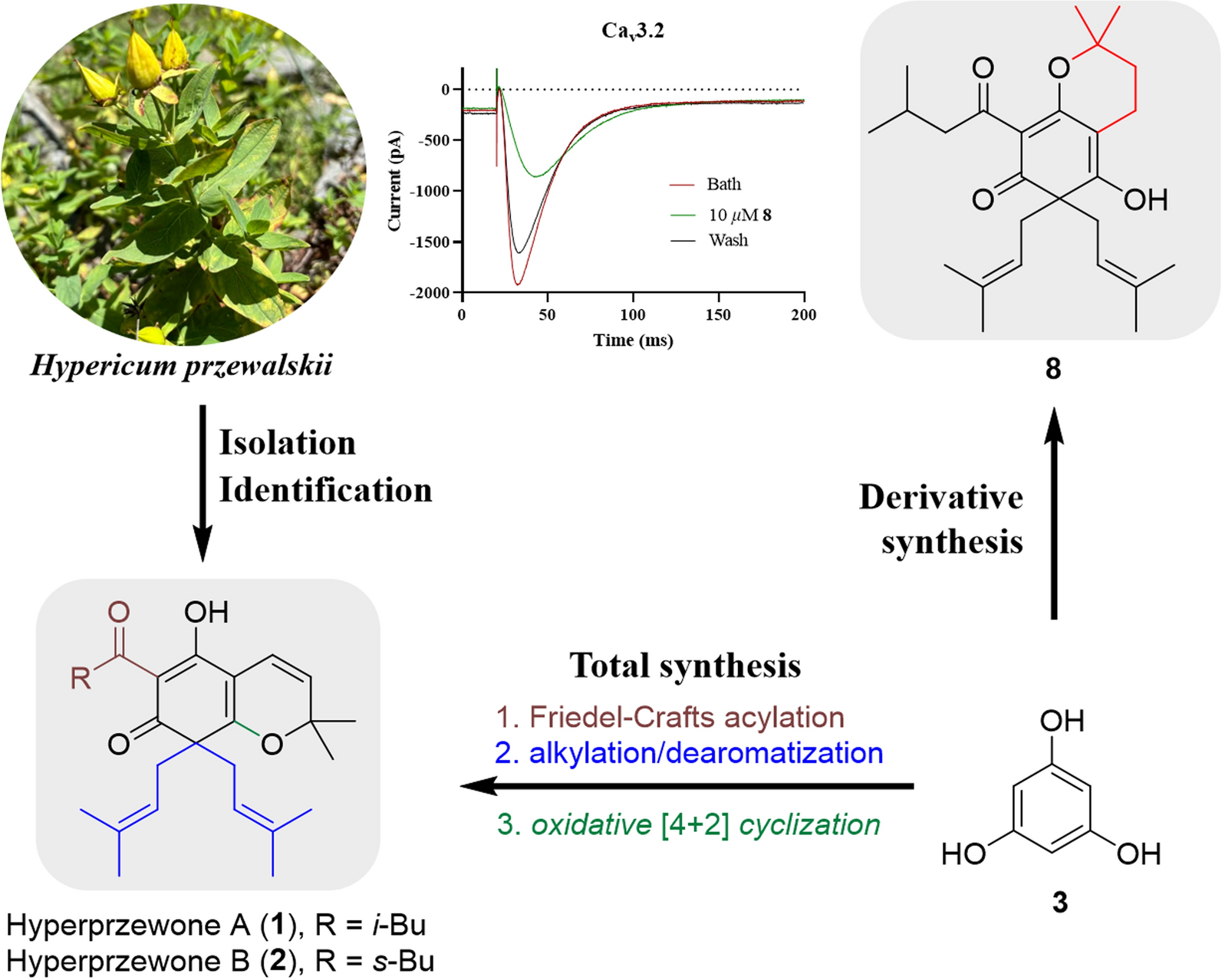
New dearomatized isoprenylated acylphloroglucinols hyperprzewones A (1) and B (2) were isolated and characterized from the dried aerial parts of Hypericum przewalskii. The structures of these compounds were confirmed by extensive spectroscopic experiments. A facile synthetic route to 1 and 2 was developed via Friedel-Crafts acylation, alkylation, dearomatization, and oxidative [4 + 2] cyclization, giving a 17% overall yield. Moreover, the synthetic derivative 8 exhibited moderate inhibition on T-type calcium channels Cav3.2.Graphical Abstract
Keywords
Hypericum przewalskii Dearomatized isoprenylated acylphloroglucinols (DIAPs) Total synthesis T-type calcium channels Cav3.21 Introduction
Natural phloroglucinols are widely distributed in plants of families such as Myrtaceae, Euphorbiaceae, Clusiaceae, Dryopteridaceae, Asteraceae, Fabaceae, and Rutaceae, as well as in marine and microbial sources [1]. Among them, prenylated phloroglucinols are a special type of hybrid natural products derived from polyketide combined with isoprenylation biosynthetic pathways, and mainly reported from plants of the genera Hypericum and Garcinia in the family of Guttiferae [2–4]. We have isolated and identified two new dearomatized isoprenylated acylphloroglucinols hyperprzewones A and B (1 and 2) from the Hypericum przewalskii. However, there are relatively few reports on the synthesis of such natural products. Guan [5]first achieved the asymmetric total synthesis of hyperbeanol A through a bioinspired alkylation dearomatization reaction. We adopted a concise and effective synthetic route to synthesize two new dearomatized isoprenylated natural acylphloroglucinols, and synthesize a series of derivatives based on 1 and 2. They provide a reference for subsequent synthesis research and development of DIAPs-type natural products [6, 7].
T-type calcium channels (TTCCs), as a key subtype of voltage-gated calcium channels (VGCCs), are renowned for their unique electrophysiological characteristics, including low activation threshold, brief opening, and rapid inactivation [8, 9]. Its functional abnormalities are closely related to various diseases, including neuropathic pain, epilepsy, hypertension, and cardiovascular diseases, making it an important direction for the development of new targeted drugs [10, 11]. In this study, we targeted Cav3.2 channel heterologously expressed in HEK-293 T cells, and screened two natural products 1 and 2, as well as a series of their synthetic derivatives, using the whole-cell patch-clamp recording method [12, 13]. The results showed that derivatives 8, 10, and 14 exhibit inhibitory effects on T-type calcium channels Cav3.2. Fig. 1 structures of hyperprzewones A (1) and B (2).
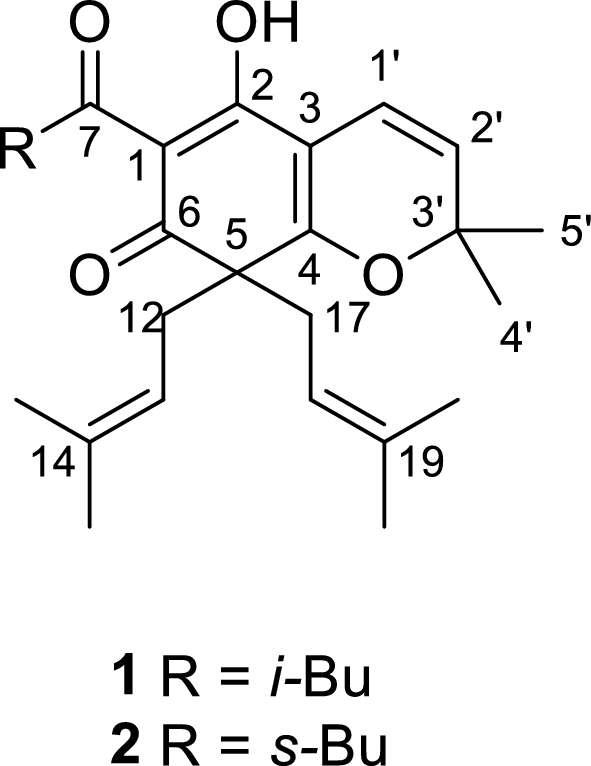
Structures of hyperprzewones A (1) and B (2)
2 Results and discussion
Compound 1 was acquired as a brown oil. Combining the negative-ion HRESIMS peak at m/z 411.2549 [M–H]− and 13C NMR revealed a molecular formula of C26H36O4. The IR spectrum implied absorption bands for hydroxyl (3433 cm−1) and carbonyl (1634 cm−1) functionalities. The 1H NMR data (Table 1) illustrated four olefinic protons (δH 4.8, 4.8, 5.5, 6.4) and an isobutyl group (δH 0.95, d, J = 6.8 Hz; 2.07, dq, J = 13.4, 6.4 Hz; 2.91, d, J = 7.0 Hz). The 13C NMR (Table 1) and DEPT spectra showed 26 carbons including eight methyls, five methylenes, three methines, and 10 quaternary carbons. particularly, obvious signals for a typical dearomatized phloroglucinol core (δC 107.6, C–1; 187.5, C–2; 109.2, C–3; 173.4, C–4; 58.2, C–5; 197.3, C–6). Two isoprenyls and an isopropyl of DIAPs-type metabolites can be distinguished [14]. In the HMBC spectrum, the key correlations (Fig. 2) from H2–12/H2–17 to C–4, C–5 and C–6 confirmed that two isoprenyls were both attached to C–5, the HMBC correlation from H–1' to C–2, C–3 and C–4 indicates that C–1' is connected to the benzene ring's C–3 (Fig. 2). The ether linkage of C–4 and C–3' was evidenced by indices of hydrogen deficiency, the downfield chemical shift of C–3' (δC 82.8) (Fig. 2). Based on the key 1H–1H COSY correlations of H–1' and H–2', as well as the HMBC correlations between Me–5' and C–3', C–2', combined with the 13C NMR signals (δC 114.9, C–1'; 125.1, C–2'), the C10 unit was inferred. (Fig. 2). Additionally, the remained isobutyryl can only be attached at C–1.
1H (600 MHz) and 13C (150 MHz) NMR data of compounds 1 and 2 (δ in ppm and J in Hz)
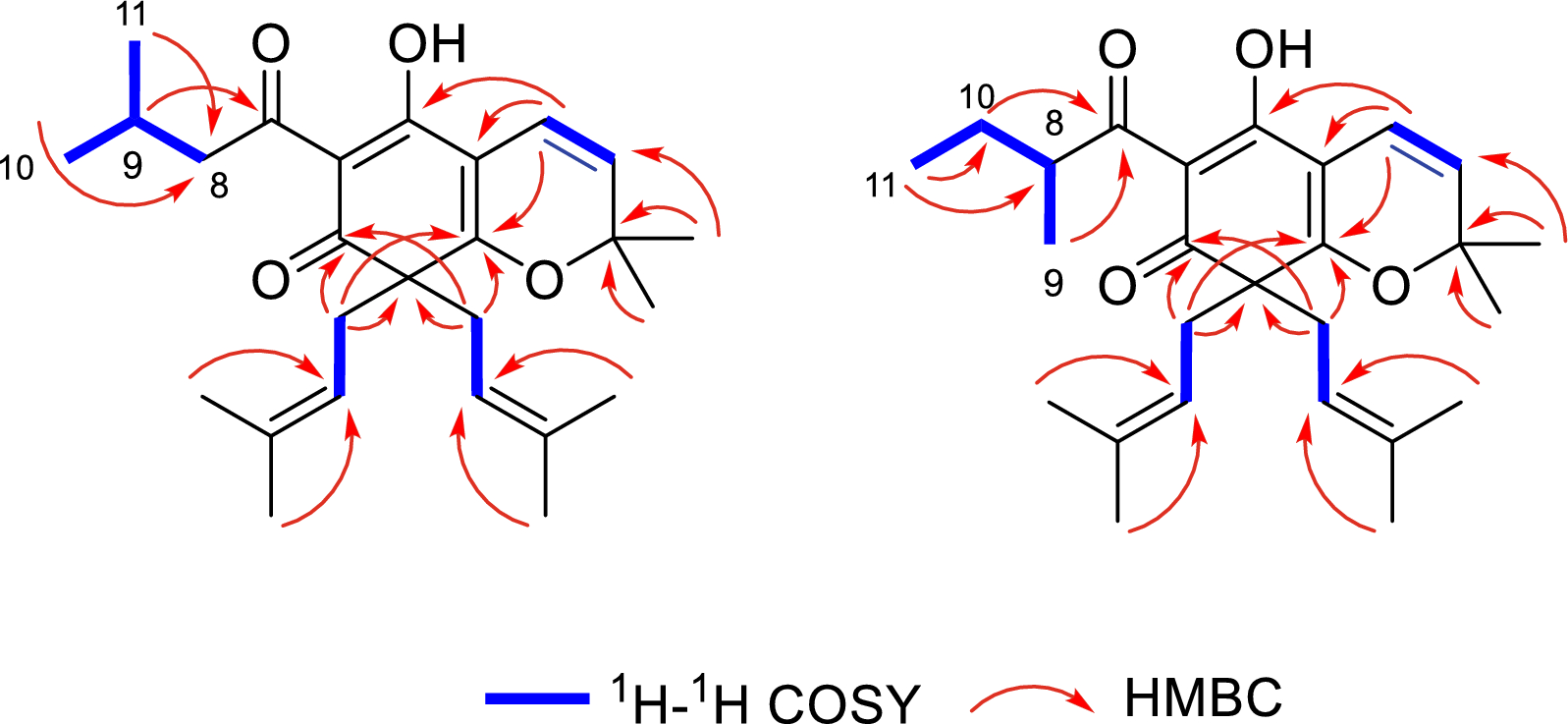
Key HMBC and 1H–1H COSY correlations of 1 and 2
2 was acquired as a pale brown oil. Combining the positive-ion HRESIMS peak at m/z 413.2690 [M + H]+ and 13C NMR revealed a molecular formula of C26H36O4. The IR spectrum implied absorption bands for hydroxyl (3440 cm−1) and carbonyl (1634 cm−1) functionalities. NMR spectra of 2 showed a close resemblance to those of 1 except for the replacements of the iso-butyl group at C–7 in 1 by a sce–butyl in 2, respectively. The substituent at C–1 included a methine (δ 3.87, H–8), a methylene (δ 1.34, 1.74, H2–10), a methyl triplet (δ 0.90, H3–11), and a methyl doublet (δ 1.09, H3–9) (Table 1). In the COSY spectrum, the H2–10 was correlated with H3–11, and H–8 was correlated with H3–9. The HMBC spectrum showed that H3–11 was correlated with C–8, C–10, and H3–9 is correlated with C–7, C–8, which confirmed that the 2–methylbutyryl side chain was connected to C–1 (Fig. 2).
As outlined in the retrosynthetic analysis (Scheme 1), we envisioned oxidizing triisoprenyl acylphloroglucinol via selectively oxidative [4 + 2] cyclization of intermediates 6a/6b, thereby enabling the effective synthesis of the bicyclic natural products 1 and 2. At the same time, we envisioned synthesizing intermediates 6a/6b by first undergoing Friedel–Crafts alkylation and followed by dearomatization via intermediates 4a/4b, or by simultaneously undergoing Friedel–Crafts alkylation and dearomatization using a certain method. The synthesis of intermediates 4a/4b only requires phloroglucinol as the raw material, and can be carried out under conventional Friedel–Crafts acylation reaction conditions. This proposed route is more efficient, concise, and low-cost for synthesizing natural products 1 and 2 (Scheme 1).
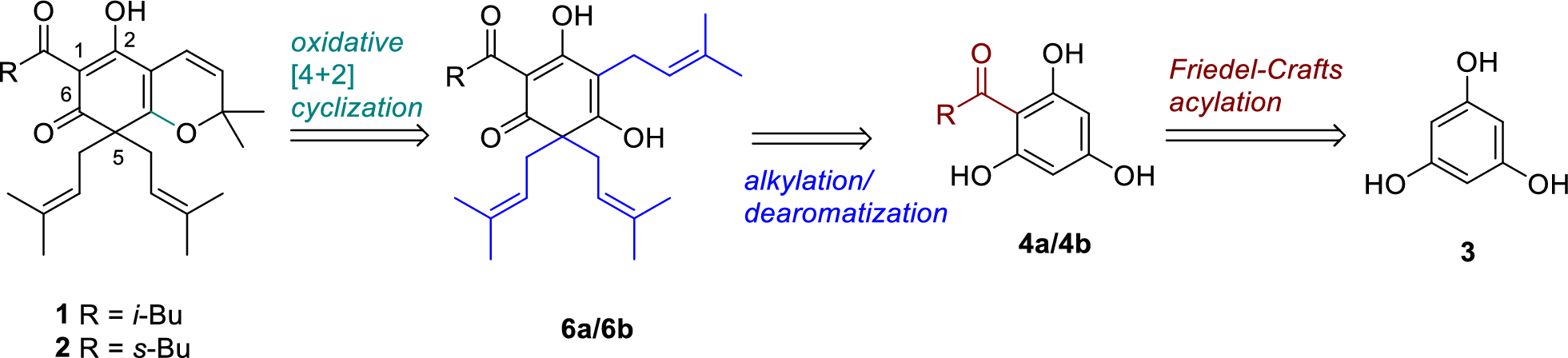
Retrosynthetic analysis of hyperprzewones A (1) and B (2)
Our synthesis began with the Friedel–Crafts acylation of ordinary phloroglucinol 3 under the conditions of acyl chloride/AlCl3 in nitrobenzene to give the intermediate 4a (88% yield) and 4b (84% yield), respectively [15]. It was found that intermediate 6a or 6b can be simultaneously synthesized in one step from intermediate 4a or 4b through an alkylation/dearomatization cascade [16]. However, this method gave 6a/6b in dissatisfactory yields (< 15%) in this work due to the instable and tautomeric nature of 4a/4b. Therefore, we adopted stepwise alkylation and C-5 dearomatization as the ideal conditions to improve the yields of 6a/6b. Intermediates 4a/4b underwent an alkylation reaction with prenyl bromide using DBU as the base at 45 ℃ to synthesize intermediate 5a (47% yield) and 5b (49% yield), respectively [17]. Based on Lee's protocol, attempt to extend the reaction time to 2 h in KOH aqueous solution at 0 ℃ gave 6a (61% yield) and 6b (59% yield) [16] (Scheme 2). Subsequently, oxidative [4 + 2] cyclization of 6a/6b in the presence of PhI(OAc)2/TEMPO furnished natural products 1 in 69% yield and 2 in 72% yield, respectively. This transformation might be resulted from the o-quinone methide intermediates i and ii (Scheme 2), which formed by selective hydrogen abstraction of in situ generated TEMPO cation [18]. It is worth noting that the 4–phenol selectivity of this oxidative [4 + 2] cyclization could be well controlled due to the hydrogen bonding interactions between 2–phenol group with C–7 carbonyl group giving 1 or 2 as the single product. However, both products 1 and 2 were prone to enol-ketone tautomeric mixture (3:1), which were proved in 1H and 13C NMR spectral data as their natural samples. Finally, the syntheses of compounds 1 and 2 were completed in four steps, in overall yields of 17% (Scheme 2).
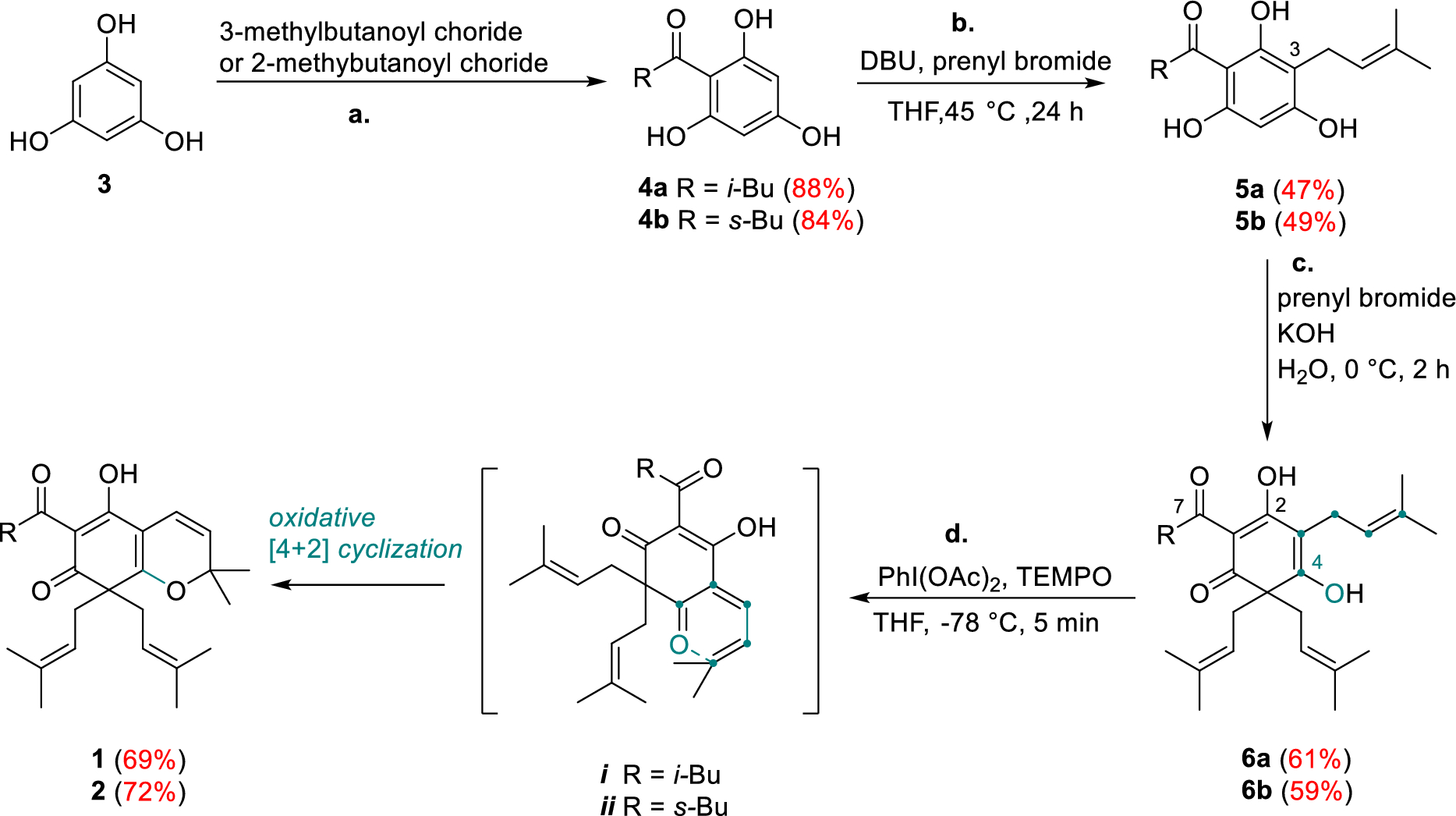
Total syntheses of 1 and 2. Reagents and conditions: a. 3-methylbutanoyl chloride or 2-methylbutanoyl chloride (1.2 eq.), AlCl3 (4.0 eq.), PhNO2, 65 ℃, 34 h, 4a (88%), 4b (84%); b. prenyl bromide (2.0 eq.), DBU (2.0 eq.), THF, 45 ℃, 24 h, 5a (47%), 5b (49%); c. prenyl bromide (2.0 eq.), KOH (2.0 eq.), H2O, 0 ℃, 2 h, 6a (61%), 6b (59%); d. PhI(OAc)2 (2.0 eq.), TEMPO (1.2 eq.), THF, -78 ℃, 5 min, 1 (69%), 2 (72%)
Next, we prepared a series of derivatives based on 1 and 2. Initially, treatment 5a with PSTA (2.0 eq.) gave bicyclic compounds 7a (49% yield) and 7b (33% yield) through 6-endo-trig cyclization, respectively [19]. We believed that stoichiometric PTSA destroyed the hydrogen bonding interactions between 2– and 6–phenols with C–7 carbonyl enabling the corresponding cyclization through the proposed intermediate iii (Scheme 3), which promoted weaker nucleophilic 2-phenol to cyclization to 7a as a major product [20]. A similar C–5 alkylation/dearomatization cascade of 7a using prenyl bromide/KOH (aq.) generated 8 in 61% yield. It was found that C–4 phenol group ensured the dissolubility of such bicyclic compounds in KOH aqueous solution, as 7a but 7b was dissolvable. These observations provided a valuable reference for the synthesis of subsequent DIAPs natural products. Furthermore, we also transformed 5a to 9 (53% yieid) by shortening the reaction time to 15 min in KOH aqueous solution (Scheme 3). Subsequently, 4a underwent an alkylation reaction with geranyl bromide using DIPEA as the base at 90 ℃ to furnish derivative 10 in 47% yield [21]. Moreover, we synthesized tetraisopentenyl acylphloroglucinol derivative 11 albeit in 17% yield through C–3/C–5 alkylation/dearomatization cascade of 4a under the conditions of prenyl bromide in an aqueous ammonia solution [22] (Scheme 3). Finally, a similar two-step synthesis of acylated derivative 14 (32% yield over two steps) was carried out using prenyl bromide/DBU and PhI(OAc)2/TEMPO from substrate 12. Interestingly, 12 seemed more effective than 4a/4b to generate the C–3 prenylated and C–5 di–prenylated product like 13 in 47% yield due to its less steric hindrance.
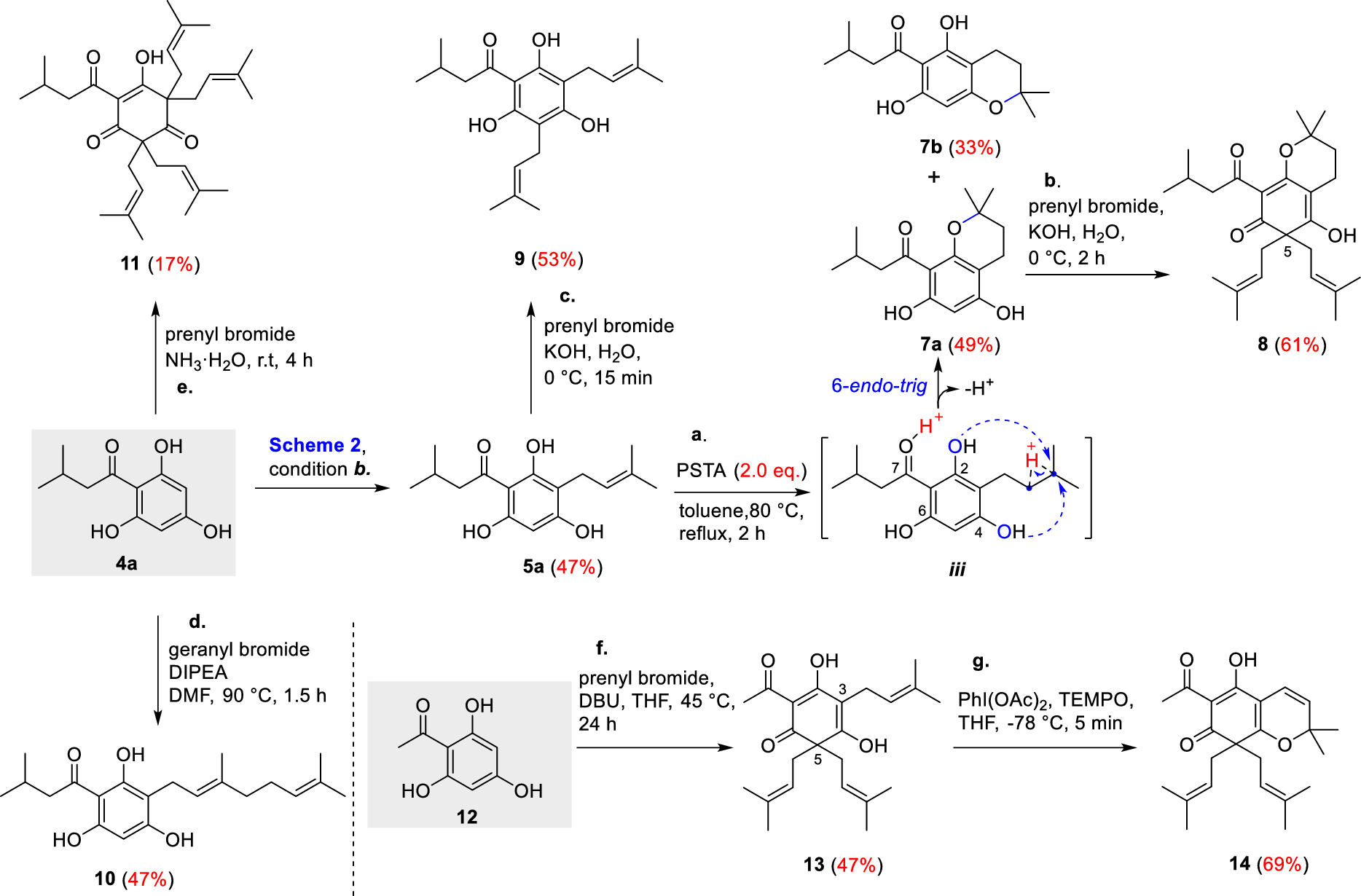
Syntheses of 1 and 2 derivatives. Reagents and conditions: a. PSTA (2.0 eq.), toluene, 80 ℃, reflux, 2 h, 7a (49%), 7b (33%); b. prenyl bromide (2.0 eq.), KOH (2.0 eq.), H2O, 0 ℃, 2 h, 8 (61%); c. prenyl bromide (2.0 eq.), KOH (2.0 eq.), H2O, 0 ℃, 15 min, 9 (53%); d. geranyl bromide (2.0 eq.), DIPEA (2.0 eq.), DMF, 90 ℃, 1.5 h, 10 (47%). e. prenyl bromide (2.0 eq.), NH3·H2O, r.t, 4 h, 11 (17%). f. prenyl bromide (2.0 eq.), DBU (2.0 eq.), THF, 45 ℃, 24 h, 13 (47%); g. PhI(OAc)2 (2.0 eq.), TEMPO (1.2 eq.), THF, −78 ℃, 5 min, 14 (69%)
With all synthetic 1/2-derivatives in hands, their Cav3.2 channel inhibition were tested. As a result, natural products 1 and 2 exhibited no inhibitory effects on the Cav3.2 channel at a concentration of 10 μM. However, their derivatives 8, 10, and 14 exhibited a good inhibitory effect on the Cav3.2 channel (Fig. 3). At a concentration of 10 µM, the inhibitory rates of these derivatives were 55.29% (8), 36.55% (10), and 37.80% (14), respectively. Among them, derivative 8 showed the highest inhibitory activity, suggesting tautomeric enol-ketone moiety might be unfavorable for Cav3.2 inhibition.
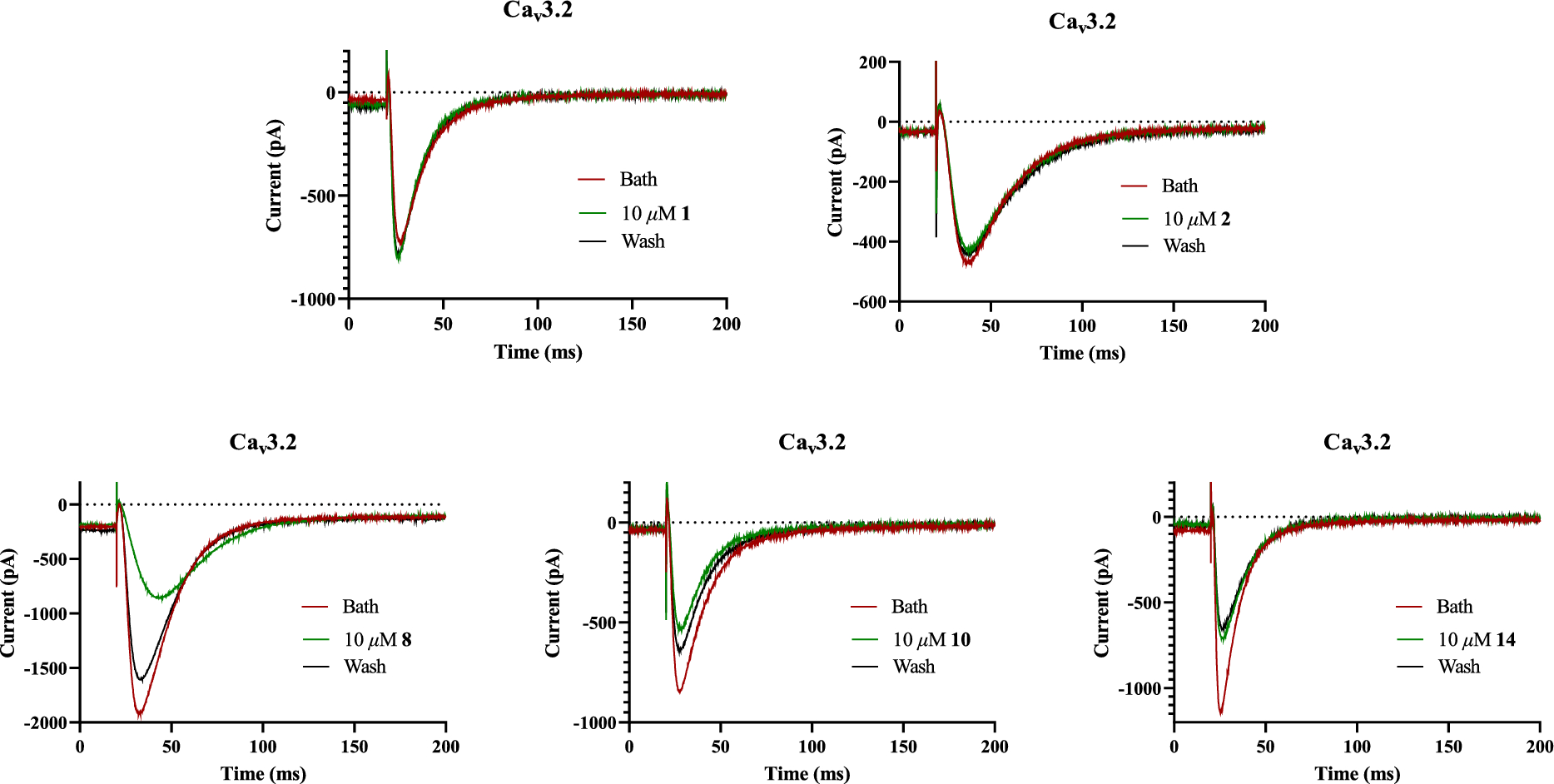
Cav3.2 channel inhibitory activities of 1, 2, 8, 10, and 14
3 Conclusions
In summary, two new natural products hyperprzewones A (1) and B (2) were isolated from Hypericum przewalskii. Structurally, these compounds were characterized by a dearomatized isoprenylated acylphloroglucinol core combined a functionalized cyclohexene skeleton. In addition, we have successfully achieved the total syntheses of 1 and 2 through Friedel–Crafts acylation, alkylation, dearomatization, and oxidative [4 + 2] cyclization in four steps. Biological evaluation of synthetic 1/2-derivatives showed that 8, 10, and 14 exhibit inhibitory effects on the Cav3.2 channel. Our finding provided a new direction for the development of Cav3.2 channel drugs for the treatment of diseases such as neuropathic pain and epilepsy.
4 Experimental section
4.1 General experimental procedures
Optical rotations were measured on a Jasco P-1020 polarimeter. UV spectra were detected on a Shmadzu UV-2401PC spectrometer. IR spectra were determined on a Bruker FT-IR Tensor-27 infrared spectrophotometer with KBr disks. All 1D and 2D NMR spectra were recorded on Bruker AVANCE Ⅲ 400 MHz and Bruker DRX–600 MHz spectrometers using TMS as an internal standard. Unless otherwise specified, chemical shifts (δ) were expressed in ppm with reference to the solvent signals. ESIMS and HRESIMS analysis were carried out on Waters Xevo TQS and Aglient G6230 TOF mass spectrometers, respectively. MCI gel (7–150 μm, Mitsubishi Chemical Corporation, Tokyo, Japan) were used for column chromatography. Synthetic field unless otherwise mentioned, all reactions were carried out under an argon atmosphere under anhydrous conditions, and all reagents were purchased from commercial suppliers without further purification. Silica gel (100–200, 200–300 mesh, Qingdao Marine Chemical Co., Ltd., People's Republic of China). Fractions were monitored by TLC (GF 254, Qingdao Marine Chemical Co., Ltd.), and spots were visualized by heating silica gel plates sprayed with 10% H2SO4 in EtOH.
4.2 Plant materials
The dried aerial parts of Hypericum przewalskii were collected at Aba Tibetan and Qiang Autonomous Prefecture, Sichuan Province, China, in September 2024. The plant was identified by Dr. Ruizhu Bai, Kunming Institute of Botany, Kunming, P. R. China. A voucher specimen was deposited with Kunming Institute of Botany with identification number (2024H01).
4.3 Extraction and isolation
The air-dried aerial parts of Hypericum przewalskii (10.0 kg) were powered and extracted with MeOH (4 × 50 L) at room temperature for 24 h and filtered. After evaporating in vacuo, the crude extract (1.8 kg) was subjected to silica gel column chromatography and eluted with CHCl3 to afford a fraction (0.18 kg). This fraction was separated by MCI column chromatography (MeOH–H2O, 75:25 to 100:0) to provide seven sub-fractions (Fr. A1–A7). Fr. A3 (18.5 g) was separated into eight sub-fractions (Fr. A3.1–3.8) on silica gel column chromatography using a gradient of petroleum ether‒EtOAc (500:0 to 0:1). The obtained sub-fraction Fr. A3.1.5 (154.5 mg) was further fractionated by using an ODS column eluted with CH3OH–H2O (90:10, v/v) to give 1 (9.8 mg, tR 15.7 min, CH3OH–H2O, 90%) and 2 (11.3 mg, tR 14.3 min, CH3OH–H2O, 90%).
4.4 Syntheses
3-methyl-1-(2,4,6-trihydroxy-3-(3-methylbut-2-en-1-yl)phenyl)butan-1-one (5a)
2-methyl-1-(2,4,6-trihydroxy-3-(3-methylbut-2-en-1-yl)phenyl)butan-1-one (5b)
To a solution of 4a/4b (200 mg, 0.95 mmol, 1.0 eq.) and prenyl bromide (196 μL, 1.9 mmol, 2.0 eq.) in dry THF (3 mL) was added DBU (284 μL, 1.9 mmol, 2.0 eq.). The resultant suspension was heated at 45 ℃ for 24 h. The reaction mixture allowed to cool to room temperature, then acidified with 1 N HCl solution (1 mL) and extracted with EtOAc (3 × 10 mL). The combined extracts were washed with brine (3 × 10 mL), dried over Na2SO4, filtered and concentrated under reduced pressure. The residue was purified by flash chromatography on silica gel to give 5a (124 mg, 47%) and 5b (129 mg, 49%) as a yellow oil. Date for 5a: Rf 0.6 (petrol/EtOAc, 1:1); 1H NMR (400 MHz, CD3OD) δ 5.89 (s, 1H), 5.21–5.11 (m, 1H), 3.18 (d, J = 7.1 Hz, 2H), 2.91 (d, J = 6.8 Hz, 2H), 2.21 (dt, J = 13.5, 6.8 Hz, 1H), 1.74 (s, 3H), 1.67–1.62 (m, 3H), 0.95 (d, J = 6.7 Hz, 6H). 13C NMR (150 MHz, CD3OD) δ 205.67, 163.65, 162.17, 159.96, 129.65, 123.17, 106.62, 104.06, 93.45, 52.40, 25.44, 24.59, 21.82, 20.78, 16.48; HRMS (C16H22O4, ESI): calculated [M-H]− 277.1445, found 277.1446. Date for 5b: Rf 0.6 (petrol/EtOAc, 1:1); 1H NMR (400 MHz, CD3OD) δ 5.88 (s, 1H), 5.15 (s, 1H), 3.87 (h, J = 6.7 Hz, 1H), 3.17 (d, J = 7.2 Hz, 2H), 1.86–1.76 (m, 1H), 1.76–1.72 (m, 3H), 1.67–1.62 (m, 3H), 1.36 (dt, J = 13.8, 7.1 Hz, 1H), 1.11 (d, J = 6.7 Hz, 3H), 0.90 (t, J = 7.4 Hz, 3H). 13C NMR (150 MHz, CD3OD) δ 210.10, 163.85, 162.01, 159.70, 129.62, 123.19, 106.70, 103.70, 93.54, 45.29, 26.81, 24.57, 20.81, 16.45, 15.87, 10.99; HRMS (C16H22O4, ESI): calculated [M-H]− 277.1445, found 277.1446.
3,5-dihydroxy-4,6,6-tris(3-methylbut-2-en-1-yl)-2-(3-methylbutanoyl)cyclohexa-2,4-dien-1-one (6a)
3,5-dihydroxy-4,6,6-tris(3-methylbut-2-en-1-yl)-2-(2-methylbutanoyl)cyclohexa-2,4-dien-1-one (6b)
To a solution of 5a/5b (100 mg, 0.36 mmol, 1.0 eq.) in H2O (2 mL) under a nitrogen atmosphere at 0 ℃ was added KOH (40 mg, 0.72 mmol, 2.0 eq.) in one portion, then prenyl bromide (70 μL, 0.72 mmol, 2.0 eq.) was added dropwise over 20 min. The reaction mixture was stirred at 0 ℃ for a further 2 h, during which time a thick orange precipitate was formed. The reaction mixture was then acidified with 1 N HCl solution (1 mL) and then extracted with EtOAc (3 × 10 mL). The combined extracts were washed with brine (3 × 10 mL), dried over Na2SO4, filtered and concentrated under reduced pressure. The residue was purified by flash chromatography on silica gel (petrol/EtOAc, 60:1 → 30:1) to give 6a (90 mg, 61%) as a pale yellow oil and 6b (88 mg, 59%) as a white oil. Date for 6a: Rf 0.5 (petrol/EtOAc, 2:1); 1H NMR (400 MHz, CD3OD) δ 5.25–5.09 (m, 1H), 4.85–4.73 (m, 2H), 3.20 (d, J = 7.3 Hz, 2H), 2.92 (d, J = 7.0 Hz, 2H), 2.67–2.61 (m, 2H), 2.51 (dd, J = 13.8, 7.8 Hz, 2H), 2.19–2.09 (m, 1H), 1.79 (d, J = 5.0 Hz, 6H), 1.56 (s, 12H), 0.98–0.95 (m, 6H). 13C NMR (150 MHz, CD3OD) δ 203.97, 198.19, 191.00, 174.44, 135.67, 132.59, 123.22, 119.21, 112.39, 109.36, 58.7, 50.10, 38.77, 27.05, 26.03, 23.11, 21.61, 17.94; HRMS (C26H38O4, ESI): calculated [M-H]− 413.2697, found 413.2703. Date for 6b: Rf 0.5 (petrol/EtOAc, 2:1); 1H NMR (400 MHz, CD3OD) δ 5.01 (d, J = 7.2 Hz, 1H), 4.77 (d, J = 7.4 Hz, 2H), 3.89 (q, J = 7.0 Hz, 1H), 3.10 (d, J = 7.0 Hz, 2H), 2.66–2.51 (m, 4H), 1.73 (d, J = 5.3 Hz, 4H), 1.67 (s, 3H), 1.58–1.53 (m, 12H), 1.38–1.33 (m, 1H), 1.08 (d, J = 6.7 Hz, 3H), 0.90 (d, J = 7.4 Hz, 3H). 13C NMR (150 MHz, CD3OD) δ 208.30, 198.02, 191.21, 174.23, 135.63, 132.56, 123.24, 119.20, 112.35, 108.82, 58.73, 43.72, 39.05, 38.78, 27.7, 26.05, 21.65, 18.10, 16.99, 12.36; HRMS (C26H38O4, ESI): calculated [M-H]− 413.2697, found 413.2707.
hyperprzewone A (1) and hyperprzewone B (2)
To a solution of 6a/6b (50 mg, 0.12 mmol, 1.0 eq.) in dry THF (2 mL) at −78 ℃ under a nitrogen atmosphere was added TEMPO (38 mg, 0.24 mmol, 2.0 eq.) followed by PhI(OAc)2 (45 mg, 0.14 mmol, 1.2 eq.). The reaction mixture was stirred at −78 ℃ for 5 min, then allowed to warm to room temperature over 30 min. The reaction mixture was quenched with H2O (1 mL), then extracted with EtOAc (3 × 10 mL). The combined organics were dried over Na2SO4, filtered and concentrated under reduced pressure. The residue was then purified by flash chromatography on silica gel (petrol/EtOAc, 100:1 → 40:1) to give 1 (33 mg, 69%) and 2 (36 mg, 72%) as a brown oil. Date for 1: Rf 0.6 (petrol/EtOAc, 10:1); 1H NMR (400 MHz, CD3OD) δ 6.44 (d, J = 10.1 Hz, 1H), 5.45 (dd, J = 22.8, 10.1 Hz, 1H), 4.80–4.68 (m, 2H), 2.91 (d, J = 7.0 Hz, 2H), 2.65 (dd, J = 13.8, 7.8 Hz, 2H), 2.51 (dd, J = 13.9, 7.3 Hz, 2H), 2.07 (dq, J = 13.4, 6.4 Hz, 1H), 1.57 (d, J = 8.8 Hz, 12H), 1.44 (d, J = 11.8 Hz, 6H), 0.95 (d, J = 6.8, , 6H). 13C NMR (150 MHz, CD3OD) δ 203.52, 197.30, 187.49, 173.38, 136.00, 125.06, 119.16, 118.66, 114.98, 109.27, 107.61, 82.85, 58.24, 49.39, 38.66, 37.35, 29.08, 27.27, 25.98, 22.96, 18.31; HRMS (C26H36O4, ESI): calculated [M-H]− 411.2541, found 411.2549; [α] −1.17 (c 0.12, MeOH); UV (MeOH)λmax (log ε) 195 (4.34), 226 (3.80), 267 (3.97), 326 (3.59), 337 (3.60) nm; IR (KBr)vmax 3433, 2962, 2928, 2871, 1654, 1634, 1527, 1466, 1381. Date for 2:Rf 0.6 (petrol/EtOAc, 10:1); 1H NMR (400 MHz, CD3OD) δ 6.44 (d, J = 10.1 Hz, 1H), 5.48 (d, J = 10.2 Hz, 1H), 4.82–4.77 (m, 2H), 3.95–3.79 (m, 1H), 2.67 (dt, J = 14.3, 7.4 Hz, 2H), 2.51 (dd, J = 13.9, 7.4 Hz, 2H), 1.76–1.70 (m, 1H), 1.57 (d, J = 9.0 Hz, 12H), 1.46 (s, 6H), 1.34 (s, 1H), 1.09 (d, J = 6.9 Hz, 3H), 0.90 (d, J = 7.5 Hz, 3H). 13C NMR (150 MHz, CD3OD) δ 208.09, 197.18, 187.54, 173.34, 136.00, 125.07, 119.24, 114.99, 108.70, 107.49, 82.95, 58.43, 43.42, 38.84, 38.51, 29.07, 27.71, 26.01, 18.29, 16.94, 12.33; HRMS (C26H36O4, ESI): calculated [M+H]+ 413.2686, found 413.2690; [α] −0.83 (c 0.17, MeOH); UV (MeOH)λmax (log ε) 195 (4.01), 228 (3.36), 267 (3.57), 327 (3.04), 351 (3.08) nm; IR (KBr)vmax 3440, 2969, 2928, 2876, 1654, 1634, 1526, 1465, 1380.
1-(5,7-dihydroxy-2,2-dimethylchroman-8-yl)-3-methylbutan-1-one (7a)
1-(5,7-dihydroxy-2,2-dimethylchroman-6-yl)-3-methylbutan-1-one (7b)
To a solution of 5a (100 mg, 0.36 mmol, 1.0 eq.) in toluene (3 mL) at room temperature was added PSTA (124 mg, 0.72 mmol, 2.0 eq.). The reaction mixture was stirred at room temperature for 2 h. The reaction mixture was quenched with H2O (1 mL), then extracted with EtOAc (3 × 10 mL). The combined organics were dried over Na2SO4, filtered and concentrated under reduced pressure. The residue was then purified by flash chromatography on silica gel (petrol/EtOAc, 40:1 → 15:1) to give 7a (49 mg 49%) as a white oil and on silica gel (petrol/EtOAc, 40:1 → 20:1) to give 7b (33 mg 33%) as a yellow oil. Date for 7a: Rf 0.4 (petrol/EtOAc, 4:1); 1H NMR (400 MHz, CDCl3) δ 13.92 (s, 1H), 5.93 (s, 1H), 2.90 (d, J = 7.0 Hz, 2H), 2.59 (t, J = 6.8 Hz, 2H), 2.21 (dq, J = 13.4, 6.7 Hz, 1H), 1.80 (t, J = 6.8 Hz, 2H), 1.40 (s, 6H), 0.97 (d, J = 6.6 Hz, 6H). 13C NMR (600 MHz, CDCl3) δ 206.01, 165.07, 159.94, 157.14, 106.32, 99.36, 95.34, 76.04, 53.40, 31.51, 26.77, 25.39, 22.77, 16.35; HRMS (C16H22O4, ESI): calculated [M-H]− 277.1445, found 277.1442. Date for 7b: Rf 0.5 (petrol/EtOAc, 4:1); 1H NMR (400 MHz, CDCl3) δ 13.57 (s, 1H), 6.43 (s, 1H), 5.72 (s, 1H), 2.93 (d, J = 6.8 Hz, 2H), 2.58 (t, J = 6.8 Hz, 2H), 2.26 (dp, J = 13.4, 6.7 Hz, 1H), 1.78 (t, J = 6.8 Hz, 2H), 1.32 (s, 6H), 0.97 (d, J = 6.7 Hz, 6H). 13C NMR (150 MHz, CDCl3) δ 205.87, 164.00, 160.40, 158.01, 104.46, 101.74, 95.72, 76.13, 52.91, 32.31, 26.89, 25.62, 23.04, 16.30; HRMS (C16H22O4, ESI): calculated [M-H]− 277.1445, found 277.1452.
5-hydroxy-2,2-dimethyl-6,6-bis(3-methylbut-2-en-1-yl)-8-(3-methylbutanoyl)-2,3,4,6-tetrahydro-7H-chromen-7-one (8)
To a solution of 7a (40 mg, 0.14 mmol, 1.0 eq.) in H2O (1.5 mL) under a nitrogen atmosphere at 0 ℃ was added KOH (16 mg, 0.28 mmol, 2.0 eq.) in one portion, then prenyl bromide (27 μL, 0.28 mmol, 2.0 eq.) was added dropwise over 20 min. The resultant suspension was stirred at 0 ℃ for a further 2 h, then reaction mixture was acidified with 1 N HCl solution (1 mL) and extracted with EtOAc (3 × 10 mL). The combined extracts were washed with brine (3 × 10), dried over Na2SO4, filtered and concentrated under reduced pressure. The residue was purified by flash chromatography on silica gel (petrol/EtOAC, 60:1 → 35:1) to give 8 (34 mg, 61%) as a pale yellow oil. Date for 8: Rf 0.6 (petrol/EtOAc, 4:1); 1H NMR (400 MHz, CD3OD) δ 4.78–4.70 (m, 2H), 2.78 (d, J = 7.3 Hz, 2H), 2.69–2.55 (m, 4H), 2.34 (t, J = 6.8 Hz, 2H), 2.10 (dt, J = 13.6, 6.8 Hz, 1H), 1.78 (t, J = 6.8 Hz, 2H), 1.60–1.46 (m, 12H), 1.40 (s, 6H), 0.96 (d, J = 6.7 Hz, 6H). 13C NMR (150 MHz, CD3OD) δ 201.38, 198.09, 196.61, 166.61, 136.01, 119.17, 108.78, 107.39, 80.25, 61.01, 49.43, 39.67, 32.52, 28.58, 26.66, 26.03, 22.87, 17.98, 17.32; HRMS (C26H38O4, ESI): calculated [M-H]− 413.2770, found 413.2697.
(E)-1-(3-(3,7-dimethylocta-2,6-dien-1-yl)-2,4,6-trihydroxyphenyl)-3-methylbutan-1-one (10)
To a mixture solution of 4a (100 mg, 0.48 mmol, 1.0 eq.) and geranyl bromide (190 μL, 0.96 mmol, 2.0 eq.) in DMF (2 mL) was added DIPEA (171 μL, 0.96 mmol, 2.0 eq.). The resultant suspension was heated at 80 ℃ for 3 h, then gradually warmed to room temperature. The reaction mixture was quenched with H2O (1 mL) and extracted with EtOAc (3 × 10 mL). The combined organic extracts were dried over Na2SO4, filtered and concentrated under reduced pressure. The residue was then purified by flash chromatography on silica gel (petrol/EtOAc, 20:1 → 5:1) to give 10 (78 mg 47%) as a yellow oil. Date for 10: Rf 0.4 (petrol/EtOAc, 2:1); 1H NMR (400 MHz, CD3OD) δ 5.88 (s, 1H), 5.17 (dt, J = 6.1, 4.3 Hz, 1H), 5.05 (dt, J = 7.3, 1.5 Hz, 1H), 3.18 (d, J = 7.1 Hz, 2H), 2.91 (d, J = 6.8 Hz, 2H), 2.21 (dt, J = 13.1, 6.6 Hz, 1H), 2.04 (q, J = 7.4 Hz, 2H), 1.93 (t, J = 7.5 Hz, 2H), 1.75–1.72 (m, 3H), 1.63– 1.56 (m, 3H), 1.55 (s, 3H), 0.95 (d, J = 6.7 Hz, 6H). 13C NMR (150 MHz, CD3OD) δ 207.03, 165.37, 163.87, 161.63, 134.93, 130.94, 125.80, 124.94, 108.35, 105.75, 95.12, 53.80, 40.93, 28.01, 27.13, 26.13, 23.50, 22.09, 17.71, 16.48; HRMS (C21H30O4, ESI): calculated [M + H]+ 347.2217, found 347.2217.
5-hydroxy-2,2,6,6tetrakis(3-methylbut-2-en-1-yl)-4-(3-methylbutanoyl)cyclohex-4-ene-1,3-dione (11)
To a solution of 4a (40 mg, 0.19 mmol, 1.0 eq.) and prenyl bromide (45 μL, 0.38 mmol, 2.0 eq.) in NH3·H2O (1.5 mL). The resultant suspension was stirred for 4 h at room temperature, then acidified with 1 N HCl solution (1.5 mL) and extracted with EtOAc (3 × 10 mL). The combined extracts were washed with brine (3 × 10 mL), dried over Na2SO4, filtered and concentrated under reduced pressure. The residue was purified by flash chromatography on silica gel (petrol/EtOAc, 100:1 → 60:1) to give 11 (13 mg, 17%) as a white oil. Data for 11: Rf 0.4 (petrol/EtOAc, 20:1); 1H NMR (400 MHz, CDCl3) δ 4.90 (s, 4H), 2.81 (s, 2H), 2.65 (dd, J = 13.8, 8.0 Hz, 2H), 2.53 (dt, J = 14.9, 7.9 Hz, 4H), 2.30 (dd, J = 14.6, 6.1 Hz, 2H), 2.23–2.14 (m, 1H), 1.63–1.54 (m, 24H), 0.99 (d, J = 6.7 Hz, 6H); 13C NMR (150 MHz, CDCl3) δ 207.55, 203.65, 197.41, 194.73, 136.16, 134.60, 118.89, 118.26, 113.57, 65.53, 60.94, 47.65, 36.82, 33.85, 25.96, 25.85, 25.77, 22.69, 17.88, 17.84; HRMS (C31H46O4, ESI): calculated [M + H]+ 483.3469, found 483.3472.
6-acetyl-5-hydroxy-2,2-dimethyl-8,8-bis(3-methylbut-2-en-1-yl)-2,8-dihydro-7H-chromen-7-one (14) To a solution of 13 (200 mg, 0.54 mmol, 1.0 eq.) in dry THF (4 mL) at −78 ℃ under a nitrogen atmosphere was added TEMPO (169 mg, 1.08 mmol, 2.0 eq.) followed by PhI(OAc)2 (209 mg, 0.65 mmol, 1.2 eq.). The reaction mixture was stirred at −78 ℃ for 5 min, then allowed to warm to room temperature over 30 min. The reaction mixture was quenched with H2O (2 mL), then extracted with EtOAc (3 × 30 mL). The combined organics were dried over Na2SO4, filtered and concentrated under reduced pressure. The residue was then purified by flash chromatography on silica gel (petrol/EtOAc, 80:1 → 30:1) to give 14 (110 mg, 64%) as a yellow oil. Date for 14: Rf 0.4 (petrol/EtOAc, 10:1); 1H NMR (400 MHz, CDCl3) δ 6.48 (dd, J = 29.2, 10.0 Hz, 1H), 5.32 (dd, J = 14.7, 10.0 Hz, 1H), 4.77 (t, J = 7.1 Hz, 2H), 2.70 (d, J = 8.3 Hz, 2H), 2.58 (s, 3H), 2.48 (dd, J = 13.9, 7.6 Hz, 2H), 1.62 (d, J = 1.0 Hz, 12H), 1.41 (d, J = 13.9 Hz, 6H). 13C NMR (150 MHz, CDCl3) δ 199.48, 195.47, 185.85, 172.21, 134.60, 123.10, 117.90, 114.31, 108.20, 105.70, 81.03, 56.80, 37.34, 28.50, 25.50, 17.91; HRMS (C23H30O4, ESI): calculated [M-H]− 369.2071, found 369.2075.
4.5 Cell preparation and expression
Human embryonic kidney (HEK) 293 T cells were grown in DMEM (cytiva) plus 10% newborn calf serum (Gibco) and penicillin (100 U/mL)/streptomycin (0.1 mg/mL) (Biological Industries). HEK 293 T cells were transiently co-transfected with pCDNA3.1-Cav3.2 and EGFP plasmids together using Lipofectamine™3000 (invitrogen) and used in 48 h.
Notes
Acknowledgements
This study was supported financially by Yunnan Key Laboratory Screening and Research on Anti-pathogenic Plant Resources from Western Yunnan (APR202301); Yunnan Revitalization Talent Support Program "Innovation Team" Project (202305AS350014), and Foundation of DR. PLANT.
Author contributions
Yong Li carried out the experiments and wrote original draft; Fei-Fei Xiong Carried out a separation and extraction experiment; Xiao-Yang Sun conducted activity screening. Li-Dong Shao and Xing-Ren Li revised the manuscript; Dao-Feng Chen, Yin Nian and Gang Xu designed the experiments and revised the manuscript. All authors read and approved the final manuscript.
Funding
Yunnan Key Laboratory Screening and Research on Anti-pathogenic Plant Resources from Western Yunnan, APR202301, Gang Xu, Yunnan Revitalization Talent Support Program Innovation Team Project, 202305AS350014, Gang Xu.
Data availability
The datasets used or analyzed during the current study are available from the corresponding author on reasonable request.
Declarations
Competing interests
The authors declare no competing interests.
References
-
1.Singh IP, Bharate SB. Phloroglucinol compounds of natural origin. Nat Prod Rep. 2006;23: 558-91. CrossRef PubMed Google Scholar
-
2.Ciochina R, Grossman RB. Polycyclic polyprenylated acylphloroglucinols. Chem Rev. 2006;106: 3963-86. CrossRef PubMed Google Scholar
-
3.Yang XW, Grossman RB, Xu G. Research progress of polycyclic polyprenylated acylphloroglucinols. Chem Rev. 2018;118: 3508-58. CrossRef PubMed Google Scholar
-
4.Wu SB, Long C, Kennelly EJ. Structural diversity and bioactivities of natural benzophenones. Nat Prod Rep. 2014;31: 1158-74. CrossRef PubMed Google Scholar
-
5.Guan X, Wang H, Zhang W, Xie Z. Asymmetric total synthesis of (+)-hyperbeanol A. Org Lett. 2025;27: 8-13. CrossRef PubMed Google Scholar
-
6.Jiang NN, Gar-Lee YG, Li P, Ye YS, Gomes AJ, Hin-Fai KF, et al. Discovery of dearomatized isoprenylated acylphloroglucinols with colon tumor suppressive activities in mice via inhibiting NFκB-FAT1-PDCD4 signaling activation. Eur J Med Chem. 2022;239: 114532. CrossRef PubMed Google Scholar
-
7.Tao Y, Reisenauer K, Taube JH, Romo D. Total synthesis and anticancer activity of (+)-hypercalin C and congeners. Angew Chem Int Ed Engl. 2019;58: 2734-8. CrossRef PubMed Google Scholar
-
8.Cheong E, Shin HS. T-Type Ca2+ channels in normal and abnormal brain functions. Physiol Rev. 2013;93: 961-92. CrossRef PubMed Google Scholar
-
9.Kim D, Song I, Keum S, Lee T, Jeong MJ, Kim SS, et al. Lack of the burst firing of thalamocortical relay neurons and resistance to absence seizures in mice lacking α1G T-type Ca2+ channels. Neuron. 2001;31: 35-45. CrossRef PubMed Google Scholar
-
10.Zamponi GW, Striessnig J, Koschak A, Dolphin AC. The physiology, pathology, and pharmacology of voltage-gated calcium channels and their future therapeutic potential. Pharmacol Rev. 2015;67: 821-70. CrossRef PubMed Google Scholar
-
11.Tadayonnejad R, Anderson D, Molineux ML, Mehaffey WH, Jayasuriya K, Turner RW. Rebound discharge in deep cerebellar nuclear neurons in vitro. Cerebellum. 2010;9: 352-74. CrossRef PubMed Google Scholar
-
12.Ye YS, Liu R, Jiang NN, Li SY, Nian Y, Xu G. Caged polycyclic polyprenylated acylphloroglucinols as Cav3.2 low voltage-gated Ca2+ channel inhibitors from Hypericum curvisepalum. Chem Commun. 2022;58: 13135-8. CrossRef PubMed Google Scholar
-
13.Hu YL, Dong D, Zhao JJ, Hu K, Kong LM, Hu YX, et al. 5-Methylated polyprenylated acylphloroglucinol derivatives as low-voltage-gated Ca2+ channel inhibitors. Org Chem Front. 2025;12: 2375-81. CrossRef PubMed Google Scholar
-
14.Ye YS, Wu M, Jiang NN, Lao YZ, Fu WW, Liu X, et al. Dearomatized isoprenylated acylphloroglucinol derivatives with potential antitumor activities from Hypericum henryi. Nat Prod Bioprospect. 2020;10: 1-11. CrossRef PubMed Google Scholar
-
15.Chauthe SK, Bharate SB, Sabde S, Mitra D, Bhutani KK, Singh IP. Biomimetic synthesis and anti-HIV activity of dimeric phloroglucinols. Bioorg Med Chem. 2010;18: 2029-36. CrossRef PubMed Google Scholar
-
16.Nakagawa G, Wu PC, Bastow KF, Yang SC, Yu SL, Chen HY, Lin JC, Goto M, Morris-Natschke SL, Yang PC, Lee KH. Antitumor agents 283. Further elaboration of desmosdumot in C analogs as potent antitumor agents: activation of spindle assembly checkpoint as possible mode of action. Bioorg Med Chem. 2011;19: 1816-22. CrossRef PubMed Google Scholar
-
17.Mzozoyana V, Van H, Fanie R. Synthesis of 3-geranyl- and 3-prenyl-2,4,6-trihydroxybenzophenone. Synth Commun. 2017;47: 599-603. CrossRef PubMed Google Scholar
-
18.George JH, Hesse MD, Baldwin JE, Adlington RM. Biomimetic synthesis of polycyclic polyprenylated acylphloroglucinol natural products isolated from Hypericum papuanum. Org Lett. 2010;12: 3532-5. CrossRef PubMed Google Scholar
-
19.Kuhnke J, Bohlmann F. Synthesis of naturally occurring phloroglucinol derivatives. Tetrahedron. 1985;26: 3955-8. CrossRef PubMed Google Scholar
-
20.Yuan ST, Peng YP, Xia D, Jiang J, Li k, Li DS, et al. De novo syntheses of coumaronochromones: application in total synthesis of cristatone Ⅱ. J Org Chem. 2025;90: 7877-87. CrossRef PubMed Google Scholar
-
21.Wang X, Lee YR. Efficient synthesis of polycycles bearing prenylated, geranylated, and farnesylated citrans: application to 3′-prenylrubranine and petiolin D regioisomer. Tetrahedron. 2011;67: 9179-84. CrossRef PubMed Google Scholar
-
22.Elizabeth T, Roland A, Matt T, Kay C, Grisha P, Dharahana R, et al. The synthesis and anticancer effects of a range of natural and unnatural hop β-acids on breast cancer cells. Phytochemistry. 2012;5: 144-9. CrossRef PubMed Google Scholar
Copyright information
© The Author(s) 2026
Open Access This article is licensed under a Creative Commons Attribution 4.0 International License, which permits use, sharing, adaptation, distribution and reproduction in any medium or format, as long as you give appropriate credit to the original author(s) and the source, provide a link to the Creative Commons licence, and indicate if changes were made. The images or other third party material in this article are included in the article’s Creative Commons licence, unless indicated otherwise in a credit line to the material. If material is not included in the article’s Creative Commons licence and your intended use is not permitted by statutory regulation or exceeds the permitted use, you will need to obtain permission directly from the copyright holder. To view a copy of this licence, visit http://creativecommons.org/licenses/by/4.0/.