 2016, Vol. 29


2. Department of Infectious Disease Prevention and School Health, Nanjing Municipal Center for Disease Control and Prevention, Nanjing 210009, Jiangsu, China ;
3. Key Laboratory of Environmental Medicine Engineering, Ministry of Education, School of Public Health, Southeast University, Nanjing 210009, Jiangsu, China
Objective To report the prevalence and trend of overweight and obesity among students aged 7-22 years in Jiangsu, 2010 to 2013.
Methods This cross-sectional study was carried out as part of students physical fitness and health survey in Jiangsu province. A total of 255,581 subjects (50.03% males and 49.97% females) enrolled in 82 school and 10 universities in Jiangsu. Weights and heights were obtained for each subject and its body mass index (BMI) was calculated using the Chinese Working Group on Obesity in China (CWGO).
Results Anthropometric measurement including bodyweight, height, BMI and bust were significantly different between males in urban compared to females living rural areas (P<0.001). The total prevalence of overweight and obesity was 12.4% and 5.7%. Males had a significantly higher rate than in female's student. The prevalence of overweight and obesity by age groups was (14.5%, 10.3%) at age 7-11 years, (11.2%, 6.8%) at age 12-14 years, (11.7%, 3.1%) at age 15-17 years, and (11.4%, 2.3%) at age 18-22 years. By regions; the highest prevalence of overweight obesity reported in Taizhou (10%, 14.2%), Xuzhou (9.4%, 12.5%), and Nanjing (9.2%, 15.6%), respectively.
Conclusion The finding declares that overweight and obesity are important health problems among students in Jiangsu Province. Early intervention programme are needed to address this problems.
Overweight and obesity among young people is a growing concern of public health[1],and is associated with both physical and psychological health consequences. Currently,the rate of obesity has increased significantly during the last decades in many countries among children and adolescents. Therefore,development of more research involving overweight and obesity,particularly in children at school age were essential to monitor the health status in the community[2-4].
Obesity and overweight are seen exceptionally high among urban school children and adolescent[1, 5]. Therefore,child health and growth status is globally recognized as an important indicators for child health standards[6]. Obesity has negative health consequences among populations and is a major risk factor for common diseases such as cardiovascular,stroke,diabetes and cancer[7-8].
In particular,obesity was reported to be associated with many diseases such as development of hypertension,diabetes mellitus,coronary heart disease,certain forms of cancer,and sleep-breathing disorders[9]. Obesity was also confirmed to be associated with high blood pressure (HBP) rate due to increasing the body mass index,while both systolic and diastolic blood pressure were positively related to the body mass index,and the association between obesity and HBP remained statistically significant after adjustment of age,heart rate,smoking,alcohol intake,and physical activity[10]. Furthermore,obesity prevalence is also rapidly increasing among children and adolescents[11] although many researchers believed it in the past to be less frequently associated with increased morbidity than in adults. Obesity in children is now recognized to be associated with insulin resistance,hyperliemia,hepatic steatosis,sleep apnea and orthopedic complication[12-13],in adults BMI was seen to be strongly associated with body fats and the risk increased mortality[14]. Obesity was reported as to be a major contributing factor to the decline of levels of physical fitness,and the increase in risk of chronic diseases and mortality rates[15].
In China approximately 260 million are overweight or obese adults with 30% prevalence,50% of obese individuals are in major cities. The fast growth of the national economy in the past decades,the nutritional status of the Chinese people has improved greatly,but main dietary problems still exist such as iron deficiency[16].However,there are still huge differences between urban and rural areas in the past several decades. Stunting was as high as 30.2% and it was the most serious problem impeding child growth and development[17-18]. A study by Australian University students showed that 1 in 4 Australians were classified as obese in 2011-2012[19]. In Italy and Sudan the prevalence (where it is high/low) of BMI among the age groups 11-15 years-old were observed[20-21].
A study conducted in 2003 among students aged 12-14 years from eight schools in Jiangsu Province,indicated over-nutrition as the problems due to food habits and student lifestyle. The rate of overweight and obesity were increased in schools children in Jiangsu,China[22].Study among College students between 2009-2011 in Hebei province found that the standard rate of height and weight was quite low and the number of overweight male students was higher than that of females in the same study area[23]. However,previous large epidemiological studies indicated that about one-fifth of the one billion overweight or obese people around the world are Chinese. Therefore,the aim of the present study was to provide the most recently evaluated rates of body weight,height,BMI,bust,and prevalence of overweight and obesity in 7-22 years-old among students living in 13 cities in Jiangsu province,China,during the period from 2010 to 2013.
MATERIALS AND METHODSPopulation-based cross sectional study was conducted among students in Jiangsu province,China. During physical fitness and health surveillance from 2010 to 2013.
The study was conducted in Jiangsu province in southeast China. It covers an area of approximately 1 million km2 and has a population of 73.55 million,which represents the highest population density in China. It is one of the wealthiest provinces; however,the economic status varies greatly according to regions.
Research data was obtained from Jiangsu Provincial Department of Education in Nanjing research units. A total of 255,581 subjects (127,866 male and 127,715 female) aged 7-22 years were recruited in this study from 82 primary,middle and high schools,and 10 provincial universities. Students were subdivided by gender,age groups (7-11,12-14,15-17,and 18-22 years),living status (urban and rural) and three socio-economic regions including North Jiangsu (Huai’an,Lianyungang,Suqian,Xuzhou,Wuxi,and Yancheng),South Jiangsu (Changzhou,Nanjing,Suzhou,Zhenjiang) and Central Jiangsu (Yangzhou,Nantong,Taizhou).
Anthropometric MeasurementsSelf administrated questionnaire was used to collect information on socio-demographic indicators and anthropometrics measurements were carried out by well-trained health workers who followed a reference protocol. While the equipment tool was calibrated before starts anthropometrics measurements. Briefly,fasting body weight was measured to the nearest 0.10 kg using a beam balance scale (RGT-140,Weighting Apparatus Co.Ltd. Changzhou Wujin,China) with subjects wearing light weight clothing. Height 0.01 m was measured with a portable stadiometer while the subjects in standing position,without shoes[3] and bust was measured by elastic tape.
All instruments were of Chinese origin and were calibrated regularly. Observers who followed standardized procedures were trained and supervised by the Centers for Disease Control and Prevention (CDC) in the 13 cities of Jiangsu province. All study investigators and staff members successfully completed a training program before data collection on study aim,especially trained for anthropometric skills on taken anthropometric,filling questionnaire in research objectives,used of specific tools and methodologies for measuring body weight and height and using the standard techniques for anthropometric measurements. Data collection relies ondouble-checkingwith existing rules and guide line from Centers for Disease Control and Prevention. Two students from each city were participated in entering data in SPSS sheet.
Body mass index was then computed using formula weight (kg)/height2 (m)2. BMI classification reference proposed by Chinese Working Group on Obesity in China (WGOC) was used to as screening reference to calculate the prevalence and trend of overweight and obesity in these groups[24]. The study approved by local ethic committee of student’s health literacy promotion and research,Jiangsu province and the Institutional Review Board of the School of Public Health.
Statistical AnalysesDescriptive statistics were calculated and presented as mean (SD),and Chi-Square test,independent sample t-test,and one-way analysis of variance was used to evaluate differences within gender and age group. Statistical analyses were performed by using IBM SPSS version 20.0 (SPSS,Inc,Chicago,IL,USA). The level of significance was set at (P<0.05).
RESULTSThis cross-sectional study was conducted to assess the trend prevalence of overweight and obesity in among students aged 7-22 years in Jiangsu province,China during the period 2010-2013. A total of 255,581 subjects (127,866 males and 127,715 female) aged 7-22 years were enrolled in to the study and completed the anthropometric measurements. A total 126,957 from rural area and 128,624 from urban area. The subjects were classified into different socio-economic regions (North Jiangsu,South Jiangsu and central Jiangsu Province),and 46.59% subjects were from South Jiangsu province,30.53% North Jiangsu and 22.88% from central Jiangsu province as given inTable 1.

|
Table 1 Demographic Characteristics of Study |
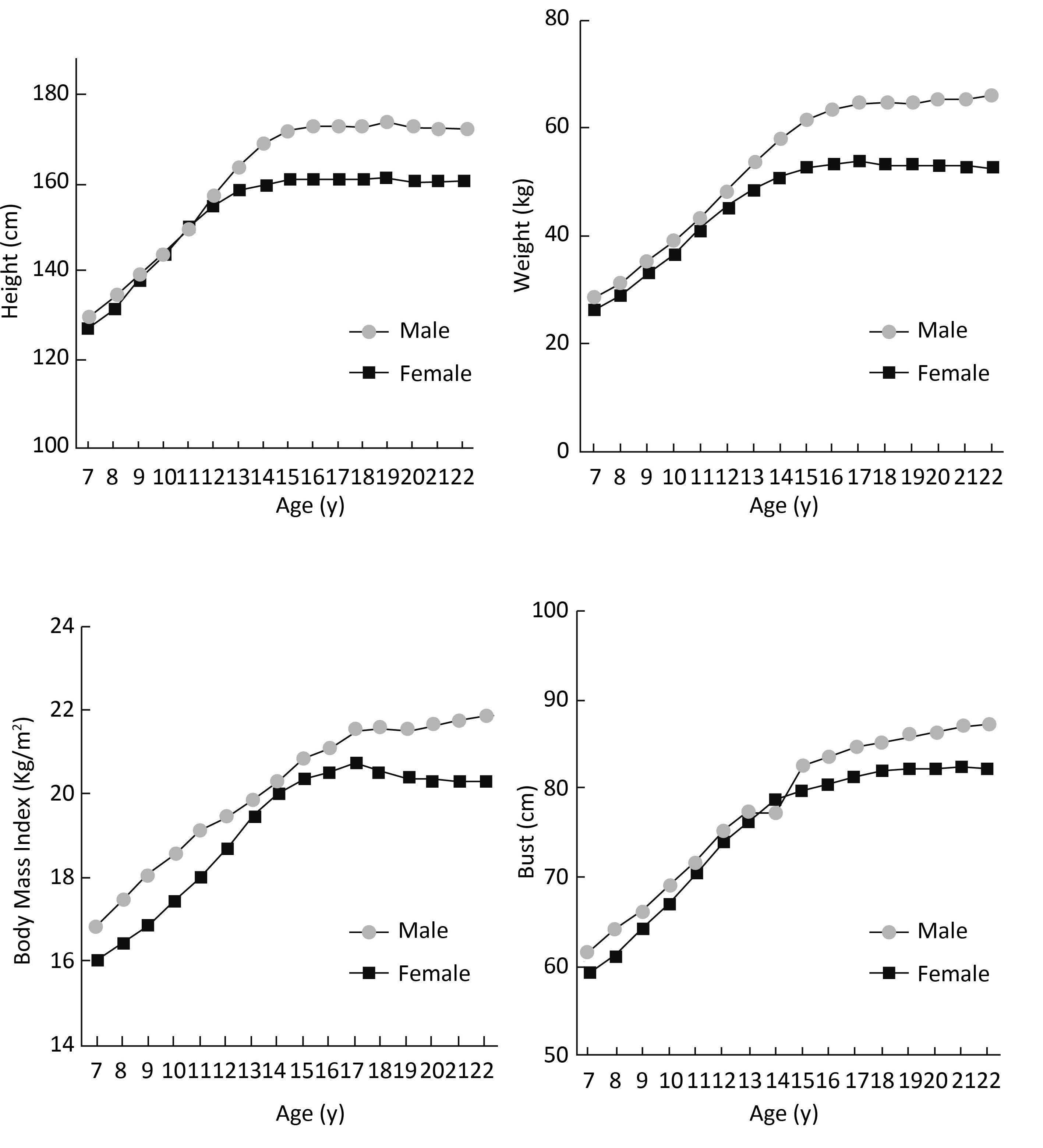
The descriptive statistics of anthropometric measurements for study population are shown in Figure 1 which highlight the students average (SD) of body height 1.57 m,body weight 49.89 kg,BMI 19.66 (3.25) kg/m2,and bust 76.88 cm respectively for both male and female. The anthropometric measurements were significantly different (P<0.001) between male and females. The average body height,weight,BMI and bust were significantly (P<0.001) increased among males compared to females.
|
Download:
|
| Figure 1 Effect of age and sex on anthropometrics measurements,2010-2013. | |
Table 2,shows that the mean height,weight,BMI and bust for male students living in the urban area were 1.67 m,54.71 kg,20.40 kg/m2,and 79.02 cm,respectively,and those living in the rural one were 1.60 m,52.37 kg,19.84 kg/m2,and 77.44 cm,respectively,the mean height,weight,BMI,and bust for female students’ lives in urban area were 1.54 m,46.84 kg,19.32 kg/m2,and 75.94 cm,respectively,and those live in the rural one were 1.53 m,45.65 kg,19.09 kg/m2,and 75.14 cm,respectively. The anthropometrics measurements were shown to be higher for male students living in the urban and rural areas compared to female students living in the same places.
|
|
Table 2 Mean (SD) of Anthropometrics Measurement by Living Condition/Gender,2010-2013 |
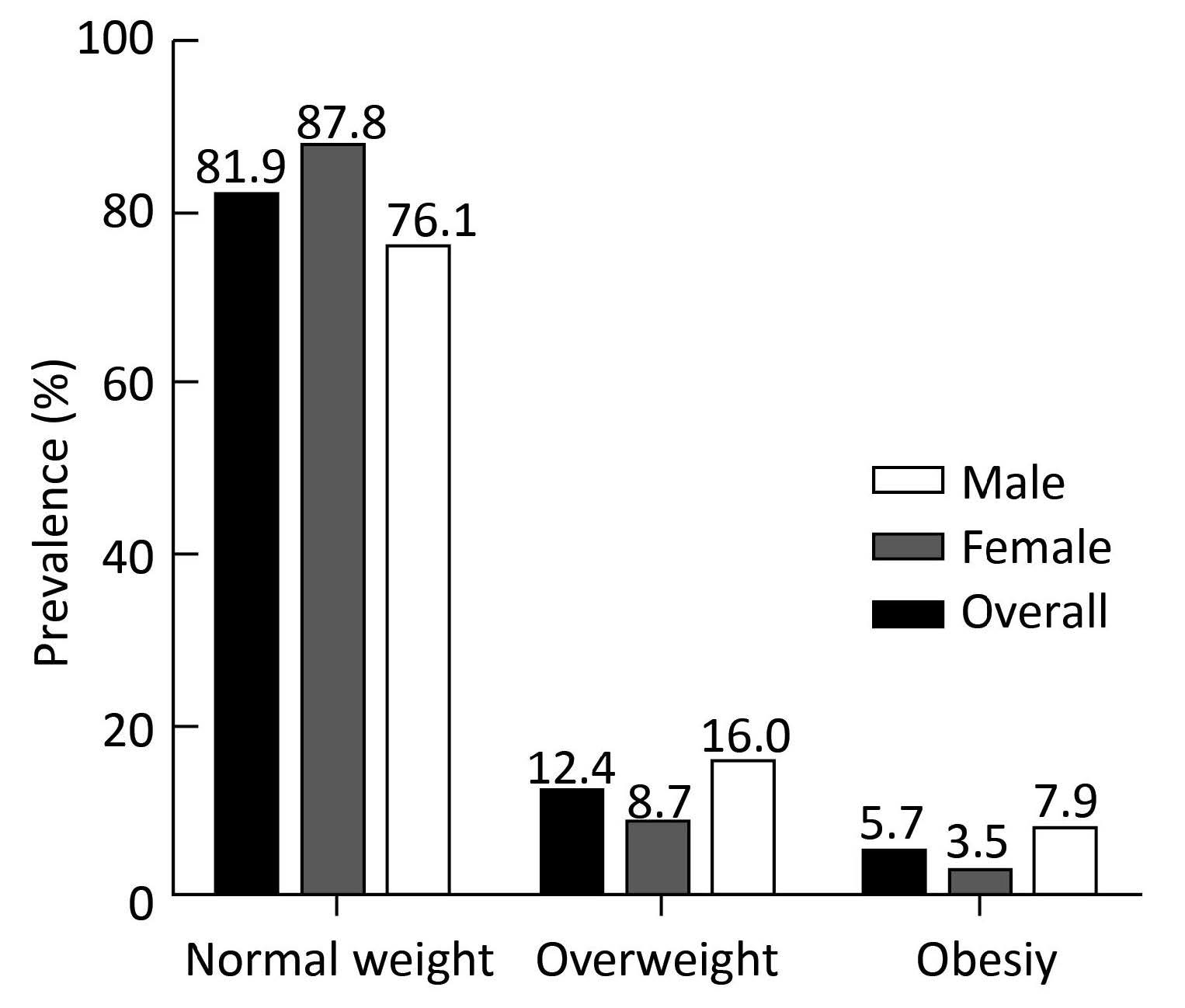
The prevalence of normal weight,overweight and obesity for all students were (81.9%,12.4%,and 5.7%),respectively. Among the males were (76.1%,16.0%,and 7.9%),while among females were (87.8%,8.7%,and 3.5%),respectively. The prevalence of overweight and obesity among males were significantly higher compared with females as shown in Figure 2.
|
Download:
|
| Figure 2 Prevalence of Overweight and Obesity between males and females students,2010-2013 | |
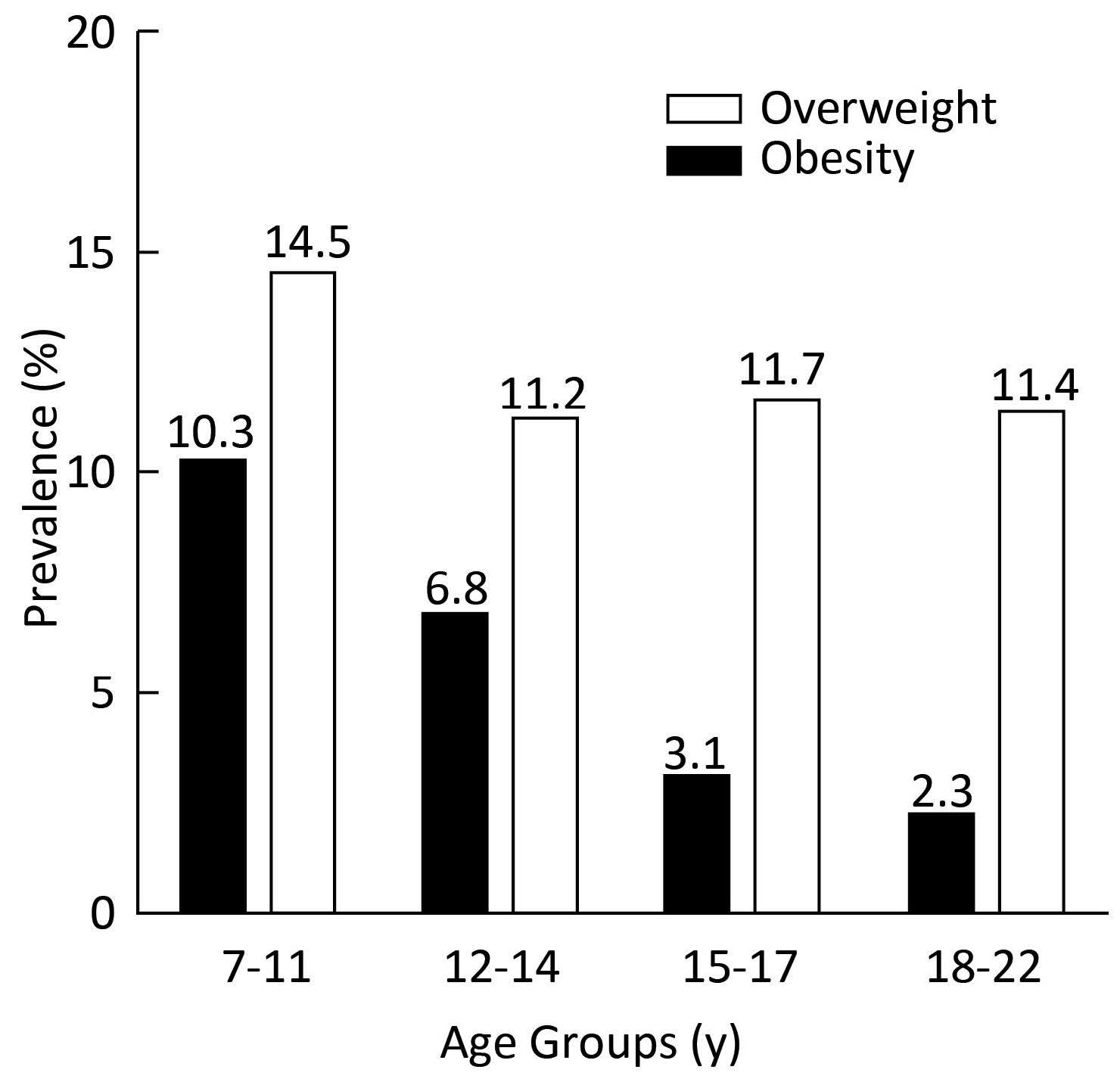
The prevalence of overweight and obesity were (14.5%,10.3%) at age 7-11 years,(11.2%,6.8%) at age 12-14 years,(11.7%,3.1%) at age 15-17 years,and (11.4%,2.3%) at age 18-22 years. Obesity was shown decrease with increasing age groups as presented in Figure 3.
|
Download:
|
| Figure 3 Prevalence of Overweight and Obesity among different age groups,2010-2013 | |
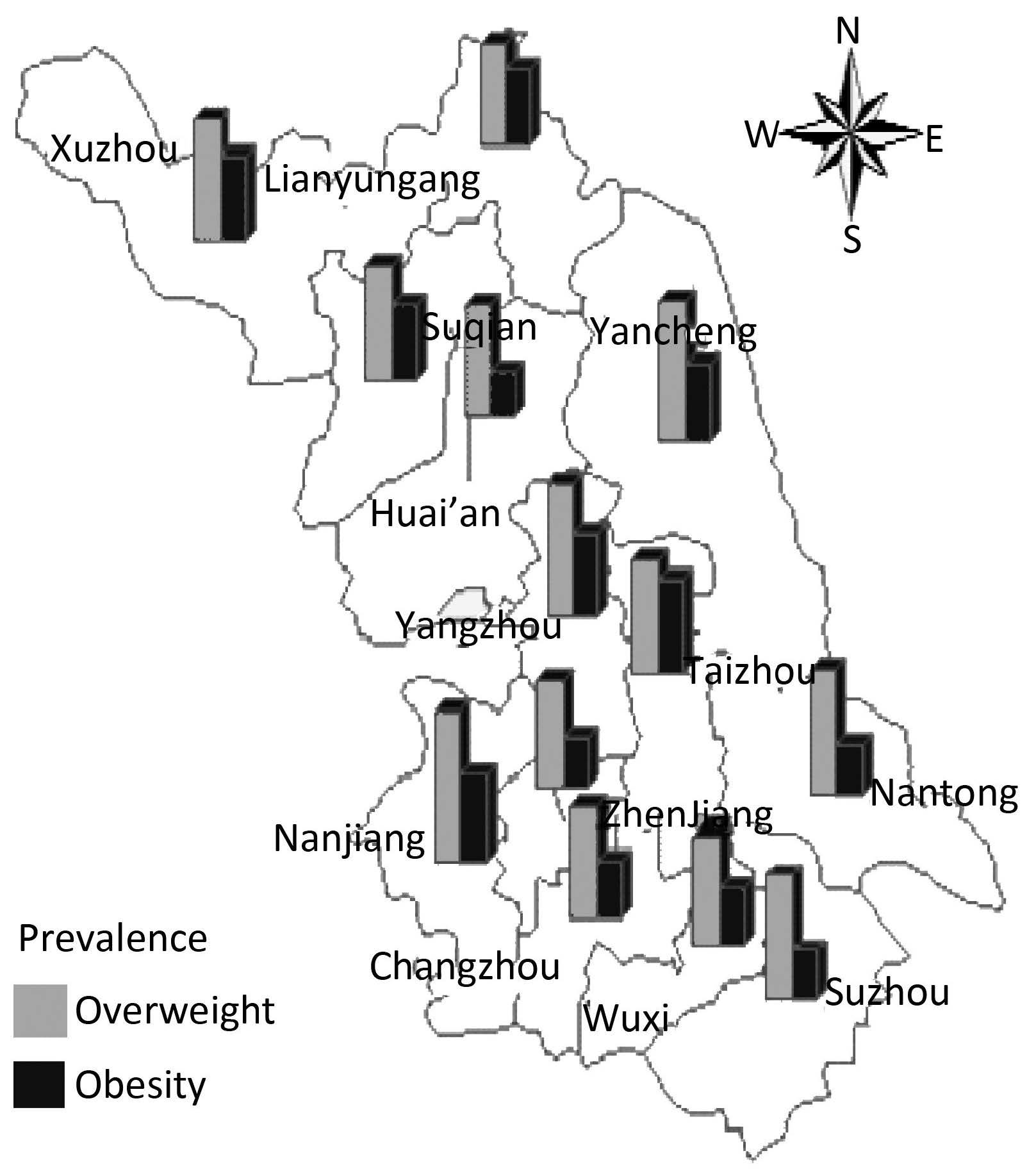
The results shows a high prevalence of overweight in Nanjing,Yancheng,Taizhou,and Yangzhou,15.6%,14.5%,14.2%,and 13.5%,respectively. On the other hand,Nantong and Suzhou reported the same prevalence of overweight (12.7%). Obesity rate was high in Taizhou,Nanjing,Xuzhou,and Yangzhou (10.0%,9.2%,9.4%,8.5%),respectively,and similar rates were reported in Yancheng and Suqian (8.2%),as well as Nantong,Zhenjiang and Suzhou (5.3%). A lower prevalence of obesity was observed among students in Huai’an (4.7%) compared to others districts as shown in Figure 4.
|
Download:
|
| Figure 4 Prevalence of Overweight and Obesity in 13 cities in Jiangsu province,2010-2013. | |
The prevalence of overweight and obesity among students in 2010,2011,2012,and 2013 are shown in Table 3. A higher prevalence of overweight and obesity among students were observed in the years 2012 and 2013.
|
|
Table 3 Trend Prevalence of Ooverweight and Obesity by Age Group,2010-213(%) |
There is a significant change in overweight and obesity prevalence in school children and adolescents from 2010 to 2013. However,the prevalence of overweight and obesity remains high in males compared to female students. For males,the pattern was different,with 8.6%,6.4%,8.1%,and 8.0% obese,respectively whereas for females 3.6%,3.0%,3.5%,and 3.9% during the period 2010,2011,2012,and 2013,respectively.
One important noticed in this study is variances for prevalence of overweight and obesity by sex,living status and year. As seen in Table 4,the trend observed in Jiangsu,indicates a continues double increasing in overweight and obesity prevalence in males compare with females students during the four years.
|
|
Table 4 Prevalence of Normal Weight,Overweight,and Obesity by Sex and Living Status,2010-2013 |
By the region also there is remarkable increasing in urban children compare with rural students in Jiangsu Province. These differences were statistically significant (Chi-square test,P<0.001) as were showed in Table 4.
DISCUSSIONThe results have demonstrated a large anthropometric measurements data set among 255,581 students in Jiangsu province,50.03% were males,and 49.97% were females aged 7-22 years. Similar results were reported in previous studies[4, 6, 21]. In the present study body height,weight and BMI were lower than Egyptian and Pakistani school children[6, 25]. There was a significant difference in the anthropometric measurements between age groups. The range of BMI was normal,consistent with Asian populations,which fell between the 18.5-23 kg/m2,according to a WHO consultation. In China’s Dalian city,a study conducted from 2004-2009 indicated that height,weight and BMI in boys were higher than girls,due to the interaction of age and gender[26]. Whereas,average heights and weights for students of 7-12 years were found higher than the World health organization WHO 2007 references[26]. The effect of sex,age and region on body height,weight,BMI and bust were significant (P<0.001). The physical conditions for college students were observed in Shandong province during 1995-2005,it has been revealing that the ratio of height,weight and BMI increased more in rural areas than urban,while worsening among male and female students. Dong et al. indicated that weight,height,and BMI rates were increased with age for both males and females,and the means of BMI were increased by 4.4 kg/m2 and 4.6 kg/m2 for males and females,respectively[27]. However,study conducted in Anhui revealed that adiposity variation among rural children was reported due to socioeconomic status,dietary intake,and physical activity[28].
Until recently health consequences of obesity among Chinese people have seen continuously increasing in children and adolescents,although the health care system in China has significantly improved,moving towards universal health coverage[3].
The prevalence of overall normal weight,overweight and obesity were (81.9%,12.4%,and 5.7%),respectively among large multistage cross-sectional studies with 255,581 students during the four years survey. Overweight and obesity was found higher among males students compared with females students,it was similar to the previous studies in Chongqing[29],and Shenzhen[30]. The prevalence of pediatric obesity in rural China was relatively increasing in children and adolescent in the 7-18 age group,and the percentage for overweight and obesity was (15.4%,6.4%),respectively. Current study revealed the prevalence of overweight and obesity was higher in urban students than rural areas[3, 19]. Overweight among Chinese students was lower than Egyptian students and Sudanese schoolchildren aged 15-18 years,while obesity in Chinese student was higher than Egyptian and Sudanese students[21, 25]. Incidence was found to be lower than the United states in children aged 5 to 14 years by 11.9% for obesity rate,and within gender (10.1%) for girls and 13.7% for boys[31]. Student prevalence rates were lower than the data from 2007-2008 National Health and Nutrition Examination Survey (NHANES) in the United States among all children aged 2-19 years. In Italy,the city of Sicily shows a high result for obesity compared to current rates[15]. Overweight (15.3%) and obesity (3.5%) were different among 18-24 years-old female students in Poland[32]. In Cyprus city,obesity prevalence was (8.1%) in 2010 compared with (5.9%) in 2000,which was higher than students in Jiangsu province[33].
By living condition overweight and obesity in males living in urban and rural areas was similar to the conclusive data obtained by Dong,et al.[27]. However,the overweight and obesity rates among students in Jiangsu province were higher than students in Shandong province[27],and lower than those reported in the China National Nutrition and Health Survey conducted in 2005[34].
This study showed a significantly higher proportion of obese and overweight children in northern,southern and central Jiangsu area compared to other studies. There are several potential explanations for the variation. First,compared to the previous study,the subjects were all located in the eastern- central coastalof thePeople's Republic of China characterized as a more develop site based on Human development index,with rapid economic development in China. As a result,the Chinese living environment,dietary habits and lifestyle of the population were continuously improved than before. The culture of Western-style food has become increasingly available in recent years. The Chinese now consume fewer staple foods and more meat and particularly dairy products than previously[35].Evidence of increasing fast service restaurants in the cities such as Kentucky Fried Chicken (KFC) and McDonalds,which are popular among children especially in big cities,have strangely increased dietary fat intake in children,adolescents and adults[36]. The increased obesity is associated with the better socioeconomic status and intense process of urbanization and less active lifestyles[36]. A second observation likely to come from previous findings have reported behavioral risk factor in spending time media use such as watching television,less physical activity were increase the increased body mass Index level[37-38].
The worldwide prevalence of childhood overweight and obesity increased from 4.2% (3.2%,5.2%) in 1990 to 6.7% (5.6%,7.7%) in [2010] This trend is expected to reach 9.1% (7.3%,10.9%). The estimated childhood overweight and obesity in Africa in 2010 was 8.5% (7.4%,9.5%) and is expected to reach 12.7% (10.6%,14.8%) in [2020] The prevalence is lower in Asia (4.9% in 2010) than in Africa,however,the number of affected children (18 million) is higher in Asia.
The prevalence of overweight and obesity were reported higher rate in urban area compare with rural area of Jiangsu province. This may return back to the fast developing of socioeconomic status of the population in Jiangsu province,geographic and climate change conditions as well as dietary habits play a roles in increasing the rate of over weight and obesity,in addition to students behavioral and lifestyle which may contribute in increasing the prevalence of overweight and obesity among students in Jiangsu province.
Although prevalence estimates provide evidence on the burden of overweight and obesity,the incidence is the key to understand the risk over a life time and monitor the health status of students in Jiangsu province. The identification of the potential age for intervention will promote a good health status relating overweight and obesity. The present age study will add great value in medical anthropometry research and allow for monitoring the trend of overweight and obesity among students in future.
In conclusion,there have been a significant changes in overweight and obesity prevalence in students from 2010,2011,2012,and 2013. However,the prevalence remains higher rate among males’ students compared with females. The prevalence of overweight and obesity rate was higher in urban compared with rural area. Although the obesity is still endemic in China,it may reduce through the evidence-based interventions. Therefore,more efforts are needed towards this to achieve the goal,maintain normal body weight. The intervention programme should focus on changing student’s lifestyle behavioral in Jiangsu province,practicing physical activity,may contribute in reducing the prevalence of overweight and obesity among students in Jiangsu province.
| 1. | J CY. Report on childhood obesity in China (4) prevalence and trends of overweight and obesity in Chinese urban school-age children and adolescents, 1985-2000[J]. Biomed Environ Sci , 2007, 26 :11–2. |
| 2. | Fan Y, Wang X. Research on Relationship among Lifestyle and Condition of Constitution, BMI and WHR of 3786 Heads of Government Organizations and Enterprises in Hubei Province[J]. In: Knowledge Acquisition and Modeling , 2009, 2 :205–7. |
| 3. | Song Y, Wang HJ, Ma J, et al. Secular Trends of Obesity Prevalence in Urban Chinese Children from 1985 to 2010: Gender Disparity[J]. PLoS ONE , 2013, 8 :e53069. doi:10.1371/journal.pone.0053069 |
| 4. | He L, Ren X, Chen Y, et al. Prevalence of overweight and obesity among primary school children aged 5 to 14 years in Wannan area, China[J]. Nutrition hospitalaria , 2014, 30 :776–81. |
| 5. | Gorber SC, Tremblay M, Moher D, et al. A comparison of direct vs. self‐report measures for assessing height, weight and body mass index: a systematic review[J]. Obesity reviews , 2007, 8 :307–26. doi:10.1111/obr.2007.8.issue-4 |
| 6. | Mushtaq MU, Gull S, Mushtaq K, et al. Height weight and BMI percentiles and nutritional status relative to the international growth references among Pakistani school-aged children[J]. BMC pediatrics , 2012, 12 :1. doi:10.1186/1471-2431-12-1 |
| 7. | World Health Organization. What are the Health Consequese of being Overweight? 2013. http://www.who.int/features/qa/49/en/ |
| 8. | Smith SC, J r. Multiple risk factors for cardiovascular disease and diabetes mellitus[J]. Ame J Med , 2007, 120 :S3–S11. |
| 9. | Kopelman PG. Obesity as a medical problem[J]. Nature , 2000, 404 :635–43. |
| 10. | He J, Klag MJ, Whelton PK, et al. Body mass and blood pressure in a lean population in southwestern China[J]. Am J Epidemiol , 1994, 139 :380–9. |
| 11. | Kimm SY, Obarzannek E. Child hold obesity: anew pandemic of the new millennium[J]. Pediatrics , 2002, 110 :1003–7. doi:10.1542/peds.110.5.1003 |
| 12. | Gidding SS, nehgme R, Heise C, et al. Severe obesity associated with cardiovascular deconditioning, heigh prevalence of cardiovascular risk factor, diabetes mellitus/hyperinsulinemia, and respiratory compromise[J]. J Pediatr , 2004, 144 :766–9. doi:10.1016/S0022-3476(04)00243-4 |
| 13. | Kiess W, Galler A, Reich A, et al. Clincal aspects of obesity in Childhood and adolescences[J]. Obes Rev , 2001, 2 :29–36. doi:10.1046/j.1467-789x.2001.00017.x |
| 14. | Mason JE, Willet WC, Stamfer MJ, et al. Body weight mortality among women[J]. N Engl J med , 1995, 333 :677–85. doi:10.1056/NEJM199509143331101 |
| 15. | Kim JW, Seo DI, Swearingin B. Association between obesity and various parameters of physical fitness in Korean students[J]. Obes Res Clin Practi , 2013, 7 :e67–e74. |
| 16. | Zhai F, He Y, Wang Z, et al. The status and trends of dietary nutrients intake of Chinese population[J]. Acta nutrimenta Sinica , 2004, 27 :181–4. |
| 17. | Shi Z. The nutritional status and health related behaviour of school adolescents in Jinangsu Province China: a cross-sectional study, 2003. https://www.duo.uio.no/handle/10852/30059. |
| 18. | Wang X, Höjer B, Guo S, et al. Stunting and ‘overweight’ in the WHO Child Growth Standards-malnutrition among children in a poor area of China[J]. Public Health Nutr , 2009, 12 :1991–8. doi:10.1017/S1368980009990796 |
| 19. | Robinson EL, Ball LE, Leveritt MD. Obesity Bias among Health and Non-Health Students Attending an Australian University and Their Perceived Obesity Education[J]. J Nutr Educ Behav , 2014, 46 :390–5. doi:10.1016/j.jneb.2013.12.003 |
| 20. | Baratta R, Degano C, Leonardi D, et al. High prevalence of overweight and obesity in 11-15-year-old children from Sicily[J]. Nutr Metab Cardiovasc Dis , 2006, 16 :249–55. doi:10.1016/j.numecd.2005.07.009 |
| 21. | Musa TH, Ali EA, Musa HH, et al. Anthropometric parameters of malnutrition in children 5-15 years old in Khartoum State, Sudan[J]. J Public Health Epidemiol , 2013, 5 :313–8. |
| 22. | Group of China Obesity Task Force. Body mass index reference norm for screening overweight and obesity in Chinese children and adolescents[J]. Chinese Journal of epidemiology , 2004, 25 :97. |
| 23. | Jing W. Analysis and countermeasure study on college students’ health condition, 2009; 63. |
| 24. | JI CY, Working Group on Obesity in China (WGOC). Report on Childhood Obesity in China (1): Body Mass Index Reference for Screening Overweight and Obesity in Chinese School-age Children[J]. Biomed Environ Sci , 2005, 18 :390–400. |
| 25. | Badawi NE, Barakat AA, El Sherbini SA, et al. Prevalence of overweight and obesity in primary school children in Port Said city[J]. Egyptian Pediatric Association Gazette , 2013, 61 :31–6. doi:10.1016/j.epag.2013.04.007 |
| 26. | Song GR, Hu DM, Xu Y, et al. Dynamic anthropometric changes in children as shown by longitudinal data for 2004-2009 from the city of Dalian, China[J]. Annals of human biology , 2012, 39 :511–5. doi:10.3109/03014460.2012.707229 |
| 27. | Dong J, Guo XL, Lu ZL, et al. Prevalence of overweight and obesity and their associations with blood pressure among children and adolescents in Shandong, China[J]. BMC public health , 2014, 14 :1081. doi:10.1186/1471-2458-14-1081 |
| 28. | Cao ZQ, Zhu L, Zhang T. Blood pressure and Obesity among adolescents: a School-based population study in China[J]. American journal of hypertension , 2012, 25 :576–82. doi:10.1038/ajh.2012.5 |
| 29. | Rong L, Xiaolin W, Diansa G, et al. The distribution of BMI and waist circumference of adult residents in Chongqing[J]. Chongqing Medicine , 2011, 1 :029. |
| 30. | Hui L, Bell AC. Overweight and obesity in children from Shenzhen, Peoples Republic of China[J]. Health & place , 2003, 9 :371–6. |
| 31. | Cunningham SA, Kramer MR, Narayan KV. Incidence of childhood obesity in the United States[J]. New England Journal of Medicine , 2014, 370 :403–11. doi:10.1056/NEJMoa1309753 |
| 32. | Pawlińska-Chmara R, Wronka I, Suliga E, et al. Socio-economic factors and prevalence of underweight and overweight among female students in Poland[J]. HOMO-Journal of Comparative Human Biology , 2007, 58 :309–18. doi:10.1016/j.jchb.2006.10.002 |
| 33. | Savva SC, Kourides YA, Hadjigeorgiou C, et al. Overweight and obesity prevalence and trends in children and adolescents in Cyprus 2000-[2010][J]. Obes Res Clin Pract , 2014, 8 :426–34. doi:10.1016/j.orcp.2013.11.005 |
| 34. | Wu YF, Ma GS, Hu YH, et al. The current prevalence status of body overweight and obesity in China: data from the China National Nutrition and Health Survey[J]. Chinese journal of preventive medicine , 2005, 39 :316–20. |
| 35. | Pan HQ, Jiang YF, Jing XM, et al. Child body mass index in four cities of East China compared to Western references[J]. Ann Hum Biol , 2009, 36 :98–109. doi:10.1080/03014460802575641 |
| 36. | Hawkes C. Agro-food industry growth and obesity in China: what role for regulating food advertising and promotion and nutrition labeling?[J]. Obes Rev , 2008, 9 :151e161. |
| 37. | Stamatakis E, Primatesta P, Chinn S, et al. Overweight and obesity trends from 1974e2003 in English children: what is the role of socioeconomic factors?[J]. Arch Dis Child , 2005, 90 :999–1004. doi:10.1136/adc.2004.068932 |
| 38. | Marshall SJ, Biddle SJ, Gorely T, et al. Relationships between media use, body fatness and physical activity in children and youth: a metaanalysis[J]. Int J Obes Relate Metab Disord , 2004, 28 :1238–46. doi:10.1038/sj.ijo.0802706 |