 2015, Vol.35


1 前言
自20世纪80年代中期开始,河南省文物考古研究所先后6次发掘了河南省舞阳县贾湖遗址。该遗址分为三期,其年代分别为: 第一期距今9000-8500年,第二期距今8500-8000年,第三期距今8000-7500年[1]。遗址出土了丰富的生物遗存,为探讨古代居民的饮食健康状况[2, 3]、 迁移行为[4]、 社会分工[5]以及对动物资源的获取和利用[1, 6]等诸多方面的研究提供了研究材料。具体到动物遗存的鉴定和研究而言,由于当时并未对土样进行抽样浮选,因此,其关于动物群的种群特征和量化统计的认识是不够全面的,特别是基本上未对鱼类遗存进行探讨。在2001年对贾湖遗址所进行的第7次发掘中,考古工作者对所有遗迹内的土样进行了抽样浮选,发现了大量的小型动植物遗存,其中包括大量鲤科鱼类遗存。
迄今为止,有关中国各个地区考古遗址出土动物遗存的鉴定和研究报告已经有200余篇,其中大部分都涉及到对鱼类的鉴定。但是,真正围绕考古发掘出土的鱼骨开展专题性动物考古学研究的成果屈指可数[7, 8, 9, 10, 11],研究的匮乏与众多遗址出土大量鱼骨的局面形成鲜明对照,这种状况亟待改变。本文通过对贾湖遗址中浮选出的鲤科鱼类咽齿进行鉴定、 量化和深入研究,以期了解距今9000-7500年前贾湖先民对鱼类资源的开发和利用,为研究当时的生业状况提供新的资料,同时也希望能够促进中国鱼类遗存的动物考古学研究。
2 材料与方法 2.1 材料提取贾湖遗址中灰坑、 房址等遗迹内的土壤,用0.2mm以下的筛网进行浮选,其中,浮选出鲤科鱼类咽骨(齿)标本共1128件。
2.2 鲤鱼A2齿的拍照和测量方法先用实体显微镜(Leica MZ APO)和数码相机(Nikon Dxm 1200C)制作鲤属鱼类(Cyprinus)A2齿的数码图像,再用Nikon Imaging Software测量A2齿的内外径(Mesio-Lateral Diameter,简称MLD)和前后径(Antero-Posterior Diameter,简称APD)。内外径与齿后缘(l1)平行,测量从内侧端到外侧缘(l2)。前后径则是测量l2垂直方向的最大径(图1)。测量数据可用于鱼类种属鉴定和体长推定[11]。

|
图1 鲤鱼Cyprinus carpio 的A2齿的测量方法 Fig.1 Measurements of tooth A2 of Cyprinus carpio. MLD is the maximum mesio-lateral length(l2)along an axis parallel to the posterior margin(l1). APD is the maximum antero-posterior length along an axis orthogonal to MLD |
鲤科鱼类有200属2500种,是种群最大的淡水鱼科[12]。对于鲤科鱼类而言,咽齿是重要的分类器官[13]: 咽齿的形状、 大小、 排列和数量是区分种属的关键[14]。
鲤科鱼类的咽骨通常有1-3列咽齿不等。从内侧起分别称为"A列"、 "B列"和"C列",每列齿从前往后按顺序编号。譬如A2齿是指A列前边的第二个齿,B1齿是指B列前边的第1个齿(图2)。

|
图2 鲤鱼Cyprinus carpio左侧咽齿齿列,表示咀嚼面 (Grinding surface)及其咀嚼面沟(Groove of grinding surface) 排列顺序为A列、 B列、 C列三列齿,每列从前往后按顺序编号 Fig.2 Left pharyngeal dentition of Cyprinus carpio. Teeth of Cyprinus carpio are arranged in three rows (A,B,and C row). Teeth are numbered starting from the anterior tooth of each row |
齿的机能面称为"咀嚼面"(Grinding surface)。鲫属鱼类咽齿的咀嚼面磨耗掉之后,又会形成新的咀嚼面,称之为"二次性咀嚼面"(Secondary grinding surface)(图3)。有的咀嚼面有沟,叫作"咀嚼面沟"(Groove of grinding surface)(图2)。鲤鱼的A2齿有1-5条咀嚼面沟,沟数随其生长而增多。稚鱼(Juvenile)和幼鱼(Young)只有1-2条咀嚼面沟,成鱼(Adult)一般有2-5条。

|
图3 黑鲫Carassius carassius(上)和日本银鲫 Carassius auratus langsdorfi(下)的左侧咽齿齿列 黑鲫各齿的咀嚼面(Grinding surface)没有磨耗,而日本银鲫 因磨耗形成二次咀嚼面(Secondary grinding surface) Fig.3 Left pharyngeal dentitions in Carassius carassius (above) and Carassius auratus langsdorfi (below). The grinding surface in this specimen of Carassius carassius is not worn,but the secondary grinding surface is formed with attrition in Carassius auratus langsdorfi |
咽骨有3个面: 一个是"有孔面"(Pitted surface),又称为"前背侧面"(Antero-dorso-lateral surface); 另外两个面分别是"后腹中面"(Postero-ventro-mesial surface)和"生齿面"(Dentigerous surface)。生齿面朝着背侧,咽骨在生齿面附近向背侧弯曲,因此,咽骨的两个顶端又分别叫作"前端"(Anterior tip)和"背端"(Dorsal tip)。弯曲部前边称作"前支"(Anterior limb),后边称作"后支"(Posterior limb)。咽骨有"前角"(Anterior angle)和"后角"(Posterior angle)两个隅角。前支和后支在前角处会合。后腹中面为肌肉附着部,前支构成咽骨腹面(Ventral surface),后支构成咽骨后面(Posterior surface)(图4)。

|
图4 以鲌属Culter左侧咽骨为例介绍咽骨术语 上: 前背侧面(Antero-dorso-lateral surface),下: 后腹中面(Postero-ventro-mesial surface)和生齿面(Dentigerous surface);表示前角(aa:Anterior angle),前腕(al:Anterior limb),前端(at:Anterior tip),生齿面(ds:Dentigerous surface),背端(dt:Dorsal tip),后角(pa:Posterior angle),后腕(pl: Poterior limb),有孔面(ps:Pitted surface),腹侧面(pvs: Postero-ventral surface) Fig.4 Terms of the pharyngeal bone. Antero-dorso-lateral surface of left pharyngeal of in Culter(above),and Postero-ventro-mesial and Dentigerous surfaces(below) |
鲤科 Family Cyprinidae
鲃亚科 Subfamily Barbinae
鲃 Barbinae,gen. et sp. Indet.(图5-1)
发现6件咽骨(齿)标本。根据标本WJ0415号上保存的两齿(A1和A2)、 标本WJ0412和WJ0414号等上保存的一齿(A1)及齿的根部推定,咽齿为3列,齿式约为5.3.1,A1齿较小。
雅罗鱼亚科 Subfamily Leuciscinae
草鱼属 Genus Ctenopharyngon Steindachner
草鱼 Ctenopharyngodon idellus (Cuvier et Valenciennes)(图5-2,3)
发现107件咽骨(齿)标本。A列齿的咀嚼面较窄,齿冠侧面呈梳状。根据标本WJ0055、 WJ0064和WJ0907号标本保存的咽齿和齿的根部可见,齿列为2列,A列为5颗或4颗齿,B列为2颗齿。咽骨腹侧面从A5齿基部附近到后角处有条褶皱状隆线(图5-3)。前角和后角突出。
青鱼属 Genus Mylopharyngodon Peters
青鱼 Mylopharyngodon piceus(Richardson)(图5-4)
发现63件咽骨(齿)标本。咽齿呈圆形块状。齿列为1列,5颗或4颗齿。咽骨粗壮。
鳡属 Genus Elopichthys Bleeker
鳡 cf. Elopichthys bambusa(Richardson)(图5-5)
发现1件咽骨标本(WJ0612),其上保存了一行咽齿,估计为A列。A1、 A2和A3齿具有较窄的咀嚼面和尖状齿。根据保存的齿和齿的根部推定齿列为2列。
鲌亚科 Subfamily Cultrinae
鲌 Cultrinae,gen. et sp. indet.(图5-6)
发现10件咽骨(齿)标本。根据标本WJ0753和WJ1102号等保存的咽齿和齿的根部可见,齿列推定为3列。咽骨较狭长,前支长,咽骨生齿面的大部分在咽骨前角的后方。
鲂属 Genus Megalobrama Dybowsky
鲂 Megalobrama sp.(图5-7,8,9)
发现41件咽骨(齿)标本。齿冠后面齿沟基部有钩沟(图5-9),钩沟细长。有孔面和生齿面较宽。A1齿的前后径比内外径大。齿列为3列,A列为5颗或4颗齿,B列为4颗齿,C列为2颗齿。齿式应为5.4.2。
鲌属 Genus Culter Basilewsky
鲌属 Culter sp.(图5-10)
发现3件咽骨(齿)标本。齿冠没有钩沟。根据标本WJ1081和WJ1127号等保存的咽齿和齿的根部可见,齿列为3列,A列为5颗或者4颗齿,B列为4颗齿,C列为2颗齿。齿稍尖且细长,带有极其窄的线状咀嚼面。咽骨虽破损,但可以推定其前部很长。咽骨宽度较小。
原鲌属 Genus Cultrichthys Smith
原鲌属 cf. Cultrichthys sp.(图5-11)
发现1件咽骨的标本(WJ0069)。齿列为3列,A列为5颗或4颗齿,B列为4颗齿,C列为2颗齿。咽骨前角附近的宽度较大。
鲤亚科 Subfamily Cyprininae
鲫属 Genus Carassius Jarocki
鲫 Carassius auratus(Linnaeus)(图5-12)
发现28件咽骨(齿)标本。根据标本WJ0058、 WJ0449和WJ0450号等保存的咽齿和齿的根部可见,齿列为1列4齿。虽只保存了A1齿和A2齿,A3、 A4留有齿的根部。A1齿呈圆锥形,A2齿前后侧扁。各齿的咀嚼面均已经磨蚀。
鲤属 Genus Cyprinus Linnaeus
鲤鱼 Cyprinus carpio Linnaeus(图5-13)
发现848件咽骨(齿)标本。根据标本WJ0070、 WJ0077和WJ0083号等保存的咽齿和齿的根部可见,齿列为3列,A列为3颗齿,B列和C列为1颗齿,齿式为3.1.1。A2齿有2条至3条咀嚼面沟。A2齿的前后径/内外径比为0.66左右,齿冠前方侧面鼓起。
鲤属 Genus Cyprinus Linnaeus
龙州鲤 cf. Cyprinus longzhouensis Yang et Hwang(图5-14)
发现20件咽骨(齿)标本。这些标本均出自贾湖遗址第二期文化层。根据标本WJ0042、 WJ0102和WJ0729号等保存的咽齿和齿的根部可见,A列为3颗齿,B列和C列为1颗齿。A2齿上有1条咀嚼面沟(即使成体也只有1条咀嚼面沟)。A2齿比A1齿大,A2齿的内外径比A1齿的前后径大。A2齿的前后径/内外径的平均值为0.64。

|
图5 贾湖遗址出土的鲤科鱼类咽齿 (1)鲃Barbinae,gen. et sp. Indet.(标本号 WJ0412)左侧咽骨及咽齿的背侧面观(从咽骨及咽齿的背侧面看); (2)草鱼属Ctenopharyngodon idellus左侧咽骨及咽齿(标本号 WJ0907)的外侧面观,A1齿至A4齿之间的4颗齿存在; (3)草鱼属Ctenopharyngodon idellus咽骨的背侧面观(标本号 WJ0853),箭头表示草鱼特有的褶皱状隆线; (4)青鱼Mylopharyngodon piceus左侧咽骨及咽齿(标本号 WJ0051)的外侧面观,A2齿和A3齿存在; (5)鳡cf. Elopichthys bambusa右侧咽骨及咽齿(标本号 WJ0512)的外侧面观,A1齿和A2齿存在,A3齿齿冠破损; (6)鲌Cultrinae,gen. et sp. indet. 右侧咽骨(标本号 WJ0615)的有孔面观; (7)鲂Megalobrama sp. 左侧咽骨及咽齿(标本号 WJ0067)的外侧面观,A1齿至A3齿之间的3颗齿存在; (8)鲂Megalobrama sp. 咽骨(标本号 WJ0851)的有孔面观,有孔面可见鲂等特有的皱纹状花纹; (9)从鲂Megalobrama sp. 咽骨及咽齿(标本号 WJ0410)的后方面(后侧)观,A5齿、 B4齿和B3齿的齿冠后侧面可见鲂特有的钩沟(箭形所示); (10)鲌属Culter sp. 左侧咽骨及咽齿(标本号 WJ1081)的外侧面观,A4齿、 A3齿、 B4齿和B3齿存在; (11)原鲌cf. Cultrichthys sp. 左侧咽骨(标本号 WJ0069)的背侧面观,可见A列5齿、 B列4齿以及C列2齿的印痕; (12)鲫Carassius auratus右侧咽骨及咽齿(标本号 WJ0058)的外侧面观,A1齿和A2齿存在; (13)鲤鱼Cyprinus carpio左侧咽骨及咽齿(标本号 WJ0077)的背侧面观,A1齿、 A2齿和B1齿存在; A2齿的咀嚼面沟为3条; (14)龙州鲤cf. Cyprinus longzhouensis右侧咽骨及咽齿(标本号 WJ0102)的背侧面观,A2齿、A3齿和B1齿存在。 A2齿的咀嚼面沟为1条 Fig.5 Cyprinid pharyngeal bone and tooth remains from Jiahu site. (1)Dorsal view of left pharyngeal bone in Barbinae,gen. et sp. Indet.(coll. no. WJ0412). Only tooth A1 exists; (2)Dorso-lateral view of left pharyngeal bone in Ctenopharyngodon idellus (coll. no. WJ0907). Four teeth (A1,A2,A3,and A4) exist; (3)Dorso-mesial view of right pharyngeal bone in Ctenopharyngodon idellus (coll. no. WJ0853). The process at posterior angle (arrow) is the feature of pharyngeal bone in Ctenopharyngodon idellus; (4)Dorso-lateral view of left pharyngeal bone in cf. Mylopharyngodon piceus (coll. no. WJ0051). Two teeth (A2 and A3) exist; (5)Dorso-lateral view of right pharyngeal bone in Elopichthys bambusa (coll. no. WJ0512). Three teeth (A1,A2 and A3) exist,but tooth A3 is broken; (6)Pitted surface of right pharyngeal bone in Cultrinae,gen. et sp. indet. (coll. no. WJ0615); (7)Dorso-lateral view of left pharyngeal bone in Megalobrama sp.(coll. no. WJ0067). Three teeth (A1,A2,and A3) exist; (8)Pitted surface of left pharyngeal bone in Megalobrama sp.(coll. no. WJ0851). Fine folds on the surface of bone are the feature of pharyngeal bone in Megalobrama; (9)Posterior view of right pharyngeal bone in Megalobrama sp.(coll. no. WJ0410). Hook groove (arrow) at the base of tooth hook on the posterior surface of tooth crown is the feature of teeth in Cultrinae; (10)Dorso-lateral view of left pharyngeal bone in Culter sp.(coll. no. WJ1081). Four teeth (A4,A3,B4,and B3) exist; (11)Dorsal view of left pharyngeal bone in cf. Cultrichthys sp.(coll. no. WJ0069). Dental marks of five teeth in A row,four teeth in B row,and two teeth in C row are visible; (12)Dorso-lateral view of right pharyngeal bone Carassius auratus (coll. no. WJ0058). Two teeth (A1 and A2) exist; (13)Dorsal view of left pharyngeal bone in Cyprinus carpio (coll. no. WJ0077). Three teeth (A1,A2,and B1) exist. There are three grooves on the grinding surface of tooth A2; (14)Dorsal view of right pharyngeal bone in cf. Cyprinus longzhouensis (coll. no. WJ0102). Three teeth (A2,A3,and B1) exist. There is one groove on the grinding surface of tooth A2 |
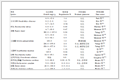
除了因破损而无法鉴定到亚科的10件咽齿以外,1128件咽骨(齿)标本的鉴定结果见表1,有11种可以确定到属或种的鲤科鱼类。从数量看,大部分是鲤属,其次是草鱼属,然后是鲂属和青鱼属。
|
表1 贾湖遗址出土鲤科鱼类咽骨(齿)的数量和比例 Table 1 The pharyngeal teeth detected from the Jiahu site |
日本列岛现今只有鲤鱼,但是在上新世的温暖期却存在多种鲤属鱼类[15]。300万年前处在亚热带气候下的日本古琵琶湖内分布着几种鲤属鱼类[15]。上新世末至更新世,气候趋寒,日本列岛除鲤鱼之外的其他鲤属鱼类消失。
贾湖遗址当时的气候温暖湿润[16],气温与现今的长江流域相似[17]。此次,我们依据贾湖遗址出土了龙州鲤的咽齿,推测当时贾湖遗址所在地的气候可能比现今长江流域[17]更加温暖,因为,现在的龙州鲤分布的冬季最低气温在摄氏零度以上的广西壮族自治区龙州及上思等地[18]; 另外,除鲤鱼(Cyprinus carpio)之外的现生鲤属(Cyprinus)鱼类,其分布地局限于中国南部地区的海南、 广东、 广西和云南至越南地区[18],这也是证明当时的气候可能比长江流域更加温暖的理由之一。
贾湖遗址分为3个文化期,第二期的气候最为温暖[1]。龙州鲤的咽齿标本均出土于第二期文化层,这就为上述认识提供了更为科学的实证。同时,我们可以进一步推测: 龙州鲤的分布范围很可能在这个时期向北扩展至贾湖遗址的所在地。由此,贾湖遗址第二期可能为亚热带气候,冬季的最低气温在摄氏零度以上。
4.2 有选择性地捕捞鲤鱼位于日本列岛西半部的绳文时代的鸟浜贝冢(公元前4000年-前3500年)[19]、 粟津湖底遗址第3贝丘(公元前3000年-前2500年)[20]和弥生时代的朝日遗址(公元前370年-公元前90年)[21]都发现鲤鱼和鲫鱼遗存共存的现象。中国长江三角洲地区新石器时代的田螺山遗址(距今约7000年-5500年)[11]也发现同样的现象。通过对这些遗址出土的鲤科咽齿进行定性定量研究,发现每一处遗址中鲤鱼和鲫鱼都占据整体的60[WTB3]%[WTBZ]以上(图6)。在湖泊等淡水环境中,鲫鱼的产量很高,加之它们集体靠岸产卵,所以便成为极易捕获的食物资源。在日本列岛的西半部和中国的东南部,在特定的时间段里,都存在大量捕捞鲫鱼和鲤鱼、 将这些鱼类作为蛋白资源利用的行为[22]。对自然条件下的鲤鱼和鲫鱼进行对比,鲫鱼的数量较多,在遗址中大量出土鲫鱼应属正常现象; 可是在贾湖遗址与朝日遗址[21]中,鲤鱼却占有最大比例。因此,形成这种现象的原因并非是由于这两处遗址周围的水系中鲫鱼较少,而是在于古代先民有选择性地主要捕捞鲤鱼。这个观点有待于我们今后对更多遗址出土的鱼类遗存和相关考古现象(例如,捕捞工具、 鱼类加工地点和方法)进行研究。

|
图6 中国新石器时代、 日本绳文·弥生时代的 遗址中出土鲤科鱼类遗存的组成 Fig.6 Composition of pharyngeal tooth remains from prehistoric archaeological sites in China and Japan. A: Jiahu site; B: Tianluoshan site[11]; C: Asahi site[21]; D: Awadzu shellmound[20]; E: Torihama shell mound[19] |
本文对贾湖遗址出土的鲤科鱼类进行了研究,发现有11种可以确定到属或种的鲤科鱼类。现在生存在中国南方的鲤科鱼类在贾湖遗址的出土,证明当时这个地区的气候比现在要温暖; 特别是龙州鲤的出土,证明贾湖文化第二期的气候更为温暖湿润。当时居住在贾湖遗址的先民有选择性地大量捕捞鲤鱼,这种有意识的行为是后来开始人工养鱼的基础。本研究为探讨古代先民获取水产资源的行为提供了有益的信息,有助于我们全面认识古代先民获取肉食资源的行为及探讨当时的自然环境状况。今后,在考古发掘中采用浮选法、 全面提取鱼类遗存,并开展科学的鉴定和研究,这是我们应该努力的方向。
致谢 感谢审稿专家和编辑部老师富有建设性的修改意见。
| 1 | 河南省文物考古研究所. 舞阳贾湖. 北京: 科学出版社, 1999. 785-805 Henan Province Institute of Cultural Relics and Archaeology. Jiahu in Wuyang County. Beijing:Science Press, 1999. 785-805 |
| 2 | 王明辉. 中原地区古代居民的健康状况——以贾湖遗址和西坡遗址为例. 第四纪研究, 2014, 34 (1):51~59 Wang Minghui. Study on the health status of ancient people in the Central Plains: Focused on Jiahu site and Xipo cemetery. Quaternary Sciences, 2014, 34 (1):51~59 |
| 3 | 胡耀武, Ambrose Stanley H, 王昌燧. 贾湖遗址人骨的稳定同位素分析. 中国科学(D辑), 2007, 37 (1):94~101 Hu Yaowu, Ambrose Stanley H, Wang Changsui. Stable isotope analysis of human remains from Jiahu site. Science in China (Series D), 2007, 37 (1):94~101 |
| 4 | 尹若春, 张居中, 杨晓勇. 贾湖史前人类迁移行为的初步研究——锶同位素分析技术在考古学中的运用. 第四纪研究, 2008, 28 (1):50~57 Yin Ruochun, Zhang Juzhong, Yang Xiaoyong. Preliminary study of prehistoric human migration based on Sr isotope analysis from Jiahu relics. Quaternary Sciences, 2008, 28 (1):50~57 |
| 5 | 张 震. 贾湖遗址墓葬初步研究——试析贾湖的社会分工与分化. 华夏考古, 2009, (2):42~62+79 Zhang Zhen. A preliminary study on the tombs of Jiahu site:Analysis the social division and differentiation. Huaxia Archaeology, 2009, (2):42~62+79 |
| 6 | 罗运兵, 张居中. 河南舞阳县贾湖遗址出土猪骨的再研究. 考古, 2008, (1):90~96 Luo Yunbing, Zhang Juzhong. Re-research on the pig remains from Jiahu site, Wuyang County, Henan Province. Archaeology, 2008, (1):90~96 |
| 7 | 伍献文. 记殷墟出土之鱼骨. 中国考古学报, 1949, 4 :139~143 Wu Xianwen. Fish remains from Yinxu. Acta Archaeological Sinica, 4 :139~143 |
| 8 | 成庆泰. 三里河遗址出土的鱼骨、鱼鳞鉴定报告. 见: 中国社会科学院考古研究所编. 胶县三里河. 北京: 文物出版社, 1988. 186-189 Cheng Qingtai. Report on the fish and fish scales remains from Sanlihe site. In:Institute of Archaeology, Chinese Academy of Social Sciences ed. Sanlihe Site in Jiao County. Beijing:Cultural Relics Press, 1988. 186-189 |
| 9 | 余文斌, 罗静文, 刘晓娜. 天星观二号墓8号铜鼎出土鱼骨鉴定. 见: 湖北省荆州博物馆编. 荆州天星观二号楚墓. 北京: 文物出版社, 2003. 230-231 Yu Wenbin, Luo Jingwen, Liu Xiaona. Identification the fish remains of No.8 bronze Ding from No.2 tomb of Tianxingguan. In:Jingzhou Museum of Hubei Province ed. No.2 Chu Tomb of Tianxingguan in Jingzhou. Beijing:Cultural Relics Press, 2003. 230-231 |
| 10 | 苏瑞凤. 鱼类专题研究. 见: 国务院三峡工程建设委员会办公室, 国家文物局编. 巴东楠木园. 北京: 科学出版社, 2006. 158-166 Su Ruifeng. Research on the fish remains. In:The Three Gorges Project Construction Committee Office of the State Council, State Administration of Cultural Heritage eds. Nanmuyuan Site in Badong. Beijing:Science Press, 2006. 158-166 |
| 11 | 中岛经夫, 中岛美智代, 孙国平等. 田螺山遗址K3鱼骨坑内的鲤科鱼类咽齿. 见: 北京大学中国考古学研究中心, 浙江省文物考古研究所编. 田螺山遗址自然遗存综合研究. 北京: 文物出版社, 2011. 206-236
Nakajima Tsuneo, Nakajima Michiyo, Sun Guoping et al. Cyprinid pharyngeal bone and tooth remains from K3 in Tianluoshan site. In:Chinese Archaeological Research Center of Peking University, Zhejiang Province Institute of Cultural Relics and Archaeology eds. Comprehensive Research on the Cultural Remains from Tianluoshan Site. Beijing::Cultural Relics Press, 2011. 206-236 |
| 12 | Nelson Jpseph S. Fishes of the World. New York:John Wiley & Sons, 2006. 624 |
| 13 | Berg L S. Faune de la Russie et des pays limitropes. Poissons, Marsipobranchii et Pisces. Vol. Ⅲ. Ostariophysi, Part 2. In:Blochii M E ed. Systema Ichthyologiae. Sant Petersburg, 1914. 337-704 |
| 14 | Chu Yuanting. Comparative studies on the scales and on the pharyngeal and their teeth in Chinese Cyprinids, with particular reference to taxonomy and evolution. Biologicl Bulletin of St. John's University, 1935, (2):225 |
| 15 | 琵琶湖自然史研究会. 琵琶湖の自然史. 東京: 八坂書房, 1994.340 Reasearch Group for Natural History of Lake Biwa. Natural History of Lake Biwa. Tokyo:Yasaka Shobo, 1994. 340 |
| 16 | 张居中. 论贾湖遗迹的环境与生业. 见: 河南省文物考古学会, 郑州市文物局, 郑州市文物考古研究院等编. 论裴李岗文化——纪念裴李岗文化发现30周年曁学术研讨会. 北京: 科学出版社, 2010. 115-135 Zhang Juzhong. Environment and subsistence of Jiahu. In:Henan Province Archaeological Association, Zhengzhou City Administration of Cultural Heritage, Zhengzhou Institute of Cultural Relics and Archaeology et al.eds. Discussion of Peiligang Culture:Academic Seminar on Commemoration of the Discovery of Peiligang Culture for 30 Years. Beijing:Science Press, 2010. 115-135 |
| 17 | 姜 彤, 苏布达, 王艳君等. 四十年来长江流域气温、降水与径流变化趋势. 气候变化研究进展, 2005, 1 (2):65~68 Jiang Tong, Su Buda, Wang Yanjun et al. Trends of temperature, precipitation and runoff in the Yangtze River basin from 1961 to 2000. Advances in Climate Change Research, 2005, 1 (2):65~68 |
| 18 | 乐佩琦等编著. 中国动物志: 硬骨鱼纲 鲤形目(下卷). 北京: 科学出版社, 2000. 391-434 Lei Peiqi et al.eds. Faunal Sinica:Osteichthys, Cypriniformes Ⅲ. Beijing:Science Press, 2000. 391-434 |
| 19 | 中島経夫, 甲斐朋子, 辻美穂等. 鳥浜貝塚貝層の定量分析についての予察的報告. 鳥浜貝塚研究, 2005, (4/5):1~8 Nakajima Tsuneo, Kai Tomoko, Tsuji Miho et al. Preliminary report on quantitative analysis of pharyngeal tooth remains from the Torihama shell mound. Research on the Torihama Shell Mound, 2005, (4/5):1~8 |
| 20 | 中島経夫. 粟津遺跡のコイ科魚類遺体と古琵琶湖層群. 化石研究会会誌, 1997, 30 (1):13~15 Nakajima Tsuneo. Pharyngeal tooth remains of cyprinid fish from the Awdzu shell mound and Paleo-lake Biwa. Journal of Fossil Research, 1997, 30 (1):13~15 |
| 21 | Nakajima Tsuneo, Nakajima Michiyo, Yamazaki Takeshi. Evidence for fish cultivation during the Yayoi period in Western Japan. International Journal of Osteoarchaeology, 2010, (20):127~134 |
| 22 | 中島経夫. 自然環境と文化のかかわり 縄文から現代へ. 见: 梅原猛編. 縄文人の世界 日本人の原像を求めて. 東京: 角川書店, 2004. 354-377 Nakajima Tsuneo. Interaction of nature and culture——From the Jomon period to the present age. In:Umehara Takeshi ed. The World of Jomon People-Exploring the Original Image of Japanese. Tokyo:Kadokawa Shoten, 2004. 354-377 |
Abstract
The Jiahu site is an important archaeological site (9000 to 7500a B.P.) dated to the early Neolithic period, Jiahu tradition, divided into three cultural periods. The large freshwater system had spread around the site of those days under a wet climate, and fishery was thriving. So a large amount of cyprinid remains are unearthed from this site. We identified 1128 pharyngeal bones (teeth) from this site as Cyprinus carpio, Cyprinus longzhouensis, Carassius auratus, Ctenopharyngodon idellus, Mylopharyngodon piceus, Elopichthys bamboosa. Megalobrama sp., Culter sp., Cultrichthys sp., and barbines as compared to the reference specimens extant preserved in the Lake Biwa Museum and the Institute of Hydrobiology, Chinese Academy of Science. Remains of Cyprinus were dominant among them. During the Neolithic age, there may have been a widespread culture utilizing crucian carp, Carassius, and common carp, Cyprinus, extending from the Yangtze River basin to the western part of the Japanese Archipelago. Generally, remains of crucian carp were dominant in these areas. But remains of common carp were dominant in the Jiahu site as well as the Japanese Asahi site of the Yayoi period, where the primitive culture of carp was performed. Residents in the Jiahu site at that time utilized carp by preference rather than there are few resources of a crucian carp in fresh water around the ruins. Although most remains of Cyprinus were of C.carpio, remains of C. lonzhouensis were also found there. The discovery of Cyprinus longzhouensis, which distribute in southern China at the present day, leads to the conclusion that the climate was warmer in the Jiahu site at those days. The remains of Cyprinus longzhouensis were found only from the second cultural stage. The climate of this stage was warmest in the three Jiahu cultural periods, and these species had spread to most northern distribution in the second cultural stage.