 2026, Vol. 37


b State Key Laboratory of Molecular Oncology, MOE Key Laboratory of Protein Sciences, School of Pharmaceutical Sciences, MOE Key Laboratory of Bioorganic Phosphorus Chemistry and Chemical Biology, Tsinghua University, Beijing 100084, China;
c Changping Laboratory, Beijing 102206, China
Interleukin-1 receptor-associated kinase 4 (IRAK4), a serine/threonine protein kinase, plays a pivotal role in the immune system [1]. It is primarily involved in the Toll-like receptor (TLR) and interleukin-1 receptor (IL-1R) signaling pathways, acting as a key regulator of both innate and adaptive immune responses [2]. Upon stimulation by microbes, viruses, cytokines, and growth factors, the TLR and IL-1R signaling cascades are triggered, leading to the recruitment of myeloid differentiation primary response 88 (MyD88) protein and the formation of the myddosome complex. This, in turn, activates downstream nuclear factor-κB (NF-κB) and mitogen-activated protein kinase (MAPK) pathways, driving the production of cytokines and the activation of immune cells [3–6].
IRAK4 is unique among kinases because it not only exhibits kinase activity but also functions as a scaffold protein. This dual role allows IRAK4 to maintain the stability of the myddosome complex through its scaffolding function, even when its kinase activity is inhibited, thereby enabling inflammatory signaling to persist [7]. Studies have shown that dysregulation of IRAK4 is strongly associated with several inflammatory and autoimmune diseases, such as psoriasis, atopic dermatitis, rheumatoid arthritis, and systemic lupus erythematosus. Individuals lacking IRAK4 have impaired innate immune responses but are not more susceptible to viral or fungal infections. Instead, they are at increased risk of infections caused by certain pyogenic bacteria, particularly during childhood [8,9]. By contrast, deficiencies in Janus kinase (JAK) or tyrosine kinase 2 (TYK2) result in severe immune dysfunction, significantly increasing susceptibility to a wide range of pathogens [10]. These distinctive characteristics make IRAK4 an attractive target for drug development in the treatment of inflammatory and autoimmune disorders [11–13]. Consequently, developing IRAK4-targeted therapies has become a priority. Several small-molecule IRAK4 inhibitors, such as Pfizer's PF-06650833 and Gilead Sciences' GS-5718 [14,15], are currently undergoing clinical trials. However, while these inhibitors effectively block IRAK4’s kinase activity, they do not interfere with its scaffolding function, limiting their ability to completely eliminate inflammatory responses.
To address this limitation, a novel therapeutic strategy utilizing proteolysis-targeting chimeras (PROTACs) to degrade IRAK4 has been explored. PROTAC technology has advanced significantly in recent years, attracting considerable interest from both academia and industry. Researchers have successfully developed PROTAC molecules targeting various proteins across different diseases, including undruggable targets [16–19]. Compared to traditional small-molecule inhibitors, PROTACs offer distinct advantages by inhibiting both the catalytic activity and scaffolding functions of kinases. This dual mechanism suggests that IRAK4-targeting PROTACs could simultaneously inhibit IRAK4’s kinase activity while blocking its scaffolding role (Fig. 1A). Such a synergistic approach could potentially lead to superior anti-inflammatory effects, providing new hope for the treatment of inflammatory and autoimmune diseases. While the majority of PROTACs reported in the literature are developed for cancer therapy, only a limited number target immune-related diseases. This underscores the substantial research and clinical potential for PROTAC molecules designed to treat autoimmune disorders.

|
Download:
|
| Fig. 1. IRAK4 signaling pathway and recently reported IRAK4-targeting PROTACs. (A) Schematic illustration of IRAK4 and the mechanism of action of its inhibitors and PROTACs. (B) Representative IRAK4-targeting PROTACs reported in the literature. | |
As shown in Fig. 1B, compound 1 [20], currently reported as an IRAK4-targeting PROTAC, exhibited moderate IRAK4 degradation, with a half-maximal degradation concentration (DC50) of 150 nmol/L and limited inhibition of inflammatory responses. Furthermore, its drug-like properties were poor due to its relatively large molecular weight and tedious synthesis process. KT-474, developed by Kymera Therapeutics, represents a significant advancement as a potent IRAK4 degrader, showing excellent safety and efficacy in Phase Ⅰ trials for hidradenitis suppurativa and atopic dermatitis [21]. However, the complex 19-step synthesis of KT-474 (starting from 1H-pyrazole-3-carbaldehyde and 5-oxotetrahydrofuran-2-carboxylic acid) highlights the need for simpler, more efficient IRAK4 degraders (Fig. S1 in Supporting information). Additionally, immunomodulatory drugs (IMiDs)-like cereblon (CRBN) ligands can degrade IKZF1/IKZF3 [22–24], raising concerns about off-target effects. However, recent studies have demonstrated that simplified benzamide-type CRBN ligands can significantly reduce IKZF3 degradation, thereby mitigating potential off-target effects [25]. Given the above limitations, we aim to develop IRAK4 degraders with simplified structures, more efficient synthetic routes, and enhanced degradation activity. After several rounds of design, screening and optimization, we successfully developed novel IRAK4-targeting PROTACs, with the representative compound LZ-07, which not only simplifies the synthesis process but also demonstrates stronger cytokine inhibition than KT-474, highlighting its potential for studying inflammatory and autoimmune diseases.
In the early stage of our research, based on the above concepts and relevant literatures, we selected and designed a variety of novel IRAK4 ligands [26,27] which are easy to be synthesized with diverse structures. Additionally, we utilized various E3 ligases and their ligands, including IMiDs-like CRBN ligands, VHL ligands, and different types of linkers, exploring diversity in terms of length, rigidity, and flexibility. Using these components, we rapidly constructed the first round of a structurally diverse IRAK4-targeting PROTAC library (Fig. 2A). Employing the high-throughput fluorescence imaging-based screening system developed in our laboratory, we conducted the screening and quickly identified PROTAC hit molecules capable of degrading IRAK4. Structure-activity relationship (SAR) analysis is as follows:

|
Download:
|
| Fig. 2. Design and construction of IRAK4-targeting PROTAC libraries. (A) The first-generation IRAK4-targeting PROTAC library. The red parts of the IRAK4 ligand structures are oriented toward the solvent-accessible region. In the predicted binding mode of IRAK4 ligand 3, the red arrow indicates the solvent-accessible region. (B) The second-generation IRAK4-targeting PROTAC library. In the predicted binding mode of IRAK4 ligand 6, the red arrow indicates the solvent-accessible region. (C) The third-generation IRAK4-targeting PROTAC library constructed with simplified CRBN ligands. | |
The IRAK4-targeting PROTACs developed based on ligands 4 and 5 ultimately failed to degrade IRAK4. This failure was attributed to steric hindrance from linker extension and the structural limitations of the ligands, which hindered effective binding. Details are provided in Tables S1 and S2 in Supporting information. PL-01 was a lead compound based on ligand 3 identified in the first screening round, and at 100 nmol/L, it induced 26% degradation of IRAK4 in THP-1 cells. Analyzing the binding mode of PL-01′s ligand (ligand 3) with IRAK4 revealed that this ligand fitted tightly into the IRAK4 binding pocket, with the piperidine ring oriented toward the solvent region, providing suitable spatial conditions for introducing a linker at the nitrogen atom of the piperidine ring (Fig. 2A). These features enabled the development of PL-01, which laid the foundation for further development of IRAK4-targeting PROTACs in the second round.
Considering the high cost of 1-methylcyclopropanol in the structure of PL-01, we replaced it with 1-methylcyclopropylamine, which is approximately 40 times cheaper, to reduce synthesis costs. Additionally, 1-methylcyclopropylamine is more reactive than 1-methylcyclopropanol, facilitating rapid and large-scale synthesis of intermediates for PROTAC library construction. Moreover, the first-round screening results indicated that IMiDs-like CRBN ligands performed better in IRAK4 degradation, while VHL ligands failed to degrade IRAK4. Therefore, we continued to use IMiDs-like CRBN ligands in the second round of IRAK4-targeting PROTAC construction (Fig. 2B).
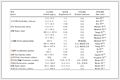
The screening results demonstrated that the degraders in this round exhibited excellent IRAK4 degradation activity. Notably, PROTAC molecules with a flexible linker at the meta-position of thalidomide (PL-16) displayed superior degradation activity compared to ortho-substituted molecules (PL-14). However, compounds with a rigid linker (PL-17, PL-19, PL-20) showed significantly reduced degradation activity. Our analysis suggested that overly rigid structures might hinder effective binding to either IRAK4 or the E3 ligase. In contrast, compounds with moderate rigidity, such as PL-18, exhibited the strongest degradation activity, significantly outperforming PL-01 (Table 1). At a concentration of 100 nmol/L, PL-18 induced over 75% IRAK4 degradation in THP-1 cells. These results suggest that selecting linkers with moderate rigidity and attaching them to the meta-position of thalidomide can enhance IRAK4 degradation activity in future development.
|
Table 1 The degradation potency of compounds derived from ligand 6 in the second-generation IRAK4-targeting PROTAC library. |


Through two rounds of constructing and screening IRAK4-targeting PROTAC libraries, we developed IRAK4 degraders with convenient synthetic routes that demonstrated strong degradation activity, laying the foundation for further development of more efficient IRAK4-PROTACs.
Considering that IMiDs-based CRBN ligands may degrade targets like IKZF1/3, their use in treating autoimmune diseases could pose significant toxicity risks. In 2022, Woo's group identified the C-terminal cycloimide as a physiological degrader of CRBN substrates [28], leading to the development of simplified CRBN ligands with improved selectivity and reduced off-target effects. Therefore, we propose using these modified CRBN ligands to construct a novel library of IRAK4-targeting PROTAC molecules. This approach aims to enhance the degradation efficacy of PL-18, minimize potential off-target effects from IMiDs-like CRBN ligands, and improve druggability through optimized IRAK4 ligands and rigid linkers (Table 2, Fig. 2C and Fig. S5 in Supporting information). In our investigation of the structure-activity relationship, we observed that the pyridine ring (LZ-07) exhibited superior protein degradation activity compared to the benzene ring (LZ-01). Introducing substituents at the ortho position of the benzene ring attached to simplified CRBN ligands further enhanced the degradation effect, as seen in the comparison between LZ-01 and LZ-03. However, the pyridazine ring demonstrated lower activity than the benzene ring, as indicated by the comparison between LZ-04 and LZ-05. Additionally, the number of nitrogen atoms in the aromatic ring significantly influenced degradation activity, with the pyridazine ring (LZ-05 and LZ-06) showing weaker degradation ability compared to the pyridine ring (LZ-07). In this round of research, LZ-04 and LZ-07 displayed the strongest degradation activity, with degradation levels exceeding 65% after 16 h of incubation at 10 nmol/L. For type Ⅱ ligands, the benzene ring with a strong electron-withdrawing substituent (LZ-10) exhibited higher activity than one with a weak electron-withdrawing substituent (LZ-11), a trend opposite to that observed in type Ⅰ ligands. The position of the nitrogen atom on the pyridine ring also impacted degradation activity, as seen in the comparison between LZ-08 and LZ-09. Moreover, compounds featuring a spiro structure linker (LZ-14 to LZ-19) showed excellent degradation effects. In the study of type Ⅲ ligands, both LZ-20 and LZ-21 exhibited weak degradation of IRAK4, particularly LZ-20, which demonstrated almost no degradation. This could be attributed to their larger structural rigidity and lack of rotatable flexible segments, which may have impaired their binding affinity with the target protein. Finally, the type Ⅳ ligand-derived compound LZ-22 displayed significant degradation ability at 10 nmol/L, achieving over 70% degradation. We also evaluated the degradation efficiency of the LZ series compounds in THP-1 cells and observed that LZ-22 demonstrated robust degradation activity, achieving an IRAK4 degradation level of 81% after a 16-h treatment at a concentration of 10 nmol/L (Fig. S6 in Supporting information).
|
|
Table 2 The degradation potency of compounds based on ligand 6 and simplified CRBN ligands in our third-generation IRAK4-targeting PROTAC library. |


In summary, except for type Ⅲ ligands, the other three types of CRBN ligands have yielded compounds with high IRAK4 degradation activity. The experimental results indicate that PROTACs derived from simplified CRBN ligands, are highly effective and may reduce off-target risks associated with IMiDs. Through structure-activity relationship studies, we successfully identified three PROTACs (LZ-04, LZ-07, and LZ-22) with over 65% degradation of IRAK4 at a concentration of 10 nmol/L. LZ-07 has been selected for further investigation, while other degraders with superior activity will be explored in future studies.
Taking LZ-07 as an example, we compared its synthetic route to that of KT-474. LZ-07 can be synthesized in just 12 steps from readily available materials, starting from 3-amino-6-chloropicolinamide and (1R,4R)−4-(aminomethyl)cyclohexane-1-carboxylic acid, whereas KT-474 requires a more complex 19-step synthesis (Figs. S1 and S2 in Supporting information). This reduction in synthetic steps simplifies the preparation of LZ-07 and improves its feasibility for large-scale manufacturing. The shorter synthetic route reduces costs and improves synthetic efficiency, giving LZ-07 a clear advantage over KT-474 in terms of practicality for further studies.
With the potent and novel IRAK4-targeting degrader LZ-07 in hand, we conducted a preliminary investigation into its degradation mechanism. LZ-07 demonstrated dose-dependent IRAK4 degradation in DOHH2 and TMD8 cells, with DC50 values of 1.14 nmol/L and 2.70 nmol/L respectively (Figs. 3A and B, Figs. S7A and B in Supporting information). Simultaneously, we compared the degradation efficacy of LZ-07 and KT-474 in these two cells, and the results demonstrated that LZ-07 exhibited comparable degradation activity to KT-474.

|
Download:
|
| Fig. 3. Degradation evaluation and preliminary mechanism study of LZ-07. (A) Immunoblots and statistical analysis of IRAK4 levels in TMD8 cells following 16-h treatment with LZ-07 and KT-474. (B) Immunoblots and statistical analysis of IRAK4 levels in DOHH2 cells following 16-h treatment with LZ-07 and KT-474. (C) Immunoblots for IRAK4 in TMD8 cells treated with 50 nmol/L LZ-07 at indicated time. (D) Immunoblot analysis of IRAK4 pre-treated with DMSO, MG132 (0.5 µmol/L), MLN4924 (0.5 µmol/L), pomalidomide (1 µmol/L) and compound E (1 µmol/L) for 2 h in TMD8 cells, and then treated with LZ-07 (30 nmol/L) for 8 h. GAPDH, glyceraldehyde-3-phosphatedehydrogenase. Data are presented as mean ± standard deviation (SD) (n = 3). | |

Notably, LZ-07 induced rapid and significant degradation within 4 h at a concentration of 50 nmol/L, achieving maximum degradation at 16 h, with a Dmax of 91% in TMD8 cells (Fig. 3C). Consistently, LZ-07 also rapidly degraded IRAK4 in DOHH2 cells (Fig. S7C in Supporting information). We further investigated the degradation mechanism of LZ-07 and found that pretreatment TMD8 and DOHH2 cells respectively with compound E (IRAK4 binder with the structure shown in Fig. S2) or pomalidomide significantly inhibited IRAK4 degradation. Similarly, degradation was blocked when TMD8 and DOHH2 cells were pretreated with the proteasome inhibitor MG132 or the ubiquitination inhibitor MLN4924 (Fig. 3D and Fig. S7D in Supporting information). These findings suggest that LZ-07 mediates IRAK4 degradation through the ubiquitin-proteasome system and that its activity depends on the binding to both IRAK4 and CRBN.
To further evaluate the anti-inflammatory effects of LZ-07, we performed inhibition assays using peripheral blood mononuclear cells (PBMCs) from two healthy donors. The human PBMCs were purchased from two companies: Beijing Muxing Biotech Co., Ltd. (Cat # FPB003F-C, donor ID: Y1828) and Milestone Biological Science & Technology Co., Ltd. (Cat # PB100C, donor ID: P122071008C). Ethical approval was provided by both aforementioned companies. PBMCs were pretreated with LZ-07 and KT-474, followed by stimulation with lipopolysaccharide (LPS) to induce cytokines production. The inhibitory effects were assessed by measuring the levels of these cytokines. The results revealed that LZ-07 significantly suppressed the expression of cytokines compared to KT-474 (Figs. 4A–D and Fig. S8 in Supporting information). In both PBMC samples, LZ-07 demonstrated superior inhibition of four key inflammatory cytokines, including interleukin-10 (IL-10), IL-6, IL-1β and tumor necrosis factor alpha (TNF-α). Notably, in PBMCs from one healthy donor, LZ-07 exhibited 131-fold greater inhibition of IL-6 compared to KT-474. In PBMCs from another donor, KT-474 showed minimal inhibition of IL-6, with a half maximal inhibitory concentration (IC50) exceeding 10 µmol/L, while LZ-07 achieved an IC50 of only 4.8 nmol/L. We also assessed the cytotoxicity of LZ-07 and KT-474 in PBMCs (Fig. 4E) and the results indicated that LZ-07 exhibited a safety profile comparable to KT-474, further supporting LZ-07′s potential as a potent and safe anti-inflammatory degrader.

|
Download:
|
| Fig. 4. The anti-inflammatory inhibition evaluation of LZ-07 and KT-474 in PBMCs derived from a health donor (donor ID: P122071008C). PBMCs were pretreated with LZ-07 and KT-474 for 2 h, followed by stimulation with 10 µL LPS (100 ng/mL) for 24 h. The levels of cytokines (IL-10, IL-6, IL-1β, and TNF-α) were determined using ELISA. (A–D) show the inhibitory effects of LZ-07 and KT-474 on the levels of IL-10, IL-6, TNF-α, and IL-1β respectively. The final IC50 was generated by GraphPad Prism 9. (E) Evaluation of cytotoxicity induced by LZ-07 and KT-474 in PBMCs derived from two health donors (donor ID: P122071008C and Y1828). (F) Evaluation of IRAK4 degradation ability after LZ-07 and KT-474 treatment in PBMCs (16 h). Data are presented as mean ± SD (n = 2). | |

We conducted a comparative analysis of the IRAK4 degradation efficacy of LZ-07 and KT-474 in PBMCs (Fig. 4F). Although LZ-07 showed weaker degradation activity than KT-474, it exhibited significantly stronger inhibition of cytokine production. Further analysis led us to hypothesize that LZ-07, as a derivative of compound E, may also inhibit additional targets. Its analog, ligand 3, has been reported to inhibit not only IRAK4 but also phosphoinositide 3-kinase delta (PI3Kδ), which is a potential target for autoimmune disease therapies that contributes to cytokine regulation [29]. We speculate that the enhanced anti-inflammatory effects of LZ-07 are likely attributed to its ability to inhibit PI3Kδ. To validate this hypothesis, we accessed the inhibitory activity of LZ-07 against PI3Kδ kinase. The results confirmed that LZ-07 inhibits PI3Kδ, with an IC50 of 92 nmol/L (Fig. S9 in Supporting information). Based on these findings, we further postulate that there may be a synergistic effect between IRAK4 degradation and PI3Kδ inhibition of LZ-07, further enhancing its anti-inflammatory effects.
Conclusively, we identified a highly efficient IRAK4 degrader, PL-18 with over 60% degradation of IRAK4 at a concentration of 10 nmol/L in TMD8 cells (Fig. 5 and Fig. S5 in Supporting information). As the IMiDs-like CRBN ligand in PL-18 may pose potential off-target risks, we further optimized PL-18 to obtain LZ-07, which exhibited degradation activity comparable to PL-18 while using a simplified CRBN ligand to reduce these risks. Subsequently, we developed a more potent degrader, LZ-22, which further simplified the structure of the CRBN ligand from LZ-07, significantly enhancing degradation activity. We have comprehensively evaluated the biological activity of LZ-07, and future studies will be performed to investigate the anti-inflammatory activity of LZ-22.

|
Download:
|
| Fig. 5. Representative IRAK4-targeting PROTAC molecules identified in our research. | |

In summary, through three rounds of PROTAC library construction, screening and optimization, we successful identified highly potent and easy-to-synthesize IRAK4 degraders, LZ-07 and LZ-22. As a case study, LZ-07 demonstrated efficient IRAK4 degradation, with degradation activity comparable to KT-474, but it outperformed KT-474 in terms of inflammation inhibition. Additionally, the synthesis of LZ-07 is much simpler than that of KT-474. This research represents a significant advancement by overcoming the limitations of traditional kinase inhibitors, achieving comprehensive inhibition of inflammatory pathways through dual targeting of both the kinase activity and scaffolding functions of IRAK4. Nevertheless, LZ-07 faces challenges in further applications, including the lack of in vivo evaluation and limited oral bioavailability. KT-474 has shown excellent performance in terms of safety, efficiency, and has entered the clinical trial phase, which has provided valuable insights for our research. Therefore, in subsequent studies, we will continue to optimize the structure of LZ-07 to further improve its druggability and therapeutic efficacy.
Declaration of competing interestThe authors declare that they have no known competing financial interests or personal relationships that could have appeared to influence the work reported in this paper.
CRediT authorship contribution statementZhen Li: Writing – original draft, Methodology. Peilu Song: Methodology. Yujie Liu: Validation. Xiuyun Sun: Writing – review & editing, Validation. Xin Zhai: Writing – review & editing. Yu Rao: Writing – review & editing, Resources.
AcknowledgmentsThis work was supported by National Natural Science Foundation of China (Nos. 82125034, 82330115), National Key R&D Program of China (Nos. 2021YFA1300200, 2021YFA1302100), the Beijing Outstanding Young Scientist Program (No. JWZQ20240101007) and Beijing Frontier Research Center for Biological Structure. We are grateful to Dr. Rui Hao for her support in anti-inflammatory experiments. We also thank to Dr. Chaoguo Cao, Dr. Chao Zhang, Qianlong Liu, Meng Zhang, Chaoran He, Xiao Pang and Yuan Qiu from Tsinghua University.
Supplementary materialsSupplementary material associated with this article can be found, in the online version, at doi:10.1016/j.cclet.2025.111033.
| [1] |
S. Flannery, A.G. Bowie, Biochem. Pharmacol. 80 (2010) 1981-1991. DOI:10.1016/j.bcp.2010.06.020 |
| [2] |
K. Kobayashi, L.D. Hernandez, J.E. Galán, et al., Cell 110 (2002) 191-202. DOI:10.1016/S0092-8674(02)00827-9 |
| [3] |
T. Kawai, S. Akira, Nat. Immunol. 11 (2010) 373-384. DOI:10.1038/ni.1863 |
| [4] |
P.G. Motshwene, M.C. Moncrieffe, J.G. Grossmann, et al., J. Biol. Chem. 284 (2009) 25404-25411. DOI:10.1074/jbc.M109.022392 |
| [5] |
A.P. West, A.A. Koblansky, S. Ghosh, Annu. Rev. Cell Dev. Biol. 22 (2006) 409-437. DOI:10.1146/annurev.cellbio.21.122303.115827 |
| [6] |
K. Takeda, S. Akira, Semin. Immunol. 16 (2004) 3-9. DOI:10.1016/j.smim.2003.10.003 |
| [7] |
S. De, F. Karim, E. Kiessu, et al., J. Biol. Chem. 293 (2018) 15208-15220. DOI:10.1074/jbc.ra118.003831 |
| [8] |
K. Yang, A. Puel, S. Zhang, et al., Immunity 23 (2005) 465-478. DOI:10.1016/j.immuni.2005.09.016 |
| [9] |
C.L. Ku, H. von Bernuth, C. Picard, et al., J. Exp. Med. 204 (2007) 2407-2422. DOI:10.1084/jem.20070628 |
| [10] |
J.J. O'Shea, S.M. Holland, L.M. Staudt, N. Engl. J. Med. 368 (2013) 161-170. DOI:10.1056/NEJMra1202117 |
| [11] |
S. Lavazais, M. Jargosch, S. Dupont, et al., Sci. Transl. Med. 15 (2023) eabj3289. DOI:10.1126/scitranslmed.abj3289 |
| [12] |
S. Umar, K. Palasiewicz, K. Van Raemdonck, et al., Cell. Mol. Immunol. 18 (2021) 2199-2210. DOI:10.1038/s41423-020-0433-8 |
| [13] |
G. Otto, Nat. Rev. Rheumatol. 17 (2021) 646. DOI:10.1038/s41584-021-00699-8 |
| [14] |
S.I. Danto, N. Shojaee, R.S.P. Singh, et al., Arthritis Res. Ther. 21 (2019) 269. DOI:10.1186/s13075-019-2008-6 |
| [15] |
Y. Feng, C. Chen, A. Shao, et al., Acta Pharm. Sin. B 14 (2024) 5091-5105. DOI:10.1016/j.apsb.2024.09.008 |
| [16] |
M. He, C. Cao, Z. Ni, et al., Signal. Transduct. Target. Ther. 7 (2022) 181. DOI:10.1038/s41392-022-00999-9 |
| [17] |
M. Békés, D.R. Langley, C.M. Crews, Nat. Rev. Drug Discov. 21 (2022) 181-200. DOI:10.1038/s41573-021-00371-6 |
| [18] |
A. Chen, Y. Zhong, Y. Liu, et al., Chin. Chem. Lett. 34 (2023) 107923. DOI:10.1016/j.cclet.2022.107923 |
| [19] |
Z. Kang, S. Li, Y. Li, et al., Chin. Chem. Lett. 36 (2025) 110447. DOI:10.1016/j.cclet.2024.110447 |
| [20] |
J. Nunes, G.A. McGonagle, J. Eden, et al., ACS Med. Chem. Lett. 10 (2019) 1081-1085. DOI:10.1021/acsmedchemlett.9b00219 |
| [21] |
L. Ackerman, G. Acloque, S. Bacchelli, et al., Nat. Med. 29 (2023) 3127-3136. DOI:10.1038/s41591-023-02635-7 |
| [22] |
J. Krönke, N.D. Udeshi, A. Narla, et al., Science 343 (2014) 301-305. DOI:10.1126/science.1244851 |
| [23] |
J. Krönke, S.N. Hurst, B.L. Ebert, Oncoimmunology 3 (2014) e941742. DOI:10.4161/21624011.2014.941742 |
| [24] |
M. Costacurta, J. He, P.E. Thompson, J. Shortt. J. Pers. Med. 11 (2021) 1185. DOI:10.3390/jpm11111185 |
| [25] |
C. Steinebach, A. Bricelj, A. Murgai, et al., J. Med. Chem. 66 (2023) 14513-14543. DOI:10.1021/acs.jmedchem.3c00851 |
| [26] |
S.L. Degorce, A. Aagaard, R. Anjum, et al., Bioorg. Med. Chem. 28 (2020) 115815. DOI:10.1016/j.bmc.2020.115815 |
| [27] |
G.F. Smith, M.D. Altman, B. Andresen, et al., Bioorg. Med. Chem. Lett. 27 (2017) 2721-2726. DOI:10.1016/j.bmcl.2017.04.050 |
| [28] |
S. Ichikawa, H.A. Flaxman, W. Xu, et al., Nature 610 (2022) 775-782. DOI:10.1038/s41586-022-05333-5 |
| [29] |
M.W.D. Perry, R. Abdulai, M. Mogemark, et al., J. Med. Chem. 62 (2019) 4783-4814. DOI:10.1021/acs.jmedchem.8b01298 |