 2026, Vol. 37


b Key Laboratory of Green Chemistry & Technology of Ministry of Education, College of Chemistry, Sichuan University, Chengdu 610064, China;
c Department of Applied Biology and Chemical Technology and Research Institute for Smart Energy, The Hong Kong Polytechnic University, Hong Kong 999077, China;
d The Hong Kong Polytechnic University Shenzhen Research Institute, Shenzhen 518057, China;
e Department of Electrical and Electronic Engineering, Southern University of Science and Technology, Shenzhen 518055, China
Carbon dioxide (CO2), a well-known greenhouse gas driving global warming, has garnered significant worldwide attention for its capture and utilization [1]. In the last decades, chemists have increasingly focused on harnessing CO2 as an abundant, cost-effective, renewable and environmentally friendly C1 source for the organic synthesis [1–23]. Despite its potential, this endeavor faces significant challenges due to the inherent thermodynamic and kinetic stability of CO2. As a result, the development of practical and efficient strategies for converting CO2 into valuable chemicals, particularly carbonyl-containing heterocyclic compounds, has become a prominent focus in contemporary organic synthesis. Encouragingly, the recent progress in the synthesis of carbonyl compounds with CO2, particularly the carbonylation of C–H bonds, has attained promising outcomes [24–34]. These advancements further highlight that the utilization of CO2 is not only safe and environmentally friendly but also exhibits favorable atom economy.
The 2,4-quinolinedione framework represents an important class of carbonyl-containing compounds in medicinal and materials chemistry [35–37]. Numerous investigators have explored synthetic methodologies for these compounds [38–40], including the notable contributions from the Cheng group (Scheme 1A) [39]. However, most of these methods suffer from complex reaction conditions or inadequate selectivity. Therefore, it is particularly important to efficiently and selectively synthesize such compounds in simple systems. Building on our persistent interest in the carbonylation of C–H bonds with CO2 [24,25], we sought to investigate whether CO2 could be employed in the carbonylation of tertiary C(sp3)–H bonds in 2-aminophenyl-alkyl methanones to synthesize such compounds (Scheme 1B). In addition, considering the significance of organic light-emitting diode (OLED) development and the widespread application of carbene ligands in OLEDs [41–46], 2,4-quinolinedione framework is ideally suited for synthesizing rigid, carbonyl-containing triazole carbene ligands. We aim to make use of these ligands in the development of organometallic luminescent materials, thereby providing valuable insights into the applications of carbonylation reactions with CO2. However, this scenario presents two primary challenges. First, the thermodynamic stability and kinetic inertness of CO2 impede efficient transformations, specifically under low-pressure conditions; second, the considerable steric hindrance from tertiary C(sp3) centres might considerably obstruct carbonylation of C(sp3)–H bonds using CO2, consequently affecting the overall efficiency of carbonylation reaction.

|
Download:
|
| Scheme 1. Generation of 2,4-quinolinedione and the application in OLEDs. | |
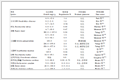
In light of the observed challenges and our previous findings, we investigated a reaction using (2-aminophenyl)(cyclohexyl)methanone 1a as the substrate under 1 atm of CO2 (Table 1). We successfully synthesized the target compound 2a with a yield of 89% using LiOtBu as the base in a mixture of dimethylformamide (DMF)/o-xylene via heating at 110 ℃ for 24 h (Table 1, entry 1) [47]. The use of NaOtBu or KOtBu decreased the yield of 2a (Table 1, entries 2 and 3). Moreover, using solvents such as DMF or o-xylene alone resulted in diminished yields of 2a (Table 1, entries 4 and 5), which might be explained by our earlier observations that the resultant product tended to disperse in the less basic o-xylene, mitigating further degradation. Alternative solvent combinations, such as DMAc/o-xylene or diglyme/o-xylene, also resulted in lower yields of 2a (Table 1, entries 6 and 7). Notably, decreasing the amount of LiOtBu from 4.0 equiv. to 3.0 equiv. considerably decreased the product yield. Building upon prior mechanistic studies [31], LiOtBu appears to fulfill multiple functions beyond simple base mediation, including (ⅰ) CO2 activation through chemical fixation and (ⅱ) direct involvement in intermediate generation. This multifunctional nature consequently renders the base stoichiometry a critical parameter for reaction optimization (Table 1, entries 8 and 9). Next, we investigated the effects of varying the reaction durations and temperatures on the product yield. Decreasing the reaction duration to 16 or 12 h resulted in a lower yield (Table 1, entries 10 and 11). However, temperature had a substantial effect: increasing the temperature markedly increased the product yields (Table 1, entries 12–16), achieving a remarkable yield of 98% when the temperature was increased to 120 ℃. Finally, both LiOtBu (Table 1, entry 17) and CO2 (Table 1, entry 18) were confirmed to be essential components facilitating the reaction’s progression.
|
Table 1 Screening of the reaction parameters.a |


With the optimal reaction conditions established, we began investigating the substrate scope (Scheme 2). First, we examined substrates with substituents on the aromatic ring at the para position of the amino group (1b–1l). As shown in Scheme 2, various functional groups, including electron-donating groups (Me, OMe and OCF3), halogen groups (F, Cl and Br) and aryl groups (Ph, 4-MeC6H4, 4-MeOC6H4, and 4-CF3C6H4), did not adversely affect the reaction. For substrates containing CN groups (1l), a significant decrease in product yield was observed, demonstrating the limited compatibility of this reaction system with base-sensitive functional groups. The yields of the target products were predominantly >80%. In general, the substrates with electron-rich groups (1b–1d, 1i, 1j) exhibited higher reactivity than the ones with electron-poor groups (1f, 1g, 1k), consistent with our previous findings [31]. Moreover, we investigated the reactivity of substrates with substituents on the aromatic ring at the meta-position of the amino group (1m–1q). The overall yields for these substrates slightly decreased, indicating that the position of substituent affected the reactivity. However, the electronic effects at this position were not prominently evident. Furthermore, we explored substrates with di-substituents on the phenyl ring (1r, 1s), which also underwent this transformation, yielding the desired products in moderate to good yields. In addition to the cyclohexyl-substituted ketone, the cyclopentyl (1t) and isopropyl substituted ketones (1u) could also provide the target products in high yields.

|
Download:
|
| Scheme 2. Substrate scope. 1 (0.2 mmol), CO2 (1 atm), LiOtBu (4.5 equiv., 0.9 mmol), DMF/o-Xylene (2 mL, v/v = 1/1), 120 ℃, 24 h. Isolated yields are shown. | |

To elucidate the reaction mechanism, a series of experiments were conducted. Initially, the carbonylation reaction was performed using 13CO2 as the carbonyl source (Scheme 3A). The 13C NMR spectrum confirmed that CO2 is the primary carbonyl source in this reaction. Notably, when the reaction was conducted under an inert atmosphere, the target product was not obtained, further supporting this conclusion (Table 1, entry 18).

|
Download:
|
| Scheme 3. Control experiments. | |

Subsequently, the carbonylation reaction was carried out using triphosgene as the carbonyl source, yielding the target product in 84% yield (Scheme 3B). Since triphosgene can react with aniline to form an isocyanate intermediate, and based on our previous work [31], we propose that the isocyanate intermediate plays a key role in this reaction.
Furthermore, when a secondary amine derivative (1a’) was employed as the substrate, the yield of the corresponding product (2a’) significantly dropped to 7% (Scheme 3C). This observation suggests that the substituent on the nitrogen atom may hinder the formation of the isocyanate intermediate, thereby preventing the formation of the desired product.
Based on the experimental results and relevant literature [24,31], we propose the following reaction mechanism: Initially, in the presence of CO2 and base, 1 is converted into the isocyanate intermediate 1–1 or 1–1′. A 6π-electrocyclization of 1–1 then affords the cyclized intermediate 1–2, which undergoes further rearrangement to yield the final product 2 (path a in Scheme 4). Given that 1–1 and 1–1′ can undergo keto-enol tautomerization, the enolate form 1–1′ may also participate in nucleophilic attack on the isocyanate group (–N=C=O), ultimately leading to the formation of the target product 2 (Path b in Scheme 4, Fig. S8 in Supporting information). At the current stage, the dominant reaction pathway cannot be unequivocally determined from experimental evidence. Alternatively, the available experimental data do not allow the exclusion of other routes to the final product involving an isocyanate intermediate.

|
Download:
|
| Scheme 4. Proposed mechanism of carbonylation of C(sp3)–H bonds with CO2. | |

Notably, when the N-substituted substrate 1a’ was subjected to the standard reaction conditions, a small amount of product 2a’ was still obtained. This observation suggests that the product may be formed, at least in part, through alternative minor pathways.
Following the establishment of the methodology, we demonstrated its utility in organic synthesis. First, we conducted a gram-scale reaction of 1a and obtained the target product 2a in 91% yield (Scheme 5A). As discussed earlier in the article, N-heterocyclic carbene (NHC) compounds play a significant role in the catalysis reaction and the development of luminescent materials [41,42]. 2,4-Quinolinedione with the spiral-ring structure possesses the unique dual carbonyl configuration and strong rigidity. By converting this compound into an NHC ligand and coordinating it with iridium, it could unlock surprising possibilities for luminescent OLED materials [43,44]. Accordingly, we successfully synthesized a carbonyl-containing NHC ligand with the triazole-spiral-ring (L-2a) from 2a, and obtained the associated Ir(Ⅲ) complex fac-TzCOIr. The structure of Ir(Ⅲ) complex was confirmed by single-crystal X-ray diffraction (Scheme 5B and Fig. S1 in supporting information).

|
Download:
|
| Scheme 5. Gram-scale reaction and derivatization reaction. | |

Subsequently, we investigated the photophysical properties of fac-TzCOIr by measuring its UV–vis absorption and photoluminescence (PL) spectra in solution. The PL spectrum of Ir(Ⅲ) complex in CH2Cl2 displays a green emission at 507 nm (Fig. 1) and a high photoluminescent quantum yield (PLQY) of 90% with the Commission International de I'Eclairage (CIE) coordinates of (0.240, 0.514). The radiative lifetime, calculated from the observed lifetime divided by PLQY, is 11.6 µs (see Table S1 in Supporting information for details).

|
Download:
|
| Fig. 1. Photophysical properties of fac-TzCOIr, measured in DCM at room temperature (10−5 mol/L). | |

We have also investigated the electrochemical properties of this Ir(Ⅲ) complex using cyclic voltammetry and conducted theoretical calculations to further elucidate its luminescence mechanism (Scheme 6, Table S2, and Fig. S2 in Supporting information).

|
Download:
|
| Scheme 6. Electron cloud distribution of HOMO and LUMO orbital of fac-TzCOIr. | |

The electrochemical curve of the Ir(Ⅲ) complex clearly showed that the LUMO energy level had been notably stabilized compared with some other types of Ir(Ⅲ) carbene complexes [41–45,48,49]. Furthermore, the analysis of HOMO–LUMO energy levels and their electron cloud distributions demonstrated that fac-TzCOIr would undergo a significant MLCT transition during its excitation process. In the LUMO, the electron density was observed to be primarily concentrated in the carbonyl fragment. As is well known, due to the electronegativity of oxygen and the resonance effect, the carbonyl group acts as a strong electron-withdrawing substituent, which effectively stabilizes the LUMO energy level. Hence, the HOMO–LUMO energy gap becomes narrowed, resulting in a significant redshift in the emission wavelength. Through theoretical calculations, we further analyzed the natural transition orbitals (NTOs) of fac-TzCOIr and the electron density distributions of HOMO/LUMO orbitals in the decarbonylated complex (fac-Ir1). The results revealed that: (1) the LUMO energy level of fac-Ir1 is significantly higher than that of fac-TzCOIr; (2) in fac-TzCOIr, electron transfer predominantly occurs between the metal center and the carbonyl group with its surrounding atoms (Tables S5 and S6, Fig. S7 in supporting information). These findings provide compelling evidence for the crucial role of the carbonyl ligand in modulating the luminescent properties of the iridium complex.
To gain deeper mechanistic insights into the photophysical behavior of fac-TzCOIr, we measured the temperature-dependent PL decay spectra from 77 K to 297 K and recorded the low-temperature and room-temperature PL profiles. Based on the result and analysis, the observed room-temperature emission of our Ir(Ⅲ) complex appears to originate mainly from the 3MLCT state, while the observed low-temperature emission of our Ir(Ⅲ) complex is dominated by the mixed 3LC and 3MLCT states. We think that as 3MLCT state often has a larger radiative decay rate (kr) than 3LC, at higher temperatures, thermal energy promotes population of the low-lying 3MLCT state. When the temperature decreases, as 3LC states typically exhibit stronger vibronic coupling and longer lifetimes at low temperatures, cooling causes population to "freeze" in the high-lying 3LC state. Overall, the phosphorescence of our Ir(Ⅲ) emitter is contributed by the hybridization between 3MLCT and 3LC states (please see Fig. S4 in supporting information for details) [50–52].
The OLED device using fac-TzCOIr as the green dopant emitter was fabricated and displayed the EL peak at 505 nm with CIEx,y coordinates of (0.24, 0.63). Impressively, it can afford a narrow full-width at half-maximum (FWHM) of 55 nm, which is smaller than devices based on the commercial emitter Ir(ppy)3 [53–55]. The electroluminescence (EL) emission peak exhibits a narrower FWHM compared to its solution-phase counterpart, likely due to restricted molecular motion, homogenized microenvironment, confined exciton population and suppressed non-radiative decay in the solid state. The device revealed a relatively low turn-on voltage of 3.0 V at 1 cd/m2, indicating a good charge carrier transport property of the Ir(Ⅲ) complex incorporating carbonyl group ligands. A maximum luminance as high as 12,010 cd/m2 was achieved and a moderate current intensity of ca. 8 mA/cm2 at 1000 cd/m2 was furnished. In addition, the OLED based on fac-TzCOIr attained a peak EQE of 13.95% and retained a decent value of 6.71% at 100 cd/m2 (Fig. 2). In terms of current efficiency (CE) and power efficiency (PE), the remarkable maximum CE and PE up to 46.59 cd/A and 52.24 lm/W were obtained (Fig. 2, Table S3 and Fig. S5 in Supporting information for more details). We have also investigated devices with different doping concentrations (6%, 10% and 12%), and the device results are shown in Fig. S6 (Supporting information). These findings suggest that such organometallic complex synthesized from CO2 has a promising application potential in optoelectronic materials. Further studies on the other properties of the complex are currently underway in our group.

|
Download:
|
| Fig. 2. The performance of OLED device based on fac-TzCOIr. (a) OLED device structure. (b) Electroluminescence spectrum (insert: the photograph of illuminated device). (c) External quantum efficiency–luminance (EQE–L) curves. (d) Current density–voltage–luminance (J–V–L) curves. | |

In summary, using CO2 as an easily accessible carbonyl source, we successfully realized the carbonylation of tertiary C(sp3)–H bonds in 2-aminophenyl-alkyl methanone derivatives to produce the key 2,4-quinolinediones in moderate to excellent yields. Additionally, by leveraging the unique structure of 2,4-quinolinedione, which features a quaternary carbon center, we developed an efficient Ir(Ⅲ) emitter by incorporating the carbonyl group ligand. The OLED device based on the facial homoleptic Ir(Ⅲ) complex delivered a competent device performance with CIEx,y coordinates of (0.24, 0.63), towards a green gamut. This work presents valuable insights into the development of efficient luminescent materials for OLED applications through the carbonylation of C–H bonds with CO2.
Declaration of competing interestThe authors declare that they have no known competing financial interests or personal relationships that could have appeared to influence the work reported in this paper.
CRediT authorship contribution statementXiu-Mei Xie: Methodology, Investigation, Formal analysis, Data curation. Hongyang Zhang: Writing – review & editing, Software, Funding acquisition, Data curation. Shao-Xuan Gong: Validation, Methodology, Formal analysis. Hong-Xia Sun: Methodology. Yu-Ting Liu: Data curation. Xue-Ling Chen: Conceptualization. Shuming Chen: Software, Resources. Tian-Yu Gao: Data curation. Wai-Yeung Wong: Writing – review & editing, Supervision, Funding acquisition, Conceptualization. Zhen Zhang: Writing – original draft, Supervision, Funding acquisition, Conceptualization. Da-Gang Yu: Writing – review & editing, Supervision, Project administration, Funding acquisition, Conceptualization.
AcknowledgmentsWe gratefully acknowledge the financial support from the National Natural Science Foundation of China (Nos. 21801025, 22225106), Natural Science Foundation of Sichuan Province (No. 2022NSFSC0200), Sichuan Science and Technology Program (No. MZGC20240116), the Hong Kong Research Grants Council (No. PolyU 15301922), CAS-Croucher Funding Scheme for Joint Laboratories (No. ZH4A), Research Institute for Smart Energy (CDAQ), Research Centre for Organic Electronics (No. CE33), Miss Clarea Au for the Endowed Professorship in Energy (No. 847S) Guangdong Basic and Applied Basic Research Foundation (No. 2022A1515111010), Shenzhen Science and Technology Program (No. RCBS20221008093229034). We also acknowledge Prof. Qi Zhao, Dr. Si-Shun Yan, and Dr. Jibiao Jin for their help and support in this work.
Supplementary materialsSupplementary material associated with this article can be found, in the online version, at doi:10.1016/j.cclet.2025.112003.
| [1] |
L.N. He, Carbon Dioxide Chemistry. Beijing: Science Press, 2013.
|
| [2] |
Y.Y. Gui, X.W. Chen, J.P. Yue, D.G. Yu, Chem. Synth. 4 (2024) 66. |
| [3] |
M. Lanzia, A.W. Kleij, Chin. J. Chem. 42 (2024) 430-443. DOI:10.1002/cjoc.202300502 |
| [4] |
Z. Wu, J. Wang, L. Liu, et al., Sci. China Chem. 67 (2024) 551-557. DOI:10.1007/s11426-023-1754-5 |
| [5] |
T.Y. Gao, X.Y. Mo, S.R. Zhang, et al., Chin. Chem. Lett. 35 (2024) 109364. DOI:10.1016/j.cclet.2023.109364 |
| [6] |
Y. Chen, Y. Wang, J. Nong, et al., Chin. J. Chem. 42 (2024) 1571-1581. DOI:10.1002/cjoc.202300753 |
| [7] |
M. Miao, L. Zhu, H. Zhao, et al., Sci. China Chem. 66 (2023) 1457-1466. DOI:10.1007/s11426-022-1554-x |
| [8] |
H. Luo, J. Ren, Y. Sun, et al., Chin. Chem. Lett. 34 (2023) 107782. DOI:10.1016/j.cclet.2022.107782 |
| [9] |
C.K. Ran, Q. Qu, Y.Y. Tao, et al., Sci. China Chem. 67 (2024) 3366-3372. DOI:10.1007/s11426-024-2075-6 |
| [10] |
M. Du, Y. Sun, J. Zhao, H. Hu, et al., Chin. Chem. Lett. 34 (2023) 108269. DOI:10.1016/j.cclet.2023.108269 |
| [11] |
L. Wang, C. Qi, W. Xiong, H. Jiang, Chin. J. Catal. 43 (2022) 1598-1617. DOI:10.1016/S1872-2067(21)64029-9 |
| [12] |
S. Jia, X. Ma, X. Sun, B. Han, CCS Chem. 4 (2022) 3213-3229. DOI:10.31635/ccschem.022.202202094 |
| [13] |
G. Wang, J. Chen, Y. Ding, et al., Chem. Soc. Rev. 50 (2021) 4993-5061. DOI:10.1039/d0cs00071j |
| [14] |
Z. Zhang, J.H. Ye, T. Ju, et al., ACS Catal. 10 (2020) 10871-10885. DOI:10.1021/acscatal.0c03127 |
| [15] |
L. Zhang, Z. Li, M. Takimoto, Z. Hou, Chem. Rec. 20 (2020) 494-512. DOI:10.1002/tcr.201900060 |
| [16] |
J. Zhou, H. Liu, H. Wang, Chin. Chem. Lett. 34 (2023) 107420. DOI:10.1016/j.cclet.2022.04.018 |
| [17] |
S. Wang, C. Xi, Chem. Soc. Rev. 48 (2019) 382-404. DOI:10.1039/c8cs00281a |
| [18] |
A. Tortajada, F. Juliá-Hernández, M. Börjesson, T. Moragas, R. Martin, Angew. Chem. Int. Ed. 57 (2018) 15948-15982. DOI:10.1002/anie.201803186 |
| [19] |
Q. Liu, L. Wu, R. Jackstell, M. Beller, Nat. Commun. 6 (2015) 5933. DOI:10.1038/ncomms6933 |
| [20] |
Y. Tsuji, T. Fujihara, Chem. Commun. 48 (2012) 9956-9964. DOI:10.1039/c2cc33848c |
| [21] |
W. Zhang, X.B. Lü, Chin. J. Catal. 33 (2012) 745-756. DOI:10.1016/S1872-2067(11)60390-2 |
| [22] |
Y. Yi, C. Xi, Green Synth. Catal. (2024). DOI:10.1016/j.gresc.2024.09.003 |
| [23] |
J. Li, Z. Zhang, Y. Yi, C. Xi, Green Chem. 27 (2025) 3443-3450. DOI:10.1039/d5gc00240k |
| [24] |
L. Song, Y.X. Jiang, Z. Zhang, et al., Chem. Commun. 56 (2020) 8355-8367. DOI:10.1039/d0cc00547a |
| [25] |
Y.T. Liu, Z. Zhang, Chem. Heterocycl. Comp. 61 (2025) 54-56. DOI:10.1007/s10593-025-03397-5 |
| [26] |
K. Wang, J. Ouyang, H. Liu, et al., J. Org. Chem. 89 (2024) 18746-18751. DOI:10.1021/acs.joc.4c02443 |
| [27] |
L. Wang, H.X. Wu, Y.C. Zhao, B. Li, B.Q. Wang, Org. Lett. 26 (2024) 3940-3944. DOI:10.1021/acs.orglett.4c01156 |
| [28] |
Y.T. Xu, Z.M. Ye, D.X. Liu, et al., Chin. Chem. Lett. 34 (2023) 107814. DOI:10.1016/j.cclet.2022.107814 |
| [29] |
R. Zhang, M. Liu, Z. Zhao, Y. Qiu, Green Chem. 27 (2025) 1658-1666. DOI:10.1039/d4gc05731g |
| [30] |
L. Fu, S. Li, Z. Cai, et al., Nat. Catal. 1 (2018) 469-478. DOI:10.1038/s41929-018-0080-y |
| [31] |
Z. Zhang, L.L. Liao, S.S. Yan, et al., Angew. Chem. Int. Ed. 55 (2016) 7068-7072. DOI:10.1002/anie.201602095 |
| [32] |
S. Wang, P. Shao, G. Du, C. Xi, J. Org. Chem. 81 (2016) 6672-6676. DOI:10.1021/acs.joc.6b01318 |
| [33] |
W.Z. Zhang, M.W. Yang, X.B. Lu, Green Chem. 18 (2016) 4181-4184. DOI:10.1039/C6GC01346E |
| [34] |
S. Sun, W.M. Hu, N. Gu, J. Cheng, Chem. Eur. J. 22 (2016) 18729-18732. DOI:10.1002/chem.201604256 |
| [35] |
S. Heeb, M.P. Fletcher, S.R. Chhabra, et al., FEMS Microbiol. Rev. 35 (2011) 247-274. DOI:10.1111/j.1574-6976.2010.00247.x |
| [36] |
J.P. Michael, Nat. Prod. Rep. 25 (2008) 166-187. DOI:10.1039/B612168N |
| [37] |
E. Van Cutsem, H. Van De Velde, P. Karasek, H. Oettle, et al., J. Clin. Oncol. 22 (2004) 1430-1438. DOI:10.1200/JCO.2004.10.112 |
| [38] |
K. Didehban, E. Vessally, M. Salary, L. Edjlali, M. Babazadeh, J. CO 23 (2018) 42-50. |
| [39] |
B. Wang, S. Sun, J.T. Yu, Y. Jiang, J. Cheng, Org. Lett. 19 (2017) 4319-4322. DOI:10.1021/acs.orglett.7b01989 |
| [40] |
W.Z. Zhang, S. Liu, X.B. Lu, Beilstein J. Org. Chem. 11 (2015) 906-912. DOI:10.3762/bjoc.11.102 |
| [41] |
G. Ni, J. Yan, Y. Wu, et al., Inorg. Chem. Front. 10 (2023) 1395-1401. DOI:10.1039/d2qi02449g |
| [42] |
D.M. Flanigan, F. Romanov-Michailidis, N.A. White, T. Rovis, Chem. Rev. 115 (2015) 9307-9387. DOI:10.1021/acs.chemrev.5b00060 |
| [43] |
B.S. Yun, S.Y. Kim, J.H. Kim, et al., ACS Appl. Electron. Mater. 4 (2022) 2699-2710. DOI:10.1021/acsaelm.2c00235 |
| [44] |
C. You, X.Q. Wang, X. Zhou, et al., ACS Appl. Mater. Interfaces 13 (2021) 59023-59034. DOI:10.1021/acsami.1c17308 |
| [45] |
G. Guisado-Barrios, M. Soleilhavoup, G. Bertrand, Acc. Chem. Res. 51 (2018) 3236-3244. DOI:10.1021/acs.accounts.8b00480 |
| [46] |
L. Yuan, Y.P. Zhang, Y.X. Zheng, Sci. China Chem. 67 (2024) 1097-1116. DOI:10.1007/s11426-023-1910-1 |
| [47] |
Z. Zhang, X.L. Chen, X.M. Xie, et al., Chin. Chem. Lett. 36 (2025) 110056. DOI:10.1016/j.cclet.2024.110056 |
| [48] |
Z. Chen, L. Wang, S. Su, et al., ACS Appl. Mater. Interfaces 9 (2017) 40497-40502. DOI:10.1021/acsami.7b09172 |
| [49] |
Z. Zhang, H. Zhang, P. Tao, et al., Inorg. Chem. 64 (2025) 15381-15391. DOI:10.1021/acs.inorgchem.5c01038 |
| [50] |
C. Wu, M. Wang, K.N. Tong, et al., Adv. Opt. Mater. 11 (2023) 2201998. DOI:10.1002/adom.202201998 |
| [51] |
C. Wu, K.N. Tong, K. Shi, et al., Adv. Sci. 10 (2023) 2301112. DOI:10.1002/advs.202301112 |
| [52] |
Z.P. Yan, M.X. Mao, Q.M. Liu, et al., Adv. Funct. Mater. 34 (2024) 2402906. DOI:10.1002/adfm.202402906 |
| [53] |
X. Yang, G.E. Jabbour, J. Mater. Chem. C 1 (2013) 4663-4666. DOI:10.1039/c3tc30721b |
| [54] |
Y. Kim, S. Park, Y.H. Lee, et al., Inorg. Chem. 55 (2016) 909-917. DOI:10.1021/acs.inorgchem.5b02444 |
| [55] |
J. Jayabharathi, V. Thanikachalam, S. Thilagavathy, Coord. Chem. Rev. 483 (2023) 215100. DOI:10.1016/j.ccr.2023.215100 |