 2026, Vol. 37


b Sino-German Centre for Water and Health Research, Sichuan University, Chengdu 610065, China
In recent years, with the accelerating pace of industrialization, the problem of water pollution and water scarcity has become increasingly serious [1,2]. Advanced oxidation processes (AOPs), which produce reactive oxygen species (ROS) with solid oxidizing properties, have been widely used for the removal of difficult-to-degrade organic pollutants [3,4]. In typical AOPs, various ROS (e.g., hydroxyl radicals (•OH), sulfate radicals (SO4•−), singlet oxygen (1O2), etc.) are generated and participate in the degradation of pollutants [5-7]. Therefore, identifying the types and contributions of different ROS is essential for inferring the mechanisms of catalysis and degradation.
Currently, quenching experiments, electron paramagnetic resonance (EPR) and probe methods are the most commonly used approaches for the identification of ROS in various AOPs [8-12]. EPR is known for its high specificity and ability to detect radicals directly. However, EPR requires specialized operators and expensive instrumentation. The EPR test may be interfered with by other substances, for example, the intensity of the reaction of 2,2,6,6-tetramethylpiperidine (TEMP) with 1O2 to form TEMPO is considered to be proof of the presence of 1O2, whereas TEMP also reacts directly with PMS to form TEMPO [13]. Moreover, multiple ROS systems may result in overlapping EPR signals, making the analysis difficult. The above issues limit the widespread use of EPR in exploring ROS. Probe methods are generally sensitive and straightforward to use, but not all ROSs have well-established specific probes available, and therefore it may not be possible to comprehensively assess the types and contribution proportions of all potential ROS. Quenching experiments allow the determination of reaction rate constants between ROS and specific quenching agents, thus indirectly inferring the concentration of ROS. Moreover, the quenching experiments are relatively direct and rapid, and the presence and dynamics of ROS in the reaction system can be monitored in real time if appropriate probes are selected [14]. Therefore, quenching experiments are the most commonly used method to investigate the reaction mechanism in AOPs.
Quenchers can react rapidly with specific ROS thus hindering the degradation of pollutants by ROS. However, some of the quenchers react directly with peroxymonosulfate (PMS) to cause a decrease in PMS concentration and thus inhibit the degradation of the contaminant, and this phenomenon will mislead the assessment of the ROS contribution. For example, commonly used high-valent metal-oxo species quenchers are methyl phenyl sulfoxide (PMSO) and dimethyl sulfoxide (DMSO). However, PMSO and DMSO react rapidly with PMS, so it is inappropriate for PMSO and DMSO to be selected as a quencher of high-valent metal-oxo species in the PMS system [15-17]. In addition, inappropriate choice of quencher concentration can significantly affect the quenching effect and mislead the judgement of ROS contribution [18,19]. Therefore, to accurately identify and quantify the types of ROS generated during AOPs and the extent of their respective contributions, it is vital to systematically analyze suitable quencher types and concentrations in AOPs.
Herein, we systematically explored the direct reactions between commonly used oxidants (PMS, peroxydisulfate (PDS), and hydrogen peroxide (H2O2)) (Fig. 1) and quenchers of •OH, SO4•−, 1O2, superoxide radicals (O2•−), high-valent metal-oxo species and surface radicals, respectively. Moreover, the second-order rate constants between the oxidizer and the quenchers that would significantly deplete the oxidizer were determined. Furthermore, suggestions for the selection of quencher types and concentrations for the treatment of pollutants in AOPs were given. This work will provide an essential reference for the quenchers selection and ROS identification in future AOPs.

|
Download:
|
| Fig. 1. Molecular structure of PMS, PDS and H2O2. | |

At first, we tested the consumption of PMS, PDS and H2O2 by different quenchers, which was an intuitive basis for determining the direct reaction between quenchers and oxidants. The concentrations of the oxidant and quencher were chosen based on those commonly used in the literature, with the aim of guiding the choice of quencher concentration in the experiments based on the extent to which the oxidant was consumed. However, whether the quencher and oxidant can actually react with each other and the reaction rates have to be further determined by the second-order rate constants between them.
In quenching experiments of •OH, tert‑butyl (TBA) alcohol was often used as a preferred quenching reagent to effectively compete for and capture this highly reactive radical [20,21]. As shown in Fig. S1 (Supporting information), PMS, PDS, and H2O2 did not exhibit significant depletion in the presence of TBA at concentrations of 10, 50, and 100 mmol/L, respectively, suggesting that there was no direct chemical reaction between TBA and the above three commonly used oxidants under the experimental conditions. In addition, due to the ability of isopropanol (IPA), methanol (MeOH), and ethanol (EtOH) to react rapidly with •OH and SO4•−, these three alcohols were often used as reagents to effectively trap and quench •OH and SO4•− [5,22]. No consumption of PMS, PDS and H2O2 was observed in the presence of different concentrations of IPA, MeOH and EtOH (Figs. S2-S4 in Supporting information). The above phenomena indicated that IPA, MeOH and EtOH can be used with confidence in quenching experiments verifying the presence of •OH and SO4•− during AOPs without regard to their interactions with the oxidants.
Furfuryl alcohol (FFA), L-histidine, β-carotene and tetramethylpiperidine (TEMP) were effective in scavenging 1O2 to prevent further oxidative reaction chains, so they were often used as quenchers for 1O2 [23-25]. As shown in Figs. 2a and b, 10 mmol/L FFA consumed about 33% of PMS in 30 min. Therefore, the effect of initial PMS reduction on oxidation efficiency should be considered when using FFA as a 1O2 quencher, especially in high-concentration FFA. In the PDS and H2O2 systems, the direct interaction of FFA with the oxidant was weak and could be neglected (Fig. S5 in Supporting information). For L-histidine, which had a robust consuming effect on PMS, this might make the contribution of 1O2 in the persulfate system exaggerated (Fig. 2c). However, when L-histidine was added, the consumption of PMS presented an anomaly that did not correspond to the kinetic process (Fig. 2d), this phenomenon will be further investigated subsequently. In H2O2 and PDS systems, L-histidine could be employed as a 1O2 quencher because it did not react with H2O2 and PDS (Fig. S6 in Supporting information). The reactions between TEMP or β-carotene with PMS, PDS, and H2O2 were all weak (Figs. S7 and S8 in Supporting information), so TEMP and β-carotene can be used as an ideal 1O2 quencher in AOPs. It is noteworthy that although β-carotene is almost insoluble in water, but its dispersion in water under stirring is good. In addition, β-carotene hardly reacts with ROS other than 1O2 and 1 mmol/L β-carotene has been shown to exert a good quenching effect in the 1O2 system [15,26]. Therefore, β-carotene is considered an ideal 1O2 quencher.

|
Download:
|
| Fig. 2. (a) PMS decomposition in the presence of different concentrations of FFA and (b) corresponding pseudo first-order rate constants. (c) PMS decomposition in the presence of different concentrations of L-histidine and (d) corresponding pseudo first-order rate constants. (e) PMS decomposition in the presence of different concentrations of BQ and (f) corresponding pseudo first-order rate constants. Experiment conditions: [PMS]0 = 1 mmol/L, T = 25 ℃. | |

To verify the contribution of O2•− in AOPs, p-benzoquinone (BQ), trichloromethane (TCM) and superoxide dismutase (SOD) were commonly used as quenchers to capture O2•− [27,28]. As displayed in Fig. 2e, the slight depletion of 10 mmol/L BQ on 1 mmol/L PMS suggested the suitability of BQ as a quencher in PMS system. In addition, like the L-histidine, the degradation of PMS in BQ system showed an abnormal kinetic process, which needs to be further demonstrated subsequently (Fig. 2f). Moreover, BQ did not consume PDS and H2O2 significantly (Fig. S9 in Supporting information). However, it is worth noting that BQ itself has a yellow color, which may affect the results of the colorimetric method. Moreover, although TCM had no consumption of PMS, PDS and H2O2 (Fig. S10 in Supporting information), it was worth noting that TCM is not miscible with the aqueous solution, which makes it difficult to be completely dispersed during the reaction process thus seriously affecting the mass transfer effect. Therefore, the feasibility of TCM as a quencher in AOPs needs to be further explored. SOD was an important antioxidant enzyme that quenches superoxide radicals by catalyzing reactions. As depicted in Fig. S11 (Supporting information), neither PMS, PDS, nor H2O2 was found to be decomposed by SOD, thereby indicating that the presence of SOD does not compromise the assessment of the system's inherent capability to generate O2•−.
Dimethyl sulfoxide (DMSO) or methyl phenyl sulfoxide (PMSO) was easily oxidized to the corresponding sulfone product through the oxygen atom transfer pathway in the presence of high-valent metal-oxo species [29,30]. Therefore, DMSO and PMSO were commonly used quenchers of high-valent metal-oxo species. DMSO (Figs. 3a and b) and PMSO (Figs. 3c and d) exhibited substantial depletion of PMS, while there was almost no effect on the concentrations of PDS and H2O2 (Fig. S12 in Supporting information). Thus, the inhibition effect of DMSO or PMSO in the PMS system could not be used as direct evidence for the presence of high-valent metal-oxo species. Nevertheless, no other suitable high-valent metal-oxo species quencher can be chosen to replace PMSO and DMSO. Therefore, low concentrations of PMSO or DMSO should be chosen as much as possible for quenching experiments of high-valent metal-oxo species. In addition, 18O isotope labelling experiments or EPR tests, etc. should be supplemented to comprehensively assess the contribution of high-valent metal-oxo species.

|
Download:
|
| Fig. 3. (a) PMS decomposition in the presence of different concentrations of DMSO and (b) corresponding pseudo first-order rate constants. (c) PMS decomposition in the presence of different concentrations of PMSO and (d) corresponding pseudo first-order rate constants. (e) PMS decomposition in the presence of different concentrations of phenol and (f) corresponding pseudo first-order rate constants. Experiment conditions: [PMS]0 = 1 mmol/L, T = 25 ℃. | |

Phenol was thought to play an essential role in quenching surface radicals [31]. As shown in Fig. S13 (Supporting information), no oxidants were found to be consumed by phenol in the PDS and H2O2 systems. While in the PMS system, like L-histidine and BQ, there was a significant decrease in the initial concentration of the oxidant when phenol was added. However, the oxidants remained at the same concentration over time, suggesting that the decrease in PMS concentrations might not be due to their direct reaction with phenol (Figs. 3e and f). In addition, phenol, as an electron-rich organic, could be efficiently degraded by both radicals and nonradicals [22,32], and the addition of phenol as a quencher in AOPs is highly likely to compete with the target pollutant for ROS and interfere with the removal of the target pollutant.
For quenchers that consume oxidants significantly, the second-order rate constants of quenchers and oxidants were determined to guide the use of quenchers in quenching experiments. Unlike previous studies [19,33], we did not add buffer salts during the reaction. The main reasons are as follows: (1) Buffer salts (phosphate or borate) would interact with PMS and affect the reaction between the quencher and PMS [21,34]. (2) PMS was easily activated by alkali under alkaline conditions [35]. (3) The PMS solution was acidic, and PMS systems usually occur under acidic rather than neutral conditions. Therefore, second-order rate constants were determined by adding only PMS and quencher without any auxiliary reagents, which made the determined second-order rate constants more reliable.
When the oxidant is in large excess, the secondary reaction (Eq. (1)) can be approximately treated as a "pseudo-first-order" reaction, focusing solely on the concentration change of the quencher and its impact on the reaction rate.
| (1) |
The rate equation for a second-order reaction is:
| (2) |
Under the assumption that oxidant is in excess, [Oxidant] can be regarded as a constant [Oxidant]0, thus simplifying the above equation to:
| (3) |
where k' = k[oxidant]0 represents an quencher-concentration-dependent "pseudo-first-order" rate constant.
The change in quencher concentration over time can be measured experimentally and an apparent first-order rate constant (kobs) can be obtained from this change. This "pseudo-first order" rate constant can then be converted back to the true rate constant for the second-order rate constant (k) in the following relationship:
| (4) |
The true second-order reaction rate constant (k) can be inferred through the formula:
| (5) |
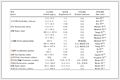
The measured second-order rate constants of FFA, L-histidine, BQ, PMSO, DMSO, and phenol with PMS were shown in Table 1. As shown in Fig. 4a, the results showed that PMSO and DMSO had faster reactions with PMS and FFA had a slower reaction rate with PMS, which was in accordance with the experimental results that the quencher consumed the oxidant. However, Fig. 4b displayed that the reaction rates of L-histidine, BQ and phenol with PMS were so slow as to be negligible, which did not match the previous experimental results.
|
Table 1 Second-order rate constants of quenchers with PMS. |

|
Download:
|
| Fig. 4. (a) Changes in the concentration of different quenchers, and (b) corresponding pseudo first-order kinetic plot under excess oxidants. | |

In addition, since the reaction of PMS with L-histidine and BQ was widely accepted [36-38], and the consumption of PMS in L-histidine, BQ, and phenol systems did not conform to the reaction kinetics process (Figs. 2d and f, and 3f). We further validated our results by monitoring the change in quencher over time by high-performance liquid chromatography (HPLC) in the presence of PMS overdose. As shown in Figs. 5a-c, there was no significant change in the intensity of the characteristic peaks of L-histidine, BQ, and phenol with time, which further proved that the reaction between PMS and L-histidine, BQ, and phenol was slow enough.

|
Download:
|
| Fig. 5. Chromatograms of (a) L-histidine, (b) BQ, and (c) phenol detected in HPLC. Experiment conditions: [PMS]0 = 2 mmol/L, [Quencher] = 20 µmol/L, T = 25 ℃. (d) ABTS+• consumption in the presence of FFA, L-histidine, BQ, DMSO, PMSO, and phenol. | |

Since the reaction between PMS and L-histidine, BQ, and phenol was almost negligible, the significant decrease in the concentration of PMS might be due to the presence of quencher affecting the results of the PMS test. 2,2′-azinobis(3-ethylbenzothiazoline-6-sulfonic acid ammonium salt) (ABTS) reacted with oxidizing substances to form ABTS+•, which was often used to determine the antioxidant capacity of a substance based on the weakening of the ABTS+• peak intensity [39]. Thus, the strange phenomenon in L-histidine/PMS, BQ/PMS and phenol/PMS systems might be due to the depletion of ABTS+• by quenchers. As shown in Fig. 5d, we explored the consumption of ABTS+• by quenchers. L-histidine, BQ, and phenol exhibited significant antioxidant capacity. Therefore, the false appearance of PMS depletion by L-histidine, BQ, and phenol might be due to the reducibility of the quencher in the detection method.
Quenching experiments have inherent limitations, the following issues should be fully considered when selecting the type and concentration of quencher to ensure the accuracy of the quenching results. (1) Quenchers (such as FFA, DMSO and PMSO) will react directly with oxidants. (2) Quenchers typically react with multiple ROS, which is often overlooked. This oversight will subsequently lead to the misjudgment of the quenching result. For example, phenol reacts not only with surface radicals but also with ROS such as •OH, SO4•− and 1O2. (3) In aqueous solutions, solvents that are not miscible with water (such as TCM) should be used with caution. (4) The addition of quenchers may change the pH of the solution or cause solvent effects, etc., altering the original reaction or affecting the lifetime of the ROS. For example, the addition of TEMP causes an increase in solution pH. Besides, the change in solution density may also affect mass transfer.
For the choice of quencher type, it is required that the reaction rate of the quencher with the target ROS is much greater than the reaction rate of the quencher with other ROS. For example, the second-order rate constant of TBA with •OH is about 6.0 × 10⁸ L mol−1 s−1, the reaction rate with SO4 is about 4.0 × 10⁵ L mol−1 s−1, and the reaction rate with 1O2 or O2•− is < 104 L mol−1 s−1 [40,41], so TBA is usually used as a quencher of hydroxyl radical. However, the reaction rate of MeOH with both •OH and SO4•− is greater than 107 L mol−1 s−1 [19,42], so MeOH is not suitable for the detection of •OH in persulfate systems. In addition, if the selectable quenchers all react with multiple ROS, it is necessary to first exclude non-target ROS by quenching or probing methods, etc. For instance, the demonstration of the presence of SO4•− can be done by first excluding the presence of •OH with a •OH quencher (TBA, etc.) or probe (coumarin, etc.) and then demonstrating the effect of SO4•− with MeOH. Moreover, the choice of quencher type should try to avoid quenchers that react strongly with oxidants or other substances in the system. Furthermore, quenchers that are not miscible with the solution should also be avoided as much as possible.
Since high concentrations of quenchers tend to cause solvent effects and other possible by-reactions, the concentration of quenchers should be chosen as low as possible under the premise of ensuring near-complete quenching of ROS. Therefore, it is essential to calculate the appropriate quencher concentration prior to the quenching reaction. The quenching of ROS by the quencher is actually the process of competing ROS with the target pollutant. The percentage of ROS quenched can be calculated by Eq. 6 [43]. For example, previous work found that in a system of 8 µmol/L SMX, 50 mmol/L TBA quenched 99.80% of •OH and 15.53% of SO4•−. And when the concentration of TBA was increased to 500 mmol/L, •OH and SO4•− were quenched by 99.98% and 64.77%, respectively [21]. To demonstrate that the target ROS is the dominant ROS, the quencher should scavenge as much of the target ROS as possible (preferably > 90%) and scavenge as little of the non-target ROS as possible (preferably < 10%). Under 95% •OH quenching conditions, only 1.93 mmol/L of TBA was required in the system of 8 µmol/L SMX. Whereas TBA dosages reported in the literature were usually in the range of 10–1000 mmol/L [24,44], the excess quencher may cause unpredictable effects on the reaction, so it is recommended to prioritize the selection of quencher concentration by calculating the appropriate quencher dose.
| (6) |
where P(%) represents the percentage of the ROS scavenged by quencher,
In addition, try not to select quenchers that react directly with the oxidant. If there is no other suitable choice of quencher, the choice of quenchers that react directly with the oxidant should be made carefully. Based on the calculated concentration of the quencher, its efficacy in consuming oxidants needs to be assessed through either formula-derived calculations (Eq. 7) or experimental measurements. If the oxidant is depleted excessively or rapidly, this indicates that the quencher is ill-suited for application within the given system. Conversely, if the oxidation impact on the target pollutant degradation remains minimal despite the oxidant consumption, it is recommended that the use of the quencher be combined with further validation through complementary ROS detection methods, such as probe experiments or EPR spectroscopy.
| (7) |
In this work, the direct reaction of different quenchers with commonly used oxidants (PMS, PDS and H2O2) in AOPs was explored. The results showed that FFA, DMSO and PMSO had more pronounced depletion of PMS. For the L-histidine, BQ and phenol, which are often incorrectly assumed to be depleted of PMS, we demonstrated that their reaction rates with PMS were so low as to be negligible. In particular, reasonable recommendations are given for the choice of quencher type and concentration, relying on competitive kinetics and second-order rate constants. Moreover, all of the quenchers showed almost no depletion of PDS and H2O2. The systematic investigation of the direct reaction between the quenchers with the oxidants and recommendations for the selection of quencher type and concentration in this work will provide an essential guideline for the selection of a suitable quencher in AOPs, which will be beneficial for the accurate investigation of the active species and the reaction mechanism.
Declaration of interest statementThe authors declare that they have no known competing financial interests or personal relationships that could have appeared to influence the work reported in this paper.
CRediT authorship contribution statementBingkun Huang: Investigation, Formal analysis, Writing – original draft, Conceptualization, Funding acquisition. Zelin Wu: Validation, Visualization, Conceptualization. Jing Zhang: Software, Supervision, Methodology, Data curation. Yanbiao Shi: Writing – review & editing, Supervision. Chuan-Shu He: Formal analysis, Investigation, Supervision. Zhaokun Xiong: Formal analysis, Funding acquisition, Writing – review & editing, Conceptualization, Supervision. Bo Lai: Writing – review & editing, Conceptualization, Funding acquisition, Supervision, Investigation.
AcknowledgmentsThe authors would like to acknowledge the financial support from the National Natural Science Foundation of China (No. 52200105), the National Key Research and Development Program of China (No. 2021YFA1202500), and Sichuan Science and Technology Program (Nos. 2023NSFSC0344, 2023JDZH0010, MZGC20240031).
Supplementary materialsSupplementary material associated with this article can be found, in the online version, at doi:10.1016/j.cclet.2025.111537.
| [1] |
M.A. Shannon, P.W. Bohn, M. Elimelech, et al., Nature 452 (2008) 301-310. DOI:10.1038/nature06599 |
| [2] |
Y. Xu, Z. Mao, R. Qu, et al., Nat. Water 1 (2023) 95-103. DOI:10.1038/s44221-022-00002-3 |
| [3] |
Z. Wu, Z. Xiong, B. Huang, et al., Nat. Commun. 15 (2024) 7775. DOI:10.1038/s41467-024-52074-2 |
| [4] |
B. Huang, Z. Wu, H. Zhou, et al., J. Hazard. Mater. 412 (2021) 125253. DOI:10.1016/j.jhazmat.2021.125253 |
| [5] |
B. Huang, Z. Wu, X. Wang, et al., Environ. Sci. Technol. 57 (2023) 15667-15679. DOI:10.1021/acs.est.3c05509 |
| [6] |
J. Guo, Y. Wang, Y. Shang, et al., Proc. Natl. Acad. Sci. U. S. A. 121 (2024) e2313387121. DOI:10.1073/pnas.2313387121 |
| [7] |
B. Huang, Z. Wu, H. Zhou, et al., Appl. Catal. B: Environ. 355 (2024) 124157. DOI:10.1016/j.apcatb.2024.124157 |
| [8] |
J.H. Wu, F. Chen, T.H. Yang, H.Q. Yu, Proc. Natl. Acad. Sci. U. S. A. 120 (2023) e2305706120. DOI:10.1073/pnas.2305706120 |
| [9] |
L. Ding, Y. Hou, H. Liu, et al., ACS EST Water 3 (2023) 3534-3543. DOI:10.1021/acsestwater.3c00271 |
| [10] |
Z. Wu, B. Huang, X. Wang, et al., Environ. Sci. Technol. 57 (2023) 14046-14057. DOI:10.1021/acs.est.3c04343 |
| [11] |
C. Yu, Z. Wu, H. Shi, et al., Chin. Chem. Lett. 35 (2024) 109334. DOI:10.1016/j.cclet.2023.109334 |
| [12] |
M. Luo, H. Zhang, Y. Shi, et al., Water. Res. 240 (2023) 120128. DOI:10.1016/j.watres.2023.120128 |
| [13] |
J.H. Wu, F. Chen, T.H. Yang, H.Q. Yu, Proc. Natl. Acad. Sci. U. S. A. 120 (2023) e2305706120. DOI:10.1073/pnas.2305706120 |
| [14] |
L. Zhang, X. Jiang, Z. Zhong, et al., Angew. Chem. Int. Ed. 60 (2021) 21751-21755. DOI:10.1002/anie.202109488 |
| [15] |
B. Huang, X. Ren, J. Zhao, et al., Environ. Sci. Technol. 57 (2023) 14071-14081. DOI:10.1021/acs.est.3c04712 |
| [16] |
Y. Li, T. Yang, S. Qiu, et al., Chem. Eng. J. 389 (2020) 124382. DOI:10.1016/j.cej.2020.124382 |
| [17] |
J. Yao, N. Wu, X. Tang, et al., Chem. Eng. J. Adv. 12 (2022) 100378. DOI:10.1016/j.ceja.2022.100378 |
| [18] |
A. Rastogi, S.R. Al-Abed, D.D. Dionysiou, Appl. Catal. B: Environ. 85 (2009) 171-179. DOI:10.1016/j.apcatb.2008.07.010 |
| [19] |
Y. Lei, Y. Yu, X. Lei, et al., Environ. Sci. Technol. 57 (2023) 5433-5444. DOI:10.1021/acs.est.2c09338 |
| [20] |
M. Luo, H. Zhou, P. Zhou, et al., Water Res. 203 (2021) 117548. DOI:10.1016/j.watres.2021.117548 |
| [21] |
B. Huang, Z. Xiong, P. Zhou, et al., J. Hazard. Mater. 424 (2022) 127641. DOI:10.1016/j.jhazmat.2021.127641 |
| [22] |
K. Luo, Y. Shi, R. Huang, et al., J. Hazard. Mater. 457 (2023) 131790. DOI:10.1016/j.jhazmat.2023.131790 |
| [23] |
H. Wang, X. Yang, W. Shao, et al., J. Am. Chem. Soc. 137 (2015) 11376-11382. DOI:10.1021/jacs.5b06025 |
| [24] |
C. Yu, L. Gu, Z. Wu, et al., J. Hazard. Mater. 480 (2024) 136149. DOI:10.1016/j.jhazmat.2024.136149 |
| [25] |
F. Wang, Y. Gao, H. Fu, et al., Appl. Catal. B: Environ. 339 (2023) 123178. DOI:10.1016/j.apcatb.2023.123178 |
| [26] |
P. Shao, Y. Jing, X. Duan, et al., Environ. Sci. Technol. 55 (2021) 16078-16087. DOI:10.1021/acs.est.1c02042 |
| [27] |
M. Ao, J. Wei, C.S. He, et al., Chin. Chem. Lett. 36 (2025) 109882. DOI:10.1016/j.cclet.2024.109882 |
| [28] |
Z. Zhao, M. Hu, T. Nie, et al., Environ. Sci. Technol. 57 (2023) 4556-4567. DOI:10.1021/acs.est.2c09336 |
| [29] |
H. Li, C. Shan, B. Pan, Environ. Sci. Technol. 52 (2018) 2197-2205. DOI:10.1021/acs.est.7b05563 |
| [30] |
S. Sun, J. Jiang, L. Qiu, et al., Water. Res. 156 (2019) 1-8. |
| [31] |
Z.Y. Guo, Y.S.Q. Xia, F. Wang, et al., Proc. Natl. Acad. Sci. U. S. A. 119 (2022) e2201607119. DOI:10.1073/pnas.2201607119 |
| [32] |
P. Hu, H. Su, Z. Chen, et al., Environ. Sci. Technol. 51 (2017) 11288-11296. DOI:10.1021/acs.est.7b03014 |
| [33] |
Y. Yang, G. Banerjee, G.W. Brudvig, J.H. Kim, J.J. Pignatello, Environ. Sci. Technol. 52 (2018) 5911-5919. DOI:10.1021/acs.est.8b00735 |
| [34] |
P. Duan, X. Liu, B. Liu, et al., Appl. Catal. B: Environ. 298 (2021) 120532. DOI:10.1016/j.apcatb.2021.120532 |
| [35] |
C. Qi, X. Liu, J. Ma, et al., Chemosphere 151 (2016) 280-288. DOI:10.1016/j.chemosphere.2016.02.089 |
| [36] |
P. Duan, J. Pan, W. Du, et al., Appl. Catal. B: Environ. 299 (2021) 120714. DOI:10.1016/j.apcatb.2021.120714 |
| [37] |
K.Z. Huang, H. Zhang, Environ. Sci. Technol. 53 (2019) 12610-12620. DOI:10.1021/acs.est.9b03648 |
| [38] |
Y. Zhou, J. Jiang, Y. Gao, et al., Environ. Sci. Technol. 49 (2015) 12941-12950. DOI:10.1021/acs.est.5b03595 |
| [39] |
X. Li, J. Lin, Y. Gao, W. Han, D. Chen, Chem. Cent. J. 6 (2012) 140. DOI:10.1186/1752-153X-6-140 |
| [40] |
L. Lai, H. Zhou, Y. Hong, et al., Chin. Chem. Lett. 35 (2024) 108580. DOI:10.1016/j.cclet.2023.108580 |
| [41] |
Z. Xiong, L. Gu, X. Wang, et al., Energy Environ. Prot. 38 (2024) 52-64. |
| [42] |
S. Yu, Z. Xie, X. Wu, et al., Chin. Chem. Lett. 35 (2024) 108714. DOI:10.1016/j.cclet.2023.108714 |
| [43] |
H. Li, Z. Zhao, J. Qian, B. Pan, Environ. Sci. Technol. 55 (2021) 6397-6406. DOI:10.1021/acs.est.1c02015 |
| [44] |
Y. Guo, C. Ma, Z. Gao, et al., J. Environ. Manage. 358 (2024) 120846. DOI:10.1016/j.jenvman.2024.120846 |