 2026, Vol. 37


Chiral alkylamines are important motifs present in about 40% of therapeutical agents (Fig. 1). Among common methods to prepare chiral amines [1–3], transition metal-catalyzed asymmetric (transfer) hydrogenation of ketimines and enamides using hydrogen gas is well developed [4–16]. In asymmetric transfer hydrogenation, formic acid, alcohols or other organic hydrogen donors are used instead. To date, most of these reactions rely on chiral complexes of noble transition metals rhodium [17–24], iridium [25–40], ruthenium [41–43] and palladium [44–47]. In the past decade, Earth-abundant, cheap 3d metal catalysts have emerged that catalyzed these processes [48,49], including the examples of iron [50–56], cobalt [57–66], manganese [67–71] and nickel [72–82].

|
Download:
|
| Fig. 1. Examples of chiral amine drugs and asymmetric methods of (transfer) hydrogenation, reductive amination and borrow hydrogen reactions. This reactions in this work using dicationic nickel catalyst are highlighted. | |
Metal-catalyzed enantioselective reductive amination [83–90] offers several advantages over (transfer) hydrogenation (Fig. 1). It directly coverts ketones and amines to enantio-enriched amines [91–102], which bypasses the need of isolating and purifying ketimines, some of which are unstable during purification or storage.
Most of reported methods for asymmetric reductive amination used chiral complexes of noble metals, for example, ruthenium [103,104] and iridium [105]. The application of Earth-abundant 3d metal catalysts in this family of reactions still remains nascent, and examples of iron [106,107], cobalt [108], manganese [109], and nickel [110–112] only emerged recently. Since 2014, our group has contributed the development of nickel-catalyzed asymmetric transfer hydrogenation [113–115], reductive amination of ketones that used formic acid [111] and alcohols [116] as the hydrogen source (Fig. 2).

|
Download:
|
| Fig. 2. One-pot asymmetric reductive amination of methyl (hetero)aryl ketones with anisidine 2a (isolated yields on 0.1 mmol scale). | |
Metal-catalyzed asymmetric borrowing hydrogen reactions directly convert racemic alcohols to structurally diverse chiral amines without using any external hydrogen donor [117–121]. To date, most of catalytic enantioselective examples relied on highly active iridium and ruthenium catalysts, often working in concert with chiral phosphoric acids that play important roles of activating and conformationally controlling the in situ formed ketimines. For example, Yu et al. have successfully applied the cooperative catalysis in asymmetric synthesis of chiral benzylic amines, β-branched aliphatic amines and a series of azacycles, using a combination of (chiral) cyclopentadienyl complexes of iridium and chiral bulky phosphoric acids [122–134]. In other reports of Zhao [135] and Beller [136], ruthenium complexes of chiral diphosphines promoted enantioselective conversions of racemic 1,2-diols to special types of chiral amines, 1,2-aminoalcohols and oxazolidine-2-ones in good ee values.
In comparison, few asymmetric examples using chiral 3d metal complexes have been reported, however [137–139]. In 2017, we reported examples of nickel-catalyzed hydrogen borrowing reactions of racemic benzylic alcohols and a special type of N-acylhydrazines [112]. Catalytic dehydrogenation of alcohols occurred in situ and condensation of ketones and N-acylhydrazines readily formed stable N-acylhydrazones, the latter being substrates for asymmetric NiH insertion. However, an analogous reaction with arylamines resulted in 50% yield and < 30% ee at 120 ℃. The high temperature was detrimental to the effect to achieving high stereoselectivity (conditions: 1-phenylethanol, 4-anisylamine, 5 mol% Ni(OTf)2 and (R)-Ph-BPE, and 3 Å MS or acetic acid in t-amyl alcohol 120 ℃ for 24 h).
In this work, we report two catalytic processes of asymmetric synthesis of chiral benzylic amines, using a dicationic nickel complex of chiral diphosphine (R)-Ph-BPE: (a) enantioselective reductive amination of aryl alkyl ketones and arylamines that uses isopropanol as hydrogen source; (b) nickel-catalyzed asymmetric borrowing hydrogen reaction with arylamines for the first time.
To address the inefficient condensation of ketones and arylamines, we elected to titanium alkoxides as strong dehydrating agents and they are also compatible with the chiral cationic nickel catalyst. This desiccant enabled us to perform the entire (de)hydrogenation cycle and achieve high levels of enantioselectivity at relatively moderate temperatures. Notably, the dicationic nickel complex itself was inefficient to promote the condensation in situ, as a metal-based Lewis acid.
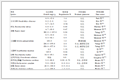
In a study of a model reaction of acetophenone 1a and anisidine 2a we found that nickel triflate and nickel bistriflimide [Ni(NTf2)2] formed very active catalyst with (R)-Ph-BPE [140, 141], giving benzylic amine 3a in > 90% yield and 90% ee, respectively (Table 1, entries 1 and 2). The nickel loading can be reduced and 2 and 1 mol% nickel triflate and (R)-Ph-BPE gave product 3a in 84% and 75% yields, respectively (entries 3 and 4). However, the complexes of nickel bromide and acetate were catalytically inactive at all. Thus, we suggest that nickel complexes of triflate and triflimide produced a cationic nickel hydride complex in situ which is the active species for transfer hydrogenation. Other strongly donating diphosphines Duphos, QuinoxP* and BenzP* and Josiphos formed nickel complexes with Ni(OTf)2 that gave products in 16%–60% ee values or no product at all.
|
Table 1 Screening of reaction conditions and chiral diphosphines in a model reductive amination of acetophenone 1a (0.1 mmol) and 3,5-dimethyl-4-anisidine 2a (0.2 mmol) in isopropanol (0.2 mL). |

Ti(OiPr)4 proved to be critical to promoting in situ formation of imine 3a' from the ketone and arylamine, without which product 3a was generated only 16% yield (Table 1, entry 5). Interesting the product was also firmed in an identical 90% ee, suggesting that Ti(OiPr)4 is not directly involved in a Lewis-acidic activation of imines in the stereo-determining step of hydride insertion. Isopropanol was the best solvent. In other solvents such as MeOH, EtOH, CF3CH2OH and toluene, the yield was only 44%-66% (entries 6–9). Under some conditions, some acetophenone was reduced to α-phenylethanol 1a', whiles N-isopropylaniline 2a' was formed in significant amounts.
With one-pot procedure for reductive amination in hand, we studied the scope of aryl ketones with 3,5-dimethylanisidine 2a (Fig. 2). An array of aryl methyl ketones reacted efficiently with 90%-97% ee in most examples. The ketones can have electron-donating and electron-withdrawing groups on aryl rings (3e-3q), o-tolyl, o-anisyl and a 1-naphthyl ring (3c, 3d and 3l), The reaction was tolerant of N-aryl acetamide and aryl pinacolborate (3m, 3q). Notably, the ketones can also have heteroaryl rings such as (benzo)furan, pyrazole and 2-methoxypyridine. They reacted smoothly to give products in excellent yields and 80%-99% ee (3r-3v). However, 3-acetylpyridine cannot condense with anisidine 2a even under forcing conditions that used dehydrating agents Ti(OiPr)4, Ti(OtBu)4 or molecular sieve in toluene at 140 ℃.
Next, we explored the scope of (hetero)arylamines with 2-benzofuranyl ketone 4a (Fig. 2). Both electron-rich aryl amines and electron-deficient anilines condensed well with the ketone and gave benzylic amines in high yields and > 95% ee (Supporting information). Nitrogen-containing heteroaryl amines such as 2-methoxypyridine, 2-methoxypyrimidine, 1-methylind-2-azole, and indole (5a-5d), also provided products in excellent ee. We also tested benzylamine and α, α-dimethylbenzylamine as models of aliphatic amines in the reductive amination. They condensed well with acetophenone in the presence of Ti(OiPr)4 to give keimines (as detected by GC and GCMS), but the latter failed to undergo reduction to produce benzylic amines.
Aryl ketones having ethyl, n-propyl, n-butyl and other alkyl chains also underwent reductive amination with anisidine 2a (Fig. 3). To improve the efficiency of the condensation of ketimines, the reaction of ketones, anisidine 2a and Ti(OiPr)4 were heated in IPA at 80 ℃ for 10 h (incomplete condensation as checked by GC). Then, Ni(OTf)2/(R)-Ph-BPE catalyst was added to initiate hydrogen transfer from isopropanol to benzyl/alkyl aryl ketones. The products were thus obtained in good yields and 82%-97% ee (7a-i).

|
Download:
|
| Fig. 3. Two-stage asymmetric reductive amination of benzyl/alkyl aryl ketones with anisidine 2a (isolated yields on 0.1 mmol scale). Ar = 3,5-dimethylanisyl. | |
We have scaled up a reductive amination using 5 mmol of 3-methoxyacetophenone and anisidine 2a that gave 1.14 g of benzyl amine 3j in 81% yield and 91% ee (Fig. 4a). We also applied the one-pot protocol to conduct reductive amination of aryl ketone 8a to produce benzylic amine 8b in 94% yield and 88% ee (Fig. 4b). The N-anisyl group of 8b was readily removed by cerium ammonium nitrate (CAN) and subsequent N,N-dimethylation gave (S)-rivastigmine 8d, a drug that is used for the treatment of dementia caused by Alzheimer disease.

|
Download:
|
| Fig. 4. (a) A scale-up reductive amination using 5 mmol of ketone. (b) Asymmetric synthesis of (S)-rivastigmine via nickel-catalyzed reductive amination. Ar = 3,5-dimethylanisyl and R = CONMeEt. | |
Moreover, the procedure using Ti(OiPr)4 was successfully applied to reductive amination of N-benzoylhydrazine, another type of common amines. The nickel catalyst of a Josiphos CyPF-Cy was used to improve the stereoselectivity of N-acyl hydrazine 9a to 86% ee (Eq. 1). The N−N bond in the product can be reductively cleaved by Raney nickel or SmI2 [142].

|
(1) |
Next, we aimed to develop a nickel-catalyzed asymmetric borrowing hydrogen reaction, by using a model reaction of racemic 1-phenylethanol 1a' and 3,5-dimethylanisidine 2a. We added Ti(OtBu)4 in dry t-amyl alcohol to promote the condensation of in situ formed acetophenone and arylamine 2a. Under the optimized conditions, benzylic amine 3a was isolated in 85% yield and 91% ee.
During condition optimization, we have identifieds and combined several key parameters to ensure good yields and excellent ee (Table 2): (a) addition of Ti(OtBu)4 improved the yield of 3a from < 60% to 85% (entry 1). (b) Using Ti(OiPr)4 (entry 2) or isopropanol solvent led to no formation of 3a and a significant amount of N-isopropylaniline 2a'. 2a' was produced via the following reaction sequence: In situ dehydrogenation of isopropoxide to form acetone; acetone condensation with amine 2a to form the ketimine; finally, NiH reduction of the ketimine. Therefore, the formation of 2a' was much faster than that of 3a from 1-phenylethanol. (c) The model reaction was high-yielding in t-amyl alcohol or toluene (entries 3–6). (d) Ni(NTf2)2, having a higher solubility in IPA than Ni(OTf)2, formed a more efficient catalyst of Ph-BPE than Ni(OTf)2 (31% yield in entry 7). We found that the stereoselectivity of the borrowing hydrogen reaction is quite sensitive to temperatures. For example, the reactions at 70 ℃ and 80 ℃ produced 91% ee and 80% ee, respectively.
|
|
Table 2 Optimization of reaction conditions in a model borrowing hydrogen reaction of racemic α-phenylethanol 1a' (0.2 mmol), 3,5-dimethylanisidine 2a (0.1 mmol) and Ti(OtBu)4 (0.15 mmol) in t-amyl alcohol (0.1 mL). |


With this optimized condition in hand, we have explored the scope of asymmetric borrowing hydrogen reaction using (hetero)aryl carbinols and anisidine 2a shown in Fig. 5. Both electron-rich and electron-deficient aryl rings can be present on the alcohols. Notably, an array of heteroaryl rings including benzofuran, (benzo)thiophenes and in particular, substituted pyridine gave products 3r and 3u-3w in 83%-99% ee. Moreover, aryl carbinols having α-alkyl or α-benzyl groups reacted well to give products (7h-7k) in excellent yields and 81%-87% ee. In these examples, the condensation to form ketimines was more efficient in toluene than in t-amyl alcohol.

|
Download:
|
| Fig. 5. Nickel-catalyzed asymmetric borrowing hydrogen reactions of benzylic alcohols and anisidine 2a (isolated yields on 0.1 mmol scale). | |

With regard to the scope of arylamines, we have tested some simple arylamines having electron-donating and electron-withdrawing substituents in reactions of racemic alcohol 4a. The results are shown in Fig. 6. The stereoselectivity in most reactions was temperature-sensitive. For example, the reaction of 4-tolylamine gave product 5e in 89% ee at 70 ℃ and 81% ee at 80 ℃, respectively. Moreover, para-substituents on the arylamines also affect the ees, for example, a methoxy group increases the ee (5f), whereas a fluorine substituent decreases it (5g). Di- or tri-substituents at 3,4-positions of arylamines are beneficial to the yields and selectivity (5h-j), but ortho-substituents are deleterious partly due to low efficiency of condensation to form imines. A benzofuran-derived heteroaryl amine reacted to give product 5k in 95% ee at 80 ℃. Unfortunately, benzylamine or α, α-dimethylbenzylamine failed to produce the corresponding ketimines or benzylic imines under the hydrogen borrowing conditions.

|
Download:
|
| Fig. 6. Scope of arylamines in nickel-catalyzed borrowing hydrogen reactions (isolated yields on 0.1 mmol scale). | |

We have attempted to probe nickel hydride species relevant to the catalytic reactions. Stirring a mixture of Ni(OTf)2 and (S,S)-Ph-BPE (L) (in 1:1 or 1:2 molar ratios) in isopropanol at rt for 30 min produced cleanly a cationic complex [(L)2NiH]+OTf– (HRMS (m/z): 1071.4010 versus calculated 1071.4011 [72,143]. We believe that it reversibly dissociates one ligand in situ to produce monoligated complex (L)NiH+ as the catalytic active species. The complex completely decomposed after heating at 80 ℃ for 1 h. Thus, we suggest that the observed counteranion effect of nickel salts (entry 7 of Table 2) is associated with the rate of forming complex [(L)2NiH]+ or relative stability of active catalyst (L)NiH+ at elevated reaction temperature.
In conclusion, we report a dicationic chiral nickel catalyst ligated with a strongly donating diphosphine, Ph-BPE for asymmetric synthesis of medicinally important benzylic amines in high levels of ee. The reductive amination of various alkyl aryl ketones with arylamines proceeded in high ees using isopropanol solvent as a green external hydrogen source [144–146]. The conditions are scalable and tolerant of sensitive polar groups and an array of heteroaryl rings. The key to the success is the use of titanium alkoxides as very efficient dehydrating agents that promoted fast aldimine condensation from ketones and arylamines, and at the same time, they are compatible with the dicationic nickel catalyst.
In 2017, we reported a nickel-catalyzed enantioselective hydrogen borrowing reaction of a special type of amines, N-acylhydrazines, proceeding via the intermediacy of N-acylhydrazones which are stable and readily formed [112]. Here, we report the first examples of highly enantioselective borrowing hydrogen reactions with arylamines which are promoted by an Earth-abundant metal, nickel.
CRediT authorship contribution statementXiuhua Wang: Methodology, Investigation, Formal analysis, Data curation. Jianrong Steve Zhou: Writing – review & editing, Writing – original draft, Supervision, Funding acquisition, Conceptualization.
AcknowledgmentsThis work was supported by the National Natural Science Foundation of China (Nos.22271007; W2431014), Peking University Shenzhen Graduate School, State Key Laboratory of Chemical Oncogenomics, Shenzhen Key Laboratory of Chemical Genomics and Shenzhen Bay Laboratory.
Supplementary materialsSupplementary material associated with this article can be found, in the online version, at doi:10.1016/j.cclet.2025.111148.
| [1] |
T. Fan, Y. Liu, Chin. J. Org. Chem. 42 (2022) 3280-3294. DOI:10.6023/cjoc202206032 |
| [2] |
A. Trowbridge, S.M. Walton, M.J. Gaunt, Chem. Rev. 120 (2020) 2613-2692. DOI:10.1021/acs.chemrev.9b00462 |
| [3] |
Q. Yin, Y. Shi, J. Wang, X. Zhang, Chem. Soc. Rev. 49 (2020) 6141-6153. DOI:10.1039/c9cs00921c |
| [4] |
M. Breuer, K. Ditrich, T. Habicher, et al., Angew. Chem. Int. Ed. 43 (2004) 788-824. DOI:10.1002/anie.200300599 |
| [5] |
H. Shimizu, I. Nagasaki, K. Matsumura, et al., Acc. Chem. Res. 40 (2007) 1385-1393. DOI:10.1021/ar700101x |
| [6] |
H.U. Blaser, B. Pugin, F. Spindler, Top. Organomet. Chem. (2012) 65-102. DOI:10.1007/3418_2011_27 |
| [7] |
N.B. Johnson, I.C. Lennon, P.H. Moran, J.A. Ramsden, Acc. Chem. Res. 40 (2007) 1291-1299. DOI:10.1021/ar700114k |
| [8] |
J.H. Xie, S.F. Zhu, Q.L. Zhou, Chem. Rev. 111 (2011) 1713-1760. DOI:10.1021/cr100218m |
| [9] |
H.U. Blaser, C. Malan, B. Pugin, et al., Adv. Synth. Catal. 345 (2003) 103-151. DOI:10.1002/adsc.200390000 |
| [10] |
C. Wang, B. Villa-Marcos, J. Xiao, Chem. Commun. 47 (2011) 9773-9785. DOI:10.1039/c1cc12326b |
| [11] |
W. Zhang, Y. Chi, X. Zhang, Acc. Chem. Res. 40 (2007) 1278-1290. DOI:10.1021/ar7000028 |
| [12] |
W. Tang, X. Zhang, Chem. Rev. 103 (2003) 3029-3070. DOI:10.1021/cr020049i |
| [13] |
P. Etayo, A. Vidal-Ferran, Chem. Soc. Rev. 42 (2013) 728-754. DOI:10.1039/C2CS35410A |
| [14] |
D.J. Ager, A.H.M. de Vries, J.G. de Vries, Chem. Soc. Rev. 41 (2012) 3340-3380. DOI:10.1039/c2cs15312b |
| [15] |
H. Wang, J. Wen, X. Zhang, Chem. Rev. 121 (2021) 7530-7567. DOI:10.1021/acs.chemrev.1c00075 |
| [16] |
A. Cabré, X. Verdaguer, A. Riera, Chem. Rev. 122 (2022) 269-339. DOI:10.1021/acs.chemrev.1c00496 |
| [17] |
J. Chen, W. Zhang, H. Geng, et al., Angew. Chem. Int. Ed. 48 (2009) 800-802. DOI:10.1002/anie.200805058 |
| [18] |
T.L. Liu, C.J. Wang, X. Zhang, Angew. Chem. Int. Ed. 52 (2013) 8416-8419. DOI:10.1002/anie.201302943 |
| [19] |
G. Liu, X. Liu, Z. Cai, et al., Angew. Chem. Int. Ed. 52 (2013) 4235-4238. DOI:10.1002/anie.201300646 |
| [20] |
T. Imamoto, K. Tamura, Z. Zhang, et al., J. Am. Chem. Soc. 134 (2011) 1754-1769. |
| [21] |
M. van den Berg, A.J. Minnaard, E.P. Schudde, et al., J. Am. Chem. Soc. 122 (2000) 11539-11540. DOI:10.1021/ja002507f |
| [22] |
M.T. Reetz, G. Mehler, Angew. Chem. Int. Ed. 39 (2000) 3889-3890. DOI:10.1002/1521-3773(20001103)39:21<3889::AID-ANIE3889>3.0.CO;2-T |
| [23] |
C. Li, J. Xiao, J. Am. Chem. Soc. 130 (2008) 13208-13209. DOI:10.1021/ja8050958 |
| [24] |
J. Zhang, J. Jia, X. Zeng, et al., Angew. Chem. Int. Ed. 58 (2019) 11505-11512. DOI:10.1002/anie.201905263 |
| [25] |
S. Kainz, A. Brinkmann, W. Leitner, A. Pfaltz, J. Am. Chem. Soc. 121 (1999) 6421-6429. DOI:10.1021/ja984309i |
| [26] |
A. Baeza, A. Pfaltz, Chem. Eur. J. 16 (2010) 4003-4009. DOI:10.1002/chem.200903418 |
| [27] |
P. Schnider, G. Koch, R. Prétôt, et al., Chem. Eur. J. 3 (1997) 887-892. DOI:10.1002/chem.19970030609 |
| [28] |
C. Moessner, C. Bolm, Angew. Chem. Int. Ed. 44 (2005) 7564-7567. DOI:10.1002/anie.200502482 |
| [29] |
Z. Han, Z. Wang, X. Zhang, K. Ding, Angew. Chem. Int. Ed. 48 (2009) 5345-5349. DOI:10.1002/anie.200901630 |
| [30] |
S.F. Zhu, J.B. Xie, Y.Z. Zhang, et al., J. Am. Chem. Soc. 128 (2006) 12886-12891. DOI:10.1021/ja063444p |
| [31] |
T. Bunlaksananusorn, K. Polborn, P. Knochel, Angew. Chem. Int. Ed. 42 (2003) 3941-3943. DOI:10.1002/anie.200351936 |
| [32] |
D. Xiao, X. Zhang, Angew. Chem. Int. Ed. 40 (2001) 3425-3428. DOI:10.1002/1521-3773(20010917)40:18<3425::AID-ANIE3425>3.0.CO;2-O |
| [33] |
G. Hou, F. Gosselin, W. Li, et al., J. Am. Chem. Soc. 131 (2009) 9882-9883. DOI:10.1021/ja903319r |
| [34] |
T. Imamoto, N. Iwadate, K. Yoshida, Org. Lett. 8 (2006) 2289-2292. DOI:10.1021/ol060546b |
| [35] |
G.H. Hou, J.H. Xie, P.C. Yan, Q.L. Zhou, J. Am. Chem. Soc. 131 (2009) 1366-1367. DOI:10.1021/ja808358r |
| [36] |
F. Giacomina, A. Meetsma, L. Panella, et al., Angew. Chem. Int. Ed. 46 (2007) 1497-1500. DOI:10.1002/anie.200603930 |
| [37] |
C. Li, C. Wang, B. Villa-Marcos, J. Xiao, J. Am. Chem. Soc. 130 (2008) 14450-14451. DOI:10.1021/ja807188s |
| [38] |
W. Tang, S. Johnston, J.A. Iggo, et al., Angew. Chem. Int. Ed. 52 (2013) 1668-1672. DOI:10.1002/anie.201208774 |
| [39] |
M.J. Burk, J.E. Feaster, J. Am. Chem. Soc. 114 (1992) 6266-6267. DOI:10.1021/ja00041a067 |
| [40] |
T. Yasukawa, R. Masuda, S. Kobayashi, Nat. Catal. 2 (2019) 1088-1092. DOI:10.1038/s41929-019-0371-y |
| [41] |
N. Uematsu, A. Fujii, S. Hashiguchi, et al., J. Am. Chem. Soc. 118 (1996) 4916-4917. DOI:10.1021/ja960364k |
| [42] |
R. Noyori, S. Hashiguchi, Acc. Chem. Res. 30 (1997) 97-102. DOI:10.1021/ar9502341 |
| [43] |
R. Noyori, M. Yamakawa, S. Hashiguchi, J. Org. Chem. 66 (2001) 7931-7944. DOI:10.1021/jo010721w |
| [44] |
G. Shang, Q. Yang, X. Zhang, Angew. Chem. Int. Ed. 45 (2006) 6360-6362. DOI:10.1002/anie.200601540 |
| [45] |
H. Abe, H. Amii, K. Uneyama, Org. Lett. 3 (2001) 313-315. DOI:10.1021/ol0002471 |
| [46] |
Z.S. Ye, R.N. Guo, X.F. Cai, et al., Angew. Chem. Int. Ed. 52 (2013) 3685-3689. DOI:10.1002/anie.201208300 |
| [47] |
J. Chen, Z. Zhang, B. Li, et al., Nat. Commun. 9 (2018) 5000. DOI:10.1038/s41467-018-07462-w |
| [48] |
Y.Y. Li, S.L. Yu, W.Y. Shen, J.X. Gao, Acc. Chem. Res. 48 (2015) 2587-2598. DOI:10.1021/acs.accounts.5b00043 |
| [49] |
J. Wen, F. Wang, X. Zhang, Chem. Soc. Rev. 50 (2021) 3211-3237. DOI:10.1039/d0cs00082e |
| [50] |
S. Zhou, S. Fleischer, K. Junge, et al., Angew. Chem. Int. Ed. 49 (2010) 8121-8125. DOI:10.1002/anie.201002456 |
| [51] |
A.A. Mikhailine, M.I. Maishan, R.H. Morris, Org. Lett. 14 (2012) 4638-4641. DOI:10.1021/ol302079q |
| [52] |
P.O. Lagaditis, P.E. Sues, J.F. Sonnenberg, et al., J. Am. Chem. Soc. 136 (2014) 1367-1380. DOI:10.1021/ja4082233 |
| [53] |
W. Zuo, A.J. Lough, Y.F. Li, R.H. Morris, Science 342 (2013) 1080-1083. DOI:10.1126/science.1244466 |
| [54] |
L.Q. Lu, Y. Li, K. Junge, M. Beller, J. Am. Chem. Soc. 137 (2015) 2763-2768. DOI:10.1021/jacs.5b00085 |
| [55] |
S. Zhou, S. Fleischer, K. Junge, M. Beller, Angew. Chem. Int. Ed. 50 (2011) 5120-5124. DOI:10.1002/anie.201100878 |
| [56] |
C.S.G. Seo, T. Tannoux, S.A.M. Smith, et al., J. Org. Chem. 84 (2019) 12040-12049. DOI:10.1021/acs.joc.9b01964 |
| [57] |
Y. Hu, Z. Zhang, J. Zhang, et al., Angew. Chem. Int. Ed. 58 (2019) 15767-15771. DOI:10.1002/anie.201909928 |
| [58] |
B. Li, J. Chen, Z. Zhang, et al., Angew. Chem. Int. Ed. 58 (2019) 7329-7334. DOI:10.1002/anie.201902576 |
| [59] |
M.R. Friedfeld, H. Zhong, R.T. Ruck, et al., Science 360 (2018) 888. DOI:10.1126/science.aar6117 |
| [60] |
L. Pavlovic, L.N. Mendelsohn, H. Zhong, et al., Organometallics 41 (2022) 1872-1882. DOI:10.1021/acs.organomet.2c00180 |
| [61] |
S. Chakrabortty, B. de Bruin, J.G. de Vries, Angew. Chem. Int. Ed. 62 (2023) e202315773. |
| [62] |
H. Zhong, M. Shevlin, P.J. Chirik, J. Am. Chem. Soc. 142 (2020) 5272-5281. DOI:10.1021/jacs.9b13876 |
| [63] |
K. Murugesan, Z. Wei, V.G. Chandrashekhar, et al., Nat. Commun. 10 (2019) 5443. DOI:10.1038/s41467-019-13351-7 |
| [64] |
L.N. Mendelsohn, L. Pavlovic, H. Zhong, et al., J. Am. Chem. Soc. 144 (2022) 15764-15778. DOI:10.1021/jacs.2c06454 |
| [65] |
C.S. MacNeil, H. Zhong, T.P. Pabst, et al., ACS Catal. 12 (2022) 4680-4687. DOI:10.1021/acscatal.2c01059 |
| [66] |
M. Amézquita-Valencia, A. Cabrera, J. Mol. Catal. A: Chem. 366 (2013) 17-21. DOI:10.1016/j.molcata.2012.08.019 |
| [67] |
L. Wang, J. Lin, C. Xia, W. Sun, J. Catal. 413 (2022) 487-497. DOI:10.1016/j.jcat.2022.06.045 |
| [68] |
F. Freitag, T. Irrgang, R. Kempe, J. Am. Chem. Soc. 141 (2019) 11677-11685. DOI:10.1021/jacs.9b05024 |
| [69] |
M. Wang, S. Liu, H. Liu, et al., Nature 631 (2024) 556-562. DOI:10.1038/s41586-024-07581-z |
| [70] |
C. Liu, X. Liu, Q. Liu, Chem 9 (2023) 2585-2600. DOI:10.1016/j.chempr.2023.05.006 |
| [71] |
M. Wang, S. Liu, H. Liu, et al., Nature 631 (2024) 556-562. DOI:10.1038/s41586-024-07581-z |
| [72] |
D. Liu, B. Li, J. Chen, et al., Nat. Commun. 11 (2020) 5935. DOI:10.1038/s41467-020-19807-5 |
| [73] |
Y. Liu, X.Q. Dong, X. Zhang, Chin. J. Org. Chem. 40 (2020) 1096-1104. DOI:10.6023/cjoc201912025 |
| [74] |
X. Zhao, F. Zhang, K. Liu, et al., Org. Lett. 21 (2019) 8966-8969. DOI:10.1021/acs.orglett.9b03365 |
| [75] |
Y.Q. Guan, Z. Han, X. Li, et al., Chem. Sci. 10 (2019) 252-256. DOI:10.1039/c8sc04002h |
| [76] |
W. Gao, H. Lv, T. Zhang, et al., Chem. Sci. 8 (2017) 6419-6422. DOI:10.1039/C7SC02669B |
| [77] |
K. Murugesan, M. Beller, R.V. Jagadeesh, Angew. Chem. Int. Ed. 58 (2019) 5064-5068. DOI:10.1002/anie.201812100 |
| [78] |
P. Yang, L. Zhang, K. Fu, et al., Org. Lett. 22 (2020) 8278-8284. DOI:10.1021/acs.orglett.0c02921 |
| [79] |
L. Zhang, Y. Zhu, P. Li, et al., Org. Lett. 25 (2023) 8739-8744. DOI:10.1021/acs.orglett.3c03650 |
| [80] |
Y. Ma, K. Liu, L. He, H. Lv, Sci. China Chem. 66 (2023) 3186-3192. DOI:10.1007/s11426-023-1670-8 |
| [81] |
S. Wang, C. Xie, Y. Zhu, et al., Org. Lett. 25 (2023) 3644-3648. DOI:10.1021/acs.orglett.3c01009 |
| [82] |
B. Li, J. Chen, D. Liu, et al., Nat. Chem. 14 (2022) 920-927. DOI:10.1038/s41557-022-00971-8 |
| [83] |
C. Wang, J. Xiao, Top. Curr. Chem. 343 (2014) 261-282. |
| [84] |
T.C. Nugent, M. El-Shazly, Adv. Synth. Catal. 352 (2010) 753-819. DOI:10.1002/adsc.200900719 |
| [85] |
T. Irrgang, R. Kempe, Chem. Rev. 120 (2020) 9583-9674. DOI:10.1021/acs.chemrev.0c00248 |
| [86] |
Y. Shi, N. Rong, X. Zhang, Q. Yin, Synthesis 55 (2023) 1053-1068. DOI:10.1055/a-2002-5733 |
| [87] |
K. Murugesan, T. Senthamarai, V.G. Chandrashekhar, et al., Chem. Soc. Rev. 49 (2020) 6273-6328. DOI:10.1039/c9cs00286c |
| [88] |
Y. Tian, L.a. Hu, Y.Z. Wang, et al., Org. Chem. Front. 8 (2021) 2328-2342. DOI:10.1039/d1qo00300c |
| [89] |
N.U.D. Reshi, V.B. Saptal, M. Beller, J.K. Bera, ACS Catal. 11 (2021) 13809-13837. DOI:10.1021/acscatal.1c04208 |
| [90] |
Y. Chen, Y. Pan, Y.M. He, Q.H. Fan, Angew. Chem. Int. Ed. 58 (2019) 16831-16834. DOI:10.1002/anie.201909919 |
| [91] |
L. Rubio-Pérez, F.J. Pérez-Flores, P. Sharma, et al., Org. Lett. 11 (2009) 265-268. DOI:10.1021/ol802336m |
| [92] |
R. Kadyrov, T.H. Riermeier, Angew. Chem. Int. Ed. 42 (2003) 5472-5474. DOI:10.1002/anie.200352503 |
| [93] |
H.U. Blaser, Adv. Synth. Catal. 344 (2002) 17-31. DOI:10.1002/1615-4169(200201)344:1<17::AID-ADSC17>3.0.CO;2-8 |
| [94] |
G.D. Williams, R.A. Pike, C.E. Wade, M. Wills, Org. Lett. 5 (2003) 4227-4230. DOI:10.1021/ol035746r |
| [95] |
D. Steinhuebel, Y. Sun, K. Matsumura, et al., J. Am. Chem. Soc. 131 (2009) 11316-11317. DOI:10.1021/ja905143m |
| [96] |
N.A. Strotman, C.A. Baxter, K.M.J. Brands, et al., J. Am. Chem. Soc. 133 (2011) 8362-8371. DOI:10.1021/ja202358f |
| [97] |
M. Chang, S. Liu, K. Huang, X. Zhang, Org. Lett. 15 (2013) 4354-4357. DOI:10.1021/ol401851c |
| [98] |
Z. Wu, W. Wang, H. Guo, et al., Nat. Commun. 13 (2022) 3344. DOI:10.1038/s41467-022-31045-5 |
| [99] |
H. Huang, Y. Zhao, Y. Yang, et al., Org. Lett. 19 (2017) 1942-1945. DOI:10.1021/acs.orglett.7b00212 |
| [100] |
Z. Gao, J. Liu, H. Huang, et al., Angew. Chem. Int. Ed. 60 (2021) 27307-27311. DOI:10.1002/anie.202112671 |
| [101] |
Y. Chen, Y.M. He, S. Zhang, et al., Angew. Chem. Int. Ed. 58 (2019) 3809-3813. DOI:10.1002/anie.201812647 |
| [102] |
Y. Lou, Y. Hu, J. Lu, et al., Angew. Chem. Int. Ed. 57 (2018) 14193-14197. DOI:10.1002/anie.201809719 |
| [103] |
L.a. Hu, Y. Zhang, Q.W. Zhang, et al., Angew. Chem. Int. Ed. 59 (2020) 5321-5325. DOI:10.1002/anie.201915459 |
| [104] |
X. Tan, S. Gao, W. Zeng, et al., J. Am. Chem. Soc. 140 (2018) 2024-2027. DOI:10.1021/jacs.7b12898 |
| [105] |
H. Huang, X. Liu, L. Zhou, et al., Angew. Chem. Int. Ed. 55 (2016) 5309-5312. DOI:10.1002/anie.201601025 |
| [106] |
S. Zhou, S. Fleischer, H. Jiao, et al., Adv. Synth. Catal. 356 (2014) 3451-3455. DOI:10.1002/adsc.201400328 |
| [107] |
S. Fleischer, S. Zhou, S. Werkmeister, et al., Chem. Eur. J. 19 (2013) 4997-5003. DOI:10.1002/chem.201204236 |
| [108] |
T. Chen, Y. Hu, X. Tang, et al., Org. Lett. 26 (2024) 769-774. DOI:10.1021/acs.orglett.3c03529 |
| [109] |
C.L. Oates, A.S. Goodfellow, M. Bühl, M.L. Clarke, Green Chem. 25 (2023) 3864-3868. DOI:10.1039/d3gc00399j |
| [110] |
X. Zhao, H. Xu, X. Huang, J.S. Zhou, Angew. Chem. Int. Ed. 58 (2019) 292-296. DOI:10.1002/anie.201809930 |
| [111] |
P. Yang, H.Lim Li, P. Chuanprasit, et al., Angew. Chem. Int. Ed. 55 (2016) 12083-12087. DOI:10.1002/anie.201606821 |
| [112] |
Y. Peng, Z. Caili, M. Yu, et al., Angew. Chem. Int. Ed. 56 (2017) 14702-14706. DOI:10.1002/anie.201708949 |
| [113] |
H. Xu, P. Yang, P. Chuanprasit, et al., Angew. Chem. Int. Ed. 54 (2015) 5112-5116. DOI:10.1002/anie.201501018 |
| [114] |
P. Yang, H. Xu, J. Zhou, Angew. Chem. Int. Ed. 53 (2014) 12210-12213. DOI:10.1002/anie.201407744 |
| [115] |
S. Guo, P. Yang, J. Zhou, Chem. Commun. 51 (2015) 12115-12117. DOI:10.1039/C5CC01632K |
| [116] |
X. Wang, J.S. Zhou, Sci. China Chem. 67 (2024) 2566-2570. DOI:10.1007/s11426-024-2019-1 |
| [117] |
A. Alexandridis, A. Quintard, ChemCatChem 16 (2024) e202400902. DOI:10.1002/cctc.202400902 |
| [118] |
E. Podyacheva, O.I. Afanasyev, D.V. Vasilyev, D. Chusov, ACS Catal. 12 (2022) 7142-7198. DOI:10.1021/acscatal.2c01133 |
| [119] |
B.G. Reed-Berendt, D.E. Latham, M.B. Dambatta, L.C. Morrill, ACS Centr. Sci. 7 (2021) 570-585. DOI:10.1021/acscentsci.1c00125 |
| [120] |
T. Kwok, O. Hoff, R.J. Armstrong, T.J. Donohoe, Chem. Eur. J. 26 (2020) 12912-12926. DOI:10.1002/chem.202001253 |
| [121] |
A. Corma, J. Navas, M.J. Sabater, Chem. Rev. 118 (2018) 1410-1459. DOI:10.1021/acs.chemrev.7b00340 |
| [122] |
Y. Gao, G. Hong, B.M. Yang, Y. Zhao, Chem. Soc. Rev. 52 (2023) 5541-5562. DOI:10.1039/d3cs00424d |
| [123] |
C.S. Lim, T.T. Quach, Y. Zhao, Angew. Chem. Int. Ed. 56 (2017) 7176-7180. DOI:10.1002/anie.201703704 |
| [124] |
T.W. Ng, R. Tao, W.W.L. See, et al., Angew. Chem. Int. Ed. 62 (2023) e202212528. DOI:10.1002/anie.202212528 |
| [125] |
W. Zhao, W. Wang, H. Zhou, et al., Angew. Chem. Int. Ed. 62 (2023) e202308836. DOI:10.1002/anie.202308836 |
| [126] |
Z.Q. Rong, Z. Yu, C. Weng, et al., ACS Catal. 10 (2020) 9464-9475. DOI:10.1021/acscatal.0c02468 |
| [127] |
H.J. Pan, Y. Lin, T. Gao, et al., Angew. Chem. Int. Ed. 60 (2021) 18599-18604. DOI:10.1002/anie.202101517 |
| [128] |
Y. Liu, R. Tao, Z.K. Lin, et al., Nat. Commun. 12 (2021) 5035. DOI:10.1038/s41467-021-25268-1 |
| [129] |
K. Wang, M. Xiao, C. Wang, Synlett 32 (2021) 743-751. DOI:10.1055/a-1335-7070 |
| [130] |
Y. Liu, P. Ji, G. Zou, et al., Angew. Chem. Int. Ed. 63 (2024) e202410351. DOI:10.1002/anie.202410351 |
| [131] |
Y. Zhang, C.S. Lim, D.S.B. Sim, et al., Angew. Chem. Int. Ed. 53 (2014) 1399-1403. DOI:10.1002/anie.201307789 |
| [132] |
Y. Liu, H. Diao, G. Hong, et al., J. Am. Chem. Soc. 145 (2023) 5007-5016. DOI:10.1021/jacs.2c09958 |
| [133] |
Z.Q. Rong, Y. Zhang, R.H.B. Chua, et al., J. Am. Chem. Soc. 137 (2015) 4944-4947. DOI:10.1021/jacs.5b02212 |
| [134] |
H. Diao, K. Liu, R. Yu, et al., J. Am. Chem. Soc. 147 (2025) 610-618. DOI:10.1021/jacs.4c12466 |
| [135] |
L.C. Yang, Y.N. Wang, Y. Zhang, Y. Zhao, ACS Catal. 7 (2017) 93-97. DOI:10.1021/acscatal.6b02959 |
| [136] |
M. Peña-López, H. Neumann, M. Beller, Angew. Chem. Int. Ed. 55 (2016) 7826-7830. DOI:10.1002/anie.201600698 |
| [137] |
J. Mahato, R. Das, T.K. Saha, Tetrahedron 165 (2024) 134192. DOI:10.1016/j.tet.2024.134192 |
| [138] |
T. Irrgang, R. Kempe, Chem. Rev. 119 (2019) 2524-2549. DOI:10.1021/acs.chemrev.8b00306 |
| [139] |
N. Joly, S. Gaillard, A. Poater, J.L. Renaud, Org. Chem. Front. 11 (2024) 7278-7317. DOI:10.1039/d4qo01626b |
| [140] |
M.J. Burk, J.E. Feaster, W.A. Nugent, R.L. Harlow, J. Am. Chem. Soc. 115 (1993) 10125-10138. DOI:10.1021/ja00075a031 |
| [141] |
M.J. Burk, Acc. Chem. Res. 33 (2000) 363-372. DOI:10.1021/ar990085c |
| [142] |
D.A. Evans, S.G. Nelson, J. Am. Chem. Soc. 119 (1997) 6452-6453. DOI:10.1021/ja971367f |
| [143] |
Y. Sun, C. Wang, P. Yang, et al., ACS Catal. 13 (2023) 14213-14220. DOI:10.1021/acscatal.3c04187 |
| [144] |
I. Anita, D. Ana, B. Anita Martinović, T. Stanislava, Int. J. Sustainable Green Energy 6 (2017) 39-48. DOI:10.11648/j.ijrse.20170603.12 |
| [145] |
K.N. Ganesh, D. Zhang, S.J. Miller, et al., Org. Process Res. Dev. 25 (2021) 1455-1459. DOI:10.1021/acs.oprd.1c00216 |
| [146] |
R.K. Henderson, A.P. Hill, A.M. Redman, H.F. Sneddon, Green Chem. 17 (2015) 945-949. DOI:10.1039/C4GC01481B |