 2025, Vol. 36


b Seventh People's Hospital of Shanghai University of Traditional Chinese Medicine, Shanghai 200071, China;
c School of Life Sciences, Northwestern Polytechnical University, Xi'an 710072, China;
d Engineering Research Center of Chinese Ministry of Education for Biological Diagnosis, Treatment and Protection Technology and Equipment, Xi'an 710072, China;
e Pharmacology and Toxicology Division, Shanghai Institute of Food and Drug Control, Shanghai 201203, China;
f State Key Laboratory of Functions and Applications of Medicinal Plants, Guizhou Provincial Key Laboratory of Pharmaceutics, Guizhou Medical University, Guiyang 550004, China
Human cytochrome P450 1B1 (hCYP1B1) is a heme-thiolate monooxygenase belonging to the CYP1 family, which is primarily distributed in extrahepatic tissues including the brain, eye and breast [1-4]. Structurally, hCYP1B1 has a narrow planar catalytic cavity, leading to that this enzyme prefers to catalyze the small planar aromatic substrates, such as steroids and polycyclic organic contaminants [5-9]. It has been reported that hCYP1B1 catalyzes the metabolic activation of carcinogens (e.g., polycyclic aromatic hydrocarbons (PAHs), and 17β-estradiol (E2)) [10], while hCYP1B1 can be induced by the PAHs, E2, and pre-inflammatory mediators (tumor necrosis factor-α (TNF-α), interleukin-6 (IL-6), and IL-1β), forming a harmful feedback loop that accelerates carcinogenesis [11-13]. Accumulating evidence has suggested that hCYP1B1 is over-expressed at a high frequency in tumor tissues compared to non-diseased tissues [14-16], while the over-expressed hCYP1B1 could cause drug resistance, tumor deterioration, and poor prognosis [17-19].
Recent studies have validated that genetic knockdown, pharmacological inhibition, or degradation of hCYP1B1 can enhance the therapeutic effects of some important anti-tumor agents (such as docetaxel, paclitaxel (PTX), and cisplatin) and anti-programmed death receptor 1 (PD-1) therapy [17,20-23]. Over the past decade, great efforts have been made to develop efficacious hCYP1B1 inhibitors, while a wide range of natural products to synthetic compounds have been reported with potent anti-hCYP1B1 effects [4,24-30]. For example, α-naphthoflavone (ANF) and its derivatives have been reported with extremely strong anti-hCYP1B1 effects and parts of them could reverse docetaxel- or PTX-resistant [21-26]. Recently, Mao et al. reported a novel N-aryl-2,4-bithiazole-2-amine hCYP1B1 inhibitor that could overcome PTX resistance in A549 cells [17]. These evidences indicated that inhibition of hCYP1B1 is a potentially valuable therapeutic strategy for overcoming anti-cancer drug resistance. Although great advances have been made in the development of hCYP1B1 inhibitors, most of the hCYP1B1 inhibitors are polyaromatic compounds that generally show poor cell-membrane permeability [28], which strongly limits their applications in living cells or in vivo. Furthermore, many previously reported hCYP1B1 inhibitors also acted as aryl hydrocarbon receptor (AhR) agonists, which could up-regulate hCYP1B1 in living systems via an AhR-dependent manner and would greatly counteract their inhibitory effects in living systems [12,29,31]. The above-mentioned puzzles prompt the urgent need for developing more efficacious hCYP1B1 inhibitors with favorable drug-likeness and without AhR-activating potentials.
Notably, almost all the previously reported hCYP1B1 inhibitors have been identified as the competitive inhibitors of this key enzyme, validating that the catalytic cavity of hCYP1B1 is a druggable ligand-binding site [32,33]. Meanwhile, no additional druggable ligand-binding sites in hCYP1B1 were found. In these cases, a structure-based drug design (SBDD) strategy may strongly facilitate the designing and developing of the high-affinity hCYP1B1 inhibitors via seeking the suitable ligand conformations adopted within the narrow planar catalytic pocket of this target enzyme [34,35]. In this work, the SBDD strategy was used to design and develop novel potent hCYP1B1 inhibitors (Scheme 1). Firstly, several polyaromatic ligands were collected for molecular docking simulations to seek a suitable basic skeleton for the engineering of novel hCYP1B1 inhibitors [32,36]. As listed in Table S1 and Fig. S1 (Supporting information), NA-1 generated a favorable pose with a high predicted binding affinity (−11.83 kcal/mol) in the catalytic pocket of hCYP1B1, via forming π-π stacking between the tricyclic planar ring and Phe231, as well as the amide-π stacking with Gly329. Inhibition assay showed that NA-1 could strongly inhibit hCYP1B1, with half maximal inhibitory concentration (IC50) calculated as 361.5 nmol/L. These findings suggested that NA-1 was a promising scaffold for constructing efficacious hCYP1B1 inhibitors. Meanwhile, docking simulations showed that NA-1 could not fully occupy the catalytic pocket of hCYP1B1, suggesting that the northern moiety of NA-1 could be modified with large substitutes but only small substitutes could be adopted at the R1 site (Fig. S1).

|
Download:
|
| Scheme 1. Schematic illustration of the structure-guided design and development of novel halogenated-naphthalimides as potent hCYP1B1 inhibitors. | |
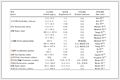
Guided by the results from docking simulations of hCYP1B1 docked with NA-1, a suite of small substitutes (including hydroxyl, amino, methoxyl, bromine, and chlorine) were modified at the R1 site. As listed in Table 1 and Fig. S2 (Supporting information), the structure-activity relationship (SAR) studies revealed that introducing a small polar group (such as hydroxyl or amino) at the C-4 site (R1) greatly reduced the anti-hCYP1B1 effects (IC50 > 1000 nmol/L). In sharp contrast, introducing a small non-polar group (such as methoxyl in NA-26 and NA-27) or a halogen atom (such as -Br or -Cl) at the C-4 site strongly enhanced the anti-hCYP1B1 effect, evidenced by the IC50 values of NA-15–NA-23. After that, the influence of linker length at the R2 part of 1,8-naphthalimides on anti-hCYP1B1 effects was investigated. The results demonstrated that the hydrophobic alkyl linker should be limited within four carbons (n ≤ 4). Presumably, the ring-shaped structure of heme preferred forming π-π stacking with the planar small molecule. As a result, compound NA-32 (introducing a phenethyl moiety at the north part) was found with potent anti-hCYP1B1 activity (IC50 < 5 nmol/L). On the contrary, introducing a hydrophilic group at the R2 site (NA-28–NA-31) will lead to the loss of the anti-hCYP1B1 effects (IC50 > 1000 nmol/L).
|
Table 1 The anti-hCYP1B1 activities of A-series naphthalimides. |

Next, the second-round structural optimization and SAR study were conducted by using NA-32 as a hit compound (Table 2, Fig. S3 in Supporting information). It has been reported previously that some halogenated compounds (especially fluorine-substituted compounds) showed improved anti-hCYP1B1 effects [23,25,37], while introducing the halogen substitutes could also enhance the cell-membrane permeability and metabolic stability [38-41]. In this context, three 4′-halogenated naphthalimides (NB-1, NB-2, NB-3) were designed and synthesized. As expected, introducing a fluorine- or chlorine-substitution on the north phenethyl (NB-1 and NB-2) slightly enhanced the anti-hCYP1B1 effects. By contrast, introducing a bromine atom at this site significantly reduced the anti-hCYP1B1 effect, evidenced by NB-3 (IC50 = 14.47 nmol/L) vs. NA-32 (IC50 = 3.30 nmol/L). It was also found that the fluorine atom at the para-position (NB-1) was more beneficial for hCYP1B1 inhibition than the fluorine-substitution at the ortho- (NB-4) and meta-site (NB-5). Introducing a heavy atom (such as Br-) or a methoxyl group on the north phenethyl could significantly reduce the anti-hCYP1B1 effects, while introducing dihalogenated substitutions on the north phenethyl slightly weaken the anti-hCYP1B1 effect. These findings suggested that only very minor modifications at the north phenethyl moiety were allowed to fit the narrow catalytic cavity of hCYP1B1. Similarly, these SARs were also observed in another series of 4-chlorine-substituted derivatives (NB-9–NB-14), while NB-10 was found as the most potent hCYP1B1 inhibitor (IC50 = 0.41 nmol/L). Furthermore, the ligand efficiency (LE) values of six 1,8-naphthalimide-type hCYP1B1 inhibitors were calculated to quantify their binding efficiency on hCYP1B1 [42]. As listed in Table S3 (Supporting information), the LE values of these hCYP1B1 inhibitors were all higher than 0.3, while NB-10 gained the highest LE score (0.56). These findings suggest that an F-substitution at the C4′ site of the north phenyl will significantly improve the binding affinity between the naphthalimides and hCYP1B1.
|
|
Table 2 The anti-hCYP1B1 effects of B-series naphthalimides. |


The SARs of naphthalimides as hCYP1B1 inhibitors were summarized in Fig. 1, including: (1) The length of the alkyl linker at part R2 should be limited to 4 carbons; (2) Halogen substitution at the C-4 site strongly improved the anti-hCYP1B1 effect; (3) Introducing a benzene ring at the north part of naphthalimide significantly enhanced the anti-hCYP1B1 effect; (4) A fluorine-substituted at the C′−4 site is beneficial for hCYP1B1 inhibition.

|
Download:
|
| Fig. 1. The SARs of naphthalimides as hCYP1B1 inhibitors. (A) The representative hCYP1B1 inhibitors of A-series. (B) The representative inhibitors in B-series and the SAR of naphthalimides as hCYP1B1 inhibitors. | |

Given that the majority of the reported hCYP1B1 inhibitors also acted as AhR agonists, which might counteract the effects of hCYP1B1 inhibitors in living systems [43-45]. Thus, it is desirable to seek the efficacious hCYP1B1 inhibitors without AhR activating effects. In this case, the AhR agonist effects of six potent halogenated-naphthalimide-type hCYP1B1 inhibitors (IC50 < 5 nmol/L) were tested in HEK-293T-AhR-luc cells. The results showed that NA-32, NB-9, and NB-14 presented similar AhR agonist effects to BaP (a known AhR agonist), whereas NB-1, NB-2, and NB-10 could not activate the transcriptional activity of AhR under identical conditions (Fig. S5 in Supporting information).
Next, we tested the cell-membrane permeability of both NB-10 and ANF (a potent hCYP1B1 inhibitor). As displayed in Fig. S6 (Supporting information), the cell membrane permeability of NB-10 was increased approximately 2-fold compared to ANF. After that, the dose-inhibition curves of NB-10 against cellular hCYP1B1 were carried out in CHO-1B1 cells utilizing E2 as an endogenous substrate for hCYP1B1. As depicted in Fig. S7 (Supporting information), NB-10 dose-dependently inhibited hCYP1B1-catalyzed E2 4-hydroxylation in living cells and showed an outstanding anti-hCYP1B1 effect at sub-nmol/L level (IC50 = 3.83 nmol/L). By contrast, ANF showed a moderate anti-hCYP1B1 effect in living cells (IC50 = 2.73 µmol/L). These observations clearly suggest that NB-10 is a cell-member permeable agent, which can effectively block the production of carcinogenic 4-OH-E2 in living cells.
Subsequently, a PTX-resistant lung cell line (H460/PTX) was constructed to test the anti-drug-resistant effects of NB-10. After long-term exposure to PTX, H460 showed significant drug resistance to PTX chemotherapy (Fig. S8 in Supporting information). Meanwhile, the intracellular protein levels of hCYP1B1 in H460/PTX cells were remarkably elevated when compared with H460 cells (Fig. S9 in Supporting information). The effects of NB-10 for overcoming the PTX resistance were then investigated in H460/PTX cells. As displayed in Fig. S10 (Supporting information), upon the addition of NB-10, the cytotoxicity of PTX was drastically enhanced by 7.2-fold in H460/PTX cells. By contrast, ANF (a previously reported potent hCYP1B1 inhibitor) slightly reversed the PTX resistance in H460/PTX cells (~1-fold enhancing).
Subsequent flow cytometry assays showed that NB-10 (5 µmol/L) significantly enhanced PTX-induced apoptosis of H460/PTX cells with a total apoptotic rate of 20%, which was much higher than that treated with NB-10 or PTX alone (Fig. S11 in Supporting information). Moreover, the clonogenic assays verified that NB-10 could dose-dependently enhance the inhibitory effects of PTX in cellular clonogenicity (Fig. S12 in Supporting information). Meanwhile, western blot analysis showed that NB-10 could not regulate hCYP1B1 expression levels in living cells (Fig. S13 in Supporting information). These results clearly demonstrate that NB-10 is a promising agent for overcoming PTX resistance via potently inhibiting hCYP1B1 activity.
Encouraged by the above in vitro findings, we further evaluate the ability of NB-10 to enhance PTX-chemosensitivity in vivo. The animal experiments were approved by the Animal Ethics Committee of the Shanghai University of Traditional Chinese Medicine. Experimental mice were acclimatized to laboratory conditions (23 ℃, 12 h/12 h light/dark, 50% humidity, ad libitum access to food and water) for 1 week before assays. Prior to in vivo pharmacological tests, we first investigated the safety profiles of NB-10. As depicted in Figs. 2A–D, following oral administration of NB-10 at a high dose of 100 mg/kg, no abnormal variations were observed in the body weight, biochemical colorimetric assays, and histological examinations of the main organs. These findings clearly showed that NB-10 showed favorable safety profiles in mice. After that, the anti-cancer efficacy of the drug combination (PTX combined with NB-10) was further investigated using PTX-resistance xenograft mice. As depicted in Figs. 2E–H, NB-10 alone [100 mg/kg per day, intragastrically (i.g.)] hardly affected the tumor growth, while the combination of NB-10 and PTX presented remarkable anti-cancer effects compared with the PTX-treated group [2 mg/kg per 3 days, intraperitoneally (i.p.)]. Meanwhile, the Ki67 immunohistochemistry assays showed that among all groups, the combination of NB-10 and PTX presented the best ability to resist tumor proliferation and promote tumor apoptosis. These findings demonstrated that NB-10 significantly improved the chemosensitivity of PTX.

|
Download:
|
| Fig. 2. (A) Schematic illustration of the acute toxicity assay of NB-10. The body weight (B), blood indexes (C), and histopathological studies (D) of mice after oral administration of NB-10 (100 mg/kg) (n = 6). PTX (2 mg/kg per 3 days, i.p.) combined with NB-10 (100 mg/kg per day, i.g.) enhanced the anti-tumor efficiency, tumor volume (E), tumor images (F), tumor weight (G), H&E staining and Ki67 immunohistochemistry (H) (n = 7). Scale bar: 100 µm. Data were expressed as mean ± standard deviation (SD). P < 0.05, ***P < 0.001. ALP, alkaline phosphatase; ALT, alanine aminotransferase; AST, aspartate aminotransferase; GLU, glucose; TC, serum total cholesterol. | |

To further elucidate the anti-hCYP1B1 mechanism of NB-10, a suite of inhibition kinetics was conducted by using increasing concentrations of 7-ethoxyresorufin (7-ER). As shown in Figs. 3A, B, and Figs. S15, S16 (Supporting information), NB-10 increased the apparent Km values of hCYP1B1-induced ethoxyresorufin O-deethylase (EROD) reaction but showed negligible effects on the reaction velocity, indicating that NB-10 competed with 7-ER for the binding in the active pocket of hCYP1B1, with the Ki value of 0.15 nmol/L.

|
Download:
|
| Fig. 3. (A) Inhibition kinetic plots of NB-10 against hCYP1B1-induced EROD. (B) The Lineweaver-Burk plots of Fig. 3A. (C) The RMSD analysis of compound NB-10 bound on the catalytic cavity of hCYP1B1. (D) 2D interactions between NB-10 and the surrounding residues in the catalytic cavity of hCYP1B1. (E) The stereo view of the crystal structure of hCYP1B1, and the detailed interactions between NB-10 (yellow) and the surrounding residues in the catalytic cavity of hCYP1B1. | |

The anti-hCYP1B1 mechanism of NB-10 was also elucidated by molecular dynamics simulations [46]. As the root mean square deviation (RMSD) analysis depicted in Fig. 3C, slight fluctuations were observed when NB-10 was bound at the catalytic pocket of hCYP1B1 during 100 ns simulations, denoting that NB-10 could be well-fitted into the catalytic pocket of hCYP1B1 with tiny conformational changes. After that, the quality threshold algorithm was used to conduct clustering analysis for molecular dynamic trajectory [47]. The interaction analysis was conducted based on the most populous cluster derived from the 100-nanosecond dynamic trajectory of the NB-10-hCYP1B1 complex. The detailed 2D interaction analysis (Fig. 3D) showed that the 1,8-naphthalimide scaffold of NB-10 created π-π stacking interactions with Phe231 and Phe268, as well as the amide-π stacking with Gly329, while the benzene ring at the northern part of NB-10 created π-alkyl interactions with Leu509 and Ala330. Meanwhile, as shown in Fig. 3E, the 4′-fluoro atom of NB-10 was oriented toward the catalytic heme iron, which might influence the formation of Fe(V)-oxo complex during the cytochrome P450 catalytic cycle [25]. These observations shed light on the indispensable interactions that significantly contributed to the stable binding of NB-10 in the catalytic pocket of hCYP1B1, which well-explained why NB-10 was identified as a potent competitive hCYP1B1 inhibitor.
It is well-known that strong inhibition of human CYPs is one of the most common causes of clinically relevant pharmacokinetic drug/herb-drug interactions, which may result in serious adverse drug reactions [48,49]. Therefore, the inhibitory assessments of NB-10 against other major hepatic CYP enzymes were carried out subsequently. As shown in Fig. S17 (Supporting information), NB-10 showed weak inhibitory activity against most tested human hepatic CYPs except for the moderate anti-hCYP1A effect (residual activity of 35% at 1 µmol/L). These findings suggest that NB-10 shows acceptable selectivity towards hCYP1B1 over other human CYPs, indicating that this agent is unlikely to cause drug-drug interactions via inhibiting the major hepatic CYPs in humans. Furthermore, the drug-like properties of NB-10 were predicted by a convenient and practical platform (http://www.swissadme.ch/) [50], and some key parameters were listed in Table S4 (Supporting information), suggesting NB-10 may possess an acceptable druggability.
In summary, more than forty 1,8-naphthalimide derivatives were designed, synthesized, and developed as potent hCYP1B1 inhibitors via integrating structure-based drug design and biochemical assays. After two rounds of structural modifications and SAR studies, the results suggested that introducing a benzene ring at the north part and a halogen atom at the C-4 site could significantly enhance the anti-hCYP1B1 effects of 1,8-naphthalimides. Among all tested compounds, NB-10 has emerged as the most potent hCYP1B1 inhibitor (IC50 = 0.41 nmol/L), showing excellent anti-hCYP1B1 activity in living cells (IC50 = 3.83 nmol/L) and acceptable selectivity towards hCYP1B1 over human hepatic P450 enzymes. Further assays suggested that NB-10 can significantly potentiate the anti-cancer effects of PTX in vitro and in vivo. Collectively, halogenated-naphthalimides have been identified as an ideal scaffold for constructing hCYP1B1 inhibitors, while NB-10 has emerged as a promising lead compound for developing more efficacious anti-cancer agents to overcome hCYP1B1-associated drug resistance.
Declaration of competing interestThe authors declare that they have no known competing financial interests or personal relationships that could have appeared to influence the work reported in this paper.
CRediT authorship contribution statementYuan Xiong: Writing – original draft, Visualization, Methodology. Lan-Hui Qin: Methodology. Bei Zhao: Visualization, Methodology. Lei-Zhi Xu: Resources, Methodology. Yu-Fan Fan: Visualization. Tian Tian: Methodology. Hai-Rong Zeng: Methodology. Ting Liu: Resources. Jian Huang: Validation, Investigation. Jian-Ming Sun: Supervision, Funding acquisition. Zhen-Hao Tian: Visualization, Methodology. Guang-Bo Ge: Writing – review & editing, Supervision, Funding acquisition, Data curation, Conceptualization.
AcknowledgmentsThis study was supported by the National Natural Science Foundation of China (Nos. 82273897, U23A20516, 32101202), Organizational Key Research and Development Program of Shanghai University of Traditional Chinese Medicine (No. 2023YZZ02), Shanghai Municipal Health Commission's TCM research project (No. 2022CX005), Innovation Team and Talents Cultivation Program of National Administration of Traditional Chinese Medicine (No. ZYYCXTDD-202004), Pudong Institute of Clinical Chinese Medicine (No. YC-2023–0603). The "Fourteenth Five-Year Plan" Traditional Chinese Medicine Specialty Project for the Construction of Andrology Departments in TCM (No. ZYTSZK1–4), and the State Key Laboratory of Fine Chemicals, Dalian University of Technology (No. KF 2202), and the Fundamental Research Funds for the Central Universities (No. G2024KY05106).
Supplementary materialsSupplementary material associated with this article can be found, in the online version, at doi:10.1016/j.cclet.2024.110812.
| [1] |
G.I. Murray, W.T. Melvin, W.F. Greenlee, M.D. Burke, Annu. Rev. Pharmacol. Toxicol. 41 (2001) 297-316. DOI:10.1146/annurev.pharmtox.41.1.297 |
| [2] |
V.P. Androutsopoulos, I. Spyrou, A. Ploumidis, et al., PLoS One 8 (2013) e82487. DOI:10.1371/journal.pone.0082487 |
| [3] |
Q.Shen H.Zhou, J. Fu, et al., J Clin. Lab. Anal. 34 (2020) e23312. DOI:10.1002/jcla.23312 |
| [4] |
J.J. Wu, X.Q. Guan, Z.R. Dai, et al., Coordin. Chem. Rev. 427 (2021) 213600. DOI:10.1016/j.ccr.2020.213600 |
| [5] |
Z. Dai, Y. Wu, Y. Xiong, Med. Res. Rev. 44 (2024) 169-234. DOI:10.1002/med.21982 |
| [6] |
R. Dutour, D. Poirier, Eur. J. Med. Chem. 135 (2017) 296-306. DOI:10.1016/j.ejmech.2017.04.042 |
| [7] |
X. Mao, H. Li, J. Zheng, Drug. Metab. Rev. 55 (2023) 1-49. DOI:10.1080/03602532.2023.2177671 |
| [8] |
T. Shimada, Drug. Metab. Pharmacokinet. 21 (2006) 257-276. DOI:10.2133/dmpk.21.257 |
| [9] |
S. Sinha, S. Aizawa, Y. Nakano, et al., Nat. Commun. 14 (2023) 2651. DOI:10.1038/s41467-023-38406-8 |
| [10] |
Y.J. Kwon, S. Shin, Y.J. Chun, Arch. Pharm. Res. 44 (2021) 63-83. DOI:10.1007/s12272-021-01306-w |
| [11] |
L. Umannová, M. Machala, J. Topinka, et al., Mutat. Res. 640 (2008) 162-169. DOI:10.1016/j.mrfmmm.2008.02.001 |
| [12] |
O. Hankinson, Drug. Metab. Rev. 48 (2016) 342-350. DOI:10.1080/03602532.2016.1197240 |
| [13] |
T.M. Sissung, D.K. Price, A. Sparreboom, et al., Mol. Cancer Res. 4 (2006) 135-150. DOI:10.1158/1541-7786.MCR-05-0101 |
| [14] |
F. Li, W. Zhu, F.J. Gonzalez, Pharmacol. Ther. 178 (2017) 18-30. DOI:10.1016/j.pharmthera.2017.03.007 |
| [15] |
M.C. McFadyen, M.E. Cruickshank, I.D. Miller, et al., Br. J. Cancer 85 (2001) 242-246. DOI:10.1054/bjoc.2001.1907 |
| [16] |
G.D.'. Uva, D. Baci, A. Albini, et al., Cancer Treat. Rev. 63 (2018) 1-18. DOI:10.1016/j.ctrv.2017.10.013 |
| [17] |
J. Mao, D. Wang, P. Xu, et al., J. Med. Chem. 65 (2022) 16451-16480. DOI:10.1021/acs.jmedchem.2c01306 |
| [18] |
V.R. Sonawane, M.U.M. Siddique, L. Gatchie, et al., Eur. J. Pharm. Sci. 131 (2019) 177-194. DOI:10.1016/j.ejps.2019.02.016 |
| [19] |
B. Yuan, G. Liu, Z. Dai, et al., Cancers 14 (2022) 5641. DOI:10.3390/cancers14225641 |
| [20] |
Y. Xue, T. Yin, S. Yuan, et al., Drug Resist. Updat. 77 (2024) 101151. DOI:10.1016/j.drup.2024.101151 |
| [21] |
C. Chen, Y. Yang, Y. Guo, et al., Cell. Death. Dis. 14 (2023) 271. DOI:10.1038/s41419-023-05803-2 |
| [22] |
L. Zhou, W. Chen, C. Cao, et al., Eur. J. Med. Chem. 189 (2020) 112028. DOI:10.1016/j.ejmech.2019.112028 |
| [23] |
P. Chen, S. Wang, C. Cao, et al., Bioorg. Chem. 116 (2021) 105295. DOI:10.1016/j.bioorg.2021.105295 |
| [24] |
J. Wu, W. Jia, D. Min, et al., Am. J. Chin. Med. 52 (2024) 2403-2421. DOI:10.1142/S0192415X24500915 |
| [25] |
J. Cui, Q. Meng, X. Zhang, et al., J. Med. Chem. 58 (2015) 3534-3547. DOI:10.1021/acs.jmedchem.5b00265 |
| [26] |
J.Y. Dong, G. Huang, Q. Cui, et al., Eur. J. Med. Chem. 209 (2021) 112895. DOI:10.1016/j.ejmech.2020.112895 |
| [27] |
A.C. Hachey, A.D. Fenton, D.K. Heidary, et al., J. Med. Chem. 66 (2023) 398-412. DOI:10.1021/acs.jmedchem.2c01368 |
| [28] |
J.Y. Dong, Q. Zhang, Q. Cui, et al., ChemMedChem 11 (2016) 2102-2118. DOI:10.1002/cmdc.201600316 |
| [29] |
F. Zhang, B. Zhao, Y.F. Fan, et al., Acta Pharmacol. Sin. B 15 (2025) 508-525. DOI:10.1016/j.apsb.2024.09.014 |
| [30] |
J. Liu, J. Sridhar, M. Foroozesh, Molecules 18 (2013) 14470-14495. DOI:10.3390/molecules181214470 |
| [31] |
M. Parekh, Y. Adhikari, N. Deshpande, et al., Exp. Eye Res. 248 (2024) 110089. DOI:10.1016/j.exer.2024.110089 |
| [32] |
A.G. Bart, K.L. Harris, E.M.J. Gillam, et al., J. Biol. Chem. 295 (2020) 5640-5653. DOI:10.1074/jbc.RA119.010727 |
| [33] |
E.F. Johnson, C.D. Stout, J. Biol. Chem. 288 (2013) 17082-17090. DOI:10.1074/jbc.R113.452805 |
| [34] |
R.S. Ferreira, A.D. Andricopulo, Curr. Pharm. Des. 20 (2014) 687-693. DOI:10.2174/138161282005140214161949 |
| [35] |
G.F. Hao, G.F. Yang, C.G. Zhan, Drug. Discov. Today 17 (2012) 1121-1126. DOI:10.1016/j.drudis.2012.06.018 |
| [36] |
J.Y. Lee, H. Cho, S. Thangapandian, et al., ACS Med. Chem. Lett. 9 (2018) 1247-1252. DOI:10.1021/acsmedchemlett.8b00409 |
| [37] |
J.Y. Dong, Z.T. Wang, J. Cui, et al., Eur. J. Med. Chem. 187 (2020) 111938. DOI:10.1016/j.ejmech.2019.111938 |
| [38] |
E. Berrino, B. Michelet, A. Martin-Mingot, et al., Angew. Chem. Int. Ed. 60 (2021) 23068-23082. DOI:10.1002/anie.202103211 |
| [39] |
E.P. Gillis, K.J. Eastman, M.D. Hill, et al., J. Med. Chem. 58 (2015) 8315-8359. DOI:10.1021/acs.jmedchem.5b00258 |
| [40] |
V. Govindaraj, H. Ungati, S.R. Jakka, et al., Chemistry 25 (2019) 11180-11192. DOI:10.1002/chem.201902243 |
| [41] |
L.M. Zhao, C. Pannecouque, E.D. Clercq, et al., Chin. Chem. Lett. 34 (2023) 108261. DOI:10.1016/j.cclet.2023.108261 |
| [42] |
S.K. Gupta, A. Mandal, A. Ghosh, et al., Sci. Rep. 14 (2024) 28045. DOI:10.1038/s41598-024-77236-6 |
| [43] |
M. Wang, N. Luo, Y. Gao, et al., Sci. Total. Environ. 916 (2024) 170030. DOI:10.1016/j.scitotenv.2024.170030 |
| [44] |
T. Yang, Y.L. Feng, L. Chen, et al., Crit. Rev. Toxicol. 49 (2019) 445-460. DOI:10.1080/10408444.2019.1635987 |
| [45] |
L. Lin, Y. Dai, Y. Xia, Eur. J. Med. Chem. 244 (2022) 114845. DOI:10.1016/j.ejmech.2022.114845 |
| [46] |
R. He, Z. Dai, M. Finel, et al., Drug. Metab. Dispos. 10 (2023) 1254-1272. |
| [47] |
Y. Yang, Y. Xiong, G. Zhu, et al., Chem. Biol. Interact. 378 (2023) 110501. DOI:10.1016/j.cbi.2023.110501 |
| [48] |
F. Zhang, W. Liu, J. Huang, et al., Acta Pharmacol. Sin. 43 (2022) 1072-1081. DOI:10.1038/s41401-021-00697-2 |
| [49] |
Y. Wu, J.H. Shi, G.H. Zhu, et al., Eur. J. Med. Chem. 258 (2023) 115552. DOI:10.1016/j.ejmech.2023.115552 |
| [50] |
A. Daina, O. Michielin, V. Zoete, et al., Sci. Rep. 7 (2017) 42717. DOI:10.1038/srep42717 |