 2025, Vol. 36


b Institute of Biomedical Photonics and Sensing, School of Life Science and Technology, Xi'an Jiaotong University, Xi'an 710049, China;
c Department of The Second Affiliated Hospital, School of Medicine, The Chinese University of Hong Kong, Shenzhen (CUHK-Shenzhen), Shenzhen 518172, China
Room temperature phosphorescence (RTP) materials with stimulus responsiveness have received considerable interest due to their excellent and tunable phosphorescent properties, which exhibit a great potential in numerous fields such as optical recording, information encryption, and sensing [1-5]. Meanwhile, the development of stimuli-responsive phosphorescent materials has greatly promoted our understanding of RTP phenomena by studying the effects of external stimuli such as heat, water, or mechanical force on excited state dynamics [6,7]. In recent years, the research on chromic phosphorescent materials mainly focuses on thermochromism and mechanochromism [8-13], while only a few cases about the important electrochromic phosphorescent materials have been reported to date.
Electrophosphorochromism, which is defined as the ability of materials to change their phosphorescent emission by electrical stimuli [14]. Currently, the electrochromic phosphorescent materials are mainly concentrated in metal complexes (mostly viologen derivatives), and the electrophosphorochromism can be achieved by controlling their redox state under the electrical stimuli. For example, Kobayashi's group reported a kind of Eu(Ⅲ) complexes with electroresponsive switching of red luminescence by using the multi-colored electrochromism of viologen derivatives [15]. Furthermore, He's group reported a series of electrochromic phosphorescent bismuth-bridged viologen analogues (BiV2+), and the good electrochromic switching is due to the unique redox properties of BiV2+ [16]. Although these metal complexes have the advantages of short response time and tunable luminescence color, the drawbacks of high cost (the use of noble metals) and ultrashort lifetimes (below microsecond level) limit their development. Compared with metals-contained phosphorescent materials, pure organic RTP materials are regarded as the promising alternatives due to their better compatibility, lower cost, and richer diversity, but pure organic materials with electrophosphorochromism have not been achieved [17].
Herein, for the first time, we reported a kind of pure organic host-guest system (BA@CzPA) with electrophosphorochromism by melt blending treatment of (9-phenyl-9H-carbazol-2-yl)boronic acid (CzPA) and boric acid (BA). The obtained BA@CzPA are composed of CzPA (guest) and a two-component host (metaboric acid (MBA) and B2O3 formed by different degrees of dehydration of BA), which display the superior RTP performance. Importantly, BA@CzPA show an electrophosphorochromism phenomenon, and their RTP emission gradually red-shifts from 440 nm to 548 nm as the current density rises, which is proven to be attributed to the change of host matrices from MBA to B2O3 under the electrical stimuli (Scheme 1). Because of unique phosphorescent emission, the formed BA@CzPA can be well used to develop correlation color temperature (CCT) tunable white light emitting diodes (WLEDs). To the best of our knowledge, this is the first case about the design of pure organic electrophosphorochromism materials, which is of great significance for promoting the development of electrochromic phosphorescent materials.

|
Download:
|
| Scheme 1. Mechanism diagram of electrophosphorochromism phenomenon of the BA@CzPA. | |

Through a one-step melt blending treatment of BA and CzPA, the BA@CzPA are obtained (Fig. S1 in Supporting information). The RTP performances of BA@CzPA are optimized by adjusting the ratio of precursors and melt temperatures. Results show that BA@CzPA display the best phosphorescent efficiency when the mass ratio of BA to CzPA is 500:1 and the melt temperature is 200 ℃ (Fig. S2 in Supporting information). Under optimal reaction conditions, the production yield of BA@CzPA can reach up to 60.4% (Fig. S3 in Supporting information), implying that this method has a production capability of gram scale.
The proposed BA@CzPA exhibit excellent solid-state optical performance. As shown in Fig. 1a, BA@CzPA have a maximum photoluminescence (PL) emission at about 364 nm when excited at 270 nm. Meanwhile, BA@CzPA exhibit strong RTP with three emission peaks at a single excitation wavelength (270 nm), and the maximum phosphorescence (phos.) emission is located at 440 nm. 3D phos. spectra display that the BA@CzPA have an excitation-independent emission (Fig. 1b). Notably, the phos. emssion peak of the BA@CzPA at 77 K is highly similar to that of CzPA tetrahydrofuran solution (Fig. S4 in Supporting information), confirming that the blue RTP emission of BA@CzPA is originated from CzPA guest. As a comparison, CzPA and BA are separately heat-treated using the same method as the BA@CzPA. The heated BA has a maximum phos. emission at 411 nm when excited at 230 nm, with a RTP lifetime of 2.02 s and a phos. quantum yield (QY) of 4.8% (Fig. S5 in Supporting information). However, the peak shape of RTP emission of heated BA is completely inconsistent with that of the BA@CzPA, indirectly indicating that CzPA is responsible for the RTP emission of BA@CzPA. Unlike heated BA, the heated CzPA does not have luminescent ability, but as the amount of BA added increases, the formed BA@CzPA exhibit gradually enhanced blue RTP (Fig. S6 in Supporting information), which means that BA can protect CzPA during the heating process. Meanwhile, the BA@CzPA show a high stability because there are no significant changes in the phos. intensities of BA@CzPA after continuous ultraviolet (UV) irradiation for 12 h or 80 days of storage (Figs. S7 and S8 in Supporting information). In addition, thermogravimetric (TG) analysis displays that there is a slow and small weight loss as the temperature increases (Fig. S9 in Supporting information). Generally, weight loss below about 200 ℃ is attributed to physisorbed water and water bound by hydrogen bonding. Further weight loss at higher temperatures may be due to the pyrolysis of CzPA molecules or the dehydration of the MBA matrices.

|
Download:
|
| Fig. 1. Optical properties of BA@CzPA. (a) Prompt and delay PL spectra, and the corresponding excitation spectra of BA@CzPA. Delay/prompt PL-ex 270 nm represent delay or prompt PL emission spectra at 270 nm excitation. Delay PL-em 440 nm represents delay PL excitation spectrum at 440 nm emission. Prompt PL-em 364 nm represents prompt PL excitation spectrum at 364 nm emission. Delay time: 5 ms. (b) 3D phos. spectra of BA@CzPA. (c) Phos. lifetimes of BA@CzPA, BA, and CzPA. (d) PL, phos., and fluorescence (FL) QYs of BA@CzPA. (e) Comparison of phos. properties (phos. QYs and lifetime) of common RTP materials. (f) Photographs of BA@CzPA powder taken before and after removing 302 nm UV light. | |

Remarkably, the BA@CzPA show an ultralong lifetime of up to 4.23 s (Fig. 1c), while also achieving the high PL QY of 35.9% and phos. QY of 10.9% (Fig. 1d and Fig. S10 in Supporting information). In comparison, BA and CzPA precursors only have short lifetimes of 0.19 s and 0.13 s, respectively (Fig. 1c). Meanwhile, BA and CzPA have been reported to only emit weak phos. emission [18,19]. In light of this, by the facile melt blending, both RTP lifetime and intensity have been greatly improved, with the lifetimes of BA@CzPA increased by 22.3 and 32.5 times compared to BA and CzPA, respectively. Subsequently, a series of BA@CzPA are prepared by using BA or CzPA molecules with different purities from other manufacturers (Fig. S11 in Supporting information), showing phos. emission spectra and lifetime similar to BA@CzPA used. This reveals that the efficient RTP of BA@CzPA is not caused by impurities. Compared with most RTP materials (Fig. 1e) [20-39], the BA@CzPA not only own an ultralong lifetime, but also show a good phos. efficiency. The phosphorescent photographs demonstrate the superior RTP performance of BA@CzPA. As shown in Fig. 1f, the BA@CzPA powder displays a bright PL emission under 302 nm UV irradiation. After switching off UV light, the luminescence observed by our naked eyes can persist approximately 26 s, indicating an ultralong RTP feature.
Furthermore, scanning electron microscopy (SEM) image exhibits that BA@CzPA have an irregular morphology (Fig. 2a). By transmission electron microscopy (TEM), BA@CzPA are observed to have a good crystallinity (Fig. 2b). Powder X-ray diffractometer (XRD) patterns clearly reveal the structure of BA@CzPA. As shown in Fig. 2c, there are six sharp peaks at 13.01°, 14.48°, 20.19°, 21.05°, 27.85°, and 28.93° appear in the diffraction band of BA@CzPA, among which the diffraction peaks at 14.48°, and 27.85° belong to B2O3 [40], while the diffraction peaks at 13.01°, 20.19°, 21.05°, and 28.93° belong to MBA [22]. This result confirms that B2O3 and MBA exist as the host matrices in the BA@CzPA. Meanwhile, X-ray photoelectron spectroscopy (XPS) spectra exhibit that the BA@CzPA are composed of carbon (5.6 at%), nitrogen (0.5 at%), oxygen (52.1 at%), and boron (41.8 at%) (Fig. 2d). High-resolution C1s spectrum (Fig. 2e) displays three characteristic peaks at 283.9 eV (C-B), 284.9 eV (C=C), and 286.3 eV (C—N), respectively. High-resolution N 1s spectrum (Fig. 2f) shows a typical peak at 402.3 eV, which is ascribed to pyrrolic nitrogen. Moreover, high-resolution B1s spectrum (Fig. 2g) shows that BA@CzPA contain three characteristic peaks at 192.6, 193.6, and 194.2 eV, which are ascribed to BCO2, B2O3, and B-O, respectively [41-43]. These results indicate that only a small number of CzPA exist as the guest inside the BA@CzPA, considering that there are no diffraction peaks corresponding to CzPA in the XRD pattern of BA@CzPA (Fig. S12 in Supporting information). Fourier transform infrared (FT-IR) spectrum of BA@CzPA shows a characteristic absorption band centered at about 3218 cm-1 (Fig. 2h), which is attributed to the O—H groups inside the BA@CzPA, and the broad band further suggests that water molecules are bound by hydrogen bonds with O—H groups.

|
Download:
|
| Fig. 2. Morphological and structural characterizations of BA@CzPA. (a) SEM and (b) TEM images of BA@CzPA. (c) XRD patterns of BA@CzPA, B2O3, and MBA as well as standard MBA diffraction peaks (PDF card: 22–1109). (d) XPS, (e) high-resolution C 1s, (f) high-resolution N 1s, (g) high-resolution B 1s, and (h) FT-IR spectra of BA@CzPA. | |

Based on this above discussion, the possible structural model and RTP enhancement mechanism have been proposed. During the heat treatment process of BA and CzPA, the inter-molecular dehydration between BA and boronic group of CzPA can occur [41,44,45]. Subsequently, a possible structural unit (CzPA-B3O3) is formed by intra-molecular dehydration (Fig. S13 in Supporting information). Meanwhile, BA precursors can also undergo intra-molecular dehydration at high temperature, and then MBA and B2O3 can be formed due to different degrees of dehydration. In light of this, BA@CzPA are comprised of host matrices (MBA and B2O3) and CzPA guest molecules covalently linked to the matrices (CzPA-B3O3). To better understand the RTP enhancement phenomenon of BA@CzPA compared to CzPA, density functional theory (DFT) calculations have been carried out (Fig. 3). The singlet-triplet energy gap (ΔEST) value of the structural unit CzPA-B3O3 (0.095 eV) is obviously smaller than that of CzPA (0.262 eV).

|
Download:
|
| Fig. 3. The ΔEST and SOCME values of CzPA and the structural unit CzPA-B3O3 based on the B3LYP/6–31 G (d, p) level. | |

This reduced ΔEST suggests that the covalent interaction between CzPA and BA effectively promotes the intersystem crossing (ISC) process from S1 to T3. Meanwhile, spin-orbit coupling matrix element (SOCME) between S1 and T3, also reflecting the efficiency of the ISC process, is calculated. Results (Fig. 3) show that the SOCME value for the CzPA-B3O3 (0.197 cm-1) is basically consistent with that of the CzPA (0.198 cm-1), further indicating that the enhanced ISC efficiency is mainly attributed to the reduced ΔEST. Additionally, strong hydrogen bonding and confinement effect caused by the host-guest interaction can effectively suppress molecular motion and reduce nonradiative decay [46-48], thereby which greatly enhances the RTP efficiency of BA@CzPA. The blueshifted RTP emission of BA@CzPA compared to CzPA molecules clearly implies an increase in structural rigidity (Fig. S4 in Supporting information).
Most importantly, the proposed BA@CzPA show the supersor electrophosphorochromism property, indicating a great potential for use in WLEDs. WLEDs are fabricated by combining 265 nm UV chips to evaluate the device performance of the proposed BA@CzPA (Fig. 4a). As the current density increases from 0 mA to 200 mA, and the RTP emission can gradually red-shift from 440 nm to 548 nm (Fig. 4b). Meanwhile, extending the current time has almost no effect on the emission spectra of the device, suggesting that the redshifted RTP emission should not be caused by the thermal effects (Fig. S14 in Supporting information). Furthermore, the RTP emission of the BA@CzPA remains unchanged after electrical stimulation, even when the current drops from 200 mA to 10 mA (Fig. S15 in Supporting information), indicating that electrically-induced redshifted RTP phenomenon is irreversible. Accordingly, the WLEDs at various currents display white lights with different CCT (Fig. 4b, inset). In Commission Internationale de l'E'clairage (CIE) 1931 color spaces, the chromaticity coordinates of WLEDs at different currents are marked (Fig. 4c). Since the RTP emission of BA@CzPA is mainly located in the blue region, WLEDs have a high CCT of 10, 396 K under a drive current of 10 mA (Table S1 in Supporting information). However, the CCT of the WLEDs can gradually decrease to 5307 K as the current increases to 200 mA. XRD is used to reveal the electrophosphorochromism mechanism of BA@CzPA. Results show that as the current increases, the diffraction peaks corresponding to MBA gradually disappear, especially at 13.01° and 20.19° (Fig. 4d). When the current increases to 200 mA, MBA can completely transform into B2O3, revealing electrical-induced change of host matrices from MBA to B2O3. In order to further reveal the transformation of the host matrices, heated BA without CzPA is subjected to electrical treatment. According to the changes in XRD patterns (Fig. S16 in Supporting information), it can be confirmed that MBA can be transformed into B2O3 under the electrical stimuli.

|
Download:
|
| Fig. 4. Applications of BA@CzPA. (a) Schematic diagram of WLEDs. (b) The emission spectra of WLEDs device under different drive currents (inset: Photographs of the as-fabricated WLEDs lighted ones under different drive currents). Excitation: 265 nm. The duration time of applied current: 1 min. (c) The chromaticity coordinates of WLEDs with CCT of 10, 396, 8866, 6956, 5997, and 5307 K at different currents in CIE 1931 color spaces. (d) XRD patterns of BA@CzPA after the treatment of different currents. | |

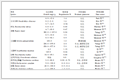
Generally, the luminogens in an amorphous state show an energetically accessible conical intersection or excited-state minimum with a small band gap, causing a redshifted emission [49-51]. On the contrary, conformational rigidification can result in a blueshift in phosphorescent emission, as the conical intersection and excited-state minimum become energetically inaccessible [49]. Therefore, the redshifted RTP emission from 440 nm to 548 nm under the electrical stimuli is attributed to the structural rigidity change of host matrices from high-crystallinity MBA to low-crystallinity B2O3. Meanwhile, three other phenylboronic acid molecules are used as substitutes for CzPA to synthesize the host-guest systems. The results show that their phos. emissions exhibit a red shift under the electrical stimuli (Fig. S17 in Supporting information), further suggesting that the electrically-induced redshifted RTP is mainly due to the structural change of host matrices. Moreover, the phos. emission spectra of three host-guest systems change differently with increasing current, indicating that guest molecules also have a small influence on electrically-induced phos. emission. Compared to metal complexes with electrophosphorochromism (Table 1 [14-16,52,53]), the obtained BA@CzPA have numerous advantages such as low cost (metal-free feature), ultralong lifetime (4.23 s), and high stability, showing a great potential in the field of electrophosphorochromism.
|
Table 1 Comparison of RTP performances and response mechanisms of common electrophosphorochromism materials. |
In conclusions, we have successfully constructed pure organic host-guest system (BA@CzPA) with electrophosphorochromism for the first time. The proposed BA@CzPA exhibit superior RTP performance, including 4.23 s of ultralong lifetime and 10.9% of phos. QY, which is attributed to the synergistic effects of covalent, hydrogen bonding, and confinement effect. Most importantly, the BA@CzPA show an electrically-induced red-shifted RTP emission property because of the change of host matrices from MBA to B2O3 under the electrical stimuli. Benefiting from this unique electrophosphorochromism feature, the BA@CzPA can be well used to fabricate CCT-tunable WLEDs. This work introduces an electrically responsive host matrices, which not only provides a great possibility for the preparation of pure organic materials with electrophosphorochromism features but also shows a good application prospect in display, smart windows and electronic papers, etc.
Declaration of competing interestThe authors declare that they have no known competing financial interests or personal relationships that could have appeared to influence the work reported in this paper.
CRediT authorship contribution statementYa-Ting Gao: Writing – original draft, Methodology, Investigation, Formal analysis. Yi-Lin Zhu: Formal analysis. Xiao-Yuan Wang: Formal analysis. Li-Ya Liang: Investigation. Meng-Li Liu: Investigation. Shuai Chang: Investigation. Han-Bin Xu: Investigation. Da-Wei Li: Writing – review & editing, Supervision, Project administration, Funding acquisition. Bin-Bin Chen: Writing – review & editing, Supervision, Project administration, Conceptualization.
AcknowledgmentsThe authors appreciate the financial support from the National Natural Science Foundation of China (No. 22176058), Science and Technology Commission of Shanghai Municipality (Nos. 24DX1400200, 22ZR1416800, and 23ZR1416100), the Program of Introducing Talents of Discipline to Universities (No. B16017), and the Fundamental Research Funds for the Central Universities (No. 222201717003). We thank the Research Center of Analysis and Test of East China University of Science and Technology for help with the characterization.
Supplementary materialsSupplementary material associated with this article can be found, in the online version, at doi:10.1016/j.cclet.2025.110855.
| [1] |
Y. Shi, Y. Zeng, P. Kucheryavy, et al., Angew. Chem. Int. Ed. 61 (2022) e202213615. DOI:10.1002/anie.202213615 |
| [2] |
L.Y. Liang, Y.T. Gao, S. Chang, et al., J. Mater. Chem. C 12 (2024) 1945-1951. DOI:10.1039/D3TC04404A |
| [3] |
P.C. Xue, J.P. Ding, P.P. Wang, R. Lu, J. Mater. Chem. C 4 (2016) 6688-6706. DOI:10.1039/C6TC01503D |
| [4] |
S.H. Li, Y.J. Xie, A.S. Li, et al., Sci. China Mater. 64 (2021) 2813-2823. DOI:10.1007/s40843-021-1658-9 |
| [5] |
K. Kawaguchi, N. Sugawara, M. Ito, Y. Kubo, Chem. Eur. J. 30 (2024) e202303924. DOI:10.1002/chem.202303924 |
| [6] |
Z.C. Han, P. Li, Y.C. Deng, H.R. Li, Chem. Eng. J. 415 (2021) 128999. DOI:10.1016/j.cej.2021.128999 |
| [7] |
L. Gao, Y.F. Zhang, X.H. Chen, et al., Adv. Optical Mater. 9 (2021) 2101284. DOI:10.1002/adom.202101284 |
| [8] |
X. Xu, B. Yan, Adv. Opt. Mater. 10 (2022) 2200451. DOI:10.1002/adom.202200451 |
| [9] |
T. Nishiuchi, H. Sotome, R. Fukuuchi, et al., Aggregate 2 (2021) e126. DOI:10.1002/agt2.126 |
| [10] |
T. Wang, Z.B. Hu, X.C. Nie, et al., Nat. Commun. 12 (2021) 1364. DOI:10.1038/s41467-021-21676-5 |
| [11] |
X. Zhang, L.Y. Zhang, J.Y. Wang, F.R. Dai, Z.N. Chen, J. Mater. Chem. C 8 (2020) 715-720. DOI:10.1039/C9TC05879F |
| [12] |
Y. Tani, M. Terasaki, M. Komura, T. Ogawa, J. Mater. Chem. C 7 (2019) 11926-11931. DOI:10.1039/C9TC04176A |
| [13] |
X. Zhang, J.Y. Wang, D. Qiao, Z.N. Chen, J. Mater. Chem. C 5 (2017) 8782-8787. DOI:10.1039/C7TC03205F |
| [14] |
W.P. Lin, Q. Zhao, H.B. Sun, et al., Adv. Opt. Mater. 3 (2015) 368-375. DOI:10.1002/adom.201400396 |
| [15] |
K. Kanazawa, Y. Komiya, K. Nakamura, N. Kobayashi, Phys. Chem. Chem. Phys. 19 (2017) 16979-16988. DOI:10.1039/C6CP08528H |
| [16] |
W.Q. Ma, L.T. Xu, S.K. Zhang, et al., J. Am. Chem. Soc. 143 (2021) 1590-1597. DOI:10.1021/jacs.0c12015 |
| [17] |
H. Sun, L.L. Zhu, Aggregate 4 (2023) e253. DOI:10.1002/agt2.253 |
| [18] |
Y.F. Zhang, S.G. Zhang, G.Y. Liu, et al., Chem. Sci. 14 (2023) 5177-5181. DOI:10.1039/D3SC01276J |
| [19] |
H.Y. Zheng, P.S. Cao, Y.Y. Wang, X.M. Lu, P. Wu, Angew. Chem. Int. Ed. 60 (2021) 9500-9506. DOI:10.1002/anie.202101923 |
| [20] |
X.J. Liu, W.F. Liu, K. Zuo, et al., ACS Sustain. Chem. Eng. 11 (2023) 1809-1819. DOI:10.1021/acssuschemeng.2c06094 |
| [21] |
Z.Z. Li, S. Cao, Y.Y. Zheng, et al., Adv. Funct. Mater. 34 (2024) 2306956. DOI:10.1002/adfm.202306956 |
| [22] |
Z. Zhang, Z.G. Wang, X. Liu, et al., Adv. Sci. 10 (2023) 2300139. DOI:10.1002/advs.202300139 |
| [23] |
Z. Zhang, Y.E. Shi, Y. Liu, et al., Chem. Eng. J. 442 (2022) 136179. DOI:10.1016/j.cej.2022.136179 |
| [24] |
Z.J. Song, Y. Shang, Q. Lou, et al., Adv. Mater. 35 (2023) 2207970. DOI:10.1002/adma.202207970 |
| [25] |
Y. Xie, Z. Wang, P. Yu, et al., Adv. Optical Mater. 12 (2024) 2301188. DOI:10.1002/adom.202301188 |
| [26] |
W.P. Ye, H.L. Ma, H.F. Shi, et al., Nat. Mater. 20 (2021) 1539-1544. DOI:10.1038/s41563-021-01073-5 |
| [27] |
D. Li, Y.J. Yang, J. Yang, et al., Nat. Commun. 13 (2022) 347. DOI:10.1038/s41467-022-28011-6 |
| [28] |
H. Peng, G.Z. Xie, Y. Cao, et al., Sci. Adv. 8 (2022) eabk2925. DOI:10.1126/sciadv.abk2925 |
| [29] |
S.W. Feng, Y.J. Ma, S.Q. Wang, et al., Angew. Chem. Int. Ed. 61 (2022) e202116511. DOI:10.1002/anie.202116511 |
| [30] |
S. Xu, W. Wang, H. Li, et al., Nat. Commun. 11 (2020) 4802. DOI:10.1038/s41467-020-18572-9 |
| [31] |
H.H. Liu, W.P. Ye, Y. Mu, et al., Adv. Mater. 34 (2022) 2107612. DOI:10.1002/adma.202107612 |
| [32] |
J.Y. Zhang, S. Xu, Z.J. Wang, et al., Angew. Chem. Int. Ed. 60 (2021) 17094-17101. DOI:10.1002/anie.202104361 |
| [33] |
Y. Zheng, Q. Zhou, Y. Yang, et al., Small 18 (2022) 2201223. DOI:10.1002/smll.202201223 |
| [34] |
D. Li, J. Yang, M.M. Fang, B.Z. Tang, Z. Li, Sci. Adv. 8 (2022) eabl8392. DOI:10.1126/sciadv.abl8392 |
| [35] |
J.Y. Zhang, S. Xu, L.Y. Zhang, et al., Adv. Mater. 34 (2022) 2206712. DOI:10.1002/adma.202206712 |
| [36] |
Y.F. Zhang, Y. Su, H.W. Wu, et al., J. Am. Chem. Soc. 143 (2021) 13675-13685. DOI:10.1021/jacs.1c05213 |
| [37] |
D.L. Wang, J.Y. Gong, Y. Xiong, et al., Adv. Funct. Mater. 33 (2023) 2208895. DOI:10.1002/adfm.202208895 |
| [38] |
Q. Gao, M.C. Shi, M.X. Chen, et al., Small 20 (2024) 2309131. DOI:10.1002/smll.202309131 |
| [39] |
Y.F. Yang, Y.H. Liang, Y.T. Zheng, et al., Angew. Chem. Int. Ed. 61 (2022) e202201820. DOI:10.1002/anie.202201820 |
| [40] |
W. Li, W. Zhou, Z.S. Zhou, et al., Angew. Chem. Int. Ed. 58 (2019) 7278-7283. DOI:10.1002/anie.201814629 |
| [41] |
D.H. Wang, Z.D. Lu, X.M. Qin, et al., Adv. Optical Mater. 10 (2022) 2200629. DOI:10.1002/adom.202200629 |
| [42] |
J.R. Gao, X.L. Wu, X. Jiang, et al., Carbon 208 (2023) 365-373. DOI:10.1016/j.carbon.2023.03.048 |
| [43] |
Q. Feng, Z.G. Xie, M. Zheng, Chem. Eng. J. 420 (2021) 127647. DOI:10.1016/j.cej.2020.127647 |
| [44] |
Y.C. Li, Q.J. Li, S. Meng, et al., Chin. Chem. Lett. 34 (2023) 107794. DOI:10.1016/j.cclet.2022.107794 |
| [45] |
J.J. Deng, Z.H. Guan, D.L. Fu, et al., Adv. Optical Mater. 11 (2023) 2300207. DOI:10.1002/adom.202300207 |
| [46] |
L.Y. Liang, B.B. Chen, Y. Wang, et al., J. Colloid Interface Sci. 649 (2023) 445-455. DOI:10.1016/j.jcis.2023.06.089 |
| [47] |
L.Y. Liang, B.B. Chen, Y.T. Gao, et al., Adv. Mater. 36 (2024) 2308180. DOI:10.1002/adma.202308180 |
| [48] |
J.Q. Zhao, G.J. Yan, W. Wang, et al., Research 2022 (2022) 9782713. |
| [49] |
Z. Zhao, H.K. Zhang, J.W.Y. Lam, B.Z. Tang, Angew. Chem. Int. Ed. 59 (2020) 9888-9907. DOI:10.1002/anie.201916729 |
| [50] |
Q.S. Li, L. Blancafort, Chem. Commun. 49 (2013) 5966-5968. DOI:10.1039/c3cc41730a |
| [51] |
Y.J. Gao, X.P. Chang, X.Y. Liu, et al., J. Phys. Chem. A 121 (2017) 2572-2579. DOI:10.1021/acs.jpca.7b00197 |
| [52] |
Q. Zhao, W.J. Xu, H.B. Sun, et al., Adv. Optical Mater. 4 (2016) 1167-1173. DOI:10.1002/adom.201600065 |
| [53] |
Y. Ma, J. Yang, S.J. Liu, et al., Adv. Opt. Mater. 5 (2017) 1700587. DOI:10.1002/adom.201700587 |