 2025, Vol. 36


b Changchun Institute of Applied Chemistry, Chinese Academy of Sciences, Changchun 130022, China;
c Department of Chemistry, University of Science & Technology of China, Hefei 230026, China;
d School of Physics Science and Technology, Yili Normal University, Yining 835000, China;
e School of Physics, Northeast Normal University, Changchun 130024, China;
f State Key Laboratory of Molecular Engineering of Polymers, Department of Macromolecular Science, Fudan University, Shanghai 200438, China
Nanozymes, a category of artificial enzymes, represent a pivotal innovation in nanotechnology, encompassing a wide array of nanostructured materials such as metals [1,2], metal oxides [3,4], and carbon-based composites [5,6]. These synthetic enzymes are crafted to mimic the actions of natural enzymes, offering robust stability and versatility across various applications. In light of recent advancements, the interaction between nanozymes and biological macromolecules has become a focal point of research [7,8]. Studies reveal that proteins [9], polysaccharides [10], and RNA [11] can significantly modulate the catalytic activities of nanozymes, either enhancing or suppressing their effectiveness. This modulation not only demonstrates the versatile regulatory capabilities of biological macromolecules but also sets the stage for developing highly efficient and selective catalytic systems. Leveraging these interactions, researchers are exploring innovative applications in biosensing, diagnostics, and therapy [12-14], thereby broadening the impact of nanozymes in scientific research and practical applications.
Building on this foundation, DNA stands out as a particularly influential biological macromolecule with the potential to significantly impact nanozyme activity [15-17]. Its well-defined structure, inherent programmability, and specific base-pairing capabilities make it an ideal candidate for further investigation within the nanozyme field [18,19]. Unlike other biological macromolecules, DNA offers a unique combination of stability and specificity that can be leveraged to create highly tailored interactions with nanozymes. These interactions have the potential to modulate nanozyme activity. Additionally, they provide a novel approach to understanding the mechanistic underpinnings of nanozyme function [17,20]. As research delves deeper into the realm of DNA-nanozyme interfaces, the prospects for harnessing DNA to enhance or precisely control the catalytic activities of nanozymes become increasingly promising [20,21].
While the role of DNA in enhancing nanozyme functionality has been broadly acknowledged, the specific mechanisms, especially its interaction with single-atom nanozymes (SANs) in enhancing peroxidase (POD)-like activities, have not been fully elucidated [18]. To address this gap, our study delves into the complex interactions between DNA and molybdenum-zinc single-atom nanozymes (Mo-Zn SANs), employing molecular dynamics simulations to gain detailed insights. We employ molecular dynamics simulations to investigate these interactions, providing new insights into the modulation of nanozyme activity by DNA, which could significantly advance applications in biosensing and other diagnostic areas.
We harness the unique coordination properties of SANs to delve into the complex interactions between DNA and these nanozymes, with a particular focus on how DNA modulates their POD-like activities. Upon initial interaction, DNA binds to Mo-Zn SANs through specific mechanisms that significantly influence their enzymatic behavior. The interaction primarily involves electrostatic attractions between the negatively charged phosphate backbone of DNA and positively charged regions on the SANs. Moreover, π-π stacking interactions between the aromatic bases of DNA and the graphene-like structures, which are part of the SANs due to their synthesis process, facilitate stable binding. These interactions ensure not only the stabilization of the DNA-SAN complex but also optimize the orientation of substrates towards the active sites, thereby enhancing the catalytic efficiency observed in our peroxidase-like assays. The defined coordination environment of Mo-Zn SANs confers a crucial advantage for detailed mechanistic insights, enabling the use of molecular dynamics simulations to elucidate the regulatory effects of DNA on nanozyme activity. These simulations reveal the underlying mechanisms of activity enhancement, which underpin the development of our innovative biosensing approach. Building on this foundation, we developed a label-free colorimetric sensor based on DNA-SAN interactions, which is both straightforward and cost-effective. Utilizing a smartphone-assisted colorimetric sensor, we achieved a detection limit of 13.3 nmol/L for lysozyme (Lys), highlighting the method's exceptional sensitivity. We further demonstrated the versatility of our platform by successfully detecting adenosine (Ade), thereby validating the theoretical insights into DNA-SAN interactions from our molecular dynamics studies. This work not only demonstrates the practical application of our findings but also underscores the potential of SAN technology in advancing biosensing platforms, enhancing performance through the versatility and sensitivity conferred by DNA-regulated Mo-Zn SANs.
This work involved the synthesis and characterization of Mo-Zn SANs, followed by their functionalization with various DNA sequences to enhance their peroxidase-like catalytic activity. Specifically, Mo-Zn SANs were synthesized using poly(vinyl alcohol) (PVA) as a scaffold and metal precursors (polyoxometalates and supramolecular coordination complexes), subjected to controlled thermal treatment. The catalytic activity of the synthesized Mo-Zn SANs, both with and without DNA modification, was evaluated by catalyzing the oxidation of tetramethylbenzidine (TMB) in the presence of hydrogen peroxide (H2O2). DNA sequences such as lysozyme aptamer (LA) were introduced to further enhance the catalytic activity, with 300 nmol/L DNA and 0.12 mg/mL of Mo-Zn SANs used in a 10 mmol/L Tris–HCl buffer. This modification significantly improved the reaction rate, with optimized conditions including an acetate buffer (pH 3.5) and a temperature of 42 ℃. Detailed characterization using techniques like high-angle annular dark-field scanning transmission electron microscopy (HAADF-STEM) and X-ray photoelectron spectroscopy (XPS) confirmed the uniform dispersion of single atoms and their catalytic potential. The comprehensive description of the experimental procedures and conditions can be found in Supporting information.
The synthesis and evaluation of Mo-Zn SANs were pivotal in assessing their ability to mimic natural POD activities. Following the synthesis procedure outlined earlier, Mo-Zn SANs were prepared via controlled thermal treatment of PVA aerogels loaded with metal precursors, as previously reported [22]. The resultant nanozymes exhibited enzyme-like functionality by effectively catalyzing the oxidation of TMB in the presence of H2O2, resulting in a visible color change from colorless to blue, an important indicator of their catalytic potential in biosensing applications (Fig. 1). Additional details regarding the experimental procedures are available in Supporting information.

|
Download:
|
| Fig. 1. Synthesis and application of Mo-Zn SANs. (A) The synthesis process, where Mo-Zn SANs are produced from metal precursors using a poly(vinyl alcohol) aerogel, followed by controlled thermal treatment to achieve the desired nanozyme structure. (B) The application of Mo-Zn SANs in enzymatic colorimetric assays, detailing the oxidation of TMB in the presence of hydrogen peroxide. It also demonstrates the interaction with the lysozyme aptamer (LA) and lysozyme (Lys), highlighting enhanced catalytic activities through molecular dynamics simulations that clarify the mechanism behind activity augmentation. | |

In terms of structural and compositional characterization, HAADF-STEM revealed the uniform dispersion of single atoms within the Mo-Zn SANs, a key feature contributing to their enhanced catalytic efficiency (Fig. 2A). Complementary techniques such as energy-dispersive X-ray spectroscopy (EDS) and XPS further confirmed the homogeneity of elemental distribution and the specific oxidation states of the metals, providing a deeper understanding of their enzymatic consistency (Figs. 2B-F). For further insights, extended X-ray absorption fine structure (EXAFS) analysis, detailed in previous work, offers a more comprehensive understanding of the structural integrity and catalytic properties of the nanozymes [22]. Further details on the characterizations are provided in characterizations of Mo-Zn SANs (Supporting information) to ensure a comprehensive understanding of the structural integrity and functional capabilities of these nanozymes.

|
Download:
|
| Fig. 2. Comprehensive characterization of Mo-Zn SANs. (A) HAADF-STEM image displaying the uniform distribution of single atoms, critical for achieving precise enzymatic activity. (B) EDS mapping, confirming the homogeneous elemental composition (The scale bar represents 100 nm). (C-F) XPS results, detailing the oxidation states and chemical environment of Mo and Zn atoms, supporting the structural integrity and catalytic potential of the SANs. | |

In assessing the functional properties of Mo-Zn SANs, we observed notable differences in their POD-like activities across different buffer systems. Notably, the catalytic performance in acetate buffer contrasted with prior observations in citrate-phosphate buffer [22]. These discrepancies are detailed in Fig. S1 (Supporting information), highlighting the nuanced impact of buffer composition on nanozyme functionality and their potential applications in biosensing.
To investigate the role of ligand interaction on enzymatic activity, we analyzed the effects of signal strand DNA (here we used lysozyme aptamer (LA), as an example) on the peroxidase (POD) activities of Mo-Zn SANs using tetramethylbenzidine (TMB) as a substrate. LA significantly enhanced the reaction, evidenced by the increase in absorbance at 652 nm when LA and H2O2 were present compared to SANs alone (Fig. 3A). Additionally, interactions with other substrates like ABTS and OPD were explored. The impact of LA was more noticeable with TMB and OPD, both positively charged under acidic conditions, unlike ABTS which is negatively charged and resulted in lesser enhancement (Fig. 3B). The combination of LA occurs through highly specific molecular recognition. The aptamer, a short single-stranded DNA sequence, binds to Lys with high affinity and specificity due to complementary shape and charge distribution. This binding is typically driven by non-covalent interactions, including hydrogen bonding, van der Waals forces, and electrostatic interactions, which ensure that the aptamer wraps around Lys and forms a stable complex (LA). This interaction allows LA to selectively boost the POD activity of Mo-Zn SANs when interacting with substrates like TMB. The study also showed that adding LA modified the zeta potential of Mo-Zn SANs significantly, indicating strong adsorption potentially via π-π interactions. In contrast, the presence of lysozyme (Lys) decreased the negative potential, suggesting LA's sequestration by Lys and reducing its availability to interact with SANs (Fig. 3C). Experiments with DNA bases (adenine, thymine, cytosine, guanine) indicated base-specific effects on catalytic activities, with adenine showing the highest enhancement (Fig. 3D). Varying DNA chain lengths highlighted that a medium chain length was optimal, balancing SAN contact and reducing steric hindrance (Fig. 3E). A comprehensive evaluation of enzymatic activity enhancement across diverse DNA sequences indicated that non-specific adsorptive interactions enable versatile biosensing applications, as detailed in Fig. 3F. These observations are detailed in Table S1 (Supporting information) and suggest that non-specific DNA interactions can be leveraged to fine-tune enzymatic activity for improved biosensor performance.

|
Download:
|
| Fig. 3. Catalytic performance evaluation of Mo-Zn SANs enhanced by LA. (A) Enhanced POD activity demonstrated by the increased absorbance at 652 nm, showing the oxidation of TMB in the presence of H2O2, significantly boosted by LA. (B) Interaction of Mo-Zn SANs with additional chromogenic substrates, ABTS and OPD, with absorbance peaks at 420 nm and 450 nm respectively, illustrating diverse catalytic capacities. (C) Zeta potential measurements indicating electrostatic interactions between Mo-Zn SANs, LA, and lysozyme, which modulate the system's catalytic efficiency through charge-related mechanisms. (D) Assessment of the impact of various DNA sequences on the POD activity of the nanozymes, demonstrating how base-specific interactions influence catalytic efficiency. (E) Analysis of the effect of DNA sequence length on enzymatic activity, showing optimal catalytic enhancement with sequences around 20 bases in length. (F) Broad evaluation of enzymatic activity enhancement across diverse DNA sequences, indicating non-specific adsorptive interactions that enable versatile biosensing applications. | |

In terms of the steady-state kinetics of Mo-Zn SANs and the influence of LA on their catalytic performance towards H2O2 and TMB, as detailed in Figs. S2 and S3 (Supporting information), the presence of LA altered the Michaelis-Menten constants (Km) and maximum velocities (Vmax), particularly increasing the Km for TMB, suggesting decreased substrate affinity due to steric hindrance (Table S2 in Supporting information). Nonetheless, LA enhanced the reaction rate by electrostatically concentrating TMB at the SANs' active sites. Lineweaver-Burk plots (Fig. 4A), derived from data in Figs. S3C and D, displayed a ping-pong kinetic mechanism typical of natural enzymes, underscoring that Mo-Zn@LA maintains high catalytic efficiency despite higher Km values for H2O2, aligning them with other nanozyme systems (Table S3 in Supporting information).

|
Download:
|
| Fig. 4. (A) Lineweaver-Burk plots summarizing the inverse velocity (1/V) against the inverse concentration of H2O2 (1/[H2O2]) for both Mo-Zn SANs and Mo-Zn@LA, derived from data in Figs. S3C and S3D. (B) Evaluation of the decline in TMB absorbance in response to increasing concentrations of tryptophan (Try), acting as a singlet oxygen (1O2) scavenger, across three systems: H2O2 + TMB, Mo-Zn + H2O2 + TMB, and Mo-Zn@LA + H2O2 + TMB. This graph illustrates the comparative effectiveness of Try in mitigating the oxidation of TMB, highlighting the varying influence of the Mo-Zn and Mo-Zn@LA catalysts on the reactive oxygen species involved in the oxidation process. | |

Furthermore, the influence of reactive oxygen species (ROS) on the catalytic process was investigated using tryptophan (Try) as a scavenger. As demonstrated in Fig. 4B, increasing concentrations of Try led to a decrease in UV–vis absorbance at 652 nm, signifying the role of singlet oxygen (1O2) in the catalytic system, especially enhanced in the presence of LA. This result highlights the critical role of aptamers in facilitating effective electron transfer between the substrate and reactive oxygen species, underlining the sophisticated interaction dynamics within our Mo-Zn@LA nanozyme system.
To elucidate the mechanisms of the catalytic reactions, we further utilize the coarse-grained molecular dynamics (MD) simulations to explore the mass-transfer process of TMB2+ onto the Mo-Zn SANs without and with LA additions. Herein, the MD model is constructed on the basis of our previous simulation work [23-34] and other relative reference [35]. The MD simulations are carried out using the LAMMPS package [36]. The specific information for the model (Fig. 5A) and simulation method are included in Supporting information. Figs. 5B and C illustrate the typical snapshots of coarse-grained MD simulations of mass-transfer process of TMB2+ onto the Mo-Zn SANs (Fig. 5B) without and with LA additions (Fig. 5C). Moreover, Figs. 5D and E show the vertical density distribution functions of TMB2+, LA and H2O2 in the solution above the Mo-Zn SANs, and Figs. 5F and G show the radial distribution functions of Mo-Zn ([

|
Download:
|
| Fig. 5. (A) Schematics of coarse-grained model for a DNA chain (in green), a TMB2+ ion (in red), an OH- ion (in yellow) as the counterion of TMB2+, an H3O+ ion (in blue) as the counterion of DNA molecule, an H2O2 molecule (in pink) and the carbon-complexed substrate (in grey) containing Mo-Zn atom (in black). Typical snapshots of coarse-grained MD simulations of mass-transfer process of TMB onto the carbon-complexed substrate (B) without and (C) with DNA additions, in which the green, blue, red, yellow, pink, black and grey beads represent the DNA, H3O+, TMB2+, OH-, H2O2, as well as Mo-Zn single-atom and carbon components in the substrate. Vertical density distribution functions of (D) TMB2+, (E) DNA and H2O2 in solution above the carbon-complexed substrate (at z = 0 nm). Radial distribution functions (F) Mo-Zn and (G) H2O2 around TMB2+ in the solution. The chain length and ionization degree of DNA are set as N = 20 and f = 1.0, respectively. | |

Additionally, we explore the effects of ionization and chain length of the DNA molecules on the transfer process of TMB2+ onto the Mo-Zn SANs. In Fig. S4 (Supporting information), it is shown that decreasing the DNA ionization degree from f = 1.0 to f = 0.5 (the fraction of ionic nucleotide units) at the chain length of N = 20 can weaken the TMB/DNA electrostatic attractions and impair TMB enrichment near Mo-Zn SANs and H2O2, as shown by the snapshots and decreased contact peak values of ρ(r) and g(r), and further reduces the TMB oxidation (Figs. S4A, B and E-H). Moreover, we find that at the fixed DNA concentration, increasing their chain length can cause non-monotonic variations in the TMB2+ enrichment extent on Mo-Zn SANs. Specifically, with increasing N from 10 to 40 (Figs. S4B, C and E-H), the increased amount of adsorbing DNA components attracts more TMB, which promotes their oxidizations; however, with further increasing N from 40 to 100, the DNA adsorptions achieve saturation, and the surplus part of chains form apparent loop and tail structures. Partial TMB2+ adsorb on this protruding part of DNA in the solution, which prevents TMB2+ from binding to the Mo-Zn SANs (Fig. 3E and Figs. S4C-H).
Our simulations thus elucidate the mechanisms for the effects of DNA on the mass-transfer process of TMB2+, indicating that the presence of DNA enhances the accumulation of TMB2+ on Mo-Zn SANs. This enhancement is not due to increased intrinsic affinity between TMB2+ and Mo-Zn SANs but rather through electrostatic interactions that facilitate the proximity of TMB2+ to the catalytic sites, thereby promoting the oxidation reactions of TMB catalyzed by Mo-Zn SANs. We therefore propose that adding DNA molecules can be a simple but highly efficient strategy to promote these reactions, leveraging electrostatic effects to compensate for the potential decrease in direct affinity caused by steric hindrances.
Building on our foundational molecular dynamics simulation study on DNA interactions with SANs, we implemented systematic optimization of the reaction conditions (as detailed in Fig. S5 in Supporting information) to develop an aptamer-based biosensor platform. This aptasensor is specifically designed to detect Lys using unique interactions between DNA, target molecules, and SANs for robust, label-free detection. Subsequent to this optimization, Fig. 6 validates the biosensor's practical utility for Lys detection over a range of physiological concentrations, testing its selectivity against various biological interferents. The calibration curve in Fig. 6A shows a consistent decrease in absorbance at 652 nm with increasing Lys concentration, confirming a detection limit of 13.3 nmol/L with high accuracy (R2 = 0.993). Various proteins and amino acids tested for potential cross-reactivity (Fig. 6B) affirm the biosensor's specificity; only Lys significantly altered the assay outcome. Furthermore, Figs. 6C and D illustrate how technological advancements integrate with biosensing through smartphone-based analysis for quantifying lysozyme concentrations. The setup includes a uniform LED light source and a diffuser to ensure consistent illumination, and the smartphone app processes images to extract RGB values, correlating them with Lys levels (Fig. 6D). This method not only simplifies data acquisition and enhances user accessibility but also showcases the biosensor's potential for point-of-care diagnostics and broader field applications.

|
Download:
|
| Fig. 6. (A) Calibration curve displaying the decrease in absorbance at 652 nm as a function of increasing Lys concentration. (B) Specificity test results showing absorbance changes with various interferents (BSA, GOx, urease, glycine, methionine, and lysine) compared to a blank sample, confirming the selectivity of the sensor towards lysozyme. (C) Design of the custom imaging setup used for the colorimetric sensor, featuring a 96-well plate, LED lighting, and a smartphone holder to ensure consistent image capture. (D) Quantitative analysis correlating color intensity (G-values) obtained from smartphone-captured images with lysozyme concentrations, further confirming the linearity and practical application of the biosensor in complex sample matrices. | |

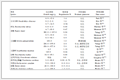
We further evaluated the practical application of our Mo-Zn SANs biosensor in complex biological matrices, specifically its performance in 1% serum, as shown in Table 1. Note: Human serum samples used in this study were obtained following approval from the Medical Ethics Committee of the First Hospital of Jilin University (Approval No. 2018-467). All procedures involving human materials complied with institutional and national ethical standards, and informed consent was obtained from all participants. This environment closely mirrors human physiological conditions, and recovery tests for lysozyme spiked at concentrations of 50, 100, and 200 nmol/L demonstrated recovery rates from 98.1% to 102.6%, confirming the biosensor's precision and reliability for clinical use. The recovery rate slightly exceeding 100% (102.6%) can be attributed to minor variations in the experimental procedure, such as sample handling or pipetting errors, leading to a slight overestimation of Lys concentration. Additionally, the high sensitivity of the biosensor could have led to a slight amplification of the signal, particularly at higher concentrations. Despite this, the recovery rate remains within an acceptable range, indicating that the sensor provides reliable and accurate results for practical applications. These results underscore that the Mo-Zn SANs, integrated with LA, retain selective binding and catalytic functions amidst complex serum components, indicating readiness for clinical trials and routine diagnostic use.
|
Table 1 Recovery rates of lysozyme in spiked 1% serum samples, demonstrating the assay's accuracy and precision across different lysozyme concentrations (n = 3). |
Expanding the biosensor's scope, Fig. S6A (Supporting information) demonstrates its adaptability by replacing the LA with the adenosine aptamer (AA) to detect adenosine (Ade), a biomarker for cellular malignancies. This substitution significantly enhanced the POD activity of the Mo-Zn SANs, as shown in Fig. S6B (Supporting information), reflecting the platform's versatility. The biosensor exhibited a strong linear response to Ade concentrations ranging from 10 µmol/L to 200 µmol/L, with a detection limit of 8.3 µmol/L (y = −0.001x + 0.31, R² = 0.995), highlighted in Fig. S6C (Supporting information). To assess the specificity, structurally similar molecules such as guanosine (Gua), cytidine (Cyt), and uridine (Uri) were tested, confirming high selectivity as only Ade significantly altered the assay outcomes (Fig. S6D in Supporting information). Ade recovery rates in 1% serum ranged from 99% to 102%, demonstrating the biosensor's reliability and effectiveness in complex matrices (Fig. S6E in Supporting information).
In conclusion, this work demonstrated the enhanced catalytic efficiency of Mo-Zn SANs when combined with DNAs, confirmed by the molecular dynamics simulation study on the detailed molecular mechanism of this enhancement. The incorporation of DNAs not only improved the turnover of traditional substrates like TMB but also underscored the sensor's adaptability to different biochemical environments, evident in its performance with diverse substrates such as ABTS and OPD. This adaptability was further explored through the development of a smartphone-assisted aptsensing platform, showcasing the sensor's potential for real-time, on-site applications. Efforts to test the sensor across multiple substrate types affirm its universal potential, positioning it as a versatile tool in the expanding field of point-of-care diagnostics. The broad applicability and adaptability of this sensor system pave the way for future research into nanozyme-based technologies.
Declaration of competing interestThe authors declare that they have no known competing financial interests or personal relationships that could have appeared to influence the work reported in this paper.
CRediT authorship contribution statementZhimin Song: Writing – original draft, Investigation, Data curation. Zhe Tang: Investigation, Formal analysis. Yu Zhang: Investigation. Yanru Zhou: Data curation. Xiaozheng Duan: Writing – review & editing, Funding acquisition, Formal analysis. Yan Du: Writing – review & editing, Methodology, Funding acquisition, Conceptualization. Chong-Bo Ma: Writing – review & editing, Writing – original draft, Funding acquisition, Conceptualization.
AcknowledgmentsThis work was supported by the Science and Technology Research Project from Education Department of Jilin Province (No. JJKH20231296KJ), the Natural Science Foundation of Science and Technology Department of Jilin Province (Joint Fund Project) (No. YDZJ202201ZYTS340) and the Fundamental Research Funds for the Central Universities (No. 2412022ZD013), the Science and Technology Development Plan Project of Jilin Province (Nos. SKL202302030, SKL202402017, 20210204126YY, 20230204113YY, 20240602003RC, 20210402059GH), the National Natural Science Foundation of China (Nos. 22174137, 22322410, 92372102 and 22073094), the Cooperation Funding of Changchun with Chinese Academy of Sciences (No. 22SH13), the Capital Construction Fund Projects within the Budget of Jilin Province (No. 2023C042–5), the University Level Scientific Research Projects of Ordinary Universities in Xinjiang Uygur Autonomous Region (No. 2022YQSN002), the State Key Laboratory of Molecular Engineering of Polymers (Fudan University) (No. K2024–11) and the Program for Young Scholars in Regional Development of CAS. We are grateful for the essential support of the Network and Computing Center, CIAC, CAS, and the Computing Center of Jilin Province.
Supplementary materialsSupplementary material associated with this article can be found, in the online version, at doi:10.1016/j.cclet.2024.110680.
| [1] |
M. Cui, B. Xu, L. Wang, BMEMat 2 (2024) e12043. DOI:10.1002/bmm2.12043 |
| [2] |
D. Li, D. Dai, G. Xiong, S. Lan, C. Zhang, Small 19 (2023) 2205870. DOI:10.1002/smll.202205870 |
| [3] |
C. Cheng, H. Wang, J. Zhao, et al., Colloids Surf. B: Biointerfaces 235 (2024) 113767. DOI:10.1016/j.colsurfb.2024.113767 |
| [4] |
X. Zhang, Y. Lu, Q. Chen, Y. Huang, J. Mater. Chem. B 8 (2020) 6459-6468. DOI:10.1039/d0tb01337d |
| [5] |
H. Ding, B. Hu, B. Zhang, et al., Nano Res. 14 (2021) 570-583. DOI:10.1007/s12274-020-3053-9 |
| [6] |
H. Sun, Y. Zhou, J. Ren, X. Qu, Angew. Chem. Int. Ed. 57 (2018) 9224-9237. DOI:10.1002/anie.201712469 |
| [7] |
Y. Huang, J. Ren, X. Qu, Chem. Rev. 119 (2019) 4357-4412. DOI:10.1021/acs.chemrev.8b00672 |
| [8] |
I. Zare, D. Choi, J. Zhang, et al., Nano Today 56 (2024) 102276. DOI:10.1016/j.nantod.2024.102276 |
| [9] |
Y. Cong, R. Qiao, X. Wang, et al., J. Am. Chem. Soc. 146 (2024) 10478-10488. DOI:10.1021/jacs.3c14046 |
| [10] |
S.M. You, J.S. Park, K. Luo, et al., Carbohydr. Polym. 267 (2021) 118164. DOI:10.1016/j.carbpol.2021.118164 |
| [11] |
J. Czescik, S. Zamolo, T. Darbre, et al., Molecules 24 (2019) 2814. DOI:10.3390/molecules24152814 |
| [12] |
J. Li, N. Lu, S. Han, et al., ACS Appl. Mater. Interfaces 13 (2021) 21040-21050. DOI:10.1021/acsami.1c04241 |
| [13] |
L. Zhang, H. Wang, X. Qu, Adv. Mater. 36 (2024) 2211147. DOI:10.1002/adma.202211147 |
| [14] |
Y. Zhang, W. Yu, L. Zhang, et al., J. Adv. Res. 70 (2025) 187-201. DOI:10.1117/12.3062111 |
| [15] |
M. Cai, Y. Zhang, Z. Cao, et al., ACS Appl. Mater. Interfaces 15 (2023) 18620-18629. DOI:10.1021/acsami.2c21854 |
| [16] |
Y. Meng, Y. Chen, J. Zhu, et al., Mater. Horiz. 8 (2021) 972-986. DOI:10.1039/d0mh01372b |
| [17] |
C. Zeng, N. Lu, Y. Wen, et al., ACS Appl. Mater. Interfaces 11 (2019) 1790-1799. DOI:10.1021/acsami.8b16075 |
| [18] |
H. Liang, X. Chen, Z. Bu, et al., Interdiscip. Med. 2 (2024) e20230057. DOI:10.1002/INMD.20230057 |
| [19] |
G. Zhu, P. Song, J. Wu, et al., Front. Bioeng. Biotechnol. 9 (2022) 792489. DOI:10.3389/fbioe.2021.792489 |
| [20] |
Y. Li, J. Liu, Mater. Horiz 8 (2021) 336-350. |
| [21] |
L. Wang, H. Zhou, H. Hu, et al., Foods 11 (2022) 544. DOI:10.3390/foods11040544 |
| [22] |
C.-B. Ma, Y. Xu, L. Wu, et al., Angew. Chem. Int. Ed. 61 (2022) e202116170. DOI:10.1002/anie.202116170 |
| [23] |
X. Duan, A.C. Shi, L. An, Macromolecules 54 (2021) 9053-9062. DOI:10.1021/acs.macromol.1c01400 |
| [24] |
H. Huo, W. Zhao, X. Duan, et al., Macromolecules 56 (2023) 1065-1076. DOI:10.1021/acs.macromol.2c01780 |
| [25] |
B. Li, X. Duan, D. Cheng, et al., J. Am. Chem. Soc. 145 (2023) 2243-2251. DOI:10.1021/jacs.2c10225 |
| [26] |
T. Li, C. Liang, K. Yu, et al., Phys. Chem. Chem. Phys. 25 (2023) 28272-28281. DOI:10.1039/d3cp03342b |
| [27] |
Z. Li, Y. Li, Y. Chen, et al., ACS Catal. 12 (2022) 9213-9225. DOI:10.1021/acscatal.2c01808 |
| [28] |
J. Liang, H. Wei, K. Yu, et al., Soft Matter 17 (2021) 6305-6314. DOI:10.1039/d1sm00583a |
| [29] |
C. Lin, H. Wei, H. Li, et al., Soft Matter 18 (2022) 1603-1616. DOI:10.1039/d1sm01700d |
| [30] |
B. Liu, B. Hu, J. Du, et al., Angew. Chem. Int. Ed. 60 (2021) 6076-6085. DOI:10.1002/anie.202012079 |
| [31] |
Z.D. Wang, S. Liang, Y. Yang, et al., Nat. Commun. 14 (2023) 2767. DOI:10.1038/s41467-023-38455-z |
| [32] |
L. Yao, C. Lin, X. Duan, et al., Nat. Commun. 14 (2023) 6563. DOI:10.1038/s41467-023-42209-2 |
| [33] |
M. Zhang, X. Duan, Y. Zhu, et al., ACS Catal. 12 (2022) 8494-8502. DOI:10.1021/acscatal.2c01325 |
| [34] |
Z. Zhu, X. Duan, Q. Li, et al., J. Am. Chem. Soc. 142 (2020) 4481-4492. DOI:10.1021/jacs.0c00029 |
| [35] |
S.J. Marrink, H.J. Risselada, S. Yefimov, et al., J. Phys. Chem. B 111 (2007) 7812-7824. DOI:10.1021/jp071097f |
| [36] |
S. Plimpton, J. Comput. Phys. 117 (1995) 1-19. DOI:10.1006/jcph.1995.1039 |