 2025, Vol. 36


b College of Biological and Chemical Engineering, Qilu Institute of Technology, Ji’nan 250200, China
The pyrrolo[2,3-c]quinoline ring system is a commonly privileged structural motif, existing in numerous natural products, such as marinoquinoline A-K [1,2], aplidiopsamine A [3], trigonoine B [4] and pyonitrins A-D (Fig. 1) [5]. These 4-substituted pyrroloquinoline alkaloids and their synthetic analogues exhibit a diverse range of biological activities: for example, anti-malarial, anti-HIV, antibacterial, anti-tubercular and antifungal activities, and as PDE4 and AChE inhibitors [6-8]. Furthermore, 4-substituted pyrrolo[2,3-c]quinolines can also be served as sensitive ion sensors [9-12]. On the other hand, sulfones are commonly found in pharmaceuticals, agrochemicals and materials, and are frequently utilized as synthetic intermediates [13,14]. Consequently, the integration of these two structural features within the same molecule would be highly beneficial in both synthetic and medicinal chemistry.

|
Download:
|
| Fig. 1. Pyrrolo[2,3-c]quinoline containing natural product. | |
Given their potential applications in medicinal and analytical chemistry, the development of efficient and versatile methodologies for the construction of both natural and unnatural pyrrolo[2,3-c]quinolines has garnered significant attention [15,16]. The most widely used synthetic strategies include the formation of the pyridine ring from C3-arylated pyrroles [17-23] and the creation of the pyrrole ring from quinoline derivatives (Scheme 1a, left) [24-27]. In 2020, MacMillan and co-workers employed the pyridannulation of 2-(1H-pyrrol-3-yl)anilines by Pictet−Spengler reaction as the key step to synthetize natural product pyonitrins A−D [21]. Alternatively, Bhattacharya and his coworkers reported the synthesis of 4-chloro-3H-pyrrolo[2,3-c]quinolines as common intermediates via the Bartoli pyrrolization of 2-chloro-3-nitroquinoline [27]. During the past several years, the simultaneous formation of both pyridine and pyrrole rings of this tricyclic scaffold via a tandem reaction has emerged as a promising step-economic approach for the synthesis of pyrrolo[2,3-c]quinolones [28-30]. Tandem bicyclizations of methyleneaminochalcones with azomethine ylides or TosMIC were developed for the assembly of pyrrolo[2,3-c]quinolones by our research group (Scheme 1a, right) [28,29]. Last year, Deng, Huang and coworkers developed the modular synthesis of marinoquinoline analogues through Pictet-Spengler/transamination cascade reaction from easily available indolylketones, amines, and aldehydes [30]. Of note, although significant progress has been made on the construction of 4-aryl, alkenyl or alkyl-substituted pyrrolo[2,3-c]quinolines, the synthesis of structurally novel 4-sulfonyl pyrrolo[2,3-c]quinolines has yet to be successfully explored.

|
Download:
|
| Scheme 1. Synthetic methods toward pyrrolo[2,3-c]quinolones. | |
Tosylmethyl isocyanide (TosMIC) and its congeners have been extensively utilized as powerful and versatile building blocks for the synthesis of heterocycles and natural products [31,32]. Generally, the α-carbon atom and isocyano group of TosMIC are incorporated into the heterocyclic products via [3 + n] cycloadditions, while the sulfonyl group serves as the activating or leaving group without taking part in the bond-forming process (Scheme 1b). Meanwhile, TosMIC as sulfinyl [33,34], sulfonyl [35-40] and sulfonylmethyl [41,42] sources instead of a typical 1,3-dipolar reactivity profile has also been reported. Generally, in the case of [3+2] cycloaddition of TosMIC to access five-membered aromatic heterocycles, the Ts group was eliminated as a waster. There were few examples so far that TosMIC acted as both a 1,3-dipolar and a sulfonylating reagent in the construction of sulfonylated five-membered heterocycles [43,44]. During the past several years, our group has devoted considerable efforts to the heterodimerization of two different isocyanides for certain valuable heterocycle syntheses [45-52]. Considering the potential application of 4-sulfonyl pyrrolo[2,3-c]quinolines and as a continuation of our long-standing interest in isocyanide chemistry [53-60], we decided to explore an efficient approach for the de novo synthesis of 4-sulfonyl pyrrolo[2,3-c]quinolines from the tandem reaction of isocyanides. Herein, we report this unprecedented domino transformation (Scheme 1c), which involves a highly chemoselective diheterocyclization of two different isocyanides and followed by a rare and regioselective 1,4-sulfonyl migration (from carbon to carbon) [61-64]. Notably, the resulting 4-sulfonyl-substituted products can be utilized as key intermediates for the facile and collective total synthesis of five natural pyrrolo[2,3-c]quinolone alkaloids: marinoquinoline A-C, H and K.
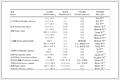
Initially, the cascade diheterocyclization-migration reaction of o-alkenyl arylisocyanide 1a with sTosMIC 2a was conducted in the presence of 10 mol% CuI and 1.2 equiv. of DBU in 1,4-dioxane at 25 ℃. Gratifyingly, the desired product 4-tosyl pyrrolo[2,3-c]quinoline 3a was obtained in 29% yield, along with 4-cyano quinoline 4a [65] and trimerization byproduct 5a in 29% and 10% yields, respectively (Table 1, entry 1). Bases screening revealed that NaH was the best choice (Table 1, entries 1 and 2 vs. 3). Elevating the reaction temperature to 60 ℃ resulted in the higher yield of 3a (Table 1, entries 4 and 5). Replacing the catalyst CuI with CuBr, CuI2 or Ag2CO3 led to lower yield of 3a (Table 1, entries 6-8 vs. 4). Intriguingly, when Ag2CO3 was used as the catalyst, besides the target product 3a in 23% yield, a tosylated imidazole product [44] was also obtained in 29% yield (entry 8, also see Table S4 in Supporting information). Notably, the yield of 3a was further increased to 66% by raising the catalyst loading to 30 mol% (Table 1, entry 10). Other solvents such as THF and CH3CN gave inferior results compared to 1,4-dioxane (Table 1, entries 10 vs. 12 and 13). Finally, we were pleased to find that the yield of 3a was improved to 77% when the reaction was performed in 1 mL of 1,4-dioxane (Table 1, entry 14).
|
Table 1 Optimization of the reaction conditions.a |


With the optimal conditions in hand, the scope of this tandem reaction was next evaluated (Scheme 2). We first sought to investigate the substrate scope of o-alkenyl arylisocyanides 1. Substrates 1 bearing various R1 groups, such as electron-withdrawing (Br, Cl, F, CN and CF3) or electron-donating groups (Me) at the different positions of the benzene ring were well tolerated, producing the expected products 3a-j in moderate to excellent yields (59%-96%). Moreover, the R1 group in isocyanides 1 can also be disubstituted aryl (1k and 1l), 2-naphthyl (1m), and 2-furyl (1n), and the corresponding products 3k-n were obtained in good yields (64%-88%). When the R1 groups of the substrates 1 were hydrogen (1o), the product 3o was isolated in 77% yield. Isocyanide 1p bearing fluoro (R2) group at the benzene ring also gave the expected product 3p in 81% yield. Then, the scope of sTosMIC 2 was evaluated. Various sTosMIC 2 with electron-neutral (2b), electron-rich (2c, 2g and 2i), and electron-poor benzyl groups (2d-f, 2h and 2j) smoothly reacted with 1a to deliver the products 3q-y in good to excellent yields (60%-96%). Alkyl (R3) substituted isocyanides 2k-m were also amenable to the standard conditions, affording the anticipated products 3z-ab in high yields. Furthermore, isocyanide 2n bearing a p-tolyl (R3) group was also a suitable candidate for this transformation. Gratifyingly, the reaction was successfully extended to TosMIC 2o and other sulfonylmethyl isocyanides 2p and 2q, generating the 4-sulfonyl pyrrolo[2,3-c]quinolines 3ad-af in 58%-71% yields. The molecular structures of representative products 3f (CCDC 2259433) and 3ad (CCDC 2265705) were further confirmed by X-ray crystallographic analysis. Notably, the scale-up experiment was also successfully performed to generate 1.97 g of the product 3a in 68% yield.

|
Download:
|
| Scheme 2. Synthesis of pyrrolo[2,3-c]quinolones. Reaction conditions: 1 (0.2 mmol), 2 (2.4 mmol), CuI (30 mol%) and NaH (1.2 equiv.) in 1,4-dioxane (1 mL) at 60 ℃; Isolated yields. a Gram-scale synthesis (1.97 g of 3a was obtained). b At 80 ℃. | |

To understand the highly chemo- and regioselective biheterocyclization-migration process, several control experiments were performed (Scheme 3). First, when the radical scavengers such as 2,2,6,6-tetramethyl-1-piperidinyloxy (TEMPO) and 1,1-diphenylethene were added to the model reaction, product 3a were obtained in comparable yields (Scheme 3a), indicating that a radical process might be ruled out. Next, when exogenous sodium 4-nitrobenzene-1-sulfinate 6 (2.0 equiv.) was added to the reaction mixture, 3a and crossover product 3ag were formed in 41% and 37% yields, respectively (Scheme 3b). Furthermore, the reaction of 3a and 6 was treated with the standard conditions, the crossover product 3ag was not observed (Scheme 3c). These outcomes suggested that the migration of sulfonyl group proceeds in an intermolecular fashion. Then, the reaction of sTosMIC 2n with o-alkenyl arylisocyanide 7 with trifluoromethyl group instead of a cyano group at the double bond was investigated. Under the standard conditions, 4-tosyl pyrrolo[2,3-c]quinoline product 3ah was not observed, and the 4-tosyl dihydropyrrolo[2,3-c]quinoline 8 was isolated in 33% yield (Scheme 3d). This result indicates that leaving group (CN) on the double bond of isocyanides 1 plays an important role for the formation of aromatic compound 3, while the cyano group is not essential for the migration of sulfonyl group.

|
Download:
|
| Scheme 3. Control experiments for mechanistic studies. | |

Based on the above experimental results and relevant literature [31-32,45-52,66-72], a plausible reaction mechanism is illustrated in Scheme 4 (exemplified by the reaction of 1a with 2a). Initially, in the presence of NaH, intermediate α-cuprioisocyanide Ⅰ is formed from sTosMIC 2a and CuI via coordination and deprotonation, followed by a chemoselective [3 + 2] cycloaddition with the C=C double bond of o-alkenyl arylisocyanide 1a to provide dihydropyrrolylcuprate intermediate Ⅱ [66-69]. Then, isocyano group intramolecular insertion into the C-Cu bond occurs to form organocuprate Ⅲ [45-52,70-72], which undergoes protodemetalation to give intermediate Ⅳ. In the presence of NaH, this species undergoes elimination to yield the intermediate Ⅴ (detected by HRMS, for details, see Supporting information) and 4-methylbenzenesulfinate anion [31,32]. Subsequently, regioselective nucleophilic addition of the sulfinyl ion to the C=N double bond of intermediate Ⅴ occurs to form the nitrogen anion Ⅵ, followed by sequential nitrogen anion protonation, C-H deprotonated and isomerization to yield the carbanion Ⅷ and Ⅷ'. Finally, elimination of cyano anion and isomerization affords the product 3a.

|
Download:
|
| Scheme 4. Proposed mechanism. | |

To show the synthetic potential of this domino reaction, a collective total synthesis of five typical pyrroloquinoline alkaloids, marinoquinoline A-C, H and K, was then conducted using compound 3ai as the key intermediate. Our synthesis commenced with the preparation of o-alkenyl arylisocyanide 1o (Scheme 5). A sequence of formylation and dehydration reaction of known 2-(2-aminophenyl)acrylonitrile 9, prepared from commercial 2-(2-nitrophenyl)acetonitrile according to the procedure reported previously [73], led to the isocyanide 1o in 35% yield over the two steps. Thus, the 4-tosyl pyrrolo[2,3-c]quinoline 3ai was obtained in 58% yield from the diheterocyclization-migration of the 1o and commercially available TosMIC 2n (2 mmol scale). With the common intermediate 3ai in hand, we set out to explore its derivatization so as to access the natural marinoquinolines. The key intermediate 3ai was treated with methylmagnesium bromide to provide marinoquinoline A (MQ A, acetylcholinesterase (AChE) inhibitor) [6] in 70% yield. Moreover, treatment of 3ai with relevant Grignard reagent gave the marinoquinoline B (MQ B) and marinoquinoline C (MQ C) in 59% and 56% yields, respectively. By using analogous methods, pyrrolo[2,3-c]quinoline 3aj was readily prepared from 3ai in 67% yield. Then, the total synthesis of marinoquinoline H (MQ H) was achieved by the demethylation of 3aj [74]. Delightfully, marinoquinoline K (MQ K), a Pontibacillus sp. inhibitor [2], could be obtained in 49% yield from 3ai through detosylation [75].

|
Download:
|
| Scheme 5. Collective synthesis of MQ alkaloids. | |

In summary, we have developed a chemoselective diheterocyclization/regioselective 1,4-sulfonyl migration cascade of two different isocyanides, providing a general and straightforward protocol for the de novo synthesis of structurally novel 4-sulfonyl pyrrolo[2,3-c]quinolines. In this domino transformation, two heteroaromatic rings, three C-C bonds and one C-S bond were successively constructed in a single operation. Furthermore, the reaction as a key step enabled a collective total synthesis of five pyrroloquinoline alkaloids. Moreover, biological activity tests of these products are ongoing in our laboratory.
Declaration of competing interestThe authors declare that they have no known competing financial interests or personal relationships that could have appeared to influence the work reported in this paper.
CRediT authorship contribution statementLianshun Zhang: Writing – original draft, Methodology, Investigation, Formal analysis, Data curation. Lan Bao: Validation, Methodology, Formal analysis, Data curation. Ting Song: Methodology, Data curation. Shangying Qiao: Methodology, Data curation. Yifan Liu: Methodology, Data curation. Xianxiu Xu: Writing – review & editing, Validation, Supervision, Project administration, Methodology, Funding acquisition, Conceptualization. Jinhuan Dong: Writing – review & editing, Writing – original draft, Validation, Methodology, Funding acquisition, Formal analysis, Data curation, Conceptualization.
AcknowledgmentsFinancial support from the National Natural Science Foundation of China (No. 22171168), the Taishan Scholar Program of Shandong Province and the Shandong Provincial Natural Science Foundation (No. ZR2024MB104) is gratefully acknowledged.
Supplementary materialsSupplementary material associated with this article can be found, in the online version, at doi:10.1016/j.cclet.2025.110915.
| [1] |
P.W. Okanya, K.I. Mohr, K. Gerth, R. Jansen, R. Müller, J. Nat. Prod. 74 (2011) 603-608. DOI:10.1021/np100625a |
| [2] |
E.J. Choi, S.J. Nam, L. Paul, et al., Chem. Biol. 22 (2015) 1270-1279. DOI:10.1016/j.chembiol.2015.07.014 |
| [3] |
A.R. Carroll, S. Duffy, V.M. Avery, J. Org. Chem. 75 (2010) 8291-8294. DOI:10.1021/jo101695v |
| [4] |
S.F. Li, Y.T. Di, H.P. He, et al., Tetrahedron Lett. 52 (2011) 3186-3188. DOI:10.1016/j.tetlet.2011.03.015 |
| [5] |
E. Mevers, J. Saurí, E.J.N. Helfrich, et al., J. Am. Chem. Soc. 141 (2019) 17098-17101. DOI:10.1021/jacs.9b09739 |
| [6] |
Y. Sangnoi, O. Sakulkeo, S. Yuenyongsawad, et al., Mar. Drugs 6 (2008) 578-586. DOI:10.3390/md6040578 |
| [7] |
M. Akula, J.P. Sridevi, P. Yogeeswari, D. Sriram, A. Bhattacharya, Monatsh. Chem. 145 (2014) 811-819. DOI:10.1007/s00706-013-1141-1 |
| [8] |
A.C.C. Aguiar, M. Panciera, E.F. Simão dos Santos, et al., J. Med. Chem. 61 (2018) 5547-5568. DOI:10.1021/acs.jmedchem.8b00143 |
| [9] |
M. Akula, P.Z. El-Khoury, A. Nag, A. Bhattacharya, RSC Adv. 4 (2014) 25605-25608. DOI:10.1039/c4ra00922c |
| [10] |
M. Akula, Y. Thigulla, A. Nag, A. Bhattacharya, RSC Adv. 5 (2015) 57231-57234. DOI:10.1039/C5RA08626D |
| [11] |
T.U. Kumar, S. Pawar, A. Nag, A. Bhattacharya, J. Fluoresc. 29 (2019) 271-277. DOI:10.1007/s10895-018-02337-1 |
| [12] |
S. Pawar, U.K. Togiti, A. Bhattacharya, A. Nag, ACS Omega 4 (2019) 11301-11311. DOI:10.1021/acsomega.9b01208 |
| [13] |
K.A. Scott, J.T. Njardarson, Top. Curr. Chem. 376 (2018) 5-39. DOI:10.1007/s41061-018-0184-5 |
| [14] |
F. Zhao, J. Wang, X. Ding, S. Shu, H. Liu, Chin. J. Org. Chem. 36 (2016) 490-501. DOI:10.6023/cjoc201510006 |
| [15] |
R. Dias do Espírito Santo, R.M. Capitão, P.Santos Barbosa, et al., Asian J. Org. Chem. 10 (2021) 1938-1957. DOI:10.1002/ajoc.202100223 |
| [16] |
R.S. Alekseyev, F.N. Aliyev, V.I. Terenin, Chem. Heterocycl. Compds. 57 (2021) 1155-1163. DOI:10.1007/s10593-021-03036-9 |
| [17] |
X. Ma, Y. Vo, M.G. Banwell, A.C. Willis, Asian J. Org. Chem. 1 (2012) 160-165. DOI:10.1002/ajoc.201200037 |
| [18] |
J.P. Mahajan, Y.R. Suryawanshi, S.B. Mhaske, Org. Lett. 14 (2012) 5804-5807. DOI:10.1021/ol302676v |
| [19] |
J.D. Panarese, C.W. Lindsley, Org. Lett. 14 (2012) 5808-5810. DOI:10.1021/ol3024665 |
| [20] |
Y. Yamaoka, T. Yoshida, M. Shinozaki, K. Yamada, K. Takasu, J. Org. Chem. 80 (2015) 957-964. DOI:10.1021/jo502467m |
| [21] |
R.D. Shingare, V. Aniebok, H.W. Lee, J.B. MacMillan, Org. Lett. 22 (2020) 1516-1519. DOI:10.1021/acs.orglett.0c00098 |
| [22] |
L. Ni, Z. Li, F. Wu, et al., Tetrahedron Lett. 53 (2012) 1271-1274. DOI:10.1016/j.tetlet.2011.12.124 |
| [23] |
C.S. Schwalm, C.R.D. Correia, Tetrahedron Lett. 53 (2012) 4836-4840. DOI:10.1016/j.tetlet.2012.06.115 |
| [24] |
J. Sperry, A. Lindsay, Synlett 24 (2013) 461-464. DOI:10.1055/s-0032-1318137 |
| [25] |
Z. Wang, X. Xing, L. Xue, F. Gao, L. Fang, Org. Biomol. Chem. 11 (2013) 7334-7341. DOI:10.1039/c3ob41629a |
| [26] |
Z. Wang, L. Xue, Y. He, L. Weng, L. Fang, J. Org. Chem. 79 (2014) 9628-9638. DOI:10.1021/jo501753p |
| [27] |
T.R. Penjarla, M. Kundarapu, S.M. Baquer, A. Bhattacharya, ChemistrySelect 3 (2018) 5386-5389. DOI:10.1002/slct.201800614 |
| [28] |
Y. Men, J. Dong, S. Wang, X. Xu, Org. Lett. 19 (2017) 6712-6715. DOI:10.1021/acs.orglett.7b03434 |
| [29] |
J. Dong, X. Wang, H. Shi, et al., Adv. Synth. Catal. 361 (2019) 863-867. DOI:10.1002/adsc.201801103 |
| [30] |
J. Chen, P. Jiang, X. Liu, et al., Green Synth. Catal. 5 (2024) 310-314. |
| [31] |
M. Giustiniano, A. Basso, V. Mercalli, et al., Chem. Soc. Rev. 46 (2017) 1295-1357. DOI:10.1039/C6CS00444J |
| [32] |
T. Kaur, P. Wadhwa, A. Sharma, RSC Adv. 5 (2015) 52769-52787. DOI:10.1039/C5RA07876H |
| [33] |
H.J. Li, R. Wang, J. Gao, et al., Adv. Synth. Catal. 357 (2015) 1393-1397. DOI:10.1002/adsc.201401173 |
| [34] |
L. Kadari, P. Radha Krishna, Y.L. Prapurna, Adv. Synth. Catal. 358 (2016) 3863-3868. DOI:10.1002/adsc.201600997 |
| [35] |
J. Liu, Z. Liu, P. Liao, X. Bi, Org. Lett. 16 (2014) 6204-6207. DOI:10.1021/ol5031316 |
| [36] |
J. Chen, W. Guo, Z. Wang, et al., J. Org. Chem. 81 (2016) 5504-5512. DOI:10.1021/acs.joc.6b00844 |
| [37] |
M. Phanindrudu, D.K. Tiwari, B. Sridhar, P.R. Likhar, D.K. Tiwari, Org. Chem. Front. 3 (2016) 795-798. DOI:10.1039/C6QO00063K |
| [38] |
L. Kadari, R.K. Palakodety, L.P. Yallapragada, Org. Lett. 19 (2017) 2580-2583. DOI:10.1021/acs.orglett.7b00896 |
| [39] |
X.Q. Chu, D. Ge, T.P. Loh, Z.L. Shen, Org. Chem. Front. 6 (2019) 835-840. DOI:10.1039/c8qo01346b |
| [40] |
C.L. Fan, L.B. Zhang, J. Liu, et al., Org. Chem. Front. 6 (2019) 2215-2219. DOI:10.1039/c9qo00391f |
| [41] |
S. Lu, X. Zhu, K. Li, et al., J. Org. Chem. 81 (2016) 8370-8377. DOI:10.1021/acs.joc.6b01552 |
| [42] |
Y. Li, X.Y. Wang, X. Ren, et al., J. Org. Chem. 86 (2021) 7179-7188. DOI:10.1021/acs.joc.1c00500 |
| [43] |
K. Lu, F. Ding, L. Qin, et al., Chem. Asian J. 11 (2016) 2121-2125. DOI:10.1002/asia.201600761 |
| [44] |
H. Wang, R.K. Kumar, Y. Yu, et al., Chem. Asian J. 11 (2016) 2841-2845. DOI:10.1002/asia.201601024 |
| [45] |
Z. Hu, H. Yuan, Y. Men, et al., Angew. Chem. Int. Ed. 55 (2016) 7077-7080. DOI:10.1002/anie.201600257 |
| [46] |
Z. Hu, J. Dong, Y. Men, et al., Angew. Chem. Int. Ed. 56 (2017) 1805-1809. DOI:10.1002/anie.201611024 |
| [47] |
Y. Gao, Z. Hu, J. Dong, J. Liu, X. Xu, Org. Lett. 19 (2017) 5292-5295. DOI:10.1021/acs.orglett.7b02582 |
| [48] |
Z. Hu, M. Zhang, Q. Zhou, X. Xu, B. Tang, Org. Chem. Front. 7 (2020) 507-512. DOI:10.1039/c9qo01333d |
| [49] |
L. Bao, Y. Liu, J. Peng, et al., Org. Lett. 24 (2022) 105-109. DOI:10.1021/acs.orglett.1c03693 |
| [50] |
L. Bao, M. Li, L. Zhang, et al., Org. Lett. 25 (2023) 2366-2371. DOI:10.1021/acs.orglett.3c00794 |
| [51] |
X. Guo, J. Dong, Y. Zhu, et al., Chin. Chem. Lett. 34 (2023) 107608-107611. DOI:10.1016/j.cclet.2022.06.031 |
| [52] |
Y. Liu, Q. Tan, L. Bao, et al., Org. Lett. 26 (2024) 5043-5048. DOI:10.1021/acs.orglett.4c01699 |
| [53] |
J. Tan, X. Xu, L. Zhang, Y. Li, Q. Liu, Angew. Chem. Int. Ed. 48 (2009) 2868-2872. DOI:10.1002/anie.200805703 |
| [54] |
Y. Li, X. Xu, J. Tan, et al., J. Am. Chem. Soc. 133 (2011) 1775-1777. DOI:10.1021/ja110864t |
| [55] |
X. Xu, L. Zhang, X. Liu, L. Pan, Q. Liu, Angew. Chem. Int. Ed. 52 (2013) 9271-9274. DOI:10.1002/anie.201303604 |
| [56] |
Y. Men, Z. Hu, J. Dong, X. Xu, B. Tang, Org. Lett. 20 (2018) 5348-5352. DOI:10.1021/acs.orglett.8b02266 |
| [57] |
J. Dong, D. Zhang, Y. Men, et al., Org. Lett. 21 (2019) 166-169. DOI:10.1021/acs.orglett.8b03646 |
| [58] |
L. Wang, Z. Huang, X. Guo, et al., Chem. Commun. 58 (2022) 6433-6436. DOI:10.1039/d2cc01632j |
| [59] |
J. Wang, Z. Li, S. Bai, et al., Chin. Chem. Lett. 34 (2023) 107823-107827. DOI:10.1016/j.cclet.2022.107823 |
| [60] |
Y. Liu, M. Jia, G. Wang, W. Yang, X. Xu, Chem. Commun. 60 (2024) 7196-7199. DOI:10.1039/d4cc01984a |
| [61] |
A.J. Flynn, A. Ford, A.R. Maguire, Org. Biomol. Chem. 18 (2020) 2549-2610. DOI:10.1039/c9ob02587a |
| [62] |
R.L. Atienza, H.S. Roth, K.A. Scheidt, Chem. Sci. 2 (2011) 1772-1776. DOI:10.1039/c1sc00194a |
| [63] |
M.Y. Chang, Y.C. Cheng, Y.J. Lu, Org. Lett. 16 (2014) 6252-6255. DOI:10.1021/ol5032238 |
| [64] |
R.J. Reddy, J.J. Kumar, A.H. Kumari, Org. Lett. 25 (2023) 2207-2212. DOI:10.1007/s10462-023-10575-4 |
| [65] |
C. Li, H. Wang, L. Liu, et al., ChemistrySelect 7 (2022) 3760-3771. DOI:10.3390/app12083760 |
| [66] |
J. Dong, W. Feng, L. Wang, et al., Chem. Commun. 57 (2021) 12635-12638. DOI:10.1039/d1cc05412k |
| [67] |
X. Zhang, X. Wang, Y. Gao, X. Xu, Chem. Commun. 53 (2017) 2427-2430. DOI:10.1039/C6CC10124K |
| [68] |
J. Du, X. Xu, Y. Li, L. Pan, Q. Liu, Org. Lett. 16 (2014) 4004-4007. DOI:10.1021/ol501829k |
| [69] |
Q. Cai, F. Zhou, T. Xu, L. Fu, K. Ding, Org. Lett. 13 (2010) 340-343. DOI:10.1002/cjce.20295 |
| [70] |
G. Qiu, Q. Ding, J. Wu, Chem. Soc. Rev. 42 (2013) 5257-5269. DOI:10.1039/c3cs35507a |
| [71] |
B. Song, B. Xu, Chem. Soc. Rev. 46 (2017) 1103-1123. DOI:10.1039/C6CS00384B |
| [72] |
J.W. Collet, T.R. Roose, E. Ruijter, B.U.W. Maes, R.V.A. Orru, Angew. Chem. Int. Ed. 59 (2019) 540-558. |
| [73] |
H. Cheng, R. Zhang, S. Yang, et al., Adv. Synth. Catal. 358 (2016) 970-976. DOI:10.1002/adsc.201500538 |
| [74] |
B. Bolte, C.S. Bryan, P.P. Sharp, et al., J. Org. Chem. 85 (2019) 650-663. |
| [75] |
A.G. Neo, C. López, V. Romero, et al., J. Org. Chem. 75 (2010) 6764-6770. DOI:10.1021/jo100742e |