 2025, Vol. 36


b College of Public Health, College of Basic Medical Science, Ningxia Medical University, Yinchuan 750021, China;
c Analysis and Testing Center, Ningxia University, Yinchuan 750021, China
Dinitroaniline herbicides, as a well-known pesticide, are extensively used in agriculture due to their efficient and persistent properties [1-3]. However, uncontrolled discharge of residual pesticides can inhibit the activity of acetylcholinesterase in the nervous system after being ingested through food, leading to the huge threat for ecological environment [4-6]. Developing technologies that can efficiently detect and effectively remove dinitroaniline pesticide residues in aqueous solution and agricultural products is significative for food quality and environmental protection [7,8]. Nevertheless, traditional detection methods involve complex and time-consuming sample preparation steps, cumbersome operations, and high costs. Currently, various new technologies have been applied to detect pesticides, including electrochemical methods, spectrophotometry, and fluorescence sensing. In spite of this, it is essential to explore more efficient methods for the selective detection of dinitroaniline pesticides. More importantly, the ability to detect and extract dinitroaniline pesticides simultaneously has become an advanced requirement for food and environmental safety today [9-11]. In this sense, realizing the difunctionality for the sensing and adsorption of pesticides remains to be expanded [12,13].
As is known, fluorescence spectroscopy has been regarded as a modern analytical technique that is widely applied in areas such as pesticide residue detection, drug detection, and environmental pollutant monitoring due to its advantages of high sensitivity, good selectivity, simple operation, and fast response time [14-18]. Previous studies demonstrated that luminescent metal nanoparticles (M NPs) are often employed in the construction of fluorescent sensors relying on the low biological toxicity, good biocompatibility, and inherent optical properties [19-21]. However, low luminescent efficiency and poor stability, caused by aggregation which results in excessive energy loss with ligand motion and self-quenching effects, have hindered the potential applications. According to survey, an effective solution to improve the luminescence and stability is to encapsulate the M NPs into porous materials, such as polymers, silica, protein [22,23]. Noteworthily, the focal materials, metal-organic frameworks (MOFs), is gradually standing out to apply to loading metal nanoparticles due to the high porosity, high loading capacity, and good constraint effect. It is reported that MOFs with the confinement effect could limit the vibration and rotation of Au NPs ligands to reduce non-radiative transitions, giving rise to an apparent improvement in luminescence efficiency [21,24,25]. In principle, MOFs can serve as protective coatings to enhance the resilience of the embedded gold nanoparticles against external environments and endow them with excellent stability, which contributes to minimizing self-quenching effects. Meanwhile, MOFs with excellent porosity, after loading Au NPs, not only can boost the fluorescence performance but also would adsorb and stabilize the original Au NPs, which is prospective to meet the criterion for the combination of detecting and removing pesticides [21,26-28]. ZIF-8, a well-established metal–organic framework, is characteristic of a large specific surface area and tunable porosities, prompting it excellent for adsorption [29]. Furthermore, ZIF-8 has been also determined to be chemically and thermally stable even in challenging environments, which is considered as an ideal candidate to construct MOF-based composites and/or derivatives [30].
In the context, a strategy for synergistically detecting and extracting dinitroaniline pesticides has been performed (Scheme 1). The fluorescent AuAg NPs were ingeniously encapsulated within ZIF-8 by using different methods, leading to two distinct composite structures-core shell type of ZIF-8@AuAg NPs and dispersed loading type of ZIF-8-AuAg NPs, respectively. In both composites, the porosity of ZIF-8 affords a robust microenvironment to restrict the intramolecular motion of AuAg NPs, and thus effectively promote the fluorescent performance. Both composites exhibit stable fluorescence in solution and can be used for fluorescent sensing of dinitroaniline pesticides in a low concentration range. Meanwhile, ZIF-8 with large specific surface area shows remarkable adsorption capacity to capture the pesticide guests. For the first time, we exemplify a strategy to realize the concurrent detection and removal for dinitroaniline pesticides by using AuAg NPs-MOF composites. This work opens up a new insight to introduce M NPs into MOFs frameworks to achieve the multifunctional luminescent adsorbents.

|
Download:
|
| Scheme 1. The chemical structure of (a) pendimethalin, (b) trifluralin and (c) butralin. | |

The detailed experimental processes and characterization methods are described in Supporting information. The synthetic procedures of the M NPs/MOFs composites were respectively completed by dual methods (Scheme 2), in which the AuAg NPs are protected by ammonium pyrrolidine dithiocarbamate (APDC) with high water solubility. For the formation of ZIF-8@AuAg NPs (Scheme 2a), it is indicated that two types of coordination interactions, Zn2+ centers connecting to two dithiocarboxyl groups in APDC-ligand of Au NPs and the N site of 2-MIM ligands, cause the self-assembly of ZIF-8 around the pre-prepared AuAg NPs [31]. For the synthesis of ZIF-8-AuAg NPs (Scheme 2b), due to the larger size of the AuAg NPs (2–3 nm) and the smaller pore size of ZIF-8 (1.1 nm), inferred that the AuAg NPs are unable to penetrate into the cavity of ZIF-8 AuAg NPs but distribute in orientated single-layer on the outside surface of ZIF-8 via the electrostatic and coordination interactions between Zn2+ cations and dithiocarboxyl group in APDC-ligand [31].

|
Download:
|
| Scheme 2. Schematic illustrations of the synthesis processes for (a) ZIF-8@AuAg NPs (encapsulating AuAg NPs inside the ZIF-8 framework), and (b) ZIF-8-AuAg NPs (loading AuAg NPs onto the surface of ZIF-8). | |

The structures of ZIF-8, ZIF-8@AuAg NPs and ZIF-8-AuAg NPs were characterized by PXRD (Fig. S1 in Supporting information). Because of an ultrafine size of AuAg NPs and relatively strong diffractions of ZIF-8, it is difficult to found the diffraction patterns of Au and Ag from PXRD curves. For both ZIF-8-AuAg NPs and ZIF-8@AuAg NPs, no obvious variations in the PXRD spectra are observed compared with ZIF-8. As reported, the PXRD patterns for M NPs/MOFs composites could display (1) changes in peak intensity or position, or (2) no changes at all, originated from the different interactions between nanoparticles and MOF framework. For the former, the PXRD differences are depending on the pore filling effects as revealed for MOF-5 with Zn(OH)2 motifs within the cavity and for HKUST-1 with Ti-MOC NPs encapsulated inside the pore [32]. For the latter, the nanoparticles do not fill in the pores of MOFs, but instead the MOF structure extends surrounding the nanoparticles. For the present materials, the PXRD curve matches well with the pure MOF as in the case of Au-ZIF-8 with Au NPs dominantly enter into the cavities of ZIF-8 or blended onto specified crystal planes of ZIF-8 [32,33]. For both ZIF-8@AuAg NPs and ZIF-8-AuAg NPs, no significant changes are observed in PXRD patterns, verifying the existence of the pore structure in ZIF-8 after the intervention of AuAg NPs. The single-layer distribution of AuAg NPs on the exterior surfaces of ZIF-8 crystals can be confirmed directly from transmission electron microscopy (TEM) images. Fig. 1, Figs. S2 and S3 (Supporting information) give the representative HAADF-TEM images of AuAg NPs, ZIF-8, ZIF-8-AuAg NPs and ZIF-8@AuAg NPs. It is clearly visible from the TEM image that the newly prepared AuAg NPs exhibits a nanoparticle size mainly distributed within the range of 2.0–3.0 nm (Fig. S2a). However, these nanoparticles aggregate into flake-like motifs, implying a poor stability (Fig. S2b). Compared with the pristine ZIF-8 (Fig. S3a), the occurrence of numerous spots in ZIF-8-AuAg NPs and ZIF-8@AuAg NPs nanocomposites supports that the AuAg NPs are successfully composited into ZIF-8 (Fig. 1a and Fig. S3b). Note that AuAg NPs in ZIF-8-AuAg NPs are distributed on the surface of ZIF-8, whereas AuAg NPs in ZIF-8@AuAg NPs are internally encapsulated in the framework of ZIF-8. Such plots suggest different synthesis mechanisms for ZIF-8-AuAg NPs and ZIF-8@AuAg NPs. As shown in Fig. 1b, the AuAg NPs in ZIF-8-AuAg NPs are unaggregated in 30 days, displaying superior dispersibility and stability compared to pure AuAg NPs. To further illustrate the arrangment of AuAg NPs in ZIF-8, energy-dispersive X-ray (EDX) spectroscopy element mapping using HAADF–TEM was performed. The elemental maps of Au, Zn, Ag, N, and S of ZIF-8-AuAg NPs are depicted in Figs. 1c-h, along with the EDX spectrum of Au and Ag elements in the EDX spectrum (Fig. 1i). The characteristic peaks of Au and Ag segments in EDX spectra demonstrate the attendance of AuAg NPs in ZIF-8-AuAg NPs. It is clearly observed that AuAg NPs are well-distributed in the whole ZIF-8 moieties. Similarly, the measurements of the elemental maps and EDX spectrum for ZIF-8@AuAg NPs indicate AuAg NPs are also distributed on ZIF-8 matrix (Figs. S3c-i). Undoubtably, these integrations of AuAg NPs with ZIF-8 in both ZIF-8-AuAg NPs and ZIF-8@AuAg NPs help to effectively disperse and avoid the aggregation of AuAg NPs, thereby significantly improving the stability, which is important for remaining the performance and prolonging the service life of AuAg NPs.

|
Download:
|
| Fig. 1. TEM images of (a) ZIF-8-AuAg NPs, (b) ZIF-8-AuAg NPs after being placed for 30 days. Elemental maps of (h) ZIF-8-AuAg NPs: (c) Au; (d) Zn, (e) Ag, (f) N, (g) S. (i) EDX spectrum of ZIF-8-AuAg NPs. | |

N2 adsorption-desorption isotherms were also collected, obtaining the specific surface areas of 1182 m2/g for ZIF-8@AuAg NPs and 1245 m2/g for ZIF-8-AuAg NPs, lower than that of the original ZIF-8 (1662 m2/g) (Figs. 2a-c). Correspondingly, the average pore sizes of both composite materials doped with AuAg NPs reduce to 0.84 (ZIF-8@AuAg NPs) and 0.88 nm (ZIF-8-AuAg NPs), compared to that of ZIF-8 (1.1 nm) (Fig. S4 in Supporting information). It is found that the pores of ZIF-8 are partly occupied by AuAg NPs, further supporting that the AuAg NPs are loaded into the ZIF-8 successfully. In addition, FT-IR experiment was carried out to study the coordination interaction between the ligand of AuAg NPs and Zn2+ ions (Fig. S5 in Supporting information). Unfortunately, the interaction is too imperceptible to be identified by FT-IR analysis [31].

|
Download:
|
| Fig. 2. N2 absorption–desorption isothermal of (a) ZIF-8, (b) ZIF-8- AuAg NPs, (c) ZIF-8@AuAg NPs. | |

X-ray photoelectron spectroscopy (XPS) analyses for Au 4f and Ag 3d binding energy were recorded (Fig. 3). Two peaks at 84.14 eV and 87.79 eV in the Au 4f spectrum of AuAg NPs relate to Au 4f5/2 and Au 4f7/2, respectively. The slightly negative shifts of Au 4f5/2 and Au 4f7/2 peaks are observed for ZIF-8-AuAg NPs nanocomposites (88.08 eV, 84.38 eV), in keeping with the previous report for Au25 clusters [34]. For the Ag 3d spectrum, two peaks appeared at 373.61 and 367.62 eV are attributed to Ag 3d3/2 and 3d5/2, respectively (Fig. 3b). After combining with ZIF-8, the peaks have a little positive shift (373.92.08 eV and 367.86 eV) [35], caused by electron deviation around Ag after AuAg NPs binding with ZIF-8. Note that the characteristic peaks of Au and Ag in ZIF-8@AuAg NPs are almost undetectable (Fig. 3), which may be resulted from the fact that the AuAg NPs are inside instead of on the surface of the ZIF-8 framework in the ZIF-8@AuAg NPs composite materials, corresponding to the results from TEM. To accurately ascertain the proportion of each metal element in the composite materials, the compositions of ZIF-8@AuAg NPs and ZIF-8-AuAg NPs were determined by inductively coupled plasma (ICP) after digestion. Both ZIF-8@AuAg NPs and ZIF-8-AuAg NPs contain Au and Ag, and the ratios are close to 2:1 (Fig. S6 in Supporting information), which responds to the feed ratios used in the preparation of AuAg NPs, further indicating that AuAg NPs have been successfully incorporated into ZIF-8.

|
Download:
|
| Fig. 3. XPS spectra of AuAg NPs, ZIF-8-AuAg NPs and ZIF-8@AuAg NPs from (a) Au 4f and (b) Ag 3d. | |

Thermogravimetric analysis (TGA) under N2 atmosphere was preformed to analyse the thermostabilities of ZIF-8, ZIF-8@AuAg NPs and ZIF-8-AuAg NPs (Fig. S7a in Supporting information). The weight losses responding to the collapsed frameworks of ZIF-8, ZIF-8-AuAg NPs, and ZIF-8@AuAg NPs occur at approximately 580 ℃, which is consistent with the results in the reference [30]. As shown, the thermostabilities of both ZIF-8@AuAg NPs and ZIF-8-AuAg NPs composites are comparable to that of the ZIF-8 matrix. For ZIF-8@AuAg NPs, no slight weight loss below 580 ℃ represents the good encapsulation of AuAg NPs inside ZIF-8. By contrast, a primary weight loss of 22% around 250 ℃ for ZIF-8-AuAg NPs refers to the decomposition of AuAg NPs ligands, mirroring the AuAg NPs loaded in the surface of ZIF-8 [36].
It was reported that composite materials have good fluorescent property due to the restrained intramolecular movement by the confinement effect of ZIF-8 [37]. Thus, the fluorescence of ZIF-8, AuAg NPs, ZIF-8-AuAg NPs, and ZIF-8@AuAg NPs were systematically studied (Fig. 4a). There is a green emission for AuAg NPs under ultraviolet light. After encapsulating in ZIF-8, a bright green emission emerges with a red shift in the spectrum. Interestingly, the fluorescent intensity of ZIF-8-AuAg NPs is stronger than that of both pure AuAg NPs and ZIF-8@AuAg NPs (Fig. 4a). Therefore, the attendance of ZIF-8 in ZIF-8-AuAg NPs exhibits a significantly fluorescent improvement over AuAg NPs. For the ZIF-8@AuAg NPs, the fluorescent property is lower than that of ZIF-8-AuAg NPs, probably attributed to the encapsulation of AuAg NPs inside ZIF-8. As shown in Fig. 4a, the fluorescent spectra of the AuAg NPs shows the maximal emission and excitation wavelengths at 535 and 350 nm, respectively, while ZIF-8-AuAg NPs and ZIF-8@AuAg NPs possess a peak at 350/550 nm (Ex/Em). Absorption spectra of ZIF-8, AuAg NPs, ZIF-8-AuAg NPs, and ZIF-8@AuAg NPs are illustrated in Fig. 4b. AuAg NPs expresses strong absorption in a wide range of 300–600 nm, while ZIF-8-AuAg NPs and ZIF-8@AuAg NPs display distinct absorptions in the range of 250–550 nm, respectively. Differently, ZIF-8 only shows an absorption in a narrow range of 200–250 nm. In this case, the preliminary experiments provide a solid foundation for the present composite materials in the application of optical sensors.

|
Download:
|
| Fig. 4. (a) The fluorescence emission spectra of ZIF-8, AuAg NPs, ZIF-8-AuAg NPs, and ZIF-8@AuAg NPs upon excitation at 350 nm (Insert: Luminescence images of ZIF-8-AuAg, ZIF-8@AuAg NPs, AuAg NPs and ZIF-8 under ultraviolet lamp). (b) The UV–vis spectra of ZIF-8, AuAg NPs, ZIF-8-AuAg NPs, and ZIF-8@AuAg NPs. | |

In order to investigate the fluorescent stability, AuAg NPs, ZIF-8-AuAg NPs and ZIF-8@AuAg NPs were exposed to various chemical environments for 15 days, such as ultrapure water and DMF, monitored by fluorescence spectroscopy. The fluorescence intensity for AuAg NPs reduces significantly, and completely quenches at the 5th day (Fig. S7b in Supporting information), whereas the intensities for ZIF-8-AuAg NPs and ZIF-8@AuAg NPs are unchanged with excellent fluorescent stability (Fig. S7c in Supporting information), suggesting the improved stability and good dispersity of AuAg NPs after being compounded on ZIF-8. It is confirmed that the present M NPs/MOFs composites provide the porosity, solvent resistance, high thermostability and remarkable fluorescent property, which is conducive to the practical applications in the fields of sensing and adsorption.
The detection ability in sensing a trace quantity of dinitroaniline pesticides was explored. Taking ZIF-8-AuAg NPs as an example, three commonly used dinitroaniline pesticides (PDA, trifluralin and butralin) are selected to perform the fluorescent sensing experiments by the addition of dinitroaniline pesticides to the ZIF-8-AuAg NPs dispersing agent. Fluorescent quenching effects are found when the all three dinitroaniline pesticides add in the ZIF-8-AuAg NPs dispersing agent (Fig. S8 in Supporting information). Furthermore, the quenching efficiencies are calculated using the formula ((F0 - F)/F0 × 100%), where F0 and F represent the fluorescence intensities before and after the addition of the pesticides, respectively. Amongst them, PDA exhibits the highest quenching efficiency of 94.5% than trifluralin (91.5%) and butralin (78.3%).
The behaviour of ZIF-8-AuAg NPs in detecting dinitroaniline pesticides inspires us to explore the correlation between fluorescent intensity and concentration thoroughly. The results show that the fluorescent intensities of ZIF-8-AuAg NPs (Fig. 5a) diminish slowly while the PDA concentration increases. The fluorescent intensity and concentration plots for PDA are close to a linearity in 0.05–3 µmol/L (R2 = 0.98) with Ksv = 108.8, but curve at the range of high concentration (Fig. 5b). The LOD value of ZIF-8-AuAg NPs is calculated to be 4.2 nmol/L by using the formula LOD = 3σ/Ksv (σ refers to the standard deviation for five repeated measurements). For comparison, the LODs of this works and previous reports for detecting the pesticides are listed in Fig. S9 and Table S1 (Supporting information). It is clear that ZIF-8-AuAg NPs displays relatively lower LODs. Selectivity is one of the most important influence factors for detecting the metal ions sensitively. Therefore, experiments are carried out to evaluate the selectivity of ZIF-8-AuAg NPs. As shown in Fig. 5c, under the same test conditions, only PDA leads to significantly fluorescent quenching, whereas other species (Fe3+, Ni+, Fe2+, Mn2+, Cd2+, Ba2+, Pb2+, Cr3+, Co2+, Zn2+, Ce4+, Ca2+, Cu2+, vitamin C (VC), and glucose (Glu) (at 2 µmol/L)) show inapparent effects on fluorescent intensity to ZIF-8-AuAg NPs. It is revealed that ZIF-8-AuAg NPs exhibits high specificity for the recognition to PDA.

|
Download:
|
| Fig. 5. (a) The change in the emission spectrum of ZIF-8-AuAg NPs upon excitation at 350 nm as the concentration of PDA increases. (b) The relationship between the decrease in fluorescence emission intensity (F0 - F) and the concentration of PDA under excitation at 350 nm. Inset: A linear plot of (F0 - F) against the concentration of PDA. (c) Selective investigation of ZIF-8-AuAg NPs in detecting PDA. The concentration of all interfering substances is 2.0 µmol/L. | |

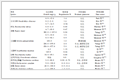
To determine the capability of the composited ZIF-8-AuAg NPs materials for detecting PDA residues in real environments, commercially available tomatoes, potatoes and real water environment known to be prone to PDA contamination were selected as matrices. The experimental details are expressed in Section S1.7 (Supporting information). As listed in Table 1, the recoveries of spiked PDA in three types of samples at various concentrations (0.1, 0.5, 1 µmol/L) are within 94%−108% range with RSD less than 3.4%. The results suggest that the proposed sensing method has the potential of application for PDA determination in real environment. To better understand the fluorescent quenching of ZIF-8-AuAg NPs toward PDA, several major mechanisms of fluorescent sensing were discussed systematically. It is reported that the fluorescence resonance energy transfer (FRET) behaviour is a possible quenching process. The degree of spectral overlap between the emission of sensor and the absorption of pesticides is responsible for the probability of direct effect. In this case, the emission of ZIF-8-AuAg NPs and the absorption of PDA is indicative of non-overlapping, signifying the absence of FRET (Fig. 6a). However, it can be seen that there is partial overlap between the absorption of PDA and the excitation spectrum of ZIF-8-AuAg NPs, verifying that a portion of the excitation lights can be absorbed by PDA and ZIF-8-AuAg NPs. Beyond that, the UV–vis absorption spectra of PDA and ZIF-8-AuAg NPs, as well as ZIF-8-AuAg NPs in the presence of PDA are respectively recorded, and the summing theoretical absorption spectrum of ZIF-8-AuAg NPs and PDA is displayed for comparison (Fig. 6b). The results unveil that the experimental spectrum of ZIF-8-AuAg NPs in existence of PDA is inconsistent with the theoretical spectrum, suggesting the formation of new substances and possible charge transfer between PDA and ZIF-8-AuAg NPs. Accordingly, DFT calculations are employed to analyse the molecular orbitals of PDA molecules, aiming to elucidate the role of photo-induced electron-transfer (PET) in the quenching effect (Fig. 6c and Table S2 in Supporting information). The calculations and optimizations of molecular structures were implemented with the basis set of B3LYP/6–31 G using Gaussian 09 program [17]. Theoretically, if the LUMO energy level of PDA is less than that of APDC, the excited state of APDC is more likely to donate electrons to PDA. On the other hand, if PDA exhibits higher HOMO energy level than the valence band energy of APDC, electron transfer from PDA to APDC is feasible [17]. As shown in Fig. 6c, both LOMO and HOMO energy levels of APDC are lower than those of PDA, illumining the PET process from APDC to PDA influences on the fluorescent quenching of ZIF-8-AuAg NPs. As mentioned above, a combination of both competition mechanisms and electron transfers is responsible for the fluorescence quenching synergistically.
|
Table 1 Determinations of PDA in vegetable samples and real water samples (n = 3). |

|
Download:
|
| Fig. 6. (a) The excitation and emission spectra of ZIF-8-AuAgNPs, as well as the UV–vis absorption spectrum of PDA. (b) The UV–vis absorption spectra of individual ZIF-8-AuAgNPs and PDA, as well as the theoretical and experimental spectra based on the sum of ZIF-8-AuAgNPs and PDA. (c) Electron distribution and energy diagrams of HOMO and LUMO orbitals of PDA and APDC. | |

Previous reports revealed that excessive residual pesticides can move into water and pollute the environment. Herein, the removal of pesticides from agricultural wastewater is discussed. As displayed in Fig. 7a, the uptake abilities of ZIF-8 and ZIF-8-AuAg NPs toward three dinitroaniline species are investigated. The absorption ability of ZIF-8-AuAg NPs exceeds to that of ZIF-8. For ZIF-8-AuAg NPs, the PDA absorption capacity is superior than trifluralin and butralin under the same experimental conditions. Then, the feasibility of ZIF-8-AuAg NPs on the removal of PDA has been fully estimated. Firstly, ZIF-8-AuAg NPs is dried at 60 ℃ in vacuum for 24 h. The residual concentration of PDA is measured by testing the solution absorbence with UV spectrum. The PDA absorption using ZIF-8-AuAg NPs in the pH range of 1.0–9.0 is discussed (Fig. S10a in Supporting information). ZIF-8-AuAg NPs shows a prominent adsorption capacity toward PDA in acids. Considering the practical application for pesticide adsorption, pH at 6 is selected to study the PDA adsorption. To understand the effect of temperature on DPA adsorption, adsorption experiments were carried out at different temperatures ranging from 25 ℃ to 100 ℃ for ZIF-8-AuAg NPs. As shown in Fig. S10b (Supporting information), adsorption capacity changes a little with increases in temperature for ZIF-8-AuAg NPs. Considering the practical applications for pesticide adsorption, the PDA adsorption was studied at room temperature. Usually, adsorption kinetics is used to propose the adsorption reaction rate and explore the adsorption mechanism. The adsorption capacity for PDA (initial concentration as 30 mg/L) by ZIF-8-AuAg NPs is examined in 0–180 min (Fig. 7b). A clear increasement within initial 20 min and reached saturation at about 40 min are observed. To better evaluate the adsorption behaviours, three types of kinetic models (pseudo-first-order, pseudo-second-order, and Weber-Morris models) are employed to investigate the adsorption kinetics from Eqs. S4-S8 (Supporting information) [17]. The fitting factors and the pseudo-first-order or pseudo-second-order simulated curves of the PDA adsorption values support that the pseudo-second-order model is more optimized than the pseudo-first-order model (Fig. 7b, Fig. S11 and Table S3 in Supporting information). The fitting qe value from pseudo-second-order model is closer to the experimental data. It is indicated that the controlling step of PDA adsorption rate is principally related to the chemical sorption [35]. The Morris-Weber model further displays that the adsorption processes are multi-step. As shown in Fig. 7c, the adsorbent exhibits a tri-step adsorption behaviour, proving that the adsorption processes involve external and interior diffusion, as well as equilibrium stage. Notably, the slope of fitting curve in the first stage is larger than that in the second stage, indicative of the paramount role of surface functional groups for PDA adsorption [38]. In general, the adsorption process of PDA is dominantly depending on chemisorption, assisted with the diffusion effect.

|
Download:
|
| Fig. 7. (a) Removal capacities of ZIF-8 and ZIF-8-AuAg NPs toward commonly used dinitroaniline pesticides. (b) The effect of adsorption time and pseudo-second-order (C0 = 30 mg/L, 25 ℃, adsorbent concentration: 0.375 g/L). (c) Weber-Morris plot for the removal of PDA by ZIF-8-AuAg NPs. (d) Isotherm model for ZIF-8-AuAg NPs (insert: Langmuir model). | |

Isothermal adsorption, one of the important methods to obtain adsorption capacity, is used to study the adsorption mechanism. According to the parameters from two different models (Fig. 7d and Fig. S12 in Supporting information), Langmuir isotherm matches better with the measured data than Freundlich isotherm. The calculated maximal adsorptive capacity (qm) from Langmuir model reaches up to 125 mg/g. It is mainly monolayer coverage and chemisorption in the adsorption of PDA through ZIF-8-AuAg NPs materials. Several reports associated the effective removal of pesticides are summarized in Table S4 (Supporting information). It can be seen that the absorption effect of ZIF-8-AuAg NPs is prominent amongst the listed works. To assess the recyclability of as-synthesized ZIF-8-AuAg NPs absorber in practical application, DMF is selected as a regeneration solution to execute the adsorption and desorption experiments (Fig. S13 in Supporting information). The removal efficiency decreases to 85.8% after eight successive cycles, probably because the cavities of ZIF-8-AuAg NPs are occupied by PDA groups, irreversibly producing some inactive or instable adsorption sites in ZIF-8-AuAg NPs.
On consideration of the excellent adsorbing behaviour for PDA, ZIF-8-AuAg NPs has great potential for the extraction of PDA from authentic aqua. To elaborate the absorption mechanism, the samples before and after capturing PDA are surveyed by IR and PXRD, respectively (Fig. 8). In Fig. 8a, the characteristic peaks of ZIF-8-AuAg NPs in the IR spectra for both samples are similar to each other, disclosing a skeletal stability in the removal process. The shift in IR spectra probably imputes the interaction between the ZIF-8-AuAg NPs and PDA. It is noted that the peak at 1676 cm-1 could be attributed to the molecular vibrations of the benzene rings in PDA. The unique structural frameworks, coordinative interaction and hydrogen bond are synergistically governing the adsorption of PDA on ZIF-8-AuAg NPs. Meanwhile, PXRD pattern of ZIF-8-AuAg NPs after PDA adsorption is generally consistent with that of the original ZIF-8-AuAg NPs, highlighting the structural stability of ZIF-8-AuAg NPs (Fig. 8b).

|
Download:
|
| Fig. 8. (a) FT-IR and (b) PXRD of ZIF-8-AuAg NPs and ZIF-8-AuAg NPs in the presence of PDA. | |

In conclusion, we successfully performed a universal strategy to encapsulate AuAg NPs within the cavities of ZIF-8, or load the AuAg NPs onto the surfaces of ZIF-8, giving rise to two distinct composites, ZIF-8@AuAg NPs and ZIF-8-AuAg NPs. The formation of both composites is unanimously supported by the observations from TEM, XPS and optical experiments, etc. Compared with monocomponent AuAg NPs, the fluorescent intensity and stability of both composites have been significantly enhanced. Experimental results show that ZIF-8-AuAg NPs impart the special for the fluorescent detection of dinitroaniline pesticides. The investigations reveal that the electron transfer and competitive mechanism collectively trigger the fluorescent quenching when pesticide molecule fills into ZIF-8-AuAg NPs dispersion solution. More importantly, ZIF-8-AuAg NPs exhibits ultra-high capture efficiency (> 94%) for PDA in authentically aqueous samples. This work provides a paradigm to prepare multifunctional M NPs/MOFs-based luminescent adsorbents for the selective detection and efficient removal of dinitroaniline pesticides simultaneously.
Declaration of competing interestThe authors declare that they have no known competing financial interests or personal relationships that could have appeared to influence the work reported in this paper.
CRediT authorship contribution statementTianxia Chen: Writing – original draft. Yunhui Chen: Writing – original draft. Weiwei Li: Data curation. Peipei Cen: Supervision. Yan Guo: Investigation. Jin Zhang: Investigation. Cunding Kong: Data curation. Xiangyu Liu: Writing – review & editing, Supervision, Conceptualization.
AcknowledgmentsThis work was supported by the National Natural Science Foundation of China (NSFC, Nos. 21863009 and 22063008), the Natural Science Foundation of Ningxia Province (Nos. 2023AAC03014, 2023AAC03227 and 2022AAC05002), the Young Top-notch Talent Cultivation Program of Ningxia Province, the Discipline Project of Ningxia (No. NXYLXK2017A04) and the China Postdoctoral Science Foundation (No. 2022M723148).
Supplementary materialsSupplementary material associated with this article can be found, in the online version, at doi:10.1016/j.cclet.2024.110214.
| [1] |
H.Y. Niu, Y.Q. Cai, Adv. Nano. Res. 64 (2011) 79-136. |
| [2] |
S.H. Zhang, Q. Yang, W.C. Wang, C. Wang, Z. Wang, J. Agri. Food Chem. 64 (2016) 2792-2801. DOI:10.1021/acs.jafc.5b05831 |
| [3] |
M. Liu, A. Khan, Z.F. Wang, et al., Biosens. Bioelectron. 130 (2019) 174-184. |
| [4] |
N. Zhou, J. Zu, L. Yang, et al., J. Colloid Interface Sci. 563 (2020) 197-206. |
| [5] |
A. Samsidar, S. Siddiquee, S.M. Shaarani, Trends Food Sci. Tech. 71 (2018) 188-201. |
| [6] |
D. Song, X.H. Jiang, D.B. Wang, et al., Environ. Exp. Bot. 193 (2022) 104706. |
| [7] |
N. Kaur, A. Khunger, S.L. Wallen, et al., Curr. Opin. Green Sust. 30 (2021) 100488. |
| [8] |
Y. Xu, H. Wang, X.X. Li, et al., Compr. Rev. Food Sci. F. 20 (2024) 1009-1035. |
| [9] |
M.J. Hengel, J.W. Wong, Z.C. Redman, C. Rering, K.L. Williams, J. Chem. Educ. 97 (2020) 226-233. DOI:10.1021/acs.jchemed.9b00476 |
| [10] |
W.J. Maguire, C.W. Call, C. Cerbu, K.L. Jambor, V.E.B. Montes, J. Agric. Food Chem. 46 (2019) 12670-12674. DOI:10.1021/acs.jafc.9b01559 |
| [11] |
D. Sahoo, A. Mandal, T. Mitra, et al., J. Agric. Food Chem. 66 (2018) 414-423. DOI:10.1021/acs.jafc.7b04188 |
| [12] |
M.Z.M. Nasir, C.C. Mayorga-Martinez, Z. Sofer, M. Pumera, ACS Nano 11 (2017) 5774-5784. DOI:10.1021/acsnano.7b01364 |
| [13] |
Y.B. Wang, P. Wu, Y.N. Wang, H. He, L.Z. Huang, J. Environ. Manage. 345 (2023) 118629. |
| [14] |
W.Y. Guo, Y.X. Fu, S.Y. Liu, et al., Anal. Chem. 93 (2021) 7079-7085. DOI:10.1021/acs.analchem.1c00553 |
| [15] |
L. Liu, X.L. Chen, M. Cai, et al., Chin. Chem. Lett. 34 (2023) 108411. |
| [16] |
X.L. Luo, Q.C. Chen, H.B. Guo, et al., J. Rare Earth 42 (2024) 36-45. |
| [17] |
W. Jia, R. Fan, J. Zhang, Chem. Eng. J. 450 (2022) 2-12. |
| [18] |
F.R. Carolina, S. Dalibor, S. Barbora, Trac-Trends Anal. Chem. 62 (2014) 69-85. |
| [19] |
D. Lin, L.F. Li, X. Song, et al., ACS Sustain. Chem. Eng. 9 (2021) 14579-14587. DOI:10.1021/acssuschemeng.1c05544 |
| [20] |
K.L. Zhang, K. Dai, R.Y. Bai, et al., Chin. Chem. Lett. 3 (2019) 664-667. |
| [21] |
J.M. Xu, J. Ma, S.T. Zhang, H. Pang, Chin. Chem. Lett. 34 (2023) 107527. |
| [22] |
S.Y. Yang, C. Zhou, M.X. Yu, J. Zheng, Adv. Mater. 24 (2012) 3218-3222. DOI:10.1002/adma.201200795 |
| [23] |
B. Fan, Y.Y. Liu, S. Crawford, H S, ACS Mat. Lett. 2 (2020) 492-498. DOI:10.1021/acsmaterialslett.0c00043 |
| [24] |
B. Casteleiro, J.M.G. Martinho, J.P.S. Farinha, Nanoscale 13 (2021) 17199-17217. DOI:10.1039/d1nr04939a |
| [25] |
T. Zhang, L.Y. Qin, L.L. Liu, et al., J. Rare Earth 40 (2022) 1371-1381. |
| [26] |
M.J. Tan, Z.Y. Hong, M.H. Chang, Biosens. Bioelectron. 96 (2017) 167-172. |
| [27] |
H.M. Yang, L.J. Han, Z.H. Liang, Int. J. Electrochem. Sci. 14 (2019) 5491-5507. DOI:10.20964/2019.06.49 |
| [28] |
Y.M. Nie, X.L. Tao, H.W. Zhang, Y.Q. Chai, R. Yuan, Anal. Chem. 93 (2021) 3445-3451. DOI:10.1021/acs.analchem.0c04682 |
| [29] |
M. Miao, L. Mu, S.M. Cao, Y.H. Yang, X. Feng, Carbohydr. Polym. 291 (2022) 119587. |
| [30] |
Z.M. Lighvan, S.R. Hosseini, S. Norouzbahari, B. Sadatnia, A. Ghadimi, Fuel 351 (2023) 128991. |
| [31] |
Y.C. Luo, S.Y. Fan, W.Q. Yu, et al., Adv. Mater. 30 (2018) 1704576. |
| [32] |
G. Lu, S. Z, Li W, D. Wei, et al., Nat. Chem. 4 (2012) 310-316. DOI:10.1038/nchem.1272 |
| [33] |
Z. Li, H.C. Zeng, Chem. Mater. 25 (2013) 1761-1768. DOI:10.1021/cm400260g |
| [34] |
W. Chen, Y.Z. Lu, Y.Y. Jiang, X.H. Gao, Chem. Commun. 62 (2014) 8464-8467. |
| [35] |
Y.S. Ho, G. McKay, Water Res. 34 (2000) 735-742. |
| [36] |
X.T. Nie, H.F. Qian, Q.G. Ge, H.Y. Xu, R.C. Jin, ACS Nano 6 (2012) 6014-6022. DOI:10.1021/nn301019f |
| [37] |
D.L. Wei, M.W. Li, Y. Wang, et al., J. Hazard. Mater. 441 (2023) 129890. |
| [38] |
D.C. Mei, B. Yan, Angew. Chem. Int. Ed. 63 (2024) e202402205. DOI:10.1002/anie.202402205 |