 2025, Vol. 36


b College of Chemistry and Materials, Jinan University, Guangzhou 510632, China
Electrocatalytic water splitting plays a significant role in addressing the conflict between the energy crisis and abnormal climate change [1, 2]. The water electrolysis reaction includes two-half reactions: cathodic hydrogen evolution reaction (HER) and anodic oxygen evolution reaction (OER) [3]. Attributing to that HER and OER have completely different reaction kinetics and proton-coupled electron transfer processes, the active sites for H* and OH* intermediates adsorption are difficult to concentrate in homogenous material [4-7]. Developing a non-noble metal-based material for bifunctional electrocatalyst is a significant challenge.
As a widely recognized bifunctional electrocatalyst, transition metal sulfides-based heterostructures can provide abundant interphase boundary and numerous active edges [8]. The most appealing candidate is molybdenum disulfide-based heterostructures. MoS2 has unique band structure, graphene-like layered configuration and hydrogen adsorption free energy close to Pt, especially, rational aggregation of nano-sized MoS2 are expected to promote the electrocatalytic activity [9]. For example, the transformation of porous molybdenum disulfide into self-supporting nanoislands can be realized by hydrothermal method, which maximizes the exposure of the effective edge active sites, so that it exhibits excellent bifunctional electrocatalytic activity for both hydrogen evolution and oxygen evolution reactions [10]. Due to differences in stacking order and atomic bond arrangement, there is a contrast between transition metals and sulfur atoms: MoS2 exhibits two polymorphs: the thermodynamically stable trigonal prismatic coordination (2H) phase and the metastable octahedral coordination (1T) phase [11, 12]. Compared with the 2H phase, 1T phase exhibits metal characteristics, and has more prominent catalytic activity and higher carrier mobility on the edge and substrate, which has been proved by related research and theoretical calculations [13, 14]. Due to the thermodynamic instability, the realization of high-proportioned 1T-MoS2 within electrocatalyst and further structural adjustment still remains a bottleneck at the current stage [15]. Up to now, chemical intercalation-exfoliation method is the most commonly used strategy for the synthesis of 1T-MoS2 [16]. However, due to its complicated steps, the application of 1T phase intrinsic materials in target applications is limited. Jang's team reported a magnetron sputtering strategy in the presence of carbon dopants, which can achieve phase transition engineering of molybdenum disulfide. The prepared C-doped-MoS2 ternary heterojunction nanofilms have high electrocatalytic activity [17]. As far as we are aware, yet there are little reports on the direct preparation of high-proportioned 1T-MoS2-based bifunctional electrocatalysts with heterogeneous interface engineering regulation.
Significantly, among the strategies for preparing MoS2-based heterogeneous structure, selecting polymolybdate-based metal-organic complexes (POMOCs) as raw material is generally considered to be valuable [18]. This strategy contains the following advantages: (1) As a non-negligible branch of polyoxometalates, polymolybdate can act as molybdate source; (2) POMOCs are approachable to be prepared and stable in water environment, and then can be used as stable precursors [19-21] (3) The special structure and inherent composition of POMOCs benifit for the uniform distribution of the products [22, 23]. For example, Pang's group used two POMOCs based on metallic cobalt and nickel as pre-assembly platforms to react with thiourea and obtained mesoporous bimetallic sulfide composites [24]. Due to its good disperstiveness and high porosity of the composite, the synergistic effect of each component promotes its catalytic activity towards hydrogen evolution in acidic medium. However, there was little exploration about how to achieve interface regulation engineering with POMOCs as precursor.
Inspired by the discussion above, this work established a one-pot vulcanization strategy with interface process regulation, which was realized via selecting appropriate components and modulating experiment parameter. A new polymolybdate-based metal-organic complex was synthesized and taken as the precursor to react with thiourea in hydrothermal environment. A series of bimetallic sulfide-based heterogeneous structures were obtained by regulating the vulcanization time and thiourea concentration (Scheme 1). The obtained bimetallic sulfide composites were introduced as bifunctional electrocatalysts for hydrogen and oxygen production in alkaline media. The effects brought from sulfurization time and thiourea concentration on the morphology of heterostructures and heterogeneous interface regulation were investigated. Their electrocatalytic activities towards hydrogen and oxygen production were studied and compared.

|
Download:
|
| Scheme 1. Preparation process of bimetallic sulfides. | |

Firstly, a crystalline POMOC with order structure and composition: {Ni2(3-Hbpah)2(H2O)4[CrMo6(OH)5O19]}·4H2O (1) (3-bpah = N, N'-bis(3-pyridinecarboxamide)−1, 2-cyclohexane) was yielded under hydrothermal condition and characterized in supporting materials. The POMOC was used as a pre-assembly platform to react with thiourea (mass ratio 1:1.5) under hydrothermal conditions. By altering the vulcanization time and adjusting the concentration ratio between the complex and thiourea, a series of parallel products were obtained. Considering that the crystal precursor contains nickel and molybdenum sources, the obtained product is expected to be bimetallic sulfide-based heterogeneous structures. The products obtained under different sulfidation times (h) were named as "NiS2-MoS2-x". The formation of final morphology and structure shows potential disparity, which can be explained by the nucleation doping competition mechanism of hydrothermal method [19]. In the bimetallic sulfide system, when the nucleation rate is greater than the doping rate, a bimetallic sulfide with a certain composition will be formed. Although they contain similar NiS2-MoS2 components, their nucleation rates are different due to the adjustment of reaction time, resulting in their potentially distinct evolution orientation in their phase compositions and morphologies [24].
The PXRD spectra were used to analyze the crystal structure and phase composition of the vulcanized products. As illustrated in Fig. 1, it was observed that with the increase of vulcanization time, the diffraction peak of the original complex gradually disappears. Characteristic peaks belonging to metal sulfides began to appear, which are similar in general except for subtle differences. The characteristic peaks at 14.1° (002), 39.5° (103), 32.9° (100) and 58.7° (110) matched well with MoS2 (JCPDS No. 75–1539). The diffraction peaks at 27.1° (111), 31.4° (200), 35.2° (012), 45.0° (202), 53.4° (131), 55.9° (222), 74.5° (024) and 60.9° (231) belong to NiS2 (JCPDS No. 73–0574). In addition, obvious characteristic diffraction peaks located at 19.1° (001), 33.2° (100), 38.5° (101) well conform to the characteristic peaks of Ni(OH)2 (JCPDS No. 73–1520). The co-existence of NiS2, MoS2 and Ni(OH)2 can be confirmed within NiS2-MoS2-x (x ≥ 12). Additionally, there are some distinct characteristic diffraction peaks of 10.72°, 13°, 16.9°, 19.12°, 23.3°, 25.8°, and 36.3° for NiS2-MoS2–6, which can be ascribed to complex 1, and there is no trace of characteristic peak for Ni(OH)2.

|
Download:
|
| Fig. 1. (a) PXRD diagrams of NiS2-MoS2–24 composites, NiS2, MoS2 and Ni(OH)2, (b) PXRD diagrams of NiS2-MoS2-x composites at different vulcanization times (x = 6, 12, 18 and 30) (▽, ▼, ◇ and * represent the characteristic peaks of NiS2, MoS2, Ni(OH)2 and complex 1, respectively). | |

In order to further characterize the composition of the bimetallic sulphides and analyzing the effect brought from the vulcanizing time, the IR spectra for NiS2-MoS2–6~30 were collected. The significant changes for the characteristic bands of NiS2-MoS2–6, 12, 18, 24 and 30 samples can be observed comparing with complex 1 (Fig. S4 in Supporting information). The absorption peaks located at 772, 1355, 1466, 2923 and 2950 cm-1 increased significantly with the increase of the vulcanization time, corresponding to appearance of MoS2. Meanwhile, a characteristic absorption peak of Ni-S-Ni appeared at 620 cm-1. The IR spectra confirmed the coexistence of both MoS2 and NiS2 for NiS2-MoS2–6–30, indicating that the bimetallic sulphide composite was successfully obtained.
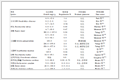
Their morphologies were also collected by scanning electron microscopy (SEM). When the reaction time was 6 h (NiS2-MoS2–6), irregular grain-shaped metal sulfide adhered to the original bulk crystals were observed (Fig. 2a). It is speculated that the insufficient sulfidation reaction leads to the partial formation of the granular material. When the sulfidation time is extended to 12 h and longer, the granular material gradually generated into nanosheets (Fig. 2b). The nanosheets grew larger and gathered (Fig. 2c). When the sulfidation time was 24 h, the nanosheets aggregated to form nanospheres (Fig. 2d). Apparently, the interspace between the nanospheres can provide larger specific surface area. Amorphous substance were observed between the nanosheets when the reaction time reached thirty hour, which may be due to the dense accumulation of nanosheets (Fig. 2e). Fig. 2f shows the morphological evolution process of samples prepared at different vulcanization time. Besides, the specific surface area of each sample was probed by nitrogen adsorption and desorption isotherm technique (Fig. S6 in Supporting information). The Brunauer-Emmett-Teller (BET) surface area and pore size of NiS2-MoS2-x were provided in Table 1. The BET analysis showed that these samples were mesoporous. Such mesoporous porosity and high BET specific surface area show advantage for charge migration and electrolyte infiltration, which play a decisive role in improving electrocatalytic efficiency [25]. Obviously, NiS2-MoS2–24 possess the highest surface area, owing to the uniform distribution of the nanosheets and the interspace between the nanospheres.

|
Download:
|
| Fig. 2. SEM images of NiS2-MoS2-x, x = (a) 6, (b) 12, (c) 18, (d) 24, (e) 30. (f) The simulated morphologic evolution of five bimetallic sulfides. | |

|
Table 1 Comparison of BET surface area and pore size of NiS2-MoS2-x (x = 6, 12, 18, 24, 30). |
Transmission electron microscopy images can further reveal the distribution of the potential hierarchical structure. Fig. S7 (Supporting information) displays a low-power image of NiS2-MoS2-x on the copper grid. It can be seen that the image of NiS2-MoS2–6 retain the crystal morphology of the complex mainly. The nanosheet morphology appears with gradually increasing sulfidation time, in accordance with the SEM results. From HRTEM images, the distinct interplanar spacings exist at 0.27 and 0.62 nm, referring to the MoS2 (100) and (002) planes (Fig. 3) [26]. Lattice fringes at 0.25 and 0.23 nm distances correspond to the (210) and (211) planes of NiS2, respectively [27]. The results show that the MoS2 are verified to be tightly adhered on the surface of NiS2 with intimate interfacial contact, verifying the hierarchal structure [28]. Such irregular heterointerface might provide more active sites for electrocatalytic reactions. The lattice fringes of 0.23 nm can be observed in the transmission electron microscopy of NiS2-MoS2–12, 18, 24 and 30 samples, which corresponds to the d-spacing of the (101) plane of Ni(OH)2 [29].

|
Download:
|
| Fig. 3. (a-e) HRTEM images of NiS2-MoS2-x. (a1-e1) High-resolution HAADF STEM images of the presence of 1T and 2H-MoS2 in the NiS2-MoS2-x composites (Inset shows the magnification of the region enclosed by the yellow box or orange box). | |

In order to determine the respective content of 1T/2H phase molybdenum sulfide, the composition and chemical state of elemental for all as-synthesized samples were further investigated by X-ray photoelectron spectroscopy, and the phase state of MoS2 in the composites was accurately evaluated (Fig. 4) [30, 31]. Detailed XPS spectral data for Mo and S are provided in Table S3 (Supporting information). Fig. 4a presents the further split-peak fitting of the high-resolution XPS spectral data for the Mo 3d orbitals. The valence state and chemical composition can be analysed. The Mo 3d spectra of the as-synthesized NiS2-MoS2-x samples show that two energy level signals with binding energies around 229 and 232 eV can be ascribed to Mo4+ from MoS2 [31]. The Mo 3d spectra of NiS2-MoS2–6, 12, 18, 24 and 30 shows that the Mo4+ peaks exist near 228.5 and 231.6 eV, corresponding to 3d5/2 and 3d2/3 components of 1T-MoS2, respectively [14]. For 2H-MoS2, the Mo 3d spectra are composed of peaks located at 229.2 and 232.3 eV, which correspond to the Mo 3d5/2 and Mo 3d2/3 components, respectively [32]. Meanwhile, the high-solution Mo 3d XPS spectra shows that the peaks of Mo4+ 3d3/2 and Mo4+ 3d5/2 shift towards lower binding energy with increasing vulcanization time. The parallel shift of these additional peaks suggests that they arise from 1T-MoS2 [33]. The peaks at 232.5 and 235.5 eV correspond to the existence of Mo6+ [34]. This may be due to the partial oxidation of MoS2 and residual vulcanization reaction intermediates.

|
Download:
|
| Fig. 4. High-resolution XPS spectra of Mo 3d core-level peaks of 1T and 2H-MoS2 for (a) NiS2-MoS2–6, (b) NiS2-MoS2–12, (c) NiS2-MoS2–18, (d) NiS2-MoS2–24 and (e) NiS2-MoS2–30. High-resolution XPS spectra of S 2s core-level peaks of 1T and 2H-MoS2 for (f) NiS2-MoS2–6, (g) NiS2-MoS2–12, (h) NiS2-MoS2–18, (i) NiS2-MoS2–24 and (j) NiS2-MoS2–30. | |

As shown in Figs. 4f-j, two strong peaks of 162.5 eV and 163.7 eV are observed in the NiS2-MoS2-x samples, corresponding to S 2p3/2 and S 2p1/2, respectively [31]. For NiS2-MoS2–6~30 samples, the binding energy of S 2p in 1T-MoS2 has two main peaks near 161.2 and 162.3 eV, corresponding to S 2p3/2 and S 2p1/2 components, respectively, with peaks around at 161.9 and 163.0 eV ascribed to 2H-MoS2 [14, 32]. The peak positions of S2- 2p1/2 and S2- 2p3/2 in the heterogeneous catalyst moved slightly to the low binding energy with the extension of vulcanization time, respectively. This negative shift observed suggests a limited electron transfer between NiS2 and MoS2. Additionally, it indicates a rearrangement of the electronic structure when electrons are transferred from Mo4+ to the surrounding Ni sites [35]. The peaks in the S 2p spectra correspond to the metal sulfate species (168.5 eV) derived from surface oxidization [36]. According to the integral area of the above peaks (the calculation results provided in Table S3), it can be seen that the proportion of 1T-MoS2 in NiS2-MoS2–24 reach 84.2%, which is the largest.
In addition, the Ni atomic structure of NiS2-MoS2–6~30 was also investigated. As shown in Fig. S8 (Supporting information), the Ni 2p3/2 and Ni 2p1/2 peaks were located at approximately 856.0 and 873.6 eV, respectively [37]. Corresponding satellite peaks were observed at 862.0 and 880.0 eV. However, the binding energies of Ni 2p3/2, and Ni 2p1/2 in NiS2-MoS2–30 sample (Fig. S8e) are negative-shifted to 855.7 (by 0.6 eV), 873.1 (by 0.5 eV), respectively. This result indicates that the electron transfer from Mo4+ to Ni2+ sites lead to the low-valence state and electron-rich structure of Ni2+ sites [35].
Fig. S9 (Supporting information) displays the Raman spectra that offer additional insights into the phase transition of MoS2. The peaks observed in five samples at J1 (151, 151, 152, 156, 151 cm-1), J2 (221, 224, 218, 218, 218 cm-1), E1g (283, 290, 285, 287, 286 cm-1) and J3 (345, 344, 341, 341, 340 cm-1) belong to the phononic films in the metallic 1T-MoS2, whereas those at 376, 376, 380, 380, 381 and 404, 404, 409, 412, 412 cm-1 (E2g1 and A1g vibrational modes, respectively) are ascribed to the 2H-MoS2 [38, 39]. Importantly, Raman mapping of J1 vibration in NiS2-MoS2–24 and NiS2-MoS2–30 showed the 1T phase with high homogeneity in the whole layer [40]. While E2g was the characteristic peak of 2H phase, and the signal peaks at the corresponding position show weaker. This phenomenon further verified that with the extension of vulcanization time, the content of 1T-MoS2 increases gradually [41]. Based on the above discussion, it is confirmed that the controllable formation of 1T-MoS2 can be achieved by regulating the vulcanization time.
Considering the existence of mixed phase molybdenum sulfide and multi-heterogeneous interface shown in the above results, the bimetallic sulfide samples are expected to become effective and stable hydrogen production catalysts. To verify our hypothesis, the carbon cloth-based working electrode fabricated by complex 1 and NiS2-MoS2-x samples are prepared (1-CC, NiS2-MoS2/CC-x). The preparation method can be referred to Supporting information. Their HER electrocatalytic activities were investigated in 1.0 mol/L KOH dielectric using a standard three electrode system. For comparison, the linear sweep voltammetry curves (LSV) of 1-CC and NiS2-MoS2/CC-x were tested under the same condition at the scanning rate of 5 mV/s. Obviously, NiS2-MoS2/CC-24 exhibits an enhanced HER performance, only requiring 33 and 42 mV to deliver the current densities of 10 and 50 mA/cm2, respectively, which is superior than those of NiS2-MoS2/CC-6 (982 and 992 mV), NiS2-MoS2/CC-12 (849 and 882 mV), NiS2-MoS2/CC-18 (790 and 794 mV), NiS2-MoS2/CC-30 (588 and 593 mV) and 1-CC (1.23 and 1.27 V), as shown in Fig. 5a. The Tafel curves of the corresponding catalysts are shown in Fig. 5b and fitted by the Tafel equation (η = a + blog(j), where b is the Tafel slope) [42]. NiS2-MoS2/CC-24 possess a lower Tafel slope of 71.4 mV/s than those of NiS2-MoS2/CC-6 (393 mV/s), NiS2-MoS2/CC-12 (143 mV/s), NiS2-MoS2/CC-18 (134 mV/s), NiS2-MoS2/CC-30 (129 mV/s) and 1-CC (495 mV/s).

|
Download:
|
| Fig. 5. HER catalytic performance and EIS response of NiS2-MoS2-x. (a) Polarization curves of all catalysts in 1 mol/L KOH (scanning rate: 5 mV/s under three-electrode structure). (b) Tafel curves. (c) Electrochemical impedance spectroscopy of NiS2-MoS2/CC-x. (d) Chronoamperometric curves of NiS2-MoS2/CC-24 at the overpotential of 33 mV vs. RHE for HER with a duration of 25 h. Inset: The LSV curves for NiS2-MoS2/CC-24 before and after long-term chronoamperometric durability test. | |

The result illustrates that NiS2-MoS2/CC-24 exhibits the fastest HER process with high conductivity and reactivity. In addition, electrochemical impedance spectroscopy (EIS) measurements were carried out, which can provide the semicircular charge transfer resistance characteristics of the electrodes. The charge transfer resistance at the electrolyte/semiconductor interface is estimated using the arc radius of the Nyquist plot in Fig. 5c. Generally speaking, the arc radius is proportional to the charge transfer resistance value. In comparison, NiS2-MoS2/CC-24 have lower charge transfer resistance (Rct) value, exhibiting faster electron transfer and catalytic kinetics. To further investigate the intrinsic activity of these electrodes, the effective electrochemically active surface area (ECSA) of the electrodes were calculated by monitoring the double layer capacitance (Cdl), because these two values are proportional [43, 44]. Therefore, according to the cyclic voltammetry (CV) in the non-Faraday region (−0.1~0.1 V) with continuously increasing scanning speed (Fig. S10 in Supporting information), the Cdl was calculated from the plot slope (slope = 2Cdl) between current-density difference (Δj) and scan rate. As shown in Fig. S11 (Supporting information), the Cdl value of NiS2-MoS2/CC-24 electrode is 7.62 mF/cm2, which is higher than those of NiS2-MoS2/CC-6 (5.19 mF/cm2), NiS2-MoS2/CC-12 (5.73 mF/cm2), NiS2-MoS2/CC-18 (6.15 mF/cm2) and NiS2-MoS2/CC-30 (6.52 mF/cm2). The ECSA values were estimated using the equation of ECSA = Cdl/Cs × S, where Cs is the general surface specific capacitance (for carbon cloth, it has been measured to be 0.040 mF/cm2 in 1 mol/L KOH solution) [43], and S is the geometric surface area of the working electrode (1 cm2 in this work). The ECSA of different catalysts followed a decreasing order of NiS2-MoS2/CC-24 (190.5 cm2) > NiS2-MoS2/CC-30 (163 cm2) > NiS2-MoS2/CC-18 (153.8 cm2) > NiS2-MoS2/CC-12 (143.3 cm2) > NiS2-MoS2/CC-6 (129.8 cm2). Apparently, this higher Cdl and ECSA values indicate that NiS2-MoS2–24 exposes more active sites, contributing to the electrocatalytic activity. Stability is regarded as an important parameter to evaluate the performance of electrocatalysts. We then measured the long-term durability of NiS2-MoS2/CC-24 for HER by chronoamperometry measurement. Fig. 5d shows that even after 25 h of chronoamperometry stability test, the curve remains stable, showing remarkable long-term stability [27]. When the current density is increased to 50 mA/cm2 (Fig. S12 in Supporting information), no obvious degradation during the 25 h of chronoamperometry could be found, suggesting the good stability of NiS2-MoS2/CC-24. In addition, the LSV recorded after the stability test had only a slight deviation, indicating the prepared electrode had superior and stable electrocatalytic activity at high current density in alkaline environment [29].
Based on the above results, NiS2-MoS2/CC-24 exhibit a kind of miscible MoS2-based catalyst with hierarchical heterogeneous interface and showed excellent HER activity in alkaline medium. Its outstanding performance was mainly attributed to the following aspects: (1) Electronic structure can be effectively activated by rich heterogeneous interfaces, optimizing H* adsorption energy and accelerate HER reaction kinetics [45]; (2) More importantly, compared with 2H-MoS2, higher content of 1T-MoS2 not only improves the conductivity, but also generates a large number of active sites at the heterogeneous interface [27]. The synergistic effect between each component jointly promotes the electrocatalytic activity; (3) Synthesized nanospherical morphology is advantageous for expose of maximum specific surface area. The stacked morphology of ultra-thin nanosheets makes the electrolyte flow more free, and promotes the full contact between the active sites and the reactants [24]; (4) Charge redistribution caused by the heterogeneous structure leads to the formation of Ni species which are poor in electron, which can easily trap the OH− groups, thereby accelerating the dissociation of water [46].
As another half reaction in the electrocatalytic water splitting reaction, oxygen evolution reaction is carried out through a successive four-electron transfer process, and the preparation of a cost-effective catalyst with good OER performance is crucial [47]. The electrocatalytic OER activities of NiS2-MoS2/CC-x in 1 mol/L KOH solution were investigated by constructing the above three-electrode system. First of all, the LSV curve of the sample was analyzed at a sweep rate of 5 mV/s. The LSV data shows that NiS2-MoS2/CC-24 has the lowest overpotential of 122 mV, achieving a current density of 10 mA/cm2 (Fig. 6a). Higher overpotentials are required for NiS2-MoS2/CC-6 (462 mV), NiS2-MoS2/CC-12 (230 mV), NiS2-MoS2/CC-18 (210 mV), NiS2-MoS2/CC-30 (170 mV) and 1-CC (880 mV). Furthermore, NiS2-MoS2/CC-24 exhibited more favorable OER kinetics, with a much lower Tafel slope of 82 mV/s (Fig. 6b) compared to the 1-CC (396 mV/s), NiS2-MoS2/CC-6 (394 mV/s), NiS2-MoS2/CC-12 (194 mV/s), NiS2-MoS2/CC-18 (127 mV/s) and NiS2-MoS2/CC-30 (89 mV/s). The EIS was used to determine the dynamic change trend caused by the charge transfer resistance of the prepared electrocatalyst in OER. As shown in Fig. 6c, compared with the working electrode of NiS2-MoS2/CC-6~30, NiS2-MoS2/CC-24 shows the smallest charge transfer resistance. It shows that NiS2-MoS2/CC-24 has preferable conductivity and exposes more electrochemical active sites, which is consistent with the lower Tafel slope of NiS2-MoS2/CC-24. It can be seen from the above experimental results that NiS2-MoS2/CC-24 exhibits the prominent electrocatalytic OER performance [27]. Its advanced level in catalytic activity may be due to the advantage brought from the irregular interface and the nanosphere structure. Layered MoS2 and NiS2 can provide a conductive channel for the rapid transfer of electrons, and play a three-component synergistic effect with Ni(OH)2. Moreover, the potential effects brought from blank carbon cloth on the electrochemical behaviour was also explored. The blank carbon cloth was cut into 0.5 × 2 cm size and tested the overpotentials of its HER and OER in 1 mol/L KOH medium, respectively. As shown in Figs. S13 and S14 (Supporting information), the LSV curve at the scan rate of 5 mV/s was collected. Remarkably, it was observed that blank carbon cloth displays ordinary HER activity with overpotential of 1.08 V to deliver the current density of 10 mA/cm2 (Fig. S13), and blank carbon cloth shows poor OER activity with overpotential of 1.7 V to reach current density of 10 mA/cm2 (Fig. S14), which is far below those of the bimetallic sulphides. The results illustrate that the potential electrocatalytic activity brought from the carbon cloth can be overlooked.

|
Download:
|
| Fig. 6. OER catalytic performance and EIS response of NiS2-MoS2/CC-x. (a) Polarization curves of all catalysts in 1 mol/L KOH (scanning rate: 5 mV/s under three-electrode structure). (b) Tafel curves. (c) Electrochemical impedance spectroscopy of NiS2-MoS2/CC-x. (d) Chronoamperometric curves of NiS2-MoS2/CC-24 at the overpotential of 33 mV for OER with a duration of 25 h. Inset: The LSV curves for NiS2-MoS2/CC-24 before and after long-term chronoamperometric durability test. | |

As a narrow band gap semiconductor, NiS2 has been proved to effectively improve the OER performance by designing hybrid structures or reconfiguring the electronic structure by doping method [48]. At the meantime, the change of electronic structure may be the key factor to determine the relationship between catalytic performance and catalyst structure. Such as emerging sulfides, phosphides and other catalysts will undergo surface oxidation under OER conditions to form an additional phase, thereby affect the activity of the catalyst. In this case, we suspect that electrochemical surface reconstruction occur during long-term durability test for the active material. NiS2-MoS2/CC-24 was tested by timing current stability for over 20 h (Fig. 6d). The activity loss before and after OER electrocatalytic process is neglectable, implying the composition of the material surface still maintains stable after a long period of testing.
It should be noted that the composition of the NiS2-MoS2–6 sample does not contain Ni(OH)2, and for comparison, similar long-term cycling durability test was also conducted towards NiS2-MoS2/CC-6 [27]. It is observed that the NiS2-MoS2/CC-6 sample has poor timing current stability during the chronoamperometry measurement (Fig. S15 in Supporting information). This phenomenon indicates that electrochemical reconstruction may occur and lead to a decrease for stability.
In order to reveal the mechanism of electrochemical surface reconstruction phenomenon in the process of long-term durability test, NiS2-MoS2–6 after long-term OER testing was characterized (Figs. S16-S18 in Supporting information). NiS2-MoS2–6 maintained the bulk configuration of the original complex 1, along with a few irregular shaped particles (Fig. S16). The XRD pattern (Fig. S17) shows that in addition to the original diffraction peak belonging to MoS2, several new peaks appear. The peaks at 33.1° and 39.5° correspond to the (110) and (017) surface of NiOOH, respectively, and the characteristic peak belonging to NiS2 disappears, indicating that an additional phase of NiOOH is formed after OER. For the Ni 2p spectrum in Fig. S18, the Ni2+ peak disappears and the Ni3+ peak increases, the peaks located at binding energies of 856.2 and 874.3 eV are attributed to the 2p3/2 and 2p1/2 of Ni3+, respectively. This indicates that the Ni2+ on the surface is oxidized to Ni3+. These results disclose that the NiOOH layer generates on the reconstructed surface. The XPS results also confirmed the difference in the composition of nickel sulfide. After OER test, almost no sulfur signal was detected on the surface. These results indicate that, under high oxidation condition, the surface of the nickel sulfide can be transformed into (oxy)hydroxide layer, and the surface element loss is significant [49]. For NiS2-MoS2–24, it is inferred that the adhering of nickel hydroxide can protect NiS2 from further transformation and enhance the stability.
It is speculated that the concentration of thiourea also play a role for the composition and morphology of the samples, thus affecting the electrocatalytic performance. In quest of explore the optimal concentration ratio, on the basis of the mass ratio of the original complex 1 to thiourea of 1:1.5 and the vulcanization time of 24 h, the quality of thiourea was adjusted and changed (see Supporting information for details). Three groups of parallel solution were prepared, and the mass ratios were 1:1.2 (0.10 g: 0.12 g), 1:1.7 and 1:2, respectively. After sulfuration at 200 ℃, three samples were obtained, marked as 1.2-NiS2-MoS2, 1.7-NiS2-MoS2, and 2-NiS2-MoS2. Besides 1.5-NiS2-MoS2 (NiS2-MoS2–24) was introduced for comparison.
The PXRD pattern in Fig. S19 (Supporting information) shows that 1.2-NiS2-MoS2, 1.7-NiS2-MoS2 and 2-NiS2-MoS2 possesses three strong peaks located at 19.2°, 33.1° and 38.9° corresponding to the (001), (100) and (101) facets of Ni(OH)2 (JCPDS No. 04–0850), respectively. The other diffraction peaks located at 31.4°, 35.2°, 45.0° and 32.9° match well with the (200), (012), (202) facets of NiS2 (JCPDS No. 82–1202) and MoS2 (100), respectively, which confirms the presence of NiS2, MoS2 and Ni(OH)2 within the products.
The morphology and microstructure of samples obtained under different thiourea concentrations were observed by SEM. As shown in Figs. 7a-c, 1.2-NiS2-MoS2 shows the overall morphology of the nanospheres, besides with scattering nanosheets. For comparison, 1.7-NiS2-MoS2 present a micro-nano cluster structure formed by the aggregation of smaller and irregular nanosheets, while 2-NiS2-MoS2 forms bulk particles on the basis of 1.7-NiS2-MoS2 and converge into an incomplete metal sulfide film attached to the nanosheets. By analyzing the pore size distribution curve of 1.2-NiS2-MoS2, 1.7-NiS2-MoS2 and 2-NiS2-MoS2 composites, it can be seen that the structure of all samples conforms to the mesoporous characteristics (Fig. S20 in Supporting information). Of the four samples prepared with different thiourea content, 1.5-NiS2-MoS2 sample has the largest specific surface area of 71.00 m2/g, which is much higher than that of 1.2-NiS2-MoS2 (64.31 m2/g), 1.7-NiS2-MoS2 (46.37 m2/g) and 2-NiS2-MoS2 (16.65 m2/g). According to the SEM images, due to the increase of thiourea concentration, the aggregation degree of the obtained metal sulfide samples was enhanced with the smaller nanosheet gap. Therefore, 2-NiS2-MoS2 sample with the highest thiourea concentration are faced with the challenge of nanosheet stacking, which is closely connected and clustered into blocks. They block the contact surface of the active site and greatly reduce the access to electrolyte, which is in agreement with the results of the BET results.

|
Download:
|
| Fig. 7. Morphologic evolution of bimetallic sulfidefrom hydrothermal synthesis with different sulfur source concentrations. SEM images of (a) 1.2-NiS2-MoS2, (b) 1.7-NiS2-MoS2 an (c) 2-NiS2-MoS2. | |

In order to further identify the heterogeneous interface within the samples, the morphology and microstructure of 1.2-NiS2-MoS2, 1.7-NiS2-MoS2 and 2-NiS2-MoS2 catalysts were evaluated by TEM. It can be seen from Fig. S21 (Supporting information) that their nanosheets display similar dispersion and medium thickness. From the HRTEM images of 1.2-NiS2-MoS2, 1.7-NiS2-MoS2, and 2-NiS2-MoS2 (Figs. 8a-c), note the interplanar d-spacing of 0.23 nm, which fits well with the (010) plane of Ni(OH)2, the crystal lattice of 0.25 nm, make reference to the NiS2 (210), and the lattice fringe spacing of 0.62 nm, corresponding to the (002) plane of MoS2. In addition, the 1T phase of MoS2 in the three samples can be clearly visualized (Figs. 8a1-c1), evidently showing the orange triangular lattice region (octahedral coordination) of 1T-MoS2; the yellow circular hexagonal lattice (trigonal prismatic coordination) can also be used to visualise 2H-MoS2. The above results further confirm the MoS2 species containing mixed phase in the three samples and the successful preparation of multi-heterojunction interface catalysts [27].

|
Download:
|
| Fig. 8. The HRTEM images of (a) 1.2-NiS2-MoS2, (b) 1.7-NiS2-MoS2 and (c) 2-NiS2-MoS2. (a1-c1) HAADF-STEM images. Inset: Enlarged view of yellow or orange frames. | |

XPS measurement was perfomed additionally to evaluate the elemental valence states of all the synthesized 1.2-NiS2-MoS2, 1.7-NiS2-MoS2 and 2-NiS2-MoS2 samples [10]. The XPS peaks of Mo and S for composites are shown in Fig. 9. The Mo 3d spectrum shows two significant peaks located around 229.5 and 232 eV (Figs. 9a-c), which are ascribed to Mo 3d5/2 and Mo 3d3/2, indicating the +4 oxidation state and the formation of MoS2. The Mo 3d spectrum of 1.2~2-NiS2-MoS2 shows Mo4+ peaks at about 228.4 and 231.5 eV, with peaks at 229.1 and 232.2 eV ascribed to 2H-MoS2, corresponding to the 3d5/2 and 3d3/2 components of 1T-MoS2 [14, 33]. The small peaks at 232.5 and 235.1 eV are attributed to Mo6+, which may be on account of the exposure in the air [36]. The additional peak at 225.1 eV is attributed to S 2s [50].

|
Download:
|
| Fig. 9. HR Mo 3d core-level XPS spectra of (a) 1.2-NiS2-MoS2, (b) 1.7-NiS2-MoS2 and (c) 2-NiS2-MoS2. S 2p core-level XPS spectra of (d) 1.2-NiS2-MoS2, (e) 1.7-NiS2-MoS2 and (f) 2-NiS2-MoS2. | |

Similarly, in the S 2p region of the spectra, the S 2p spectra of the samples prepared at three different concentrations consist of the peaks around 161.3 and 162.4 eV, corresponding to the S 2p3/2 and S 2p1/2 components of 1T-MoS2, respectively. And the peaks near 162.7 and 163.8 eV correspond to the S 2p3/2 and S 2p1/2 orbitals of 2H-MoS2, respectively. In addition, the peak at 168.5 eV is assigned to S 2p1/2 doublets of the sulfite (SO32-) species, which is caused by surface oxidation. According to the calculation of the above peak area (Table S4), the content of 1T-MoS2 in the four samples prepared with different thiourea concentrations follows the rule of 1.5-NiS2-MoS2 > 1.2-NiS2-MoS2 > 1.7-NiS2-MoS2 > 2-NiS2-MoS2.
The Ni 2p spectrum can be fitted into two spin orbit dipoles and two vibrating satellite peaks (Fig. S22 in Supporting information). As for Ni 2p in 1.2~2-NiS2-MoS2 samples, two obvious peaks at around 875.5 and 858.0 eV are attributed to the Ni 2p1/2 and Ni 2p3/2, as well two broad satellite peaks at about 864 and 880.0 eV, which demonstrating the presence of Ni2+. In the 2-NiS2-MoS2 sample, the binding energies of Ni 2p3/2, Ni 2p1/2 and satellite peaks move positively to 3.4 and 2.5 eV based 1.2-NiS2-MoS2, respectively. The positive shift of the binding energy of Ni 2p shows a higher valence state, which is due to the formation of sulfide or surface oxide/hydroxide [51].
In order to compare their electrocatalytic activity, 1.2-NiS2-MoS2, 1.7-NiS2-MoS2 and 2-NiS2-MoS2 were loaded on the blank carbon cloth according to the same preparation process in the previous section, and a series of working electrodes were obtained, which named 1.2-NiS2-MoS2/CC, 1.7-NiS2-MoS2/CC and 2-NiS2-MoS2/CC, respectively. The electrocatalytic HER test was carried out in 1.0 mol/L KOH electrolyte at room temperature using a standard three-electrode system. Firstly, in 1.0 mol/L KOH electrolyte, the linear sweep voltammetry curves of three samples were examined. As shown in Fig. 10a, the LSV curve of 1.5-NiS2-MoS2/CC allows the highest HER activity, with the lowest overpotential at the current density of 10 mA/cm2. The overpotential of 1.2-NiS2-MoS2/CC is 292 mV, which is much lower than 534 mV of 1.7-NiS2-MoS2/CC and 904 mV of 2-NiS2-MoS2/CC. The corresponding Tafel plot is shown in Fig. 10b. Obviously, compared with 1.7-NiS2-MoS2 (107 mV/s) and 2-NiS2-MoS2/CC (129 mV/s), 1.2-NiS2-MoS2/CC has a smaller Tafel slope of 96 mV/s, which is second only to the 1.5-NiS2-MoS2/CC sample. In order to precisely determine the intrinsic activity of the electrocatalyst prepared under different concentration conditions, the active sites on the surface of the catalyst were evaluated. The electrochemically active surface area (ECSA) was evaluated by the unit geometric surface area double-layer capacitance (Cdl) measured by CV curve (Fig. S23 in Supporting information). Capacitive current was plotted as a function of scan rate to extract the Cdl (Fig. S24 in Supporting information), the slope of which is equivalent to twice the value of Cdl [42]. The calculated Cdl values were 7.23, 7.62, 6.85 and 6.36 mF/cm2 for 1.2-NiS2-MoS2/CC, 1.5-NiS2-MoS2/CC, 1.7-NiS2-MoS2/CC and 2-NiS2-MoS2/CC, respectively.

|
Download:
|
| Fig. 10. The HER, OER performance of 1.2-NiS2-MoS2/CC, 1.5-NiS2-MoS2/CC, 1.7-NiS2-MoS2/CC and 2-NiS2-MoS2/CC: (a, d) The polarization curves, (b, e) Tafel plots and (c, f) Nyquist plots of 1.2-NiS2-MoS2/CC, 1.5-NiS2-MoS2/CC, 1.7-NiS2-MoS2/CC and 2-NiS2-MoS2/CC in 1.0 mol/L KOH. | |

The OER performance of these samples was further characterized. The electrochemical tests were also performed in 1 mol/L KOH. Fig. 10d shows the polarization curves of 1.2-NiS2-MoS2/CC, 1.5-NiS2-MoS2/CC, 1.7-NiS2-MoS2/CC and 2-NiS2-MoS2/CC at a current density of 10 mA/cm2 are 224, 122, 244 and 264 mV, respectively, as well as a Tafel slope of 133, 82, 421 and 570 mV/s (Fig. 10e). EIS measurements are used to study charge transfer dynamics at the electrode/electrolyte interface (Figs. 10c and f) [27]. 1.5-NiS2-MoS2/CC shows the smallest Nyquist semicircle, indicating that the charge transfer resistance is low and the electron transfer is rapid, which possess advantage in HER and OER processes [10].
It is clear that 1.2-NiS2-MoS2/CC has superior electrocatalytic performance to those of 1.7-NiS2-MoS2/CC and 2-NiS2-MoS2/CC. Compared with 1.7-NiS2-MoS2 and 2-NiS2-MoS2 nanosheets, the growth size distribution plane of 1.2-NiS2-MoS2 nanosheets is maximized, increasing the specific surface area of the catalyst and the contact between the interface and the electrolyte [52]. In the meantime, the content of active sites at the effective edge of 1T-MoS2 for 1.2-NiS2-MoS2 is also improved, giving rise to the promoted electrocatalytic activity [53].
Based on the discussion of the above results, the sample NiS2-MoS2/CC-24 prepared under the optimized condition exhibits excellent bifunctional electrocatalytic activity for HER and OER, requiring only small overpotentials of 33 mV to drive HER at a current density of 10 mA/cm2. Additionally, it has a low Tafel slope of 71.4 mV/s in 1.0 mol/L KOH. Furthermore, the NiS2-MoS2/CC-24 catalyst also demonstrates excellent OER performance with a low overpotential of 122 mV to achieve 10 mA/cm2 and small Tafel slope of 82 mV/s. It provides a competitive advantage with commercial noble metal catalysts in alkaline media. Especially, the electrocatalytic activity of the NiS2-MoS2/CC-24 (1.5-NiS2-MoS2) electrode toward alkaline HER/OER is superior or comparable to non-precious metals sulfides-based catalysts recently reported (Table S5 in Supporting information).
Based on the excellent electrochemical OER and HER performance of NiS2-MoS2–24, a two-electrode system electrolytic cell with carbon cloth loaded with NiS2-MoS2–24 as cathode and anode was assembled to confirm its catalytic performance in practical applications. The catalytic performance of the working electrode was tested by using O2-saturated 1 mol/L KOH as electrolyte. As shown in Fig. S25 (Supporting information), the LSV curves were collected at the scan rate of 5 mV/s. The device has a cell voltage of 1.65 and 1.83 V at current densities of 10 and 50 mA/cm2, respectively, which make it possible for commercial applications.
In sum, we highlight a scalable approach to complete the interface engineering regulation of molybdenum sulfide-based heterostructures for electrocatalytic hydrogen and oxygen production. We achieved this goal by designing a new polymolybdate-based Ni-complex as precursor and react with thiourea under hydrothermal conditions. High content of 1T-MoS2 (84%) and optimized stacking for nanosheets can be achieved by adjusting the vulcanization time and thiourea concentration. The presence of Ni(OH)2 can provide additional durable electrocatalytic activity, and synergistically optimizes local charge and mass transfer with a variety of heterostructures under long-term catalysis. The optimal NiS2-MoS2/CC-24 has excellent HER/OER performance. The overpotential is 33/122 mV at a current density of 10 mA/cm2, and the Tafel slope is 71.4/82 mV/s. This finding opens up a new way for the preparation of metastable metal phase molybdenum sulfide, exploration of crystal phase dependence and its application in electrochemical catalysis. POMOCs can be used as precursors due to their variety of adjustable structures, which is conducive to the introduction of secondary transition metals. This tactic can provide new ideas for the design of molybdenum sulfide-based heterostructure-based electrocatalysts with multiple heterojunction interfaces.
Declaration of competing interestThe authors declare that they have no known competing financial interests or personal relationships that could have appeared to influence that work reported in this paper.
CRediT authorship contribution statementZhihan Chang: Investigation. Yuchen Zhang: Formal analysis. Yuan Tian: Investigation. Xiuli Wang: Funding acquisition.
AcknowledgmentsThis work was financially supported by the National Natural Science Foundation of China (Nos. 22271021, 21971024), Liao Ning Revitalization Talents Program (No. XLYC1902011), and Research Foundation of Education Bureau of Liaoning Province (No. LJKQZ20222290).
Supplementary materialsSupplementary material associated with this article can be found, in the online version, at doi:10.1016/j.cclet.2024.110197.
| [1] |
S. Yu, D. Liu, C. Wang, et al., J. Colloid Interface Sci. 653 (2024) 1464-1477. |
| [2] |
H. Shi, Y. Zhang, N. Pang, et al., Electrochem. Acta 439 (2023) 141596. |
| [3] |
D. Merki, S. Fierro, H. Vrubel, X.L. Hu, Chem. Sci. 2 (2011) 1262-1267. |
| [4] |
Y. Chen, G. Meng, T. Yang, et al., J. Chem. Eng. 450 (2022) 138157. |
| [5] |
Y.X. Guo, L.F. Gan, C.S. Shang, E.K. Wang, J. Wang, Adv. Funct. Mater. 27 (2017) 1602699. |
| [6] |
J. Timoshenko, B.R. Cuenya, Chem. Rev. 121 (2021) 882-961. DOI:10.1021/acs.chemrev.0c00396 |
| [7] |
X.P. Han, G.W. He, Y. He, et al., Adv. Energy Mater. 8 (2018) 1702222. |
| [8] |
J.T. Ren, L. Chen, D.D. Yang, Z.Y. Yuan, Appl. Catal. B: Environ. 263 (2020) 118352. |
| [9] |
B. Tao, L. Yang, F. Miao, Y. Zang, P.K. Chu, J. Phys. Chem. Solids. 150 (2021) 109842. |
| [10] |
B. Chen, P. Hu, F. Yang, et al., Small 19 (2023) 2207177. |
| [11] |
H. Xu, J.J. Yi, X.J. She, et al., Appl. Catal. B: Environ. 220 (2018) 379. |
| [12] |
M. Acerce, D. Voiry, M. Chhowalla, Nat. Nanotechnol. 10 (2015) 313-318. DOI:10.1038/nnano.2015.40 |
| [13] |
Q. Li, Q. Shang, A. Khalil, et al., ChemCatChem 8 (2016) 2614-2619. DOI:10.1007/s00167-015-3874-3 |
| [14] |
X.X. Han, X.L. Tong, X.C. Liu, et al., ACS Catal. 8 (2018) 1828-1836. DOI:10.1021/acscatal.7b03316 |
| [15] |
C.J. Lei, Y. Wang, Y. Hou, et al., Energy Environ. Sci. 12 (2019) 149-156. DOI:10.1039/c8ee01841c |
| [16] |
P.Z. Li, N. Chen, A.A. Hamry, et al., Chem. Eng. J. 457 (2023) 141289. |
| [17] |
B. Gao, Y.W. Zhao, X.Y. Du, et al., Adv. Funct. Mater. 33 (2023) 2214085. |
| [18] |
H. Miras, L. Vila-Nadal, L. Cronin, Chem. Soc. Rev. 43 (2014) 5679-5699. |
| [19] |
Y.J. Tang, A.M. Zhang, H.J. Zhu, et al., Nanoscale 10 (2018) 8404-8412. DOI:10.1039/c8nr00925b |
| [20] |
Y.T. Song, Y.W. Peng, S. Yao, et al., Chin. Chem. Lett. 33 (2022) 1047-1050. |
| [21] |
H.Q. Yin, L.L. Yang, H. Sun, et al., Chin. Chem. Lett. 34 (2023) 1047-1050. |
| [22] |
L. Yang, Z. Zhang, C.N. Zhang, X.L. Wang, Rare Met 43 (2024) 236-246. DOI:10.1007/s12598-023-02435-5 |
| [23] |
H.J. Lv, Y.V. Geletii, C.C. Zhao, et al., Chem. Soc. Rev. 41 (2012) 7572-7589. DOI:10.1039/c2cs35292c |
| [24] |
Y. Hou, H.J. Pang, L. Zhang, et al., J. Power Sources 446 (2020) 227319. |
| [25] |
L.H. He, B.B. Cui, B. Hu, et al., ACS Appl. Energy Mater. 1 (2018) 3915-3928. DOI:10.1021/acsaem.8b00663 |
| [26] |
X. Zhang, F.F. Jia, S.X. Song, Chem. Eng. J. 405 (2021) 127013. |
| [27] |
T.F. Jaramillo, K.P. Jorgensen, J. Bonde, et al., Science 317 (2007) 100-102. DOI:10.1126/science.1141483 |
| [28] |
K.T. Le, N.N.T. Pham, Y.S. Liao, et al., J. Mater. Chem. A 11 (2023) 3481-3492. DOI:10.1039/d2ta08461a |
| [29] |
Z.Y. Zhang, Y.T. Dong, C. Carlos, X.D. Wang, ACS Nano 17 (2023) 17180-17189. DOI:10.1021/acsnano.3c05014 |
| [30] |
X.M. Geng, W.W. Sun, W. Wu, et al., Nat. Commun. 7 (2016) 10672. |
| [31] |
M.Q. Liu, J.A. Wang, W. Klysubun, et al., Nat. Commun. 2 (2021) 5260. |
| [32] |
S.J. Deng, Y. Zhong, Y.X. Zeng, et al., Adv. Mater. 29 (2017) 1700748. |
| [33] |
Y.F. Yu, G.H. Nam, Q.Y. He, et al., Nat. Chem. 10 (2018) 638-643. DOI:10.1038/s41557-018-0035-6 |
| [34] |
G. Eda, H. Yamaguchi, D. Voiry, et al., Nano Lett. 11 (2011) 5111-5116. DOI:10.1021/nl201874w |
| [35] |
L.Y. Zeng, Z. Liu, K.A. Sun, et al., J. Mater. Chem. A 7 (2019) 25628-25640. DOI:10.1039/c9ta08030a |
| [36] |
C.Y. Li, M.D. Liu, H.Y. Ding, et al., J. Mater. Chem. A 8 (2020) 17527-17536. DOI:10.1039/d0ta04586a |
| [37] |
C. Karakaya, N. Solati, U. Savacı, et al., ACS Catal. 10 (2020) 15114-15122. DOI:10.1021/acscatal.0c03094 |
| [38] |
X. Wang, H. Li, H. Li, et al., Adv. Funct. Mater. 30 (2020) 0190302. |
| [39] |
M.A.R. Anjum, H.Y. Jeong, M.H. Lee, H.S. Shin, J.S. Lee, Adv. Mater. 30 (2018) 1707105. |
| [40] |
Q. Liu, X.L. Li, Q. He, et al., Small 11 (2015) 5556-5564. DOI:10.1002/smll.201501822 |
| [41] |
J. Peng, Y.H. Liu, X. Luo, et al., Adv. Mater. 31 (2019) 1900568. |
| [42] |
J.J. Zhang, C.H. Zhang, Z.Y. Wang, et al., Small 14 (2018) 1703098. |
| [43] |
T. Niyitanga, H. Kim, J. Power Sources 580 (2023) 233383. |
| [44] |
C. McCrory, S. Jung, I.M. Ferrer, et al., J. Am. Chem. Soc. 137 (2015) 4347-4357. DOI:10.1021/ja510442p |
| [45] |
Z.C. Xing, D.W. Wang, T. Meng, X.R. Yang, ACS Appl. Mater. Interfaces 12 (2020) 39163-39169. DOI:10.1021/acsami.0c10476 |
| [46] |
Y. Li, D.M. Patel, C.S. Tsang, et al., Adv. Mater. Interfaces 8 (2021) 2001665. |
| [47] |
A. Eftekhari, Int. J. Hydrog. Energy 42 (2017) 11053-11077. |
| [48] |
J.Q. Yan, H. Wu, P. Li, et al., J. Mater. Chem. A 5 (2017) 10173-10181. |
| [49] |
X. Xu, F. Song, X.L. Hu, Nat. Commun. 7 (2016) 12324. |
| [50] |
H. Zhu, J.F. Zhang, Y. Zhang, et al., Adv. Mater. 27 (2015) 4752-4759. DOI:10.1002/adma.201501969 |
| [51] |
J. Zhang, T. Wang, D. Pohl, et al., Angew. Chem. Int. Ed. 128 (2016) 6814-6819. DOI:10.1002/ange.201602237 |
| [52] |
S.S. Chou, N. Sai, P. Lu, et al., Nat. Commun. 6 (2015) 8311. |
| [53] |
Q. Tang, D.E. Jiang, ACS Catal. 6 (2016) 4953-4961. DOI:10.1021/acscatal.6b01211 |