 2025, Vol. 36


b Shenzhen Institute of Advanced Technology, Chinese Academy of Sciences, Shenzhen 518055, China;
c Key Laboratory of UV Light Emitting Materials and Technology under Ministry of Education, Northeast Normal University, Changchun 130024, China
For nearly three decades, lithium-ion batteries (LIBs) have reigned supreme as the most representative rechargeable electrochemical energy storage device, finding widespread application in a diverse array of commercial settings [1]. The optimized design of electrolytes, whether they be polymer solid-state electrolytes or electrolyte solutions, remains a crucial avenue for enhancing the electrochemical performance of rechargeable batteries, serving as their essential components [2,3]. Typically, a well-formulated electrolyte consists of electrolyte lithium salt, a salt-dissolved matrix, and additives. This meticulously prepared electrolyte not only offers a swift transmission path for ions but also boasts a broad electrochemical window, ensuring the smooth operation of rechargeable batteries [4]. In terms of the necessity in the electrolyte of LIBs, electrolyte salts could rank first among the three components because a LIBs could still operate at the absence of salt-dissolved matrix [5] or/and additives [6]. Indeed, various electrolyte salts possess distinct and preferred application scenarios, each tailored to meet specific needs and requirements, in which the physchemical parameters of different lithium salts are list in Table 1. For example, lithium perchlorate (LiClO4), lithium difluorosulfonamide (LiFSI) and lithium bis(trifluoromethanesulfonyl)imide (LiTFSI) are specificly employed in aqueous batteries due to the none deliquescence and good solubility [7–9] Lithium hexafluorophosphate (LiPF6) has been selected as the electrolyte salt in the commercial carbonate-based solution for LIBs because of the absence of the obvious shortcomings including solubility, ionic conductivity, aluminum corrosion and electrochemical window [2]. However, the LiPF6-carbonate-based electrolyte falls short of fully meeting the demands of the next-generation LIBs, primarily due to the ease with which HF forms between LiPF6 and trace amounts of H2O, harmful to the battery performance [10,11]. To compound the issue, LiPF6 is prone to decomposition at elevated temperatures, leading to the formation of LiF and PF5. This decomposition process is exacerbated in the presence of commercial carbonate-based solvents, further accelerating the degradation of the electrolyte and potentially compromising the overall performance of the LIBs [12].
In such scenarios, the substitution of a portion of LiPF6 with alternative electrolyte salts offers a viable approach to enhancing the electrochemical performance of LIBs [13]. Among these potential replacements, LiDFOB has emerged as a leading candidate, exhibiting a prominent position due to its superior properties. From Table 1, it could be roughly obtained that LiDFOB possesses higher thermal stability, better CEI or SEI film formation ability, higher lithium content in per kg lithium salts at little expense of ionic conductivity but more expensive than LiPF6 [14,15]. Meanwhile in the rechargeable batteries, the introduction of LiDFOB into electrolyte has revealed a double-side effect on the other batteries constitutes, like electrolyte itself [16–18], traditional graphite anode [19–21], capacity-enlarged anodes [22–24], classic cathodes [25–27], as discussed later. This is mainly inasmuch as the unique characters, such as reduction [28] or oxidation friority [29], the participation of F elements [30], as summarized in Fig. 1. Under this circumstance, LiDFOB is regarded as a promising electrolyte salt or additive that holds the potential to significantly enhance the electrochemical performance of next-generation rechargeable batteries. Consequently, there has been considerable research progress surrounding the utilization of LiDFOB in rechargeable batteries, encompassing its synthesis, electrolyte self-properties, application in diverse representative electrodes, and performance in full batteries. This comprehensive exploration aims to unlock the full potential of LiDFOB and pave the way for the development of superior battery technologies.

|
Download:
|
| Fig. 1. Illustration of LiDFOB in various compositions in rechargeable batteries based on the unique characters. | |

The synthesis methods of LiDFOB could be roughly classified into three types by the diversified boron source reactants as follows:
(1) Boron trifluoride (BF3). S.S. Zhang firstly designed the BF3 as the boron source to synthesize LiDFOB by the reaction of BF3·O(CH2CH3)2 with lithium oxalate (LiC2O4) in dimethyl carbonate (DMC), deeply purified by recrystallization in DMC or other aprotic organic solvent [19]. To optimize this process routing, some catalyzers (e.g., SiCl4, AlCl3, BCl3, BBr3 and AlBr3) [31,32] could be introduced into the reaction system to accelerate the reaction efficiency, or some precursor preparation procedure could employed to replace Li2C2O4 to fabricate well crystallized LiDFOB.
(2) LiBF4. LiBF4 as the boron source to produce LiDFOB is the main industrial route, in which LiBF4 reacts with oxalate acid (H2C2O4) and some additive agent in the suitable organic solvent by controlling the temperature, further depurated by distillation and crystallization. In the route of LiBF4 as the boron source [33,34], the utilization of different additives agent (e.g., HF or BCl3) could further adjust the reaction temperature to obtain good convenience of operation. Meanwhile, the expensive reactant LiBF4 could be instead prepared by the reaction between NaBF4 and LiCl, thus reducing the route cost of the LiBF4 as the boron source.
(3) Other boron-containing compounds. Lithium bis(oxalate)borate (LiBOB) [35,36] could react with LiF in the organic solvent (e.g., benzene, toluene or xylene) to create LiDFOB and boric acid (H3BO3) could take reaction with LiF and H2C2O4 in xylene to manufacture LiDFOB.
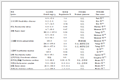
The preparation routes of LiDFOB are compared in Table 2, in which LiBF4 and LiBOB as boron source are more suitable for industrial production for LiDFOB due to the quick reaction rate and high quality. However, in the practical production, the situation must be very different, which is out of our theme and here we are not able to describe in detail.
|
Table 2 Comparison of the synthetic routes based on diversified boron source. |
LiDFOB has been considered as the most promising electrolyte salt to date the commercial electrolyte salt of LiPF6 mainly on account of its thermal, interfacial and electrochemical benifits. In this case, some self-properties of LiDFOB together with LiBF4 and LiBOB are intensively investigated (Fig. 2) [37]. As the molecular structural formular shown in Fig. 2a, LiDFOB combines the two parent molecules of LiBF4 and LiBOB, thus balancing the physchemical properties of the two electrolyte salts. For example, similar with LiBOB [38–40], LiDFOB has the instinctive ability to form a SEI-film on the graphite anode surface [19,41–43], even in high concentrations of propylene carbonate (PC) [44], providing a chance to replace the high-melting point of ethylene carbonate (EC) with the good SEI-film formation character. At the same time, like LiBF4, LiDFOB possess the moderate solubility in carbonate solvent, ensuring the applicable prerequisites of electrolyte salts [45]. In fact, the ion packing in the crystal structures of LiDFOB could also reflect that it is the interlinkage of both LiBF4 and LiBOB. As depicted in Fig. 2b, the solitary LiDFOB crystal structure exhibits a symmetrical and orthorhombic configuration. Each Li+ cation is gracefully coordinated by four oxygen atoms derived from three distinct DFOB− anions, as well as two fluorine atoms belonging to two separate DFOB− anions. Conversely, each DFOB− anion forms a harmonious bond with five Li+ cations. The anion oxalate group gracefully coordinates three of these cations through the carbonyl oxygens, with one cation being coordinated by both carbonyl groups. Each fluorine atom, in turn, forms a unique bond with a single Li+ cation. This intricate coordination arrangement gives rise to the planar sheets of DFOB− anions and Li+ cations, which are seamlessly linked by the fluorine–Li+ cation coordination bonds. Given these observations, it is logical to anticipate that the majority of LiDFOB's physicochemical properties fall somewhere between those of LiBOB and LiBF4. As shown in Fig. 2c, the chemical shifts of 19F NMR of LiDFOB, LiBF4 and LiBOB are ranked as: LiBF4 < LiDFOB < LiBOB, illustrating that the chemical environment around F element is in between [16]. Meanwhile, upon scrutiny of the thermogravimetric analysis curves presented in Fig. 2d, it becomes evident that the thermal decomposition of LiDFOB exhibits remarkable similarities to both LiBF4 and LiBOB. While the decomposition products of LiBF4 and LiBOB have been thoroughly examined and well understood [46]:

|
Download:
|
| Fig. 2. Comparison of the self-properties of LiBF4, LiDFOB and LiBOB. (a) Molecular structural formula. (b) Ion packing in the crystal structures of LiDFOB. (c) 19F and 11B NMR spectra. (d) TGA heating traces. (e) Raman spectra. Reproduced with permission [37]. Copyright 2011, Elsevier Ltd. | |

LiBF4 thermal decomposition:
| $ \mathrm{LiBF}_4 \rightarrow \mathrm{LiF}_{(\mathrm{s})}+\mathrm{BF}_{3(\mathrm{g})} $ | (1) |
LiBOB thermal decomposition:
| $ 6 \mathrm{LiBC}_4 \mathrm{O}_8 \rightarrow 3 \mathrm{Li}_2 \mathrm{C}_2 \mathrm{O}_{(\mathrm{s})}+3 \mathrm{B}_2 \mathrm{O}_{3(\mathrm{s})}+9 \mathrm{CO}_{(\mathrm{g})}+9 \mathrm{CO}_{2(\mathrm{g})} $ | (2) |
| $ \mathrm{Li}_2 \mathrm{C}_2 \mathrm{O}_4+3 \mathrm{B}_2 \mathrm{O}_3 \rightarrow 2 \mathrm{LiB}_3 \mathrm{O}_{5(\mathrm{s})}+\mathrm{CO}_{(\mathrm{g})}+\mathrm{CO}_{2(\mathrm{g})} $ | (3) |
Upon further investigation, it has been discovered that the decomposition of LiDFOB is a complex interplay of the aforementioned three mechanisms. Additionally, upon scrutinizing the Raman spectra of the three electrolyte salts presented in Fig. 2e, it becomes evident that there exists a remarkable similarity in the coordination of both DFOB− and BOB− with Li+ cations. Furthermore, the calculated vibrational band assignments for the BOB− anion can be effectively utilized to interpret and explain the peak assignments observed for the DFOB− anion [47–49].
While the physicochemical properties of LiDFOB indeed lie somewhere between those of LiBF4 and LiBOB, the practical application effects of electrolytes based on these three salts vary significantly [39,41,50]. This is because a good electrolyte should satisfy many electrochemical indicators [2], like suitable electrolyte salts concentration, high ionic conductivities, wide electrochemical windows and fine interfacial film formation ability.
4. Electrochemical properties of LiDFOB-based electrolyteThe electrolyte serves as a crucial conduit for the transmission of Li+ ions between the cathode and anode, where electrochemical reactions primarily occur at the interfaces between the electrolyte and the electrodes. Meanwhile, the primary function of this Li+ transmission channel is indirectly reflected in the ionic conductivity of the electrolyte, providing a key indicator of its performance. As shown the LiDFOB-based electrolyte in Fig. 3a, the ionic conductivities of over 4.5 mS/cm between 0 ℃ and 45 ℃ of electrolyte consisting of LiDFOB and various carbonate mixtures could the meet the majority of needs towards conducting Li+ in the electrolyte of LIBs [20]. Indeed, the physicochemical properties of electrolyte salts that significantly influence the ionic conductivities of electrolytes primarily revolve around solubility and transference number within the electrolyte. The solubility and transference number of LiDFOB in the mixed solvents of EC/diethyl carbonate (DEC) (3:7, wt/wt) at room temperature is near 1.4 mol/kg(solvent) and 0.39 ± 0.005, respectively. For comparison, the above parameters of LiPF6 in the same solvents system are over 2.2 mol/kg(solvent) and 0.38 [51]. This underscores the potential for LiDFOB to serve as a viable substitute for LiPF6 in fulfilling the primary role of an electrolyte in facilitating the transmission of Li+ ions. Concurrently, it is equally crucial to ensure that the electrochemical reaction occurs smoothly at the electrolyte/electrode interface, which is a crucial aspect of the desired properties for an electrolyte. This aspect is primarily reflected in the electrochemical window of the electrolyte, which serves as a clear indicator of the tolerable potential range without any decomposition of the electrolyte occurring [51]. As shown the voltammograms for each ionic liquids (with a Pt working electrode) based on DFOB– in Fig. 3b, the oxidation stability limit of the ionic liquids is approximately 5.0 V (vs. Li/Li+) [52]. The oxidative potential, which approximates 5 V, suffices to ensure a reversible cathodic reaction at the electrolyte/cathode interfaces. However, on the anodic side, the neat PY1RDFOB ionic liquids exhibit a partially reversible oxidation/reduction behavior within the potential range of 0–1 V. This observation indicates the occurrence of a reduction process at the electrolyte/anode interface, which is attributed to the reduction of N2 or O2 gases dissolved in the PY14TFSI ionic liquids [52]. On the other hand, for the tried-and-true graphite anode, the ability of the electrolyte to form an SEI film is also a crucial metric. As depicted in Fig. 3c, which showcases the differential capacity plots of graphite/Li batteries utilizing various electrolyte salts, an anodic peak emerges near 1.7 V (vs. Li/Li+) exclusively in electrolytes based on LiDFOB and LiBOB [28]. In all four electrolytes containing different electrolyte salts, another anodic peak emerged near 0.8 V (vs. Li/Li+), suggesting a minor decomposition of the electrolyte on the graphite surfaces. In essence, while the formation of an SEI film on the graphite surface is necessary, it inevitably leads to a partial disintegration of the solvent in LiBOB or LiDFOB-based electrolytes. In addition, given the crucial requirement for electrolyte in the vital current collector aluminum foil, it is equally imperative to mitigate the corrosion of Al within the electrolyte [52–54]. As shown in Fig. 3d, in the normal LiFSI-based electrolyte, the formation of Al(FSI)3 by the chemical reaction between Al and FSI– could be dissolved in the carbonate solutions [53], resulting in the continue consume of Al current collector and the capacity attenuation of cathode. In this scenario, the inclusion of LiDFOB into a LiFSI-based electrolyte results in the formation of a passivating film comprised of a Li+ conducting polymer. This polymer originates from the ring-opening polymerization of EC, triggered by the partial molecular structure of LiDFOB after the removal of CO2. This protective film effectively prevents the occurrence of the aforementioned side reactions, as depicted in Fig. 3d. As previously discussed, the introduction of LiDFOB, either as an additive or the main salt, significantly impacts the properties of electrolytes utilizing carbonate solvents. In the realm of solid-state electrolytes, polymer solid-state electrolytes rely on lithium salts to facilitate the conduction of Li+ within solid-state batteries. The traditional preparation process of polymer solid-state electrolytes is outlined in Fig. 3e. Similar to the case in organic electrolyte solutions, the addition of LiDFOB enhances both the ionic conductivity of the electrolyte and its compatibility with the electrode. This improvement is primarily attributed to the weak interaction between Li+ and the bulky DFOB– structural moiety, as well as the ability of LiDFOB to form an interfacial film [55,56]. Moreover, the part replacement of LiPF6 by LiDFOB would lead to a significant decrease of the lowest unoccupied molecular orbital (LUMO) energy level of Li+-solvent-anion–, indicating the thermodynamic reduction tolerance would largely decrease upon the introduction of LiDFOB. In another words, for the Li+ solvation structures containing two anions, the LUMO energy levels are mainly predominant of whether DFOB– is contained therein, while irrelevant of the proportion or coordination mode of DFOB– as well as the solvent species [57]. In addition, if the identical polymer is utilized as the binder for the cathode, the inclusion of LiDFOB serves a dual purpose: it functions as a carrier within the binder while also acting as a surface modification additive for the cathode [58]. This is ascribed to both filler effect of LiDFOB on polymer structure to decrease the crystallization ratio to increase the ionic conductivity [58–62] and additive effect of LiDFOB on electrode to form protective SEI or CEI film [63,64]. For the filler effect, DFOB– can take part in the competitive solvation process for Li+ between polymer, plasticized solvent and different anions like TFSI– [64], similar to the liquid electrolyte as discussed above. For the additive effect, DFOB– can decompose to form protective film like discussed later. This dual functionality enhances the performance of the polymer solid state batteries.

|
Download:
|
| Fig. 3. Electrochemical properties of LiDFOB-based electrolyte. (a) Conductivities of 1 mol/L LiDFOB salt in various solvent systems (0–45 ℃). Reproduced with permission [20]. Copyright 2010, Elsevier Ltd. (b) Voltammograms of the ionic liquids and ionic liquid-LiX electrolytes on a Pt working electrode. Reproduced with permission [52]. Copyright 2013, Elsevier Ltd. (c) Differential capacity plots of graphite/Li batteries containing various electrolytes. Reproduced with permission [28]. Copyright 2009, The Electrochemical Society. (d) The proposed mechanism of LiDFOB suppressing the aluminum corrosion caused by LiFSI salt. Reproduced with permission [53]. Copyright 2016, The Electrochemical Society. (e) The diagrammatic sketch of LiDFOB participation into polymer solid-state electrolyte preparation. Reproduced with permission [55]. Copyright 2023, Elsevier Ltd. | |

With the advancement of lithium-ion batteries (LIBs), electrolyte lithium salt, being a pivotal constituent of electrolytes, has garnered immense interest. Central to this exploration is the traditional graphite anode, serving as a crucial element in assessing the performance of electrolytes containing diverse lithium salts for LIBs [13]. In this case, the electrolyte, composed of LiDFOB or five other lithium salts dissolved in ethylene carbonate (EC), is scrutinized in a comparative manner within the context of Li/graphite LIBs [65]. As depicted in Fig. 4a, the charge/discharge curves of coin batteries utilizing electrolytes with six distinct lithium salts reveal the profound influences on the initial cycle charge/discharge profiles and efficiencies. Notably, the charge/discharge curves associated with lithium salts containing oxalate ligands, such as LiDFOB and LiBOB, exhibit an irreversible plateau at 1.8 V, a characteristic trait indicative of oxalate reduction [38,66–68]. Across all charge/discharge curves corresponding to various lithium salts, an irreversible plateau is observed at 0.7 V, reflecting the inherent trait of carbonate reduction. Furthermore, when considering the crucial metric of coulombic efficiency for LIBs utilizing electrolytes based on different lithium salts, the Li/graphite batteries cycled with lithium salts such as LiPF6, LiTFSI, and LiFSI exhibit the highest coulombic efficiencies, specifically 77%, 82%, and 83% respectively. Notably, the charge/discharge curves for Li/graphite batteries incorporating LiFSI and LiTFSI are remarkably similar, indicating comparable electrochemical behaviors. In parallel, the charging curve of the Li/graphite battery utilizing LiBF4 closely resembles that of LiPF6. However, a slightly larger plateau is observed at 0.7 V, resulting in a lower efficiency of approximately 68%. Conversely, the Li/graphite batteries employing electrolytes containing LiBOB and LiDFOB exhibit the lowest efficiencies, approximately 38% and 61% respectively. Notably, the charge-discharge profiles of the Li/graphite batteries with electrolytes containing LiBOB or LiDFOB are comparable, with the LiBOB-based electrolyte displaying a longer plateau at 1.8 V. The irreversible plateaus at 0.7 and 1.8 V gradually diminish during subsequent cycling, which aligns with the passivation of the graphite anode and the formation of a SEI-film. It should be noted that the efficiencies for the first cycle is roughly correlated with binding strengths of the anion to Li+, demonstrating the important role of Li+ coordination atmosphere in SEI-film formation [17,18,49]. Moreover, when the mixed salts based electrolyte of LiFSI/LiDFOB-dimethyl sulfite (DMS) utilized, it enables stable cycles of graphite/LiCoO2 batteries at a wide temperature range from −78 ℃ to 60 ℃, which is explained by the strong solvent with dual lithium salts surmounting the thermodynamic limitations by regulating interactions among Li+ ions, anions, and solvents at the molecular level. In another words, highly dissociated LiFSI in DMS with a favorable dielectric constant and melting point ensures rapid Li+ conduction while the high affinity between DFOB− and Li+ ions guarantees smooth Li+ desolvation within a wide temperature range [69]. Regarding the mechanism underlying the formation of the SEI-film stemming from LiDFOB, the chemical equilibriums (1) and (2) depicted in Fig. 4b pertaining to LiDFOB in carbonate-based solutions must be taken into account. This is due to the fact that both I and II have the potential to further interact with the nascent SEI-film constituents, such as lithium semicarbonate, leading to the formation of more intricate and stable oligomers at high or low temperature, resulting in the excellent high- and low-temperature performances because of the relatively low charge-transfer resistance of the batteries. Consequently, these interactions contribute significantly to the development of the SEI-film [19]. Furthermore, the SEI-film derived from LiDFOB possesses more reliable thermal stability [20,66,70,71]. As illustrated in Fig. 4c, the initial thermal decomposition temperature of the mesocarbon microbeads (MCMB) anode lithiated in the traditional LiPF6-carbonate electrolyte is approximately 110 ℃, significantly lower than the nearly 175 ℃ observed in the LiDFOB-modified electrolyte. This difference can be attributed to the deposition of a novel SEI film, facilitated by the participation of LiDFOB. This SEI film serves as a chemical barrier, effectively mitigating reactions between the lithiated MCMB and the electrolyte [72]. To fully harness the potential of the LiDFOB-based electrolyte for graphite under practical operating conditions, a dual-salts electrolyte blending both LiBF4 and LiDFOB was employed in graphite/LiFePO4 batteries operating at a low temperature of −25 ℃. As depicted in the "radar" plot comparing various electrolyte systems for the LiFePO4 cathode in Fig. 4d, a molar ratio of 1:1 for the LiBF4/LiDFOB mixture emerged as the optimal electrolyte following a comprehensive evaluation encompassing ionic conductivity and capacity [73]. It is noteworthy that the electrochemical performance of the LiFePO4 cathode is primarily determined by the interfacial impedance between the electrolyte and the cathode, rather than the ionic conductivity of the main electrolyte. This observation can also be extrapolated to the graphite anode, where the presence of a LiDFOB-derived SEI-film with reduced interfacial impedance facilitates the transport of Li+ across the electrolyte/graphite anode interface. Consequently, this enhanced interfacial transport promotes the storage of Li+ within the graphite anode. On the flipside, the LiDFOB-derived SEI-film demonstrates remarkable stability when adhered to the graphite surface. Consequently, the pre-preparation of the SEI-film using LiDFOB has gradually emerged as a refined approach for modifying the graphite anode [73,74]. For example, as shown in Fig. 4e, graphite anode could not steadily work at the simultaneous present of LiDFOB and trimethyl phosphate (TMP) [75], which is mainly on account of graphite exfoliation due to the co-intercalation of TMP together with Li+ into graphite layers, offsetting the positive effect of LiDFOB-derivative SEI-film for graphite anode. However, once a SEI-film is electrochemically pre-prepared on the graphite surface in a LiDFOB-based electrolyte, the graphite anode can operate stably within the same electrolyte. This stability is attributed to the physical barrier created between the TMP solvated Li+ and the graphite layers. Furthermore, thanks to LiDFOB's remarkable capacity to form an SEI-film on the graphite anode, it offers a novel path towards the production of electrolyte solutions free of EC for graphite anodes. This achievement holds promise in achieving similar performance outcomes as other SEI-film formation additives, such as LiBOB, vinylene carbonate (VC), or fluoroethylene carbonate (FEC) [76–80].

|
Download:
|
| Fig. 4. LiDFOB-based electrolyte for graphite anode. (a) Initial charge-discharge curves of Li/graphite batteries with the solutions of EC dissolving different electrolyte salts. Reproduced with permission [65]. Copyright 2014, The Electrochemical Society. (b) The decomposition mechanism of LiDFOB by two route. Differential capacity plots of graphite/Li batteries containing various electrolytes. Reproduced with permission [19]. Copyright 2006, Elsevier Ltd. (c) DSC profiles of the thermal decomposition of lithiated MCMB in the nonaqueous electrolytes with different content of LiDFOB. Reproduced with permission [72]. Copyright 2009, The Electrochemical Society. (d) A “radar” plot which compares the different electrolyte systems with the dual-salts of both LiDFOB and LiBF4. Reproduced with permission [73]. Copyright 2017, The Electrochemical Society. (e) Schematic of making overall planning for the flame-retardant property and cycle performance improvement. Reproduced with permission [75]. Copyright 2023, American Chemical Society. | |

LiDFOB has demonstrated a commendable compatibility with the graphite anode, particularly under high or low temperature conditions, due to the unique composition and structure of the SEI-film that forms on the anode's surface. However, when it comes to the capacity-enlarged anodes, such as those utilizing Li, Si/graphite or Si, hard carbon in next-generation electrochemical energy storage devices with high energy densities, the LiDFOB-based electrolyte exhibits a dual effect due to its unique physicochemical properties. In other words, the incorporation of LiDFOB does not always confer a positive outcome for these enlarged-capacity anodes. Given this scenario, the progress of research on LiDFOB-based electrolytes in the context of capacity-enhanced anodes, such as Li, Si/graphite or Si, hard carbon, is discussed as follows:
Li metal as the anode is an important route to develop the high energy density batteries because of the ultra-high theoretical capacity of 3860 mAh/g, much larger than that of graphite anode about 372 mAh/g, in which a variety of applications including Li oxygen batteries, Li sulfur batteries, and lithium metal batteries with conventional intercalation Li-ion cathodes have been widely studied [22,81–84]. However, these high energy systems with Li anode are still plagued with the practical issues such as dendritic Li growth and poor coulombic efficiency [22,85]. In this case, multitudinous works have been done in Li metal protection and dendrite suppression to overcome the above issues. Furthermore, the development of stable organic electrolytes against Li metal is undoubtedly one of the most important and effective research areas to enable the long-term cycling stability of lithium metal batteries [23,24,86,87]. As for LiDFOB-based electrolyte employed for Li anode, it could be roughly classified into three stages, including dilute electrolyte [23,24,82,83,86,88], concentrated electrolyte [45,89,90] and local concentrated electrolyte [85,91,92]. For the first stage of dilute electrolyte, the dilute electrolyte of 1 mol/L LiDFOB-EC/DEC (3:7 by weight) performs better than 1 mol/L LiPF6-EC/DEC (3:7 by weight) for Li anode in the aspect of both the coulombic efficiency of Li mdeposition/dissolution and the impedance of the Li/electrolyte interface. It was explained by the ability of LiDFOB to form a better SEI-film than LiPF6 in the mixed solvents of DEC/EC, in which the type of two electrolyte salts has great impact on the structure and morphology of the deposited lithium, and the deposited Li is thinner in the LiDFOB-based electrolyte [83]. Meanwhile, boron oxalates originated from LiDFOB-based electrolyte could be witnessed from the Raman spectra of Li surface, and the derivative oligomeric species is considered as an important component to suppress the formation of Li dendrites and improve the behavior of LiDFOB-based electrolytes in lithium deposition/dissolution [83]. For the second stage of concentrated electrolyte based on LiDFOB, the concentrated electrolyte of 4 mol/L LiDFOB-1,2-dimethoxyethane (DME) exhibits a better compatibility with Li anode than the conventional LiPF6-carbonate electrolyte, in which a Li/Li battery can be cycled at 1 mA/cm2 for over 3000 h [45]. This means that the formation of Li dendrites is obviously suppressed, which is explained by the dense SEI-film with the abundant B-O bond [45]. For the third stage of local concentrated electrolyte on the basis of LiDFOB, the introduce of diluent into concentrated electrolyte could decrease the usage of electrolyte salt to save cost at the none expense of the anti-oxidation ability of concentrated electrolyte. As shown in Fig. 5a, LiDFOB is usually utilized as the electrolyte additive together with other additives like FEC or LiNO3 to adjust the solvation state of Li+ by the interaction between Li+ and anions or polar functional groups, thus changing the component of SEI-film and improving the behavior of lithium deposition/dissolution [91]. For example, the mentioned local concentrated LiDFOB-based electrolyte together with LiNO3 could derive SEI-film with rich B-F bonds and LiF constituents. Meanwhile, the Li3N and LixNOy in the SEI-film derived from the LiNO3 degradation as fast ion conductor can facilitate lithium ions go through SEI and uniformly deposit on Li surface [91]. In this case, both Li/Li batteries and Li/NCM batteries with the mentioned local concentrated LiDFOB-based electrolyte perform well [91], as shown in Figs. 5b and c, respectively.

|
Download:
|
| Fig. 5. Performance of LiDFOB-based electrolyte for capacity-enlarged anode. (a) function mechanism of functional LiDFOB-based localized high-concentration electrolytes for Li anode. (b) Voltage profiles of Li||Li batteries with different electrolytes. (c) Cycle performances of Li||NCM87 batteries between 3.0 V and 4.5 V at various rates with different electrolytes under the current density of 1.0 C. Reproduced with permission [91]. Copyright 2022, The Wiley Ltd. (d) Diagrammatic sketch of LiDFOB-based electrolyte for batteries with Si/graphite anode. (e) Cycle performance of Si/graphite anode in the different electrolyte (note: LiDFOB was contained in the named “TEP” electrolyte). Reproduced with permission [96]. Copyright 2023, American Chemical Society. (f) Schematic illustration of pre-lithiated Si anode in LiDFOB-based electrolyte. Reproduced with permission [97]. Copyright 2023, The Wiley Ltd. (g) Molecular structural formula of three additives utilized in electrolyte for Na-ion batteries. (h) Cycle performance of full Na-ion batteries with different additives, in which NaDFOB is wrote as NaODFB. Reproduced with permission [99]. Copyright 2019, The Electrochemical Society. (i) The electrochemical performance of Na/Hard carbon half batteries in 1 mol/L NaPF6 in EC/DMC (1:1) electrolyte without or with 0.005, 0.01, 0.02, and 0.04 mol/L LiODFB, in which LiDFOB is wrote as LiODFB. Reproduced with permission [100]. Copyright 2021, The Springer Ltd. | |

For another capacity-enlarged anode with the theoretical specific capacity over 3579 mAh/g, Si anodes are also a promising select for the next generation high energy density batteries [93]. However, pure Si suffer from serious volume expansion throughout the cycling period, resulting in the particle pulverization, loss of electrical contact, continuous decomposition of electrolyte resulted from the repeated fracture of the SEI-film, and poor long-term cycling [94,95]. In this case, the industrial approach involves blending Si and graphite together to fabricate Si/graphite composite anodes, in which 5–20 wt% of Si particles have been introduced to enlarge the specific capacity of the composite anodes, at the same time the large ratio of graphite is employed to buffer the volume changes of Si during cycle procedure and maintain electrical contact channels throughout the electrode [96]. However, in order to obtain the substantial increase in theoretical capacity of anodes, higher ratio of Si need to be introduced into the electrode, which also results in the greater problems with long-term cycling in composite anodes on account of the nonlinear relationship between Si content and anode volume changes. In this case, additional passivation steps are needed to make Si/graphite composites a more feasible choice for the high energy density batteries. The most common and effective ways to restrain the detriment of Si volume expansion is via optimization of the electrolyte formulation to form a stable and flexible SEI-film on Si surface. As shown in Fig. 5d, SEI-film derived from LiDFOB is thick and rich in B-F bonds and LiF, providing a tough barrier on the surface of Si/graphite mixture and alleviating the volume change of Si anode [96]. Moreover, LiDFOB utilized as additive for Si/graphite composite anode is usually together with other additives like LiNO3 to obtain a synergistic effect to form multifunctional SEI-film for better protecting the structural stability of Si component, because both NO2− and N3− in the multifunctional SEI-film originated from LiNO3 are also important to preserve stable continuous cycling [96]. In this case, the stably worked Si/graphite anode could further optimize the cycle performance of the whole batteries with NCM523 cathode and Si/graphite anode (Fig. 5e). To fully make use of Si anode with large capacity, pre-lithiation via an electrolysis approach using lithium chloride (LiCl) as electrolyte salt is applied for Si thin films electrode, and LiDFOB is introduced into electrolyte to effectively form SEI-film on Si anodes to smoothly deposit Li+ (Fig. 5f) [97].
The above two anodes like Li or Si with the specific capacity over 3 Ah/g are hardly to be commercial at the current stage because the well-known formation of Li dendrites and volume expansion issue. However, another carbon based materials named hard carbon is an ideal next-generation anode that possesses the increased capacity without unacceptable shortages. Similar to graphite anode, improving the performance of hard carbon anode usually also needs the modification of the SEI-film on the anode surface. However, the introduction of LiDFOB has nagative effect in the electrochemical performance of hard carbon anode [98]. As the molecular structural formula shown in Fig. 5g, three interfacial film formation additives like NaDFOB, vinyl carbonate (VC) and tris(trimethylsilyl)phosphite TMSPi are compared to be added into 1 mol/L NaPF6-EC/DMC (1:1, v/v) for hard carbon/Na3V2(PO4)2F3 batteries at the high temperature of 55 ℃ [99]. As shown in Fig. 5h, the cycle performance of hard carbon/Na3V2(PO4)2F3 battery with the NaDFOB addition is even worse that without any additives, which is explained by the increase of the ohmic drop at the electrolyte/anode surface due to the unordered decomposition of NaDFOB at 55 ℃. However, together with other two additive, the cycle performance of hard carbon/Na3V2(PO4)2F3 battery is best because a synergistic effect could be reached, in which NaODFB could adjust the SEI-film formation and TMSPi addition is beneficial to control its growth and for capturing both O2 and acid impurities responsible for deleterious reactions occurring at relatively high potentials. Similar to the above negative effect of NaDFOB's addition, the introduction of LiDFOB with the almost same structure as NaDFOB into 1 mol/L NaPF6-EC/DMC (1:1, v/v) could also deteriorate the charge-discharge performance of Na/hard carbon batteries (Fig. 5i) [100]. This negative effect is ascribed to the formation of the LiF-rich SEI-film at the hard carbon anode surface, growing up with the increasing of the concentration of introduced LiODFB additive, and blocking the transmission of Na+ into hard carbon, thus deteriorating the cycle performance of hard carbon anode [100].
7. LiDFOB-based electrolyte for classic cathodesTernary cathode materials have become more popular as a result of their complementary merit of the multiple transition-metal ions [101,102]. Among them, LiNi0.8Mn0.1Co0.1O2 (NMC811) material possess a high specific capacity (268 mAh/g), a high cutoff potential (4.3 V vs. Li/Li+), and an outstanding Li+ diffusion coefficient, and thus displaying a competitive and prevalent status in the powering electric vehicle, compared with another commercial cathode materials of LiFePO4 [30]. However, the quick capacity degradation is a crucial problem, hampering the advancement of NMC811 cathode. Furthermore, the important route to solve the electrochemical performance deterioration is to stabilize the interface between the cathode and electrolyte [103–105]. In this case, there is a demand for stabling the interface of electrolyte/NMC811 cathodes. Compared with LiBOB, LiDFOB as an additives was introduced into traditional carbonate-based electrolyte of 1 mol/L LiPF6-DEC/EC (1:1, v/v) to investigated the effect of LiDFOB on the interface of cathode/electrolyte (Fig. 6a) [106]. As a result of the poor anti-oxidation ability of oxalate group, LiBOB and LiDFOB is easily tended to decompose under high potential thus forming a cathode electrolyte interphase film (CEI-film) between NCM811 cathode and electrolyte. In this case, BxOy-derived in the CEI-film from LiBOB or LiDFOB could activate NCM811 cathode, which not only accelerates the diffusion of Li+ but also assists suppress the dissolution of transition-metal ions [103]. Moreover, compared with the CEI-film originated from LiBOB additives, the CEI-film derived from LiDFOB preferential decomposition is thinner and more uniform and it contains more inorganic components, reducing the decomposition of the electrolyte and optimizing the composition of the CEI film and reducing the resistance of Li+ transport (Fig. 6a) [106]. Similar effect of LiDFOB on the NCM811 cathode could be also witnessed at other ternary cathode materials [103–105]. Based on the ideal CEI-film formation on the NCM811 cathode in the electrolyte with LiDFOB additive, the whole LIBs with NCM811 cathode and LiDFOB additive perform better for the rate performance (Fig. 6b). The capacity retention rate of 4 C to 0.1 C is over 65%, which is much higher than those of 40% and 50% in the carbonate-based standard electrolyte and LiBOB additive-based electrolyte, respectively. Meanwhile, the electrochemical properties of the formed CEI-film originated from LiDFOB on NCM811 cathode is also stable, in which the interfacial impedance of electrolyte/NCM811 interface after 50 charge/discharge cycles is still less than 180 Ω shown in Fig. 6c, beneficial to the long cycle performance of the whole batteries.

|
Download:
|
| Fig. 6. LiDFOB-based electrolyte for cathodes. (a) Schematic illustrations of the formation of CEI film with different electrolytes for NCM811 cathode. (b) Rate performances of NMC811/Li cells with different electrolyte systems. (c) Impedance diagrams of NMC811/Li half-cells with different electrolytes after the 50th cycles. Reproduced with permission [106]. Copyright 2021, American Chemical Society. (d) Film-forming mechanism of DFOB anion acted with the dissolved Mn2+ when LiMn2O4 cathode is utilized. (e) Cycling performance of LiMn2O4/Li batteries at a constant rate 0.5 C and cutoff voltage from 2.75 V to 4.2 V. (f) Concentration of Mn2+ ions dissolved from LiMn2O4 powder stored in 1.0 mol/L LiPF6/EC:PC:EMC (1:1:3) and 1.0 mol/L LiDFOB/EC:PC:EMC (1:1:3) for one week at 60 ℃. Reproduced with permission [109]. Copyright 2010, Elsevier Ltd. (g) Schematic illustrations of the formation of CEI-film or SEI-film based on LiDFOB electrolyte on Li-rich cathode and graphite anode, respectively. (h) Rate capability of Li/Li-rich half-cells at various discharge C rates. Reproduced with permission [133]. Copyright 2017, Elsevier Ltd. (i) Schematic illustrations of anion intercalation into graphite cathode based on mixed salts electrolyte. (j) Dependence of discharge capacities of graphite cathodes on the molar percentage of PF6− in the mixed salts. Reproduced with permission [143]. Copyright 2022, American Chemical Society. (k) First-cycle galvanostatic charge–discharge profiles of natural graphite cathodes in different solutions of LiBF4+LiDFOB-sulfolane (SL). Reproduced with permission [144]. Copyright 2023, Wiley Ltd. | |

As mentioned in above, the introduce of LiDFOB into traditional carbonate-based electrolyte could suppress the dissolution of transition metal ions in NCM811 cathode materials. In fact, the transition metal ions in NCM811 usually refer in particular to Mn2+, which is more commonly witnessed in another cathode of LiMn2O4 cathode with a spinel structure and the characters like high voltage, low cost, and small environmental impact. The Mn2+ dissolution resulting in the capacity decrease during cycling of the LiMn2O4 cathode at high temperature (> 55 ℃) is still an obstacle for its large-scale application [107]. And Mn2+ dissolution at high temperature is usually explained by the disproportionation reaction of Mn3+ in an acidic ambience as a result of HF formation from the chemical reaction between LiPF6 and trace amounts of water in the carbonate-based electrolyte [108]. In this case, a comparative study about LiPF6 and LiDFOB as electrolyte salts in traditional carbonate mixtures was carried out to explore the Mn2+ dissolution of LiMn2O4 in electrolyte at high temperature [109]. As shown in Fig. 6d, Mn2+ is easily to be combined with the O atoms of the oxalate section originated from DFOB− spontaneous decomposition at LiMn2O4 surface. This metal organic complex could further evolve into CEI-film to prevent the Mn2+ continuing dissolved. This phenomenon could be also observed in LiBOB application case. Benefited from the protective effect of CEI-film derived from LiDFOB on LiMn2O4 cathode, the Li/LiMn2O4 batteries shows a better cycle performance in LiDFOB based electrolyte than that in LiPF6 based electrolyte (Fig. 6e) [109]. Meanwhile, the protective effect of CEI-film on LiMn2O4 cathode is permanent so that much lower Mn2+ is detected in the LiDFOB-based electrolyte than in LiPF6-based electrolyte after storage at 60 ℃ for one week (Fig. 6f). In this case, the introduction of LiDFOB into carbonate-based electrolyte for suppressing Mn2+ dissolution from Li2MnO4 structure is apparent. Moreover, similar advantageous effect of LiDFOB on LiMn2O4 could be also witnessed in the element doping based LiMn2O4, like LiNi0.5Mn1.5O4 [21,74,110–115].
For another type of Mn contained cathode for next-generation high energy density LIB, Li-rich manganese based cathodes (xLi2MO3-(1-x)LiMnO2) have gained growing attention because they can output the high capacities over 200 mAh/g and enable the high operating voltages [71,116,117]. However, apart from the attractive advantages of Li-rich manganese based cathodes, several major challenges still limits the application process. First, O2 gas escaped from the activation of the Li2MnO3 phase during the initial charge procedure could transform into highly reactive oxygen radicals and catalytically precipitate undesired electrolyte decomposition at the cathode surface [118,119]. In this case, the stability of the electrolyte at higher voltage would be reduced. Moreover, the large capacity delivered by Li-rich manganese based cathode cannot maintain for long cycles due to the irreversible phase transformation from layered to spinel-like structures [120–122]. It is well known that the irreversible phase transformation of cathodes could be restrained by stabling the cathode/electrolyte interface [123]. Among various strategies for modifying the cathode/electrolyte interface including element doping [124–126], coating [127,128], mixing materials [129,130] and electrolyte additives [131,132], the introduction of electrolyte additives to modify cathode surface is considered as one of the most efficient route because none of additional process is required compared with other methods. In this case, LiDFOB could be considered as a functionable electrolyte additives because it tends to take in the both electrochemical reduction and oxidation reactions at the interface between the electrode and electrolyte to form an artificial protective surface film [103]. As shown in Fig. 6g, LiDFOB as the electrolyte additive generate a LiF-less surface film on the Li-rich manganese based cathode surface [133]. Together with the LiDFOB/carbonate-derived semi carbonate-based oligomer, the CEI-film could better prevent the cathode from metal ion dissolution and micro cracks and improve the electrochemical performance of Li-rich manganese based cathode [133]. In this case, the LiDFOB-derived CEI-film helps the Li-rich manganese based cathode to delivers a high discharge capacity of ca. 131.5 mAh/g at a current density of 10 C. Conversely, the cathode with the baseline electrolyte undergoes serious capacity degradation as the C rate elevates and a low discharge capacity of approximately 18 mAh/g obtained (Fig. 6h). Thus, the LiDFOB-derived CEI-film is obviously suitable for facilitating Li+ transfer in high-voltage Li-rich manganese based cathodes. Meanwhile, on the basis of LiDFOB-originated SEI-film to protect graphite anode, the high-voltage Li-rich/graphite full battery with LiDFOB as electrolyte additive can deliver 82.7% of the initial discharge capacity after 100 charge/discharge cycles, while 45.8% of that could be delivered in the baseline electrolyte. In this case, the introduction of LiDFOB could effectively improve the electrochemical performance of Li-rich manganese-based cathode [27,29,134].
Based on above analysis, transition metal based materials is suitable to be served as the cathode in LIBs as a result of reversibly accomodating Li+. In fact, graphite could be also utilized as cathode materials to store anion in dual-ion batteries (DIBs), in which the energy storage mechanism is based on the simultaneous storage of anion and cation at the respective cathode and anode sides [5,135–138]. The new electrochemical energy storage device of DIBs is attracting more attention due to the high power density and environmental benign. The solvent of EC could be considered as a bridge of the research between LIBs and DIBs because the vital graphite anode-compatible solvent of EC in LIB is also widely and deeply investigated to employed in graphite cathode-based DIBs [136,139–142]. However, in the graphite cathode-based DIBs, the classic anion PF6– is confirmed to hardly intercalate into graphite layers because of the strong solvation interaction between PF6– and EC [136,139]. In this case, to further explore the anion storage mechanism of graphite cathode in pure EC-based electrolyte, LiDFOB is introduced into 1 mol/L LiPF6-EC solution to change the solvation state of EC-PF6–. As shown in Fig. 6i, the suitable addition content of DFOB– could compete with PF6– to be solvated by EC, changing the solvation state of both EC-PF6– and EC-DFOB–. Meanwhile because of the different EC shell number, it finally results in some EC-DFOB– intercalating into graphite layers [143], thus elevating the discharge capacity of graphite cathode (Fig. 6j). Besides the change of solvation state of anion in the electrolyte via the introduction of LiDFOB, the storage behavior of solvated anion between the interlayers of graphite could be also affected by the participation of DFOB–. As shown in Fig. 6k, the shape of the charge-discharge curves of the graphite cathode in the electrolyte of 1 mol/L LiBF4-sulfone (SL) much changes after mixing LiDFOB into that electrolyte. This is explained by the evolution from BF4– to DFOB– solvated by SL to be stored in different stage of anion-graphite intercalation compounds [144]. In addition, LiDFOB-derivative CEI-film is also found beneficial to the anion intercalation into graphite cathode, contributing to the Li/graphite DIBs with both the excellent cycle performance of over 4000 charge-discharge cycles and the ultra high rate performance of over 50 C. This is because the robust CEI-film can extrude the solvent shell around the anion, thus stabling the graphite cathode against structural deterioration or exfoliation, when the solvated anion cross the electrolyte/graphite interface [145].
8. LiDFOB-based electrolyte for full batteries under extreme conditionsFrom above summary, a result could be obtained that LiDFOB-based electrolytes have positive influence in the electrochemical performance of various anodes [146] and cathodes [26,147]. Moreover, LiDFOB-based electrolyte could further affect the cycle performance of the whole batteries, originating from the properties of LiDFOB to the optimization of the interfaces between electrolyte and cathode or anode. As shown the highest occupied molecular orbital (HOMO) and LUMO energy levels of different solvents and lithium salts in Fig. 7a, LiDFOB possesses the highest LUMO energy and lowest HOMO energy among the solvents like EC, PC, DMC and the salts like LiDFOB and LiPF6, reflecting the preemptive decomposition of LiDFOB regardless of the oxidation or the reduction atmosphere [148]. The oxidative decomposition of LiDFOB tends to form the LiF-less CEI-film on the cathode sufaces, meanwhile the reductive decomposition of LiDFOB could produce LiF-rich SEI-film on the anode surface [103]. The CEI-film on the cathode surface could suppress the dissolution of transition metal ions in cathode materials [103], as shown the comparison of transition metal dissolution (Co, Mn, Ni) from fully delithiated Li-rich cathodes with the CEI layer derived from decomposition of the baseline electrolyte or 1% LiDFOB-added electrolyte at 60 ℃ for 24 h in Fig. 7b. At the same time, the dissolved transition metal ion in the electrolyte from cathode materials could move to the graphite anode side, which could be detected at the graphite anode surface [149], as plotted the EDS of graphite after 200 cycles in the electrolyte with 1% LiDFOB addition in Fig. 7c. In this case, the transition metal ion tends to be reduced into metal nanoparticle, thus deteriorating the cycle performance of graphite anode. Under this circumstance, the introduction of LiDFOB into electrolyte is beneficial to improve the cycle performance of various full batteries. As shown in Fig. 7d, the addition of 5% LiDFOB into 1.0 mol/L LiPF6 EC/DMC/DEC (1:1:1, v/v/v) electrolyte could tremendously improve the cyclic performance of graphite/LiFePO4 batteries at the high temperature of 60 ℃, in which the discharge capacity retention could increase from 15% to 66.4% after 200 charge-discharge cycles [73]. This is ascribed to the formation of a special SEI film on both the anode and cathode in the presence of LiDFOB. In the SEI-film, the generation of lithium tetrafluorooxaltophosphate (LiPF4C2O4) originated from the synergistic effect between LiDFOB and LiPF6 at elevated temperature and the formation of borates or its derivative products from the LiDFOB degradation on both the anode and cathode electrodes are beneficial to the improvement of the cycling performance at a high temperature. As shown in Fig. 7e, the non-flammable concentrated dual-salt electrolyte of 2 mol/L LiTFSI + 2 mol/L LiDFOB in trimethyl phosphate (TMP)/gamma-butyrolactone (GBL) possesses the high compatibility with high-Ni full battery system of MCMB/NCM622 with a good cycle performance even over a wide temperature range. It is explained by the favorable synergistic effects of the dual-salt of LiTFSI with excellent thermal stability and LiDFOB with good SEI- or CEI-film formation ability on the both anode and cathode interfaces, contributing the enhancement of electrochemical performances. It should be noted that the enrichment of LiDFOB derivative C–Fx species, B-containing species and S-containing species in the SEI-film on MCMB anode is crucial to improve the performance of MCMB/NCM622 full batteries at a wide temperature range [150]. Moreover, the cycling performance of graphite/Li-rich full batteries containing the electrolytes with or without 1% LiDFOB is shown in Fig. 7f. The discharge capacity retention at the 100th cycle is obviously elevated to 82.7% for the battery in the electrolyte with 1% LiDFOB, compared to that of 45.8% in the baseline electrolyte. After 200 cycles, a discharge capacity retention of only 11% is obtained for the full battery with the baseline electrolyte, whereas the introduction of 1% LiDFOB could prevent the discharge from severe fading of the full battery. It is explained by that the baseline electrolyte can't form a robust CEI-fim, suppressing the metal ion dissolution from the Li-rich cathode or metal deposition on the graphite anode. Since the deposition of these metals could causes the consumption of necessary electrons for Li+ intercalation into the graphite, this results in considerable capacity fading of the full batteries [133].

|
Download:
|
| Fig. 7. LiDFOB-based electrolyte for full batteries under extreme conditions. (a) HOMO and LUMO energy levels of solvents and lithium salts. Reproduced with permission [148]. Copyright 2022, Elsevier Ltd. (b) A comparison of transition metal dissolution (Co, Mn, Ni) from fully delithiated Li-rich cathodes with the CEI layer derived from decomposition of the baseline electrolyte or 1% LiDFOB-added electrolyte at 60 ℃ for 24 h. Reproduced with permission [103]. Copyright 2017, Elsevier Ltd. (c) EDS of graphite after 200 cycles in LiCoO2/graphite batteries charged to 4.5 V for electrolyte with 1% LiDFOB addition. Reproduced with permission [149]. Copyright 2022, Elsevier Ltd. (d) Cycling performance of graphite/LiFePO4 batteries with and without LiDFOB (5 wt%) electrolyte at 60 ℃. Reproduced with permission [73]. Copyright 2011, Elsevier Ltd. (e) The cycling performance of MCMB/NCM622 full batteries using 2 mol/L LiTFSI + 2 mol/L LiDFOB TMP/GBL at 60 ℃. Reproduced with permission [50]. Copyright 2021, Electrochemical Society. (f) Discharge capacity retention and Coulombic efficiency of graphite/Li-rich batteries at a rate of C/2 over 200 cycles. Reproduced with permission [133]. Copyright 2017, Elsevier Ltd. | |

LiDFOB possesses many advantages over its original composition on account of its unique physchemical properties, such as more soluble in carbonate solvent compared to LiBOB, easier to be dissociated to form electrolyte with higher ionic conductivity compared to LiBF4. Meanwhile, LiDFOB also has some merits towards improving the performance of electrochemical energy storage devices, such as the better thermal stability, higher compatibility with cathode and anode materials, noncorrosive to Al current collector. The most attractive property of LiDFOB is its SEI-film and CEI-film formation ability on the respective anode and cathode surface, which is originated from the electrochemical decomposition of DFOB– at low or high potential because of its average anti-oxidation or anti-reduction ability. At the traditional graphite anode or capacity-enlarged anodes side, LiDFOB could preferentially decompose even earlier than EC to form a LiF-rich SEI-film, which is of structural stability, thin thickness, and thermal tolerability, thus improving the cycle performance and high temperature performance of various anodes. At the cathode side, LiDFOB could easily decompose at near 4 V (vs. Li/Li+) to form organic component-rich CEI-film, which could be combined with the transition metal ion in the cathode materials on cathode surface, thus suppressing the dissolution of transition metal ions and improving the cycle performance of Li-rich cathode or the high temperature performance of manganese based cathodes (ca. LiMn2O4, LiNi0.5Mn1.5O4 or other ternary cathode materials). Under this circumstance, LiDFOB derived interfacial film on the electrode could prolong the cycle life of various full batteries based on the structural maintenance of the both electrodes. Moreover, benefited from the DFOB– with big size, the introduction of LiDFOB into electrolyte could increase the ionic conductivity of electrolyte at low temperature and adjust the state of anion solvation, thus elevating the low temperature performance of LiFePO4 cathode LIBs and promoting the anion intercalation into graphite cathode. However, LiDFOB also has the disadvantage of high cost because the raw material to produce LiDFOB usually is another lithium salt. In addition, LiDFOB is also easy to be combined with H2O to form hydrate, thus having negative effect on the electrochemical performance of chargeable batteries.
10. PerspectiveLiDFOB as an electrolyte salt additive introduced into the traditional electrolyte has been widely investigated in various electrochemical storage devices, and we anticipate that LiDFOB will be further extensively investigated with regard three aspects. First, LiDFOB still plays a role of SEI-film formation additive in some special functional batteries system (ca. flame-retardancy, low-temperature, EC-free, anode-free) and the capacity-enlarged anode (ca. Li, Si/graphite), but the dosage of LiDFOB will be controlled because growing content can increase the thickness of SEI-film, thus enlarging the internal resistance and deteriorating the performance of the batteries. Second, LiDFOB could be introduced into the binder as a interfacial modifier with tailoring a CEI-film on cathode surface between high working potential cathode and the electrolyte with poor anti-oxidation ability (ca. several polymer solid state electrolyte) to improve the electrochemical performance of the polymer solid state batteries. Meanwhile, LiDFOB's introdution will be a familiar strategy to suppress manganese dissolution from manganese-based cathode due to the attractive high working potential of manganese metal ion. Finally, LiDFOB may be widely utilized in the new electrolyte system of all fluorinated electrolyte to strengthen the compatibility between the new electrolyte and various electrodes due to the excellent SEI-film and CEI-film formation ability, and the common used fluorinated solvent [30,151–156] was shown in Fig. 8.

|
Download:
|
| Fig. 8. The structure of the solvents employed in all–fluorinated solvents–based electrolyte solutions for various batteries. FEC [151], DFEC [151], FEMC [152], HFDEC [153], EFA [154], PFMP [155], HEF [155] and HFE [156] are fluoroethylene carbonate, difluoroethylene carbonate, 3,3,3-fluoroethylmethyl carbonate, bis(2,2,2-trifluoroethyl) carbonate, ethyl difluoroacetate, perfluoro-2-methyl-3 pentanone, 1,1,2,2-tetrafluoroethyl 2,2,3,3-tetrafluoropropyl ether, 1,1,2,2-tetrafluoroethyl-2,2,2-trifluoroethyl ether, respectively. | |

However, LiDFOB is speculated to be used as additives not main salts in electrolyte for electrochemical energy storage devices mainly on account of the reasons as follows. First, the poor anti-oxidation and anti-reduction cannot provide the wide electrochemical window for electrochemical reaction stably operating, but the SEI- or CEI-film derived from LiDFOB can optimize the performance of rechargeable batteries. Second, the performance of specific electrolyte based on the utilization of LiDFOB cannot compete with those base on other common lithium salts, for example, the conductivity of LiDFOB-based polymer solid state electrolyte is usually smaller than that of LiTFSI because of the TFSI–’s plasticization effect, the stability of LiDFOB-based aqueous electrolyte is poorer than that of LiClO4, LiFSI and LiTFSI due to the degradation of LiDFOB in water. Third, LiDFOB is two times more expensive than other common lithium salts (Table 1), resulting in the small possibility to wholly replace. At the same time, the industrial production process of LiDFOB always involves the fluorochemical procedure with intensely toxic effects and complex difficulties, which requires the quick development of advanced technology.
Declaration of competing interestThere are no conflicts to declare.
CRediT authorship contribution statementJiayu Li: Funding acquisition, Conceptualization. Binli Wang: Visualization, Formal analysis. Yu Luo: Project administration, Methodology. Hongyu Wang: Writing – review & editing. Lei Zhang: Writing – review & editing, Writing – original draft.
AcknowledgmentThis work was financially supported by Talent start-up funds of DGUT (No. 221110217).
| [1] |
T. Ohzuku, Y. Iwakoshi, K. Sawai, J. Electrochem. Soc. 140 (1993) 2490-2498. DOI:10.1149/1.2220849 |
| [2] |
K. Xu, Chem. Rev. 104 (2004) 4303-4417. |
| [3] |
K. Xu, Chem. Rev. 114 (2014) 11503-11618. DOI:10.1021/cr500003w |
| [4] |
J. Huang, Y. Zhu, Y. Feng, et al., Acta Phys. Chim. Sin. 38 (2022) 2208008. DOI:10.3866/pku.whxb202208008 |
| [5] |
T. Placke, O. Fromm, S.F. Lux, et al., J. Electrochem. Soc. 159 (2012) A1755-A1765. DOI:10.1149/2.011211jes |
| [6] |
H. Fan, J. Gao, L. Qi, H. Wang, Electrochim. Acta 189 (2016) 9-15. |
| [7] |
L. Suo, O. Borodin, T. Gao, et al., Science 350 (2015) 938-943. DOI:10.1126/science.aab1595 |
| [8] |
H. Li, T. Kurihara, D. Yang, et al., Energy Storage Mater. 38 (2021) 454-461. |
| [9] |
J. Yin, C. Zheng, L. Qi, H. Wang, J. Power Sources 196 (2011) 4080-4087. |
| [10] |
Y. Liao, H. Zhang, Y. Peng, et al., Adv. Energy Mater. 14 (2024) 2304295. |
| [11] |
L. Zheng, H Zhang, P. Cheng, et al., Electrochim. Acta 196 (2016) 169-188. |
| [12] |
P.V. Chombo, Y. Laoonual, J. Power Sources 478 (2020) 228649. |
| [13] |
Z. Song, L. Zheng, P. Cheng, et al., J. Power Sources 526 (2022) 231105. |
| [14] |
V. Aravindan, J. Gnanaraj, S. Madhavi, H.K. Liu, Chem. Eur. J. 17 (2011) 14326-14346. DOI:10.1002/chem.201101486 |
| [15] |
H.B. Han, S.S. Zhou, D.J. Zhang, et al., J. Power Sources 196 (2011) 3623-3632. |
| [16] |
L. Zhou, W. Li, M. Xu, B. Lucht, Electrochem. Solid-State Lett. 14 (2011) A161-A164. DOI:10.1149/2.016111esl |
| [17] |
H.M. Zhou, K.W. Xiao, J. Li, et al., J. Cent. South Univ. 25 (2018) 550-560. DOI:10.1007/s11771-018-3760-5 |
| [18] |
S.D. Han, J.L. Allen, E. Jónsson, et al., J. Phys. Chem. C 117 (2013) 5521-5531. DOI:10.1021/jp309102c |
| [19] |
S.S. Zhang, Electrochem. Commun. 8 (2006) 1423-1428. DOI:10.1002/ejic.200500883 |
| [20] |
J. Li, K. Xie, Y. Lai, et al., J. Power Sources 195 (2010) 5344-5350. |
| [21] |
H. Chen, B. Liu, Y. Wang, et al., J. Alloys Com. 876 (2021) 159966. |
| [22] |
N. Azimi, Z. Xue, L. Hu, et al., Electrochim. Acta 154 (2015) 205-210. |
| [23] |
S. Lin, J. Zhao, ACS Appl. Mater. Inter. 12 (2020) 8316-8323. DOI:10.1021/acsami.9b21679 |
| [24] |
X. Meng, J. Qin, Y. Liu, et al., Chem. Eng. J. 465 (2023) 142913. |
| [25] |
J. Zhang, H. Zhang, L. Deng, et al., Energy Storage Mater. 54 (2023) 450-460. DOI:10.3390/s23010450 |
| [26] |
K. Wang, Z. Liang, S. Weng, et al., ACS Energy Lett. 8 (2023) 3450-3459. |
| [27] |
Q. Zhao, Y. Wu, Z. Yang, et al., Chem. Eng. J. 440 (2022) 135939. |
| [28] |
A. Xiao, L. Yang, B.L. Lucht, et al., J. Electrochem. Soc. 156 (2009) A318-A327. DOI:10.1149/1.3078020 |
| [29] |
A. Gutierrez, M. He, B.T. Yonemoto, et al., J. Electrochem. Soc. 166 (2019) A3896-A3907. DOI:10.1149/2.1281915jes |
| [30] |
C. Poches, A.A. Razzaq, H. Studer, et al., ACS Appl. Mater. Inter. 15 (2023) 43648-43655. DOI:10.1021/acsami.3c06586 |
| [31] |
J. Li, H. Zhou, F. Liu, Chinese Patent, CN102070661B, 2011.
|
| [32] |
M. Xia, J. Li, H. Zhou, Chinese Patent, CN106749361A, 2016.
|
| [33] |
F. Yan, S. Zhang, K. Wang, et al., Chinese Patent, CN109678898A, 2019.
|
| [34] |
X. Li, X. Wu, Z. Wang, et al., Chinese Patent, CN102702243B, 2012.
|
| [35] |
X. Min, C. Chen, Chinese Patent, CN104557995B, 2013.
|
| [36] |
X. Zhou, Chinese Patent, CN105481887A, 2015.
|
| [37] |
J.L. Allen, S.D. Han, P.D. Boyle, W.A. Henderson, J. Power Sources 196 (2011) 9737-9742. |
| [38] |
K. Xu, S. Zhang, T.R. Jow, et al., Electrochem. Solid-State Lett. 5 (2002) A26-A29. |
| [39] |
K. Xu, U. Lee, S. Zhang, et al., Electrochem. Solid-State Lett. 7 (2004) A273-A277. |
| [40] |
K. Xu, S.S. Zhang, U. Lee, et al., J. Power Sources 146 (2005) 79-85. |
| [41] |
S. Zhang, J. Power Sources 163 (2007) 713-718. |
| [42] |
S.H. Kang, D.P. Abraham, A. Xiao, B.L. Lucht, J. Power Sources 175 (2008) 526-532. |
| [43] |
Z. Zhang, X. Chen, F. Li, et al., J. Power Sources 195 (2010) 7397-7402. |
| [44] |
K. Xu, S. Zhang, T.R. Jow, Electrochem. Solid-State Lett. 6 (2003) A117-A120. |
| [45] |
J. Yu, N. Gao, J. Peng, et al., Front. Chem. 7 (2019) 494. |
| [46] |
E. Zinigrad, L. Larush-Asraf, G. Salitra, et al., Thermochim. Acta 457 (2007) 64-69. |
| [47] |
R. Holomb, W. Xu, H. Markusson, et al., J. Phys. Chem. A 110 (2006) 11467-11472. DOI:10.1021/jp0626824 |
| [48] |
S.-D Han, O. Borodin, J.L. Allen, et al., J. Electrochem. Soc. 160 (2013) A2100-A2110. DOI:10.1149/2.094309jes |
| [49] |
J. Li, P. Meng, H. Zhou, Ionics 24 (2018) 2147-2155. DOI:10.1007/s11581-018-2463-0 |
| [50] |
S.S. Zhang, K. Xu, T.R. Jow, J. Electrochem. Soc. 149 (2002) A586-A590. |
| [51] |
H. Liu, J. Zhang, L. Zhang, et al., J. Phys. Chem. C 128 (2024) 1574-1581. DOI:10.1021/acs.jpcc.3c06738 |
| [52] |
J.L. Allen, D.W. McOwen, S.A. Delp, et al., J. Power Sources 237 (2013) 104-111. |
| [53] |
G. Yan, X. Li, Z. Wang, et al., J. Solid State Electrochem. 20 (2015) 507-516. |
| [54] |
K. Park, S. Yu, C. Lee, H. Lee, J. Power Sources 296 (2015) 197-203. |
| [55] |
R. He, K. Deng, T. Guan, et al., J. Colloid Inter. Sci. 644 (2023) 230-237. |
| [56] |
S. Zugmann, M. Fleischmann, M. Amereller, et al., J. Chem. Eng. Data 56 (2011) 4786-4789. DOI:10.1021/je2007814 |
| [57] |
F. Wen, S. Cao, X. Ren, et al., ACS Appl. Energy Mater. 5 (2022) 15491-15501. DOI:10.1021/acsaem.2c03065 |
| [58] |
Q. Han, S. Wang, W. Kong, et al., Chem. Eng. J. 454 (2023) 140104. |
| [59] |
V. Aravindan, P. Vickraman, K. Krishnaraj, Polymer Inter. 57 (2008) 932-938. DOI:10.1002/pi.2430 |
| [60] |
K. Karuppasamy, H.S. Kim, D. Kim, et al., Sci. Rep. 7 (2017) 11103. |
| [61] |
A.R. Polu, D.K. Kim, H.W. Rhee, Ionics 21 (2015) 2771-2780. DOI:10.1007/s11581-015-1474-3 |
| [62] |
A. Swiderska-Mocek, A. Kubis, Solid State Ionics 364 (2021) 115628. |
| [63] |
X. Yu, M. Li, J. Ma, et al., ACS Sus. Chem. Eng. 11 (2023) 12378-12388. DOI:10.1021/acssuschemeng.3c02727 |
| [64] |
M. Li, H. An, Y. Song, et al., J. Am. Chem. Soc. 145 (2023) 25632-25642. DOI:10.1021/jacs.3c07482 |
| [65] |
M. Nie, B.L. Lucht, J. Electrochem. Soc. 161 (2014) A1001-A1006. DOI:10.1149/2.054406jes |
| [66] |
I.A. Shkrob, Y. Zhu, T.W. Marin, D.P. Abraham, J. Phys. Chem. C 117 (2013) 23750-23756. DOI:10.1021/jp407714p |
| [67] |
S. Zhang, ECS Trans. 3 (2007) 59-68. DOI:10.1149/1.2793579 |
| [68] |
Y. Zhu, Y. Li, M. Bettge, D.P. Abraham, Electrochim. Acta 110 (2013) 191-199. |
| [69] |
Y. Zhao, Z. Hu, Z. Zhao, et al., J. Am. Chem. Soc. 145 (2023) 22184-22193. DOI:10.1021/jacs.3c08313 |
| [70] |
M. Xu, L. Zhou, L. Hao, et al., J. Power Sources 196 (2011) 6794-6801. |
| [71] |
S.A. Delp, J.L. Allen, T.R. Jow, ECS Trans. 58 (2014) 111-118. DOI:10.1149/05848.0111ecst |
| [72] |
Z. Chen, Y. Qin, J. Liu, K. Amine, Electrochem. Solid-State Lett. 12 (2009) A69-A72. DOI:10.1149/1.3070581 |
| [73] |
Q. Zhao, Y. Zhang, F. Tang, et al., J. Electrochem. Soc. 164 (2017) A1873-A1880. DOI:10.1149/2.0851709jes |
| [74] |
L. Chen, J. Shu, Y. Huang, et al., Appl. Surf. Sci. 598 (2022) 153740. |
| [75] |
F. Xu, X. Cai, J. Zhang, et al., ACS Appl. Energy Mater. 5 (2022) 11370-11378. DOI:10.1021/acsaem.2c01862 |
| [76] |
M.D. Bhatt, C. O'Dwyer, Chem. Phys. Lett. 618 (2015) 208-213. |
| [77] |
R. Petibon, J. Harlow, D.B. Le, J.R. Dahn, Electrochim. Acta 154 (2015) 227-234. |
| [78] |
L. Ma, S.L. Glazier, R. Petibon, et al., J. Electrochem. Soc. 164 (2016) A5008-A5018. |
| [79] |
E.R. Logan, E.M. Tonita, K.L. Gering, et al., J. Electrochem. Soc. 165 (2018) A21-A30. DOI:10.1149/2.0271802jes |
| [80] |
Q. Liu, Z. Zeng, M. Qin, et al., Batt. Super. 7 (2024) e202400034. |
| [81] |
R. Xiang, F.Q. Li, G.F. Jia, et al., Adv. Mater. Res. 724-725 (2013) 1025-1028. |
| [82] |
T. Schedlbauer, U.C. Rodehorst, C. Schreiner, et al., Electrochim. Acta 107 (2013) 26-32. |
| [83] |
T. Schedlbauer, S. Krüger, R. Schmitz, et al., Electrochim. Acta 92 (2013) 102-107. |
| [84] |
L. Li, P. Ji, M. Huang, et al., Chin. Chem. Lett. 35 (2024) 109144. |
| [85] |
L. Yu, S. Chen, H. Lee, et al., ACS Energy Lett. 3 (2018) 2059-2067. DOI:10.1021/acsenergylett.8b00935 |
| [86] |
H. Park, H. Kang, H. Kim, et al., ACS Appl. Mater. Inter. 15 (2023) 45876-45885. DOI:10.1021/acsami.3c08876 |
| [87] |
Q. Ran, J. Liu, L. Li, et al., Chem. Eng. J. 465 (2023) 142937. |
| [88] |
C. Fu, Y. Ma, S. Lou, et al., J. Mater. Chem. A 8 (2020) 2066-2073. DOI:10.1039/c9ta11341j |
| [89] |
X. Liu, C. Shen, N. Gao, et al., Electrochim. Acta 289 (2018) 422-427. |
| [90] |
S. Das, J. Electro. Chem. 879 (2020) 114794. |
| [91] |
M. Jia, C. Zhang, Y. Guo, et al., Energy Environ. Mater. 5 (2022) 1294-1302. DOI:10.1002/eem2.12246 |
| [92] |
F. Guo, X. Chen, Y. Hou, et al., Small 19 (2023) e2207290. |
| [93] |
Z.h. Chang, X. Li, F.l. Yun, et al., ChemElectroChem 7 (2020) 1135-1141. DOI:10.1002/celc.201901906 |
| [94] |
L. Rynearson, N.D. Rodrigo, C. Jayawardana, B.L. Lucht, J. Electrochem. Soc. 169 (2022) 040537. DOI:10.1149/1945-7111/ac6455 |
| [95] |
L. Rynearson, C. Jayawardana, M. Yeddala, B.L. Lucht, J. Electrochem. Soc. 170 (2023) 060525. DOI:10.1149/1945-7111/acdd26 |
| [96] |
L. Rynearson, C. Jayawardana, N.D. Rodrigo, B.L. Lucht, J. Phys. Chem. C 127 (2023) 1758-1766. DOI:10.1021/acs.jpcc.2c08055 |
| [97] |
L. Haneke, F. Pfeiffer, P. Barmann, et al., Small 19 (2023) e2206092. |
| [98] |
G. Yan, K. Reeves, D. Foix, et al., Adv. Energy Mater. 9 (2019) 1901431. |
| [99] |
C. Cometto, G. Yan, S. Mariyappan, J.M. Tarascon, J. Electrochem. Soc. 166 (2019) A3723-A3730. DOI:10.1149/2.0721915jes |
| [100] |
Q. Zhang, Z. Wang, X. Li, et al., Ionics 27 (2020) 683-691. DOI:10.1007/s11223-020-00218-2 |
| [101] |
Z. Wang, H. Zhu, H. Yu, et al., Chin. Chem. Lett. 34 (2023) 107718. |
| [102] |
X. Zhu, Y. Mo, J. Chen, et al., Chin. Chem. Lett. 35 (2024) 109146. |
| [103] |
Z. Wang, J. Liu, C. Li, et al., Inter. J. Electrochem. Sci. 11 (2016) 6149-6163. DOI:10.20964/2016.07.53 |
| [104] |
L. Zhang, Y. Sun, Y. Zhou, et al., Ionics 24 (2018) 2995-3004. DOI:10.1007/s11581-018-2470-1 |
| [105] |
H. Zhou, Z. Yang, D. Xiao, et al., J. Mater. Sci. Mater. Electron. 29 (2018) 6648-6659. DOI:10.1007/s10854-018-8650-y |
| [106] |
S. Wen, Y. Han, P. Wang, et al., ACS Appl. Energy Mater. 4 (2021) 12525-12534. DOI:10.1021/acsaem.1c02331 |
| [107] |
X. Wu, Z. Wang, X. Li, et al., J. Power Sources 204 (2012) 133-138. |
| [108] |
Y.K. Kwon, W. Choi, H.S. Choi, J.K. Lee, Electron. Mater. Lett. 9 (2013) 751-754. DOI:10.1007/s13391-013-6001-y |
| [109] |
M.H. Fu, K.L. Huang, S.Q. Liu, et al., J. Power Sources 195 (2010) 862-866. |
| [110] |
X.P. Li, X.L. Cui, M.Y. Wang, X.X. Wang, Adv. Mater. Res. 842 (2013) 3-6. |
| [111] |
H. Zhou, K. Xiao, J. Li, J. Power Sources 302 (2016) 274-282. |
| [112] |
F. Li, X. Shangguan, G. Jia, et al., J. Solid State Electrochem. 20 (2016) 3491-3498. DOI:10.1007/s10008-016-3313-5 |
| [113] |
H. Zhou, D. Xiao, C. Yin, et al., J. Electro. Chem. 808 (2018) 293-302. |
| [114] |
B. Liu, H. Zhou, C. Yin, et al., Electrochim. Acta 321 (2019) 134690. |
| [115] |
A. Borchers, T. Pieler, Genes 1 (2010) 413-426. DOI:10.3390/genes1030413 |
| [116] |
I. Bloom, L. Trahey, A. Abouimrane, et al., J. Power Sources 249 (2014) 509-514. |
| [117] |
B. Jiang, H. Li, B. Luo, et al., Chin. Chem. Lett. 35 (2024) 108649. |
| [118] |
N. Yabuuchi, K. Yoshii, S.T. Myung, et al., J. Am. Chem. Soc. 133 (2011) 4404-4419. DOI:10.1021/ja108588y |
| [119] |
J. Hong, H. Gwon, S.K. Jung, et al., J. Electrochem. Soc. 162 (2015) A2447-A2467. DOI:10.1149/2.0071514jes |
| [120] |
M. Sathiya, A.M. Abakumov, D. Foix, et al., Nat. Mater. 14 (2014) 230-238. |
| [121] |
J. Zheng, M. Gu, J. Xiao, et al., Nano Lett. 13 (2013) 3824-3830. DOI:10.1021/nl401849t |
| [122] |
B. Song, Z. Liu, M.O. Lai, L. Lu, Phys. Chem. Chem. Phys. 14 (2012) 12875. DOI:10.1039/c2cp42068f |
| [123] |
N.S. Choi, J.G. Han, S.Y. Ha, et al., RSC Adv. 5 (2015) 2732-2748. |
| [124] |
R.P. Qing, J.L. Shi, D.D. Xiao, et al., Adv. Energy Mater. 6 (2016) 1501914. |
| [125] |
B. Song, M.O. Lai, L. Lu, Electrochim. Acta 80 (2012) 187-195. |
| [126] |
L. Li, B.H. Song, Y.L. Chang, et al., J. Power Sources 283 (2015) 162-170. |
| [127] |
G.R. Li, X. Feng, Y. Ding, et al., Electrochim. Acta 78 (2012) 308-315. |
| [128] |
S.K. Martha, J. Nanda, Y. Kim, et al., J. Mater. Chem. A 1 (2013) 5587-5595. DOI:10.1039/c3ta10586e |
| [129] |
K.G. Gallagher, S.H. Kang, S.U. Park, S.Y. Han, J. Power Sources 196 (2011) 9702-9707. |
| [130] |
H. Huang, G.B. Liu, J.H. Wu, H. Liu, Inter. J. Electrochem. Sci. 10 (2015) 5048-5060. |
| [131] |
J.G. Han, S.J. Lee, J. Lee, et al., ACS Appl. Mater. Inter. 7 (2015) 8319-8329. DOI:10.1021/acsami.5b01770 |
| [132] |
F. Wu, Q. Zhu, R. Chen, et al., Nano Energy 13 (2015) 546-553. |
| [133] |
J. Cha, J.G. Han, J. Hwang, et al., J. Power Sources 357 (2017) 97-106. |
| [134] |
X. Bian, S. Ge, Q. Pang, et al., J. Alloys Comp. 736 (2018) 136-142. |
| [135] |
J.A. Seel, J.R. Dahn, J. Electrochem. Soc. 147 (2000) 892-898. |
| [136] |
H. Wang, M. Yoshio, Chem. Commun. 46 (2010) 1544-1546. DOI:10.1039/b914931g |
| [137] |
T. Placke, A. Heckmann, R. Schmuch, et al., Joule 2 (2018) 1-23. |
| [138] |
B. Li, B. Cao, X. Zhou, et al., Chin. Chem. Lett. 34 (2023) 107832. |
| [139] |
H. Fan, L. Qi, M. Yoshio, H. Wang, Solid State Ionics 304 (2017) 107-112. |
| [140] |
Y. Huang, L. Qi, H. Wang, Electrochim. Acta 258 (2017) 380-387. |
| [141] |
L. Zhang, D. Zhu, H. Wang, J. Electrochem. Soc. 166 (2019) A2654-A2659. DOI:10.1149/2.1461912jes |
| [142] |
L. Zhang, H. Wang, J. Energy Chem. 58 (2021) 233-236. |
| [143] |
J. Zhang, C. Chen, D. Zhu, et al., Langmuir 38 (2022) 3824-3831. DOI:10.1021/acs.langmuir.1c03485 |
| [144] |
Y. Wang, S. Ma, H. Wang, ChemSusChem 16 (2023) e202201218. |
| [145] |
Y. Wang, Y. Zhang, S. Wang, et al., Adv. Funct. Mater. 31 (2021) 2102360. |
| [146] |
H. Zhou, Z. Fang, J. Li, J. Power Sources 230 (2013) 148-154. |
| [147] |
S. Sreedeep, S. Natarajan, Y.S. Lee, V. Aravindan, Energy Tech. 11 (2022) 2200988. |
| [148] |
B. Zhu, X. Shi, T. Zheng, et al., Electrochim. Acta 425 (2022) 140698. |
| [149] |
B. Li, Y. Shao, J. He, et al., Electrochim. Acta 426 (2022) 140783. |
| [150] |
M. Zhao, G. Xu, D. Lu, et al., J. Electrochem. Soc. 168 (2021) 050511. DOI:10.1149/1945-7111/abfb39 |
| [151] |
C.C. Su, M. He, M. Cai, et al., Nano Energy 92 (2022) 106720. |
| [152] |
T. Deng, X. Fan, L. Cao, et al., Joule 3 (2019) 2550-2564. |
| [153] |
J. Xia, M. Nie, J.C. Burns, et al., J. Power Sources 307 (2016) 340-350. |
| [154] |
T. Yang, S. Li, W. Wang, et al., J. Power Sources 505 (2021) 230055. |
| [155] |
X. Zheng, Z. Gu, X. Liu, et al., Energy Environ. Sci. 13 (2020) 1788-1798. DOI:10.1039/d0ee00694g |
| [156] |
O. Lavi, S. Luski, N. Shpigel, et al., ACS Appl. Energy Mater. 3 (2020) 7485-7499. DOI:10.1021/acsaem.0c00898 |