 2025, Vol. 36


Due to its high lipophilicity, metabolic stability and unique electronic properties [1,2], α,α-difluorobenzylic substructures often exist in bioactive molecules or drug skeletons [3-7], and as a result more efficient and versatile methods for synthesizing such structure are of increasing interest to chemists [8-14]. Compared with other synthetic methods, direct C(sp3)-F bonds functionalization of trifluoromethylarenes to provide α,α-difluorobenzylic substructure is undoubtedly an ideal approach, due to its low cost, ready availability and avoiding pre-functionalization, even though trifluoromethylarenes are known inert electrophiles.
Over the past decade, several effective strategies have been developed for the functionalization of the C(sp3)-F bonds of trifluoromethylarenes (Scheme 1a) [15-24]. Particularly, the generation of α,α-difluorobenzylic radical by visible light-induced single electron transfer has become an elegant method to trigger the functionalization of C(sp3)-F bonds in trifluoromethylarenes under mild conditions [25-36]. For example, radical addition type reactions induced by photosensitizers for defluorination of trifluoromethylarenes have been reported by Jui and other groups [25-27,29,30,34-36]. In addition, visible light-induced radical defluorohydrogenation [32] and defluorocarboxylation [28] reactions have also been achieved successively. Owing to the unique advantages of transition metals in catalyzing radical cross-coupling reactions [37-39], as a matter of course, this powerful tool has been applied to the functionalization of C(sp3)-F bonds [31,40,41], such as defluoroarylation [31] and defluoroamination [40] have also been achieved. However, these approaches rely on prefunctionilization of the coupling partners, and using C–H precursors without prefunctionlization is considered as an ideal approach. In 2023, Mratin’s group reported a defluoroalkylation of trifluoromethylarenes with benzylic C(sp3)-H bonds of benzyl amines [19]. However, cross-coupling of ArCF3 with C(sp)-H bonds precursors and C(sp2)-H bonds precursors have been rarely reported up to now.

|
Download:
|
| Scheme 1. Selective defluorinative functionalization of C(sp3)-F bonds in ArCF3. | |
Alkynes, not only found in a variety of natural products, drugs and agricultural chemicals [42,43], but also one of the most useful functional groups in organic chemistry, are considered to be the precursors of alkenes, alkanes, acids, triazoles and heterocycles [44]. Although Sonogashira-type coupling has been used to construct a variety of alkyne-containing molecules successfully, the participation of inert electrophiles in such reactions remains an arduous challenge [45-48]. Given the significance of α,α-difluoromethylene alkynes as crucial intermediates for synthesizing diverse fluorine-containing compounds [49-51], and limited methods reported to synthesize such gem–difluoropropargylated molecules [49,52-56], it is of great significance to develop a direct, gentle and efficient method to construct such structures from commercially available starting materials. We wondered whether the activation of the C(sp3)-F bonds in ArCF3 could be combined with metal catalyzed coupling of terminal alkynes to directly construct gem–difluoropropargylated products.
Herein, we report a unique approach to realize the first case of Sonogashira-type cross-coupling of trifluoromethylarenes (ArCF3) with terminal alkynes C(sp)-H bonds via photoredox and copper dual catalysis. In addition, the catalytic system is also suitable for cross-coupling of trifluoromethylarenes (ArCF3) with azoles C(sp2)-H bonds. A series of α,α-difluorobenzyl-alkyne and α,α-difluorobenzyl-azole compounds can be synthesized via this approach (Scheme 1b). Key to success are tridentate anionic ligands with a suitable skeleton. Interestingly, although it is known that BINOL often acts as a ligand in many copper-catalyzed systems [57-59], we discovered BINOL plays a crucial role in this catalytic system as a photocatalyst to activate trifluoromethylarenes rather than a ligand. Coincidentally, a recent study from Yu’s group also used deprotonated BINOL derivatives as a photocatalyst [60]. This new catalytic system features mild conditions, wide substrate scope and good functional group compatibility and also provides a new strategy for C(sp3)-F bonds functionalization.
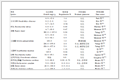
Inspired by recent success of Sonogashira-type cross-coupling involving free radicals [61-64] and following our interest in CF3 functionalization [65], we envisioned cross-coupling of trifluoromethylarenes with terminal alkynes C(sp)-H bonds can be realized via a synergistic approach of photocatalysis and copper catalysis. After preliminary attempts (see Supporting information for additional details), we were delighted to see the proposed transformation could be realized in a moderate yield (55%, entry 1 in Table S1 in Supporting information). Next, we performed further reaction optimization based on this condition (we selected readily available 1,4-bis(trifluoromethyl)benzene 1a and 1-octyne 2a as model substrates, rac-BINOL, Cu(MeCN)4PF6 and tridentate anionic ligand L1 as the catalysts, LiOtBu as a base and LiOAc as an additive, under irradiation with 390–395 nm LEDs for 6 h in 1,4-dioxane at 20 ℃ under N2, see Supporting information for details). First, we studied the effect of BINOL derivatives for this transformation. When BINOL-1, BINOL-2, or BINOL-3 were used instead of BINOL, the target products were obtained in yields of 47%, 55% and 47%, respectively (Table S1, entries 2–4), but none was better than BINOL. Then, we screened the copper salts and found that commonly used Cu(Ⅱ) or Cu(Ⅰ) salts could also promote this transformation, affording the desired product in a yield ranging from 42% to 74% (Table S1, entries 6–14). It is worth mentioning that when CuBr•Me2S was used as the copper source instead of Cu(MeCN)4PF6, a relatively high yield (74%) was observed. Besides, we also tried other tridentate anionic ligands (L2, L7, L8) derived from L1, but none was better than L1 (see Supporting Information Table S1, entries 15–17). The target product 3a can also be obtained in yields of 61%, 63% and 68%, respectively and these results indicate that the more-hindered ligands are not conducive to the transformation. The yield (24%) dropped dramatically by switching L1 with different skeleton tridentate anionic ligand L9 (Table S1, entry 18), showing that the tridentate anionic ligand with suitable skeleton plays an irreplaceable role in this reaction. So we eventually identified the optimum conditions: rac-BINOL, CuBr•Me2S and tridentate anionic ligand L1 as the catalysts, LiOtBu as a base and LiOAc as an additive, under irradiation with 390–395 nm LEDs for 6 h in 1,4-dioxane at 20 ℃ under N2 affording the desired product 3a in 74% yield. Next, other control reactions were also performed to confirm the role of all components of this synergistic catalysis. The lack of ligand led to a very low yield (trace, Table 1, entry 3). In the absence of additive LiOAc, the product was obtained in a relatively lower yield (57%, Table 1, entry 4). Besides, no conversion was observed when the reaction was performed in the absence of either BINOL, copper salt or LED irradiation (Table 1, entries 5–7).
|
Table 1 Optimization of the reaction conditiona. |


After establishing the standard reaction conditions, we first investigated the scope of the defluoroalkynylation with respect to the alkyne component (Scheme 2). In general, through the activation of the C(sp3)-F bonds, a series of terminal alkynes with various functional groups (2a-2aa, see Supporting information for details) all underwent the cross-coupling with 1,4-bis(trifluoromethyl)benzene 1a to produce the corresponding aryldifluoromethyl alkyne products (3a-3aa) in moderate to good yields. For simple chain terminal alkynes (2a, 2b), the target products (3a, 3b) were obtained in good yields (71% and 68%, respectively). Terminal alkynes bearing cycle alkyl groups (2c, 2d) can also yield the desired products (3c, 3d) in good yields (64% and 57%, respectively). A variety of commercially available alkyl terminal alkynes with different functional groups, such as alkyl chloride (2e), phenoxy (2f), alkoxy (2g), ester (2h), triisopropylsilyl (2i), tertiary amine (2j, 2k) and Boc-protected cyclic amine (2l), were also compatible with the standard conditions affording the defluoroalkynylation products (3e-3l) in moderate to good yields (35%−56%). To our delight, aryl acetylenes (2m-2p) can be smoothly converted to the desired products (3m-3p) in moderate yields under the modified conditions (47%−56%). Multiple substituents such as 3–methoxy (2n), 2-methyl (2o), and 4-fluorine (2p) at different locations were tolerated. In comparison, heteraryl acetylenes containing pyrazole (2q) and furan (2r and 2s) were proved to be suitable coupling partners affording the target products (3q-3s) in higher yields (65%, 52% and 50%, respectively). Because the reaction system showed good functional group compatibility, we next evaluated its utility for late-stage modification of terminal alkynes derived from pharmaceuticals and natural products (2t-2aa). We found that pargyline, duloxetine and proxyphylline derivatives (2t, 2u and 2v) showed moderate reactivity to deliver the corresponding products (3t-3v, 41%, 31% and 27%, respectively). Carbohydrates such as α-d-glucofuranose and diacetone-d-glucose derivatives (2w and 2x) gave desired products (3w and 3x) in good yields (60% and 52%, respectively). Hormones epiandrosterone, estradiol valerate derivatives (2y and 2z) and naturally occurring steroid derivative (2aa) can also be successfully converted to the coupling products (3y-3aa) in moderate yields under the standard conditions (52%, 49% and 56%, respectively).

|
Download:
|
| Scheme 2. Substrate scope of terminal alkynes and trifluoromethylarenes. Reaction conditions: 1 (1.8 mmol, 6 equiv.), 2 (0.3 mmol, 1 equiv.), Cu salt (10 mol%), L (15 mol%), rac-BINOL (20 mol%), LiOtBu (3 equiv.), LiOAc (3 equiv.), 1,4-dioxane (0.05 mol/L), 390–395 nm LED, 20 ℃, 6 h. Isolated yields. a CuBr·Me2S, L1. b Cu(MeCN)4PF6, L3, BINOL-1. | |

Then, we preliminary explored the scope of trifluoromethylarenes partners of this photo-induced defluoroalkynylation cross-coupling. The results indicated that various trifluoromethylarenes can react with 2a successfully to produce the target products in moderate to good yields. For arenes substituted by bis-trifluoromethyl (1b and 1c), the desired products (3ab and 3ac) can be obtained in good yields (73% and 70%, respectively). Some bis-trifluoromethyl substituted arenes bearing different functional groups, such as phenyl (1e), methoxyl (1f, 1i), benzyloxy (1g), phenoxy (1h), were also compatible with the standard conditions affording the defluoroalkynylation products (3ae-3ai) in good yields (52%−63%). In addition, mono-trifluoromethyl substituted arenes were also applicable to our reaction system. For 4-phenyl substituted trifluoromethylbenzene (1n), the target product 3an was obtained in a yield of 55%. In addition, mono-trifluoromethyl substituted pyridines (1u) was also amenable to this defluorinative alkynylation protocol, providing 3au in a reasonable yield (47%). Besides, we are pleased to observe that substrates containing multiple trifluoromethyl groups (1a-1c, 1e-1i) exhibited high selectivity, with only one trifluoromethyl group being activated, delivering the corresponding products in good yields (3a, 3ab, 3ac, 3ae-3ai).
Given the special properties of the α,α-difluorobenzylic substructure, combining it with the azoles structures which were found in a variety of drugs and agricultural chemicals [66,67], theoretically allows the discovery of some interesting bioactive molecules [68,69]. However, there is currently no direct and effective way to realize such reactions. Therefore, it is meaningful and challenging to use azole compounds as sp2 C-H bonds precursors for catalytic cross-coupling reactions with trifluoromethylarenes (ArCF3). We wonder if such a transformation can be achieved via the above-mentioned photoredox and Cu/L dual catalysis system. After preliminary studies, we were pleased to see the proposed transformation could be achieved albeit in a low yield (35%). Next, we selected 1,4-bis(trifluoromethyl)benzene 1a and benzoxazole 4a as model substrates for further optimization of reaction conditions of this defluoroazolation (see Supporting information for details). After screening of solvents, ligands, bases, additives, copper salts, photocatalysts and reaction concentrations, we eventually identified the optimum conditions: rac-BINOL, Cu(MeCN)4PF6 and tridentate anionic ligand L2 as the catalysts, LiOtBu as a base and LiOAc as an additive, under irradiation with 390–395 nm LEDs for 6 h in 1,4-dioxane at 20 ℃ under N2, affrording the desired product 5a in 69% yield (Table 1, entry 8). Various key control reactions that deviate from the standard reaction conditions were also performed to confirm the role of all components in this catalytic system (Table 1, entries 9–17, see Supporting information for details). Similar to the defluoroalkynylation reaction, copper source, base and tridentate anionic ligands with the suitable skeleton were also essential for the success of this reaction, while BINOL, LED irradiation and the promotion of LiOAc were also indispensable.
With the optimized conditions in hand, we then explored the scope of this cross-coupling reaction of C(sp3)-F bonds with C(sp2)-H bonds (Scheme 3). Overall, a variety of trifluoromethylarenes (1a-1v) all underwent the defluorinative azolation to yield the corresponding target products (5a-5v) in moderate to good yields by coupling with benzoxazole 4a. For simple arenes substituted by bis-trifluoromethyl or tri-trifluoromethyl (1a-1d), the desired products (5a-5d) can be obtained in good yields (67%, 61%, 50% and 53%, respectively). A range of bis-trifluoromethyl substituted arenes bearing different functional groups, such as phenyl (1e), methoxyl (1f, 1i), benzyloxy (1g), phenoxy (1h), trifluororoethoxy (1j), cyclopropyl (1k), alkyl chloride (1l), and N-substituted tertiary amine (1m), were also compatible with the standard conditions affording the defluoroazolation products (5e-5m) in moderate to good yields (38%−53%). Encouraged by the above results, we next tried our approach with mono-trifluoromethyl substituted arenes. Not surprisingly, for 4-aryl substituted trifluoromethylbenzene (1n, 1v), the target products (5n, 5v) were obtained in yields of 53% and 40%, respectively. In addition, 4-aryl substituted trifluoromethylbenzene with fluorine (1o, 1p) were also tolerated and smoothly converted to the desired products (5o, 5p) in reasonable yields (55% and 54%, respectively). Futhermore, heteroaryl substrates such as mono- or bis-trifluoromethyl substituted pyridines (1q-1u) were also amenable to this defluorinative azolation protocol with moderate to good level of efficiency (5q-5u, 33%−55%).

|
Download:
|
| Scheme 3. Substrate scope of trifluoromethylarenes and azoles. Reaction conditions: 1 (1.8 mmol, 6 equiv.), 4 (0.3 mmol, 1 equiv.), Cu(MeCN)4PF6 (10 mol%), L2 (15 mol%), rac-BINOL (20 mol%), LiOtBu (3 equiv.), LiOAc (3 equiv.), 1,4-dioxane (0.05 mol/L), 390–395 nm LED, 20 ℃, 6 h. Isolated yields. | |

Next, we explored the scope of azole partners of this defluoroazolation cross-coupling. As we expected that various substituted benzoxazoles can react with 1a smoothly to produce the desired products in reasonable yields. As for 5-substituted benzoxazoles, both electron-donating substituents such as methyl (4b), tert–butyl (4c) and methoxy (4d), and electron-withdrawing groups such as phenyl (4e) and fluorine (4f) were tolerated. It is worth mentioning that good chemselectivity was observed for 5-Cl or 5-Br substituted benzoxazoles (2g and 2h), which containing additional potentially reactive halides, and the target products (5ag and 5ah) were isolated in moderate yields under the standard reaction conditions (36% and 40%). Compared with 5-substituted benzoxazoles, 6-substituted benzoxazoles with various substituents such as methyl (4i), methoxy (4j), fluorine (4k), chlorine (4l) and phenyl (4m) were proved to be suitable subatrates affording desired products (5ai-5am) in comparable yields (45%−68%). Relatively higher yields were observed with 4- and 7-methyl-substituted benzoxazoles (4n and 4o), giving 5an and 5ao in 60% and 57% yield, respectively. For the benzoxazole structure, the above results clearly show that the reaction is not significantly affected by the location and electrical properties of the substituents. Additionally, this approach is not limited to benzoxazoles, oxazoles and 1,3,4-oxadiazoles, which are similar in structure and have important medicinal value, are also suitable coupling partners. For example, the aryl-substituted oxazoles bearing cyano group (4p) can react smoothly with 1a delivering the target product in a yield of 40% (5ap). Several 2-aryl-substituted 1,3,4-oxadiazoles (4q-4s) can also be successfully converted the corresponding products (5aq-5as) in moderate yields (35%−45%).
In order to get insight into the reaction mechanism, a few experiments were carried out next (Scheme 4). First, we performed radical trapping experiments to prove whether the reaction involves a radical process. Under the standard conditions A, when a radical scavenger 2,2,6,6-tetramethyl-1-piperidinyloxy (TEMPO) was added to the model reaction, the desired reaction was completely suppressed and TEMPO-trapped difluorobenzylic radical adduct 6 was observed and successfully isolated in 9% yield (Scheme 4a). In addition, a radical clock experiment by using (1-cyclopropylvinyl)benzene 7 as a probe was carried out under the standard conditions A. We found that the desired product 3a was formed in 32% 19F NMR yield and a radical ring-opening product 8 was also detected in 29% 19F NMR yield (Scheme 4b). These results strongly support that a difluororobenzylic radical is involved in the reaction and the formation of 3a is slightly more favorable in Scheme 4b. Next, to investigate the catalytic effect of BINOL anion, a few control experiments were conducted. Based on the standard conditions, when (1-cyclopropylvinyl)benzene 7 was added to the reaction system in the absence of copper salt, ligand L1, LiOAc and substrate 2a, it was found that the radical ring-opening product 8 was observed in 38% 19F NMR yield (Scheme 4c). However, when the above experiment was performed with KOtBu instead of LiOtBu, no radical trapping product 8 was detected. Additionally, when the reaction was conducted in the presence of (1-cyclopropylvinyl)benzene 7 without copper salt, ligand L1 and LiOAc, and as expected, the target product 5a was not detected and the radical ring-opening product 8 was obtained in 31% 19F NMR yield (Scheme 4d). Besides, using (1-cyclopropylvinyl)benzene 7 as a probe again, radical trapping product 8 was also not detected in the absence of BINOL (see Supporting information).

|
Download:
|
| Scheme 4. Mechanistic studies. | |

To further confirm the role of BINOL as a phtocatalyst, UV–vis absorption spectra of BINOL in 1,4-dioxane and a mixture of BINOL and LiOtBu in 1,4-dioxane were measured. As shown in Fig. S6 (Supporting information), after mixing with LiOtBu, the deprotonated BINOL exhibited redshifted absorption and a strong absorption peak at 360 nm apeared with weak absorption up to 400 nm. Stern-Volmer luminescence quenching experiments were then conducted (Fig. 1) and we found that the excited state ArO–* could be effectively quenched by trifluoromethylarene 1a. In addition, the reduction potential of excited ArO– (ArO–*) was determined to be −2.66 V versus Fc+/Fc in DCM, which is sufficient to reduce a wide range of trifluoromethylarenes 1 (see Figs. S8-S12 in Supporting information for more details). These results clearly indicate the following: (1) BINOL anion plays a decisive role in the formation of difluorobenzylic radical via a single electron transfer pathway; (2) Li+ involes in the process of C-F bond activation to generate the difluorobenzylic radical [24]; (3) Cu/ligand was responsible for the following cross-coupling of difluorobenzylic radical with alkynes or azoles.

|
Download:
|
| Fig. 1. Stern-Volmer quenching experiments. | |

Based on the above experimental results and related literatures [60-64,70-73], we proposed a plausible reaction mechanism for these photoredox and Cu/L dual catalysis process taking defluoroalkynylation as an example (Scheme 5). The whole process incorporates a photoredox cycle and a Cu catalyzed cross-coupling cycle. In the presence of LiOtBu, BINOL can be deprotonated to form anion ArO–, which can reach an excited state ArO–* under 390–395 nm light irradiation. Then, ArO–* reduces trifluoromethylarenes 1 via single electron transfer in the presence of Li+ to generate difluorobenzylic radical Ⅰ, LiF and radical species ArO•. At the same time, CuⅠL complex Ⅱ undergoes transmetallation with terminal alkynes to form alkyne-CuⅠL complex Ⅲ, which is then oxidized by ArO• to generate alkyne-CuⅡL Ⅳ accompanied by regeneration of ground state ArO–. Difluorobenzylic radical Ⅰ is then captured by intermediate alkyne-CuⅡL Ⅳ to give alkyne-CuⅢL Ⅴ. Eventually, alkyne-CuⅢL Ⅴ undergoes reductive elimination to generate final defluoroalkynylation products Ⅵ with regeneration of CuⅠL complex Ⅱ to complete the catalytic cycle.

|
Download:
|
| Scheme 5. Proposed reaction mechanism (terminal alkynes as examples). | |

In summary, we have developed a selective C(sp3)-F bond alkynylation and azolation of trifluoromethylarenes with C(sp)-H precursors (alkynes) and sp2 C—H precursors (azoles) via synergistic photoredox and copper catalysis. We found that the tridentate anionic ligands are pivotal to realize these C—H sp-sp3 and C—H sp2-sp3 cross-coupling. It is worth mentioning that the mechanism studies indicated that BINOL anion acts as a photocatalyst to activate C(sp3)-F bonds of trifluoromethylarenes via a SET pathway with the aid of Li+, and this process is well compatible with a Cu catalyzed C(sp3)-alkynylation or azolation cross-coupling cycles. The reaction proceeds under mild reaction conditions and a range of trifluoromethylarenes terminal alkynes and azoles are well tolerated to give the desired defluoroalkynylation and defluoroazolation products. This synergistic catalytic system also provides a new strategy for C(sp3)-F bonds functionalization and we are currently studying further applications of this dual catalytic system in other reactions via C(sp3)-F bonds activation.
Declaration of competing interestThe authors declare that they have no known competing financial interests or personal relationships that could have appeared to influence the work reported in this paper.
CRediT authorship contribution statementJialin Huang: Writing – original draft, Project administration, Methodology, Investigation, Formal analysis, Data curation, Conceptualization. Liying Fu: Investigation, Formal analysis, Data curation. Zhanyong Tang: Formal analysis, Data curation. Xiaoqiang Ma: Data curation. Xingda Zhao: Formal analysis. Depeng Zhao: Writing – review & editing, Validation, Supervision, Project administration, Methodology, Investigation, Formal analysis, Conceptualization.
AcknowledgmentsWe are grateful for the support of this work by the National Natural Science Foundation of China (Nos. 22371307, 21971267), and the program for Guangdong Introducing Innovative and Entre-preneurial Teams (No. 2017ZT07C069).
Supplementary materialsSupplementary material associated with this article can be found, in the online version, at doi:10.1016/j.cclet.2024.110505.
| [1] |
E.P. Gillis, K.J. Eastman, M.D. Hill, et al., J. Med. Chem. 58 (2015) 8315-8359. DOI:10.1021/acs.jmedchem.5b00258 |
| [2] |
M.O. Anderson, J. Zhang, Y. Liu, et al., J. Med. Chem. 55 (2012) 5942-5950. DOI:10.1021/jm300491y |
| [3] |
J.J. Cui, J. Med. Chem. 57 (2014) 4427-4453. DOI:10.1021/jm401427c |
| [4] |
W. Timmer, E. Massana, E. Jimenez, et al., J. Clin. Pharmacol. 54 (2014) 1347-1353. DOI:10.1002/jcph.355 |
| [5] |
N.A. Meanwell, J. Med. Chem. 54 (2011) 2529-2591. DOI:10.1021/jm1013693 |
| [6] |
J.O. Link, J.G. Taylor, L. Xu, et al., J. Med. Chem. 57 (2014) 2033-2046. DOI:10.1021/jm401499g |
| [7] |
F. Xue, H. Li, S.L. Delker, et al., J. Am. Chem. Soc. 132 (2010) 14229-14238. DOI:10.1021/ja106175q |
| [8] |
J.B. Xia, C. Zhu, C. Chen, J. Am. Chem. Soc. 135 (2013) 17494-17500. DOI:10.1021/ja410815u |
| [9] |
M. Meanwell, B.S. Adluri, Z. Yuan, et al., Chem. Sci. 9 (2018) 5608-5613. DOI:10.1039/c8sc01221k |
| [10] |
Z. Feng, Y.L. Xiao, X. Zhang, Acc. Chem. Res. 51 (2018) 2264-2278. DOI:10.1021/acs.accounts.8b00230 |
| [11] |
K. Choi, M.G. Mormino, E.D. Kalkman, et al., Angew. Chem. Int. Ed. 61 (2022) e202208204. |
| [12] |
Y.L. Xiao, Q.Q. Min, C. Xu, et al., Angew. Chem. Int. Ed. 55 (2016) 5837-5841. DOI:10.1002/anie.201601351 |
| [13] |
S. Ge, W. Chaładaj, J.F. Hartwig, J. Am. Chem. Soc. 136 (2014) 4149-4152. DOI:10.1021/ja501117v |
| [14] |
D.S. Deng, S.Q. Tang, Y.T. Yuan, et al., Chin. Chem. Lett. 35 (2024) 109417. |
| [15] |
F. Zhao, W. Zhou, Z. Zuo, Adv. Synth. Catal. 364 (2022) 234-267. DOI:10.1002/adsc.202101234 |
| [16] |
S. Li, W. Shu, Chem. Commun. 58 (2022) 1066-1077. DOI:10.1039/d1cc06446k |
| [17] |
T.T. Simur, T. Ye, Y.J. Yu, et al., Chin. Chem. Lett. 33 (2022) 1193-1198. |
| [18] |
S.B. Munoz, C. Ni, Z. Zhang, et al., Eur. J. Org. Chem. 2017 (2017) 2322-2326. DOI:10.1002/ejoc.201700396 |
| [19] |
W.J. Yue, R. Martin, Angew. Chem. Int. Ed. 62 (2023) e202310304. |
| [20] |
S. Yoshida, K. Shimomori, Y. Kim, et al., Angew. Chem. Int. Ed. 55 (2016) 10406-10409. DOI:10.1002/anie.201604776 |
| [21] |
D. Mandal, R. Gupta, A.K. Jaiswal, et al., J. Am. Chem. Soc. 142 (2020) 2572-2578. DOI:10.1021/jacs.9b12167 |
| [22] |
S.E. Wright, J.S. Bandar, J. Am. Chem. Soc. 144 (2022) 13032-13038. DOI:10.1021/jacs.2c05044 |
| [23] |
C. Luo, J.S. Bandar, J. Am. Chem. Soc. 141 (2019) 14120-14125. DOI:10.1021/jacs.9b07766 |
| [24] |
J. Sheng, X. Cheng, CCS Chem. 6 (2024) 230-240. DOI:10.31635/ccschem.023.202302835 |
| [25] |
K. Chen, N. Berg, R. Gschwind, et al., J. Am. Chem. Soc. 139 (2017) 18444-18447. DOI:10.1021/jacs.7b10755 |
| [26] |
H. Wang, N.T. Jui, J. Am. Chem. Soc. 140 (2018) 163-166. DOI:10.1021/jacs.7b12590 |
| [27] |
D.B. Vogt, C.P. Seath, H. Wang, et al., J. Am. Chem. Soc. 141 (2019) 13203-13211. DOI:10.1021/jacs.9b06004 |
| [28] |
S.-S. Yan, S.H. Liu, L. Chen, et al., Chem 7 (2021) 3099-3113. |
| [29] |
J. Wang, Y. Wang, Y. Liang, et al., Angew. Chem. Int. Ed. 62 (2023) e202215062. |
| [30] |
C. Liu, N. Shen, R. Shang, Nat. Commun. 13 (2022) 354. DOI:10.1109/cipae55637.2022.00080 |
| [31] |
Y.C. Luo, F.F. Tong, Y. Zhang, et al., J. Am. Chem. Soc. 143 (2021) 13971-13979. DOI:10.1021/jacs.1c07459 |
| [32] |
J.B.I. Sap, N.J.W. Straathof, T. Knauber, et al., J. Am. Chem. Soc. 142 (2020) 9181-9187. DOI:10.1021/jacs.0c03881 |
| [33] |
J. Xu, J.W. Liu, R. Wang, et al., ACS Catal. 13 (2023) 7339-7346. DOI:10.1021/acscatal.3c00669 |
| [34] |
S.T. Shreiber, A. Granados, B. Matsuo, et al., Org. Lett. 24 (2022) 8542-8546. DOI:10.1021/acs.orglett.2c03549 |
| [35] |
C.M. Hendy, C.J. Pratt, N.T. Jui, et al., Org. Lett. 25 (2023) 1397-1402. DOI:10.1021/acs.orglett.3c00126 |
| [36] |
M. Chen, Y. Cui, X. Chen, et al., Nat. Commun. 15 (2024) 419. |
| [37] |
A.Y. Chan, I.B. Perry, N.B. Bissonnette, et al., Chem. Rev. 122 (2022) 1485-1542. DOI:10.1021/acs.chemrev.1c00383 |
| [38] |
K.P.S. Cheung, S. Sarkar, V. Gevorgyan, Chem. Rev. 122 (2022) 1543-1625. DOI:10.1021/acs.chemrev.1c00403 |
| [39] |
J. Twilton, C. Le, P. Zhang, et al., Nat. Rev. Chem. 1 (2017) 0052. |
| [40] |
J. Huang, Q. Gao, T. Zhong, et al., Nat. Commun. 14 (2023) 8292. |
| [41] |
Y. Fan, Z. Huang, Y. Lu, et al., Angew. Chem. Int. Ed. 63 (2024) e202315974. |
| [42] |
T.T. Talele, J. Med. Chem. 63 (2020) 5625-5663. DOI:10.1021/acs.jmedchem.9b01617 |
| [43] |
J.W. Corbett, S.S. Ko, J.D. Rodgers, et al., J. Med. Chem. 43 (2000) 2019-2030. |
| [44] |
M. Swain, T.B. Bunnell, J. Kim, et al., J. Am. Chem. Soc. 144 (2022) 14828-14837. DOI:10.1021/jacs.2c05980 |
| [45] |
J.M. Smith, T. Qin, R.R. Merchant, et al., Angew. Chem. Int. Ed. 56 (2017) 11906-11910. DOI:10.1002/anie.201705107 |
| [46] |
L. Fu, Z. Zhang, P. Chen, et al., J. Am. Chem. Soc. 142 (2020) 12493-12500. DOI:10.1021/jacs.0c05373 |
| [47] |
Q.Q. Zhou, W. Guo, W. Ding, et al., Angew. Chem. Int. Ed. 54 (2015) 11196-11199. DOI:10.1002/anie.201504559 |
| [48] |
X. Mo, R. Guo, G. Zhang, Chin. J. Chem. 41 (2023) 481-489. DOI:10.1002/cjoc.202200521 |
| [49] |
T.J. O’Connor, B.K. Mai, J. Nafie, et al., J. Am. Chem. Soc. 143 (2021) 13759-13768. DOI:10.1021/jacs.1c05769 |
| [50] |
C.Q. Wang, L. Ye, C. Feng, et al., J. Am. Chem. Soc. 139 (2017) 1762-1765. DOI:10.1021/jacs.6b12142 |
| [51] |
T. Li, C. Zhou, X. Yan, et al., Angew. Chem. Int. Ed. 57 (2018) 4048-4052. DOI:10.1002/anie.201712691 |
| [52] |
Y.B. Yu, G.Z. He, X. Zhang, Angew. Chem. Int. Ed. 53 (2014) 10457-10461. DOI:10.1002/anie.201405204 |
| [53] |
B. Xu, M.S. Mashuta, G.B. Hammond, Angew. Chem. Int. Ed. 45 (2006) 7265-7267. DOI:10.1002/anie.200602823 |
| [54] |
P. Bannwarth, D. Grée, R. Grée, Tetrahedron Lett. 51 (2010) 2413-2415. |
| [55] |
A. Khalaf, D. Grée, H. Abdallah, et al., Tetrahedron 67 (2011) 3881-3886. |
| [56] |
L. An, C. Xu, X. Zhang, Nat. Commun. 8 (2017) 1460. |
| [57] |
C.D. Matier, J. Schwaben, J.C. Peters, et al., J. Am. Chem. Soc. 139 (2017) 17707-17710. DOI:10.1021/jacs.7b09582 |
| [58] |
Y. Xiong, X. Ma, G. Zhang, Org. Lett. 21 (2019) 1699-1703. DOI:10.1021/acs.orglett.9b00252 |
| [59] |
R. Guo, H. Xiao, S. Li, et al., Angew. Chem. Int. Ed. 61 (2022) e202208232. |
| [60] |
J.P. Yue, J.C. Xu, H.T. Luo, et al., Nat. Catal. 6 (2023) 959-968. DOI:10.1038/s41929-023-01029-9 |
| [61] |
Y. Yamane, N. Miwa, T. Nishikata, ACS Catal. 7 (2017) 6872-6876. DOI:10.1021/acscatal.7b02615 |
| [62] |
Z.H. Zhang, X.Y. Dong, X.Y. Du, et al., Nat. Commun. 10 (2019) 5689. |
| [63] |
X.Y. Dong, Y.F. Zhang, C.L. Ma, et al., Nat. Chem. 11 (2019) 1158-1166. DOI:10.1038/s41557-019-0346-2 |
| [64] |
X. Zeng, C. Wang, W. Yan, et al., ACS Catal. 13 (2023) 2761-2770. DOI:10.1021/acscatal.2c05901 |
| [65] |
Z. Tang, K. Mo, X. Ma, Angew. Chem. Int. Ed. 61 (2022) e202208089. |
| [66] |
F. Hernández-Luis, A. Hernández-Campos, R. Castillo, et al., Eur. J. Med. Chem. 45 (2010) 3135-3141. |
| [67] |
S.D. Roughley, A.M. Jordan, J. Med. Chem. 54 (2011) 3451-3479. DOI:10.1021/jm200187y |
| [68] |
J. Boyer, E. Arnoult, M. Médebielle, et al., J. Med. Chem. 54 (2011) 7974-7985. DOI:10.1021/jm200766b |
| [69] |
Z. Zhan, X. Peng, Y. Sun, et al., Chem. Res. Toxicol. 31 (2018) 1213-1218. DOI:10.1021/acs.chemrestox.8b00191 |
| [70] |
S. Liu, H. Liu, S. Liu, et al., J. Am. Chem. Soc. 142 (2020) 9785-9791. DOI:10.1021/jacs.0c03304 |
| [71] |
M. Paeth, S.B. Tyndall, L.Y. Chen, et al., J. Am. Chem. Soc. 141 (2019) 3153-3159. DOI:10.1021/jacs.8b12632 |
| [72] |
W. Yan, S. Carter, C.T. Hsieh, et al., J. Am. Chem. Soc. 145 (2023) 26152-26159. DOI:10.1021/jacs.3c08510 |
| [73] |
Y. Luo, Y. Li, J. Wu, et al., Science 381 (2023) 1072-1079. DOI:10.1126/science.adg9232 |