 2025, Vol. 36


b Frontiers Science Center for New Organic Matter, Key Laboratory of Advanced Energy Materials Chemistry (MOE), College of Chemistry, Nankai University, Tianjin 300071, China
Selective hydrogenation displays significant importance in various domains, including organic synthesis, drug manufacturing, and industrial production [1–3]. This valuable topic focuses on preserving specific functional groups or selecting distinct substrates, meeting the specific requirements in these fields mentioned above [4–7]. Compared with traditional direct hydrogenation, catalytic transfer hydrogenation (CTH) using renewable and sustainable liquids such as alcohols and formates as hydrogen sources, avoids the need for flammable H2 gas with high pressure and promotes the selectivity of unsaturated bonds [8]. Recent achievements have witnessed impressive progress in CTH reactions [9,10], and selective CTH of furfural, alkenes and α,β-unsaturated carbonyls have been widely studied [11–13]. Since most chemicals in nature or generated from biomass commonly maintain multi-unsaturated groups like -CHO, -COR, -NO2, -CN and C═C bonds, highly selective reduction aimed at a specific group ensures the generation of definite products preserving other unsaturated groups, which is crucial for realizing advanced functions in the areas of pharmaceutical and chemical industry. Nevertheless, the investigations on selective CTH mainly focused on reduction of the given group in two types of unsaturated groups, while the selective reduction of a specific functional group amongst many kinds of unsaturated groups remains undeveloped [14,15]. Actually, the π-bonds within unsaturated groups are generally easy to be unselectively reduced, and selective CTH frequently confronts the confusion, where the high activity of catalysts promotes thorough reduction of all unsaturated bonds and inert activity results in an ineffective reaction. As a result, the selective reduction of a single group among various unsaturated groups become greatly challenging [16]. Furthermore, size selectivity enables the screening of substrates with specific volumes for reactions [17–19], and to our best knowledge no size selectivity has been reported in CTH reactions hitherto. Therefore, to realize selective CTH with both definite chemoselectivity among many kinds of unsaturated groups and size selectivity for various substrates, the exploration of an ideal catalyst with suitable catalytic activity and defined pore size is necessary and important.
Metal-organic frameworks (MOFs) constitute a significant category of porous materials that find widespread use as heterogenous catalysts [20–29], and are regarded as candidates for achieving efficient and multi-selective CTH reactions based on the following considerations: (1) Porous structures provide reaction space and allow full utilization of catalytic sites, thus accelerating reaction rate [30–35] (2) Multi-metallic sites can activate different functional groups, leading to selectivity of specific reaction sites [36–39] (3) Fixed orifice size enables spatial confinement and presents potentially size-selective properties [40,41]; (4) Stable frameworks make the catalysts easily separated from the reaction mixture and reused several times [42–44]. Despite the numerous advantages of using MOFs as catalysts for CTH reactions, there has been little research on their ability to achieve multiple selectivity, including chemoselectivity towards diverse functional groups and size selectivity [11,45].
With this in mind, a nanopore-based In-captured Zr-porphyrin framework (1) was successfully synthesized. In the structure, Zr6O8 clusters induce electrons from central metals over the porphyrin skeletons, enhancing the Lewis acidity of the In centers to facilitate the substrate into the pores and interact [46,47]. In CTH reactions of aldehydes and ketones, the dual metal centers in 1 can serve as divided active sites to give definite reductive selectivity towards -CHO or -COCH3 when existing -NO2, -CN, C═C groups, and note that high selectivity can be also obtained for reduction of -CHO to -CH2OH in the simultaneous presence of -CHO and -COCH3 groups. Interestingly, when five unsaturated groups mentioned above were concurrently introduced to the CTH system, 1 exhibited a high reductive selectivity towards the -CHO group. Additionally, the specific pore size of 1 afforded volume control of the substrates to give obvious size selectivity. It is the first time to realize highly multi-selective CTH reactions of aldehydes and ketones containing selectivity from various unsaturated groups and volume size confinement.
1 was first synthesized via the reaction between Zr-porphyrin framework PCN-224 and In(NO3)3·5H2O in DMF (Fig. 1a). Scanning electron microscopy (SEM) images show the block morphology of 1, and EDS mapping analysis indicates homogeneous distribution of C, N, O, Zr and In elements on the surface (Fig. 1b and Fig. S1 in Supporting information). The elemental amount determined by ICP-OES analysis suggested a 5.78% weight of In in the structure (calcd. 7.77%). In the compared PXRD patterns, the peaks match well with those of PCN-224 and PCN-224(Bi) at 4.6°, 6.4°, 7.9° and 9.0°, as reported previously [47], indicating the scaffold unchanged (Fig. S2 in Supporting information). FT-IR spectrum of 1 is also compared with those of PCN-224 and PCN-224(Bi), and the peak located at 1709.8 cm-1 related to carboxylic C═O bond is nearly the same, suggesting the Zr6O8 cluster remained unchanged (Fig. S3 in Supporting information). The N—H peak at 3324.2 cm-1 disappears, indicating the In-N bond formation. X-ray photoelectron spectroscopy (XPS) results are shown in Fig. 2 and Fig. S4 (Supporting information), and the survey spectrum suggests the existence of In, Zr, N, C and O elements (Fig. 2a). Two typical peaks located at 452.9 and 445.4 eV in In 3d region are related to In 3d3/2 and 3d5/2 electronic configurations, respectively, indicating the In3+ state (Fig. 2b) [48]. The signals at 185.3 eV (3d3/2) and 182.9 eV (3d5/2) in Zr 3d spectrum confirm the existence of Zr4+ ions (Fig. 2c) [48]. In N 1s spectrum, the peaks at 399.9 and 397.8 eV are attributed to C═N/C—N bonds of porphyrin moiety and In-N bonds, and 407.3 eV signal can be assigned to NO3-, indicating that 1 is a cationic framework (Fig. 2d) [49]. With respect to C 1s, three signals at 288.8, 285.9 and 284.8 eV can be attributed to C—O/C═O, C—N/C═N and C—C/C═C bonds (Fig. S4a in Supporting information) [50]. The O 1s peaks located at 533.1, 531.9 and 530.3 eV are correlated to C—O, C═O and Zr-O bonds (Fig. S4b in Supporting information) [51]. TGA curve is depicted in Fig. S5 (Supporting information), and the swift weight reduction of 10% observed prior to reaching 85 ℃ can be ascribed to solvent evaporation. A reposeful platform with only 15% weight loss is obtained from 85 ℃ to even 409 ℃, showing excellent thermal stability of 1. After 409 ℃, a sharp weight decline suggests the decomposition of 1. The analytic results above verify the successful construction of In-captured Zr-porphyrin framework 1, and porphyrins with In occupied in centers were linked by Zr6O8 clusters in this compound [47]. Additionally, the substrate framework PCN-224 featuring nanosized pores/cages of approximately 16 Å, along with 2.2 nm average pore size of 1 (Fig. S6 in Supporting information), provides ample space for diverse organic molecules to approach the catalytic centers, and also possible to realize the size confinement towards these substrates.

|
Download:
|
| Fig. 1. (a) Synthetic schematic of 1, (b) SEM and EDS images of 1. | |

|
Download:
|
| Fig. 2. XPS analysis of 1 : (a) Survey spectrum, (b-d) In 3d, Zr 3d and N 1s spectra. | |
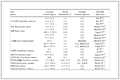
Comparatively, the reduction of -NO2 to -NH2 in nitrobenzene (redox potential: −1.31 eV) is considered easier than the reduction of -CHO to -CH2OH in benzaldehyde (redox potential: −1.68 eV) theoretically [12]. As demonstrated in previous research studies, for nitrobenzaldehydes, -NO2 and -CHO are together reduced to give aminobenzyl alcohols, or -NO2 are selectively transferred into -NH2 to afford aminobenzaldehydes in most direct hydrogenation and transfer hydrogenation systems [52–54]. However, in our research, using 1 as a catalyst and isopropanol (iPrOH) as the hydrogen source, 4-nitrobenzaldehyde (1a) can be selectively reduced to 4-nitrobenzyl alcohol (2a) while preserving the -NO2 group entirely (Table 1, entry 1). In contrast, -NO2 was also hydrogenated to -NH2 meanwhile in most MOF-based catalytic system when a strong base was used as an additive [45]. 5, 10, 15, 20-Tetrakis(4-carboxyphenyl)porphyrin-In (In-TCPP) afforded no reductive product under the same conditions and PCN-224 showed lower yield than catalyst 1, suggesting obvious synergistic effect of two moieties within the catalyst in this reaction (entries 2–3). When a mixture of In(NO3)3·5H2O, H2TCPP and ZrCl4 was used, only 35% yield of 2a was presented, indicating efficient activity of the MOF catalyst (entry 4). The performance of other metals associated with the porphyrin center, such as PCN-224(M) (M= Co, Ni, Bi) was also compared. These selected MOFs showed lower efficiency than compound 1, suggesting the essential role of the In center within the porphyrin ring. Based on the results above and the optimations in Tables S1-S4 (Supporting information), 1 exhibited high activity and selectivity in CTH of 1a and was further used as the catalyst for subsequent investigations.
|
Table 1 Catalyst optimization for selective CTH of 4-nitrobenzaldehyde.a |

Compared with aldehydes, ketones need an elevated temperature of 120 ℃ to afford the desired secondary alcohol products in ideal results (Tables S5-S9 in Supporting information), and higher activity of catalyst 1 over PCN-224 also indicated the significant role of In-TCPP moiety. C═O bond was also reduced selectively for 4-nitroacetophenone (3a) with -NO2 remained and the yield of 4a is 97% (Fig. 3a). -CN group can be hydrogenated to -CH═NH, -CONH2 or -CH2NH2 under H2 hydrogenation or via CTH. Theoretically, -CN group is more easily reduced than C═O bonds due to the lower reduction potential (-CHO, −1.68; -COCH3, −1.75; -CN, −1.29) [55,56]. In the 1 catalytic transfer hydrogenation of 4-cyanobenzaldehyde (1b) and 4-cyanoacetophenone (3b), C═O bonds were selectively reduced while -CN remained completely, and the alcohols 2b and 4b were obtained in high yields (Fig. 3b). As is well-known, the selective reduction of α,β-unsaturated aldehydes and ketones is a significant research focus, cause allylic alcohols are highly vital compounds in many fields [13]. However, in these substrates, C═C bonds also exhibit high reactivity towards reduction, thus it is still a challenge to control the selectivity for C═C and C═O bonds. Attractively, based on catalyst 1, cinnamaldehyde (1c) produced cinnamyl alcohol (2c) and cyclohexanone (3c) afforded cyclohexanol (4c), maintaining complete selectivity for the reduction of C═O bonds while leaving the C═C bonds unaffected (Fig. 3c). The results above indicate superior reductive selectivity towards the C═O bonds of aldehydes and ketones into CH—OH in the presence of -NO2, -CN and C═C groups.

|
Download:
|
| Fig. 3. Selective CTH of C═O bonds in the presence of (a) -NO2, (b) -CN and (c) C═C bonds. | |
In addition to the high selectivity between C═O bonds and the three groups mentioned above, we also conducted investigations into CTH reactions involving the simultaneous presence of -CHO and -COCH3 groups. As we know, -CHO and -COCH3 are similar groups, selective distinction between these two groups is challenging and has an important role in practical applications [57]. To our delight, as shown in Fig. 4a, 1 catalyzed transfer hydrogenation of 4-acetylbenzaldehyde (1d) smoothly in 93% yield using iPrOH solvent at 80 ℃ for 6 h. The -CHO reductive product 4-acetylbenzyl alcohol (2d) occupied 90%, and the complete reduction product 2d' was only 3%, showing high reductive selectivity of 97% towards -CHO. In contrast, another Zr6O8 cluster-based MOF-808 exhibited a selectivity of only 72% for 2d under the same condition (Fig. 4b). When benzaldehyde (1f) and acetophenone (3d) were both introduced to the reaction, benzyl alcohol (2f) and 1-phenylethanol (4d) were afforded in 90% and 4% yields, respectively (Fig. 4c). The results revealed a notable preference for the selective reduction of the -CHO group over -COCH3, regardless of whether it was present in an intermolecular or intramolecular context.

|
Download:
|
| Fig. 4. (a-c) Intra- and intermolecular CTH selectivity between -CHO and -COCH3. | |
Remarkably, upon introducing a blend of benzonitrile, acetophenone, nitrobenzene, styrene, and benzaldehyde into the CTH system, benzaldehyde demonstrated high yield of benzyl alcohol (2f) and acetal in 88% and 7%, respectively. The production of 1-phenylethanol (4d) was limited to only 9%, and no discernible transformation was observed for other functional groups (Fig. 5 and Fig. S8 in Supporting information). It is important to point out that the selective hydrogenation generally occurs between two unsaturated groups. Here, a notable breakthrough is the achievement of highly selective reduction for -CHO groups, even in the presence of various functional groups. Significantly, the precise chemoselectivity among various unsaturated groups demonstrated by catalyst 1 in CTH reactions finds significant prospects in selective reduction fields and industrial production.

|
Download:
|
| Fig. 5. Selective CTH of -CHO among various unsaturated groups. | |
Subsequently, an assessment was conducted on the range of aldehydes incorporating various functional groups, taking their electronic effects, steric hindrance, and volumetric dimensions into account (Table 2). Widely studied biomass derived furfural (FUL, 1e) could be converted to furfural alcohol (FOL, 2e) in high yield (92%). Benzaldehyde (1f) successfully yielded benzyl alcohol (2f) with a high yield of 94%. In the case of 2-methylbenzaldehyde (1-g), the corresponding primary alcohol (2g) was obtained with a moderate yield. When it came to ortho-halogen substituted benzaldehydes (1h-1j), the yield decreased as the size of the halogen increased. The disparity in yields observed for ortho-substituted groups may be attributed to the varying degrees of steric hindrance and their respective interference with the reaction center, and bulky ortho-substituents tend to obstruct the reaction site, thereby inhibiting the yield. 3-Methylbenzaldehyde (1k) provided a moderate yield of product 2k (49%), while 3-bromobenzaldehyde (1l) exhibited a high yield in the CTH process (2l, 93%). The discrepancy can be attributed to the differing electronic effects of the substituents. 4-Methyl and 4-methoxybenzaldehyde gave the corresponding CTH products 2m-2n in moderate yields, while electron deficient group containing benzaldehydes 1o-1q presented the alcohol products 2o-2q in high yields (93%-99%). Compared to electronic or steric hindrance effect, volumetric effect has a more obvious influence. 1-Naphthaldehyde (1r) exhibited a lower yield of 64% in the formation of 1-naphthalenemethanol (2r) compared to substrates with smaller sizes. 4-Phenylbenzaldehyde (1s) produced the alcohol 2s in 60% yield due to the larger size. When larger-sized substrates, such as 1t and 1u, were chosen for transfer hydrogenation reactions, the yields further decreased to 19% and 20% respectively. The significantly bulky substrate 1v only achieved the target primary alcohol product with a yield of 10% under standard conditions, leaving a substantial amount of starting material unused. Therefore, this catalytic system exhibits excellent selectivity towards the size of aldehyde substrates and can be utilized for the efficient screening of reactants suitable for the reaction.
|
|
Table 2 Substrate scope of aldehydes.a |

After condition optimization using acetophenone (3d) as the model substrate (Tables S5-S9 and Table 3, entry 1), various ketones were evaluated in CTH reactions with 1 as the catalyst and iPrOH as the hydrogen source at 120 ℃ for 24 h (Table 3). 2-Methylacetophenone (3e) gave the corresponding reduction product 4e in 58% yield, which was possibly due to the bulky steric hindrance around the reactive center and the difficulty of approaching the catalytic sites. When 4-methylacetophenone (3f) was introduced to this reaction, product 4f could be obtained in 76% yield, and an elevated value of 88% could be realized when extended to 36 h. para-Halogen group-containing acetophenones 3g-3i underwent the CTH process smoothly, and presented corresponding alcohol products 4g-4i in high yields (94%). N Heterocyclic ketones 3j-3k were also examined, with the result that 2- and 4-acetylpyridine showed excellent activity to give 4j and 4k in 92% and 99% yields. Aliphatic cyclic ketones also exhibited efficient activities. Cyclopentanone and cyclohexanone (3l and 3m) both exhibited excellent yields of 99% to give cyclopentanol and cyclohexanol (4l and 4m), respectively. Ascribed to the bulky size, benzophenone (3n) and 1-phenyl-1-butanone (3o) delivered the alcohol products 4n and 4o in reduced yields of 62% and 61%. When larger-sized ketones were introduced, the yields exhibited a more significant decrease. 4,4′-Dimethylbenzophenone (3p) could realize the CTH reaction, but produced the product 4p in 40% yield. The lager-sized 4-benzoylbiphenyl (3q) afforded the desired CTH product 4q in only 28% yield, indicating obvious size selectivity for the substrates.
|
|
Table 3 Substrate scope of ketones.a,b |


As the reaction time increased, obvious gradual consumption of the substrates and generation of the reduction products can be observed by 1H NMR analysis (Fig. 6a and Fig. S9 in Supporting information). Using acetophenone 3d as an example, the CTH exhibited rapid progress within the first 2 h, followed by a slower rate up to 12 h (Fig. 6b, blue line). Unlike the continuous formation of the product observed in the catalyst-induced system, the reductive product 4d was not obtained upon removing the catalyst from the system after a 4-h reaction, indicating the essential role and high stability of the catalyst (Fig. 6b, pink line). The yield of CTH product remained remarkably high even after the catalyst employed for at least 6 times, showing high catalytic performance and recyclability of 1 (Fig. 6c and Fig. S10 in Supporting information). ICP-OES analysis indicated the contents of Zr and In of the used catalyst were 16.2% and 4.98% respectively, only slightly losing compared with the fresh 1 (15.5% for Zr, 5.78% for In). Additionally, XPS signals and PXRD peaks were almost identical between the fresh and recycled catalyst (Figs. 6d-f and Fig. S11 in Supporting information). The results above demonstrated the outstanding stability, recyclability and catalytic activity of the heterogeneous catalyst 1.

|
Download:
|
| Fig. 6. (a) Monitoring the CTH of acetophenone (3d) for different reaction time. (b) Yield-time curve (3d) and the leaching test. (c) Catalytic results for CTH of 3d after catalyst reused successive 6 times. (d-f) Compared XPS spectra of 1 before and after catalysis. | |

To gain a deeper understanding of the mechanism underlying activity and selectivity of the CTH process, we carried out control experiments and density functional theory (DFT) calculations (Figs. 7 and 8, Fig. S12 in Supporting information). No detectable acetone signal was generated according to 1H NMR analysis even over a prolonged period when PCN-224 or catalyst 1 was combined with iPrOH, but the in-situ CTH reaction of 1a afforded product 2a and acetone (Figs. 7a and b), which ruled out the possibility of metal hydride serving as an intermediate in this process and determined the transfer hydrogenation mediated by iPrOH. The corresponding hydrogen signals shifted significantly when mixing iPrOH and ZrCl4 (Fig. S12 in Supporting information). Furthermore, the -CHO hydrogen signal experienced a significant shift when ZrCl4 and 1a were introduced to iPrOH (Fig. 7c). Whereas in both these scenarios, the -CHO hydrogen signal remained original state when either 1a and In-TCPP or 1a, In-TCPP and iPrOH were combined (Fig. 7d). These observations imply that the Zr6O8 cluster engages in interactions with both iPrOH and aldehyde group, and serves as the catalysis center, whereas the In-porphyrin component does not participate in such interactions. However, In-TCPP may interact with -NO2 and other unsaturated groups within the substrates [58], constituting different functions of the porphyrin metal centers and the Zr6O8 nodes within catalyst 1. These results constitute the fundamental reason for the observed chemoselectivity, and the multiple Lewis acid centers also promote the substrates into the channels and accelerate the reaction rate.

|
Download:
|
| Fig. 7. Control experiments detected by 1H NMR analysis. (a) None acetone generation after mixing of iPrOH with 1 or PCN-224. (b) In-situ CTH reaction of 4-nitrobenzaldehyde (1a) in NMR tube. (c) 1H NMR spectra for interaction of 1a, ZrCl4 and iPrOH. (d) 1H NMR spectra for interaction of 1a, In-TCPP and iPrOH. | |


|
Download:
|
| Fig. 8. (a) Reaction energies for CTH of 1a calculated by DFT. (b) Reaction energies for CTH of 3a calculated by DFT. (c) Binding energies of In-TCPP with -NO2 and -CN for corresponding aldehydes. (d) Proposed CTH mechanism towards the example of 1a. | |

DFT calculations were firstly conducted to explore the reaction among Zr6O8 node, 1a, and iPrOH, with the corresponding energy profile (Δ G) depicted in Fig. 8a. In the initial step, the -OH group of iPrOH underwent deprotonation by the -OH within the Zr6O8 node, resulting in the attachment of the deprotonated iPrOH to Zr6O8 node (+0.41 kcal/mol, Int-1). Subsequently, the aldehyde group of 1a displaced the water molecule of the cluster (+3.92 kcal/mol, Int-2). Transfer hydrogenation took place from the tertiary carbon of the deprotonated iPrOH to the carbon of -CHO group through transition state Ts-1, and a high activation energy of +13.22 kcal/mol with a substantial energy barrier signifies that this step is the rate-determining step. The reaction energy decrease for acetone and benzyl oxygen anion interacting with the Zr6O8 node (Ts-1 → Int-3) was estimated to be highly exothermic by −19.94 kcal/mol. Subsequently, the acetone was substituted with a second iPrOH, leading to a substantial exothermic process of −5.46 kcal/mol (Int-4). The second transfer hydrogenation process occurred from the -OH group of iPrOH to benzyl oxygen anion (Ts-2) with a low energy barrier of +0.68 kcal/mol and affording Int-5. However, the energy gap in this step was notably lower than Ts-1. Following this, upon the replacement by H2O, product 2a was afforded and Int-1′ was regenerated to complete the catalytic cycle.
The DFT calculations were further investigated among Zr6O8 node, 3a, and iPrOH under the same conditions as 1a system (Fig. 8b). The activated energies for Ts-1 and Ts-2 were determined to be 13.85 and 1.58 kcal/mol, respectively. Notably, the energy value for Ts-2 of -COCH3 was significantly higher compared to that of -CHO (+0.68 kcal/mol), whereas the energy value of Ts-1 was relatively similar. Moreover, the corresponding reaction energies required for the first hydrogen transfer process (Int-2 → Int-3) with 3a as substrate was much higher than that of 1a. The above results suggest that the CTH conversion of -COCH3 is more challenging than that of -CHO, providing a reasonable insight into the high selectivity between -CHO and -COCH3 in CTH reaction. To elucidate other chemoselectivity, we conducted interaction calculations involving 1a and 1b with In-TCPP. The binding energies for -NO2 and -CN with the porphyrin central metal were determined to be −25.39 and −28.93 kcal/mol, respectively (Fig. 8c). The above-mentioned results indicate that -NO2 and -CN exhibit strong interactions with the In-porphyrin moiety, whereas -C═O displays a greater affinity for the Zr6O8-based CTH catalytic center. Thus, the chemoselectivity arises from the distinct Lewis acid center-substrate group interactions. Furthermore, both Zr6O8 nodes and In-porphyrin moieties facilitate preferential enrichment of reactants, promoting the catalytic process for the CTH reaction. Therefore, the proposed mechanism (Fig. 8d), highlights that Zr6O8 clusters serve as the catalytic sites and the In-porphyrin acts as the Lewis acid binding site, playing an important role in enhancing activity and chemoselectivity during the CTH process.
In summary, a new In-captured Zr-porphyrin framework (1) assembled by Zr6O8 clusters and In-porphyrin moieties was successfully constructed. 1 displayed highly multi-selective CTH of aldehydes and ketones containing both chemo- and size selectivity. Based on catalyst 1, C=O bonds in aldehydes and ketones could be selectively reduced to CH-OH in the presence of other unsaturated groups including -NO2, -CN, and C=C bonds. Furthermore, through tuning the conditions under the activation of catalyst 1, high selectivity of 97% towards -CHO was achieved in the concurrent existence of -CHO and -COCH3 groups, whether in intra- or intermolecular settings. Importantly, 1 also exhibited prominent selectivity towards -CHO in the CTH among five types of unsaturated groups mentioned above. Additionally, an obvious size selectivity was achieved, primarily attributed to the well-defined pore size of the catalyst. Control experiments and DFT calculations provided clear evidence that chemoselectivity was mainly controlled by synergistic effect of the Zr and In centers within 1, and the selectivity towards -CHO in presence of -COCH3 was attributed to the easier realization of transfer hydrogenation processes for -CHO compared to -COCH3. This research represents the first example for realizing multi-selective CTH reactions, combining both chemoselectivity among many kinds of unsaturated groups and size selectivity for various substrates.
Declaration of competing interestThe authors declare that they have no known competing financial interests or personal relationships that could have appeared to influence the work reported in this paper.
CRediT authorship contribution statementHua Liu: Writing – original draft, Investigation, Formal analysis, Data curation. Jian Zhao: Software, Investigation. Qi Li: Formal analysis, Data curation. Xiang-Yu Zhang: Writing – review & editing, Supervision, Funding acquisition, Conceptualization. Zhi-Wei Zheng: Software, Formal analysis. Kun Huang: Supervision, Funding acquisition. Da-Bin Qin: Supervision, Funding acquisition, Conceptualization. Bin Zhao: Writing – review & editing, Supervision, Funding acquisition, Conceptualization.
AcknowledgmentsThis study was financially supported by National Nature Science Foundation of China (Nos. 92161202 and 22121005), China Postdoctoral Science Foundation (Nos. 2023M741814 and 2023M741815), Postdoctoral Fellowship Program of CPSF (No. GZC20231170), Natural Science Foundation of Science & Technology Department of Sichuan Province (No. 2023NSFSC110) and Research and Innovation Team of China West Normal University (No. KCXTD2023-1).
Supplementary materialsSupplementary material associated with this article can be found, in the online version, at doi:10.1016/j.cclet.2024.110593.
| [1] |
W. Zuo, A.J. Lough, Y.F. Li, et al., Science 342 (2013) 1080-1083. DOI:10.1126/science.1244466 |
| [2] |
M. Zhao, K. Yuan, Y. Wang, et al., Nature 539 (2016) 76-80. DOI:10.1038/nature19763 |
| [3] |
L. Zhang, M. Zhou, A. Wang, et al., Chem. Rev. 120 (2020) 683-733. DOI:10.1021/acs.chemrev.9b00230 |
| [4] |
Y. Wang, Z. Huang, X. Leng, et al., J. Am. Chem. Soc. 140 (2018) 4417-4429. DOI:10.1021/jacs.8b01038 |
| [5] |
L. Wang, J. Lin, Q. Sun, et al., ACS Catal. 11 (2021) 8033-8041. DOI:10.1021/acscatal.1c00616 |
| [6] |
F. Wang, T. Yang, T. Wu, et al., J. Am. Chem. Soc. 143 (2021) 2477-2483. DOI:10.1021/jacs.0c13273 |
| [7] |
X. Li, W. Hao, N. Yi, et al., CCS Chem. 5 (2023) 2277-2289. DOI:10.31635/ccschem.023.202303007 |
| [8] |
D. Wang, D. Astruc, Chem. Rev. 115 (2015) 6621-6686. DOI:10.1021/acs.chemrev.5b00203 |
| [9] |
Y.Y. Li, S.L. Yu, W.Y. Shen, et al., Acc. Chem. Res. 48 (2015) 2587-2598. DOI:10.1021/acs.accounts.5b00043 |
| [10] |
Z. An, J. Li, Green Chem. 24 (2022) 1780-1808. DOI:10.1039/d1gc04440k |
| [11] |
A.H. Valekar, M. Lee, J.W. Yoon, et al., ACS Catal. 10 (2020) 3720-3732. DOI:10.1021/acscatal.9b05085 |
| [12] |
J. Wei, L. Zhao, C. He, et al., J. Am. Chem. Soc. 141 (2019) 12707-12716. DOI:10.1021/jacs.9b05351 |
| [13] |
R.A. Farrar-Tobar, A. Dell'Acqua, S. Tin, et al., Green Chem. 22 (2020) 3323-3357. DOI:10.1039/d0gc00855a |
| [14] |
S.M. King, X. Ma, S.B. Herzon, J. Am. Chem. Soc. 136 (2014) 6884-6887. DOI:10.1021/ja502885c |
| [15] |
C.K. Hill, J.F. Hartwig, Nat. Chem. 9 (2017) 1213-1221. DOI:10.1038/nchem.2835 |
| [16] |
Y. Ren, Y. Yang, M. Wei, ACS Catal. 13 (2023) 8902-8924. DOI:10.1021/acscatal.3c01442 |
| [17] |
W. Gong, X. Chen, W. Zhang, et al., J. Am. Chem. Soc. 144 (2022) 3117-3126. DOI:10.1021/jacs.1c12117 |
| [18] |
X.R. Tian, Z.Y. Jiang, S.L. Hou, et al., Angew. Chem. Int. Ed. 62 (2023) e202301764. DOI:10.1002/anie.202301764 |
| [19] |
G.D. Wang, Y.Z. Li, W.J. Shi, et al., Angew. Chem. Int. Ed. 62 (2023) e202311654. DOI:10.1002/anie.202311654 |
| [20] |
L. Sun, X. He, Y. Yuan, et al., Chem. Eng. J. 397 (2020) 125468. DOI:10.1016/j.cej.2020.125468 |
| [21] |
K. Sun, Y. Qian, H.L. Jiang, Angew. Chem. Int. Ed. 62 (2023) e202217565. DOI:10.1002/anie.202217565 |
| [22] |
C.P. Wang, Y.X. Lin, L. Cui, et al., Small 19 (2023) 2207342. DOI:10.1002/smll.202207342 |
| [23] |
E.X. Chen, M. Qiu, Y.F. Zhang, et al., Angew. Chem. Int. Ed. 61 (2022) e202111622. DOI:10.1002/anie.202111622 |
| [24] |
X. Chen, C. Peng, W. Dan, et al., Nat. Commun. 13 (2022) 4592. DOI:10.1038/s41467-022-32367-0 |
| [25] |
Q. Wu, A. Li, R. He, et al., Chin. Chem. Lett. 35 (2024) 108639. DOI:10.1016/j.cclet.2023.108639 |
| [26] |
X. Kou, Y. Lin, Y. Shen, et al., CCS Chem. 6 (2024) 1821-1835. DOI:10.31635/ccschem.023.202303541 |
| [27] |
R.J. Wei, H.G. Zhou, Z.Y. Zhang, et al., CCS Chem. 3 (2021) 2045-2053. DOI:10.31635/ccschem.020.202000401 |
| [28] |
M. Zhao, S. Huang, Q. Fu, et al., Angew. Chem. Int. Ed. 59 (2020) 20031-20036. DOI:10.1002/anie.202007122 |
| [29] |
K. Sheng, L.M. Fan, X.F. Tian, et al., Sci. Chin. Chem. 63 (2020) 182-186. DOI:10.1007/s11426-019-9621-x |
| [30] |
L. Yang, P. Cai, L. Zhang, et al., J. Am. Chem. Soc. 143 (2021) 12129-12137. DOI:10.1021/jacs.1c03960 |
| [31] |
X.C. Lin, Y.M. Wang, X. Chen, et al., Angew. Chem. Int. Ed. 62 (2023) e202306497. DOI:10.1002/anie.202306497 |
| [32] |
F. Guo, R.X. Li, S. Yang, et al., Angew. Chem. Int. Ed. 62 (2023) e202216232. DOI:10.1002/anie.202216232 |
| [33] |
X.S. Jiang, F.Y. Ren, Y. Shi, et al., CCS Chem. 6 (2024) 2333-2345. DOI:10.31635/ccschem.024.202303476 |
| [34] |
X.S. Li, J. Zhao, S.L. Hou, et al., CCS Chem. 6 (2024) 2982-2995. DOI:10.31635/ccschem.024.202404341 |
| [35] |
X.S. Li, J. Zhao, L. Luo, et al., Chin. Chem. Lett. 35 (2024) 109407. DOI:10.1016/j.cclet.2023.109407 |
| [36] |
Y.S. Wei, M. Zhang, R. Zou, et al., Chem. Rev. 120 (2020) 12089-12174. DOI:10.1021/acs.chemrev.9b00757 |
| [37] |
T. He, X.J. Kong, J.R. Li, Acc. Chem. Res. 54 (2021) 3083-3094. DOI:10.1021/acs.accounts.1c00280 |
| [38] |
Y. Song, X. Feng, J.S. Chen, et al., J. Am. Chem. Soc. 142 (2020) 4872-4882. DOI:10.1021/jacs.0c00073 |
| [39] |
Q.J. Wu, J. Liang, Y.B. Huang, et al., Acc. Chem. Res. 55 (2022) 2978-2997. DOI:10.1021/acs.accounts.2c00326 |
| [40] |
Z. Ji, H. Wang, S. Canossa, et al., Adv. Funct. Mater. 30 (2020) 2000238. DOI:10.1002/adfm.202000238 |
| [41] |
C.X. Chen, Z.W. Wei, T. Pham, et al., Angew. Chem. Int. Ed. 60 (2021) 9680-9685. DOI:10.1002/anie.202100114 |
| [42] |
G. Ji, L. Zhao, J. Wei, et al., Angew. Chem. Int. Ed. 61 (2022) e202114490. DOI:10.1002/anie.202114490 |
| [43] |
N. Li, G.Q. Lai, L.H. Chung, et al., CCS Chem. 6 (2023) 1211-1221. |
| [44] |
S. Fu, S. Yao, S. Guo, et al., J. Am. Chem. Soc. 143 (2021) 20792-20801. DOI:10.1021/jacs.1c08908 |
| [45] |
P. Vasanthakumar, D.S. Raja, D. Sindhuja, et al., Mol. Catal. 516 (2021) 112004. DOI:10.1016/j.mcat.2021.112004 |
| [46] |
D. Feng, W.C. Chung, Z. Wei, et al., J. Am. Chem. Soc. 135 (2013) 17105-17110. DOI:10.1021/ja408084j |
| [47] |
G. Zhai, Y. Liu, L. Lei, et al., ACS Catal. 11 (2021) 1988-1994. DOI:10.1021/acscatal.0c05145 |
| [48] |
P. Jin, L. Wang, X. Ma, et al., Appl. Catal. B: Environ. 284 (2021) 119762. DOI:10.1016/j.apcatb.2020.119762 |
| [49] |
M.W. Geis, T.H. Fedynyshyn, M.E. Plaut, et al., Diam. Relat. Mater. 84 (2018) 86-94. DOI:10.1016/j.diamond.2018.03.002 |
| [50] |
H. Liu, H.J. Li, Z.W. Zheng, et al., Cryst. Growth Des. 23 (2023) 7316-7324. DOI:10.1021/acs.cgd.3c00716 |
| [51] |
H. Liu, Z.W. Zheng, X.Y. Zhang, et al., Inorg. Chem. 63 (2024) 11554-11565. DOI:10.1021/acs.inorgchem.4c00659 |
| [52] |
Q. Wang, Z. Wei, J. Li, et al., ACS Appl. Mater. Interfaces 14 (2022) 27775-27790. DOI:10.1021/acsami.2c01378 |
| [53] |
F.A. Westerhaus, R.V. Jagadeesh, G. Wienhöfer, et al., Nat. Chem. 5 (2013) 537-543. DOI:10.1038/nchem.1645 |
| [54] |
J. Zhang, L. Wang, Y. Shao, et al., Angew. Chem. Int. Ed. 56 (2017) 9747-9751. DOI:10.1002/anie.201703938 |
| [55] |
R.B. Nasir Baig, R.S. Varma, ACS Sustain. Chem. Eng. 1 (2013) 805-809. DOI:10.1021/sc400032k |
| [56] |
W. Walczak, M. Zakrzewski, G. Cichowicz, et al., Org. Biomol. Chem. 18 (2020) 694-699. DOI:10.1039/c9ob02234a |
| [57] |
Z.W. Xi, L. Yang, D.Y. Wang, et al., J. Org. Chem. 86 (2021) 2474-2488. DOI:10.1021/acs.joc.0c02627 |
| [58] |
Y. Li, Y.N. Li, J.W. Zheng, et al., Chem. Eur. J. 27 (2021) 1080-1087. DOI:10.1002/chem.202003857 |