 2025, Vol. 36


Difunctionalization reactions represent an advanced and highly efficient approach within organic synthesis, enabling the selective formation of two distinct chemical bonds in a single operation [1-9]. This strategy not only streamlines the synthesis process but also enhances the overall efficiency of chemical transformations. In line with the principles of green chemistry, these reactions minimize by-product formation, thereby reducing environmental impact. With broad applications in pharmaceutical development and material sciences, difunctionalization reactions are pivotal for constructing complex molecular frameworks [10-16]. Traditional metal-catalyzed ionic difunctionalization, facilitated by transition metals, involves oxidative addition and migratory insertion to functionalize specific molecular positions [17-21]. In contrast, radical difunctionalizations, often catalyzed by visible light or mild conditions, offering operational simplicity and environmental benefits. Despite an extensive body of literature on radical difunctionalization reactions, research has predominantly focused on carbon-carbon unsaturated bonds, including the difunctionalization of alkenes [22-24] and alkynes [25-28], remote difunctionalization achieved through group migration [29-34], and 1, 4-difunctionalization [35-37] across two carbon-carbon double bonds. This focus may limit the application scope of difunctionalization reactions, as other types of unsaturated bonds, such as carbon-sulfur bonds, might hold untapped potential for difunctionalization that has not been fully explored. This highlights the necessity for further investigation and expansion within this field.
Our research team has recently achieved a significant milestone by implementing an innovative radical-mediated difunctionalization approach for the first time in diazenes [[38], [39]]—a class of compounds characterized by non-carbon unsaturated bonds. This breakthrough has facilitated the synthesis of novel molecules with unique N—N-N core structures. However, current research has primarily concentrated on X-X type unsaturated bonds, leaving the more challenging and asymmetric X-Y type unsaturated bonds as an unexplored frontier (Scheme 1A).

|
Download:
|
| Scheme 1. (A) Start-of-art bifunctionalization of unsaturated bonds based on radical chemistry. (B) Design of radical bifunctionalization of C=S bond. (C) The radical relay process across C=C and C=S bonds (this work). | |
Isothiocyanates, with their carbon-sulfur (C=S) and carbon-nitrogen (C=N) double bonds, are highly reactive and structurally diverse, making them significant in synthetic methods [40-45]. The selective bifunctionalization of these molecules could offer a rapid and efficient synthetic strategy for complex heteroatom-containing molecules and enable green chemistry approaches for the modification of carbon-heteroatom unsaturated bonds. We plan to introduce two distinct functional groups through the difunctionalization facilitated by highly reactive radical chemistry. However, realizing such transformations inevitably faces several significant challenges. For instance, both the C=S [46-52] and C=N bonds [53-57] in isothiocyanates can act as reactive sites for radical addition, leading to issues of regioselectivity and adding complexity to the selectivity of the process. Moreover, even when the carbon-sulfur bond is involved in such reactions, the unique reactivity and electronic properties of the carbon-sulfur bond under radical conditions require a choice between carbon and sulfur atoms for radical addition. Interestingly, when the radical is attached to the sulfur atom, the carbon-centered iminyl radical intermediate formed undergoes an intramolecular cyclization reaction, leading to the formation of cyclic products [58-62]. Therefore, achieving selective bifunctionalization of the carbon-sulfur double bond in isothiocyanates presents numerous challenges (Scheme 1B).
We propose a sophisticated coordinated strategy to optimize interactions among radical precursors, alkenes, and isothiocyanates, enhancing the selectivity of free radical steps such as additions and cross-couplings. Our goal is to ensure that each transient radical intermediate selectively interacts with its complementary acceptor molecule, based on electronic compatibility principles, to promote high selectivity and efficient relay reactions involving unsaturated bonds with heteroatoms like sulfur. This study explores the feasibility of utilizing radical-based bifunctional reagents in a three-component reaction with olefins and isothiocyanates to achieve remote 1, 4-difunctionalization across carbon–carbon and carbon–sulfur double bonds. Overcoming the challenges inherent in this process requires precise control over the sequence and site specificity of each reaction step. Our innovative approach focuses on synthesizing complex linear compounds through carefully manipulated radical-mediated pathways, introducing new possibilities for molecular assembly in synthetic chemistry (Scheme 1C).
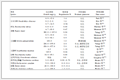
To validate our proposed hypothesis, we selected diphenylmethanone O-propoxycarbonyl oxime (1a) as the oxygen-centered electrophilic reagent capable of generating a radical, which was then paired with 2-ethylbut-1-ene (2a) and benzoyl isothiocyanate (3a) as model substrates for our investigation. These components were assembled to form a model reaction system for our study. Preliminary experiments were conducted to assess the impact of various solvents, including ethyl acetate (EA), dichloromethane (DCM), 1, 2-dichloroethane (DCE), acetone, and acetonitrile (MeCN) (Table 1, entries 1–5). A yield of 61% for product 4a was achieved when utilizing dichloromethane and 1, 2-dichloroethane as solvents. In an effort to enhance the reaction efficiency, a mixed solvent system was employed. By combining ethyl acetate (EtOAc) and dichloromethane (DCM) in a 1:1 ratio, and maintaining a stoichiometric ratio of 2:3:1 among the three substrates, we obtained a 66% yield of the desired product 4a after a reaction time of 5 h (Table 1, entry 6). Variations in the ratio of the mixed solvents or the stoichiometric ratios among the substrates resulted in a partial decrease in reaction yield (Table 1, entries 7 and 8). Thioxanthone and 5CzIPN were identified as suitable photocatalysts for this transformation; however, their implementation led to a slight reduction in the yield of product 4a (Table 1, entries 9 and 10). Notably, the light source was critical for facilitating energy transfer, and both the light source and the catalyst [Ir(dF(CF3)ppy)2(dtbbpy)](PF6) were indispensable for the success of this chemical conversion process (Table 1, entries 11 and 12). Subsequently, a series of isothiocyanates with distinct structural features, including phenyl isothiocyanate (3aa), isobutyryl isothiocyanate (3ab), pentanoyl isothiocyanate (3ac), and cinnamoyl isothiocyanate (3ad), were systematically screened to identify the optimal substrate for the reaction mechanism under the catalysis of [Ir(dF(CF3)ppy)2(dtbbpy)](PF6) (2 mol%) and irradiation with blue LED light at a wavelength of 450 nm (Table 1, entries 13–16). Interestingly, none of these structures achieved the desired transformation, with only benzoyl isothiocyanate (3a) successfully undergoing the transformation. This could be attributed to the influence of the isothiocyanate substituents on the electronic properties and the stability of the radical addition intermediates.
|
Table 1 ptimization of the reaction conditions.a |


Under the optimized reaction conditions, we conducted a systematic investigation into the scope of oxime esters as oxygen-centered radical precursors in the difunctionalization of isothiocyanates, employing 2-ethylbut-1-ene (2a) and benzoyl isothiocyanate (3a) as model substrates (Scheme 2). Our evaluation encompassed a diverse array of oxime esters, including those with varying chain lengths and structural features, which led to the synthesis of a series of isothiourea derivatives, designated as 4a–4h. The yields for these derivatives varied from moderate to high, ranging between 21% and 78%. Furthermore, we explored the reactivity of oxime esters featuring Cbz- and Fmoc-protective groups. These substrates reacted efficiently under the standard conditions, affording the corresponding products 4i and 4j with yields of 59% and 33%, respectively. The compatibility of the protocol with oxime esters harboring electron-withdrawing groups, such as chlorine or trichloromethyl, was also assessed. These reactions were found to be well-tolerated, providing the desired compounds 4k–4n with yields in the range of 38% to 63%.

|
Download:
|
| Scheme 2. Scope of 1, 4-oxyamination across unactivated olefins and C=S bonding of benzoyl isothiocyanate. Reaction conditions: 1 (0.4 mmol, 2.0 equiv.), 2a (0.6 mmol, 3.0 equiv.), 3a (0.2 mmol, 1.0 equiv.), [Ir(dF(CF3)ppy)2(dtbbpy)](PF6) (2 mol%), DCM/EA (1:1) (2 mL), 30 W blue LED (450 nm), 5 h, argon atmosphere, r.t. Isolated yield. | |

To further demonstrate the synthetic utility of our approach, we turned our attention to benzophenone-derived oxime esters with electron-donating substituents like phenyl (Ph), fluorine (F), and methyl (Me). Gratifyingly, these substrates reacted smoothly, furnishing the corresponding isothiourea products with yields of up to 78%. The structural assignment of compound 4q was unambiguously confirmed through X-ray crystallography, with the crystallographic data deposited under the CCDC number 2327974. In a notable exploration of the substrate scope, the oxime ester derived from the natural product menthol was also examined, yielding its corresponding isothiourea product with a 50% yield. Additionally, an oxime ester derived from cholesterol, a complex and sterically hindered molecule, was found to participate in the reaction, albeit with a lower conversion yield of 21%.
In the examination of the reactivity of unactivated olefins with oxime esters and benzoyl isothiocyanate, it was observed that doubly substituted monounsaturated olefins (e.g., 3-methylenepentane) and monosubstituted monounsaturated olefins (e.g., 1-hexene and but‑3-ene-1-ylbenzene) were also reactive in the transformation. As depicted in Scheme 3, oxygen-centered radicals successfully attacked the monosubstituted monounsaturated olefins, leading to the formation of products 5a and 5b with yields of 39% and 40%, respectively. Additionally, the study demonstrated that long-chain alkenes bearing halogens (Cl or Br) and sensitive functional groups, such as ester moieties, were competent in the reaction, resulting in the formation of compounds 5c–5g with yields ranging from 30% to 54%. Vinylcyclohexane exhibited good reactivity, resulting in the formation of compound 5h with a promising yield of 45%. Furthermore, vinyl ethers effectively participated in the reaction, producing products 5i–5k with yields ranging from 27% to 55%. Notably, the compound 2-(vinyloxy)ethan-1-ol, which features a reactive hydroxyl group, demonstrated a favorable yield of 55% in the synthesis of compound 5k.

|
Download:
|
| Scheme 3. Scope of the 1, 4-oxoamidation across unactivated olefins and C-S bonding of benzoyl isothiocyanate. Reaction conditions: 1a (0.4 mmol, 2.0 equiv.), 2 (0.4 mmol, 2.0 equiv.), 3a (0.2 mmol, 1.0 equiv.), [Ir(dF(CF3)ppy)2(dtbbpy)](PF6) (2 mol%), DCM/EA (1:1) (2 mL), 30 W blue LED (450 nm), 5 h, argon atmosphere, r.t. Isolated yield. | |

Additionally, olefins with silyl groups such as TMS, TES, and PhMe2Si were effective in this transformation, yielding products with yields between 27% and 43%. The incorporation of the cyclic internal component cyclopentene led to the successful synthesis of compound 5o, achieving a satisfactory yield of 44% with a diastereoselectivity ratio of 10:1. The investigation also encompassed a range of asymmetrically 1, 1-disubstituted olefins with various backbones, such as p-methylbenzene, naphthalene, furan, thiophene, and pyridine. These compounds also showed favorable outcomes, with yields ranging from 38% to 56%. Subsequently, the potential applications of olefins derived from macromolecular structures were explored. Findings revealed that derivatives from pharmaceutical compounds such as cinnamic acid, fenbufen, loxoprofen, and clofibrate could be successfully synthesized with promising yield percentages ranging from 50% to 66%, leading to the formation of products 5u–5x. The synthesis was also successfully applied to olefins originating from amino acids, particularly BOC-SAR-OH and PHT-GLY-OH, resulting in high yields. This underscores the broad utility of this approach in the field of synthetic chemistry.
Building on the success of prior experiments, the research then delved into the effects of various substituents on benzoyl isothiocyanate within the reaction framework (Scheme 4). It was discovered that modifications to the benzene ring with alkyl groups, trifluoromethyls, halogens, or methoxy groups at different positions led to the efficient synthesis of isothioureas (products 6a–6p), with yields notably high, peaking at an outstanding 93%. The investigation also extended to the replacement of the phenyl group with heterocycles, successfully incorporating furan and thiophene rings as evidenced by the synthesis of the corresponding isothiourea derivatives 6q and 6r with yields of 25% and 31%, respectively.

|
Download:
|
| Scheme 4. Scope of 1, 4-oxyamination across unactivated olefins and C=S bonding of benzoyl isothiocyanate. Reaction conditions: 1a (0.4 mmol, 2.0 equiv.), 2a (0.6 mmol, 3.0 equiv.), 3 (0.2 mmol, 1.0 equiv.), [Ir(dF(CF3)ppy)2(dtbbpy)](PF6) (2 mol%), DCM/EA (1:1) (2 mL), 30 W blue LED (450 nm), 5 h, argon atmosphere, r.t. Isolated yield. | |

The scalability of the process was confirmed with the synthesis of approximately 0.9 g of compound 4a on a 2 mmol scale, achieving an 85% yield (Fig. 1A). Beyond the 1, 4-oxyamination of carbon–carbon and carbon–sulfur double bonds, the study expanded to incorporate diamination and sulfonamidation reagents. This allowed for the execution of analogous 1, 4-diamination and 1, 4-sulfonamidation reactions with olefins and isothiocyanates. Gratifyingly, these reactions proceeded to completion, confirming that the three-component remote bifunctionalization strategy was versatile, extending beyond oxyamination to include diamination and sulfonylamination, thereby broadening the scope of accessible transformations via this approach (Fig. 1B). To further elucidate the reaction conversion pathway, diethyl 2, 2-diallyl malonate was utilized as an alkene receptor and was reacted with compounds 1a and 3a. This cascade of reactions, involving a multi-step radical addition, intramolecular cyclization, and subsequent free radical cross-coupling, successfully yielded product 12 with a 35% yield (Fig. 1C). Moreover, the introduction of radical scavengers such as TEMPO or BHT into the system effectively halted the reaction progress.

|
Download:
|
| Fig. 1. Reactions development and mechanistic proposal. a Reaction conditions: 1a (0.4 mmol, 2.0 equiv.), 2a (0.6 mmol, 3.0 equiv.), 3a (0.2 mmol, 1.0 equiv.), [Ir(dF(CF3)ppy)2(dtbbpy)](PF6) (2 mol%), DCM/EA (1:1) (2 mL), 30 W blue LED (450 nm), 5 h, argon atmosphere, r.t. Isolated yield. b 2-iPr-Thioxanthone (5 mol%), 30 W blue LED (395 nm). | |

High-resolution mass spectrometry analysis has elucidated the formation of various intermediate species in the reaction, identifying oxygen-centered radicals, tertiary carbon radicals generated from the addition of an oxygen radical to the alkene, and unsaturated carbon radicals produced via a radical relay mechanism, as illustrated in Fig. 1D. The significance of the photocatalytic step was underscored when experiments employing high-energy light sources, such as 395 nm or 365 nm LEDs, were conducted in the absence of a photocatalyst, resulting in markedly reduced yields of 9% and 19%, respectively. These observations were validated by 1H NMR spectroscopy (Fig. 1E). The data suggest that energy transfer is essential for the reaction, with oxygen radicals preferentially attacking the unactivated alkene 2a. Control experiments, which involved thermal heating or initiation of radicals using azobisisobutyronitrile (AIBN) or di‑tert‑butyl peroxide (DTBP), failed to maintain the reaction, further emphasizing the indispensable role of photocatalytic energy transfer in facilitating the process (Fig. 1F). Subsequent studies were directed towards two-component 1, 2-oxyamination reactions using the oxime ester 1a with either substrate 2a or 3a (Fig. 1G). The reaction between 1a and 2a successfully yielded the 1, 2-oxyamination product 7 with a 67% yield. However, the reaction complexity observed upon combining 1a with 3a could be ascribed to an electronic mismatch between the oxygen radicals formed in the reaction and the benzoyl isothiocyanate moiety, which may hinder efficient radical addition and subsequent reaction progression. An experiment incorporating compounds 1a, 2a, and 3a demonstrated that product 4a was synthesized exclusively under conditions of continuous irradiation (Fig. 1H). Quantum yield calculations indicated that this transformation likely proceeds via a non-chain radical mechanism, as further elaborated in Supporting information. Sensitivity analyses revealed that the presence of oxygen significantly influenced the transformation, as depicted in Fig. 1I.
In light of the aforementioned observations and previous reports [63-65], we propose a reaction mechanism involving oxime ester 1a and the excited-state photocatalyst Ir(dF(CF3)ppy)2(dtbbpy)(PF6) (Fig. 1J). Initially, oxime ester 1a is transferred to its triplet state via an energy transfer process. The weak N—O bond in the resulting state of 1a then undergoes homolysis, producing a persistent N-centered radical Ⅰ and a transient O-centered radical Ⅱ, along with the release of CO2. The O-centered radical preferentially reacts with the unactivated alkene 2a to form a nucleophilic tertiary carbon radical Ⅲ, rather than with the electron-deficient benzoyl isothiocyanate 3a. Subsequently, the tertiary carbon radical Ⅲ participates in a radical relay reaction with the sulfur end of the C=S bond in benzoyl isothiocyanate 3a, leading to the formation of intermediate Ⅳ. The electron-withdrawing nature of the benzoyl group likely shifts the electron density within the N=C=S framework towards the nitrogen terminus, enabling the nucleophilic radical intermediate Ⅲ to more effectively target the terminal sulfur atom. Furthermore, steric hindrance in the reaction also favors the attack on the sulfur atom. The final product 4a is generated through a radical coupling reaction between intermediate Ⅳ and the persistent N-centered radical I. This multi-component radical relay process, involving C=C and C=S bonds, highlights the importance of electronic matching to achieve precise selectivity control.
The research introduces an innovative three-component radical relay strategy, achieving a significant milestone in the difunctionalization of C=S bonds. This pioneering approach stands as the first to execute dual-functionalization of carbon-sulfur double bonds through radical chemistry, employing a sophisticated three-component radical relay mechanism. The strategy offers precise control over regioselectivity at three distinct unsaturated sites, enabling the efficient and selective synthesis of complex linear molecules. Demonstrating broad substrate compatibility, the methodology has been successfully applied to over 60 different substrates, showcasing its versatility across various reaction types, including diamination, sulfonamination, and oxyamination. The study's synthesis of experimental data with mechanistic investigations reveals the pivotal role of electronic complementarity between radicals and receptors, essential for the high selectivity observed in 1, 4-oxyamination reactions across C=S bonds. The successful implementation of this research, despite the inherent challenges, forges new pathways for the development of diverse bifunctional receptors and expands the scope of remote difunctionalization techniques. This work is set to exert a profound influence on the realms of chemical synthesis and molecular design, providing innovative avenues for crafting intricate molecular structures with prospective applications in pharmaceuticals, materials science, and other advanced fields.
Declaration of competing interestThe authors declare that they have no known competing financial interests or personal relationships that could have appeared to influence the work reported in this paper.
CRediT authorship contribution statementShan-Shan Li: Writing – original draft, Methodology, Data curation. Juan Luo: Formal analysis, Data curation. Shu-Nuo Liang: Data curation. Dan-Na Chen: Methodology. Li-Ning Chen: Data curation. Cheng-Xue Pan: Project administration. Peng-Ju Xia: Writing – review & editing, Funding acquisition, Formal analysis, Data curation.
AcknowledgmentsThe authors gratefully acknowledge the National Natural Science Foundation of China (No. 22101059), the financial support from Guangxi Science and Technology Program of China (No. 2023GXNSFBA026275), and Guangxi Normal University.
Supplementary materialsSupplementary material associated with this article can be found, in the online version, at doi:10.1016/j.cclet.2024.110424.
| [1] |
Z.L. Li, G.C. Fang, Q.S. Gu, X.Y. Liu, Chem. Soc. Rev. 49 (2020) 32-48. DOI:10.1039/c9cs00681h |
| [2] |
S.G. Sauer, S. Lin, ACS Catal. 8 (2018) 5175-5187. DOI:10.1021/acscatal.8b01069 |
| [3] |
Y. Li, D. Wu, H.G. Cheng, G. Yin, Angew. Chem. Int. Ed. 59 (2020) 7990-8003. DOI:10.1002/anie.201913382 |
| [4] |
X. Ren, Z. Lu, Chin. J. Catal. 40 (2019) 1003-1019. DOI:10.1016/S1872-2067(19)63278-X |
| [5] |
T. Koike, M. Akita, Chem 4 (2018) 409-437. DOI:10.1016/j.chempr.2017.11.004 |
| [6] |
W. Lee, I. Park, S. Hong, Sci. China Chem. 66 (2023) 1688-1700. DOI:10.1007/s11426-023-1589-7 |
| [7] |
X. Wu, S. Wu, C. Zhu, Tetrahedron Lett. 59 (2018) 1328-1336. DOI:10.1016/j.tetlet.2018.02.053 |
| [8] |
X.X. Wu, C. Zhu, Acc. Chem. Res. 53 (2020) 1620. DOI:10.1021/acs.accounts.0c00306 |
| [9] |
Y.S. Chen, Z. Cao, X.X. Wu, C. Zhu, Sci. Sin. Chim. 53 (2023) 289. DOI:10.1360/SSC-2022-0201 |
| [10] |
H.M. Huang, P. Bellotti, J. Ma, T. Dalton, F. Glorius, Nat. Rev. Chem. 5 (2021) 301-321. DOI:10.1038/s41570-021-00266-5 |
| [11] |
J.E. Erchinger, R. Hoogesteger, R. Laskar, et al., J. Am. Chem. Soc. 145 (2023) 2364-2374. DOI:10.1021/jacs.2c11295 |
| [12] |
X.L. Luo, D.D. Ye, J. Zheng, et al., Org. Lett. 26 (2024) 559-564. DOI:10.1021/acs.orglett.3c04148 |
| [13] |
G. Tan, M. Das, H. Keum, et al., Nat. Chem. 14 (2022) 1174-1184. DOI:10.1038/s41557-022-01008-w |
| [14] |
H. Wang, J.E. Erchinger, M. Lenz, et al., J. Am. Chem. Soc. 145 (2023) 23771-23780. DOI:10.1021/jacs.3c08512 |
| [15] |
J. Majhi, R.K. Dhungana, Á. Rentería-Gómez, et al., J. Am. Chem. Soc. 144 (2022) 15871-15878. DOI:10.1021/jacs.2c07170 |
| [16] |
X.K. Qi, M.J. Zheng, C. Yang, et al., J. Am. Chem. Soc. 145 (2023) 16630-16641. DOI:10.1021/jacs.3c04073 |
| [17] |
Z. Dong, Z. Ren, S.J. Thompson, Y. Xu, G. Dong, Chem. Rev. 117 (2017) 9333-9403. DOI:10.1021/acs.chemrev.6b00574 |
| [18] |
G.J.P. Perry, T. Jia, D.J. Procter, ACS Catal. 10 (2020) 1485-1499. DOI:10.1021/acscatal.9b04767 |
| [19] |
J. Lin, R.J. Song, M. Hu, J.H. Li, Chem. Rec. 19 (2019) 440-451. DOI:10.1002/tcr.201800053 |
| [20] |
J. Corpas, P. Mauleón, R.G. Arrayás, J.C. Carretero, ACS Catal. 11 (2021) 7513-7551. DOI:10.1021/acscatal.1c01421 |
| [21] |
M. Belal, Z. Li, L. Zhu, Sci. China Chem. 65 (2022) 514-520. DOI:10.1007/s11426-021-1172-x |
| [22] |
G. Qiu, L. Lai, J. Cheng, J. Wu, Chem. Commun. 54 (2018) 10405-10414. DOI:10.1039/c8cc05847d |
| [23] |
C. Liu, H. Zeng, C. Zhu, H. Jiang, Chem. Commun. 56 (2020) 10442-10452. DOI:10.1039/d0cc04318d |
| [24] |
J. Liu, X. Xiao, Y. Lai, Z. Zhang, Org. Chem. Front. 9 (2022) 2256-2279. DOI:10.1039/d2qo00081d |
| [25] |
Z. Cheng, J. Guo, Z. Lu, Chem. Commun. 56 (2020) 2229-2239. DOI:10.1039/d0cc00068j |
| [26] |
K. Keerthika, S. Nath, K. Geetharani, Catal. Sci. Technol. 10 (2020) 7142-7159. DOI:10.1039/d0cy01692f |
| [27] |
N. Chalotra, J. Kumar, T. Naqvi, B.A. Shah, Chem. Commun. 57 (2021) 11285-11300. DOI:10.1039/d1cc04014f |
| [28] |
X. Wang, J. Wang, M. Ji, X. Wu, C. Zhu, Chem. Commun. 60 (2024) 4894-4897. DOI:10.1039/d4cc01315h |
| [29] |
C. Chang, H. Zhang, X. Wu, C. Zhu, Chem. Commun. 58 (2022) 1005-1008. DOI:10.1039/d1cc06687k |
| [30] |
X.Y. Ruan, T. Zhang, W.A. Li, et al., Sci. China Chem. 65 (2022) 863-869. DOI:10.1007/s11426-022-1236-y |
| [31] |
Y. Li, D. Wu, H.G. Cheng, G. Yin, Angew. Chem. Int. Ed. 59 (2020) 7990-8003. DOI:10.1002/anie.201913382 |
| [32] |
Y. Zheng, Z. Liao, Z.Z. Xie, et al., Org. Lett. 25 (2023) 2129-2133. DOI:10.1021/acs.orglett.3c00577 |
| [33] |
X.L. Luo, S.S. Li, Y.S. Jiang, et al., Org. Lett. 25 (2023) 1742-1747. DOI:10.1021/acs.orglett.3c00437 |
| [34] |
S.S. Li, Y.S. Jiang, X.L. Luo, C.X. Pan, P.J. Xia, Org. Lett. 25 (2023) 1595-1599. DOI:10.1021/acs.orglett.3c00510 |
| [35] |
G. Tan, F. Paulus, Á. Rentería-Gómez, et al., J. Am. Chem. Soc. 144 (2022) 21664-21673. DOI:10.1021/jacs.2c09244 |
| [36] |
G. Tan, F. Paulus, A. Petti, et al., Chem. Sci. 14 (2023) 2447-2454. DOI:10.1039/d2sc06497a |
| [37] |
S.S. Li, Y.S. Jiang, X.L. Luo, et al., Sci. China Chem. 67 (2024) 558-567. DOI:10.1007/s11426-023-1812-x |
| [38] |
Y.S. Jiang, S.S. Li, X.L. Luo, et al., Org. Lett. 25 (2023) 6671-6676. DOI:10.1021/acs.orglett.3c02533 |
| [39] |
S.S. Li, Y.S. Jiang, L.N. Chen, et al., Org. Lett. 25 (2023) 7009-7013. DOI:10.1021/acs.orglett.3c02584 |
| [40] |
S. Pahar, A. Górecka, E. Richards, R.L. Melen, Cell Rep. Phys. Sci. 4 (2023) 101745. DOI:10.1016/j.xcrp.2023.101745 |
| [41] |
Z. Li, R.J. Mayer, A.R. Ofial, H. Mayr, J. Am. Chem. Soc. 142 (2020) 8383-8402. DOI:10.1021/jacs.0c01960 |
| [42] |
R. Senatore, M. Malik, T. Langer, W. Holzer, V. Pace, Angew. Chem. Int. Ed. 60 (2021) 24854-24858. DOI:10.1002/anie.202110641 |
| [43] |
L.C. Case, Nature 183 (1959) 675. DOI:10.1038/183675b0 |
| [44] |
I.S.R. Karmel, M. Tamm, M.S. Eisen, Angew. Chem. Int. Ed. 54 (2015) 12422-12425. DOI:10.1002/anie.201502041 |
| [45] |
A.R. Mandhapati, S. Rajender, J. Shaw, D. Crich, Angew. Chem. Int. Ed. 54 (2015) 1275-1278. DOI:10.1002/anie.201409797 |
| [46] |
Y. He, J. Li, S. Luo, J. Huang, Q. Zhu, Chem. Commun. 52 (2016) 8444-8447. DOI:10.1039/C6CC04394A |
| [47] |
X. Tang, Z. Zhu, C. Qi, W. Wu, H. Jiang, Org. Lett. 18 (2016) 180-183. DOI:10.1021/acs.orglett.5b03188 |
| [48] |
P. Wang, S. Tang, A. Lei, Green Chem. 19 (2017) 2092-2095. DOI:10.1039/C7GC00468K |
| [49] |
P. Pali, M.S. Singh, Org. Lett. 25 (2023) 2258-2263. DOI:10.1021/acs.orglett.3c00509 |
| [50] |
A. Arcadi, M. Aschi, M. Chiarini, et al., Org. Biomol. Chem. 18 (2020) 3177-3189. DOI:10.1039/d0ob00087f |
| [51] |
Y. Abderrazak, O. Reiser, ACS Catal. 14 (2024) 4847-4855. DOI:10.1021/acscatal.4c00565 |
| [52] |
X. Li, N. Li, L. Yang, et al., ACS Catal. 13 (2023) 12755-12765. DOI:10.1021/acscatal.3c03497 |
| [53] |
H. Zhou, P. Lu, X. Gu, P. Li, Org. Lett. 15 (2013) 5646-5649. DOI:10.1021/ol402573j |
| [54] |
Y.Z. Yang, Q. Xue, Q. Sun, et al., Org. Chem. Front. 11 (2024) 1305-1313. DOI:10.1039/d3qo02054a |
| [55] |
M. Miele, R. D'Orsi, V. Sridharan, W. Holzer, V. Pace, Chem. Commun. 55 (2019) 12960-12963. DOI:10.1039/c9cc06929a |
| [56] |
Y. Cao, X. Jiang, L. Liu, et al., Angew. Chem. Int. Ed. 50 (2011) 9124-9127. DOI:10.1002/anie.201104216 |
| [57] |
X. Wang, M. Nakajima, E. Serrano, R. Martin, J. Am. Chem. Soc. 138 (2016) 15531-15534. DOI:10.1021/jacs.6b10351 |
| [58] |
S. Liu, L. Jiang, Org. Lett. 24 (2022) 7157-7162. DOI:10.1021/acs.orglett.2c02854 |
| [59] |
L.R. Wen, Q.Y. Shen, W.S. Guo, M. Li, Org. Chem. Front. 3 (2016) 870-874. DOI:10.1039/C6QO00133E |
| [60] |
L. Benati, G. Calestani, R. Leardini, et al., J. Org. Chem. 68 (2003) 3454-3464. DOI:10.1021/jo0267504 |
| [61] |
C.L. Zhao, Q.Y. Han, C.P. Zhang, Org. Lett. 20 (2018) 6480-6484. DOI:10.1021/acs.orglett.8b02793 |
| [62] |
Z. Zhang, V. Gevorgyan, Org. Lett. 22 (2020) 8500-8504. DOI:10.1021/acs.orglett.0c03099 |
| [63] |
T. Patra, M. Das, C.G. Daniliuc, F. Glorius, Nat. Catal. 4 (2021) 54-61. DOI:10.1038/s41929-020-00553-2 |
| [64] |
Y.S. Jiang, F. Liang, A.M. Chen, et al., Adv. Syn. Catal. 365 (2023) 997-1001. DOI:10.1002/adsc.202201391 |
| [65] |
T. Patra, P. Bellotti, F. Glorius, Angew. Chem. Int. Ed. 59 (2020) 3172-3177. DOI:10.1002/anie.201912907 |