 2025, Vol. 36


b Suzhou Jingcheng Precision Instrument Technology Co., Ltd., Suzhou 215228, China;
c The First Affiliated Hospital of Nanchang University, Nanchang 330006, China
Selenium is an essential trace element for living organisms [1] and plays a pivotal role in their physiological processes. Previous researches have shown that there is an antagonistic association between selenium and the toxic metal mercury in both animals and plants [2-4]. Selenium can regulate the activity of antioxidant enzymes by affecting the oxidative stress response, thereby reducing the absorption of mercury by plants [3,5]. The range of selenium intake in the human body is relatively narrow. Low selenium intake is likely to cause a series of diseases, such as Keshan disease (KD) [6,7]. Excessive consumption of selenium can lead to selenium poisoning [8,9]. It has been reported that a moderate intake of selenium can result in antioxidant, antitumor, and immune system enhancement effects [10-12]. Additionally, studies have shown that the bioavailability of selenium and its toxicological effects largely depend on the form of selenium. Compared with organic selenium, inorganic selenium has lower bioavailability and higher toxicity [13-16]. Therefore, when supplementing selenium, we need to pay attention to the content and form of selenium in foods with selenium supplement function. With the growing of public health awareness, people are increasingly paying attention to supplementing selenium in daily diet. Tea is recognized as a safe and effective natural selenium supplement, as it can convert inorganic selenium from the soil into organic selenium [17]. In addition, tea also contains various nutrients such as tea polyphenols, vitamins, and amino acids. Studies have shown that moderate consumption of tea can help prevent cardiovascular disease, cancer, and neurodegenerative diseases [18-20]. Therefore, the detection of different forms of selenium and other specific compounds in tea infusion is important for human life and health.
The detection methods for selenium can be divided into total selenium content detection, organic selenium content detection, and inorganic selenium content detection. Among them, methods such as hydride generation atomic fluorescence spectrometry (HG-AFS) [21], inductively coupled plasma mass spectrometry (ICP-MS) [22], and atomic absorption spectroscopy (AAS) [23] belong to the total selenium content detection. The above methods require the use of strong acids to digest different forms of selenium compounds into Se4+ during the pre-treatment process, making it difficult to determine the content of different forms of selenium. With the development of detection technology, hyphenated technology has been applied widely in the detection of different forms of selenium. Such as gas chromatography-mass spectrometry (GC–MS) [24-26], high-performance liquid chromatography-inductively coupled plasma mass spectrometry (HPLC-ICP-MS) [27-29], and high-performance liquid chromatography-hydride generation-atomic fluorescence spectroscopy (HPLC—HG-AFS) [30]. However, GC–MS is more suitable for the analysis of volatile compounds, so pre-column derivatization is required to enhance their volatility when analyzing polar compounds such as Se-containing amino acids [31,32]. When analyzing selenium by HPLC-ICP-MS, perfluorinated carboxylic acid needs to be added, which is harmful to the chromatographic column [33,34]. Although the above methods have high sensitivity and precision, they all have the disadvantages of complex sample pretreatment and long analysis time.
In this study, we combined a heating reaction device with the electrospray extraction ionization mass spectrometry (EESI-MS) to analyze both organic and inorganic selenium in liquid samples. Under acidic conditions, the heating reaction device catalyzes the complexation reaction between selenite and o-phenylenediamine (OPD) in the sample. The reaction product is named 1,3-dihydro-2,1,3-benzoselenadiazole [35]. By converting selenium compounds from inorganic to organic form, we were able to quantitatively analyze both inorganic and organic selenium using organic mass spectrometry. The sample pre-treatment steps were greatly simplified in this experiment based on the above device. And the total detection time is less than 5 min. Mass spectrometry (MS) is a fast, effective and high-throughput analytical method. The technique has been well applied in many fields such as food, medicine, biology and environment [36-39]. The EESI-MS technology used in this method has the ability to directly analyze complex liquid matrices [40], thus enabling rapid quantitative analysis of different forms of selenium and other specific chemical components in tea infusion, with good application prospects.
As shown in Fig. 1, the heating reaction device consists of a silicone sealant layer, stainless steel tubes and a ceramic heating plate, which is located between the three-way valve and two-way valve. The inlet is on the three-way valve side. The sample and OPD solution are mixed at the three-way valve and enter the inlet. The outlet is on the two-way valve side, where the complex containing liquid enters the capillary tube through the two-way valve. The temperature control accuracy of the heating reaction device is ±0.1 ℃. The heated part of the stainless steel tube has a length of 208.0 mm and an inner diameter of 0.5 mm. For on-line analysis, the sample and OPD solution were both delivered to the heating reaction device through a micro syringe pump at the speed of 5.0 and 10.0 µL/min, respectively. The heating reaction time is about 164 s. The complex containing liquid forms spray A under the action of nitrogen. Methanol forms spray B under the action of nitrogen and a high voltage of 4.0 kV. The spray A and spray B collide at an angle of β to achieve the extraction of spray A. Then the fragment ions are prepared for MS analysis.

|
Download:
|
| Fig. 1. Structure of the heating reaction device coupled with EESI-MS. | |
EESI-MS experiments were conducted on an LTQ linear ion trap mass spectrometer (Thermo Fischer Scientific Co., Ltd., San Jose, CA, USA). The extractant was methanol, the flow rate of extractant was 10 µL/min, the temperature of ion transfer tube was 180 ℃, the voltage of ion transfer tube was 35 V, the lens voltage was 110 V, and the spray voltage was 4.0 kV. Other detection parameters were automatically optimized by LTQ-Tune system. The mass separation width of the parent ion in the tandem mass spectrometry was ±5 Da, the collision energy was 20%−30%, the collision time was 30 ms, the mass spectrometry scanning range was m/z 50–500, and the mass spectrometry data analysis software was Thermo Xcalibur Roadmap 2.0.
There are six kinds of selenium in nature, namely 80Se, 78Se, 76Se, 82Se, 77Se, and 74Se, of which 80Se has the highest abundance, 49.61% [41-43]. Therefore, when performing tandem mass spectrometry analysis and quantitative analysis, we take the relevant fragment signal of 80Se as the analysis target.
In the positive ion mode, the mass spectra of selenium compounds are depicted in Fig. 2. Fig. 2a displays the mass spectra of standard mixed solution. With a molecular weight of 197 Da, selenomethionine underwent ionization in positive mode, resulting in the formation of protonated selenomethionine, [80SeMet+H]+, with m/z 198.0. In MS2 scan, the [80SeMet+H]+ is selected as precursor ion. As shown in the inset Fig. 2b, the m/z 180.8 is the main product peak of [C5H9O280Se]+ originating from the loss of NH3 from [80SeMet+H]+ [44,45]. To avoid false-positive results, we selected m/z 180.8 ions for MS3 scan. As shown in Fig. S1 (Supporting information), the m/z 108.8 is the main product peak of [C2H580Se]+ originating from the loss of –C2H3–COOH from [C5H9O280Se]+ [40,41].

|
Download:
|
| Fig. 2. Mass spectra of selenium compounds. (a) Mass spectra of standard mixed solution; (b) MS2 spectra of selenomethionine; (c) MS2 spectra of l-selenocystine; (d) MS2 of o-phenylenediamine; (e) MS2 of 1,3-dihydro-2,1,3-benzoselenadiazole. | |
With a molecular weight of 336 Da, l-selenocystine underwent ionization in positive mode, resulting in the formation of protonated l-selenocystine, [80SeCys(2)+H]+, with m/z 337.3. [80SeCys(2)+H]+ is selected as precursor ion in the MS2 scan. As shown in the inset figure of Fig. 2c, m/z 247.9 is the main product peak of [C3H6NO280Se2]+ originating from the loss of NH2–C2H4–COOH from [80SeCys(2)+H]+ [45].
Under an acidic environment and heating catalytic conditions, sodium selenite reacts with OPD to form 1,3-dihydro-2,1,3-benzoselenadiazole. The MS2 of OPD is shown in Fig. 2d, m/z 91.9 is the main product peak of [C6H6N]+ originating from the loss of NH3 from [OPD+H]+. With a molecular weight of 186 Da, 1,3-dihydro-2,1,3-benzoselenadiazole underwent ionization in positive mode, resulting in the formation of protonated 1,3-dihydro-2,1,3-benzoselenadiazole, [C6H6N280Se+H]+, with m/z 187.0. In MS2 scan, the [C6H6N280Se+H]+ is selected as precursor ion. Fig. 2e shows that the relative intensity ratios of m/z 157.1, m/z 159.0, and m/z 160.9 conform to the isotopic distributions of 78Se, 80Se, and 82Se. Therefore, m/z 159.0 may be the main product peak of [C5H5N80Se]+ originating from the loss of –CHNH in [C6H6N280Se+H]+.
To calculate the conversion rate of the reaction between OPD and selenite, we selected three concentrations of sodium selenite standard solution (50.00, 100.00, and 1000.00 µg/L) to react with the complexing agent (OPD content of 1.00 × 10⁴ µg/L). The ratio of OPD to sodium selenite in the reaction is 1:1, so we indirectly quantified the concentration of sodium selenite by calculating the concentration of OPD involved in the reaction. The product ion with m/z 91.9 obtained through tandem mass spectrometry, was utilized as the quantitative ion for OPD. Fig. S2 (Supporting information) presents the calibration curve of OPD, with an R2 value of 0.9980. The relationship between the intensity (y) and the concentration (x) demonstrates a strong linear correlation within the specified linear range of 10–1.25 × 10⁴ µg/L. As shown in Table S1 (Supporting information), the concentrations of sodium selenite involved in the reaction in the three concentrations of sodium selenite standard solution were 12.86, 26.79, and 256.05 µg/L, respectively, with conversion rates ranging from 25.6% to 26.8%.
We conducted condition optimization experiments by injecting a 50.00 µg/L standard mixed solution directly to optimize suitable experimental conditions. Tandem mass spectrometry was used to obtain signal intensities of the major product ions m/z 108.8, 247.9, and 159.0, which were used as determination indexes. Four conditions were optimized to achieve accurate results. These conditions included the temperature of the heating device, the ratio of the complexing agent to the flow rate of the sample, the spray voltage, and the capillary temperature.
Different reaction temperatures were set to get the optimized instrumental responses for the three target ions. Fig. 3 illustrates that the signal intensities of SeMet and SeCys(2) exhibited stability as the reaction temperature was elevated. Sodium selenite has the highest signal intensity at 45.0 ℃, while the other two organic selenium signals are not affected by temperature. Thus, the reaction temperature was set to 45.0 ℃ as the optimal parameter. This indicates that the reaction will not affect the detection of other organic selenium components in the sample. The flow ratio of o-phenylenediamine to the sample solution played a significant role in the complexation reaction. We kept the flow rate of the sample solution fixed at 5.0 µL/min and noticed that the signal intensity of the selenite complex gradually increased and then stabilized with the increase in the flow rate of the complexing agent. Fig. S3 (Supporting information) demonstrates that the selenite complex's highest signal intensity was achieved when the ratio of the complexing agent to the sample flow rate was 2:1. Therefore, we chose the optimal flow rate ratio of 2:1, with a flow rate of the complexing agent set at 10.0 µL/min and the flow rate of the sample solution at 5.0 µL/min.

|
Download:
|
| Fig. 3. The MS responses of three forms of selenium compounds at different reaction temperatures. | |
In the analysis of EESI-MS, it was observed that the signal intensity of the target ions was found to be significantly affected by the applied spray voltage and capillary temperature. Because the ionization efficiency of the target molecules and the extent of atomization are influenced by these factors. Fig. S4 (Supporting information) demonstrates that the three target ions displayed the highest signal intensity at a spray voltage of 4.0 kV. Fig. S5 (Supporting information) demonstrates that the three target ions displayed the highest signal intensity when the capillary temperature was set to 180 ℃.
Prepare mixed standard solutions of three target compounds according to the method described in Supporting information 1.2. The linearity, limits of detection (LOD), and limits of quantification (LOQ) of the three compounds (SeMet, SeCys(2), and sodium selenite) were determined in this study to validate the method.
The formulas of LOD and LOQ are as follows:

|
(1) |

|
(2) |
where σ is the standard deviation of 10 blank response values, and S is the slope of the calibration curve [46].
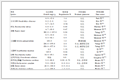
The product ions with m/z 108.8, 247.9, and 159.0, obtained through tandem mass spectrometry, were utilized as the quantitative ions for the three selenium compounds. The corresponding results are presented in Table 1. The linear coefficient (R2) for SeMet, SeCys(2), and sodium selenite were found to be 0.9966, 0.9885, and 0.9909, respectively. The relationship between signal intensity (y) and concentration (x) exhibited a good linear correlation within the range of 0.50–50.00 µg/L.
|
Table 1 Method characterization for three forms of selenium compounds with EESI-MS. |


Two batches of selenium-enriched tea and two varieties of regular tea (Qingyuan® Lushan Green Tea and Qingyuan® Tie Guan Yin Tea) were chosen to prepare tea infusion samples. In addition, we also selected two commercially available tea beverages (Suntory® Jasmine Oolong Tea and Nongfu Spring® Oriental Leaves Green Tea) as samples for analysis. Six batches of tea infusion samples were analyzed concurrently to determine the concentration of three selenium compounds. This was achieved using a homemade EESI-MS coupled with a heating reaction device. The results are shown in Table S2 (Supporting information) that the contents of the three selenium compounds in two tea beverages and two ordinary tea samples were comparatively lower than those in two selenium-enriched tea samples. In the analysis of Qingyuan® Lushan Green Tea samples and Suntory® Jasmine Oolong Tea, neither SeCys(2) nor selenite was detected. Similarly, selenite was not detected in both Qingyuan® Tie Guan Yin Tea and Nongfu Spring® Oriental Leaves Green Tea. However, both selenium-enriched teas No. 1 and No. 2 showed the presence of SeMet, SeCys(2), and selenite. Among the various samples, selenium-enriched tea No. 2 had the highest concentrations of these compounds in the selenium-enriched tea No. 2 sample were 9.66 µg/L, 5.33 µg/L, and 2.01 µg/L, respectively. The relative standard deviation (RSD) (%) for each compound in all six batches was determined to be less than 10% (n = 5).
Recovery experiments were conducted to assess the reliability and repeatability of the proposed method. Selenium-enriched tea No. 2 was chosen as the reference sample. The experiment involved the addition of mixed standard solutions with three different concentrations (5.00, 10.00, and 20.00 µg/L) to selenium-enriched tea No. 2.
The spiking recovery of an analyte was calculated as follows:

|
(3) |
where c1 is the concentration of the sample measured after spiking, c2 is the background concentration of the sample, and c0 is the concentration of the standard added.
The experiment was conducted based on the optimized parameters. The spiked recoveries exhibited a range of 98.8% to 106.1%, and the RSD (n = 5) was found to be less than 5%, as presented in Table S3 (Supporting information).
EESI-MS enables rapid trace analysis of various complex matrices in liquid samples without sample pretreatment [47,48]. Based on this feature, we completed the characterization of three other specific compounds while analyzing the content of selenium compounds. Figs. S6a and b (Supporting information) present the mass spectra of Qingyuan® Lushan Green Tea and Qingyuan® Tie Guanyin Tea, respectively. Meanwhile, Figs. S6c and d (Supporting information) display the mass spectra of selenium-enriched tea No. 1 and selenium-enriched tea No. 2, respectively. Figs. S6e and f (Supporting information) display the mass spectra of Suntory® Jasmine Oolong Tea and Nongfu Spring® Oriental Leaves Green Tea, respectively. The signal intensities of m/z 175.0 [l-theanine+H]+ and m/z 195.0 [Caffeine+H]+ in the two groups of selenium-enriched tea were significantly higher than those in the other four groups. Furthermore, the signal intensity associated with m/z 213.0 [l-prolyl-l-proline+H]+ was found to be significantly higher in Qingyuan® Lushan Green Tea compared to the other five groups.
Fig. 4 displays the results of the tandem mass spectrometry analysis of the three ions previously mentioned. As shown in the inset figure of Fig. 4a, m/z 137.9 is the main product peak of [C6H8N3O]+ originating from the loss of CH3–N═CO from [Caffeine+H]+ [49]. In Fig. 4b, m/z 158.0 is the main product peak of [C7H14N2O2]+ originating from the loss of –OH from [l-theanine+H]+ [50]. As shown in the inset of Fig. 4c, m/z 195.0 and m/z 167.0 are the main product peaks of [C10H15N2O2]+ and [C9H15N2O]+, respectively, originating from the losses of H2O and HCOOH from [l-prolyl-l-proline+H]+ [51].

|
Download:
|
| Fig. 4. MS2 spectra of specific chemical constituents (a) caffeine, (b) l-theanine, (c) l-prolyl-l-proline. | |

To demonstrate that this method can quantify both selenium compounds and other compounds, we chose l-theanine for quantitative analysis. Based on the findings of tandem mass spectrometry, we chose m/z 158.0 as the quantitative ion. Fig. S7 (Supporting information) presents the calibration curve of l-theanine, with an R2 value of 0.9979. The relationship between the intensity (y) and the concentration (x) demonstrates a strong linear correlation within the specified linear range of 2.50 × 10² µg/L to 1.00 × 10⁴ µg/L. Fig. S8 (Supporting information) illustrates the content of different compounds in selenium-enriched tea No. 2, with l-theanine exhibiting the highest content at 323.92 µg/L.
In this study, a method for simultaneous detection of various selenium compounds in complex liquid samples was established by combining a heating reaction device with the EESI-MS. By using the heating reaction device, the reaction of SeO32− and OPD in the liquid sample can be accelerated. The whole detection process does not require sample pretreatment. The total detection time can be controlled within 5 min. Three different selenium compounds in tea infusion samples can be quantified by utilizing this device. The results indicate that this approach has high sensitivity, good precision, and high accuracy.
Furthermore, three other specific chemical constituents (caffeine, theanine, and l-prolyl-l-proline) in tea infusion could be detected incidentally. The results showed that the content of l-theanine and caffeine in two batches of selenium-enriched tea was significantly higher than that in two batches of regular tea and two batches of tea beverages. This method can simultaneously carry out the quantitative analysis of various forms of selenium and other compounds in tea infusion. Previous studies have demonstrated that theanine and caffeine are crucial components for tea quality [52,53]. Therefore, it is expected that this method will offer a rapid detection method for tea quality analysis. The device of the proposed on-line heating reaction device is quite simple and can be easily integrated with other instruments. Therefore, it holds great potential for wide applications in areas such as food and environment.
Declaration of competing interestThe authors declare that they have no known competing financial interests or personal relationships that could have appeared to influence the work reported in this paper.
CRediT authorship contribution statementLu Huang: Data curation, Formal analysis, Validation, Writing – original draft. Jiang Wang: Funding acquisition, Investigation, Methodology. Hong Jiang: Writing – original draft, Writing – review & editing. Lanfang Chen: Software. Huanwen Chen: Funding acquisition, Project administration.
AcknowledgmentsThe authors thank Mr. Qi Wang of the Key Laboratory of Seenriched Products Development and Quality Control, Ministry of Agriculture and Rural Affairs for providing the selenium-enriched tea samples. This work was financially supported by Jiangxi University of Chinese Medicine School-level Science and Technology Innovation Team Development Program (No. CXTD22005) and PhD research startup fund of Jiangxi University of Chinese Medicine (No. 2023BSZR005).
Supplementary materialsSupplementary material associated with this article can be found, in the online version, at doi:10.1016/j.cclet.2024.109896.
| [1] |
P. Olmedo, A.F. Hernandez, A. Pla, et al., Food Chem. 62 (2013) 299-307. DOI:10.1016/j.fct.2013.08.076 |
| [2] |
N.V. Dolgova, S. Nehzati, T.C. MacDonald, et al., Metallomics 11 (2019) 621-631. DOI:10.1039/c8mt00315g |
| [3] |
H. Jiang, W. Lin, H. Jiao, et al., Metallomics 13 (2021) mfab040. DOI:10.1093/mtomcs/mfab040 |
| [4] |
X. Shang, Q. Sun, Y. Yin, et al., Aquac. Rep. 19 (2021) 100609. DOI:10.1016/j.aqrep.2021.100609 |
| [5] |
W. Lv, Environ. Pollut. 291 (2021) 118259. DOI:10.1016/j.envpol.2021.118259 |
| [6] |
J. Hou, L. Zhu, C. Chen, et al., J. Trace Elem. Med. Biol. 68 (2021) 126832. DOI:10.1016/j.jtemb.2021.126832 |
| [7] |
B.K. Shimada, N. Alfulaij, L.A. Seale, Int. J. Mol. Sci. 22 (2021) 10713. DOI:10.3390/ijms221910713 |
| [8] |
R.F. Clark, E. Strukle, S.R. Williams, et al., Clin. Chim. Acta 275 (1996) 1087-1088. DOI:10.1001/jama.1996.03530380029025 |
| [9] |
N. Hadrup, G. Ravn-Haren, J. Trace Elem. Med. Biol. 58 (2020) 126435. DOI:10.1016/j.jtemb.2019.126435 |
| [10] |
M. Kieliszek, S. Błażejak, Nutrition 29 (2013) 713-718. DOI:10.1016/j.nut.2012.11.012 |
| [11] |
A. Razaghi, M. Poorebrahim, D. Sarhan, et al., Eur. J. Cancer 155 (2021) 256-267. DOI:10.1016/j.ejca.2021.07.013 |
| [12] |
L. Kursvietiene, A. Mongirdiene, J. Bernatoniene, et al., Antioxidants 9 (2020) 80. DOI:10.3390/antiox9010080 |
| [13] |
J. Moreda-Pineiro, A. Moreda-Pineiro, V. Romaris-Hortas, et al., Food Chem. 139 (2013) 872-877. DOI:10.1016/j.foodchem.2013.01.116 |
| [14] |
G.S. Banuelos, I. Arroyo, I.J. Pickering, et al., Food Chem. 166 (2015) 603-608. DOI:10.1016/j.foodchem.2014.06.071 |
| [15] |
K.M. Kubachka, T. Hanley, M. Mantha, et al., Food Chem. 218 (2017) 313-320. DOI:10.1016/j.foodchem.2016.08.086 |
| [16] |
M. Banerjee, D. Chakravarty, P. Kalwani, et al., J. Biochem. Mol. Toxicol. 36 (2022) e23195. DOI:10.1002/jbt.23195 |
| [17] |
J. Xiang, S. Rao, Q. Chen, et al., Plants 11 (2022) 2491. DOI:10.3390/plants11192491 |
| [18] |
C.S. Yang, J. Zhang, J. Agric. Food Chem. 67 (2019) 5446-5456. DOI:10.1021/acs.jafc.8b05242 |
| [19] |
L. Xu, R. Wang, Y. Liu, et al., J. Funct. Foods 107 (2023) 105669. DOI:10.1016/j.jff.2023.105669 |
| [20] |
W. Ding, S. Wang, J. Gu, et al., Chin. Chem. Lett. 34 (2023) 108043. DOI:10.1016/j.cclet.2022.108043 |
| [21] |
X.M. Guo, S.P. Li, B.L. Huang, Spectrosc. Lett. 38 (2005) 131-143. DOI:10.1081/SL-200049589 |
| [22] |
M. Diaz-Somoano, M.A. Lopez-Anton, M.R. Martinez-Tarazona, Fuel 83 (2004) 231-235. DOI:10.1016/S0016-2361(03)00259-X |
| [23] |
O. Oster, W. Prellwitz, Clin. Chim. Acta 124 (1982) 277-291. DOI:10.1016/0009-8981(82)90422-3 |
| [24] |
B. Iscioglu, E. Henden, Anal. Chim. Acta 505 (2004) 101-106. DOI:10.1016/S0003-2670(03)00888-2 |
| [25] |
S. Wu, J. Sun, H. Zhang, et al., J. Biotechnol. 136 (2008) S724-S724. |
| [26] |
G. Moreno-Martin, J. Sanz-Landaluze, M.E. León-Gonzalez, et al., Anal. Chim. Acta 1081 (2019) 72-80. DOI:10.1016/j.aca.2019.06.061 |
| [27] |
L. Gong, Q. Xu, C. Lee, et al., Eur. Food Res. Technol. 235 (2012) 169-176. DOI:10.1007/s00217-012-1747-2 |
| [28] |
B. Chen, B. Hu, M. He, et al., J. Anal. At. Spectrom. 28 (2013) 334-343. DOI:10.1039/c2ja30280b |
| [29] |
M. Dernovics, R. Lobinski, Anal. Chem. 80 (2008) 3975-3984. DOI:10.1021/ac8002038 |
| [30] |
X. Zhi-Ming, S. Rong, J. Zheng, et al., Chin. J. Anal. Chem. 42 (2014) 1314-1319. |
| [31] |
X. Zhang, L. Yang, Z. Mester, Anal. Chim. Acta 744 (2012) 54-59. DOI:10.1016/j.aca.2012.07.011 |
| [32] |
S. Topal, M. Oner, B.T. Zaman, et al., New J. Chem. 47 (2023) 14520-14527. DOI:10.1039/d3nj01949g |
| [33] |
M. Kotrebai, J.F. Tyson, E. Block, et al., J. Chromatogr. A 866 (2000) 51-63. DOI:10.1016/S0021-9673(99)01060-2 |
| [34] |
K. Bierla, M. Dernovics, V. Vacchina, et al., Anal. Bioanal. Chem. 390 (2008) 1789-1798. DOI:10.1007/s00216-008-1883-5 |
| [35] |
Y. Khanhuathon, W. Siriangkhawut, P. Chantiratikul, et al., Anal. Lett. 46 (2013) 1779-1792. DOI:10.1080/00032719.2013.775652 |
| [36] |
C. Meng, G. Zhu, C. Ke, et al., Chin. Chem. Lett. 33 (2022) 2086-2090. DOI:10.1016/j.cclet.2021.08.094 |
| [37] |
L. Yuan, G. Yuan, Z. Bin, et al., Chin. Chem. Lett. 33 (2022) 2708-2710. DOI:10.1016/j.cclet.2021.08.119 |
| [38] |
Z. Qin, X. Hua, Z. Jin, et al., Chin. Chem. Lett. 33 (2022) 4746-4749. DOI:10.1016/j.cclet.2022.01.004 |
| [39] |
M. Zi, G. Yuan, C. Feng, et al., Chin. Chem. Lett. 33 (2022) 4411-4414. DOI:10.1016/j.cclet.2021.12.029 |
| [40] |
C. Huan, H. Bin, Z. Xie, Chinese J. Anal. Chem. 38 (2010) 1069-1088. DOI:10.1016/S1872-2040(09)60060-8 |
| [41] |
T.M. Johnson, T.D. Bullen, P.T. Zawislanski, Environ. Sci. Technol. 34 (2000) 2075-2079. DOI:10.1021/es990187y |
| [42] |
K. Schilling, T.M. Johnson, W. Wilcke, Environ. Sci. Technol. 45 (2011) 2670-2676. DOI:10.1021/es102926p |
| [43] |
K. Schilling, T.M. Johnson, K.S. Dhillon, et al., Environ. Sci. Technol. 49 (2015) 9690-9698. DOI:10.1021/acs.est.5b00477 |
| [44] |
X. Zou, K. Shen, C. Wang, et al., J. Food Compost. Anal. 106 (2022) 104333. DOI:10.1016/j.jfca.2021.104333 |
| [45] |
T. Lindemann, H. Hintelmann, Anal. Bioanal. Chem. 372 (2002) 486-490. DOI:10.1007/s00216-001-1113-x |
| [46] |
A. Shrivastava, V. Gupta, Chron. Young Sci. 2 (2011) 21-25. DOI:10.4103/2229-5186.79345 |
| [47] |
H.W. Chen, A. Venter, R.G. Cooks, Chem. Commun. 19 (2006) 2042-2044. DOI:10.1039/b602614a |
| [48] |
M. Qin, Y. Qian, L. Huang, et al., Front. Pharmacol. 14 (2023) 1110900. DOI:10.3389/fphar.2023.1110900 |
| [49] |
S. Wang, F. Li, Y. Liu, et al., Anal. Bioanal. Chem. 411 (2019) 4049-4054. DOI:10.1007/s00216-018-1520-x |
| [50] |
Y. Zhu, F. Wang, Y. Zhao, et al., J. Chromatogr. B 1198 (2022) 123248. DOI:10.1016/j.jchromb.2022.123248 |
| [51] |
C. Wang, R. Feng, D. Sun, et al., J. Chromatogr. B 879 (2011) 2871-2876. DOI:10.1016/j.jchromb.2011.08.014 |
| [52] |
D. Turkozu, N. Sanlier, Crit. Rev. Food Sci. Nutr. 57 (2017) 1681-1687. DOI:10.1080/10408398.2015.1016141 |
| [53] |
L. Paiva, E. Lima, M. Motta, et al., Curr. Res. Food Sci. 3 (2020) 227-234. DOI:10.1016/j.crfs.2020.07.004 |