 2024, Vol. 35


b School of Chemistry & Materials Science, Jiangsu Normal University, Xuzhou 221116, China;
c Key Laboratory of Life-Organic Analysis of Shandong Province, School of Chemistry and Chemical Engineering, Qufu Normal University, Qufu 273165, China
The constant search for pharmaceutical candidates has strengthened the demand for developing new chemical technology that can rapidly access highly functionalized molecules and their derivatives from simple and easily available precursors. One useful but challenging strategy is to cleave different chemical bonds and reassemble them to yield complex molecules, and thus such methods are particularly appealing in combinatorial campaigns to diversify a fragment pool [1-6]. Among them, Rh(Ⅲ)-catalyzed C(sp2)—H activation-initiated annulation reactions have recently emerged as a powerful tool to fabricate valuable highly functionalized cyclic compounds with step- and atom-economy and have received increasing attention [7-14]. Typically, the vast majority of these transformations involve activation of C—H bonds, insertion of coupling partners and in situ conversion of the corresponding directing group to deliver various heterocycles and fused rings. Despite great advances gained in this field, developing a new and practical Rh(Ⅲ)-catalyzed C—H activation-initiated cyclization to access cyclic structures is highly desirable, given the significance of enriching organic reaction toolboxes to generate functionalized molecules and the potential of using these molecules for downstream studies in medicinal chemistry.
Enaminones, well recognized as versatile building blocks endowed with multiple reactive sites, are widely utilized for numerous elegant chemical transformations through dinucleophilic enamine and/or dielectrophilic enone activation, because of their unique push–pull electronic properties [15-25]. Specifically, the success of Rh(Ⅲ)-catalyzed enaminone-directed C(sp2)—H activation-initiated annulation demonstrates the rich chemistry in precise control of site-selectivity of enaminones and brings new opportunities to exploit new reactions to expand chemical space [26-42]. Since the group of Zhu pioneered the C(sp2)—H activation-initiated [4 + 2] cyclization of N, N-dimethyl enaminones with alkynes to salicylaldehyde derivatives (Scheme 1a) [26], several other different cyclization modes, including [5 + 1] (Scheme 1b) [30] and [3 + 3] (Scheme 1c) [33], under Rh(Ⅲ)-catalyzed C(sp2)—H activation have been widely investigated in the past few years, in which various chemical bonds including C—H, C—N and/or C(sp2)-C(sp2) were precisely broken. Despite these elegant advances, Rh(Ⅲ)-catalyzed enaminone-directed C(sp2)—H activation-initiated transdiannulation remains elusive, probably due to the great difficulty in controlling reactive sites in the multiple cyclization cascades. Within our continuous interest in catalytic C—H activation [43-46] and exploring the new reactivity pattern of enaminones, we found that Rh(Ⅲ)-catalyzed C—H activation-initiated transdiannulation cascade between N, N-dimethyl enaminones 1 and gem-difluorocyclopropenes 2 proceeded readily, enabling a regioselective [3 + 3]/[3 + 1 + 1] bicyclization process to form ring-fluorinated tricyclic γ-lactones 3 that belong to a family of important scaffolds prevalent in natural products and bioactive compounds (Scheme 1d) [47-51]. Of note is that the present protocol demonstrates the first domino procedure for the regioselective synthesis of these new ring-fluorinated tricyclic γ-lactones bearing 6-5 ring-junction tetrasubstituted stereocenters through a complex process composed of Rh(Ⅲ)-catalyzed C(sp2)—H activation, alkene insertion, defluorinated ring-opening of gem-difluorocyclopropane, intramolecular oxygen transfer, intramolecular cyclization and oxidative hydration. The high bond-forming/annulation efficiency enables the direct construction of two new rings and four new chemical bonds, including C—O and C—C bonds, through multiple chemical bond-breaking events, including C—H, C—C, C—F C—O and C—N bonds. Herein we elaborate on this attractive observation.

|
Download:
|
| Scheme 1. Profiles of Rh(Ⅲ)-catalyzed C—H activation-initiated cyclization of enaminones | |
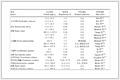
We commenced our investigation on the reaction with N, N-dimethyl enaminone 1a and gem-difluorocyclopropene 2a in DCE in the presence of H2O at 110 ℃ under a N2 atmosphere by using [Cp*RhCl2]2 (Cp* = pentamethylcyclopentadienyl) as a catalyst, AgSbF6 and HOAc as additives, and Cu(OAc)2 as an oxidant (Table 1, entry 1). An initial attempt gave desired product 3a in 20% yield. Other catalysts commonly used in C(sp2)—H activation reactions, such as [Cp*Rh(CH3CN)3](SbF6)2, [RuCl2(p-cymene)]2, [Cp*Co(CO)I2], Cp*Rh(OAc)2 and [Cp*IrCl2]2, were screened in this catalytic system (entries 2−6). The results indicated that the former demonstrated a higher catalytic ability, enhancing the yield to 43% (entry 2); in sharp contrast, the latter four completely inhibited the reaction process, and no desired product was observed. Taking [Cp*Rh(CH3CN)3](SbF6)2 as the catalyst, other reaction parameters, including the additive, oxidant, solvent and reaction temperature, were investigated to further improve the efficiency of this transformation. Exchanging HOAc for 1-adamantanecarboxylic acid (1-AdCO2H) or pivalic acid (HOPiv) could drive this reaction but lowered the yield of 3a (entries 7 and 8). When using CsOAc or Na2CO3 as the base, this reaction did not proceed (entries 9 and 10), showing that the acids as additives are beneficial for this transformation whereas the bases suppressed this reaction process. Next, different oxidants, namely AgOAc, tert-butyl hydroperoxide (TBHP), O2, Ag2CO3, and Ag2O, were tested (entries 11–15): the former three displayed poor oxidative performances, and their use in fact dramatically suppressed the formation of 3a (entries 11–13); in contrast, and to our delight, the latter two oxidants drove this reaction to work more efficiently, delivering higher yields of 3a (entries 14 and 15), compared with Cu(OAc)2—and of these two oxidants, Ag2CO3 proved to be a better choice for this domino process (79%, entry 14). After that, the yields of product 3a associated with [Cp*Rh(CH3CN)3](SbF6)2 in the presence of HOAc and Ag2CO3 in several other aprotic solvents were summarized as follows (entries 16–22): dichloromethane (DCM, 83%), CHCl3 (9%), xylene (34%), orthodichlorobenzene (ODCB, 47%), 1, 4-dioxane (51%), 2, 2, 2-trifluoroethanol (TFE, 0%), and ethyl acetate (EA, 34%), among which DCM gave a higher yield than other solvents (entry 16). Reducing the reaction temperature led to an incomplete consumption of starting materials, lowering the yield to 51% (entry 23). Without HOAc or H2O, the yield of 3a severely declined to 29% and 57% respectively (entries 24 and 25), showing that additional water is necessary for this transformation. The reaction did not proceed in the absence of the Rh catalyst (entry 26). Moreover, N, N-diethyl (1ab) and pyrrolidin-1-yl (1ac) enaminones were chosen to examine the effect of substituents linked by nitrogen atoms on the efficiency of the transformation. The results revealed that the target compound 3a could be generated, but with decreased yields (entries 27 and 28).
|
Table 1 Optimization of reaction conditions.a |


With the optimized reaction conditions in hand, we set out to examine the scope and limitations of this Rh(Ⅲ)-catalyzed annulation by exploiting a variety of N, N-dimethyl enaminones with gem-difluorocyclopropenes. As shown in Scheme 2, first, the effect of changing the electronic properties and positions of substituents in the arene ring of gem-difluorocyclopropenes was investigated by repeatedly reacting with substrate 1a. Both electron-donating (methyl 2b-2d, tert-butyl 2e, methoxy 2f, and phenyl 2g) and electron-withdrawing (fluoro 2h, chloro 2i-2k) groups located at various positions (ortho, meta, or para) of the phenyl ring were compatible with the standard conditions, furnishing corresponding products 3b-3k in 64%–79% yields. Of these functional groups, the more sterically demanding o-chloro and o-methyl substituents were examined to prove the compatibility of this transformation with high efficiency. Besides, 2-naphthyl-substituted gem-difluorocyclopropene 2l was also feasible, giving desired naphtho[2, 1-b]furan-2(3aH)-one 3l in 71% yield. Then, the scope of enaminones was also investigated in this annulation. In detail, various commonly encountered substituents at the 4-positions of the arene ring, such as electronically rich (methyl 1b, tert-butyl 1c and methoxy 1d) and poor (phenyl 1e, fluoro 1f, chloro 1g, bromo 1h, nitro 1i, trifluoromethyl 1j), could successfully participate in the annulation, producing the corresponding naphtho[2, 1-b]furan-2(3aH)-ones 3m-3u in 66%–81% yields. Even challenging cases where the nitro and trifluoromethyl functionalities are strongly electronically deficient groups at the 4-position were functional for this catalytic protocol, providing products 3t and 3u in 71% and 76% yields, respectively. When introducing a methyl group into the meta-position of the phenyl ring, substrate 1k underwent a regioselective process to access product 3v, in which C(sp2)—H activation occurred at the less hindered position. In contrast, substrate 1l bearing a meta-methoxy group afforded two inseparable regioisomers 3w and 3w' with a 5:1 ratio in 72% total yield. Moreover, substrate 1m possessing ortho-fluoro-substituent was also accommodated, producing desired compound 3x in 57% yield. However, ortho-methyl-substituted counterpart 1n was not converted into the target 3y, probably due to its large steric hindrance. Alternatively, disubstituted enaminones 1o and 1p also proved to be applicable, orienting complete regioselectivity to furnish products 3z and 3aa in 69% and 66% yields, respectively. In the cases of 3r and 3u, their structures were unambiguously determined by X-ray diffraction analysis (CCDC 2264586 and 2264559, see Supporting information).

|
Download:
|
| Scheme 2. Substrate scope for the synthesis of products 3. Reaction conditions: 1 (0.1 mmol), 2 (0.12 mmol), H2O (0.5 mmol), [Cp*Rh(MeCN)3](SbF6)2 (10 mol%), HOAc (0.1 mmol) and Ag2CO3 (0.30 mmol) in DCM (1.0 mL) for 24 h, at 110 ℃ under N2 atmosphere, isolated yield. | |

To showcase the potential application of this bicyclization protocol, the scale-up synthesis and derivatization reactions were performed (Scheme 3). The reaction proceeded efficiently on a 7.0 mmol scale of 1a, albeit with a slightly decreased yield (63%, Scheme 3a). Furthermore, by utilizing the bromo handles, Sonogashira coupling reaction was elaborated with 4a yield of product 4 (Scheme 3b). Next, nitro reduction of 3t in the presence of Fe and NH4Cl and the subsequent sulfonylation of TsCl afforded product 5 in 41% yield (Scheme 3c).

|
Download:
|
| Scheme 3. Scale-up synthesis and application. | |

Further investigations were then performed to gain more insight into the mechanism of this transformation (Scheme 4). First, in the H/D exchange study, without 2a, the reaction of 1a in CH3CO2D under standard reaction conditions gave 53% deuteration at the ortho-positions of aryl enaminone 1a and 48% deuteration at the N-linked C(sp2)—H bond through three different five-membered rhoda-cycles (Scheme 4a), revealing that C—H bond activation was a reversible process. Subsequently, a deuterium labelling experiment was conducted to display a significant kinetic isotope effect (KIE, KIE = 2.4) in an intermolecular competitive coupling of an equimolar mixture of 1a and [D]-1a with 2a (Scheme 4b), demonstrating that C—H bond cleavage may be the rate-determining step. To confirm the two oxygen sources from the ester, H218O was subjected to the reaction of 1a with 2a under standard conditions, and product 3a incorporating 18O atom was observed by HRMS (Scheme 4c), supporting that for the ester group, one oxygen atom comes from water and the other comes from intramolecular transfer of enaminone. Moreover, intermediate 6 could be detected by HRMS analysis when the reaction was performed for 8 min under standard conditions (Scheme 4d). To understand the reactivity of N, N-dimethyl enaminones and gem-difluorocyclopropenes, two intermolecular competitive reactions were performed (Scheme 4e), revealing that enaminone with an electronically rich group to access the targets was strongly favored over an electronically poor group and that electron-rich gem-difluorocyclopropenes proceed with the required coordination and carbometallation more easily.

|
Download:
|
| Scheme 4. Mechanistic studies. | |

Based on literature survey [26-42,46,51-56] and the above experimental observations, a plausible mechanism for this double annulation is outlined in Scheme 5. Initially, a five-membered rhoda-cycle A is formed by C−H bond activation with enaminone 1 via a similar concerted metalation–deprotonation (CMD) pathway. Rhoda-cycle A regioselectively inserts into gem-difluorocyclopropene 2 to deliver intermediate B, followed by nucleophilic addition to generate fused gem-difluorocyclopropane C. Subsequent defluorinated ring-opening of C yields fused oxirane D, which undergoes a nucleophilic ring-opening progress to form intermediate E. Next, ligand exchanges of E with HOAc release intermediate F and regenerate catalytically active [Rh] species for the next catalytic cycle. Intramolecular nucleophilic addition between the hydroxyl group and imine cation gives intermediate G, which loses a proton to generate intermediate 6 (detected by HRMS). Oxidation of intermediate 6 by Ag2CO3 and the following hydrolysis with water occur, giving desired product 3.

|
Download:
|
| Scheme 5. Proposed mechanism for forming product 3. | |

In conclusion, we developed a novel Rh(Ⅲ)-catalyzed C—H activation-initiated [3 + 3]/[3 + 1 + 1] transdiannulation starting from enaminones and gem-difluorocyclopropenes, enabling a regioselective oxygen transfer pathway to form a wide range of ring-fluorinated tricyclic γ-lactones in good yields. This protocol holds a broad substrate scope, good functional group tolerance, and high regioselectivity as well as bond-forming/annulation efficiency, which affords a conceptually new synthetic strategy capable of the integration of C—H activation with fluorine chemistry and opens a new avenue to study the transformations of enaminones. Further investigation and application of these fluorinated polycyclic-fused γ-lactones is underway in our laboratory.
Declaration of competing interestThe authors declare that they have no known competing financial interests or personal relationships that could have appeared to influence the work reported in this paper.
AcknowledgmentsWe are grateful for the financial support from the school-level research projects of Yancheng Institute of Technology (No. xjr2020044) and the National Natural Science Foundation of China (Nos. 22101152, 22271123 and 21971090).
Supplementary materialsSupplementary material associated with this article can be found, in the online version, at doi:10.1016/j.cclet.2024.109494.
| [1] |
Y. Chen, S. Yu, Y. He, et al., Chem. Sci. 12 (2021) 3216-3225. DOI:10.1021/acs.orglett.1c00969 |
| [2] |
Y. Xue, G. Dong, Acc. Chem. Res. 55 (2022) 2341-2354. DOI:10.1021/acs.accounts.2c00400 |
| [3] |
C. Zhang, Y. He, G. An, Org. Chem. Front. 10 (2023) 2318-2323. DOI:10.1039/d2qo01985j |
| [4] |
Y. Taskesenligil, M. Aslan, T. Cogurcu, et al., J. Org. Chem. 88 (2023) 1299-1318. DOI:10.1021/acs.joc.2c00716 |
| [5] |
L. Min, L.P. Zhong, C.C. Li, Acc. Chem. Res. 56 (2023) 2378-2390. DOI:10.1021/acs.accounts.3c00350 |
| [6] |
J.Y. Wang, W.J. Hao, S.J. Tu, et al., Chin. J. Chem. 40 (2022) 1224-1242. DOI:10.1002/cjoc.202100856 |
| [7] |
G. Song, X. Li, Acc. Chem. Res. 48 (2015) 1007-1020. DOI:10.1021/acs.accounts.5b00077 |
| [8] |
Y.D. Yang, K.Z. Li, Y.Y. Cheng, et al., Chem. Commun. 52 (2016) 2872-2884. DOI:10.1039/C5CC09180B |
| [9] |
P. Gandeepan, T. Müller, D. Zell, et al., Chem. Rev. 119 (2019) 2192-2452. DOI:10.1021/acs.chemrev.8b00507 |
| [10] |
Y. Nishii, M. Miura, ACS Catal. 10 (2020) 9747-9757. DOI:10.1021/acscatal.0c02972 |
| [11] |
S. Rej, N. Chatani, Angew. Chem. Int. Ed. 58 (2019) 8304-8329. DOI:10.1002/anie.201808159 |
| [12] |
Y. Wu, C. Pi, Y. Wu, et al., Chem. Soc. Rev. 50 (2021) 3677-3689. DOI:10.1039/d0cs00966k |
| [13] |
J. Ren, Y. Huang, C. Pi, et al., Chin. Chem. Lett. 32 (2021) 2592-2596. DOI:10.1016/j.cclet.2021.02.061 |
| [14] |
M.-Z. Lu, J. Goh, M. Maraswami, et al., Chem. Rev. 122 (2022) 17479-17646. DOI:10.1021/acs.chemrev.2c00032 |
| [15] |
F. Wang, L. Jin, L. Kong, et al., Org. Lett. 19 (2017) 1812-1815. DOI:10.1021/acs.orglett.7b00583 |
| [16] |
P. Shi, L. Wang, K. Chen, et al., Org. Lett. 19 (2017) 2418-2421. DOI:10.1021/acs.orglett.7b00968 |
| [17] |
C. Song, C. Yang, H. Zeng, et al., Org. Lett. 20 (2018) 3819-3823. DOI:10.1021/acs.orglett.8b01406 |
| [18] |
J. Huang, F. Yu, Synthesis 53 (2021) 587-610. DOI:10.1055/s-0040-1707328 |
| [19] |
N. Liu, X. Cuan, H. Li, et al., Chin. J. Org. Chem. 43 (2023) 602-621. DOI:10.6023/cjoc202207027 |
| [20] |
D. Chen, C. Wan, Y. Liu, et al., J. Org. Chem. 88 (2023) 4833-4838. DOI:10.1021/acs.joc.3c00019 |
| [21] |
D. Chen, L. Zhou, C. Wen, et al., J. Org. Chem. 88 (2023) 8619-8627. DOI:10.1021/acs.joc.3c00526 |
| [22] |
L. Huang, Y. Liu, J. Wan, Chin. J. Org. Chem. 43 (2023) 2096-2103. DOI:10.6023/cjoc202212002 |
| [23] |
W. Fan, Chin. J. Org. Chem. 43 (2023) 2492-2498. DOI:10.6023/cjoc202212025 |
| [24] |
Z. Chai, L. Chen, Z. Liu, et al., Adv. Synth. Catal. 365 (2023) 1217-1223. DOI:10.1002/adsc.202300088 |
| [25] |
Y. Han, L. Zhou, C. Wang, Chin. Chem. Lett. 35 (2024) 108977. DOI:10.1016/j.cclet.2023.108977 |
| [26] |
S. Zhou, J. Wang, L. Wang, et al., Angew. Chem. Int. Ed. 55 (2016) 9384-9388. DOI:10.1002/anie.201603943 |
| [27] |
Y. Zhao, Q. Zheng, C. Yu, et al., Org. Chem. Front. 5 (2018) 2875-2879. DOI:10.1039/c8qo00759d |
| [28] |
S. Zhou, B.W. Yan, S.X. Fan, et al., Org. Lett. 20 (2018) 3975-3979. DOI:10.1021/acs.orglett.8b01540 |
| [29] |
B. Qi, S. Guo, W. Zhang, et al., Org. Lett. 20 (2018) 3996-3999. DOI:10.1021/acs.orglett.8b01563 |
| [30] |
G. Liang, J. Rong, W. Sun, et al., Org. Lett. 20 (2018) 7326-7331. DOI:10.1021/acs.orglett.8b03284 |
| [31] |
Z. Wang, H. Xu, Tetrahedron Lett. 60 (2019) 664-667. DOI:10.1016/j.tetlet.2019.01.051 |
| [32] |
Z. Jiang, J. Zhou, H. Zhu, et al., Org. Lett. 23 (2021) 4406-4410. DOI:10.1021/acs.orglett.1c01341 |
| [33] |
W. Wu, X. Wu, S. Fan, et al., Org. Lett. 24 (2022) 7850-7855. DOI:10.1021/acs.orglett.2c03288 |
| [34] |
Z. Yang, C. Liu, J. Lei, et al., Chem. Commun. 58 (2022) 13483-13486. DOI:10.1039/d2cc05899e |
| [35] |
M. Liu, K. Yan, J. Wen, et al., Adv. Synth. Catal. 364 (2022) 512-517. DOI:10.1002/adsc.202101181 |
| [36] |
A. Nagireddy, R. Dattatri, J.B. Kotipalli, et al., J. Org. Chem. 87 (2022) 1240-1248. DOI:10.1021/acs.joc.1c02575 |
| [37] |
V. Suresh, M.N. Kumar, A. Nagireddy, et al., Adv. Synth. Catal. 365 (2023) 1770-1776. DOI:10.1002/adsc.202300131 |
| [38] |
C. Yang, X. Zhang, X. Fan, Org. Chem. Front. 10 (2023) 4282-4288. DOI:10.1039/d3qo00939d |
| [39] |
M. Zhang, L. Chen, D. Liu, et al., New J. Chem. 47 (2023) 12274-12278. DOI:10.1039/d3nj02073h |
| [40] |
Q.-C. Gao, Y.-F. Li, J. Xuan, et al., Beilstein J. Org. Chem. 19 (2023) 100-106. DOI:10.3762/bjoc.19.10 |
| [41] |
Q. Wang, Y. Li, J. Sun, et al., J. Org. Chem. 88 (2023) 5348-5358. DOI:10.1021/acs.joc.2c02898 |
| [42] |
W. Wu, S. Fan, X. Wu, et al., J. Org. Chem. 88 (2023) 1945-1962. DOI:10.1021/acs.joc.2c01934 |
| [43] |
Q. Li, Y. Wang, B. Li, et al., Org. Lett. 20 (2018) 7884-7887. DOI:10.1021/acs.orglett.8b03438 |
| [44] |
Q. Li, B. Li, B. Wang, Chem. Commun. 54 (2018) 9147-9150. DOI:10.1039/c8cc04428g |
| [45] |
Q. Li, X. Yuan, B. Li, et al., Chem. Commun. 56 (2020) 1835-1838. DOI:10.1039/c9cc09621c |
| [46] |
Q. Li, K. Yan, Y. Zhu, et al., Chin. Chem. Lett. 34 (2023) 108014-108017. DOI:10.1016/j.cclet.2022.108014 |
| [47] |
P. Foley, N. Eghbali, P.T. Anastas, J. Nat. Prod. 73 (2010) 811-813. DOI:10.1021/np900667h |
| [48] |
K. Tianpanich, S. Prachya, S. Wiyakrutta, et al., J. Nat. Prod. 74 (2011) 79-81. DOI:10.1021/np1003752 |
| [49] |
G. Naresh, R. Kant, T. Narender, Org. Lett. 17 (2015) 3446-3449. DOI:10.1021/acs.orglett.5b01477 |
| [50] |
R. Cai, Y. Wu, S. Chen, et al., J. Nat. Prod. 81 (2018) 1376-1383. DOI:10.1021/acs.jnatprod.7b01018 |
| [51] |
M. Bai, C.J. Zheng, G.L. Huang, et al., J. Nat. Prod. 82 (2019) 1155-1164. DOI:10.1021/acs.jnatprod.8b00866 |
| [52] |
H. Xu, W. Chen, M. Bian, et al., ACS Catal. 11 (2021) 14694-14701. DOI:10.1021/acscatal.1c04508 |
| [53] |
Y. He, L. Tian, X. Chang, et al., Chin. Chem. Lett. 33 (2022) 2987-2992. DOI:10.1016/j.cclet.2022.01.068 |
| [54] |
M. Shen, H Li, X. Zhang, et al., Org. Chem. Front. 9 (2022) 5976-5982. DOI:10.1039/d2qo01230h |
| [55] |
J. Sun, K. Wang, P. Wang, et al., Org. Lett. 21 (2019) 4662-4666. DOI:10.1021/acs.orglett.9b01553 |
| [56] |
X. Li, L. Hu, S. Ma, et al., ACS Catal. 13 (2023) 4873-4881. DOI:10.1021/acscatal.3c00063 |