 2024, Vol. 35


b College of Chemistry and Chemical Engineering, Jiangxi Normal University, Nanchang 330022, China;
c Engineering Center of Catalysis and Synthesis for Chiral Molecules, Department of Chemistry, Fudan University, Shanghai 200433, China;
d Shanghai Engineering Center of Industrial Asymmetric Catalysis for Chiral Drugs, Shanghai 200433, China
Over the last decades, hexahydropyrrolo[2,3-b]indoles (HPIs)/tetrahydrofuroindolines (TFIs), as representative indoline alkaloids, possessing the fused pentacyclic skeleton have attracted significant attention from the synthetic community [1–11] due to their family of biologically active natural products displaying the remarkable structural diversity (e.g., acetylardeemin, psychotriasine, WIN 64821, WIN 64745, chimonanthine, physovenine, madindoline A, etc.) [12–20] and encompassing clinically important pharmaceutical molecules (physostigmine is clinically utilized for the treatment of myasthenia gravis, glaucoma, and Alzheimer's disease) (Fig, 1) [21,22]. Furthermore, 3a-bromo-substituted pyrroloindolines/furoindolines are significant and versatile building blocks to readily access a library of HPI and TFI alkaloids, in which the C–Br bond can be facilely transformed to a new C–C, C–N or C–O bond via a substitution process with retention of configuration [23–46]. The cyclization reaction is regarded as one of the most practical methods to produce structural diverse N-heterocycle derivates [47–53], therefore bromocyclization is an attractive way to construct 3a-bromo substituted pyrroloindinolines/furolinolines. As a result, tremendous efforts have been devoted to the construction of these scaffolds in the past decades (Scheme 1A). Among them, the classical approach has utilized excessive amount of the highly sensitive and active bromine to construct these frameworks [27–29]. Moreover, many remarkable methodologies have employed stoichiometric electrophilic bromo reagents (PyHBr3 [30], NBS [31–42], DBDMH [43], NBAc [44], and DABCO-derived bromine salts [45]) to approach both chiral and achiral derivatives, while the organic waste would be produced (Scheme 1A, Path Ⅰ). In addition, the in-situ generated electrophilic bromide assisted by the combination of bromo salts and extra oxidants would be successfully involved to the efficient bromocyclization (Scheme 1A, Path Ⅱ) [54–57]. In this matter, Tong and co-workers have developed an oxone-mediated procedure, in which the organic waste could be eliminated, while the formation of less environmentally polluting salt (K2SO4) is inevitable [48]. Recently, the electrochemical bromocyclization has been well-off for the establishment of 3a-bromopyrroloindolines and 3a-bromofuranoindolines along with the production of stoichiometric inorganic residues [58,59]. Though numerous methods have been applied to fabricate these units in high-efficiency, the development of more concise and efficient, greener, and milder methodologies to achieve these exquisite entities remains highly desired and sought-after [60,61].

|
Download:
|
| Fig. 1. Significant indole alkaloids bearing an HPI or TFI core. | |

|
Download:
|
| Scheme 1. From inspiration to access economic and green bromocyclization of tryptamine/tryptophol scaffolds. | |
Hydrobromic acid (HBr) is the readily available and least expensive bromine source (Scheme 1B), which serves as a potential electrophilic bromine reagent [62–64]. Theoretically, HBr can be oxidized to Br2 [E0(Br2/Br−) = +1.07 V vs. standard hydrogen electrode (SHE)] under the oxygen atmosphere [E0(O2/H2O) = +1.23 V vs. SHE] along with water as the single by-product (Scheme 1C, Left) [65], however, a relatively slow reaction rate is displayed due to an activation barrier of 14 kJ/mol [66]. Therefore, enhancement of the reaction rate would achieve a concise, efficient, and green route to access bromocyclization. The key to success of the protocol lies in employment of a matching medium to bridge the gap between O2 activation and HBr reoxidation. Naturally, there are numerous nitrogen oxides and related salts possessing oxidability and the potential to be an activator [67–74]. Notably, the facilely available nitrite salt, such as NaNO2 and KNO2, possesses the unique redox feature that can release nitric oxide (NO) under acidic conditions [69–74]. Mechanistically, the in situ-generated NO can be oxidized by O2 to access nitrogen dioxide (NO2), which re-oxidizes HBr to Br2 with a controllable manner. In addition, HNO3 formed by dissolving NO2 in water can oxidize HBr to Br2 as well. Therefore, the nitrite-catalyzed oxidation can achieve an appropriate rate to release Br2, resulting in the mild brominating reaction. In the whole process, the major by-product is water (Scheme 1C, right).
Herein, we have developed a nitrite-catalyzed economic, sustainable and scalable bromocyclization of tryptamine/tryptophol derivates to successfully approach the valuable HPI/TFI scaffolds under both bath and flow conditions with high efficiency, in which water is generated as the byproduct (Scheme 1D). Notably, an aerobic bromocyclization and subsequent aromatic bromination cascade transformations have also been facilely established to access dibrominated HPIs and TFIs. These unique analogues could be smoothly applied to achieve total synthesis of pharmaceuticals and natural products.
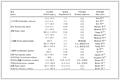
We started our optimization with the bromocyclization of tryptamine 1a to give 3-bromohexahydropyrrolo[2,3-b]indole 3a in the presence of HBr (48 wt% in H2O) as bromine source, NaNO2 as catalyst, O2 as oxidant, and dichloromethane as solvent. To our delight, the product 2a could be obtained in yield of 23% at room temperature (Table 1, entry 1). Solvents were subsequently examined, and ethyl acetate was the optimized solvent leading to access the desired product in 90% yield (Table 1, entries 1-6). Notably, the nitrite salt screening process demonstrated that KNO2 was the best promoter to achieve the highest reactivity and obtain the desired entity 2a in 93% yield (Table 1, entry 7). Moreover, the efficiency of this transformation was insusceptible under air atmosphere (Table 1, entry 8). The catalyst loading screening was shown that decreasing the equivalent amount of KNO2 to 5 mol% would decrease the yield of the product 2a to 85% (Table 1, entry 9). The controlled experiments were then carried out and proved that nitrite salt and O2 were essential (Table 1, entries 10 and 11). When the solution of HBr in acetic acid was instead of aqueous HBr as bromine source, the desired product 2a was obtained in trace amount (Table 1, entry 12). It might be that water can serve as both the reagent and cosolvent for nitrite salt.
|
Table 1 Optimization of reaction conditions.a |


With the optimized conditions in hand, we examined the scope of this KNO2-catalyzed economic and green bromocyclization (Scheme 2). A range of tryptamine derivatives bearing carbamate, acyl, or sulfonyl protecting groups on both nitrogen atoms were smoothly employed to the transformation, leading to access the corresponding HPIs (2a–2k) in excellent yields (80%–94%). Next, 2-methyl or phenyl substituted tryptamines were excellent substrates for the bromocyclization to obtain the desired products (2l–2n) in high efficiencies. The indole rings substituted with alkyl, halogeno, and alkoxy on the 4-, 5-, 6-, or 7-position could be successfully and efficiently transformed to the counterparts (2o-2w). Moreover, 7-benzyloxy substituted scaffold could simultaneously underwent an electrophilic bromination and a bromocyclization cascade, resulting in generation of the desired HPI 2x in 53% yield. Significantly, the tryptophan derivatives were well tolerant of this transformation, in which the related products 2y-2z could be formed in high yields with excellent diastereoselectivities (dr = 12:1). This process exhibited the highly potential application to access optically pure nature products and pharmaceuticals. To further expand the substrate scope, we subsequently utilized tryptophol analogues in the oxidative bromocyclization and found that they also possessed high compatibilities to afford TFIs 2aa–2ai in high yields under oxygen atmosphere. Inspired by the formation of dibromosubstituted product 2x, we next explored and achieved the cascade reaction of bromocyclization and aromatic bromination (For details, please see the P12 of Supporting information). A series of tryptamine derivatives containing substituents of carbamate, acyl, or sulfonyl on both nitrogen atoms were well compatible with the procedure, leading to access the related dibromosubstituted HPIs (3a–3f) in good yields. Moreover, the dibromosubstituted TFIs (2ag, 3g-3k) could be facilely obtained in this process.

|
Download:
|
| Scheme 2. Substrate scope for controllable bromocyclization of tryptamine and tryptophol derivatives. a Standard conditions A: 1 (0.2 mmol, 1 equiv.), aq. HBr (0.24 mmol, 1.2 equiv.), and KNO2 (0.02 mmol, 10 mol%) were stirred in EtOAc (2 mL) at r.t. for 3 h under air atmosphere. b Isolated yields. c The dr value was determined by 1H NMR analysis. d NaNO2 (0.02 mmol, 10 mol%) was instead of KNO2 (0.02 mmol, 10 mol%). e Standard conditions B: 1 (0.2 mmol, 1 equiv.), aq. HBr (0.24 mmol, 1.2 equiv.), and NaNO2 (0.02 mmol, 10 mol%) were stirred in MeCN (2 mL) at r.t. for 8 h under O2 atmosphere. f KNO2 (0.02 mmol, 10 mol%) was instead of NaNO2 (0.02 mmol, 10 mol%). g Standard conditions C: 1 (0.2 mmol, 1 equiv.), aq. HBr (0.72 mmol, 3.6 equiv.), and KNO2 (0.04 mmol, 20 mol%) were stirred in MeCN (2 mL) at r.t. for 10-15 h under O2 atmosphere. h NaNO2 (0.04 mmol, 20 mol%) was instead of KNO2 (0.04 mmol, 20 mol%). | |

To further evaluate the potential environmental impact of our developed nitrite-catalyzed transformation with the most efficient or green method, we analyzed four major green chemistry metrics: E-factor [75,76], atom economy (AE) [77], reaction mass efficiency (RME) [78] and process mass intensity (PMI) (For details, please see the PS29 of Supporting information) [79]. A lower value of E-factor (ideal: 0.00) [75,76] and PMI (ideal: 1.00) [79] demonstrates that less waste is formed or less total mass of substrates is required per mass of the related product, while a higher value of AE (ideal: 100%) [77] and RME (ideal: 100%) [78] means better resource and atom efficiency. The compound 2b as a representative example was chose to calculate these metrics (Fig. 2a). The E-factor was 0.54 for the NBS-involved bromocyclization [34], 0.49 for the MgBr2-promoted electrochemical bromocyclization process [51], 1.85 for the oxone-mediated system [48], and 0.22 for our system, which indicated our reaction system generated the lowest waste. Similarly, the PMI values (NBS: 1.54, MgBr2: 1.49, Oxone: 2.85, KNO2/HBr: 1.22) suggested a highest mass reduction of materials for our developed method in the bromocyclization reaction system. Moreover, the values of AE (96%) and RME (84%) were highest in these transformations demonstrated our new protocol was the best efficient among all the procedures. Notably, 96% AE value of our nitrite-catalyzed strategy was almost approaching the ideal green chemistry. The value of these four green chemistry metrics was tabulated in Fig. 2a, which clearly indicated our developed process was both an efficient and environmental-friendly transformation that approached the ideality of green chemistry (Fig. 2b). Additionally, the generated waste of the NBS system was the toxic organic byproduct, while the waste formed from the oxone–KBr procedure was non-hazardous inorganic salt. Therefore, the MgBr system was the second but far greener than the oxone–KBr, and NBS protocols.

|
Download:
|
| Fig. 2. Green chemistry metrics analysis for bromocyclization of tryptamine 2b. | |

To demonstrate the practicability of our established method, the concise gram-scale operation and further transformation were smoothly performed (Scheme 3). Firstly, 1.14 g of HPI compound 2a (86% yield) could be successfully obtained under standard conditions A; meanwhile, TFI 2ab was also formed in 75% yield under standard conditions B. Furthermore, the gram-scale operation of bromocyclization and subsequent aromatic bromination cascade reaction occurred for the formation of the dibromo-substituted derivative 3a (1.82 g) in 75% yield. Notably, the solvolytic substitution of bromine with acetate afforded 4a in 81% yield upon heating a solution of 3a in AcOH at reflux with the assistance of AgOAc [80].

|
Download:
|
| Scheme 3. The gram-scale operation and further transformation. | |

The recently emerging continuous flow technology features higher safety and efficiency, accurate control, better heat and mass transfer, easier amplification and better sustainability [81–90]. Thus, we also explored the application of this protocol under continuous flow conditions: water was used as the cosolvent to promise a good solubility of KNO2, by contrast with 8-h reaction time in batch, better mixing efficiency in microreactor led to the full conversion in 26 min, delivering the desired product in 80% yield (Scheme 4; for details, please see the PS32 of Supporting information). This result implied that this economic and sustainable bromocyclization could be a powerful tool for the synthesis of valuable HPI/TFI building block for organic synthesis and drug discovery.

|
Download:
|
| Scheme 4. Gram-scale synthesis of 2f under continuous flow conditions. | |

To further highlight the utility of our new green strategy for the oxidative bromocyclization, we commenced the formal total synthesis of some representative pharmaceuticals and natural products of (-)-physostigmine, (-)-psychotriasine, WIN 64821 and WIN 64745, respectively (Scheme 5). Our synthetic procedure to access (-)-physostigmine began with the N-Boc protections of the commercially available l-tryptophan methyl ester 5 to obtain 1y. The oxidative bromocyclization of 1y utilizing our new developed protocol leaded to approach the tricyclic HPI 2y (1.19 g) in 80% yield with high diastereoselectivity (12:1 dr). In this process, a 12:1 mixture of diastereomers were facilely isolated by column chromatography. A cyclopropylazetoindoline formation proceeded smoothly to give the structure 6 in the presence of KOtBu, followed by a strain release process to access 7 by using AlMe3 as nucleophile. The formation of 7 intercepted an intermediate used in the construction of (-)-physostigmine [24]. The synthetic route of (-)-psychotriasine was also investigated through our approach, in which l-tryptophan methyl ester 5 was subjected to N-protection processes and transformed to the product 8. Our new established gram-scale bromocyclization was then occurred to generate substituted HPI 2aj in 76% yield with good diastereoselectivity (8.5:1 dr), followed by a substitution reaction to obtain the key intermediate 10 by using 9 as nucleophile. The interception of 10 was utilized to synthesize (-)-psychotriasine [91,92]. Furthermore, d-tryptophan methyl ester 5' was also employed to obtain the highly diastereoselective bromo-substituted HPI 2y'-1 followed by a reductive dimerization mediated by Ni-catalysis to afford the key dimeric hexahydropyrrolo[2,3-b]indole 11 that could be applied to synthesize WIN 64821 and WIN 64754 [32].

|
Download:
|
| Scheme 5. Formal total syntheses of pharmaceuticals and natural products. | |

A plausible mechanism is depicted in Scheme 6. Initially, NO2− can be transformed to NO under acidic conditions. The oxidation of in situ-generated NO using O2 can smoothly access NO2, which re-oxidizes HBr to Br2 with a controllable manner. Meanwhile, HNO3 generated by dissolving NO2 in water can also promote the oxidation of HBr to Br2. Subsequently, the 3a-bromo-substituted pyrroloindoline/furoindoline 1 can react with the in situ-released Br2 to obtain the recycled HBr and a bromonium ion intermediate TS-1, leading to successful access the product 2. Furthermore, the dibromosubstituted product 3 can be generated undergoing an electrophilic substitution of Br2 to 2, in which intermediate TS-2 can be formed.

|
Download:
|
| Scheme 6. Proposed mechanism. | |

In conclusion, we have realized a highly efficient and concise bromocyclization of tryptamine/tryptophol derivates to access the valuable HPI/TFI scaffolds with economic, sustainable and scalable manners under both bath and flow conditions. Furthermore, a cascade transformation of bromocyclization and aromatic bromination was also successfully achieved to form dibrominated HPIs and TFIs. The gram-scale operation and further transformation were smoothly performed to access the significant scaffold. Notably, the efficiency and utility of this new protocol were also demonstrated by the formal total synthesis of cyclotryptamine alkaloids, such as (-)-psychotriasine, WIN 64821 and WIN 64745, and anticholinesterase agent (-)-physostigmine. The most striking feature of our protocol over all previous methods is that water generated from the reaction is the major waste. Further studies on development of more sustainable and economic transformations are ongoing and will be reported in due course.
Declaration of competing interestThe authors declare that they have no known competing financial interests or personal relationships that could have appeared to influence the work reported in this paper.
AcknowledgmentsThis work was supported by the National Natural Science Foundation of China (No. 22208302), and the Natural Science Foundation of Zhejiang Province of China (Nos. LQ21B020006, ZJ2022039).
Supplementary materialsSupplementary material associated with this article can be found, in the online version, at doi:10.1016/j.cclet.2023.109280.
| [1] |
J. Kim, M. Movassaghi, Acc. Chem. Res. 48 (2015) 1159. DOI:10.1021/ar500454v |
| [2] |
G.J. Mei, W.L. Koay, C.X.A. Tan, et al., Chem. Soc. Rev. 50 (2021) 5985-6012. DOI:10.1039/d0cs00530d |
| [3] |
R.H. Snell, R.L. Woodward, M.C. Willis, Angew. Chem. Int. Ed. 50 (2011) 9116-9119. DOI:10.1002/anie.201103864 |
| [4] |
H. Wang, S.E. Reisman, Angew. Chem. Int. Ed. 53 (2014) 6206-6210. DOI:10.1002/anie.201402571 |
| [5] |
Q. Li, T. Xia, L. Yao, et al., Chem. Sci. 6 (2015) 3599-3605. DOI:10.1039/C5SC00338E |
| [6] |
Z.X. Zhang, S.C. Chen, L. Jiao, Angew. Chem. Int. Ed. 55 (2016) 8090-8094. DOI:10.1002/anie.201602771 |
| [7] |
C. Liu, J.C. Yi, Z.B. Zheng, et al., Angew. Chem. Int. Ed. 55 (2016) 751-754. DOI:10.1002/anie.201508570 |
| [8] |
S.Z. Jiang, X.Y. Zeng, X. Liang, et al., Angew. Chem. Int. Ed. 55 (2016) 4044-4048. DOI:10.1002/anie.201511549 |
| [9] |
Y. Li, S. Zhu, J. Li, et al., J. Am. Chem. Soc. 138 (2016) 3982-3985. DOI:10.1021/jacs.6b00764 |
| [10] |
X. Zhang, B.N. Kakde, R. Guo, et al., Angew. Chem. Int. Ed. 58 (2019) 6053-6058. DOI:10.1002/anie.201901086 |
| [11] |
P. Zou, H. Yang, J. Wei, et al., Org. Lett. 23 (2021) 6836-6840. DOI:10.1021/acs.orglett.1c02393 |
| [12] |
U. Anthoni, C. Christophersen, P.H. Nielsen, Naturally Occurring Cyclotryptophans and Cyclotryptamines, in: S.W. Pelletier (Ed. ), Alkaloids: Chemical and Biological Perspectives, Pergamon, Oxford, 1999, pp. 163-236.
|
| [13] |
M. Hayashi, Y.P. Kim, S. Takamatsu, et al., J. Antibiot. 49 (1996) 1091-1095. DOI:10.7164/antibiotics.49.1091 |
| [14] |
G. Subramaniam, O. Hiraku, M. Hayashi, T. Koyano, et al., J. Nat. Prod. 70 (2007) 1783-1789. DOI:10.1021/np0703747 |
| [15] |
G. Subramaniam, T.S. Kam, Helv. Chim. Acta 91 (2008) 930-937. DOI:10.1002/hlca.200890098 |
| [16] |
W.L. Chan, X. Tang, F. Zhang, et al., Angew. Chem. Int. Ed. 58 (2019) 6260-6626. DOI:10.1002/anie.201900758 |
| [17] |
G.-J. Mei, X. Tang, Y. Tasdan, et al., Angew. Chem. Int. Ed. 59 (2020) 648-652. DOI:10.1002/anie.201911686 |
| [18] |
L. Bai, Y. Ma, X. Jiang, J. Am. Chem. Soc. 143 (2021) 20609-20615. DOI:10.1021/jacs.1c10498 |
| [19] |
M. Xu, M. You, Y. Su, et al., Org. Chem. Front. 10 (2023) 1521-1526. DOI:10.1039/d2qo01966c |
| [20] |
L. Bai, J. Li, X. Jiang, Chem 9 (2023) 483-496. DOI:10.1016/j.chempr.2022.10.021 |
| [21] |
A. Brossi, J. Med. Chem. 33 (1990) 2311-2319. DOI:10.1021/jm00171a001 |
| [22] |
Q.S. Yu, H.W. Holloway, T. Utsuki, et al., J. Med. Chem. 42 (1999) 1855-1861. DOI:10.1021/jm980459s |
| [23] |
M. Bruncko, D. Crich, R. Samy, J. Org. Chem. 59 (1994) 5543-5549. DOI:10.1021/jo00098a011 |
| [24] |
V.R. Espejo, X.B. Li, J.D. Rainier, J. Am. Chem. Soc. 132 (2010) 8282-8284. DOI:10.1021/ja103428y |
| [25] |
S.P. Lathrop, M. Pompeo, W.T.T. Chang, et al., J. Am. Chem. Soc. 138 (2016) 7763-7769. DOI:10.1021/jacs.6b04072 |
| [26] |
P. Lindovska, M. Movassaghi, J. Am. Chem. Soc. 139 (2017) 17590-17596. DOI:10.1021/jacs.7b09929 |
| [27] |
M. Movassaghi, M.A. Schmidt, J.A. Ashenhurst, Angew. Chem. Int. Ed. 47 (2008) 1485-1487. DOI:10.1002/anie.200704960 |
| [28] |
J. Kim, J.A. Ashenhurst, M. Movassaghi, Science 324 (2009) 238-241. DOI:10.1126/science.1170777 |
| [29] |
N. Boyer, M. Movassaghi, Chem. Sci. 3 (2012) 1798-1803. DOI:10.1039/c2sc20270k |
| [30] |
J. Kim, M. Movassaghi, J. Am. Chem. Soc. 133 (2011) 14940-14943. DOI:10.1021/ja206743v |
| [31] |
V.R. Espejo, J.D. Rainier, J. Am. Chem. Soc. 130 (2008) 12894-12895. DOI:10.1021/ja8061908 |
| [32] |
C. Pérez-Balado, Á.R. de Lera, Org. Lett. 10 (2008) 3701-3704. DOI:10.1021/ol8013073 |
| [33] |
C. Silva-López, C. Pérez-Valado, C. Rodríguez-Grana, et al., Org. Lett. 10 (2008) 77-80. DOI:10.1021/ol702732j |
| [34] |
T. Newhouse, C.A. Lewis, K.J. Eastman, et al., J. Am. Chem. Soc. 132 (2010) 7119-7137. DOI:10.1021/ja1009458 |
| [35] |
V.R. Espejo, J.D. Rainier, Org. Lett. 12 (2010) 2154-2157. DOI:10.1021/ol100672z |
| [36] |
L. Furst, J.M.R. Narayanam, C.R.J. Stephenson, Angew. Chem. Int. Ed. 50 (2011) 9655-9659. DOI:10.1002/anie.201103145 |
| [37] |
Y. Wang, C. Kong, Y. Du, et al., Org. Biomol. Chem. 10 (2012) 2793-2797. DOI:10.1039/c2ob00014h |
| [38] |
M. Wang, X. Feng, L. Cai, et al., Chem. Commun. 48 (2012) 4344-4346. DOI:10.1039/c2cc31025b |
| [39] |
Y. Sun, R. Li, W. Zhang, et al., Angew. Chem. Int. Ed. 52 (2013) 9201-9204. DOI:10.1002/anie.201303334 |
| [40] |
R.P. Loach, O.S. Fenton, M. Movassaghi, J. Am. Chem. Soc. 138 (2016) 1057-1064. DOI:10.1021/jacs.5b12392 |
| [41] |
H. Lei, L. Wang, Z. Xu, T. Ye, Org. Lett. 19 (2017) 5134-5137. DOI:10.1021/acs.orglett.7b02425 |
| [42] |
H. Hakamata, S. Sato, H. Ueda, et al., Org. Lett. 19 (2017) 5308-5311. DOI:10.1021/acs.orglett.7b02602 |
| [43] |
M. Movassaghi, M.A. Schmidt, Angew. Chem. Int. Ed. 46 (2007) 3725-3728. DOI:10.1002/anie.200700705 |
| [44] |
Q. Cai, Q. Yin, S.L. You, Asian J. Org. Chem. 3 (2014) 408-411. DOI:10.1002/ajoc.201300146 |
| [45] |
W. Xie, G. Jiang, H. Liu, et al., Angew. Chem. Int. Ed. 52 (2013) 12924-12927. DOI:10.1002/anie.201306774 |
| [46] |
X. Feng, G. Jiang, Z. Xia, et al., Org. Lett. 17 (2015) 4428-4431. DOI:10.1021/acs.orglett.5b02046 |
| [47] |
H.Y. Song, F. Xiao, J. Jiang, et al., Chin. Chem. Lett. 34 (2023) 108509. DOI:10.1016/j.cclet.2023.108509 |
| [48] |
Y.H. Lu, Z.T. Zhang, H.Y. Wu, et al., Chin. Chem. Lett. 34 (2023) 108036. DOI:10.1016/j.cclet.2022.108036 |
| [49] |
Y.H. Lu, C. Wu, J.C. Hou, et al., ACS Catal. 13 (2023) 13071-13076. DOI:10.1021/acscatal.3c02268 |
| [50] |
Y.H. Lu, S.Y. Mu, H.X. Li, et al., Green Chem. 25 (2023) 5539-5542. DOI:10.1039/d2gc04906f |
| [51] |
K.l. Wang, J. Huang, W. Liu, et al., Chin. J. Org. Chem. 42 (2022) 2527-2534. DOI:10.6023/cjoc202203055 |
| [52] |
Q.W. Gui, F. Teng, Z.C. Li, et al., Chin. Chem. Lett. 32 (2021) 1907-1910. DOI:10.1016/j.cclet.2021.01.021 |
| [53] |
Q.S. Liu, Y.F. Lv, R.S. Liu, et al., Chin. Chem. Lett. 32 (2021) 136-139. DOI:10.1016/j.cclet.2020.11.059 |
| [54] |
D. Tu, L. Ma, X. Tong, et al., Org. Lett. 14 (2012) 4830-4833. DOI:10.1021/ol302158h |
| [55] |
J. Xu, R. Tong, Green Chem 19 (2017) 2952-2956. DOI:10.1039/C7GC01341H |
| [56] |
G. Zhao, E. Wang, R. Tong, ACS Sustain. Chem. Eng. 9 (2021) 6118-6125. DOI:10.1021/acssuschemeng.1c01709 |
| [57] |
L. Song, Y. Zhou, H. Liang, et al., J. Org. Chem. 88 (2023) 504-512. DOI:10.1021/acs.joc.2c02496 |
| [58] |
J. Wu, H. Abou-Hamdan, R. Guillot, et al., Chem. Commun. 56 (2020) 1713-1716. DOI:10.1039/c9cc09276e |
| [59] |
Y.A. Wu, R.A. Wang, S.Y. Jiang, et al., Green Chem. 24 (2022) 6720-6726. DOI:10.1039/d2gc02086f |
| [60] |
Y. Kim, C. Li, Green Synth. Catal. 1 (2020) 1-11. DOI:10.1016/j.gresc.2020.06.002 |
| [61] |
H.J. Zhou, Y.P. Yao, T.H. Zhang, Green Chem. 25 (2023). DOI:10.1039/D3GC02429F |
| [62] |
S. Song, X. Sun, X. Li, et al., Org. Lett. 17 (2015) 2886-2889. DOI:10.1021/acs.orglett.5b00932 |
| [63] |
S. Song, X. Li, X. Sun, et al., Green Chem. 17 (2015) 3285-3289. DOI:10.1039/C5GC00528K |
| [64] |
S. Song, X. Huang, Y.F. Liang, et al., Green Chem. 17 (2015) 2727-2731. DOI:10.1039/C5GC00184F |
| [65] |
J. Rumble, CRC Handbook of Chemistry and Physics. 103rd Ed.. , CRC Press, 2022.
|
| [66] |
J. Phys. Chem. 92 (1988) 5530-5540. DOI:10.1021/j100330a039 |
| [67] |
Science 258 (1992) 1898-1902. DOI:10.1126/science.1281928 |
| [68] |
Chem. Rev. 102 (2002) 1091-1134. DOI:10.1021/cr000040l |
| [69] |
J. Am. Chem. Soc. 126 (2004) 4112-4113. DOI:10.1021/ja031765k |
| [70] |
Angew. Chem. Int. Ed. 48 (2009) 8424-8450. DOI:10.1002/anie.200901223 |
| [71] |
Green Chem. 11 (2009) 120-126. DOI:10.1039/B814989E |
| [72] |
Chem. Asian J. 5 (2010) 456-460. DOI:10.1002/asia.200900609 |
| [73] |
Chem. Commun. 53 (2017) 6565-6568. DOI:10.1039/C7CC02166F |
| [74] |
Org. Lett. 20 (2018) 5803-5807. DOI:10.1021/acs.orglett.8b02488 |
| [75] |
Green Chem. 9 (2007) 1273-1283. DOI:10.1039/b713736m |
| [76] |
Chem. Commun. 44 (2008) 3352-3365. DOI:10.1039/b803584a |
| [77] |
Angew. Chem. Int. Ed. 34 (1995) 259-281. DOI:10.1002/anie.199502591 |
| [78] |
Green Chem. 4 (2002) 521-527. DOI:10.1039/B206169B |
| [79] |
Org. Process Res. Dev. 15 (2011) 912-917. DOI:10.1021/op200097d |
| [80] |
Org. Lett. 7 (2005) 2563-2565. DOI:10.1021/ol050598l |
| [81] |
Chin. Chem. Lett. 26 (2015) 334-338. DOI:10.5325/style.49.3.0334 |
| [82] |
Angew. Chem. Int. Ed. 56 (2017) 13786. DOI:10.1002/anie.201708533 |
| [83] |
Green Chem. 22 (2020) 448-454. DOI:10.1039/c9gc03662h |
| [84] |
Chin. Chem. Lett. 31 (2020) 1448-1461. DOI:10.1016/j.cclet.2019.09.054 |
| [85] |
Science 369 (2020) 92-96. DOI:10.1126/science.abb4688 |
| [86] |
Green Synth. Catal. 1 (2020) 121-133. DOI:10.1016/j.gresc.2020.08.001 |
| [87] |
ACS Sustainable Chem. Eng. 9 (2021) 8990-9000. DOI:10.1021/acssuschemeng.1c01419 |
| [88] |
ACS Catal. 12 (2022) 9629-9637. DOI:10.1021/acscatal.2c02056 |
| [89] |
Green Synth. Catal. 3 (2022) 243-258. DOI:10.1016/j.gresc.2022.07.007 |
| [90] |
Chem. Sci. 14 (2023) 4351-4356. DOI:10.1039/d3sc00127j |
| [91] |
Org. Lett. 19 (2017) 5525-5528. DOI:10.1021/acs.orglett.7b02613 |
| [92] |
Tetrahedron Lett. 58 (2017) 210-212. DOI:10.1016/j.tetlet.2016.12.003 |