 2024, Vol. 35


b Programme in Emerging Infectious Diseases, Duke-NUS Medical School, Singapore 169857, Singapore
Corona Virus Disease 2019 (COVID-19) was discovered in humans in late 2019, caused by the virus named severe acute respiratory syndrome coronavirus 2 (SARS-CoV-2) [1]. The SARS-CoV-2 has been confirmed by the World Health Organization (WHO) as the third coronavirus to cause severe respiratory illness and death, in addition to the severe acute respiratory syndrome coronavirus (SARS-CoV) and the Middle East respiratory syndrome coronavirus (MERS-CoV) [2]. As of Dec. 16th, 2022, the COVID-19 pandemic has resulted in over 650 million infections and 6 million deaths globally, and the number of confirmed cases is still growing rapidly. In the early days of the pandemic, more severe cases of COVID-19 were associated with pneumonia, with other characterizations of fever, cough, and dyspnea [3]. The clinical presentation of later COVID-19 patients is similar to the symptoms of a common cold, mainly fever, headache, cough, fatigue as well sore throat, and smell or taste abnormalities [4]. COVID-19-infected patients have a long incubation period of up to 14 days and are difficult to detect during the incubation period. The disease is highly infectious and can be transmitted by direct human-to-human physical contact, and aerosol transmission. Furthermore, patients with COVID-19 have been shown to have asymptomatic infections or transmission [5]. Therefore, the development of high accuracy, real-time detection, and low-cost detection methods is the urgent need to curb COVID-19, so as to follow-up diagnosis and treatment [6].
SARS-CoV-2 is a single-stranded RNA virus with a diameter of 50–140 nm. The virus is characterized by spike glycoprotein (S), nucleocapsid protein (N), envelope protein (E), and membrane protein (M) [7]. These proteins are involved in virus pathogenesis, RNA encapsulation, protein assembly, and other processes [8]. SARS-CoV-2 enters host cells and is mediated by the interaction between the viral spike protein and its receptor angiotensin-converting enzyme 2, followed by virus-cell membrane fusion. The cytosolic serine protease TMPRSS2 activated the S protein and allows the fusion of the viral and cellular membranes [9,10]. Upon entry into target cells, the virus hijacked the host cell's machinery to produce its own genetic material and proteins, inhibiting protein synthesis in infected cells and rendering the human innate immune system inoperative [11]. The detection of the SARS-CoV-2 virus infection is usually judged by traditional clinical diagnosis or by detecting SARS-CoV-2 nucleic acids (RNA) or antigens such as S and N proteins. Currently, the common diagnostic methods of COVID-19 in the market mainly include chest computed tomography (CT) scanning and RNA detection based on quantitative real-time PCR (RT-qPCR), as well as the recent application of antigen-rapid-test (ART) [12], or reverse transcriptase loop-mediated amplification (RT-LAMP) was used to detect SARS-CoV-2 RNA. This method takes into account cost-effectiveness and detection time [13]. For CT scanning, general clinics and testing laboratories do not have CT scanning instruments, and CT scanning cannot distinguish viruses, that is, it cannot identify specific viruses. The RT-qPCR method has relatively long turnaround times (a few hours to a few days if the downstream sequencing is applied) and is prone to false negative when the mutations may affect the primer specificity. For ART, it has the shortest time of processing and the convenience of performing the self-test assay at home, the false negative rate is also very high [14]. Recently, researchers have developed a series of new methods for the detection of SARS-CoV-2, that is, using smartphone and other portable devices to complete the analysis of SARS-CoV-2, which provide many new ideas for gaging the SARS-CoV-2.
Since the emergence of smartphone in the last century, the proportion in the consumer market has increased year by year [15]. Initially, smartphone was mainly used for communication purposes. However, in recent years, with the continuous progress of smartphone-related technologies, the application of smartphone is becoming more and more widespread. Smartphone is small, portable, has excellent communication and data processing functions, and is easy to integrate with other sensors or hardware facilities, which makes them show significant advantages in medical detection, and can realize various detection functions that traditional instruments cannot achieve [16]. In addition, with the deepening of research on artificial intelligence (AI) algorithm, analysis methods based on the combination of smartphone and AI algorithm are widely used in medical detection. Compared with traditional analysis methods, the intelligent analysis of AI algorithm models can greatly improve the speed and accuracy of detection, and does not need to rely on additional huge detection tools, and has good adaptability to the detection environment. Additionally, AI-based modeling also holds the superiorities of prediction [17], automation self-monitoring, analyzing, reporting and problem-solving [18]. In the rapid spread period of the SARS-CoV-2, fast and simple data processing, feature learning, classification, association analysis, real-time and on-site detection are the actual demands and challenging tasks of COVID-19 detection, which AI-based smartphones just meet and solve real-world issues. Therefore, detection methods based on AI algorithm-assisted smartphones have gradually become effective tools for detecting SARS-CoV-2 worldwide.
The detection of COVID-19 has been a heavily researched topic in recent years and many studies have been reported to date. Cui et al. reviewed traditional methods for the detection of COVID-19, including PCR, colorimetry, chest CT scans, and fluorescence methods [6]. Moulahoum et al. discussed several potential techniques for diagnosing COVID-19, including portable PCR devices, on-site diagnostic platforms, and lateral flow [19]. However, these traditional detection methods need to rely on complex detection instruments and processes, which take a long time and require high operational technology. In contrast, the virus detection platform combined with AI algorithms and smartphone has faster diagnosis speed and higher accuracy, and can be diagnosed and analyzed anytime and anywhere. Therefore, this method has attracted the favor of many researchers. As an instance, in a recent review, Li et al. reported some common nucleic acid testing and non-nucleic acid testing methods in combination with smartphone to detect SARS-CoV-2, and the cost of different methods was assessed [20]. Very recent, we reviewed methods based on smartphone and AI algorithm to detect various diseases (both AI-based data processing and AI algorithm itself), including eye disease, skin disease, respiratory disease, and more [21]. With in-depth research in the field of AI, more AI algorithms have been developed. Therefore, it makes sense to have a deep and extensive discussion of emerging AI algorithms combined with smartphone to detect the SARS-CoV-2.
This review discusses the detection of SARS-CoV-2 using AI algorithms and smartphones, as well as different sample types such as saliva, blood and nasopharyngeal swabs. In addition, the detection of SARS-CoV-2 by combining smartphone with conventional methods, such as electrochemical analysis, fluorescence detection, colorimetry were introduced. Finally, the limitations of the prospects for SARS-CoV-2 detection were briefly discussed.
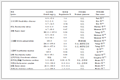
2. Classification of AI algorithmsThe rapid development and popularization of Internet of Things technology has further promoted the development of AI technology. Among them, machine learning, as the core of AI [22], stands out in data computation and analysis. It mainly provides autonomous learning ability for application systems and improves the intelligence degree of application [23]. These algorithms can be divided into support vector machine (SVM), artificial neural network (ANN), deep neural network (DNN), decision tree, etc. To accurately distinguish and understand these terms, this section provides an overview of algorithms related to smartphone detection, and summarizes the application of some algorithms in actual detection (Table 1).
|
Table 1 Performance comparison of AI algorithms based on smartphone. |

Among these algorithms, the well-known ANN is the construction basis of DNN, through the simulation of human brain neural network to achieve AI machine learning technology, ANN is used to estimate or approximate the function. The network is composed of an input neurons layer and an output neurons layer, where the input layer receives external source data, such as sensor data, images, etc., and the data is processed through hidden layers, and the network provides data output points from the output layer. On the basis of ANN, the number of network layers can be increased to form a DNN, which is widely applied in natural language processing, speech recognition, image processing and other aspects [24].
The most common machine learning algorithms are convolutional neural network (CNN), multi-layer perceptron (MLP), etc. MLP is composed of an input layer, one or more hidden layers, and an output layer. The nodes of neighboring layers are linked based on varying weights. Hidden layers, neurons and numbers of iterations can be adjusted as hyperparameters. For example, Yang et al. constructed a three-layer MLP based on three multi-step strategies (pair iteration strategy, direct strategy, multiple input and output) respectively for influenza prediction [25]. The prediction performance of the model was measured by statistical indicators mean absolute percentage error, root mean squared error two influenza outbreak indicators peak week error and outbreak mean absolute error. The results showed that the multiple-input multiple-output strategy has the best advanced prediction effect and strong self-adaptation ability [25]. The CNN is comprised of three layers: a convolutional layer, a pooled layer, and a fully connected layer, which is commonly used in natural language processing, image recognition, processing and classification. For example, Wang et al. proposed a knowledge-driven machine learning model for cow disease diagnosis that combines bidirectional long short-term memory and CNN [26], which extracted recessive features from dominant features and further diagnosed them through the model. The model performance evaluation index, the average of accuracy rate and recall rate, reached 94.89%, indicating that the model can accurately diagnose the disease of dairy cows [26].
Other commonly used machine learning algorithms include SVM, decision trees, etc. SVM is often used for classification and regression [27]. For example, Elkorany et al. combined the optimal breast cancer automatic classification method of whale optimization algorithm and dragonfly algorithm with radial basis function kernel SVM was selected to classify breast cancer diagnosis [28]. The accuracy of these two methods is more than 95%, which proved that the model has a good classification prediction effect [28]. The decision tree serves as a non-parametric classification algorithm. Yadav et al. divided the attributes of thyroid diseases into child nodes and used them as decision nodes. Their data sets are detected by decision trees with an accuracy of 98%, which proved that the method can use different data sets to diagnose and classify different diseases [29].
3. Detection of COVID-19 disease based on AI data processingAI algorithms have played a significant role in disease detection. In addition to the diagnosis of different kinds of diseases mentioned above, it has been widely used in the detection and analysis of SARS-CoV-2. This chapter summarized the practical application of AI algorithms in COVID-19 detection.
3.1. COVID-19 disease detection based on non-image recognitionCOVID-19 is spread by aerosols or droplets that come into contact with the mouth, eyes or nose. As a result, the chance of the virus spreading is greatly increased during person-to-person contact [30]. To deal with this situation, it is crucial to take measures to prevent and anticipate the transmission of the virus, which can avoid the rapid spread of the SARS-CoV-2 to a certain extent. With the rapid development of AI in recent years, disease analysis and detection combined with smartphone, has become a new way of disease detection [21]. As AI's core, machine learning specializes in simulating human learning, and provides CNN, DNN for the detection, classification of the new coronary pneumonia virus and the distribution map of abnormal symptoms clustering and other methods [31].
For the detection of the new coronavirus, Kumbhar et al. proposed a method combining CNN with the medical Internet of Things to detect social distance and use smart wearable devices to track infected people [32]. In their study, a Python-based tracking system was then used to simulate the spread of the virus and the distribution of different users (healthy and confirmed patients) within a specified region. Specifically, each user moves randomly in the area at a speed of 0–20 m/min, and users will be exposed to the disease if they are within 3 m of a confirmed patient. Based on the threshold of confirmed symptoms and the time of exposure, a probable patient is ultimately identified. With up to 90% accuracy, the CNN model successfully tracked exposed populations with or without infection protection. This method provides an effective way to predict the environment in advance [32]. In addition, researchers utilized real-time cameras to capture people's body temperature and smartphone microphones to obtain information about people's coughing, breathing, and speaking, which informs the AI server edge to rate COVID-19 automatically. Next, the classifier's sensitivity and specificity were put to the test, and the results showed that the model was usable for judging COVID-19 [33].
Serological rapid diagnostic test (RDT), which can provide users with diagnostic results in a short period, has also been used for SARS-CoV-2 serological testing. However, conventional RDT results are judged by eyes, which has certain limitations in time. Therefore, researchers proposed to use machine learning to automatically classify RDT results. Compared with manual classification results, the classification results have a high accuracy rate of 99.3%, which provided opportunities and guarantees for patients to detect by themselves [34].
COVID-19 spreads over time, and the real-time distribution map of COVID-19 patients provided a visualization for grasping the global infection situation. Researchers used spatiotemporal clustering techniques and cross-correlation analysis to create a map of symptom incidence based on body temperature and symptoms of COVID-19, and conducted experiments in Maryland to show that the system could serve as disease prevention and control early warning systems [35].
3.2. COVID-19 detection based on image recognitionImage recognition, as an application of machine learning algorithms, can use computers to process and analyze images. In the diagnosis of patients with new coronary pneumonia, the advantages of image recognition can be used to quickly generate image classifiers of different target pathogens from the data set on demand. Several studies have proposed a virus diagnosis platform combined with the Admissible Network (SPyDERMAN) [36], which utilizes a data set of microfluidic chip photos taken by smartphone to explore targeted viral nucleic acids, and the ability to precisely detect various intact viruses in clinical samples is present. In this process, first capture the intact virus or nucleic acid of the target, prepare a nanoprobe targeting CRISPR/dCas9 protein 19 by combining an anti-Cas9 monoclonal antibody with platinum nanoparticles, use the probe to generate an on-chip signal, and use a smartphone to image. Finally, SPyDERMAN is applied for image analysis, which enables the diagnosis of viruses or nucleic acids. Compared with the nasal swab sample detection method, the system can complete the detection by using the built-in camera of a smartphone, does not rely on additional hardware and external environment. The operation is simple and does not require special training for users without experience, which confirms the versatility of the system [36]. Other studies described a portable device that combined a built-in camera and a small onboard computer with automated image acquisition and processing algorithms to perform image analysis of synthetic RNA and a small set of samples from patients positive and negative for the novel coronavirus, which reduced the testing time and avoided the subjectivity of the staff to the results [37].
The new coronavirus can cause pathological changes in the respiratory system, which can be used as an auxiliary method to diagnose patients. A framework for the detection of COVID-19 using chest X-ray (CXR) images, breath sounds, and rapid antigen test (RAnT) has been proposed, which was based on a CNN transfer learning approach and a multilayer perceptron (MLP) to detect the CXR image dataset, thus reducing the workload of the staff [38]. With the development of thermal imaging technology, a non-contact thermal imaging method has emerged for the detection of new coronary pneumonia (Fig. 1). This method was combined with the thermal camera of the smartphone to extract the shape features and texture of skin temperature distribution by thermal imaging algorithm. Two key parameters, the fractal dimension of the image's gradient and the sum of its extrema, are selected for analysis. Based on the results of back thermal image analysis of 101 experimental participants, this method is proved to be highly sensitive and convenient for out-of-hospital screening for COVID-19 [39].

|
Download:
|
| Fig. 1. The process of thermal image processing involves displaying raw thermal images in the HC-Rainbow scale. Left: Fractal dimension for gradient, right: Extreme sum in image. Normalizes the gradient range to [0, 255], and moves the gradient values beyond that range to their edges. Reprinted with permission [39]. Copyright 2021, Nature research. | |

In summary, there have been many cases of detection of SARS-CoV-2 based on AI algorithms, and good simulation results have been achieved. However, some algorithms still require a large proportion of actual samples to be tested, and their practical effectiveness needs to be further demonstrated in a clinical setting.
4. Classification of COVID-19 disease detection methods by smartphoneSmartphone-based detection does not need additional auxiliary equipments, lightweight and portable advantages make it favored by most people. Therefore, many researchers have combined existing analytical strategies, such as electrochemistry, fluorescence, colorimetry, and other methods, with the detection platform (Table S1 in Supporting information). However, this type of detection platform has certain requirements for smartphone performance, consumes power quickly, and needs to be tested in an unblocked network environment. Meanwhile, due to the dynamics and variability of practical problems, it is challenging to develop an effective AI model for performing a specific task, and needs high computing and data storage performing of smartphones, it should be radical considerations and improvements for conducting future AI-based smartphone research.
4.1. Detection of COVID-19 disease based on electrochemistryThe affinity-based electrochemical sensor can convert the specific molecular binding behavior into electrical signal output. After connecting with the smartphone, the detection data can be read through the smartphone, and combined with AI algorithm, further improving the efficiency of disease detection, which is very effective for medical underdeveloped areas and users' home detection. Gecgel et al. proposed the application of AI algorithm to the processing of detection data of the SARS-CoV-2 diagnostic sensor (UFC-19) [40]. UFC-19 is an electrochemical sensor that can analyze the electrochemical interaction of the SARS-CoV-2 spike protein contained in the sample and the sensor probe in one second. Based on the data set obtained by the sensor, different AI algorithms (such as CNN, SVM, and decision tree) can be used to diagnose SARS-CoV-2, and the existence of SARS-CoV-2 can be selectively identified in a short time. The excellent predictive performance of the model further improves the detection efficiency of the electrochemical sensor. It can be seen that electrochemical sensing detection is a very promising low-cost medical diagnosis method with high sensitivity and simple operation [41–43].
In general, electrochemical detection is achieved by generating signal changes caused by antigen-antibody complex. The detection method can expand due to its small size, low cost and low power consumption, based on smartphones for COVID-19 and greatly improve the detection efficiency [44]. Beduk et al. described a sensor that combines miniaturized laser-scribed graphene (LSG) with three-dimensional gold nanostructures for electrochemical purposes [45]. The electrode was modified with novel coronavirus spike protein antibodies and integrated into a point-of-care (POC) device that can be operated applying a smartphone for the detection of COVID-19 (Fig. 2a). The system was a user-friendly diagnostic platform with simple operation and high data readability [45]. Similarly, Hu et al. developed a unique sensing platform with viral antigens based on reduced graphene oxide (RGO), which significantly enhanced the transport of diffused species in electrochemical cells, and 3D printing using Aerosol Jet nanoparticles to create 3D electrode geometry, using electrochemical transduction to detect novel coronary pneumonia antibodies in a short time. The sensor platform supported smartphone-based readings with repeatability, selectivity and reproducibility [46].

|
Download:
|
| Fig. 2. (a) The portable handmade POC potentiostat device that connected to a smartphone via a USB-C, the signals were recorded by using customized KAUSTat software. The POC potentiostat is a portable device that connects to a smartphone via USB-C, which records signals using customized KAUSTat software. Reprinted with permission [45]. Copyright 2021, American Chemical Society. (b) Schematic of smartphone-based and electrochemical capillary flow immunoassays. Reprinted with permission [47]. Copyright 2021, American Chemical Society. (c) Schematic diagram of the smartphone-powered electrochemical biosensor for detecting SARS-CoV-2. Reprinted with permission [48]. Copyright 2020, Elsevier. (d) Conceptualized schematic diagram of the SPCE/NPs/nano-Dendroids/GO/Ab probe construction for POC diagnosis of COVID-19 infection. Reprinted with permission [49]. Copyright 2020, Elsevier. | |

The low-cost and innovative electrochemical capillary flow device that does not require sample preparation has been reported to quantify novel coronavirus nucleocapsid protein IgG antibodies (anti-N antibodies) as low as 5 ng/mL in human blood samples in 20 min by Samper et al. [47]. Since the device can quantify electrochemical readings, coupling the device to a smartphone using a near-field communication technology improved the efficiency of diagnostics, confirming its true POC potential (Fig. 2b).
To improve detection sensitivity, Zhao et al. designed a sandwich-type biosensor for ultrasensitive electrochemical detection of RNA targeting SARS-CoV-2 using cupro aromatic functionalized graphene oxide (Fig. 2c). Based on the super sandwich recognition strategy, the technology has been proven to be able to effectively detect SARS-CoV-2 RNA through a portable electrochemical smartphone without amplification or reverse transcription of nucleic acid. The biosensor is fixed on the Au@Fe3O4. On the surface of nanoparticles, the biological conjugate was formed by fixing the host-guest complex on RGO, resulting in a sandwich structure of capture probe, target, and label probe. The detection limit was 200 copies/mL [48].
The portable electrochemical detection system is a novel plug-and-play diagnostic system that provides detection results immediately in a short time (Fig. 2d). This kind of sensor device is simple and easy to use, and the manufacturing cost is low. The quantitative output provided by detection minimizes user intervention and eliminates the multi-step detection of traditional instruments, making it very suitable for POC applications. By combining with a portable potentiostat and smartphone, this kind of potentiostat can be integrated with all kinds of equipment in the future, so that the whole system is a one-stop detection, which can eliminate the dependence on any special detection instrument. POC-based tagless sensing technology is integrated with smartphone, which can not only track global diseases but also provide the data and fact base needed to prepare for such epidemics in the future [49].
4.2. Detection of COVID-19 disease based on fluorescenceFluorescence analysis is a widely used method in analysis and research of biomedicine and other fields, and it has the advantages of high sensitivity/specificity and simple operation [44,50]. With the deepening of the application of smartphone in various fields, many scholars combined fluorescence analysis with smartphone. For example, some scholars have demonstrated a system combined with a smartphone that can detect SARS-CoV-2 (Figs. 3a and b), the nucleic acid sequence of the system was amplified, and the fluorescent signal was captured by the smartphone's camera after the reaction was completed. The entire process can be completed in a relatively brief period, and the sensitivity and detection limit were comparable to traditional fluorescence detection methods [51–57]. To further improve detection efficiency and give full play to the advantages of smartphone in disease detection, Lee et al. created a model utilizing machine learning that can be used for the diagnosis of SARS-CoV-2 by combining AI algorithm with traditional fluorescence detection methods using long-term and short-term memory method. The model was utilized to test the fluorescence data set measured by real time (RT)-PCR at each cycle, to obtain accurate diagnosis results [58].

|
Download:
|
| Fig. 3. (a) Illustration of particle diffusometry loop-mediated isothermal amplification (PD-LAMP) process. Reprinted with permission [54]. Copyright 2022, Elsevier. (b) On-chip detection workflow. Reprinted with permission [55]. Copyright 2023, the Royal Society of Chemistry. (c) Schematic of minimally instrumented specific high-sensitivity enzymatic reporter unlocking. Reprinted with permission [59]. Copyright 2021, American Association for the Advancement of Science. (d) Internet of medical things applications of the 5G-enabled sensor on a smartphone App for COVID-19 detection and monitoring online. Reprinted with permission [60]. Copyright 2021, Elsevier. (e) Schematics of the integrated portable micro-capillary electrophoresis (μCE) system. Reprinted with permission [61]. Copyright 2021, Elsevier. (f) A POC genetic analyzer designed for on-site molecular diagnostics. Reprinted with permission [62]. Copyright 2021, Elsevier. | |

In addition, some other scholars have developed smartphone application systems, using the developed applications to record and analyze the SARS-CoV-2 detection data (Figs. 3c–f). These applications enabled visualization of fluorescence output via smartphone [59], automatic interpretation of output and remote result reporting. Families and patients have the option to remotely document their medical information and daily status, thereby reducing the burden of going to the centralized hospital [60,61]. The system could also be controlled by a smartphone to operate the POC device, which can realize real-time detection [62].
4.3. Detection of COVID-19 disease based on colorimetryColorimetry is a method of biochemical detection that evaluates changes in the absorbance or reflectance of analytical reagents. It requires that the color reaction has selectivity and high sensitivity, and the state of the colored compounds generated by the reaction should be relatively stable [44,63]. In recent years, researchers have combined the advantages of smartphone to develop a colorimetric real-time analysis device for sample analysis quantitatively (Fig. 4a) [64–66]. The device could detect the novel coronavirus in samples such as saliva (Fig. 4b), wastewater (Fig. 4c), and mouthwash [67–69]. For example, when detecting the new coronavirus in wastewater, two-stage isothermal amplification, nucleic acid extraction and colorimetric detection are first performed on the microfluidic chip printed in 3D, and then the colorimetric signal was analyzed by the smartphone. Signals were recorded and quantitatively analyzed in real-time. The combination of the two improved the analysis speed of traditional colorimetric techniques, had high sensitivity, and also performed well in selectivity and specificity.

|
Download:
|
| Fig. 4. (a) Overview of the real-time quantitative colorimetric LAMP. Reprinted with permission [66]. Copyright 2022, Nature research. (b) The Cap-iLAMP workflow includes collecting up to 26 gargle lavage samples, followed by combined target RNA enrichment, lysis, and improved LAMP. Color hue values can be obtained using any freely available "camera color picker" application on a smartphone. Reprinted with permission [68]. Copyright 2021, Nature Publishing Group. (c) Procedure of multiplexed colorimetric detection. Reprinted with permission [67]. Copyright 2021, Elsevier. (d) The principle of the visual biosensor powered by CRISPR-Cas12a with a smartphone readout. Reprinted with permission [71]. Copyright 2021, Elsevier. (e) The diagnostic device that uses a smartphone to measure the electrochemical signals of the SARS-CoV-2N protein. Reprinted with permission [30]. Copyright 2021, the American Chemical Society. | |

For other studies to detect SARS-CoV-2, researchers have devised and innovated sensors combined with a smartphone to perform readings of the detection results (Figs. 4d and e). The platform could detect samples at ultra-low concentrations, resulting in a strong colorimetric signal, and it has been successfully utilized for detecting of novel coronavirus genes in synthetic vectors, transcribed RNA and novel coronavirus pseudoviruses. This design enabled semi-quantitative detection with low detection limit and high dynamic range with fast detection speed and low detection limit [70,71]. In addition, Rohaim et al. designed a new handheld intelligent diagnostic device that combined colorimetric methods with automatic image acquisition and AI processing algorithms to achieve loop-mediated isothermal amplification (LAMP) detection of RNA-dependent RNA polymerase genes, further reducing the time required for data analysis using traditional colorimetric methods [72].
Researchers have also developed an automated on-chip enzyme-linked immunosorbent assay (ELISA) to detect antibodies against SARS-CoV-2 in serum samples from vaccinated individuals and patients with COVID-19. Two different methods of analyzing the colorimetric reaction and taking photos with a smartphone by a microplate reader were compared to the results obtained by traditional ELISA, and no significant differences were found [73].
4.4. Other methods to detect COVID-19 diseaseBaiyin et al. developed a lateral flow immunoassay strategy that utilizes giant magnetoresistance and superparamagnetic nanoparticles for sensing (Fig. S1a in Supporting information), which can be used to detect the anti-SARS-CoV-2 immunoglobulin M in a quantitative manner, followed by the giant magnetoresistance can transmit inspection data to a smartphone via bluetooth [74].
Antigen detection of novel coronavirus saliva using low-cost reagents and blood glucose meters, combined with the advantages of oximeters (Fig. S1b in Supporting information), have become the most popular diagnostic equipment in the world [75]. Liu et al. developed a nano-enzyme-linked immunosorbent assay (SP-NLISA), a smartphone-based assay that detects SARS-CoV-2-specific nucleocapsid phosphoprotein in patient serum samples (Fig. S1d in Supporting information). Its detection results are better than conventional ELISA [76]. Mohd et al. reported a FnCas9 Editor Linkage Unified Detection Assay (FELUDA), which does not require trans-cleavage of the reporter molecule and utilizes direct Cas9-based enzymatic reads to detect nucleobases and nucleotides sequence (Fig. S1c in Supporting information). FELUDA was semi-quantitative and enabled molecular diagnostics during outbreaks of infectious diseases such as COVID-19 [77].
Everardo et al. developed an automatic ELISA on a chip to analysis of serum samples from COVID-19 patients and inoculated individuals for anti-SARS-CoV-2 antibodies using the enzyme-labeled instrument. There was no statistically significant difference obtained between the results of on-chip automated ELISA and the conventional ELISA. In addition, they used smartphone photos for basic image analysis instead of laboratory equipment, reducing the testing burden of traditional methods [73].
In addition, it can also be judged according to some clinical symptoms of patients with new coronary pneumonia, such as fever, cough, etc. The detection of these symptoms is often intermittent. Based on this, some real-time monitoring systems have been proposed by scholars. Using biosensor technology, a remote monitoring platform for asymptomatic infections of the novel coronavirus has been developed by Wong et al. [78]. The subjects wore wearable biosensors on their arms to continuously monitor physiological parameters such as pulse rate, skin temperature, blood pressure, blood oxygen saturation, and respiratory rate and then transmitted these parameters to the mobile app Biovitals Sentinel in real time and carried out processes to detect subtle changes in physiological parameters. Finally, the results were displayed on a web-based dashboard, which can be used as a basis for clinicians to judge. The method provided a basis for further diagnosis of new coronary pneumonia and improved the detection efficiency.
5. SARS-CoV-2 sample classification 5.1. BloodBlood is an opaque liquid that contains many biomarkers of disease, so blood as a bioanalytical fluid is helpful in the diagnosis of clinical diseases. Similarly, proteins, ions, etc. in the blood can also be used as biochemical indicators of the new coronary pneumonia disease. This section described blood and smartphone-based tests for SARS-CoV-2 [79,80].
In recent years, immunosensing has attracted much attention due to its advantages such as high sensitivity, low consumption of samples and reagents, and simple sample handling. For example, Wrapp et al. developed an immune sensing to measure biomarkers in blood samples that can detect SARS-CoV-2 by measuring changes in the color signal from a smartphone camera [81]. In addition, Wu et al. developed a smartphone-based immune sensing system that can rapidly detect SARS-CoV-2 in serum samples, and proved through experiments that the system can be used as a portable device for field detection of SARS-CoV-2 in blood samples [82].
During the COVID-19 pandemic, home test strips or kits are a necessity in almost every home. This not only improves the portability of testing for the SARS-CoV-2, but also greatly reduces the testing time. Li et al. reported the use of this method in combination with smartphone to detect specific IgG or neutralizing antibodies in human serum or whole blood samples. According to the analysis of experimental results, the established platform can accurately and quickly detect SARS-CoV-2 [83]. In addition, Moakhar et al. proposed a home test kit that can quantitatively analyze viral infections in blood and other body fluids in a short period, the Multiple Injection Device (NFluidEX), with data results collected and interpreted by smartphone-supported data. In a clinical setting, this approach has high sensitivity and specificity [84].
5.2. SalivaBacteria and viruses in saliva can be used to diagnose many diseases. Saliva sampling is easier and non-invasive than blood sampling [79]. This method provides a strategic basis for screening and prediction of some diseases.
Sensors built into smartphone, combined with other technologies, could serve as new disease detection methods. At present, in order to detect spike protein of SARS-CoV-2 in artificial saliva, Kawasaki et al. developed an optical sensor (Fig. 5a) [85], Lee et al. designed a compact fluorometer [86], which was combined with the built-in camera of smartphone for diagnosing of various infectious diseases on-site. Through wireless transmission, the data was securely transmitted to the smartphone application, which achieved the purpose of fast detection speed, simple operation and economical price. In addition, analytical data can be obtained directly using relevant smartphone applications and image processing techniques or combined with AI algorithms for analytical processing (Fig. 5b). By using ImageJ validation, Weerasuriya et al. found an excellent correlation with traditional methods (p = 0.0003, r = 0.99) [87]. which improved the efficiency of detection SARS-CoV-2 in saliva and helped patients to understand their infection status more quickly, which prevents further spread of infection [40].

|
Download:
|
| Fig. 5. (a) The illustration showing the smartphone-assisted detection of the spike proteins of SARS-CoV-2 using the IPCF sensor. The Conceptual illustration showing an IPCF sensor for the optical detection of SARS-CoV-2 spike proteins using a smartphone. Reprinted with permission [85]. Copyright 2022, Licensee MDPI, Basel, Switzerland. (b) Scheme of the synthetic SARS-CoV-2 sensor and smartphone. Reprinted with permission [87]. Copyright 2023, American Chemical Society. (c) Dynamic Chemical Labelling workflow. Reprinted with permission [88]. Copyright 2023, Elsevier. (d) Scheme illustration of a paper-based device assisted by smartphone. Reprinted with permission [89]. Copyright 2021, Elsevier. | |

Martin-Sierra et al. used this method to conduct nucleic acid analysis and interpretation of the detected SARS-CoV-2 using saliva samples, combined with dynamic chemical labeling (DCL) technology and rotating tube equipment (Fig. 5c). It greatly simplified the steps before detection, has low cost and is easy to operate [88].
In addition to the method described above, Fabiani et al. developed an immunoassay that combines magnetic beads, 96-well wax-printed cardboard, and a smartphone app to detect SARS-CoV-2 in saliva through color visualization (Fig. 5d). This method further proved the reliability of saliva detection for novel coronavirus [89].
5.3. Other biofluidsIn addition to the diagnosis of COVID-19 through biological fluids such as blood and saliva, nasopharyngeal swabs are also one of the most commonly used detection methods (Fig. S2a in Supporting information). By optimizing to accelerate the viral inactivation of nasopharyngeal swabs, the results could be visualized by in-tube fluorescence and interpreted through the corresponding smartphone app [90]. For example, Ganguli et al. reported an RT-LAMP isothermal test for the detection of SARS-CoV-2 (Fig. S2c in Supporting information). Swabs were immersed in a synthetic nasal fluid doped with virus. The synthetic nasal fluid swabs were transferred to a viral transport medium for sampling analysis [91]. Going a step further, a disposable paper-based device was developed and integrated with smartphone-assisted Sensit smart voltage regulator (PalmSens) to detect SARS-CoV-2 using nasopharyngeal swab samples by Lomae et al. (Fig. S2b in Supporting information). Experimental results of 10 samples showed that the results of the system were 100% consistent with the results of RT-PCR [92].
Machine learning-driven software is a new method to evaluate the fluorescence signal of SARS-CoV-2 in nasopharyngeal swab samples. Samacoits et al. used a detection method combined with this method to detect SARS-CoV-2 in nasopharyngeal swabs (Fig. S2d in Supporting information). Experimental results showed that this method had low detection limit, high sensitivity and high accuracy. This provides an effective way for the detection of SARS-CoV-2 [93]. In addition, some researchers have also combined the AI algorithms with colorimetric methods. The machine learning model developed by Rohaim et al. was combined with colorimetric analysis to analyze RNA samples of SARS-CoV-2 extracted from nasopharyngeal swabs for clinical testing. The test results of about 200 patients with SARS-CoV-2 have proved that the method is highly specific and reliable [72].
6. Conclusion and prospectDriven by the rapid development of electronic technology, the size of smartphone is getting smaller and smaller, and it installs various sensors, increasingly perfect functions. Its portability and popularity are gradually enhanced. In addition, with the increasingly hot and in-depth research of AI, it is utilized extensively in various fields, such as disease detection, indoor positioning [21] and biological analysis [80,94–97], which greatly improves its popularity and applicability. These advantages have been used by researchers in many fields of analysis. Meanwhile, detection technologies based on smartphone and AI have been developed and improved successively, and have been widely applied from laboratory to practical applications. Based on this, this paper reviewed the detection methods of SARS-CoV-2 based on smartphones. In addition, the limitations and prospects of smartphone-based virus detection were discussed.
Based on the above description, the biological analysis method combined with the smartphone has been greatly improved in the operation steps and detection time of the new coronavirus detection. Despite its incomparable advantages, there are still some challenges that need to be addressed:
(1) Some detection methods rely on the internal hardware of the smartphone, which limits the range of devices for data access. While connecting external attachments to the smartphone can solve this problem, it also increases the complexity of the portable detection platform. Therefore, how to combine the two is one of the problems that need to be considered to realize portable detection.
(2) Using AI technology requires a lot of data to build models. Too little data may reduce the accuracy of detection results, and too much data may increase the processing and analysis time of the model. In addition, data information involves personal privacy, and its information security is also a problem to be considered.
In conclusion, the development and application of the technology have been proven, but it is also critical to summarize existing developments and look to future developments. From the perspective of biosensors, it is expected to expand the application of SARS-CoV-2 detection combined with smartphone and develop into a large-scale screening technology. From an AI perspective, acquiring the data required for AI is an important and challenging problem.
Declaration of competing interestThe authors declare that they have no known competing financial interests or personal relationships that could have appeared to influence the work reported in this paper.
AcknowledgmentsThe authors are grateful for the financial support from the National Natural Science Foundation of China (Nos. 21605105, 22204064 and 22276080), and the Natural Science Foundation of Jiangsu Province, China (Nos. BK20211340 and BK20220645).
Supplementary materialsSupplementary material associated with this article can be found, in the online version, at doi:10.1016/j.cclet.2023.109220.
| [1] |
B. Udugama, P. Kadhiresan, H.N. Kozlowski, et al., ACS Nano 14 (2020) 3822-3835. DOI:10.1021/acsnano.0c02624 |
| [2] |
Y. Shan, B. Wang, H. Huang, et al., Anal. Chim. Acta 1238 (2023) 340634. DOI:10.1016/j.aca.2022.340634 |
| [3] |
P. Zhou, X.L. Yang, X.G. Wang, et al., Nature 579 (2020) 270-273. DOI:10.1038/s41586-020-2012-7 |
| [4] |
S. Zayet, N.J. Kadiane-Oussou, Q. Lepiller, et al., Microbes Infect. 22 (2020) 481-488. DOI:10.1016/j.micinf.2020.05.016 |
| [5] |
P. Yu, J. Zhu, Z. Zhang, Y. Han, J. Infect. Dis. 221 (2020) 1757-1761. DOI:10.1093/infdis/jiaa077 |
| [6] |
F. Cui, H.S. Zhou, Biosens. Bioelectron. 165 (2020) 112349. DOI:10.1016/j.bios.2020.112349 |
| [7] |
L. Fabiani, M. Saroglia, G. Galatà, et al., Biosens. Bioelectron. 171 (2021) 112686. DOI:10.1016/j.bios.2020.112686 |
| [8] |
B.W. Neuman, G. Kiss, A.H. Kunding, et al., J. Struct. Biol. 174 (2011) 11-22. DOI:10.1016/j.jsb.2010.11.021 |
| [9] |
L. Zhang, A. Richards, M.I. Barrasa, et al., Proc. Natl. Acad. Sci. U. S. A. 118 (2021) 339584. |
| [10] |
Q. Lin, J. Wu, L. Liu, et al., Anal. Chim. Acta 1187 (2021) 339144. DOI:10.1016/j.aca.2021.339144 |
| [11] |
M. Thoms, R. Buschauer, M. Ameismeier, et al., Science 369 (2020) 1249-1255. DOI:10.1126/science.abc8665 |
| [12] |
J. Qi, J.N. Tan, S.H. Hui, et al., Int. J. Environ. Res. Public Health 19 (2022) 15319-15329. DOI:10.3390/ijerph192215319 |
| [13] |
A. John, P.J.W. He, I.N. Katis, et al., Anal. Chim. Acta 1185 (2021) 339002. DOI:10.1016/j.aca.2021.339002 |
| [14] |
D.J.H. Tng, B.C.Y. Yin, J. Cao, et al., Microchim. Acta 189 (2021) 14-26. |
| [15] |
X. Huang, D. Xu, J. Chen, et al., Analyst 143 (2018) 5339-5351. DOI:10.1039/C8AN01269E |
| [16] |
S. Kanchi, M.I. Sabela, P.S. Mdluli, Inamuddin, K. Bisetty, Biosens. Bioelectron. 102 (2018) 136-149. DOI:10.1016/j.bios.2017.11.021 |
| [17] |
A.A.H. de Hond, A.M. Leeuwenberg, L. Hooft, et al., NPJ Digit. Med. 5 (2022) 2-15. DOI:10.1038/s41746-021-00549-7 |
| [18] |
I.H. Sarker, SN Comput. Sci. 3 (2022) 1-20. DOI:10.1007/s42979-021-00920-1 |
| [19] |
H. Moulahoum, F. Ghorbanizamani, F. Zihnioglu, K. Turhan, S. Timur, Talanta 222 (2021) 121534. DOI:10.1016/j.talanta.2020.121534 |
| [20] |
D. Li, C. Sun, X. Mei, L. Yang, Trends Anal. Chem. 158 (2023) 116878. DOI:10.1016/j.trac.2022.116878 |
| [21] |
Y. Yang, F. Xu, J. Chen, et al., Biosens. Bioelectron. 229 (2023) 115233. DOI:10.1016/j.bios.2023.115233 |
| [22] |
C. Janiesch, P. Zschech, K. Heinrich, Electron. Mark. 31 (2021) 685-695. DOI:10.1007/s12525-021-00475-2 |
| [23] |
I.H. Sarker, SN Comput. Sci. 160 (2021) 1-21. |
| [24] |
I.H. Sarker, SN Comput. Sci. 154 (2021) 1-16. |
| [25] |
S. Yang, Y. Bao, Appl. Soft Comput. 113 (2021) 107994. DOI:10.1016/j.asoc.2021.107994 |
| [26] |
H. Wang, W. Shen, Y. Zhang, et al., Comput. Electron. Agric. 205 (2023) 107564. DOI:10.1016/j.compag.2022.107564 |
| [27] |
S.S. Keerthi, Neural Comput. 13 (2001) 637-649. DOI:10.1162/089976601300014493 |
| [28] |
A.S. Elkorany, M. Marey, K.M. Almustafa, et al., IEEE Access 10 (2022) 69688. DOI:10.1109/ACCESS.2022.3186021 |
| [29] |
D.C. Yadav, S. Pal, Hum. Intell. Syst. Integr. 2 (2020) 89-95. DOI:10.1007/s42454-020-00006-y |
| [30] |
J. Li, P.B. Lillehoj, ACS Sens. 6 (2021) 1270-1278. DOI:10.1021/acssensors.0c02561 |
| [31] |
T. Zeng, Y.S. Liang, Q.Y. Dai, et al., Chin. Chem. Lett. 33 (2022) 5184-5188. DOI:10.1016/j.cclet.2022.03.020 |
| [32] |
F. Hassan Kumbhar, S.A. Hassan, S.Y. Shin, Turk. J. Elec. Eng. Comput. 29 (2021) 2795-2806. DOI:10.3906/elk-2105-96 |
| [33] |
M.D.A. Rahman, M.S. Hossain, N.A. Alrajeh, B.B. Gupta, ACM Trans. Multim. Comput. 17 (2021) 1-24. |
| [34] |
D.A. Mendels, L. Dortet, C. Emeraud, et al., Proc. Natl. Acad. Sci. U. S. A. 118 (2021) 893118. |
| [35] |
A. Guemes, S. Ray, K. Aboumerhi, et al., Sci. Rep. 11 (2021) 4660. DOI:10.1038/s41598-021-84145-5 |
| [36] |
A. Shokr, L.G.C. Pacheco, P. Thirumalaraju, et al., ACS Nano 15 (2021) 665-673. DOI:10.1021/acsnano.0c06807 |
| [37] |
M. Tharmakulasingam, N.S. Chaudhry, M. Branavan, et al., Electronics 10 (2021) 2065-2078. DOI:10.3390/electronics10172065 |
| [38] |
U. Sait, G.L.K.V.S. Shivakumar, et al., Appl. Soft Comput. 109 (2021) 107522. DOI:10.1016/j.asoc.2021.107522 |
| [39] |
R.Y. Brzezinski, N. Rabin, N. Lewis, et al., Sci. Rep. 11 (2021) 17489. DOI:10.1038/s41598-021-96900-9 |
| [40] |
O. Gecgel, A. Ramanujam, G.G. Botte, Viruses 14 (2022) 1930-1945. DOI:10.3390/v14091930 |
| [41] |
M.R. de Eguilaz, L.R. Cumba, R.J. Forster, Electrochem. Commun. 116 (2020) 106762. DOI:10.1016/j.elecom.2020.106762 |
| [42] |
G. Martins, J.L. Gogola, L.H. Budni, et al., Anal. Chim. Acta 1147 (2021) 30-37. DOI:10.1016/j.aca.2020.12.014 |
| [43] |
S.Q. Xia, J.F. Pan, D.S. Dai, et al., Chin. Chem. Lett. 34 (2023) 107799. DOI:10.1016/j.cclet.2022.107799 |
| [44] |
T. Yan, G. Zhang, H. Chai, L. Qu, X. Zhang, Front. Bioeng. Biotechnol. 9 (2021) 753692. DOI:10.3389/fbioe.2021.753692 |
| [45] |
T. Beduk, D. Beduk, J.I. de Oliveira Filho, et al., Anal. Chem. 93 (2021) 8585-8594. DOI:10.1021/acs.analchem.1c01444 |
| [46] |
M.A. Ali, C. Hu, S. Jahan, et al., Adv. Mater. 33 (2021) e2006647. DOI:10.1002/adma.202006647 |
| [47] |
I.C. Samper, A. Sanchez-Cano, W. Khamcharoen, et al., ACS Sens. 6 (2021) 4067-4075. DOI:10.1021/acssensors.1c01527 |
| [48] |
H. Zhao, F. Liu, W. Xie, et al., Sens. Actuators B: Chem. 327 (2021) 128899. DOI:10.1016/j.snb.2020.128899 |
| [49] |
P. Chandra, Sens. Int. 1 (2020) 100019. DOI:10.1016/j.sintl.2020.100019 |
| [50] |
S. Liu, X.L. He, T. Zhang, et al., Chin. Chem. Lett. 33 (2022) 1933-1935. DOI:10.1016/j.cclet.2021.11.051 |
| [51] |
Y. Chen, Y. Shi, Y. Chen, et al., Biosens. Bioelectron. 169 (2020) 112642. DOI:10.1016/j.bios.2020.112642 |
| [52] |
T. Tian, Z. Qiu, Y. Jiang, D. Zhu, X. Zhou, Biosens. Bioelectron. 196 (2022) 113701. DOI:10.1016/j.bios.2021.113701 |
| [53] |
B. Pang, J. Xu, Y. Liu, et al., Anal. Chem. 92 (2020) 16204-16212. DOI:10.1021/acs.analchem.0c04047 |
| [54] |
A.J. Colbert, D.H. Lee, K.N. Clayton, et al., Anal. Chim. Acta 1203 (2022) 339702. DOI:10.1016/j.aca.2022.339702 |
| [55] |
F. Sun, A. Ganguli, J. Nguyen, et al., Lab Chip 20 (2020) 1621-1627. DOI:10.1039/D0LC00304B |
| [56] |
J. Arizti-Sanz, C.A. Freije, A.C. Stanton, et al., Nat. Commun. 11 (2020) 5921. DOI:10.1038/s41467-020-19097-x |
| [57] |
B. Ning, T. Yu, S. Zhang, et al., Sci. Adv. 7 (2020) eabe3703. |
| [58] |
Y. Lee, Y.S. Kim, D.I. Lee, et al., Sci. Rep. 12 (2022) 1234-1244. DOI:10.1038/s41598-022-05069-2 |
| [59] |
H. de Puig, R.A. Lee, D. Najjar, et al., Sci. Adv. 7 (2021) eabh2944. DOI:10.1126/sciadv.abh2944 |
| [60] |
J. Guo, S. Chen, S. Tian, et al., Biosens. Bioelectron. 181 (2021) 113160. DOI:10.1016/j.bios.2021.113160 |
| [61] |
V.D. Nguyen, H.Q. Nguyen, K.H. Bui, et al., Biosens. Bioelectron. 195 (2022) 113632. DOI:10.1016/j.bios.2021.113632 |
| [62] |
H.Q. Nguyen, H.K. Bui, V.M. Phan, T.S. Seo, Biosens. Bioelectron. 195 (2022) 113655. DOI:10.1016/j.bios.2021.113655 |
| [63] |
X.T. Huo, L. Wang, W.Z. Qi, et al., Chin. Chem. Lett. 33 (2022) 2091-2095. DOI:10.1016/j.cclet.2021.08.027 |
| [64] |
F. Ghorbanizamani, H. Moulahoum, F. Zihnioglu, et al., Biosens. Bioelectron. 192 (2021) 113484. DOI:10.1016/j.bios.2021.113484 |
| [65] |
I. Azmi, M.I. Faizan, R. Kumar, et al., Front. Cell. Infect. Microbiol. 11 (2021) 632646. DOI:10.3389/fcimb.2021.632646 |
| [66] |
G. Papadakis, A.K. Pantazis, N. Fikas, et al., Sci. Rep. 12 (2022) 3775-3790. DOI:10.1038/s41598-022-06632-7 |
| [67] |
K. Yin, X. Ding, Z. Xu, et al., Sens. Actuators B: Chem. 344 (2021) 130242. DOI:10.1016/j.snb.2021.130242 |
| [68] |
L. Bokelmann, O. Nickel, T. Maricic, et al., Nat. Commun. 12 (2021) 1467. DOI:10.1038/s41467-021-21627-0 |
| [69] |
C. Adrover-Jaume, A. Alba-Patino, A. Clemente, et al., Sens. Actuators B: Chem. 330 (2021) 129333. DOI:10.1016/j.snb.2020.129333 |
| [70] |
L. Huang, L. Ding, J. Zhou, et al., Biosens. Bioelectron. 171 (2021) 112685. DOI:10.1016/j.bios.2020.112685 |
| [71] |
L. Ma, L. Yin, X. Li, et al., Biosens. Bioelectron. 195 (2022) 113646. DOI:10.1016/j.bios.2021.113646 |
| [72] |
M.A. Rohaim, E. Clayton, I. Sahin, et al., Viruses 12 (2020) 972-991. DOI:10.3390/v12090972 |
| [73] |
E. Gonzalez-Gonzalez, R. Garcia-Ramirez, G.G. Diaz-Armas, et al., Sensors 21 (2021) 261664. |
| [74] |
Q. Bayin, L. Huang, C. Ren, et al., Talanta 227 (2021) 122207. DOI:10.1016/j.talanta.2021.122207 |
| [75] |
N.K. Singh, P. Ray, A.F. Carlin, et al., Biosens. Bioelectron. 180 (2021) 113111. DOI:10.1016/j.bios.2021.113111 |
| [76] |
B. Liu, Z. Wu, C. Liang, et al., Front Microbiol. 12 (2021) 692831. DOI:10.3389/fmicb.2021.692831 |
| [77] |
M. Azhar, R. Phutela, M. Kumar, et al., Biosens. Bioelectron. 183 (2021) 113207. DOI:10.1016/j.bios.2021.113207 |
| [78] |
C.K. Wong, D.T.Y. Ho, A.R. Tam, et al., BMJ Open 10 (2020) e038555. DOI:10.1136/bmjopen-2020-038555 |
| [79] |
A. Roda, S. Cavalera, F. Di Nardo, et al., Biosens. Bioelectron. 172 (2021) 112765. DOI:10.1016/j.bios.2020.112765 |
| [80] |
W. Chen, Y. Yao, T. Chen, et al., Biosens. Bioelectron. 172 (2021) 112788. DOI:10.1016/j.bios.2020.112788 |
| [81] |
D. Wrapp, N. Wang, K.S. Corbett, et al., Science 367 (2020) 1260-1263. DOI:10.1126/science.abb2507 |
| [82] |
Z. Wu, C. Wang, B. Liu, et al., ACS Sens. 7 (2022) 1985-1995. DOI:10.1021/acssensors.2c00754 |
| [83] |
J. Li, B. Liu, X. Tang, et al., Int. J. Infect. Dis. 121 (2022) 58-65. DOI:10.1016/j.ijid.2022.04.042 |
| [84] |
R. Siavash Moakhar, C. Del Real Mata, M. Jalali, et al., Adv. Sci. 9 (2022) e2204246. DOI:10.1002/advs.202204246 |
| [85] |
D. Kawasaki, H. Yamada, K. Sueyoshi, H. Hisamoto, T. Endo, Biosensors 12 (2022) 200-214. DOI:10.3390/bios12040200 |
| [86] |
H. Lee, W. Wang, N. Chauhan, et al., Biosens. Bioelectron. 229 (2023) 115228. DOI:10.1016/j.bios.2023.115228 |
| [87] |
D.R.K. Weerasuriya, K. Hiniduma, S. Bhakta, et al., ACS Sens. 8 (2023) 848-857. DOI:10.1021/acssensors.2c02516 |
| [88] |
C. Martin-Sierra, M.T. Chavez, P. Escobedo, et al., Biosens. Bioelectron. 230 (2023) 115268. DOI:10.1016/j.bios.2023.115268 |
| [89] |
L. Fabiani, V. Mazzaracchio, D. Moscone, et al., Biosens. Bioelectron. 200 (2022) 113909. DOI:10.1016/j.bios.2021.113909 |
| [90] |
Q. Li, Y. Li, Q. Gao, et al., Anal. Chim. Acta 1229 (2022) 340343. DOI:10.1016/j.aca.2022.340343 |
| [91] |
A. Ganguli, A. Mostafa, J. Berger, et al., Proc. Natl. Acad. Sci. U. S. A. 117 (2020) 22727-22735. DOI:10.1073/pnas.2014739117 |
| [92] |
A. Lomae, P. Preechakasedkit, O. Hanpanich, et al., Talanta 253 (2023) 123992. DOI:10.1016/j.talanta.2022.123992 |
| [93] |
A. Samacoits, P. Nimsamer, O. Mayuramart, et al., ACS Omega 6 (2021) 2727-2733. DOI:10.1021/acsomega.0c04929 |
| [94] |
T. Qi, M. Xu, Y. Yao, et al., Talanta 220 (2020) 121388. DOI:10.1016/j.talanta.2020.121388 |
| [95] |
Y. Li, J. Sun, W. Mao, et al., Microchim. Acta 186 (2019) 403. DOI:10.1007/s00604-019-3506-6 |
| [96] |
S. Tang, T. Qi, D. Xia, et al., Anal. Chem. 91 (2019) 5888-5895. DOI:10.1021/acs.analchem.9b00255 |
| [97] |
S. Xu, L. Li, D. Lin, et al., Chin. Chem. Lett. 34 (2023) 107997. DOI:10.1016/j.cclet.2022.107997 |