 2024, Vol. 35


b Dalian Engineering Research Center for Carbohydrate Agricultural Preparations, Liaoning Provincial Key Laboratory of Carbohydrates, Dalian Institute of Chemical Physics, Chinese Academy of Sciences, Dalian 116023, China;
c Seventh People's Hospital of Shanghai University of Traditional Chinese Medicine, Shanghai 200137, China
Notum is an important secretory carboxylesterase that modulates the function of a variety of biomolecules by deacylating essential palmitoleate groups from target proteins [1,2]. Notum plays a vital role in several human diseases, including osteoporosis, Alzheimer's disease, and different types of cancer [3-5]. One of the most well-known functions of Notum is the deacylation on Wnt proteins. As a negative regulator of Wnt signalling pathways, Notum can disrupt the Wnt signalling transduction and regulate cell proliferation, differentiation, and migration by cleaving the palmitoleic modification on Wnt proteins [1]. Wnt proteins are considered highly undruggable, while modulation of Notum carboxylesterase activity offers a potential alternative strategy for the treatment of Wnt-dysregulated diseases [6,7]. Increasing evidence has suggested that Notum is a promising therapeutic target for treating colorectal cancer [8-10]. In the Wnt ligand-independent colorectal cancer, the Wnt-downstream signals are significantly enhanced, which stimulates the secretion of Notum from Paneth cells and blocks the differentiation of intestinal stem cells. Such process facilitates the constitution of super competition between cancer cells and intestinal stem cells, which is beneficial for the formation of adenomas [11]. Notum inhibitor therapy could be used as a preventative strategy for the patients with a high risk of colorectal cancer. Therefore, it is highly desirable to find more potent inhibitors against human Notum (hNotum) as lead compounds for developing novel anti-colorectal cancer agents.
Chalcone and chalcone hybrids are privileged scaffolds in medicinal chemistry [12-19]. The facile synthetic routes to chalcone analogues enabled a large number of structurally diverse chalcone derivatives for performing structure–activity relationship (SAR) studies [20-23]. In the past few decades, a variety of chalcone derivatives have been reported with inhibitory effects on a range of enzymes, including carboxylesterases, lipase, and cytochrome P450 enzymes (CYPs) [24-30]. Recent years, several hNotum inhibitors are developed through various technologies and strategies, such as scaffold-hopping, activity-based protein profiling, structure-based drug development and X-ray crystallography [5,31-36]. Among them, Atkinson et al. have reported a potent hNotum inhibitor bearing a novel scaffold (two aromatic rings linked with a 4-atom-length rigid linker), with the IC50 value at 32 nmol/L [36]. Given that the chalcone is also a scaffold bearing the aromatic ring-linker-aromatic ring (Ar-L-Ar) structure, these compounds may also possess anti-Notum effects [36]. Inspired by these studies, we screened some commercially available chalcones and found that parts of them showed moderate to strong anti-Notum effects (IC50 values at less than 10 µmol/L). These findings encouraged us to design and synthesize more structurally diverse chalcones for investigating the structure–inhibition relationships of chalcone derivatives as novel hNotum inhibitors.
In this study, 4′-methoxylchalcone (A1) was utilised as the start point for the development of novel hNotum inhibitors. A series of A1 analogues with variations in the A-ring, were synthesised in the 1st round activity evaluation and SAR study. In the 1st round screening, compound A10, a bromo‑substituted chalcone displayed potent anti-Notum activity (IC50 = 0.30 µmol/L). Subsequently, to enhance the anti-Notum activity of the chalcone analogues, a series of bromo‑substituted chalcones, with various substitutes on B-ring (such as alkoxys, alkyls and carboxylates), were synthesized and their anti-Notum effects were assessed. Following two rounds of screening and structural optimization, five potent hNotum inhibitors (IC50 values are lowing than 10 nmol/L) were identified. Among all tested chalcones, B11 displayed the most potent anti-Notum effect, which motivated us to further investigate its inhibitory mechanism towards hNotum and its selectivity over other human serine hydrolases. Additionally, the effects of B11 on the invasion and migration of colorectal cancer cells, as well as its metabolic stability, was also examined.
As chemicals with the Ar-L-Ar were reported to have good anti-Notum effects [36], some commercially available simple chalcones and natural occurring chalcones were assayed hNotum inhibition activity using trisodium 8-octanoyloxypyrene-1, 3, 6-trisulfonate (OPTS) as the probe substrate. The data presented in Table S1 (Supporting information) showed that most of tested chalcones, including the scaffold, had moderate to relative strong anti-Notum effects (0.5 µmol/L < IC50 < 10 µmol/L). However, the structural complexity of some natural chalcones such as licochalcone A-D, isobavachalcone and xanthohumol, strongly restricted structural modifications for further SAR studies. Meanwhile, we also found that 4′‑methoxy chalcone (A1) is a moderate hNotum inhibitor (IC50 = 8.65 µmol/L). Docking simulations showed that A1 could be well-docked into the catalytic cavity of hNotum, where the A-ring of this agent could tightly bind with the hydrophobic amino acids in the catalytic cavity of hNotum. 2D interaction analysis revealed that the A-ring of A1 created a π-π stacking interaction with Tyr129 and Phe268, while the B-ring formed another π-π stacking interaction with Trp128 (Fig. S1 in Supporting information). These findings suggested that the Ar-L-Ar scaffold is beneficial for the chalcones to occupy the catalytic cavity of hNotum, and A1 can serve as a hit compound for developing novel chalcone-type hNotum inhibitors.
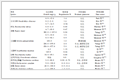
Afterwards, a series of A1 derivatives featured the Ar-L-Ar scaffold (A2–A5) were designed and synthesized. As displayed in Table 1, the introduction of a methoxyl group on the C-4 position of A-ring slightly enhanced the anti-Notum effect, while methyl, hydroxyl or chlorine decreased the anti-Notum effect. Introduction of another methoxyl group at the C-2 position of A2 and A3 significantly enhanced the anti-Notum effects, as indicated by IC50 values of A2 (5.91 µmol/L) vs. A6 (0.71 µmol/L), and A3 (15.70 µmol/L) vs. A7 (4.02 µmol/L). However, introduction of the third methoxyl at the C-3 position of the A-ring dramatically decreased the anti-Notum effect, as evidenced by the IC50 values of A6 (0.71 µmol/L) vs. A8 (9.78 µmol/L). These observations suggested the 2-methoxyl was beneficial for hNotum inhibition, while the 3-methoxyl was detrimental. Furthermore, the addition of a bromine atom at the C-5 position increased the anti-Notum effect by 1.5-fold to 13.4-fold, as evidenced by A9 (0.48 µmol/L) vs. A6 (0.71 µmol/L) and A10 (0.30 µmol/L) vs. A7 (4.02 µmol/L). Docking simulations showed that the 5-bromine in A10 created strong interactions with the His389 via hydrophobic interactions (Fig. S2 in Supporting information). Additionally, Fig. S2 showed that the 2‑methoxy of A10 formed carbon-hydrogen bonds with Gly127 and Glu390 of hNotum, which explained the beneficial effects of 2-methoxyl group to the anti-Notum effects of these chalcones. Notably, the introduction of the 5-bromine and 2‑methoxy at A-ring facilitated the position of the carbonyl to readily form a canonical hydrogen bond with Ala233 or Trp128, which strongly enhanced the binding of A10 to the catalytic pocket of hNotum.
|
Table 1 Chemical structures of A-series chalcone analogues and their anti-Notum activities. |

Although introduction of 2-methoxyl and 5-bromine substitution on A-ring facilitated A10 to tightly bind with the catalytic cavity of hNotum, docking simulations suggested that there were some hydrophobic amino acids (such as Val346, Pro287 and Ile291) surrounding the B-ring did not interact with A10. As a result, A10 was used as a lead compound for the 2nd round structural optimization of chalcones on B-ring. The B series compounds were synthesized via the procedure depicted in Scheme 1, while the nuclear magnetic resonance (NMR) spectra were displayed in the supplementary materials.

|
Download:
|
| Scheme 1. Synthesis of the B series chalcone derivatives. Reagent and conditions: (a) K2CO3 (3 equiv.), acetone, r.t., bromomethyl methyl ether (0.99 equiv., dropwise), 10 min; (b) K2CO3 (3 equiv.), acetone, r.t., methyl iodine (1.2 equiv.), overnight; (c) substituted acetophenones (1.2 equiv.), 70% ethanol, NaOH (0.1 mol/L), r.t., overnight; (d) methanol: HCl (conc.) = 3:1 (v/v), r.t., 2 h; (e) dichloromethane, triethylamine (3 equiv.), acid chlorides (0.99 equiv., dropwise), ice bath, 10 min. | |
To enhance the binding of the B-ring with the hydrophobic amino acids deep in the catalytic cavity of hNotum, a bulky O-alkyl group or carboxylate was intentionally introduced at the C-4′ position of A10. Among all C-4′-substituted derivatives tested, ethoxyl was the best choice at the C-4′ position, as evidenced by the IC50 values of B3 (48.98 nmol/L) vs. A10 (299.3 µmol/L); B3 (48.98 nmol/L) vs. B4 (74.11 nmol/L); B3 (48.98 nmol/L) vs. B5 (393.8 nmol/L); B3 (48.98 nmol/L) vs. B6 (409.7 nmol/L); as well as B3 (48.98 nmol/L) vs. B7 (897.5 nmol/L). By contrast, when 4′‑methoxy was substituted with a hydroxyl group, the anti-Notum effect was significantly reduced, as indicated by the IC50 values of A10 (299.3 nmol/L) vs. B1 (3498 nmol/L).
The hydrophobic substitutes were also introduced at the C-3′ position. As expected, the introduction of an alkyl group at C-3′ position enhanced the anti-Notum effects significantly, as demonstrated by the IC50 values of A10 (299.3 nmol/L) vs. B8 (6.84 nmol/L), as well as A10 (299.3 nmol/L) vs. B10 (5.75 nmol/L). However, introduction of a methoxyl at C-3′ position slightly decreased the anti-Notum activity, as evidenced by the IC50 values of B9 (476.9 nmol/L) vs. A10 (299.3 nmol/L).
Docking simulations was then performed to examine the mechanism of B11 binding to the catalytic cavity of hNotum. As displayed in Figs. S3A and B (Supporting information), B11 can be well-docked into the catalytic cavity of hNotum. Similar to A1 and A10, the A-ring of B11 interacted with the aromatic rings of His389 and Trp128 via π-π stacking, while the B-ring interacted with Tyr129 and Phe268. The carbonyl formed hydrogen bonds with Trp128 and Ala233, respectively. The methoxyl at C-2 position of B11 interacted with Gly127 through hydrogen bonding, while 5-bromine of B11 created hydrophobic interactions with His389. More importantly, the 3′-(3-methylbut-3-en-2)-yl on the B-ring of B11 formed strong hydrophobic interactions with the hydrophobic amino acids (such as Ala342, Phe268, Val346 and Pro287) in the catalytic cavity, which well-explained why 3′-alkyl greatly enhanced the anti-Notum effects of chalcones. Additionally, the β-carbon of the 4′-ethoxy of B11 formed hydrophobic interactions with Ile291 and Phe320. These interactions greatly reduced the binding energy of B11 on hNotum (from −6.61 kcal/mol to −8.29 kcal/mol), making B11 as a potent anti-Notum agent (Table S2 in Supporting information).
The molecular dynamics of the B11–hNotum complex were also performed. As shown in Fig. S4 (Supporting information), the distance between the hydroxyl of the catalytic serine of hNotum and the ketone carbon of B11 was kept around 4 Å, suggesting that B11 could tightly bind on hNotum to form a stable B11–hNotum complex via occupying the catalytic cavity of hNotum.
To deeply explore the inhibitory mechanism of B11 against hNotum, inhibition kinetics analyses were carried out. Time-dependent inhibition assays that the inhibition tendency and potency of B11 against hNotum did not change with prolonged preincubation time (Fig. S5 in Supporting information), suggesting B11 was a reversible inhibitor of hNotum. Inhibition kinetics assays showed that the maximum hydrolytic rates of OPTS in hNotum were kept around 550 pmol min−1 µg−1 hNotum upon addition of increasing concentrations of B11, suggesting that B11 was a classic competitive inhibitor of hNotum (Fig. S6A and Table S3 in Supporting information), Furthermore, the Lineweaver-Burk plot also showed that B11 strongly inhibited hNotum in a competitive inhibition manner (Fig. S6B in Supporting information), with the K value of 4.5 nmol/L.
Since the inhibitor spectra of mammalian serine hydrolases are highly overlapped [37], it is necessary to test the specificity of B11 against other key human hydrolases. Herein, three carboxylesterases [human carboxylesterase 1A (hCES1A), human carboxylesterase 2A (hCES2A) and butyrylcholinesterase (BuchE)] and two proteases [thrombin and dipeptidyl peptidase 4 (DPP-IV)] were used to assay the selectivity of B11 towards hNotum. As depicted in Fig. S7 (Supporting information) and Table 2, B11 at 10,000 nmol/L had no significant inhibitory effects towards all tested serine hydrolases (IC50 > 10,000 nmol/L), indicated an excellent specificity of B11 on hNotum over other α/β serine hydrolases in the human body.
|
|
Table 2 Chemical structures of B-series chalcone analogues and their anti-Notum activity. |


Given that hNotum is overexpressed in multiple cancers [11,38], and down-regulation or potent inhibition of hNotum may suppress proliferation and migration of colorectal cancer cells [39], [40], in this study, anti-proliferation and anti-invasion effects of the newly identified chalcone-type hNotum inhibitor (B11) were tested by using two colorectal cancer cell lines (SW480 and SW620). As displayed in Fig. S8 (Supporting information), B11 dose-dependently suppressed the proliferation of SW480 and SW620 cells, with calculated IC50 values of B11 in SW480 and SW620 were 19.15 µmol/L and 15.75 µmol/L, respectively. After then, 5 µmol/L of B11 was used for the wound-healing assay. As exhibited in Fig. 1, B11 effectively suppressed the migration of these two cell lines in 48 h, suggesting that B11 could weaken the migration of colorectal cancer cells. Meanwhile, we also found that B11 had no observable cytotoxicity in normal intestinal epithelial cells (NCM640) (Fig. S8).

|
Download:
|
| Fig. 1. The 48 h wound-healing assay of colorectal cancer cells at 5 µmol/L of B11. (A) SW480 cells; (B) SW620 cells. Scale bar: 50 µm. (C) The relative migration distance of SW480 cells or SW620 cells in A or B. All data were shown as mean ± standard deviation (SD), n = 2. **P < 0.01 vs. control. | |

Next, the stability of B11 in artificial gastric and intestinal juices was tested. As shown in Fig. S9 (Supporting information), the relative concentration of B11 remained more than 90% after 90 min of incubation at 37 ℃, suggesting that B11 is very stable in gastrointestinal juices. The stability of B11 in human plasma was also measured. As displayed in Fig. S9, B11 is also very stable in human plasma following 2 h of incubation, suggesting excellent stability of this agent in human plasma. The microsomal stability of B11 in human liver microsomes was then tested, while testosterone (NADPH-dependent metabolism) and umbelliferone (UDPGA-dependent metabolism) was used as the reference drugs. As depicted in Fig. S10 (Supporting information), B11 showed suitable stability in both NADPH-dependent and UDPGA-dependent metabolic systems, showing the in vitro half-lives (t1/2) of 246 min (NADPH-dependent metabolism) and 46 min (UDPGA-dependent metabolism), respectively. Such stability is much better than that of the reference drugs (73 min for testosterone, and 21 min for umbelliferone). These findings clearly demonstrate that B11 displayed suitable metabolic stability, which offers a promising lead compound for designing and developing of novel oral-administrated hNotum inhibitors for treating colorectal cancer.
In summary, a series of chalcone analogues were designed and synthesized for investigating the SARs of chalcone derivatives as novel hNotum inhibitors. Following two rounds of screening and structural optimization, the SARs of chalcones as hNotum inhibitors are carefully analysed. The results clearly demonstrated that 2-methoxyl and 5-bromine substitutions on A-ring, as well as 4′-ethoxyl and 3′-alkyl substitutions on B-ring, are beneficial for hNotum inhibition. As a result, three extremely potent hNotum inhibitors (IC50 values are at the nmol/L level) were gained, with the IC50 values less than 7 nmol/L. Specificity assays showed that B11 (the most potent chalcone-type hNotum inhibitor) displayed good selectivity towards hNotum over other serine hydrolases in humans, while inhibition kinetics assays showed that this agent potently inhibited hNotum in a competitive inhibition manner, with a K value of 4.5 nmol/L. Docking simulations showed that B11 could be tightly bound on the catalytic pocket of hNotum via hydrophobic and hydrogen-bonding interactions, which well-explained the competitive inhibition mode of B11. Cell tests showed that B11 (5 µmol/L) obviously weakened the invasion and migration abilities of both SW480 and SW620 cells, while this agent also showed excellent stability in the gastrointestinal environment and suitable metabolic stability in human liver microsomes. Collectively, this study deciphers the SARs of chalcones as hNotum inhibitors and offers several potent chalcone-type hNotum inhibitors, which are very helpful for the medicinal chemists to design and develop more efficacious hNotum inhibitors as novel anti-colorectal cancer agents.
Declaration of competing interestThe authors declare that they have no known competing financial interests or personal relationships that could have appeared to influence the work reported in this paper.
AcknowledgmentsThis work was financially supported by the National Natural Science Foundation of China (Nos. 82104281, 81922070, 81973286, 81801818 and 82273897), Shanghai Municipal Health Commission's TCM research project (No. 2022CX005), Innovation Team and Talents Cultivation Program of National Administration of Traditional Chinese Medicine (No. ZYYCXTD-D-202004), and Three-year Action Plan for Shanghai TCM Development and Inheritance Program [No. ZY(2021–2023)−0401].
Supplementary materialsSupplementary material associated with this article can be found, in the online version, at doi:10.1016/j.cclet.2023.108405.
| [1] |
S. Kakugawa, P.F. Langton, M. Zebisch, et al., Nature 519 (2015) 187-192. DOI:10.1038/nature14259 |
| [2] |
Y. Zhao, L.N. Schuhmacher, M. Roberts, et al., Mol. Metab. 49 (2021) 101201. DOI:10.1016/j.molmet.2021.101201 |
| [3] |
W. Li, X. Yu, C. Zhu, et al., Biol. Res. 52 (2019) 10. DOI:10.1186/s40659-019-0217-8 |
| [4] |
M. De, M.Arigoni Robertis, L. Loiacono, et al., Oncotarget 6 (2015) 41237-41257. DOI:10.18632/oncotarget.5652 |
| [5] |
R.M. Suciu, A.B. Cognetta, Z.E. Potter, et al., ACS Med. Chem. Lett. 9 (2018) 563-568. DOI:10.1021/acsmedchemlett.8b00191 |
| [6] |
C. Cui, X. Zhou, W. Zhang, Y. Qu, X. Ke, Trends Biochem. Sci. 43 (2018) 623-634. DOI:10.1016/j.tibs.2018.06.003 |
| [7] |
H.V. Shaw, A. Koval, V.L. Katanaev, Swiss Med. Wkly. 149 (2019) w20129. |
| [8] |
R. Brommag, J. Liu, P. Vogel, et al., Bone Res. 7 (2019) 2. DOI:10.1038/s41413-018-0038-3 |
| [9] |
S. Movérare-Skrtic, K.H. Nilsson, P. Henning, et al., FASEB J. 33 (2019) 11163-11179. DOI:10.1096/fj.201900707r |
| [10] |
N. Pentinmikko, S. Iqbal, M. Mana, et al., Nature 571 (2019) 398-402. DOI:10.1038/s41586-019-1383-0 |
| [11] |
D.J. Flanagan, N. Pentinmikko, K. Luopajärvi, et al., Nature 594 (2021) 430-435. DOI:10.1038/s41586-021-03525-z |
| [12] |
C. Zhuang, W. Zhang, C. Sheng, et al., Chem. Rev. 117 (2017) 7762-7810. DOI:10.1021/acs.chemrev.7b00020 |
| [13] |
D. Peña-Solórzano, M. Scholler, G. Bernhardt, et al., ACS Med. Chem. Lett. 9 (2018) 854-859. DOI:10.1021/acsmedchemlett.8b00289 |
| [14] |
S. Sinha, S.L. Manju, M. Doble, ACS Med. Chem. Lett. 10 (2019) 1415-1422. DOI:10.1021/acsmedchemlett.9b00193 |
| [15] |
K.V. Sashidhara, K.B. Rao, P. Kushwaha, et al., ACS Med. Chem. Lett. 6 (2015) 809-813. DOI:10.1021/acsmedchemlett.5b00169 |
| [16] |
D.K. Mahapatra, S.K. Bharti, V. Asati, Eur V, J. Med. Chem. 101 (2015) 496-524. DOI:10.1016/j.ejmech.2015.06.052 |
| [17] |
C. Niu, A. Tuerxuntayi, G. Li, et al., Chin. Chem. Lett. 28 (2017) 1533-1538. DOI:10.1016/j.cclet.2017.03.018 |
| [18] |
Y.J. Wang, D.G. Zhou, F.C. He, et al., Chin. Chem. Lett. 29 (2018) 127-130. DOI:10.1117/12.2505631 |
| [19] |
L.R. Dong, D.Y. Hu, Z.X. Wu, J.X. Chen, B.A. Song, Chin. Chem. Lett. 28 (2017) 1566-1570. DOI:10.1016/j.cclet.2017.03.013 |
| [20] |
L.G. Iacovino, L. Pinzi, G. Facchetti, et al., ACS Med. Chem. Lett. 12 (2021) 1151-1158. DOI:10.1021/acsmedchemlett.1c00238 |
| [21] |
D. Quaglio, N. Zhdanovskaya, G. Tobajas, et al., ACS Med. Chem. Lett. 10 (2019) 639-643. DOI:10.1021/acsmedchemlett.8b00608 |
| [22] |
E. Venkateswararao, V.K. Sharma, K.C. Lee, et al., Eur. J. Med. Chem. 54 (2012) 379-386. DOI:10.1016/j.ejmech.2012.05.019 |
| [23] |
S. Shenvi, K. Kumar, K.S. Hatti, et al., Eur. J. Med. Chem. 62 (2013) 435-442. DOI:10.1016/j.ejmech.2013.01.018 |
| [24] |
Z. Liu, W. Lee, S.N. Kim, G. Yoon, S.H. Cheon, Bioorg. Med. Chem. Lett. 21 (2011) 3755-3758. DOI:10.1016/j.bmcl.2011.04.057 |
| [25] |
Y.Q. Song, X.Q. Guan, Z.M. Weng, et al., Food Funct. 12 (2021) 162-176. DOI:10.1039/d0fo02140g |
| [26] |
P.C. Huo, Q. Hu, S. Shu, et al., Bioorg. Med. Chem. 29 (2021) 115853. DOI:10.1016/j.bmc.2020.115853 |
| [27] |
W. He, J.J. Wu, J. Ning, et al., Toxicol. In Vitro 29 (2015) 1569-1576. DOI:10.1016/j.tiv.2015.06.014 |
| [28] |
X.D. Hou, L.L. Song, Y.F. Cao, et al., Chin. J. Nat. Med. 18 (2020) 369-378. |
| [29] |
C.C. Shi, T.R. Chen, Q.H. Zhang, et al., RSC Adv. 10 (2020) 3626-3635. DOI:10.1039/c9ra09203j |
| [30] |
Y.Q. Song, Q. Jin, D.D. Wang, et al., Chem. Biol. Interact. 345 (2021) 109566. |
| [31] |
Y. Zhao, F. Svensson, D. Steadman D, et al., J. Med. Chem. 64 (2021) 11354-11363. DOI:10.1021/acs.jmedchem.1c00701 |
| [32] |
E.D. Bayle, F. Svensson, B.N. Atkinson, et al., J. Med. Chem. 64 (2021) 4289-4311. DOI:10.1021/acs.jmedchem.0c01974 |
| [33] |
W. Mahy, M. Patel, D. Steadman, et al., J. Med. Chem. 63 (2020) 9464-9483. DOI:10.1021/acs.jmedchem.0c00660 |
| [34] |
D. Steadman, B.N. Atkinson, Y. Zhao, et al., J. Med. Chem. 65 (2022) 562-578. DOI:10.1021/acs.jmedchem.1c01735 |
| [35] |
N.J. Willis, W. Mahy, J. Sipthorp, et al., J. Med. Chem. 65 (2022) 7212-7230. DOI:10.1021/acs.jmedchem.2c00162 |
| [36] |
B.N. Atkinson, D. Steadman, Y. Zhao, et al., MedChemComm 10 (2019) 1361-1369. DOI:10.1039/c9md00096h |
| [37] |
J.Z. Long, B.F. Cravatt, Chem. Rev. 111 (2011) 6022-6063. DOI:10.1021/cr200075y |
| [38] |
Y. Torisu, A. Watanabe, A. Nonaka, et al., Cancer Sci. 99 (2008) 1139-1146. DOI:10.1111/j.1349-7006.2008.00814.x |
| [39] |
H. Cao, E. Xu, H. Liu, L. Wan, M. Lai, Pathol. Res. Pract. 211 (2015) 557-569. DOI:10.1016/j.prp.2015.05.010 |
| [40] |
J.H. Yoon, D. Kim, J. Kim, et al., Cancer Genom. Proteom. 15 (2018) 485-497. DOI:10.21873/cgp.20107 |