 2024, Vol. 35


b Key Laboratory of Precise Synthesis of Functional Molecules of Zhejiang Province, Department of Chemistry, School of Science and Research Center for Industries of the Future, Westlake University, Hangzhou 310030, China;
c Institute of Natural Sciences, Westlake Institute for Advanced Study, Hangzhou 310024, China
Addition reactions of carbanions as nucleophiles to imines are powerful and atom-economical approaches for constructing amines and derivatives in organic chemistry [1-11]. One popular variant of this reaction involves catalytic Mannich-type reactions with carbon pronucleophiles, such as ketones, that readily undergo deprotonation, and have been extensively explored for the synthesis of α-branched amines [12-25]. In contrast, addition reactions of benzylic C—H bonds to imines are underdeveloped due to the weak acidity of benzylic hydrogen atoms, making deprotonation difficult [26,27]. One solution is to install an electron-withdrawing substituent that stabilizes the benzylic carbanion on aromatic rings. For instance, an ortho sulfinyl group has been found to facilitate addition reactions to N-sulfinylaldimines with LDA as the base, where a chelation effect of the sulfinyl group has been proposed to benefit benzylic deprotonation in addition to the electron-withdrawing effect [28-31]. However, for alkylarenes lacking activating groups, only rare examples of addition reactions have been demonstrated to date [32-38]. In 2018, Kobayashi and co-workers developed a KOtBu/LiTMP-catalyzed addition of toluene and its derivatives to imines [32]. In contrast to toluene, ethylbenzene exhibited relatively low reactivity, likely due to its less acidity and larger steric hindrance. Considering that aromatic rings are among the most commonly used motifs in synthetic organic chemistry, developing efficient and atom-economical methods for addition reactions of unbiased benzylic C—H bonds is highly desirable.
In addition to electron-withdrawing substituents that promote benzylic deprotonation, electrophilic metal complexes, such as [Cr(CO)3], [Mn(CO)3]+ and [CpFe]+, activate the aromatic ring through π-coordination, leading to a significant increase in the acidity of benzylic C–H bonds; to date, an impressive body of work has been accomplished in benzylic C–H bond functionalization using η6-arene complexes [39-54]. In addition to addition reactions, palladium-catalyzed cross-coupling reactions of Cr(CO)3-complexed toluenes with electrophiles have been established [55-57]. Despite these successes with preformed complexes, reactions of unbound arenes with catalytic amounts of metals are still rare [58-60], and Mannich-type addition of benzylic C–H bonds has yet to be demonstrated. Cyclic N-sulfonyl Ketimines, which are more stable than the acyclic N-sulfonylimines and easily prepared from commercially available reagents, are versatile reactive intermediates as electrophiles and have long been utilized in organic synthesis [61-65]. In this study, we report the rhodium-catalyzed benzylic addition reactions of aromatic hydrocarbons and their derivatives to cyclic N-sulfonyl ketimines, employing a reversible η6-coordination strategy. This reliable method offers a direct route to benzosultams and benzosulfamidates, and the scope of accessible compounds is broadened through facile diversification.
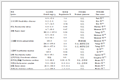
In the initial phase of our exploration, we focused on optimizing the reaction conditions for the addition of ethylbenzene 1a to the cyclic N-sulfonyl ketimine 2a, ethyl 5-methylbenzo[d]isothiazole-3-carboxylate 1, 1-dioxide, as the model substrate. Our first attempt utilized [CpRhCl2]2 (cat. 1, Cp* = pentamethylcyclopentadienyl) as the catalyst and silver hexafluorophosphate as the halogen absorbent. To our delight, the transformation was feasible and afforded the desired product 3a in 24% 1H NMR yield at 120 ℃ for 12 h using hexafluoro-2-propanol (HFIP) as the solvent (entry 1). The diastereoselectivity was 2:1. Control experiments were performed (entries 2 and 3), which showed that the transformation did not proceed in the absence of either the rhodium catalyst or silver additive, indicating the essential role of dicationic [Cp*Rh(Ⅲ)] species in the reaction. Instead of HFIP, other solvents, such as THF, nonane, and DME, gave lower yields or were inefficient. To further optimize the reaction conditions, we evaluated different rhodium catalysts. We found that replacing one methyl group with either an alkyl substituent or a phenyl motif on the cyclopentadienyl ligand (cat. 2–5) improved the reactions, producing 3a in moderate yields. Moreover, rhodium catalysts bearing 1, 3-diethyl ester (cat. 6) or 1, 2, 4-triphenyl (cat. 7) cyclopentadienyl ligand afforded the addition product 3a in up to 81% yield. In contrast to pentasubstituted ligands, disubstituted cyclopentadienyl ligands (cat. 8–12) were found to dramatically improved yields to nearly quantitative. In particular, cat. 11 provided product 3a in 98% isolated yield (Scheme 1).

|
Download:
|
| Scheme 1. Addition reactions to imines with carbon nucleophiles generated by deprotonation. | |
Optimized conditions were identified and used to investigate the potential of alkylarenes with five-membered cyclic N-sulfonyl ketimines 2a (Scheme 2). Initially, we examined an array of aromatic compounds bearing a methyl group and found that toluene (3b) and different xylenes (3c–3e) reacted well, yielding mono-addition products with excellent yields of up to 97%. Additionally, other monosubstituted toluene derivatives (3f–3i) with either a phenyl ring or a tert-butyl group at the para or meta position were also suitable; while, an amide group was tolerated, though the yield of corresponding product (3j) was relatively low. However, the electron-rich toluene derivatives (3k–3m) only formed trace amount of desired products under the standard conditions. Nevertheless, these substrates reacted smoothly, providing the corresponding products in 65%–92% yield upon replacing cat. 11 with cat. 9. It is worth noting that the Friedel–Crafts side reaction occurred as the steric hindrance at the benzylic position increased with anisole derivatives (see Table S3 in Supporting information for more details) [66,67]. On the other hand, disubstituted toluene derivatives bearing methoxy (3m), methyl (3n), or halogen (3o) also underwent addition to 2a.

|
Download:
|
| Scheme 2. Scope of alkylarenes and cyclic N-sulfonyl ketimines. Reaction conditions: 1 (0.20 mmol), 2 (0.22 mmol), cat. 11 (0.0050 mmol), AgPF6 (0.020 mmol), HFIP (0.10 mL), N2, 120 ℃, 12 h, isolated yields are reported; a 2 (0.30 mmol), cat. 9 (0.0050 mmol), 24 h; b 24 h. c 2a (0.50 mmol), 24 h. | |
Next, we examined alkylarenes with secondary benzylic C–H bonds and found that butylbenzene and 4-ethylanisole were compatible (3p, 3q). Moreover, a range of diarylmethanes substrates, involving electron-donating or -withdrawing substituents were all feasible with this protocol, providing good to excellent yields (3r–3u). Cyclic substrates also underwent addition, generating corresponding product in 88% (3v) and 96% (3w) yield, respectively. The formation of contiguous quaternary centers and the gem-dimethyl moiety are significant structural features present in bioactive natural products and pharmaceuticals [68-76]. Therefore, we investigated tertiary benzylic C–H bonds substrates with increased steric hindrance. Cumene (3x) and derivatives bearing phenyl (3y), isopropyl (3z–3aa), or an amide (3ab) substituent were all compatible under the reaction conditions, providing the target products with an adjacent quaternary carbon center in moderate yields (Table 1).
|
Table 1 Optimization of the reaction conditions.a |


Diaddition product 3ac could be successfully obtained in 64% yield by reacting p-xylene with an excess of 2a. Notably, this method was successfully applied to the modification of complex bioactive molecules. Monoaddition of flurbiprofen derivative, an anti-inflammatory drug for rheumatoid arthritis and osteoarthritis, and metaxalone, a muscle relaxant, provided the desired products 3ad and 3ae in 84% and 88% yield, respectively. Additionally, O-methyl β-estradiol was also accommodated and delivered product 3af in 92% yield.
The scope of the reaction was further explored by evaluating the substituent effects on the five-membered cyclic N-sulfonyl ketimines. Various substituents, including trifluoromethyl (3ah) and halogen (3ai–3al), were found to be compatible, producing the desired Mannich-type addition products in yields ranging from 67% to 96%. The reaction was also efficient with a wide range of six-membered cyclic N-sulfonyl ketimines bearing a substituent, including methyl (3an), methoxyl (3ao), tert-butyl (3ap), ester (3aq), nitro (3ar), fluoro (3au, 3av), chloro (3aw, 3ax), bromo (3as), iodo (3at), and disubstituted derivatives (3ay–3ba), generating the corresponding products in yields ranging from 41% to 95%. In addition, the reaction was successful with N-α-ethyl ester six-membered cyclic N-sulfonyl ketimines, producing 3bb in a yield of 90%.
Kinetic isotope effect (KIE) experiments were performed using diphenylmethane (1r) and its deuterated analogue (1r-) (Scheme 3, and see Supporting information for more details). The KIE value obtained was 4.07, indicating that the rate-determining step in this reaction is the deprotonation of the benzylic C–H bond. This information provides valuable insights into the reaction mechanism and can aid in the development of future optimizations and modifications of this method.

|
Download:
|
| Scheme 3. KIE experiments. | |

To further demonstrate the practical utility of this method, we explored a series of additional transformations of the Mannich-type addition products. First, a gram-scale reaction of ethylbenzene was conducted, which successfully delivered the product 3a in 94% yield under optimal conditions (Scheme 4a). Next, we carried out conversions of compound 3a (Scheme 4b). Reduction with LiAlH4 followed by treatment with trichloromethyl carbonochloridate afforded polycyclic compound 4 in 83% yield. The sulfonamide could be protected by Boc2O, and the product 5 was reduced by magnesium/MeOH to yield a ring-opening compound, sulfonic amide 6. Compound 3o that bears an iodine atom was found to readily undergo a copper-catalyzed intramolecular C—N bond formation, yielding tetracyclic compound 7 in 93% yield (Scheme 4c). Furthermore, N-methylation of 3am, followed by a nickel-catalyzed Suzuki–Miyaura reaction with phenylboronic acid, and subsequent acid-mediated cleavage of the sulfamic acid intermediate gave biaryl compound 9 in a good overall yield (Scheme 4d). Interestingly, under oxidative bromination conditions with NBS, a bromination/N-α-bromo elimination sequence of 3am took place, forming a ketimine 10 in 86% yield.

|
Download:
|
| Scheme 4. Divergent transformations of products. | |

In summary, we have developed a novel and efficient method for benzylic addition of unbiased alkylarenes to cyclic N-sulfonyl ketimines through a π-coordination strategy. This rhodium-catalyzed transformation is remarkable for being oxidant- and base-free and for its broad functional group tolerance, allowing for the convenient construction of a variety of quaternary carbon centers. Additionally, the resulting products can be further converted into a range of valuable compounds using various subsequent reactions.
Declaration of competing interestThe authors declare that they have no known competing financial interests or personal relationships that could have appeared to influence the work reported in this paper.
AcknowledgmentsWe thank the National Natural Science Foundation of China (Nos. 22271235, 22071198), the "Pioneer" and "Leading Goose" R & D Program of Zhejiang (No. 2022SDXHDX0006), and the Leading Innovative and Entrepreneur Team Introduction Program of Zhejiang (No. 2020R01004) for research support. We thank Westlake university instrumentation and service center for molecular sciences and physical sciences for the facility support and technical assistance.
Supplementary materialsSupplementary material associated with this article can be found, in the online version, at doi:10.1016/j.cclet.2023.108650.
| [1] |
F.F. Blicke, The Mannich reaction[J]. Org. React. 1 (1942) 303-341. DOI:10.1002/0471264180.or001.10 |
| [2] |
R.W. Layer, Chem. Rev. 63 (1963) 489-510. DOI:10.1021/cr60225a003 |
| [3] |
B.B. Thomson, J. Pharm. Sci. 57 (1968) 715-733. DOI:10.1002/jps.2600570501 |
| [4] |
M. Tramontini, Synthesis 12 (1973) 703-775. |
| [5] |
M. Tramontini, L. Angiolini, Tetrahedron 46 (1990) 1791-1837. DOI:10.1016/S0040-4020(01)89752-0 |
| [6] |
M. Arend, B. Westermann, N. Risch, Angew. Chem. Int. Ed. 37 (1998) 1044-1070. DOI:10.1002/(SICI)1521-3773(19980504)37:8<1044::AID-ANIE1044>3.0.CO;2-E |
| [7] |
Y. Habata, S. Akabori, J.S. Bradshaw, R.M. Izatt, Ind. Eng. Chem. Res. 39 (2000) 3465-3470. DOI:10.1021/ie0002327 |
| [8] |
G.K. Friestad, A.K. Mathies, Tetrahedron 63 (2007) 2541-2569. |
| [9] |
J.F. Allochio Filho, B.C. Lemos, A.S. de Souza, S. Pinheiro, S.J. Greco, Tetrahedron 73 (2017) 6977-7004. DOI:10.1016/j.tet.2017.10.063 |
| [10] |
H. Farhid, V. Khodkari, M.T. Nazeri, S. Javanbakht, A. Shaabani, Org. Biomol. Chem. 19 (2021) 3318-3358. DOI:10.1039/d0ob02600j |
| [11] |
B. Reichert, Die Mannich-Reaktion. Berlin: Springer-Verlag, 1959. DOI:10.1021/om00059a028
|
| [12] |
J.M.M. Verkade, L.J.C. van Hemert, P.J.L.M. Quaedflieg, F.P.J.T. Rutjes, Chem. Soc. Rev. 37 (2008) 29-41. DOI:10.1039/B713885G |
| [13] |
R.G. Arrayás, J.C. Carretero, Chem. Soc. Rev. 38 (2009) 1940-1948. DOI:10.1039/b820303b |
| [14] |
B. Weiner, W. Szymański, D.B. Janssen, A.J. Minnaard, B.L. Feringa, Chem. Soc. Rev. 39 (2010) 1656-1691. DOI:10.1039/b919599h |
| [15] |
S. Yamasaki, T. Iida, M. Shibasaki, Tetrahedron Lett. 40 (1999) 307-310. DOI:10.1016/S0040-4039(98)02297-7 |
| [16] |
M.M.B. Marques, Angew. Chem. Int. Ed. 45 (2006) 348-352. DOI:10.1002/anie.200502630 |
| [17] |
A. Ting, S.E. Schaus, Eur. J. Org. Chem. 2007 (2007) 5797-5815. DOI:10.1002/ejoc.200700409 |
| [18] |
S. Kobayashi, H. Kiyohara, M. Yamaguchi, J. Am. Chem. Soc. 133 (2011) 708-711. DOI:10.1021/ja108764d |
| [19] |
Y. Morita, T. Yamamoto, H. Nagai, Y. Shimizu, M. Kanai, J. Am. Chem. Soc. 137 (2015) 7075-7078. DOI:10.1021/jacs.5b04175 |
| [20] |
J.Z. C.han, W. Yao, B.T. Hastings, C.K. Lok, M. Wasa, Angew. Chem. Int. Ed. 55 (2016) 13877-13881. DOI:10.1002/anie.201608583 |
| [21] |
M. Shang, M. Cao, Q. Wang, M. Wasa, Angew. Chem. Int. Ed. 56 (2017) 13338-13341. DOI:10.1002/anie.201708103 |
| [22] |
J. Nakano, K. Masuda, Y. Yamashita, S. Kobayashi, Angew. Chem. Int. Ed. 51 (2012) 9525-9529. DOI:10.1002/anie.201204572 |
| [23] |
Y. Yamashita, S. Kobayashi, Chem. Eur. J. 24 (2018) 10-17. DOI:10.1002/chem.201703404 |
| [24] |
Y. Yamashita, A. Noguchi, S. Fushimi, M. Hatanaka, S. Kobayashi, J. Am. Chem. Soc. 143 (2021) 5598-5604. DOI:10.1021/jacs.0c13317 |
| [25] |
Y. Yamashita, H. Suzuki, S. Kobayashi, Org. Biomol. Chem. 10 (2012) 5750-5752. DOI:10.1039/c2ob25522g |
| [26] |
F.G. Bordwell, D. Algrim, N.R. Vanier, J. Org. Chem. 42 (1977) 1817-1819. DOI:10.1021/jo00430a039 |
| [27] |
F.G. Bordwell, Acc. Chem. Res. 21 (1988) 456-463. DOI:10.1021/ar00156a004 |
| [28] |
J.L. García Ruano, J. Alemán, A. Parra, J. Am. Chem. Soc. 127 (2005) 13048-13054. DOI:10.1021/ja0515203 |
| [29] |
J.L. García Ruano, J. Alemán, S. Catalán, et al., Angew. Chem. Int. Ed. 47 (2008) 7941-7944. DOI:10.1002/anie.200802885 |
| [30] |
S. Fustero, C. del Pozo, S. Catalán, et al., Org. Lett. 11 (2009) 641-644. DOI:10.1021/ol802733t |
| [31] |
S. Fustero, M. Sánchez-Roselló, C. Báez, et al., Amino Acids 41 (2011) 559-573. DOI:10.1007/s00726-011-0881-7 |
| [32] |
Y. Yamashita, H. Suzuki, I. Sato, T. Hirata, S. Kobayashi, Angew. Chem. Int. Ed. 57 (2018) 6896-6900. DOI:10.1002/anie.201711291 |
| [33] |
T. Hirata, I. Sato, Y. Yamashita, S. Kobayashi, Commun. Chem. 4 (2021) 36-43. |
| [34] |
H. Pines, Acc. Chem. Res. 7 (1974) 155-162. DOI:10.1021/ar50077a005 |
| [35] |
B.R. Steele, C.G. Screttas, J. Am. Chem. Soc. 122 (2000) 2391-2392. DOI:10.1021/ja994432p |
| [36] |
Y.F. Liu, D.D. Zhai, X.Y. Zhang, B.T. Guan, Angew. Chem. Int. Ed. 57 (2018) 8245-8249. DOI:10.1002/anie.201713165 |
| [37] |
X.Y. Zhang, L. Zheng, B.T. Guan, Org. Lett. 20 (2018) 7177-7181. DOI:10.1021/acs.orglett.8b03108 |
| [38] |
C. Cai, D. Zou, Chin. J. Org. Chem. 42 (2022) 1586-1608. DOI:10.6023/cjoc202201027 |
| [39] |
D. Astruc, Tetrahedron 39 (1983) 4027-4095. |
| [40] |
S.G. Davies, T.D. McCarthy, Transition Metal Arene Complexes: Side-Chain Activation and Control of Stereochemistry. Oxford: Elsevier, 1995. DOI:10.1021/om00059a028
|
| [41] |
R.D. Pike, D.A. Sweigart, Coord. Chem. Rev. 87 (1999) 183-222. |
| [42] |
S.E. Gibson, E.G. Reddington, Chem. Commun. (2000) 989-996. |
| [43] |
M. Uemura, Org. React. 67 (2006) 217-657. DOI:10.1002/0471264180.or067.02 |
| [44] |
S. Zemolka, J. Lex, H.G. Schmalz, Angew. Chem. Int. Ed. 41 (2002) 2525-2528. |
| [45] |
D. Astruc, Modern Arene Chemistry, Wiley-VCH, Weinheim, Germany, 2002.
|
| [46] |
V. Sartor, L. Djakovitch, J.L. Fillaut, et al., J. Am. Chem. Soc. 121 (1999) 2929-2930. DOI:10.1021/ja983868m |
| [47] |
U. Koelle, R. Pasch, Inorg. Chem. Commun. 1 (1998) 395-397. |
| [48] |
V.N. Kalinin, I.A. Cherepanov, S.K. Moiseev, J. Organomet. Chem. 536-537 (1997) 437-455. |
| [49] |
J.J.W. Hull, K.J. Roesselet, W.L. Gladfetter, Organometallics 11 (1992) 3630-3635. DOI:10.1021/om00059a028 |
| [50] |
T. Song, Y. Mu, Cyclic and Non-cyclic Pi Complexes of Chromium. 4th Ed. Oxford: Elsevier, 2022. DOI:10.1021/om00059a028
|
| [51] |
A.R. Pape, K.P. Kaliappan, E.P. Kündig, Chem. Rev. 100 (2000) 2917-2940. |
| [52] |
M. Rosillo, G. Domínguez, J. Pérez-Castells, Chem. Soc. Rev. 36 (2007) 1589-1604. DOI:10.1039/b606665h |
| [53] |
M.Y. Wang, C.J. Wu, W.L. Zeng, X. Jiang, W. Li, Angew. Chem. Int. Ed. 61 (2022) e202210312. |
| [54] |
J.Y. Qiu, W.L. Zeng, H. Xie, M.Y. Wang, W. Li, Angew. Chem. Int. Ed. 61 (2023) e202218961. |
| [55] |
G.I. McGrew, J. Temaismithi, P.J. Carroll, P.J. Walsh, Angew. Chem. Int. Ed. 49 (2010) 5541-5544. DOI:10.1002/anie.201000957 |
| [56] |
J. Zhang, C. Stanciu, B. Wang, et al., J. Am. Chem. Soc. 133 (2011) 20552-20560. DOI:10.1021/ja208935u |
| [57] |
G.I. McGrew, C. Stanciu, J. Zhang, et al., Angew. Chem. Int. Ed. 51 (2012) 11510-11513. DOI:10.1002/anie.201201874 |
| [58] |
S. Takemoto, E. Shibata, M. Nakajima, et al., J. Am. Chem. Soc. 138 (2016) 14836-14839. DOI:10.1021/jacs.6b08863 |
| [59] |
Q.K. Kang, Y. Li, K. Chen, et al., Angew. Chem. Int. Ed. 61 (2022) e202117381. |
| [60] |
Y. Li, W.Q. Wu, H. Zhu, et al., Angew. Chem. Int. Ed. 61 (2022) e202207917. |
| [61] |
S. Guin, D. Majee, S. Samanta, Chem. Commun. 57 (2021) 9010-9028. DOI:10.1039/d1cc03439a |
| [62] |
X.F. Xiong, H. Zhang, J. Peng, Y.C. Chen, Chem. Eur. J. 17 (2011) 2358-2360. DOI:10.1002/chem.201002592 |
| [63] |
Y. Liu, T.R. Kang, Q.Z. Liu, et al., Org. Lett. 15 (2013) 6090-6093. DOI:10.1021/ol402977w |
| [64] |
B. Zhou, K. Li, C. Jiang, Y. Lu, T. Hayashi, Adv. Synth. Catal. 359 (2017) 1-8. |
| [65] |
F. Wang, D. Huang, P. Zhao, et al., Chin. J. Org. Chem. 42 (2022) 507-518. DOI:10.6023/cjoc202108016 |
| [66] |
Y. Li, D.M. Ji, M.H. Xu, Org. Biomol. Chem. 9 (2011) 8452-8458. DOI:10.1039/c1ob06450a |
| [67] |
Y. Li, M.H. Xu, Asian J. Org. Chem. 2 (2013) 50-53. |
| [68] |
R. Long, J. Huang, J. Gong, Z. Yang, Nat. Prod. Rep. 32 (2015) 1584-1601. DOI:10.1039/C5NP00046G |
| [69] |
A.C. Lindsay, S.H. Kim, J. Sperry, Nat. Prod. Rep. 35 (2018) 1347-1382. DOI:10.1039/c8np00047f |
| [70] |
A. Steven, L.E. Overman, Angew. Chem. Int. Ed. 46 (2007) 5488-5508. DOI:10.1002/anie.200700612 |
| [71] |
Y. Liu, S.J. Han, W.B. Liu, B.M. Stoltz, Acc. Chem. Res. 48 (2015) 740-751. DOI:10.1021/ar5004658 |
| [72] |
B.M. Trost, M. Osipov, Chem. Eur. J. 21 (2015) 16318-16343. DOI:10.1002/chem.201501735 |
| [73] |
M. Büschleb, S. Dorich, S. Hanessian, et al., Angew. Chem. Int. Ed. 55 (2016) 4156-4186. DOI:10.1002/anie.201507549 |
| [74] |
F. Zhou, L. Zhu, B.W. Pan, et al., Chem. Sci. 11 (2020) 9341-9365. DOI:10.1039/d0sc03249b |
| [75] |
Z. Xin, H. Wang, H. He, S. Gao, Tetrahedron Lett. 71 (2021) 153029-153037. |
| [76] |
T.T. Talele, J. Med. Chem. 61 (2018) 2166-2210. DOI:10.1021/acs.jmedchem.7b00315 |