 2024, Vol. 35


b Institute of Nanjing Advanced Biomaterials & Processing Equipment, Lishui Economic Development Zone, Nanjing 211299, China
Hydrophilic cyclic polymers have no chain ends which helps them exhibit superior physical properties such as thermal stability and affinity to nanoparticles over their linear counterparts [1,2]. In this regard, cyclic poly(ethylene glycol), cPEG depicts significant prospects of advancing surface modification [3-6] and drug delivery applications [7]. However, health and environmental impact assert that the innovation in polymer design should be intended to decrease the reliance on the conventional PEG, due to undesired genotoxicity [8,9] and facilitated uptake of harmful substances through biological membranes and tissues by PEG [10]. Additionally, cPEG is synthesized through a ring-closure strategy, which entails using large amounts of solvent to overcome the entropic penalty of tethering chain ends [11]. Aliphatic polycarbonates with PEG-like properties, where the main chains contain long ethylene glycol segments including tri- and tetraethylene glycol, are potential alternatives, as they remain nontoxic to health in case of degradation of these polycarbonates [12].
Zwitterionic ring-opening polymerization (ZROP) mediated by N-heterocyclic carbene (NHC) [13,14] is an effective method to access cyclic polymers with high molecular weight [15]. By decreasing the entropy of coupling chain ends through the ionic attraction of the zwitterion, cyclic monomers [16] for ZROP are well developed including lactide [17,18], lactones [19-21], carbosiloxanes [22], N-substituted carbonate [23], N-carboxylanhydrides [24]. However, ZROP to attain hydrophilic cyclic polymers for decreasing the environmental impact of cPEG by more sustainable alternatives has not been addressed. We recently developed a simple approach for the synthesis of macrocyclic carbonates (MCs) with long alkyl chain segments through selective depolymerization of polycarbonates [25], yet the mechanism of ZROP of MC is still unclear [26]. Herein, we describe a zwitterionic ring-opening polymerization (ZROP) strategy to obtain cyclic polycarbonate with cPEG-like properties. While the polymerization of MC with a modest ring size (i.e., 11-membered MC) was driven by enthalpy change, 14-membered MC was polymerized by the entropic change. A three-step zwitterionic process was proposed for the study of mechanism of polymerization. To our surprise, the computational results revealed the ring-opened zwitterion of MC could not be located as an intermediate. Rather, the tetrahedral yielded from the nucleophilic addition to carbonate served as an active center for the chain propagation and ring-closure steps, which is distinct from NHC-mediated ZROP of cyclic ester. Moreover, the hydrophilicity and biocompatibility of cyclic polycarbonate were investigated showing its comparable properties with PEG.
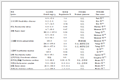
Based on our previous work, 1, 3-dimethyl-1H-imidazol-3-ium-2-ide (Me-NHC) exhibited the highest catalytic activity toward ZROP of macrocyclic carbonates (MCs) [26], ZROP of MCs with ethylene glycol segments (nEGMC, n refers to the number of ethylene glycol groups in the ring) were performed with a ratio of [Me-NHC]0/[nEGMC]0 = 1:20 in dichloromethane (DCM) at ambient temperature, [nEGMC]0 = 0.5 mol/L. Tetraethylene glycol carbonate (4EGMC) was selected as the model MC since the synthesis of 4EGMC through depolymerization of poly(teraethylene glycol carbonate), poly(4EGMC) has a higher yield than 3EGMC. After 1 h, the aliquot of the reaction mixture was withdrawn followed by characterized by 1H NMR spectroscopy. This revealed the generation of poly(4EGMC) with 96% conversion of 4EGMC (Fig. S1 in Supporting information). Size-exclusion chromatography (SEC) analysis of the resulting material revealed poly(4EGMC) with a molecular weight (4.7 kg/mol) and a moderate dispersity (ĐM = 1.46) (Fig. S2 in Supporting information). The significant difference in theoretical molecular weight (Mn theo. = 3.5 kg/mol) and Mn determined by SEC could be with a result that the slow generation of active zwitterions in the initiation stage and the fast propagation of polymer chain [27]. In addition, polymerization of 3EGMC with different ratios yielded an increase in Mn (Table 1, entries 4–6), distinct from ZROP of 4EGMC, which could be originated from the intrinsic properties of structure. To this end, the kinetic behaviors of ZROP of nEGMCs were investigated.
|
Table 1 Zwitterionic ring-opening polymerization of macrocyclic ethyleneoxy-substituted carbonate.a |

Kinetics for ZROP of nEGMCs were performed at same conditions (i.e., [Me-NHC]0: [nEGMC]0 = 1:20, in 1 mL DCM, ambient temperature, [nEGMC]0 = 0.5 mol/L). The aliquots of the mixture were withdrawn after predetermined time intervals followed by characterized using 1H NMR spectroscopy to determine the conversion of monomers. The semilogarithmic plots for ZROP of nEGMC are linear which showed pseudo-first-order polymerization behavior (Fig. 1 and Fig. S3 in Supporting information). ZROP of 3EGMC is faster than that of 4EGMC by ca. 7.6 times (kobs = 0.33 min−1 vs. kobs = 0.043 min−1). We hypothesize that this significant difference in kobs could correlate to the ZROP of nEGMCs under different thermodynamic principles (i.e., enthalpy-driven vs. entropy-driven polymerization). While 3EGMC had an intermediate ring size (11-membered) with a modest ring strain, the ZROP of 3EGMC may be partially assisted by the release of ring energy (ΔHring strain), leading to a faster kinetic (i.e. enthalpy-driven polymerization) [28].

|
Download:
|
| Fig. 1. The semilogarithmic kinetic plot of the ZROP of nEGMCs (left); results of thermodynamic polymerization and DFT calculated energy of ring strain (right). Experimental conditions of kinetics: [Me-NHC]0: [nEGMC]0 = 1:20, [nEGMC]0 = 0.5 mol/L, 1 mL DCM, at ambient temperature; Ln ([M]0/[M]) = kobst. a Thermodynamic polymerization were performed at different temperature with same ratios and concentrations for kinetic studies; b ring strains were calculated at rωB97XD/6–311+g(2d, p)/cpcm = dichloromethane. | |

In contrast to the ZROP of 3EGMC, 14-membered 4EGMC has little energy of ring strain [29] where polymerization is driven by the entropy change. This was supported by the thermodynamic polymerization using Van't Hoff equation in DCM at different temperature, where the enthalpy change of polymerization (ΔHp) for 3EGMC was higher than 4EGMC (−10.12 kJ/mol vs. −3.16 kJ/mol, Fig. S4 in Supporting information); DFT calculation of isodesmic ring-opening 3EGMC or 4EGMC with dimethyl carbonate [30], where the difference in ring strain was further revealed (3EGMC ΔHring strain = −4.41 kcal/mol vs. 4EGMC ΔHring strain = −1.62 kcal/mol, Fig. 1, Table S1 in Supporting information).
An assignment of signals for 1H and 13C NMR spectra of P4EGMC was achieved by analyzing the long-range correlation between the carbonyl carbons and the methylene protons (2J1H-13C and 3J1H-13C, 2D HMBC NMR spectrum). Additionally, the short-range correlation between proton and carbon (1J1H-13C, 2D HSQC NMR spectrum) was also performed. The signal at 4.28 ppm in the 1H NMR spectrum was assigned to the α-proton of methylene close to the carbonate group (-OCOO–CH2CH2-). A 3J1H-13C long-range correlation with α-proton was observed at 155.24 ppm and assigned as carbonyl carbon (-OCOO–CH2CH2-). The triplet at 3.72 ppm was assigned to β-proton of methylene (-OCOO–CH2CH2-) and 2J1H-13C and correlation was observed with α and β carbon (68.98 and 67.14 ppm). Moreover, the analysis of 1J1H-13C short-range correlation characterized by 2D HSQC NMR spectrum gave confirmation for all assignments of proton and carbon signals (Fig. S5 in Supporting information).
The cyclic topology of attained P4EGMC was confirmed by combining MALDI-ToF mass spectroscopy and SEC with a light-scattering and a viscometer detector. The repeating unit corresponded to a 4EGMC monomer (m/z 220.09) characterized by MALDI-ToF spectroscopy. This was associated with a sodium-charged cyclic structure with different chain lengths (Fig. S6 in Supporting information). Further evidence of cyclic topology was obtained by using SEC, where cP4EGMC had low intrinsic viscosity as compared to linear analogues due to the reduced entanglement of cyclic architecture [11]. The ratio of intrinsic viscosities [η]cyclic/[η]linear = 0.69 revealed the main population of cyclic polymers close to the theoretical value (0.66) in a theta solvent (Fig. 2) [31].

|
Download:
|
| Fig. 2. Mark-Houwink comparison of the P4EGMC with different topologies (cyclic vs. linear), cyclic polymer from Table 1, entry 2 and linear polymer with 7.3 kg/mol, ĐM = 1.63. | |

Cyclic polymers present distinct thermal properties from their linear analogues (lPnEGMCs). Therefore, we sought to investigate the thermal behaviors of PnEGMCs (n = 3, 4) in hands. The results of differential scanning calorimetry (DSC) revealed amorphous polymers of P3EGMCs regardless of topologies, while P4EGMC depicted endothermic peak which could be a result of the crystallization of long ethyleneoxy chain [32-34]. The cPnEGMCs, associated with no chain ends, had higher glass transition temperatures (Tg) by 10–20 ℃, compared to lPnEGMCs (Fig. S7 in Supporting information). This is in good agreement with that cyclic topology leads to high Tg, as free chain ends of cyclic polymer enable low configurational mobility [35-37]. In addition to the increased Tg originating from cyclic structure, cPnEGMCs also exhibited improved thermal stability characterized by thermogravimetric analysis (Fig. S8 in Supporting information). While cP3EGMC and cP4EGMC were associated with a degradation temperature of 5% weight loss (Td5%) above 200 ℃, their linear counterparts with hydroxyl chain-ends enable lower degradation temperature, ca. 180 ℃, which may be due to competition for backbiting from chain-ends [38,39].
In our previous work, we revealed the NHC-mediated initiation of ZROP of MC through the theoretical study; yet the ring-opened the structure of tetrahedral intermediate cannot be located, which differs from the well-known mechanism of NHC-mediated ZROP of cyclic ester [21,27]. In this context, the endeavor to understand the polymerization was made through calculation. Density functional theory (DFT) simulations were performed with the Gaussian 16 suite of programs. Following our previous work [26] and reports by Jones and Waymouth [21,27], we assume that the reaction pathway involves nucleophilic addition of NHC on nEGMC, ring-opening of nEGMCs, and ring closure to yield a cyclic polymer. In order to lower the computational cost, Me-NHC and 2 equiv. of 3EGMC to form a cyclic dimer were selected as a model reaction.
Computational findings revealed that the initial tetrahedral intermediate (Int1) was yielded through a nucleophilic attack from Me-NHC to 3EGMC assisted by weak hydrogen-bonding between a hydrogen atom from the methyl group of NHC and the carbonyl oxygen from MC (dH-O= 2.18 Å, Fig. S9 in Supporting information). The subsequent ring-opened intermediate of NHC/3EGMC zwitterion could not be located after many attempts, which could be a result that the ring-opened cyclic carbonate readily revert to the tetrahedral intermediate (Int1) with little to no energy barrier and thus inhibiting the generation of ring-opened structure. Moreover, the comparable Hirshfeld partial charge of sp3 hybridized oxygen atoms on the carbonate group (ca. −0.18 e) afford negligible driving force to ring-opened structure (Fig. S9). This shows conformance with the previous report that involved calculations in an anionic pathway [40]. As ring-opened intermediate could not be identified, we assume that the transition state for adding the second 3EGMC to Int1 involves both the simultaneous cleavage of the O-acyl bond from Int1 and the generation of new zwitterionic tetrahedral (Int3). Calculation of TS2 revealed a relatively shorter distance (1.93 Å, Fig. 3 and Fig. S9) between the carbonate oxygen atom of Int1 and carbonyl carbon of 3EGMC. This confirmed our hypothesis that the propagation occurs between different tetrahedral intermediates (i.e., Int1 and Int3). The carbonyl carbon of 3EGMC with a positive Hirshfeld partial charge (+0.25 e), which is relatively higher than the carbonyl carbon of Int1 by +0.05 e, ensures the generation of Int3 (Fig. 3 and Fig. S9). In addition, interaction region indicator [41] and Wiberg Bonding Index (WBI) analysis confirmed this process in the transition state (TS2, Fig. 4). While Int2 is associated with a high activation energy barrier of 12.3 kcal/mol for overcoming TS2, the reverse reaction requires relatively low energy (9.1 kcal/mol) for the regeneration of Int2 and 3EGMC (Fig. 3). In comparison to DC in TS1 with 9.8 kcal/mol energy in the initiation step, relatively high energy requirement and reversible reaction in propagation demonstrate that the addition of the second 3EGMC to Int1 is a rate-determining step. As the direct ring-closing of dimer by Int3 could not be located, Int3 reaches Int4 with a small energy barrier (Δ = 2.0 kcal/mol, Fig. 3). After Int4 overcomes TS3 with an energy barrier of 8.8 kcal/mol to yield Int5, the reverse reaction needs over 25.5 kcal/mol. This confirmed that the NHC-involved tetrahedral intermediate is thermodynamically favored.

|
Download:
|
| Fig. 3. Energetic profiles for zwitterionic ring-opening of 3EGMC mediated by Me-NHC and optimized structures with distances at the catalytic site for the opening of 3EGMC at initiation (TS1) and propagation (TS2) steps. | |


|
Download:
|
| Fig. 4. Selected region of isosurface map of interaction region indicator (IRI) [41] for transition state (TS2) reveals the simultaneous breaking and forming of C—O bonds (left) [42,43]. Wiberg Bonding Indices of C25-O27 and C1-O27 shows the stronger bond between C1-O27 (right). | |

Overall, the computational study contributes to revealing the mechanism of NHC mediated ZROP of EGMC to a cyclic polymer. Unlikely ZROP of the cyclic ester with identified ring-opened intermediate as the propagation center [21], ZROP of EGMC proceeds through transformation between different tetrahedral intermediates (Scheme 1). The addition of the second 3EGMC to Int1 is the rate-determining step is. All calculated reaction steps are associated with relatively low activation energy, yielding an enthalpy-favorited cyclic dimer from Me-NHC and two 3EGMC (Fig. 3 and Fig. S10 in Supporting information).

|
Download:
|
| Scheme 1. Computed mechanism of zwitterionic ring-opening 3EGMC mediated by Me-NHC to generate the cyclic dimer. | |

The medical treatment using PEG as the stealth polymer to delivery drug remains controversial [44], as the clinic results demonstrate unexpected pharmacokinetic behavior [45,46]. In this context, the degradable polycarbonate could be potential alternative of PEG for medical application. To evaluate the wettability of the cyclic polycarbonate, cP4EGMC with a Mn of 4.4 kg/mol was selected as a representative example. While water droplets completely spread on both cP4EGMC and cPEG, demonstrating the comparable hydrophilicity, the analysis of contact angle revealed the relative wettability of cP4EGMC using n-hexane droplets, in comparison to cPEG. The results showed cP4EGMC had a contact angle of 12° ± 1.6°, while cPEG afforded a contact angle of 16° ± 1.8° (Fig. S11 in Supporting information).
To assess the biocompatibility of cP4EGMC, the cytotoxicity was performed through MTT assay with L929 cells. The cell culture mediums were added into cP4EGMC and cPEG with different concentrations (0.01–5 mg/mL), where neither polymer significantly influenced the relative growth rate (RGR) after 24 h (≥77%), in comparison to the positive control group that phenol-involved experiment (ca. 18%, Fig. S12 in Supporting information). These results demonstrated cP4EGMC afforded no toxicity to cells, albeit a relative decrease in RGR at 5 mg/mL (Fig. 5). In addition, the morphology of cells after incubating cells in polymer solutions photographed by the inverted microscopy revealed that cP4EGMC enabled to retain cells (Fig. S12), further demonstrating the biosafety of cyclic polycarbonate in reference to the international standard (ISO 10993–5).

|
Download:
|
| Fig. 5. Cytotoxicity of cP4EGMC and cPEG at different concentrations using L929 cells for 24 h. The relative growth rate (RGR) of cells was determined by MTT assay and shown as ± SD of three determinations. | |

Materials with chemical recyclability allow the transformation of current linear economy of polymers into a sustainable circular one [47]. Recycling cyclic polycarbonate (e.g., cP4EGMC) to regenerate 4EGMC were therefore studied. Depolymerization of cP4EGMC was achieved at 230 ℃ under a vacuum of 0.05 mbar with ca. 85 mol% in selectivity (Fig. S13 in Supporting information), which differs from polycarbonate with long alkyl groups between carbonates [25,26]. This comparable selectivity could be a result that the ethylene glycol segment on main chain induces the oxidation thereby leading to the side reactions [48-50].
Designing advanced alternatives of conventional polymer provides opportunities to avoid damages to environmental sustainability. We demonstrated NHC-mediated ZROP of macrocyclic carbonates comprising of ethylene glycol segments to yield cyclic polycarbonates with high molecular weights and modest dispersity (up to 49.5 kg/mol, ĐM = 1.40–1.58). The attained cyclic structures exhibited high thermostability and increase of Tg. It was found that the active center of polymerization is not the ring-opened zwitterion but the tetrahedral intermediate. It is where the simultaneous breaking and forming bonds to yield different tetrahedral zwitterions for transition state occurs which presents a distinct mechanism from ZROP of cyclic esters. Moreover, polycarbonate depicted PEG-like wettability and biocompatibility supported by analysis of contact angle and cytotoxicity assay revealed polycarbonate, which was promising to be the alternative of PEG. By chaining up neutral and eco-friendly diols with carbonate groups, the sustainable polymers providing a promising route to compete the conventional plastics can be developed.
Declaration of competing interestsThe authors declare that they have no known competing financial interests or personal relationships that could have appeared to influence the work reported in this paper.
AcknowledgmentsJ. Huang thanks the China Postdoc Council (OCPC) for the financial support of Postdoctoral International Exchange Program (No. YJ20210095). Authors thank the financial support from the National Natural Science Foundation of China (No. 22078150), National Key R & D Program of China (No. 2021YFC2101904), the Jiangsu National Synergetic Innovation Center for Advanced Materials (SICAM); the Priority Academic Program Development of Jiangsu Higher Education Institutions (PAPD), the Jiangsu Synergetic Innovation Center for Advanced Bio-Manufacture (No. XTB2201), and the Top-Notch Academic Programs Project of Jiangsu Higher Education Institutions (TAPP). Techniques support for MALDI-ToF experiments provided by Dr. Yajun Li from Institute of Nanjing Advanced Biomaterials & Processing Equipment is gratefully acknowledged. Authors also thanks to the fruitful talk with Junyuan Hu from School of Chemistry and Molecular Engineering, Nanjing Tech University. We also appreciated the high performance center of Nanjing Tech University for supporting the computational resources.
Supplementary materialsSupplementary material associated with this article can be found, in the online version, at doi:10.1016/j.cclet.2023.108643.
| [1] |
F.M. Haque, S.M. Grayson, Nat. Chem. 12 (2020) 433-444. DOI:10.1038/s41557-020-0440-5 |
| [2] |
R. Rajan, S. Ahmed, N. Sharma, et al., Mater. Adv. 2 (2021) 1139-1176. DOI:10.1039/d0ma00760a |
| [3] |
M.A. Aboudzadeh, A. Iturrospe, A. Arbe, M. Grzelczak, F. Barroso-Bujans, ACS Macro Lett. 9 (2020) 1604-1610. DOI:10.1021/acsmacrolett.0c00730 |
| [4] |
M.A. Aboudzadeh, J. Kruse, M. Sanromán Iglesias, et al., Soft. Matter 17 (2021) 7792-7801. DOI:10.1039/d1sm00720c |
| [5] |
T. Muraoka, K. Adachi, M. Ui, et al., Angew. Chem. Inter. Ed. 52 (2013) 2430-2434. DOI:10.1002/anie.201206563 |
| [6] |
Y. Wang, J.E.Q. Quinsaat, T. Ono, et al., Nat. Commun. 11 (2020) 6089. DOI:10.1109/cac51589.2020.9326995 |
| [7] |
L. Shi, J. Zhang, M. Zhao, et al., Nanoscale 13 (2021) 10748-10764. DOI:10.1039/d1nr02065j |
| [8] |
O. Biondi, S. Motta, P. Mosesso, Mutagenesis 17 (2002) 261-264. DOI:10.1093/mutage/17.3.261 |
| [9] |
J. Wangenheim, G. Bolcsfoldi, Mutagenesis 3 (1988) 193-205. DOI:10.1093/mutage/3.3.193 |
| [10] |
K. Duis, T. Junker, A. Coors, Environ. Sci. Eur. 33 (2021) 21. DOI:10.1186/s12302-021-00466-2 |
| [11] |
R. Liénard, J. De Winter, O. Coulembier, J. Polym. Sci. 58 (2020) 1481-1502. DOI:10.1002/pol.20200236 |
| [12] |
J. Fowles, M. Banton, J. Klapacz, H. Shen, Toxicol. Lett. 278 (2017) 66-83. DOI:10.1016/j.toxlet.2017.06.009 |
| [13] |
B. Hong, L. Shi, L. Li, S. Zhan, Z. Gu, Green Syn. Catal. 3 (2022) 137-149. DOI:10.1016/j.gresc.2022.03.001 |
| [14] |
M.N. Hopkinson, C. Richter, M. Schedler, Nature 510 (2014) 485-496. DOI:10.1038/nature13384 |
| [15] |
H.A. Brown, R.M. Waymouth, Acc. Chem. Res. 46 (2013) 2585-2596. DOI:10.1021/ar400072z |
| [16] |
Y.A. Chang, R.M. Waymouth, J. Polym. Sci. A: Polym. Chem. 55 (2017) 2892-2902. DOI:10.1002/pola.28635 |
| [17] |
D.A. Culkin, W. Jeong, S. Csihony, et al., Angew. Chem. Inter. Ed. 46 (2007) 2627-2630. DOI:10.1002/anie.200604740 |
| [18] |
W. Jeong, E.J. Shin, D.A. Culkin, J.L. Hedrick, R.M. Waymouth, J. Am. Chem. Soc. 131 (2009) 4884-4891. DOI:10.1021/ja809617v |
| [19] |
H.A. Brown, S. Xiong, G.A. Medvedev, et al., Macromolecules 47 (2014) 2955-2963. DOI:10.1021/ma500395j |
| [20] |
R.M. Cywar, J.B. Zhu, E.Y.X. Chen, et al., Polym. Chem. 10 (2019) 3097-3106. DOI:10.1039/c9py00190e |
| [21] |
G.O. Jones, Y.A. Chang, H.W. Horn, et al., J. Phys. Chem. B 119 (2015) 5728-5737. DOI:10.1021/acs.jpcb.5b01595 |
| [22] |
H.A. Brown, Y.A. Chang, R.M. Waymouth, J. Am. Chem. Soc. 135 (2013) 18738-18741. DOI:10.1021/ja409843v |
| [23] |
Y.A. Chang, A.E. Rudenko, R.M. Waymouth, ACS Macro Lett. 5 (2016) 1162-1166. DOI:10.1021/acsmacrolett.6b00591 |
| [24] |
L. Guo, D. Zhang, J. Am. Chem. Soc. 131 (2009) 18072-18074. DOI:10.1021/ja907380d |
| [25] |
J. Huang, P. Olsén, E. Svensson Grape, A.K. Inge, K. Odelius, Macromolecules 55 (2022) 608-614. DOI:10.1021/acs.macromol.1c02225 |
| [26] |
J. Huang, R. Yan, Y. Ni, et al., ACS Sustain. Chem. Eng. 10 (2022) 15007-15016. DOI:10.1021/acssuschemeng.2c04230 |
| [27] |
A.K. Acharya, Y.A. Chang, G.O. Jones, et al., J. Phys. Chem. B 118 (2014) 6553-6560. DOI:10.1021/jp500200b |
| [28] |
Y. Tanaka, J. Macromol. Sci. A: Chem. 1 (1967) 1059-1068. DOI:10.1080/10601326708053757 |
| [29] |
M.B. a. M. Smith, J. Stereochemistry, in: March's Advanced Organic Chemistry, John Wiley & Sons, Inc., 2006, pp. 136–233.
|
| [30] |
G.L. Gregory, G. Kociok-Köhn, A. Buchard, Polym. Chem. 8 (2017) 2093-2104. DOI:10.1039/C7PY00236J |
| [31] |
M. Benmounaa, U. Maschke, Theoretical aspects of cyclic polymers: effects of excluded volume interactions, in: J.A. Semlyen (Ed. ), Cyclic Polymers, Springer, Netherlands, Dordrecht, 2002, pp. 741–790.
|
| [32] |
S.Z. Cheng, J. Chen, J.S. Barley, et al., Macromolecules 25 (1992) 1453-1460. DOI:10.1021/ma00031a015 |
| [33] |
L. Mandelkern, in: Kinetics and Mechanisms, Crystallization of Polymers, Cambridge University Press, 2004, pp. 1–214.
|
| [34] |
R. Paberit, E. Rilby, J. Göhl, et al., ACS Appl. Energy Mater. 3 (2020) 10578-10589. DOI:10.1021/acsaem.0c01621 |
| [35] |
F. Danusso, M. Levi, G. Gianotti, S. Turri, Polymer 34 (1993) 3687-3693. DOI:10.1016/0032-3861(93)90054-E |
| [36] |
K. Li, G. Jiang, F. Zhou, et al., Polym. Chem. 8 (2017) 2686-2692. DOI:10.1039/C7PY00037E |
| [37] |
P.G. Santangelo, C.M. Roland, T. Chang, D. Cho, J. Roovers, Macromolecules 34 (2001) 9002-9005. DOI:10.1021/ma011069+ |
| [38] |
J.N. Hoskins, S.M. Grayson, Macromolecules 42 (2009) 6406-6413. DOI:10.1021/ma9011076 |
| [39] |
O. Persenaire, M. Alexandre, P. Degée, P. Dubois, Biomacromolecules 2 (2001) 288-294. DOI:10.1021/bm0056310 |
| [40] |
D.J. Darensbourg, A.D. Yeung, Macromolecules 46 (2013) 83-95. DOI:10.1021/ma3021823 |
| [41] |
T. Lu, Q. Chen, Chem. Method. 1 (2021) 231-239. DOI:10.1002/cmtd.202100007 |
| [42] |
W. Humphrey, A. Dalke, K. Schulten, J. Mol. Graph. 14 (1996) 33-38. DOI:10.1016/0263-7855(96)00018-5 |
| [43] |
T. Lu, F. Chen, J. Comput. Chem. 33 (2012) 580-592. DOI:10.1002/jcc.22885 |
| [44] |
A. Kolate, D. Baradia, S. Patil, et al., J. Controll. Release 192 (2014) 67-81. |
| [45] |
K. Knop, R. Hoogenboom, D. Fischer, U.S. Schubert, Angew. Chem. Inter. Ed. 49 (2010) 6288-6308. DOI:10.1002/anie.200902672 |
| [46] |
J.J.F. Verhoef, T.J. Anchordoquy, Drug Deliv. Transl. Res. 3 (2013) 499-503. DOI:10.1007/s13346-013-0176-5 |
| [47] |
D.I. Collias, M.I. James, J.M. Layman, in: Introduction, Circular Economy of Polymers: Topics in Recycling Technologies, American Chemical Society, 2021, pp. 1–21.
|
| [48] |
N. Belhadj, R. Benoit, M. Lailliau, V. Glasziou, P. Dagaut, Combust. Flame 228 (2021) 340-350. DOI:10.1016/j.combustflame.2021.02.007 |
| [49] |
C.M. Rosado-Reyes, J.S. Francisco, J.J. Szente, M.M. Maricq, L.Frøsig Østergaard, J. Phys. Chem. A 109 (2005) 10940-10953. DOI:10.1021/jp054223t |
| [50] |
A.M. Sakharov, L.I. Mazaletskaya, I.P. Skibida, Kinet. Catal. 42 (2001) 662-668. DOI:10.1023/A:1012371630951 |