 2024, Vol. 35


N-Fused heterocycles are important structural motifs that are diverse and ubiquitous in bioactive natural and non-natural products, drugs, ligands, and functional materials (Fig. 1a) [1–6]. They usually improve the molecular and physiochemical properties and enhance the bioactivities. N-Fused heterocycles are present in almost half of the 200 top selling US FDA-approved drug compounds as of 2014 [7]. Therefore, an efficient method to construct N-fused heterocycles is in great demand [8–28].

|
Download:
|
| Fig. 1. Examples of important fused-heterocycles and our reaction design. | |
Recently, we developed an intriguing and general method for the synthesis of diverse N-fused heterocycles via Pd-catalyzed intramolecular acyl-transfer of heteroaryl ketones [9]. Driven by aromatization, the acyl of a heteroaryl ketone can be transferred from a carbon atom to a nitrogen atom to form the corresponding N-fused heterocycles. As heteroaryl ketones are stable and simple to prepare, this strategy simplifies the synthesis of N-fused heterocycles, which are valuable synthetic intermediates for bioactive compounds but challenging to prepare otherwise. However, the excess loading of noble metals often incurs economic and ecological costs, which prompted us to explore a novel acyl-transfer process. Moreover, achieving the selective C‒C bond activation of unstrained heteroaryl ketones under transition-metal-free conditions remains a formidable synthetic challenge [29–34].
In recent years, phosphine-catalyzed reactions have attracted significant attention in the synthetic community. They provide a powerful and metal-free method for diversely functionalized molecule synthesis, eliminating the contamination of metals in organic products [35–43]. Phosphines have been found to achieve outstanding performance in single electron transfer (SET) in the presence of oxidants [44–46]. In particular, tertiary phosphines can react with various iodides through SET processes and generate reactive radical intermediates (Fig. 1b) [47–50]. The excellent ability of phosphines in the SET process motivated us to explore the use of metal-free conditions for the aromatization driven acyl transfer annulation process, which could provide an advantageous alternative to the transition-metal-catalyzed strategy for producing N-fused heterocycles modified with trifluoromethyl. To the best of our knowledge, phosphine-catalyzed cleavage of the C‒C bond of ketones is challenging and remains unsolved.
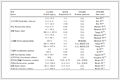
To explore this strategy, we initiated a systematic study of the reaction conditions using heteroaryl ketone 1 as a model substrate. The desired trifluoromethyl modified product 2 was isolated in 80% yield using tri(2-furyl)phosphine (TFP, P1) and Togni's reagent Ⅱ via phosphine-oxidant charge transfer in dioxane/1,2-dichloroethane (DCE). A control experiment revealed that TFP appears to be critical in this reaction. Tertiary amine DABCO and other phosphines (Table 1, entries 2 and 3), such as tributylphosphine (P4) and 1,2-bis(diphenylphosphino)benzene (dppBz, P6), were not as effective, and only 31% yield of the product could be observed in the absence of tri(2-furyl)phosphine (Table 1, entry 4), which might be attributed that an electron donor-acceptor (EDA) complex was formed between N-containing heteroaryl ketones (donor) and Togni's reagent Ⅱ (acceptor) to generate the CF3 radical [51]. The reaction was not sensitive to oxygen and was promoted smoothly under normal air conditions, although a slightly higher yield was obtained under a N2 atmosphere (Table 1, entry 5). A survey of different solvents revealed that the individual DCE, dioxane, and MeCN could also give acceptable yields, although lower than that of the mixture (Table 1, entries 6–8). The study of ·CF3 sources further suggested that oxidant capacity is essential for the SET process [52], other trifluoromethylation reagents such as Togni's reagent I, Umemoto's reagent and trifluoromethyl thianthrenium triflate were not effective in this process, and only Togni's reagent Ⅱ is a compatible oxidant that generates phosphinium radical cations and free trifluoromethylcarbon radicals.
|
Table 1 Selected reaction optimization.a |


With the optimized reaction conditions confirmed, the scope of heteroaryl ketones was examined. As shown in Scheme 1, the reaction exhibits excellent compatibility with heteroaryl ketones and with various N-containing heteroaryls, including imidazole (15), thiazole (26), oxazole (28), benzothiazoles (19–25) and benzoxazole (27), all yielding different heterocyclic core fused-ring skeletons. Both electron-rich and electron-deficient substrates, such as methyl (5, 6, 9, 11), ether (3, 4, 8, 22, 24), ester (21), fluorides (10, 20, 23), and chlorides (7) at different positions, were tolerated. Benzimidazole with isopropyl (13) and benzyl (14) nitrogen protecting groups were also suitable substrates. Notably, imidazole (15), thiazole (26), and oxazole (28) yielded lower conversions than substrates with more conjugated systems, indicating that aromatization is crucial for promoting the reaction. Remarkably, replacing Togni's reagent Ⅱ with ethyl bromodifluoroacetate (16), perfluoroalkyl iodide (17), and bromodifluoroamide (18) readily yielded the desired polyfluoroalkyl products. Finally, the merits of the protocol were further manifested by late-stage modifications of borneol (29) and cholesterol (30), which gave rise to the corresponding products in useful yields, suggesting their potential use in polyfluoroalkyl drug modification.

|
Download:
|
| Scheme 1. Substrate scope for preparing N-fused heterocycles. Reaction conditions: ketones (0.1 mmol) and Togni's reagent Ⅱ (0.15 mmol, 1.5 equiv.), with 10 mol% tri(2-furyl)phosphine (TFP), in dioxane/DCE (0.6 mL, 1:1) at 100 ℃ for 24 h, and 140 ℃ for 12 h. Isolated yields after chromatography. a The yield for large-scale synthesis with 1.5 mmol of 1. b Using ethyl bromodifluoroacetate (0.15 mmol, 1.5 equiv.) instead of Togni's reagent Ⅱ at 140 ℃ for 36 h. c Using perfluoroalkyl iodide (0.15 mmol, 1.5 equiv.) instead of Togni's reagent Ⅱ at 140 ℃ for 36 h. d Using perfluoroalkyl amide or bromodifluoroacetate instead of Togni's reagent Ⅱ at 140 ℃ for 48 h. | |

A series of control experiments were performed to investigate the mechanism of the phosphine-catalyzed radical-mediated process. When TFP was used with Togni's reagent Ⅱ and heteroaryl ketone 1 in a 1:1 ratio at standard conditions and an electrospray ionization mass spectroscopic analysis was performed, it revealed that only tri(furan-2-yl)phosphine oxide 31 was detected in the presence of Togni's reagent Ⅱ (Scheme 2a). This suggests that only Togni's reagent Ⅱ can oxidize tertiary phosphine to initiate the generation of CF3 radicals. Furthermore, a radical inhibition analysis validated the generation of a radial intermediate in the phosphine-initiated SET process (Scheme 2b), which was also confirmed by an electron paramagnetic resonance (EPR) analysis of the reaction between polyfluoroalkyl radicals 34 and 35 (Scheme 2c). The proposed reaction pathway based on the results described above and in previous studies is shown in Scheme 2d. Initially, the use of phosphine as a SET reagent under the oxidation of Togni's reagent Ⅱ generated the corresponding phosphorus radical cation and CF3 radical. The CF3 radical attacks the alkene of heteroaryl ketones, affording a nascent benzyl radical intermediate, INT-Ⅰ, followed by the dearomatizative spirocyclization to form spiro-N-radical INT-Ⅱ. The aromatization driven intramolecular acyl transfer of the high-energy intermediate INT-Ⅱ facilitates the formation of stable INT-Ⅲ. Subsequently, single-electron oxidation of the phosphorus radical cation and deprotonation occurred to yield N-fused heteroarenes and regenerate the catalyst.

|
Download:
|
| Scheme 2. Control experiments and proposed mechanism. | |

Further studies were conducted to investigate the synthetic utility of N-fused heteroarenes (Scheme 3). The bromination of 2 proceeded smoothly to afford 36 in presence of N-bromosuccimide (NBS), which allows follow-up fused heterocycle manipulations through cross-couplings. And a deconstruction of N-fused heterocycle was observed when treated 2 with mCPBA, affording 37 in 41% yield [9].

|
Download:
|
| Scheme 3. Synthetic applications. | |

In summary, a transition-metal-free acyl transfer strategy was proved to produce trifluoromethyl modified N-fused heteroarenes from N-containing heteroaryl ketones. The key SET process of Togni's reagent Ⅱ promoted by the tertiary phosphine resulted in a low cost and with minimal ecological impact tactic for the cleavage of C‒C bonds. This eco-friendly and step-economical method not only offers a robust access to valuable complex N-fused heterocyclic systems but also enables late-stage modifications of diverse drug derivatives, thus demonstrating a great potential in heterocyclic drug research.
Declaration of competing interestThe authors declare that they have no known competing financial interests or personal relationships that could have appeared to influence the work reported in this paper.
AcknowledgmentsWe are grateful for the financial support from the National Natural Science Foundation of China (Nos. 21971205 and 22271231), the Natural Science Basic Research Plan in Shaanxi Province of China (No. 2023-JC-YB-126), and Natural Science Basic Research Plan for Distinguished Young Scholars in Shaanxi Province of China (No. 2022JC-08), and Key Research and Invention Program in Shaanxi Province of China (No. 2021SF-299).
Supplementary materialsSupplementary material associated with this article can be found, in the online version, at doi:10.1016/j.cclet.2023.108529.
| [1] |
R.D. Taylor, M. MacCoss, A.D. Lawson, J. Med. Chem. 57 (2014) 5845-5859. DOI:10.1021/jm4017625 |
| [2] |
J. Ning, Z. Tian, B. Wang, et al., Mater. Chem. Front. 2 (2018) 2013-2020. DOI:10.1039/C8QM00372F |
| [3] |
S. Kumar, S. Bawal, H. Gupta, Mini. Rev. Med. Chem. 9 (2009) 1648-1654. DOI:10.2174/138955709791012247 |
| [4] |
M. Bollini, J.J. Casal, D.E. Alvarez, et al., Bioorg. Med. Chem. 17 (2009) 1437-1444. DOI:10.1016/j.bmc.2009.01.011 |
| [5] |
J. Cui, G. Gao, H. Zhao, et al., New J. Chem. 41 (2017) 11891-11897. DOI:10.1039/C7NJ01943B |
| [6] |
Y. Hao, J. Guo, Z. Wang, et al., J. Agric. Food Chem. 68 (2020) 5586-5595. DOI:10.1021/acs.jafc.0c02101 |
| [7] |
E. Vitaku, D.T. Smith, J.T. Njardarson, J. Med. Chem. 57 (2014) 10257-10274. DOI:10.1021/jm501100b |
| [8] |
H. Zhang, M. Wang, X. Wu, et al., Angew. Chem. Int. Ed. 60 (2021) 3714-3719. DOI:10.1002/anie.202013089 |
| [9] |
D. Ye, H. Lu, Y. He, et al., Nat. Commun. 13 (2022) 3337. DOI:10.1038/s41467-022-31063-3 |
| [10] |
K.H. Oh, S.M. Kim, S.Y. Park, et al., Org. Lett. 18 (2016) 2204-2207. DOI:10.1021/acs.orglett.6b00821 |
| [11] |
K. Xiao, C. Zhu, M. Lin, et al., ChemistrySelect 3 (2018) 11270-11272. DOI:10.1002/slct.201802620 |
| [12] |
V. Helan, A.V. Gulevich, V. Gevorgyan, Chem. Sci. 6 (2015) 1928-1931. DOI:10.1039/C4SC03358B |
| [13] |
B. Shen, B. Li, B. Wang, Org. Lett. 18 (2016) 2816-2819. DOI:10.1021/acs.orglett.6b01181 |
| [14] |
D.C. Wang, M.S. Xie, H.M. Guo, et al., Angew. Chem. In. Ed. 55 (2016) 14111-14115. DOI:10.1002/anie.201607852 |
| [15] |
X. Wang, X. Qiu, J. Wei, et al., Org. Lett. 20 (2018) 2632-2636. DOI:10.1021/acs.orglett.8b00840 |
| [16] |
X. Wu, H. Xiong, S. Sun, et al., Org. Lett. 20 (2018) 1396-1399. DOI:10.1021/acs.orglett.8b00119 |
| [17] |
L. Zhang, X. Li, Y. Liu, et al., Chem. Commun. 51 (2015) 6633-6636. DOI:10.1039/C5CC01151E |
| [18] |
H. Li, X. Li, Y. Yu, et al., Org. Lett. 19 (2017) 2010-2013. DOI:10.1021/acs.orglett.7b00566 |
| [19] |
J.J. Lade, B.N. Patil, P.A. Sathe, et al., ChemistrySelect 2 (2017) 6811-6817. DOI:10.1002/slct.201701383 |
| [20] |
S. Annareddygari, V.R. Kasireddy, J. Reddy, J. Heterocyclic Chem. 56 (2019) 3267-3276. DOI:10.1002/jhet.3722 |
| [21] |
M.J. Albaladejo, F. Alonso, ACS Catal. 5 (2015) 3446-3456. DOI:10.1021/acscatal.5b00417 |
| [22] |
Y. Fang, L. He, W. Pan, et al., Tetrahedron 75 (2019) 3767-3771. DOI:10.1016/j.tet.2019.05.058 |
| [23] |
S.Y. Roth, J.M. Denu, C.D. Allis, Annu. Rev. Biochem. 70 (2001) 81-120. DOI:10.1146/annurev.biochem.70.1.81 |
| [24] |
H.M. Burke, L. McSweeney, E.M. Scanlan, Nat. Commun. 8 (2017) 15655. DOI:10.1038/ncomms15655 |
| [25] |
B.E.I. Ramakers, J.C.M. van Hesta, D.W.P.M. L?wik, Chem. Soc. Rev. 43 (2014) 2743-2756. DOI:10.1039/c3cs60362h |
| [26] |
F. Penteado, E.F. Lopes, D. Alves, et al., Chem. Rev. 19 (2019) 7113-7278. |
| [27] |
G. Li, M. Szostak, Chem. Rec. 60 (2020) 649-659. |
| [28] |
S. Shi, S.P. Nolan, M. Szostak, Acc. Chem. Res. 51 (2018) 2589-2599. DOI:10.1021/acs.accounts.8b00410 |
| [29] |
L. Souillart, N. Cramer, Chem. Rev. 115 (2015) 9410-9464. DOI:10.1021/acs.chemrev.5b00138 |
| [30] |
L. Deng, G. Dong, Trends Chem. 2 (2020) 183-198. DOI:10.1016/j.trechm.2019.12.002 |
| [31] |
Y. Xia, G. Dong, Nat. Rev. Chem. 4 (2020) 600-614. DOI:10.1038/s41570-020-0218-8 |
| [32] |
F. Chen, T. Wang, N. Jiao, Chem. Rev. 114 (2014) 8613-8661. DOI:10.1021/cr400628s |
| [33] |
H. Lu, T.Y. Yu, P.F. Xu, et al., Chem. Rev. 121 (2021) 365-411. DOI:10.1021/acs.chemrev.0c00153 |
| [34] |
F. Song, T. Gao, B.Q. Wang, et al., Chem. Soc. Rev. 47 (2018) 7078-7115. DOI:10.1039/C8CS00253C |
| [35] |
X. Lu, C. Zhang, Z. Xu, Acc. Chem. Res. 34 (2001) 535-544. DOI:10.1021/ar000253x |
| [36] |
L.W. Ye, J. Zhou, Y. Tang, Chem. Soc. Rev. 37 (2008) 1140-1152. DOI:10.1039/b717758e |
| [37] |
P. Xie, Y. Huang, Org. Biomol. Chem. 13 (2015) 8578-8595. DOI:10.1039/C5OB00865D |
| [38] |
T. Wang, X. Han, F. Zhong, et al., Acc. Chem. Res. 49 (2016) 1369-1378. DOI:10.1021/acs.accounts.6b00163 |
| [39] |
Y.N. Gao, M. Shi, Chin. Chem. Lett. 28 (2017) 493-502. DOI:10.1016/j.cclet.2016.12.001 |
| [40] |
H. Ni, W.L. Chan, Y. Lu, Chem. Rev. 118 (2018) 9344-9411. DOI:10.1021/acs.chemrev.8b00261 |
| [41] |
H. Guo, Y.C. Fan, Z. Sun, et al., Chem. Rev. 118 (2018) 10049-10293. DOI:10.1021/acs.chemrev.8b00081 |
| [42] |
E.Q. Li, Y. Huang, Chem. Commun. 56 (2020) 680-694. DOI:10.1039/C9CC08241G |
| [43] |
Z.Z. Yuan, X.W. Kong, L.H. Liu, et al., Chin. Chem. Lett. 28 (2017) 1469-1472. DOI:10.1016/j.cclet.2017.02.017 |
| [44] |
D. Leca, L. Fensterbank, E. Lacote, et al., Chem. Soc. Rev. 34 (2005) 858-865. DOI:10.1039/b500511f |
| [45] |
X.Q. Pan, J.P. Zou, W.B. Yi, et al., Tetrahedron 71 (2015) 7481-7529. DOI:10.1016/j.tet.2015.04.117 |
| [46] |
D. Pan, G. Nie, S. Jiang, et al., Org. Chem. Front. 7 (2020) 2349-2371. DOI:10.1039/D0QO00473A |
| [47] |
W.Y. Huang, H.Z. Zhang, J. Fluor. Chem. 50 (1990) 133-140. DOI:10.1016/S0022-1139(00)82185-5 |
| [48] |
Yu P, S.C. Zheng, N.Y. Yang, et al., Angew. Chem. Int. Ed. 54 (2015) 4041-4045. DOI:10.1002/anie.201412310 |
| [49] |
L. Helmecke, M. Spittler, K. Baumgarten, et al., Org. Lett. 21 (2019) 7823-7827. DOI:10.1021/acs.orglett.9b02812 |
| [50] |
L. Zhao, Y. Huang, Z. Wang, et al., Org. Lett. 21 (2019) 6705-6709. DOI:10.1021/acs.orglett.9b02314 |
| [51] |
H. Wang, X. Sun, C. Linghu, et al., Tetrahedron Lett. 118 (2023) 154385. DOI:10.1016/j.tetlet.2023.154385 |
| [52] |
M. Li, X.S. Xue, J. Guo, et al., J. Org. Chem. 81 (2016) 3119-3126. DOI:10.1021/acs.joc.5b02821 |