 2022, Vol. 33


Epoxy resins are one of the most important thermosets that have been widely used for coatings, adhesives, and electronic packaging due to outstanding mechanical properties, dimensional stability, chemical resistance, adhesion, and electrical insulation. Nowadays, most commercialized epoxy resins are still developed from diglycidyl ether of bisphenol A (DGEBA) [1]. DGEBA can be synthesized by using epichlorohydrin (ECH) and bisphenol A (BPA). ECH has been produced from bio-based glycerol [2], however, BPA can be merely synthesized from non-renewable chemicals. More seriously, BPA has been acknowledged as an endocrine disruptor and reprotoxic substance [3-5]; this makes restriction of the application of DGEBA in food contact materials [6]. Hence, recent interests have been particularly gained for seeking sustainable and safe alternatives to replace DGEBA.
During the past decade, some biomass feedstocks have been explored to prepare bio-based epoxy resin with high glass transition temperature (Tg) and mechanical properties [7-14]. For example, Wan et al. [7] reported a bio-based epoxy resin prepared from eugenol and 4, 4′-diaminodiphenyl sulfone. The cured epoxy resin showed a high Tg of 207 ℃. Liu et al. [9] synthesized a bio-based epoxy monomer based on vanillin and guaiacol. The obtained epoxy resin exhibited a higher Tg of 187 ℃ and higher tensile strength, as compared to that of DGEBA-based epoxy resin. Xu et al. [11] used vanillin to prepare a bio-based epoxy monomer, which was cured with 4, 4′-diaminodiphenylmethane (DDM) to prepare an epoxy resin with a high Tg of 206 ℃ and high tensile strength of 122 MPa. Fache et al. [12] prepared a new vanillin-derived diepoxy monomer and the cured epoxy resin showed a comparable Tg and higher storage modulus than that of DGEBA-based epoxy resin.
Despite the remarkable progress in bio-based epoxy resins, the shortages of high flammability, similar to petroleum-based ones, are still difficult to overcome. This greatly limits their applications with strong requirement of fire safety [15]. Recently, regarding the concerns on environmental and human health, halogen-free flame-retardants generally containing phosphorus [16], silicon [17], or other halogen-free flame-retardant elements [18, 19] have attracted much attention. Although exhibiting satisfactory flame retardant effects, the poor compatibility of these flame retardants with substrates is still the main obstacle that inevitably deteriorates mechanical performances of resulting epoxy resins [20]. Developing epoxy resins with intrinsic flame retardancy has therefore become a trend to resolve the contradictions. Many researchers have prepared bio-based epoxy resins with good intrinsic flame retardancy by using different curing agents [21-23]. Particularly, DDM is considered as one of the most common curing agents because of low price and good overall performance. Up to now, many researchers have prepared bio-based epoxy resins cured by DDM with good flame retardancy [24-30]. Qi et al. [26] designed a bio-based monomer with aromatic N-heterocycle. After curing with DDM, the resulting epoxy resin showed a Tg of 187 ℃ and peak of heat rate release (PHRR) of 184.5 W/g. Similarly, Liu et al. [30] synthesized a bio-based epoxy monomer containing 9, 10-dihydro-9-oxa-10-phosphaphenanthrene-10-oxide unit from vanillin and guaiacol, with which the prepared epoxy resin exhibited a Tg (176.4 ℃) and preferable flame retardancy with a PHRR around 300 W/g. However, the tensile and flexural strengths of the epoxy resins are relatively low compared with that of DGEBA-based epoxy resin. Dai et al. [27] used renewable genistein to synthesize an epoxy monomer and found that the obtained epoxy resins had high mechanical properties. Nevertheless, a limited reduction in the PHRR, as compared with DGEBA-DDM, was realized. Hence, it remains necessary but challenging to develop bio-based epoxy resins with balanced high intrinsic flame retardancy and mechanical properties.
Here, considering the positive contribution of rigid conjugate structure to char forming capacity, we propose to synthesize a new bio-based epoxy monomer (Scheme 1), for the first time, from p-hydroxycinnamic acid (HCA) that widely exists in various vegetables and fruits, such as carrot, tomato, strawberry, and pineapple. The curing of epoxy monomer with DDM is conducted, as compared with the DGEBA epoxy counterpart. After curing, the thermomechanical and mechanical properties, thermal stability and flame retardancy of the resulting epoxy resin are investigated, and corresponding flame retardant mechanism is disclosed.

|
Download:
|
| Scheme 1. Synthesis route of HCA-EP. | |
HCA-EP is synthesized by using ECH to react with the hydroxy and carboxyl groups of HCA (Scheme 1). Chemical structures of HCA, ECH and HCA-EP are characterized by 1H NMR, 13C NMR and FTIR measurements (Fig. 1). The characteristic proton peaks at 11.96 and 9.99 ppm attributing to the hydroxyl and carboxyl groups of HCA are not observed in the 1H NMR spectrum of HCA-EP; the characteristic proton peaks (2.68, 2.75, 2.88, 3.27 and 3.35 ppm) of 1H NMR and carbon peaks (49.96, 49.53, 44.73 and 44.62 ppm) of 13C NMR spectra belonging to the epoxy group of HCA-EP are detected. Furthermore, the HCA-EP presents no characteristic peaks of ECH in the 1H NMR and 13C NMR spectra. The chemical shifts of H and C atoms in the spectra are in accordance with the theoretical values of the HCA-EP structure. Besides, from the FTIR spectra, a characteristic absorption peak attributing to epoxy group [31] is observed at 911 cm−1, while the peak around 1630 cm−1, corresponding to CH=CH [32] is detected. The results suggest the successful introduction of epoxy group as well as the maintenance of vinyl group for HCA. It should be noted that, moreover, HCA-EP has a much lower viscosity than that of E51 (one of the most important representative commercialized epoxy resins [29]) at a shear rate of 0.1–100 s−1, indicating a good processibility for further preparation of epoxy resin

|
Download:
|
| Fig. 1. (a) 1H NMR and (b) 13C NMR spectra of HCA, ECH and HCA-EP. (c) FTIR spectra of HCA and HCA-EP. (d) Viscosity of HCA-EP and E51 determined from 0.1 s−1 to 500 s−1 at 25 ℃. | |
The curing behaviors of HCA-EP-DDM and E51-DDM are further investigated in terms of non-isothermal curing kinetics at different heating rates (Fig. 2). With the increase of heating rate, the curing exothermic peak temperature (Tp) shifts to the high-temperature direction, mainly due to a greater thermal effect but less time for tracking the curing behavior. Additionally, the HCA-EP-DDM system presents a lower Tp compared with E51-DDM, which is possibly attributed to a higher epoxy value of HCA-EP. To compare the curing activities of two curing systems, Kissinger's method [33] is used for calculating the activation energy (Ea).

|
(1) |

|
Download:
|
| Fig. 2. Non-isothermal curves obtained from DSC (a) HCA-EP-DDM and (b) E51-DDM via heating rates of 5, 10, 15 and 20 ℃/min. Linear fitting curves of ln (β/Tp2) versus 1/Tp according to Kissinger's equation for (c) HCA-EP-DDM and (d) E51-DDM curing systems. | |
where β is the heating rate, Tp is the exothermic peak temperature, Ea is the activation energy of the curing reaction, R is the gas constant (8.314 J mol−1 K−1), and A is the pre-exponential factor. The detailed data, including Tp and Ea of the two systems, are shown in Table S1 (Supporting information). The Ea of HCA-EP-DDM is comparable to that of E51-DDM, suggesting their similar curing behaviors. Furthermore, the curing of the HCA-EP-DDM system is determined by recording the FTIR spectra. As shown in Fig. S1 (Supporting information), characteristic absorption of epoxy group at 911 cm−1 disappears while the characteristic band at 1630 cm−1 corresponding to CH=CH still exists after the treatment; the results indicate the curing reaction occurs on the oxirane ring rather than the double carbon bond.
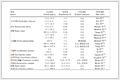
Fig. 3 shows storage modulus (G') and loss factor (tanδ) of HCA-EP-DDM and E51-DDM as a function of temperature. The corresponding G' at 30 ℃ (E' at 30 ℃), Tg, G' in the rubbery plateau region (Er) and crosslinking density (νe) are demonstrated in Table 1. The E' at 30 ℃ and Tg of HCA-EP-DDM are 3.21 × 10³ MPa and 192.9 ℃, which are higher than those of E51-DDM (2.22 × 10³ MPa and 178.8 ℃). According to previous reports [24], G' and Tg are relevant to segmental mobility and ve. The conjugate structure (π-π structure of phenylethylene) of HCA-EP-DDM tends to preferably restrict the segmental mobility, as compared with the bisphenol A structure of E51-DDM (Figs. 3c and d) [34]. Besides, ve can be calculated from the plateau of the elastic modus in the rubbery state according to Eq. S1 (Supporting information) [24]. The ve of cured HCA-EP-DDM and E51-DDM is calculated to be 3.23 × 10³ mol/m3 and 2.59 × 10³ mol/m3, respectively; this can be explained by that a higher epoxy value may form a higher-crosslinking network (a higher ve) [28]. Mechanical properties of cured epoxy resins are studied using the tensile and flexural measurements (Fig. 3 and Table S2 in Supporting information). The tensile and flexural strengths of HCA-EP-DDM are 98.3 and 158.9 MPa, which are higher than those of E51-DDM (70.3 and 138.8 MPa). Moreover, HCA-EP-DDM exhibits 32% and 41% higher Young's and flexural modulus (2.00 × 10³ MPa and 3.22 × 10³ MPa) than those of E51-DDM (1.51 × 10³ and 2.29 × 10³ MPa). As reported before [25], mechanical strength and modulus depends closely on the molecular rigidity and crosslinking density. Internal rotation is difficult to occur for conjugate structure of benzene ring and double bond, thus HCA-EP-DDM with the conjugated π-π structure and high ve presents stronger mechanical performances over E51-DDM.

|
Download:
|
| Fig. 3. The curves of (a) storage modulus (G') and (b) tanδ versus temperature for HCA-EP-DDM and E51-DDM obtained by DMA. The structure of crosslinking networks for (c) HCA-EP-DDM and (d) E51-DDM. (e) Tensile strength and Young's modulus from tensile test and (f) flexural strength and modulus from flexural test of HCA-EP-DDM and E51-DDM. | |
|
Table 1 E' at 30 ℃, Tg, Er and ve obtained by DMA. |

The TGA and differential thermogravimetry (DTG) curves of HCA-EP-DDM and E51-DDM under N2 atmosphere are shown in Fig. 4. The corresponding data, including the temperature where 5 wt% weight is lost (T5%), maximum weight loss temperature (Tmax) and the residual weight at 700 ℃ (Cy700), are marked. Under N2 atmosphere, E51-DDM shows a single-step degradation process, presenting the T5% of 385.4 ℃ and Tmax of 399.3 ℃. A high maximum degradation rate of 2.07 wt%/℃ is detected within 380 to 550 ℃. Similarly, HCA-EP-DDM also presents a one-step degradation process under N2 atmosphere. HCA-EP-DDM exhibits the T5% of 319.0 ℃ and Tmax of 392.1 ℃. The lower T5% of HCA-EP-DDM can be explained by the easy fracture of the unsaturated C=C double bond as well as the C—C single bond between benzene ring and double bond [25]. However, its thermostability still meets the requirement for electrical epoxy resins according to the standard IPC-TM-650. In addition, it should be noted that, the maximum degradation rate of HCA-EP-DDM is 0.38 wt%/℃, which is 82% lower than that of E51-DDM, indicating that HCA-EP-DDM has gentle thermal degradation performance. Besides, HCA-EP-DDM exhibits a much higher char residue amount of 31.6% than that of E51-DDM (16.6%); this can be due to the high cross-linking density and the presence of conjugate structure (π-π structure of phenylethylene) that provide stronger carbonization [21, 35]. Thermal stability of cured epoxy resins under air atmosphere is shown in Fig. S2 (Supporting information). Different from the results under N2 atmosphere, both HCA-EP-DDM and E51-DDM present two-stage degradation. For the first degradation process, HCA-EP-DDM shows a lower T5% and Tmax1 than those of E51-DDM, due to the presence of C=C double bond and C—C single bond between benzene ring and double bond which accounts for the similar behaviors under N2 atmosphere [25]. However, the maximum degradation rate of HCA-EP-DDM is only 0.27 wt%/℃, which is 90% lower than that of E51-DDM (2.75 wt%/℃). In the second step, HCA-EP-DDM shows a Tmax2 of 601.9 ℃, which is close to that of E51-DDM (606.0 ℃). Besides, the char residue amount of HCA-EP-DDM is higher than that of E51-DDM above 403.7 ℃, indicating HCA-EP-DDM possesses stronger carbonization performance. A possible decomposition process of HCA-EP-DDM under air atmosphere is summarized: (1) Sluggish degradation from 300 to 520 ℃ corresponding to the first degradation process with formation of some char layers; (2) The oxidized decomposition of unstable char layer.

|
Download:
|
| Fig. 4. (a) TGA and (b) DTG curves of HCA-EP-DDM and E51-DDM under N2 atmosphere. | |
The flame retardance of cured epoxy resins is investigated with limiting oxygen index (LOI), vertical burning (UL-94) and cone calorimeter measurements. As shown in Fig. S3 (Supporting information) and Table 2, E51-DDM presents a UL-94 rating of NR and LOI of 26.5%. In contrast, HCA-EP-DDM shows stronger flame resistance with a UL-94 rating of V1 and LOI of 32.6%. Fig. 5 exhibits the curves of heat release rate (HRR), total heat release (THR), smoke production release (SPR) and total smoke production (TSP) of cured epoxy resins. The corresponding data, including time to ignition (TTI), THR, the peak of heat release rate (PHRR), calculated fire growth rate (FIGRA), TSP and char residue yield are shown in Table S3 (Supporting information). The TTI of HCA-EP-DDM is lower than that of E51-DDM, which is in accordance with the TGA result. HCA-EP-DDM exhibits a PHRR of 437 kW/m2, with an obvious reduction of 60% compared with that of E51-DDM (1088 kW/m2). Similarly, the THR and TSP of HCA-EP-DDM is reduced by 34% and 30%, respectively, compared with those of E51-DDM. Besides, based on the HRR curves, FIGRA of HCA-EP-DDM is relatively low, indicating HCA-EP-DDM has higher fire safety. The char residue amount of HCA-EP-DDM after combustion is 29.7 wt%, which is much higher than that of E51-DDM (7.3 wt%). Therefore, it can be concluded that HCA-EP-DDM exhibits a high flame retardance with a UL-94 rating of V1, LOI of 32.6%, and PHHR as low as 437 kW/m2.
|
|
Table 2 LOI and UL-94 rating of HCA-EP-DDM and E51-DDM. |


|
Download:
|
| Fig. 5. (a) HRR, (b) THR, (c) SPR and (d) TSP curves of HCA-EP-DDM and E51-DDM tested by cone calorimeter test. | |

To understand the flame retardant mechanism of HCA-EP-DDM, SEM, Raman, XPS and TG-FTIR measurements are conducted. As shown in Fig. 6, E51-DDM cannot retain its original structure but shows fragile and discrete char residue; in contrast, HCA-EP-DDM maintains the shape with consecutive and intumescent char residues. From the Raman results shown in Fig. 7, two characteristic peaks at 1350 cm−1 (corresponding to D bond) and 1590 cm−1 (corresponding to G bond) are detected for cured epoxy resins after burning. The ratio of D and G bonds (ID/IG) represents the degree of graphitization. A lower ID/IG means a more regular structure. The ID/IG of HCA-EP-DDM (2.65) is lower than that of E51-DDM, indicating that HCA-EP-DDM forms more regular char layer during combustion. From the XPS survey for the char residues after cone calorimeter test (Fig. 8 and Fig. S4 in Supporting information), both HCA-EP-DDM and E51-DDM have three characteristic peaks of C 1s and N 1s. For the C 1s spectrum, peaks at 284.6, 285.2 and 288.9 eV are associated with C—C, C—N and C=C/C=N bonds [36]; for the N 1s spectrum, peaks at 398.5, 400.3 and 403.2 eV are attributed to pyridine, pyrrole and pyridine-N-oxide [37]. As reported before [38], the pyridine structure is more stable than the pyrrole structure, benefitting for forming stable char layer. The above results indicate that HCA-EP-DDM possesses more stable char residues after burning due to formation of more pyridine (Table S4 in Supporting information). From the 3D TG-FTIR results shown in Figs. 9a and b, the gas phase products are determined for HCA-EP-DDM and E51-DDM during the total thermal-degradation process. HCA-EP-DDM shows lower absorbance than that of E51-DDM, indicating less gaseous products formed from HCA-EP-DDM. Figs. 9c and d exhibits the FTIR spectra of the gaseous products at the maximum decomposition rate, from which CO2 (2358 cm−1 and 2309 cm−1) and NH3 (3800–3700 cm−1) [25] are detected for the HCA-EP-DDM system while aromatic alcohols (3651 cm−1), hydrocarbons (3140–2650 cm−1), aromatic compounds (1611 cm−1 and 1511 cm−1) [25, 35, 39] are observed for the E51-DDM system. The results indicate the breakage of backbone of E51-DDM during thermal-degradation process, generating flammable aromatic compounds, thus causing poor charring ability and promoted combustion. In comparison, the gaseous products of HCA-EP-DDM contain much less flammable gasses as well as more nonflammable CO2 and NH3. Besides, aromatic compounds and aromatic alcohols are hardly detected in the gaseous products of HCA-EP-DDM, indicating the well preservation of aromatic compounds in the condensed phase that contributes to forming stable char residues. Thus, based on the SEM, Raman, XPS and TG-FTIR results, HCA-EP-DDM follows both synergic condensed-phase and gaseous-phase flame retardant mechanism. For the condensed phase, the presence of conjugate structure and high crosslinking density enhances the formation of char residues as a protective layer to block oxygen and heat. For the gaseous phase, mainly nonflammable gasses (CO2 and NH3) are released, which could take away the heat and dilute the flammable gaseous products.

|
Download:
|
| Fig. 6. Digital photos and SEM morphologies of char residues after cone calorimeter test for (a1–a3) HCA-EP-DDM and (b1–b3) E51-DDM. | |


|
Download:
|
| Fig. 7. Raman spectra of char residues for (a) full survey; peak splitting for (b) HCA-EP-DDM and (c) E51-DDM after cone calorimeter test. | |


|
Download:
|
| Fig. 8. The high-resolution XPS spectra for (a, c) C 1s and (b, d) N 1s for char residues of HCA-EP-DDM and E51-DDM after cone calorimeter test. | |


|
Download:
|
| Fig. 9. The 3D TG-IR spectra of the gas phase products during the total thermal degradation process for (a) HCA-EP-DDM and (b) E51-DDM. The FTIR spectra of the gaseous products at temperature of the maximum decomposition rate of (c) HCA-EP-DDM and (d) E51-DDM. | |

As we know, high mechanical properties, Tg and flame retardance should be particularly noted for epoxy resins. Thus, tensile strength, flexural strength, Tg and PHRR (%) (decrease percentage of PHRR compared with E51-DDM) of recently reported bio-based epoxy resins cured with DDM are summarized in Fig. 10 [24-30]. Our work exhibits relatively high comprehensive performances among bio-based epoxy resins. Specifically, HCA-EP-DDM exhibits a relatively high PHRR (%) in this work, indicating high flame retardancy among relevant works. Furthermore, the mechanical properties (tensile and flexural strengths) and Tg of HCA-EP-DDM are comparable to or even higher than the bio-based epoxy resin counterparts.

|
Download:
|
| Fig. 10. Performance comparison of mechanical properties, Tg and PHRR (%) data for different bio-based epoxy resins cured by DDM. | |

In conclusion, we synthesized a bio-based epoxy monomer (HCA-EP) derived from p-hydroxycinnamic acid. The obtained biomass-carbon-containing aromatic compound can be used to prepare high-performance epoxy resin with DDM as a curing agent. The HCA-EP-DDM system has higher curing reactivity and processability, because of the much low viscosity of HCA-EP as low as 0.75 Pa s (25 ℃), as compared to that of a widely used precursor (E51, 12.85 Pa s). After curing, HCA-EP-DDM presents a higher Tg (192.9 ℃) than that of E51-DDM. Additionally, the cured HCA-EP-DDM displays high mechanical properties with the tensile strength of 98.3 MPa and flexural strength of 158.9 MPa. Particularly, the HCA-EP-DDM system exhibits a high char yield of 31.6% (in N2), a peak heat rate release (PHRR) as low as 437 kW/m2, a high limiting oxygen index (LOI) of 32.6% as well as passes the flammability rating of V-1. These results offer the bio-based epoxy monomer great potential for developing sustainable epoxy resins with high mechanical and flame retardant performance to replace toxic petroleum-derived DGEBA counterparts.
Declaration of competing interestThe authors declare no competing financial interest.
AcknowledgmentsThis work was supported by National Natural Science Foundation of China (Nos. 52073189 and 51822304), Science and Technology Fund for Distinguish Young Scholars of Sichuan Province (No. 2019JDJQ0025), State Key Laboratory of Polymer Materials Engineering (No. sklpme2020-3-09), and the Fundamental Research Funds for the Central Universities.
Supplementary materialsSupplementary material associated with this article can be found, in the online version, at doi:10.1016/j.cclet.2021.12.067.
| [1] |
L.L. Hia, E.S. Chan, S.P. Chai, P. Pasbakhsh, J. Mater. Chem. A 6 (2018) 8470-8478. DOI:10.1039/C8TA01783B |
| [2] |
D. Cespi, R. Cucciniello, M. Ricciardi, et al., Green Chem. 18 (2016) 4559-4570. DOI:10.1039/C6GC00882H |
| [3] |
R.W. Stahlhut, W.V. Welshons, S.H. Swan, et al., Environ. Health Perspect. 117 (2009) 784-789. DOI:10.1289/ehp.0800376 |
| [4] |
P. Roy, H. Salminen, P. Koskimies, et al., J. Sreroid Biochem. 88 (2004) 157-166. |
| [5] |
R. Urbatzka, A.V. Cauwenberge, S. Maggioni, et al., Chemosphere 67 (2007) 1080-1087. DOI:10.1016/j.chemosphere.2006.11.041 |
| [6] |
Q.X. Zhang, M. Molenda, T.M. Reineke, Macromolecules 49 (2016) 8397-8406. DOI:10.1021/acs.macromol.6b01861 |
| [7] |
J.T. Wan, J.Q. Zhao, B. Gan, et al., ACS Sustain. Chem. Eng. 4 (2016) 2869-2880. DOI:10.1021/acssuschemeng.6b00479 |
| [8] |
C. Li, H. Fan, T. Aziz, et al., ACS Sustain. Chem. Eng. 6 (2018) 8856-8867. DOI:10.1021/acssuschemeng.8b01212 |
| [9] |
T. Liu, C. Hao, S. Zhang, et al., Macromolecules 51 (2018) 5577-5585. DOI:10.1021/acs.macromol.8b01010 |
| [10] |
X.W. Xu, S.Q. Ma, J.H. Wu, et al., J. Mater. Chem. A 7 (2019) 15420-15431. DOI:10.1039/C9TA05293C |
| [11] |
X.W. Xu, S.Q. Ma, J.H. Wu, et al., J. Mater. Chem. A 8 (2020) 11261-11274. DOI:10.1039/D0TA01419B |
| [12] |
M. Fache, R. Auvergne, B. Boutevin, S. Caillol, Eur. Polym. J. 67 (2015) 527-538. DOI:10.1016/j.eurpolymj.2014.10.011 |
| [13] |
Y. Ecochard, M. Decostanzi, C. Negrell, R. Sonnier, S. Caillol, Molecules 24 (2019) 1818. DOI:10.3390/molecules24091818 |
| [14] |
J.T. Miao, L. Yuan, Q.B. Guan, G.Z. Liang, A.J. Gu, ACS Sustain. Chem. Eng. 5 (2017) 7003-7011. DOI:10.1021/acssuschemeng.7b01222 |
| [15] |
A. Toldy, P. Anna, I. Csontos, A. Szabó, G. Marosi, Polym. Degrad. Stab. 92 (2007) 2223-2230. DOI:10.1016/j.polymdegradstab.2007.04.017 |
| [16] |
J.Y. Yang, Y. Xia, J. Zhao, et al., Chin. J. Polym. Sci. 38 (2020) 1294-1304. DOI:10.1007/s10118-020-2444-4 |
| [17] |
Z.P. Cheng, M.H. Fang, X.X. Chen, et al., ACS Omega 5 (2020) 4200-4212. DOI:10.1021/acsomega.9b04050 |
| [18] |
X. Zhou, X.W. Mu, W. Cai, et al., ACS Appl. Mater. Interfaces 11 (2019) 41736-41749. DOI:10.1021/acsami.9b16482 |
| [19] |
H. Zhang, J. Mao, M. Li, et al., Compos. Part A Appl. Sci. Manuf. 130 (2020) 105751. DOI:10.1016/j.compositesa.2019.105751 |
| [20] |
L. Chen, C. Ruan, R. Yang, Y.Z. Wang, Polym. Chem. 5 (2014) 3737-3749. DOI:10.1039/c3py01717f |
| [21] |
Y. Tian, Q. Wang, L. Shen, et al., Chem. Eng. J. 383 (2020) 123124. DOI:10.1016/j.cej.2019.123124 |
| [22] |
J.J. Meng, Y.S. Zeng, P.F. Chen, Macromol. Mater. Eng. 305 (2019) 1900587. |
| [23] |
T.Y. Gao, F.D. Wang, Y. Xu, et al., Chem. Eng. J. 428 (2022) 131173. DOI:10.1016/j.cej.2021.131173 |
| [24] |
S. Wang, S.Q. Ma, C.X. Xu, et al., Macromolecules 50 (2017) 1892-1901. DOI:10.1021/acs.macromol.7b00097 |
| [25] |
J.Y. Dai, Y.Y. Peng, N. Teng, et al., ACS Sustain. Chem. Eng. 6 (2018) 7589-7599. DOI:10.1021/acssuschemeng.8b00439 |
| [26] |
Y. Qi, J.Y. Wang, Y. Kou, et al., Nat. Commun. 10 (2019) 2107. DOI:10.1038/s41467-019-10178-0 |
| [27] |
J.Y. Dai, N. Teng, J.K. Liu, et al., Compos. Part B: Eng. 179 (2019) 107523. DOI:10.1016/j.compositesb.2019.107523 |
| [28] |
W. Xie, D.L. Tang, S.M. Liu, J.Q. Zhao, Polym. Test. 86 (2020) 106466. DOI:10.1016/j.polymertesting.2020.106466 |
| [29] |
Z.H. Chi, Z.W. Guo, Z. Xu, et al., Polym. Degrad. Stabil. 176 (2020) 109151. DOI:10.1016/j.polymdegradstab.2020.109151 |
| [30] |
J.K. Liu, J.Y. Dai, S.P. Wang, et al., Compos. Part B: Eng. 190 (2020) 107926. DOI:10.1016/j.compositesb.2020.107926 |
| [31] |
X.C. Tan, Q. Zou, Y.Z. Huang, et al., Ind. Eng. Chem. Res. 57 (2018) 7898-7904. DOI:10.1021/acs.iecr.8b01312 |
| [32] |
S.S. Xu, Y. Han, Y. Guo, et al., Eur. Polym. J. 95 (2017) 394-405. DOI:10.1016/j.eurpolymj.2017.08.010 |
| [33] |
H.E. Kissinger, Anal. Chem. 29 (1957) 1702-1706. DOI:10.1021/ac60131a045 |
| [34] |
Y.L. Liu, S.Q. Ma, Q. Li, et al., Eur. Polym. J. 135 (2020) 109881. DOI:10.1016/j.eurpolymj.2020.109881 |
| [35] |
Y. Qi, Z.H. Weng, K.W. Zhang, et al., Chem. Eng. J. 387 (2020) 124115. DOI:10.1016/j.cej.2020.124115 |
| [36] |
W.J. Liang, B. Zhao, P.H. Zhao, C.Y. Zhang, Y.Q. Liu, Polym. Degrad. Stab. 135 (2017) 140-151. DOI:10.1016/j.polymdegradstab.2016.11.023 |
| [37] |
Y. Qi, Z.H. Weng, Y. Kou, et al., Chem. Eng. J. 406 (2021) 126881. DOI:10.1016/j.cej.2020.126881 |
| [38] |
J.R. Pels, F. Kapteijn, J.A. Moulijn, Q. Zhu, K.M. Thomas, Carbon 33 (1995) 1641-1653. DOI:10.1016/0008-6223(95)00154-6 |
| [39] |
F.K. Chu, C. Ma, T. Zhang, et al., Compos. Part B: Eng. 190 (2020) 107925. DOI:10.1016/j.compositesb.2020.107925 |